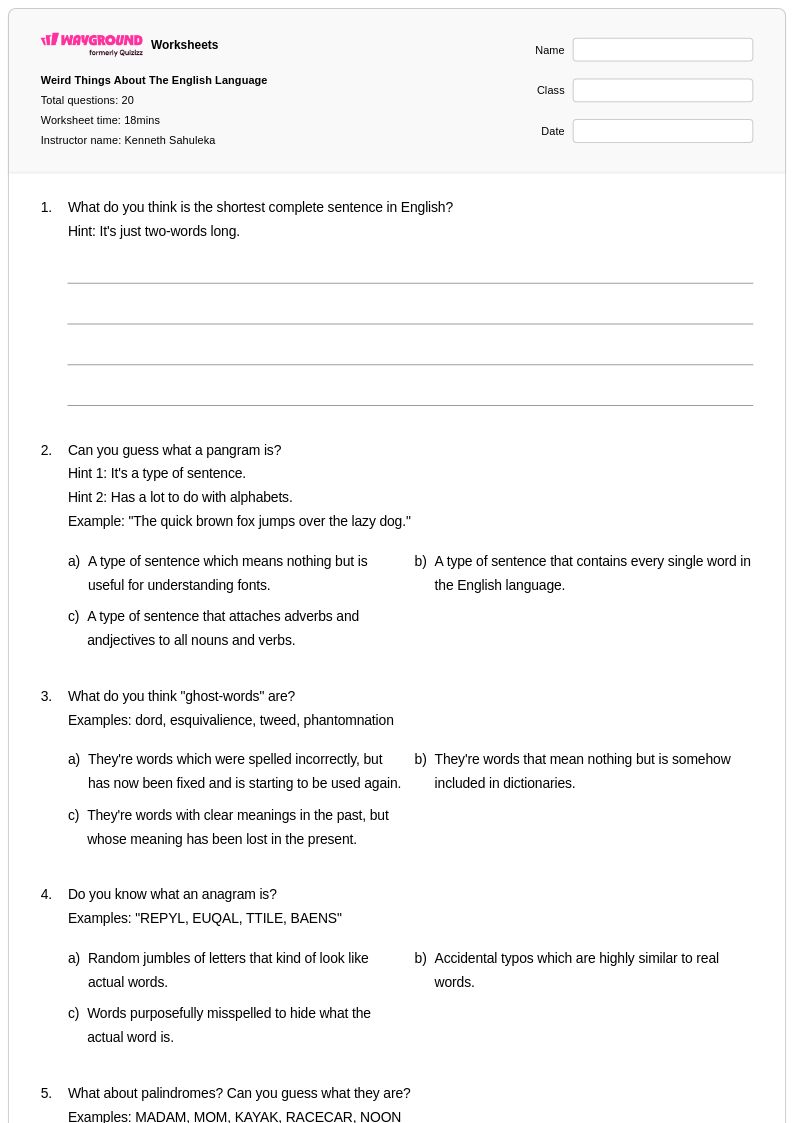
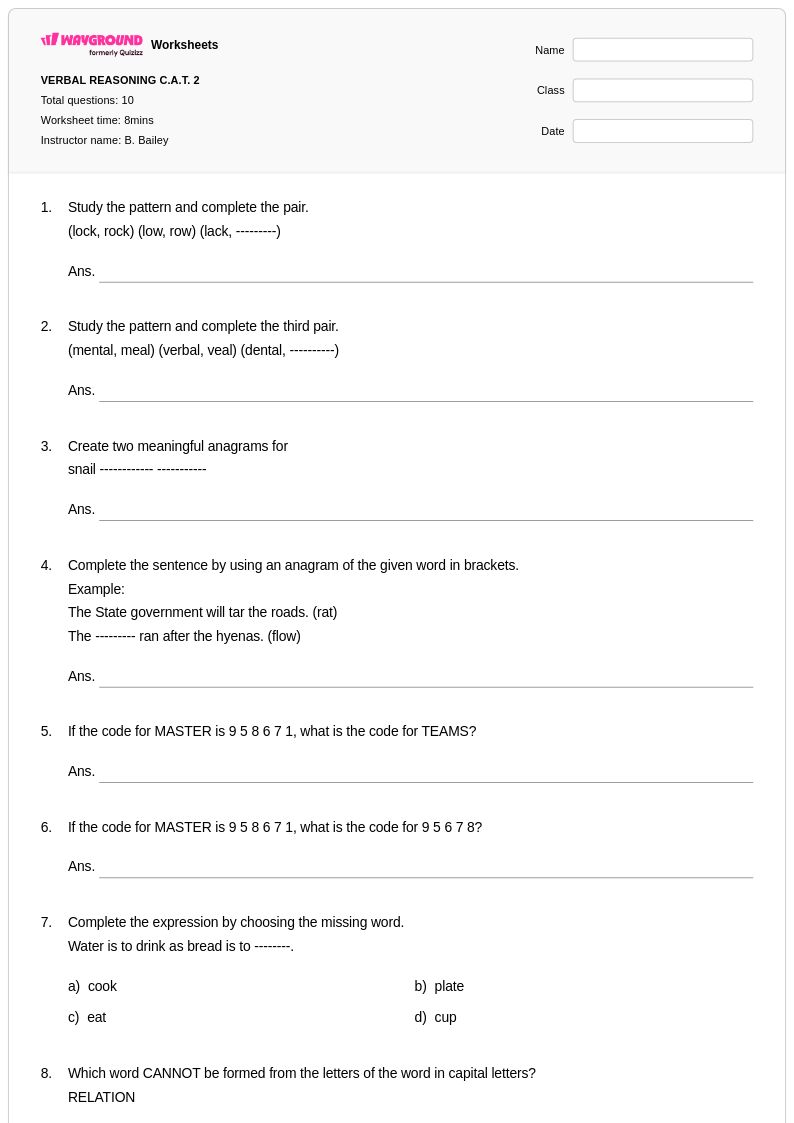
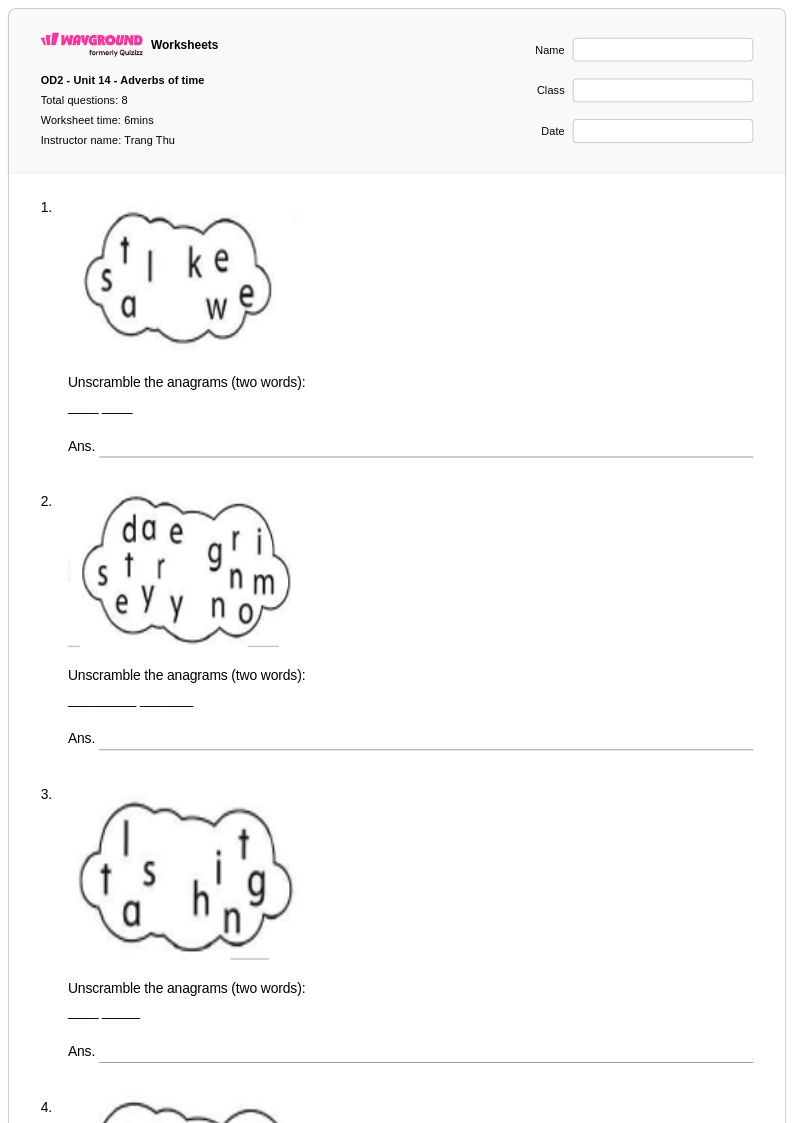
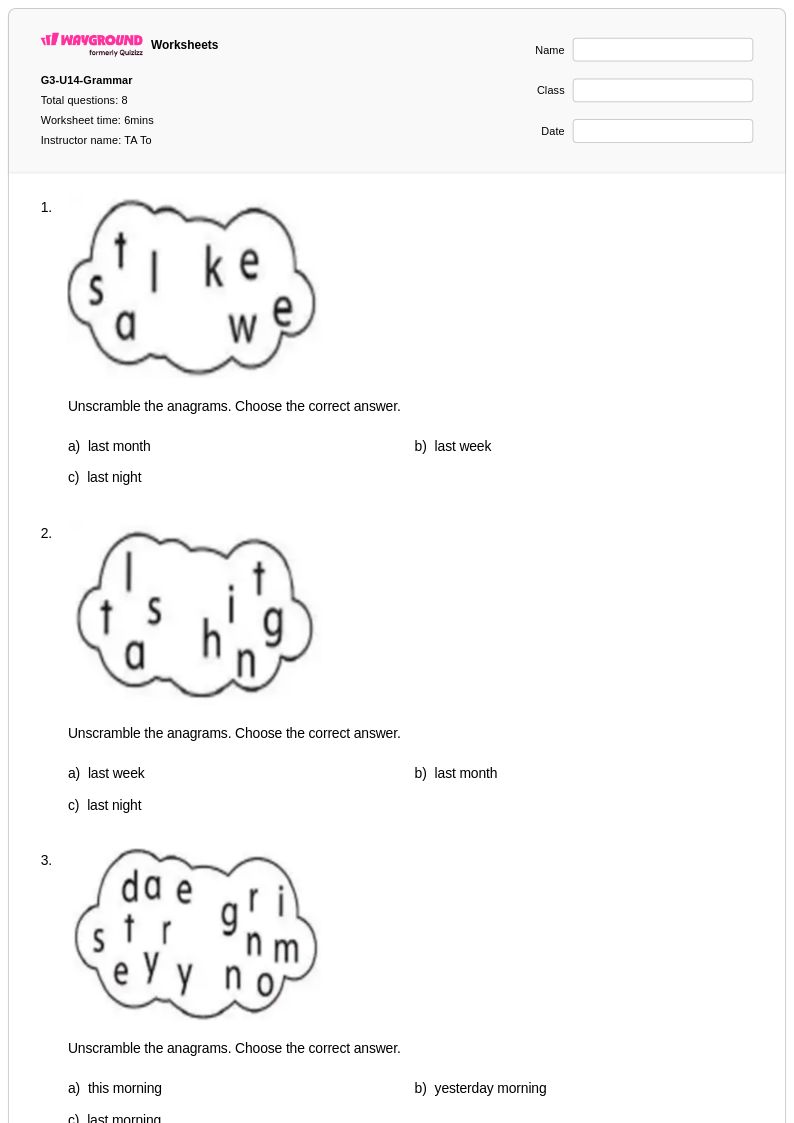
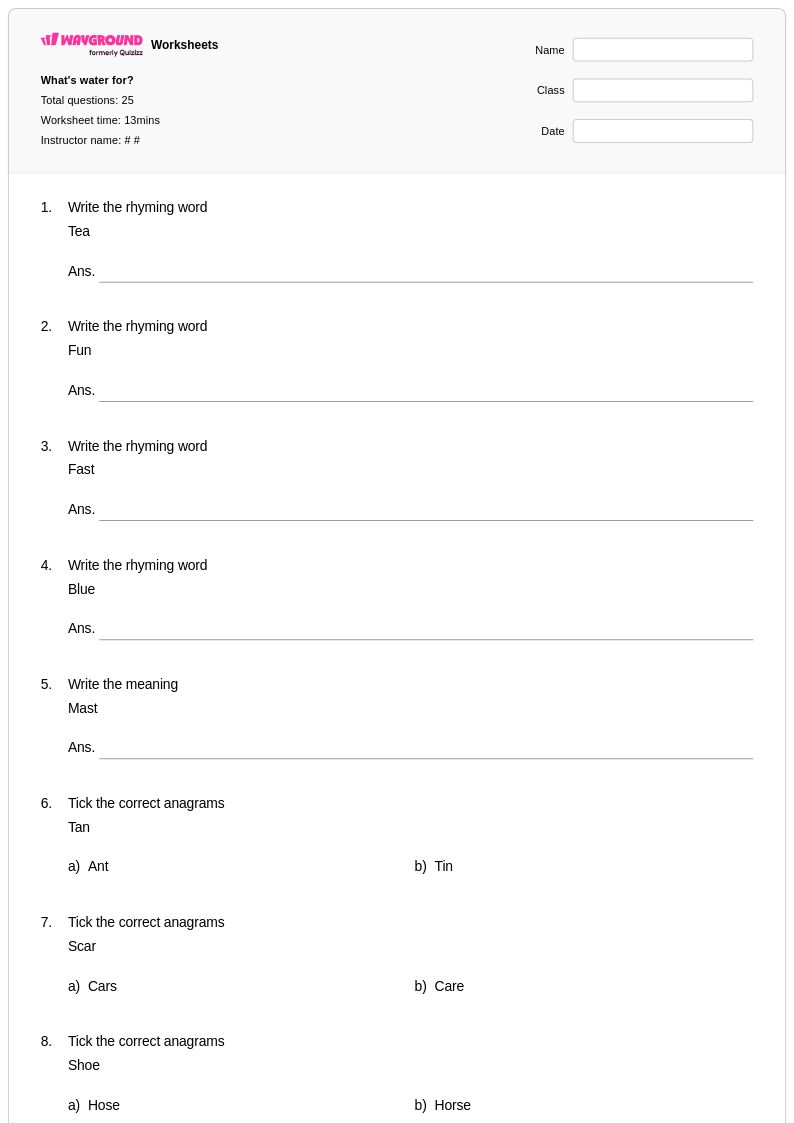
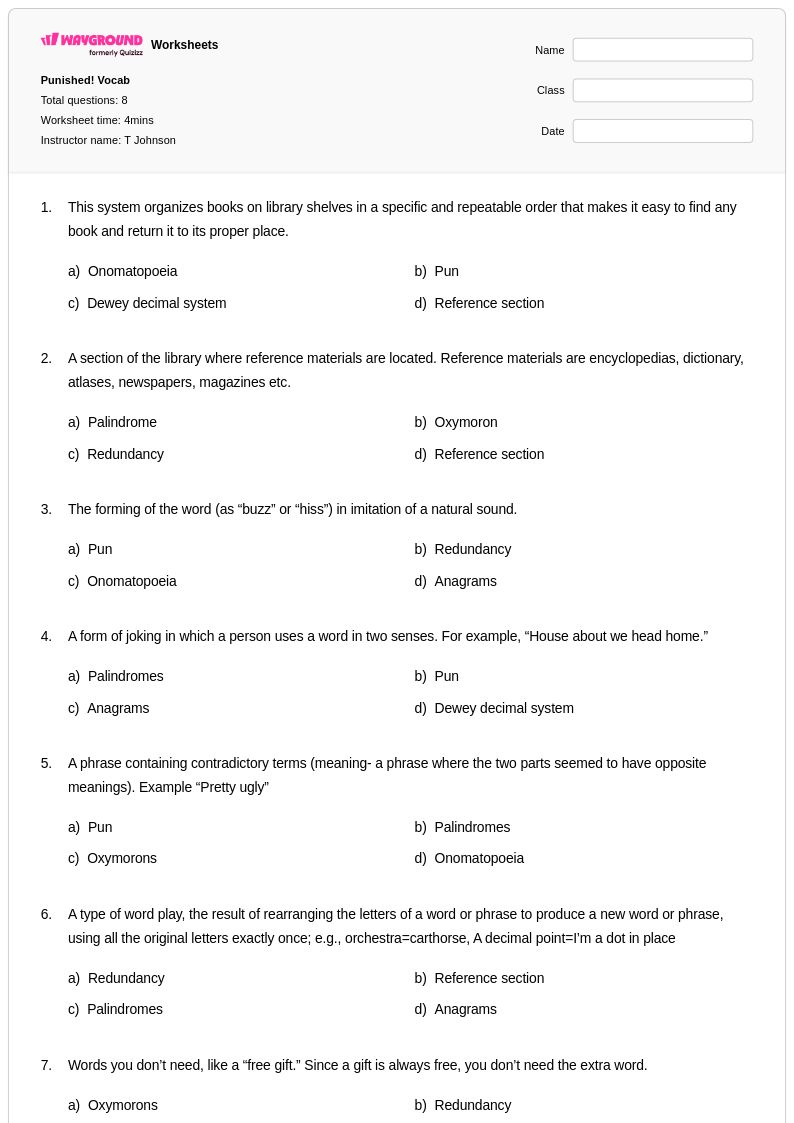
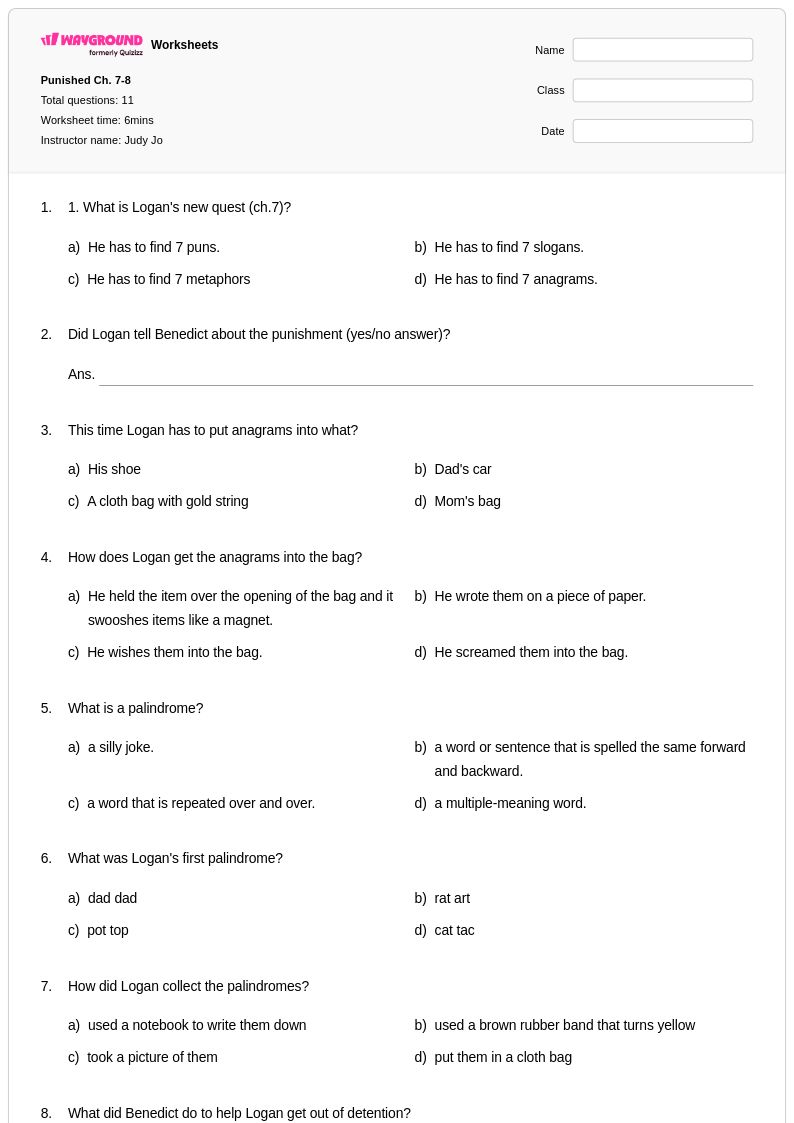
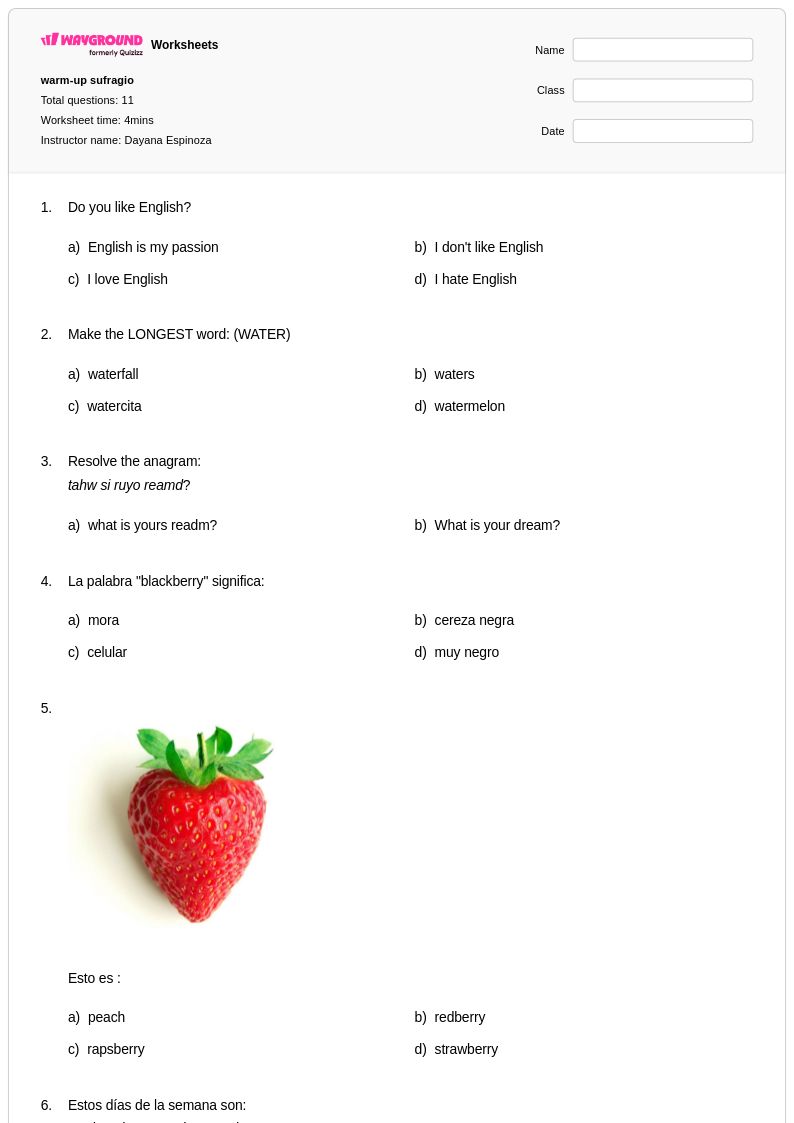
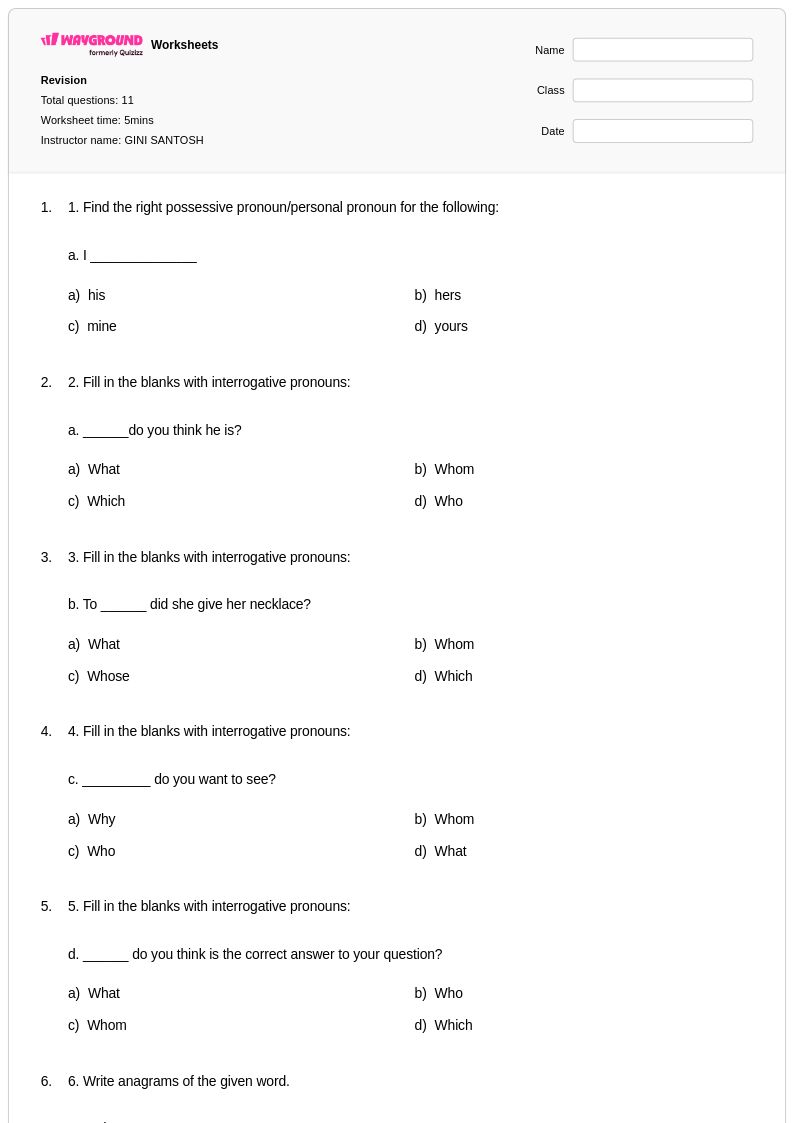
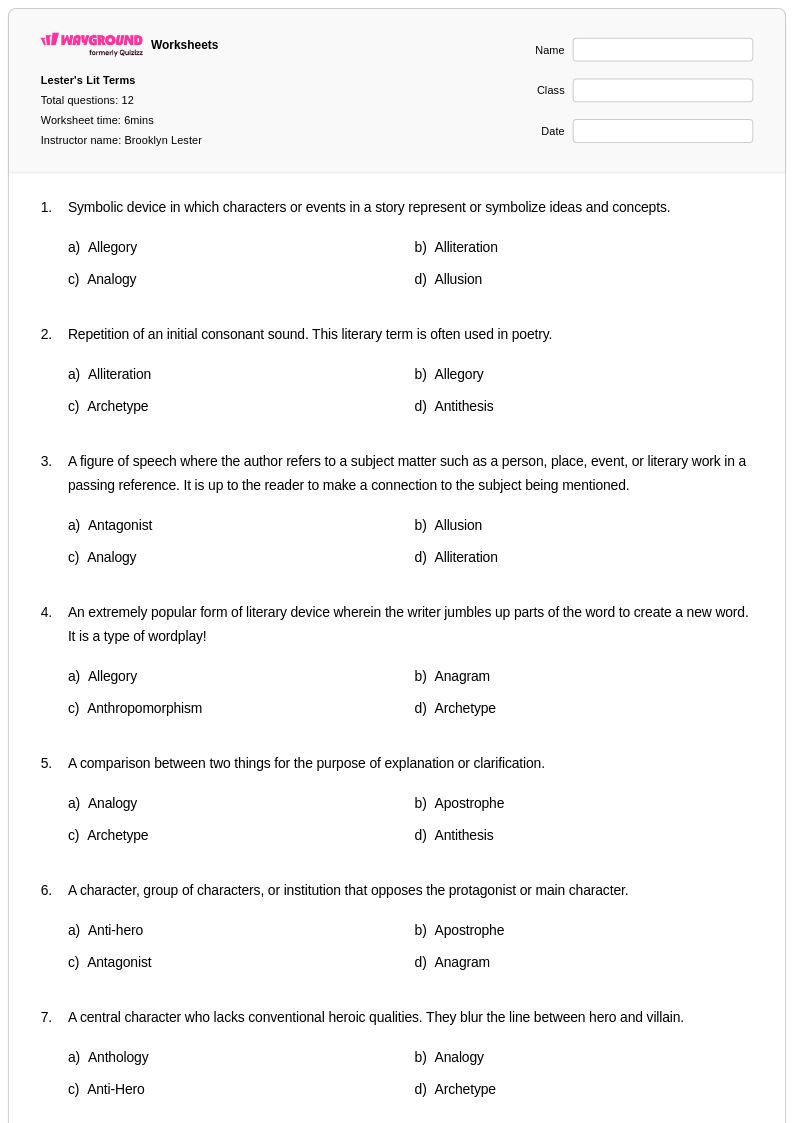
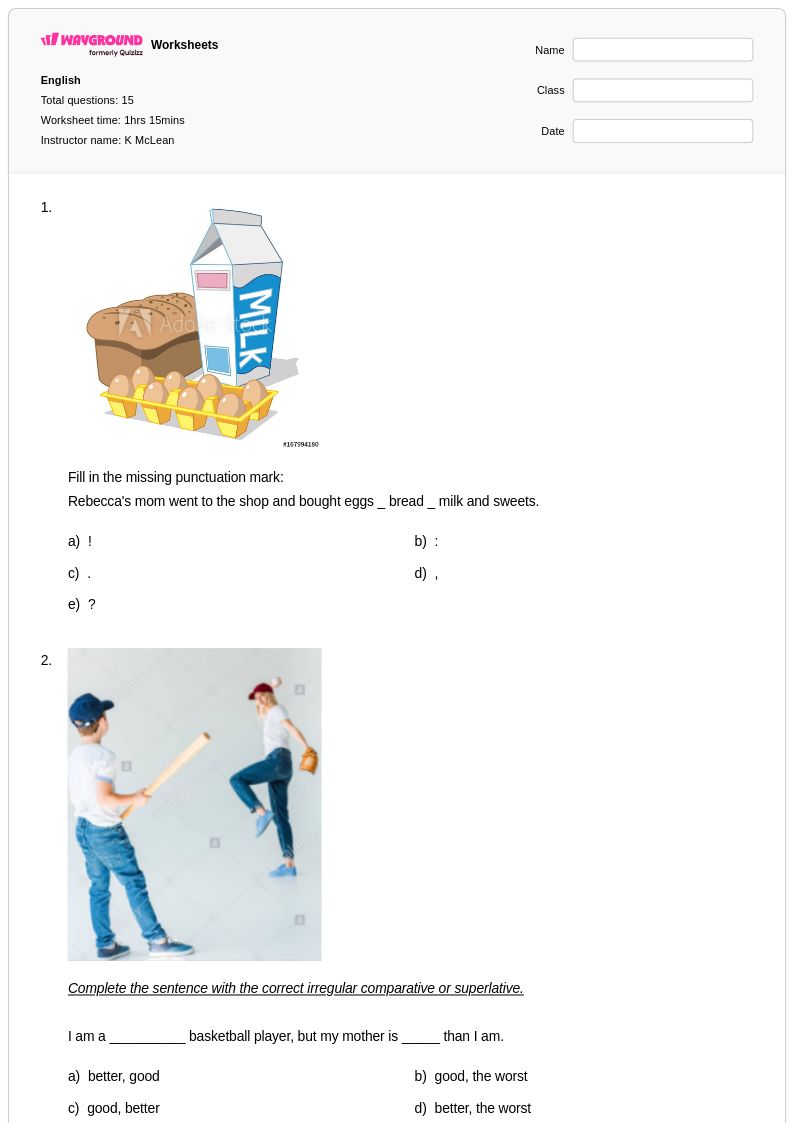
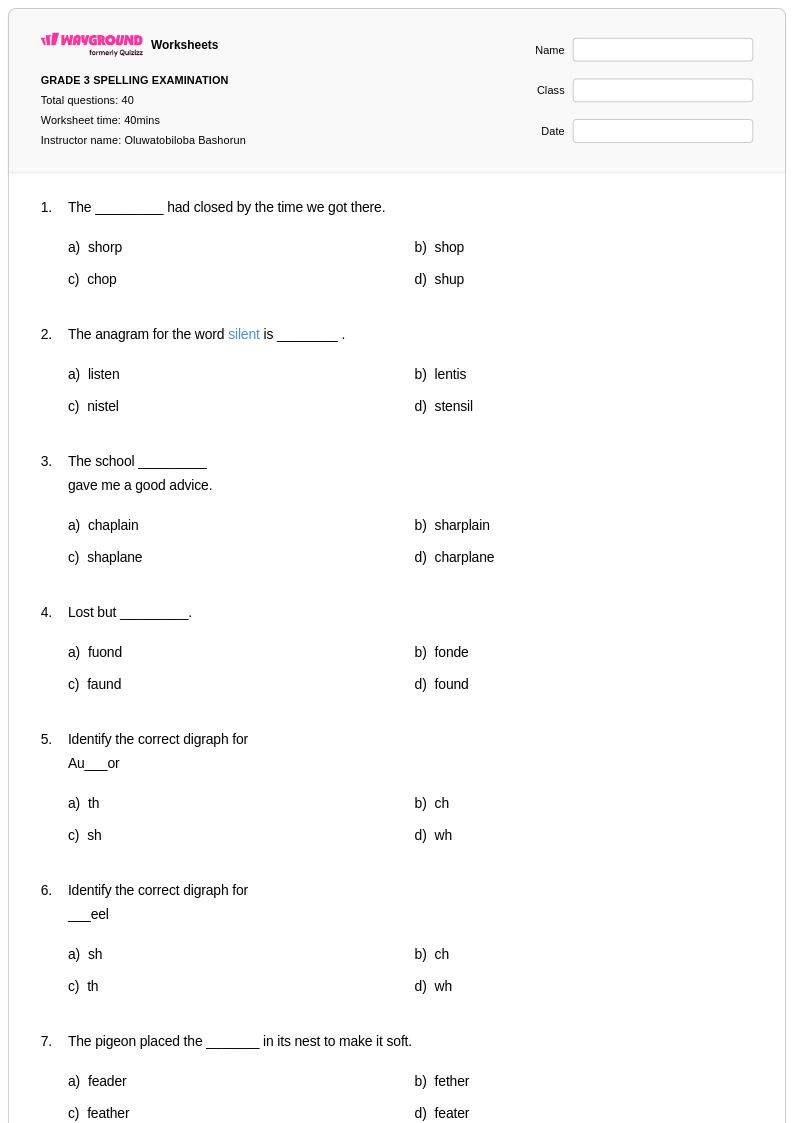
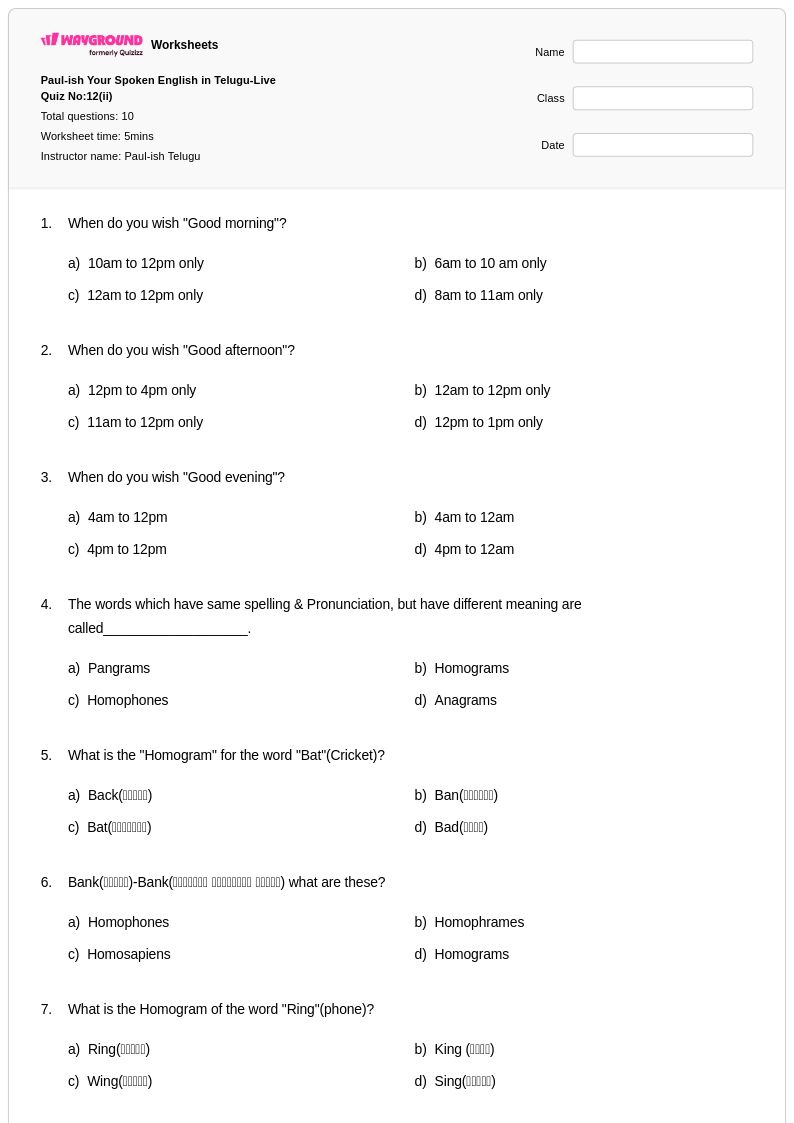
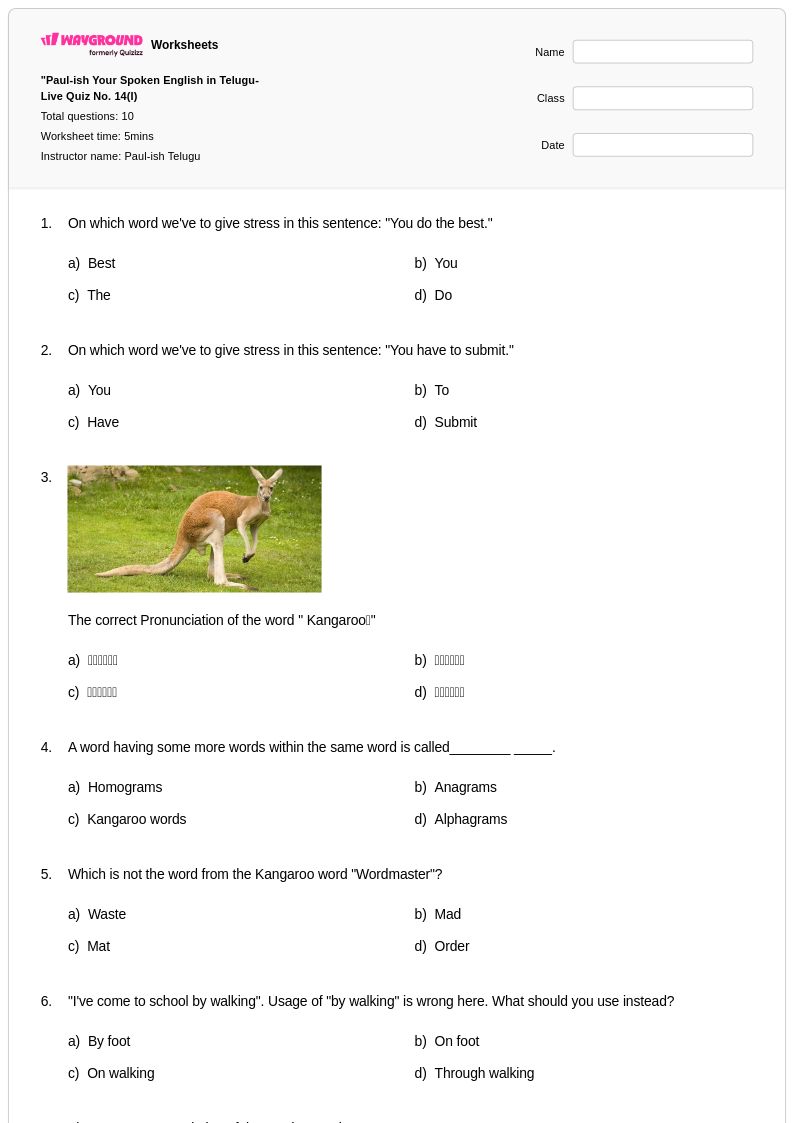
Discover free Grade 3 anagrams worksheets and printables from Wayground that help students practice rearranging letters to form new words, building vocabulary skills through engaging exercises with complete answer keys.
Anagrams worksheets for Grade 3 students available through Wayground (formerly Quizizz) provide essential practice in letter rearrangement and word recognition skills that strengthen vocabulary development and spelling proficiency. These carefully designed printables challenge third-grade learners to identify and create new words by rearranging the letters of given words, building critical thinking abilities while reinforcing phonetic patterns and word families. Each worksheet includes a comprehensive answer key and offers free access to varied practice problems that range from simple three-letter anagrams to more complex multi-syllable word puzzles, ensuring students develop both analytical skills and linguistic flexibility as they discover the relationships between letters and meaning.
Wayground (formerly Quizizz) empowers educators with millions of teacher-created anagram resources specifically curated for Grade 3 language instruction, featuring robust search and filtering capabilities that allow teachers to locate materials aligned with specific learning standards and individual student needs. The platform's differentiation tools enable instructors to customize worksheet difficulty levels and content focus, while flexible formatting options provide both printable pdf versions for classroom use and digital formats for remote learning environments. These comprehensive features streamline lesson planning by offering immediate access to remediation materials for struggling learners, enrichment activities for advanced students, and targeted skill practice that supports diverse learning styles and pacing requirements throughout the academic year.
FAQs
How do I teach anagrams to students?
Start by introducing the concept with familiar short words, showing students how rearranging letters creates a completely new word — for example, 'cat' becoming 'act.' Use a gradual release model: model the process aloud, then work through examples together before asking students to solve independently. Connecting anagrams to phonics instruction helps students see how letter-sound relationships and word structure work in practice.
What exercises help students practice anagrams?
Effective anagram practice moves from simple three-letter combinations to longer, multi-syllable words as students build confidence. Timed challenges, partner activities, and word-sorting tasks keep engagement high while reinforcing pattern recognition. Worksheets with varied difficulty levels allow teachers to scaffold practice so every student is working at an appropriate challenge level.
What mistakes do students commonly make when solving anagrams?
The most common error is fixating on the original word's letter order instead of treating the letters as a fresh set to rearrange. Students also frequently overlook less common vowel placements or consonant clusters, causing them to miss valid solutions. Encouraging students to write out all the letters individually before attempting to form new words can help break the habit of anchoring to the source word.
How can anagram practice support vocabulary and spelling development?
Solving anagrams requires students to actively engage with letter patterns, phonetic structure, and word recognition rather than passively reading or copying words. This active manipulation strengthens spelling recall and builds familiarity with common letter combinations. Over time, consistent anagram practice contributes to broader vocabulary acquisition because students encounter and internalize a wider range of words.
How do I use Wayground's anagram worksheets in my classroom?
Wayground's anagram worksheets are available as printable PDFs for traditional classroom use and in digital formats for technology-integrated or remote learning environments, giving teachers flexibility in how they assign and deliver practice. You can also host the worksheet as a quiz directly on Wayground for an interactive student experience. All worksheets include complete answer keys, making them suitable for independent work, homework assignments, or guided instruction without additional preparation.
How can I differentiate anagram activities for students at different skill levels?
Differentiation for anagram practice can be as straightforward as adjusting word length and complexity — shorter, high-frequency words for developing spellers and multi-syllable or less familiar words for advanced learners. On Wayground, teachers can also apply student-level accommodations such as read aloud support for students who benefit from hearing letter combinations, or reduced answer choices to lower cognitive load for students who need additional scaffolding.