
Recommended Topics for you
- Analyzing Character
- Analyzing Point of View
- Character Change
- Characterization
- First and Third Person Point of View
25 Q
8th - Uni
15 Q
7th - Uni
11 Q
9th - 12th
20 Q
9th
13 Q
9th
15 Q
7th - Uni
10 Q
9th - 12th
35 Q
9th
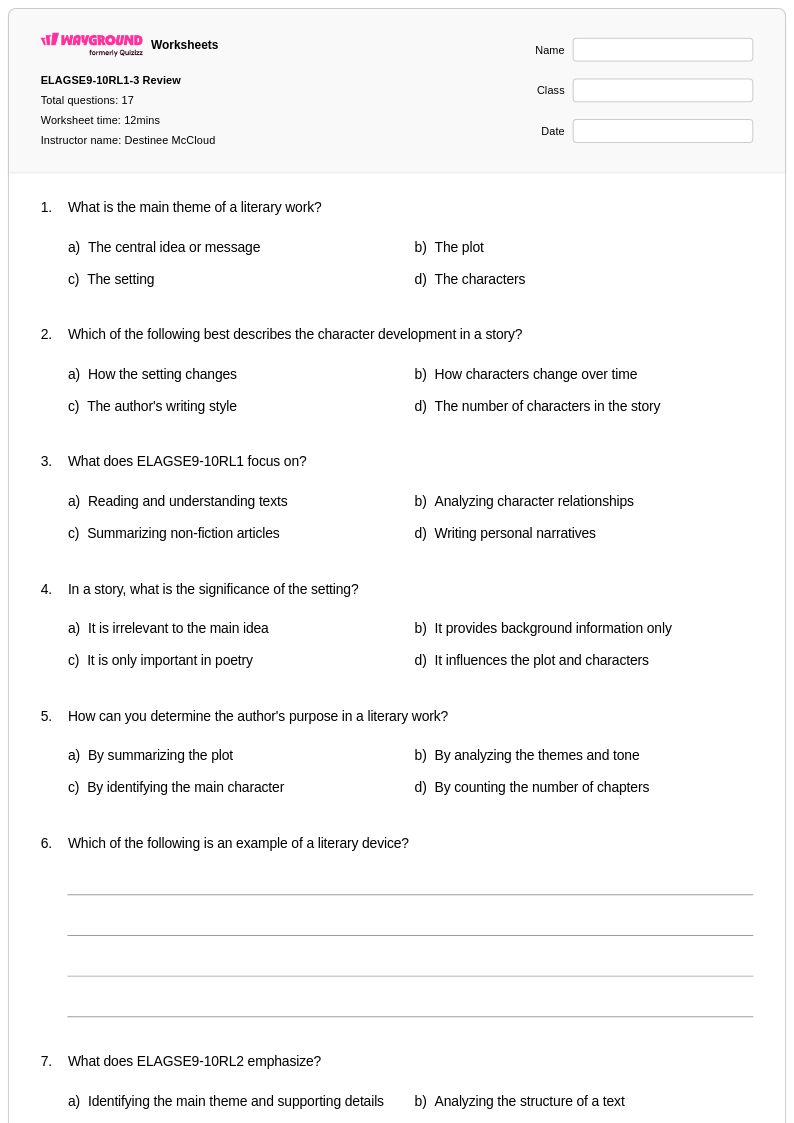
17 Q
9th
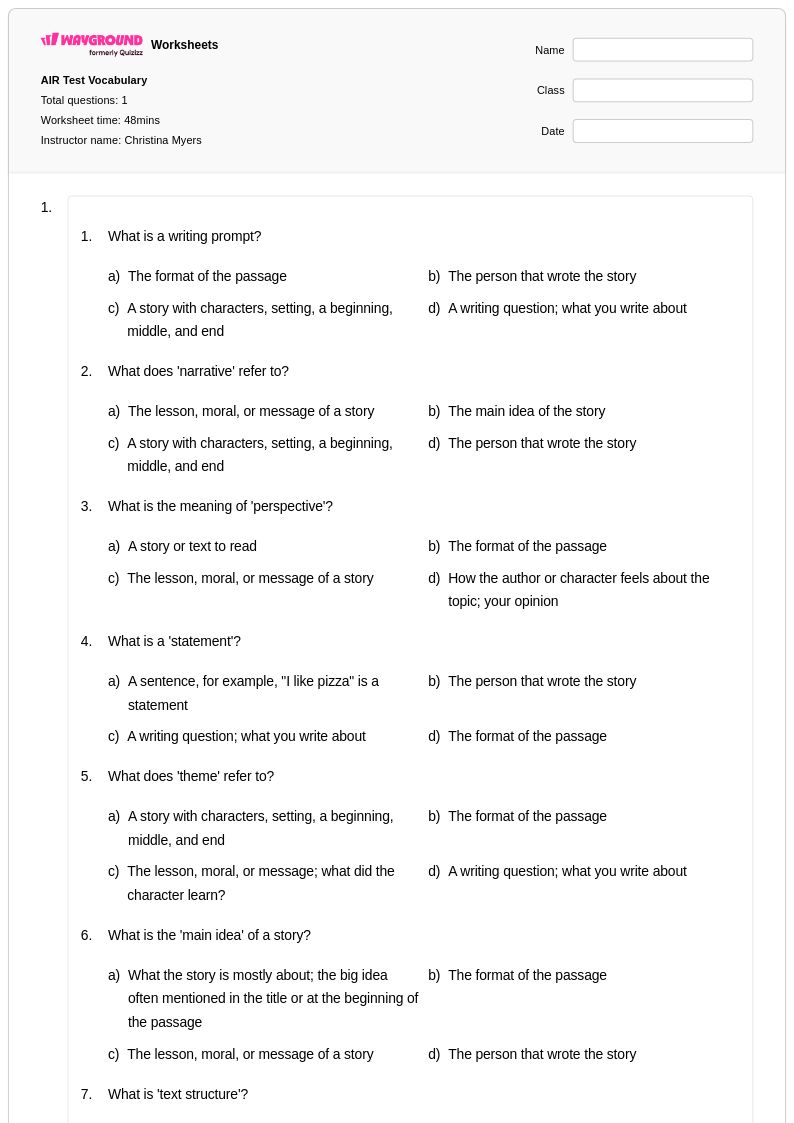
73 Q
3rd - Uni
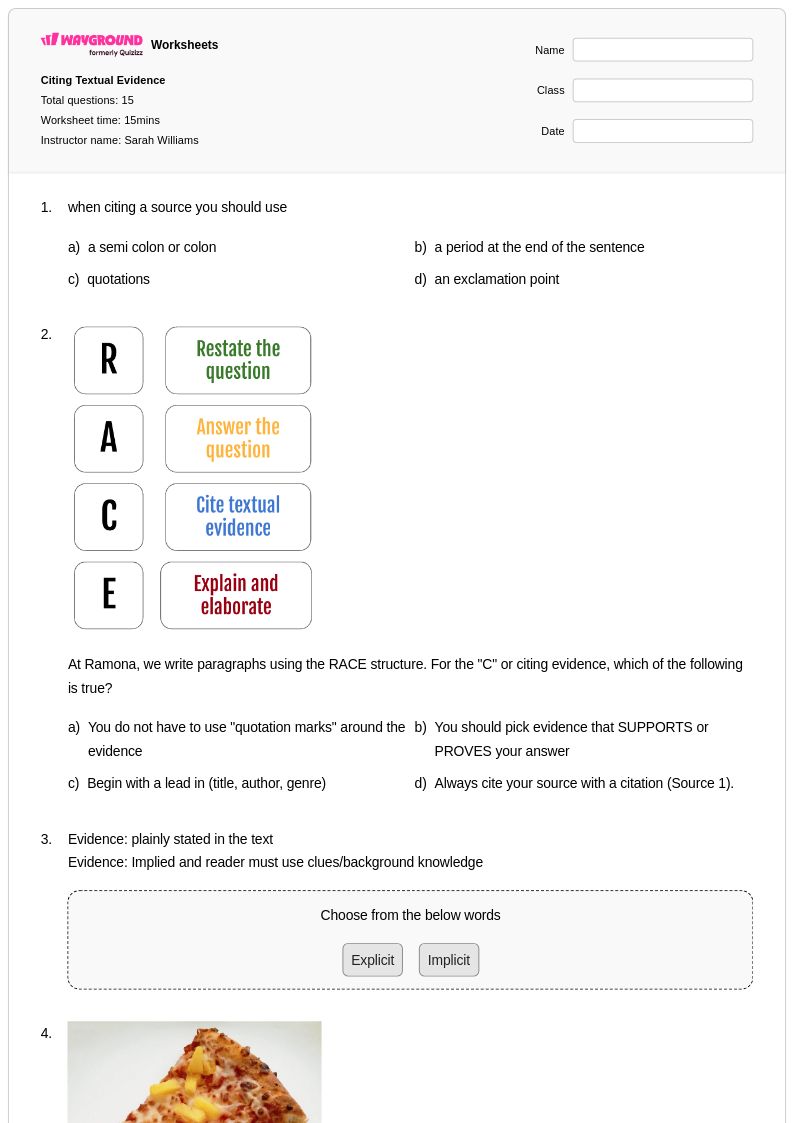
15 Q
7th - Uni
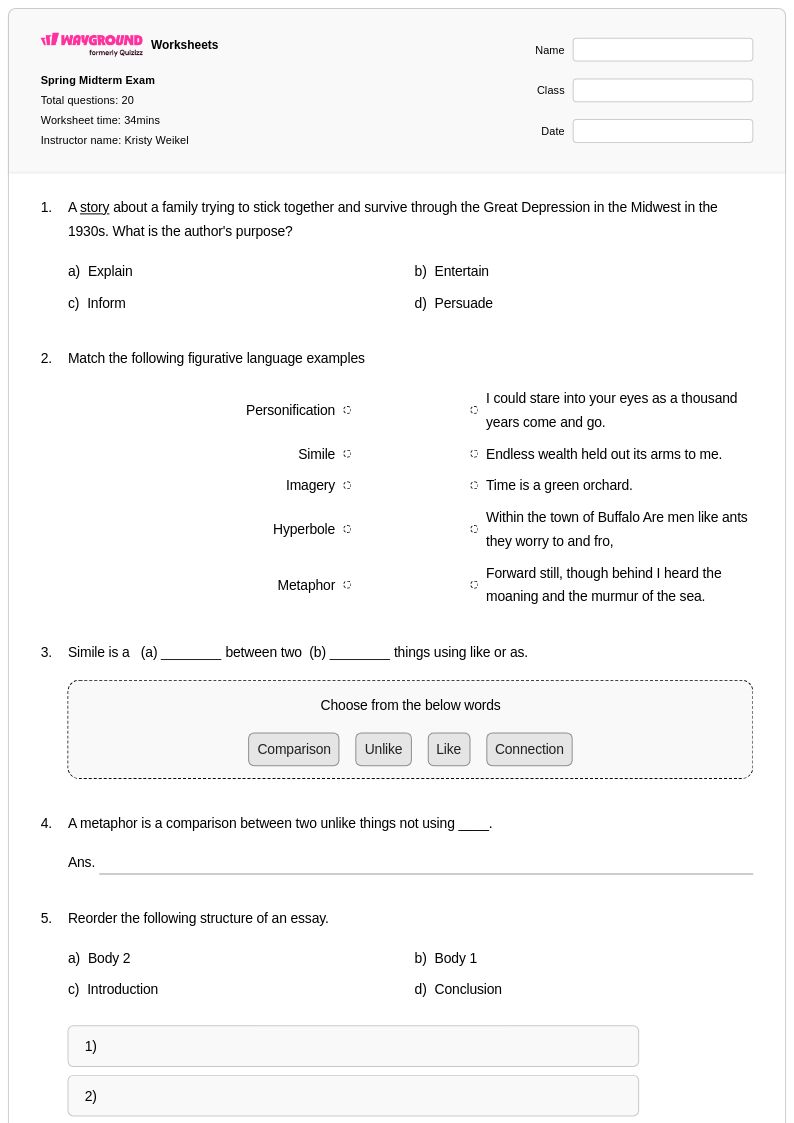
20 Q
9th
10 Q
9th
9 Q
6th - 10th
16 Q
9th - 10th
21 Q
9th
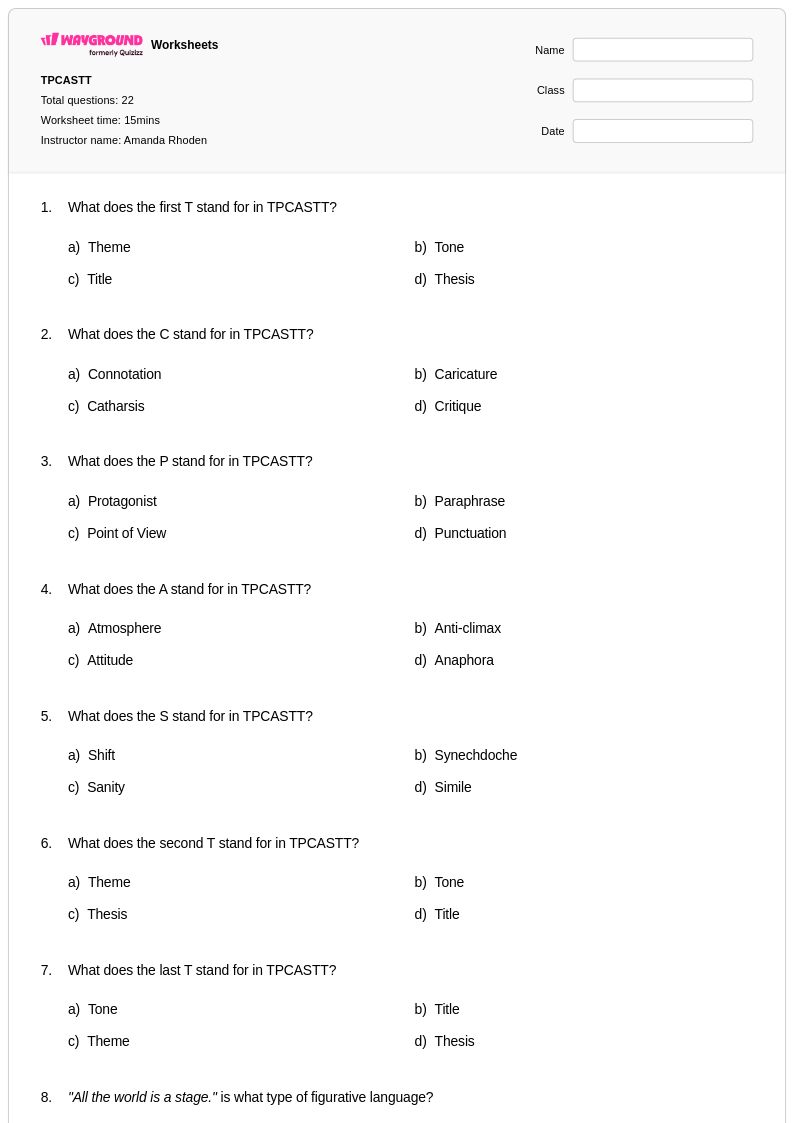
22 Q
8th - 10th
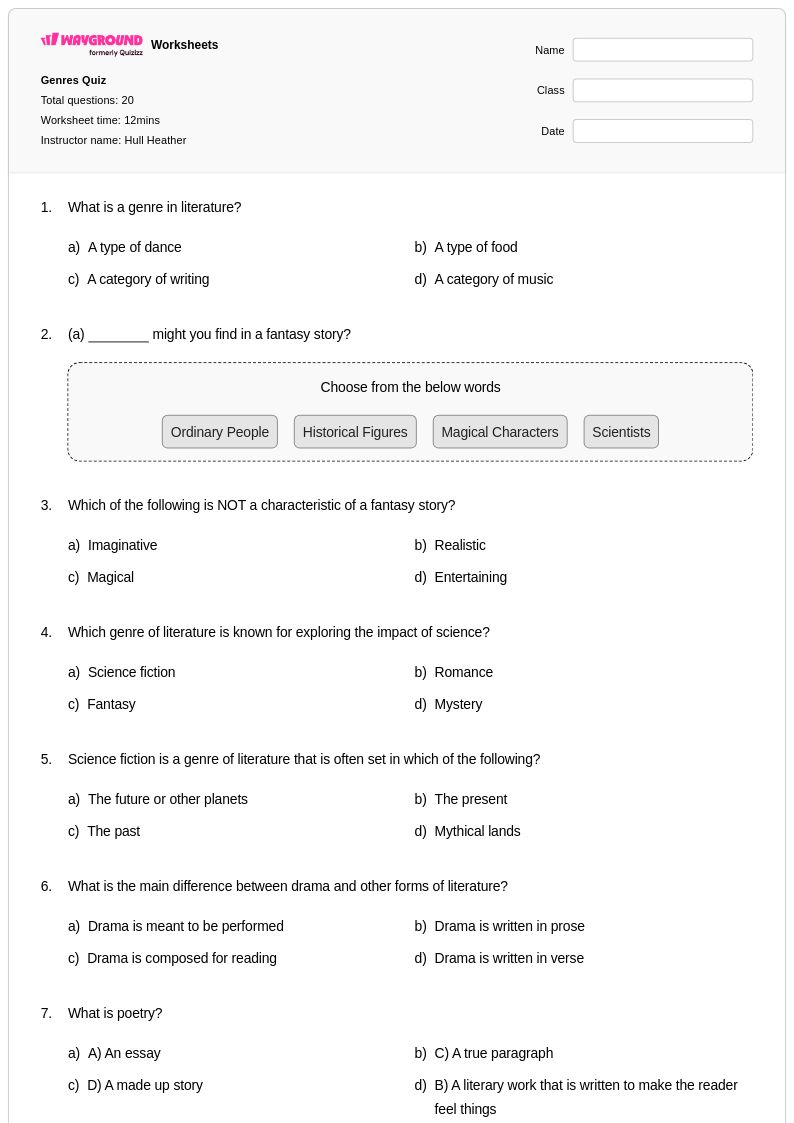
20 Q
9th
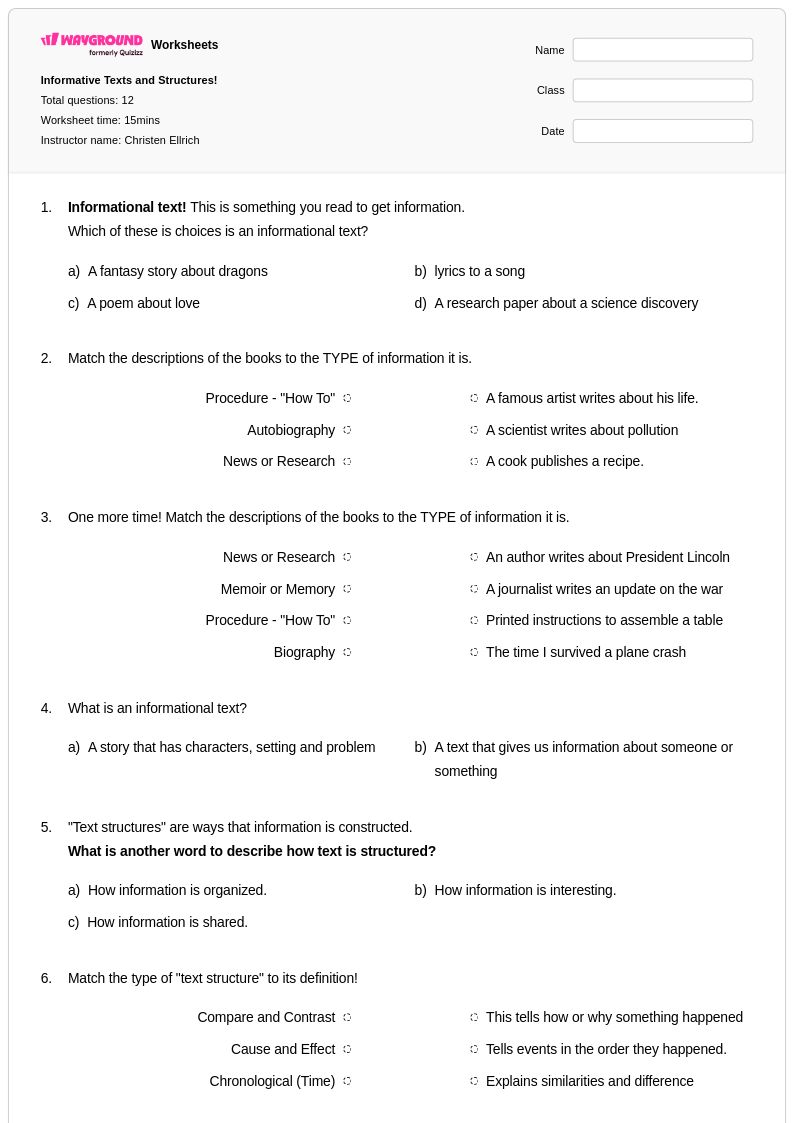
12 Q
9th
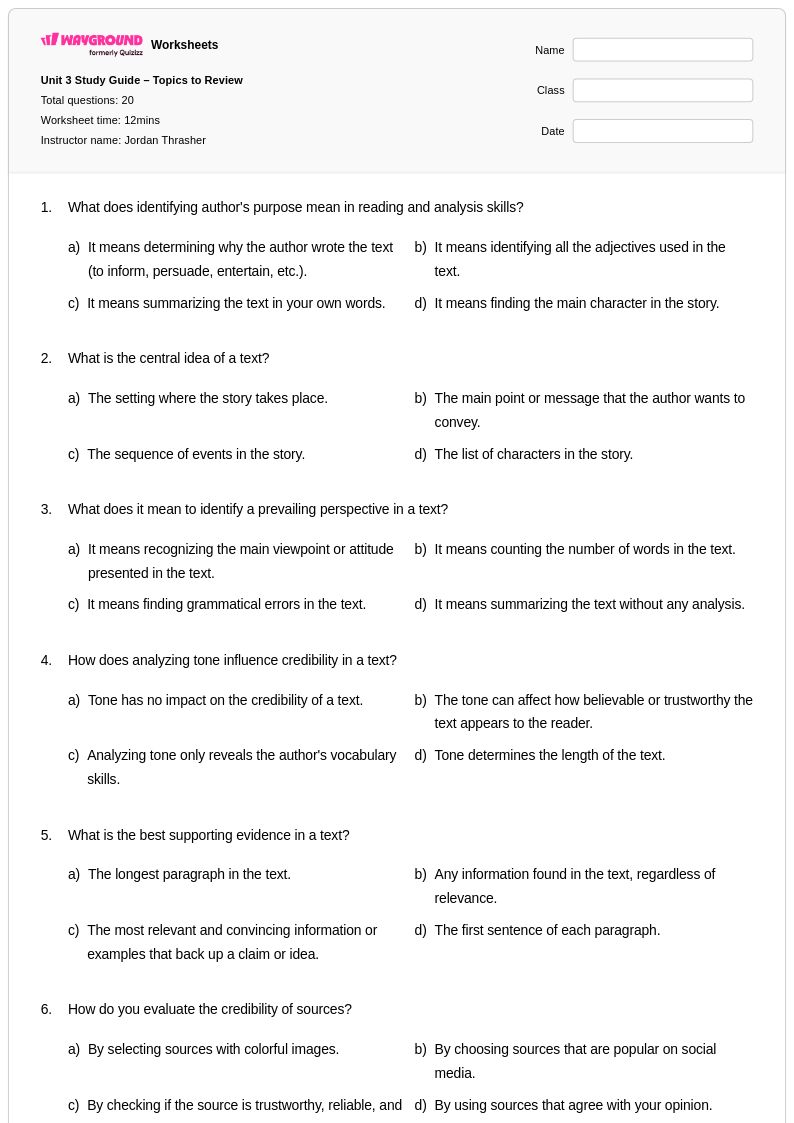
20 Q
7th - Uni
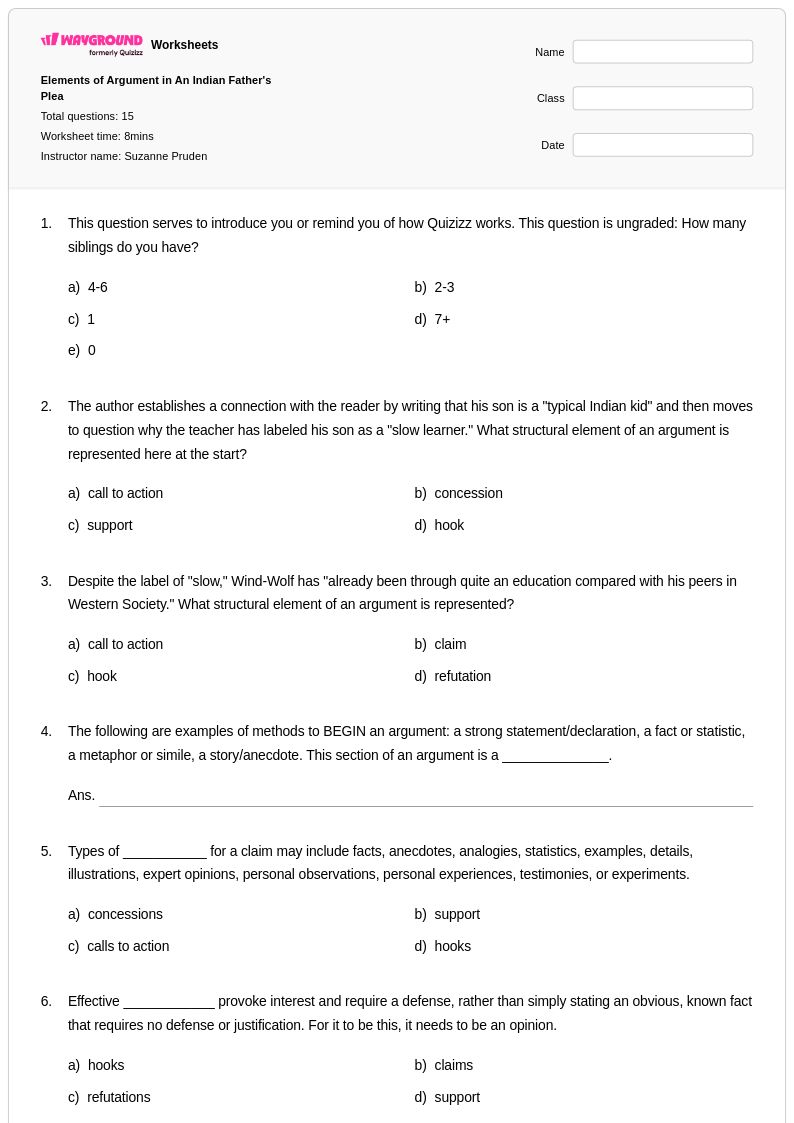
15 Q
9th - 12th
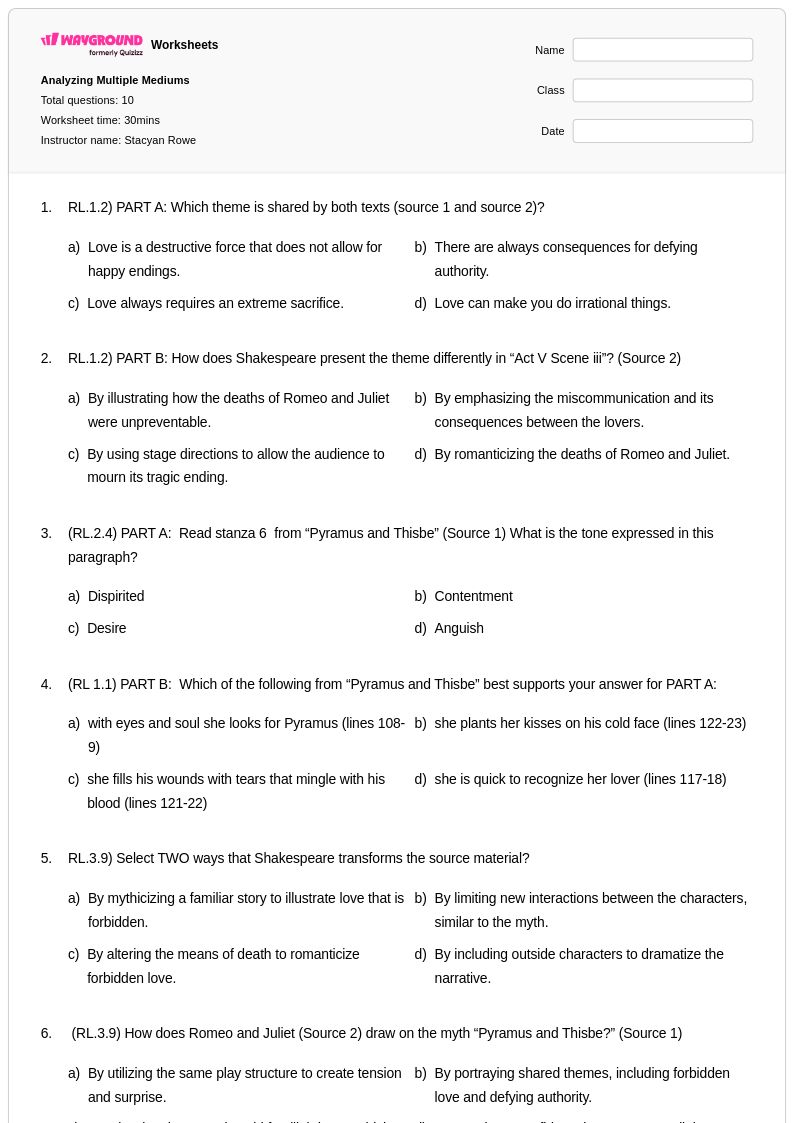
10 Q
8th - 9th
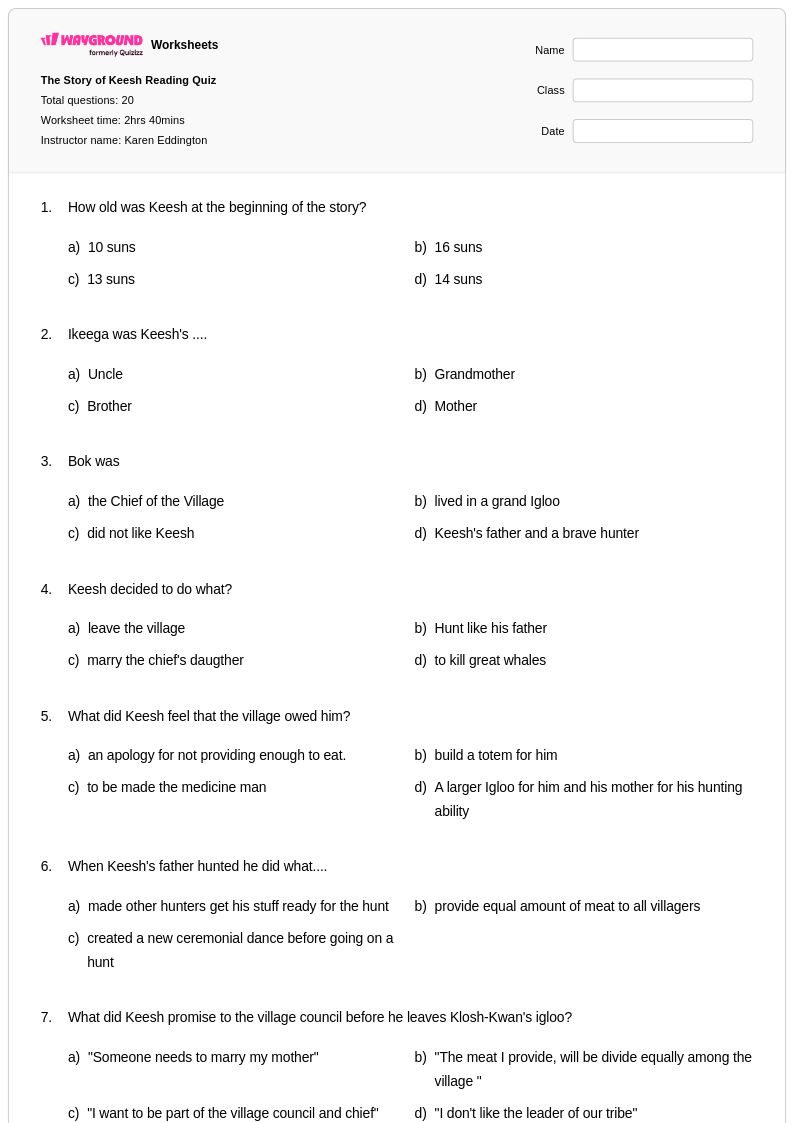
20 Q
9th
Explore Analyzing Story Structure Worksheets by Grades
Explore Analyzing Story Structure Worksheets for grade 9 by Topic
Explore Other Subject Worksheets for grade 9
Explore printable Analyzing Story Structure worksheets for Grade 9
Analyzing story structure worksheets for Grade 9 students available through Wayground (formerly Quizizz) provide comprehensive practice in identifying and examining the fundamental elements that shape narrative fiction. These expertly designed worksheets strengthen students' ability to recognize plot development patterns, character arcs, setting influences, and thematic connections within complex literary works appropriate for ninth-grade reading levels. Students engage with practice problems that require them to map story elements, analyze exposition and rising action sequences, identify climactic moments, and evaluate resolution effectiveness across diverse text types. Each worksheet includes detailed answer keys that support independent learning and self-assessment, while the free printable format ensures accessibility for both classroom instruction and home study. The pdf resources systematically build students' analytical thinking skills by guiding them through structured examination of how authors craft meaningful narratives through deliberate structural choices.
Wayground (formerly Quizizz) empowers educators with millions of teacher-created worksheet collections specifically focused on story structure analysis and reading comprehension strategies for Grade 9 learners. The platform's robust search and filtering capabilities allow teachers to quickly locate materials aligned with specific curriculum standards and differentiate instruction based on individual student needs and reading abilities. Teachers can customize existing worksheets or create original content using flexible digital tools, then seamlessly distribute materials in both printable and interactive pdf formats to accommodate diverse classroom environments. These comprehensive resources support effective lesson planning by providing ready-to-use materials for skill introduction, guided practice sessions, remediation support for struggling readers, and enrichment opportunities for advanced students, ensuring that all ninth-grade learners develop strong analytical skills essential for literary interpretation and critical thinking success.
FAQs
How do I teach story structure to students who struggle to see how plot elements connect?
What exercises help students practice identifying plot structure in a text?
What are the most common mistakes students make when analyzing story structure?
How do I help students analyze character development as part of story structure?
How do I teach point of view in the context of story structure?
How do Wayground's story structure worksheets work, and what formats are they available in?