Free Printable Ancient China Worksheets for Grade 7
Explore Grade 7 Ancient China worksheets and printables that help students master Chinese dynasties, inventions, and cultural achievements through engaging practice problems with comprehensive answer keys.
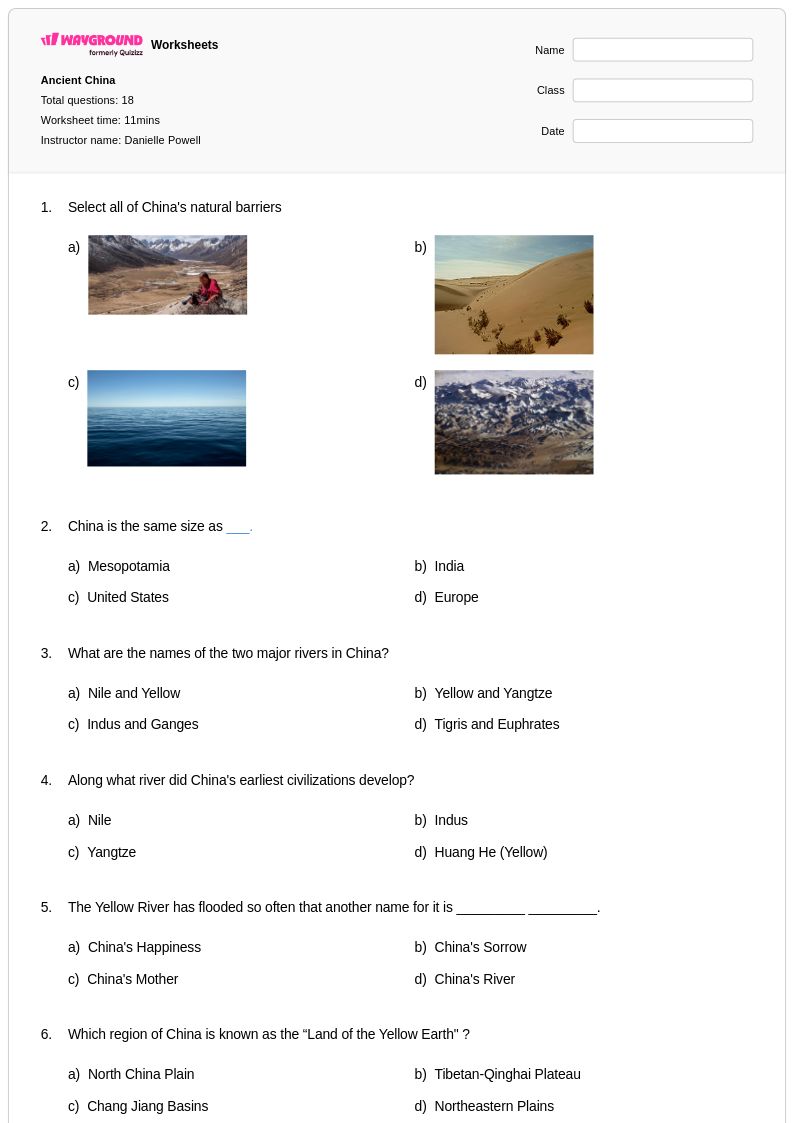
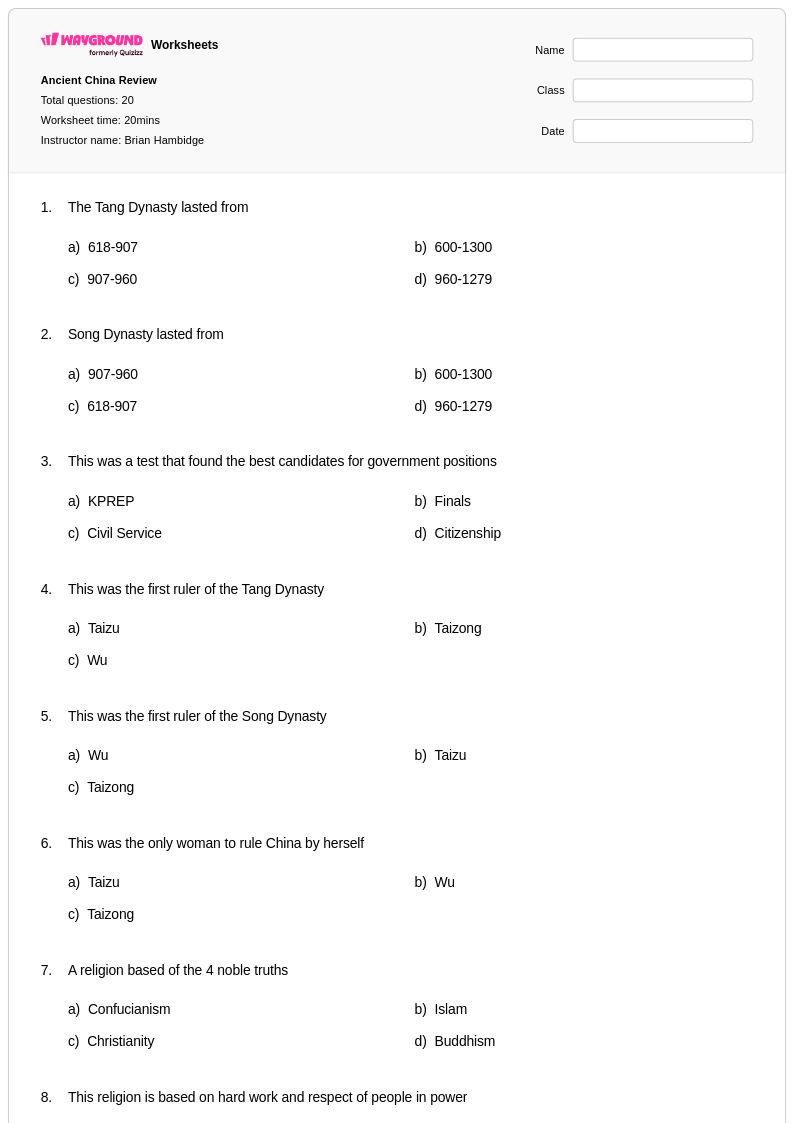
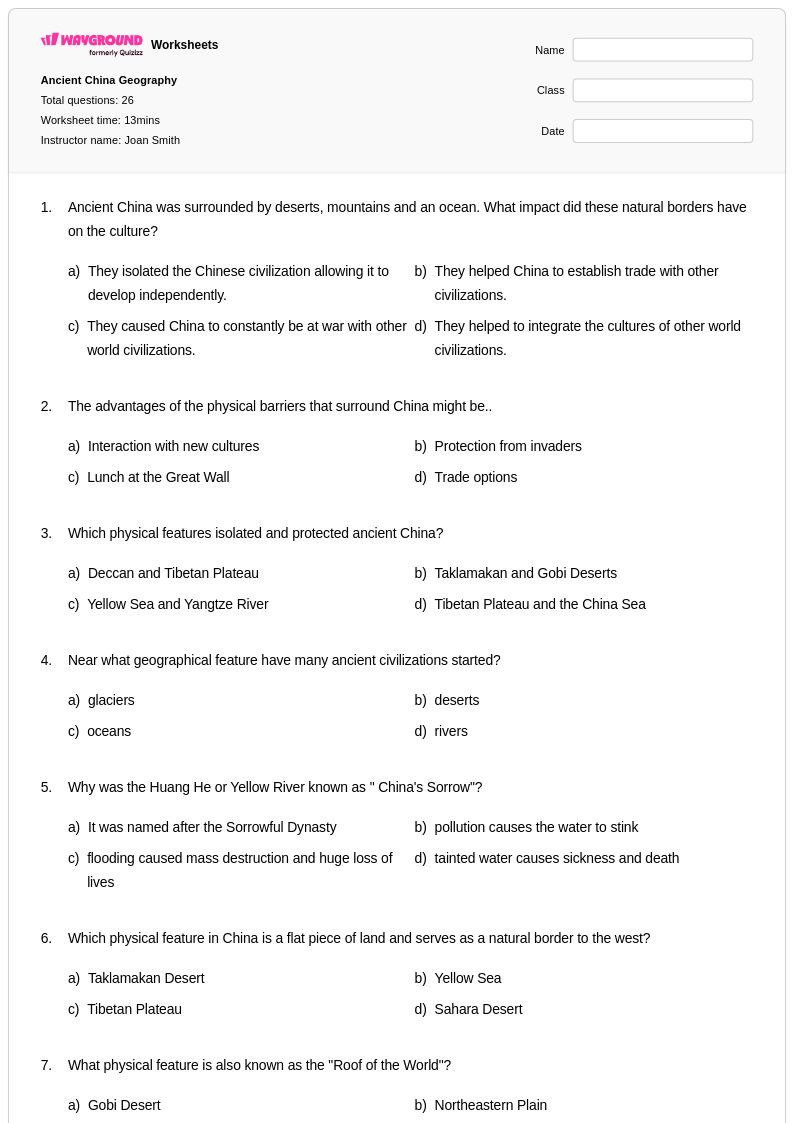
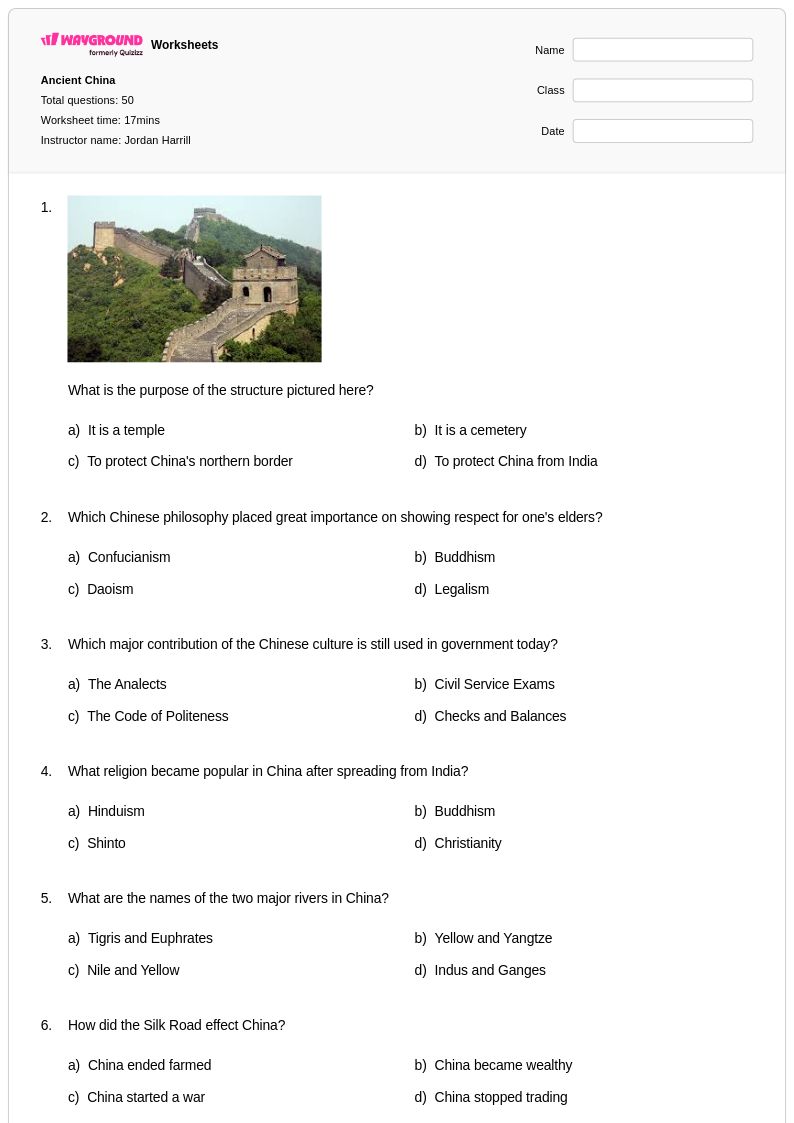
Explore printable Ancient China worksheets for Grade 7
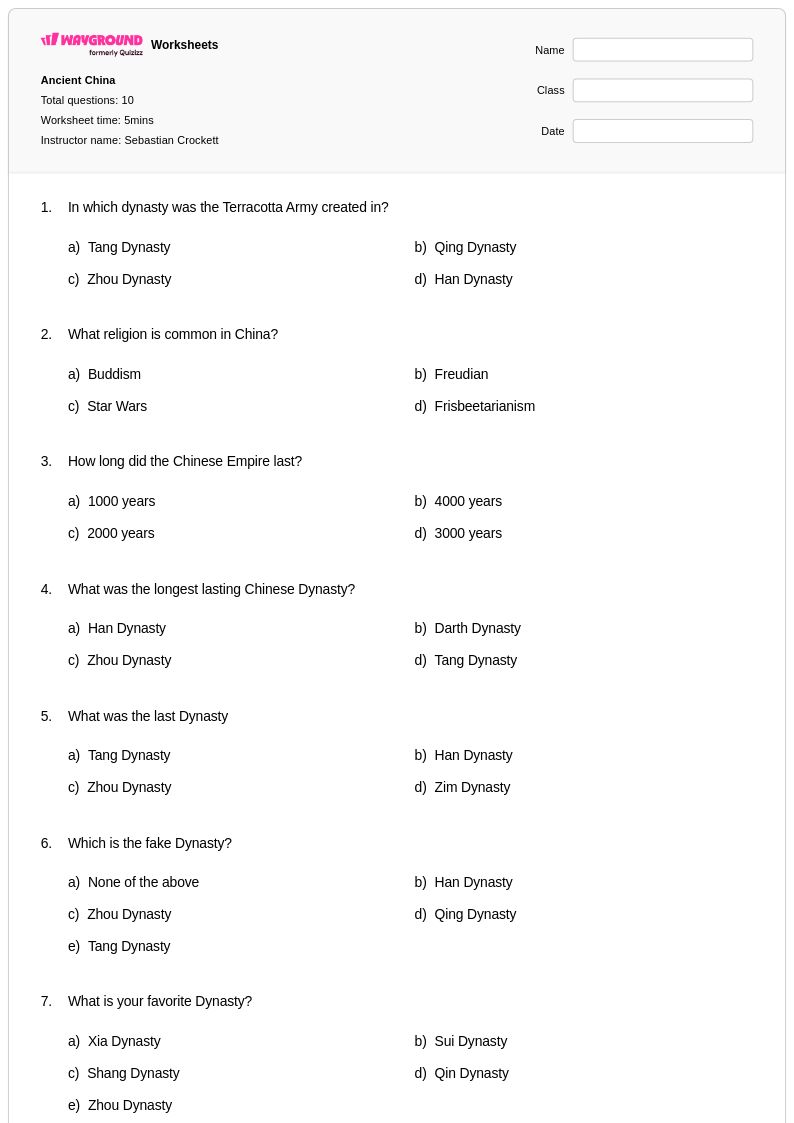
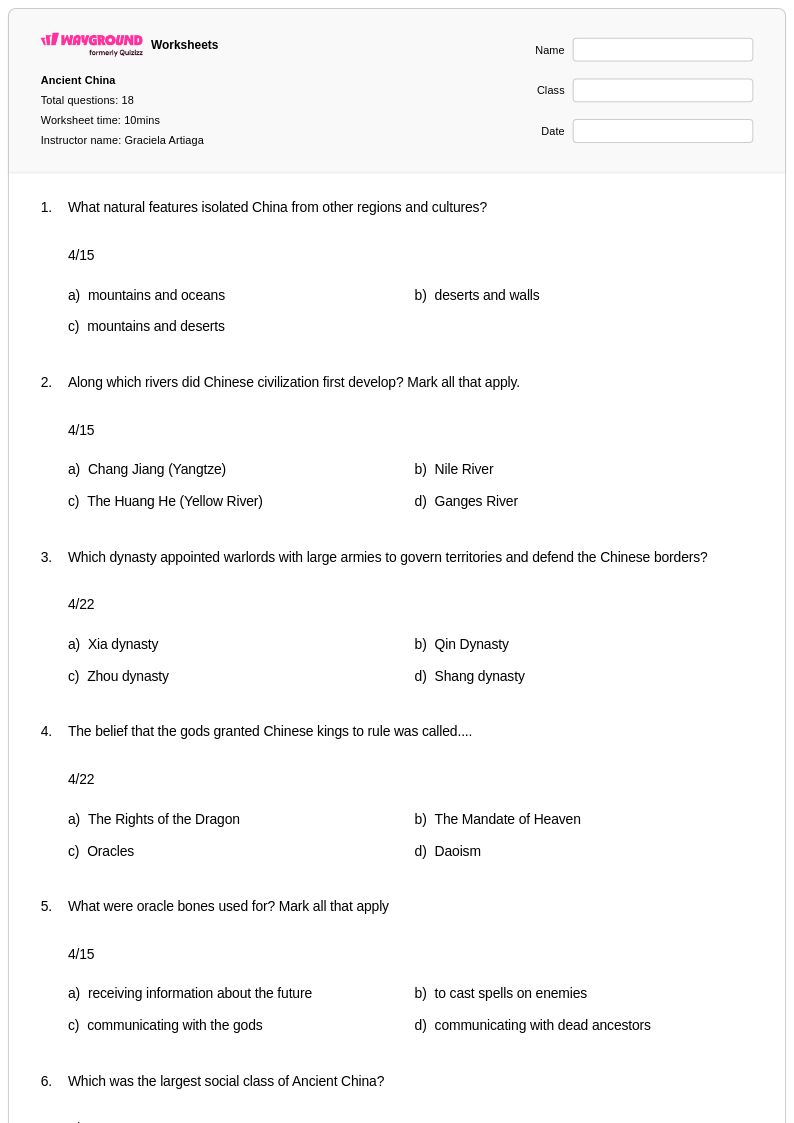
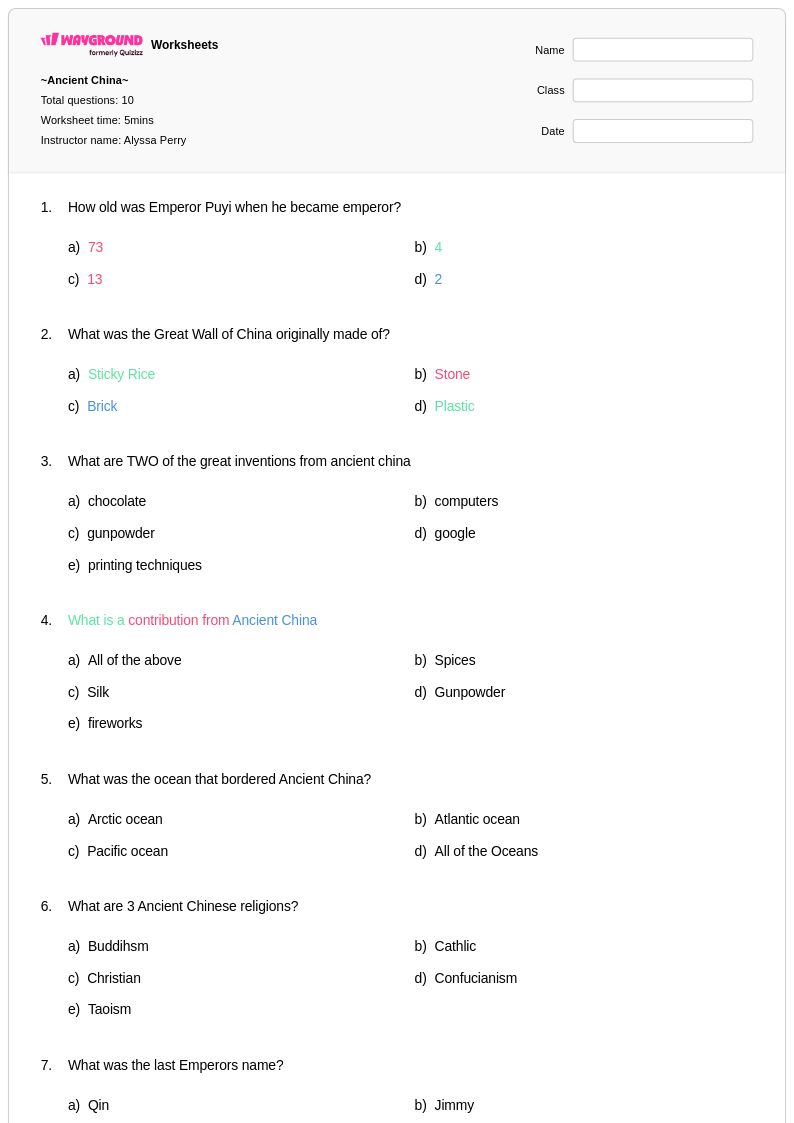
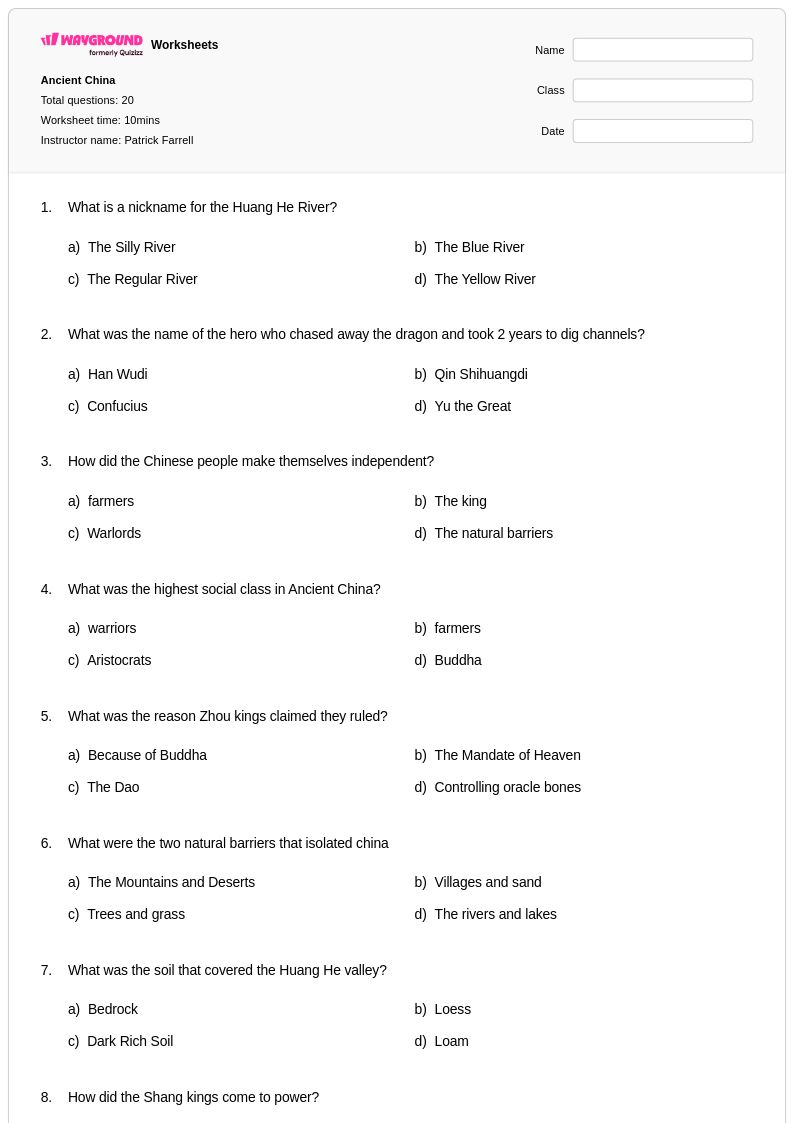
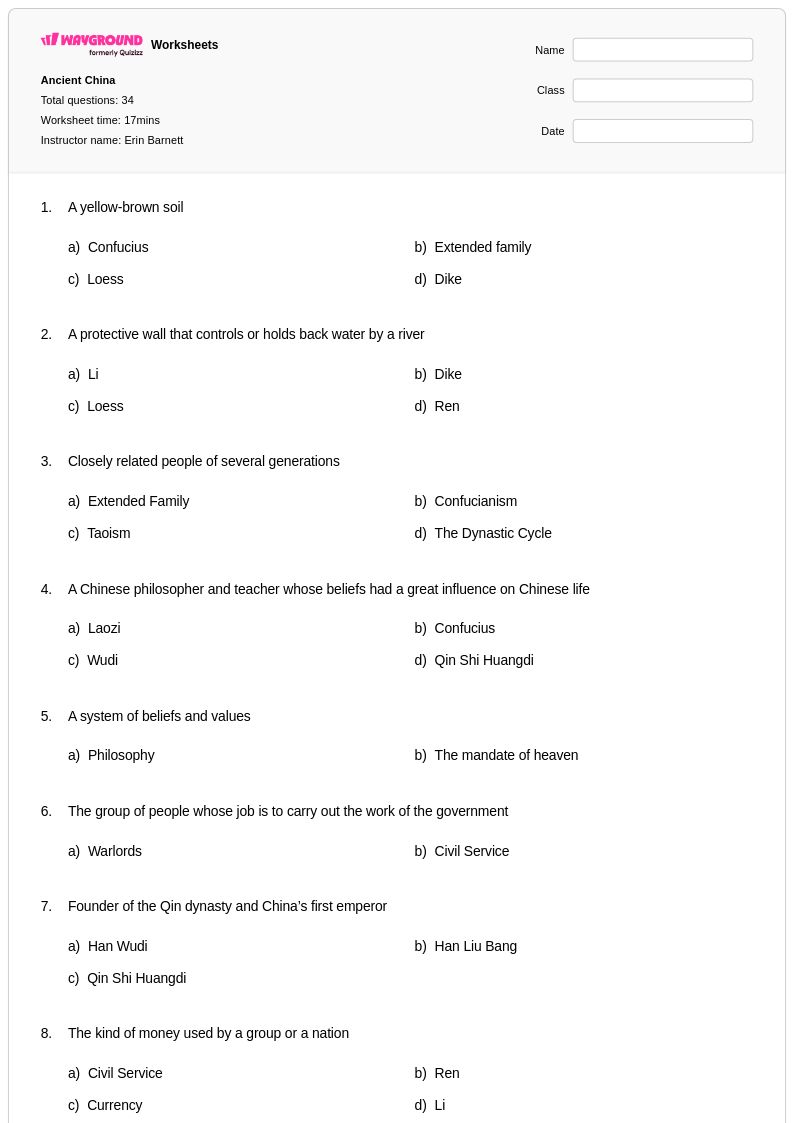
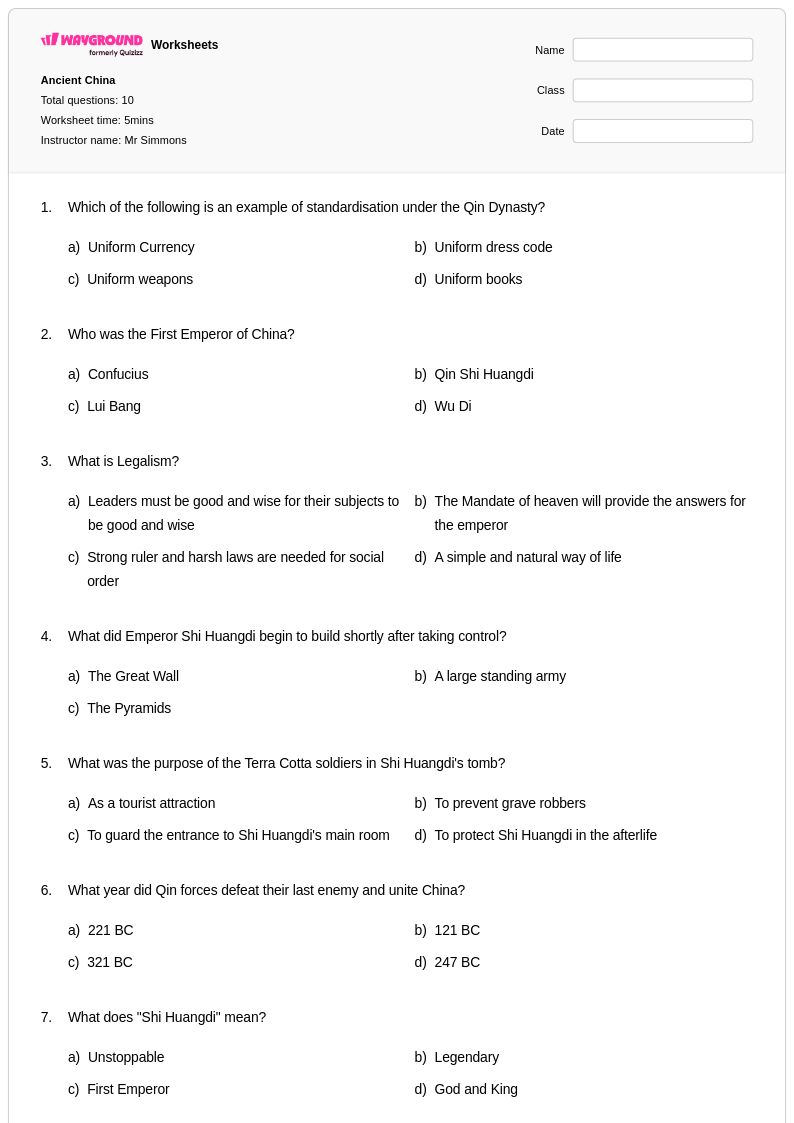
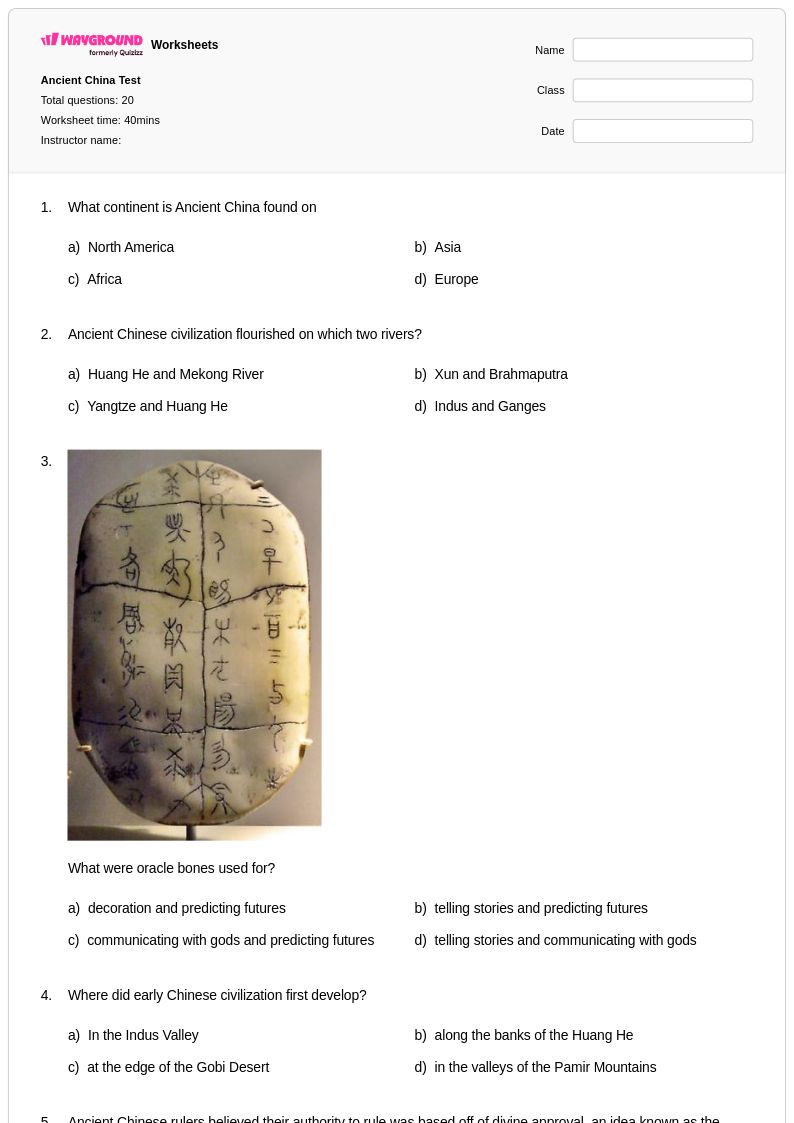
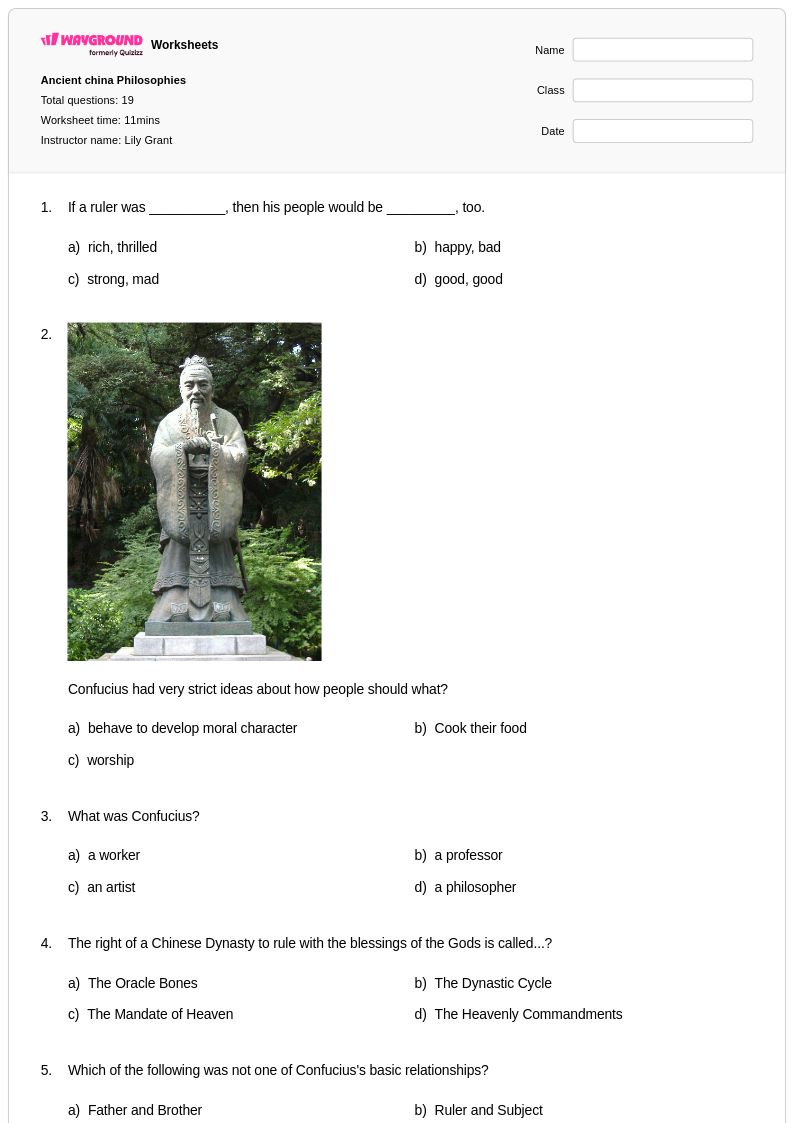
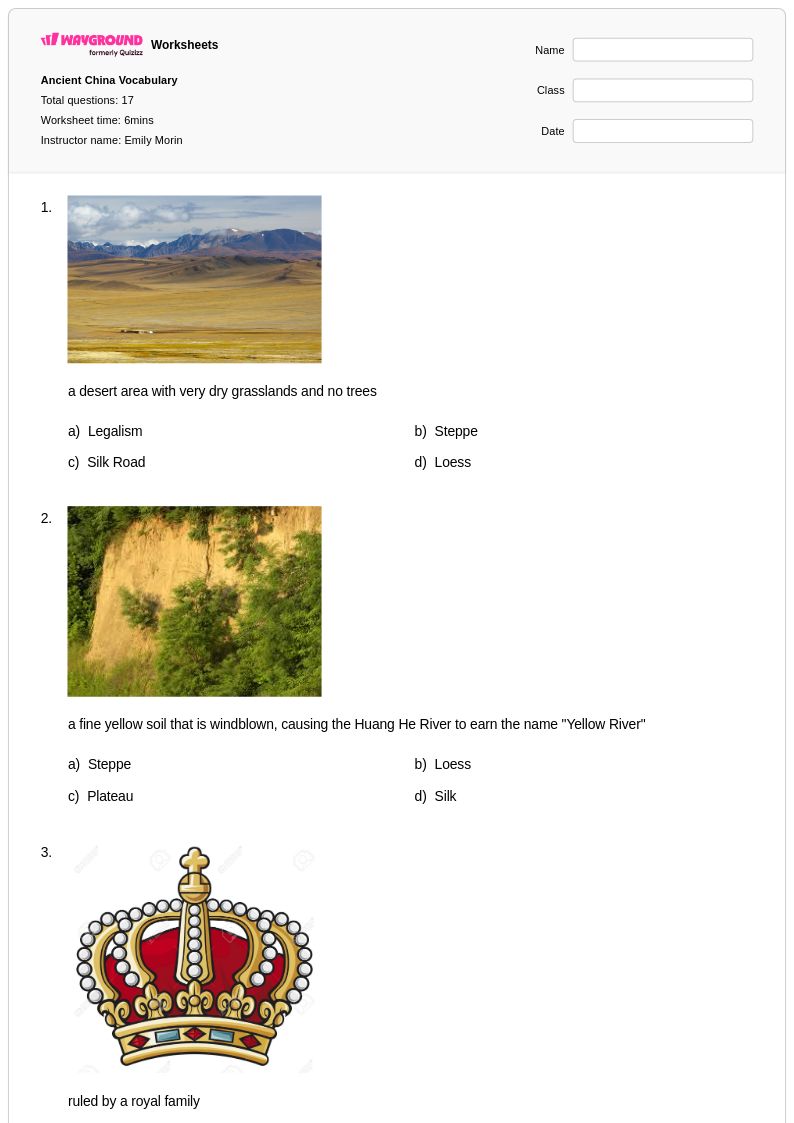
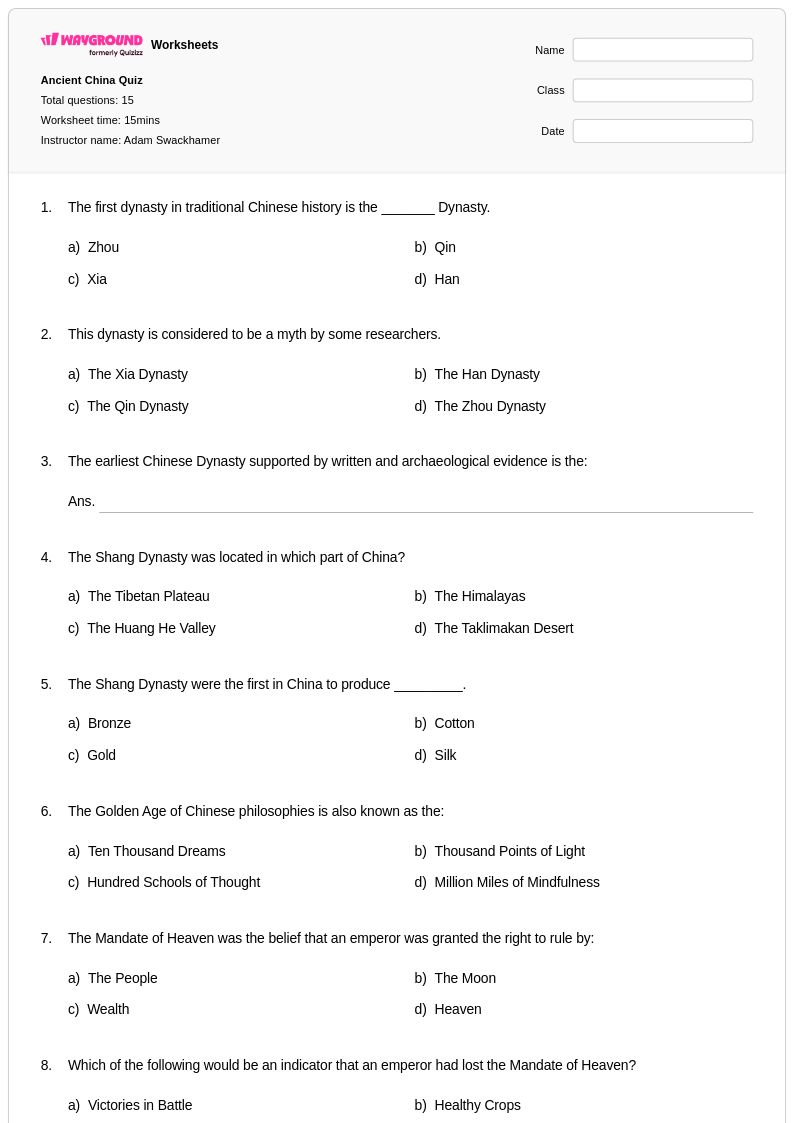
Ancient China worksheets for Grade 7 students available through Wayground (formerly Quizizz) provide comprehensive coverage of one of history's most influential civilizations, spanning from the earliest dynasties through the imperial period. These educational resources strengthen critical thinking skills by engaging students with the complex political, social, and cultural developments that shaped Chinese civilization, including the rise and fall of major dynasties, philosophical schools like Confucianism and Taoism, technological innovations, and social hierarchies. The collection includes practice problems that challenge students to analyze primary sources, compare different periods of Chinese history, and evaluate the lasting impact of ancient Chinese achievements on modern society. Each worksheet comes with a detailed answer key to support effective learning assessment, and the materials are available as free printables in convenient pdf format for seamless classroom integration.
Wayground (formerly Quizizz) empowers educators with access to millions of teacher-created Ancient China resources specifically designed for Grade 7 Social Studies instruction. The platform's robust search and filtering capabilities allow teachers to quickly locate worksheets aligned with curriculum standards while offering differentiation tools that accommodate diverse learning needs within the classroom. These customizable materials are available in both printable and digital formats, including downloadable pdf versions, enabling flexible implementation across various teaching environments. Teachers can effectively use these resources for lesson planning, targeted remediation for struggling students, enrichment activities for advanced learners, and regular skill practice to reinforce understanding of ancient Chinese history, geography, government structures, and cultural achievements that continue to influence world civilization today.
FAQs
How do I teach the dynastic cycle to middle school students?
The dynastic cycle is best taught by helping students recognize a recurring pattern: a new dynasty rises with strong leadership, stabilizes through centralized power, then weakens due to corruption, natural disasters, or rebellion, before collapsing and being replaced. Using a visual cycle diagram alongside specific dynasty examples — such as the Han, Tang, and Ming — makes the abstract pattern concrete. Pairing this with primary source excerpts or timeline activities helps students trace causes and effects across multiple dynasties rather than memorizing isolated facts.
What exercises help students practice understanding Ancient China's contributions to world history?
Effective practice exercises include comparative charts that ask students to connect Chinese innovations — gunpowder, the compass, papermaking, and printing — to their global impact, as well as map activities that trace trade routes along the Silk Road. Analytical writing prompts that ask students to evaluate whether a specific innovation changed world history more than another push deeper thinking beyond recall. Worksheets that combine primary source analysis with structured questions help students build historical argumentation skills specific to Ancient China.
What common mistakes do students make when studying Ancient Chinese philosophy?
Students frequently conflate Confucianism and Taoism, treating them as interchangeable belief systems rather than distinct philosophies with different priorities — Confucianism emphasizing social hierarchy and duty, Taoism emphasizing harmony with nature and simplicity. Another common error is treating these philosophies as purely religious rather than as frameworks that shaped governance, family structure, and education in Chinese society. Targeted questions that ask students to apply each philosophy to a real historical scenario, such as how a Confucian ruler versus a Taoist ruler might respond to a social crisis, help address this confusion.
How do I help students understand the geographical influence on Ancient Chinese civilization?
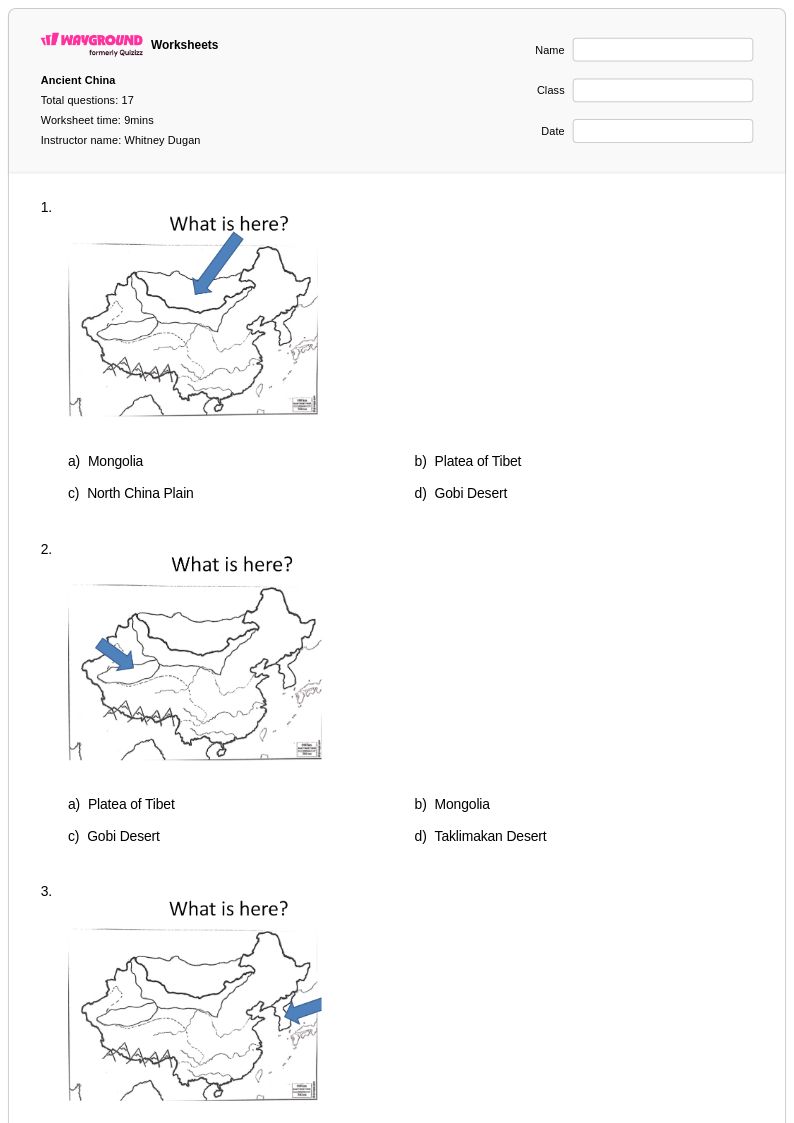
Geography instruction for Ancient China should center on how physical barriers — the Himalayas, Gobi Desert, and Pacific Ocean — shaped isolation, trade patterns, and cultural development. Map work that has students label the Yellow and Yangtze Rivers alongside major dynasties' territorial boundaries makes the connection between river valley agriculture and civilization growth visible. Following the map activity with questions about how the same geography that protected China also limited contact with other civilizations deepens spatial reasoning and historical thinking.
How can I use Ancient China worksheets to support students with different learning needs?
Ancient China worksheets on Wayground can be hosted as digital quizzes, which allows teachers to apply individual accommodations directly within the platform. Students who need additional support can be assigned extended time per question, read-aloud functionality for text-heavy primary source questions, or reduced answer choices to lower cognitive load on multiple-choice items. These accommodations are saved per student and apply automatically in future sessions, so teachers can differentiate consistently without rebuilding settings for every assignment.
How do I use Wayground's Ancient China worksheets in my classroom?
Wayground's Ancient China worksheets are available as printable PDFs for traditional classroom use and in digital formats for technology-integrated environments, making them flexible for in-class instruction, homework, or independent study. Teachers can also host worksheets as quizzes directly on Wayground, giving students an interactive experience while generating response data the teacher can review. Each worksheet includes a complete answer key, reducing prep time and making it straightforward to use the materials for guided practice, formative assessment, or remediation.