
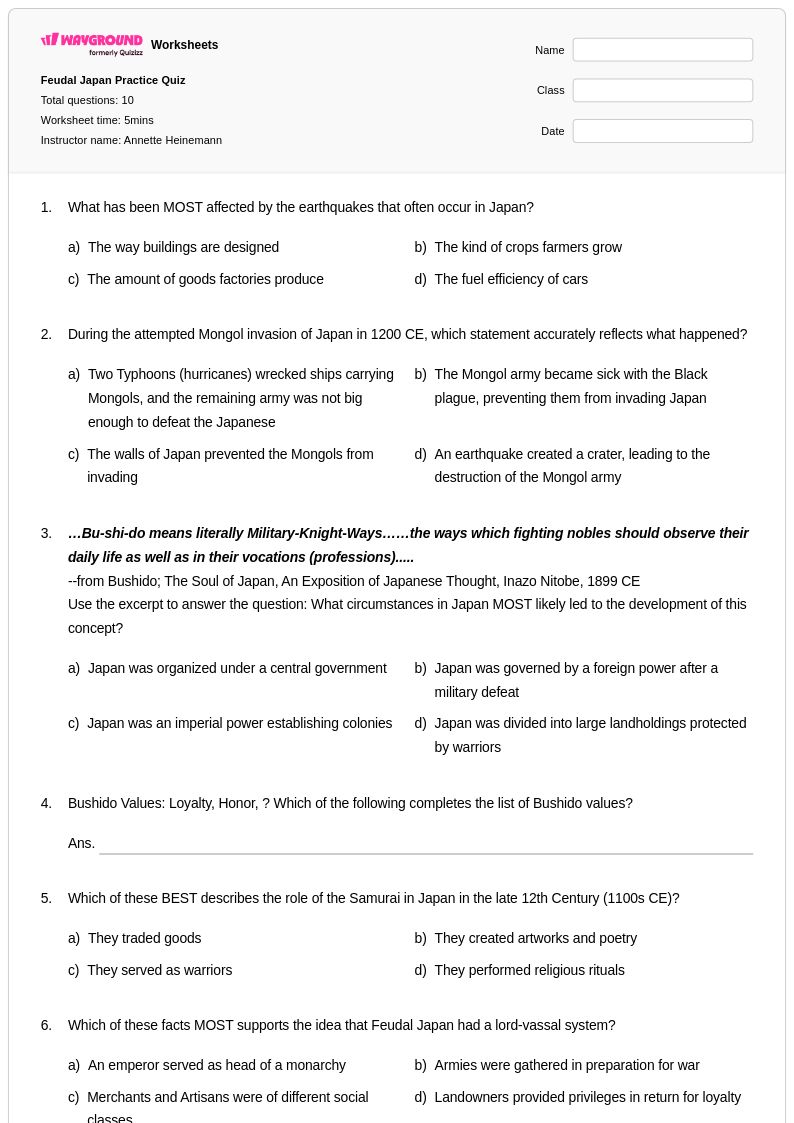
10 Q
7th
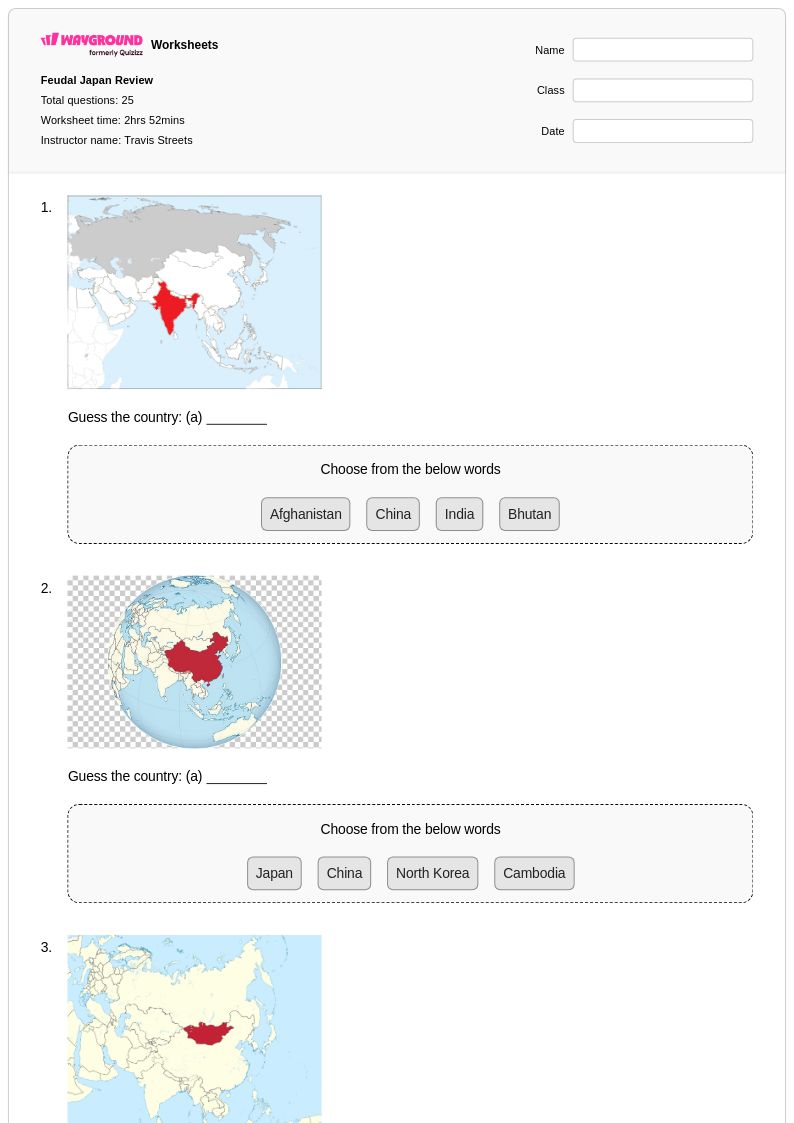
25 Q
7th
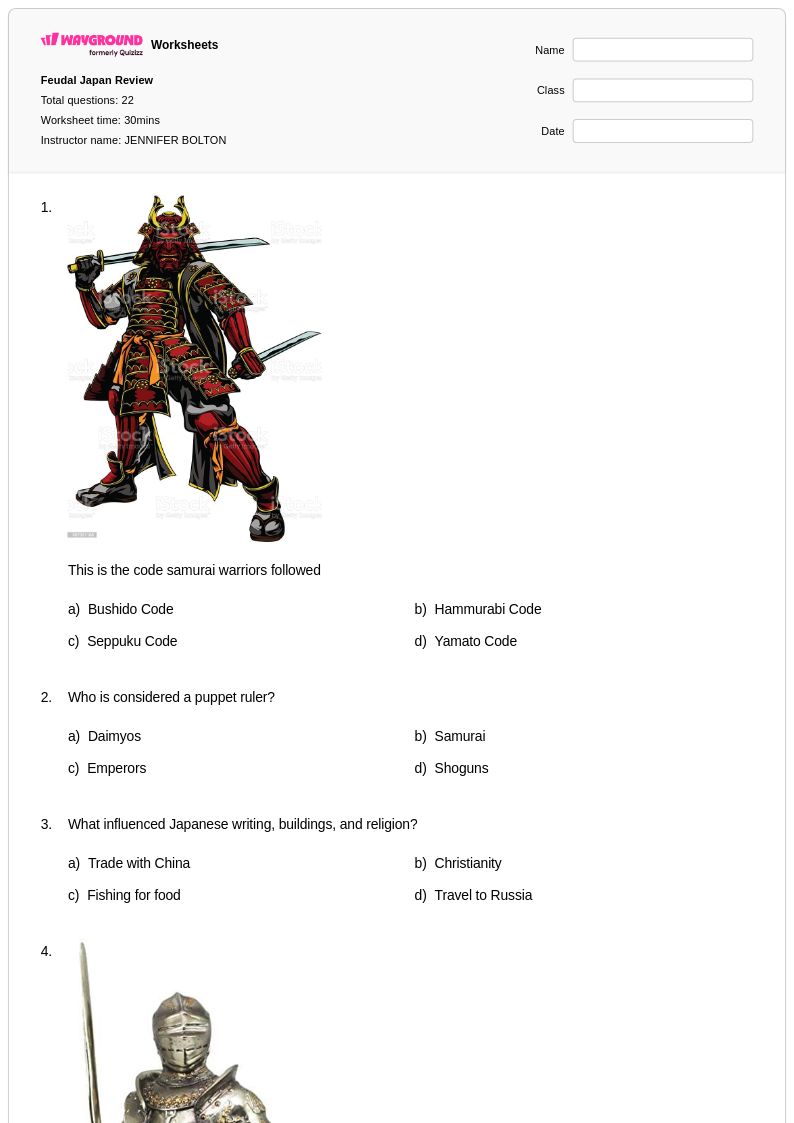
22 Q
7th
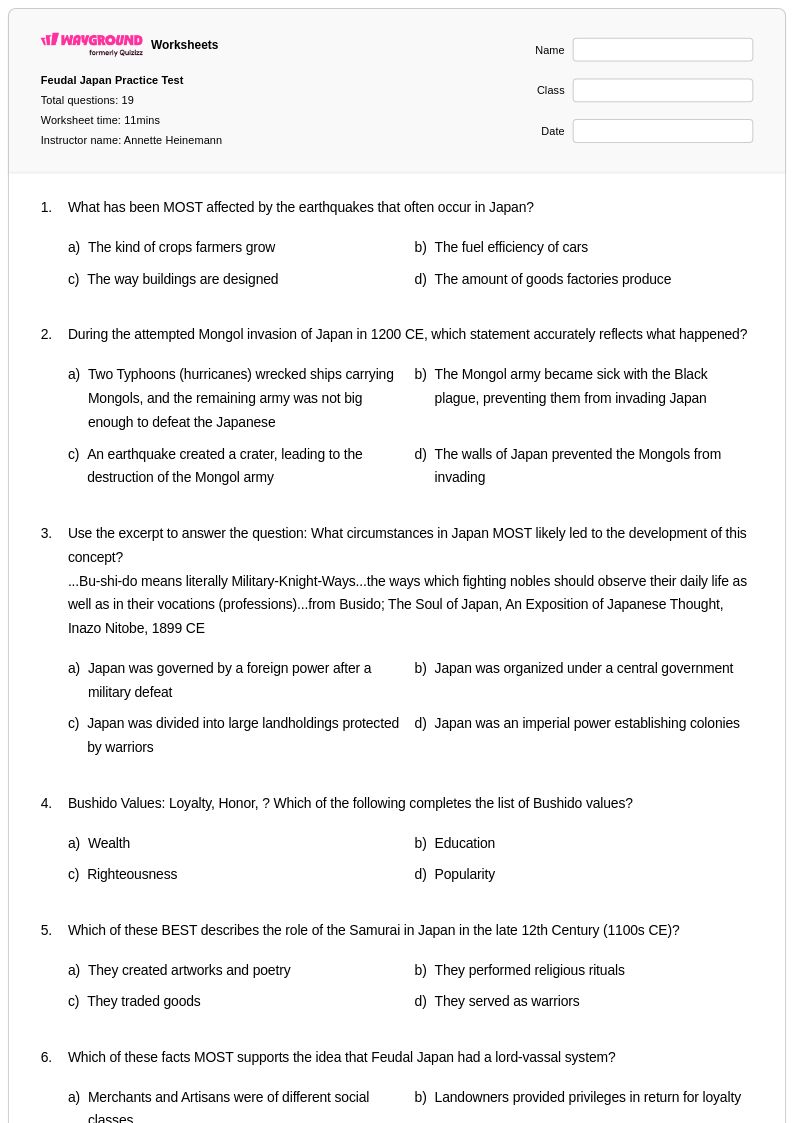
19 Q
7th
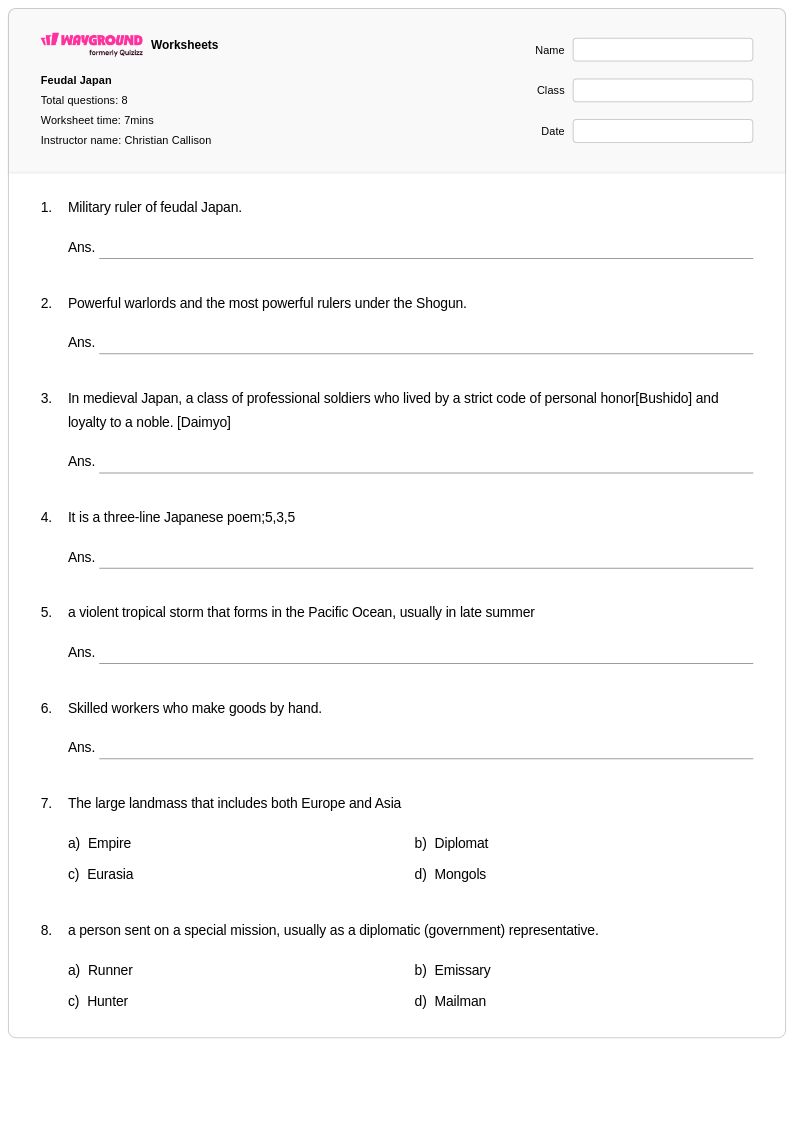
8 Q
7th - Uni
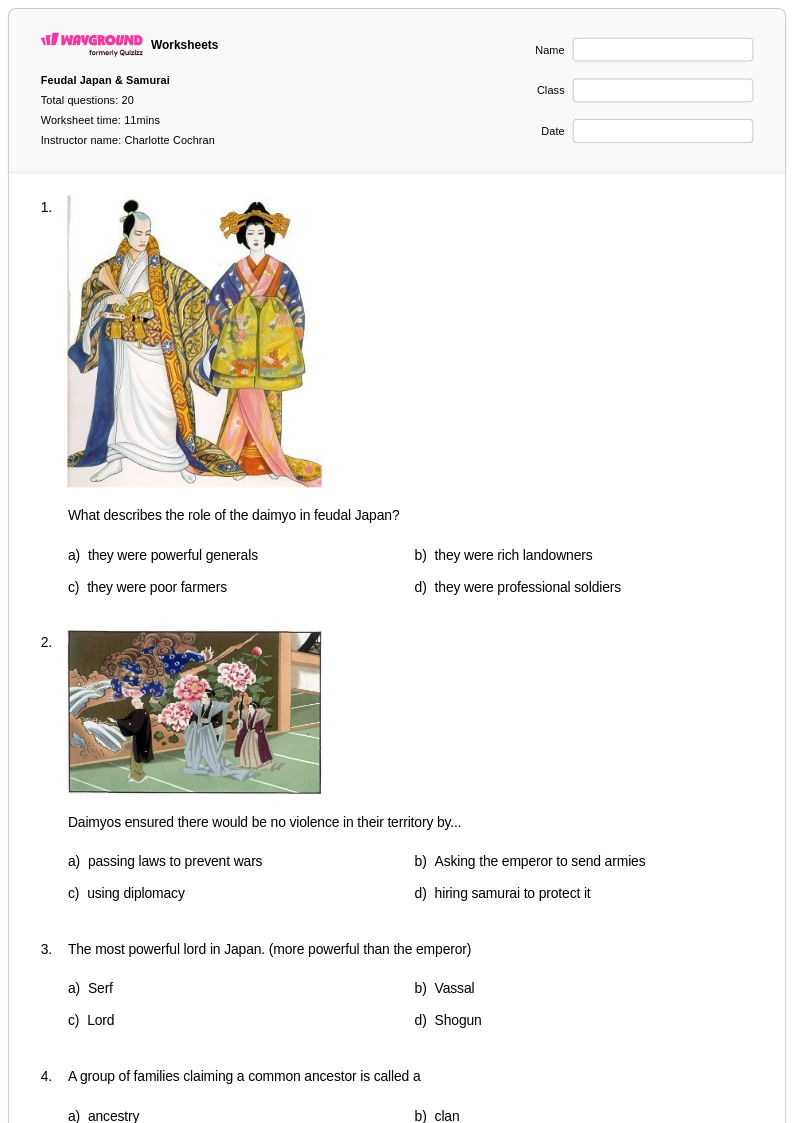
20 Q
7th
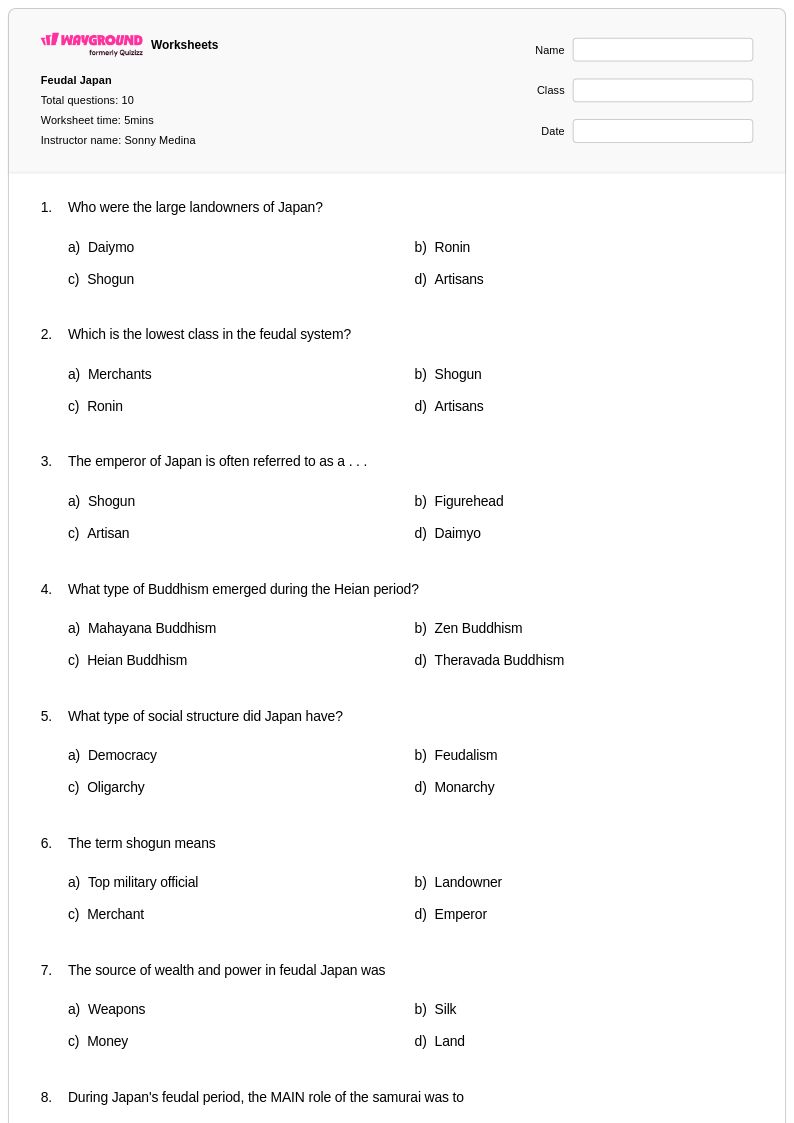
10 Q
7th
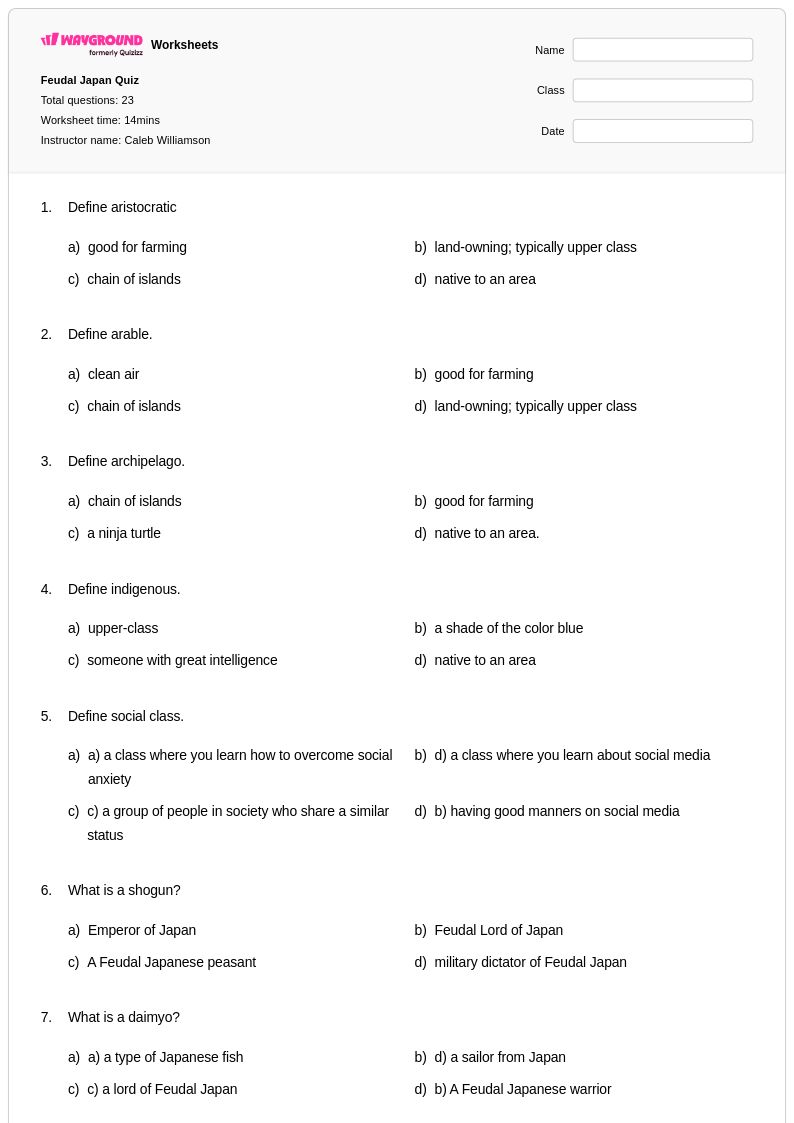
23 Q
7th
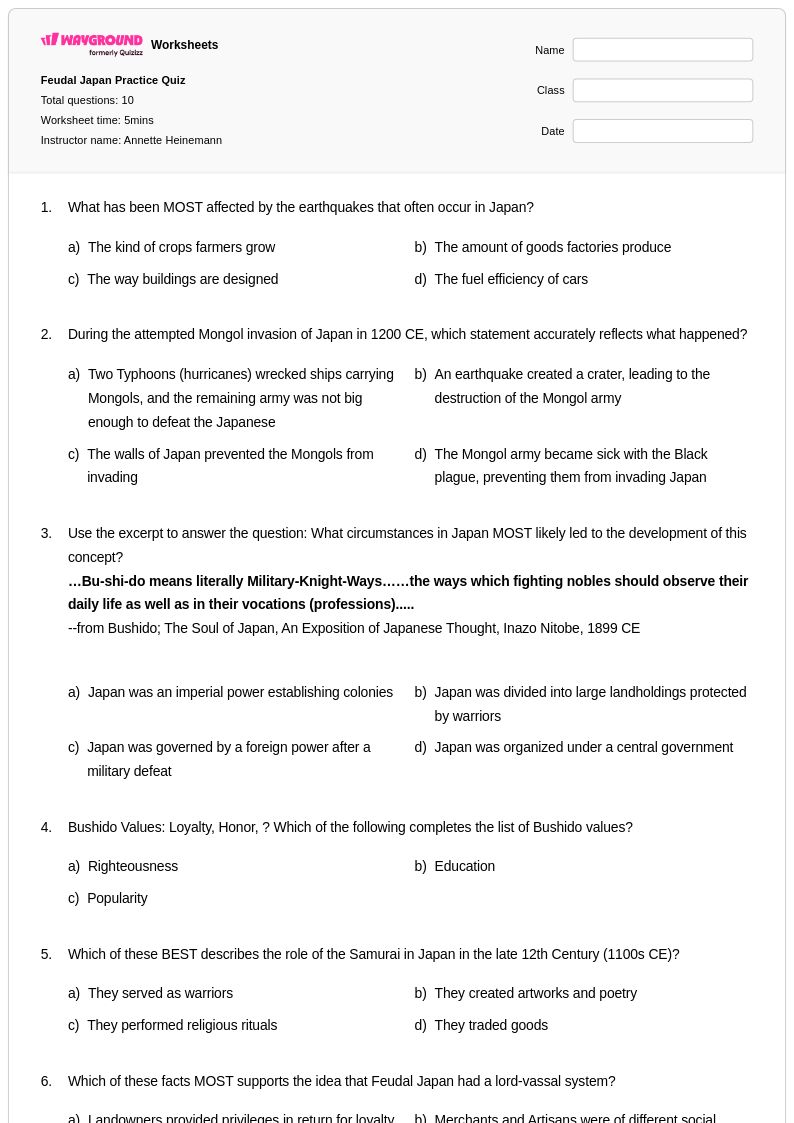
10 Q
7th
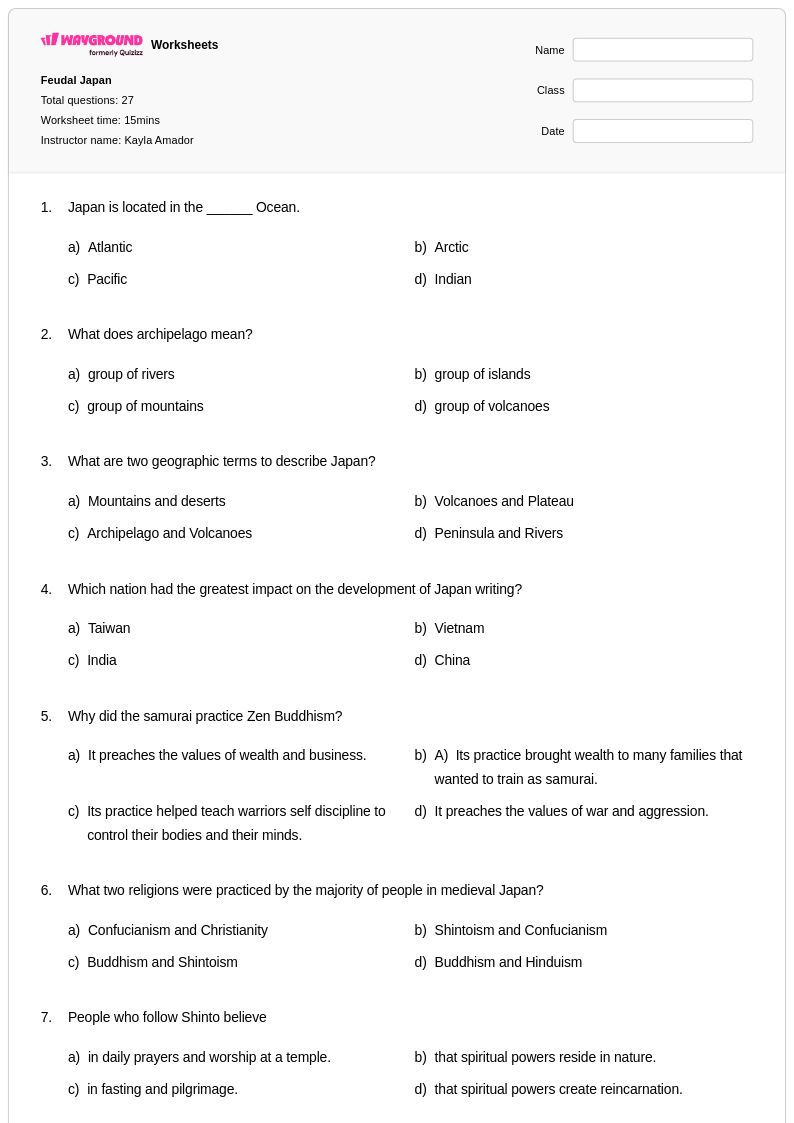
27 Q
7th
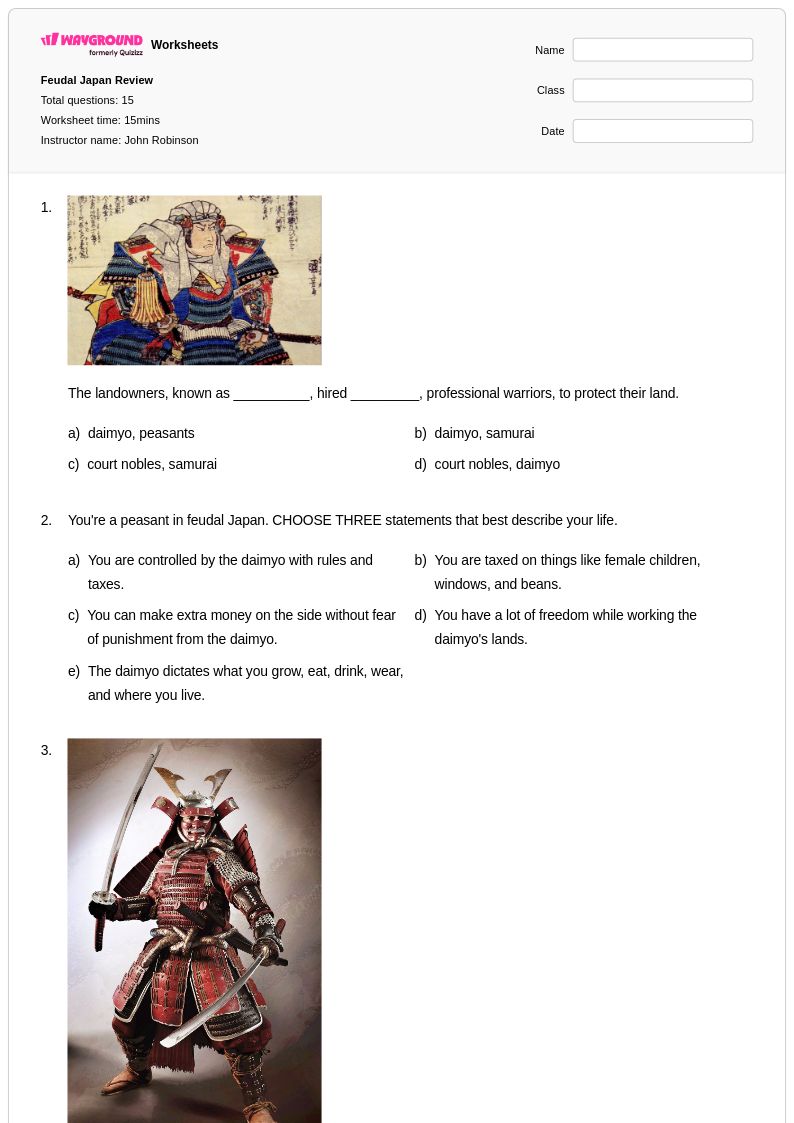
15 Q
7th - Uni
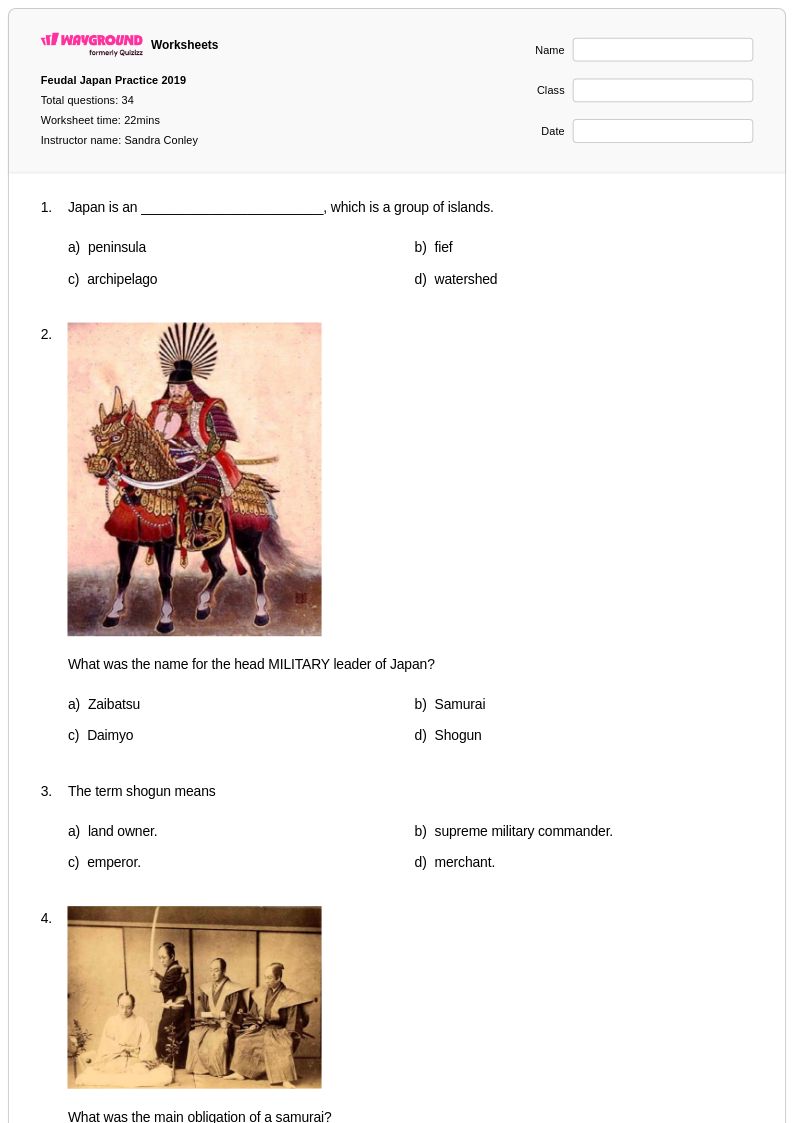
34 Q
6th - 8th
8 Q
7th
10 Q
7th
25 Q
7th - Uni
8 Q
7th
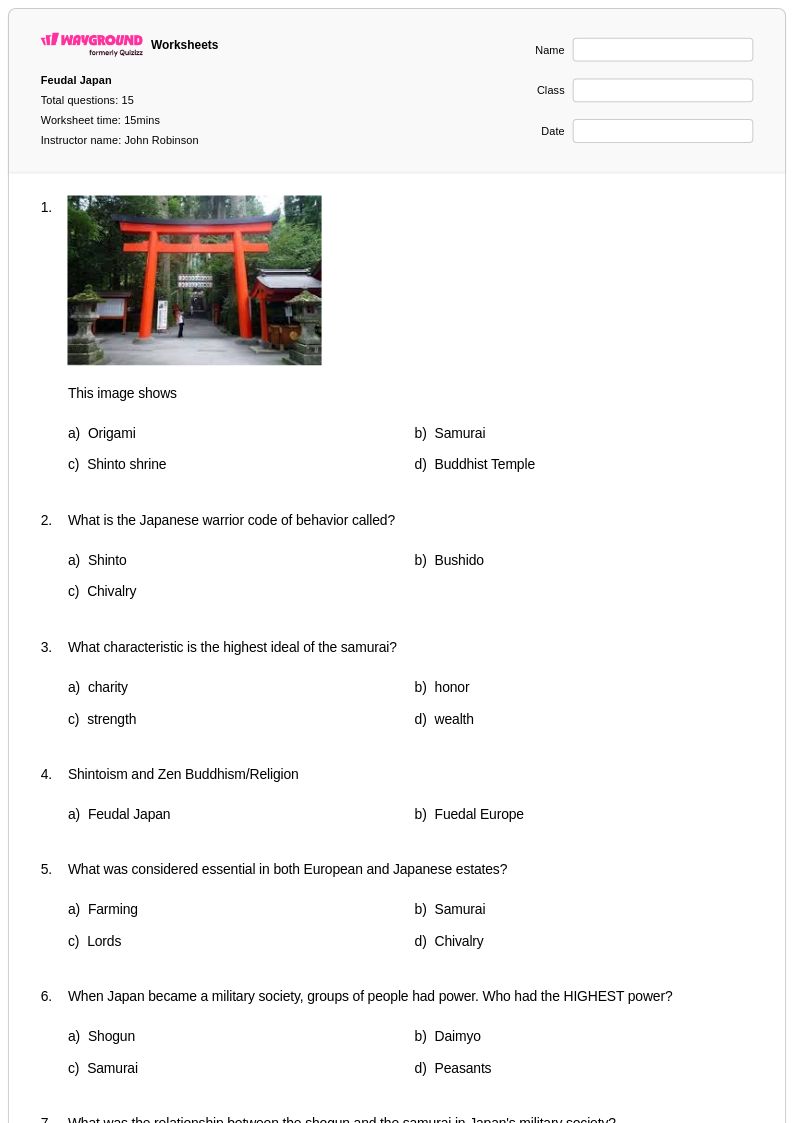
15 Q
7th - Uni
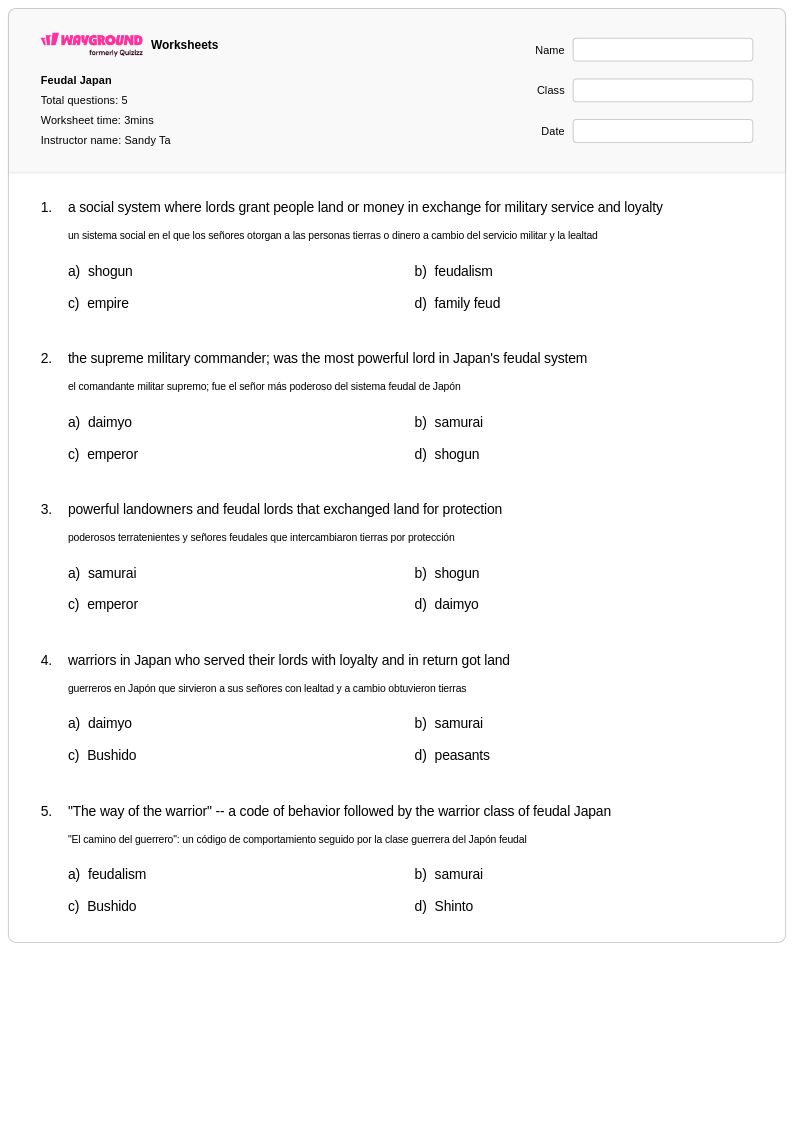
5 Q
7th
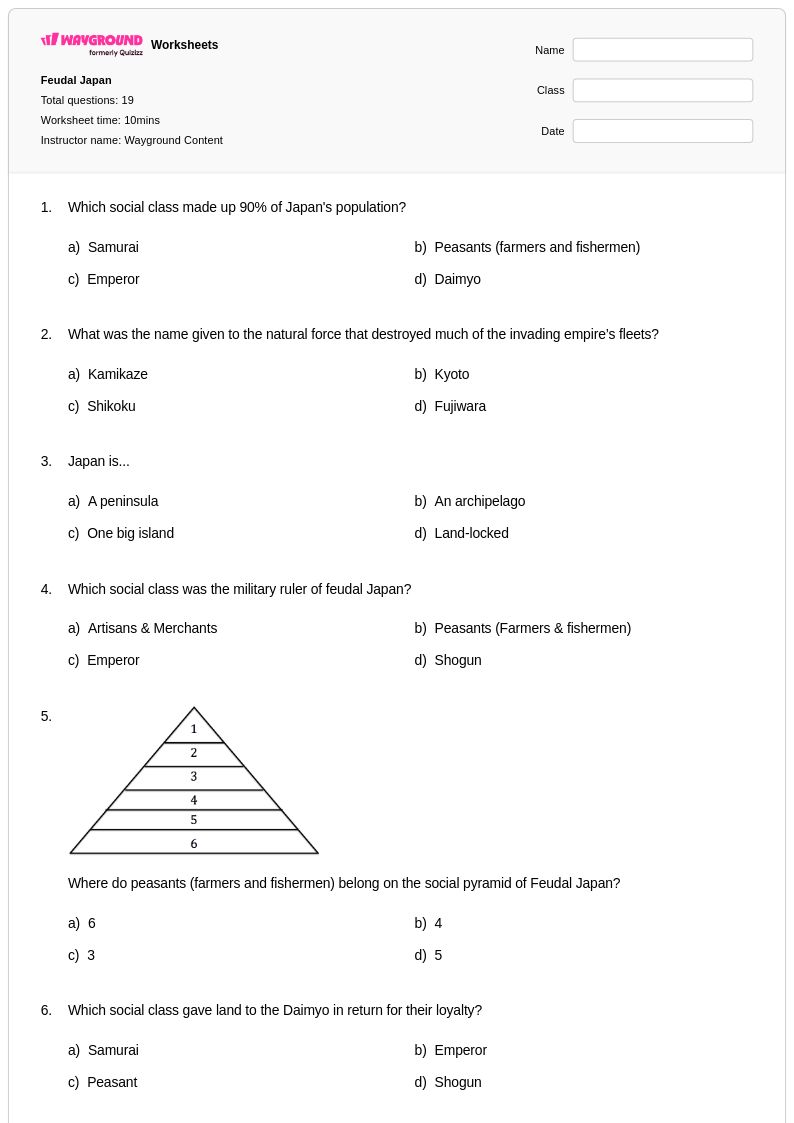
19 Q
7th
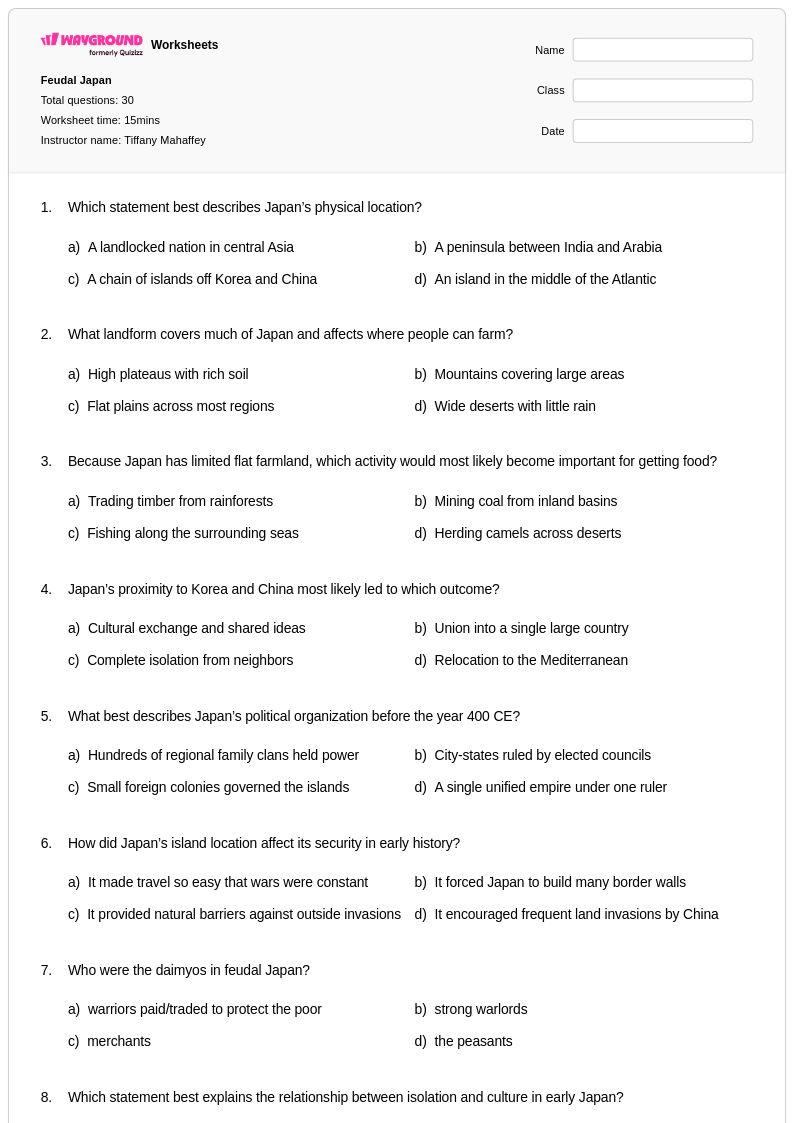
30 Q
6th - Uni
25 Q
7th - Uni
23 Q
6th - 8th
20 Q
7th
15 Q
7th - Uni
Explore Other Subject Worksheets for grade 7
Explore printable Feudal Japan worksheets for Grade 7
Feudal Japan worksheets for Grade 7 students available through Wayground (formerly Quizizz) provide comprehensive coverage of this fascinating period in Japanese history, spanning from approximately 1185 to 1603. These educational resources explore the complex hierarchical society that emerged during the Kamakura, Ashikaga, and early Tokugawa periods, examining the roles of shoguns, daimyo, samurai, and peasants within the feudal system. Students engage with primary source documents, analyze the code of bushido, and investigate the influence of Zen Buddhism on warrior culture through carefully crafted practice problems that strengthen critical thinking and historical analysis skills. The worksheets include detailed answer keys that support independent learning and feature free printables covering topics such as the rise of the warrior class, the Mongol invasions, the Onin War, and the eventual unification under Oda Nobunaga, Toyotomi Hideyoshi, and Tokugawa Ieyasu. These materials help seventh-grade students develop a nuanced understanding of how geographic isolation, military conflict, and cultural exchange shaped medieval Japanese society.
Wayground (formerly Quizizz) empowers educators with access to millions of teacher-created resources specifically designed for Grade 7 feudal Japan instruction, featuring robust search and filtering capabilities that allow teachers to quickly locate materials aligned with state social studies standards. The platform's differentiation tools enable instructors to customize worksheets for diverse learning needs, providing multiple entry points for students to explore complex historical concepts such as the decline of imperial power, the emergence of military government, and the cultural achievements of the Heian and medieval periods. Teachers can access these resources in both printable pdf format for traditional classroom use and digital formats for interactive learning experiences, making lesson planning more efficient and effective. The comprehensive collection supports targeted remediation for students struggling with chronological thinking, offers enrichment opportunities for advanced learners to delve deeper into topics like the Tale of Genji or samurai warfare tactics, and provides consistent skill practice in analyzing cause-and-effect relationships, comparing different forms of government, and understanding the interconnections between geography, politics, and culture in medieval Japan.
FAQs
How do I teach the feudal Japan social hierarchy to middle school students?
What activities help students practice understanding the feudal Japan social system?
What common mistakes do students make when learning about feudal Japan?
How can I use feudal Japan worksheets to compare medieval societies across cultures?
How do I use Wayground's feudal Japan worksheets in my classroom?
How can I differentiate feudal Japan instruction for students at different levels?