Free Printable Angular Velocity Worksheets for Grade 11
Explore Grade 11 angular velocity worksheets and printables that help students master rotational motion concepts through comprehensive practice problems, free PDF resources, and detailed answer keys.
Explore printable Angular Velocity worksheets for Grade 11
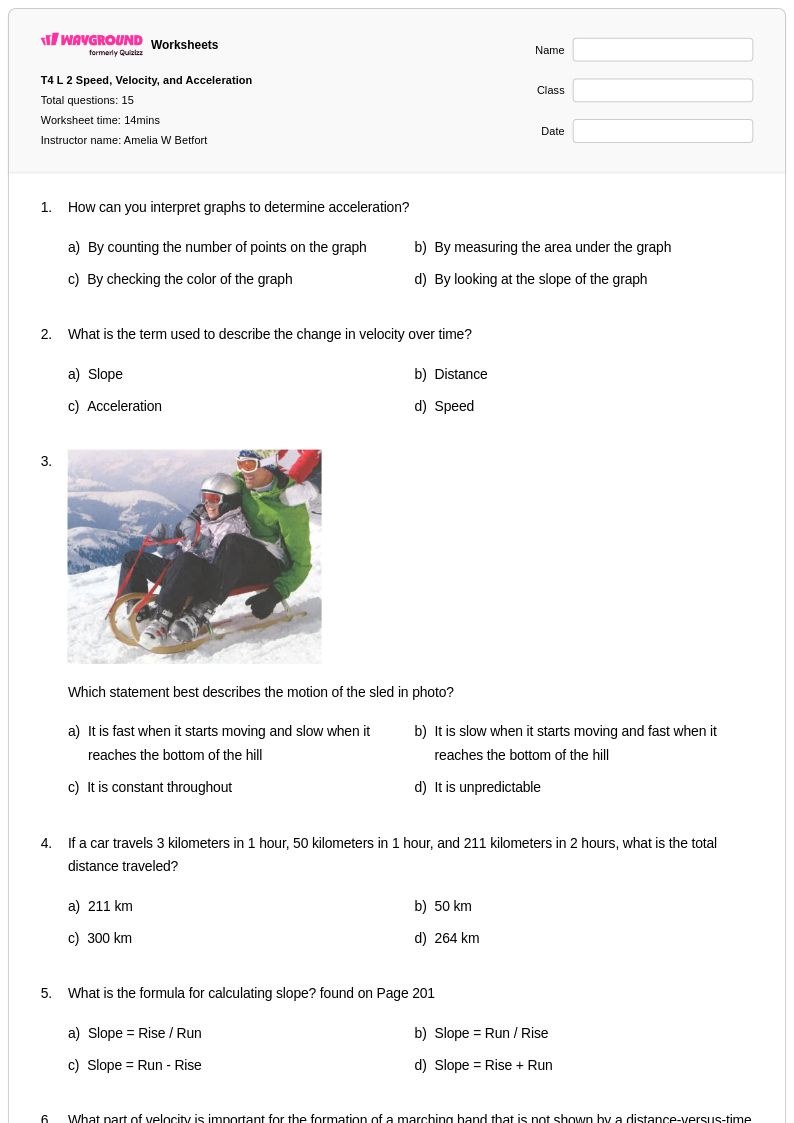
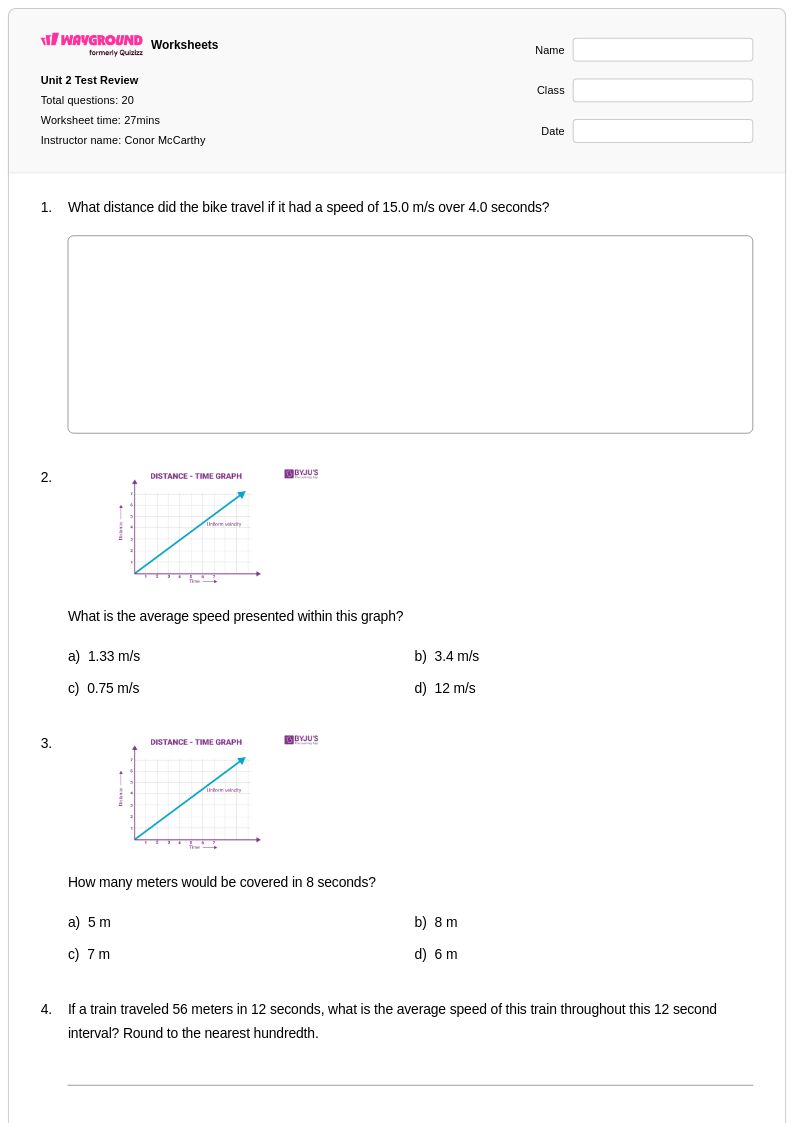
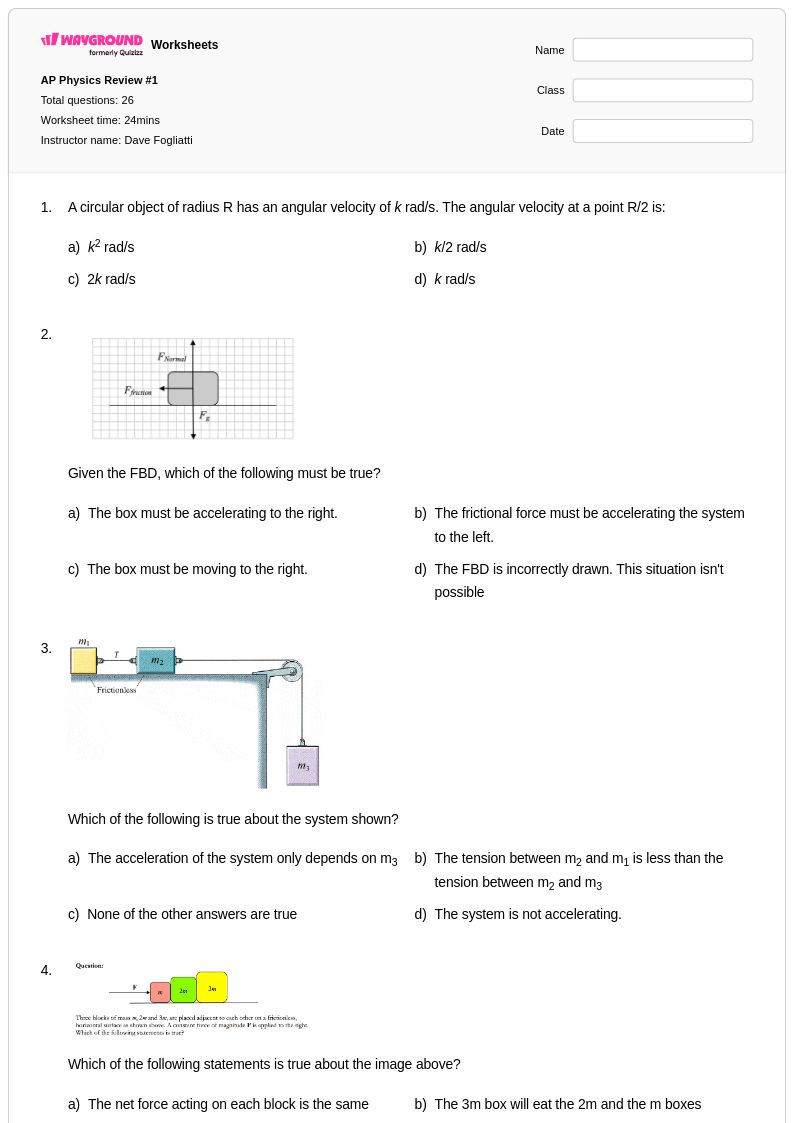
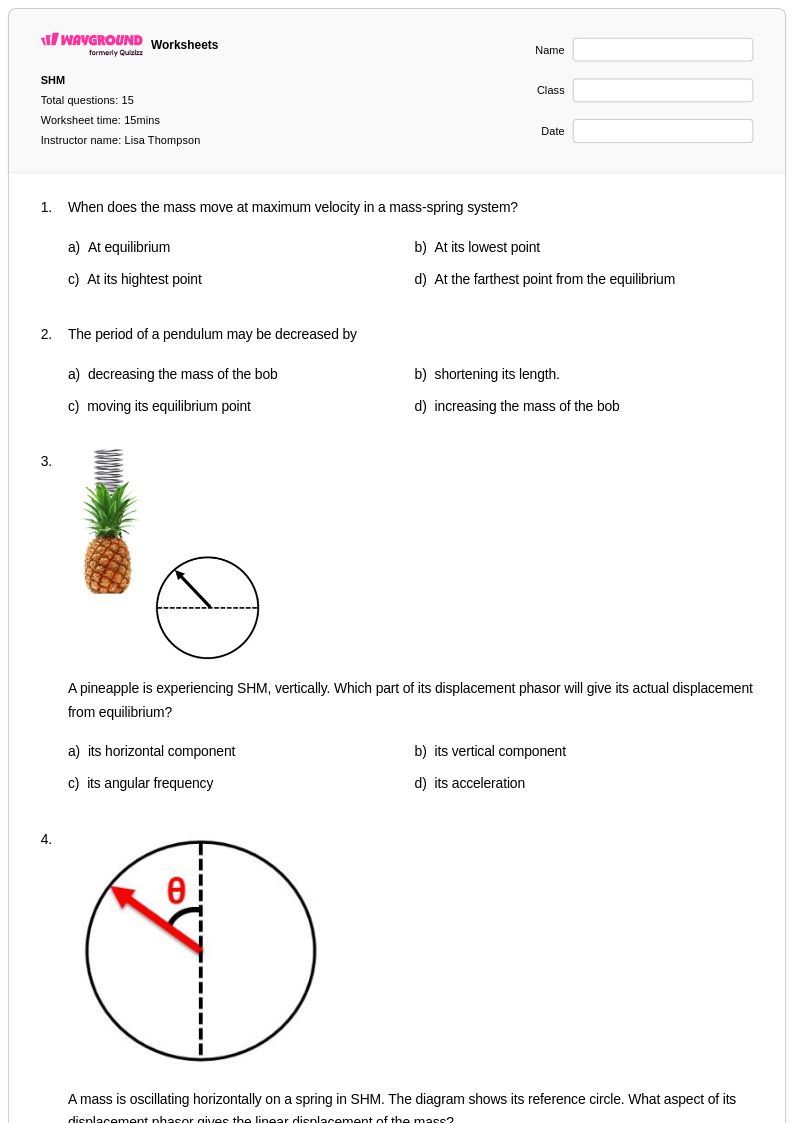
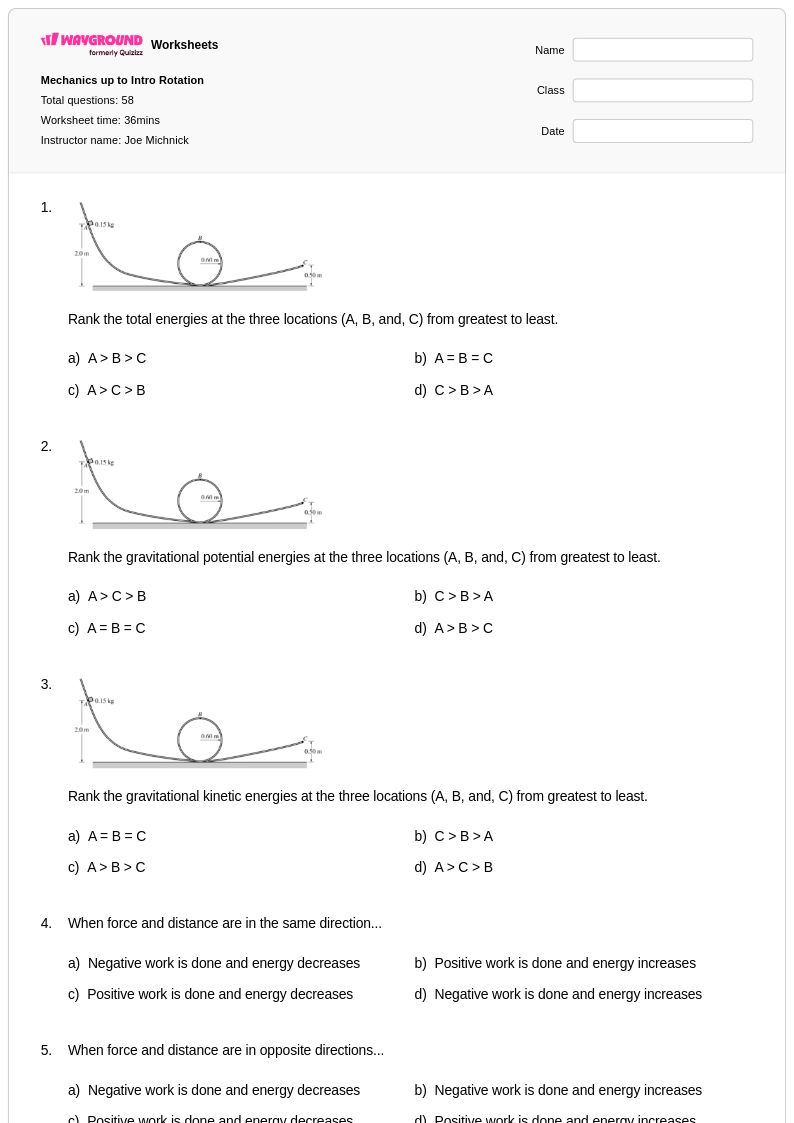
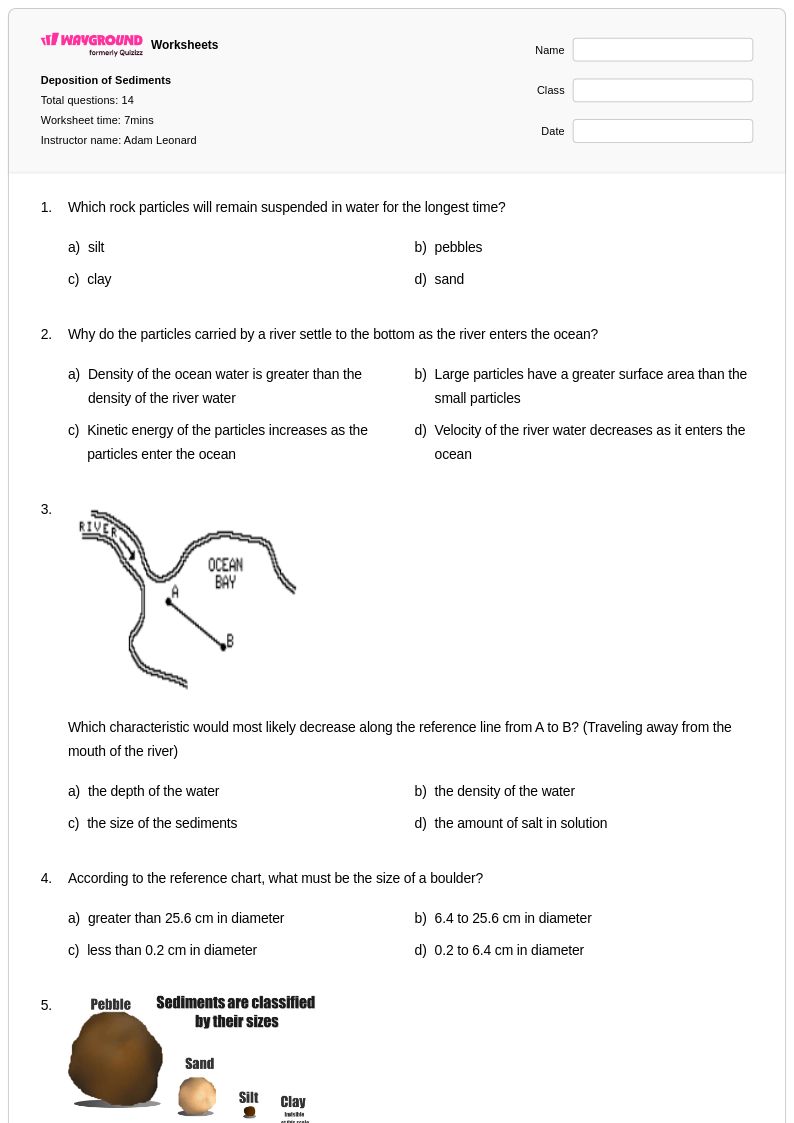
Angular velocity worksheets for Grade 11 physics students available through Wayground (formerly Quizizz) provide comprehensive practice with rotational motion concepts that form the foundation of advanced mechanics. These carefully designed resources help students master the relationship between linear and angular quantities, develop proficiency in calculating angular displacement, angular velocity, and angular acceleration, and strengthen their understanding of how objects rotate about fixed axes. The worksheet collections include detailed practice problems that guide students through real-world applications such as spinning wheels, rotating machinery, and planetary motion, while answer keys allow for immediate feedback and self-assessment. Students work with both instantaneous and average angular velocity calculations, converting between different units like radians per second and revolutions per minute, and these free printable resources in pdf format ensure accessibility for both classroom instruction and independent study.
Wayground (formerly Quizizz) empowers physics educators with millions of teacher-created angular velocity worksheets that can be easily discovered through robust search and filtering capabilities, ensuring alignment with curriculum standards and specific learning objectives. Teachers benefit from sophisticated differentiation tools that allow customization of problem complexity, from basic conceptual questions to challenging multi-step calculations involving tangential velocity relationships and rotational kinematics equations. The platform's flexible format options support both digital assignments and printable pdf worksheets, making it simple to adapt resources for diverse classroom environments and individual student needs. These extensive collections facilitate targeted skill practice for students struggling with rotational concepts while providing enrichment opportunities for advanced learners, streamlining lesson planning and enabling teachers to address varying proficiency levels through carefully scaffolded problem sets and comprehensive remediation materials.
FAQs
How do I teach angular velocity to physics students?
Start by building on students' prior knowledge of linear velocity before introducing the rotational equivalent. Define angular velocity as the rate of change of angular displacement over time (ω = Δθ/Δt), and use physical demonstrations like spinning wheels or turntables to make the concept tangible. Connecting the formula to real-world rotating systems — such as gears, motors, or bicycle wheels — helps students develop intuition before moving into calculations.
What practice problems help students get better at calculating angular velocity?
Effective practice should begin with straightforward calculations using ω = Δθ/Δt, where students are given angular displacement in radians and time in seconds. From there, scaffold into problems that require unit conversions (e.g., RPM to rad/s), and then introduce multi-step problems connecting angular velocity to angular acceleration and centripetal motion. Scaffolded problem sets that gradually increase in complexity allow students to build procedural fluency before tackling applied scenarios.
What mistakes do students commonly make when solving angular velocity problems?
The most common error is confusing angular velocity with linear (tangential) velocity, particularly when problems involve objects at different radii on the same rotating body. Students also frequently forget to convert angular measurements into radians before applying formulas, leading to incorrect results. Another recurring mistake is misidentifying the direction of the angular velocity vector, especially when sign conventions for clockwise versus counterclockwise rotation are involved.
How do I differentiate angular velocity worksheets for students at different skill levels?
For students who are still building foundational skills, reduce cognitive load by providing formula reference sheets and limiting problems to single-step calculations before introducing multi-step scenarios. On Wayground, teachers can apply accommodations such as reduced answer choices and read-aloud support to individual students, while the rest of the class works with default settings. Advanced students can be challenged with problems that integrate angular velocity with angular acceleration, period, and frequency within the same problem set.
How do I use Wayground's angular velocity worksheets in my classroom?
Wayground's angular velocity worksheets are available as printable PDFs for traditional classroom use and in digital formats for technology-integrated environments, giving teachers flexibility based on their setup. Teachers can also host worksheets directly as a quiz on Wayground, making it easy to assign practice, collect responses, and review results in one place. Each worksheet includes a complete answer key, which supports self-paced independent practice as well as teacher-led review sessions.
How do angular velocity and angular acceleration relate, and should I teach them together?
Angular acceleration (α) describes how quickly angular velocity changes over time, making it the rotational analogue of linear acceleration. Teaching them in sequence is effective — once students are confident calculating angular velocity, introducing α = Δω/Δt as a natural extension reinforces the parallel structure between linear and rotational kinematics. Pairing the two concepts also prepares students for torque and rotational dynamics, where both quantities appear together in applied problems.