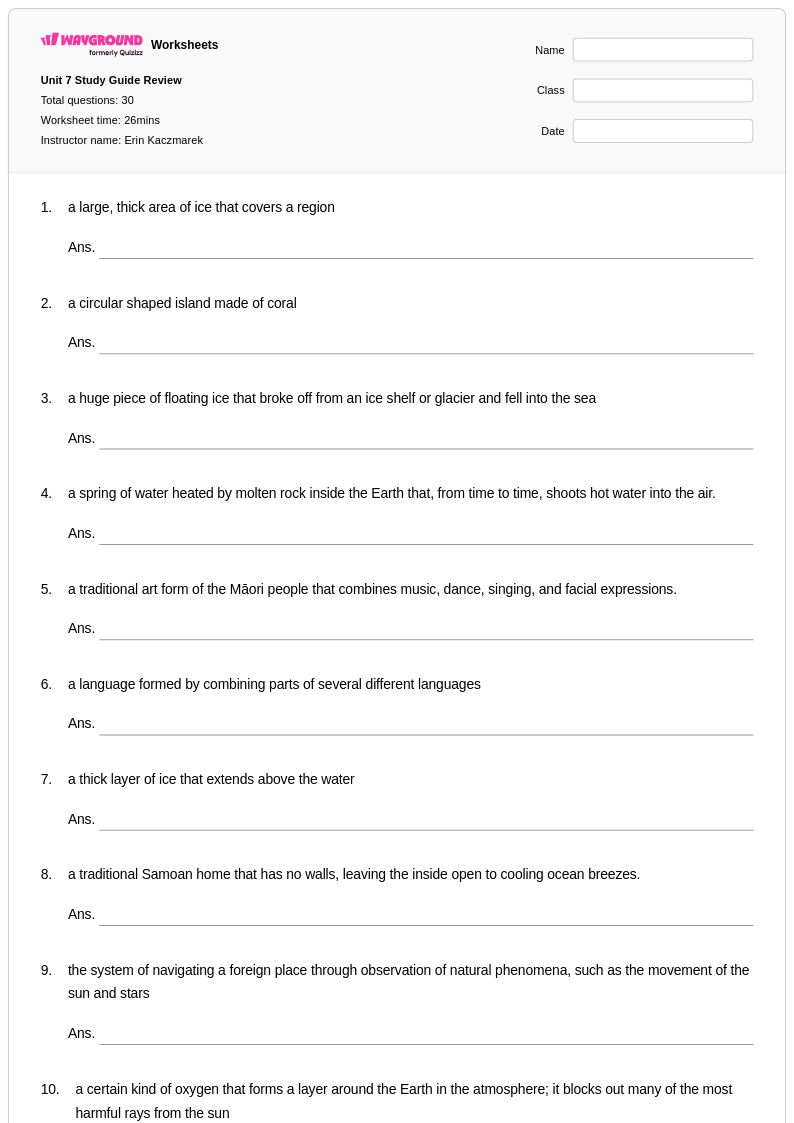
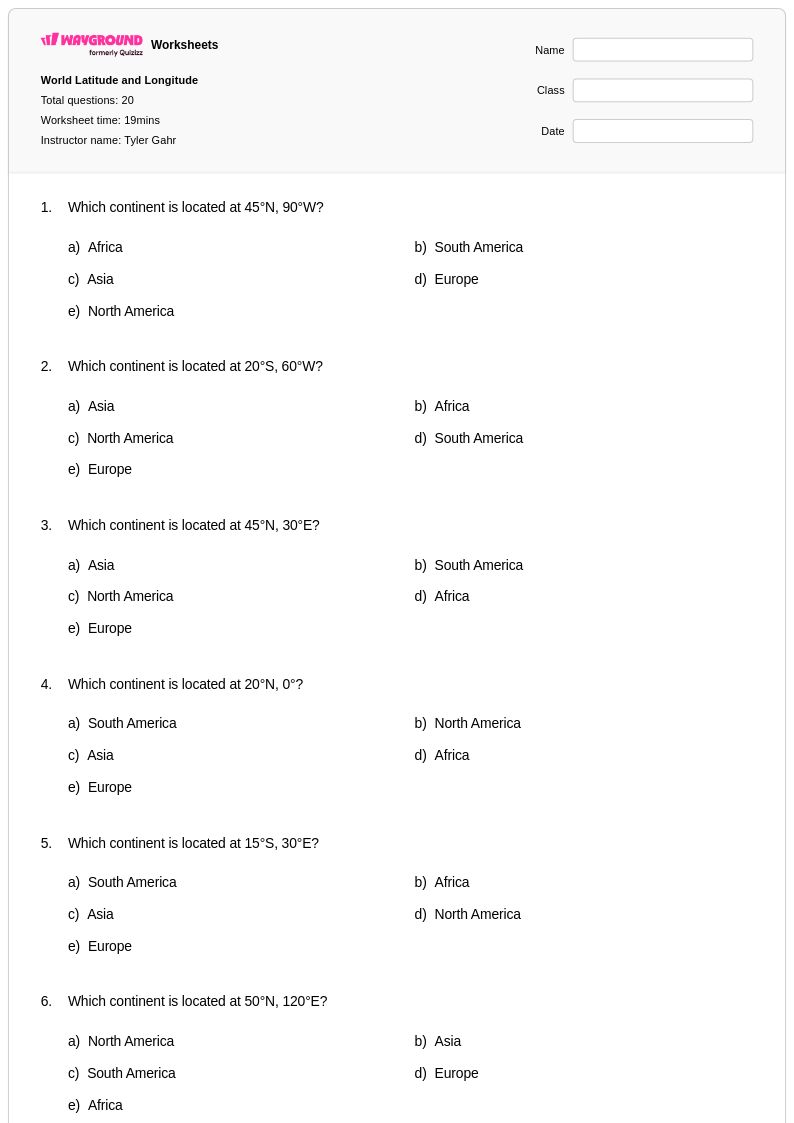
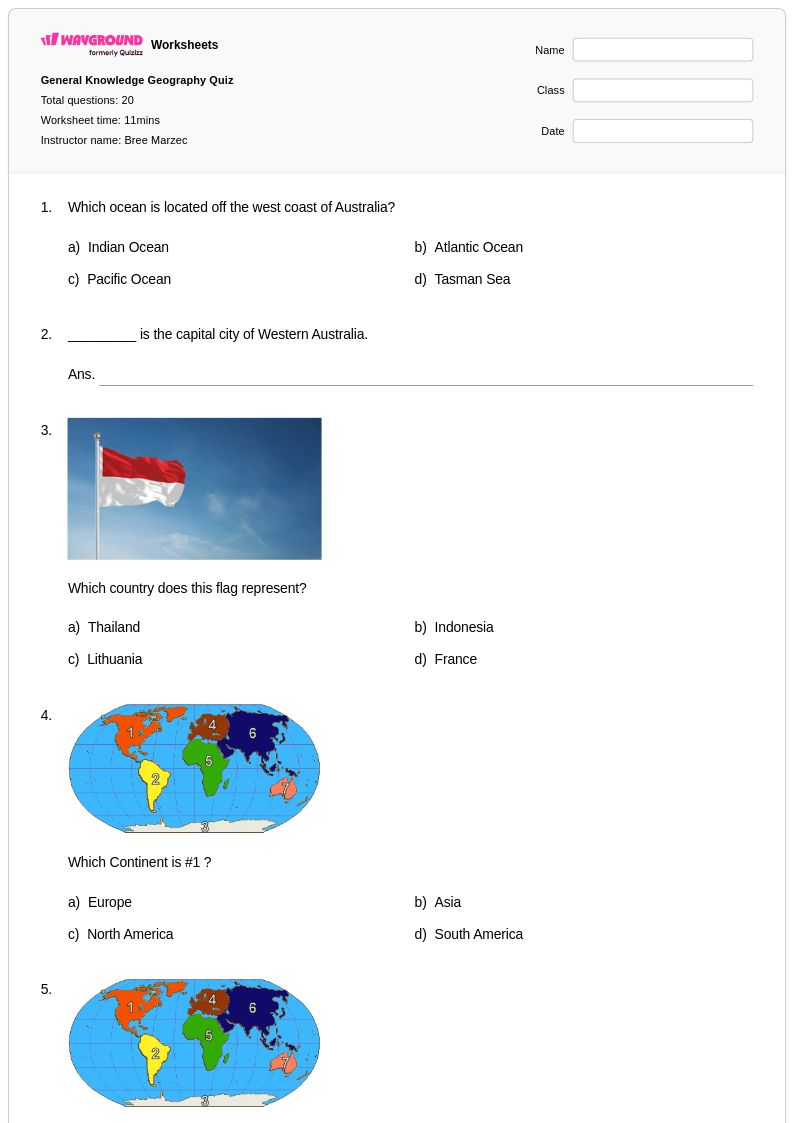
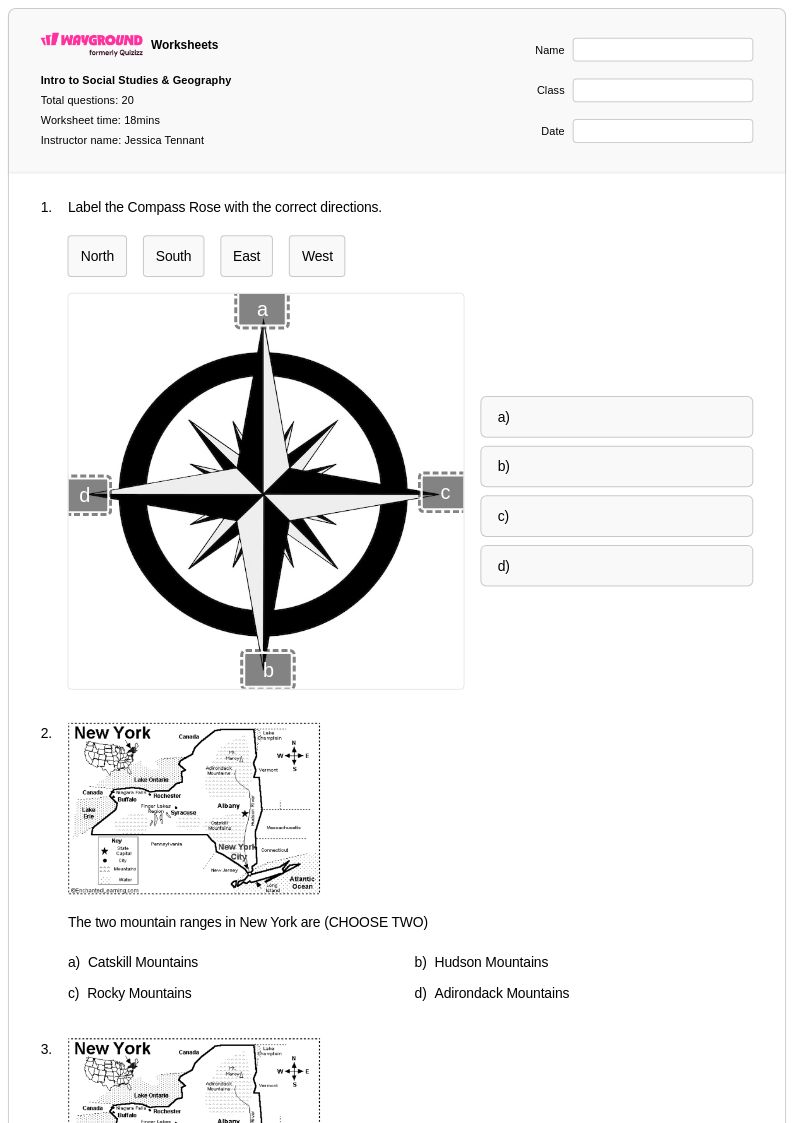
Explore Grade 7 Antarctica geography worksheets and printables that help students discover the continent's unique climate, wildlife, and research stations through engaging practice problems and comprehensive answer keys.
Explore printable Antarctica worksheets for Grade 7
Antarctica worksheets for Grade 7 students through Wayground (formerly Quizizz) provide comprehensive exploration of Earth's southernmost continent, focusing on its unique geographical features, climate patterns, and environmental significance. These educational resources strengthen students' understanding of polar geography, ice sheet formations, wildlife adaptations, and the continent's role in global climate systems. The worksheets incorporate practice problems that challenge students to analyze temperature data, map Antarctic research stations, and examine the continent's geological structure beneath its massive ice coverage. Each printable resource includes detailed answer keys that support independent learning and enable teachers to efficiently assess student comprehension of concepts ranging from Antarctic territorial claims to the continent's impact on ocean currents and sea level changes.
Wayground's extensive collection draws from millions of teacher-created resources specifically designed to support Grade 7 geography instruction on Antarctica and polar regions. The platform's robust search and filtering capabilities allow educators to quickly locate materials aligned with curriculum standards while offering differentiation tools to accommodate diverse learning needs within the classroom. Teachers can customize worksheets to emphasize specific aspects of Antarctic geography, from wildlife ecosystems to international research cooperation, and access materials in both digital and printable pdf formats for flexible lesson planning. These comprehensive resources support effective remediation for struggling learners, provide enrichment opportunities for advanced students, and offer consistent skill practice that reinforces critical geographical thinking about one of Earth's most extreme and scientifically important environments.
FAQs
How do I teach Antarctica to elementary and middle school students?
Teaching Antarctica effectively starts with grounding students in its physical geography before moving into climate, wildlife, and human activity. Anchor lessons around concrete comparisons, such as contrasting Antarctica's ice sheet volume with other landmasses, to build spatial reasoning. Introducing scientific research stations helps students understand why Antarctica matters beyond its remote location, connecting geography to real-world environmental science.
What topics should an Antarctica worksheet cover?
A well-designed Antarctica worksheet should address the continent's physical features, including ice sheet formations and glacial geography, alongside its extreme climate conditions and how those conditions shape the local ecosystem. Strong materials also cover penguin and wildlife habitats, international territorial claims under the Antarctic Treaty, and the continent's role in global climate research. This range ensures students develop both factual knowledge and analytical thinking about Antarctica's geographic and environmental significance.
What common mistakes do students make when studying Antarctica?
Students frequently confuse Antarctica with the Arctic, misidentifying which pole has a landmass and which is sea ice. Another common error is treating Antarctica as geographically isolated with no relevance to global systems, when in fact its ice sheets directly influence sea levels and climate patterns worldwide. Students also tend to underestimate the scale of international scientific activity on the continent, often assuming no humans are present there at all.
How can I use Antarctica worksheets to support students with different learning needs?
Antarctica worksheets can be differentiated by adjusting the complexity of questions, from identifying basic physical features to analyzing the continent's role in climate systems. On Wayground, teachers can apply individual accommodations such as read aloud for students who need audio support, reduced answer choices to lower cognitive load, and extended time for students who need it, all without alerting other students. These settings are reusable across sessions, making it straightforward to maintain consistent support for diverse learners throughout a geography unit.
How do I use Wayground's Antarctica worksheets in my classroom?
Wayground's Antarctica worksheets are available as printable PDFs for traditional classroom use and in digital formats for technology-integrated environments, giving teachers flexibility across in-person, hybrid, and remote settings. Teachers can also host worksheets directly as a quiz on Wayground, enabling real-time student responses and instant feedback. Each worksheet includes a complete answer key, so grading and review require minimal additional preparation.
How does studying Antarctica help students understand global environmental issues?
Antarctica serves as one of the most important indicators of global climate change, making it an ideal entry point for environmental literacy. Its ice sheets store approximately 60 percent of the world's fresh water, and changes in their mass directly affect global sea levels. By studying Antarctica, students connect physical geography to broader environmental science concepts, including the feedback loops between polar ice loss, ocean temperatures, and weather patterns worldwide.