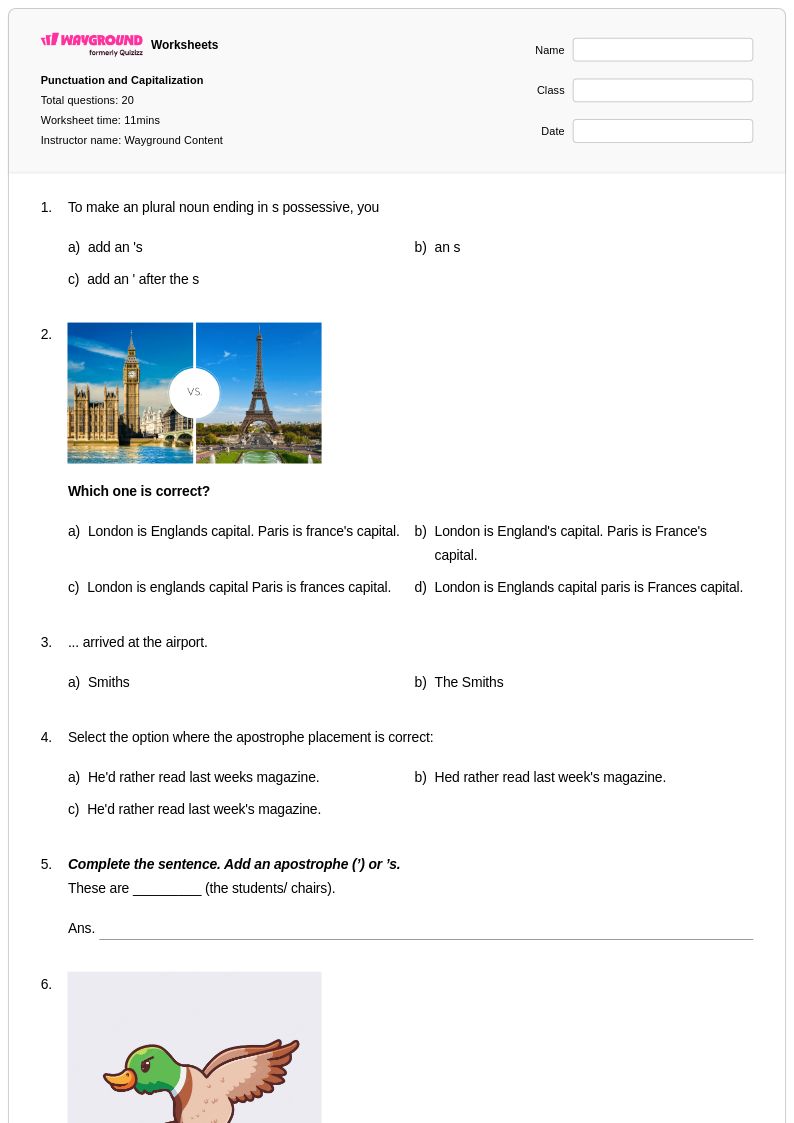
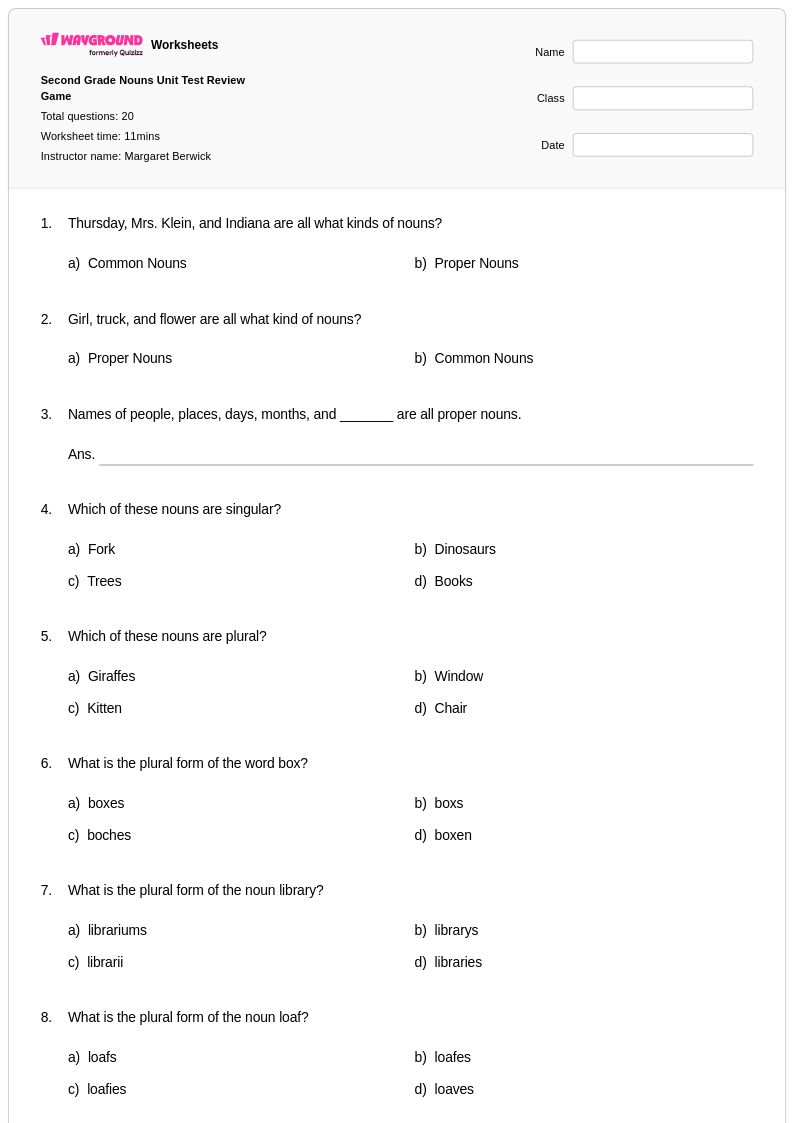
Wayground's free Grade 2 apostrophes worksheets provide engaging printables and practice problems to help young learners master possessive forms and contractions, complete with PDF formats and answer keys.
Explore printable Apostrophes worksheets for Grade 2
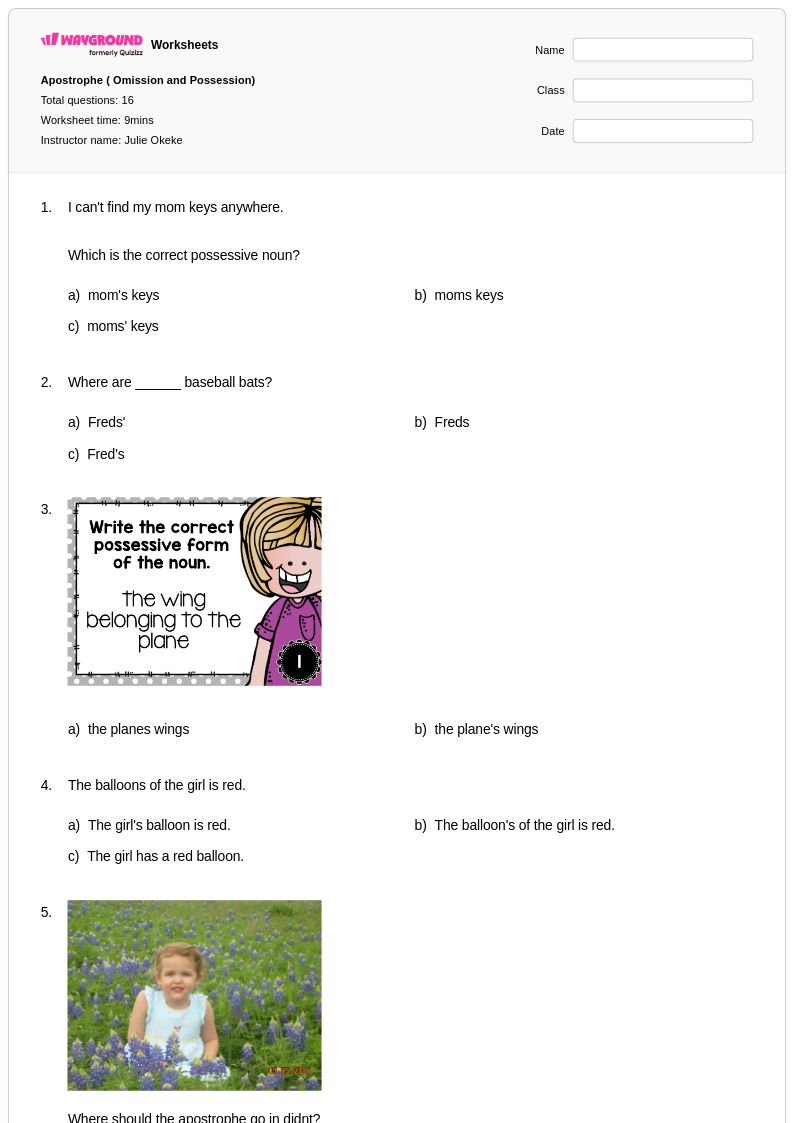
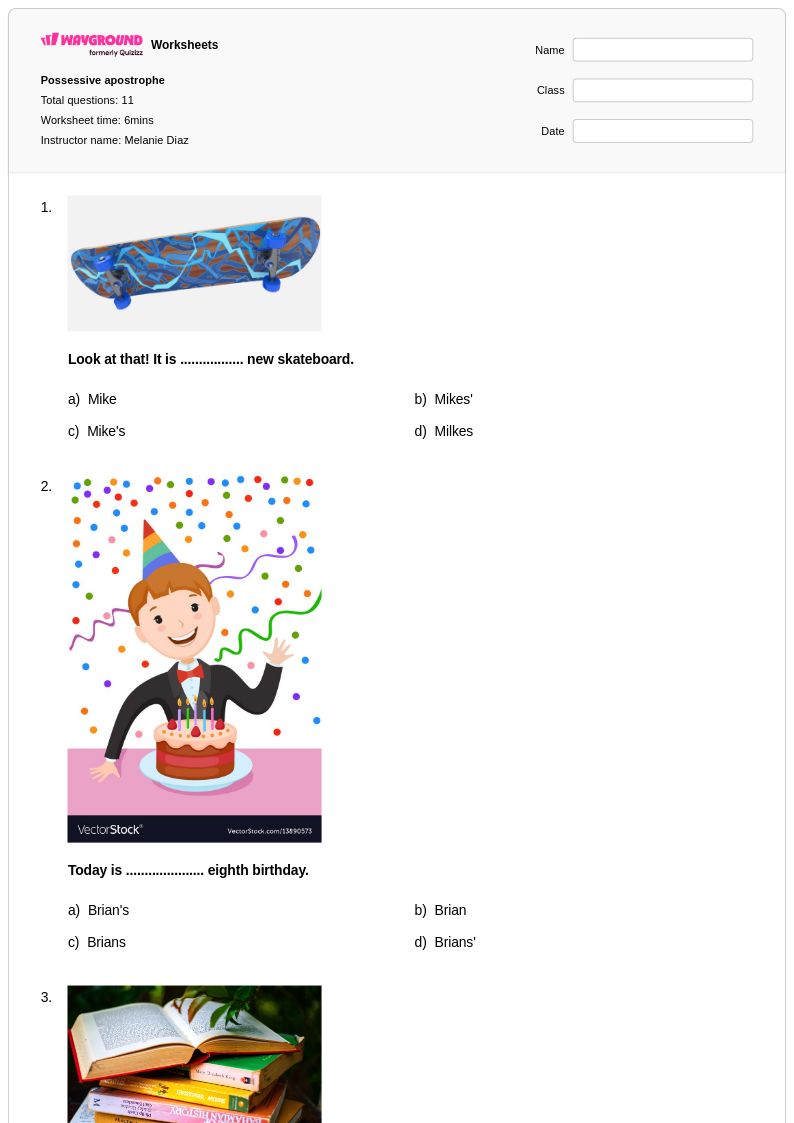
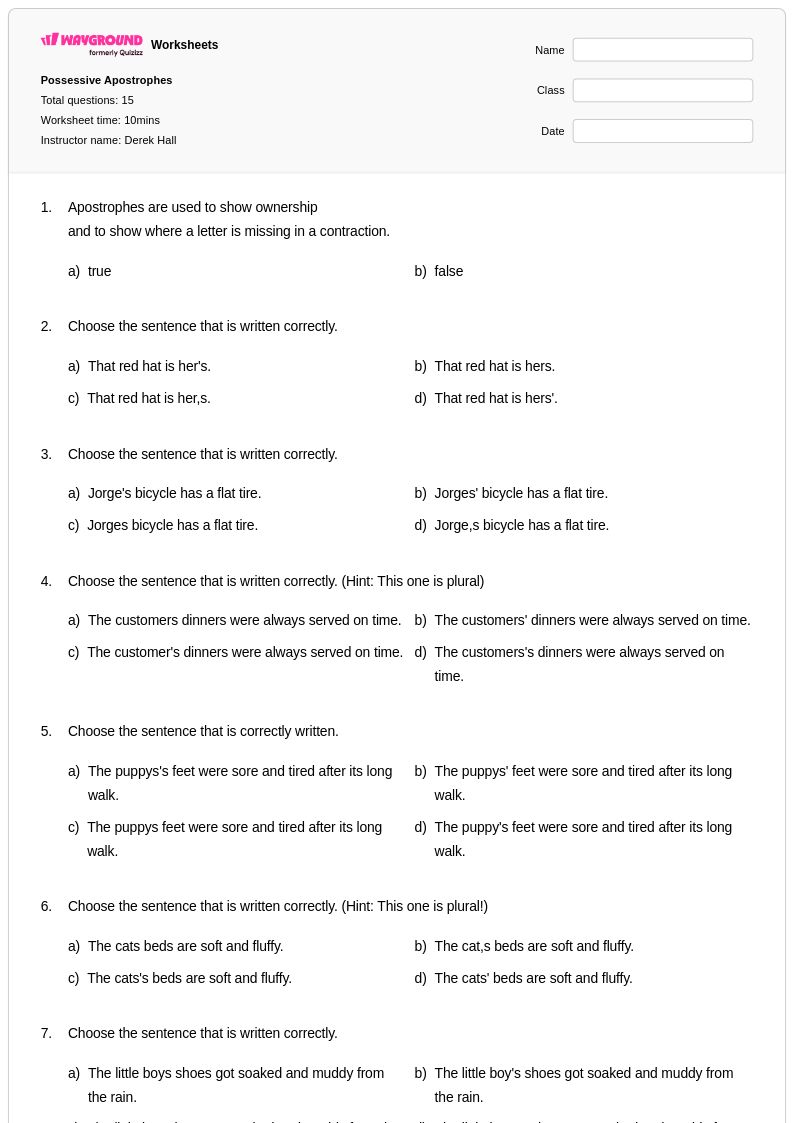
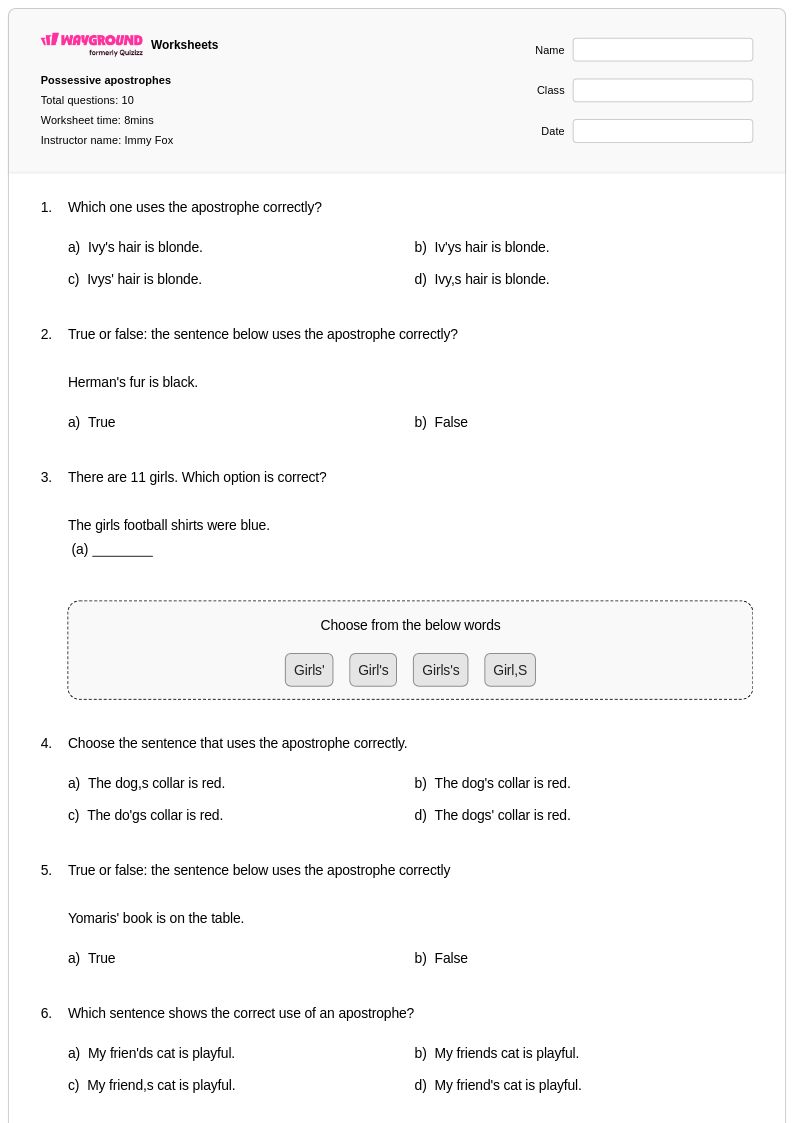
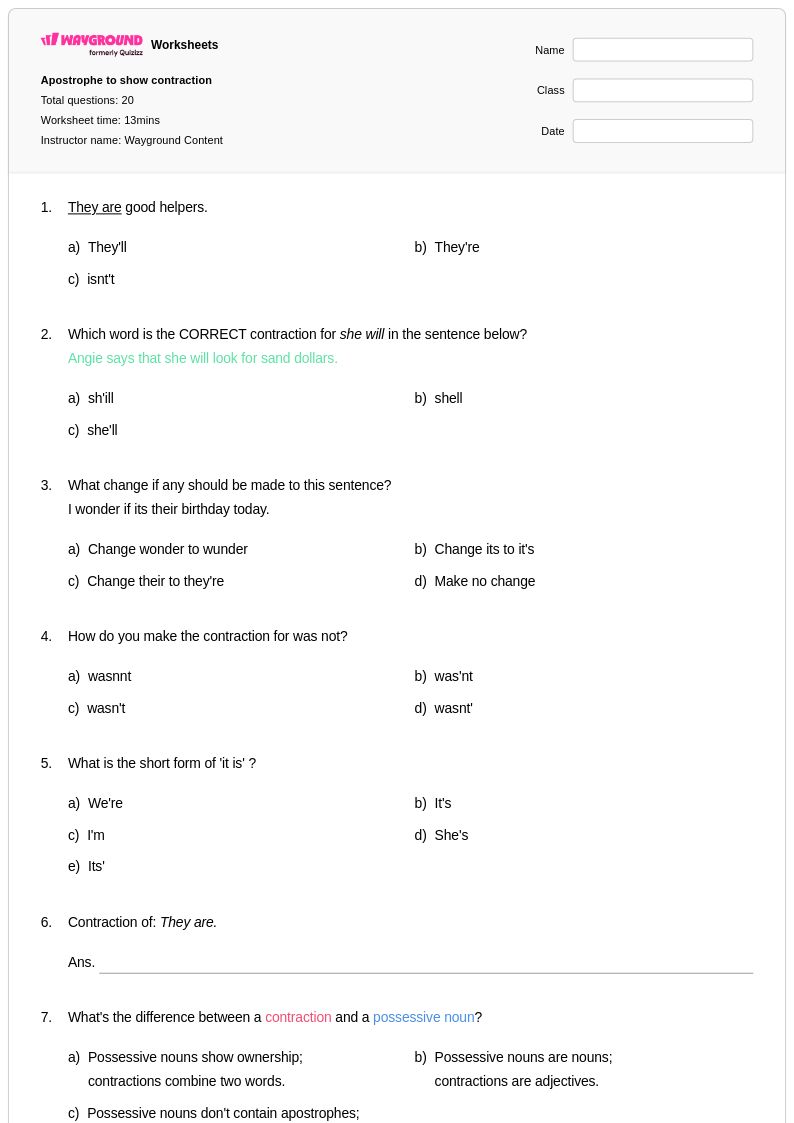
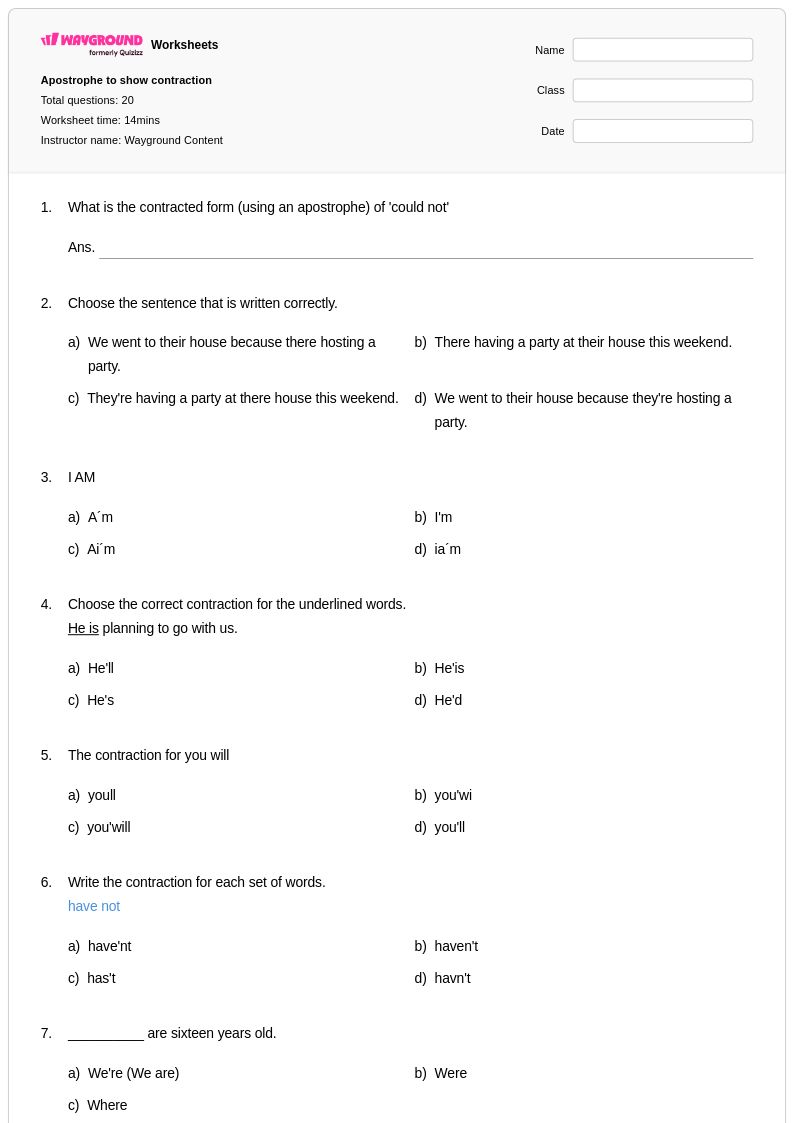
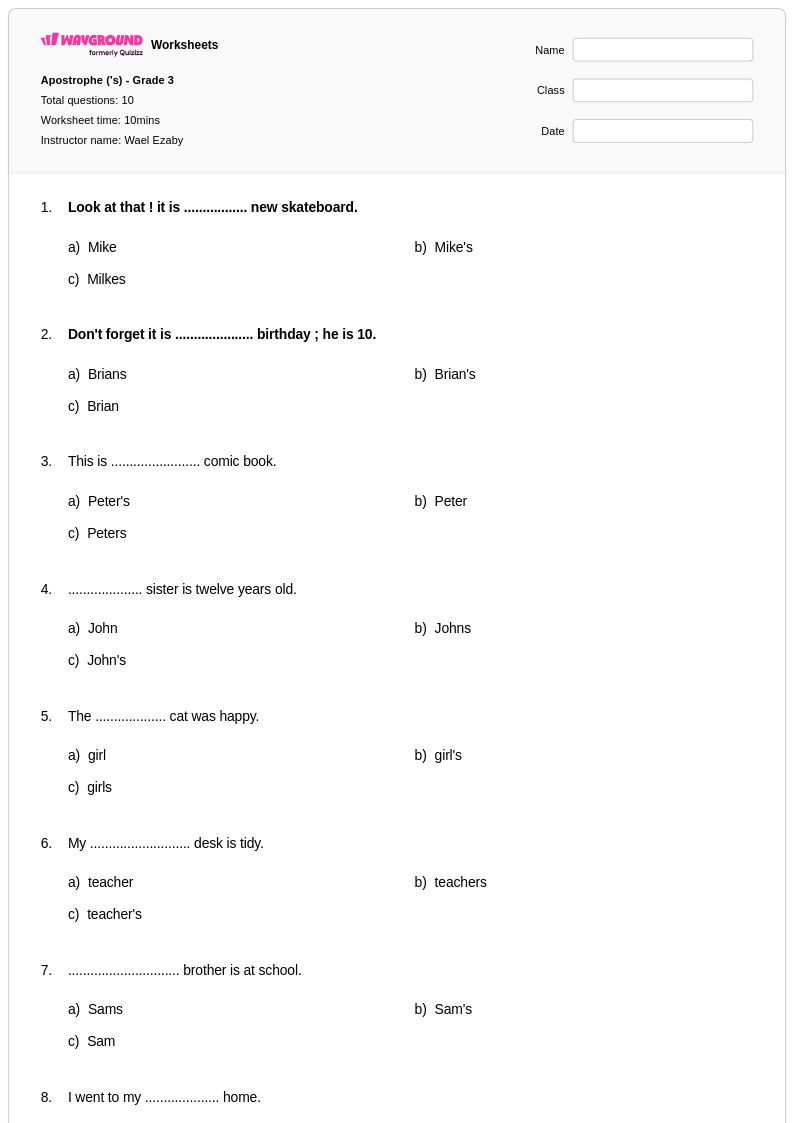
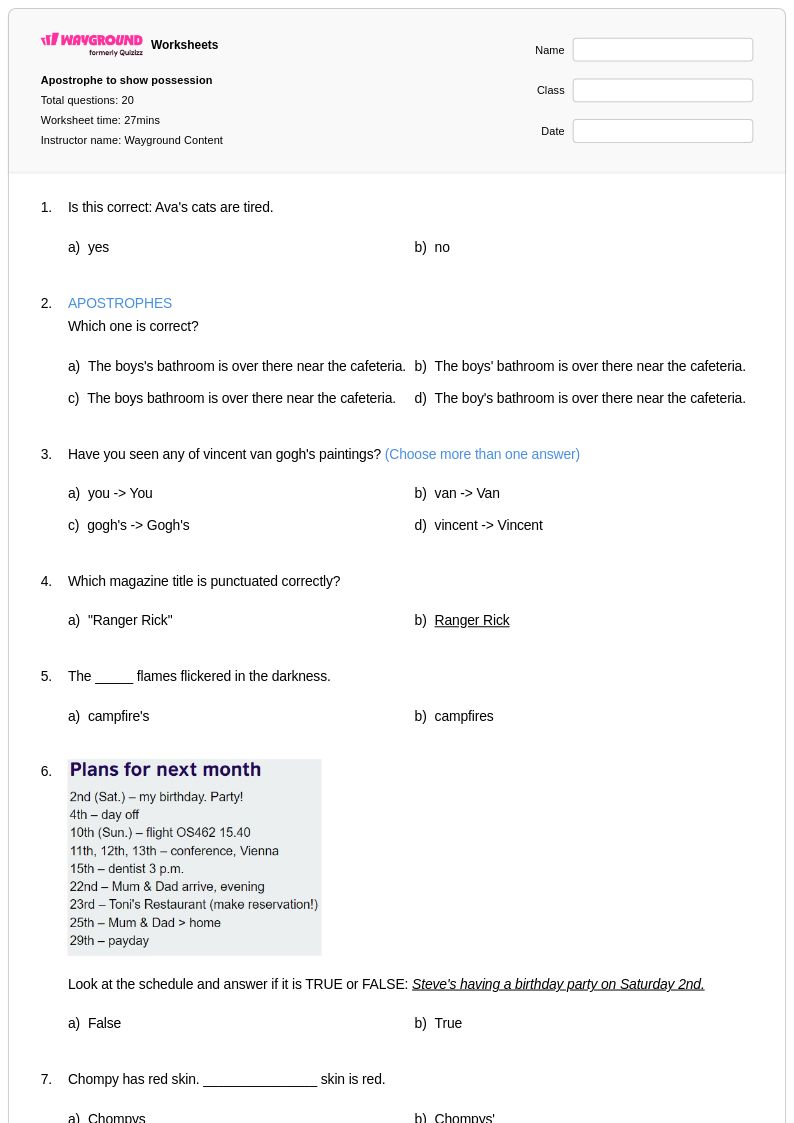
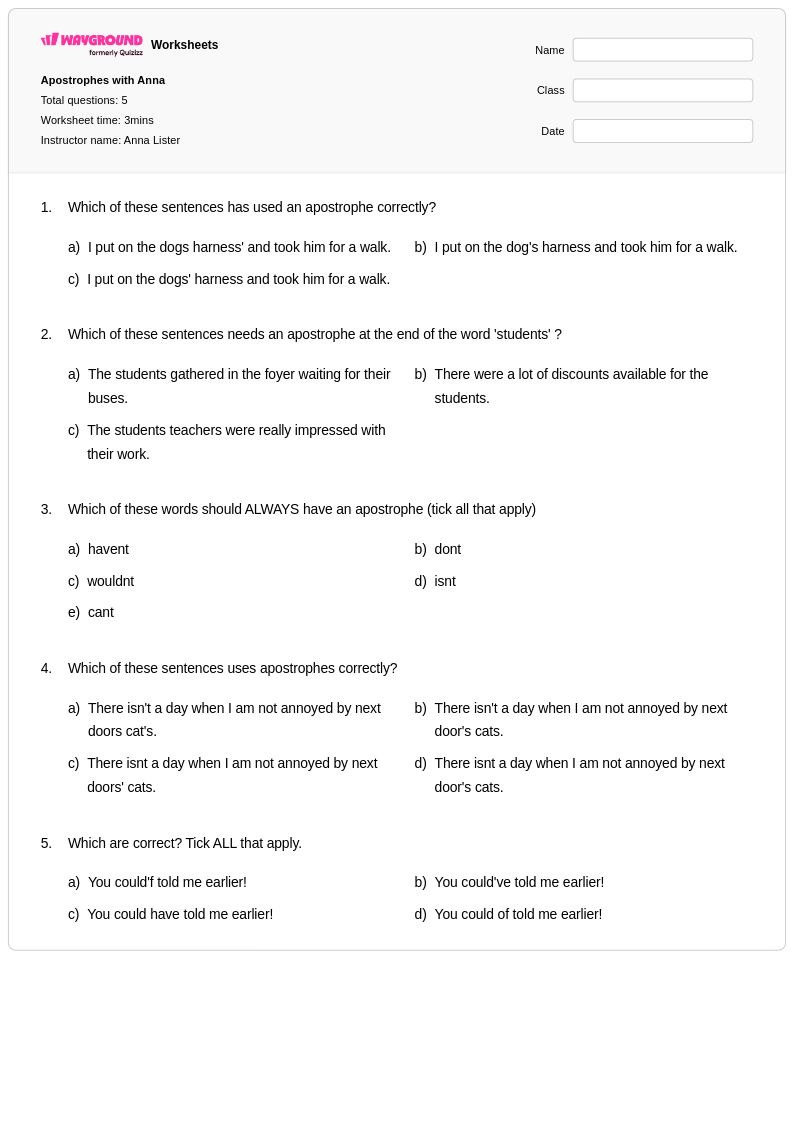
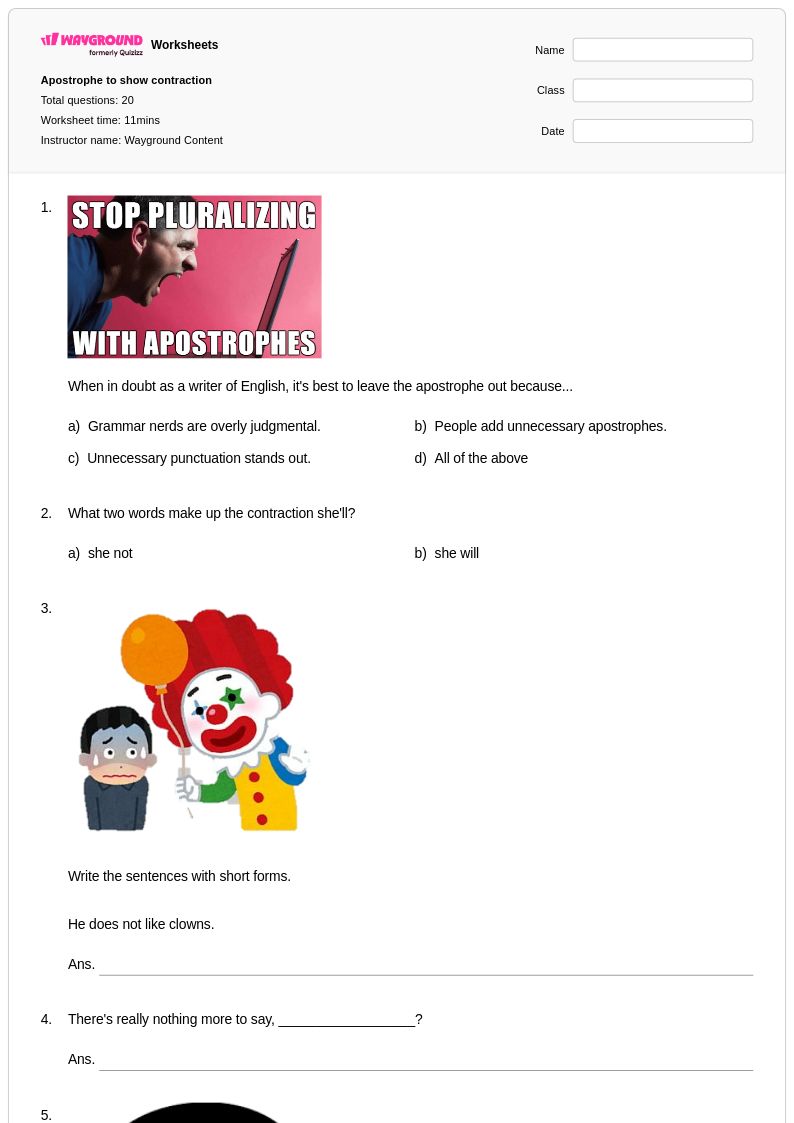
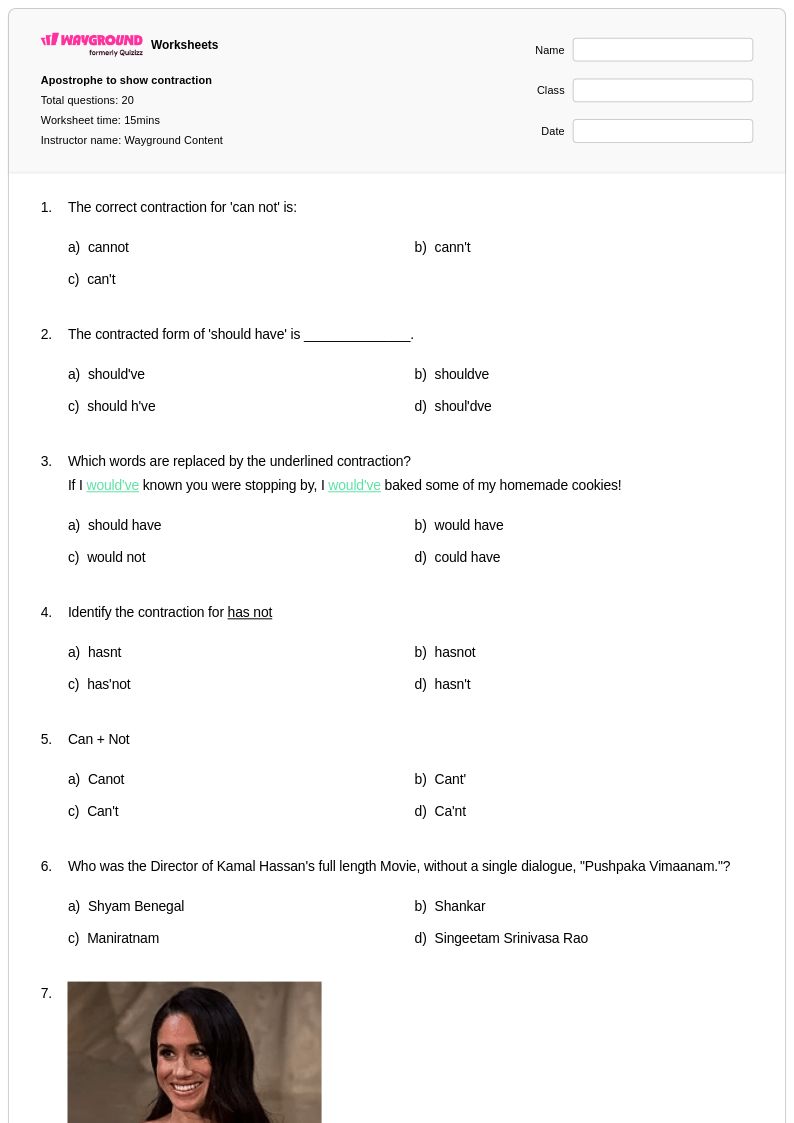
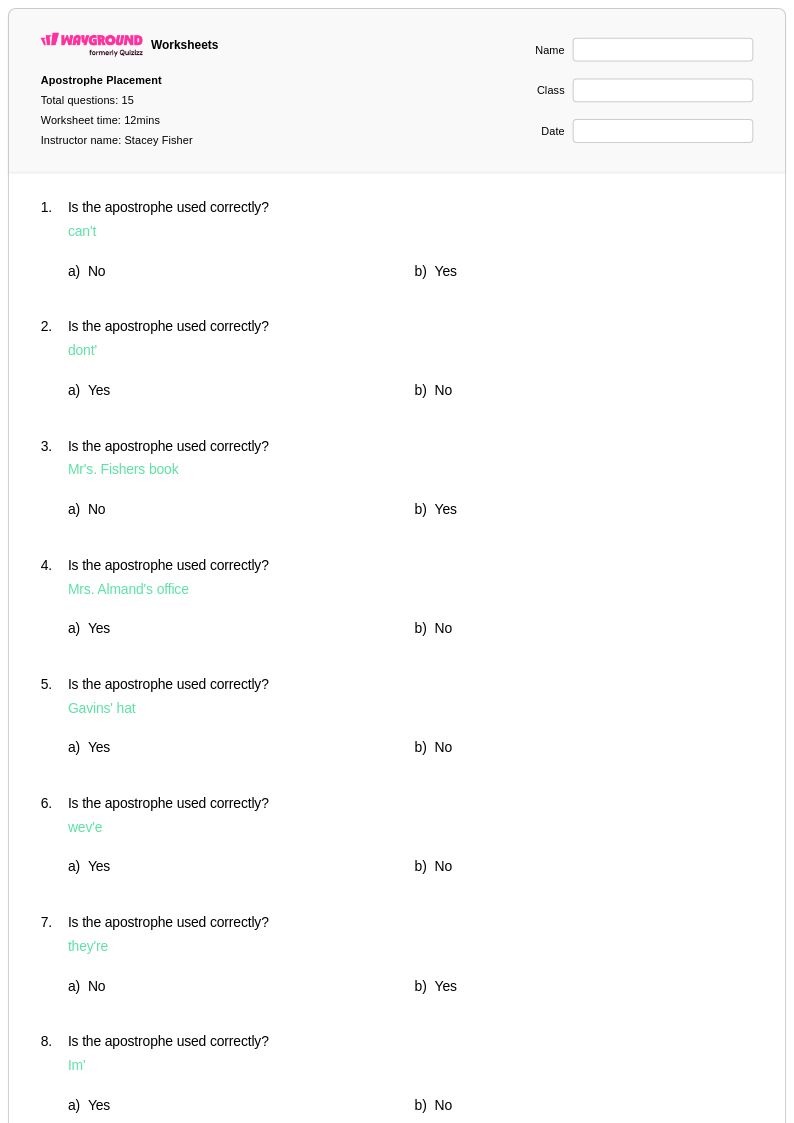
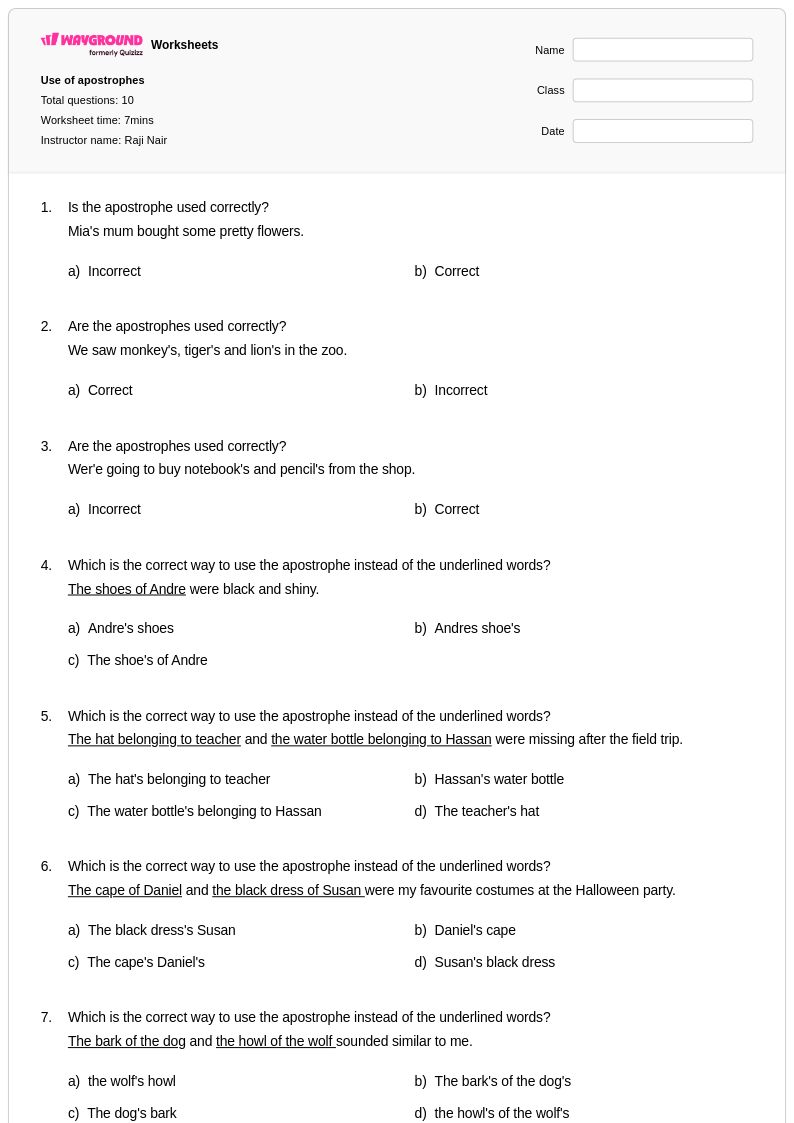
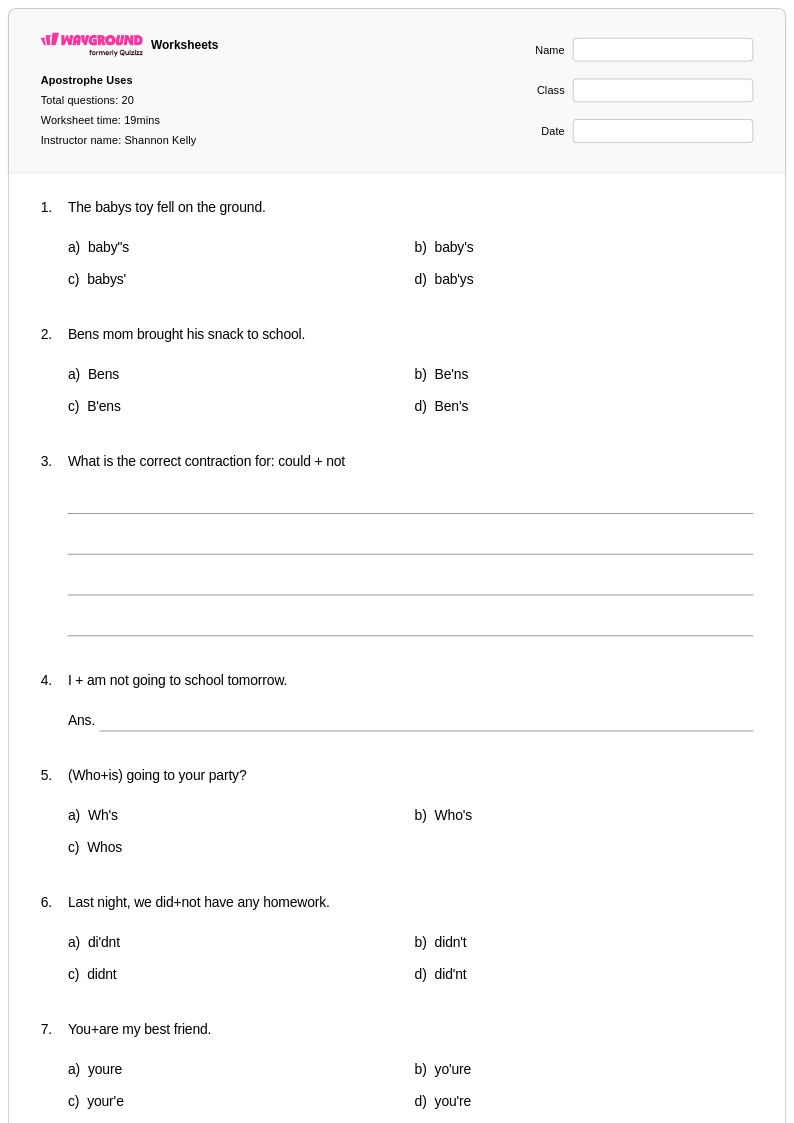
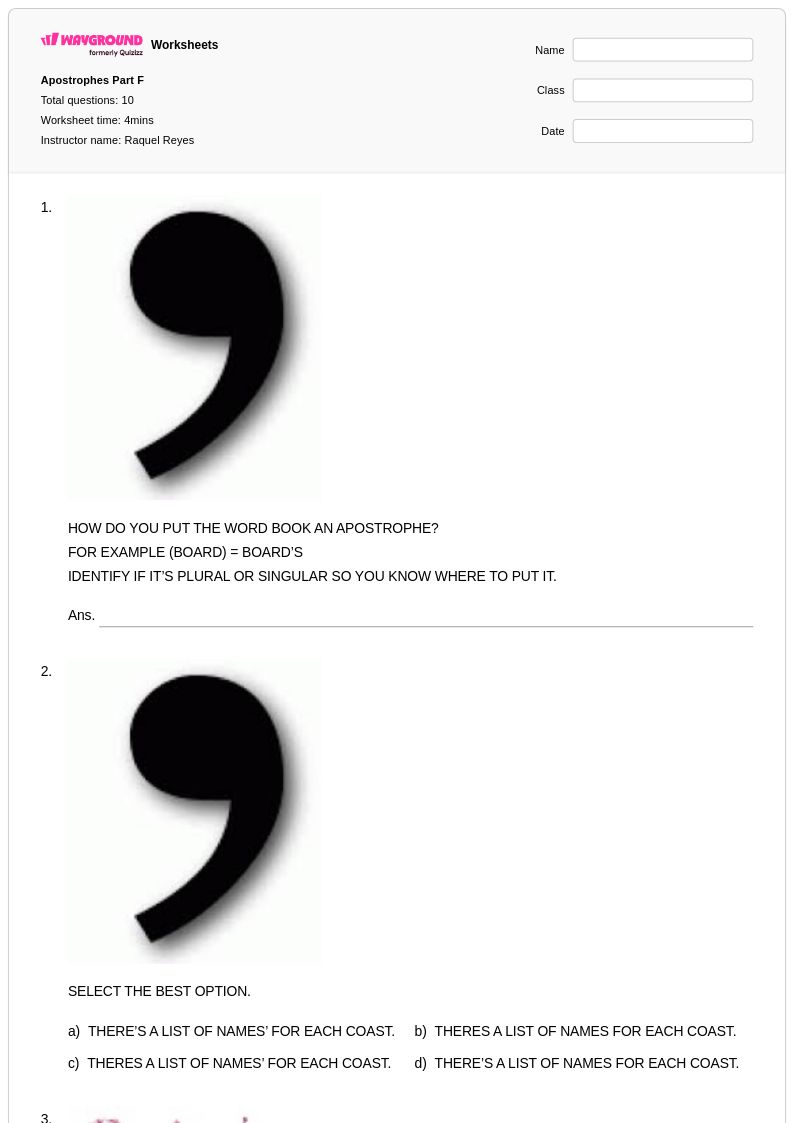
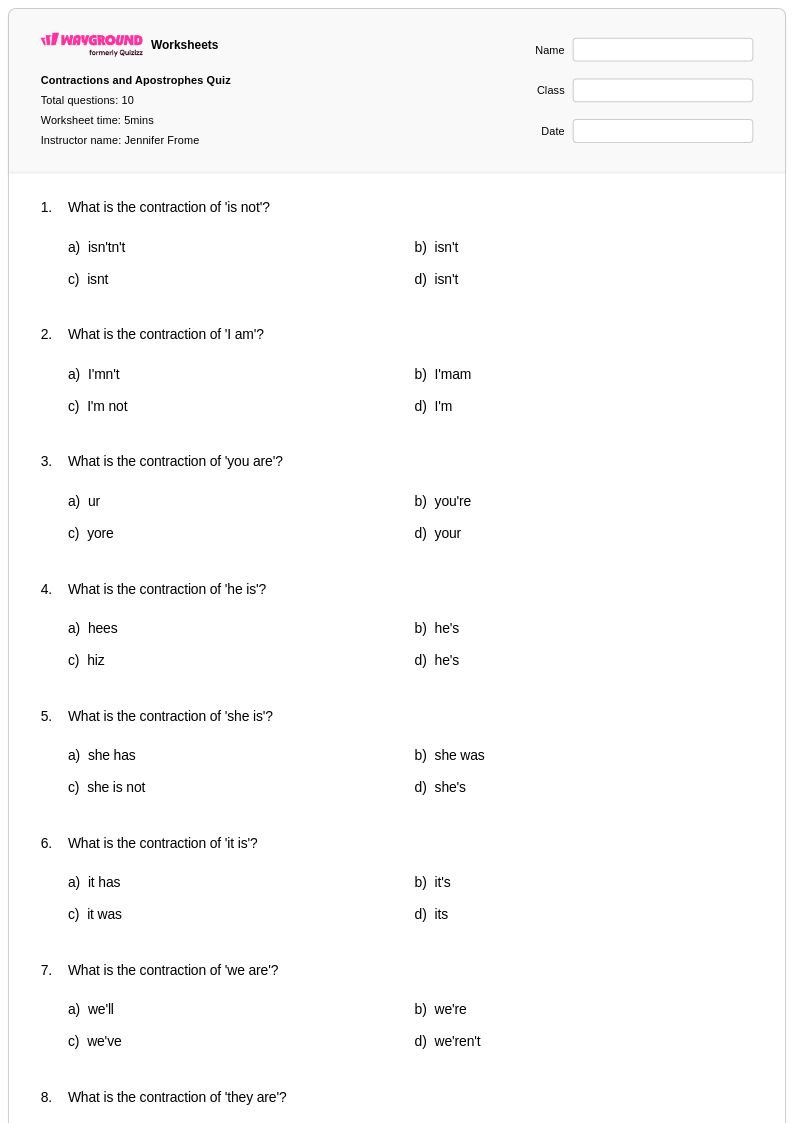
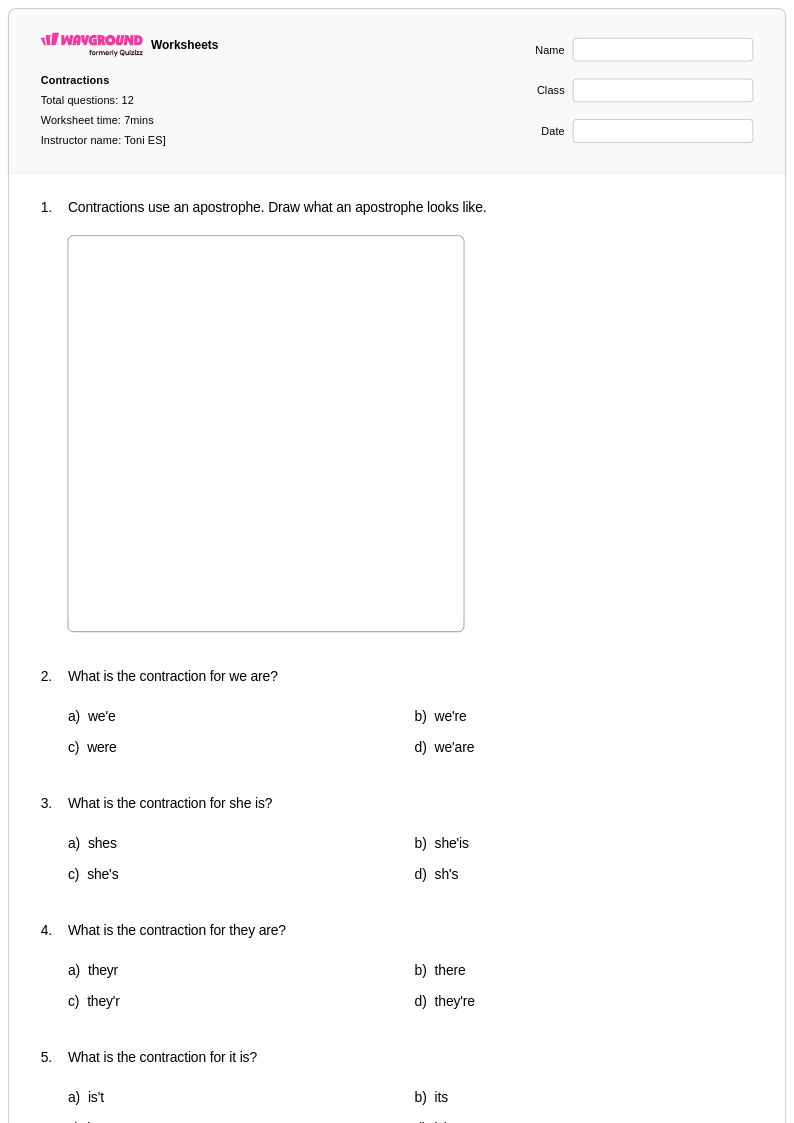
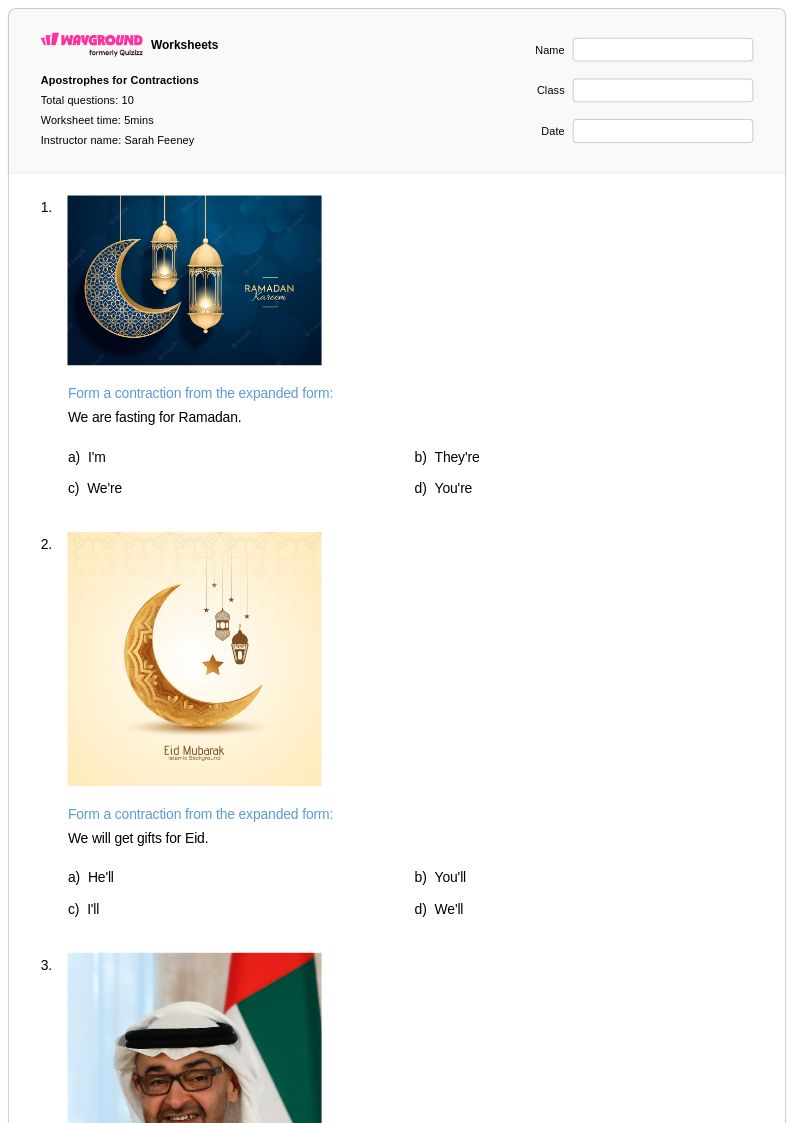
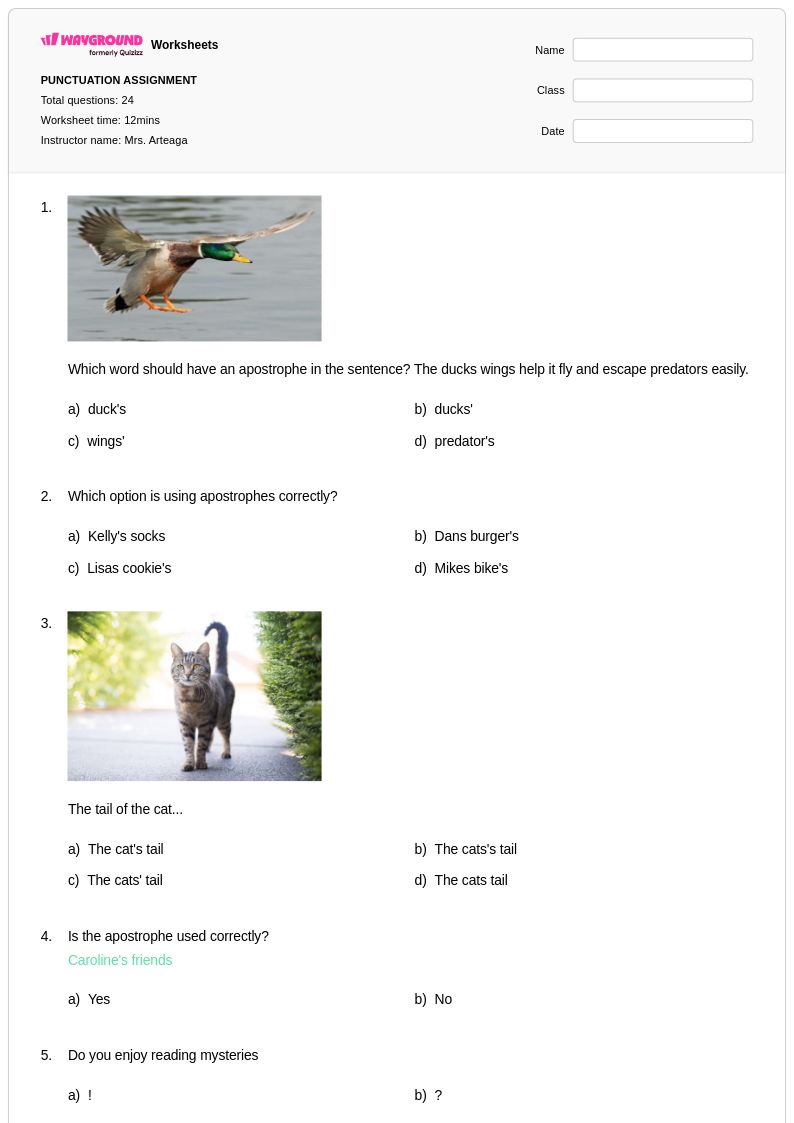
Apostrophes worksheets for Grade 2 students available through Wayground (formerly Quizizz) provide essential foundational practice in understanding and correctly using these important punctuation marks. These comprehensive worksheets focus on teaching young learners when and how to use apostrophes in contractions like "can't," "don't," and "it's," as well as introducing basic possessive forms such as "the cat's toy" or "Mom's book." The practice problems systematically build students' recognition skills through engaging exercises that include identifying missing apostrophes, choosing the correct contraction, and matching possessive phrases with appropriate images. Each printable worksheet comes with a detailed answer key, allowing teachers to quickly assess student understanding and provide targeted feedback. These free resources strengthen crucial grammar and mechanics skills that form the building blocks for more advanced writing conventions in later grades.
Wayground (formerly Quizizz) empowers educators with millions of teacher-created apostrophes worksheets specifically designed for Grade 2 learners, offering robust search and filtering capabilities that allow teachers to find exactly the right level of challenge for their students. The platform's standards-aligned content ensures that worksheets meet curriculum requirements while providing differentiation tools that support diverse learning needs within the classroom. Teachers can easily customize existing worksheets or access ready-to-use printables in pdf format, making lesson planning more efficient and effective. These versatile resources support various instructional approaches, from whole-class instruction to small group remediation and individual enrichment activities, while the digital format options enable seamless integration into both traditional and technology-enhanced learning environments. The extensive collection helps teachers provide consistent skill practice that reinforces proper apostrophe usage across multiple contexts and applications.
FAQs
How do I teach apostrophes to students who keep mixing up possessives and plurals?
The most effective approach is to teach possessives and plurals as completely separate concepts before introducing them together. Start by having students practice identifying whether a noun is simply plural (no apostrophe needed) or showing ownership (apostrophe required), using concrete examples like 'the dogs barked' versus 'the dog's collar.' Once students can distinguish the two functions reliably, introduce sentences that require them to choose between forms — this targeted sequencing reduces the confusion that comes from teaching both rules simultaneously.
What exercises help students practice apostrophes in contractions?
Contraction practice works best when students work in both directions: expanding contractions into their full forms (don't → do not) and collapsing word pairs into contractions. Fill-in-the-blank exercises where students must select between a contraction and its expanded form in context help reinforce when contractions are appropriate. Sentence rewriting tasks, where students convert formal text to informal register and vice versa, add an authentic writing dimension to the practice.
What mistakes do students most commonly make with apostrophes?
The most frequent error is adding an apostrophe to form a plural, known as the 'greengrocer's apostrophe' (e.g., writing 'apple's for sale'). Students also consistently confuse 'its' and 'it's,' treating the possessive pronoun as if it follows the same rule as possessive nouns. A third common error is misplacing the apostrophe in plural possessives, writing 'student's projects' when referring to work belonging to multiple students rather than 'students' projects.'
How do I differentiate apostrophe instruction for students at different skill levels?
For students still building foundational skills, start with basic identification exercises where they circle apostrophes and label them as possessive or contraction. Mid-level learners benefit from sentence correction tasks that require them to add, move, or remove apostrophes. More advanced students can tackle complex sentence construction prompts that require applying both possessive and contraction rules within a single piece of writing. On Wayground, teachers can apply accommodations such as reduced answer choices or read-aloud support to individual students, allowing the same worksheet to serve a range of learners without additional preparation.
How do I use Wayground's apostrophe worksheets in my classroom?
Wayground's apostrophe worksheets are available as printable PDFs for traditional classroom use and in digital formats for technology-integrated environments, making them suitable for in-class practice, homework, or independent study. Teachers can also host worksheets as a live quiz on Wayground, giving students immediate feedback and allowing teachers to monitor performance in real time. Each worksheet includes a complete answer key, so students can check their own work independently, and teachers can use the results to identify which specific apostrophe rules need additional instruction.
How do I address the 'its' versus 'it's' confusion specifically?
Teach students a reliable substitution test: if they can replace the word with 'it is' or 'it has' and the sentence still makes sense, they need the apostrophe (it's). If the word shows possession and cannot be replaced with 'it is,' no apostrophe is used (its). Reinforce this with targeted practice sentences where both forms appear in context, and return to the substitution test as a self-checking strategy until the distinction becomes automatic.