
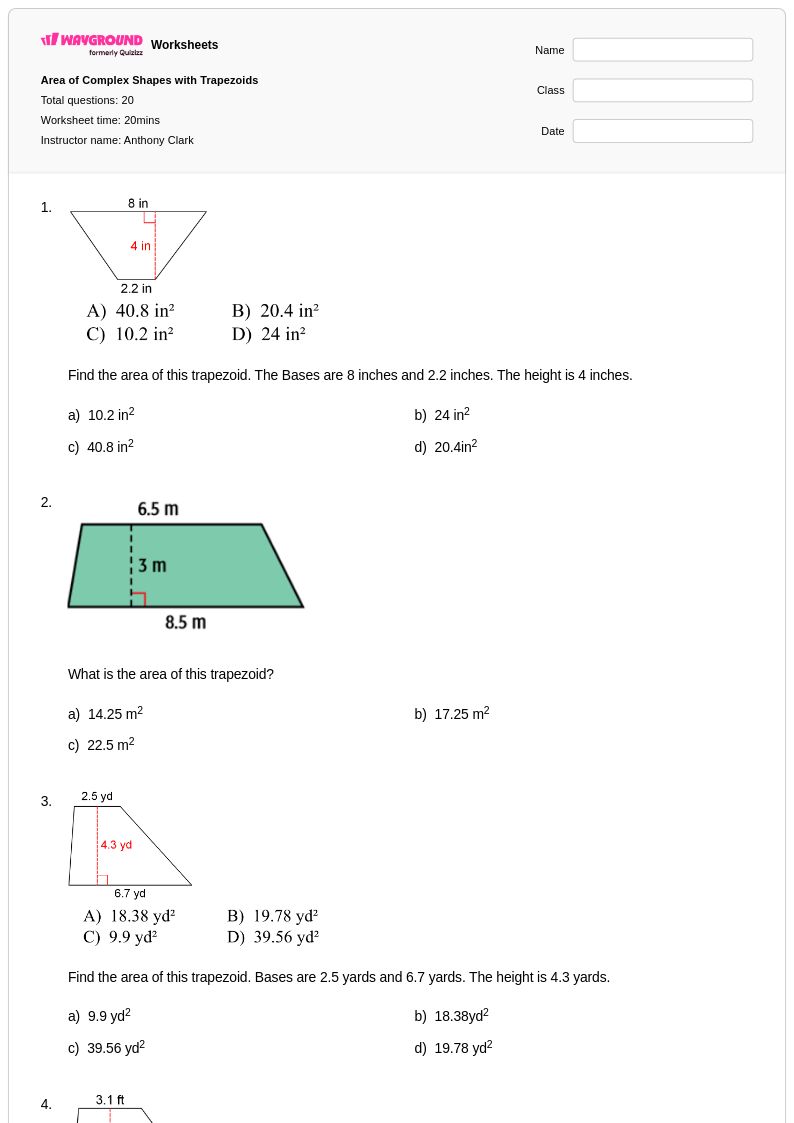
20 Q
6th - Uni
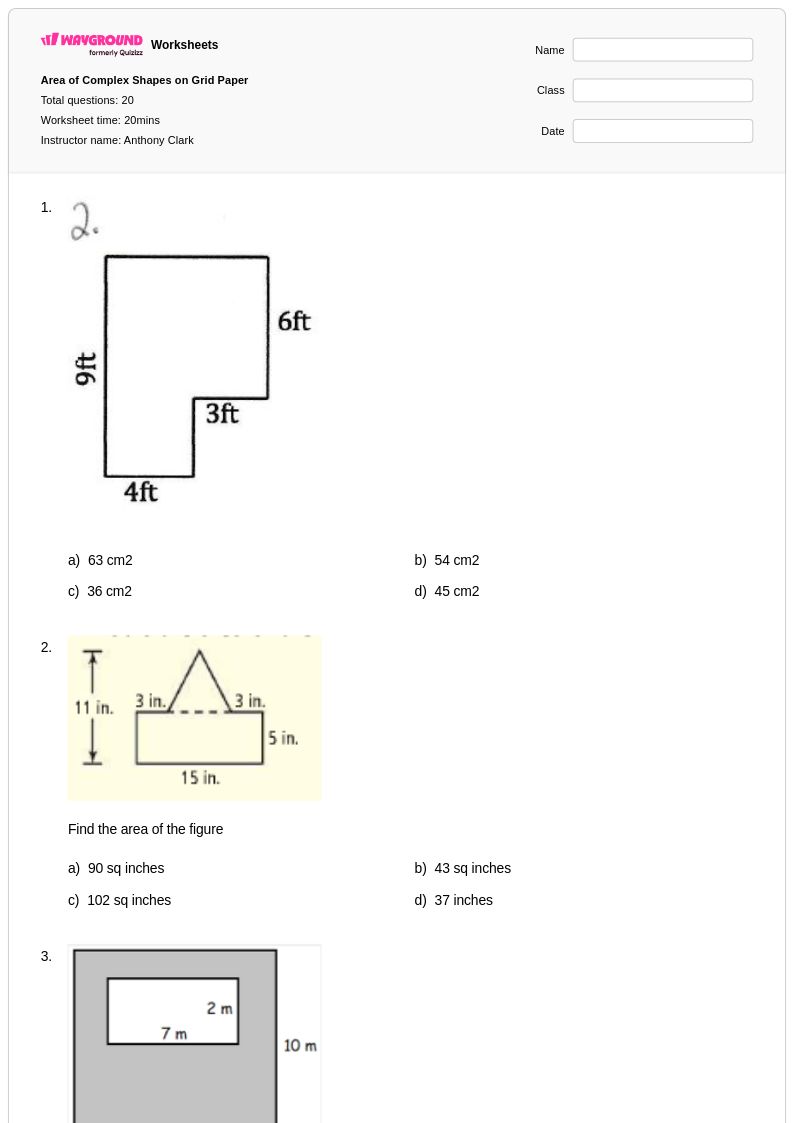
20 Q
7th - Uni
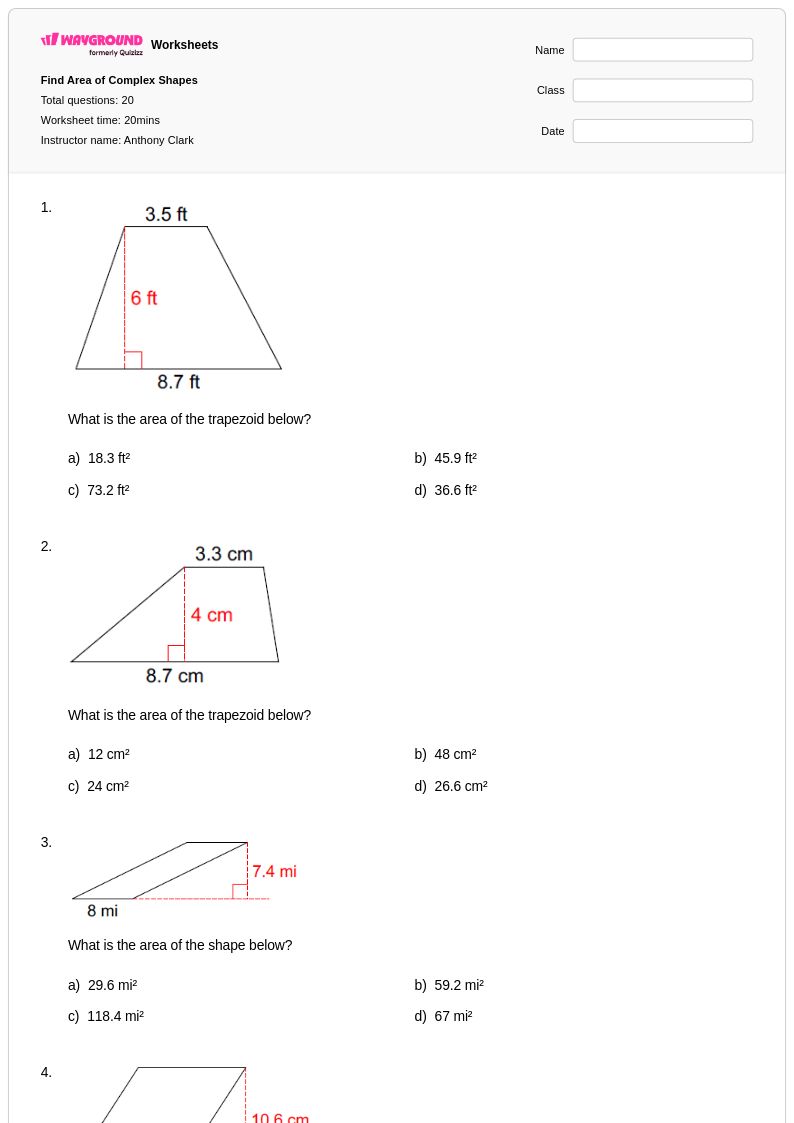
20 Q
7th - Uni
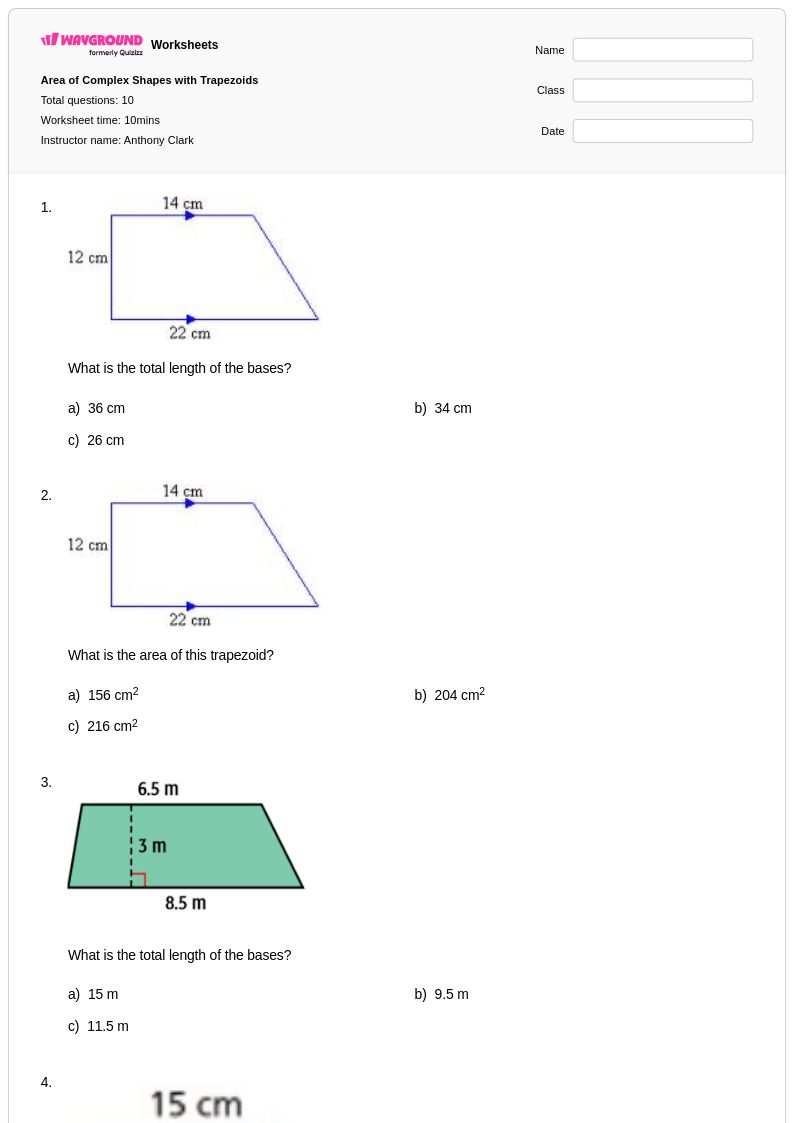
10 Q
6th - Uni
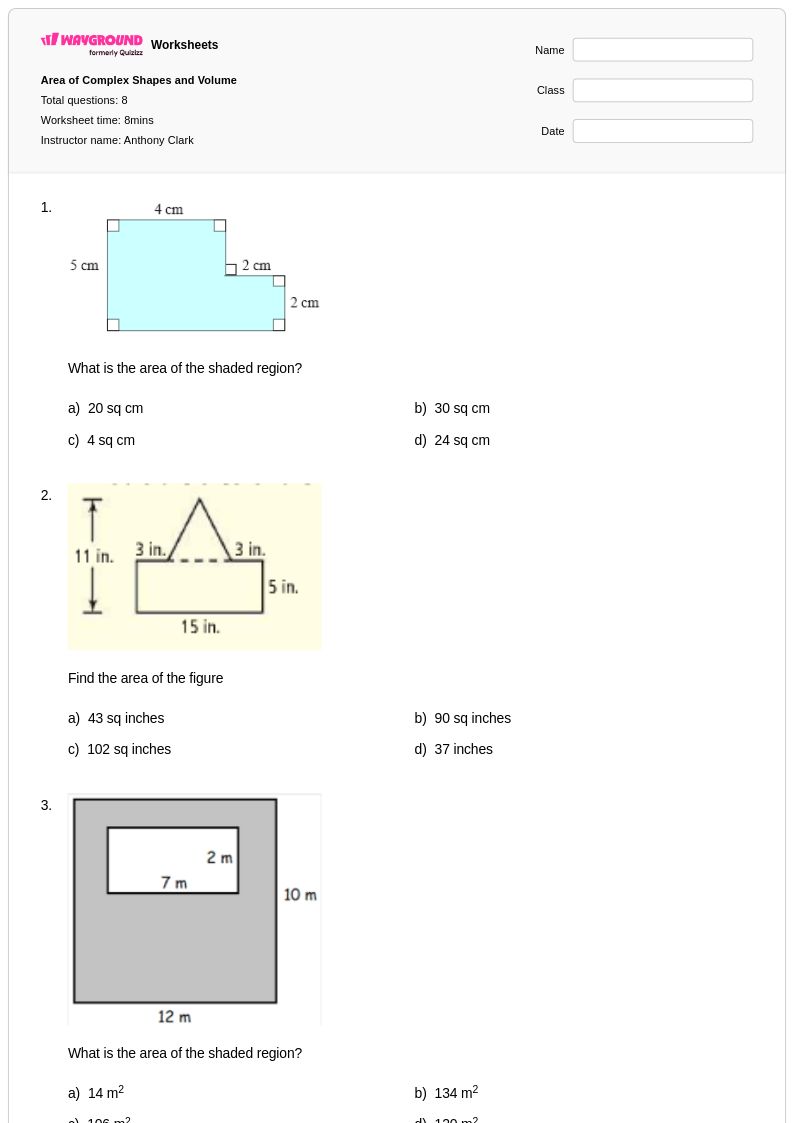
8 Q
6th - Uni
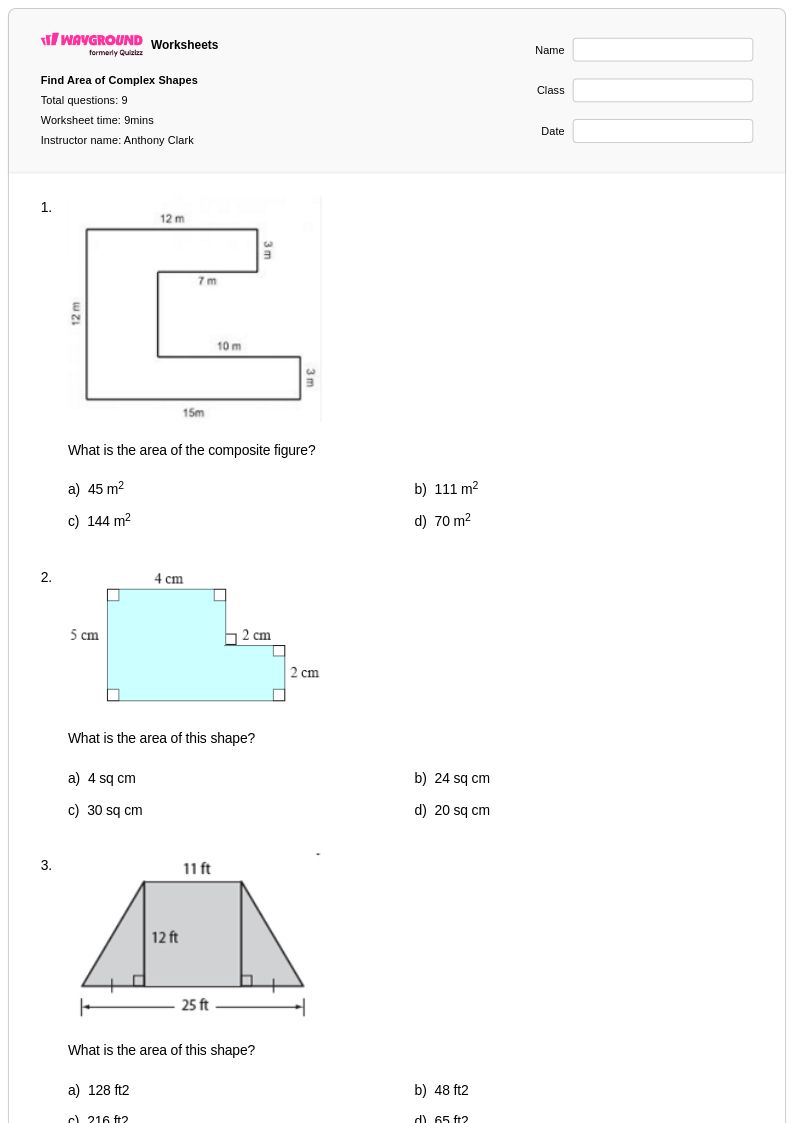
9 Q
7th - Uni
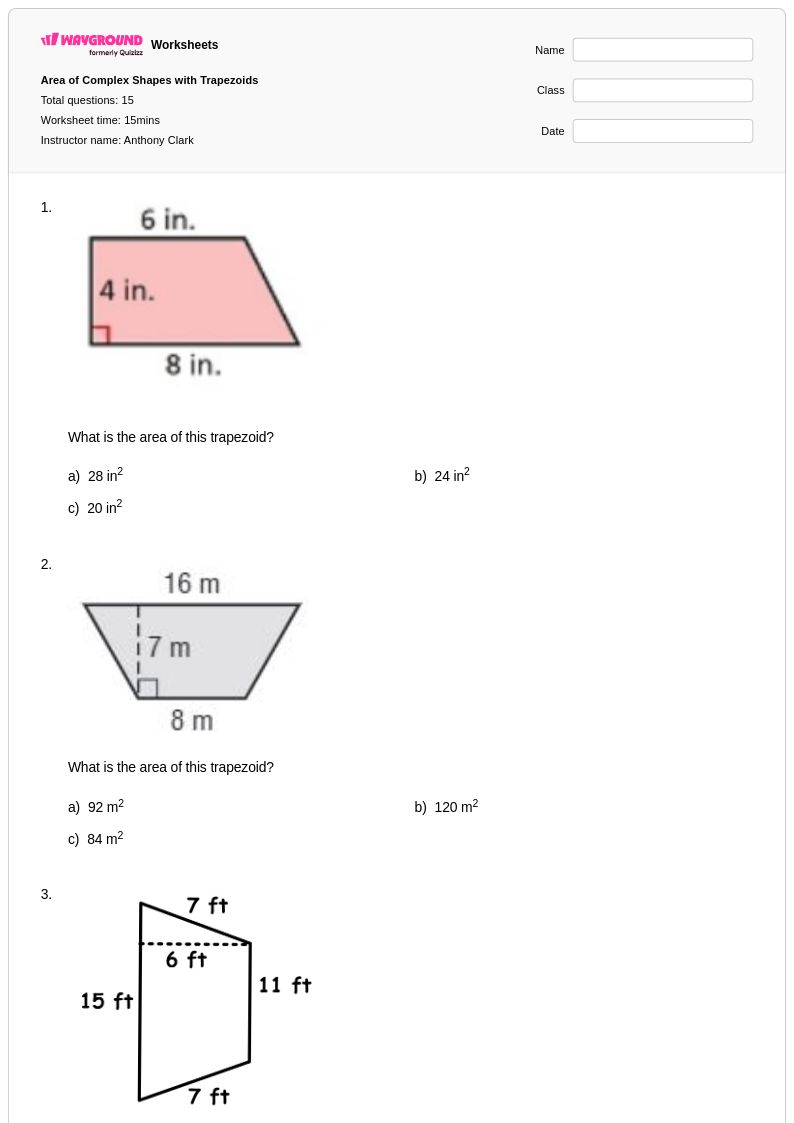
15 Q
6th - Uni
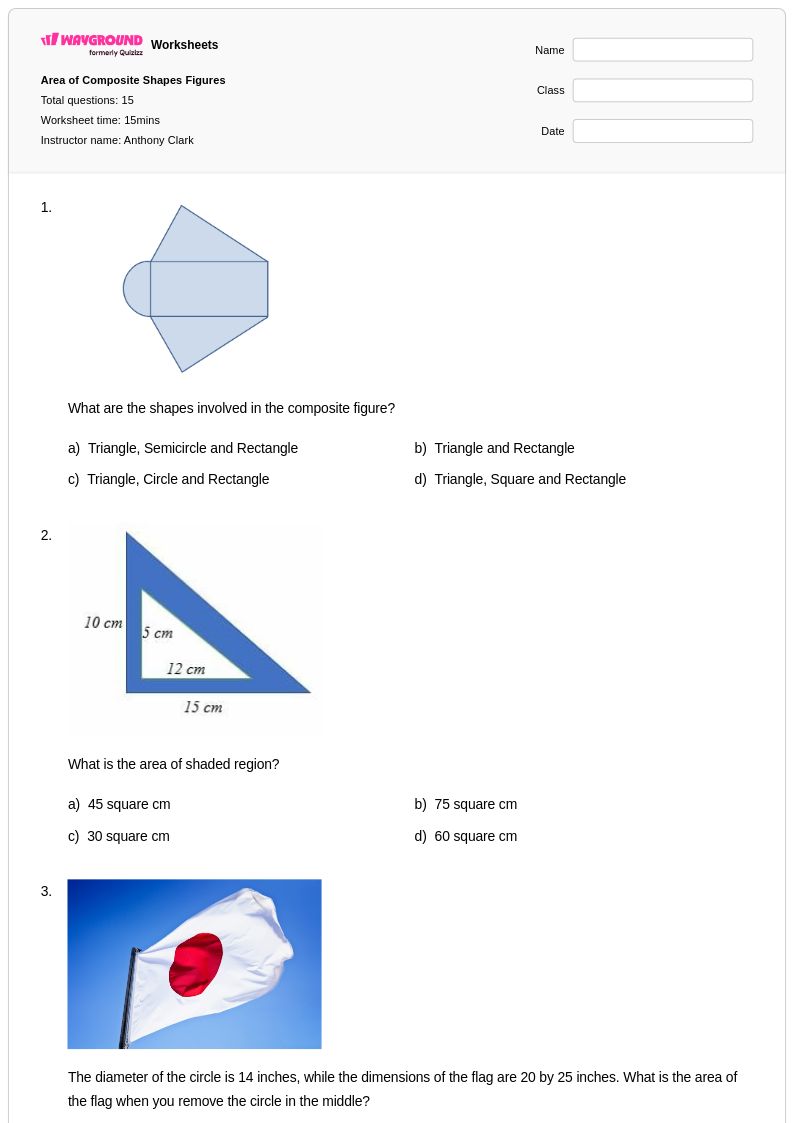
15 Q
7th - Uni
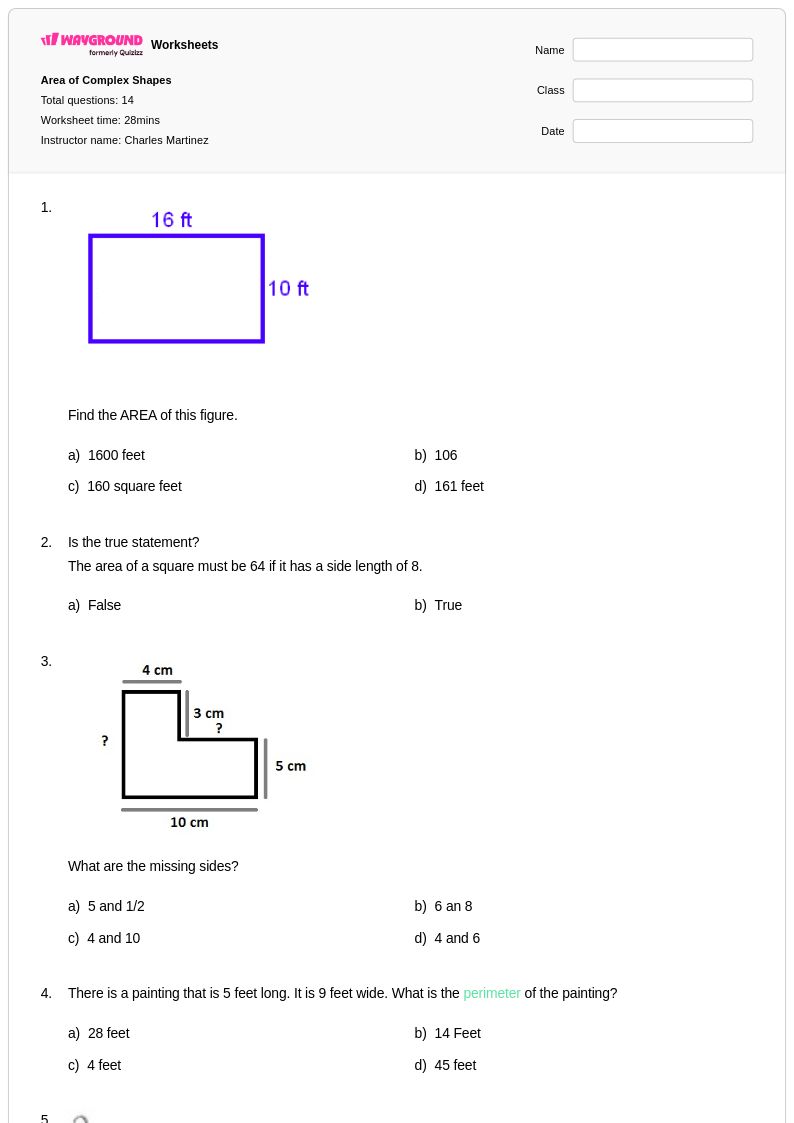
14 Q
9th - 12th
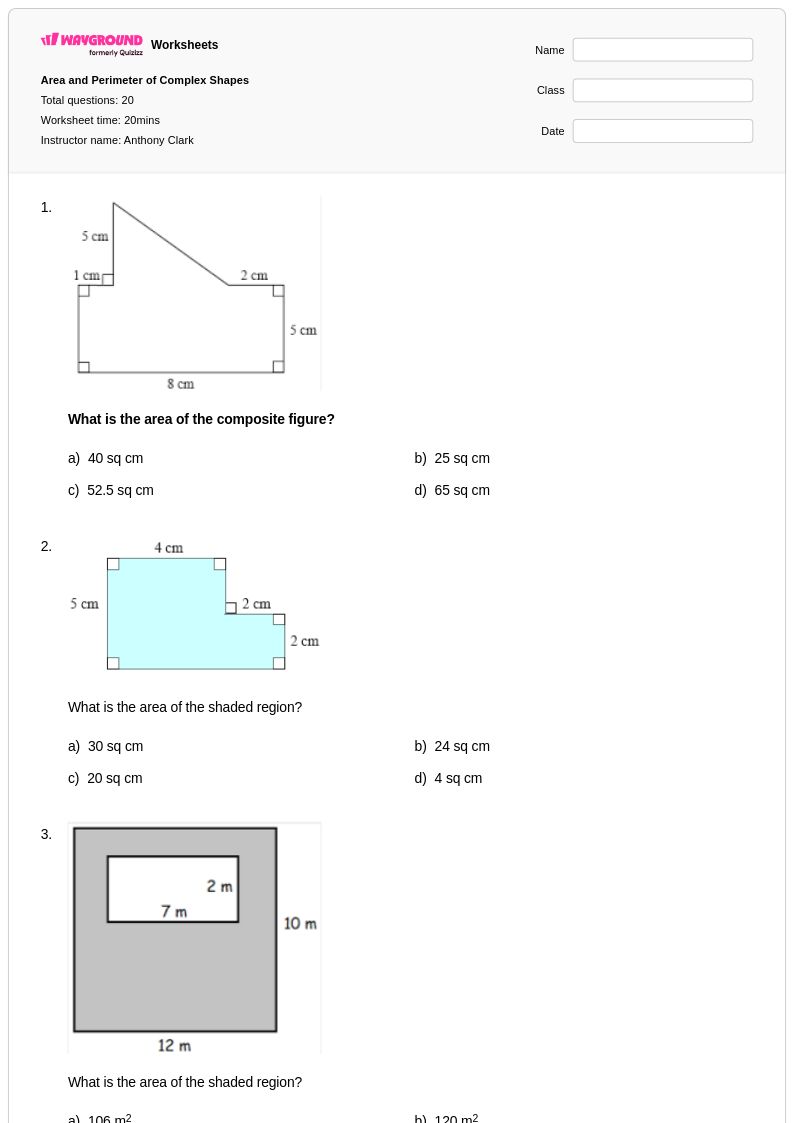
20 Q
7th - Uni
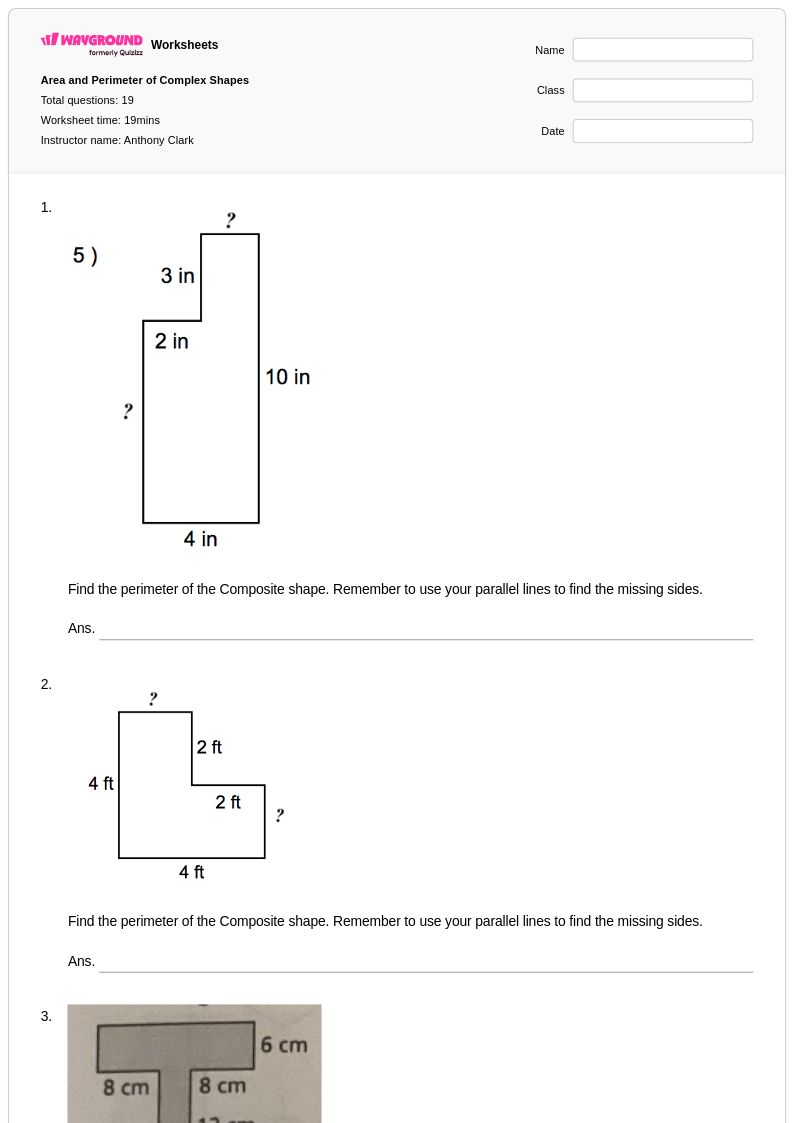
19 Q
7th - Uni
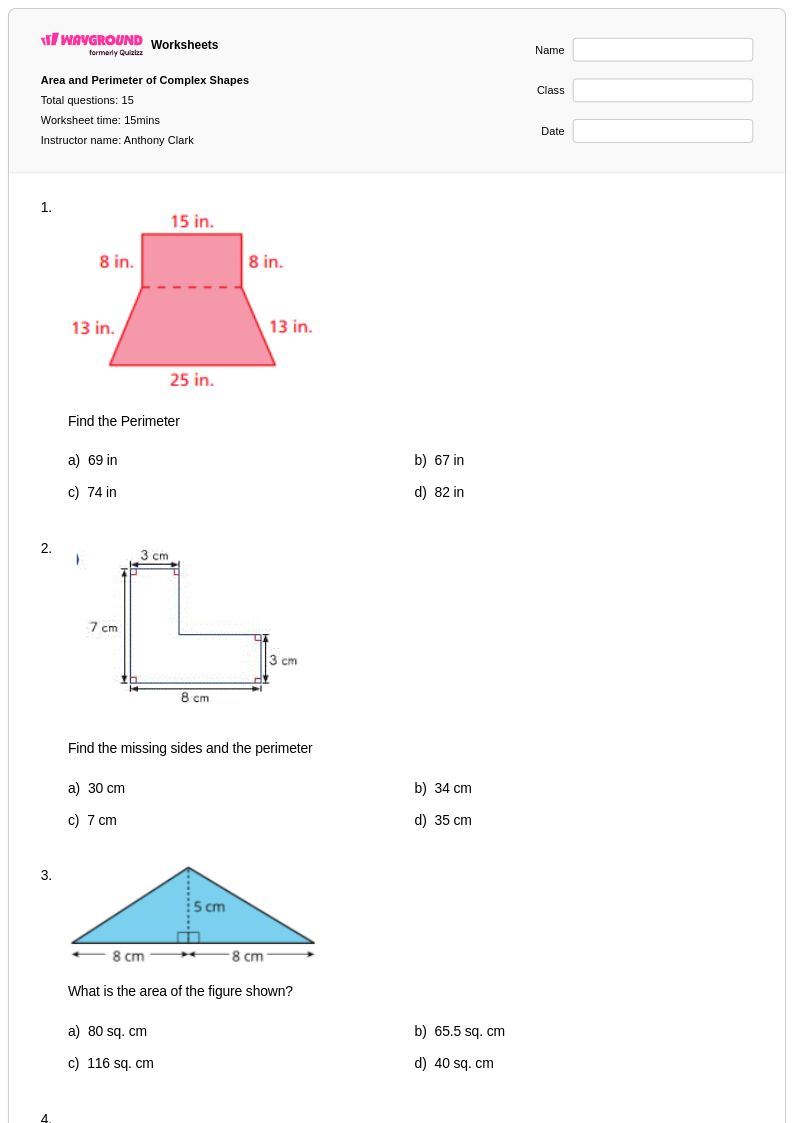
15 Q
7th - Uni
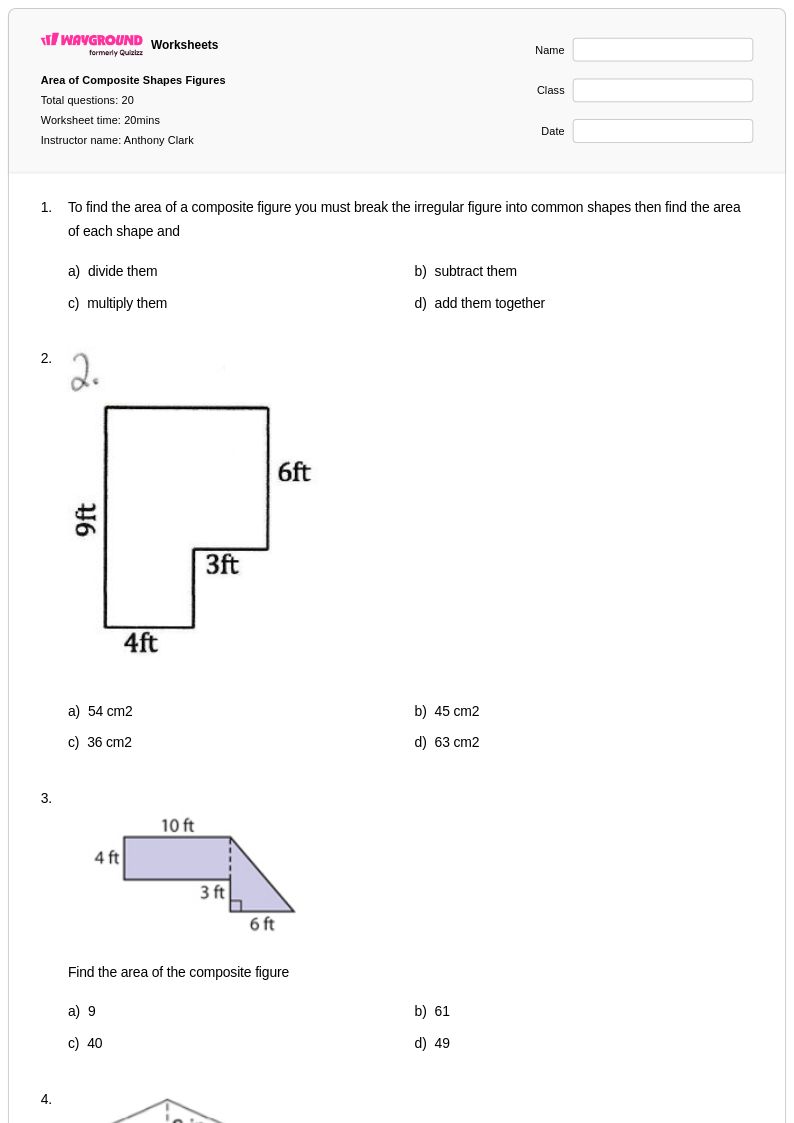
20 Q
7th - Uni
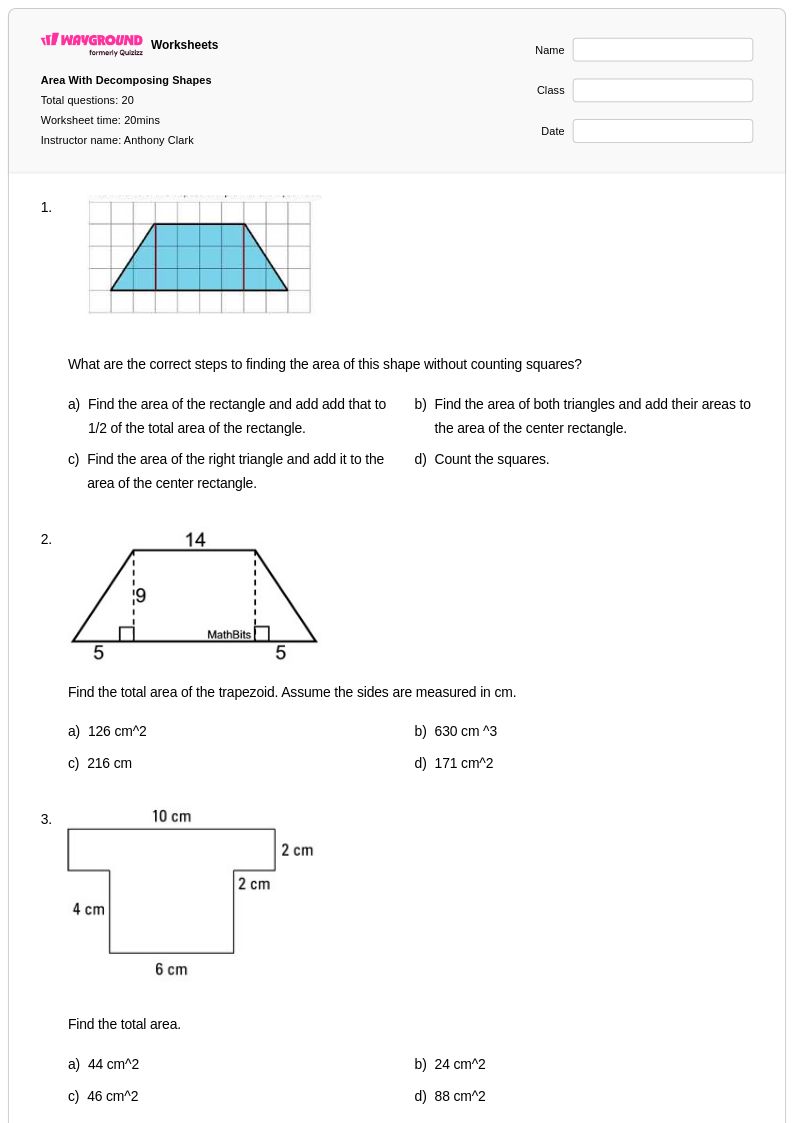
20 Q
6th - Uni
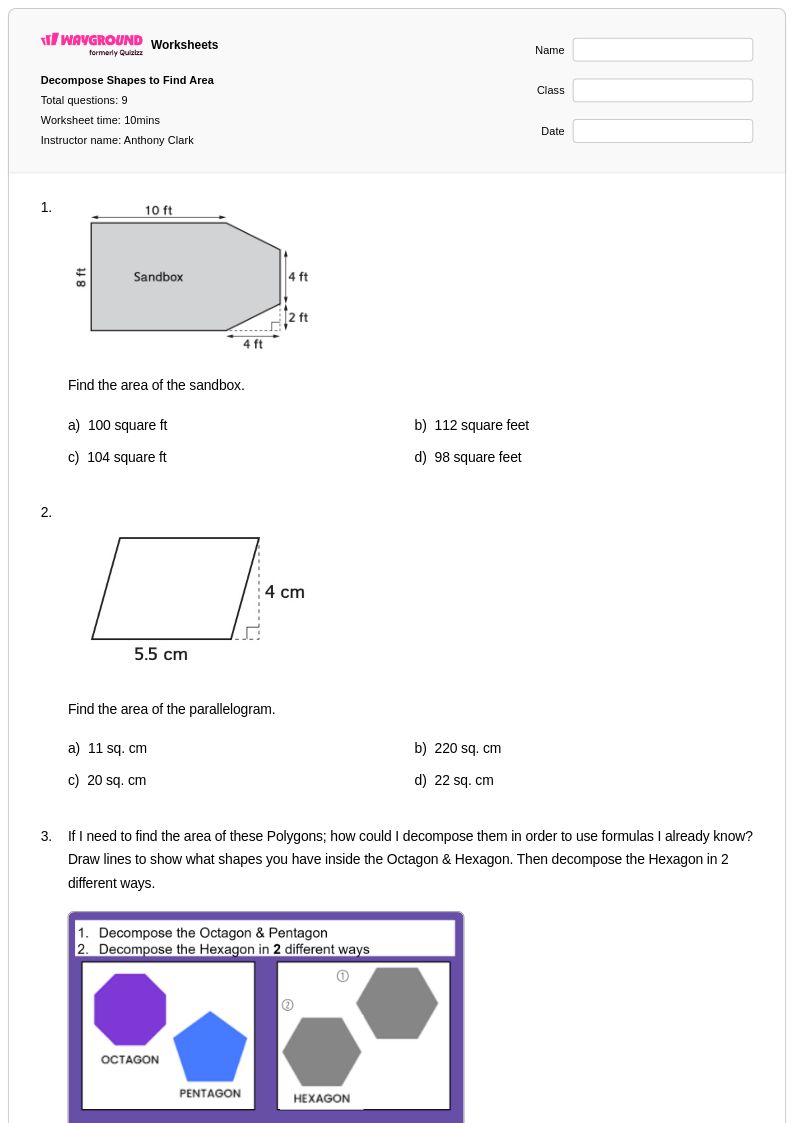
10 Q
6th - Uni
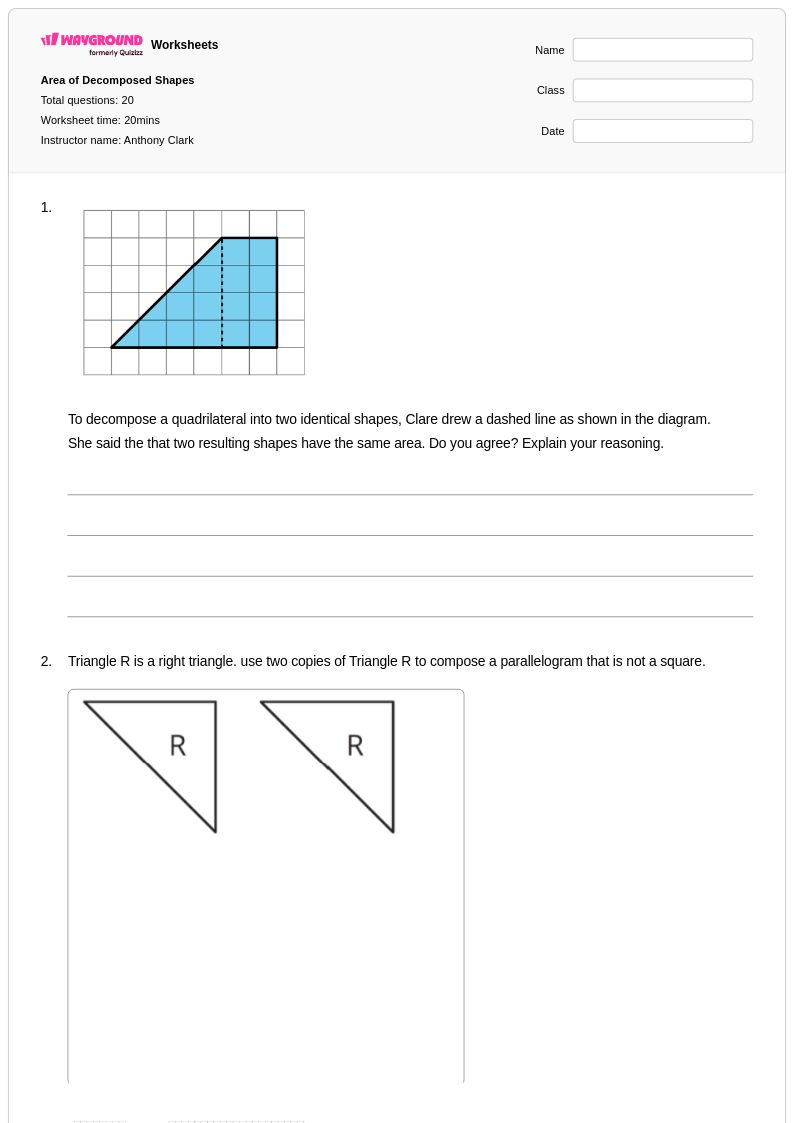
20 Q
6th - Uni
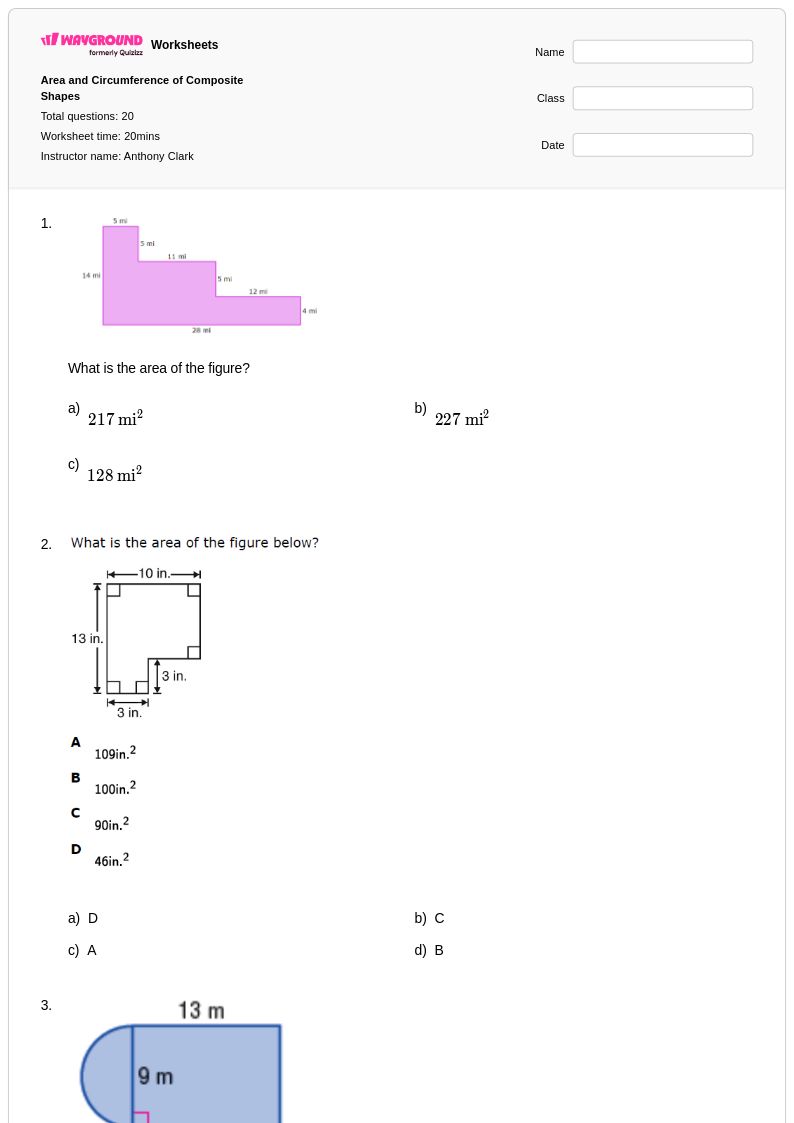
20 Q
7th - Uni
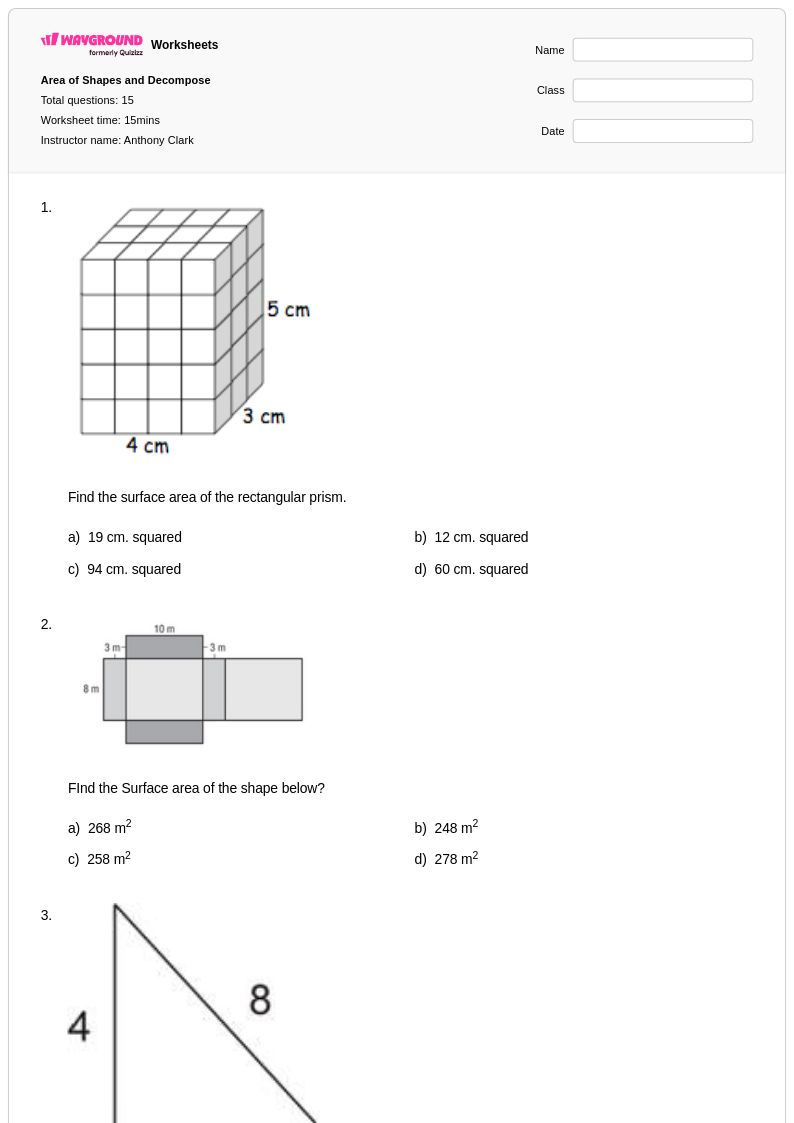
15 Q
6th - Uni
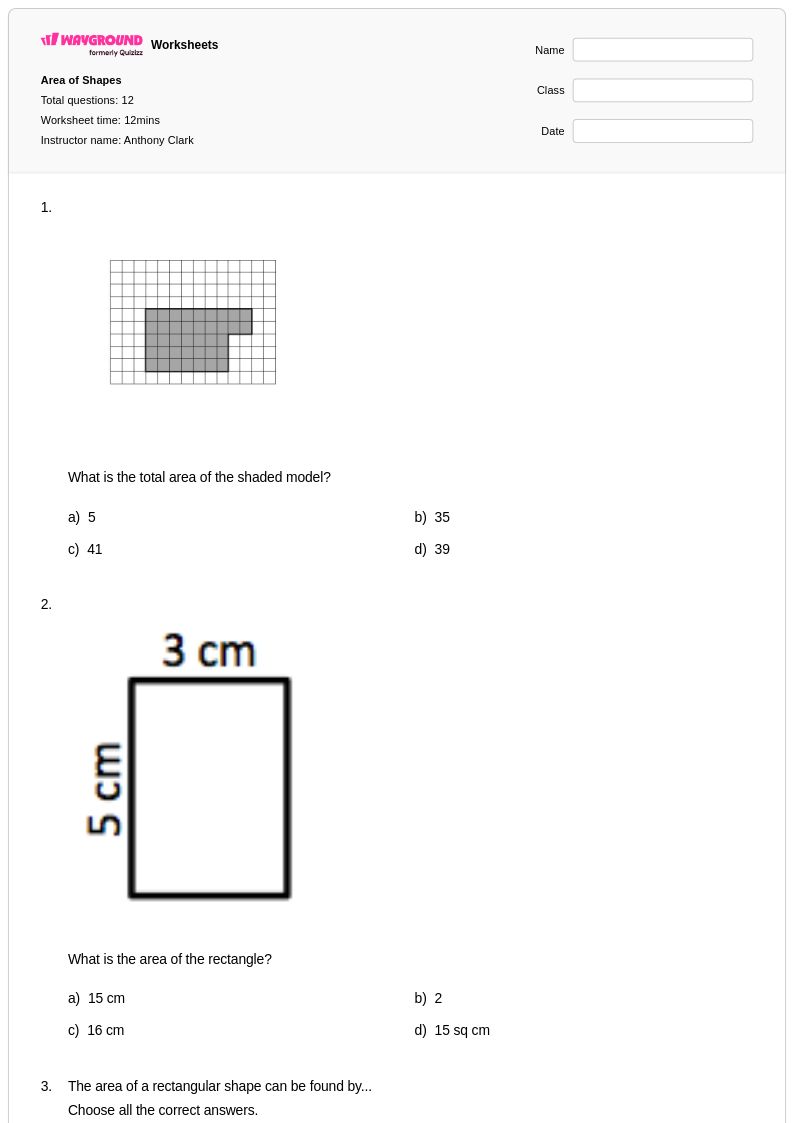
12 Q
3rd - Uni
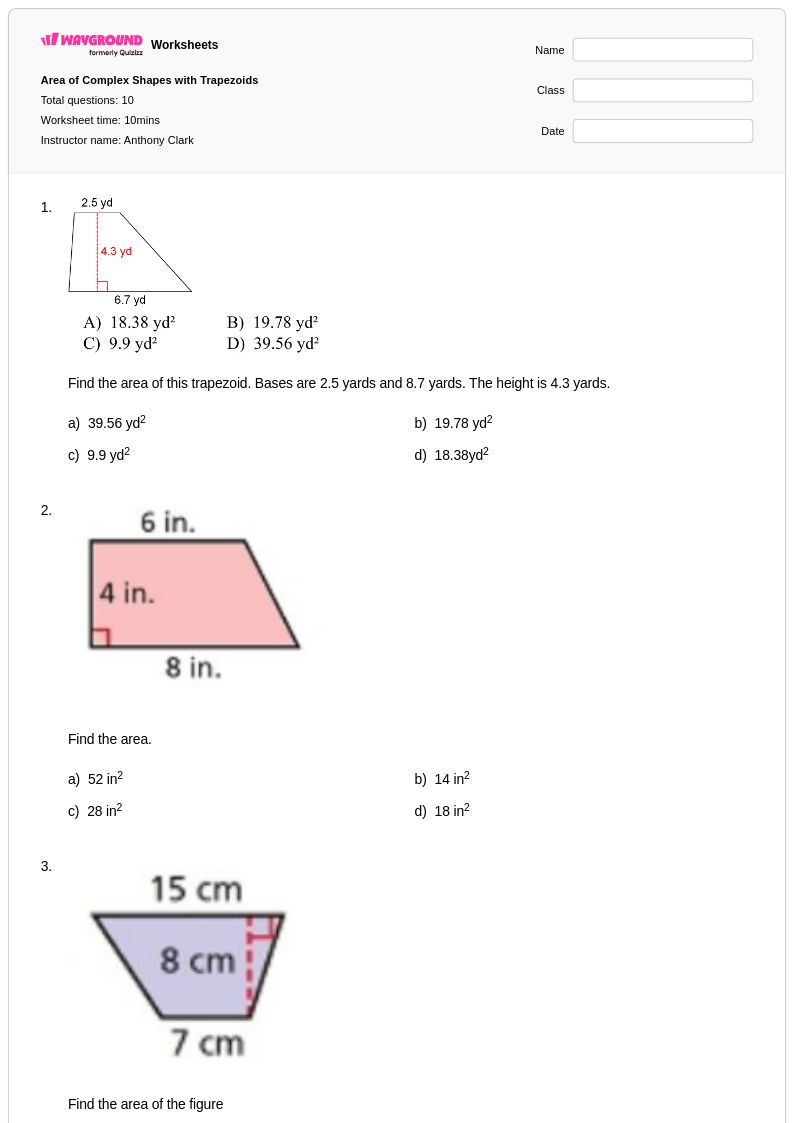
10 Q
6th - Uni
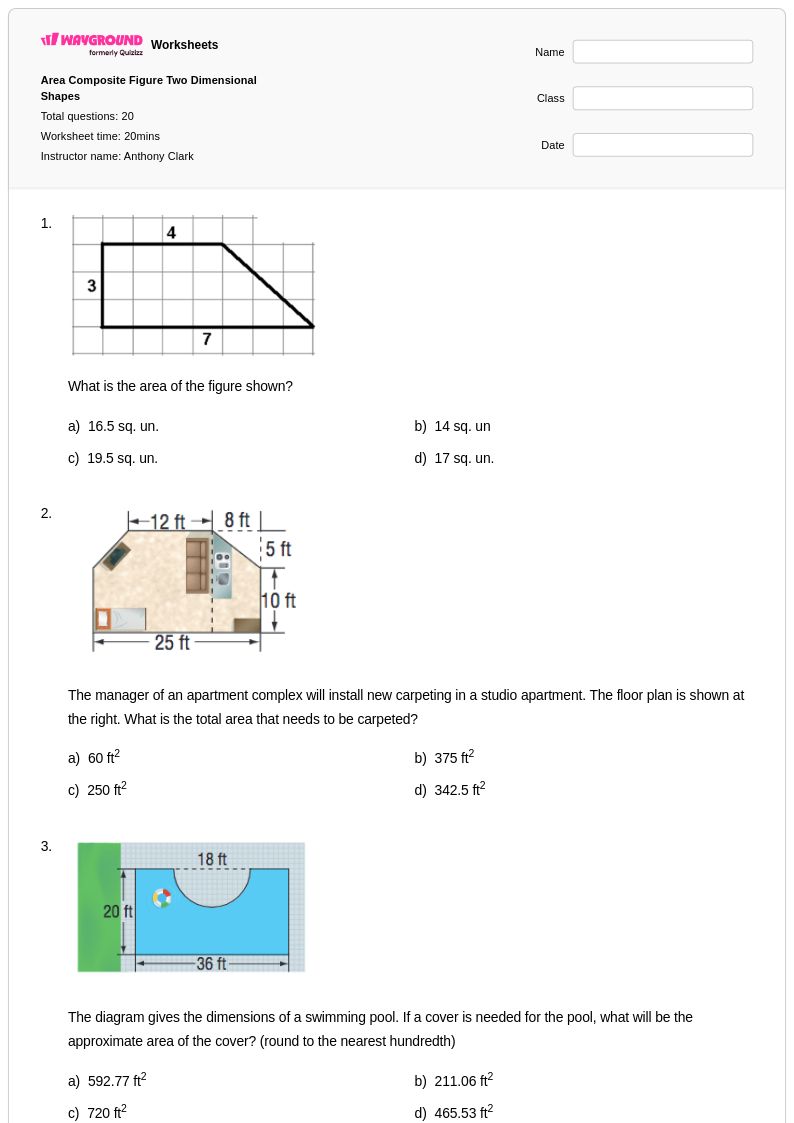
20 Q
7th - Uni
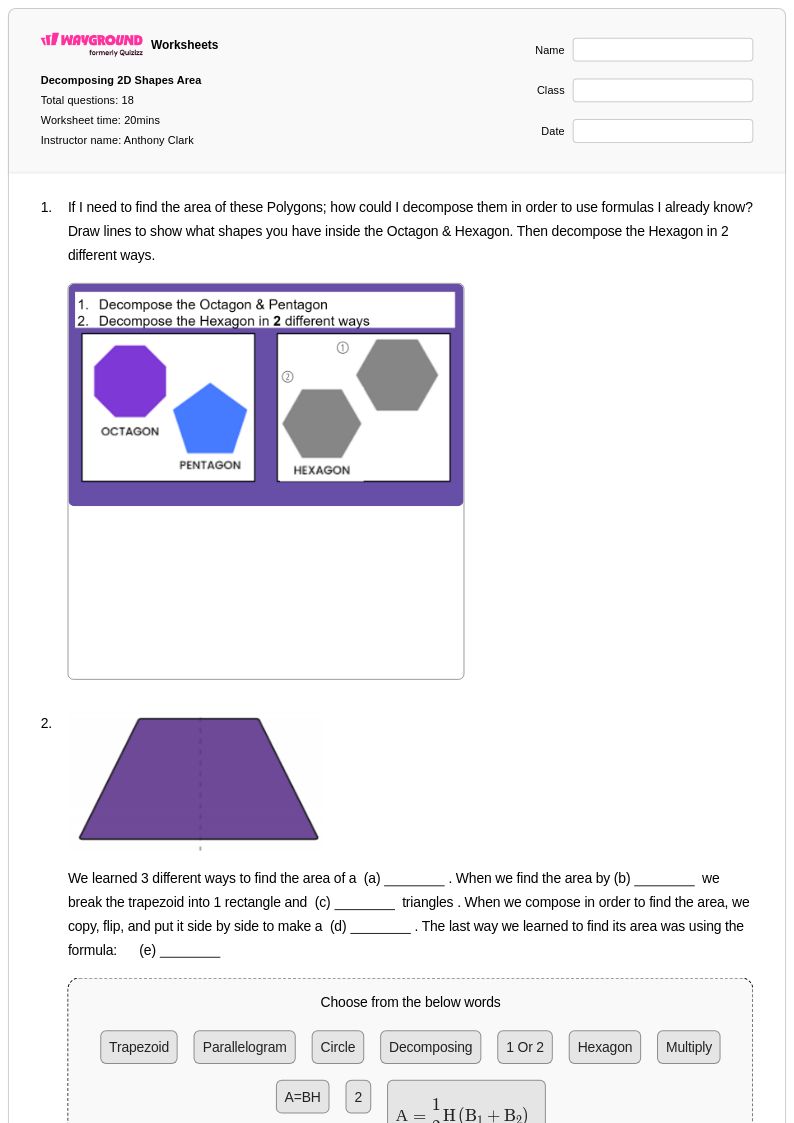
20 Q
6th - Uni
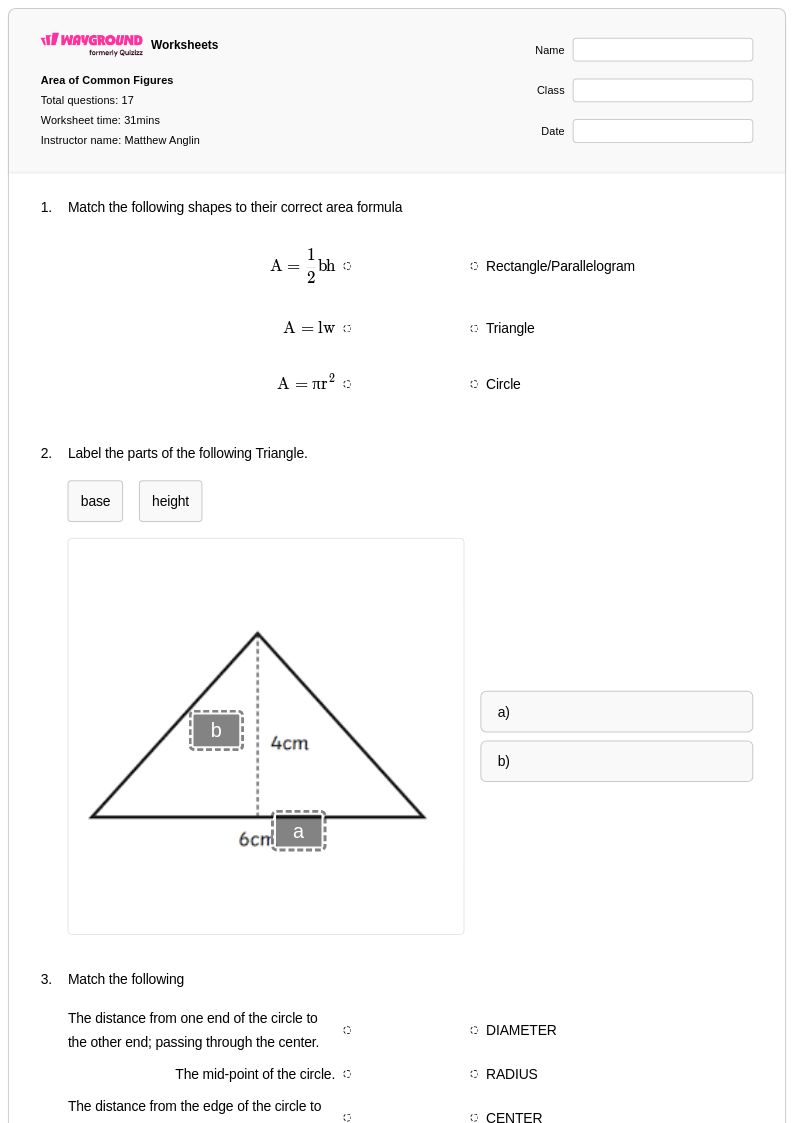
17 Q
9th - 12th
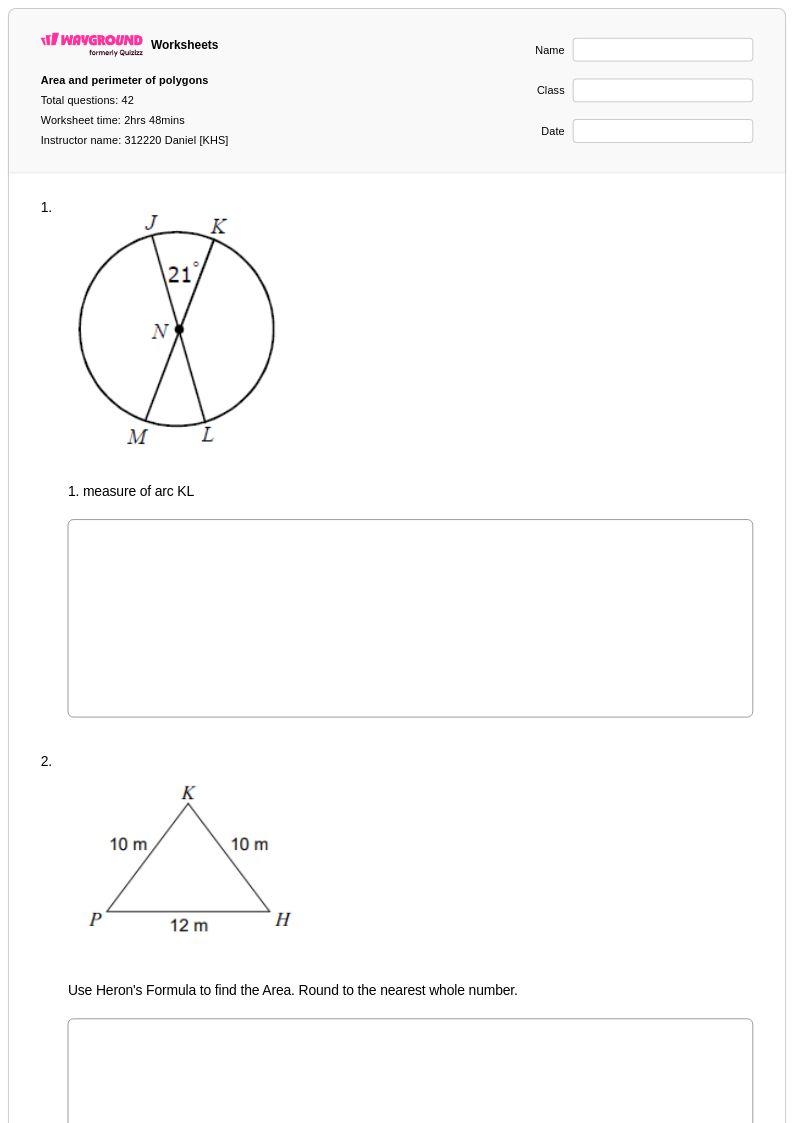
42 Q
9th - 12th
Explore Area of Complex Shapes Worksheets by Grades
Explore Other Subject Worksheets for grade 12
Explore printable Area of Complex Shapes worksheets for Grade 12
Area of Complex Shapes worksheets for Grade 12 mathematics provide students with essential practice in calculating areas of irregular polygons, composite figures, and shapes requiring advanced geometric techniques. These comprehensive worksheet collections through Wayground (formerly Quizizz) strengthen critical problem-solving skills as students learn to decompose complex shapes into familiar geometric forms, apply integration techniques for curved boundaries, and utilize coordinate geometry methods for irregular figures. Each worksheet includes carefully structured practice problems that progress from basic composite rectangles and triangles to sophisticated shapes involving circles, parabolas, and other advanced curves, with complete answer keys provided to support independent learning and self-assessment in both free printable pdf formats and interactive digital versions.
Wayground (formerly Quizizz) empowers mathematics teachers with access to millions of educator-created Area of Complex Shapes resources that streamline lesson planning and differentiated instruction for Grade 12 geometry courses. The platform's robust search and filtering capabilities allow teachers to quickly locate worksheets aligned with specific curriculum standards and learning objectives, while customization tools enable adaptation of existing materials to meet diverse student needs and skill levels. These versatile worksheet collections support comprehensive mathematics instruction through printable pdf downloads for traditional classroom use and interactive digital formats for technology-enhanced learning, making them invaluable for targeted skill practice, remediation support for struggling students, and enrichment opportunities for advanced learners ready to tackle more challenging geometric applications.
FAQs
How do I teach area of complex shapes to Grade 12 students?
What exercises help Grade 12 students practice area of complex shapes?
What mistakes do Grade 12 students make when calculating complex areas?
How can I use these Grade 12 area of complex shapes worksheets?
How does area of complex shapes fit into the Common Core high school math progression?
How can I differentiate Grade 12 area of complex shapes worksheets?
Is area of complex shapes a Grade 12 topic?