
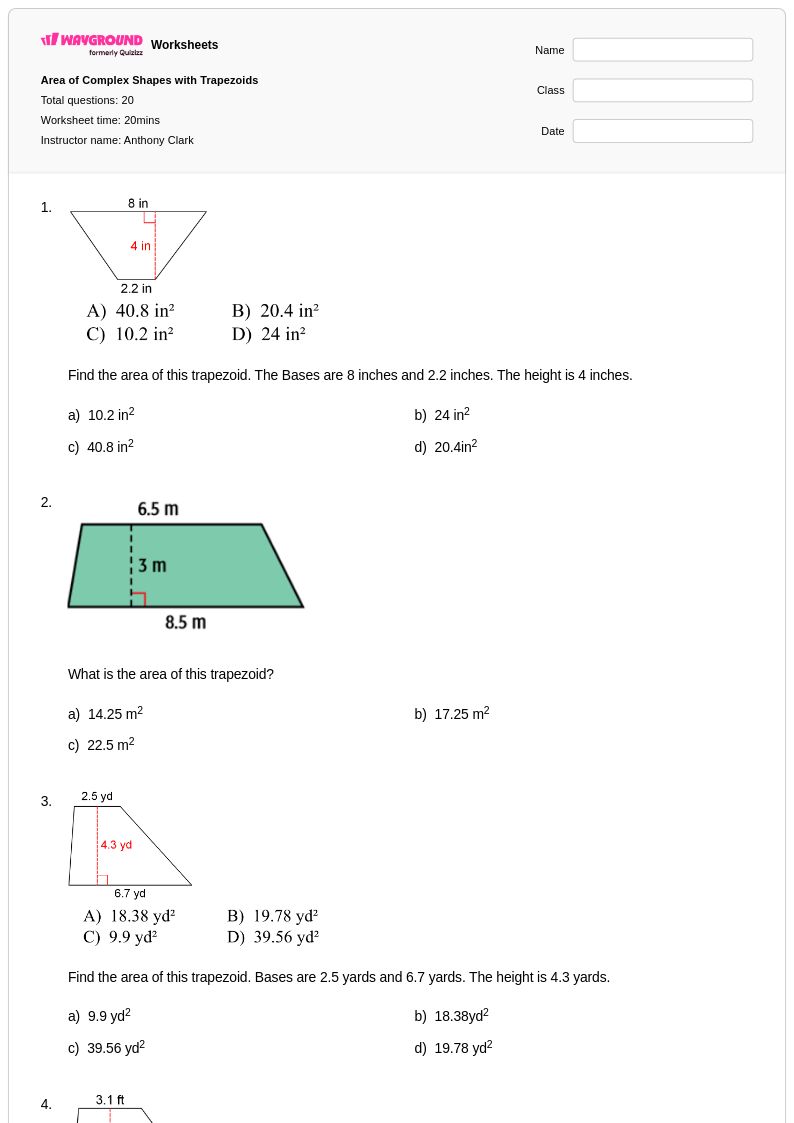
20 Q
6th - Uni
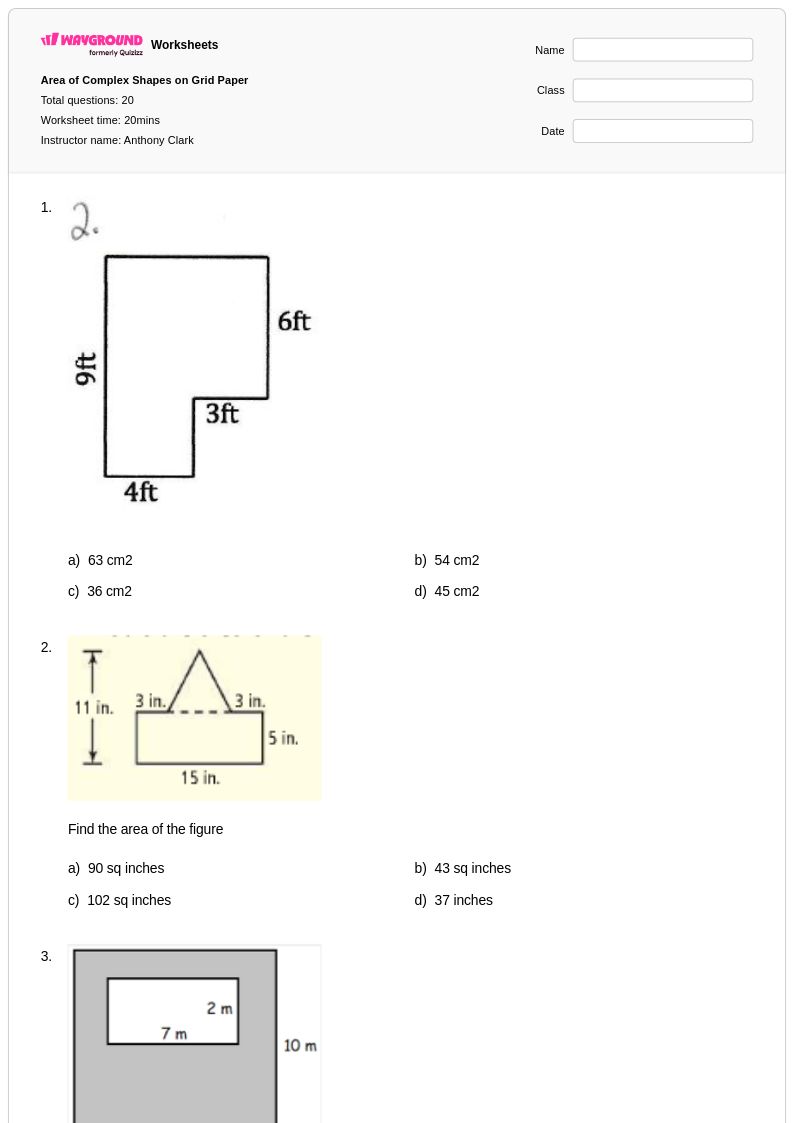
20 Q
7th - Uni
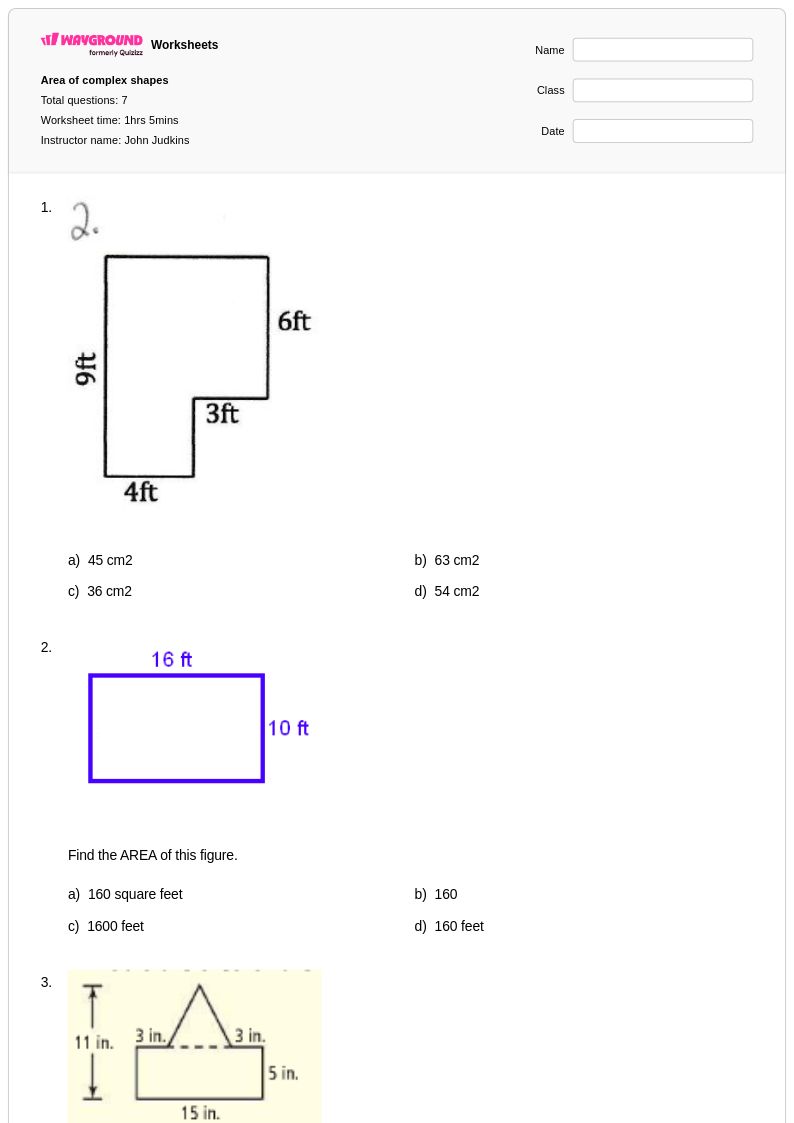
7 Q
9th - 11th
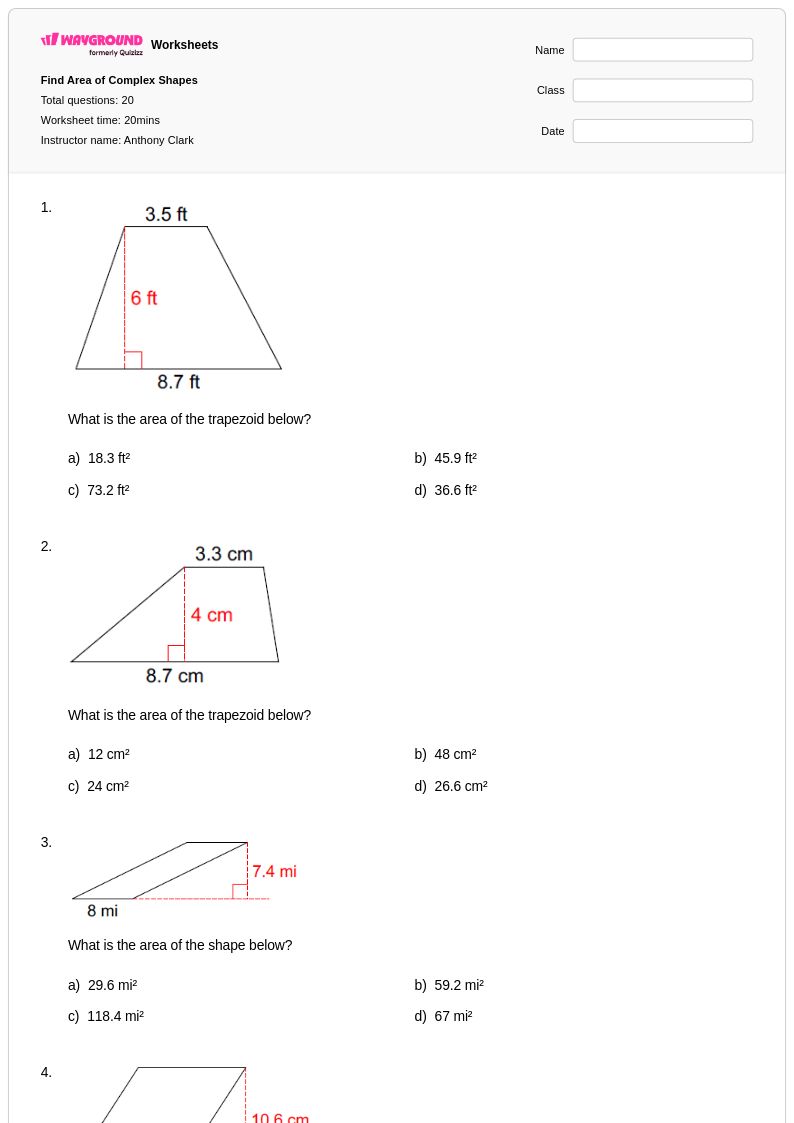
20 Q
7th - Uni
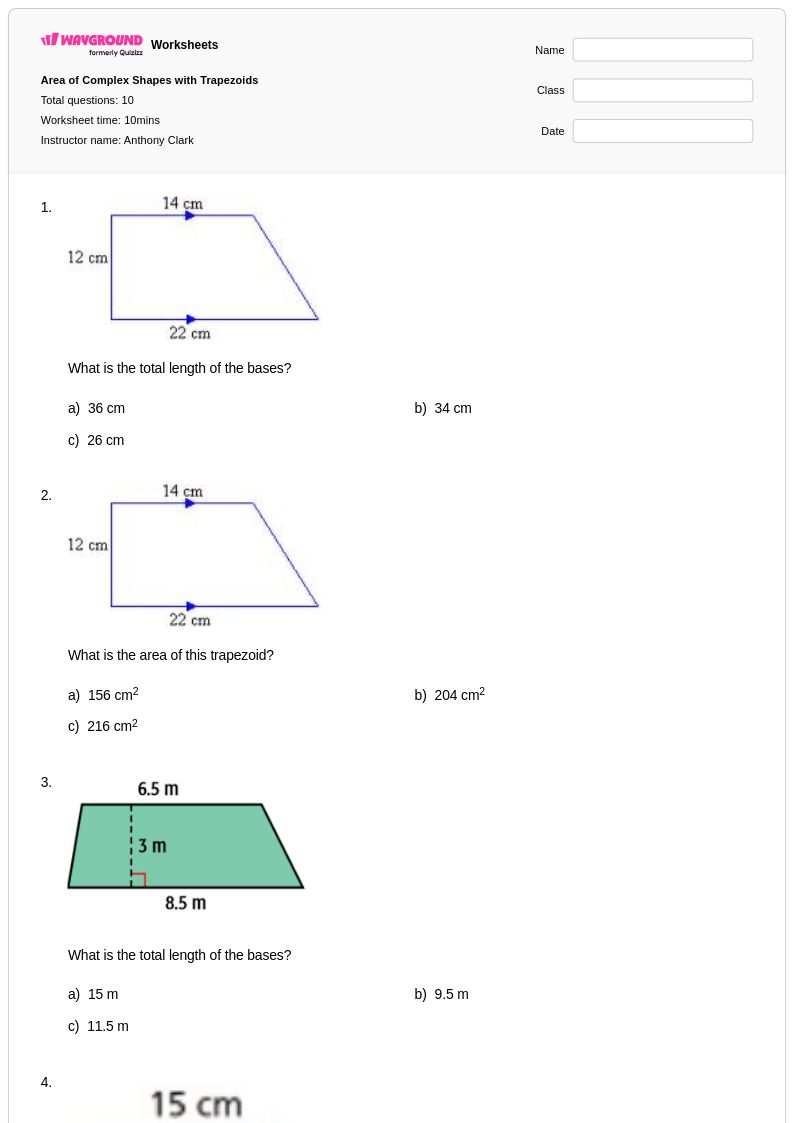
10 Q
6th - Uni
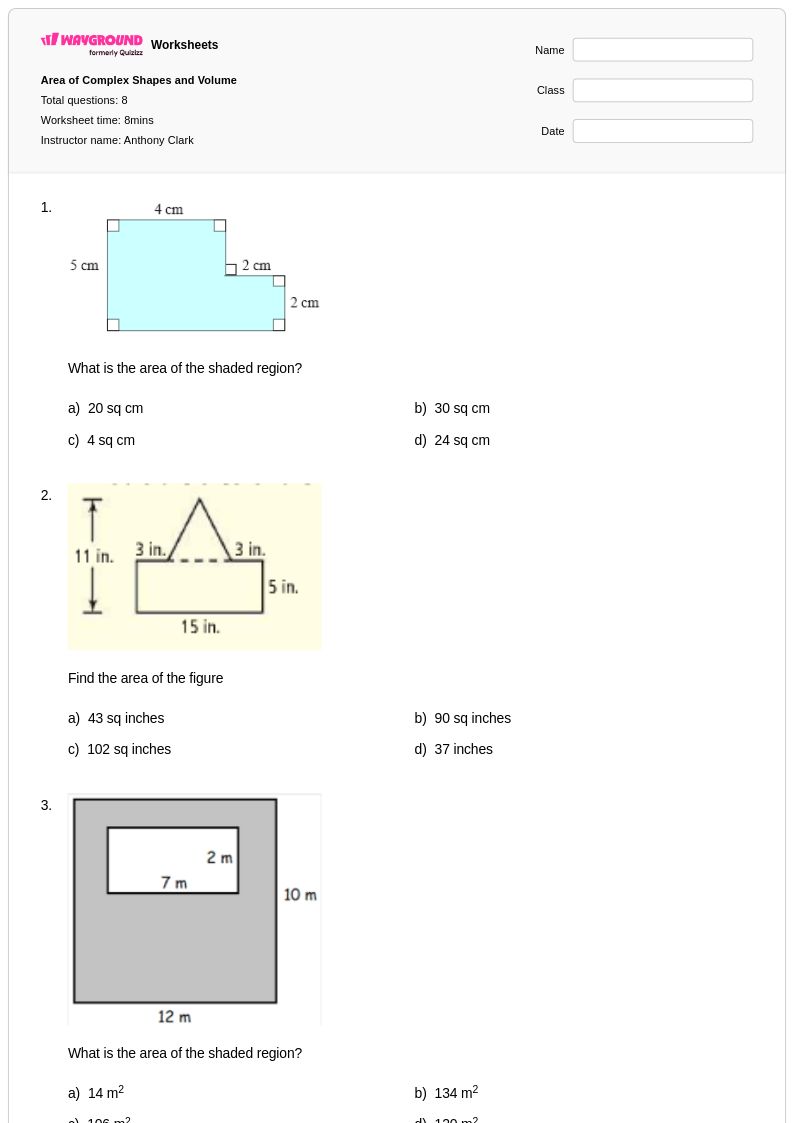
8 Q
6th - Uni
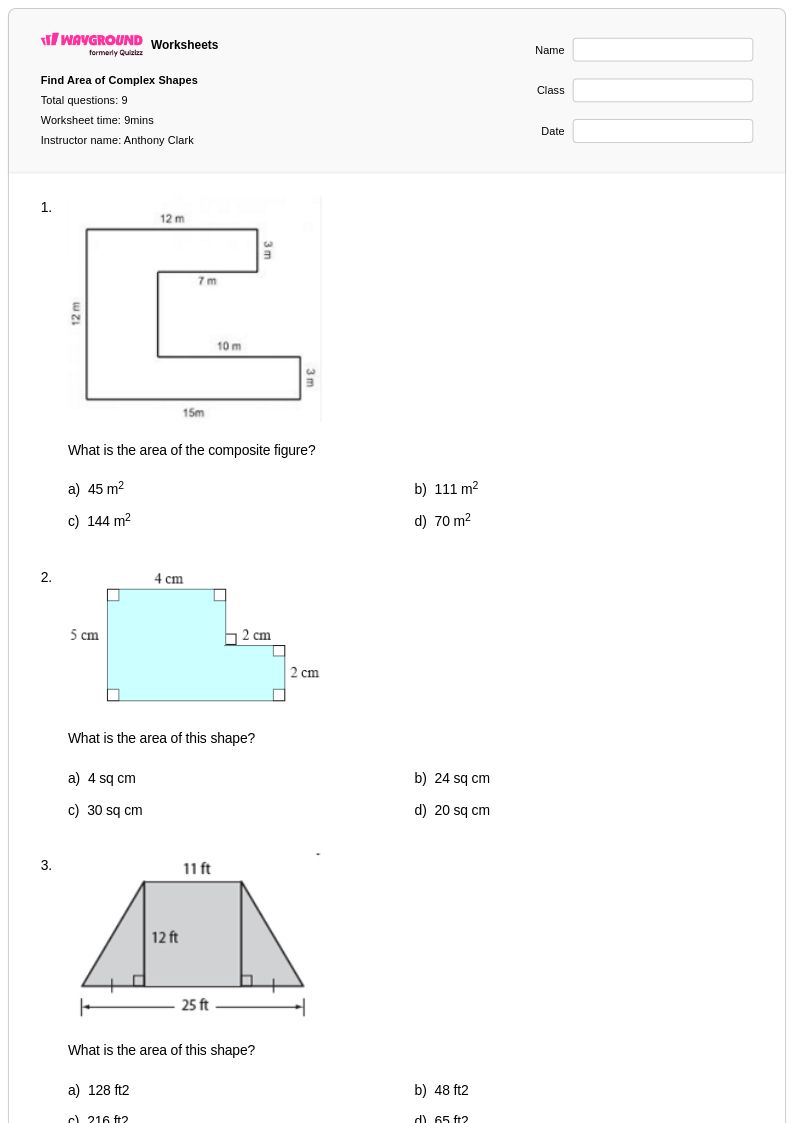
9 Q
7th - Uni
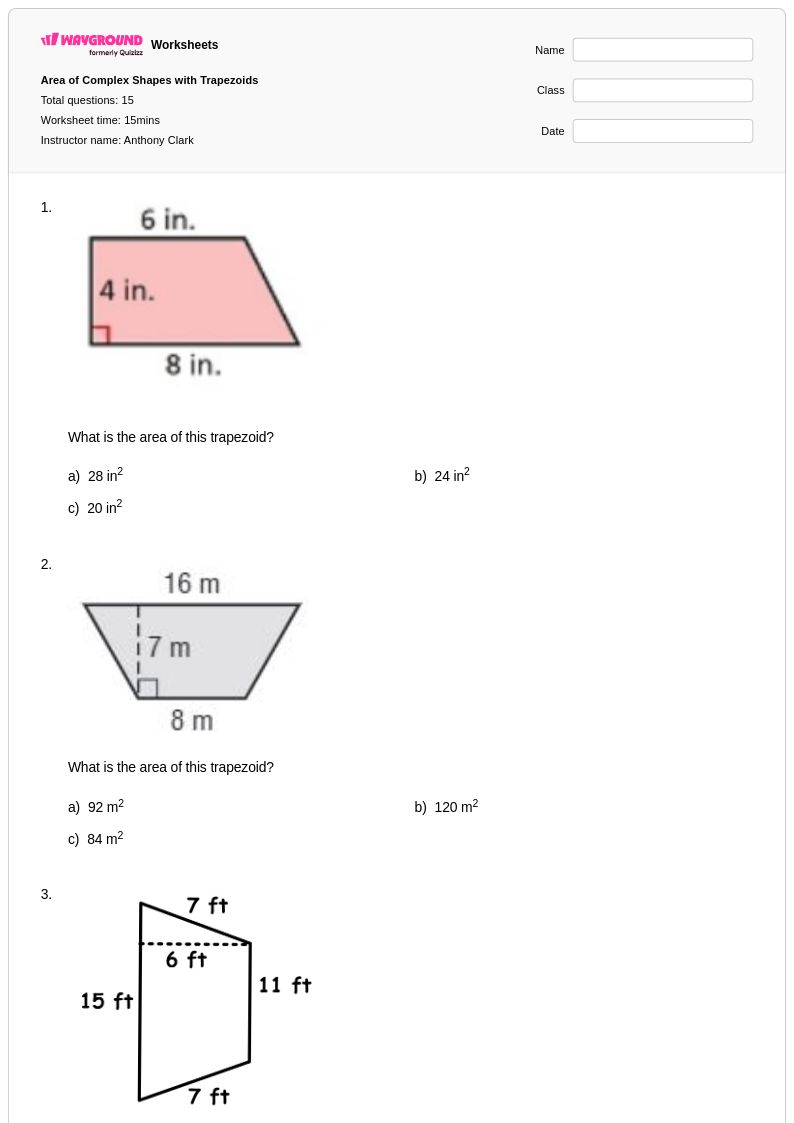
15 Q
6th - Uni
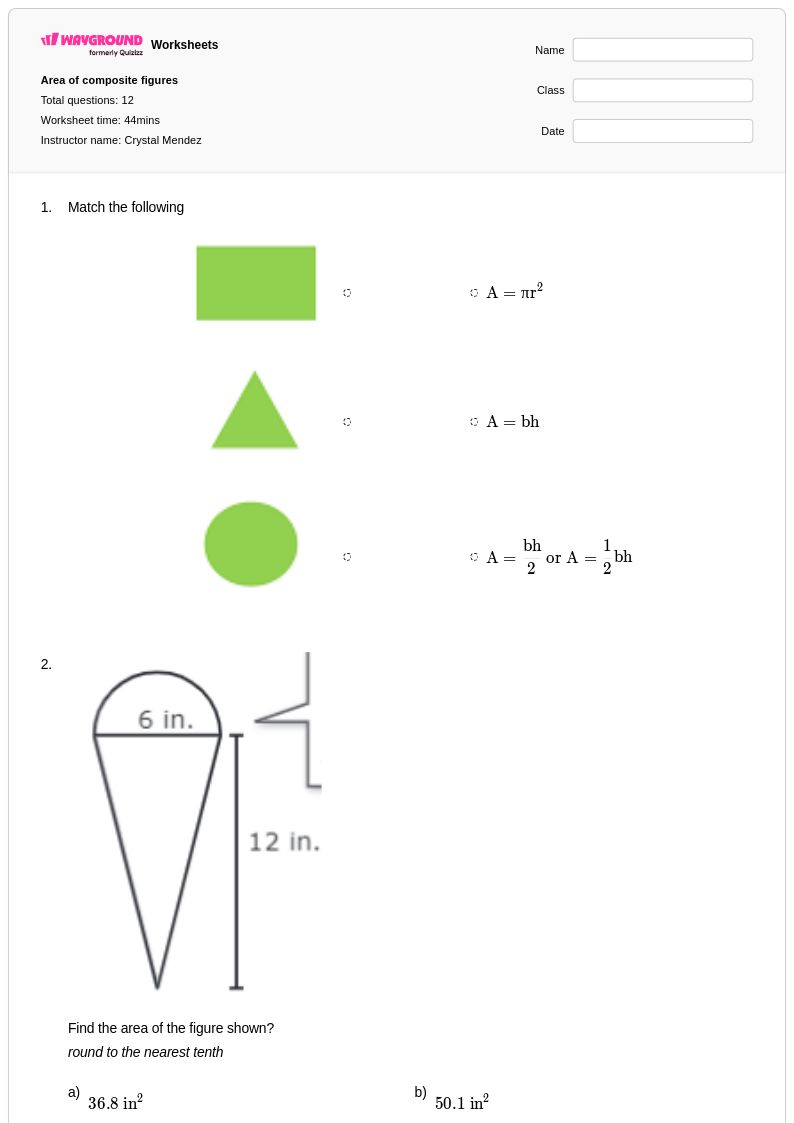
12 Q
10th
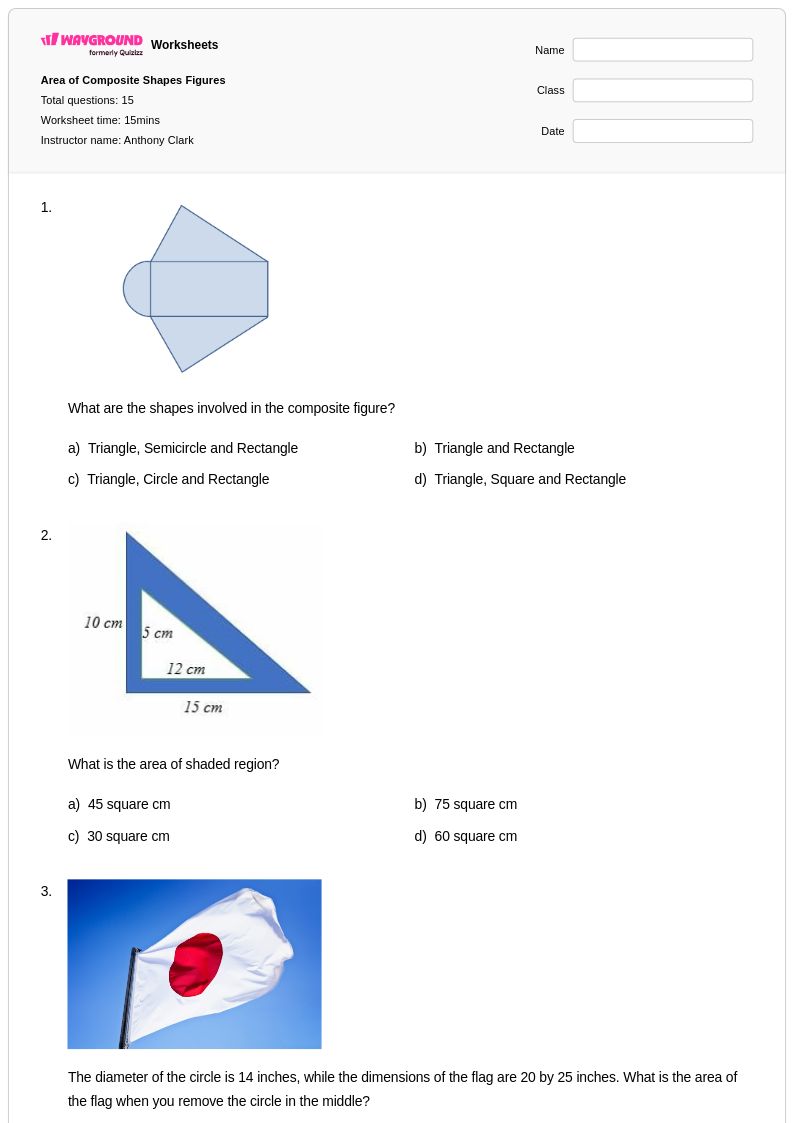
15 Q
7th - Uni
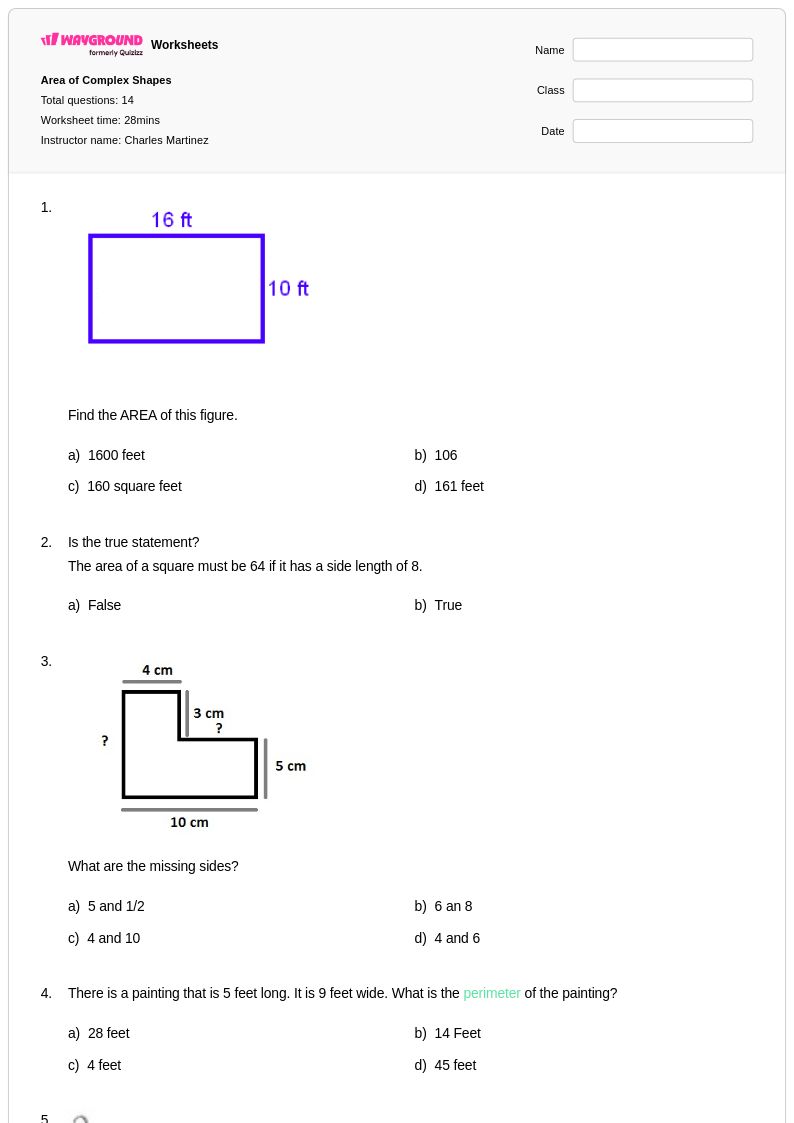
14 Q
9th - 12th
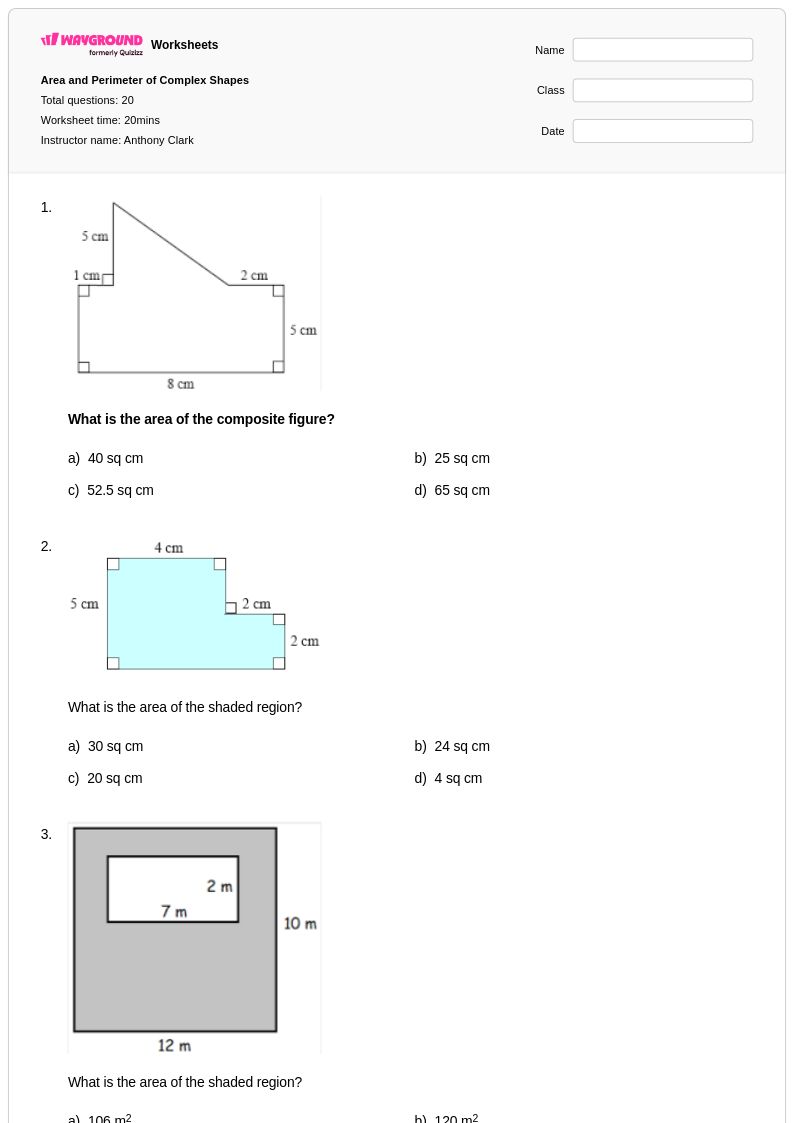
20 Q
7th - Uni
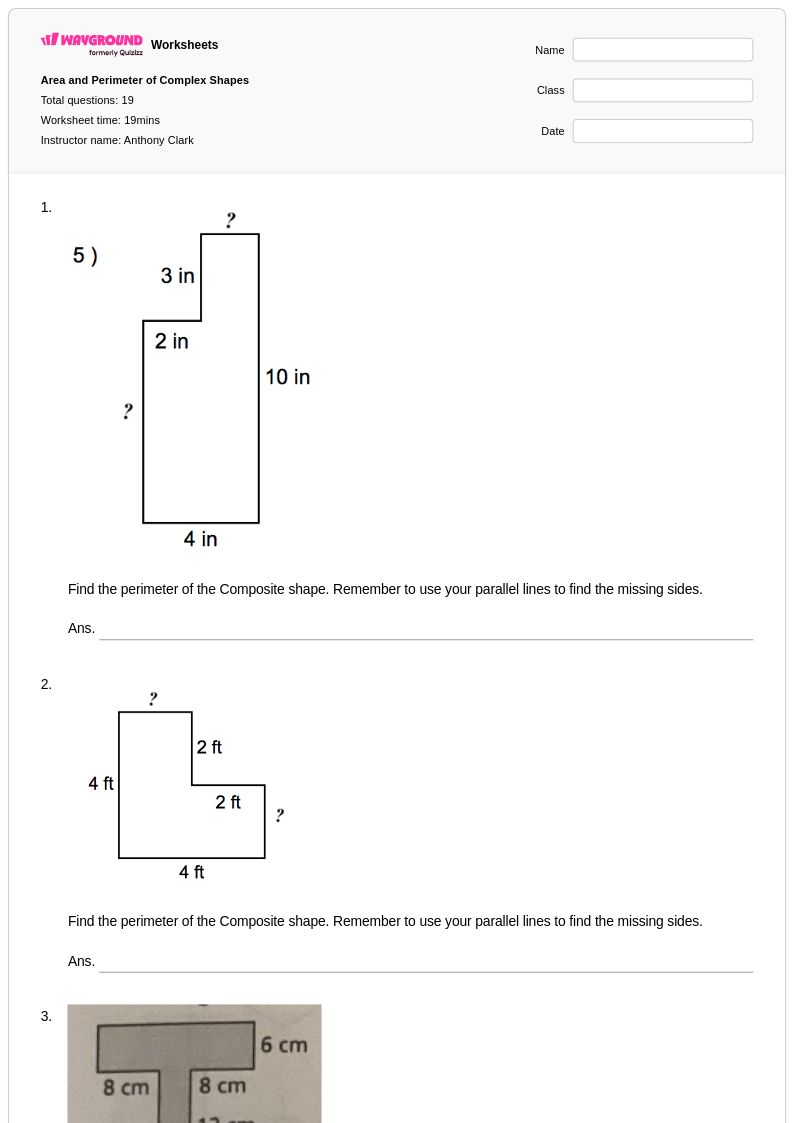
19 Q
7th - Uni
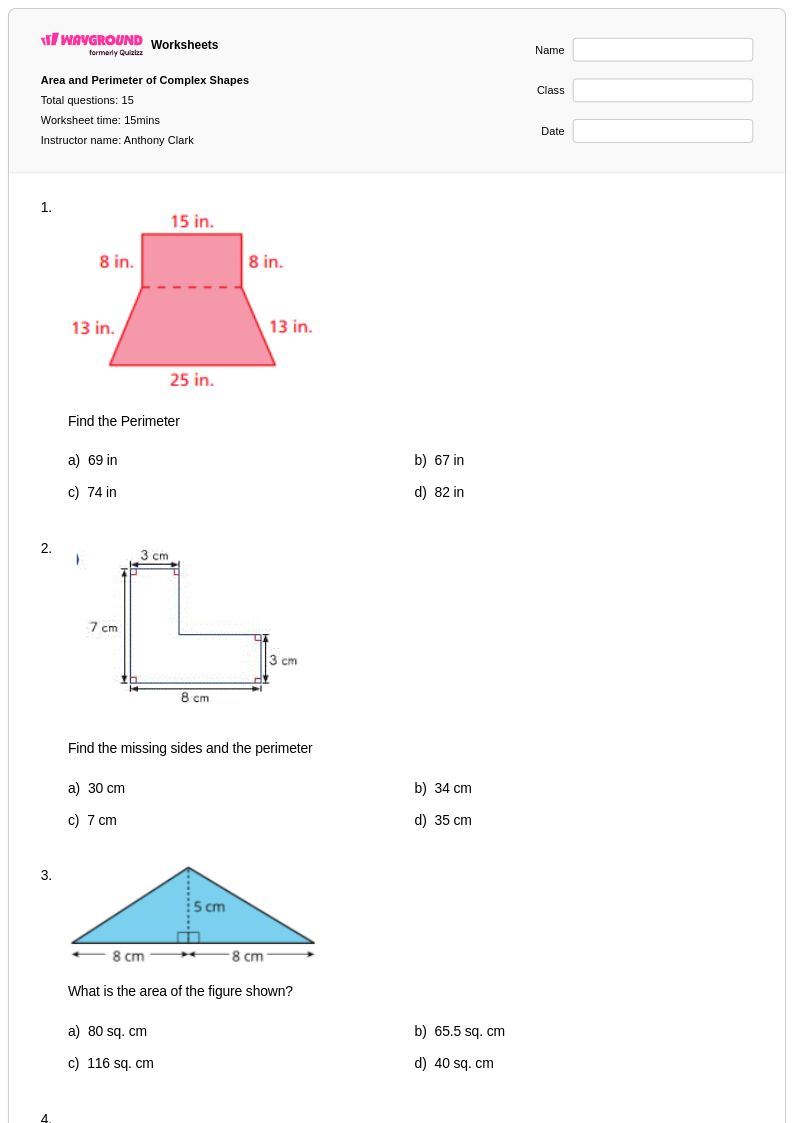
15 Q
7th - Uni
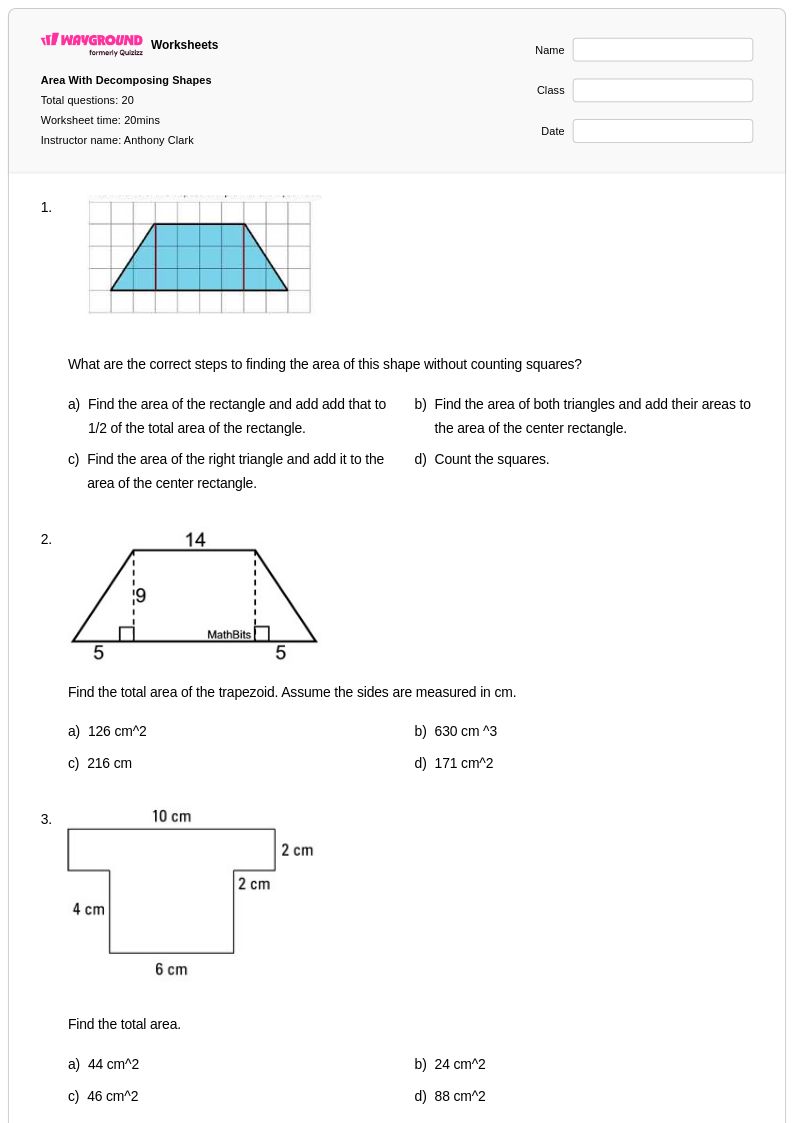
20 Q
6th - Uni
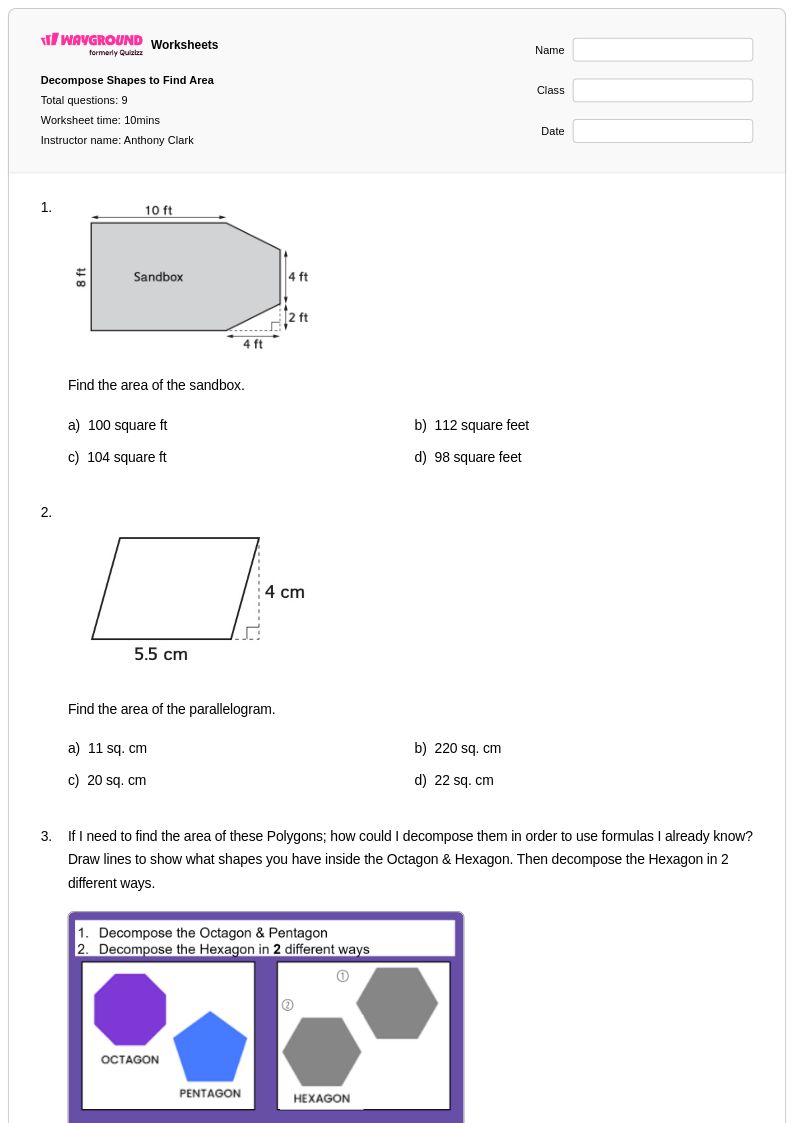
10 Q
6th - Uni
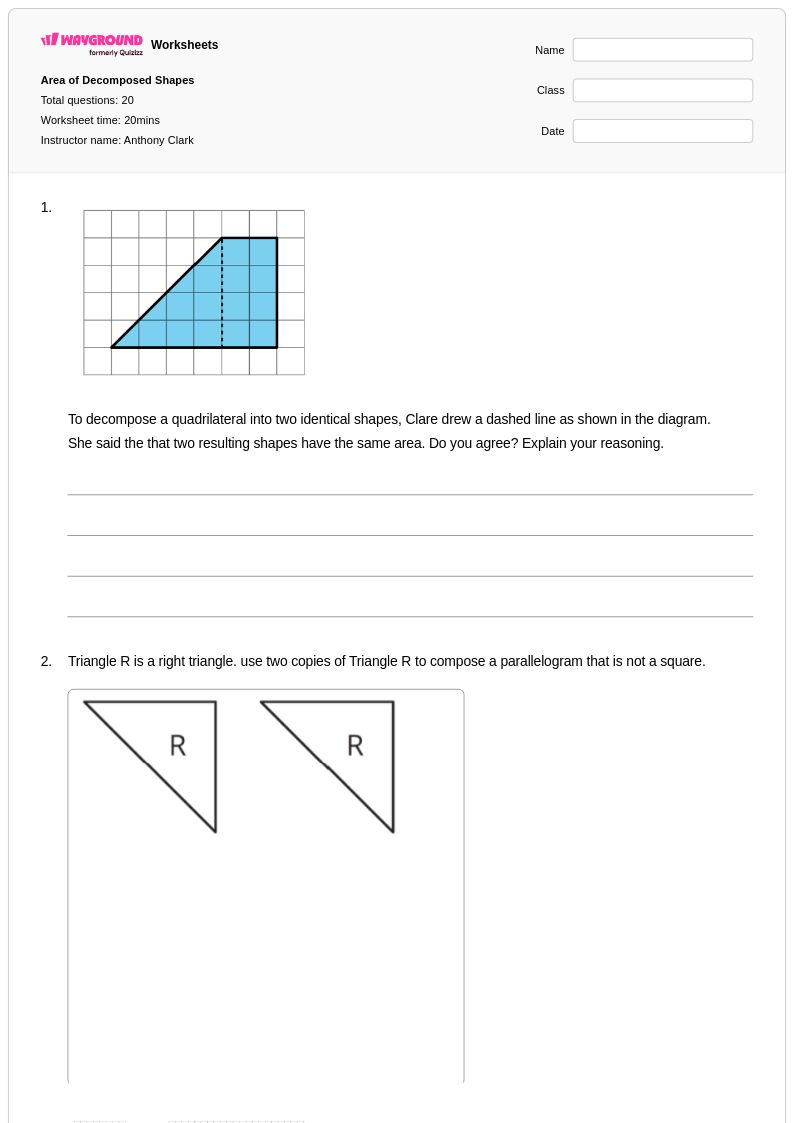
20 Q
6th - Uni
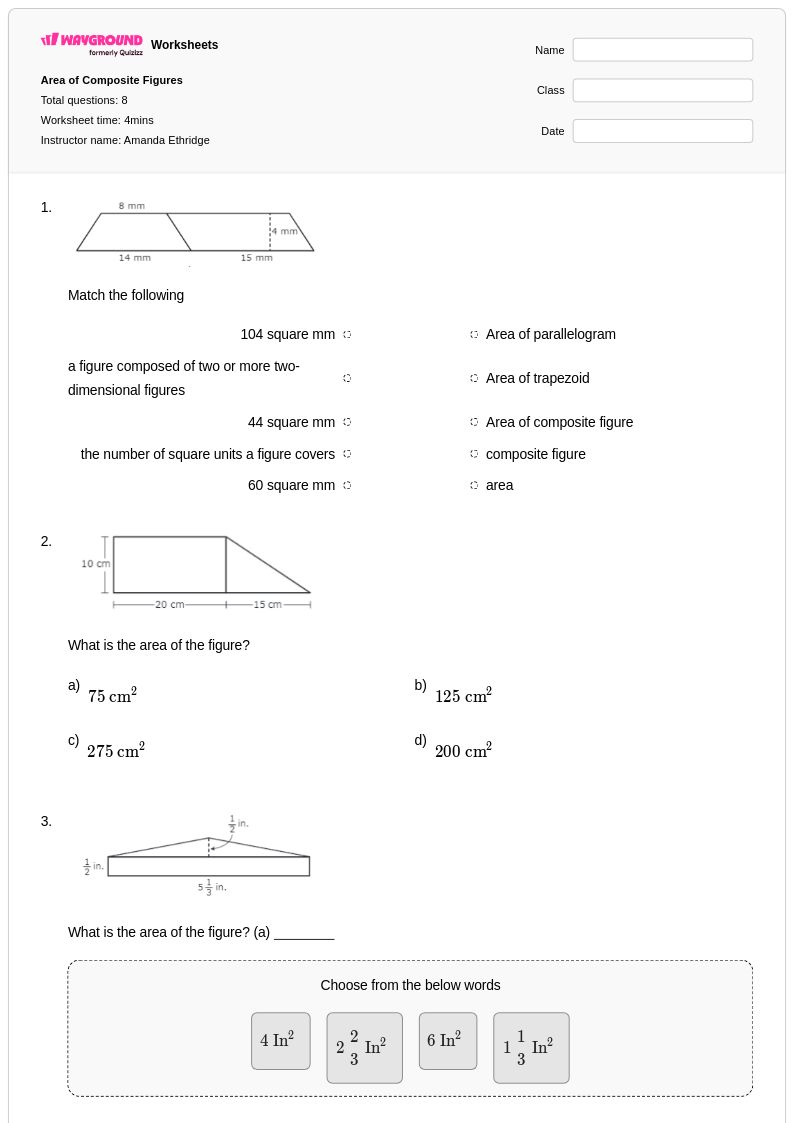
8 Q
10th
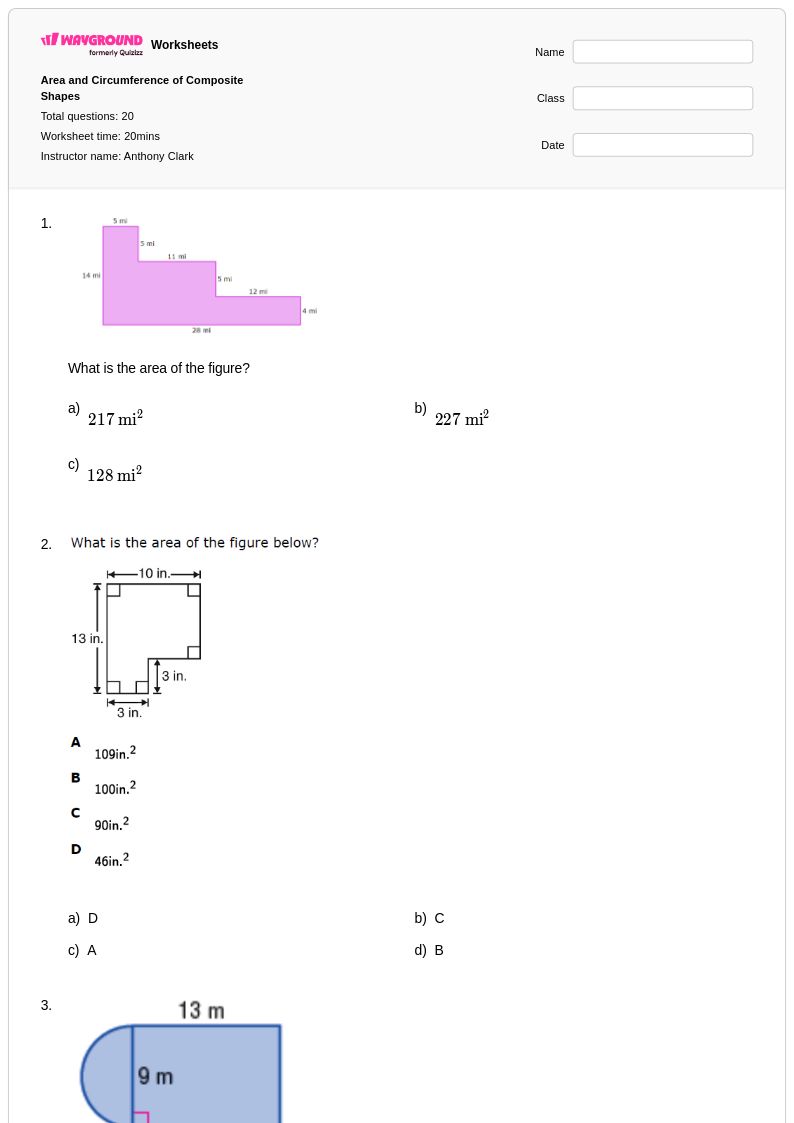
20 Q
7th - Uni
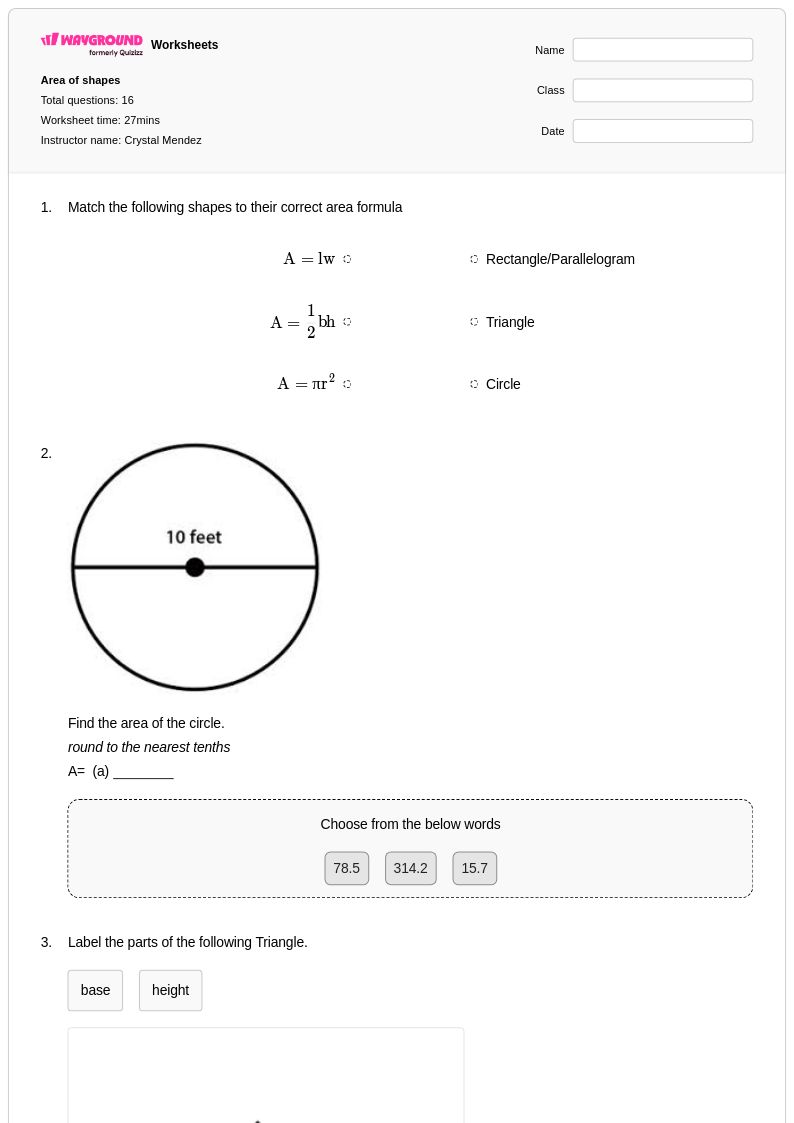
16 Q
10th
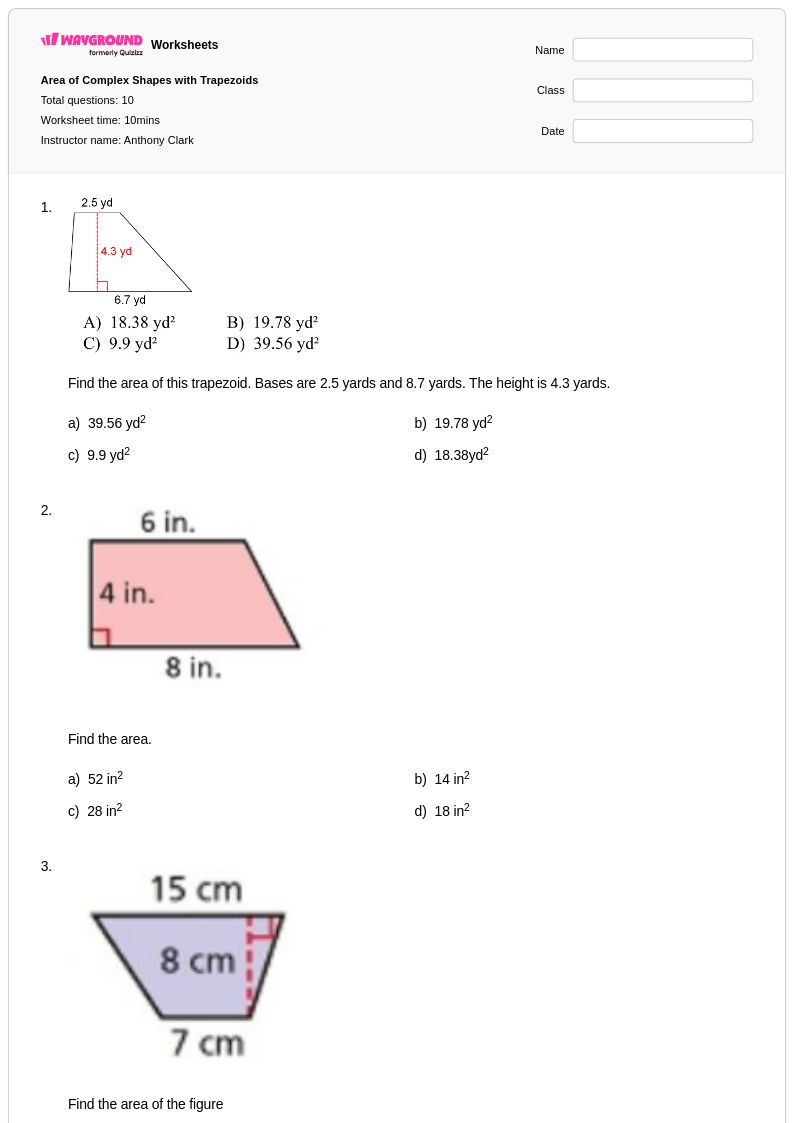
10 Q
6th - Uni
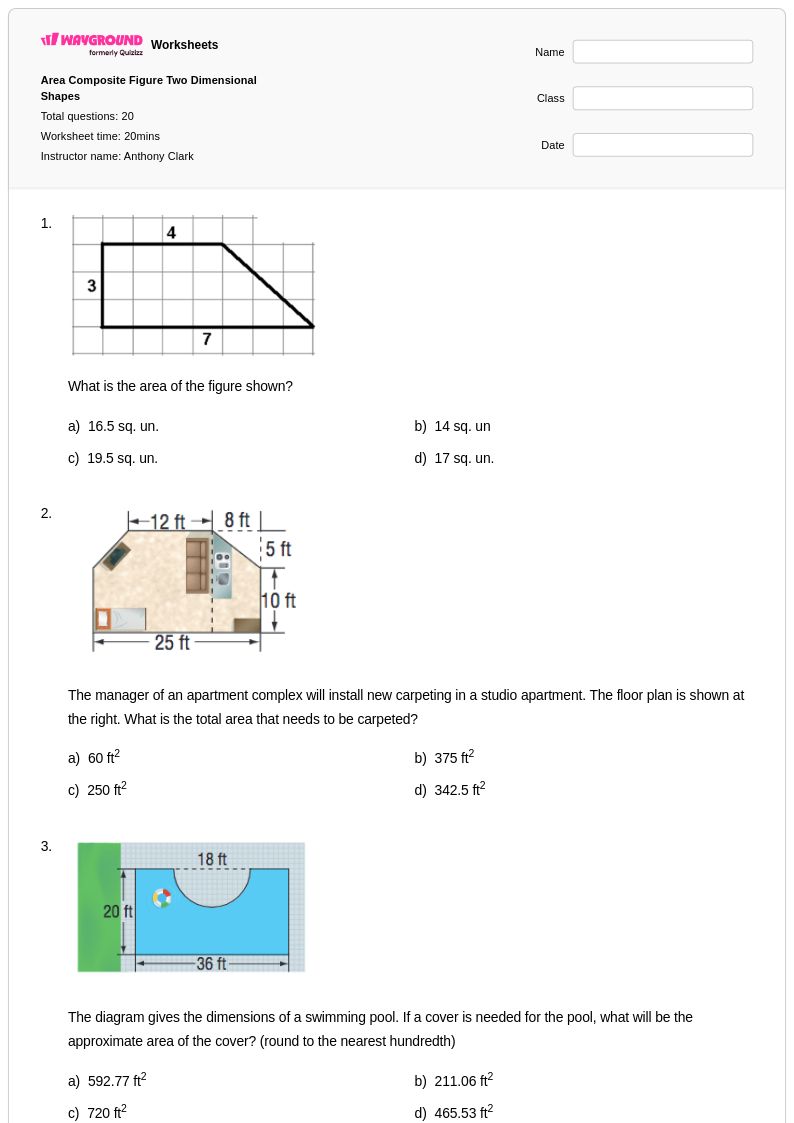
20 Q
7th - Uni
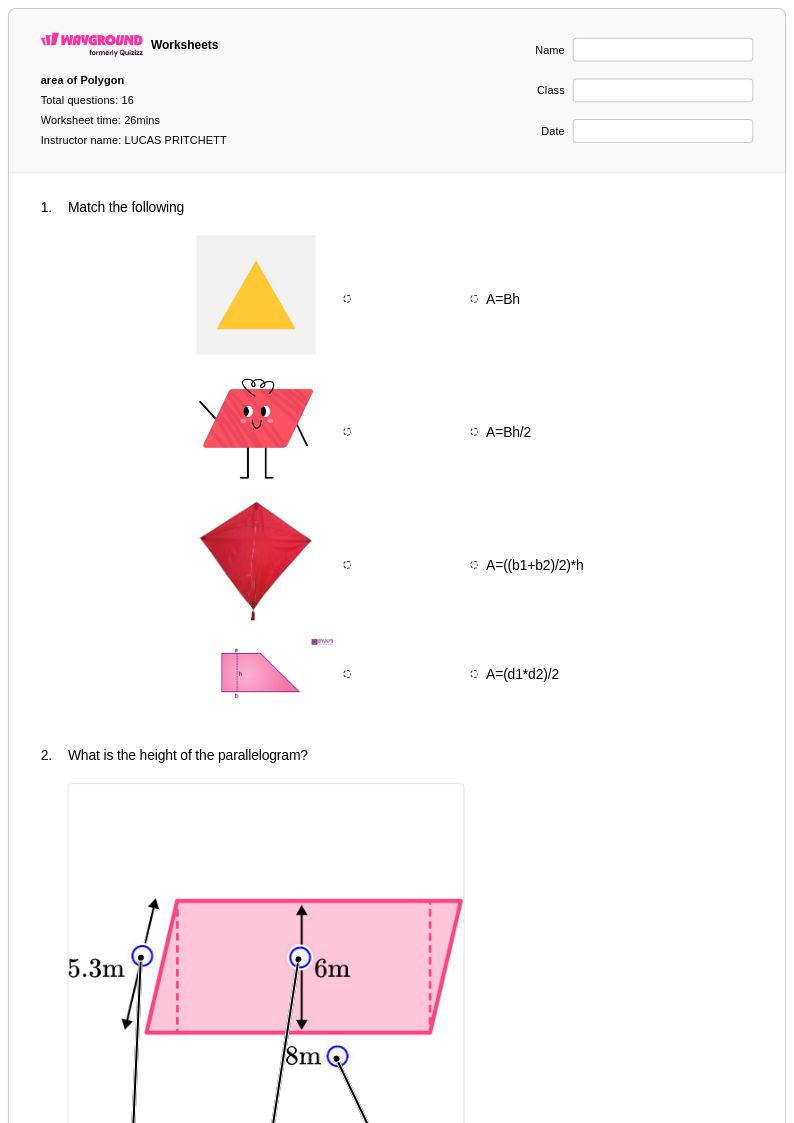
16 Q
10th
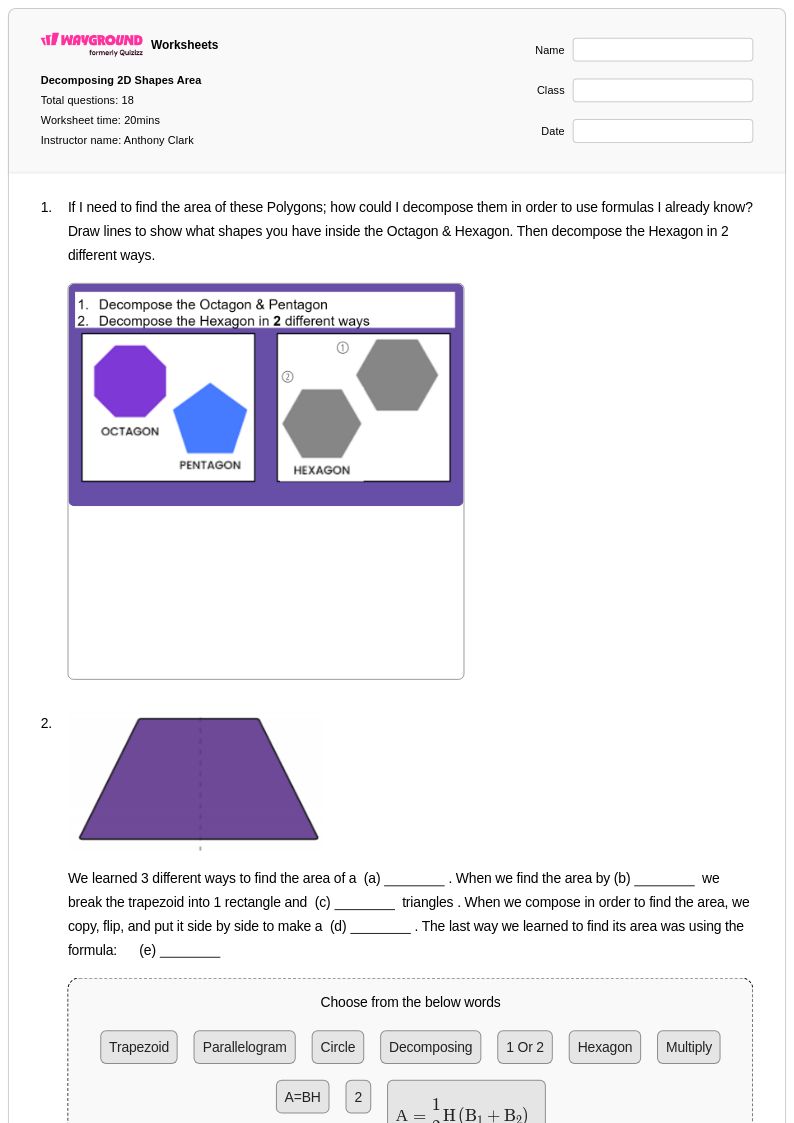
20 Q
6th - Uni
Explore Area of Complex Shapes Worksheets by Grades
Explore Other Subject Worksheets for grade 10
Explore printable Area of Complex Shapes worksheets for Grade 10
Grade 10 students developing mastery in calculating the area of complex shapes will find comprehensive worksheet collections through Wayground that systematically build their geometric problem-solving abilities. These carefully designed worksheets guide students through the essential process of decomposing irregular figures into familiar shapes like rectangles, triangles, circles, and trapezoids, then applying appropriate area formulas to find total measurements. The practice problems progress from basic composite figures to more challenging scenarios involving overlapping shapes, cutouts, and real-world applications, ensuring students develop both computational accuracy and spatial reasoning skills. Each worksheet includes detailed answer keys that demonstrate step-by-step solution methods, while the free printable pdf format allows for flexible classroom implementation and independent study sessions.
Wayground's extensive library of teacher-created resources provides mathematics educators with millions of geometry worksheets specifically targeting complex area calculations for Grade 10 students. The platform's advanced search and filtering capabilities enable teachers to quickly locate materials aligned with specific curriculum standards while differentiation tools support customization for varying skill levels within the same classroom. Whether delivered as printable worksheets for traditional practice or integrated into digital assignments, these resources seamlessly adapt to diverse teaching environments and learning preferences. Teachers can efficiently plan targeted skill practice sessions, create remediation materials for struggling students, or develop enrichment activities for advanced learners, with the flexibility to modify problems and adjust difficulty levels to match their students' developmental needs in geometric problem-solving.
FAQs
How do I teach area of complex shapes in Grade 10?
What exercises are useful for Grade 10 composite-area practice?
What mistakes do Grade 10 students make with complex area calculations?
How do I use a Grade 10 complex-area worksheet on Wayground?
How does area of complex shapes align with Common Core geometry?
How can I differentiate complex-area worksheets for Grade 10 students?
What grade level is complex-shape area practice designed for?