Free Printable Distance Between Two Parallel Lines Worksheets for Grade 10
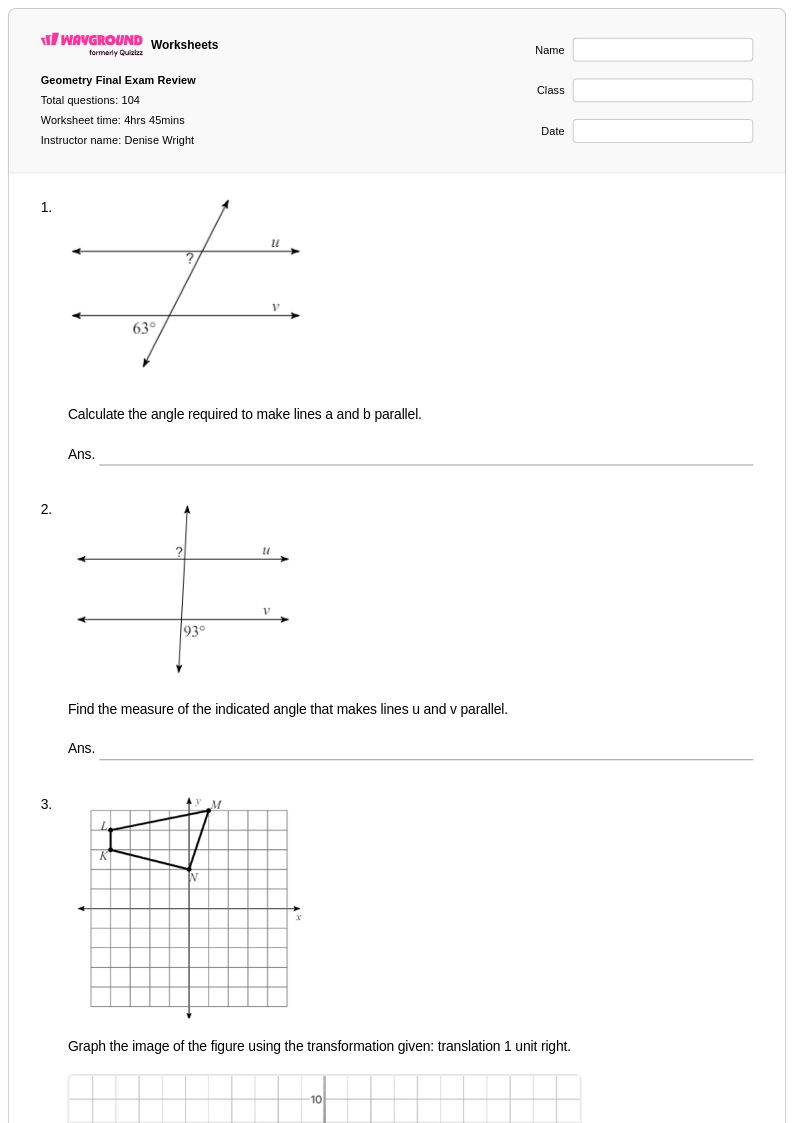
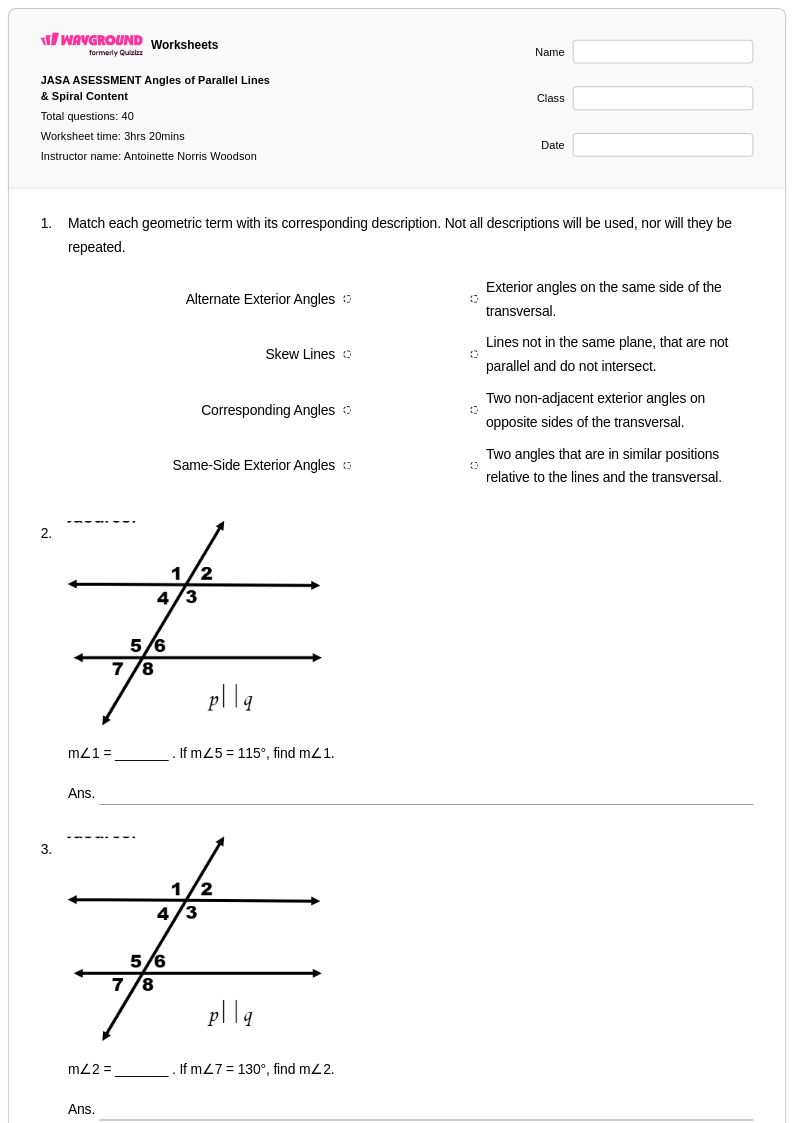
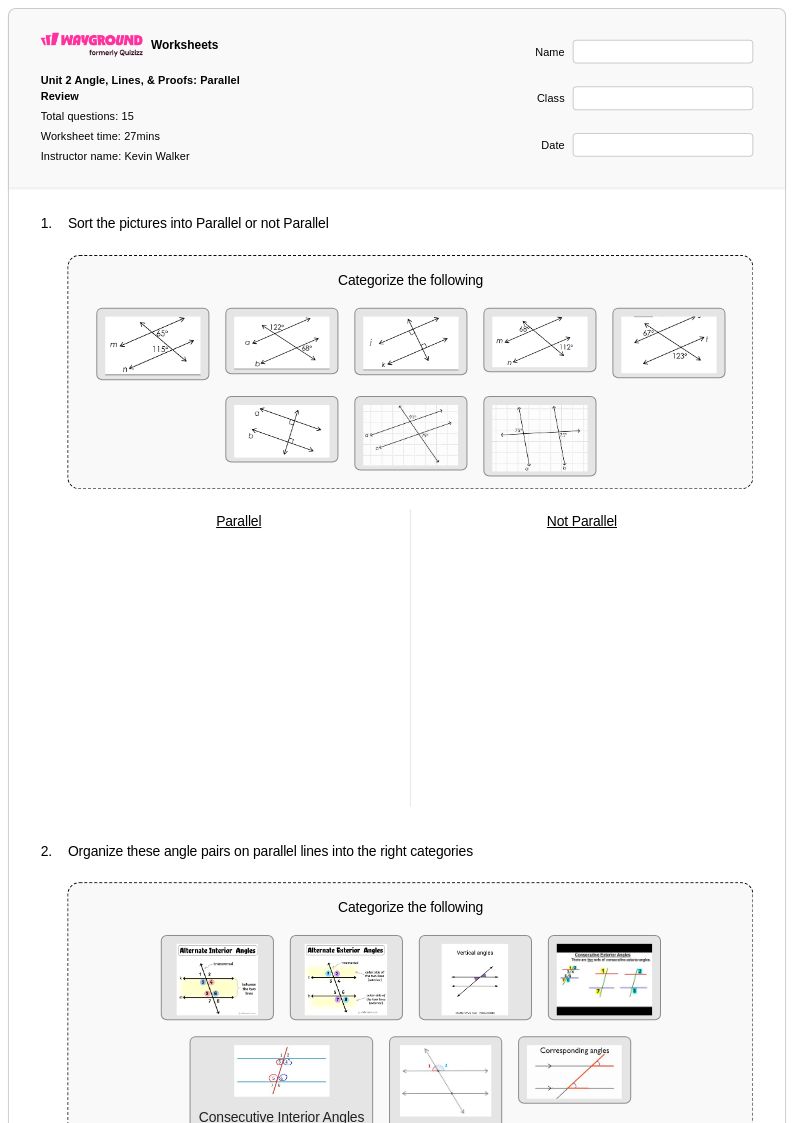
Grade 10 distance between two parallel lines worksheets offer comprehensive printables and practice problems that help students master calculating perpendicular distances using coordinate geometry and algebraic formulas with included answer keys.
Explore printable Distance Between Two Parallel Lines worksheets for Grade 10
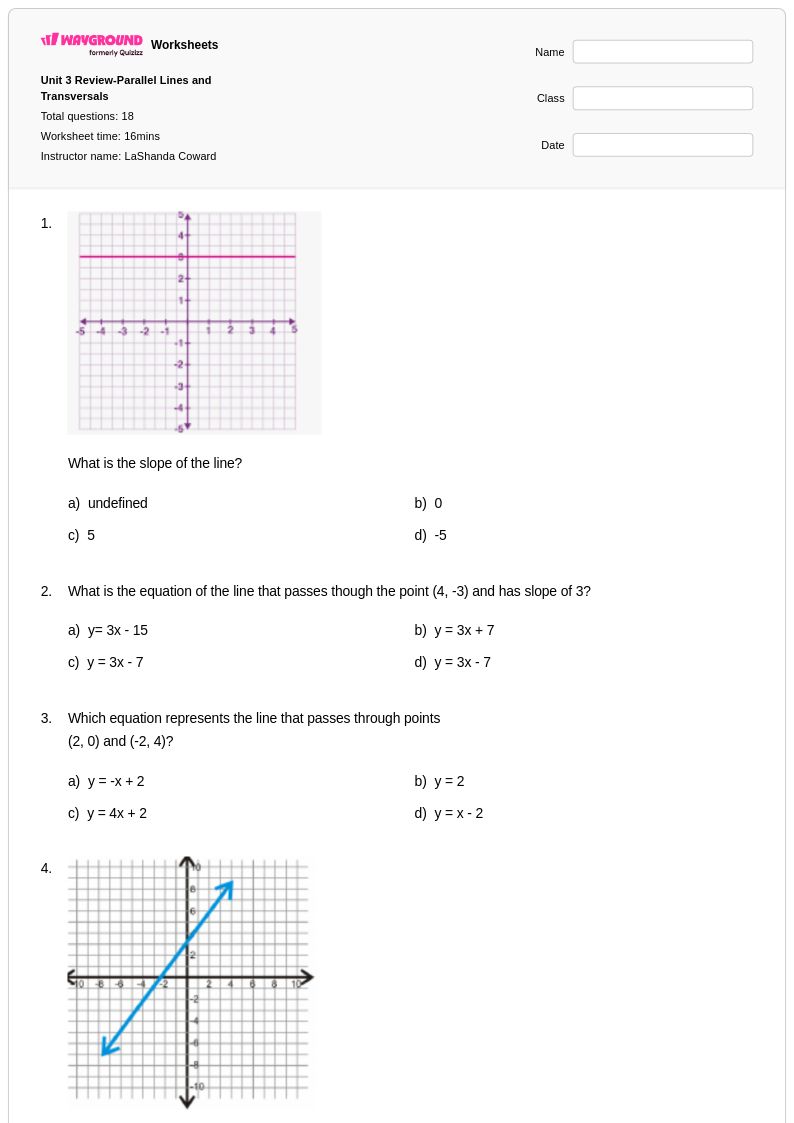
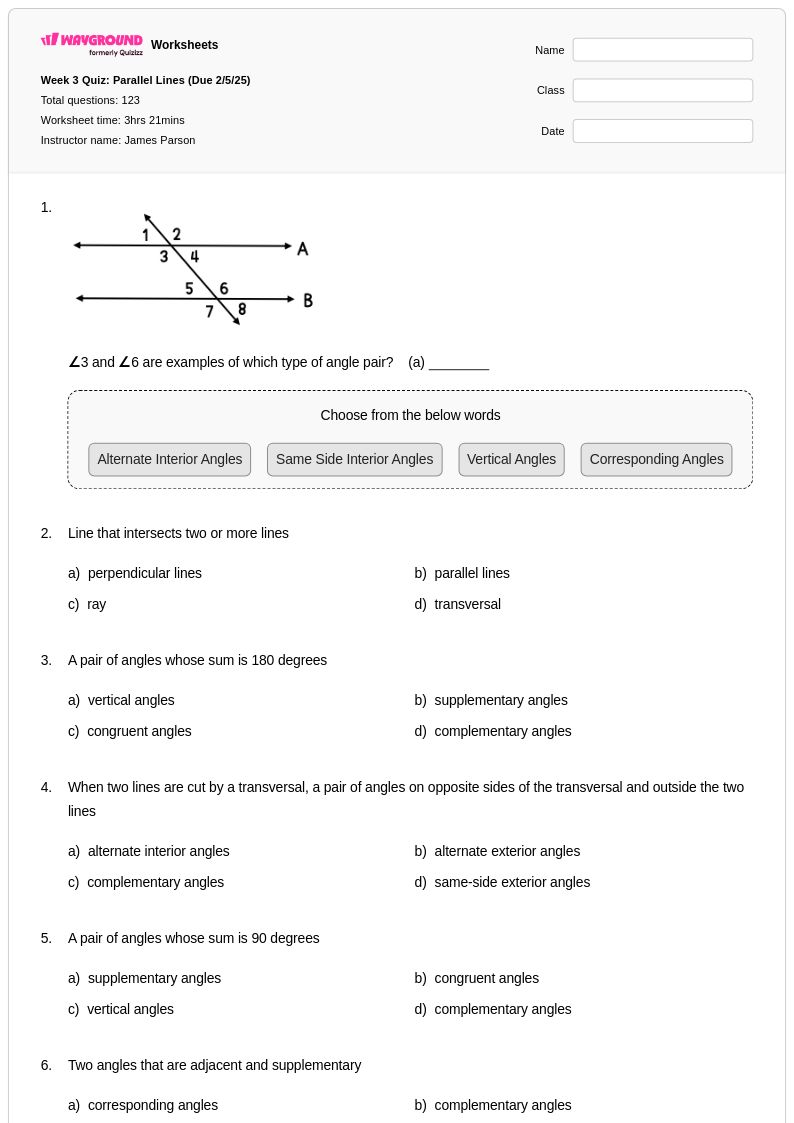
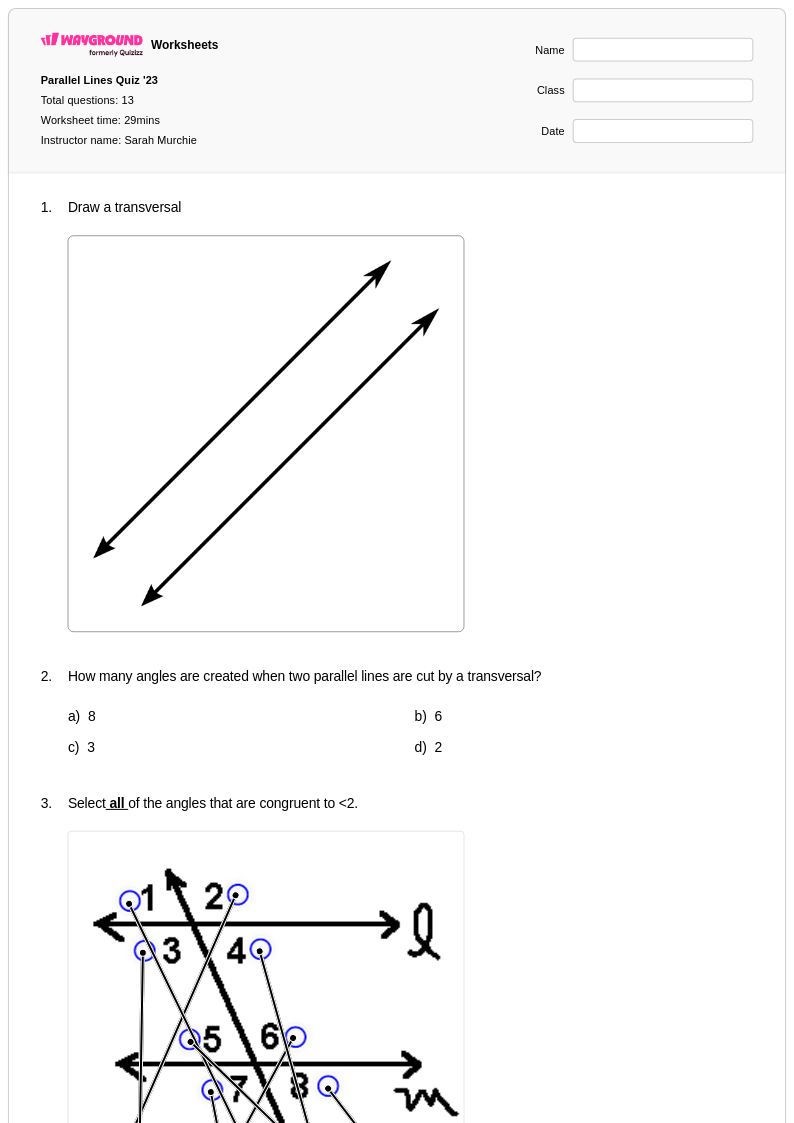
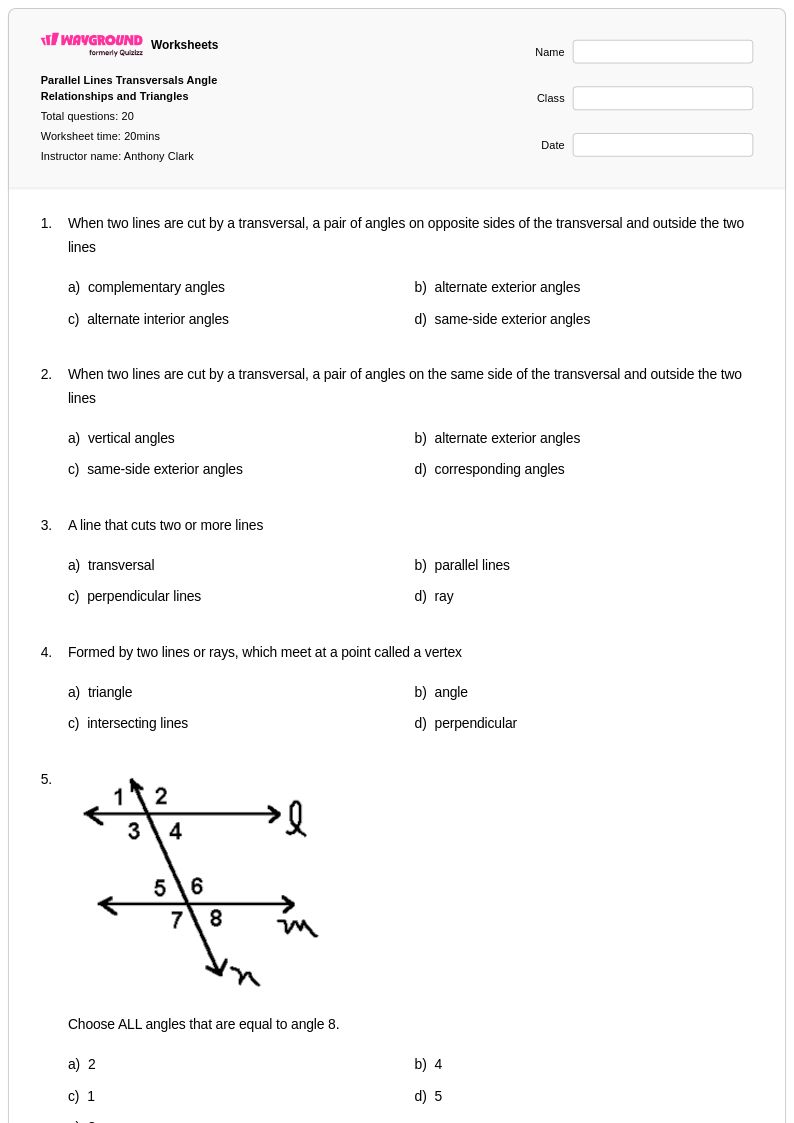
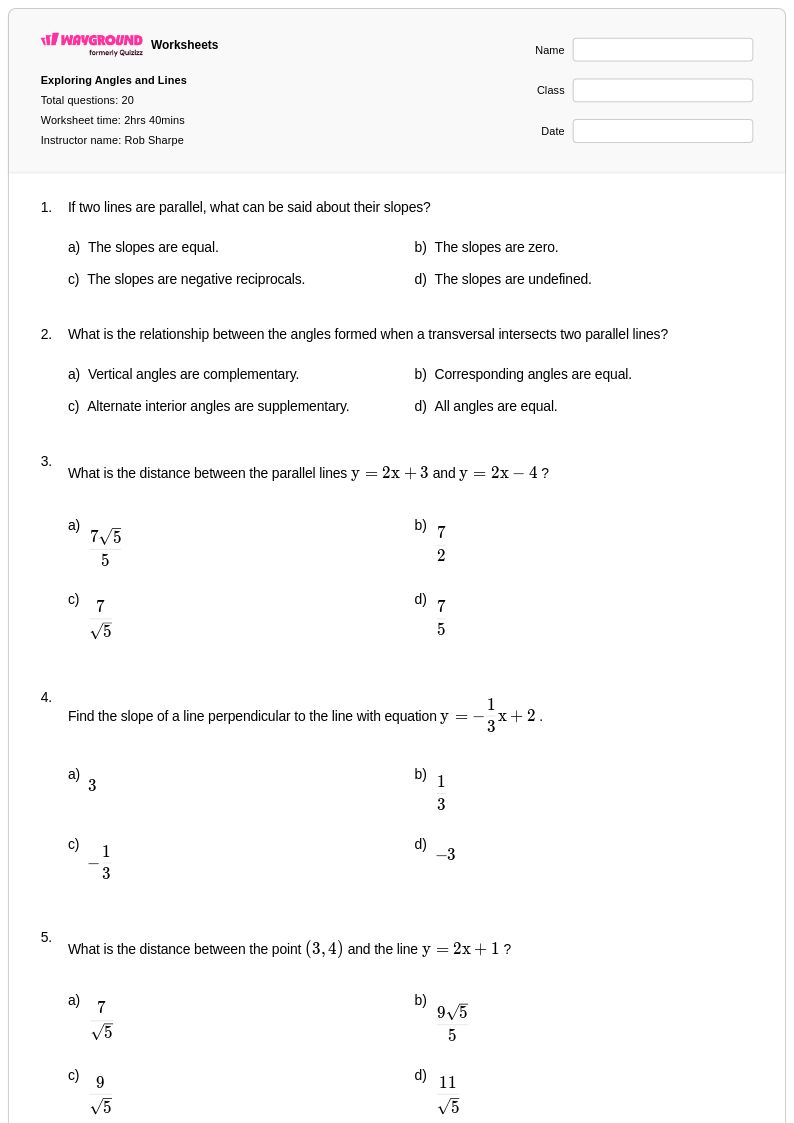
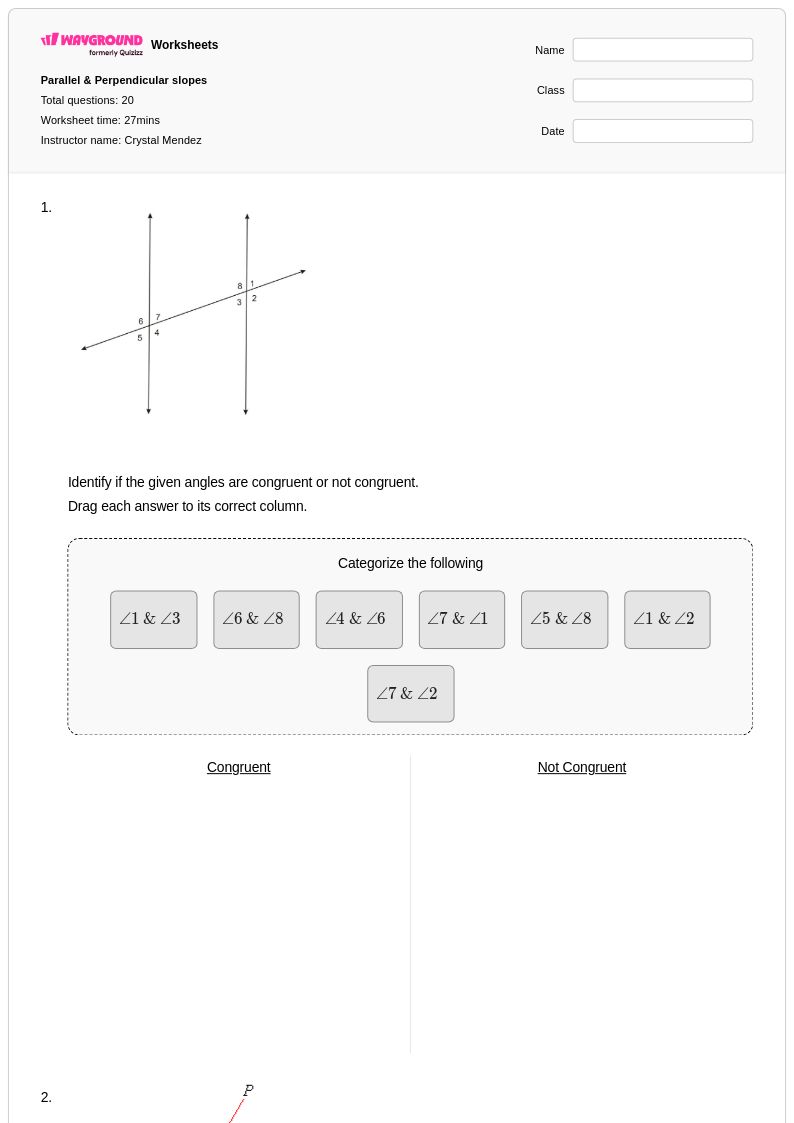
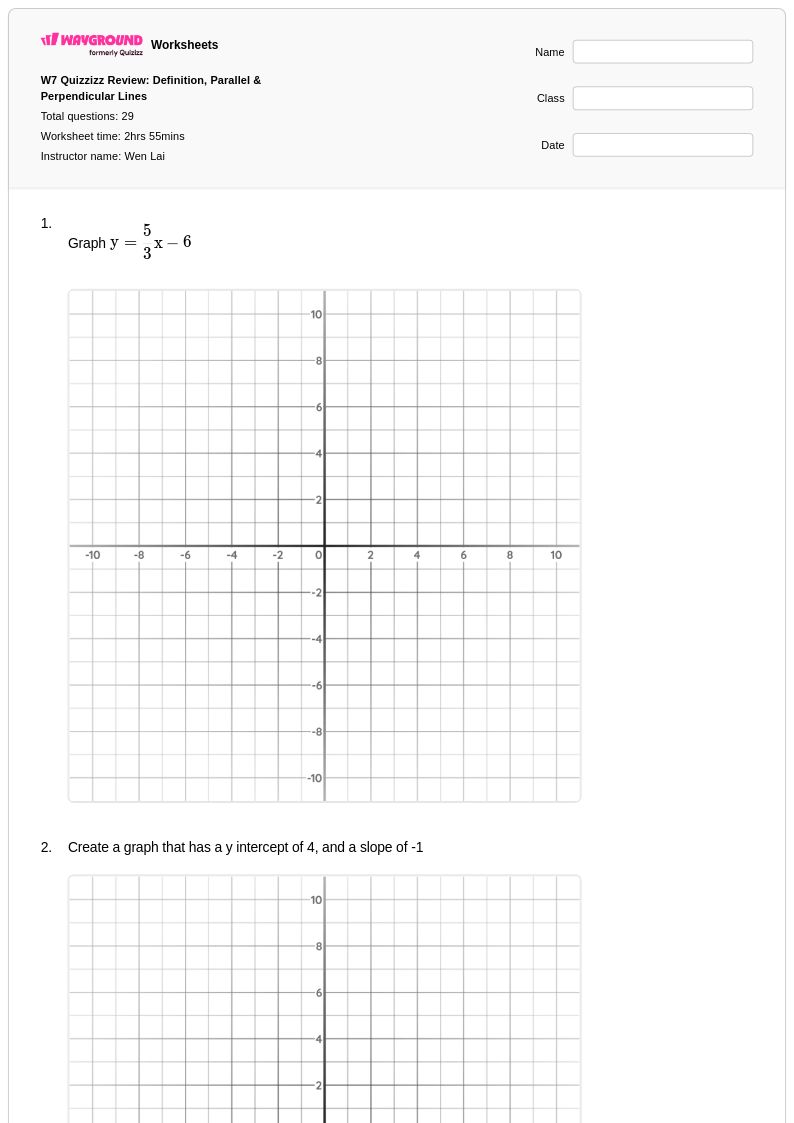
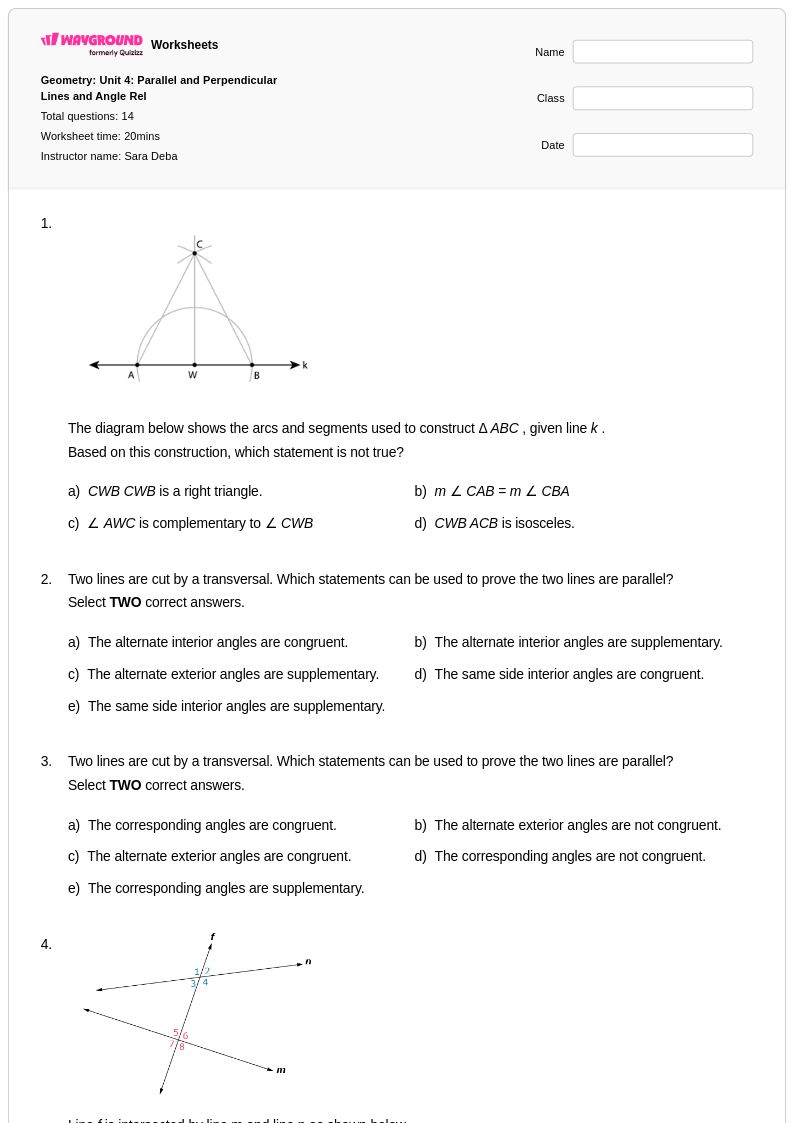
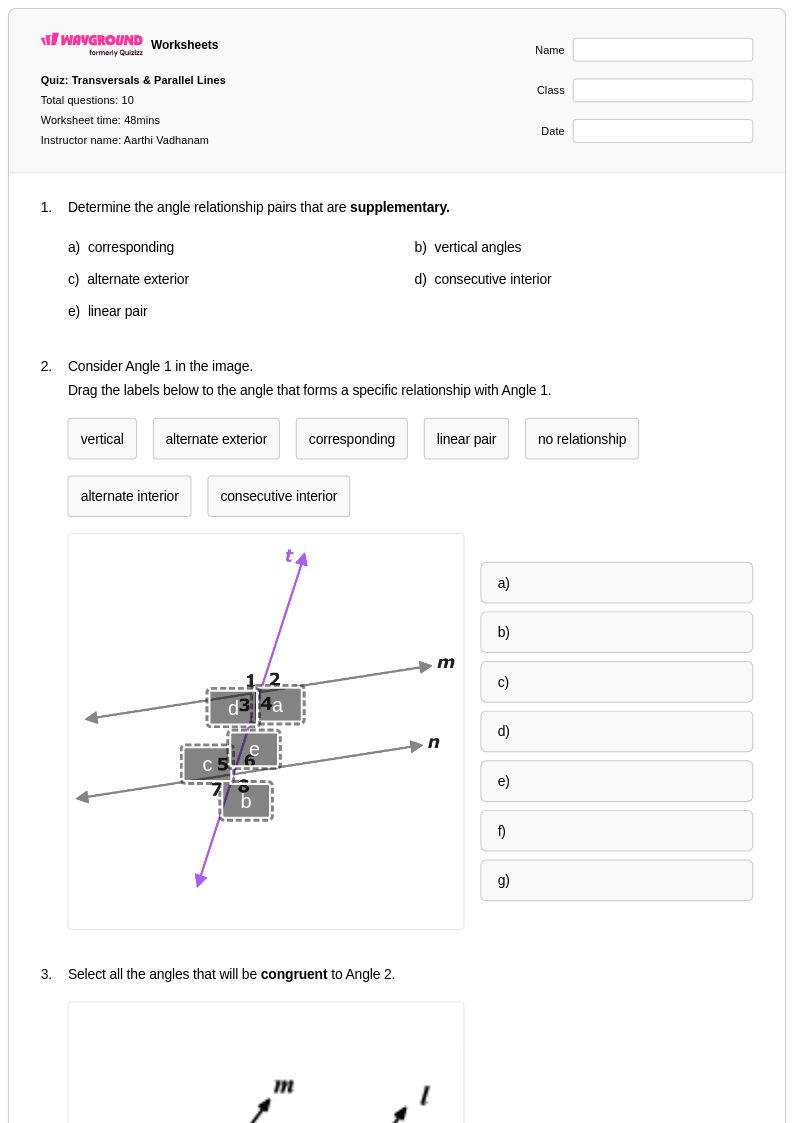
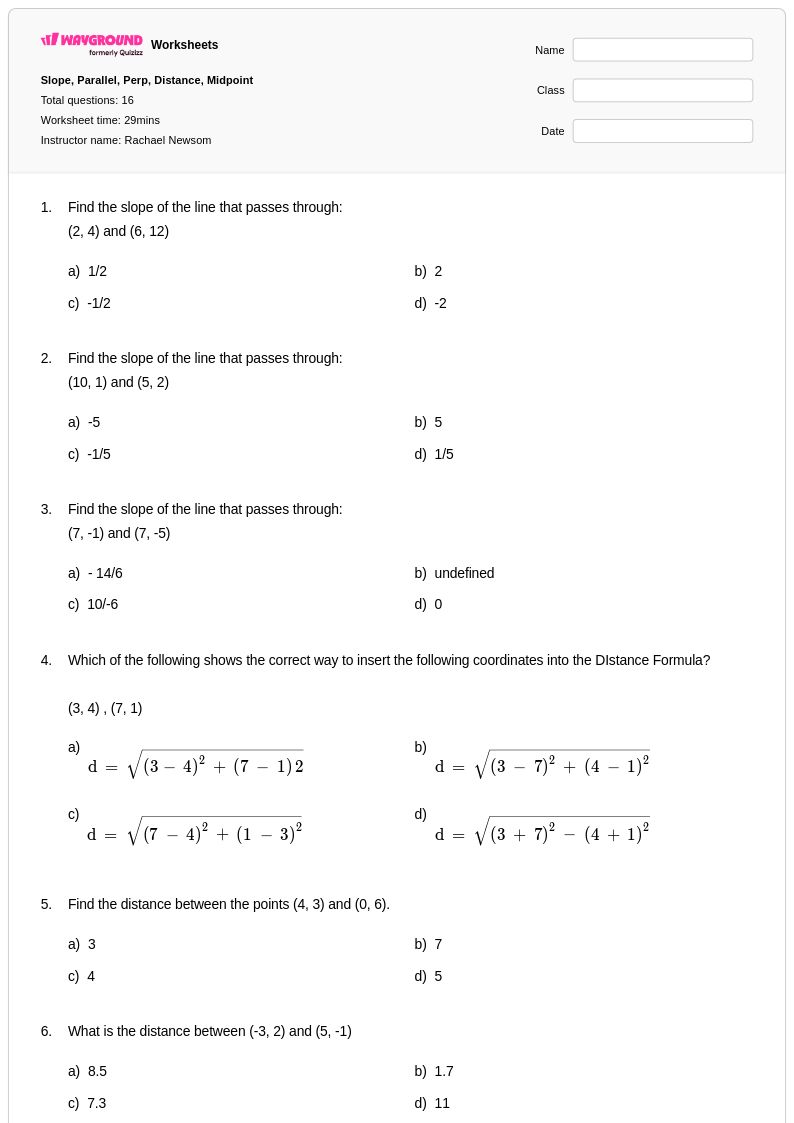
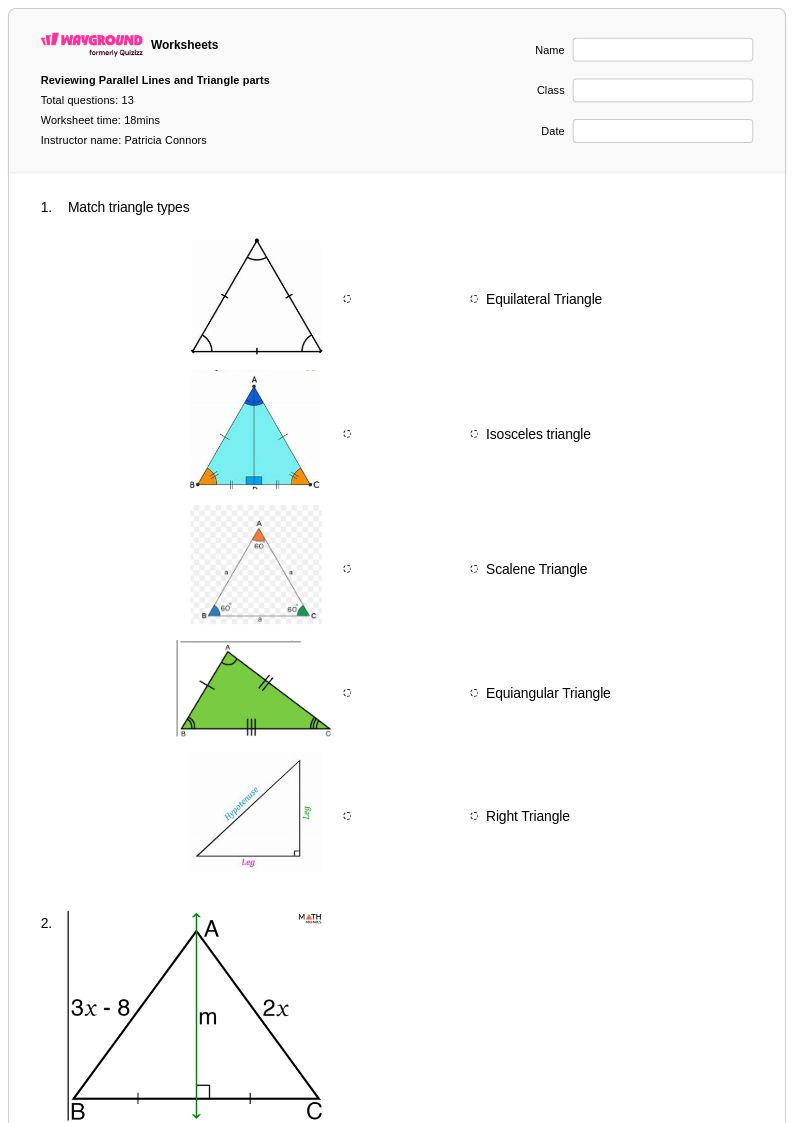
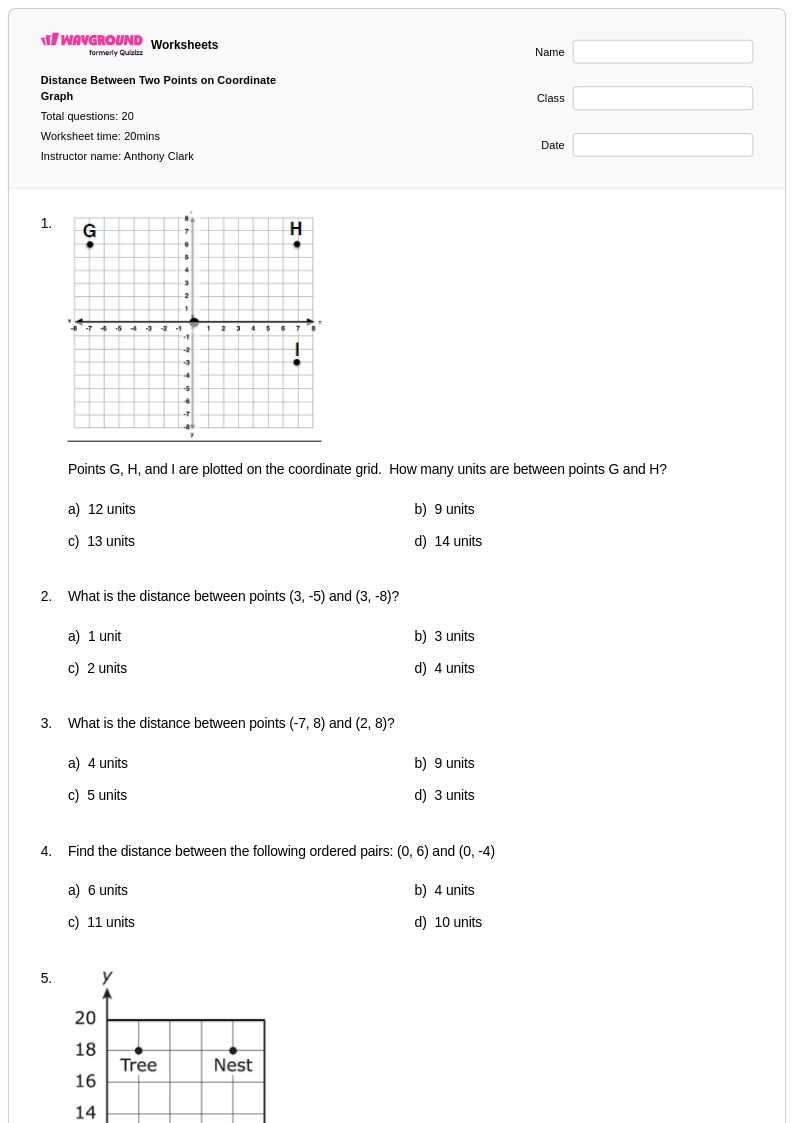
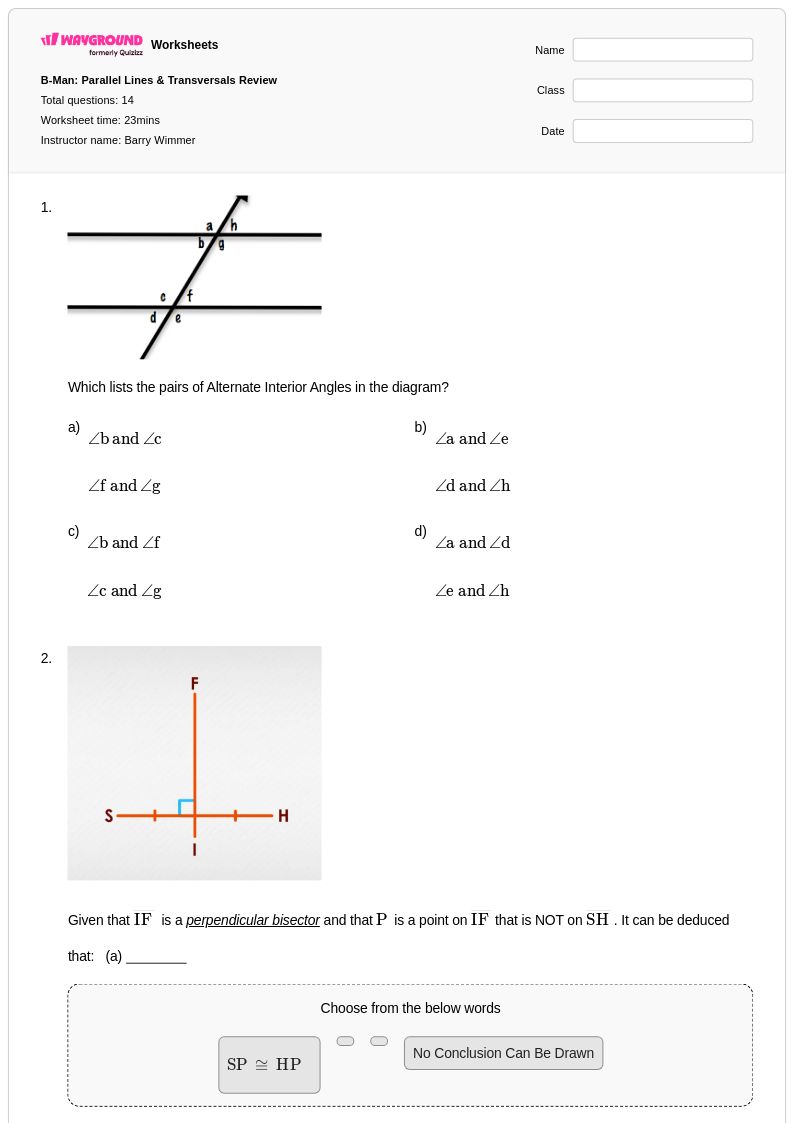
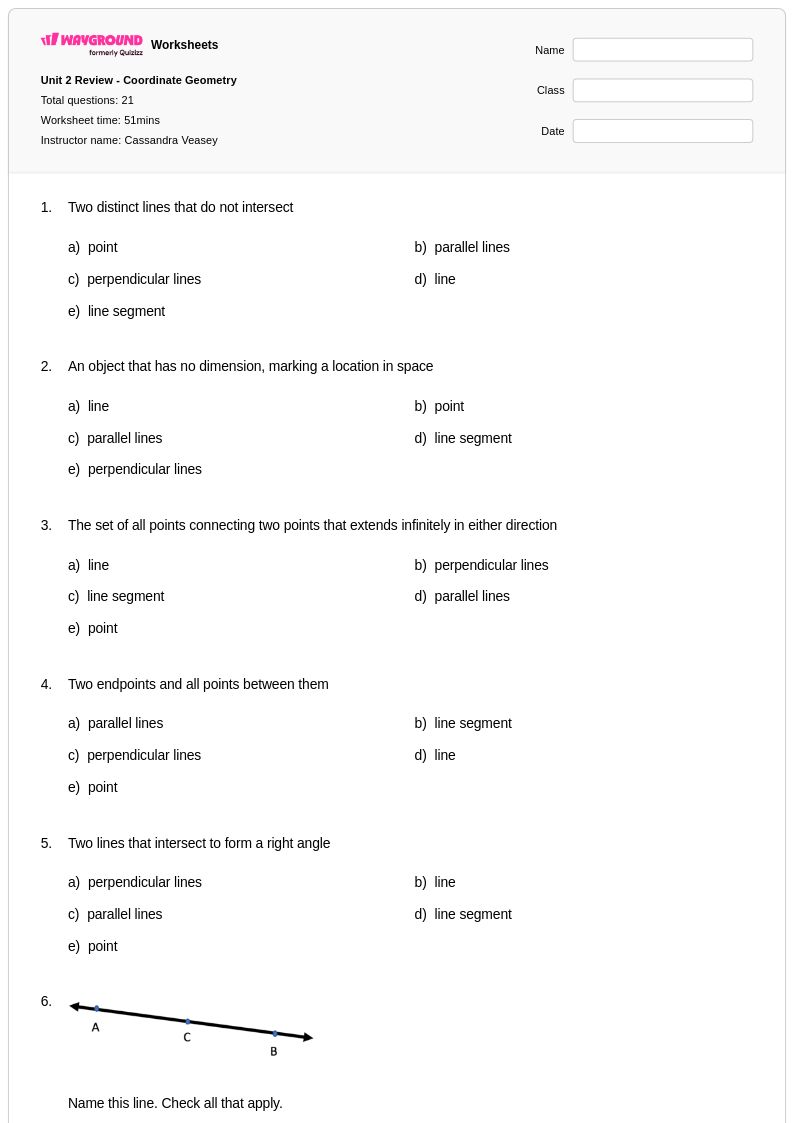
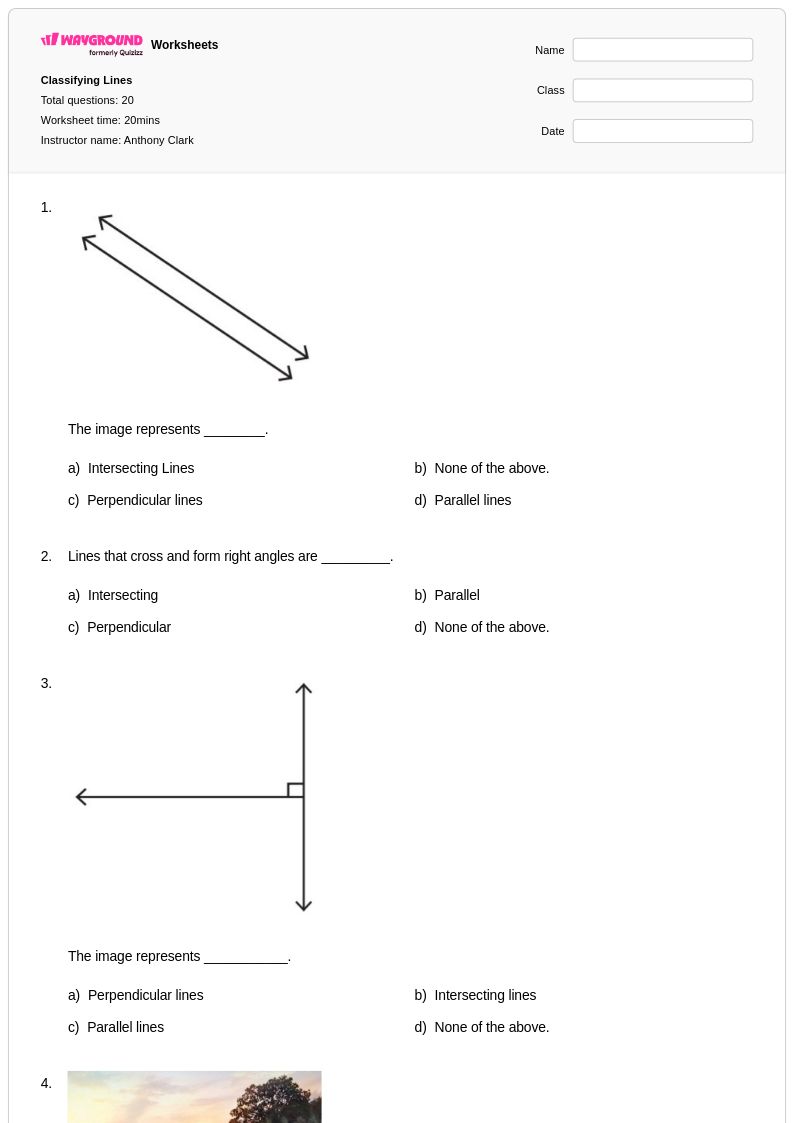
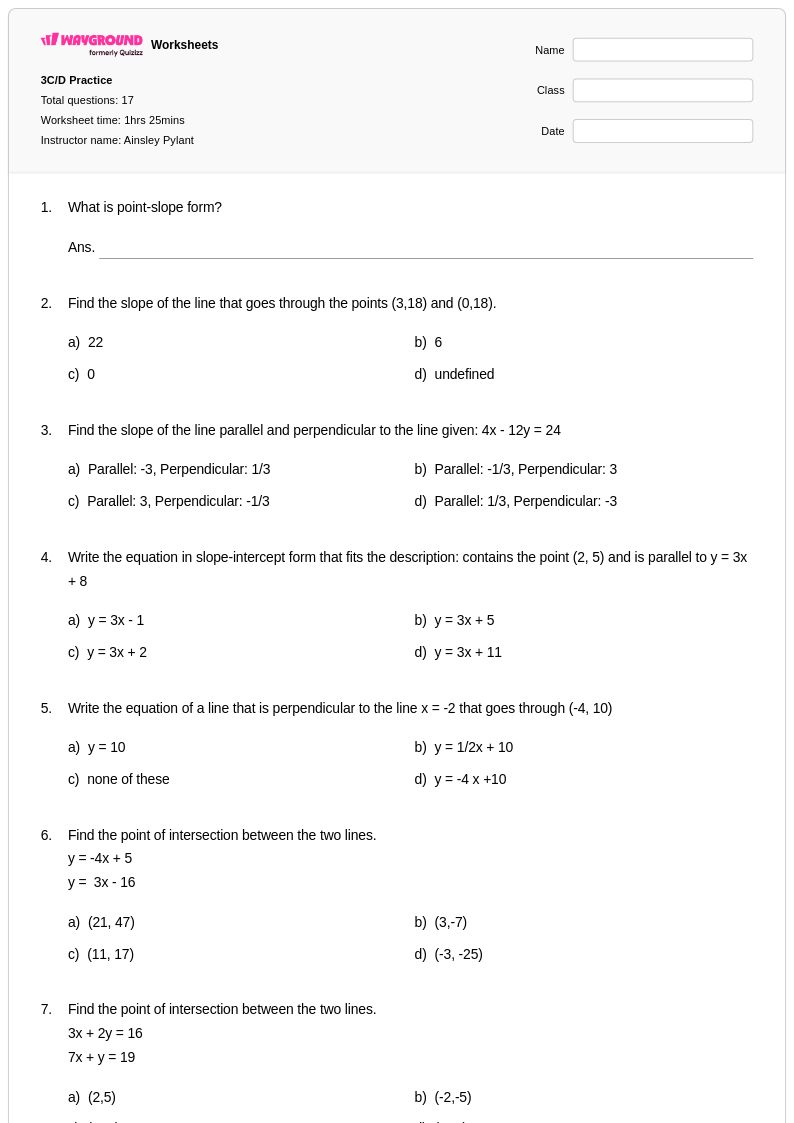
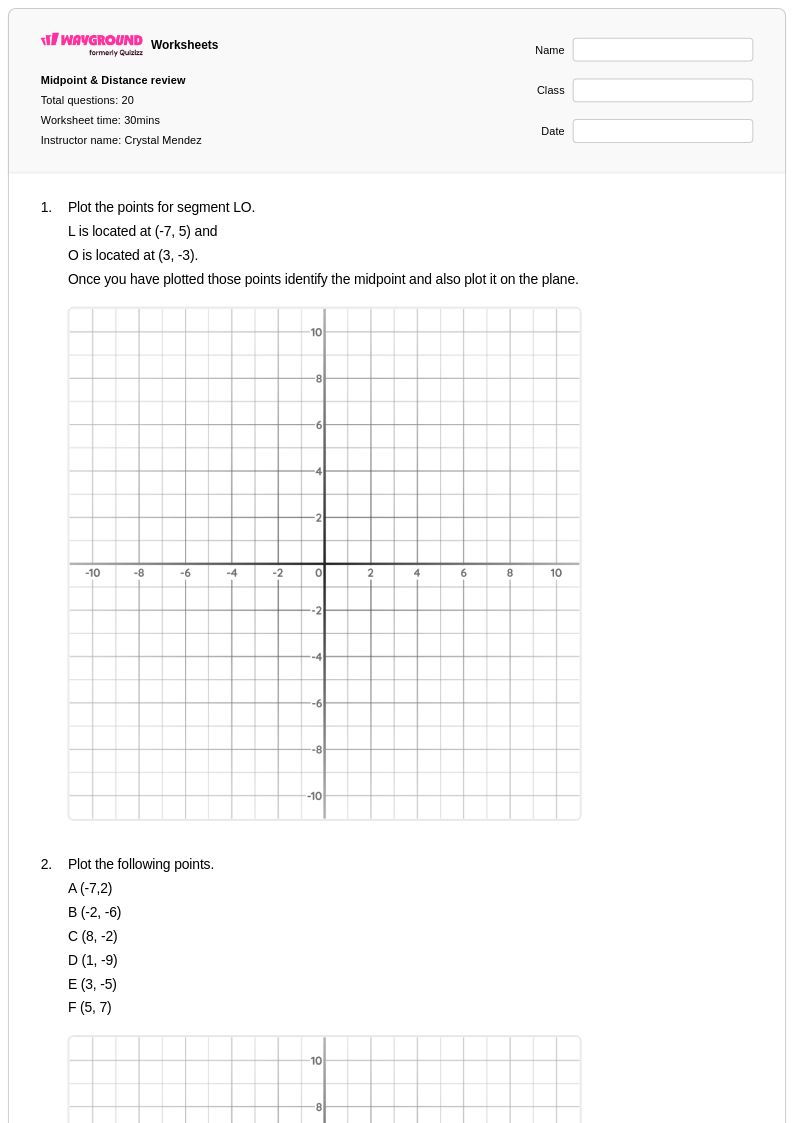
Distance Between Two Parallel Lines worksheets available through Wayground (formerly Quizizz) provide Grade 10 students with comprehensive practice in calculating perpendicular distances using coordinate geometry and algebraic methods. These expertly designed resources strengthen essential skills including applying the distance formula, working with slope-intercept and standard forms of linear equations, and understanding the geometric properties of parallel lines. Students develop proficiency in identifying parallel line relationships, constructing perpendicular segments, and solving complex problems involving real-world applications such as architectural spacing and engineering measurements. Each worksheet collection includes detailed answer keys and step-by-step solutions, with free printable pdf formats that support both classroom instruction and independent study through carefully structured practice problems.
Wayground (formerly Quizizz) empowers mathematics teachers with millions of educator-created worksheet resources specifically designed for distance between parallel lines instruction at the Grade 10 level. The platform's advanced search and filtering capabilities allow teachers to quickly locate materials aligned with state geometry standards, while built-in differentiation tools enable seamless customization for varying skill levels within the same classroom. Teachers can access worksheets in both printable pdf and interactive digital formats, supporting flexible lesson planning whether for whole-class instruction, small group work, or individual remediation. These comprehensive collections facilitate targeted skill practice, enrichment activities for advanced learners, and systematic review sessions, ensuring students master this fundamental geometric concept through varied problem-solving approaches and progressive difficulty levels.
FAQs
How do I teach the distance between two parallel lines at the Grade 10 level?
By Grade 10, students should be comfortable with linear equations and slope, so you can move quickly past the geometric intuition and focus on the algebraic method. The key teaching move is connecting the perpendicular distance formula to the point-to-line distance formula students may have seen — showing they're the same formula applied to a special case. From there, push students to work with lines in multiple forms (slope-intercept, standard, general) so they're not dependent on a single setup. Real-world contexts like architectural spacing or lane widths on a road give the formula practical meaning and make for richer problem discussions.
What practice problems are most valuable for 10th graders on this topic?
At Grade 10, the most valuable problems are the ones that don't hand students the formula setup on a silver platter: lines given in slope-intercept form that must be converted, problems where students must first verify parallelism, and multi-step problems that embed the distance calculation inside a larger geometric context. Straightforward plug-and-chug problems are fine for building initial confidence, but students who only practice those tend to struggle on assessments where the problem is slightly reframed.
What mistakes do 10th graders still make with this topic?
The most stubborn error at this level is forgetting to convert both lines to the same form before applying the formula — students sometimes apply the formula to one line in standard form and one in slope-intercept form and get a nonsense answer. A subtler issue is not recognizing when two lines that look different are actually the same line (parallel with zero distance), which trips up students on edge-case problems. Both errors are worth addressing explicitly with a counterexample before students work independently.
How do I use these Grade 10 worksheets in my classroom?
Each worksheet comes with a detailed answer key, so they're ready to use for independent practice, small-group work, or test review without extra prep. For a fully digital workflow, host the worksheet as a quiz on Wayground for automatic scoring. If you prefer paper — or your school is limiting device time — print the PDFs and grade submissions through the Wayground for Teachers app by scanning student work.
How does this topic fit into the Grade 10 Common Core geometry curriculum?
Common Core's high school geometry standards ask students to use coordinates to prove and apply geometric theorems, and the distance between parallel lines is one of the cleaner applications of that expectation. At Grade 10, it consolidates the coordinate geometry thread that started with slope and linear equations in middle school, and it directly supports upcoming work on geometric proofs, circles, and the use of coordinates in polygon problems. The specific skill students are developing here — translating a geometric relationship into an algebraic calculation and back — is exactly what the coordinate geometry strand is designed to build.
How can I differentiate this topic for mixed-ability classes?
For students who need scaffolding, Wayground lets you generate a version of the worksheet with larger text and wider spacing, which helps when problems involve dense algebraic notation. On digital assignments, Read Aloud can support students who struggle to parse multi-step written prompts. For advanced learners, look for problems that involve non-integer coefficients or ask students to find a line parallel to a given line at a specified distance — those extend the concept without requiring a separate worksheet.