
10 Q
10th
10 Q
10th
20 Q
7th - Uni
20 Q
10th - Uni
10 Q
10th
10 Q
10th
16 Q
9th - 12th
15 Q
8th - Uni
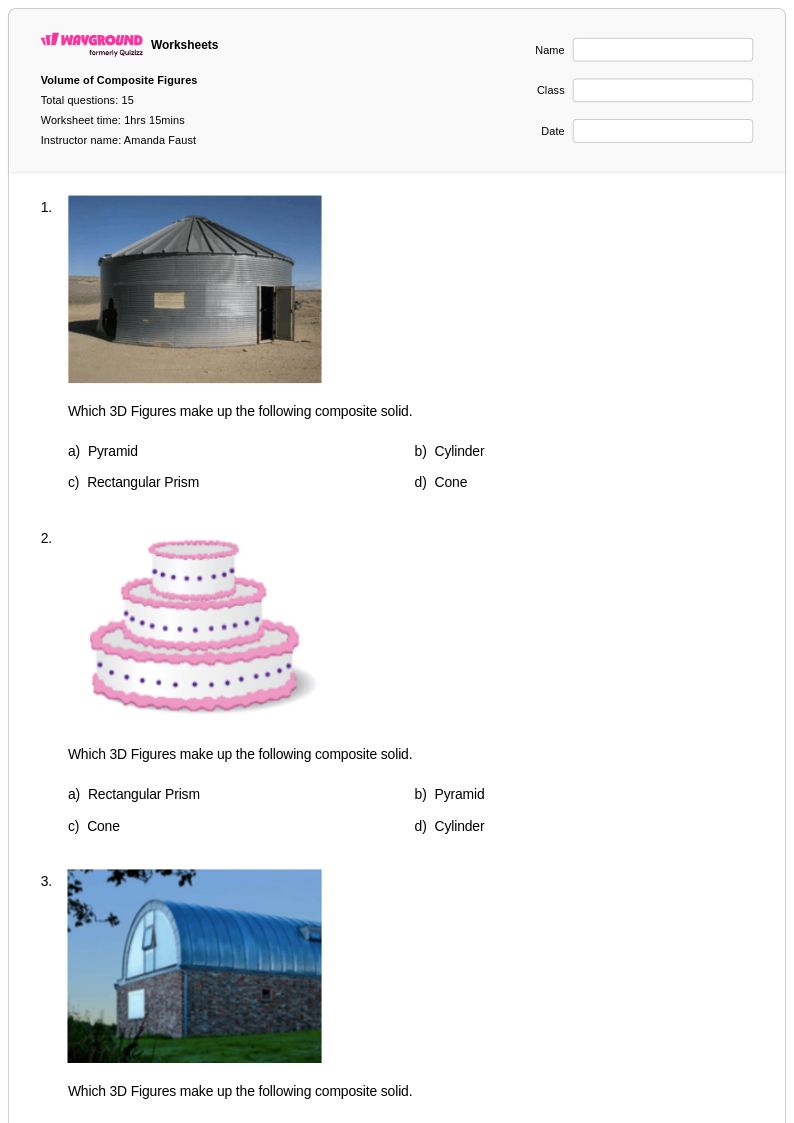
15 Q
9th - 12th
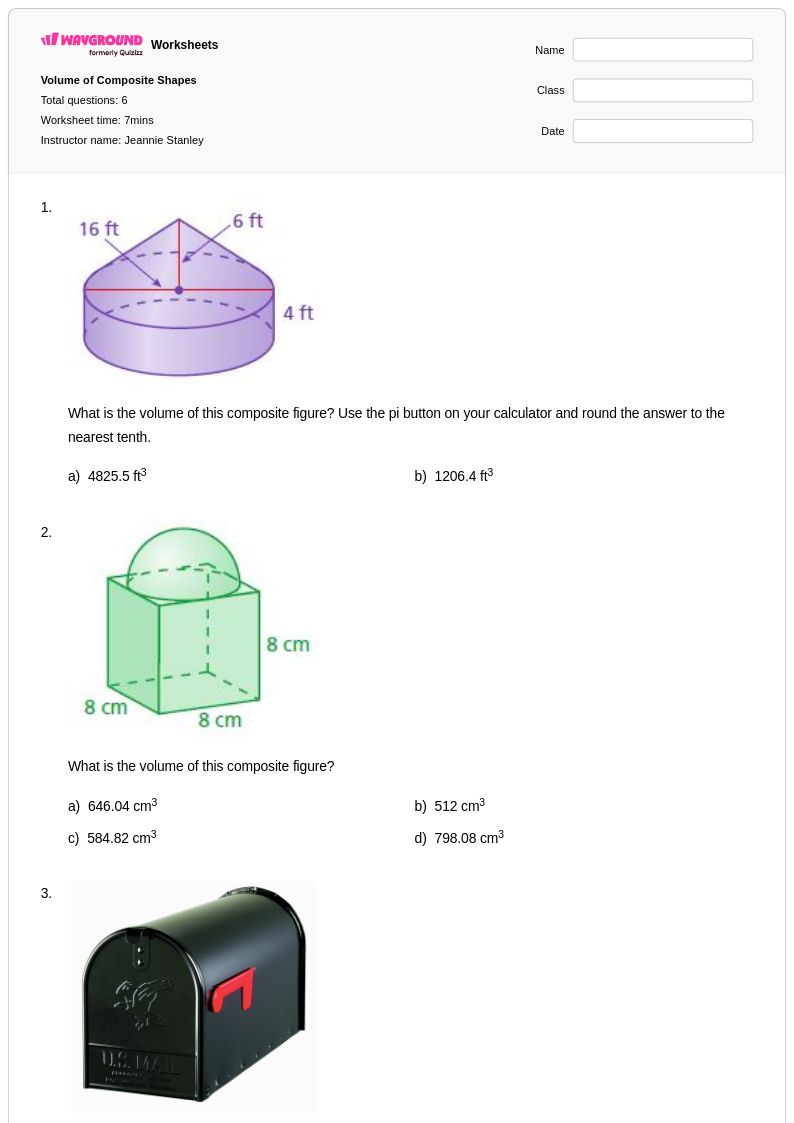
6 Q
9th - 12th
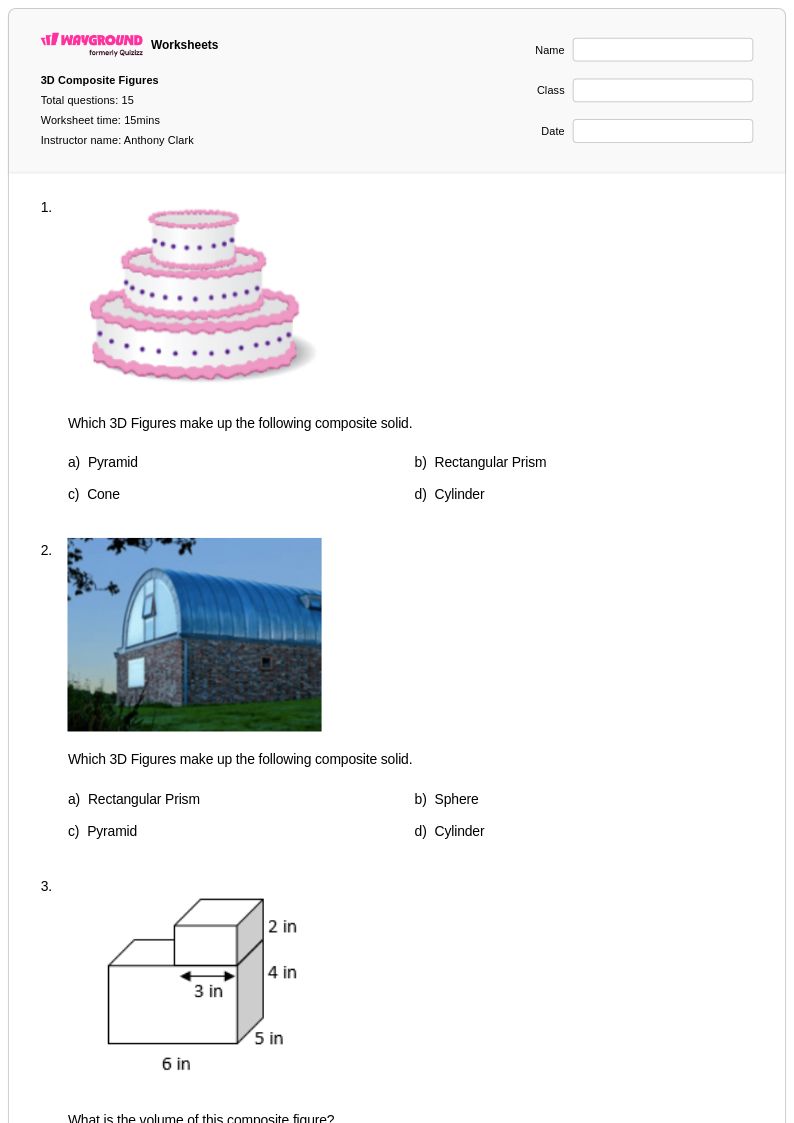
15 Q
10th - Uni
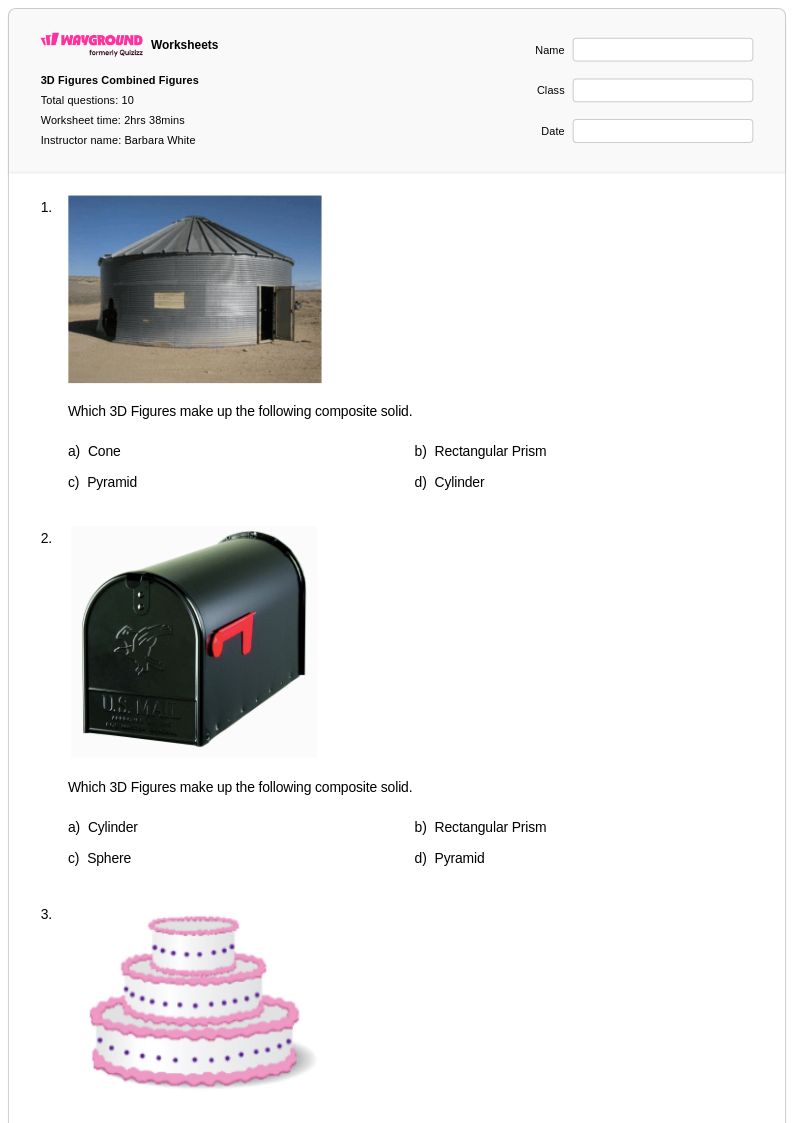
10 Q
10th
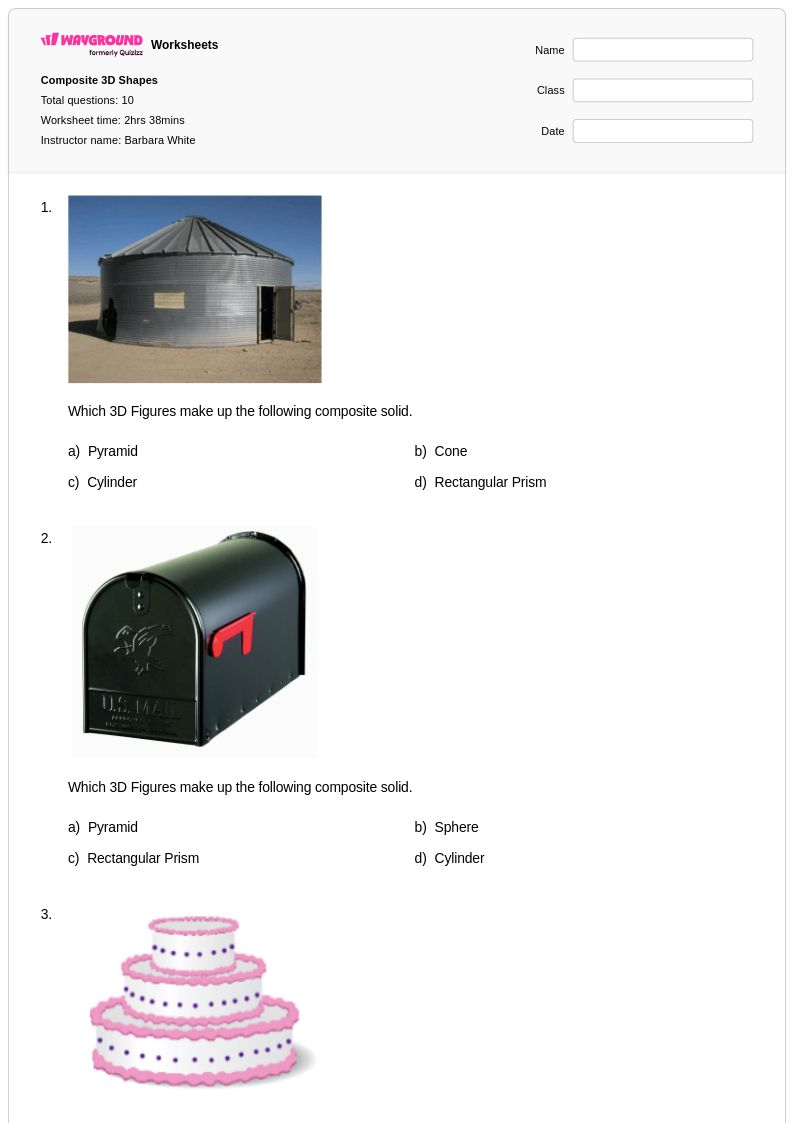
10 Q
10th
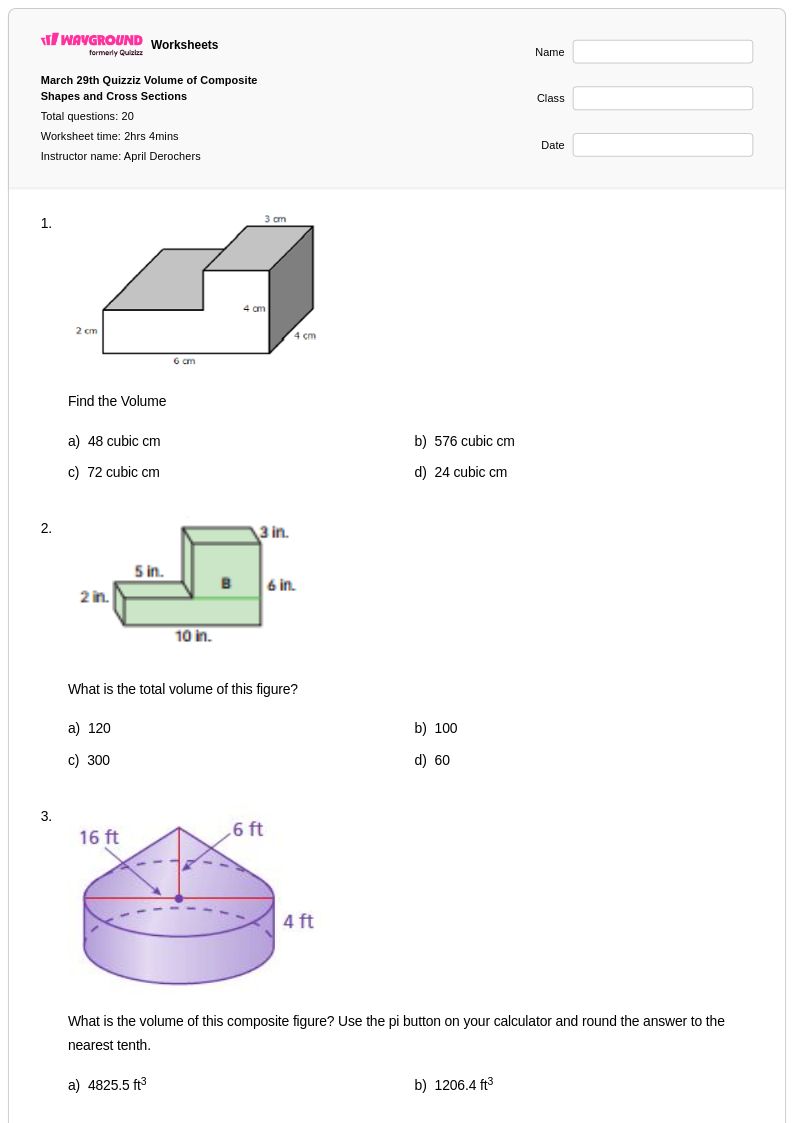
20 Q
10th
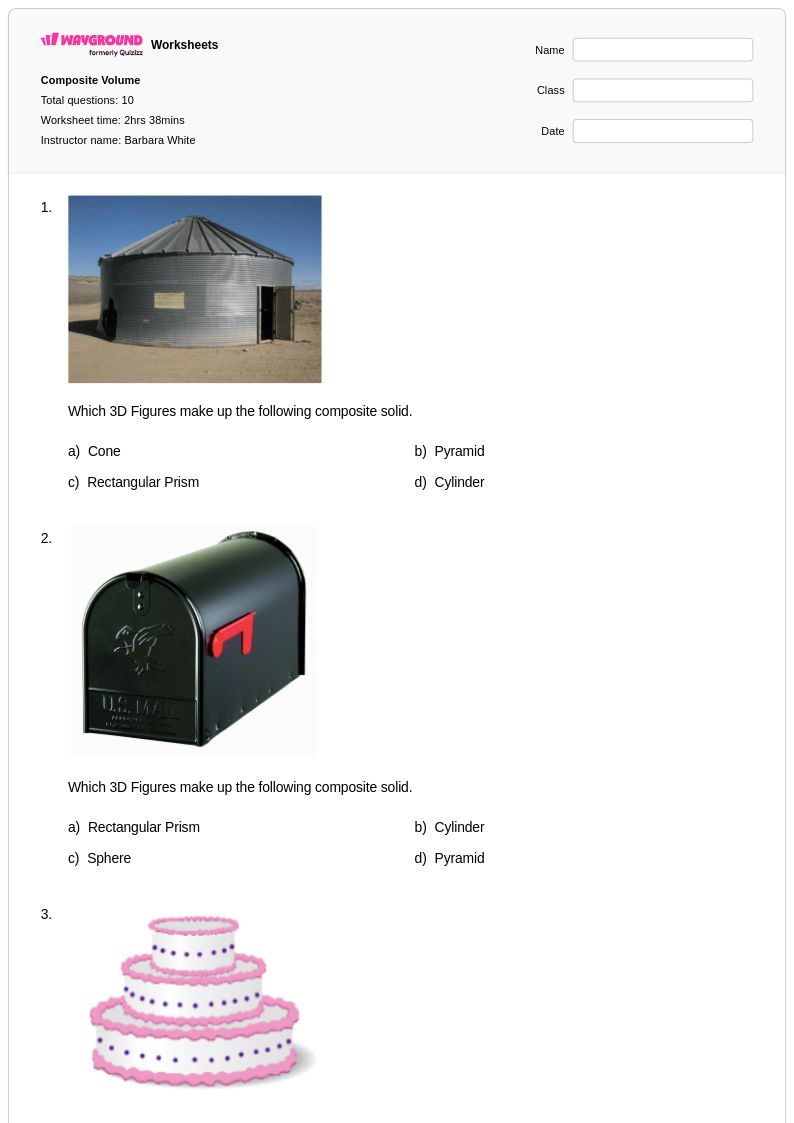
10 Q
10th
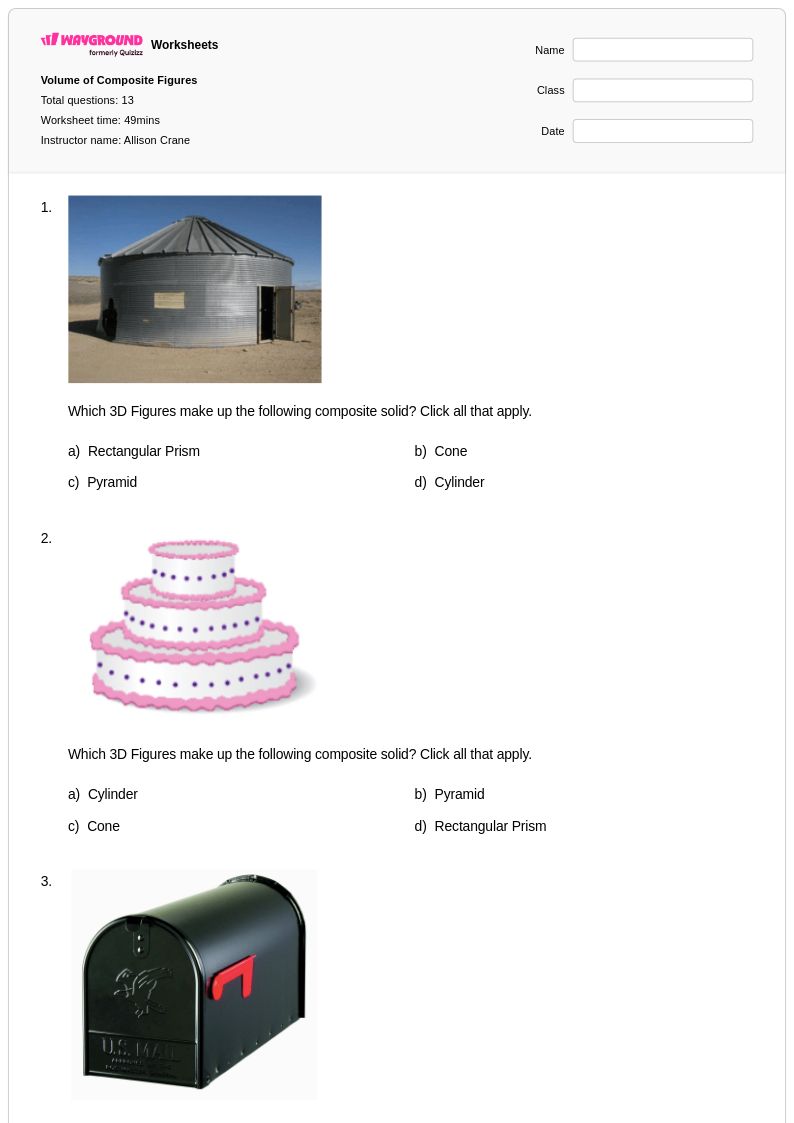
13 Q
7th - 10th
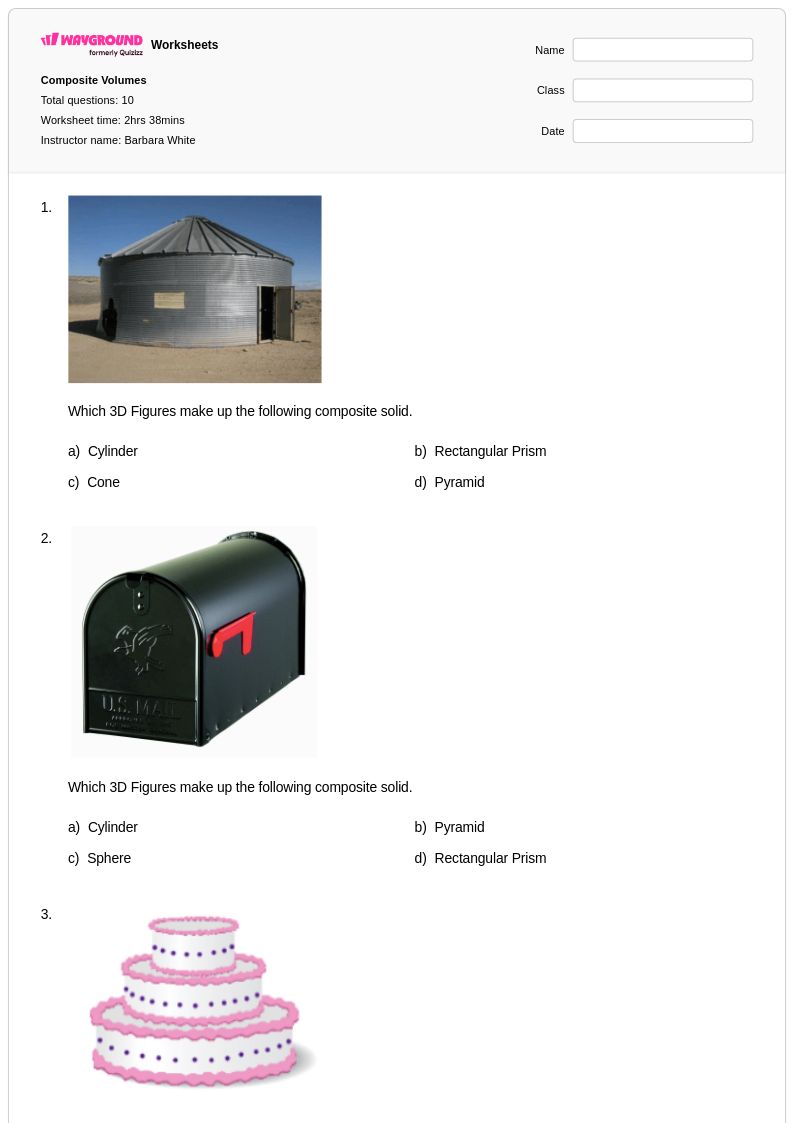
10 Q
10th
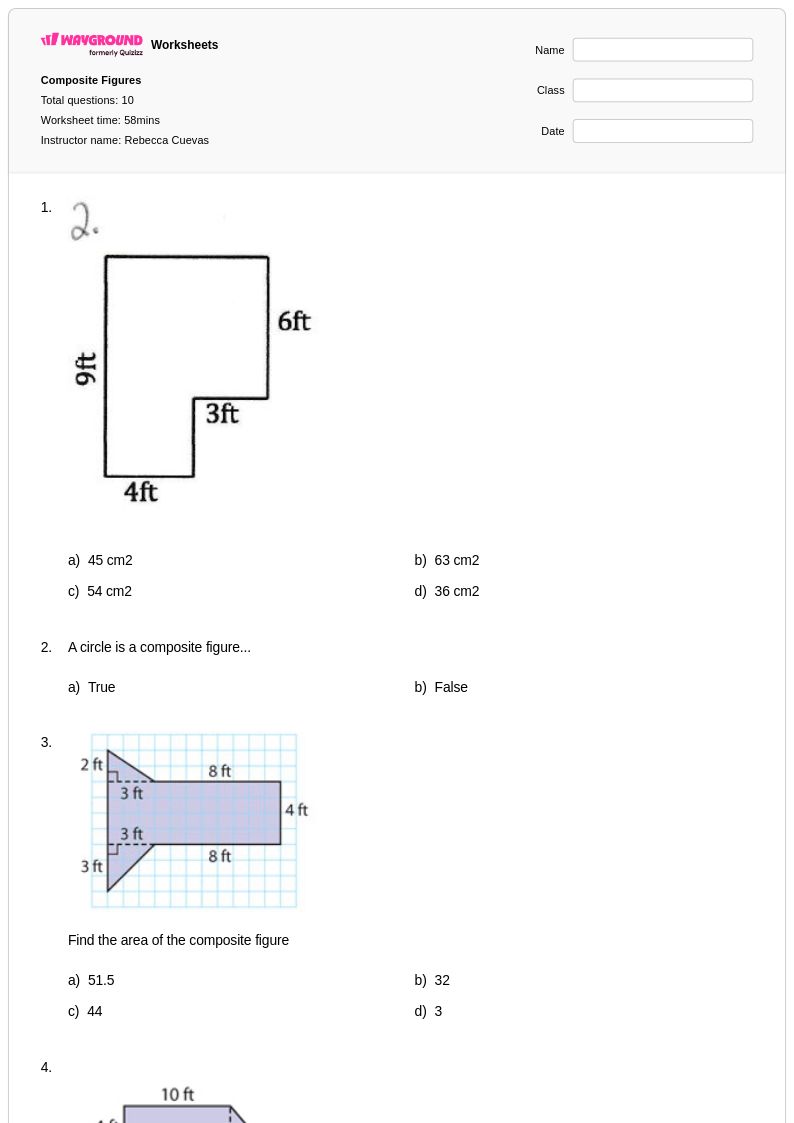
10 Q
8th - 11th
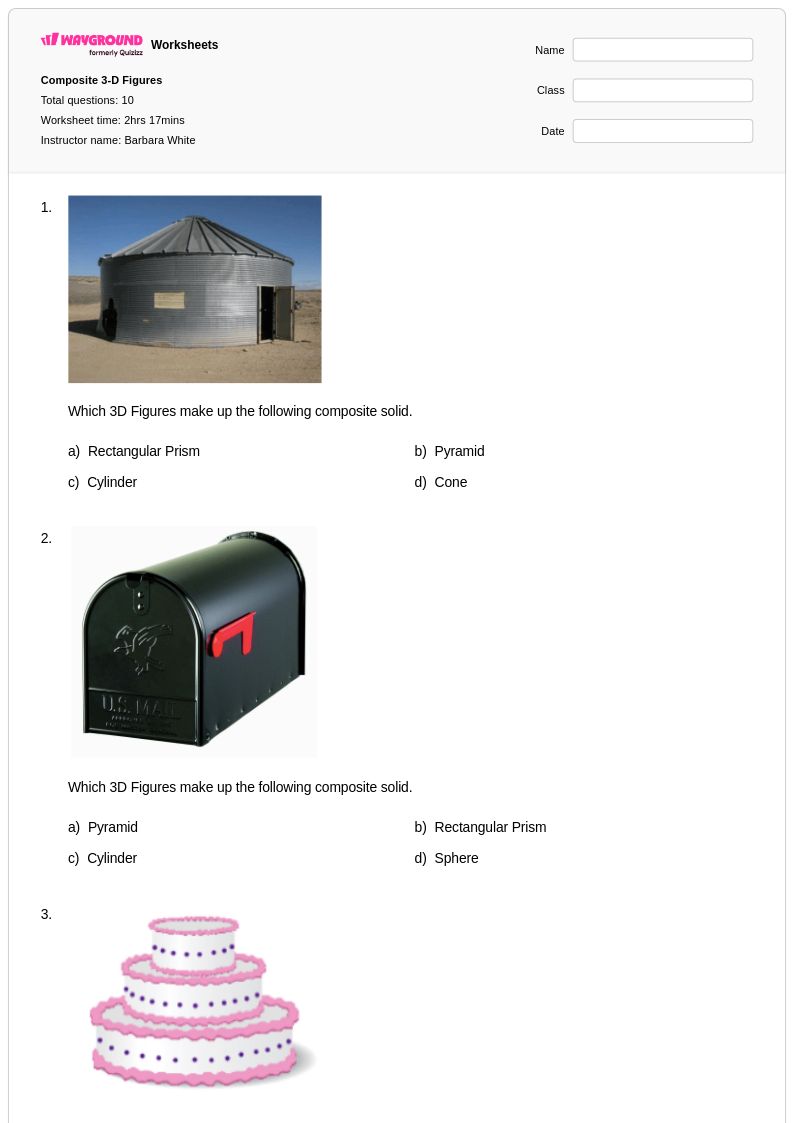
10 Q
10th
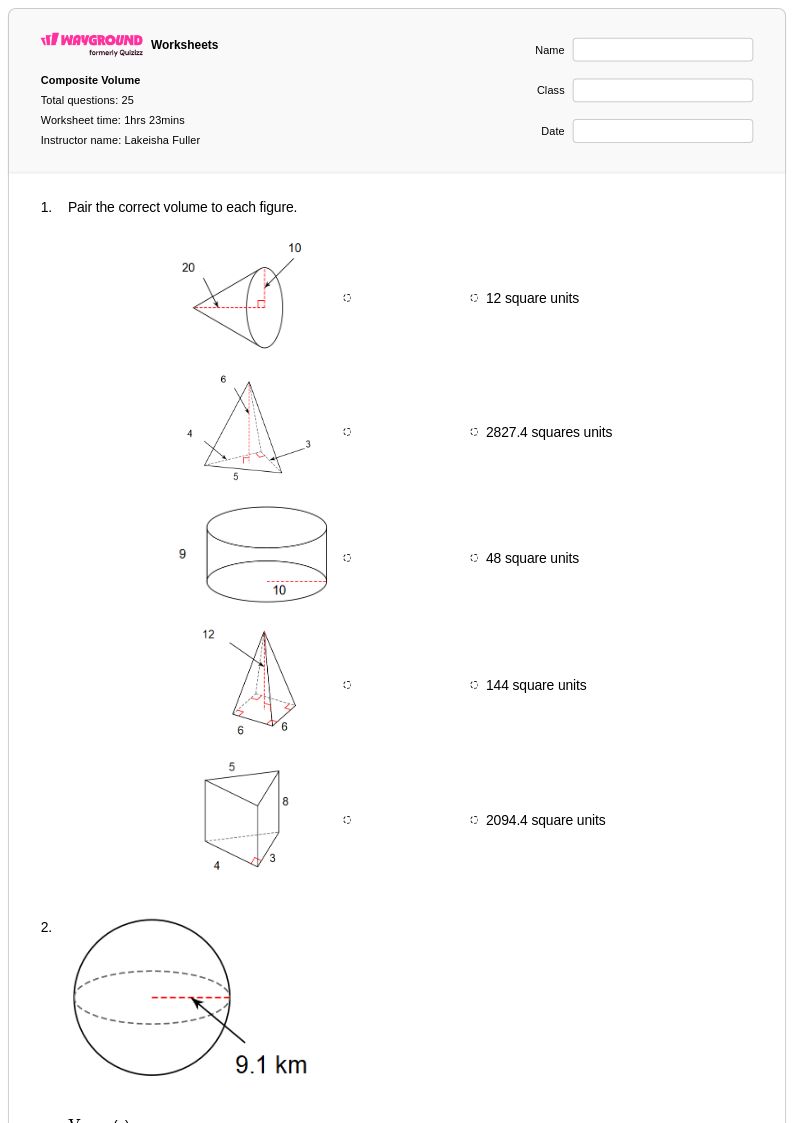
25 Q
10th
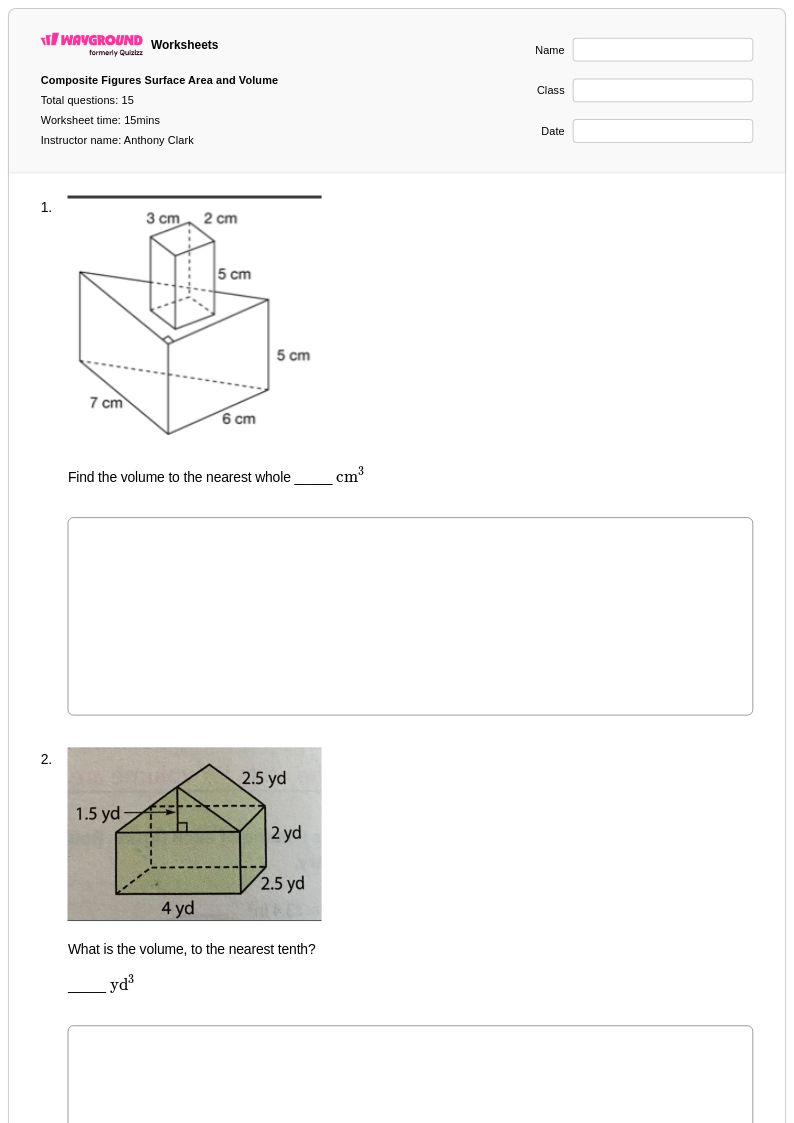
15 Q
7th - Uni
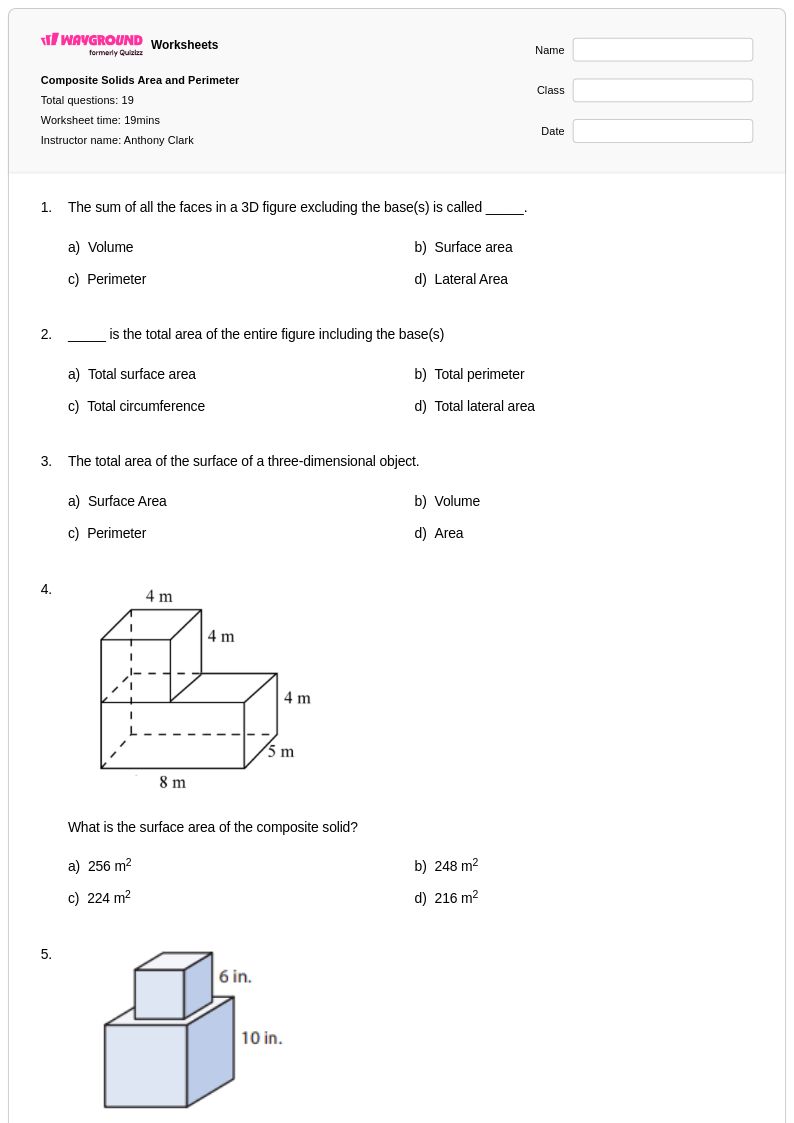
19 Q
7th - Uni
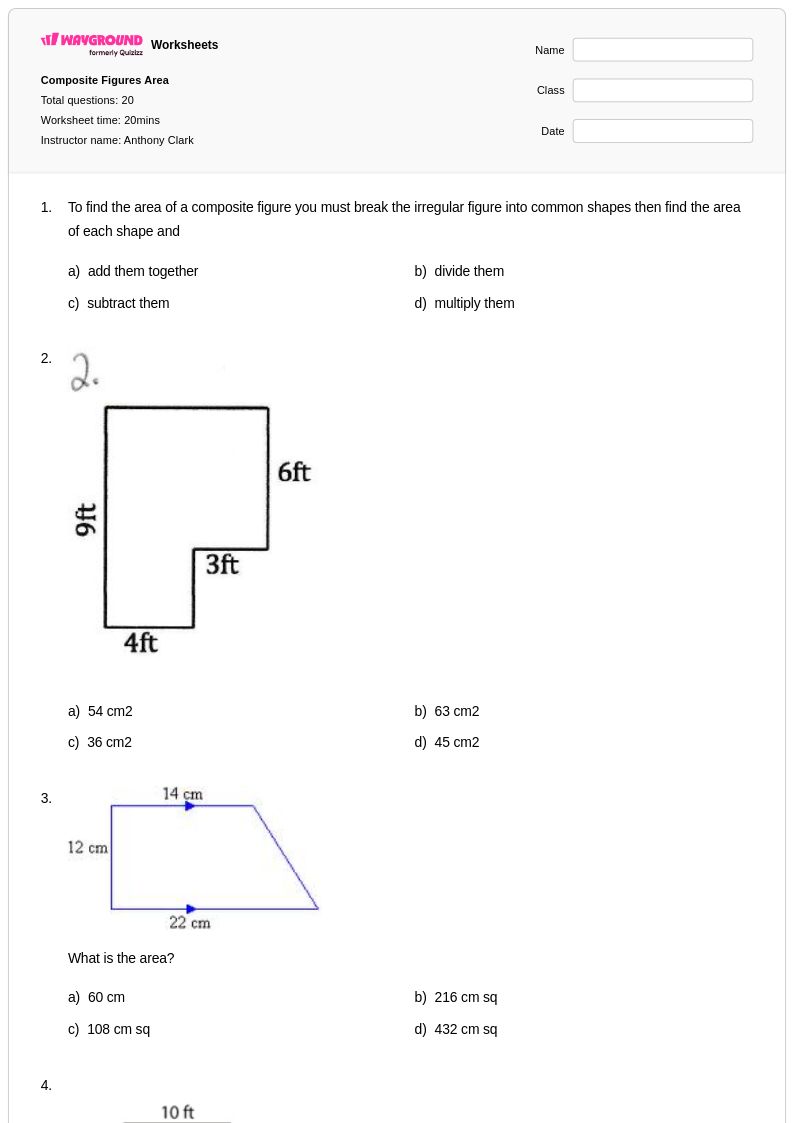
20 Q
7th - Uni
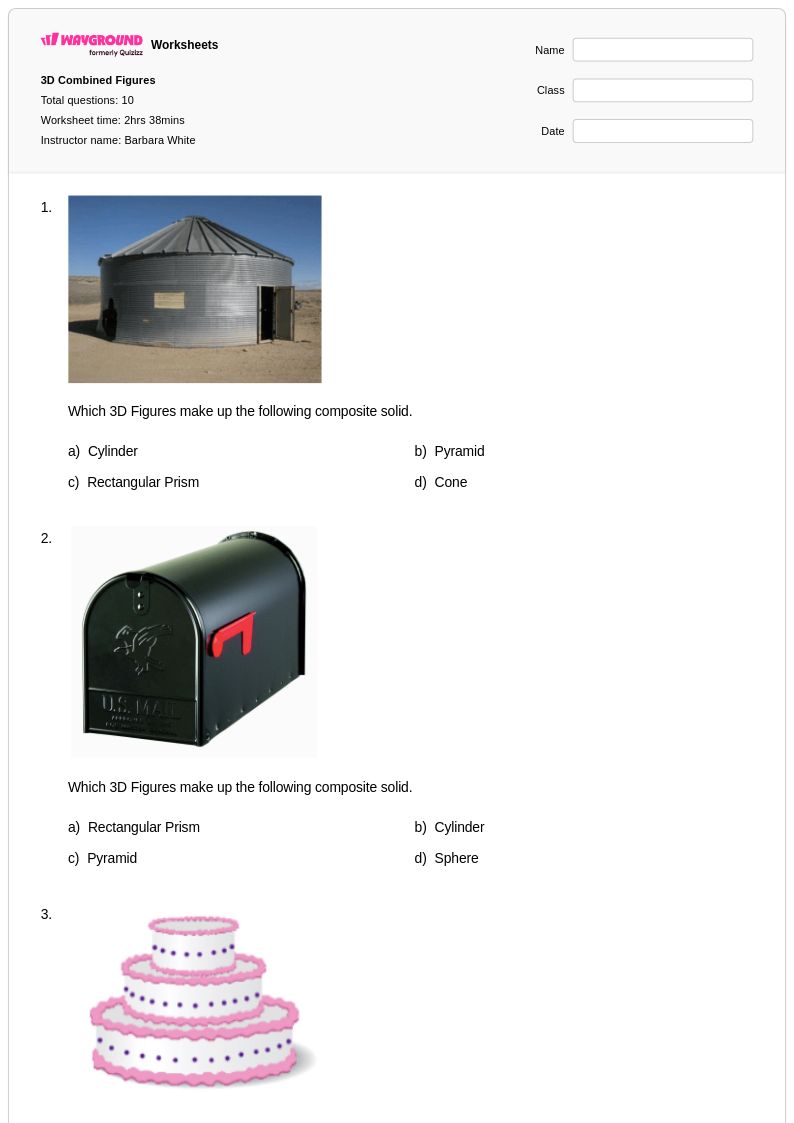
10 Q
10th
Explore Composite 3d Figures Worksheets by Grades
Explore Other Subject Worksheets for grade 10
Explore printable Composite 3d Figures worksheets for Grade 10
Composite 3D figures worksheets for Grade 10 students provide essential practice in analyzing and calculating properties of complex three-dimensional shapes formed by combining basic geometric solids. These comprehensive worksheets available through Wayground (formerly Quizizz) strengthen students' spatial reasoning abilities and mathematical problem-solving skills by presenting challenging scenarios involving cylinders within rectangular prisms, spheres intersecting with cubes, and pyramids positioned on top of other polyhedra. Students work through practice problems that require them to find surface areas, volumes, and other measurements of these combined figures, developing the analytical thinking necessary for advanced geometry concepts. Each worksheet comes with a complete answer key and is available as a free printable PDF, making it easy for educators to provide targeted skill reinforcement and assessment opportunities.
Wayground (formerly Quizizz) supports mathematics teachers with an extensive collection of Grade 10 composite 3D figures worksheets drawn from millions of teacher-created resources that have been carefully curated and organized for easy access. The platform's robust search and filtering capabilities allow educators to quickly locate materials that align with specific curriculum standards and match their students' current skill levels, while built-in differentiation tools enable teachers to customize worksheets for varied learning needs within the same classroom. These resources are available in both printable PDF format and interactive digital versions, providing flexibility for different teaching environments and learning preferences. Teachers can effectively use these materials for lesson planning, targeted remediation for struggling students, enrichment activities for advanced learners, and regular skill practice sessions that build confidence in working with complex three-dimensional geometric relationships.
FAQs
How do I teach composite 3D figures to Grade 10 students?
What exercises help students practice composite 3D figures?
What mistakes do students make when finding the surface area or volume of composite solids?
How can I use these Grade 10 composite 3D figures worksheets?
How do composite 3D figures fit into the Common Core high school geometry progression?
How can I differentiate composite 3D figure practice for mixed-ability students?
What grade do students learn composite 3D figures?