
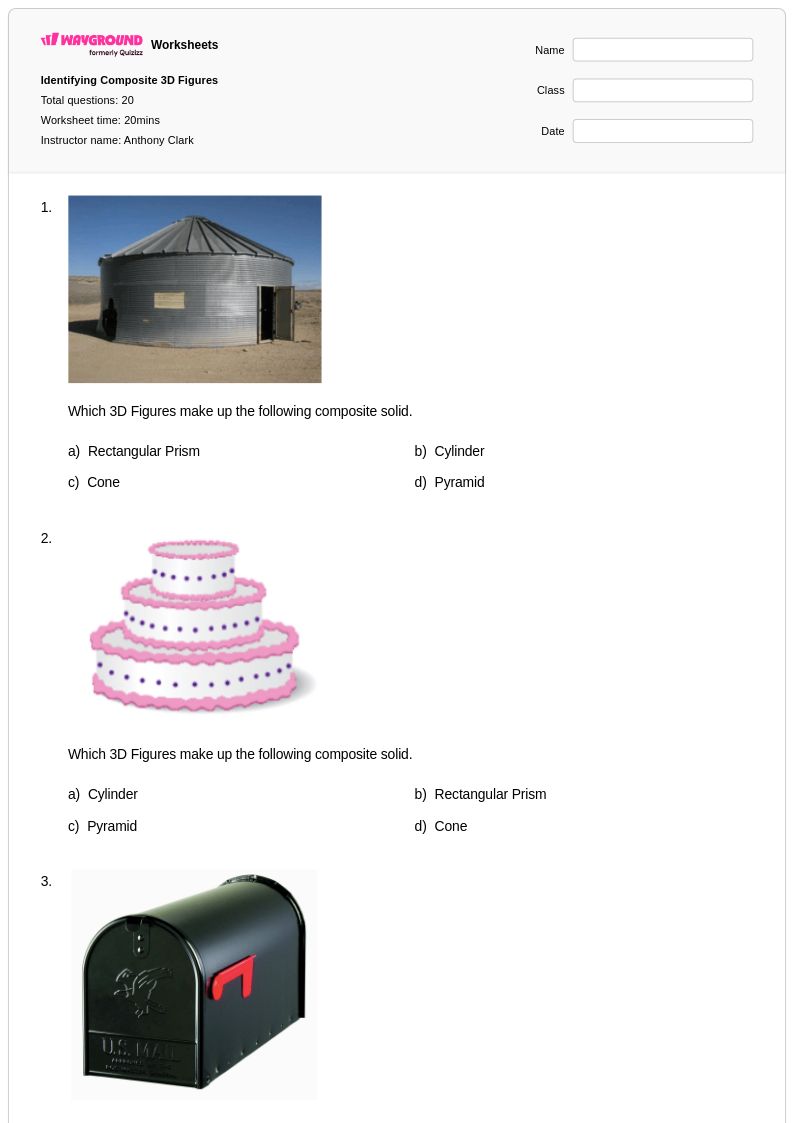
20 Q
7th - Uni
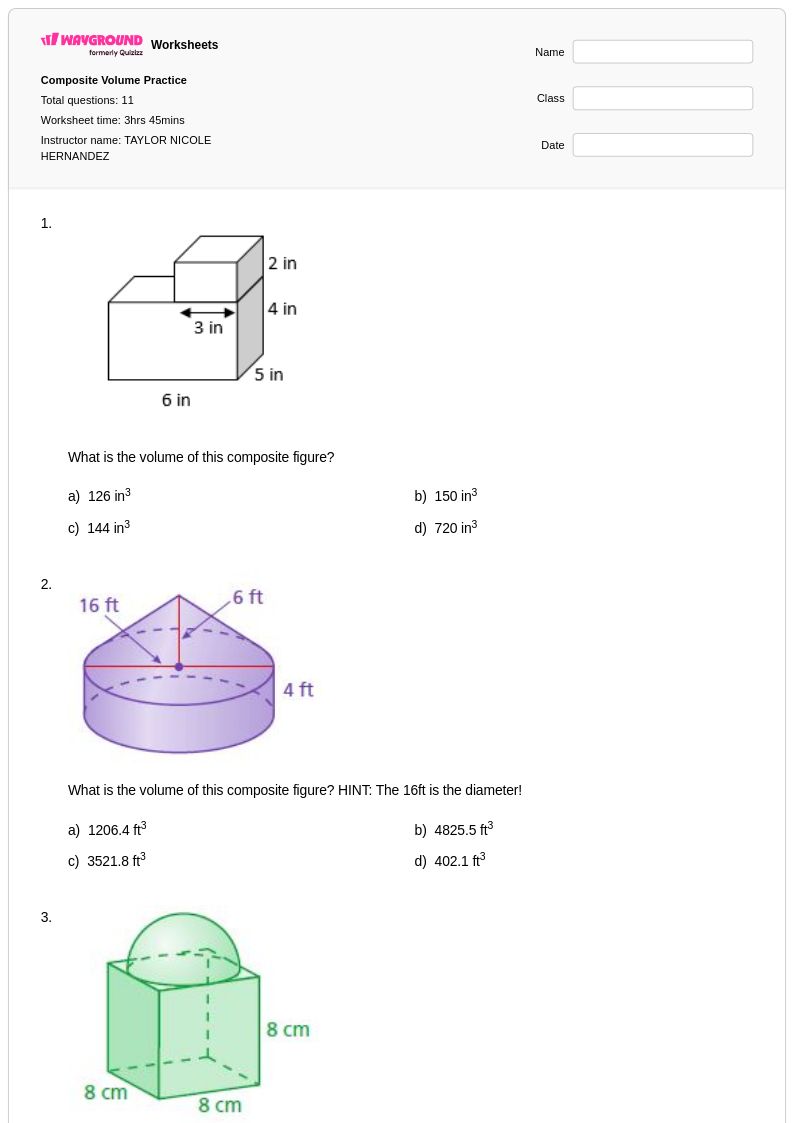
11 Q
9th
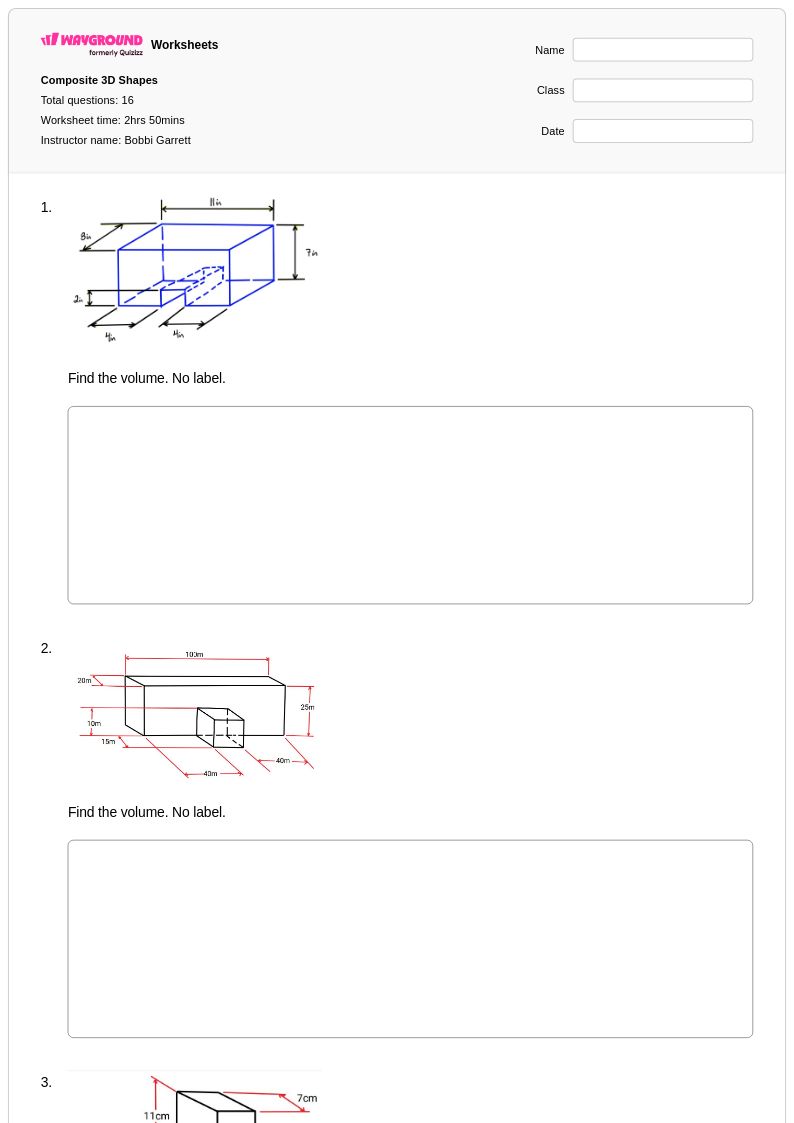
16 Q
9th - 12th
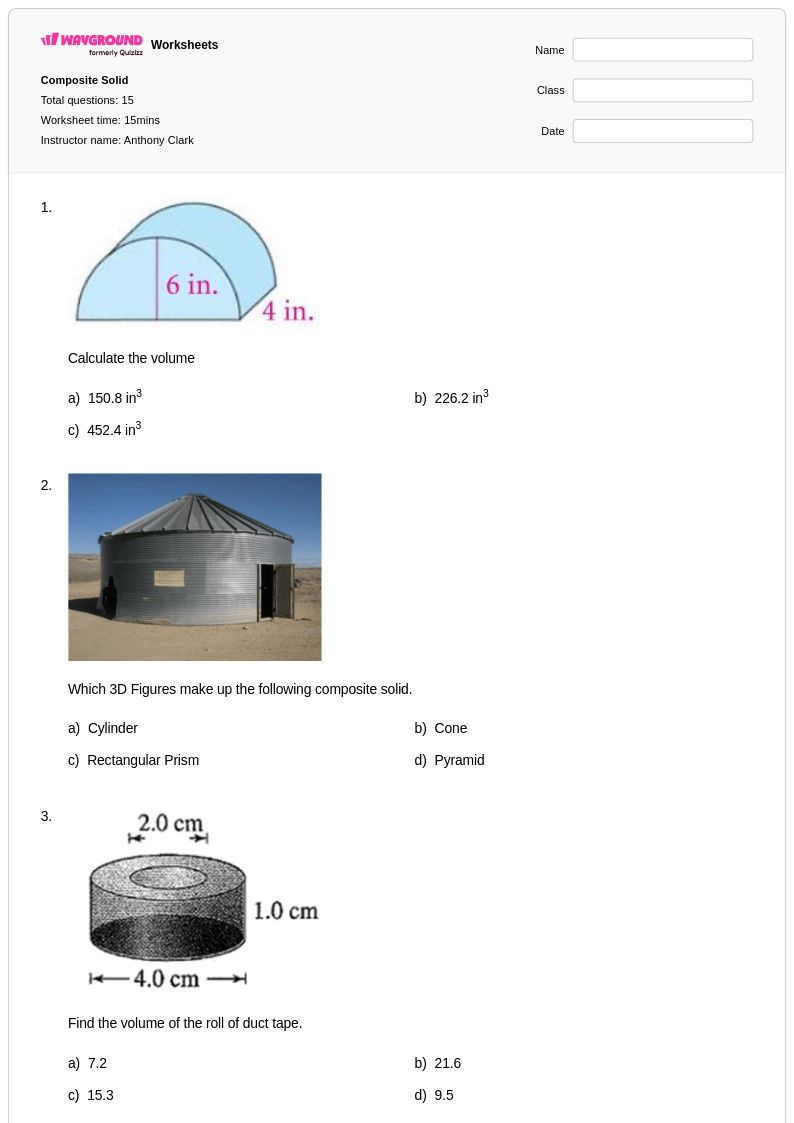
15 Q
8th - Uni
15 Q
9th - 12th
6 Q
9th - 12th
20 Q
9th
13 Q
7th - 10th
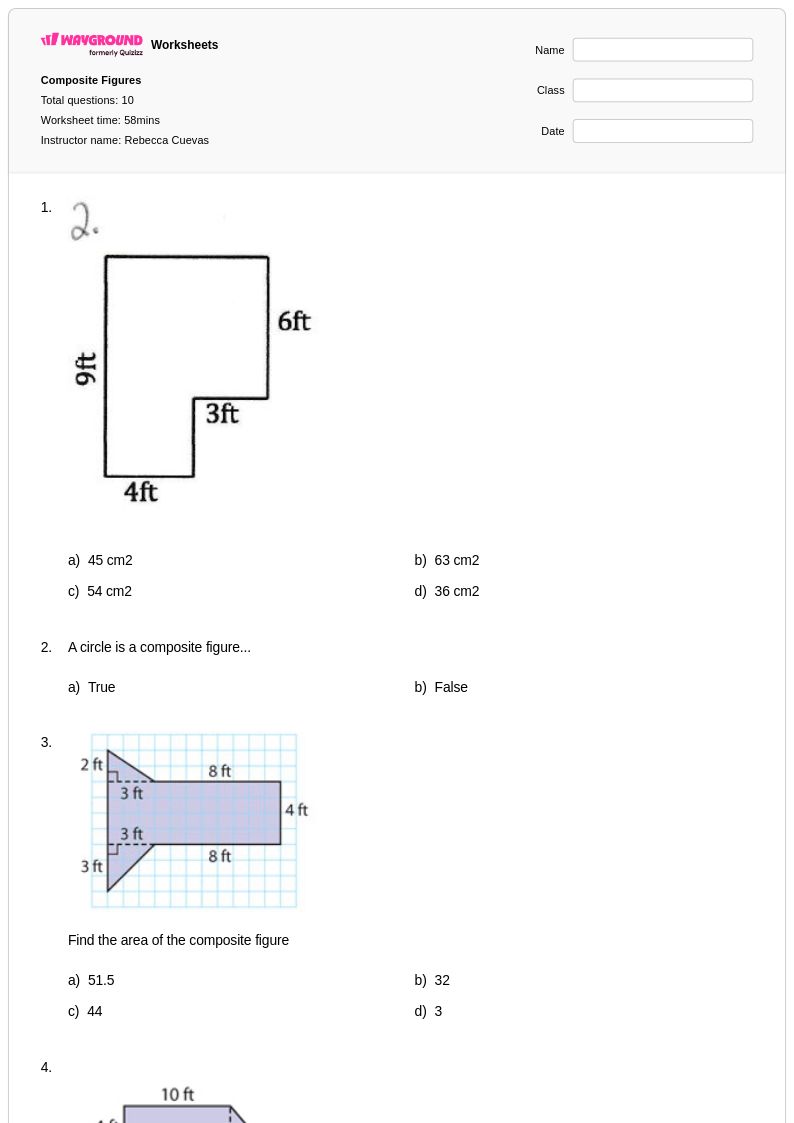
10 Q
8th - 11th
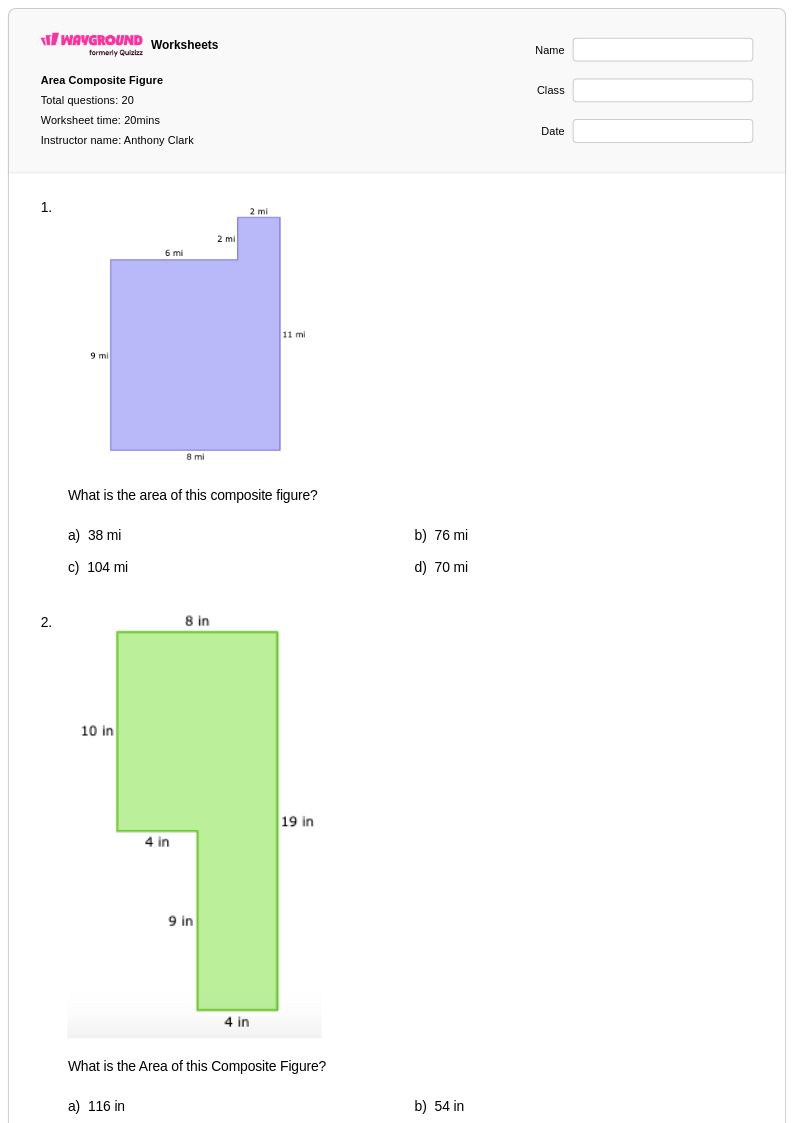
20 Q
7th - Uni
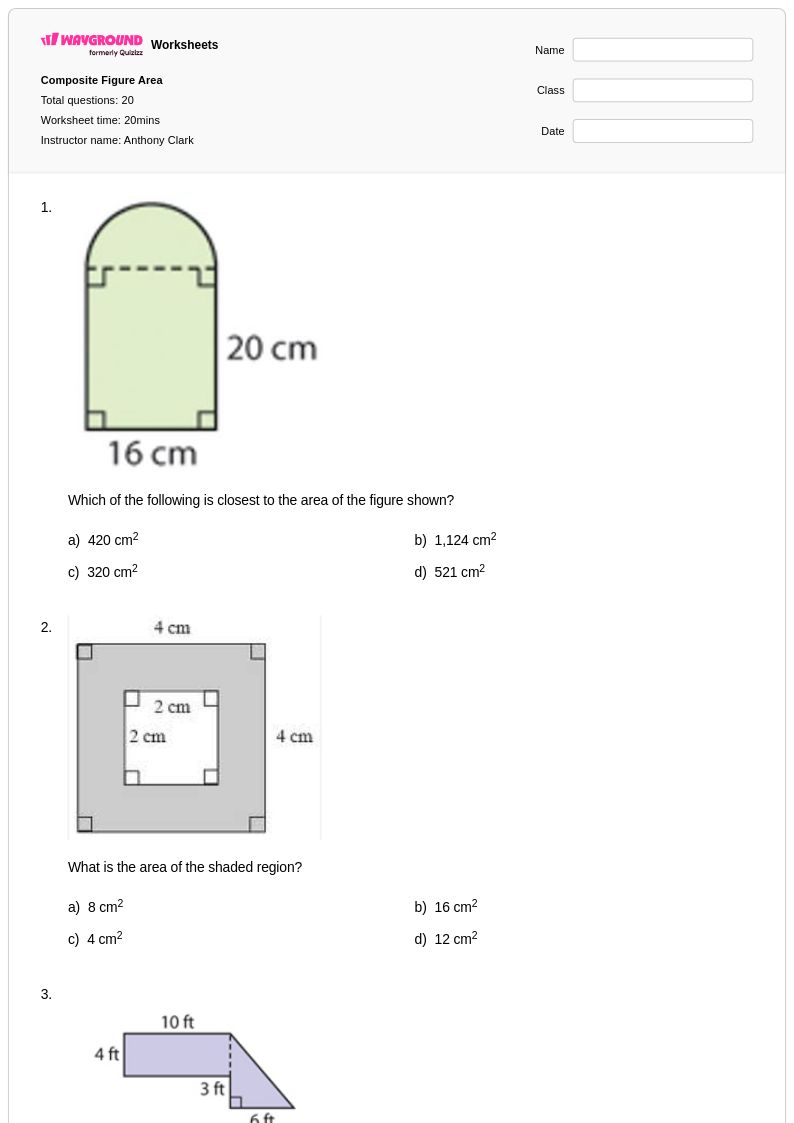
20 Q
7th - Uni
21 Q
9th - 12th
20 Q
6th - Uni
7 Q
9th
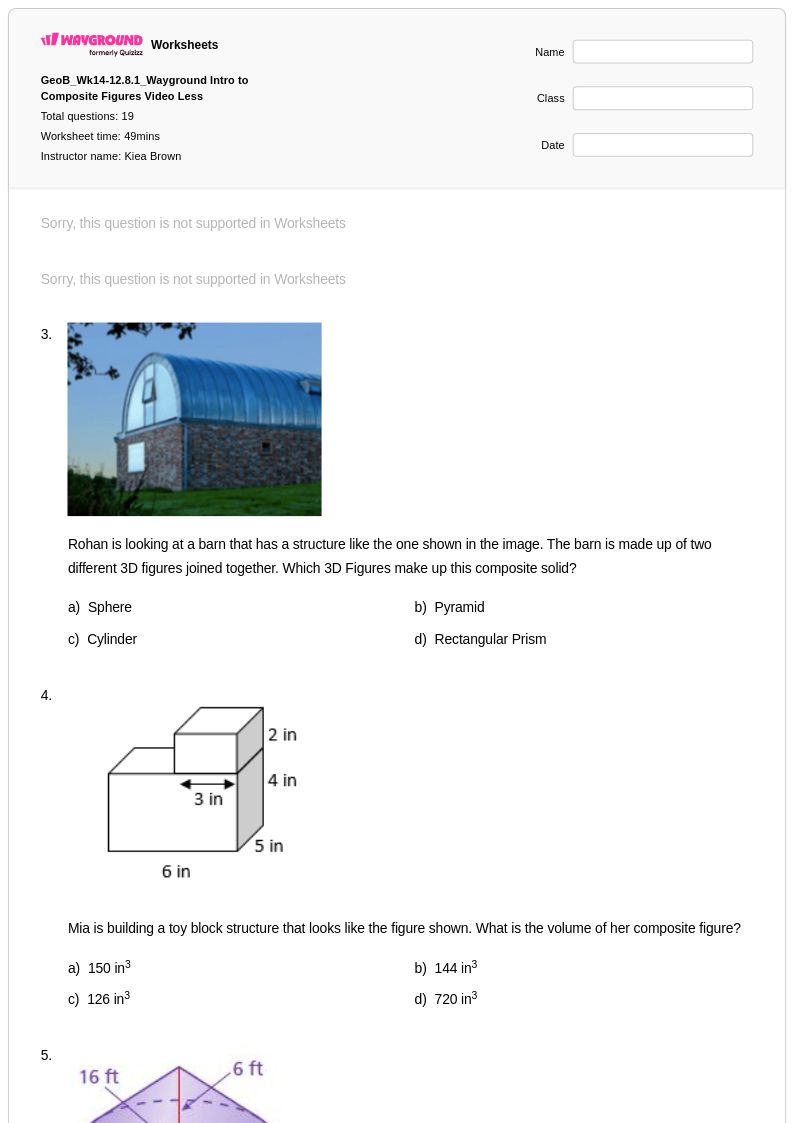
19 Q
9th - 11th
15 Q
7th - Uni
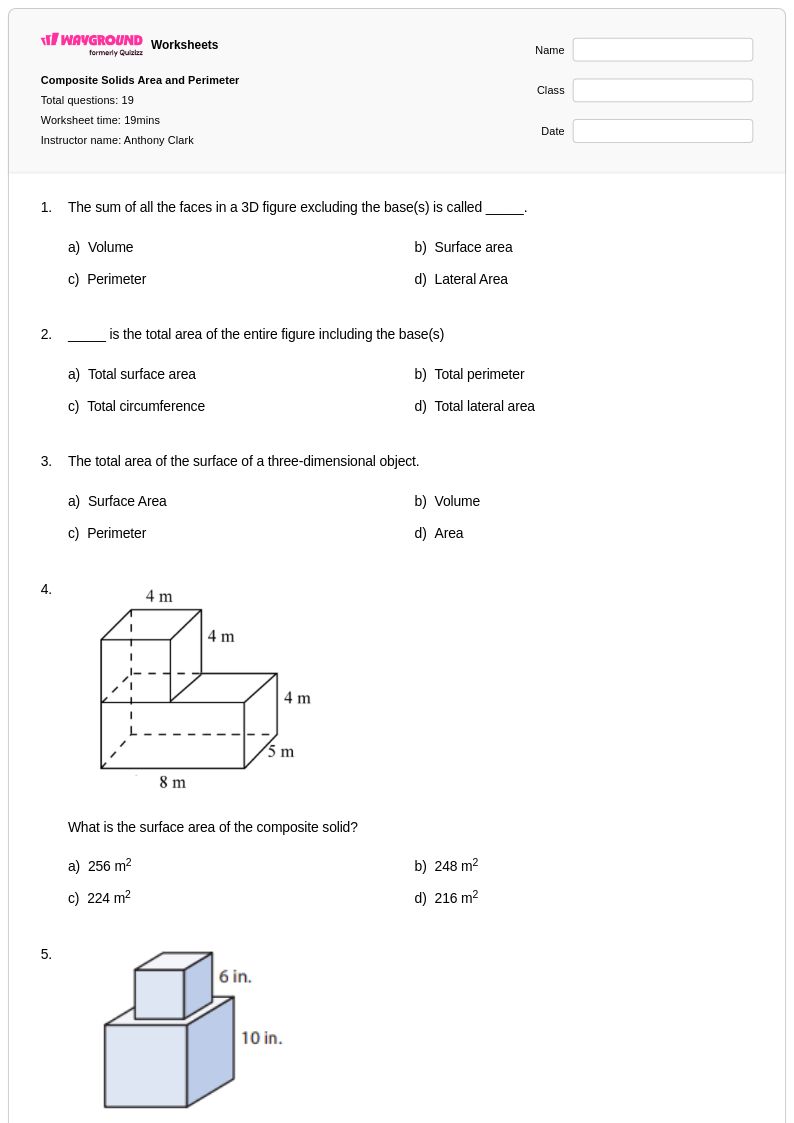
19 Q
7th - Uni
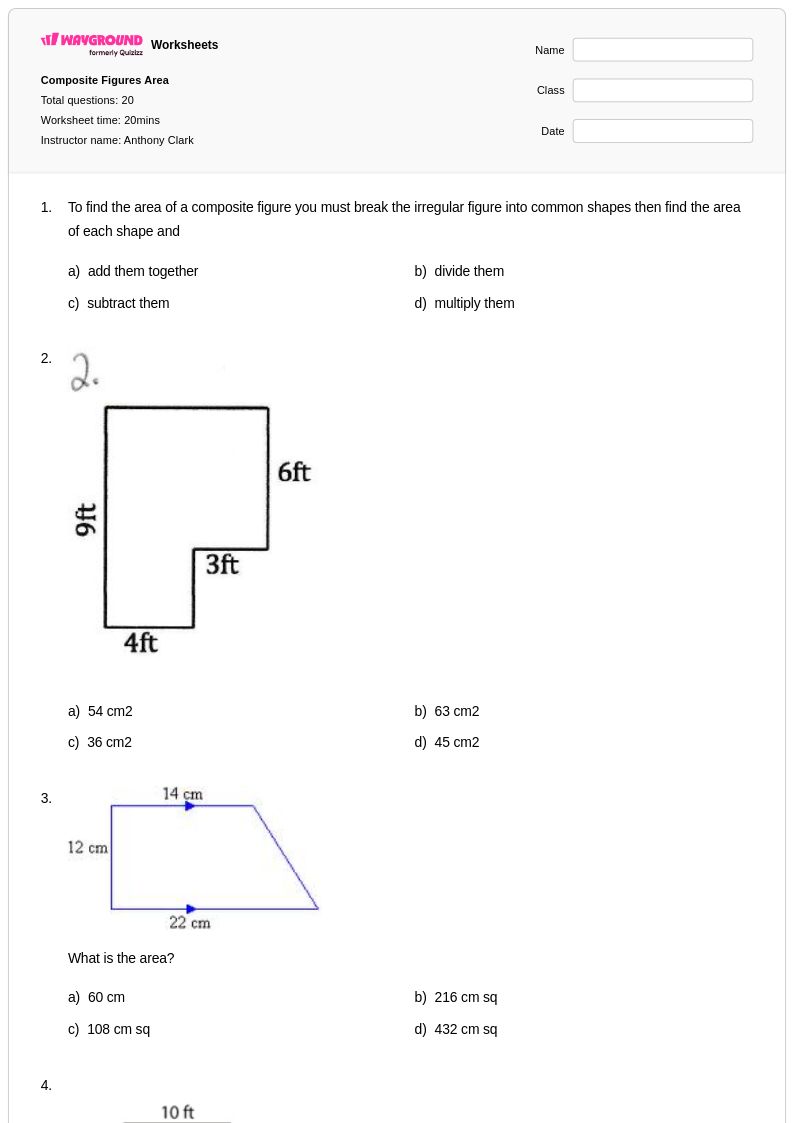
20 Q
7th - Uni
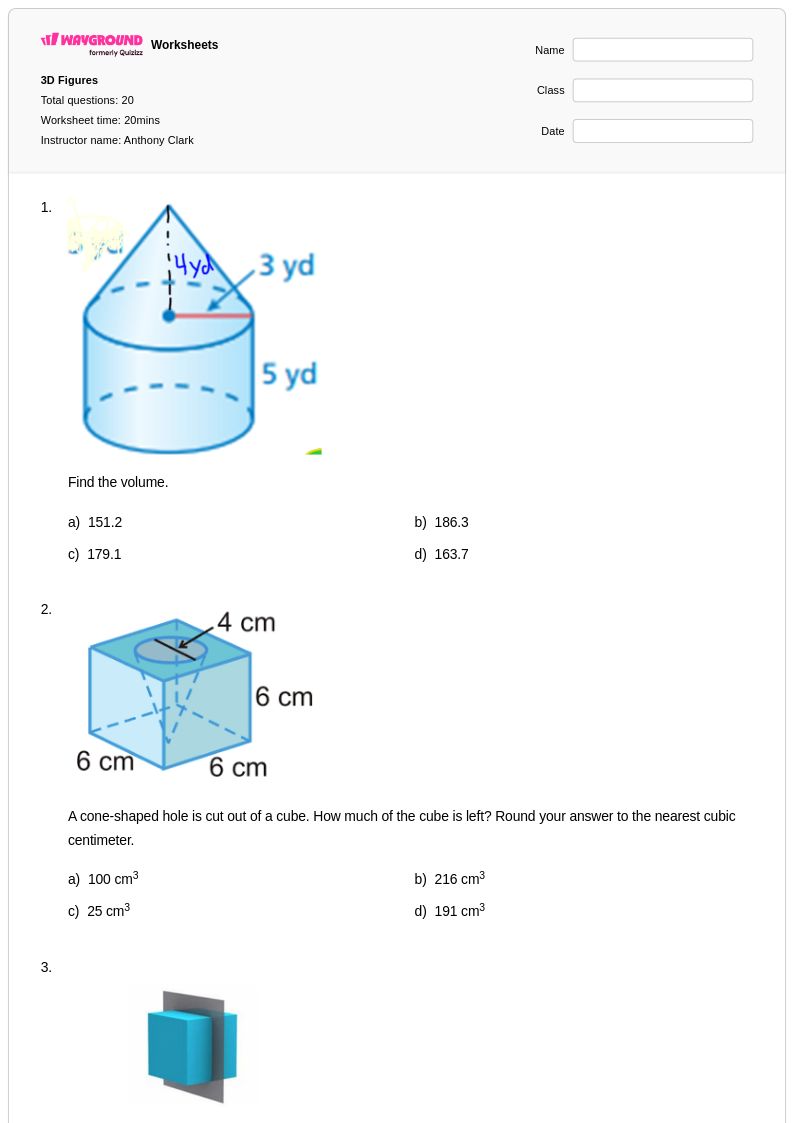
20 Q
8th - Uni
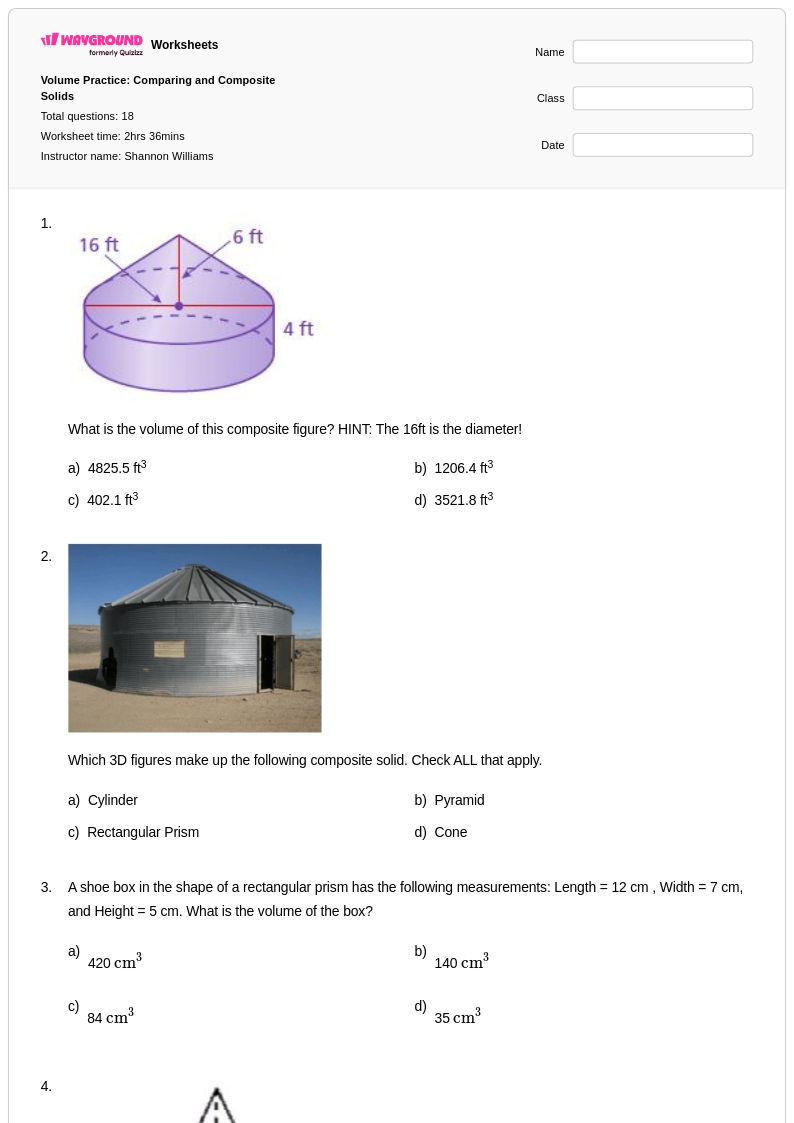
18 Q
9th - 12th
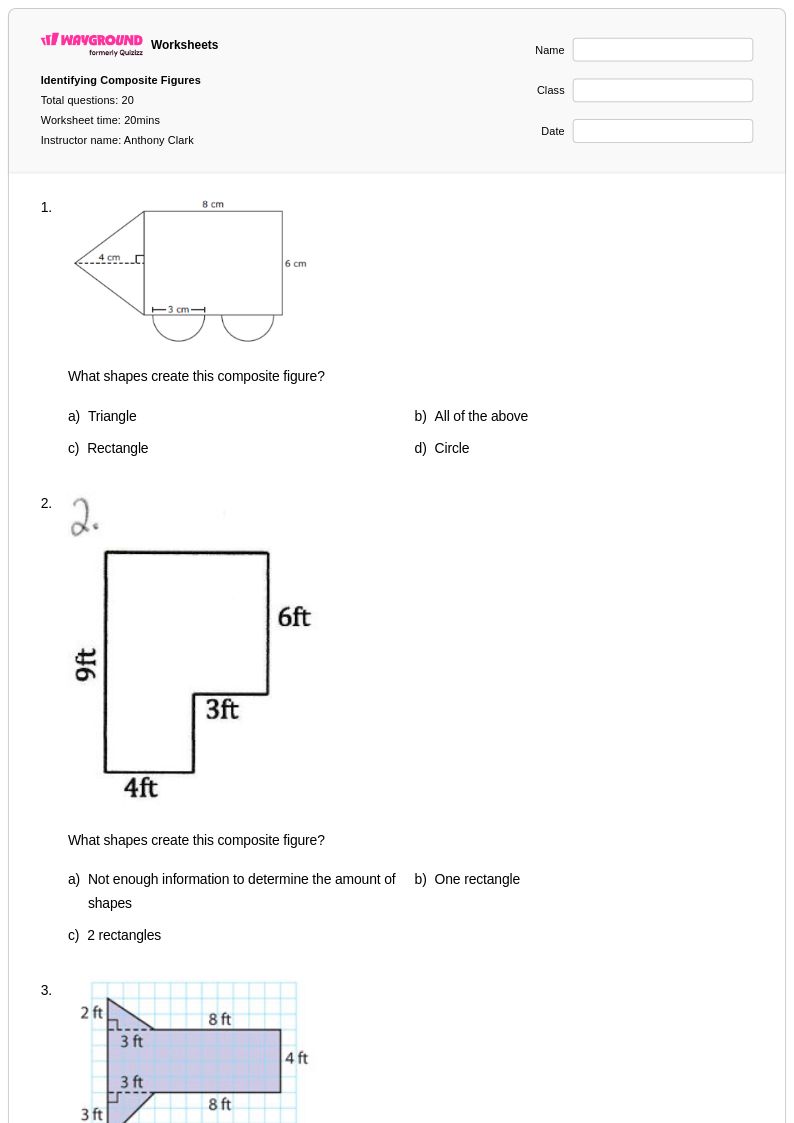
20 Q
7th - Uni
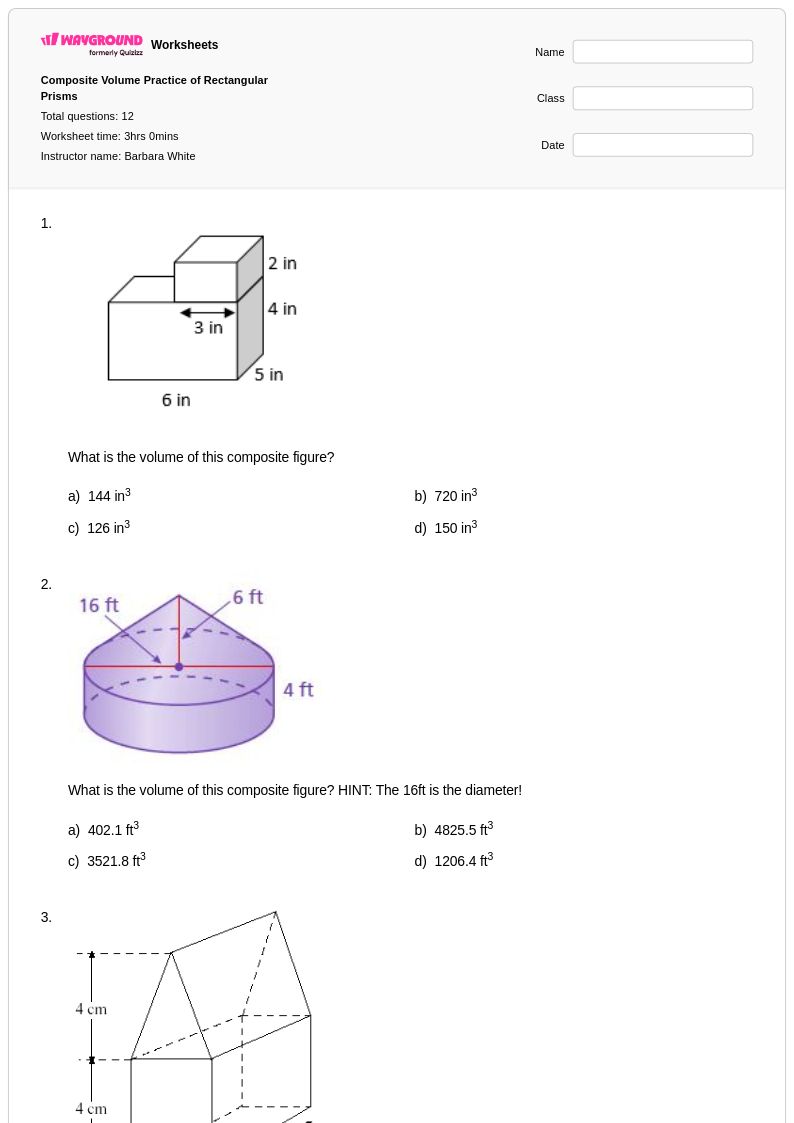
12 Q
9th
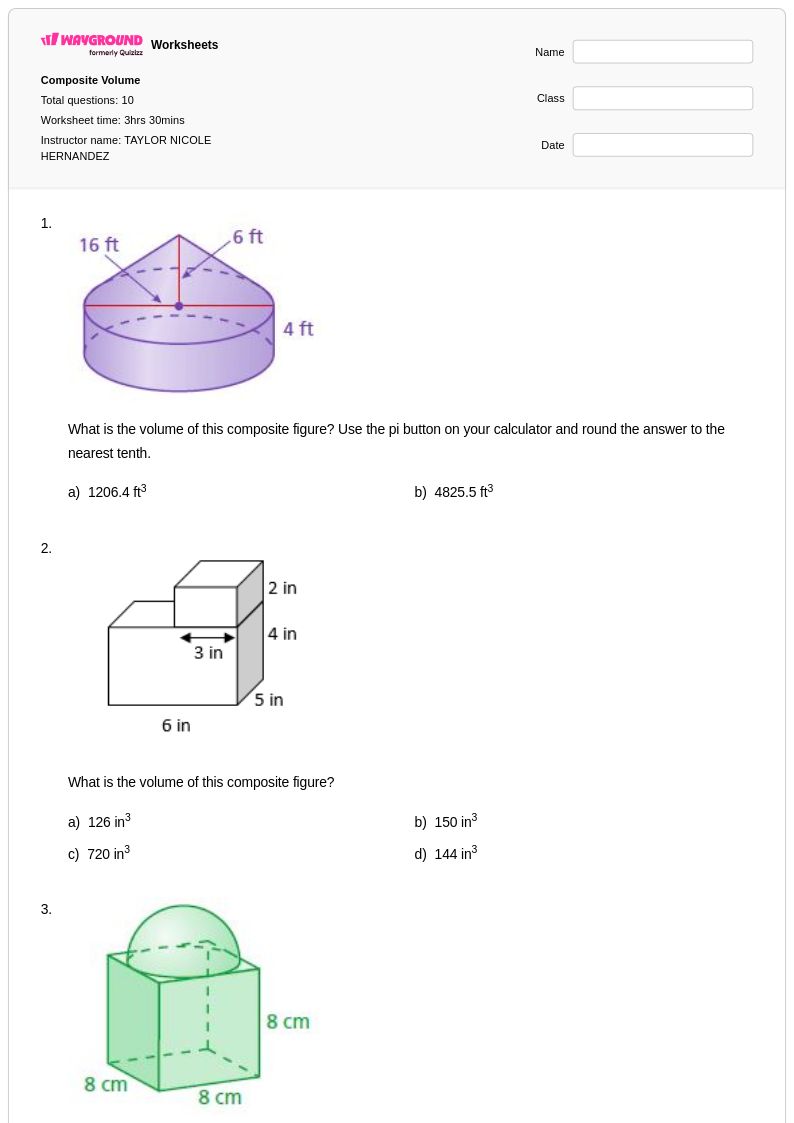
10 Q
9th
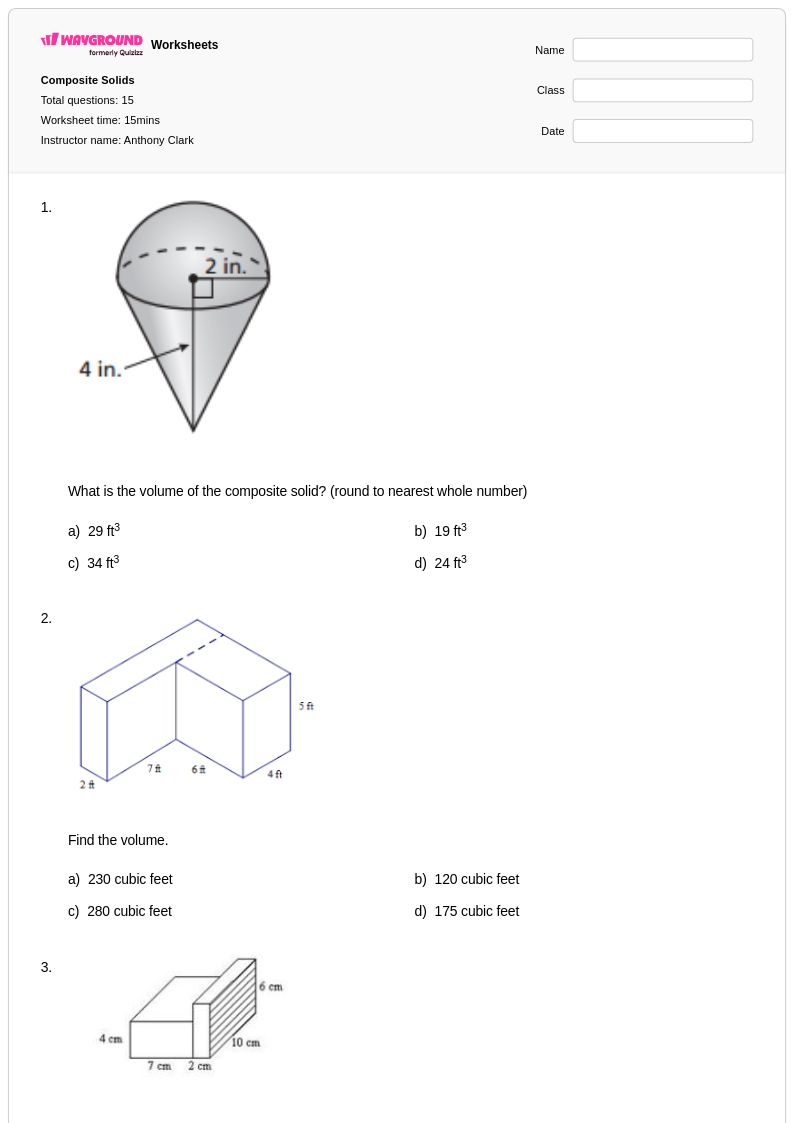
15 Q
8th - Uni
Explore Composite 3d Figures Worksheets by Grades
Explore Other Subject Worksheets for grade 9
Explore printable Composite 3d Figures worksheets for Grade 9
Composite 3D figures worksheets for Grade 9 students available through Wayground (formerly Quizizz) provide comprehensive practice in analyzing and calculating properties of complex three-dimensional shapes formed by combining basic geometric solids. These expertly designed worksheets strengthen essential skills including surface area calculations, volume determination, and spatial reasoning as students work with combinations of prisms, cylinders, pyramids, cones, and spheres. Each worksheet collection includes detailed practice problems that guide students through systematic approaches to decomposing composite figures, identifying individual components, and applying appropriate formulas to find total measurements. The printable pdf format ensures accessibility, while comprehensive answer keys support independent learning and enable students to verify their problem-solving strategies and computational accuracy.
Wayground (formerly Quizizz) empowers mathematics teachers with millions of teacher-created resources specifically designed for Grade 9 geometry instruction, including extensive collections focused on composite 3D figures that align with state and national mathematics standards. The platform's robust search and filtering capabilities allow educators to quickly locate worksheets that match specific learning objectives, skill levels, and classroom needs, whether for initial instruction, remediation, or enrichment activities. Teachers can customize existing worksheets or create new ones using the platform's flexible tools, adapting content complexity and problem types to accommodate diverse learning styles and abilities within their classrooms. The availability of both printable and digital formats streamlines lesson planning and enables seamless integration into various instructional models, from traditional worksheet-based practice to technology-enhanced learning environments.
FAQs
How do I teach composite 3D figures in Grade 9 geometry?
What practice problems are useful for Grade 9 composite 3D figures?
What mistakes do Grade 9 students make with composite 3D figures?
How can I assign Grade 9 composite 3D figures worksheets on Wayground?
How do Grade 9 composite 3D figures fit the Common Core geometry progression?
How can I differentiate composite 3D figure worksheets for Grade 9?
Are composite 3D figures appropriate for Grade 9?