
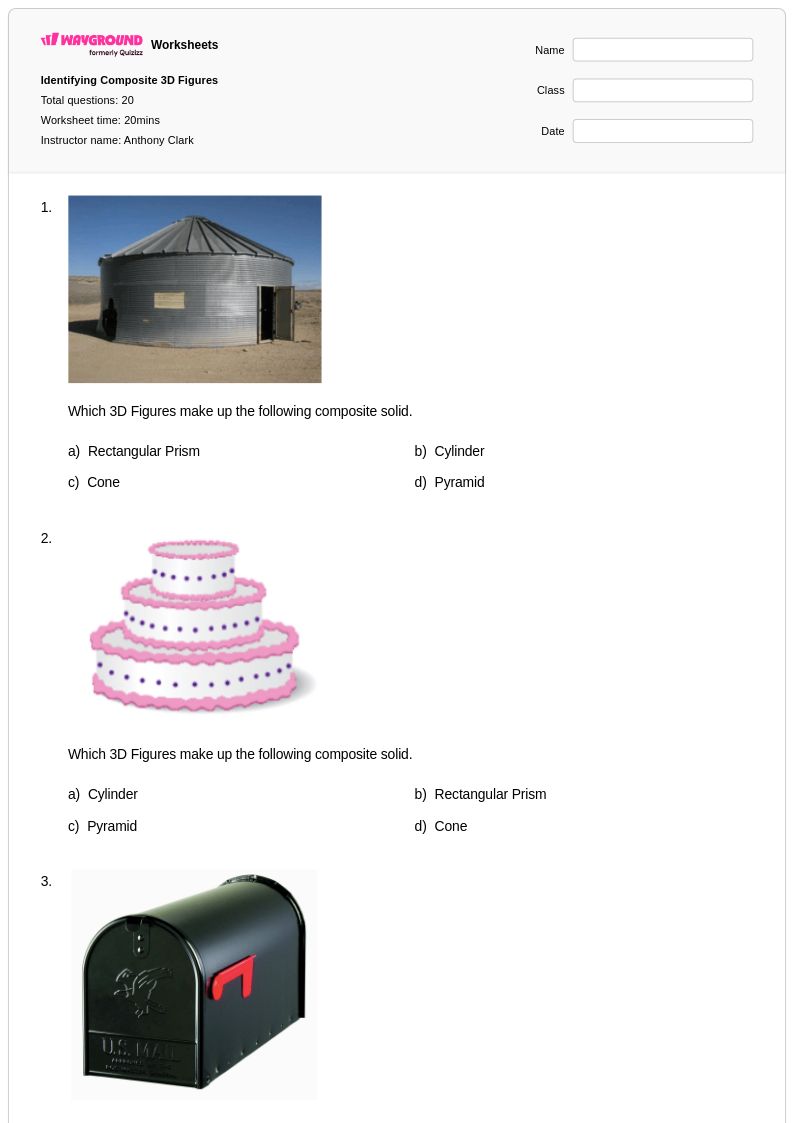
20 P
7th - Uni
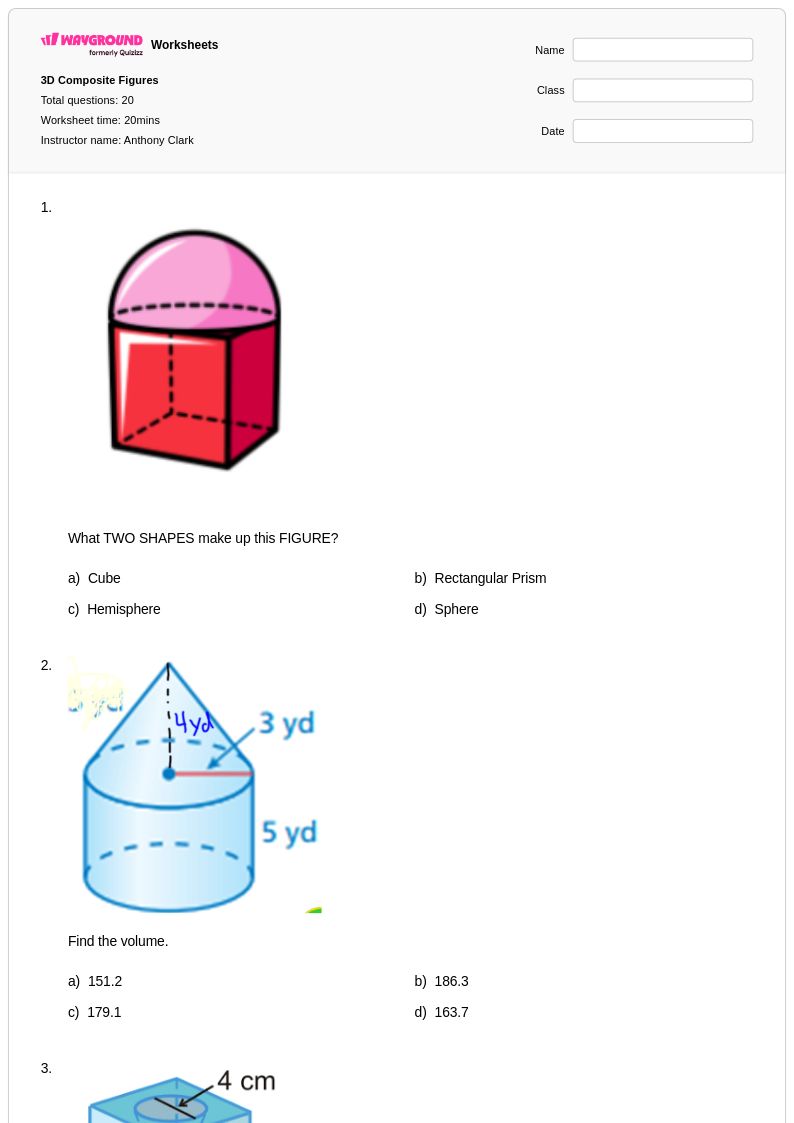
20 P
10th - Uni
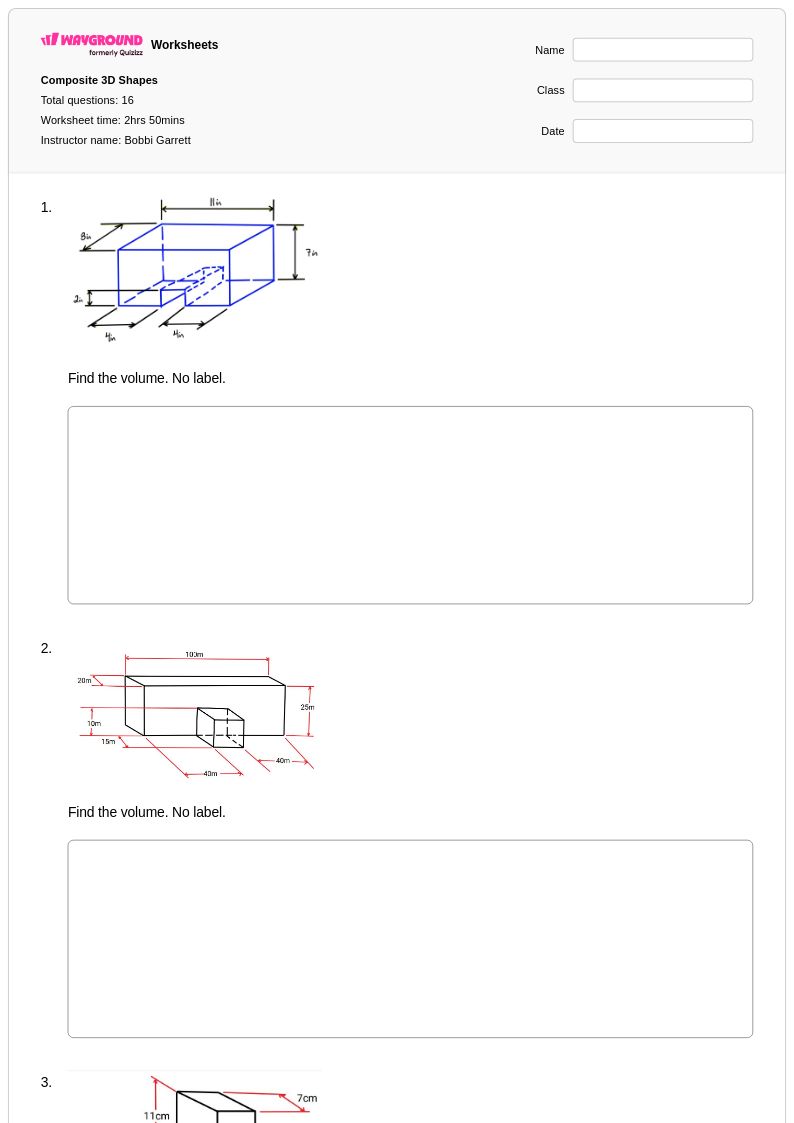
16 P
9th - 12th
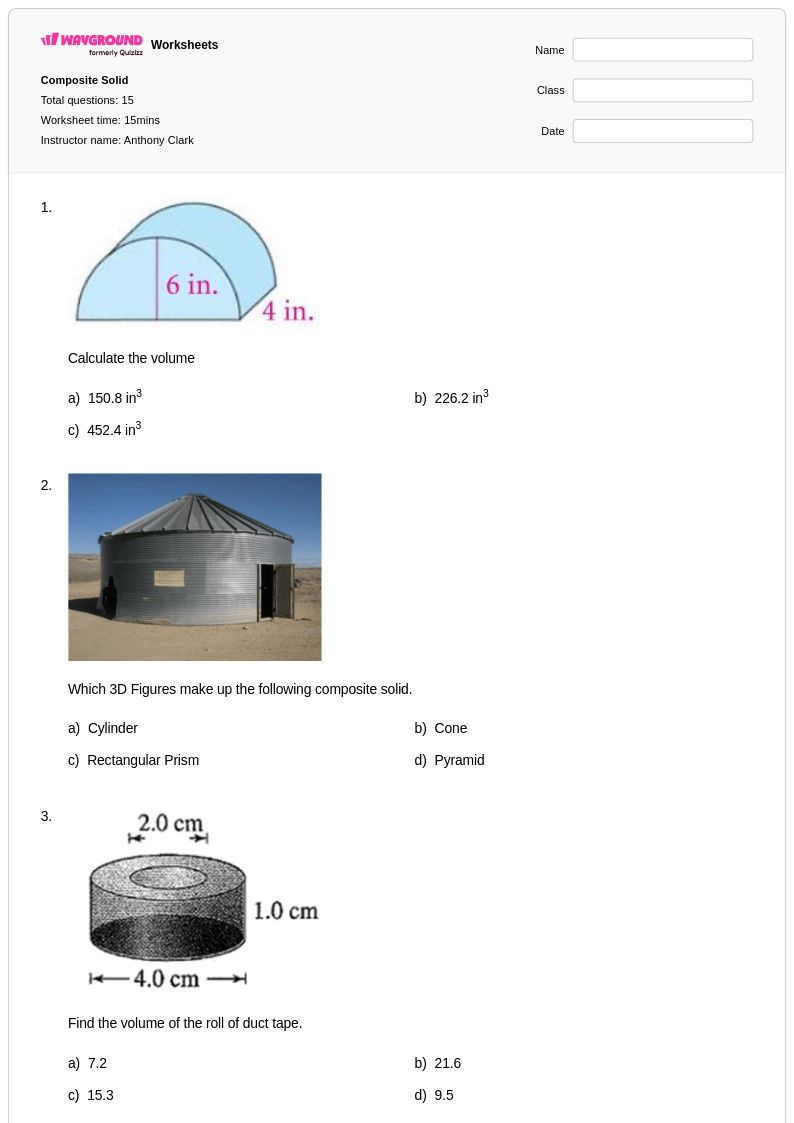
15 P
8th - Uni
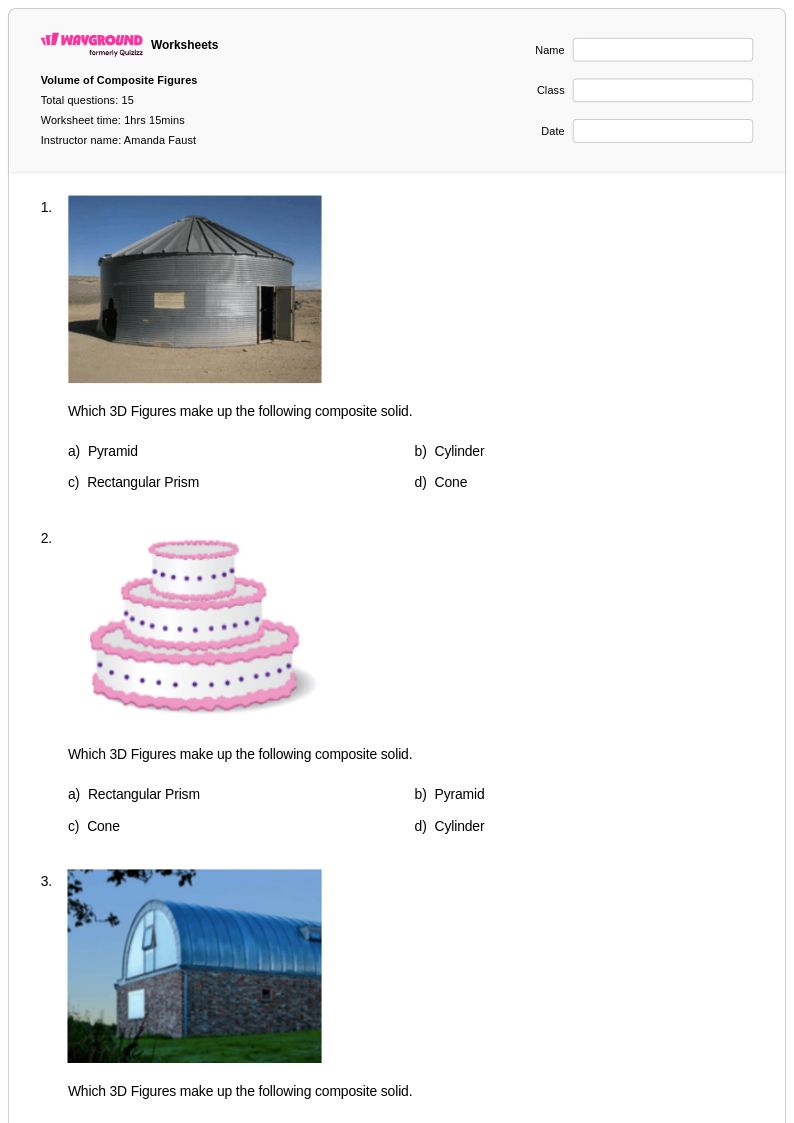
15 P
9th - 12th
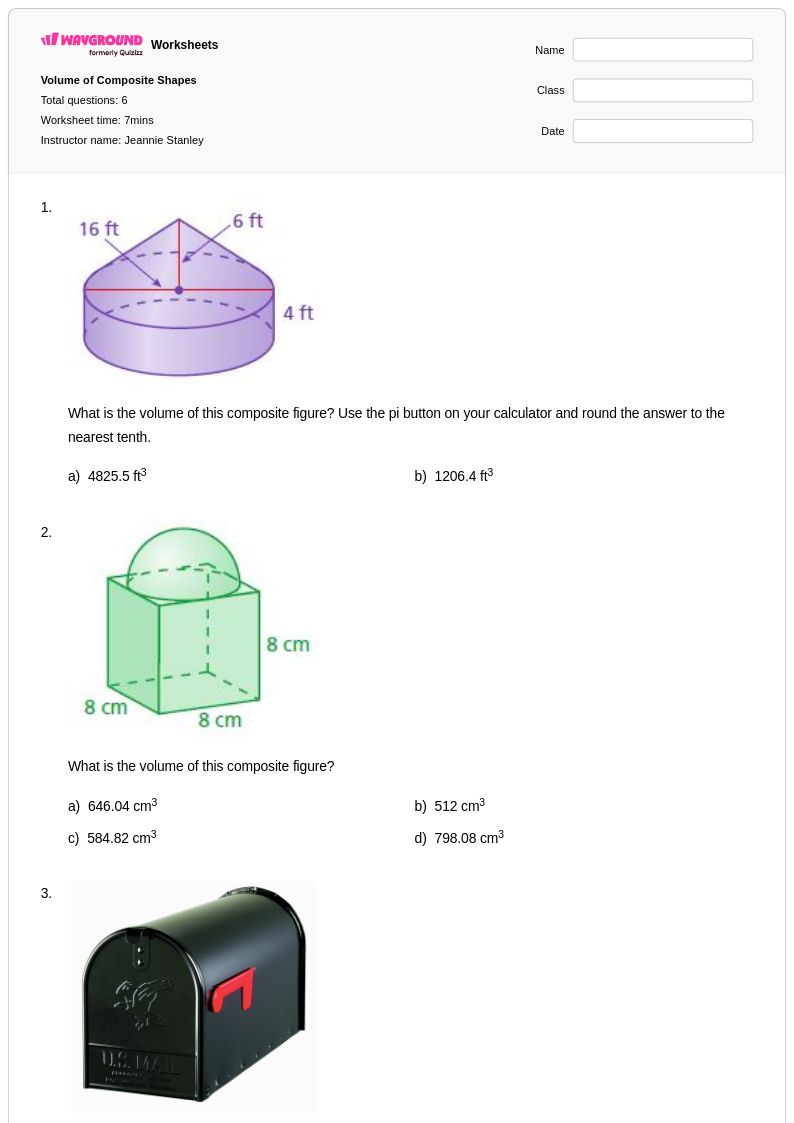
6 P
9th - 12th
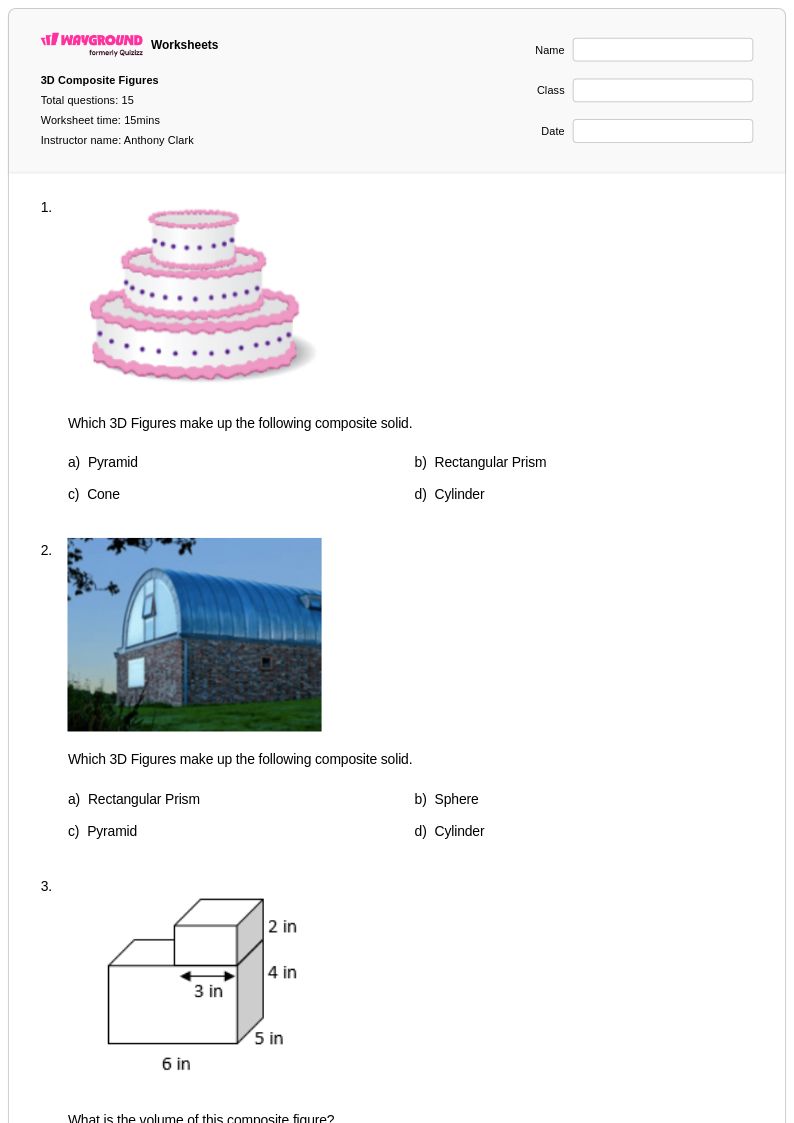
15 P
10th - Uni
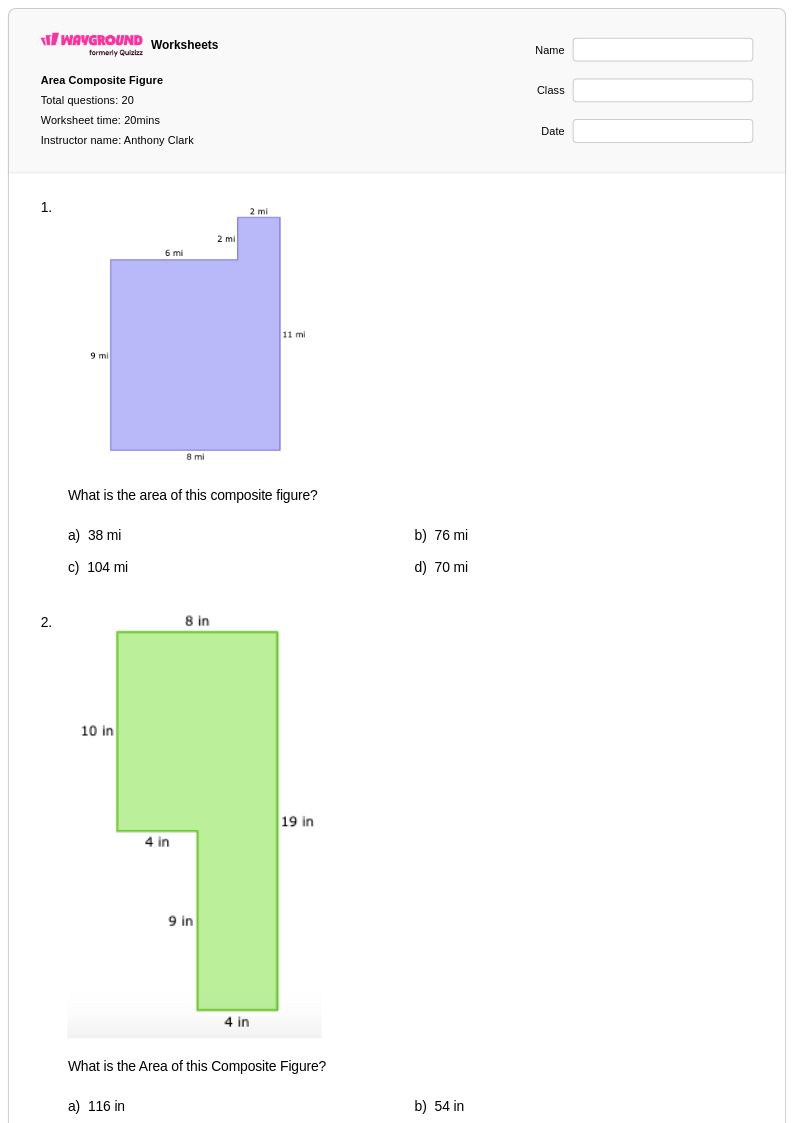
20 P
7th - Uni
20 P
7th - Uni
21 P
9th - 12th
20 P
6th - Uni
15 P
7th - Uni
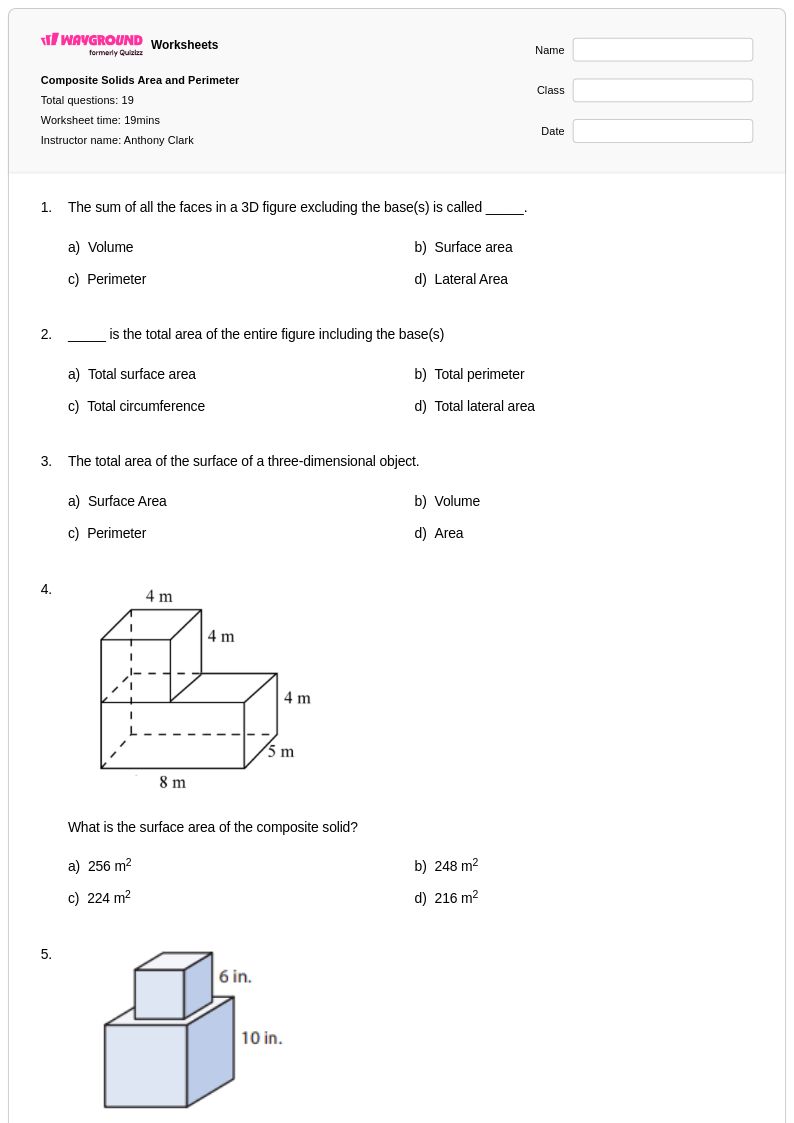
19 P
7th - Uni
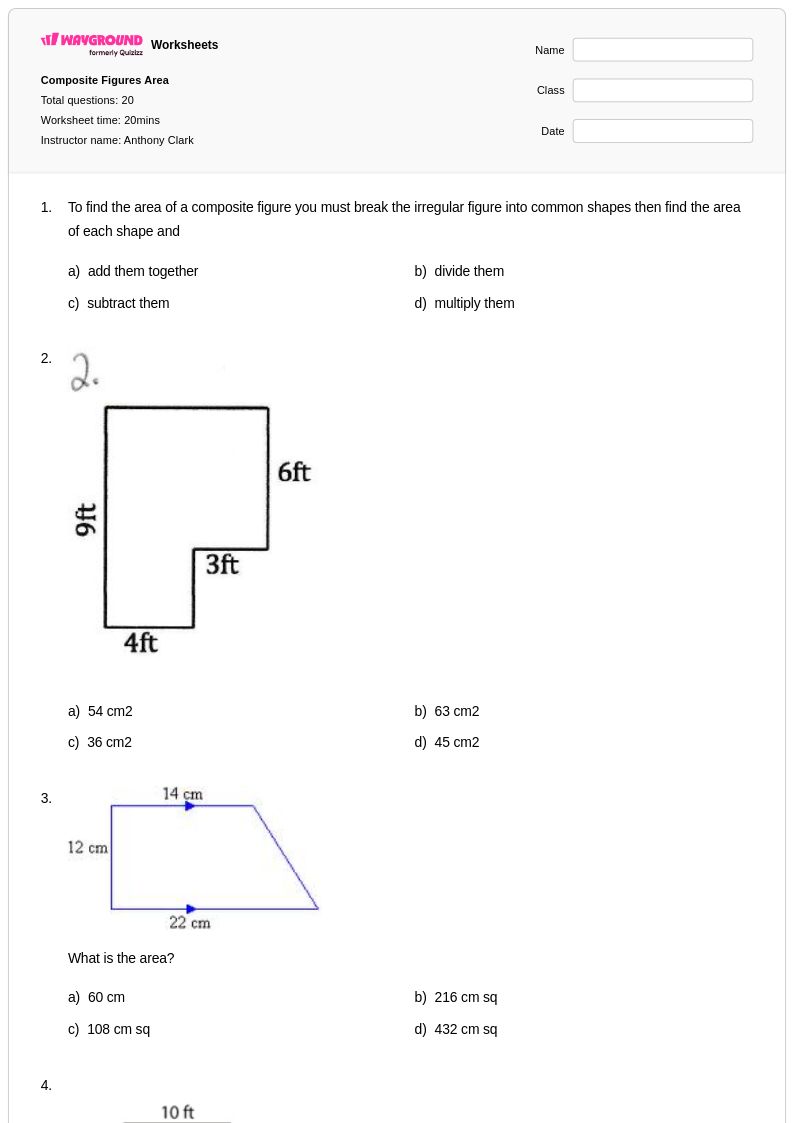
20 P
7th - Uni
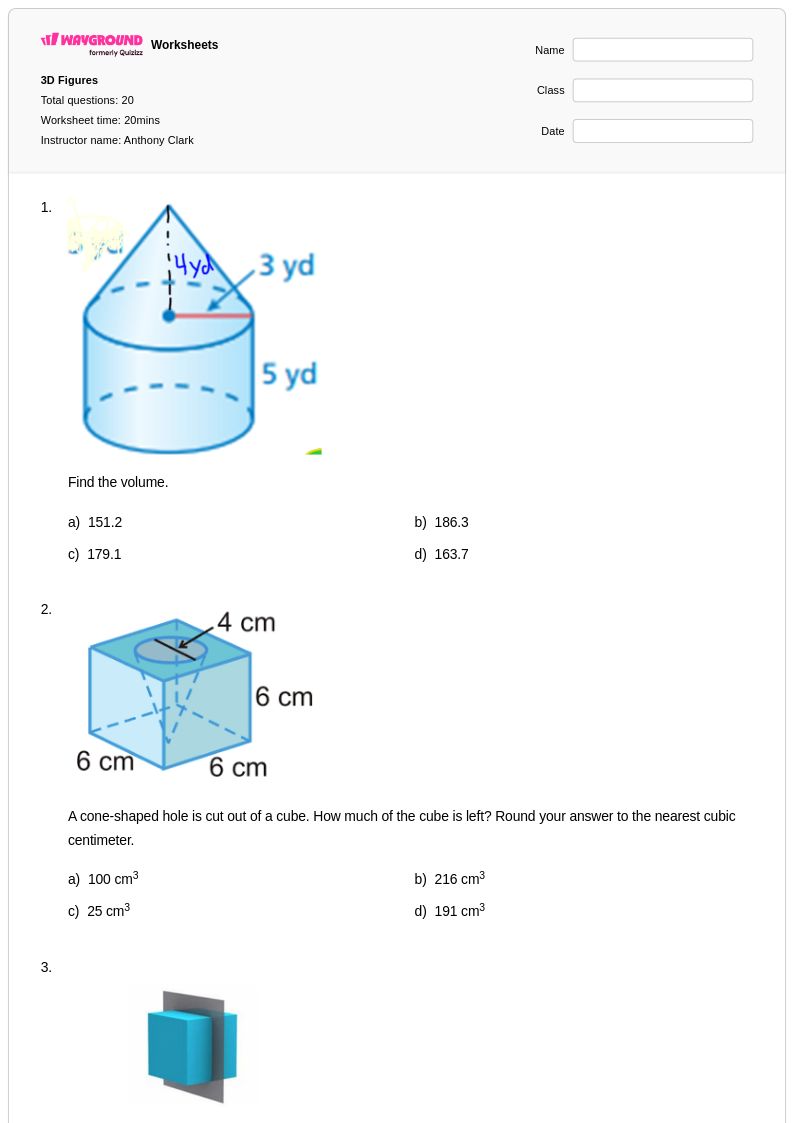
20 P
8th - Uni
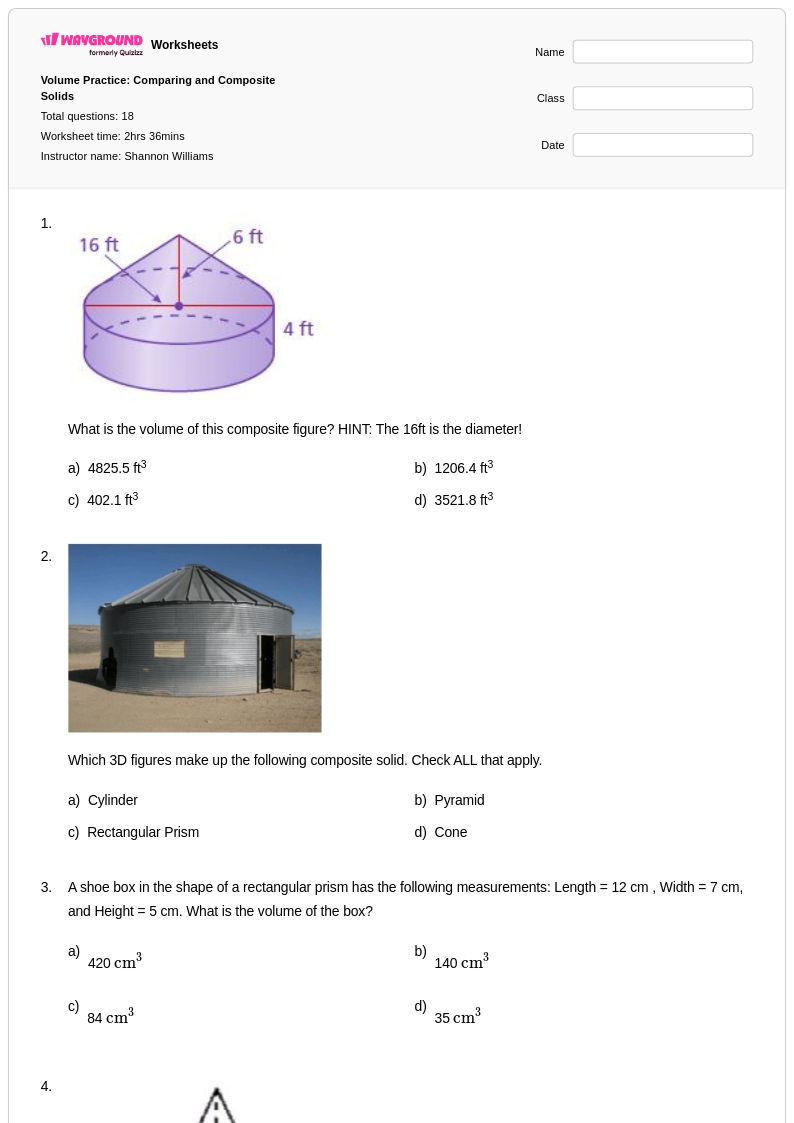
18 P
9th - 12th
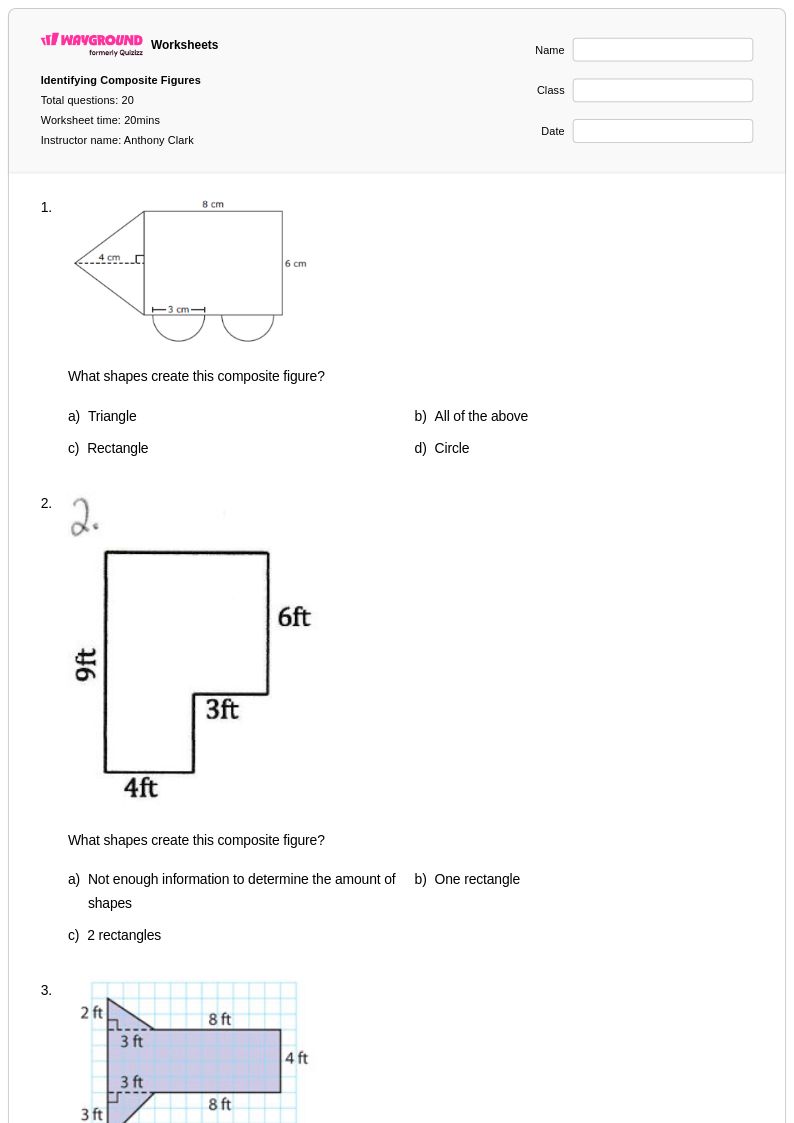
20 P
7th - Uni
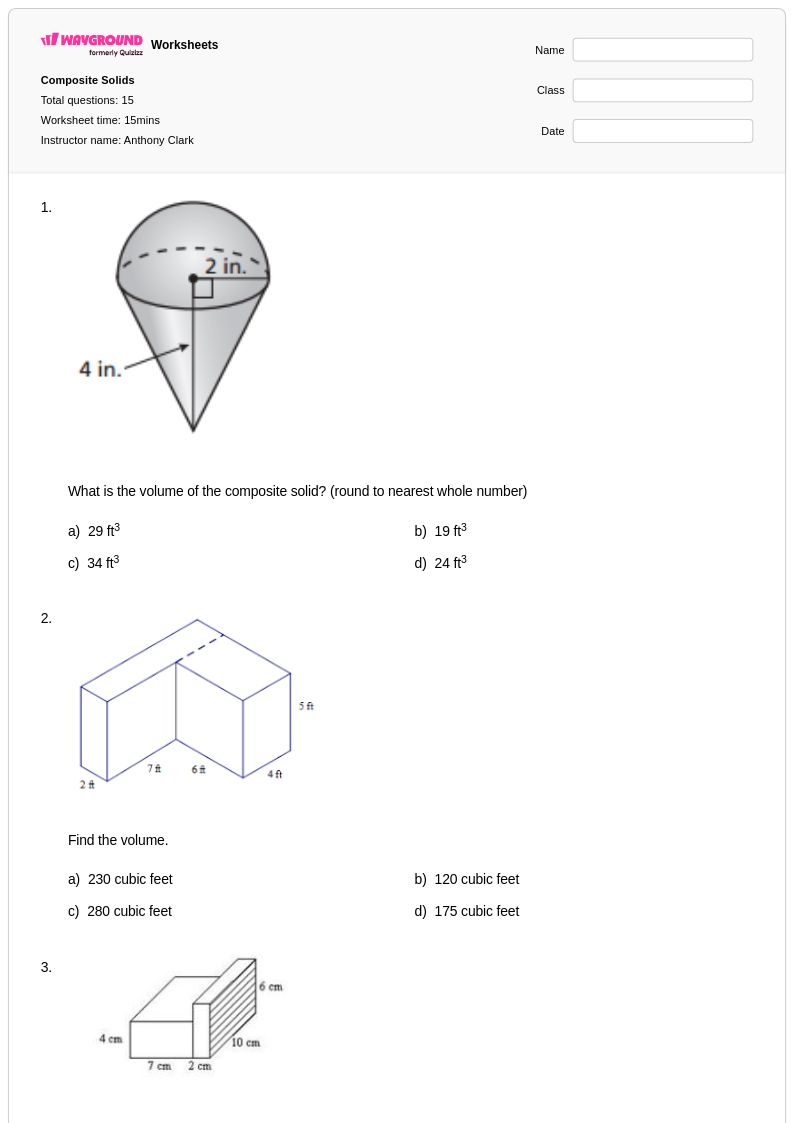
15 P
8th - Uni
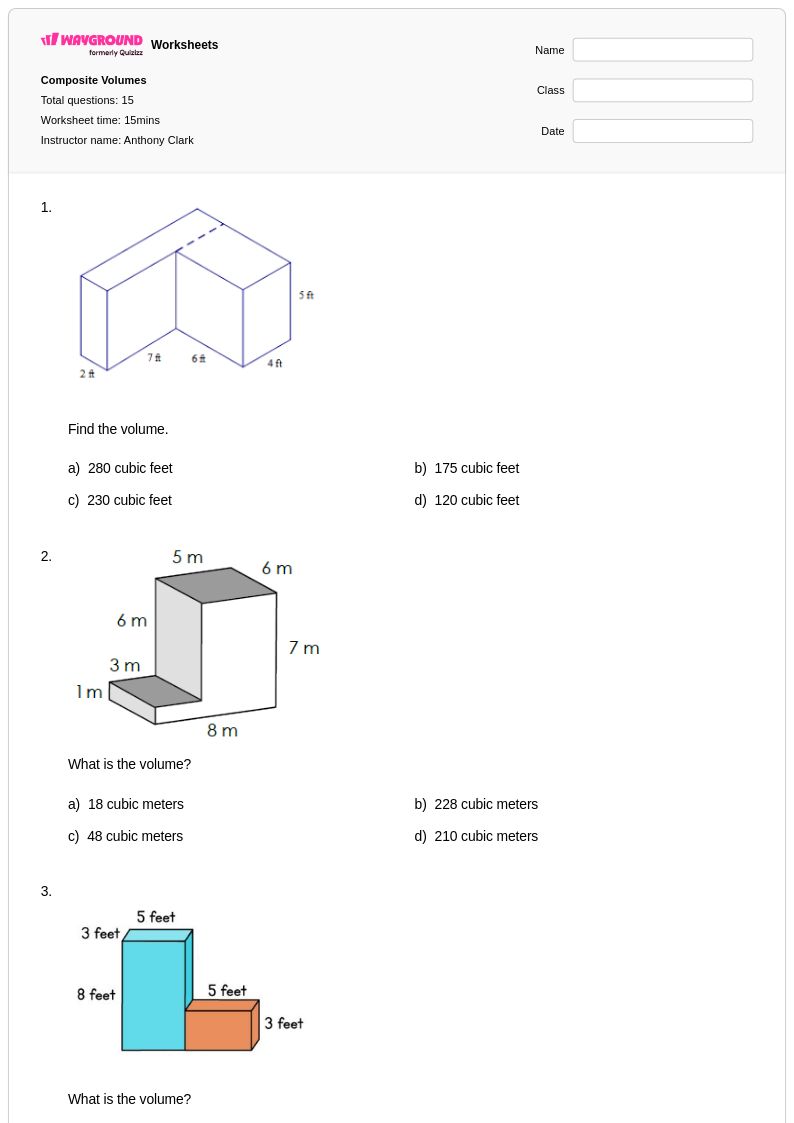
15 P
5th - Uni
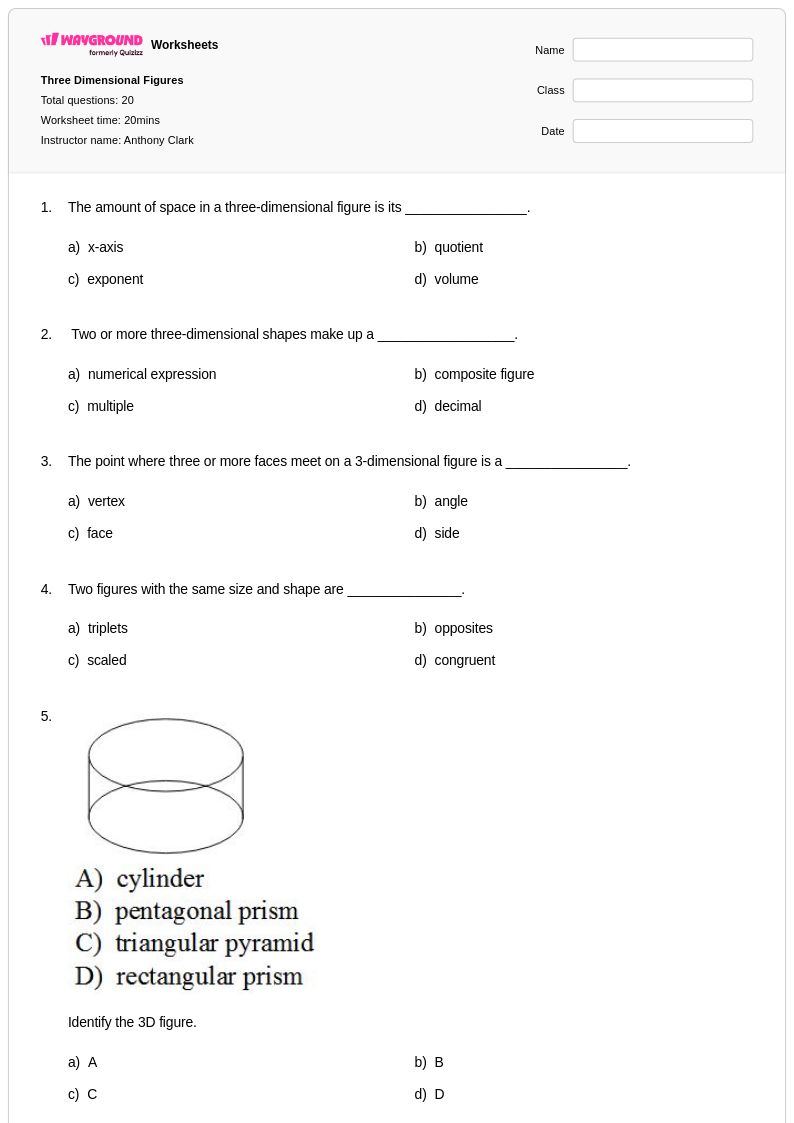
20 P
5th - Uni
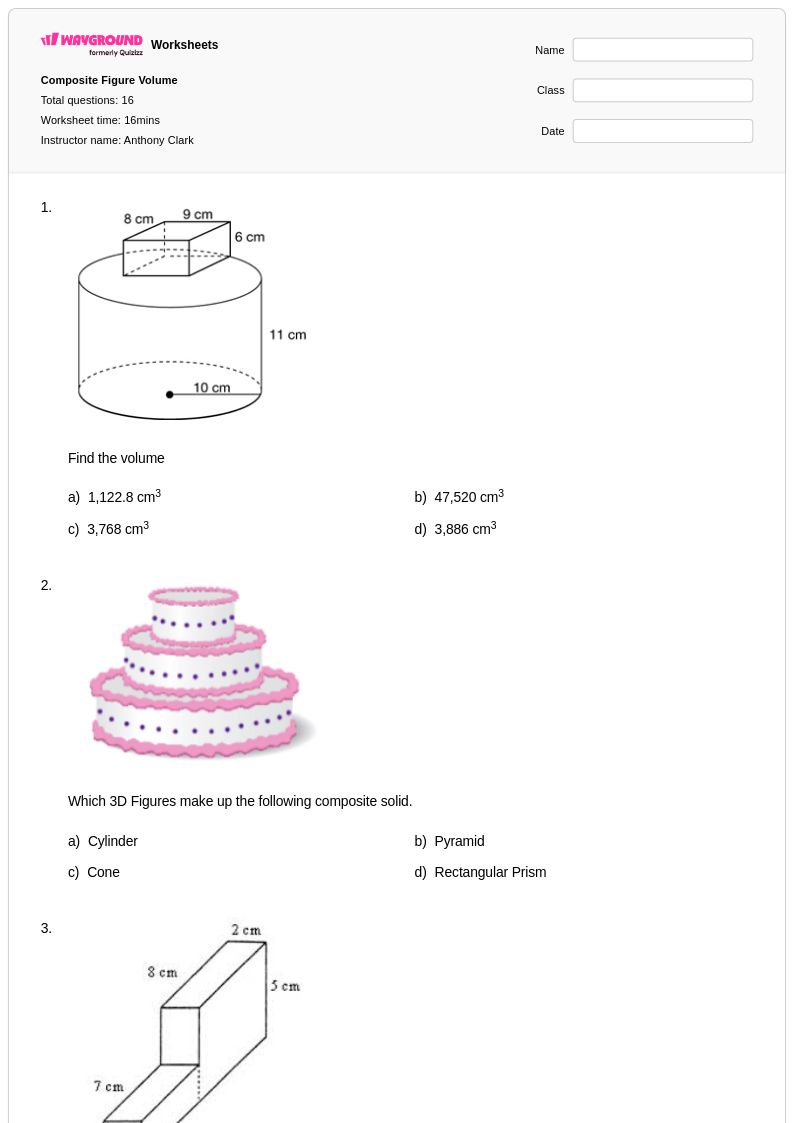
16 P
7th - Uni
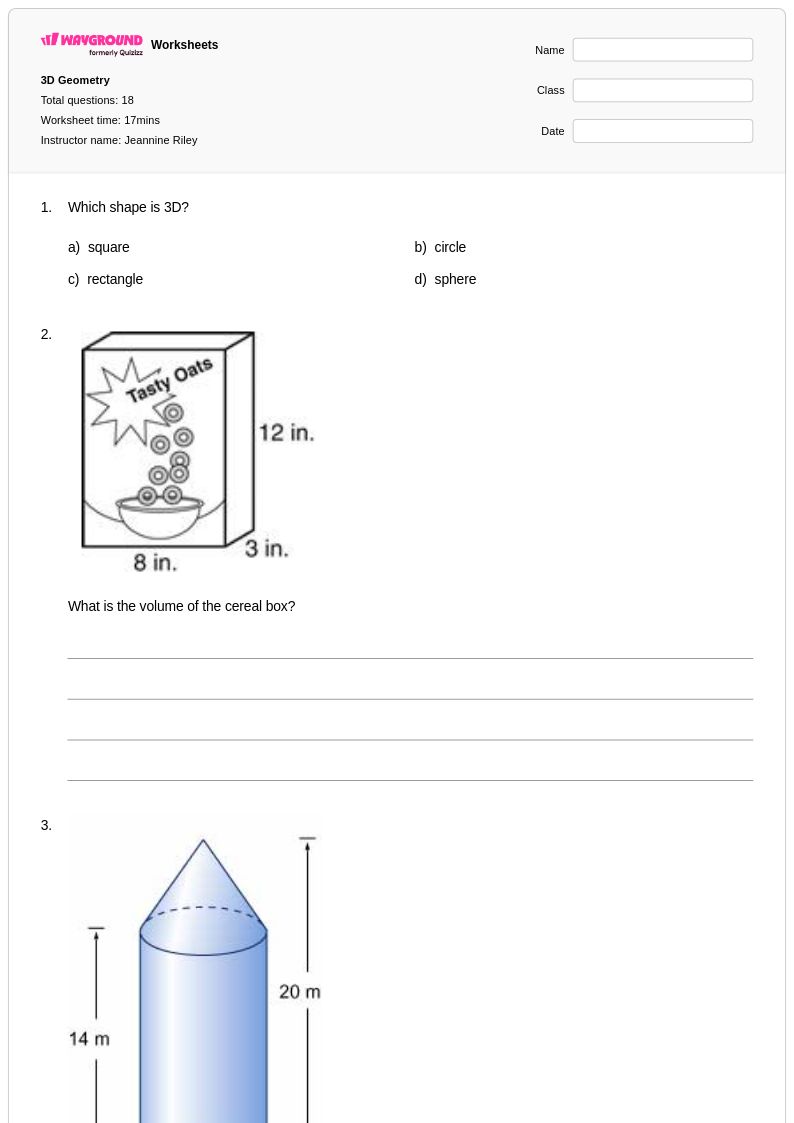
18 P
9th - 12th
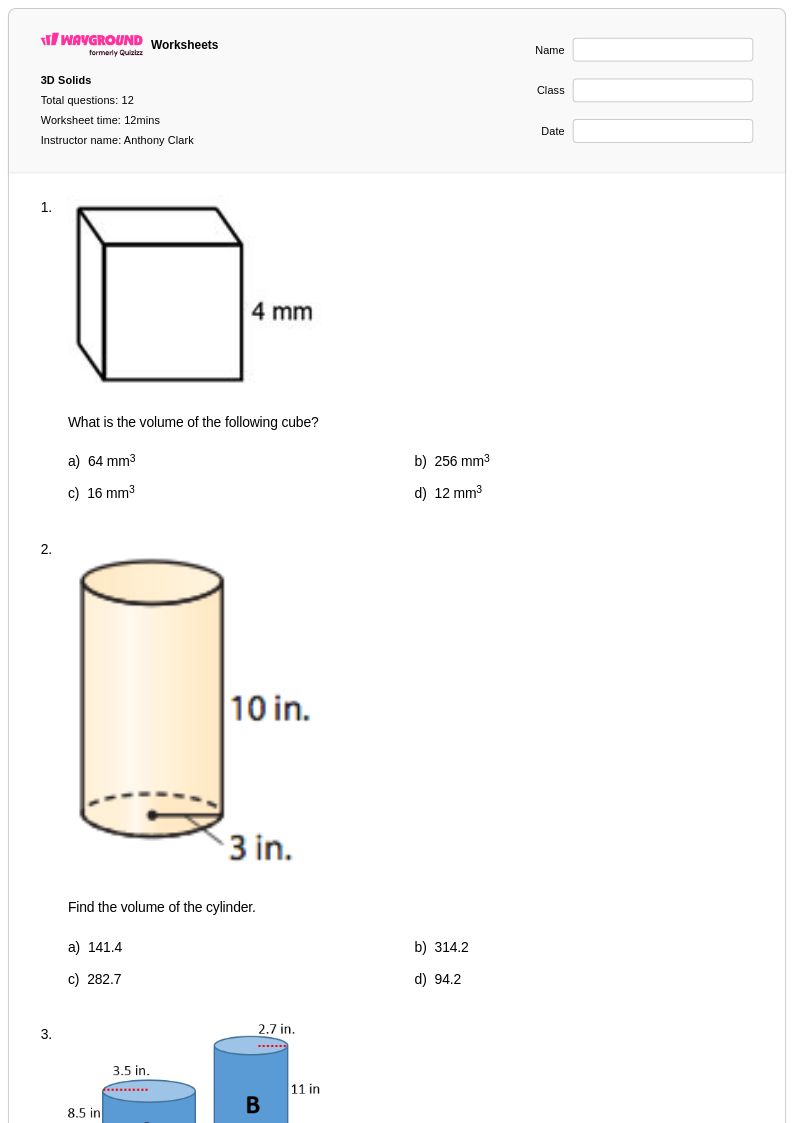
12 P
10th - Uni
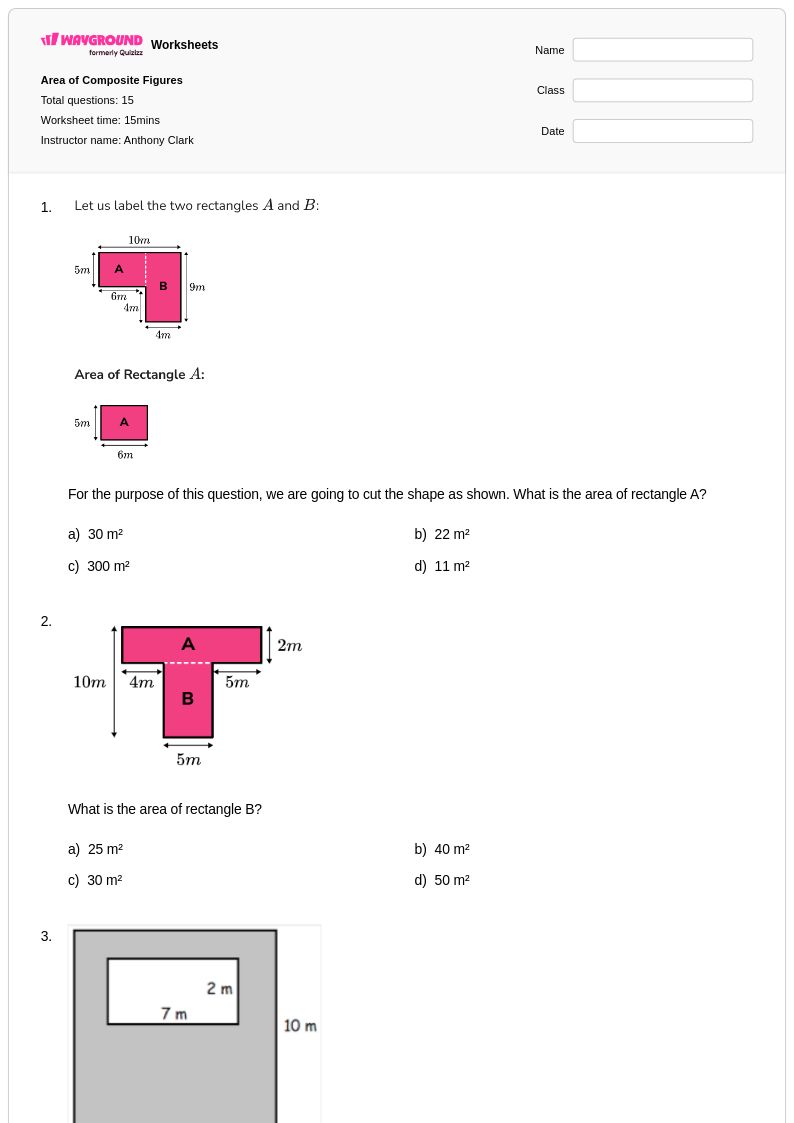
15 P
6th - Uni
Przeglądaj Composite 3d Figures arkusze ćwiczeń według ocen
Przeglądaj inne arkusze tematyczne dla grade 12
Explore printable Composite 3d Figures worksheets for Grade 12
Composite 3D figures worksheets for Grade 12 students available through Wayground provide comprehensive practice with complex three-dimensional shapes formed by combining basic geometric solids such as prisms, pyramids, cylinders, cones, and spheres. These advanced geometry worksheets strengthen critical mathematical skills including surface area calculations, volume computations, and spatial reasoning abilities essential for success in higher-level mathematics and STEM fields. Students work through carefully structured practice problems that challenge them to decompose composite figures into their component parts, apply appropriate formulas, and synthesize their understanding of individual solid properties. Each worksheet collection includes detailed answer keys and is available as free printable PDF resources, enabling students to develop proficiency with these complex geometric concepts through guided practice and self-assessment.
Wayground's extensive library supports mathematics educators with millions of teacher-created worksheet resources specifically designed for Grade 12 composite 3D figures instruction. The platform's robust search and filtering capabilities allow teachers to quickly locate materials aligned with state and national geometry standards, while built-in differentiation tools enable customization based on individual student needs and learning objectives. These versatile worksheet collections are available in both printable PDF format and interactive digital versions, providing flexibility for classroom instruction, homework assignments, remediation support, and enrichment activities. Teachers can efficiently plan comprehensive geometry units, target specific skill gaps, and provide varied practice opportunities that help students master the complex calculations and spatial visualization skills required for analyzing composite three-dimensional figures.
FAQs
How do I teach advanced composite 3D figures to Grade 12 students?
What exercises build mastery of composite 3D figures in Grade 12?
What are common errors in advanced composite-solid problems?
How can teachers use these Grade 12 composite 3D figures worksheets?
How do composite 3D figures connect to Common Core high school geometry?
How can I differentiate Grade 12 composite 3D figure worksheets?
What should Grade 12 students know about composite 3D figures?