
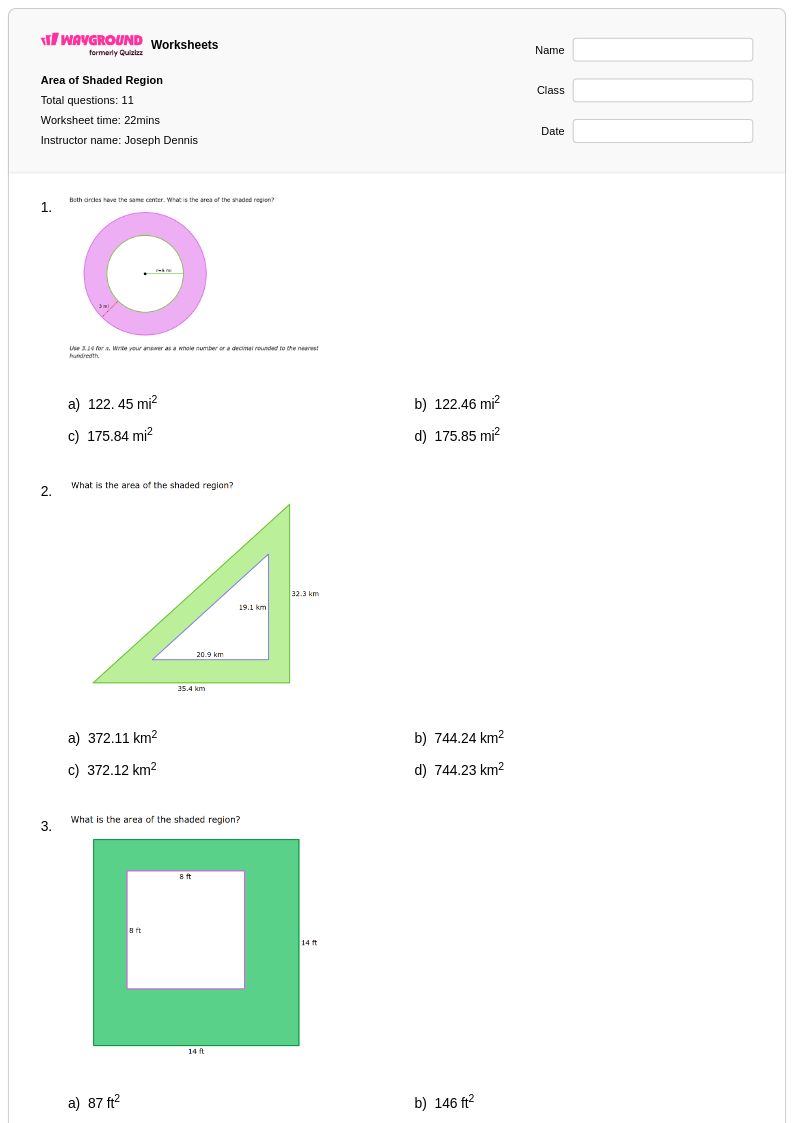
11 Q
7th
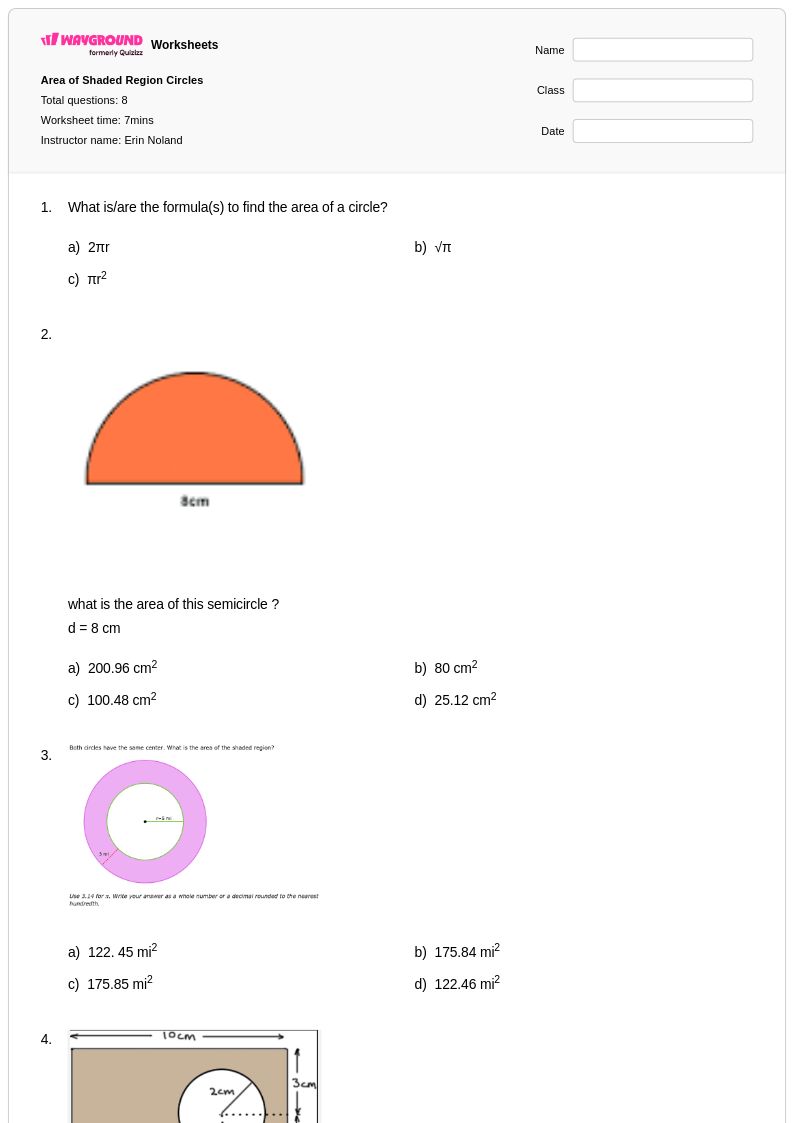
8 Q
7th
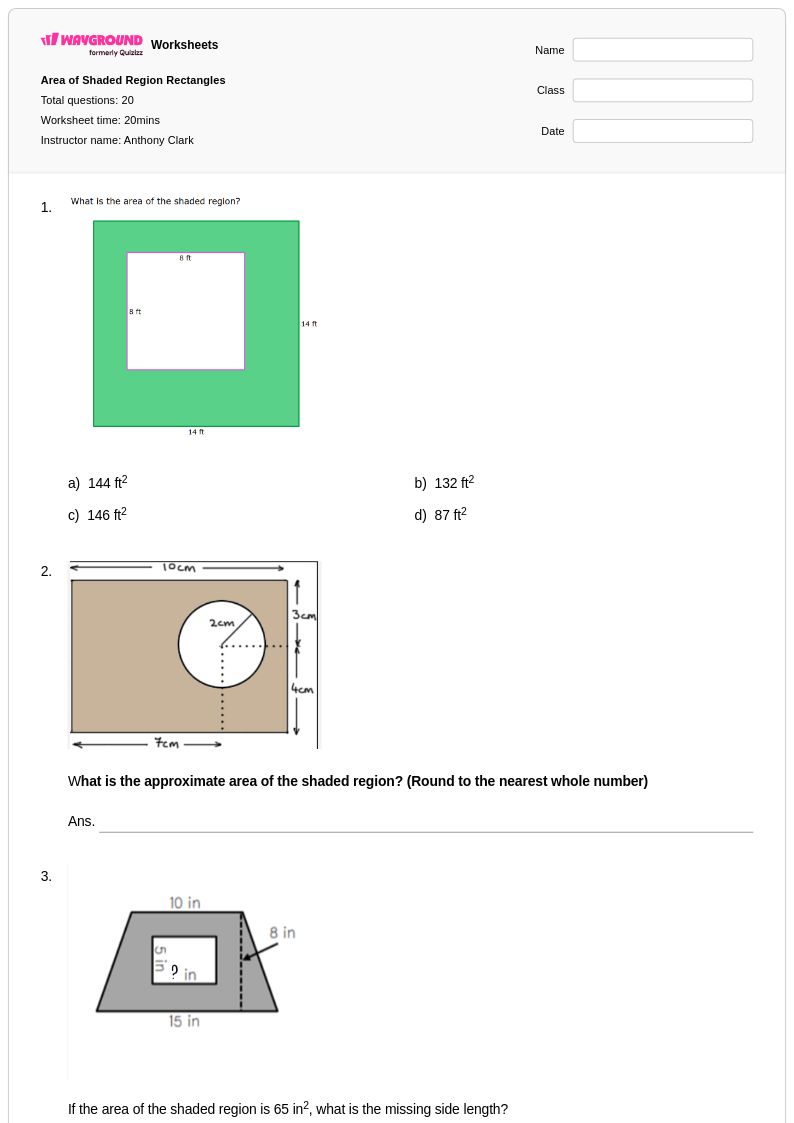
20 Q
7th - Uni
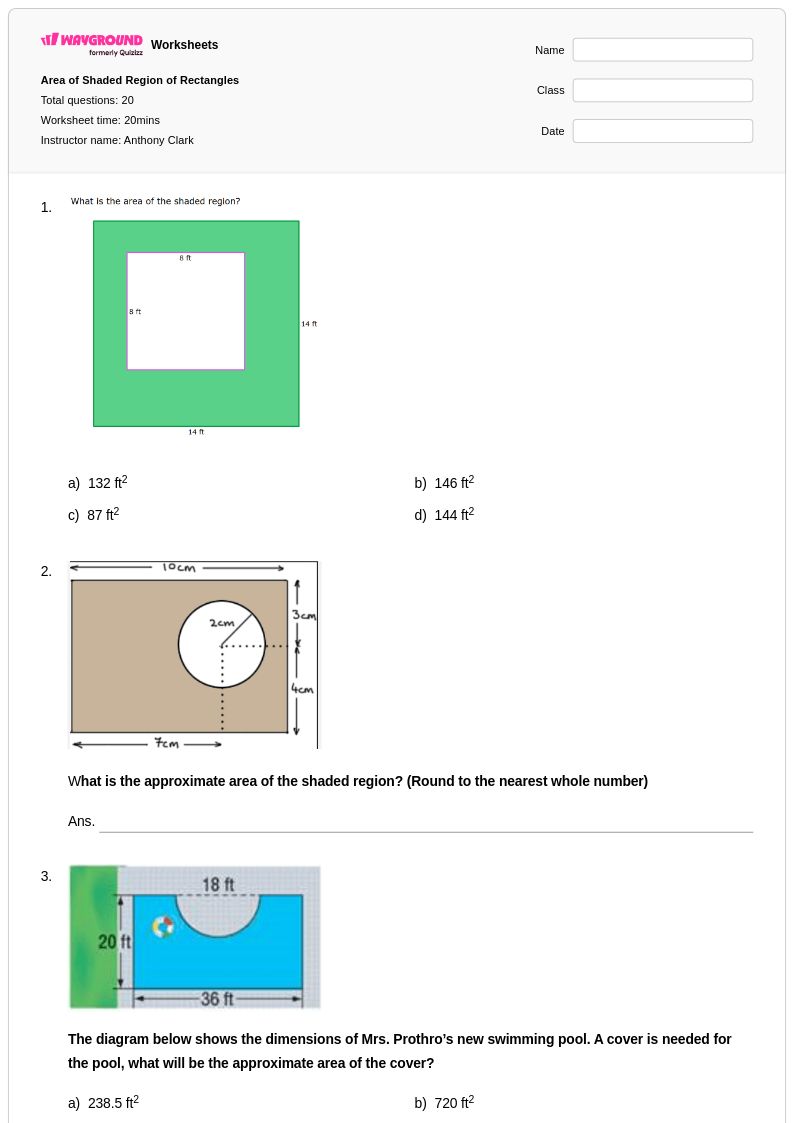
20 Q
7th - Uni
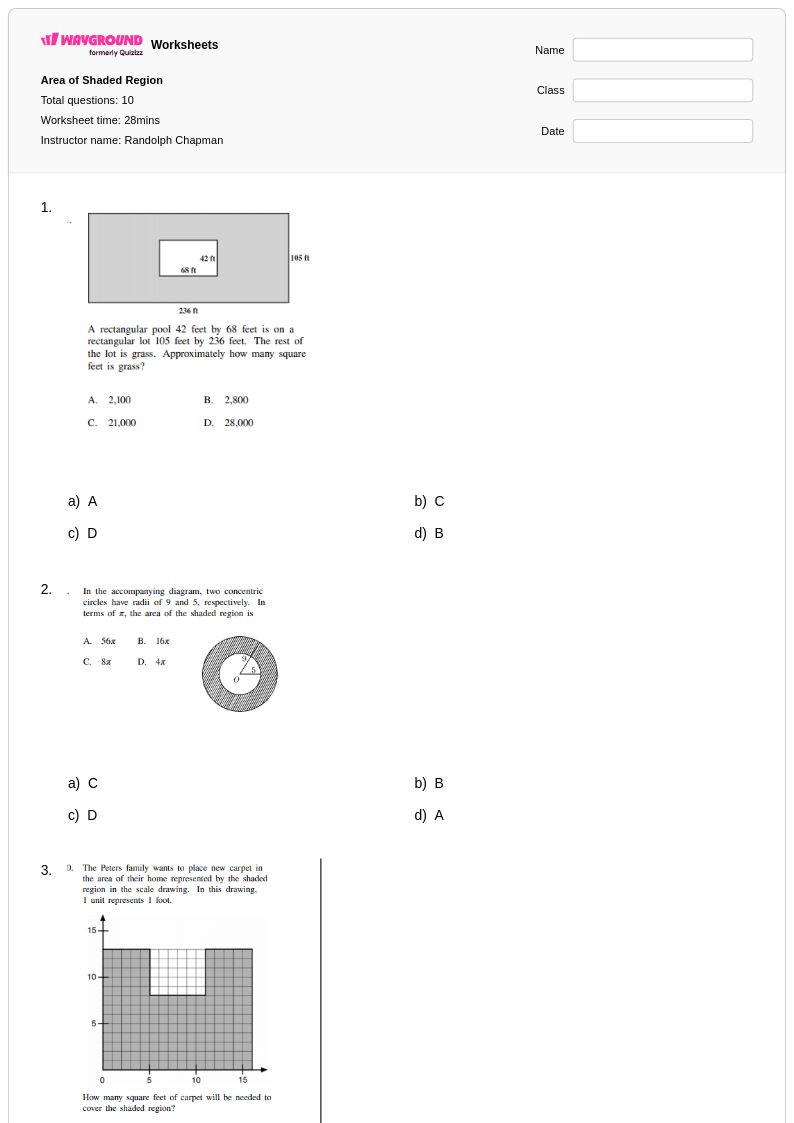
10 Q
7th
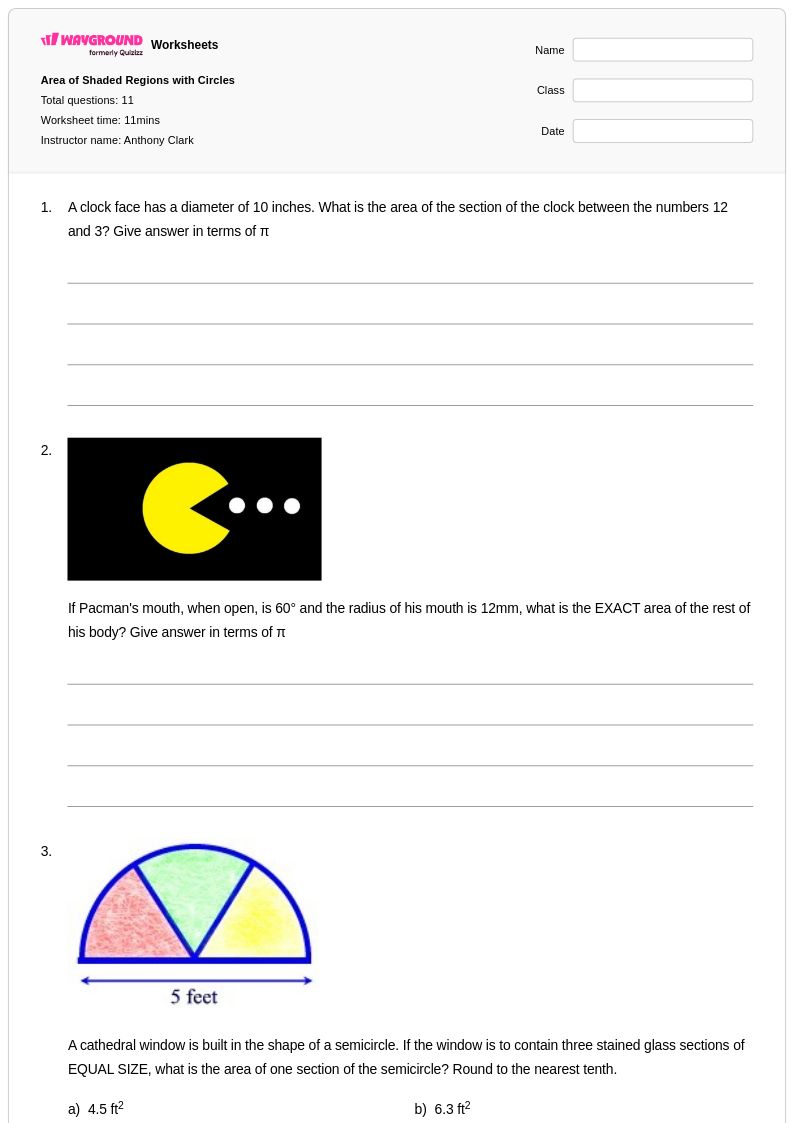
11 Q
7th - Uni
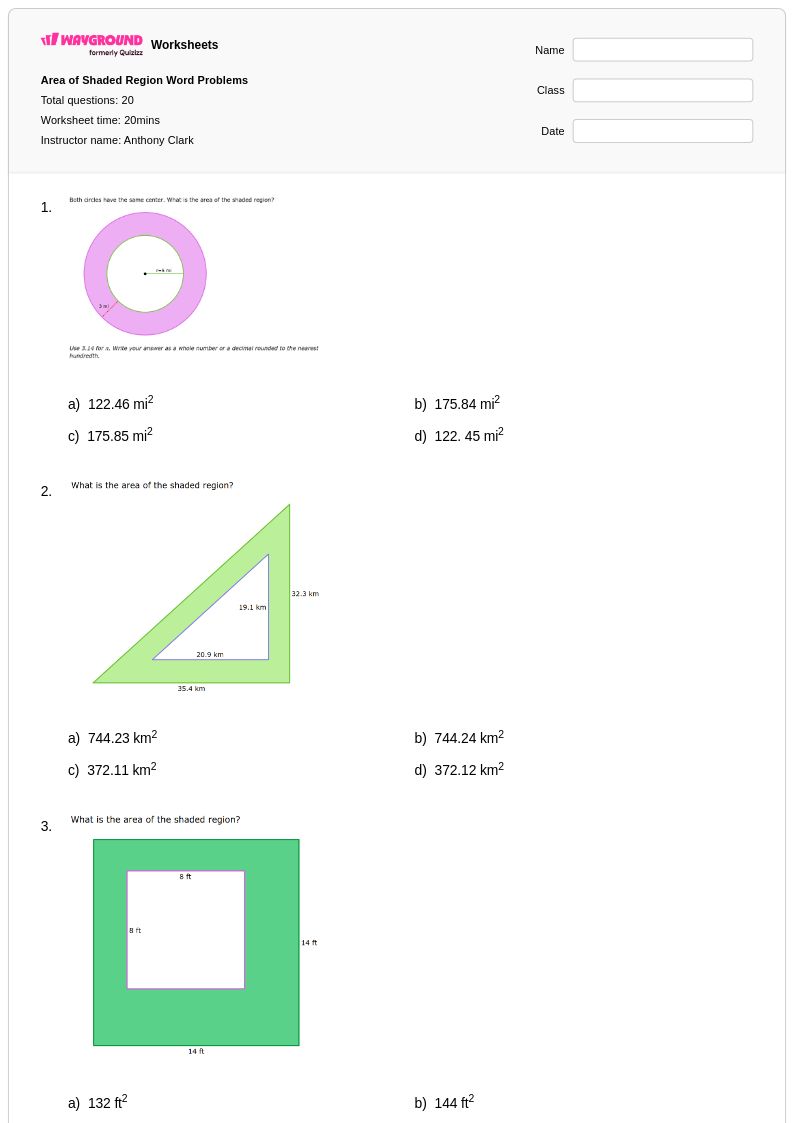
20 Q
7th - Uni
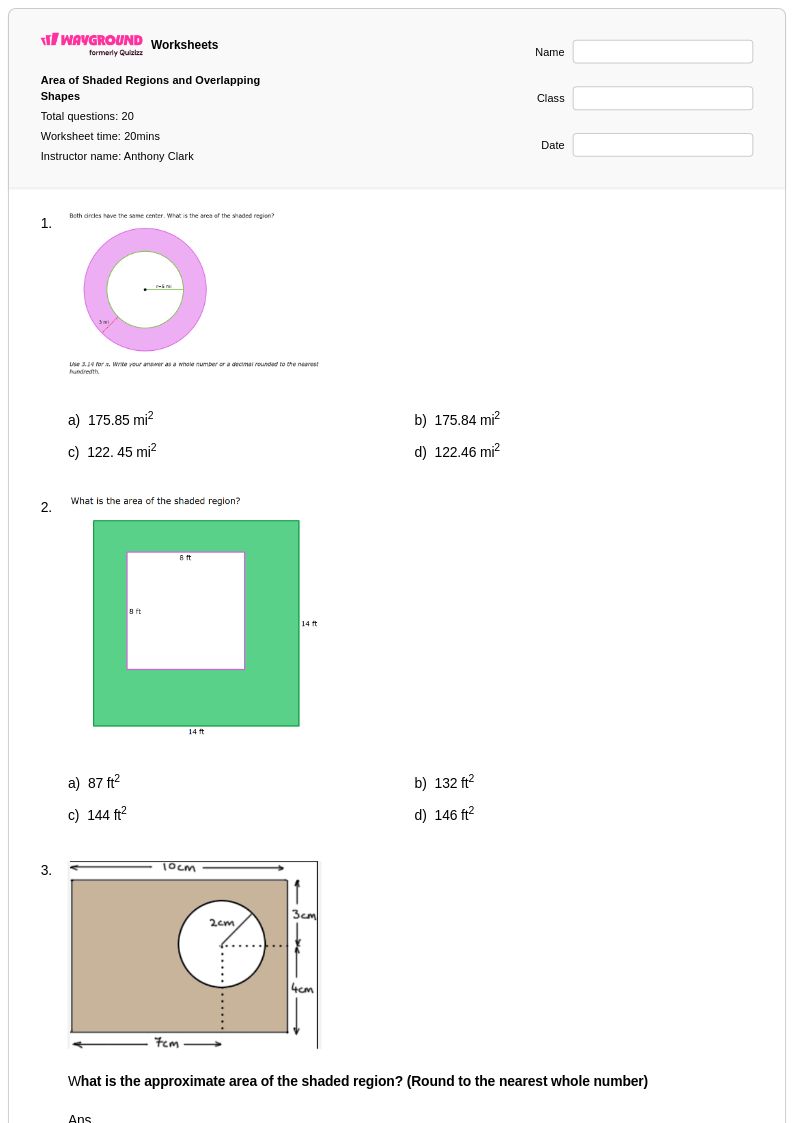
20 Q
7th - Uni
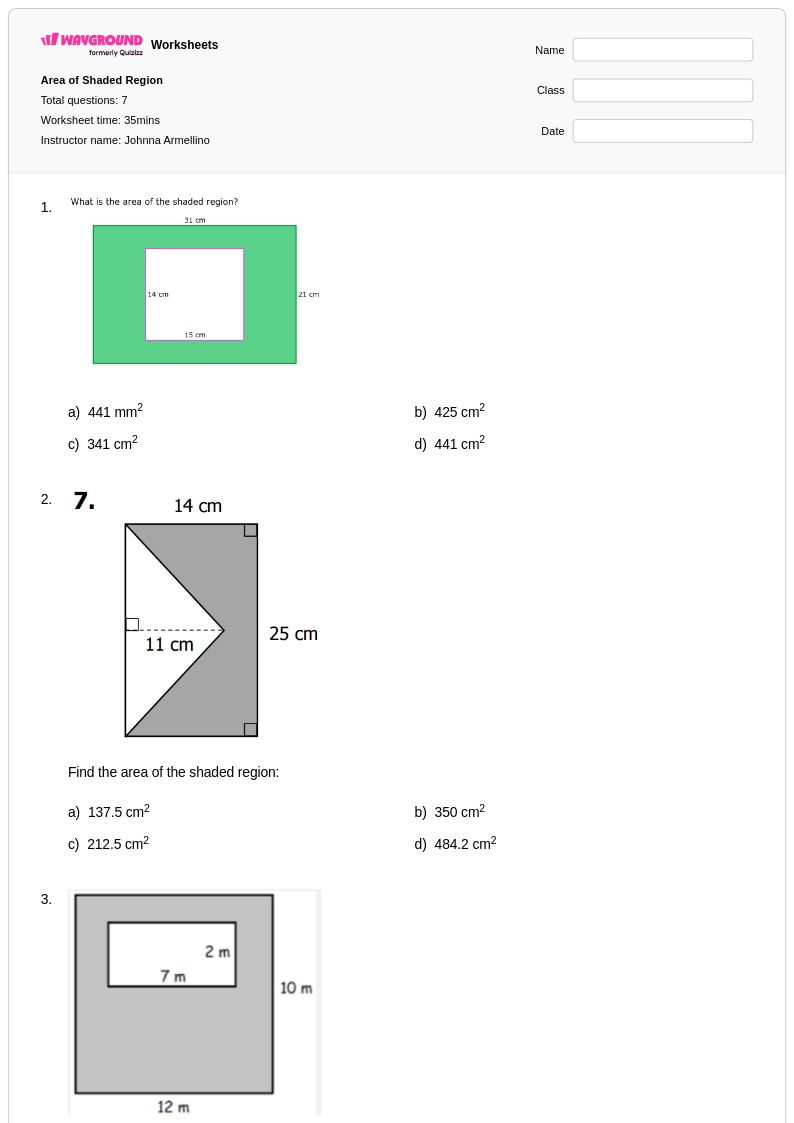
7 Q
7th
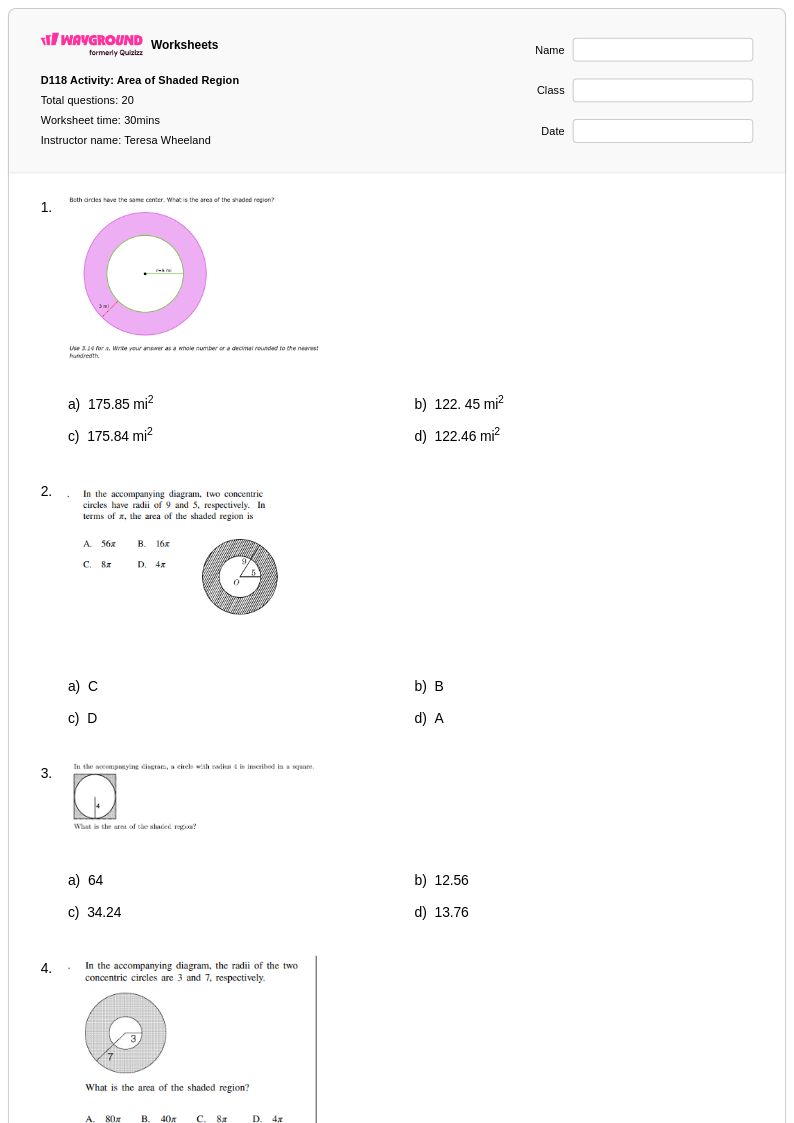
20 Q
7th
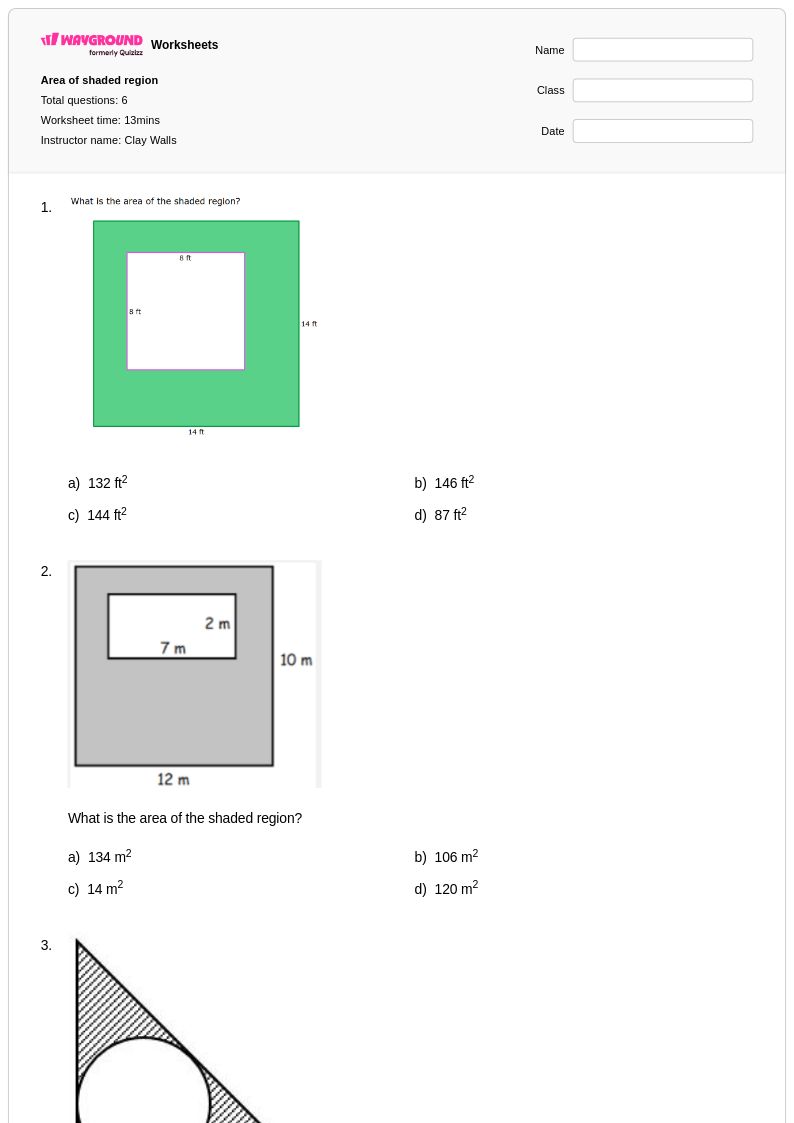
6 Q
6th - 8th
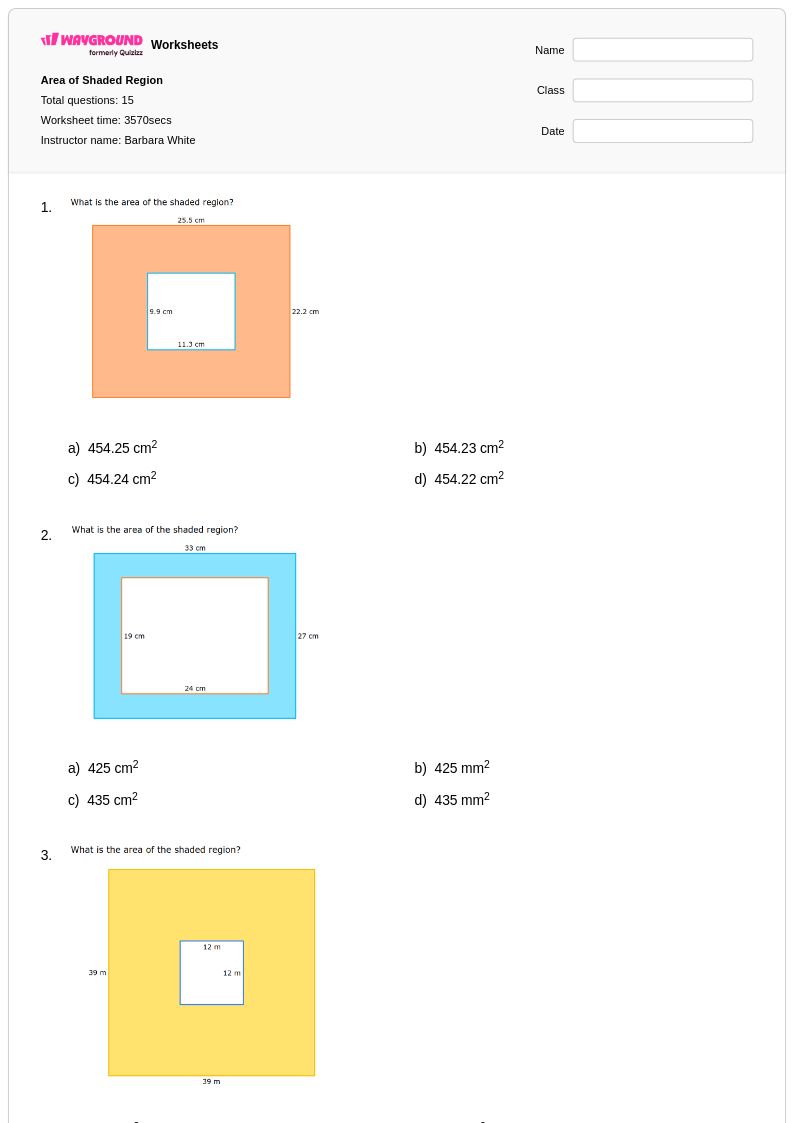
15 Q
6th - 7th
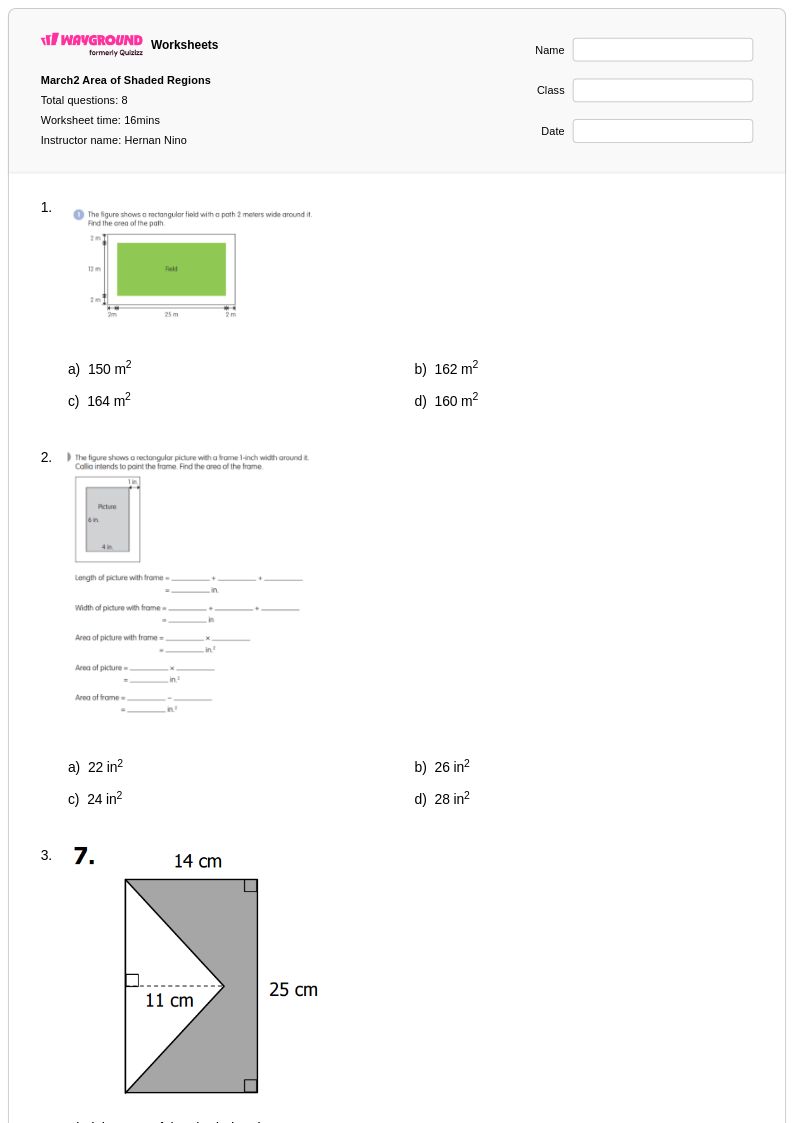
8 Q
7th
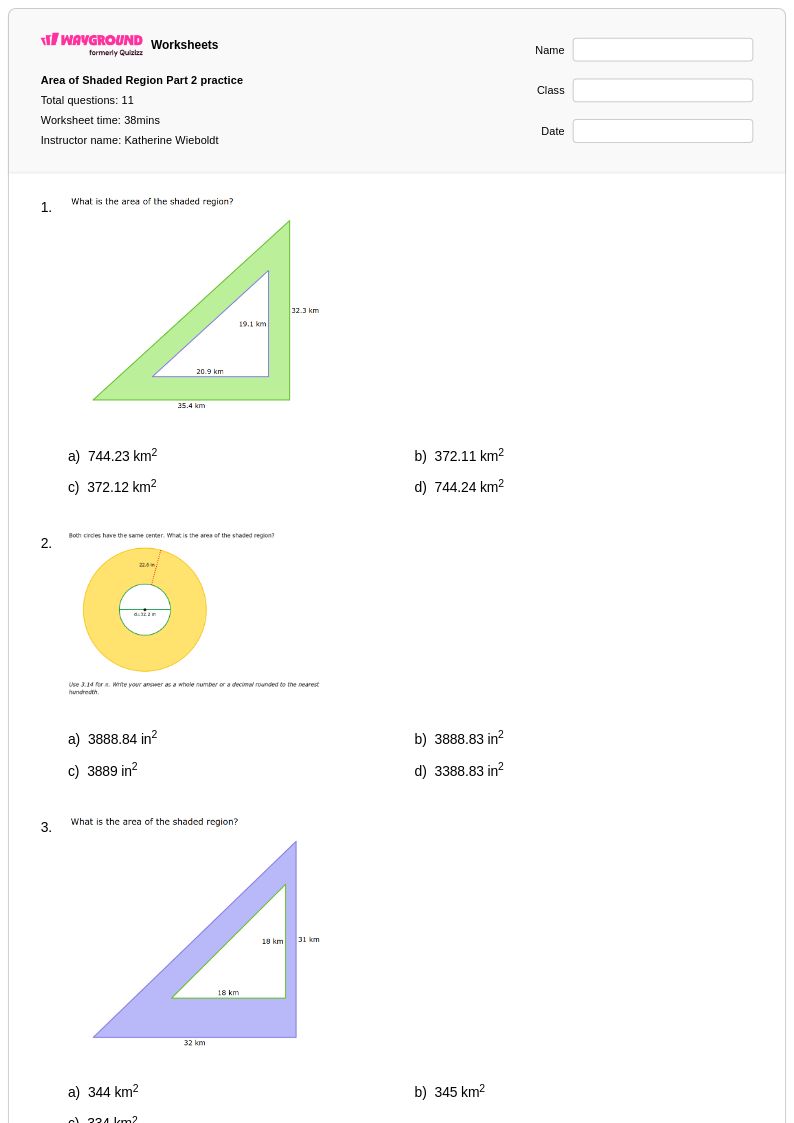
11 Q
7th
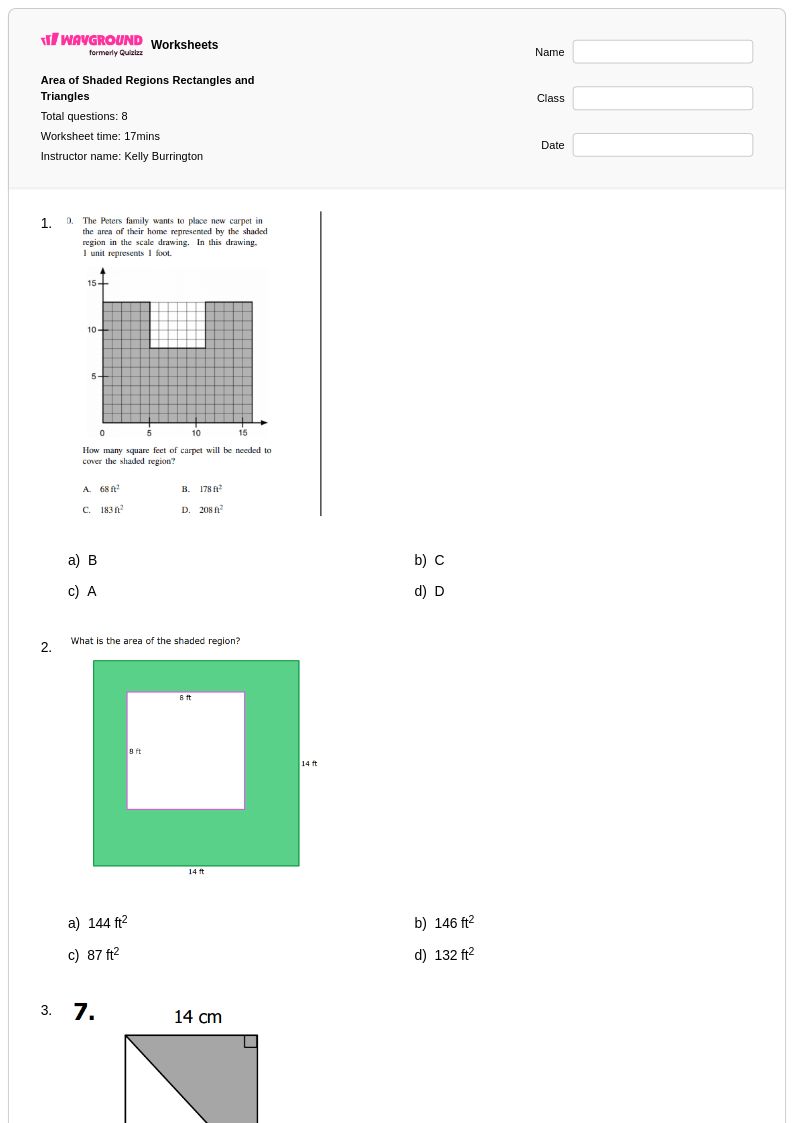
8 Q
7th
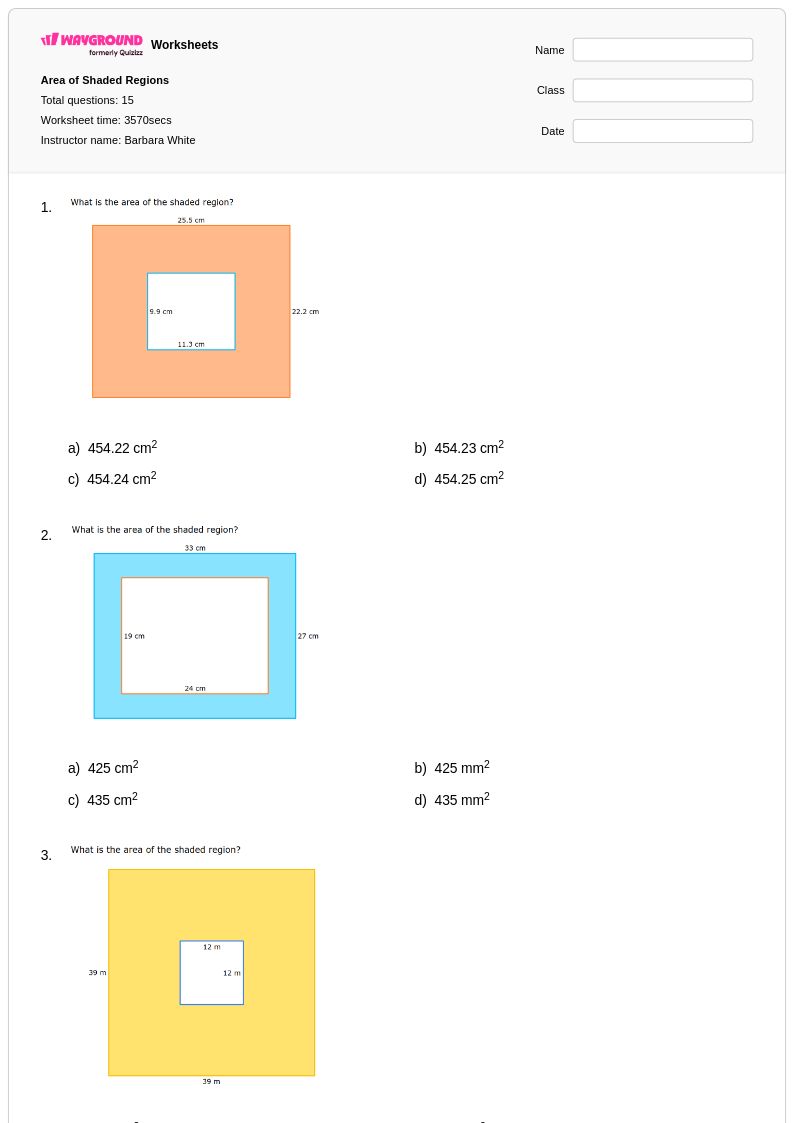
15 Q
6th - 7th
8 Q
7th
16 Q
6th - 8th
25 Q
7th
8 Q
7th
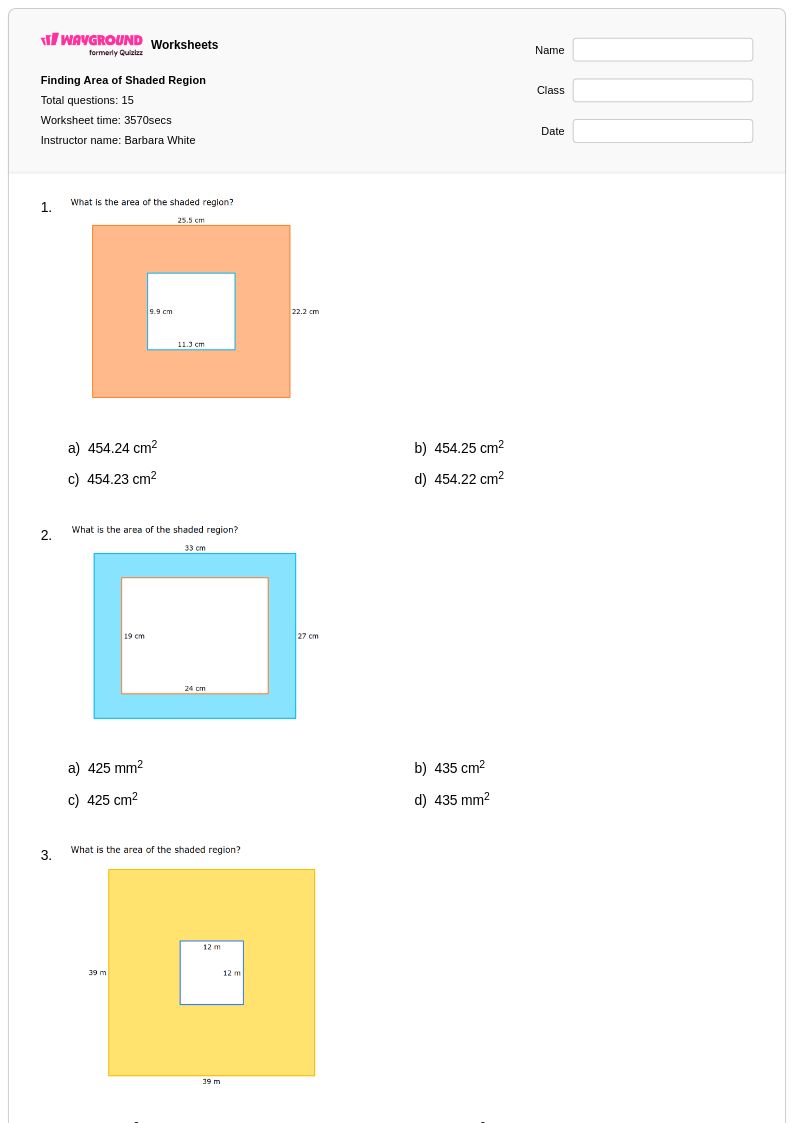
15 Q
6th - 7th
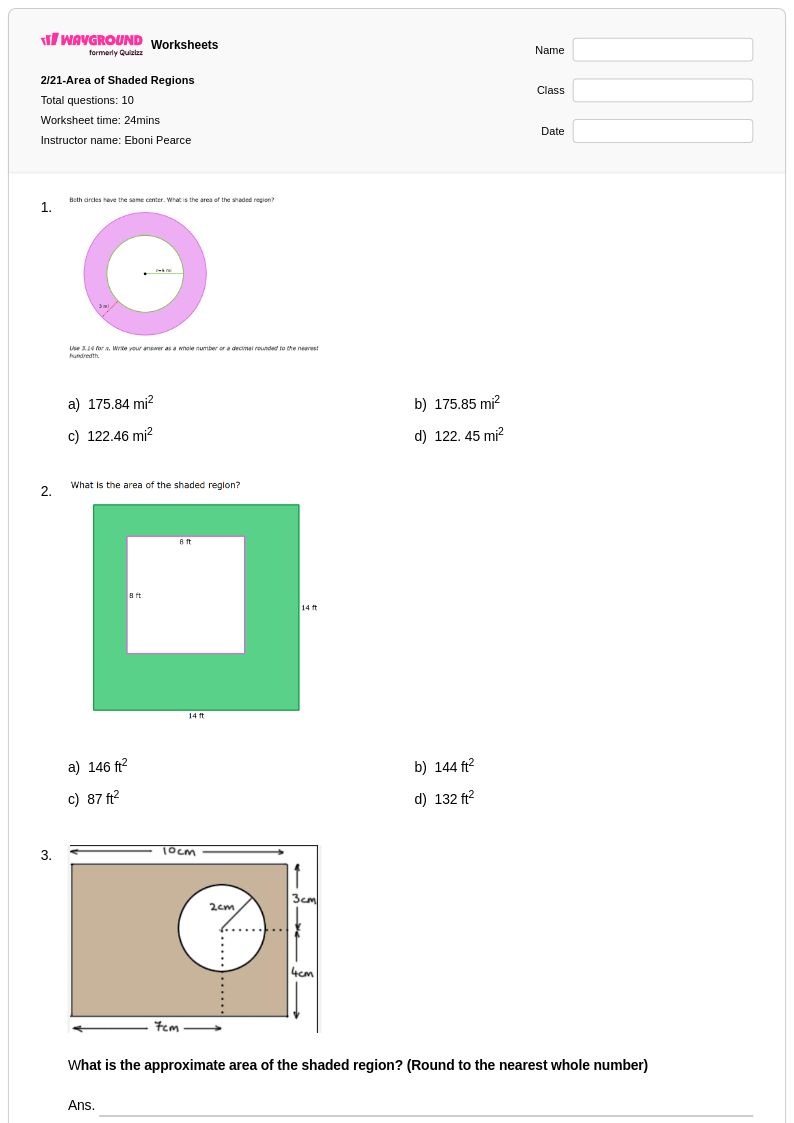
10 Q
7th
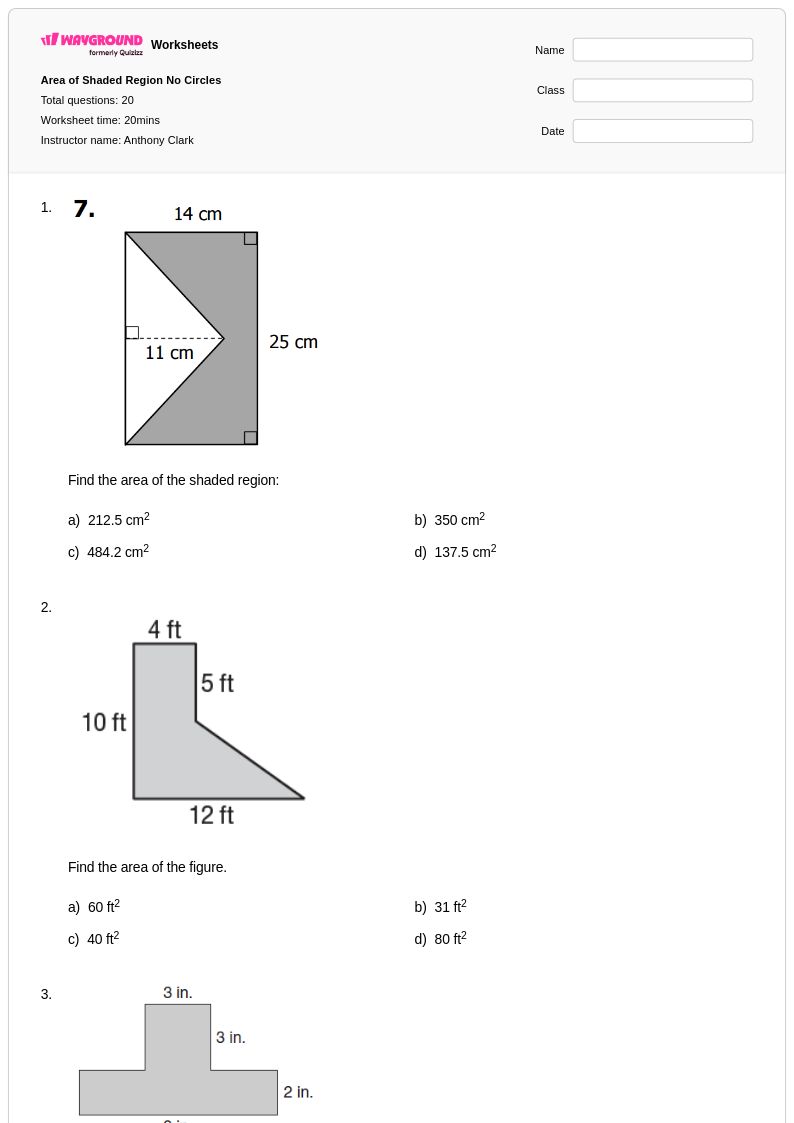
20 Q
7th - Uni
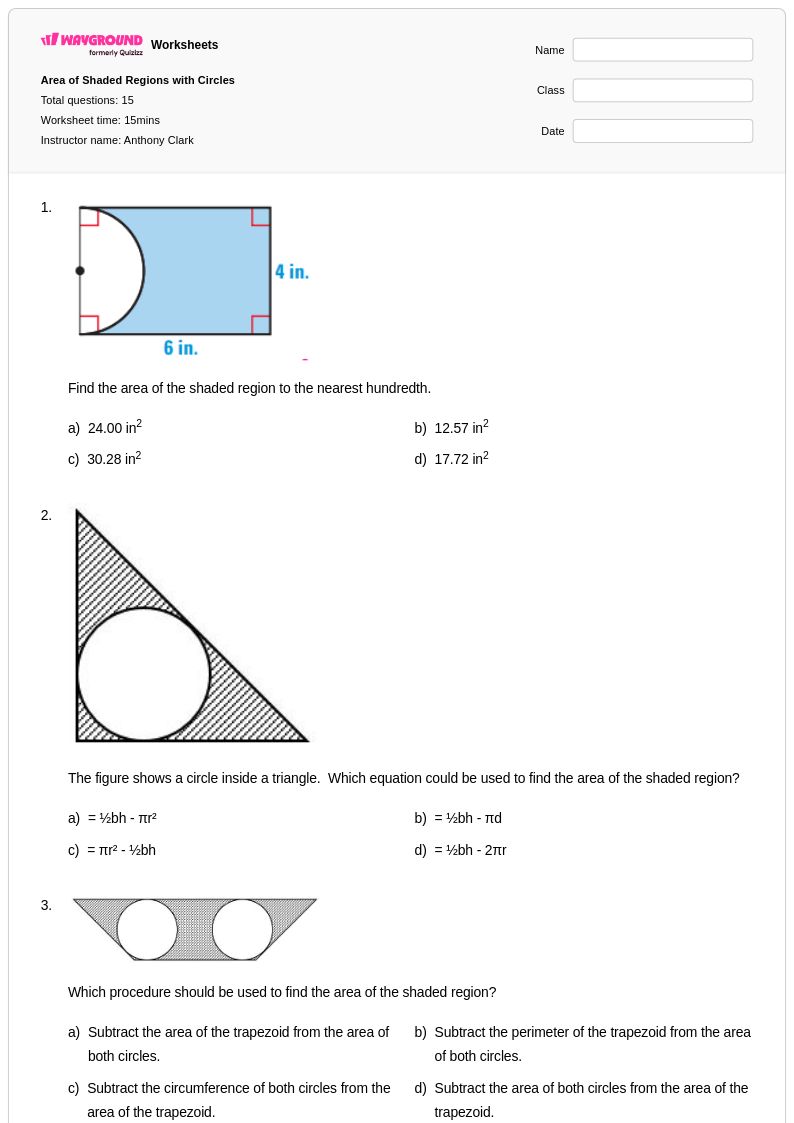
15 Q
7th - Uni
Explore Area of Shaded Region Worksheets by Grades
Explore Other Subject Worksheets for grade 7
Explore printable Area of Shaded Region worksheets for Grade 7
Area of shaded region worksheets for Grade 7 students through Wayground (formerly Quizizz) provide comprehensive practice with one of geometry's most challenging composite figure problems. These carefully crafted resources help seventh-grade students develop critical spatial reasoning skills by requiring them to calculate areas of complex shapes through subtraction, addition, and decomposition strategies. Students work through systematic practice problems that involve finding the area of irregular figures, overlapping shapes, and regions created by removing portions from larger geometric forms. Each worksheet collection includes detailed answer keys and step-by-step solutions, making these free printables invaluable for both independent study and classroom instruction as students master the multi-step thinking required for shaded region calculations.
Wayground (formerly Quizizz) empowers mathematics teachers with millions of educator-created area of shaded region resources that streamline lesson planning and differentiated instruction. The platform's robust search and filtering capabilities allow teachers to quickly locate worksheets aligned with specific curriculum standards, while customization tools enable modification of difficulty levels and problem types to meet diverse student needs. These versatile materials are available in both printable pdf formats and interactive digital versions, supporting flexible classroom implementation for skill practice, remediation sessions, and enrichment activities. Teachers can efficiently assess student understanding of composite area calculations while providing targeted support through carefully scaffolded problem sets that build confidence with increasingly complex shaded region scenarios.
FAQs
How do I teach area of shaded regions in Grade 7?
What are good shaded-area exercises for seventh graders?
What errors should I look for in Grade 7 shaded-region problems?
How should I assign a Grade 7 shaded-area worksheet on Wayground?
Is finding shaded area aligned with the Grade 7 Common Core math progression?
How can I support seventh graders who struggle with composite-area problems?
What grade do students learn to find the area of shaded regions?