
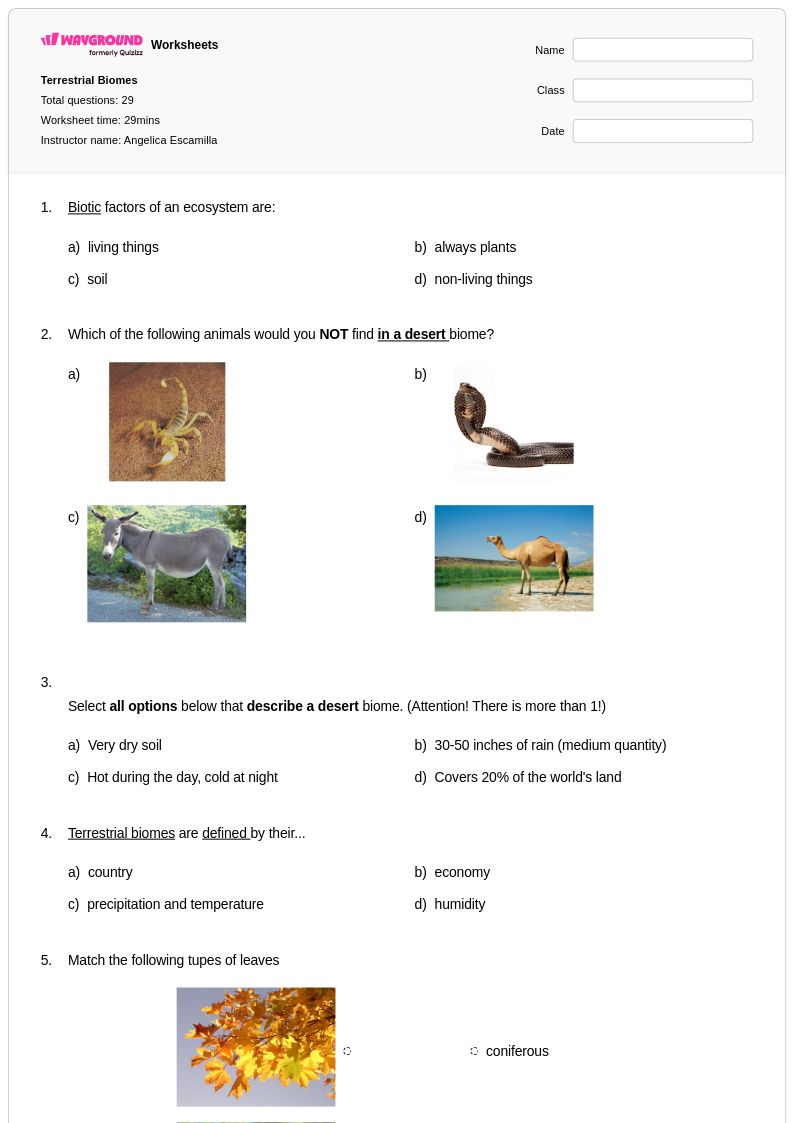
29 Q
9th - 12th
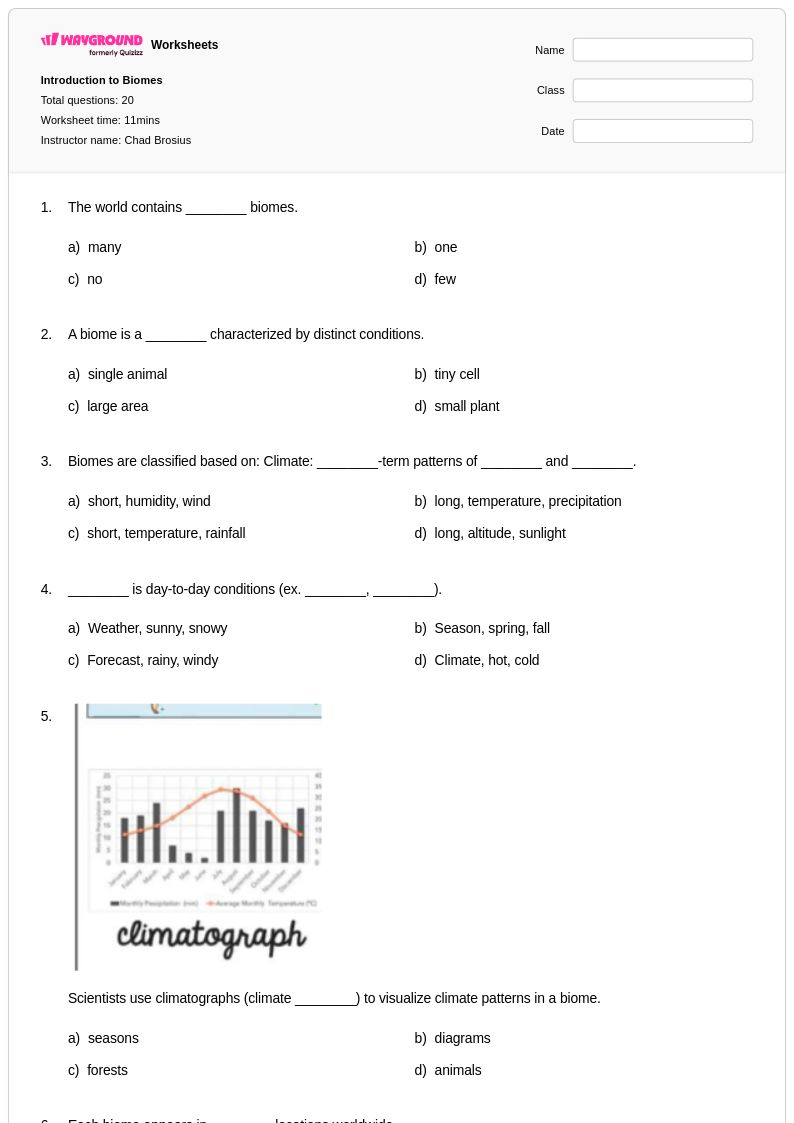
20 Q
9th - 12th
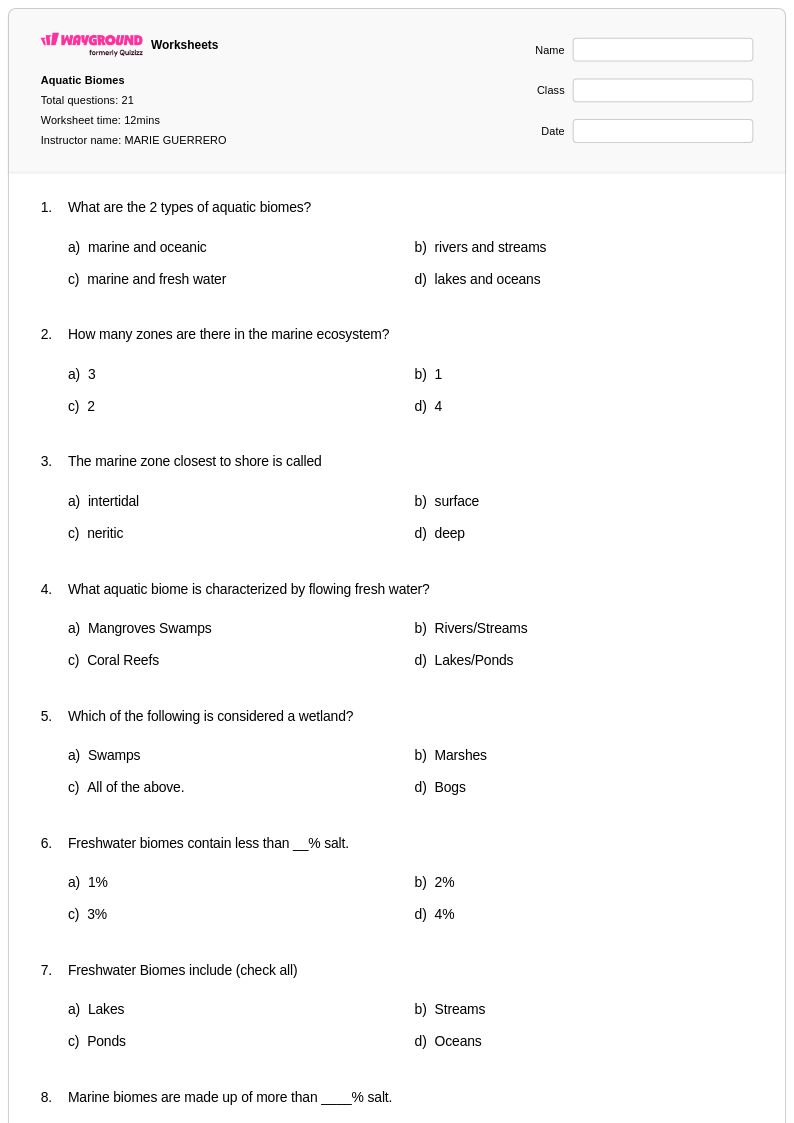
21 Q
9th - 12th
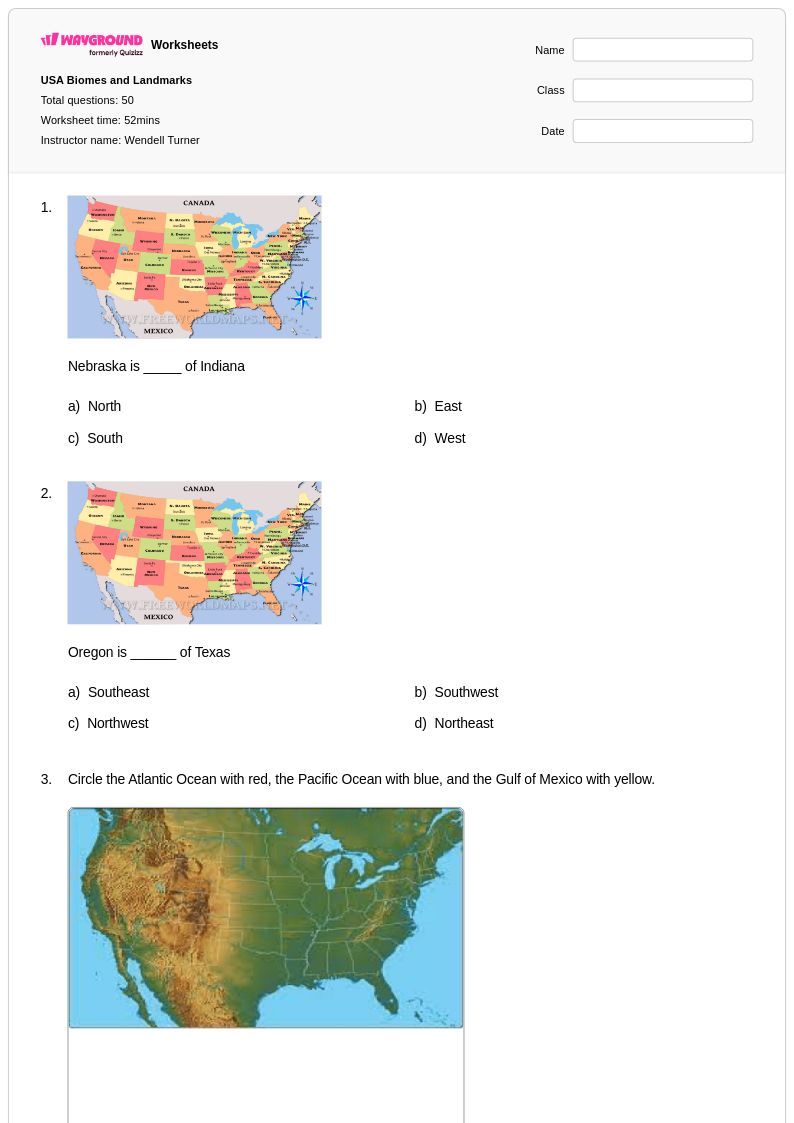
50 Q
9th - 12th
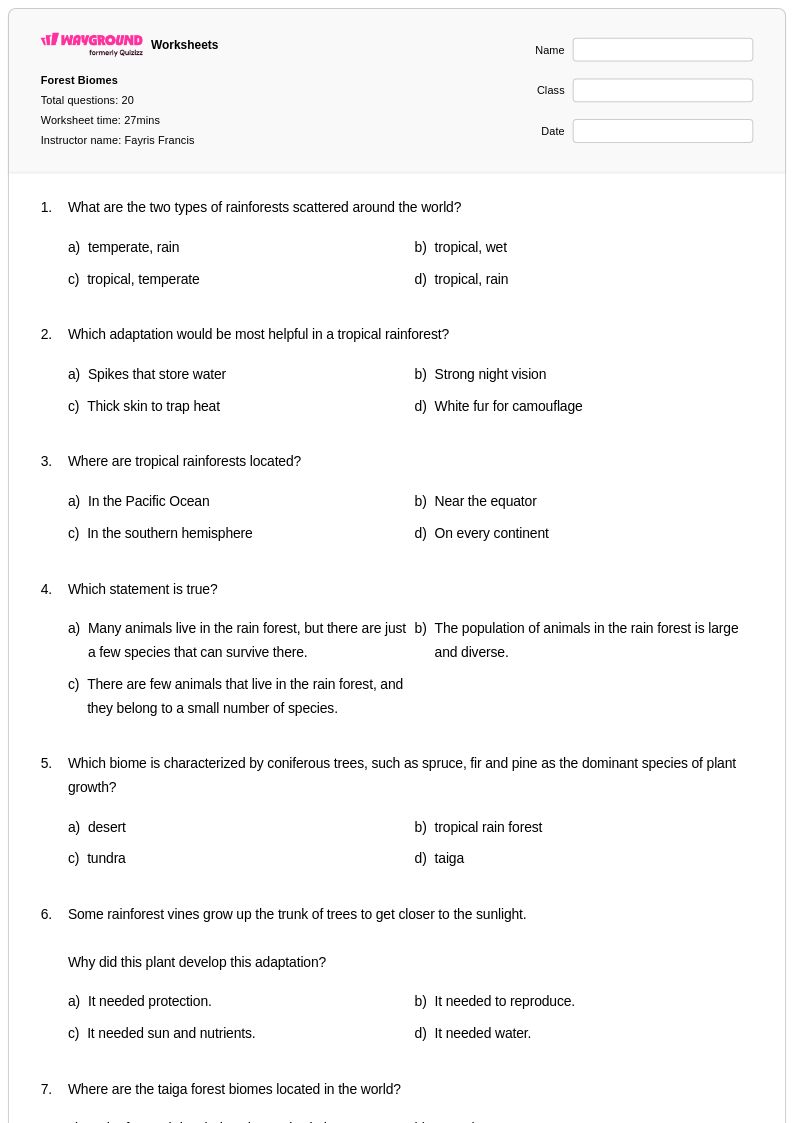
20 Q
12th
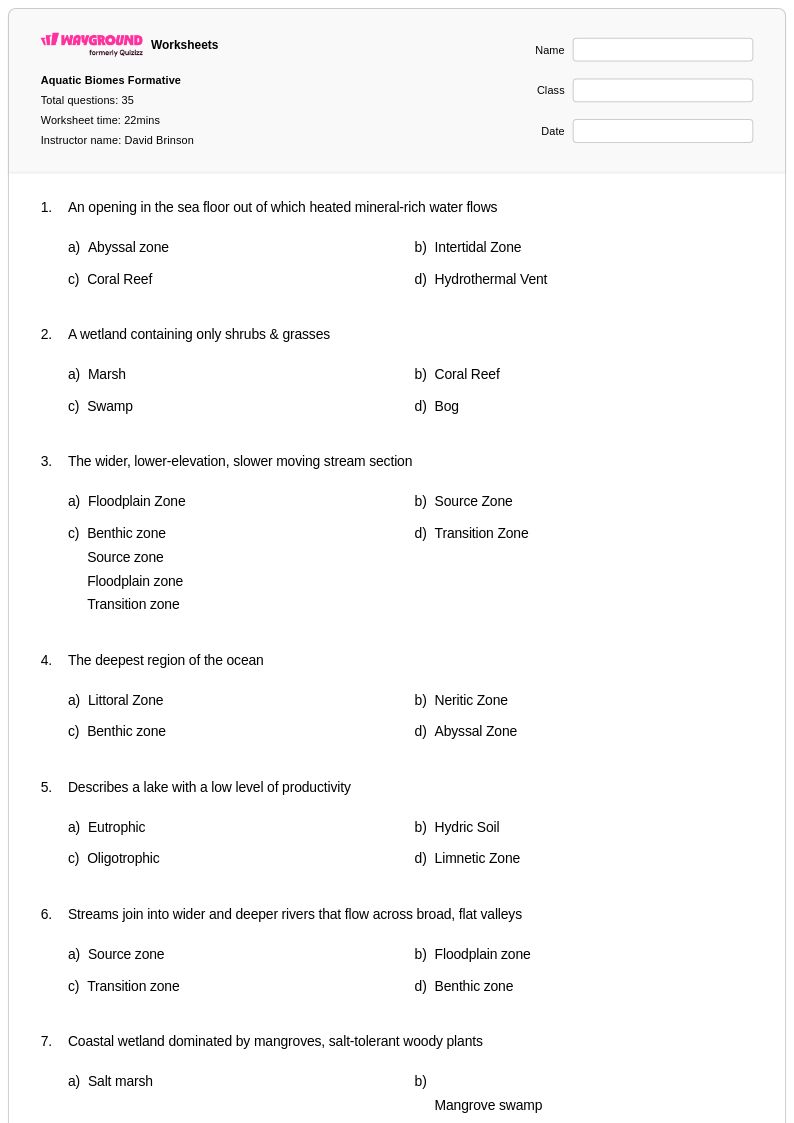
35 Q
12th
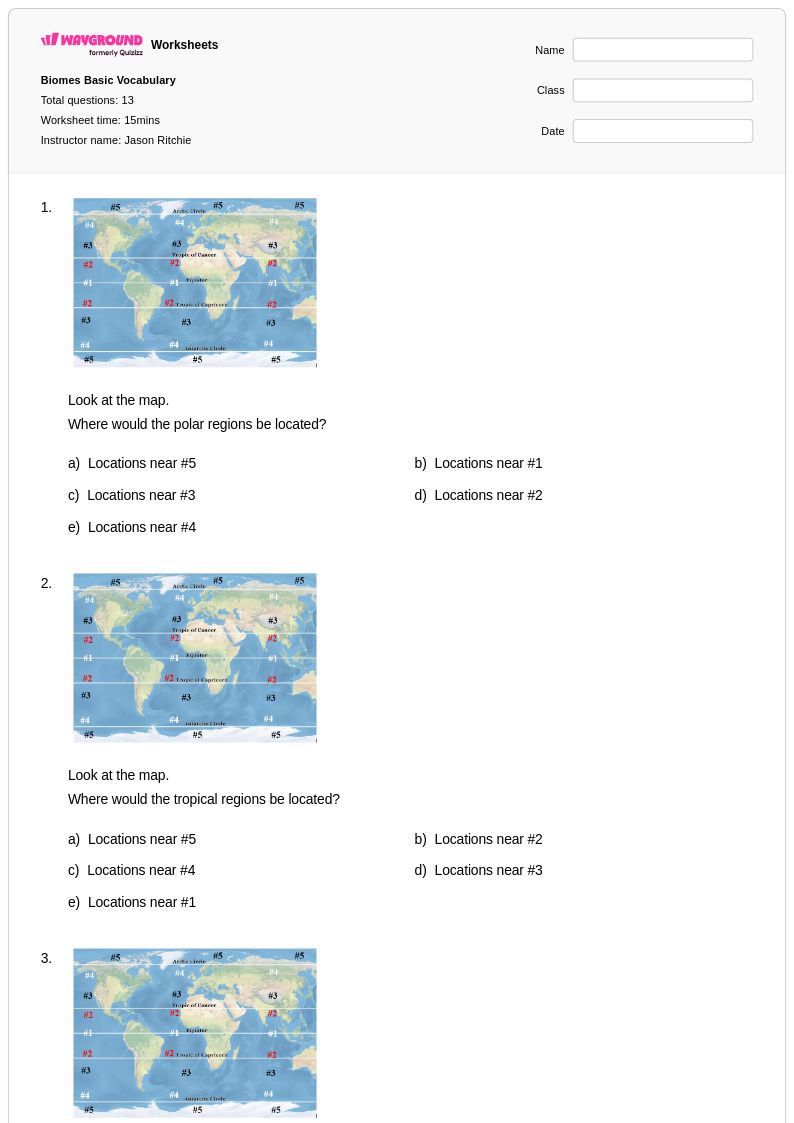
13 Q
12th
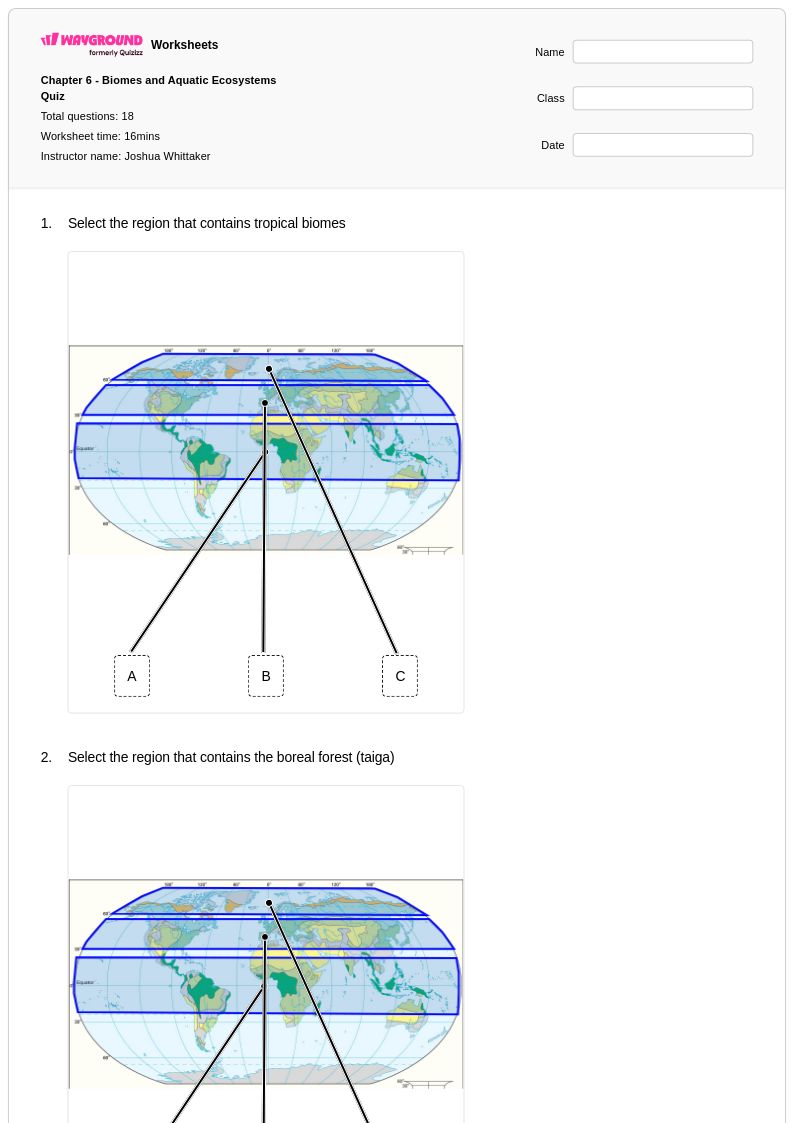
20 Q
9th - 12th
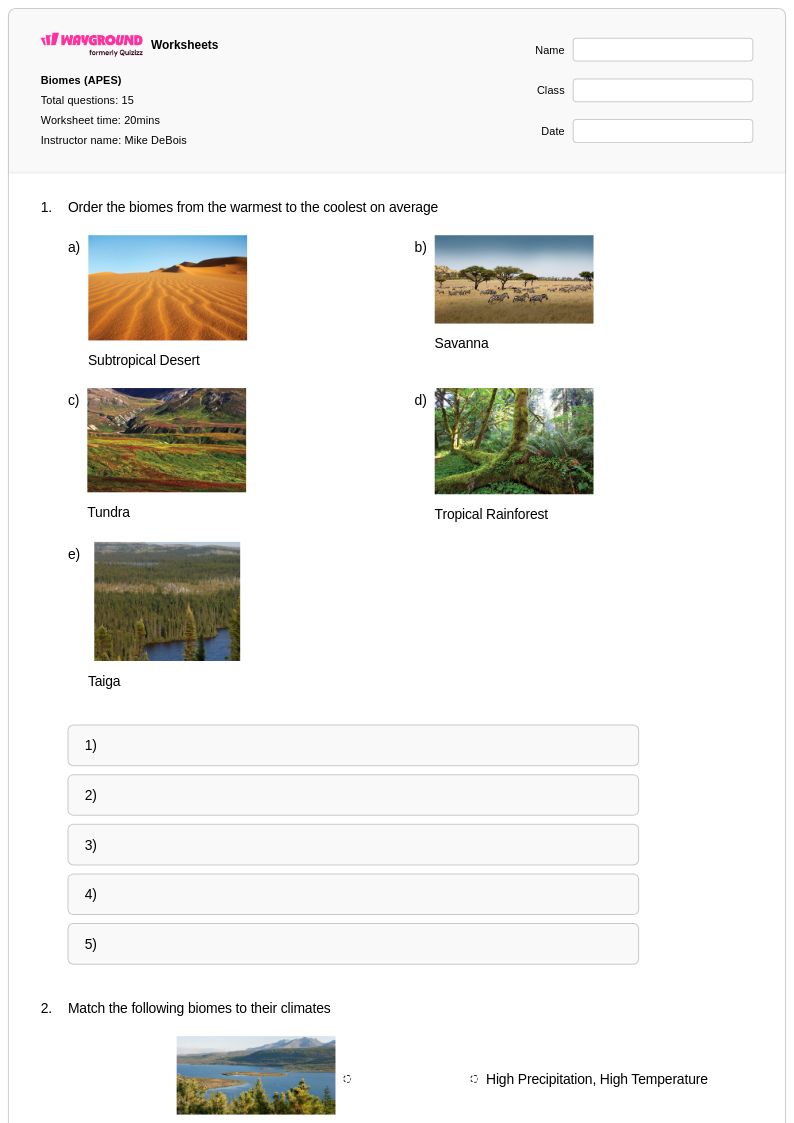
15 Q
12th
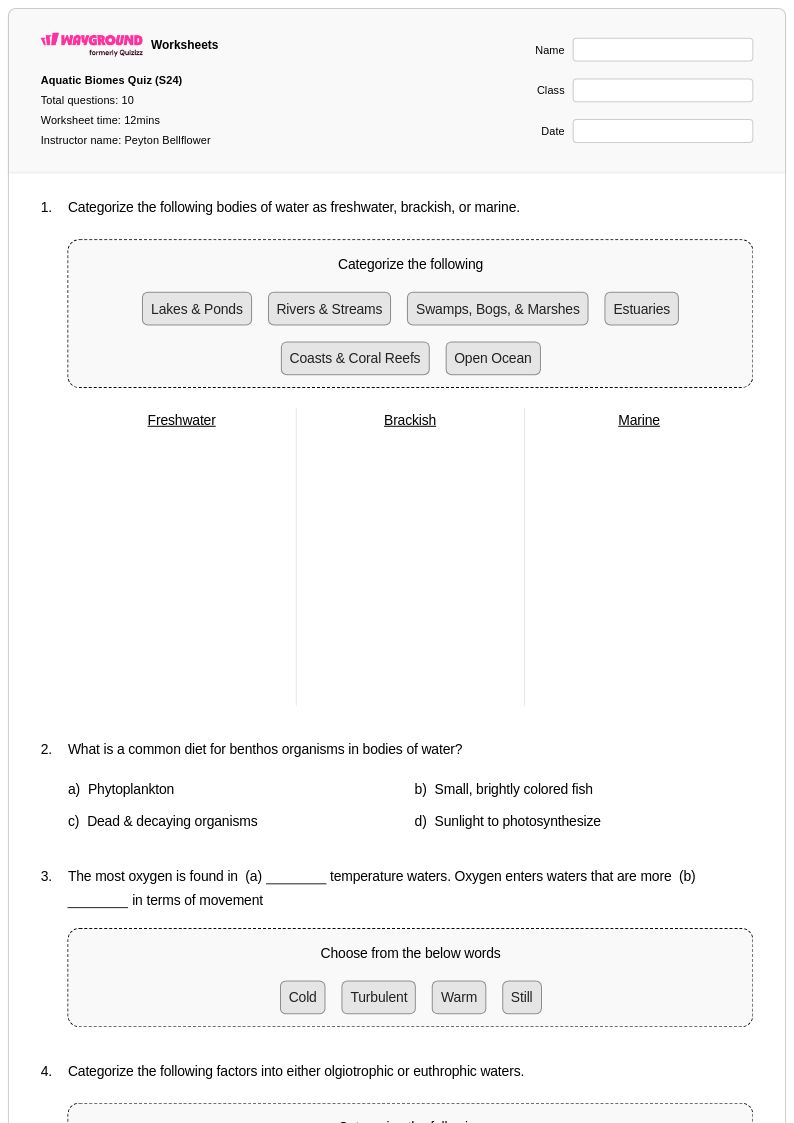
10 Q
12th
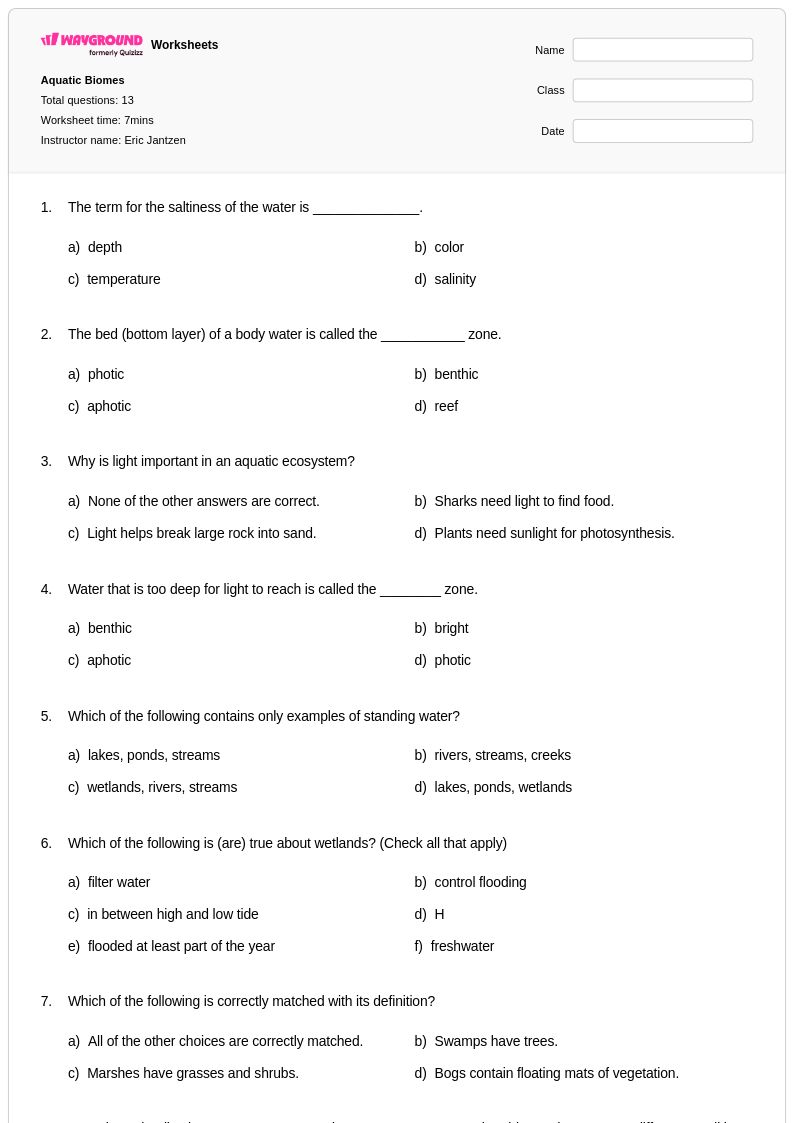
13 Q
9th - 12th
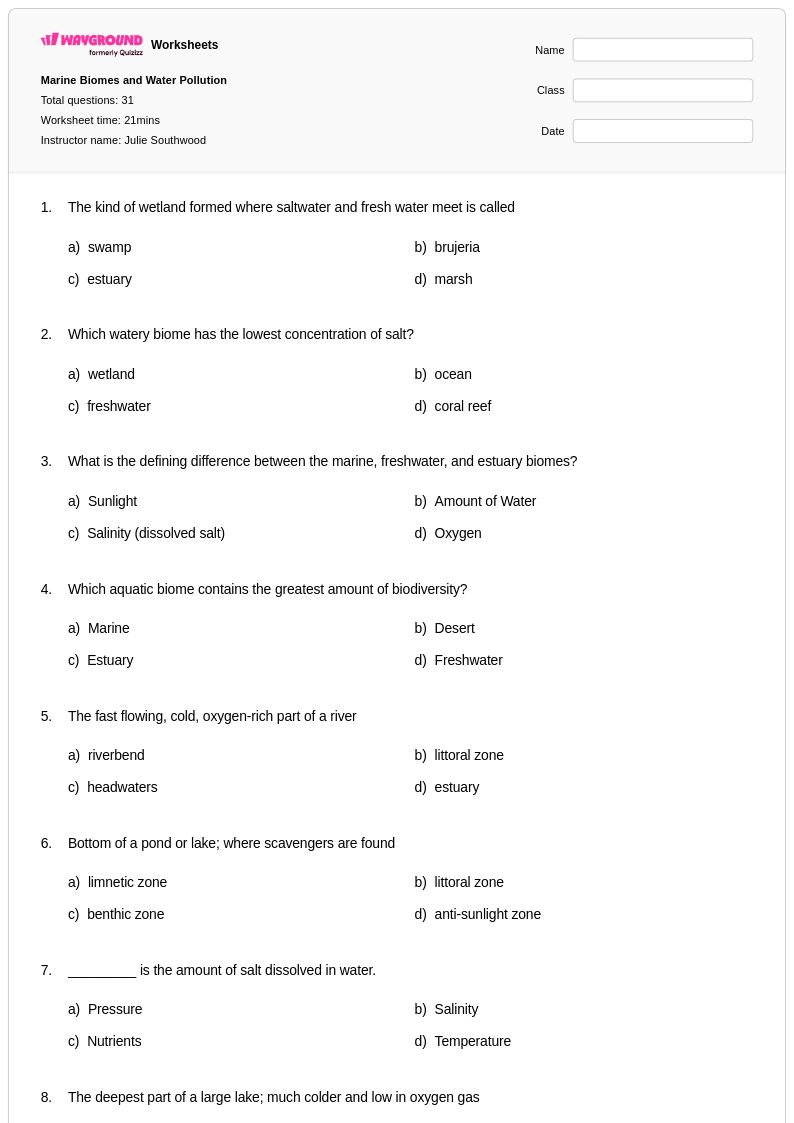
31 Q
9th - 12th
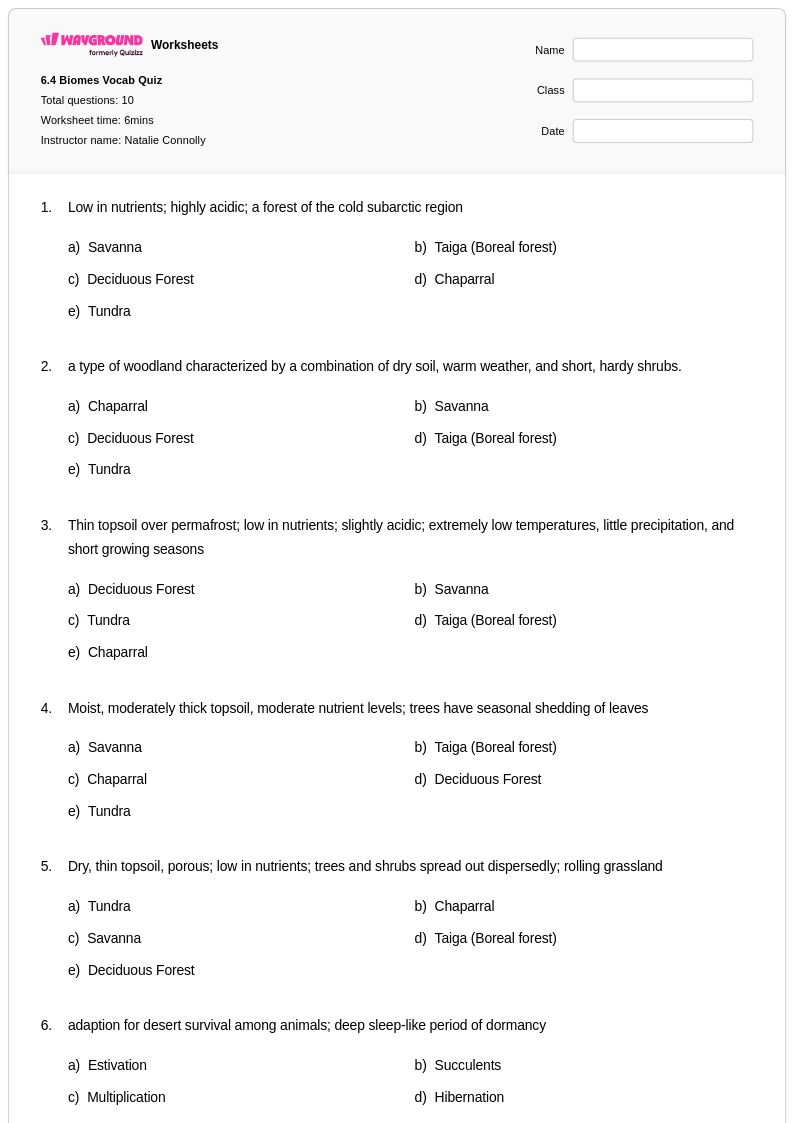
10 Q
12th
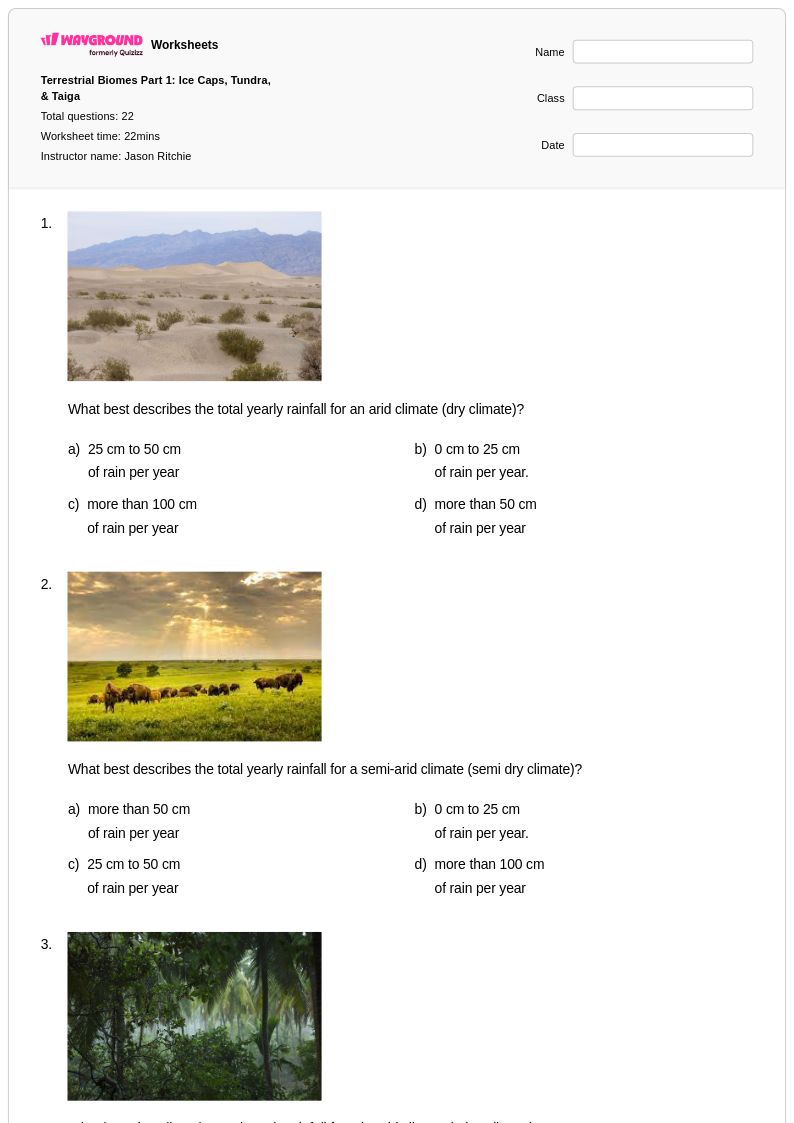
22 Q
12th
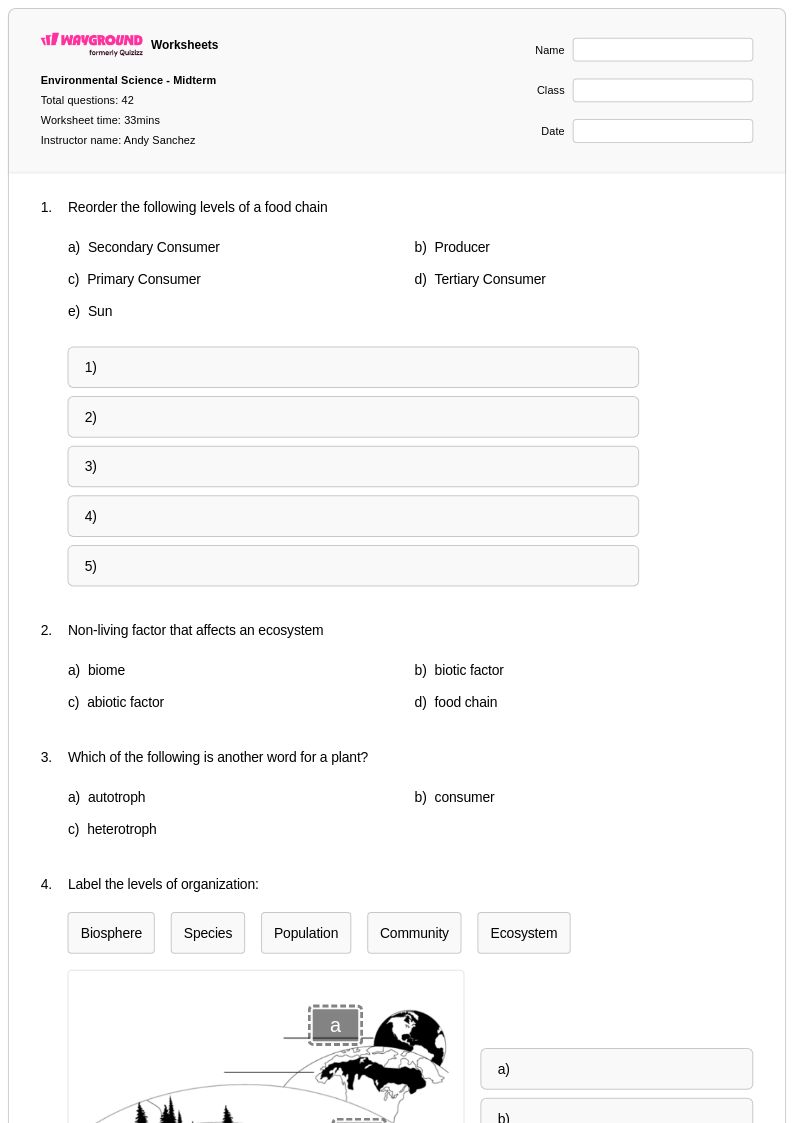
42 Q
12th
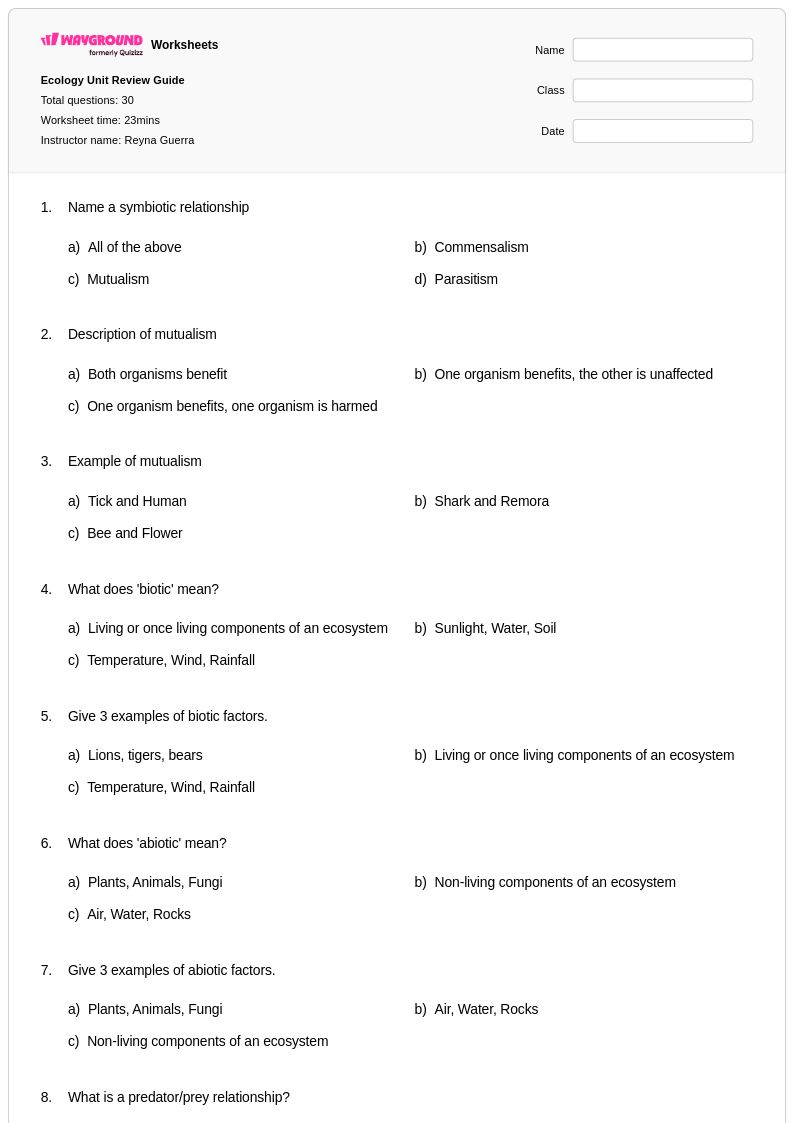
30 Q
12th
20 Q
9th - 12th
20 Q
9th - 12th
170 Q
9th - 12th
20 Q
9th - 12th
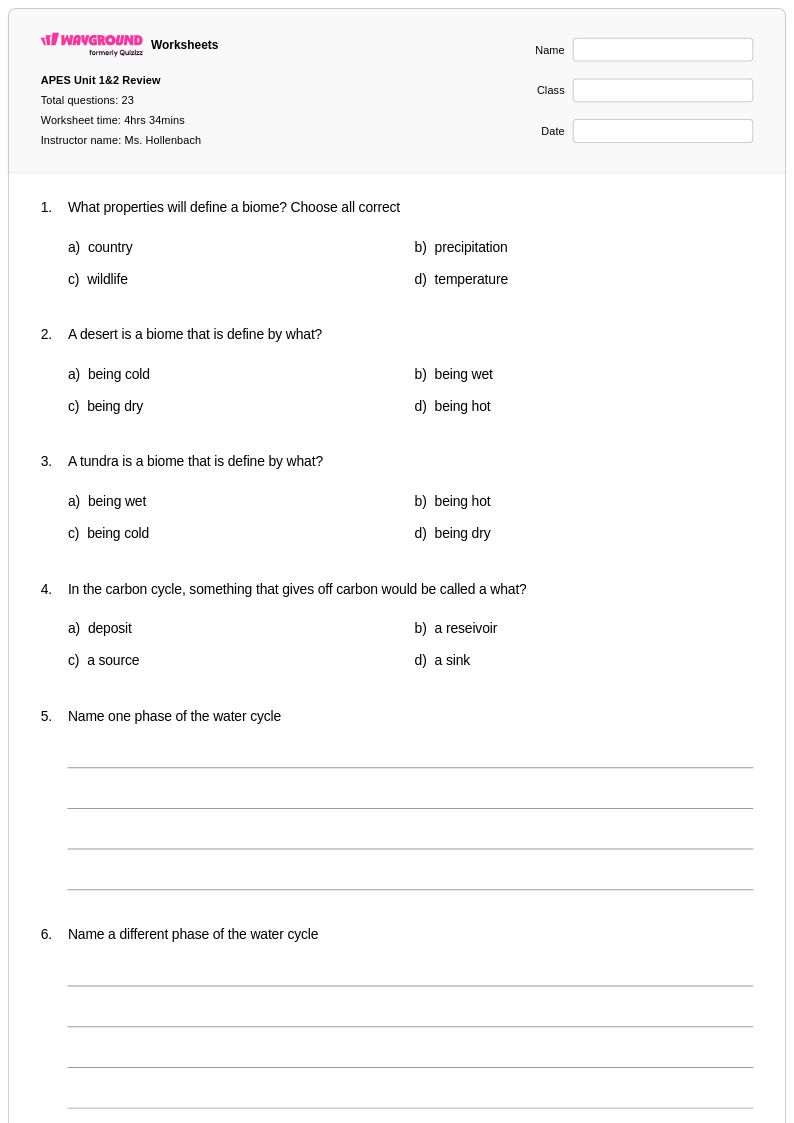
23 Q
9th - 12th
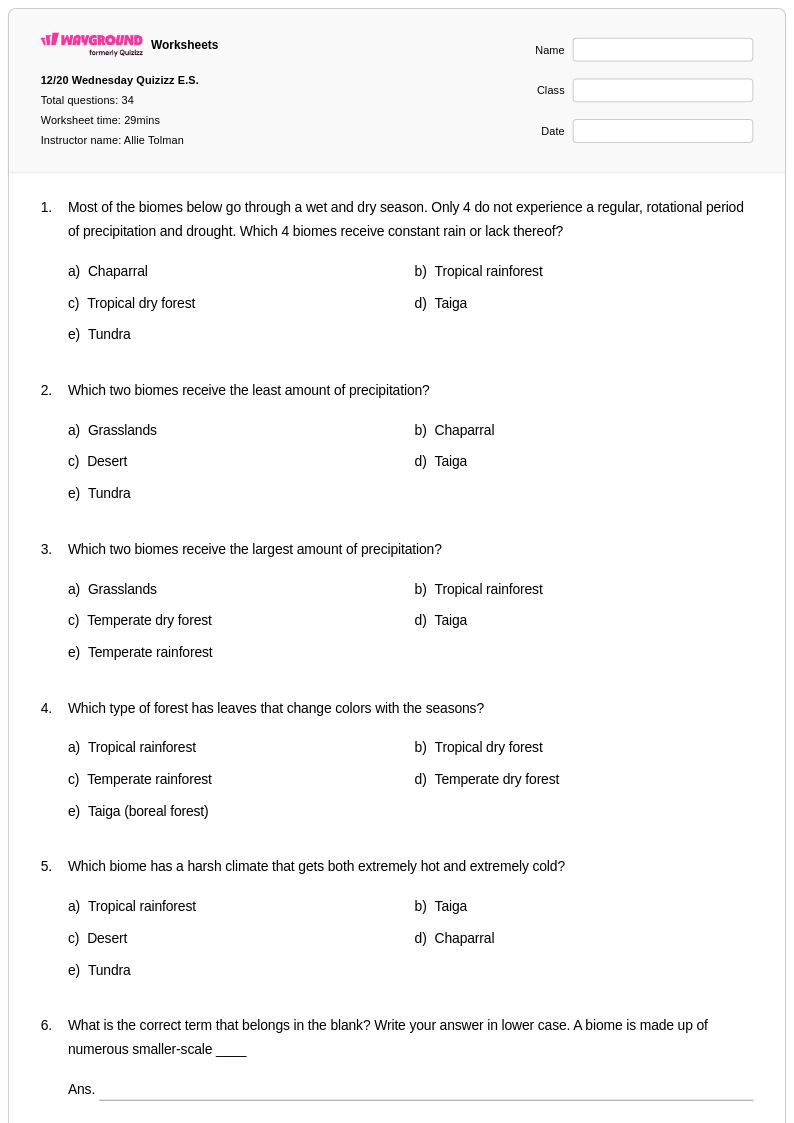
34 Q
12th
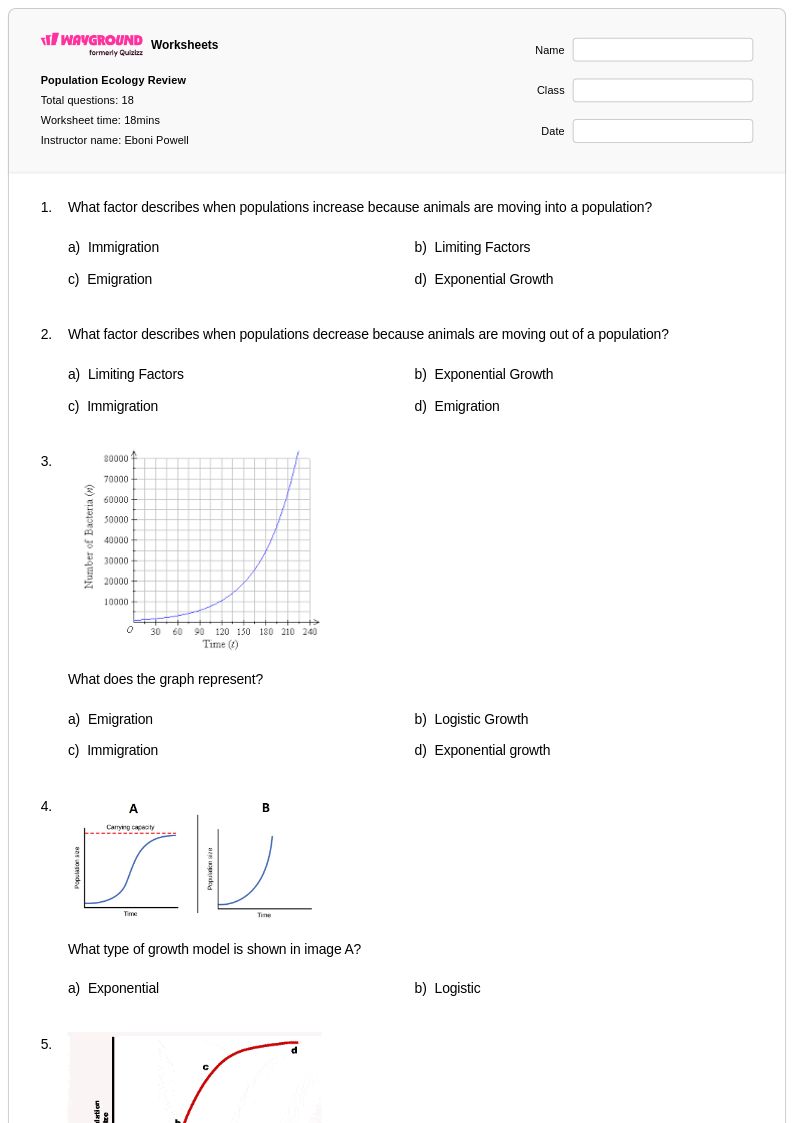
18 Q
9th - 12th
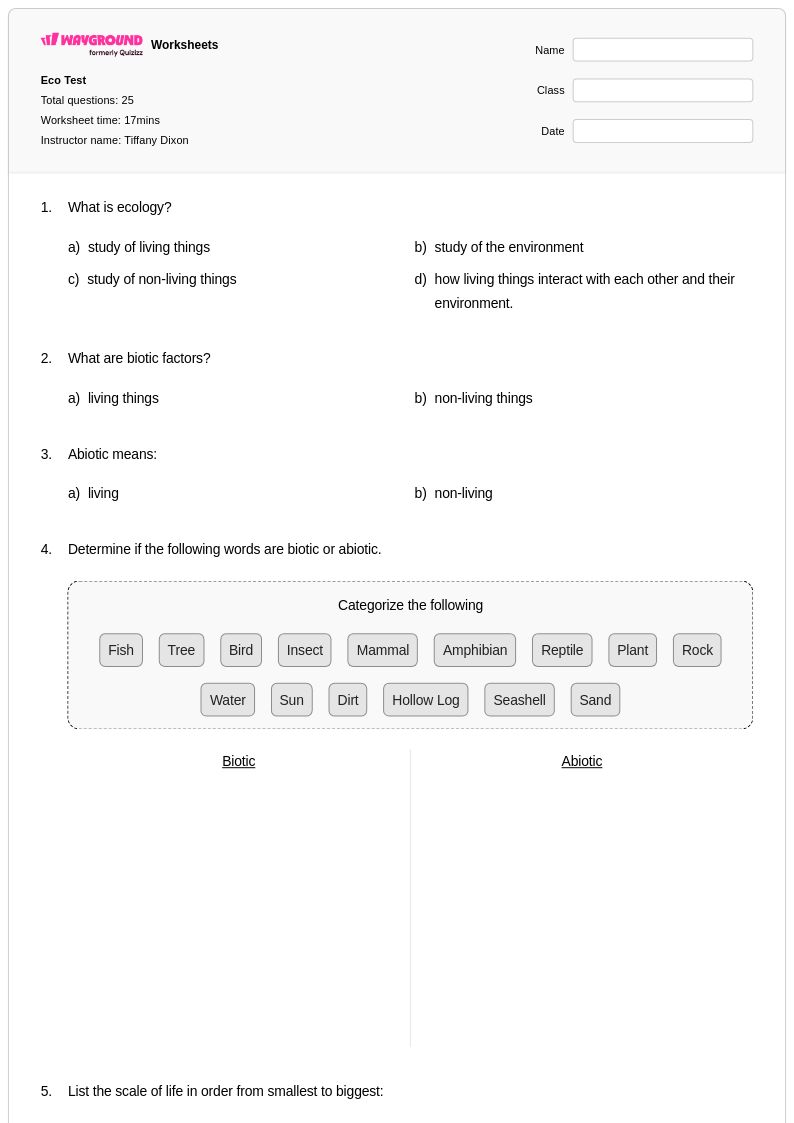
25 Q
12th
Explore Biomes Worksheets by Grades
Explore Other Subject Worksheets for grade 12
Explore printable Biomes worksheets for Grade 12
Grade 12 biomes worksheets available through Wayground (formerly Quizizz) provide comprehensive coverage of Earth's major terrestrial and aquatic ecosystems, enabling students to master complex ecological concepts essential for advanced environmental science understanding. These expertly designed resources strengthen critical analytical skills by guiding students through detailed examinations of tundra, taiga, temperate forests, grasslands, deserts, tropical rainforests, and marine ecosystems, with particular emphasis on climate patterns, species adaptations, energy flow, and human impacts. The collection includes diverse practice problems that challenge students to analyze biome distribution maps, interpret climate data, evaluate biodiversity patterns, and assess conservation strategies, while comprehensive answer keys support both independent study and classroom instruction. These free printables and digital resources offer rigorous content that prepares students for advanced placement examinations and college-level environmental science coursework.
Wayground's extensive biomes worksheet collection draws from millions of teacher-created resources, providing educators with unparalleled access to high-quality materials that support differentiated instruction for Grade 12 students across varying ability levels. The platform's robust search and filtering capabilities enable teachers to quickly locate resources aligned with specific curriculum standards, whether focusing on ecosystem dynamics, biogeochemical cycles, or climate change impacts on global biomes. These versatile materials are available in both printable pdf format and interactive digital versions, allowing seamless integration into traditional classroom settings, hybrid learning environments, and remote instruction models. The flexible customization tools empower educators to modify content difficulty, incorporate local ecosystem examples, and create targeted remediation exercises for struggling students while simultaneously providing enrichment opportunities for advanced learners, ensuring comprehensive skill practice that meets diverse classroom needs.
FAQs
How do I teach biomes in a way that helps students understand more than just memorizing names?
What kinds of practice activities help students actually learn to distinguish between biomes?
What misconceptions do students commonly have when learning about biomes?
How do I use biomes worksheets to support students at different ability levels in the same class?
How do I use Wayground's biomes worksheets in my classroom?
What are the most important concepts students should master about biomes by the end of a unit?