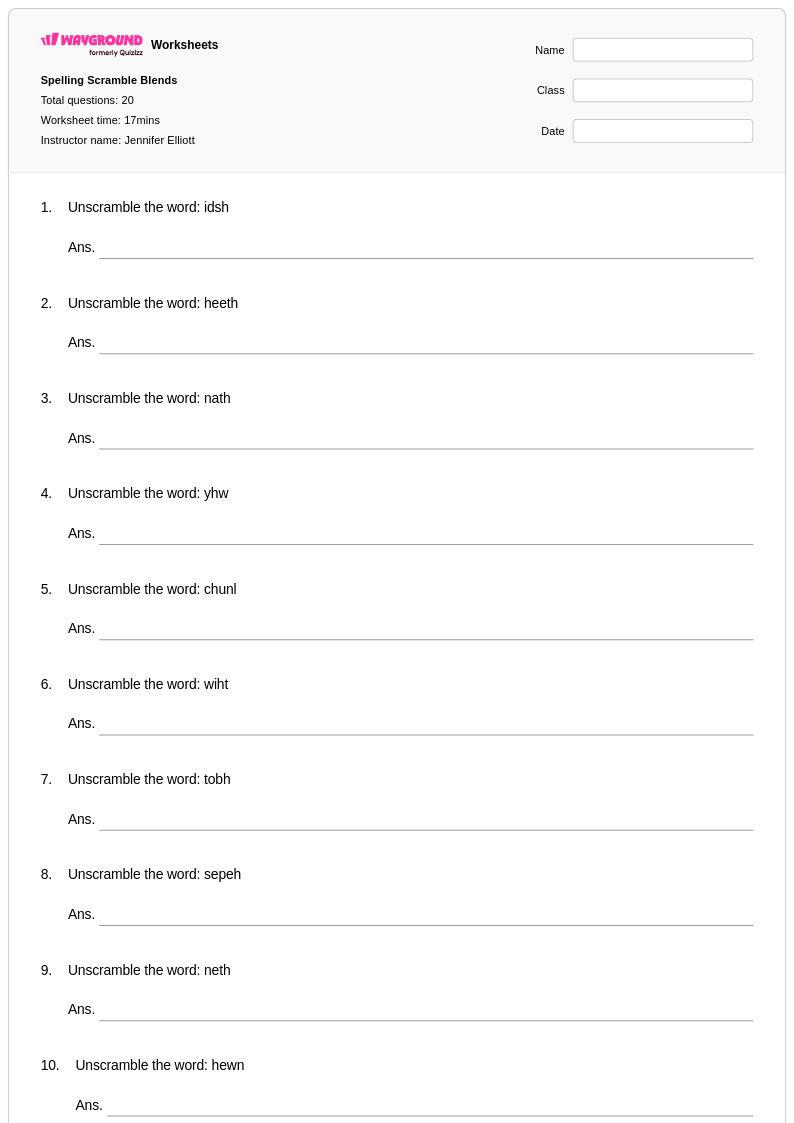
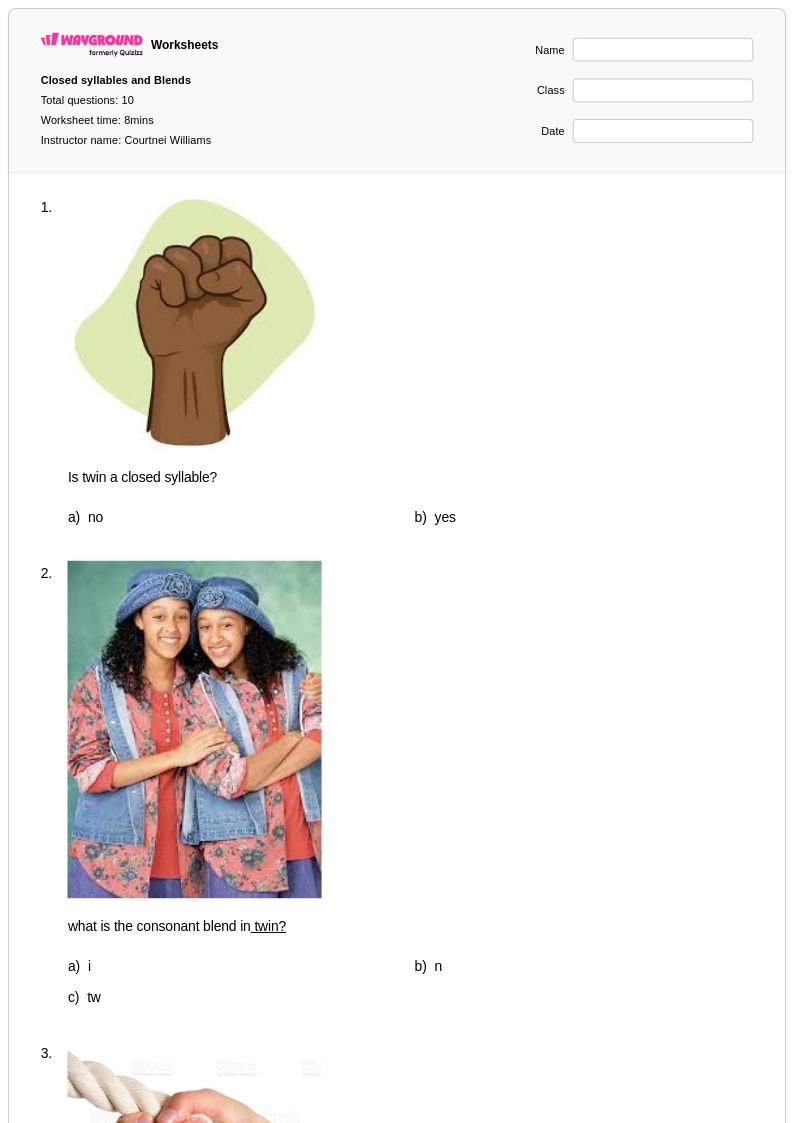
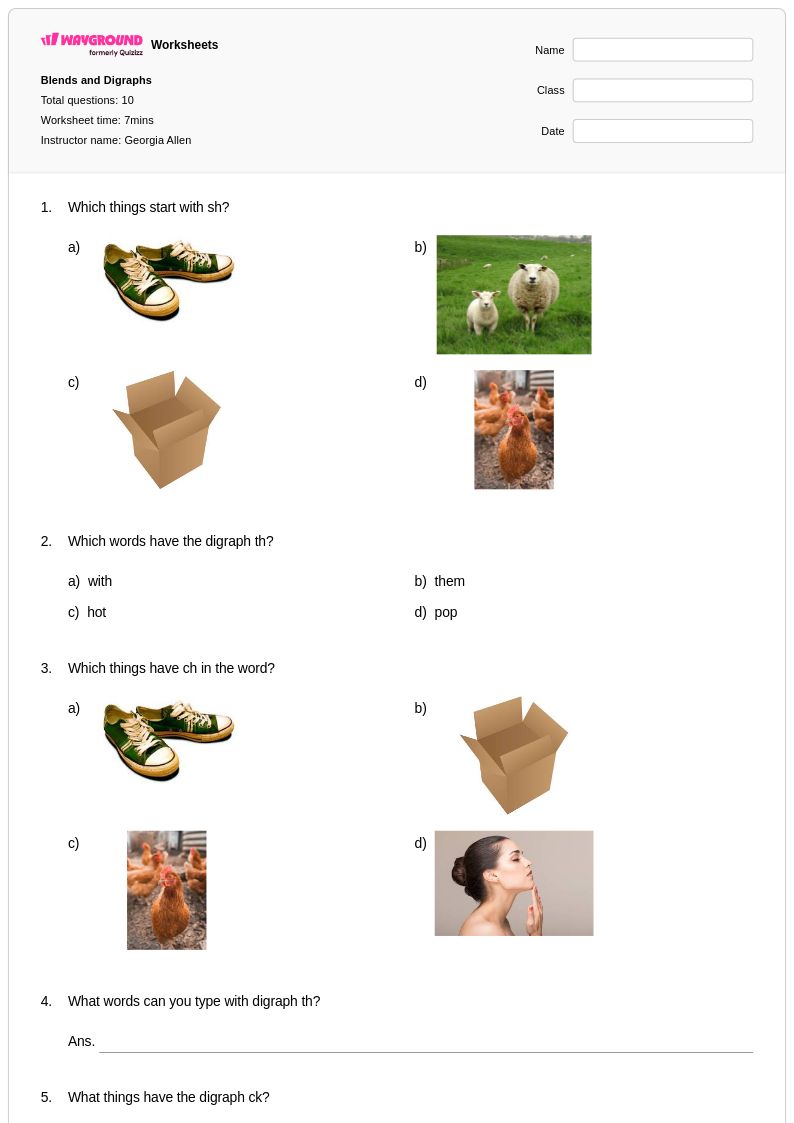
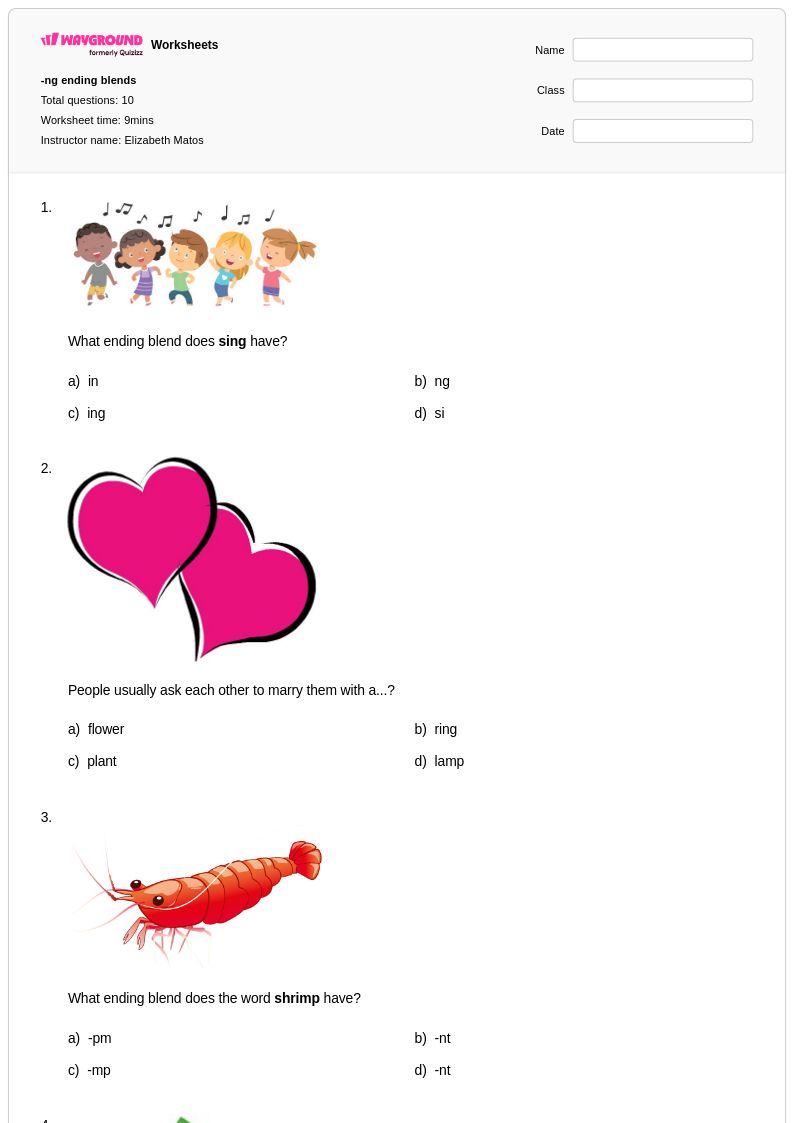
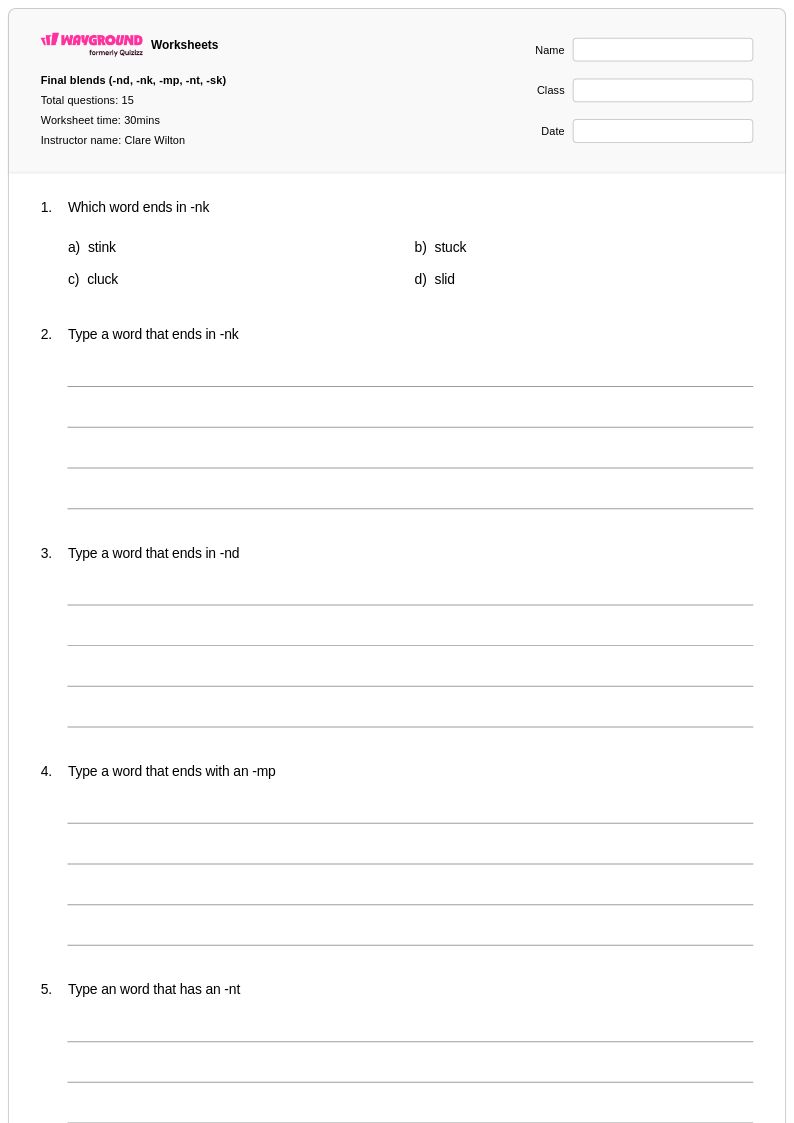
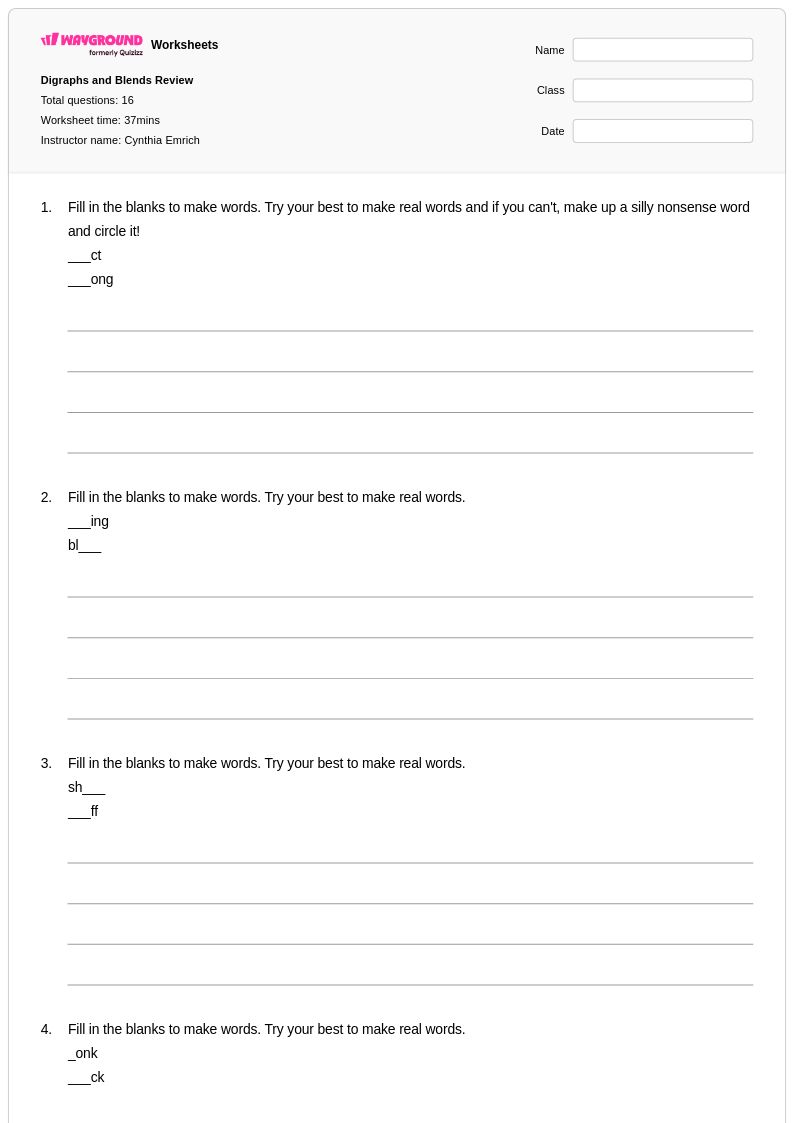
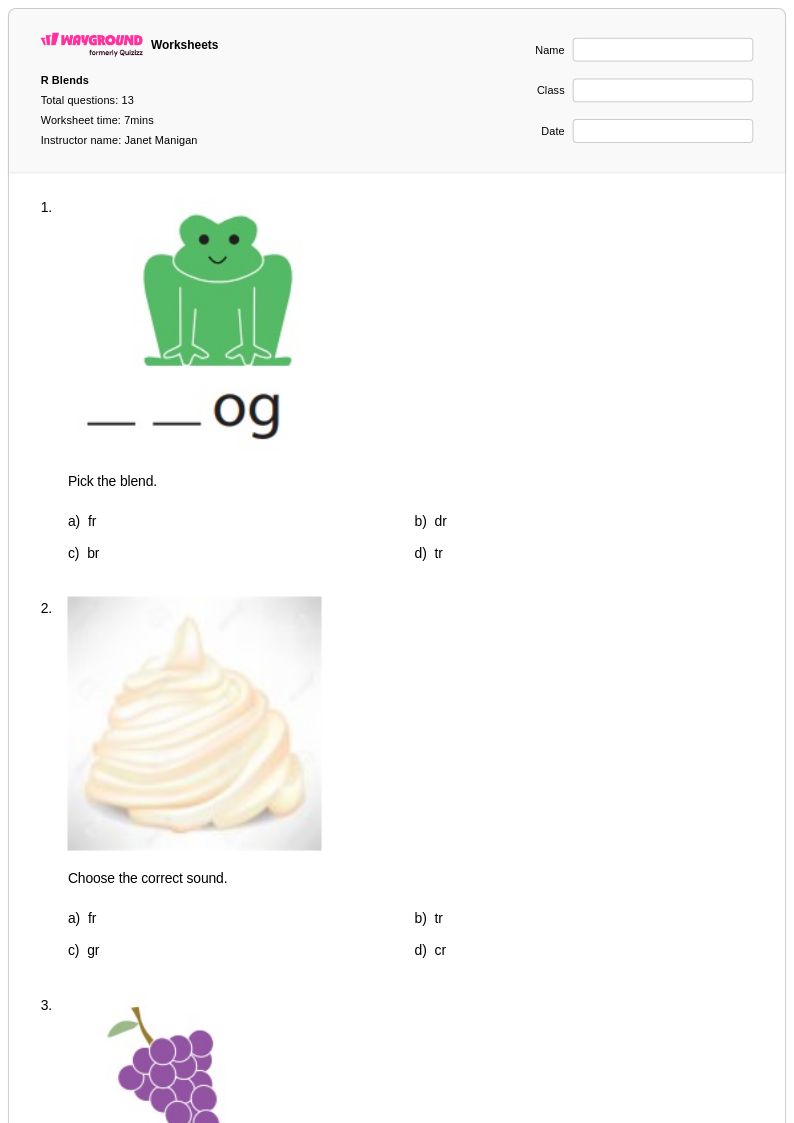
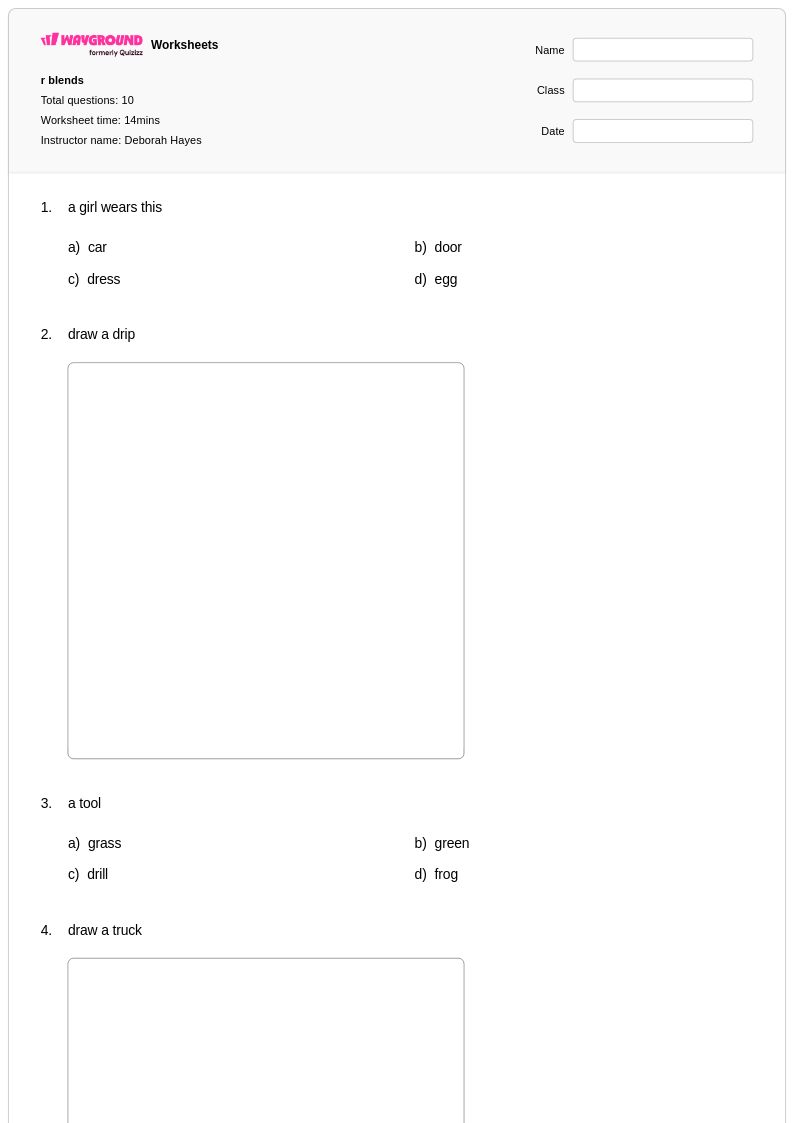
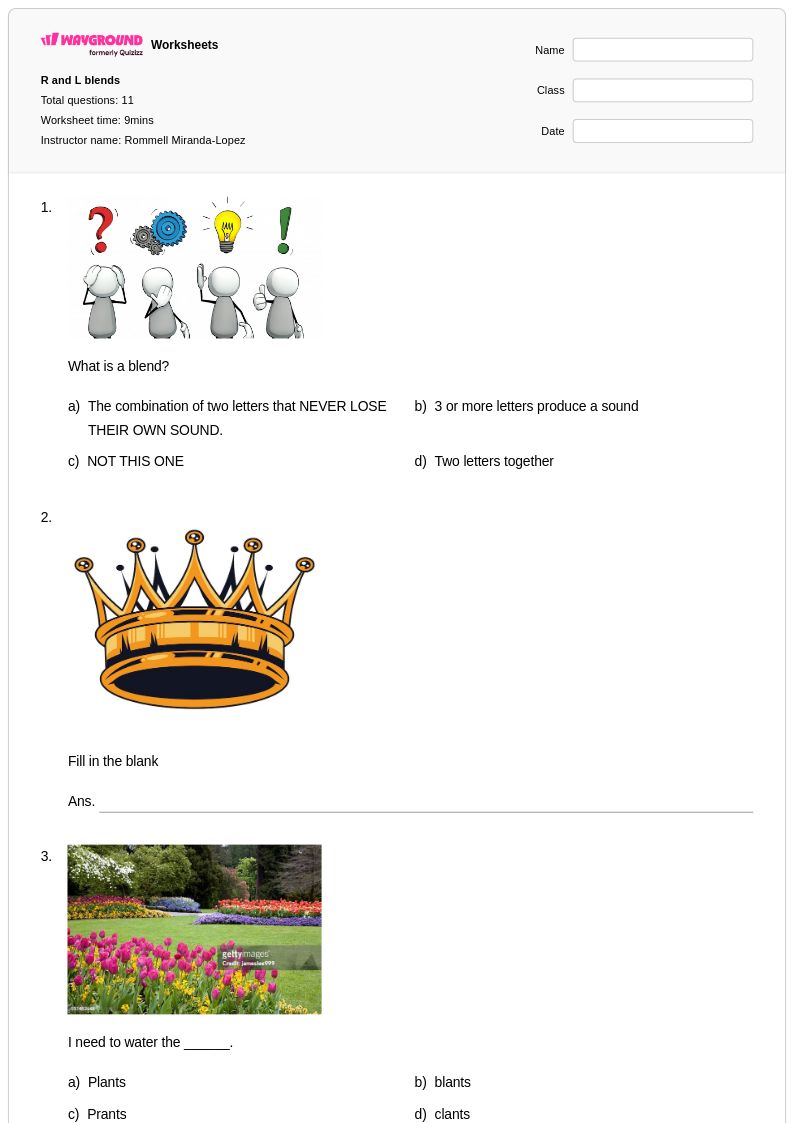
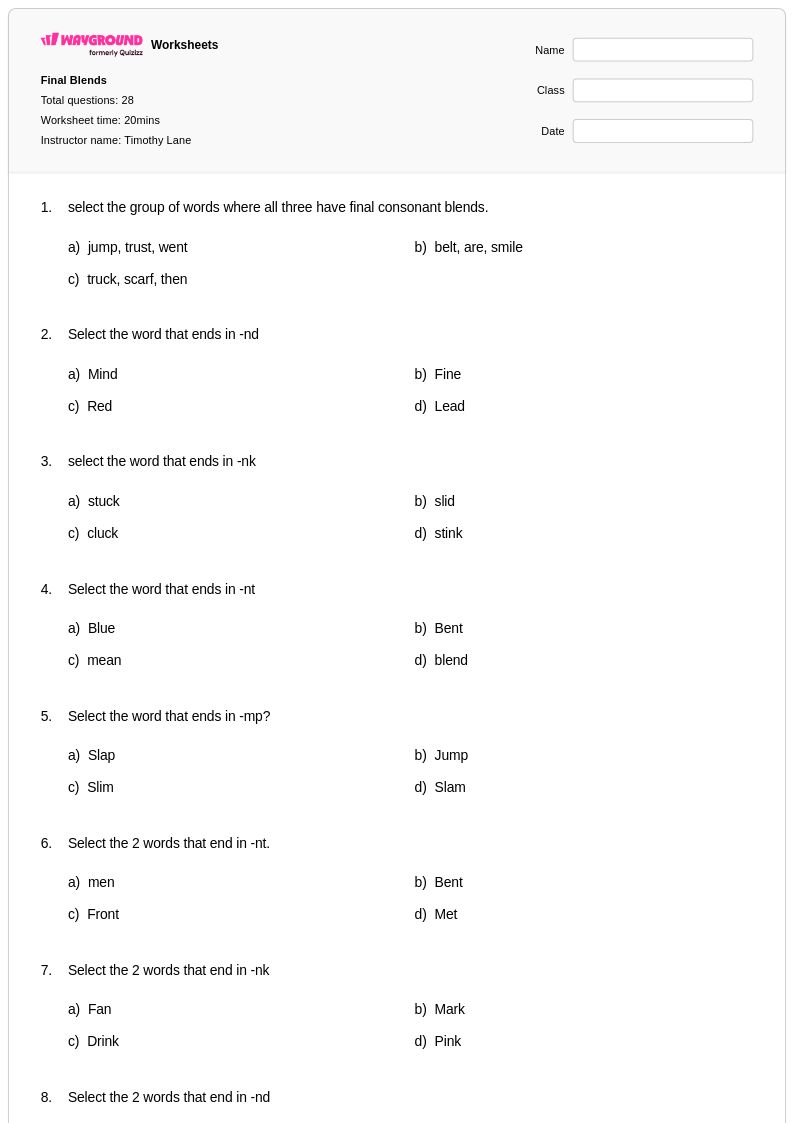
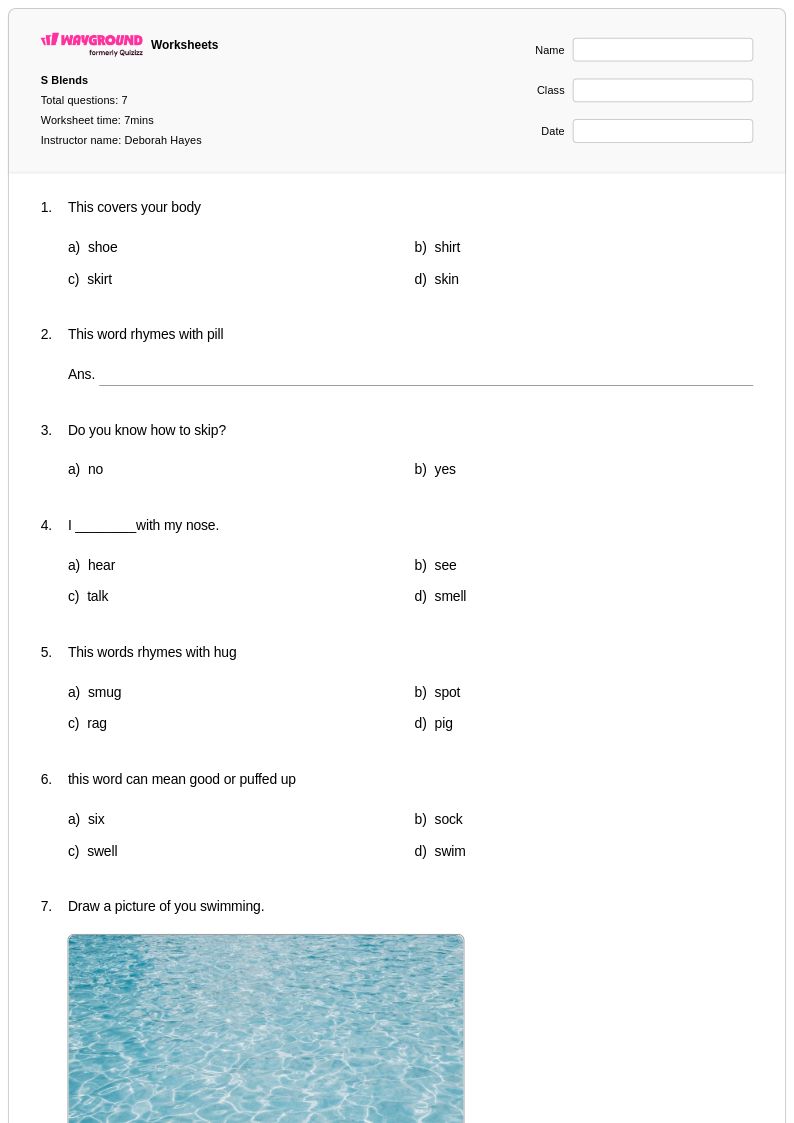
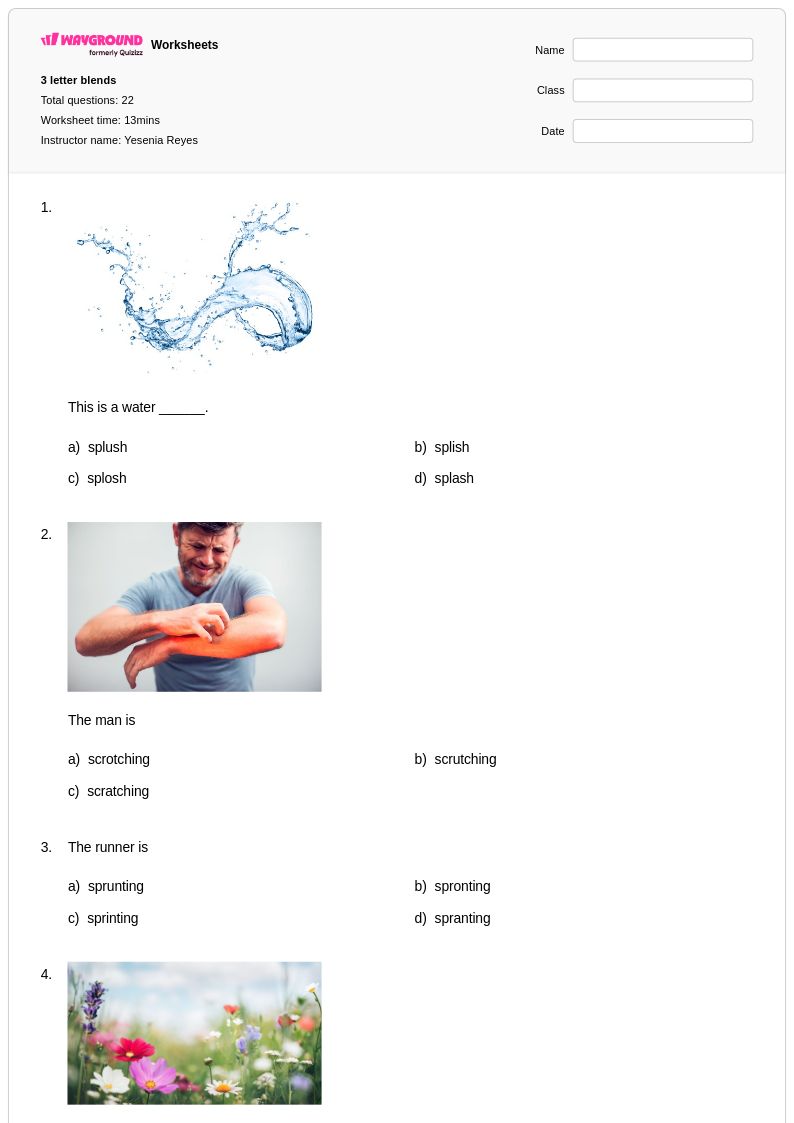
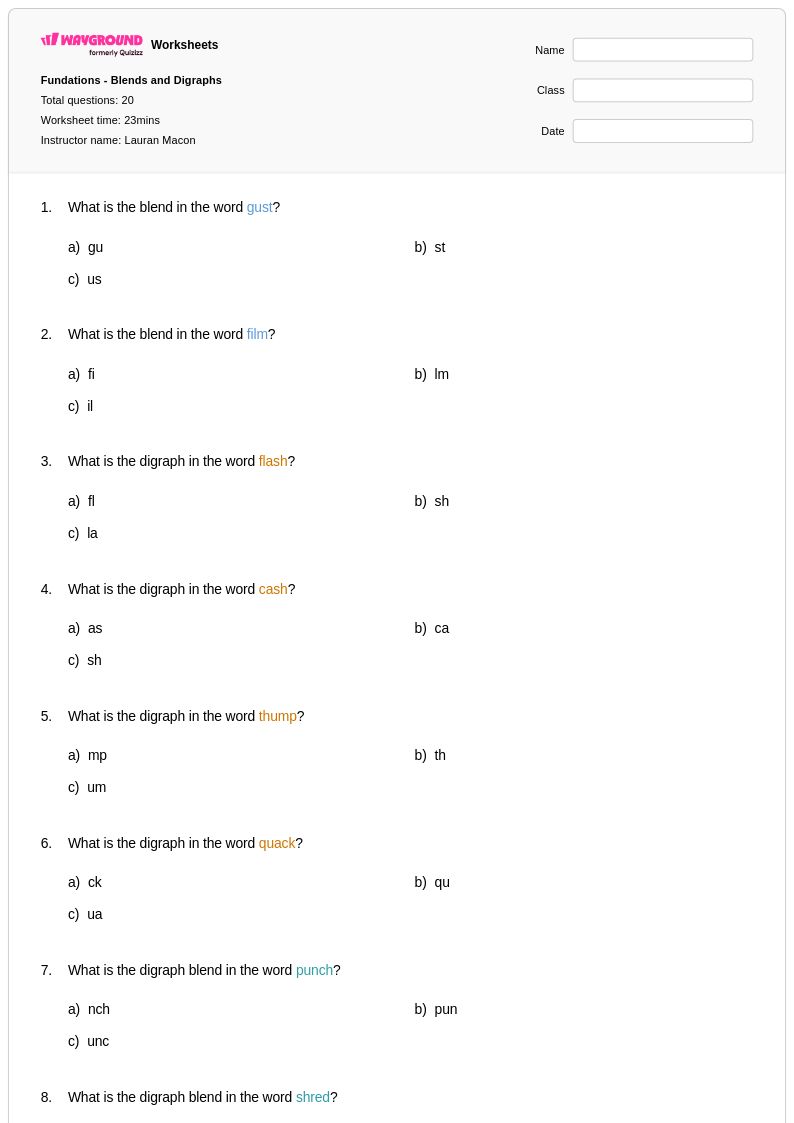
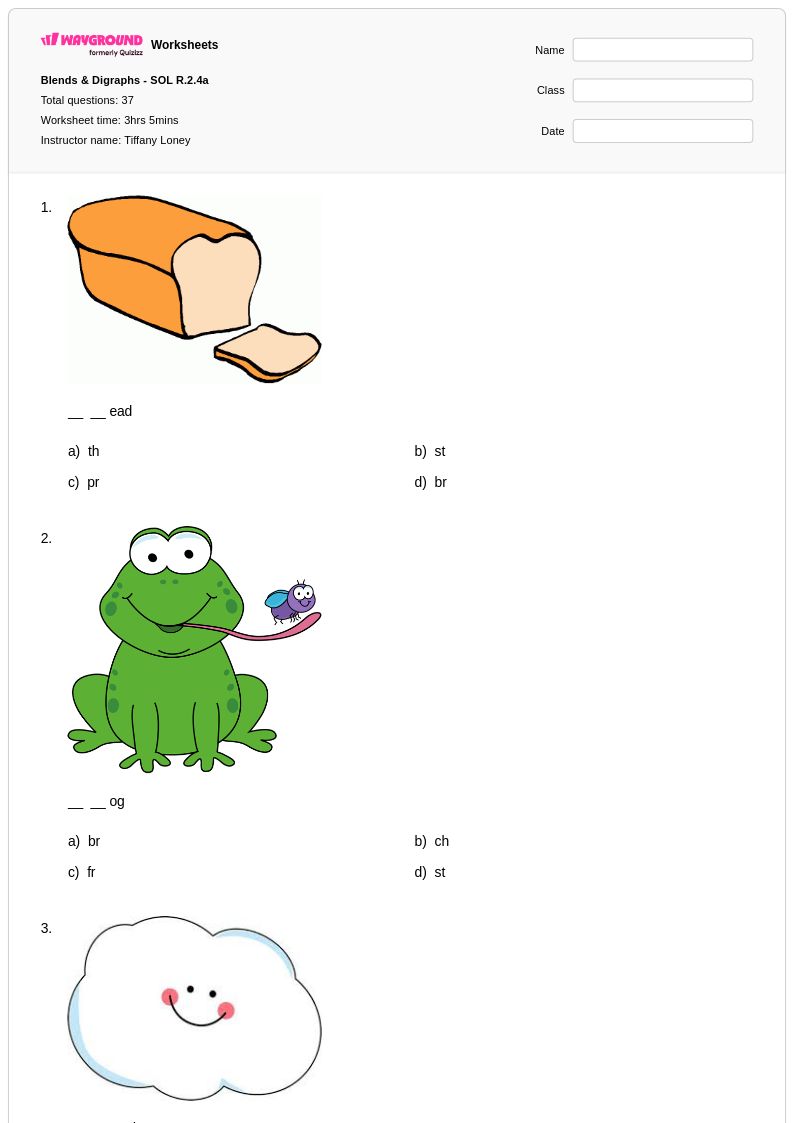
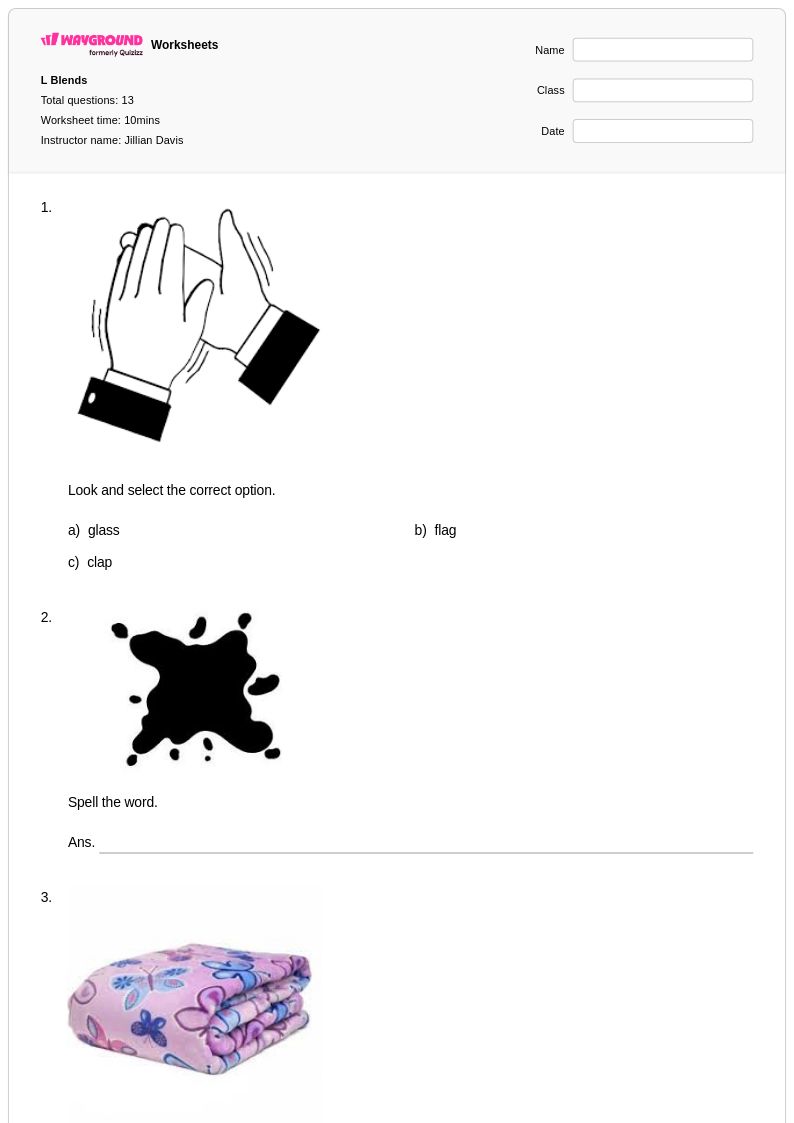
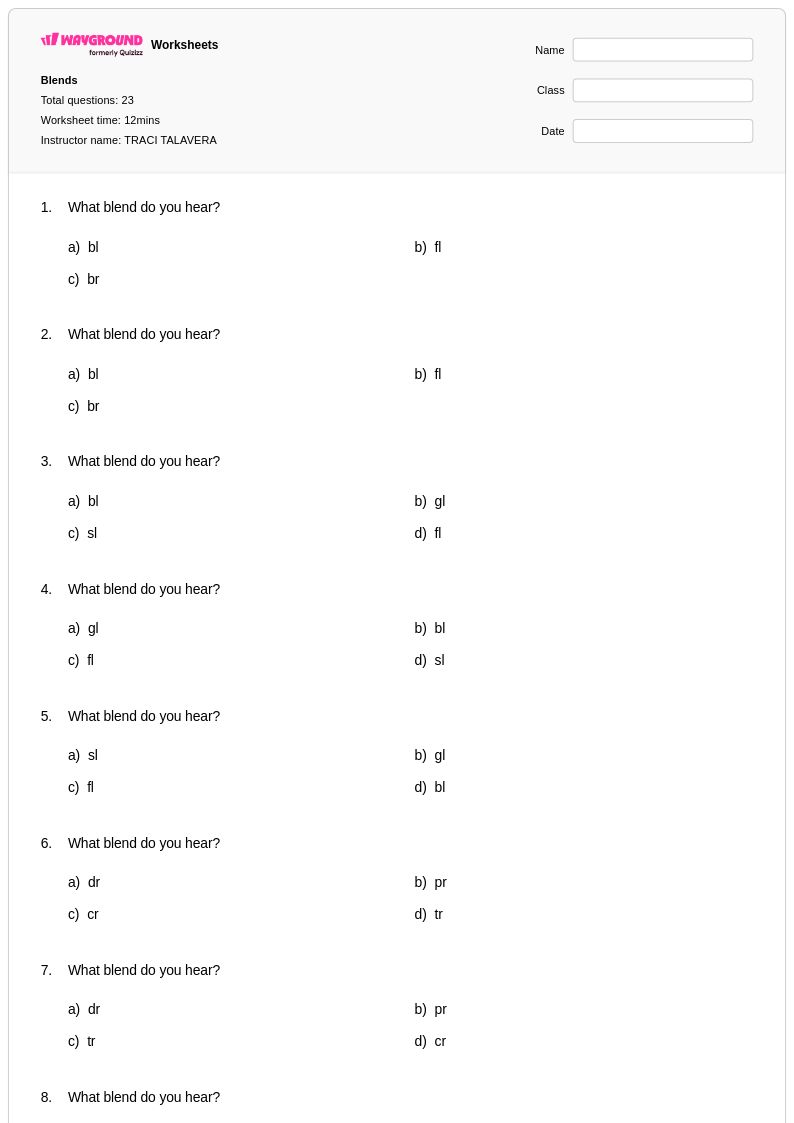
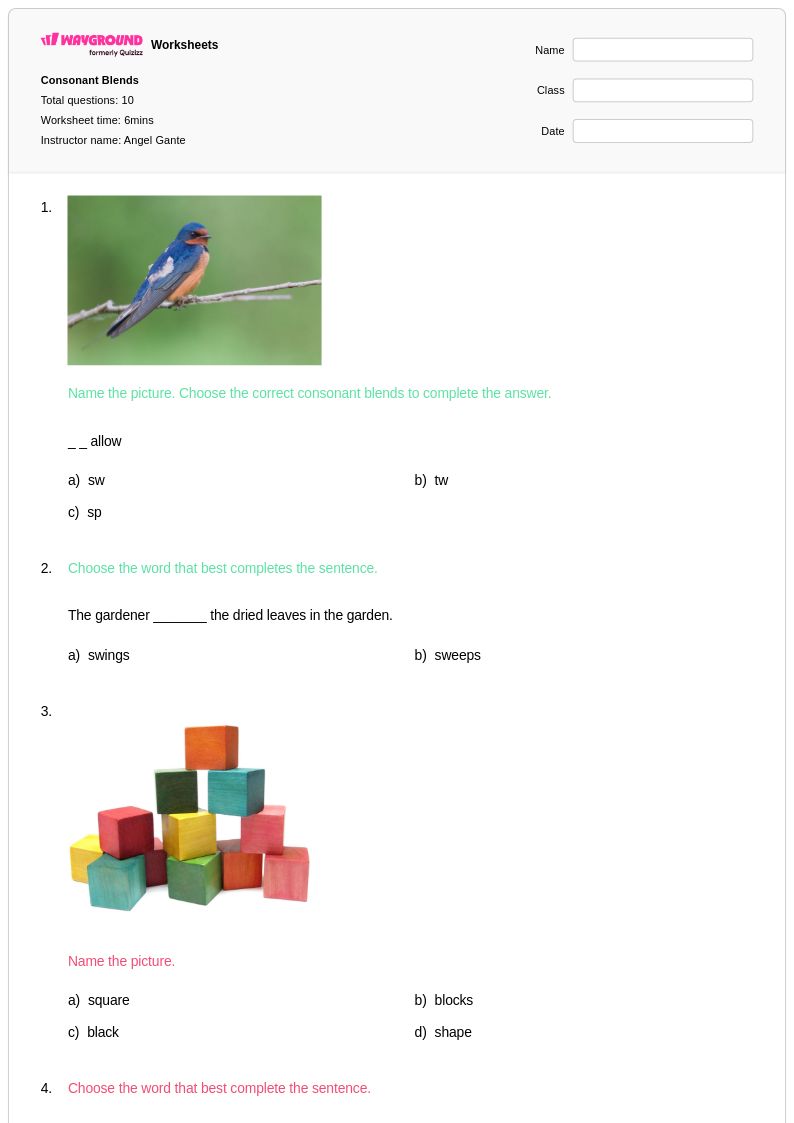
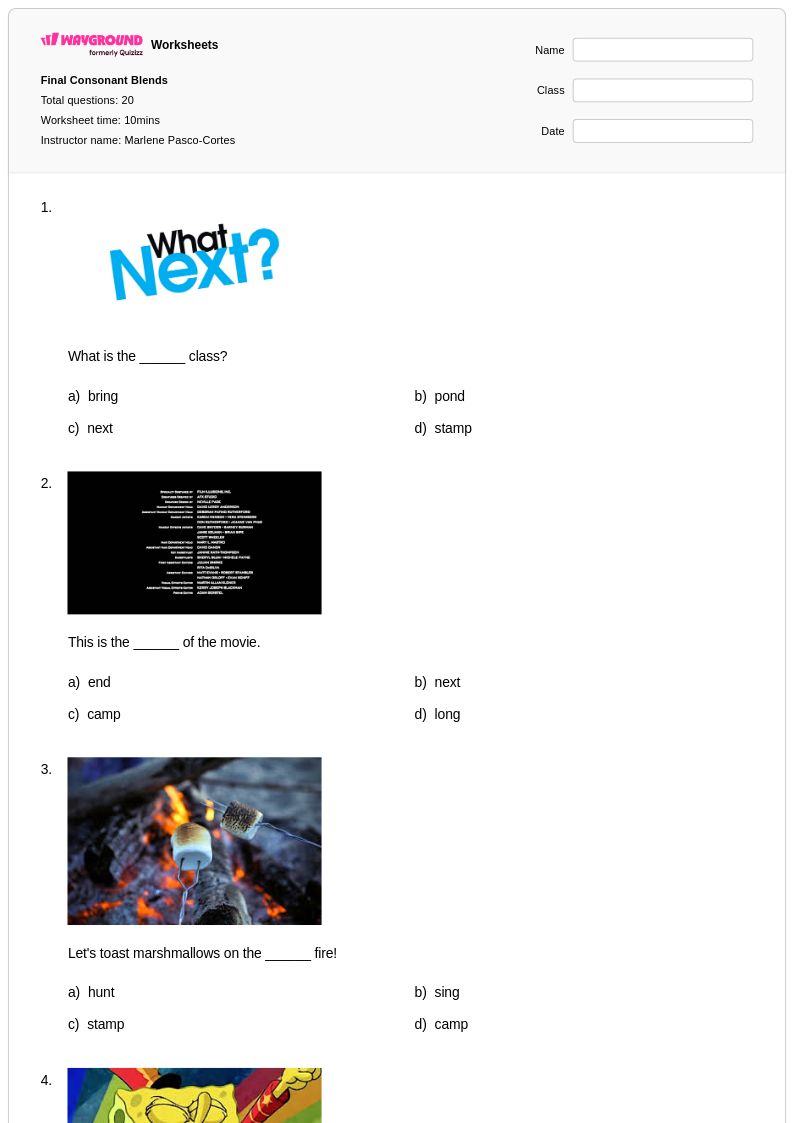
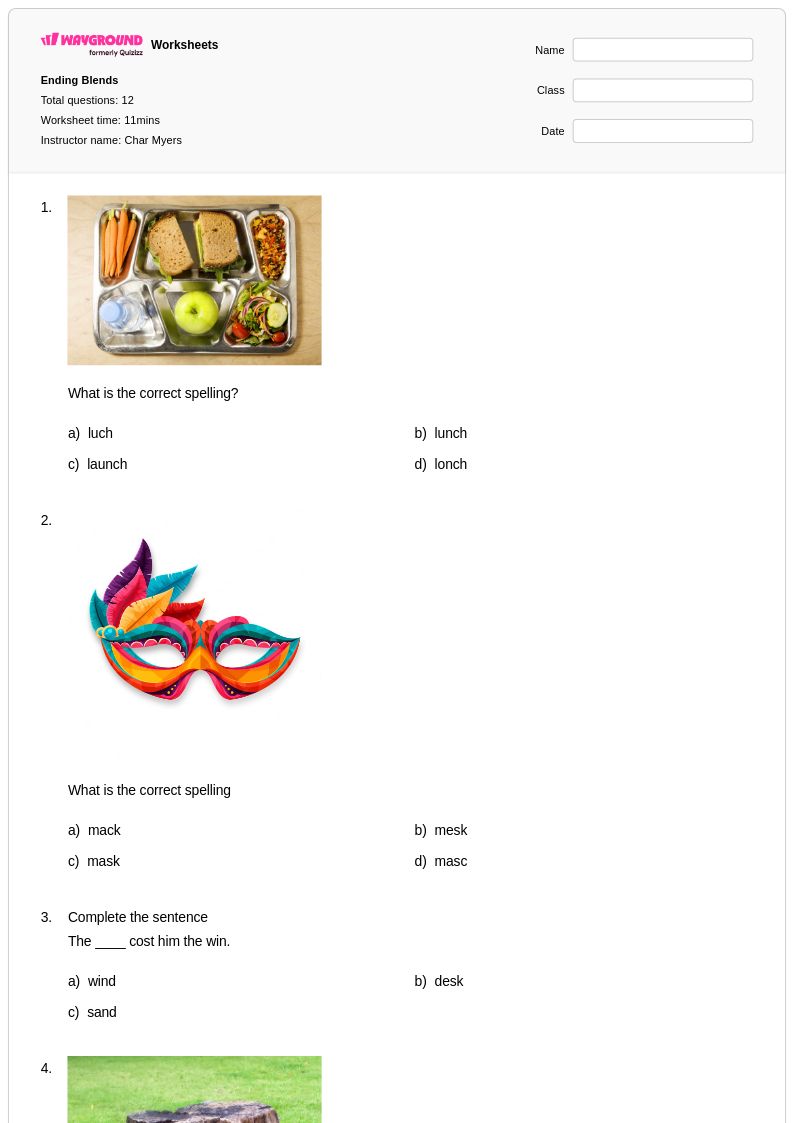
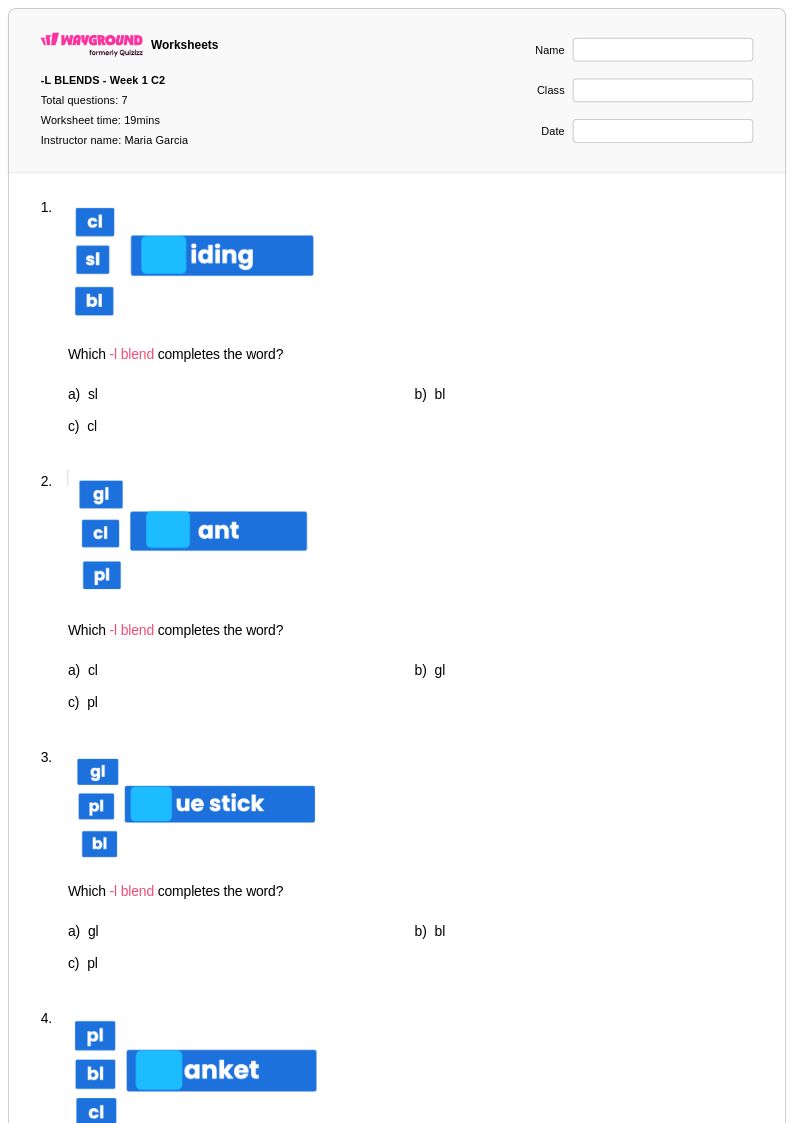
Grade 2 blends worksheets from Wayground offer free printables and practice problems to help students master consonant blends through engaging activities with complete answer keys included.
Blends worksheets for Grade 2 students available through Wayground (formerly Quizizz) provide comprehensive practice with consonant blends, helping young learners master the foundational skill of combining two or more consonants to create smooth sound transitions at the beginning, middle, or end of words. These educational resources strengthen phonemic awareness and decoding abilities as students work with common blends like bl, cr, st, and tr through engaging activities that include word recognition, spelling practice, and reading comprehension exercises. Each worksheet comes with a complete answer key and is designed as a free printable resource in convenient PDF format, offering structured practice problems that progress from simple blend identification to more complex word building and sentence completion tasks.
Wayground (formerly Quizizz) supports educators with an extensive collection of teacher-created blend worksheets, drawing from millions of resources that have been carefully curated and aligned with educational standards. The platform's robust search and filtering capabilities allow teachers to quickly locate Grade 2 appropriate materials that match their specific instructional needs, whether for whole-class instruction, small group work, or individual practice. These differentiation tools enable seamless customization of content difficulty levels, while the flexible format options include both printable PDF versions for traditional classroom use and digital formats for interactive learning experiences. This comprehensive approach to resource management streamlines lesson planning while providing teachers with reliable materials for remediation, enrichment, and ongoing skill practice that builds students' confidence with consonant blends.
FAQs
How do I teach consonant blends to early readers?
Teach consonant blends by first ensuring students have solid knowledge of individual letter sounds before introducing combinations like bl, cr, st, and tr. Use explicit phonics instruction that isolates each sound in the blend before blending them together, then move into word-level practice where students identify and decode blends in context. Progress from initial blends to medial and final positions as students gain confidence.
What activities help students practice consonant blends?
Effective consonant blend practice includes blend sorting activities, word building exercises, and reading passages with targeted blend patterns. Worksheets that sequence practice from simple blend identification to full word formation give students a structured path to fluency. Repeated exposure across different word families reinforces pattern recognition and supports automatic decoding.
What mistakes do students commonly make when learning consonant blends?
A common error is blending only the first letter while dropping the second, for example reading 'slip' as 'sip' or 'flat' as 'fat.' Students also frequently confuse blends with digraphs, treating letter combinations like sh or ch as blends when they produce a single, fused sound. Targeted practice that contrasts blends with digraphs and requires students to articulate each sound in a blend helps correct both patterns.
How can I differentiate blend instruction for struggling readers?
For struggling readers, reduce the number of blend patterns introduced at one time and provide extra scaffolding through visual supports like color-coded letter tiles. On Wayground, teachers can enable Read Aloud so students hear questions and words read to them, and reduce answer choices to lower cognitive load for students who need additional support. Extended time settings can also be applied per student, allowing differentiated pacing without disrupting the rest of the class.
How do I use Wayground's blends worksheets in my classroom?
Wayground's blends worksheets are available as printable PDF downloads for independent practice, homework, or intervention sessions, and in digital formats for technology-integrated classrooms. Teachers can also host worksheets as a quiz on Wayground, enabling real-time assignment and immediate feedback. The platform's search and filtering tools help you locate worksheets matched to specific phonics standards and difficulty levels quickly.
At what grade level should students learn consonant blends?
Consonant blend instruction typically begins in kindergarten with simple initial blends and extends through first and second grade as students encounter medial and final blend positions and more complex combinations. Students who enter these grades without solid single-letter phonics knowledge may need foundational review before blend instruction begins. Blends practice also appears in intervention and remediation contexts at higher grade levels for students with persistent decoding gaps.