Free Printable Vccv Pattern Worksheets for Grade 2
Wayground's Grade 2 VCCV pattern phonics worksheets provide free printables and practice problems with answer keys to help students master consonant patterns in two-syllable words through engaging PDF exercises.
Explore printable Vccv Pattern worksheets for Grade 2
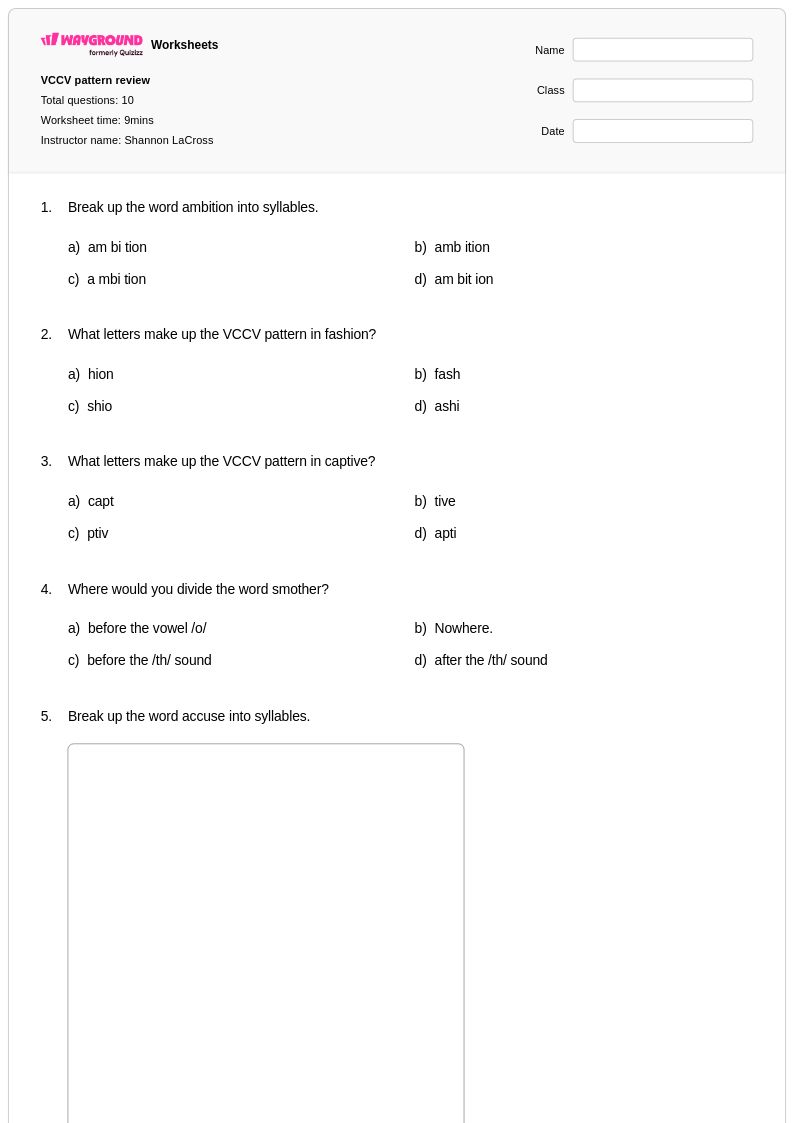
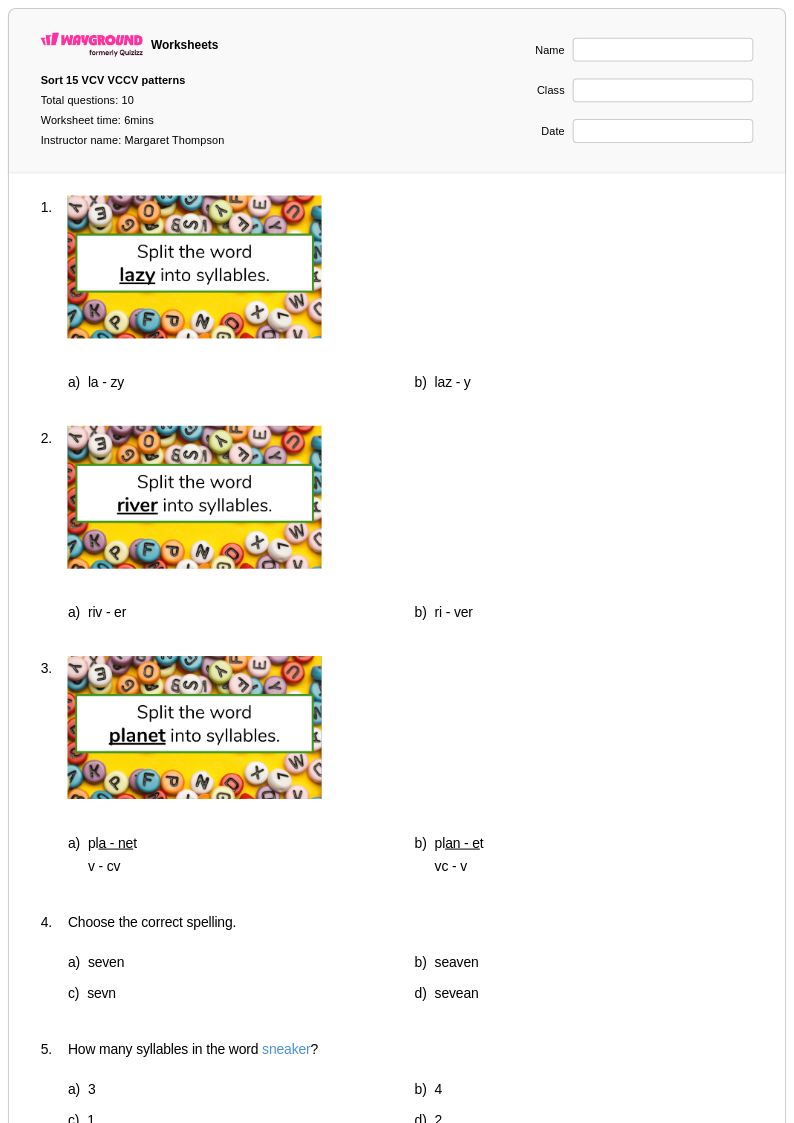
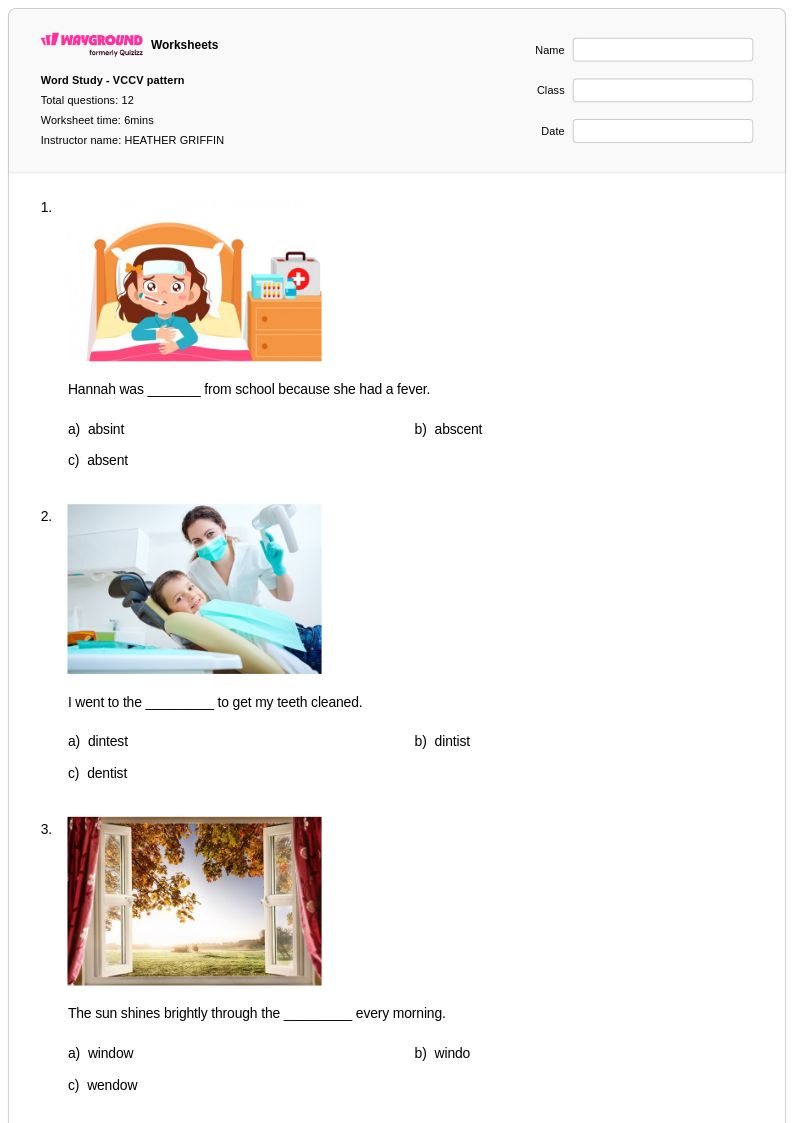
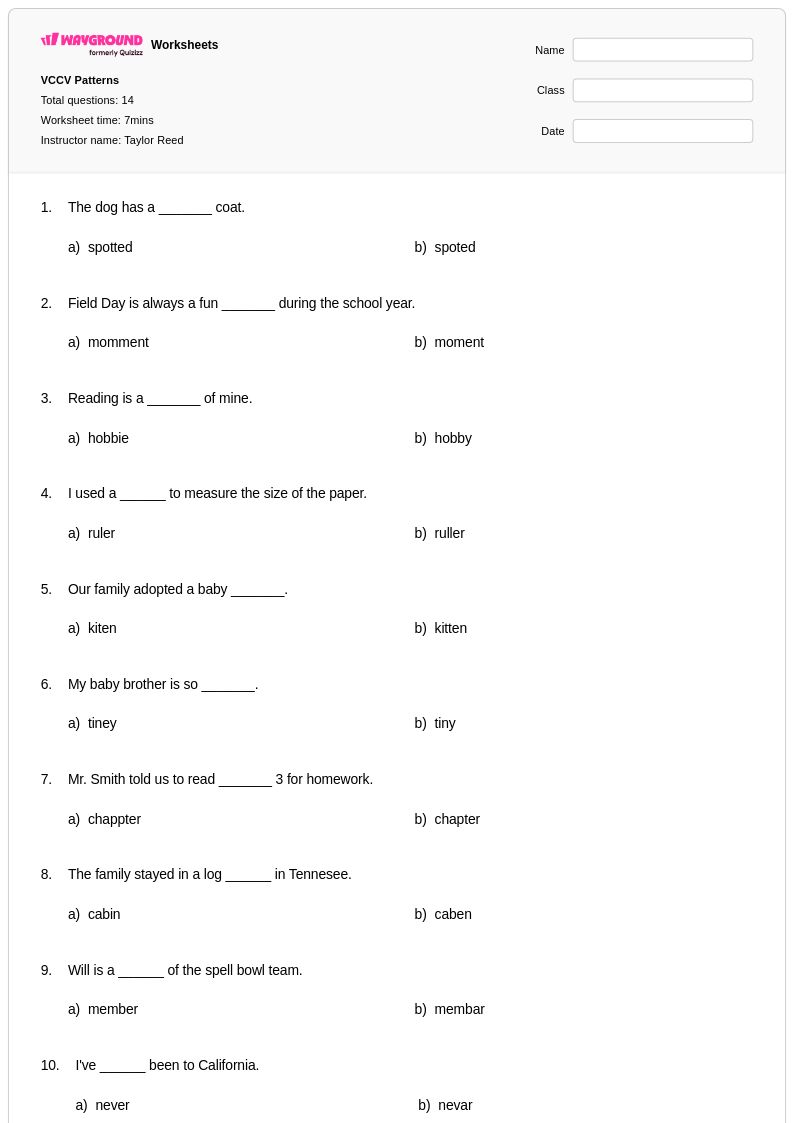
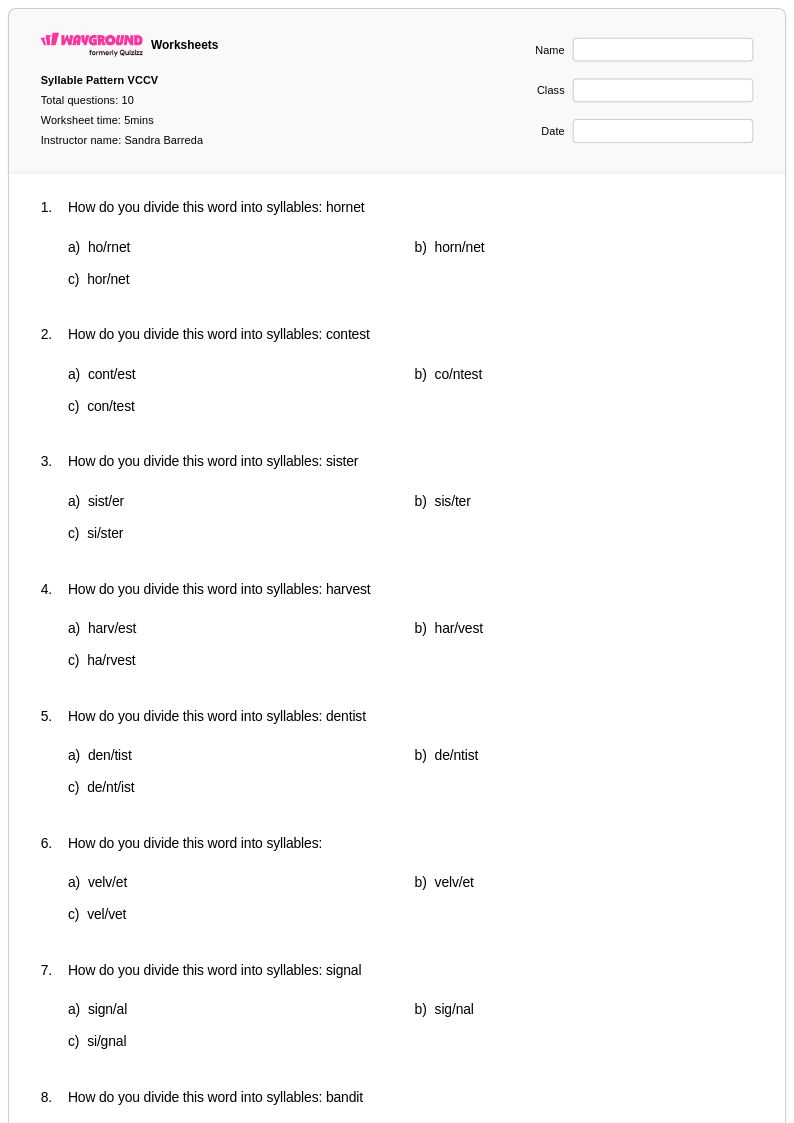
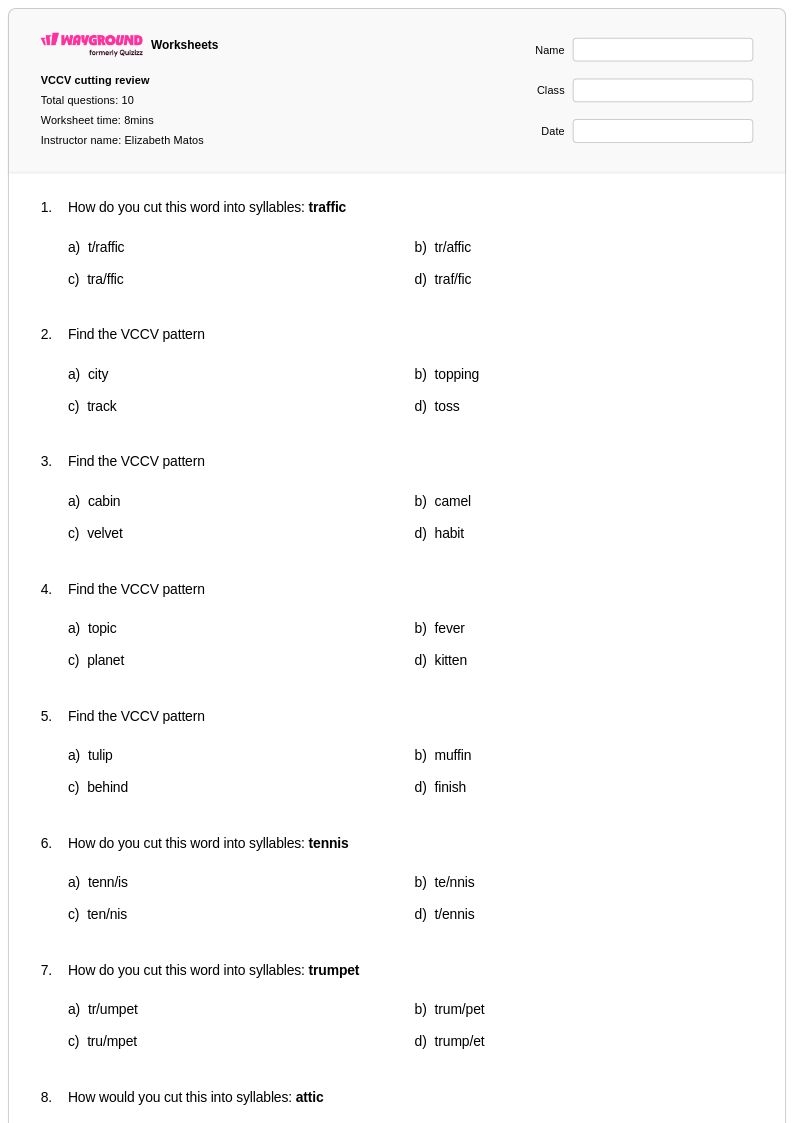
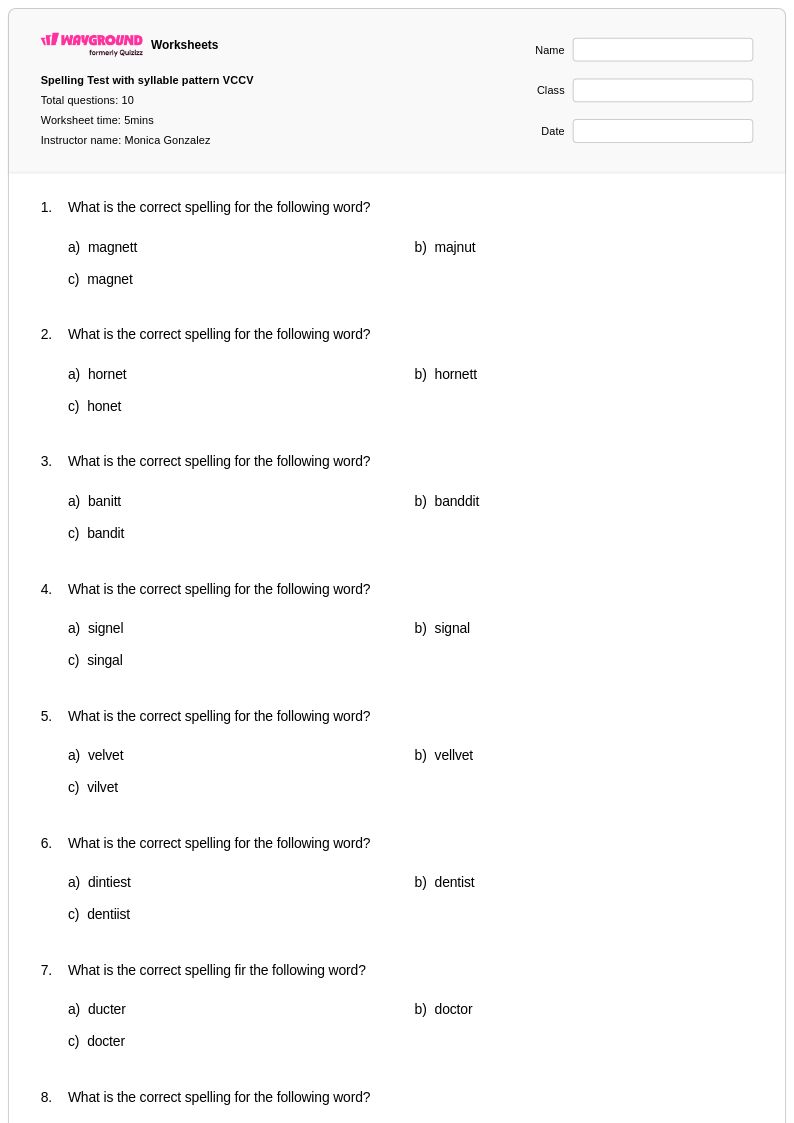
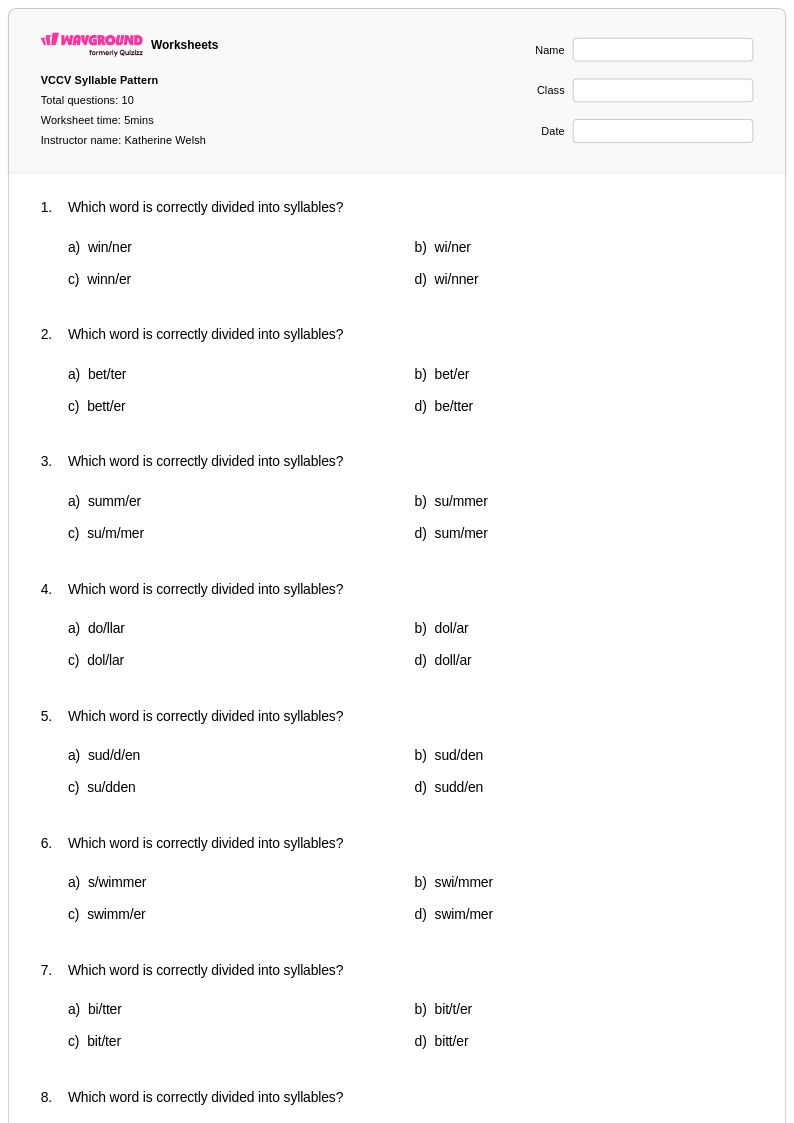
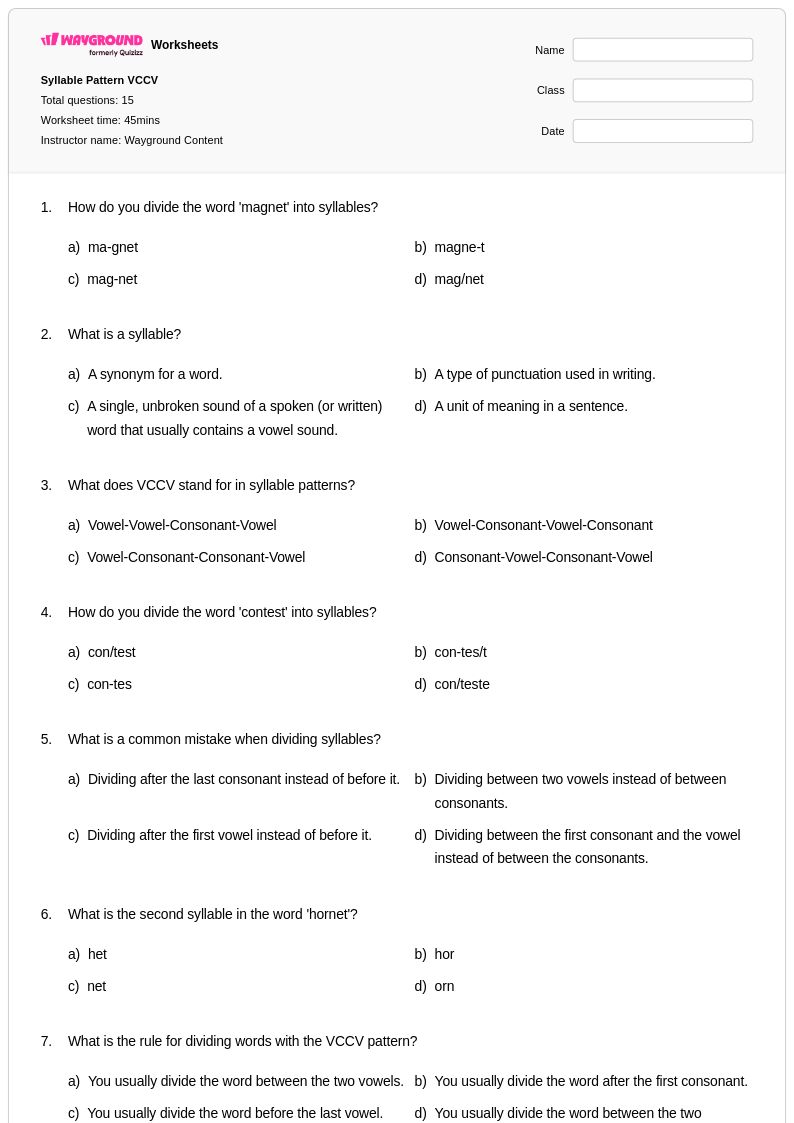
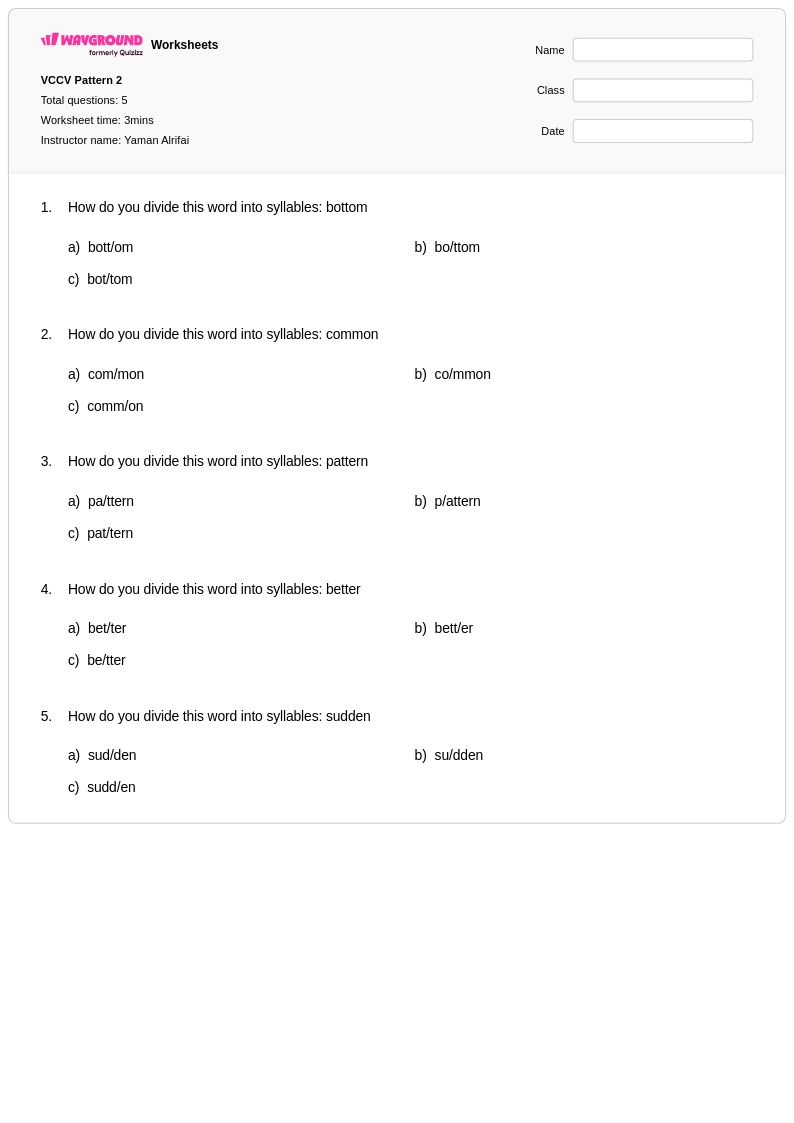
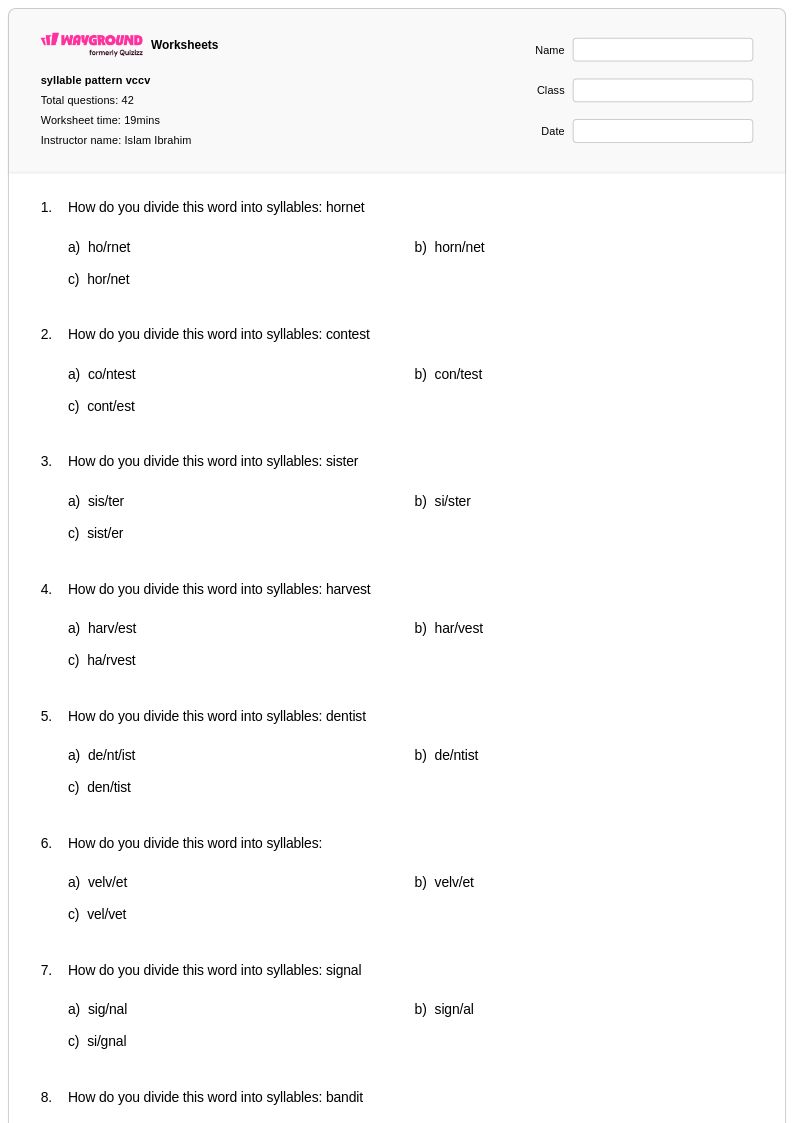
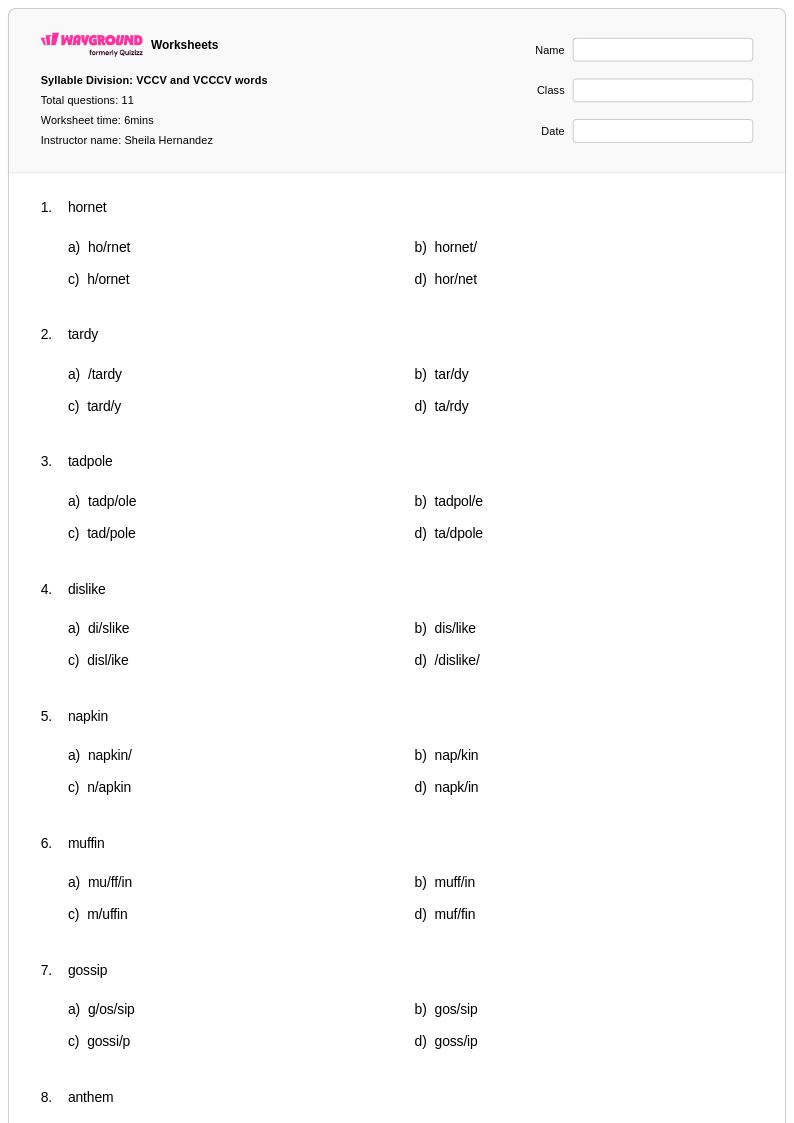
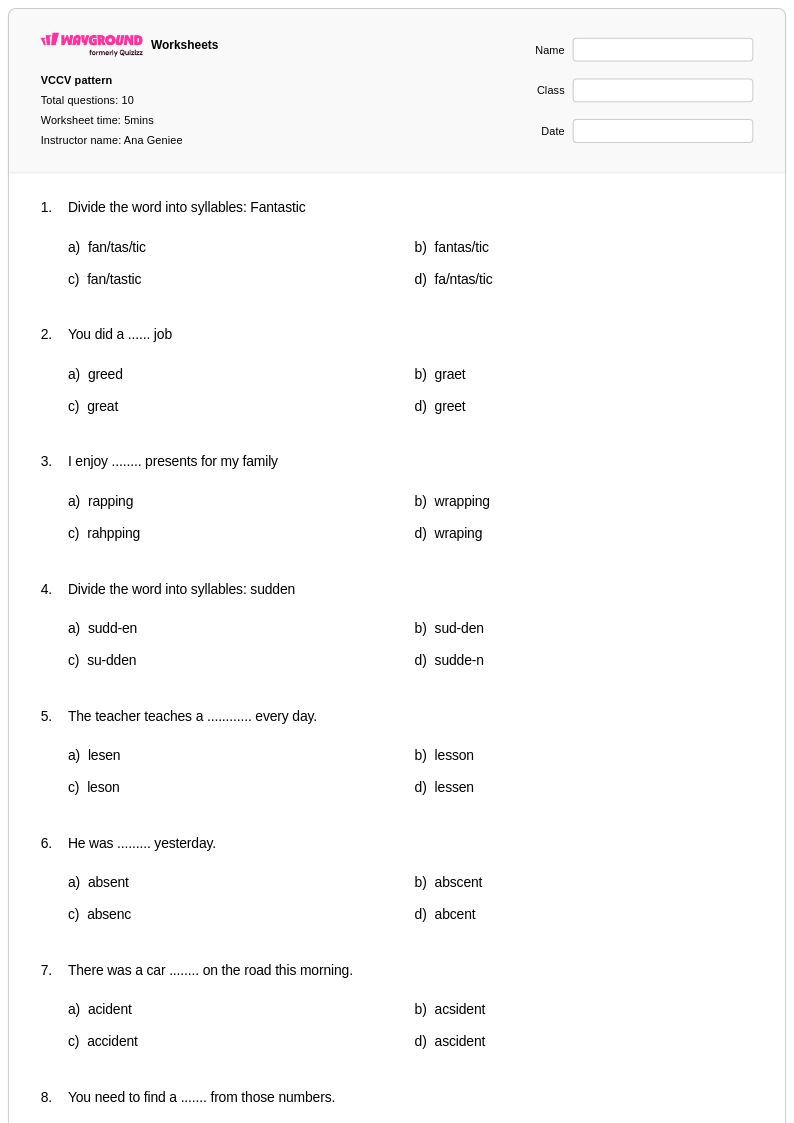
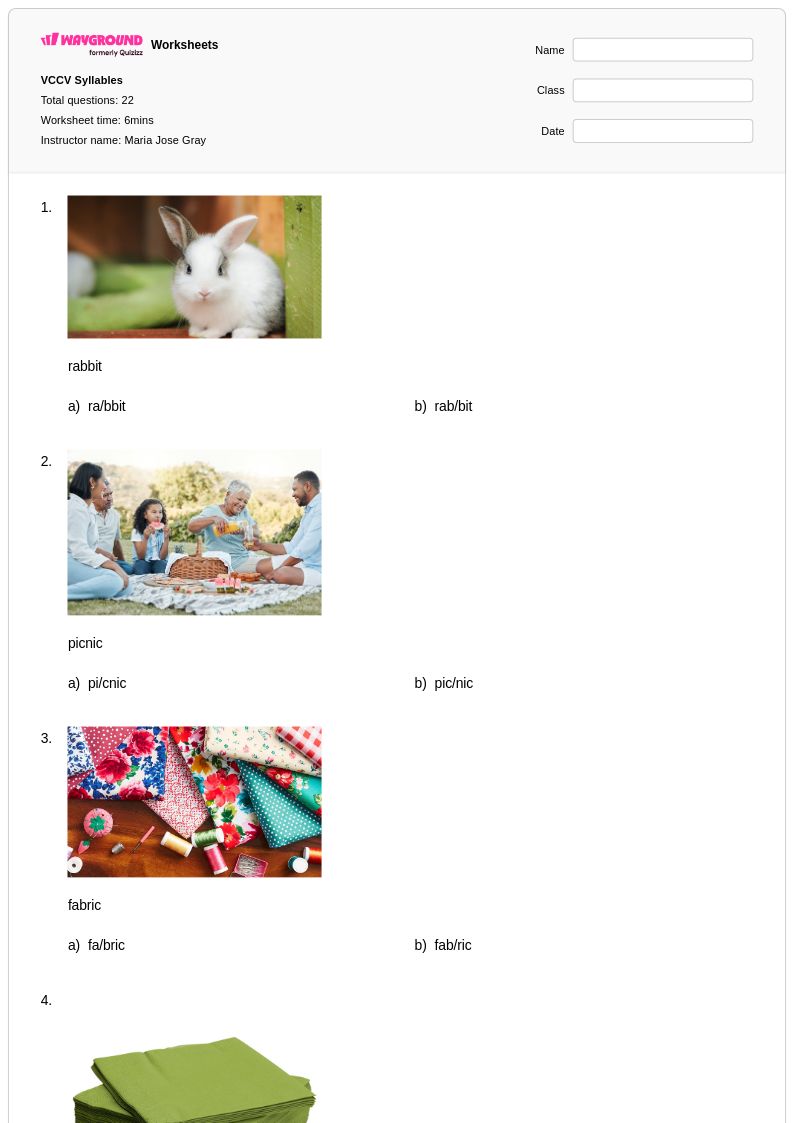
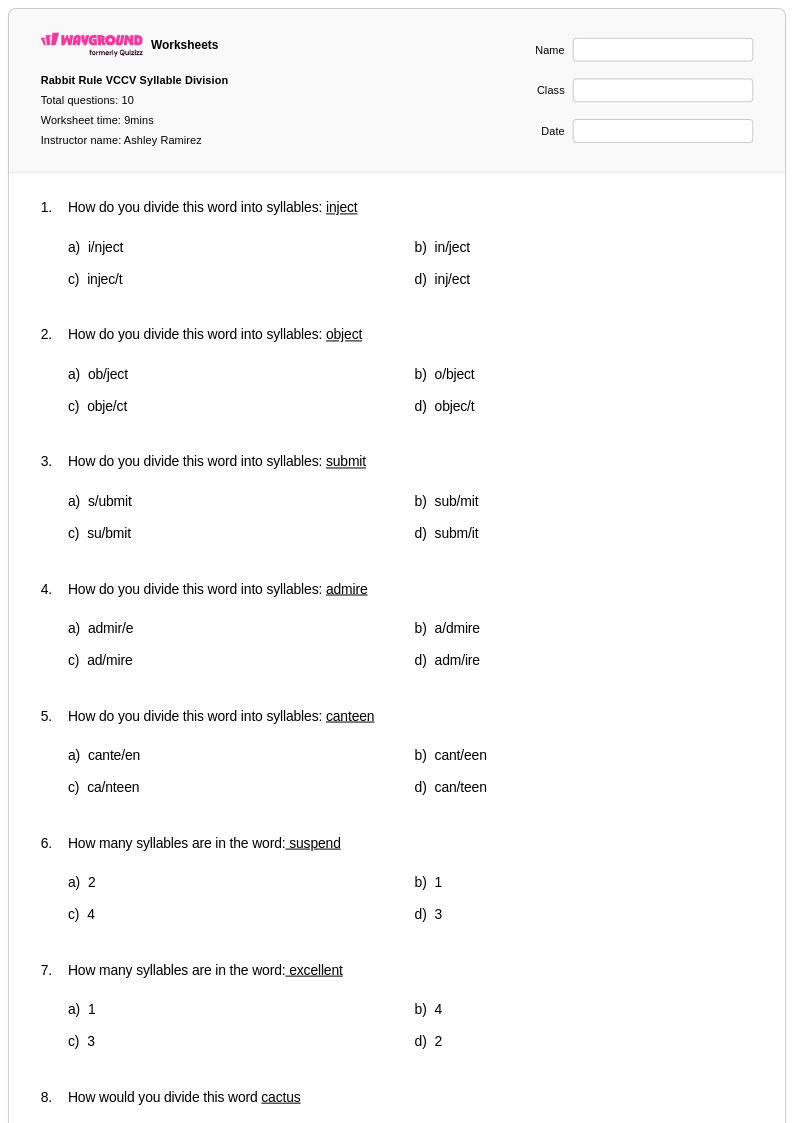
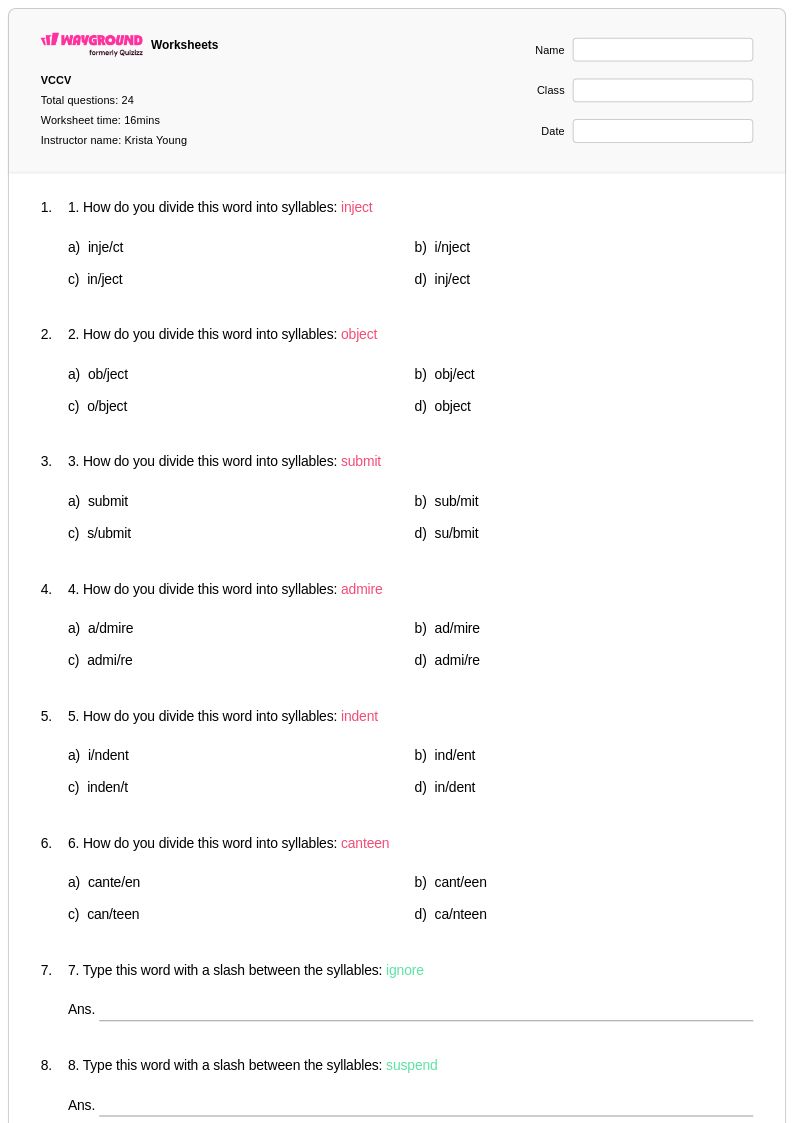
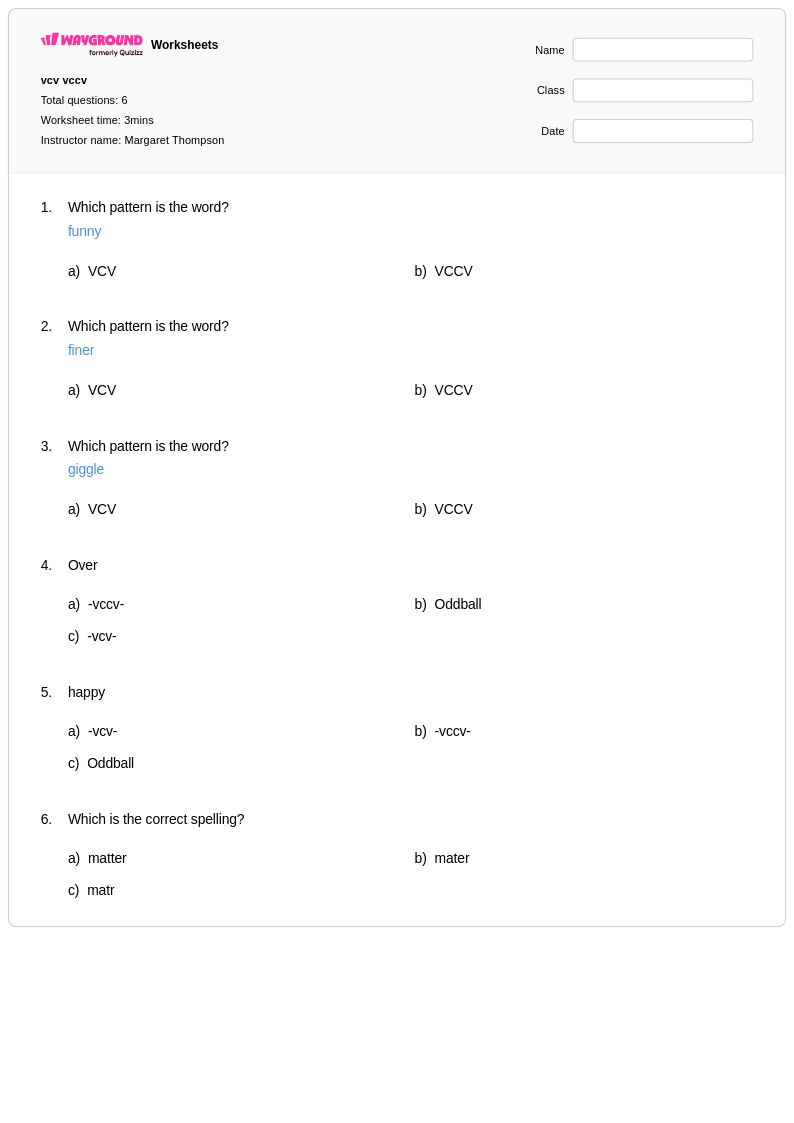
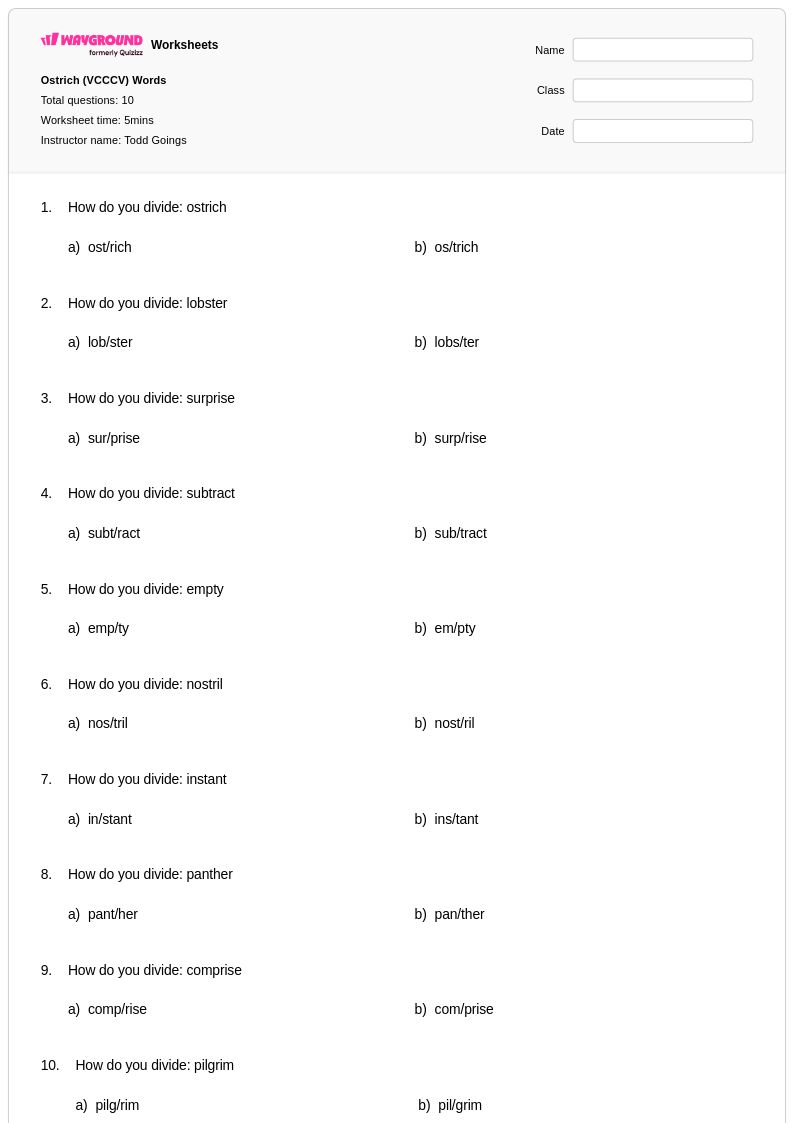
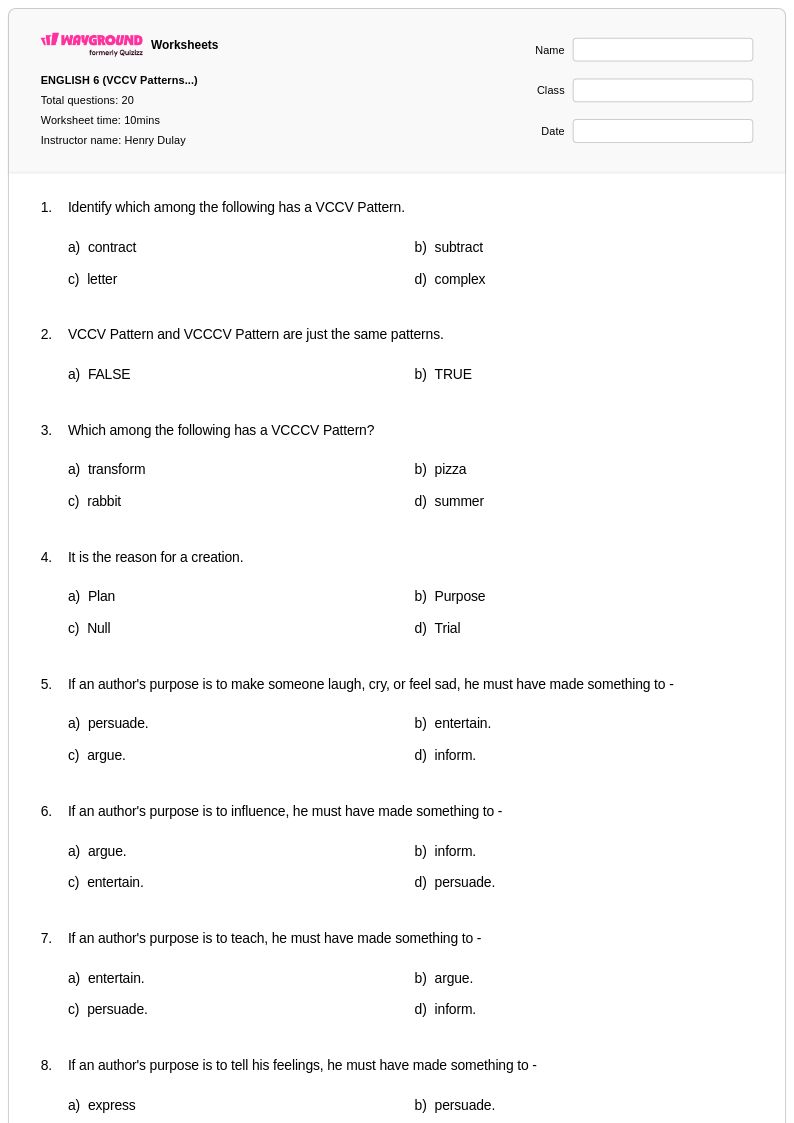
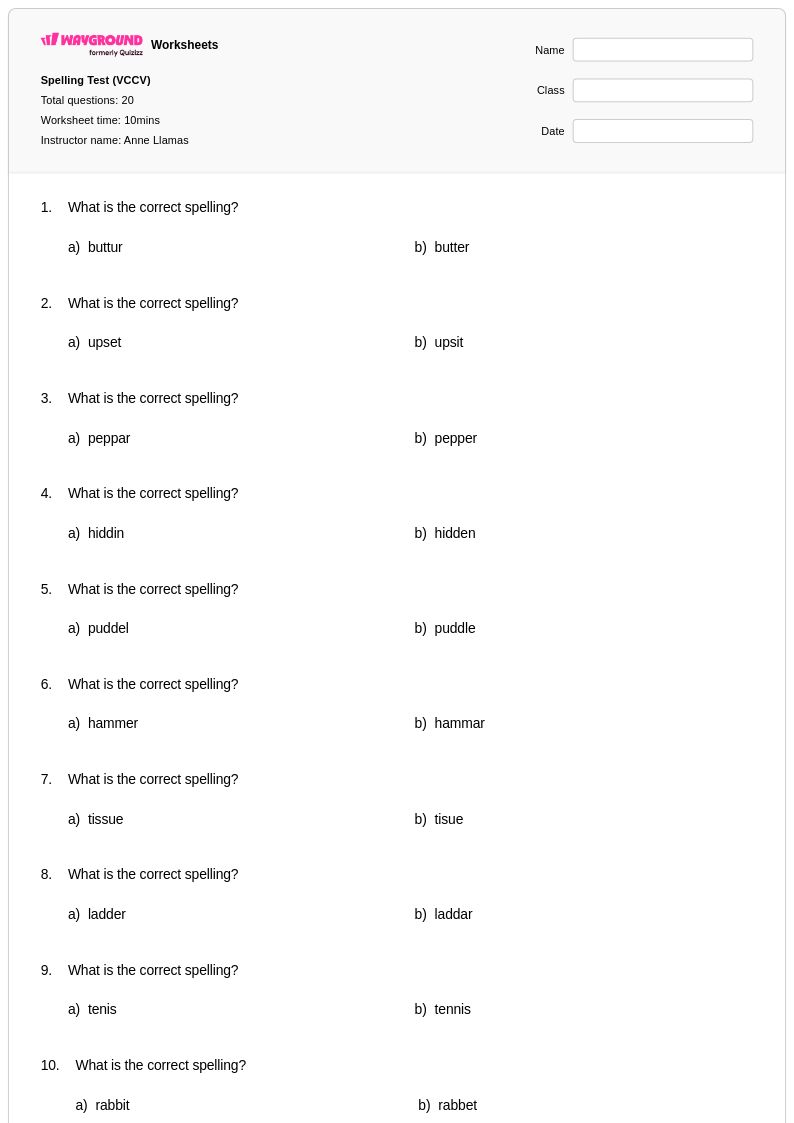
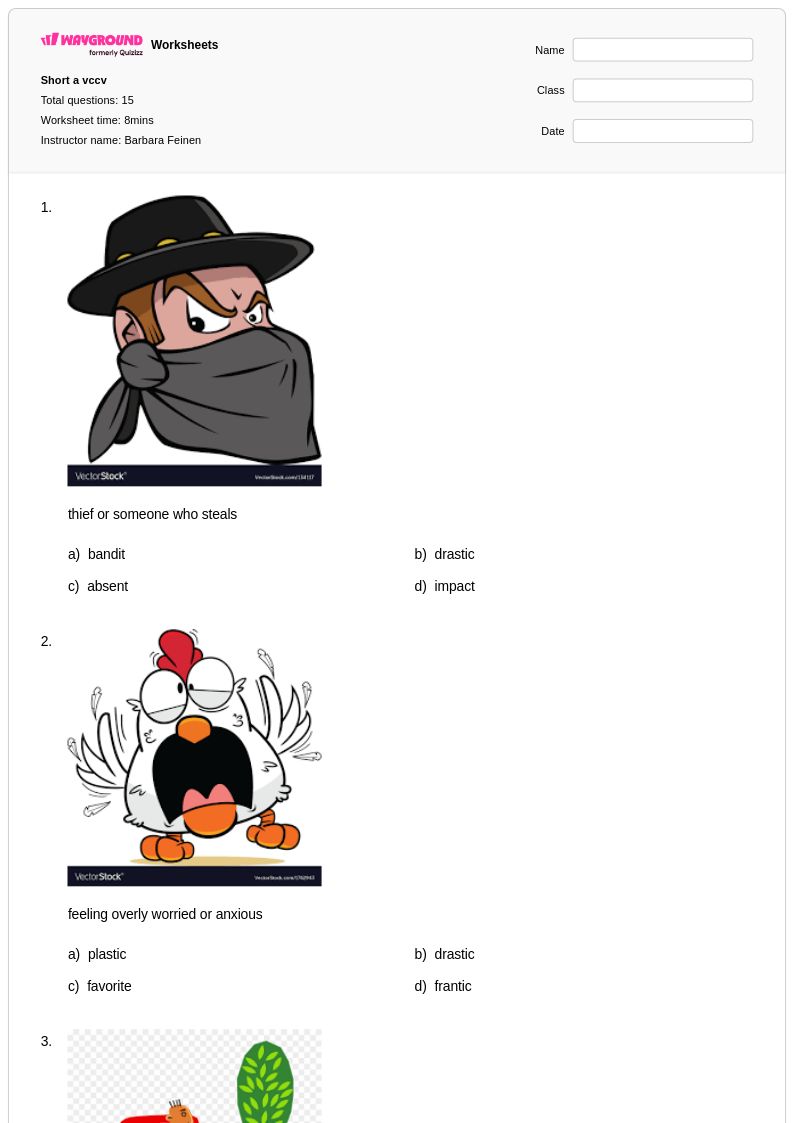
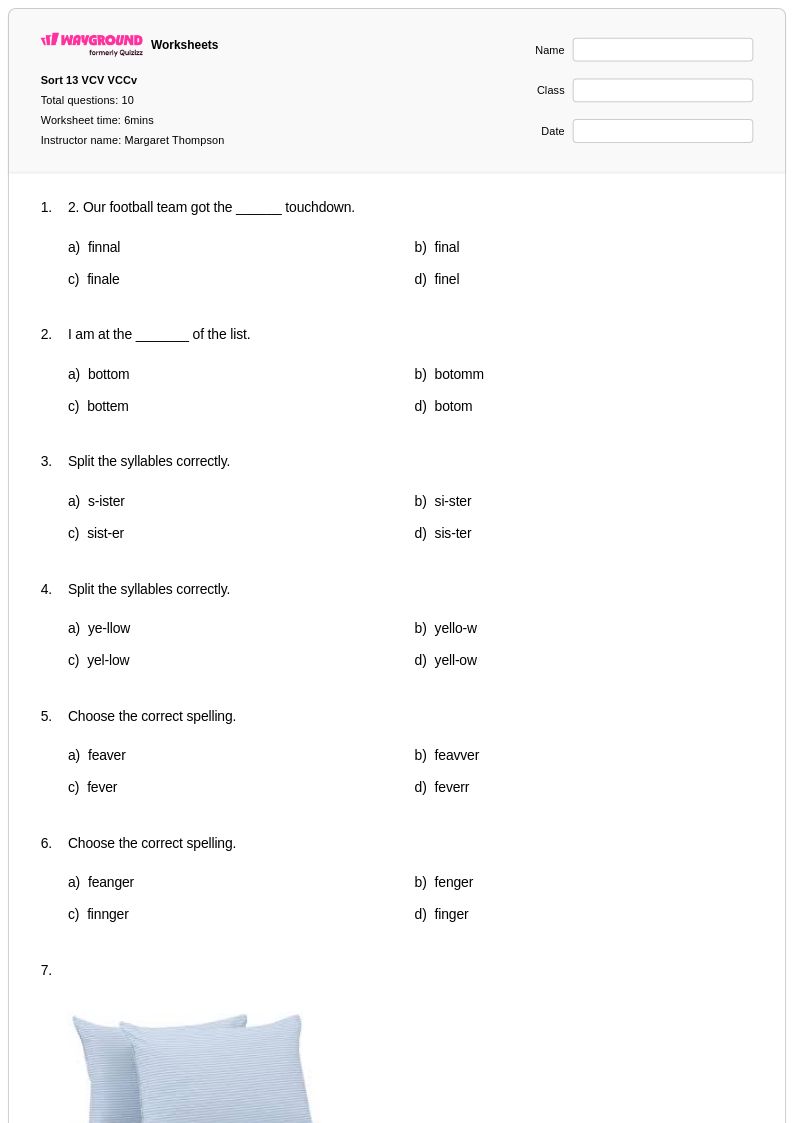
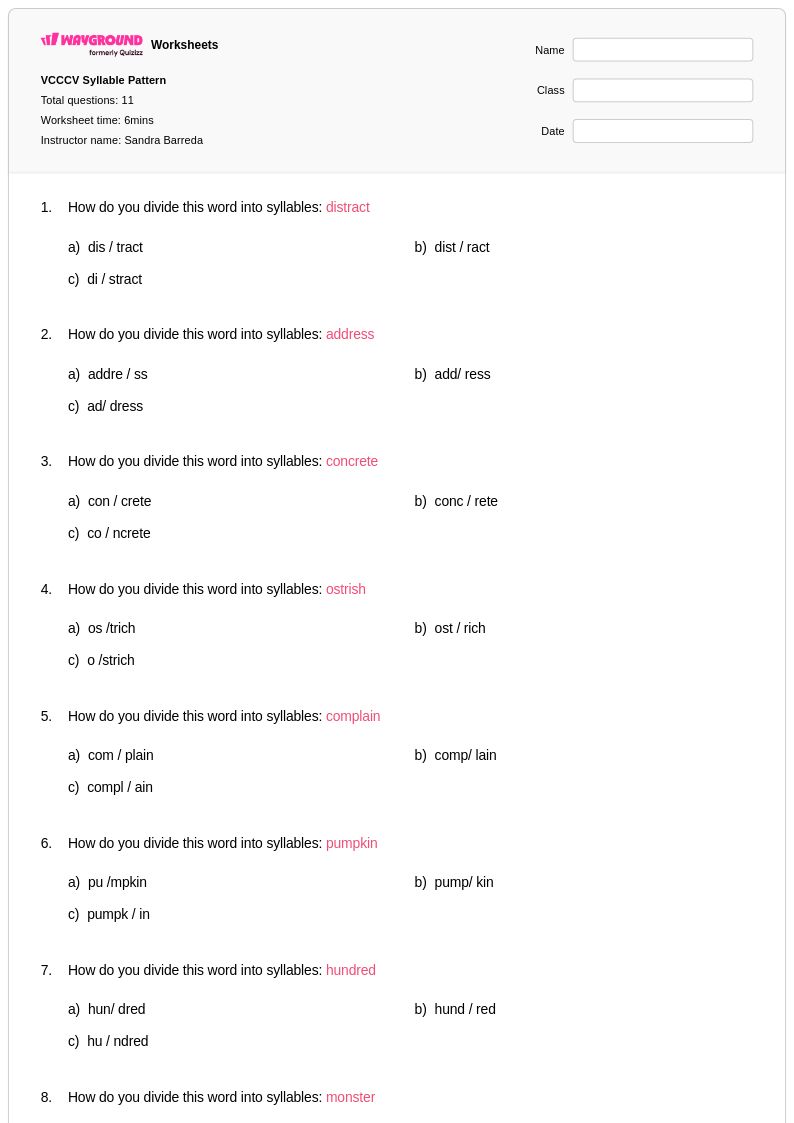
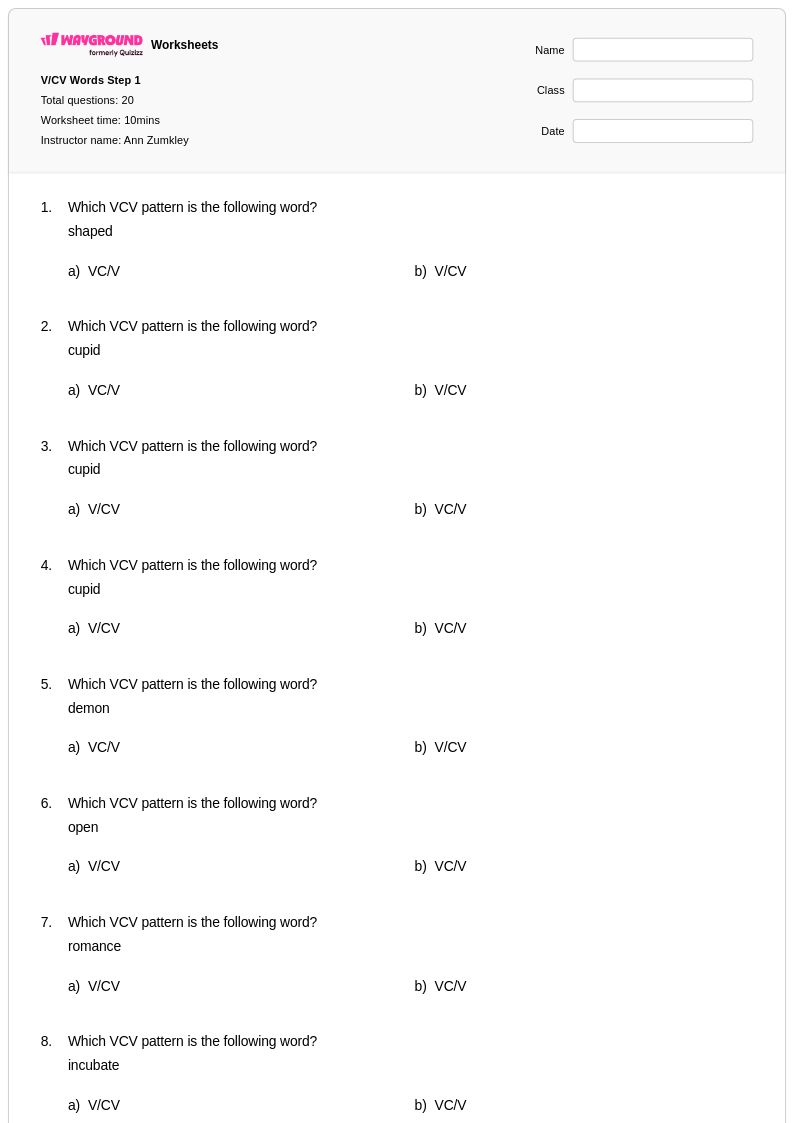
VCCV pattern worksheets for Grade 2 students through Wayground (formerly Quizizz) provide comprehensive practice with consonant-consonant syllable division, a fundamental phonics skill that bridges single-syllable and multisyllabic word reading. These educational resources systematically teach second graders to identify and decode words containing vowel-consonant-consonant-vowel patterns such as "rabbit," "tennis," and "market," where the word naturally divides between the two consonants. Each worksheet strengthens students' ability to recognize syllable boundaries, apply appropriate vowel sounds, and build reading fluency through structured practice problems that progress from simple VCCV words to more complex vocabulary. Teachers can access these printables in convenient pdf format, complete with detailed answer keys that facilitate efficient grading and targeted feedback for individual student needs.
Wayground (formerly Quizizz) empowers educators with an extensive collection of teacher-created VCCV pattern resources, drawing from millions of professionally developed materials that align with phonics standards and Grade 2 curriculum expectations. The platform's robust search and filtering capabilities enable teachers to quickly locate worksheets that match their students' specific skill levels, while built-in differentiation tools support both remediation for struggling readers and enrichment activities for advanced learners. These customizable resources are available in both printable and digital formats, allowing for seamless integration into classroom instruction, homework assignments, and independent practice sessions. Teachers can efficiently plan phonics lessons, monitor student progress through systematic skill practice, and provide targeted interventions using the comprehensive assessment data generated by these carefully structured VCCV pattern exercises.
FAQs
How do I teach the VCCV syllable pattern to students?
To teach the VCCV pattern, start by helping students identify the vowels in a multisyllabic word, then locate the two consonants that appear between them. Teach the rule that syllable division typically occurs between those two consonants, creating two closed syllables (e.g., 'pic-nic', 'den-tist'). Using visual marking strategies, such as underlining vowels and drawing a line between the consonants, helps students internalize the pattern before applying it independently in reading and spelling.
What are common mistakes students make when applying the VCCV syllable pattern?
A frequent error is dividing the syllable at the wrong consonant, especially when students encounter consonant blends or digraphs that should not be separated (e.g., incorrectly splitting 'bl' in 'tablet'). Students also sometimes misidentify the vowels in a word, leading to an incorrect syllable split. Another common misconception is assuming all two-consonant clusters automatically divide, without recognizing that blends and digraphs function as single units and follow different rules.
What practice activities help students master VCCV word patterns?
Effective practice for the VCCV pattern includes syllable-sorting tasks, word-marking exercises where students underline vowels and draw division lines, and reading fluency drills using VCCV word lists. Moving from recognition tasks (identifying the pattern) to application tasks (correctly reading and spelling VCCV words aloud) builds both decoding and encoding skills. Structured worksheets that progress in complexity, starting with simple VCCV words and advancing to words with consonant blends, are especially effective for building automaticity.
How does the VCCV pattern support reading fluency development?
Mastering the VCCV pattern gives students a reliable strategy for decoding unfamiliar multisyllabic words, which directly reduces reading hesitation and improves fluency. Because VCCV words typically produce closed syllables, students can apply consistent short-vowel decoding rules once they have identified the syllable boundary. This reduces cognitive load during reading by giving students a predictable framework rather than requiring whole-word memorization.
How can I use Wayground's VCCV pattern worksheets in my classroom?
Wayground's VCCV pattern worksheets are available as printable PDFs for traditional classroom use and in digital formats for technology-integrated instruction, including the option to host them as an interactive quiz on Wayground. Teachers can use them for whole-group instruction, small-group intervention with struggling readers, or independent practice centers. The included answer keys make them practical for self-paced study or quick teacher review, and Wayground's accommodation tools allow teachers to assign extended time or read-aloud support to individual students who need it without disrupting the rest of the class.
How do I differentiate VCCV pattern instruction for students at different reading levels?
For students who are still developing phonemic awareness, begin with highly decodable VCCV words using only single consonants between the vowels (e.g., 'mitten', 'picnic') before introducing consonant blends. Advanced students can work with less common VCCV words and be challenged to apply the pattern in their own writing. On Wayground, teachers can also assign reduced answer choices or enable read-aloud support for individual students to lower barriers without changing the core learning objective for the rest of the class.