Free Printable Vowel-consonant Patterns Worksheets for Grade 2
Explore Grade 2 vowel-consonant pattern worksheets and printables that help students master phonics fundamentals through engaging practice problems, free PDF downloads, and comprehensive answer keys.
Explore printable Vowel-consonant Patterns worksheets for Grade 2
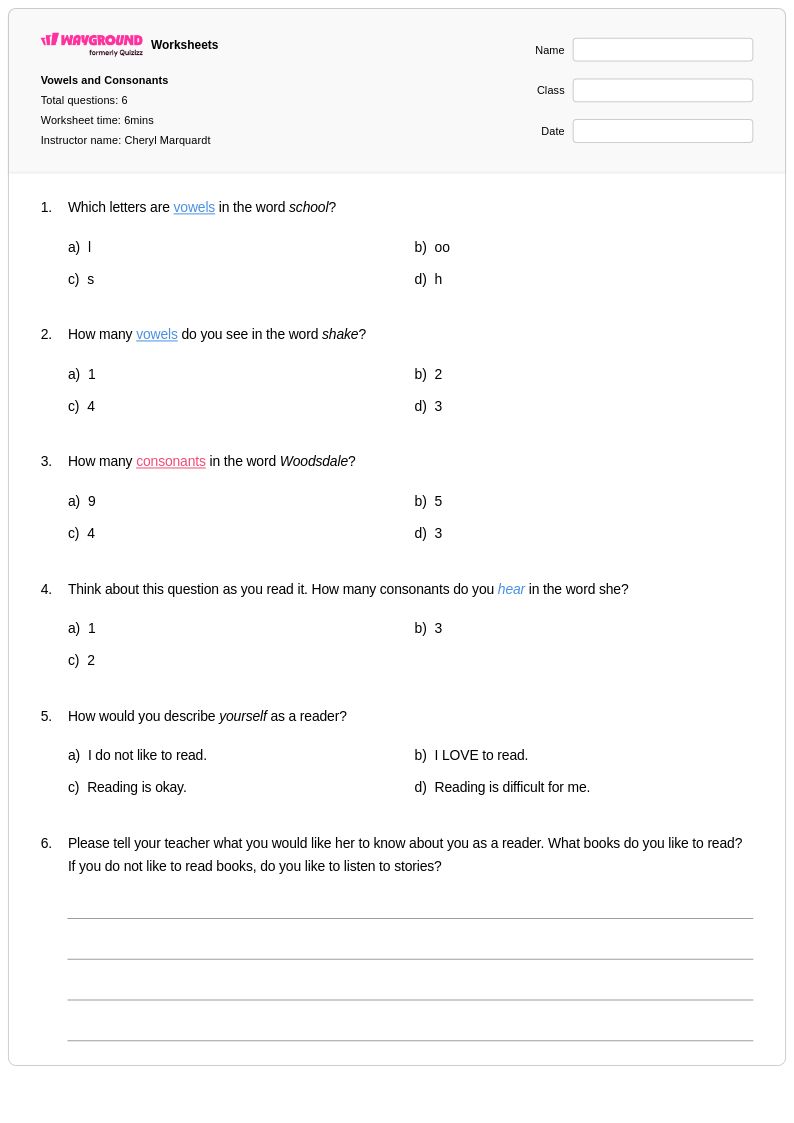
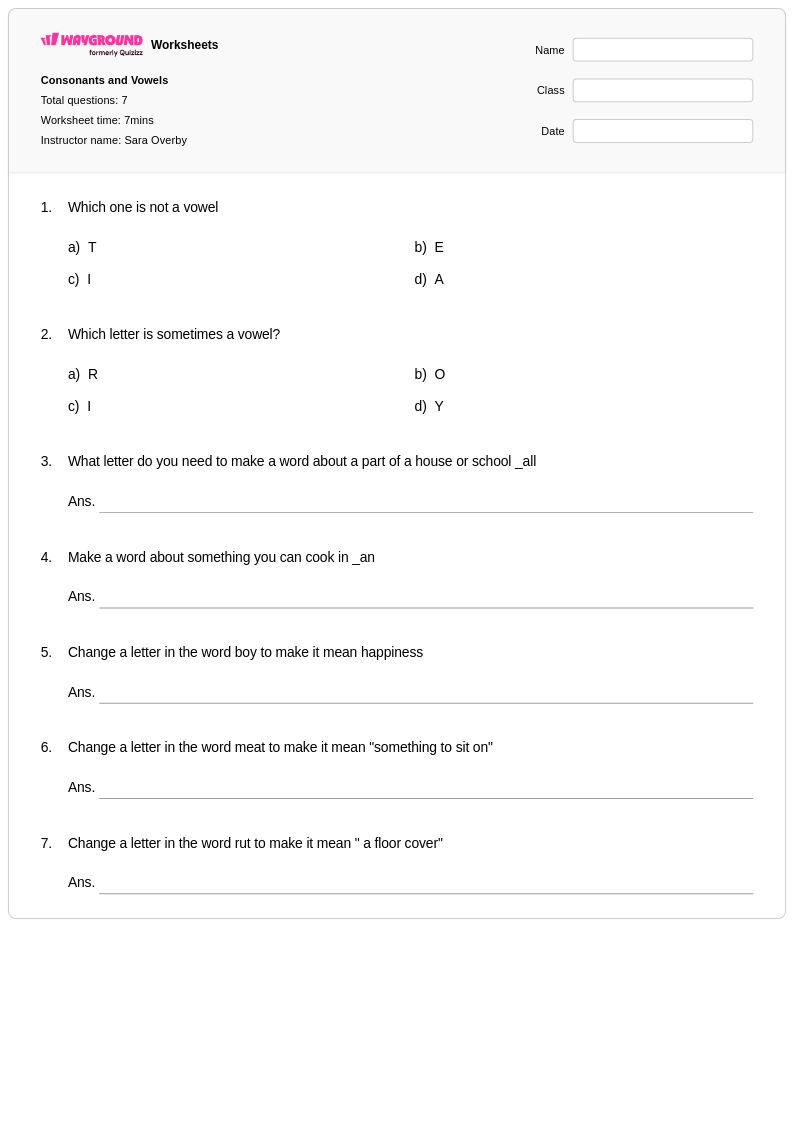
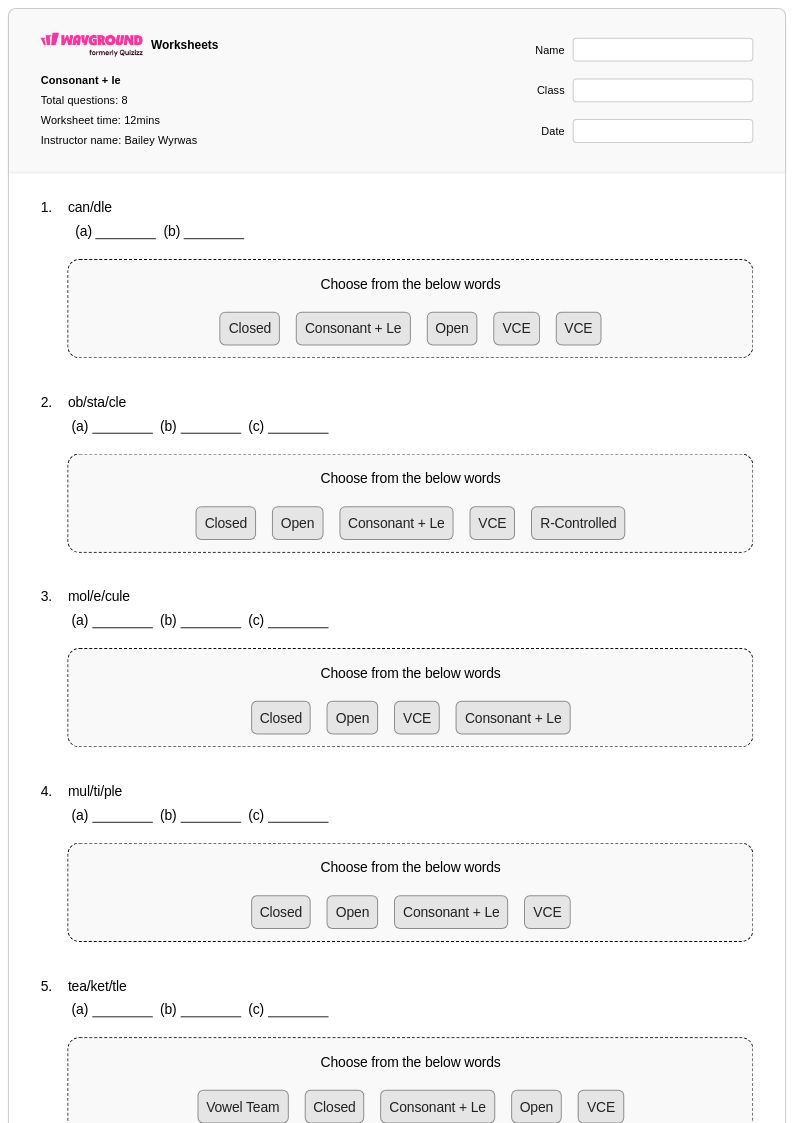
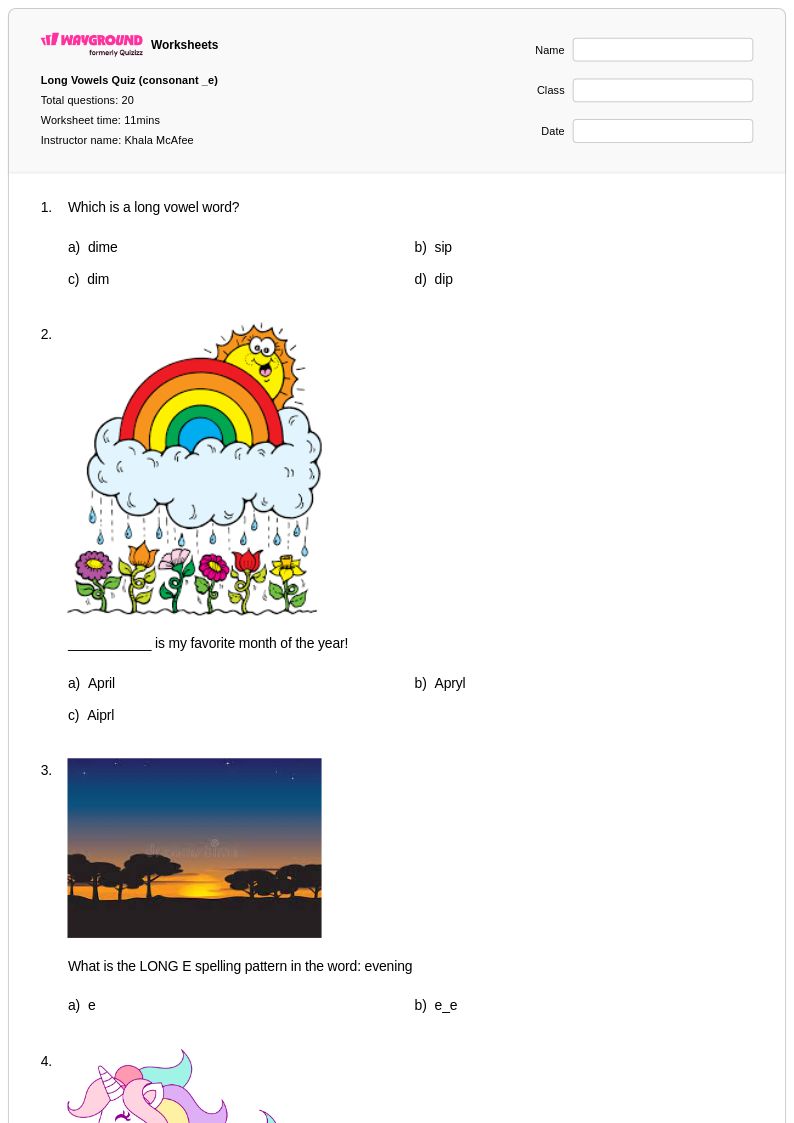
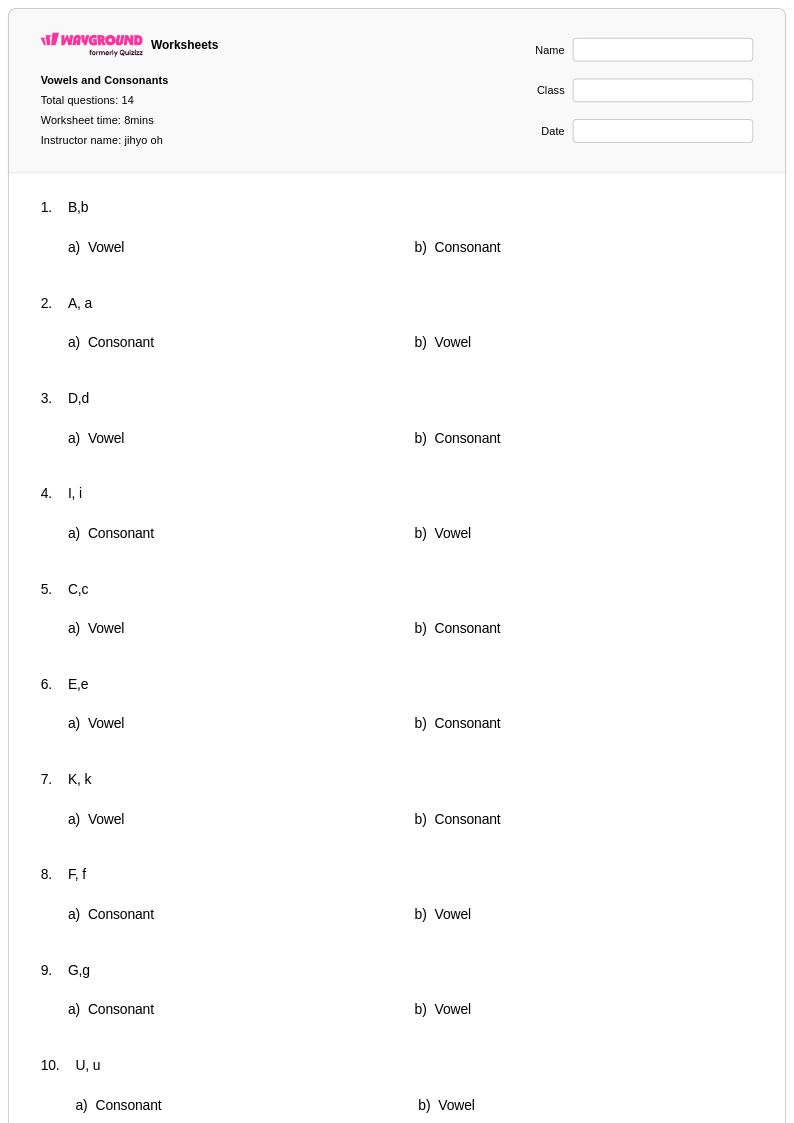
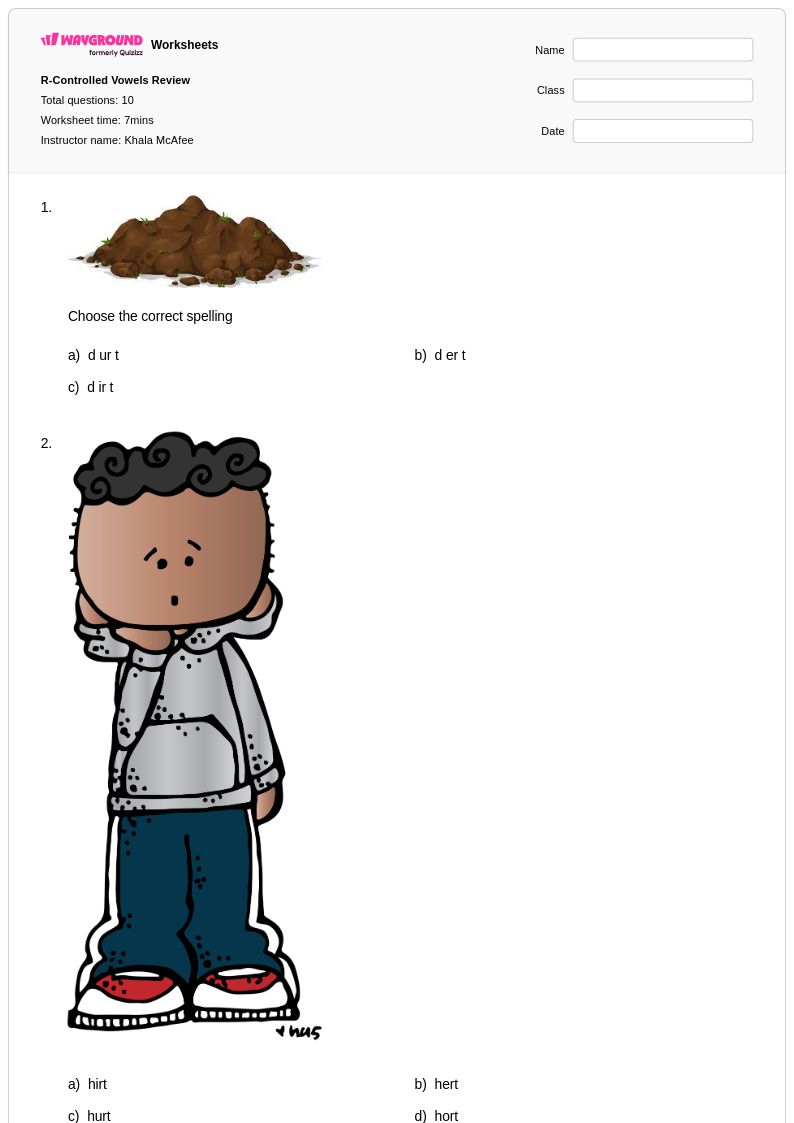
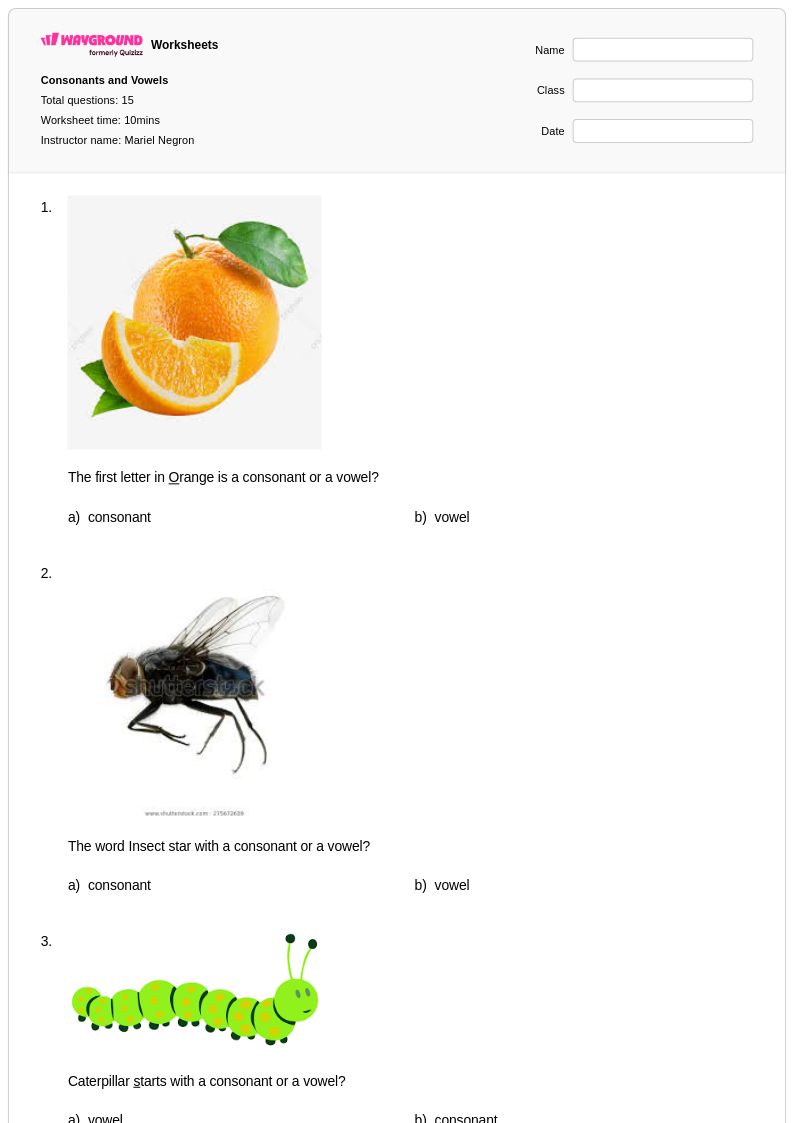
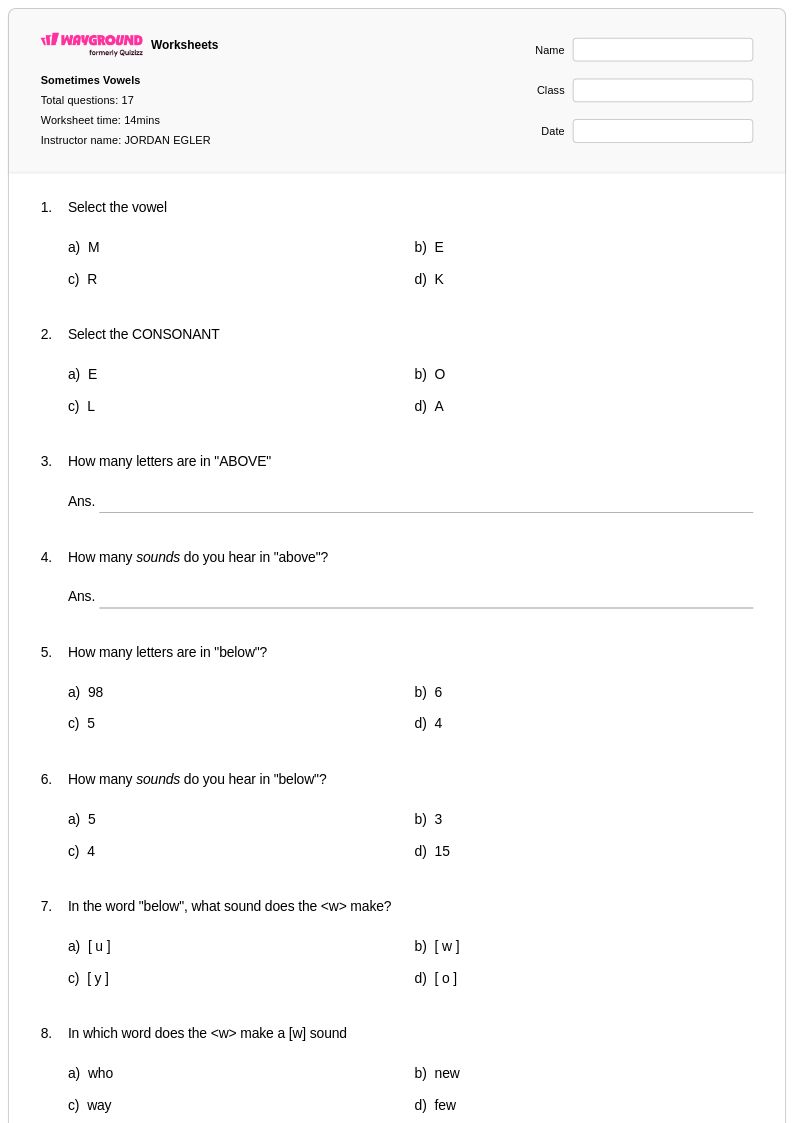
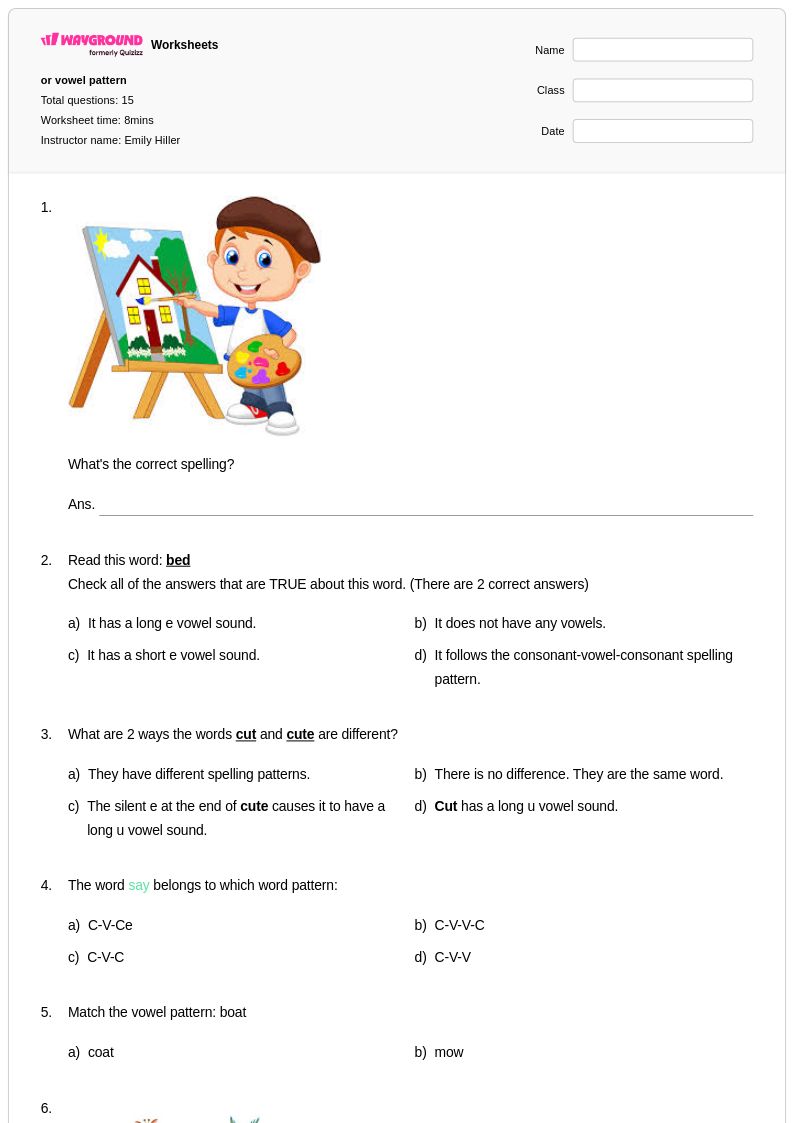
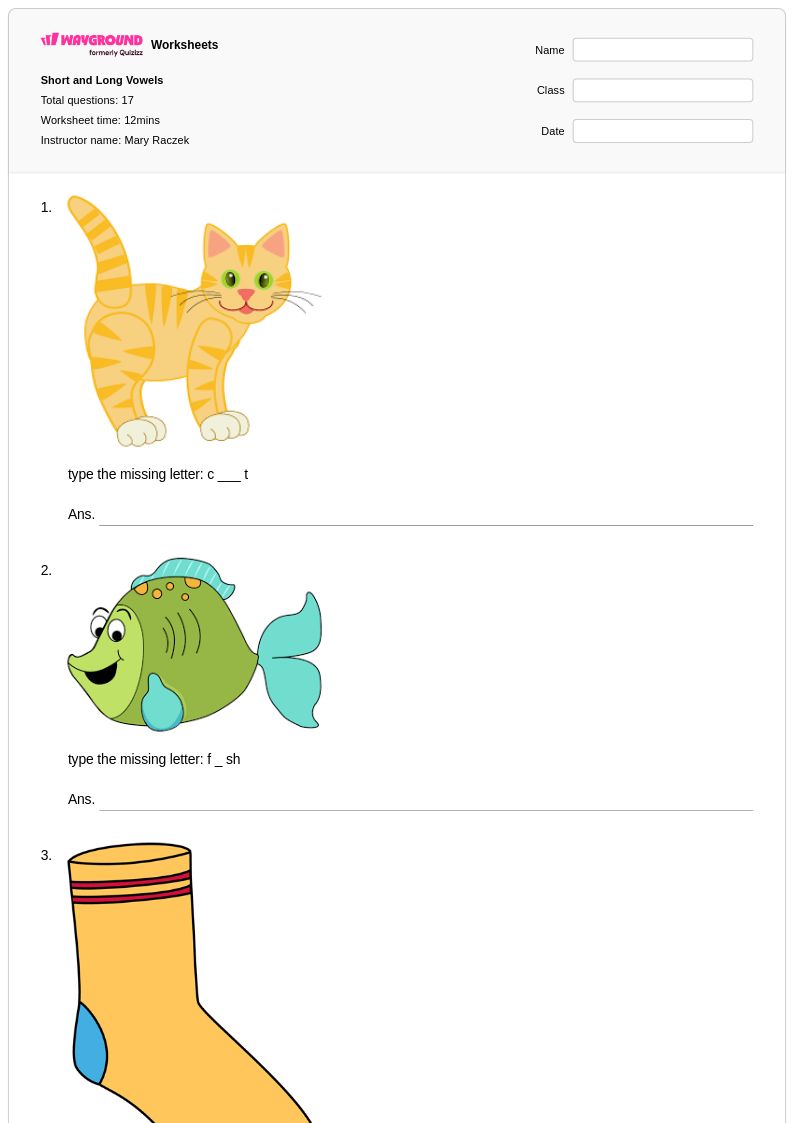
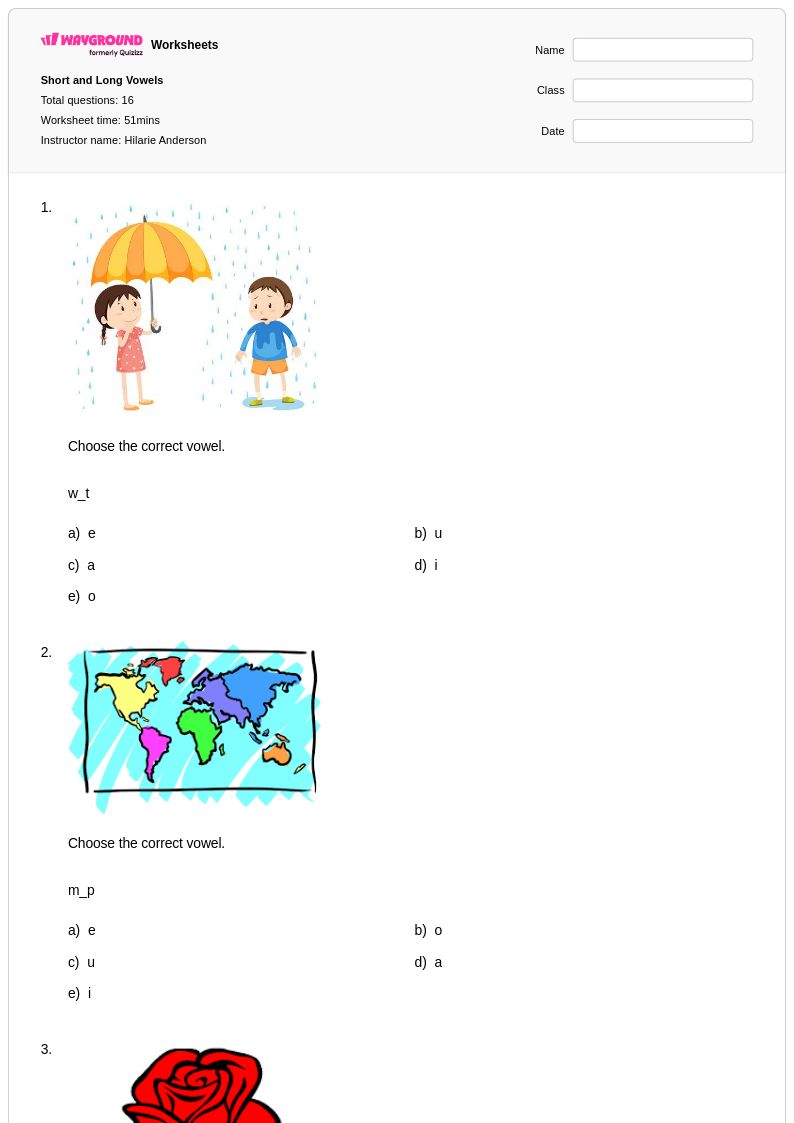
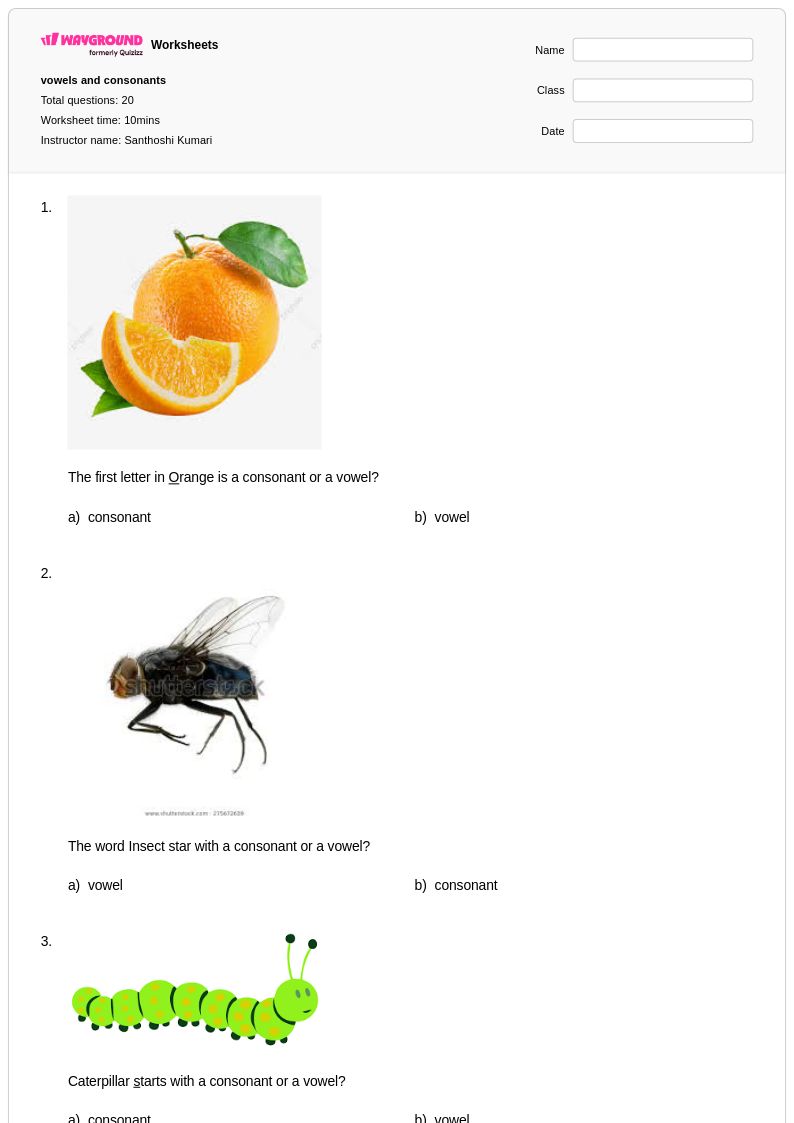
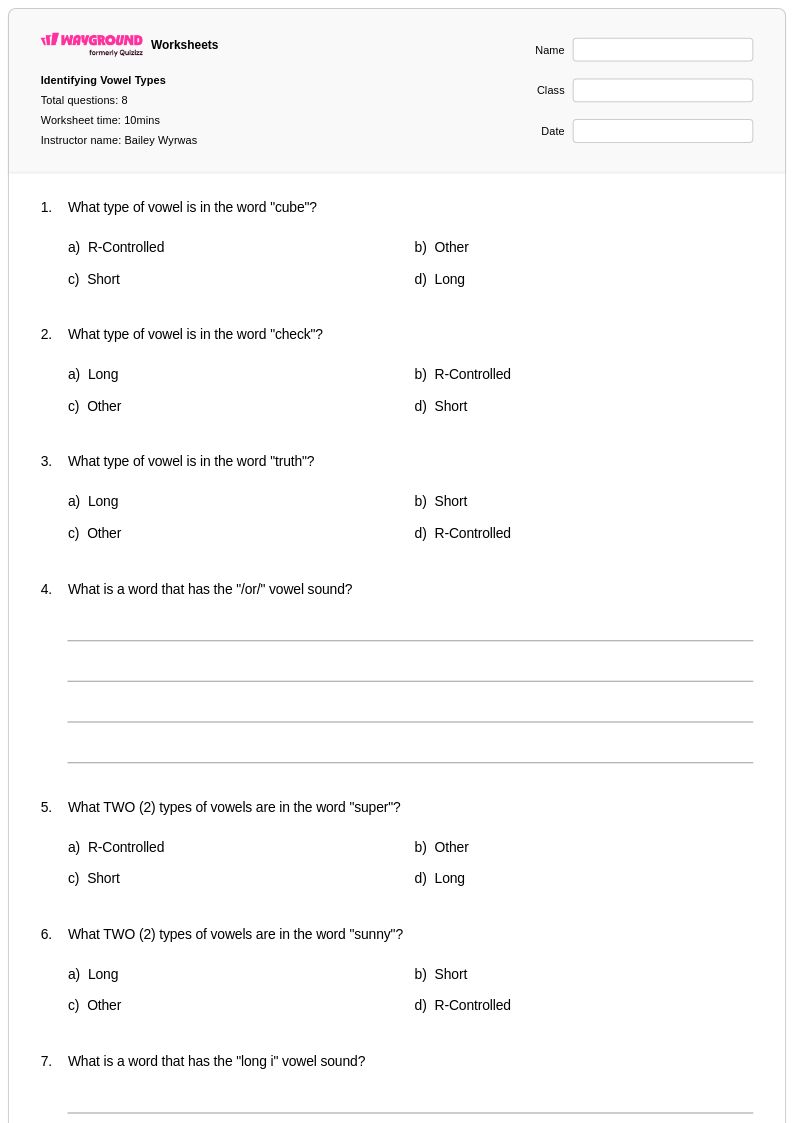
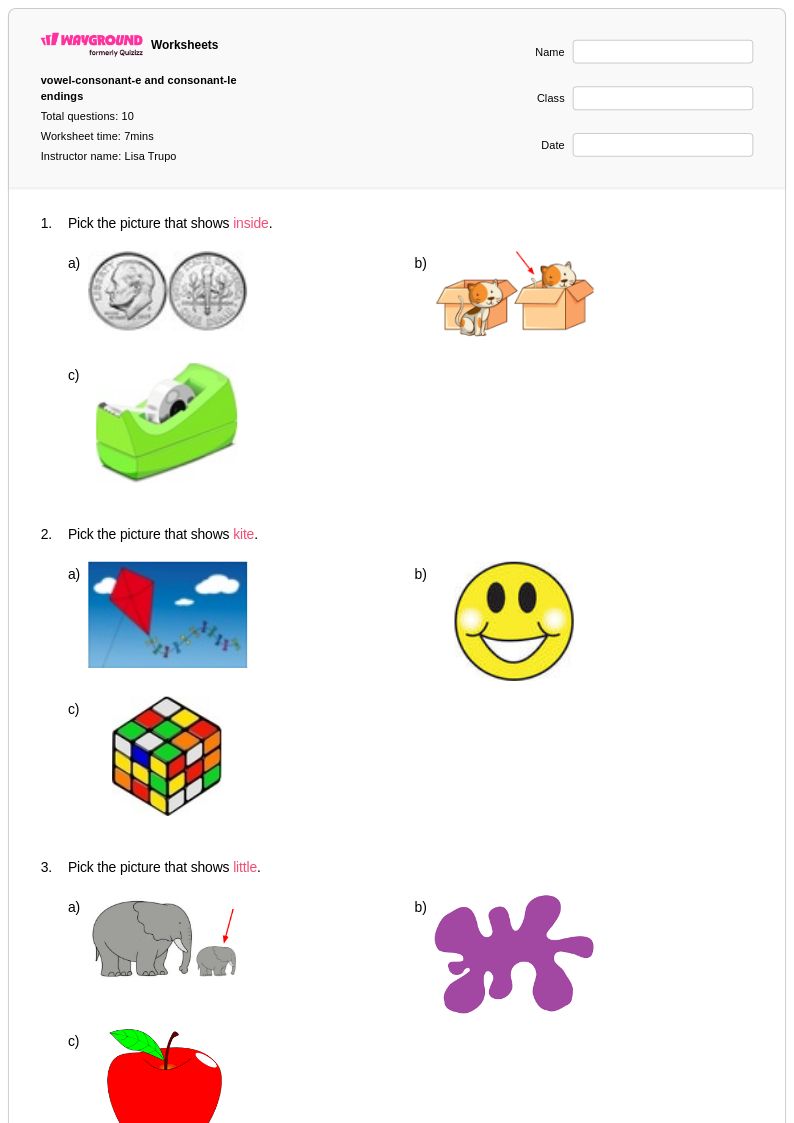
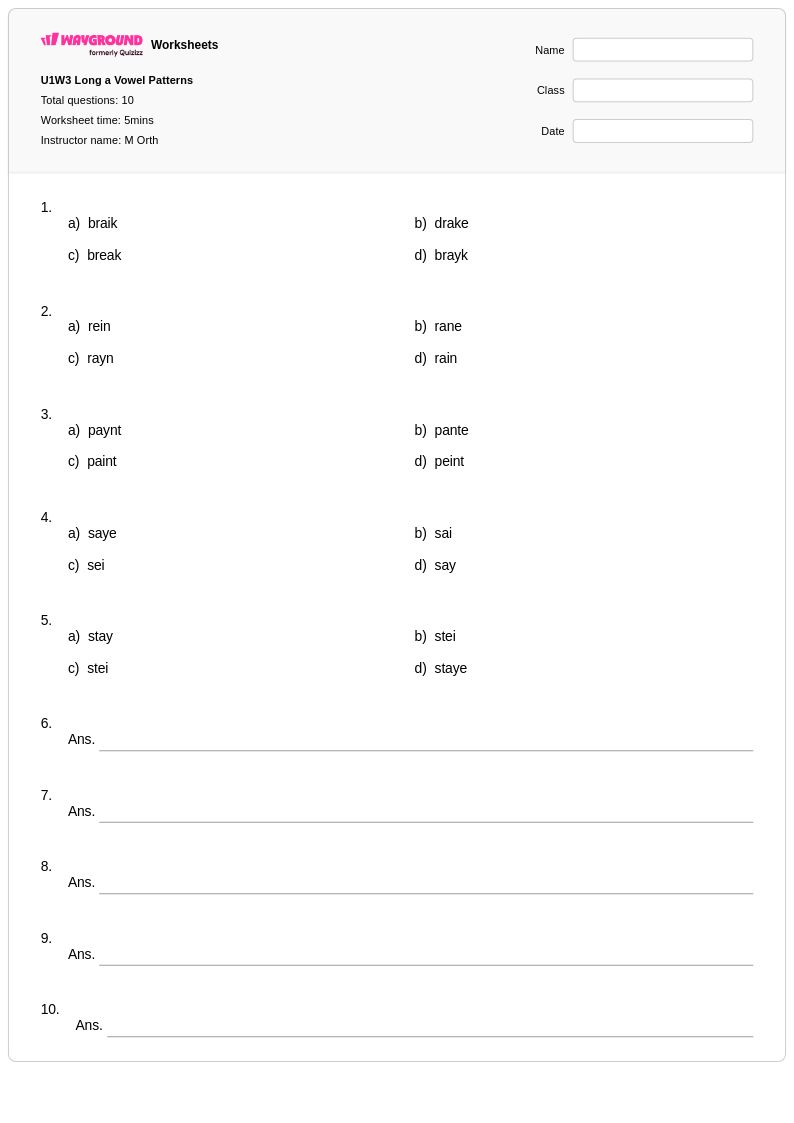
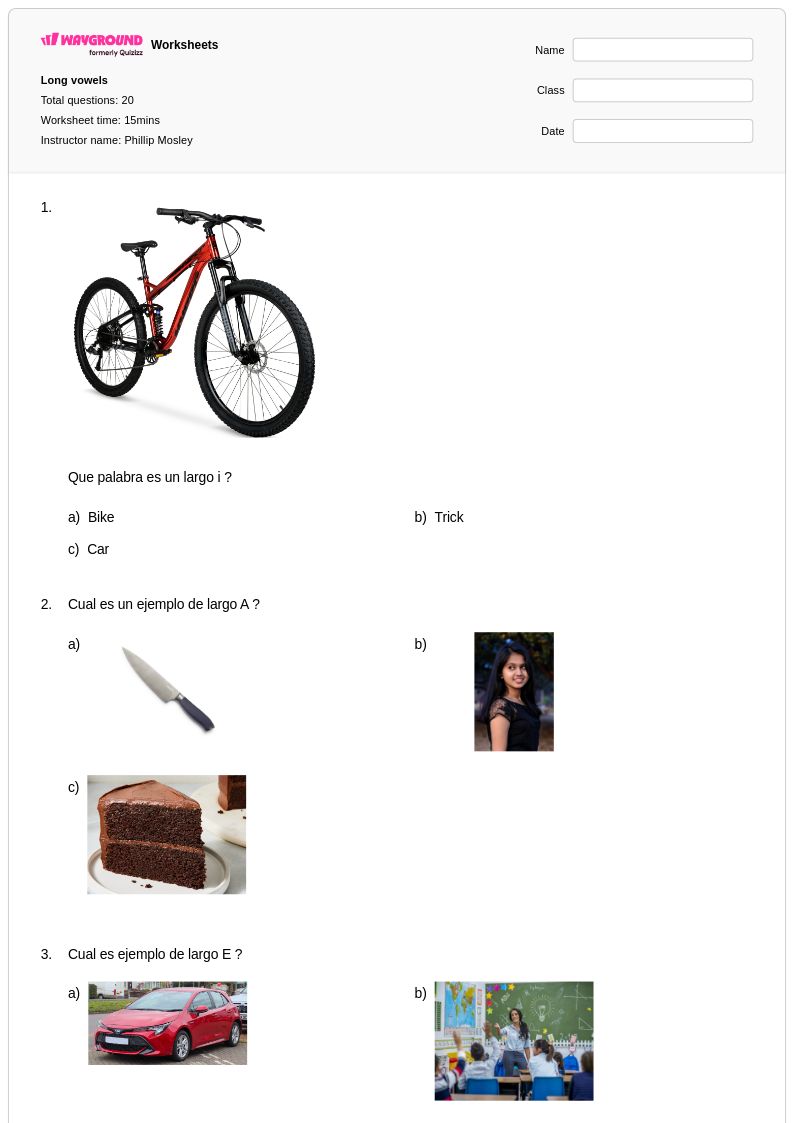
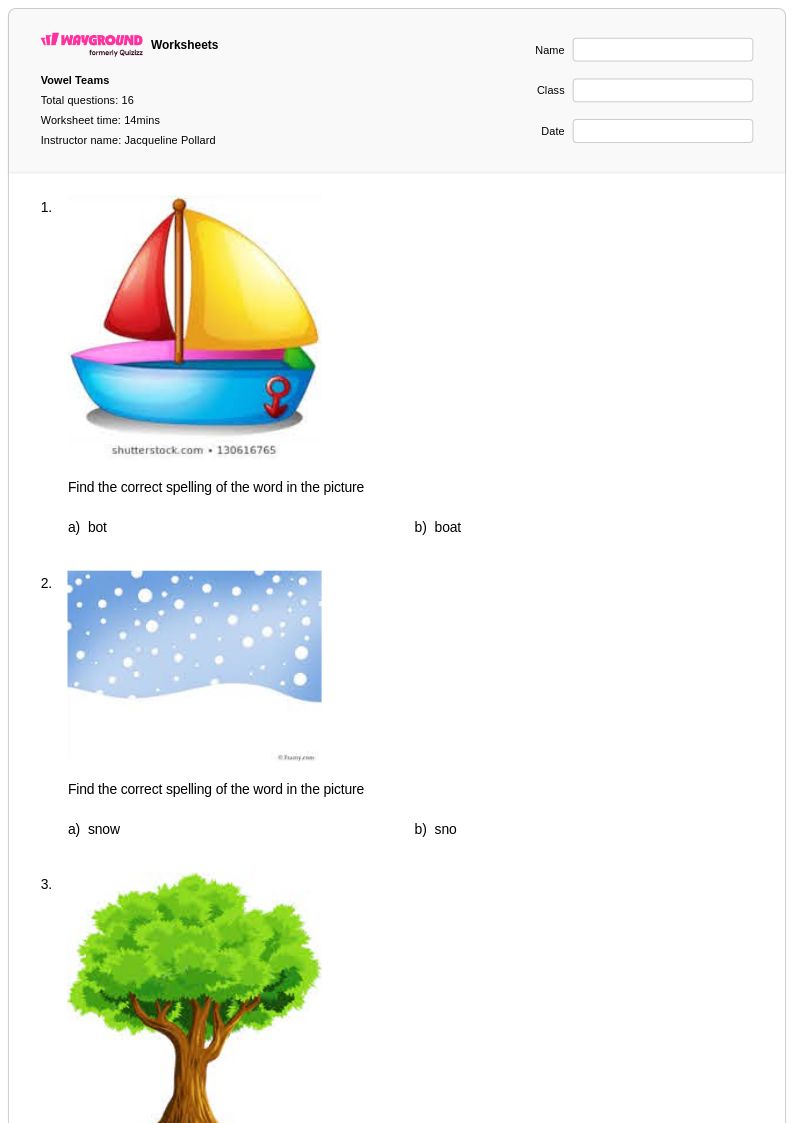
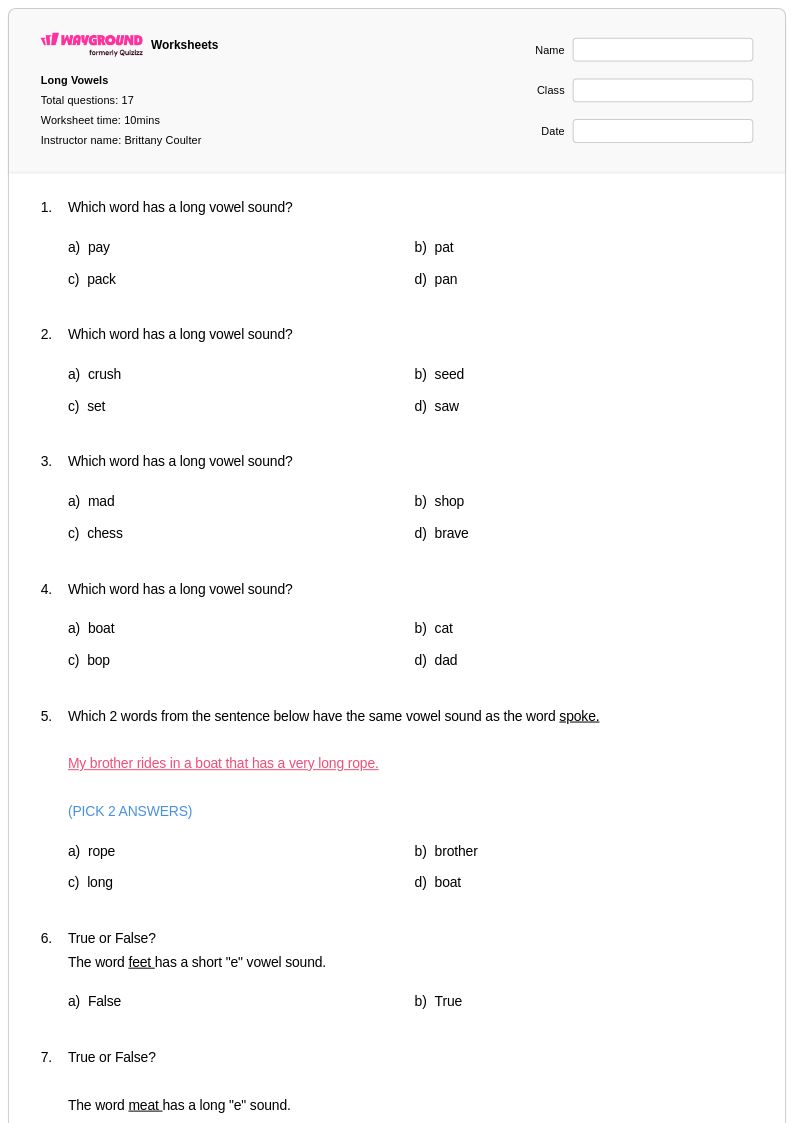
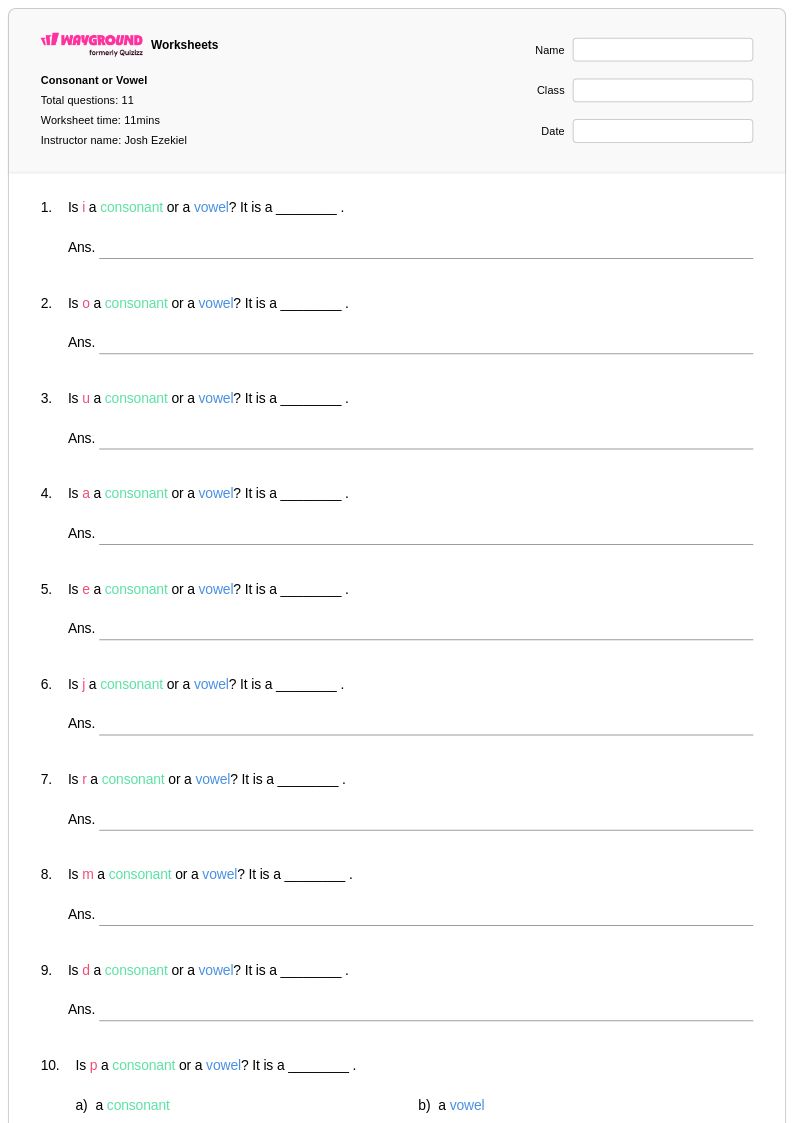
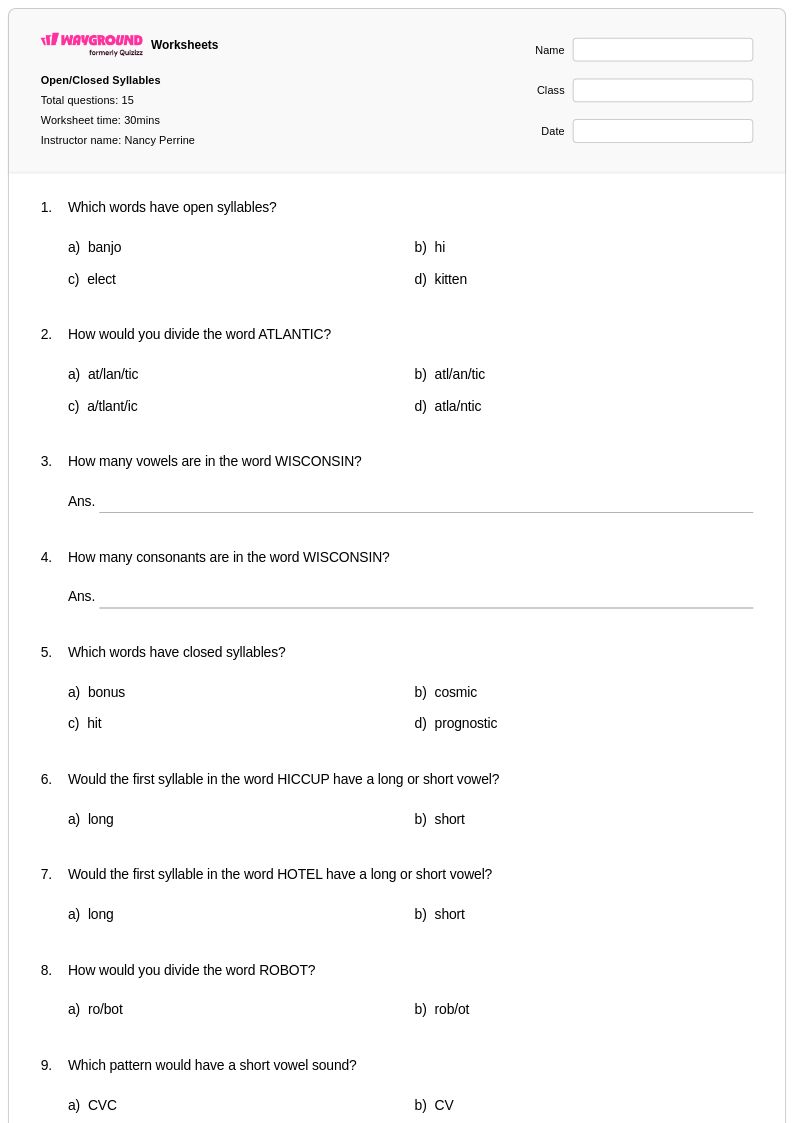
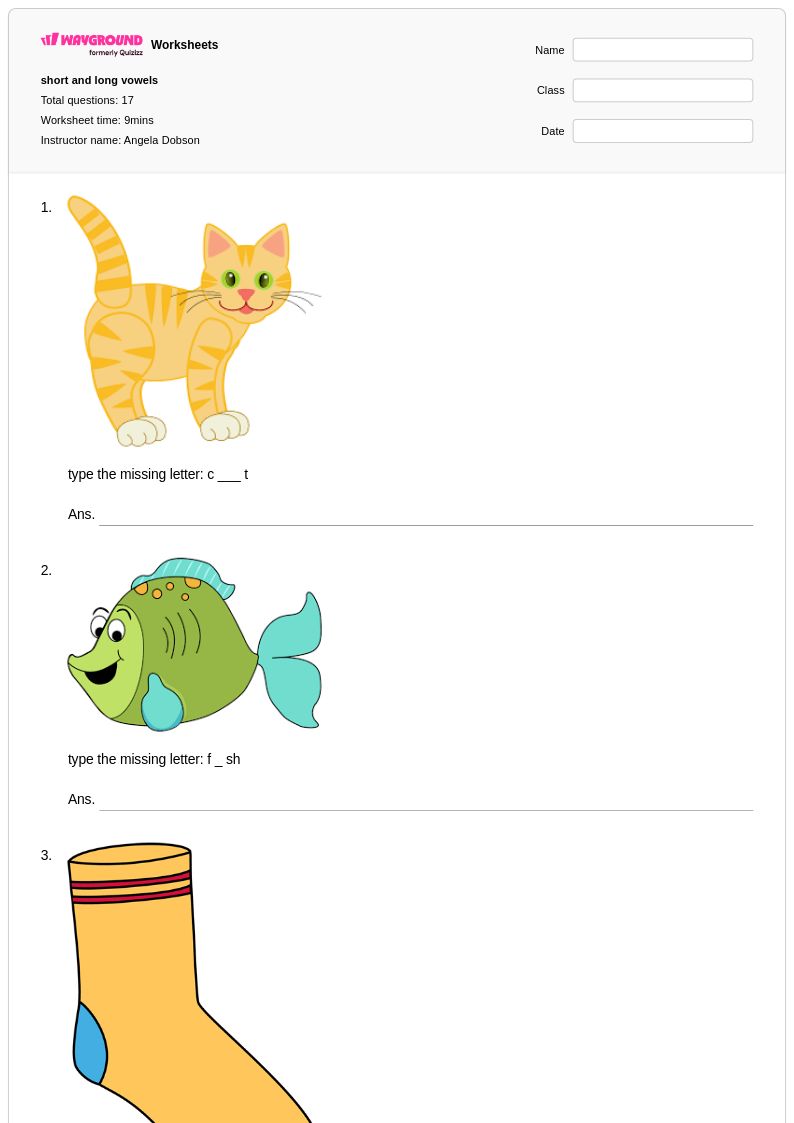
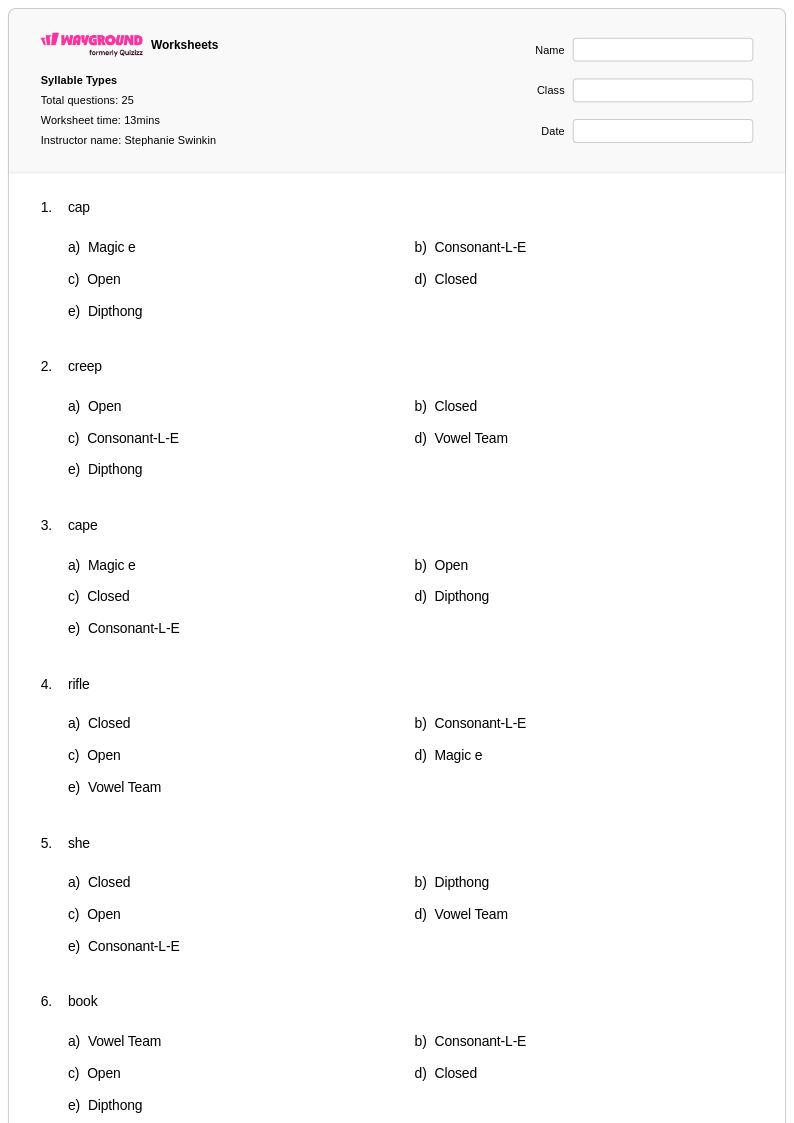
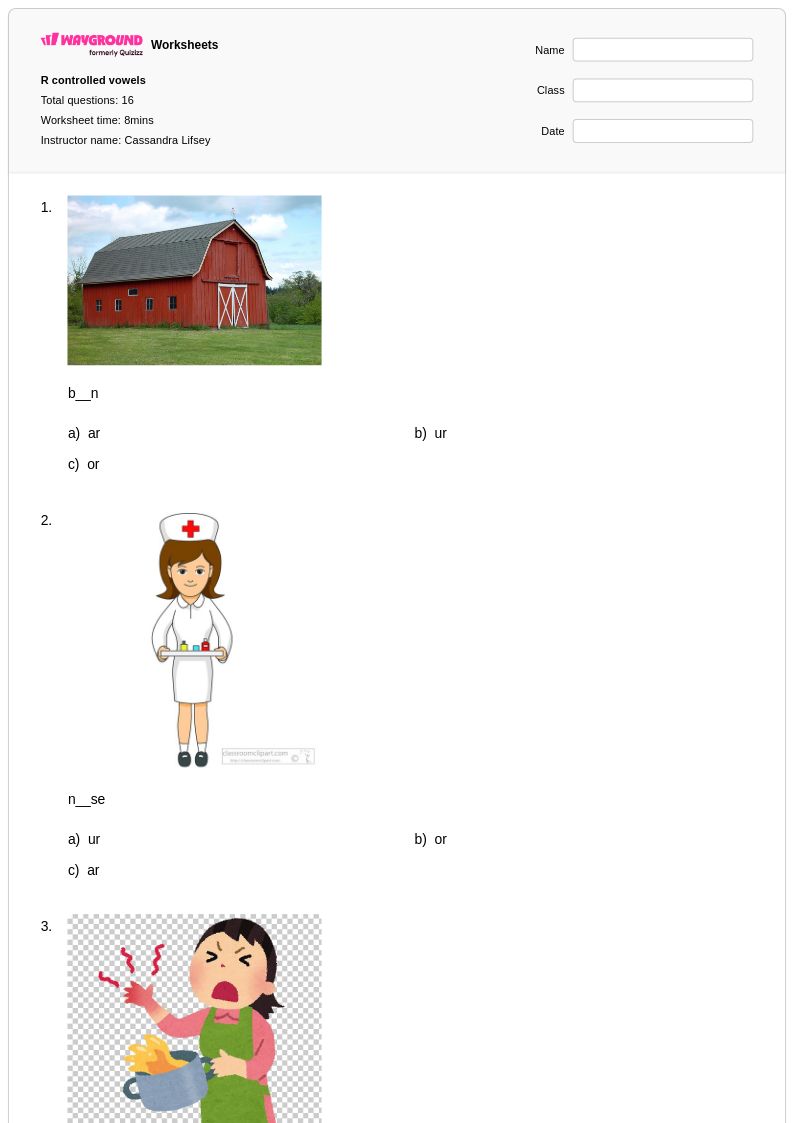
Vowel-consonant patterns form the foundation of reading fluency for Grade 2 students, and Wayground's comprehensive worksheet collection provides targeted practice with these essential phonics concepts. These expertly designed worksheets guide young learners through systematic exploration of common patterns such as CVC (consonant-vowel-consonant), CVCe (magic e), and CVVC combinations, helping students decode unfamiliar words with confidence. Each worksheet includes carefully scaffolded practice problems that progress from simple pattern recognition to complex word analysis, while comprehensive answer keys enable teachers and parents to provide immediate feedback. Available as free printables in convenient PDF format, these resources strengthen phonemic awareness, improve spelling accuracy, and build the automatic word recognition skills that are crucial for reading comprehension development.
Wayground's extensive library, featuring millions of teacher-created resources, empowers educators to find precisely the right vowel-consonant pattern worksheets for their Grade 2 classrooms through intuitive search and filtering capabilities. The platform's standards-aligned materials support curriculum requirements while offering robust differentiation tools that allow teachers to customize worksheets based on individual student needs and learning levels. Whether educators require printable PDF versions for traditional paper-and-pencil practice or digital formats for interactive learning, Wayground's flexible resources adapt to diverse teaching environments and learning preferences. This comprehensive approach enables teachers to seamlessly integrate phonics instruction into daily lesson planning, provide targeted remediation for struggling readers, offer enrichment opportunities for advanced students, and ensure consistent skill practice that builds lasting literacy foundations.
FAQs
How do I teach vowel-consonant patterns to early readers?
Start with the simplest pattern, CVC (consonant-vowel-consonant), before moving to more complex combinations like CVCE and vowel teams. Use word sorting activities to help students identify and group words by pattern, which builds recognition before application. Explicit, systematic instruction works best — introduce one pattern at a time, model how it affects vowel sounds, and provide repeated practice with decodable words before mixing patterns.
What exercises help students practice vowel-consonant patterns?
Targeted pattern recognition tasks — such as sorting words into CVC, CVCE, or other categories — are among the most effective exercises for building automaticity. Fill-in-the-blank activities that require students to complete words using the correct vowel based on the pattern reinforce the relationship between word structure and vowel sound. Worksheets that include both reading and spelling practice within the same activity are especially useful because they engage the pattern from two directions.
What mistakes do students commonly make with vowel-consonant patterns?
One of the most frequent errors is misreading the vowel sound in CVCE words — students often apply a short vowel sound because they are accustomed to CVC patterns and overlook the silent final 'e'. Another common mistake is overgeneralizing a recently learned pattern, applying it to words where it does not apply. Targeted practice that contrasts two patterns side by side, such as 'cap' versus 'cape', helps students notice the structural difference and self-correct.
How can I use vowel-consonant pattern worksheets to support struggling readers?
For students who struggle with decoding, focus practice on one pattern at a time and use worksheets that isolate the target pattern before mixing it with others. On Wayground, teachers can enable accommodations such as Read Aloud so students hear questions and words read to them, and Reduced Answer Choices to lower cognitive load during practice. Extended time can also be assigned per student so that struggling readers have enough time to apply their decoding strategies without rushing.
How do I use Wayground's vowel-consonant pattern worksheets in my classroom?
Wayground's vowel-consonant pattern worksheets are available as printable PDFs for traditional classroom use and in digital formats for technology-integrated or hybrid learning environments. Teachers can also host worksheets as a live quiz on Wayground, making them suitable for whole-class instruction, small group work, or independent centers. Each worksheet includes a complete answer key, which supports efficient grading and immediate feedback during or after practice.
At what grade level should students learn vowel-consonant patterns?
Vowel-consonant pattern instruction typically begins in kindergarten and first grade with CVC words, and progresses through second and third grade as students encounter CVCE, vowel teams, and more complex combinations. However, students who enter upper elementary with gaps in phonics may also benefit from structured review of these foundational patterns. The instructional entry point should be based on student decoding assessment data rather than grade level alone.