
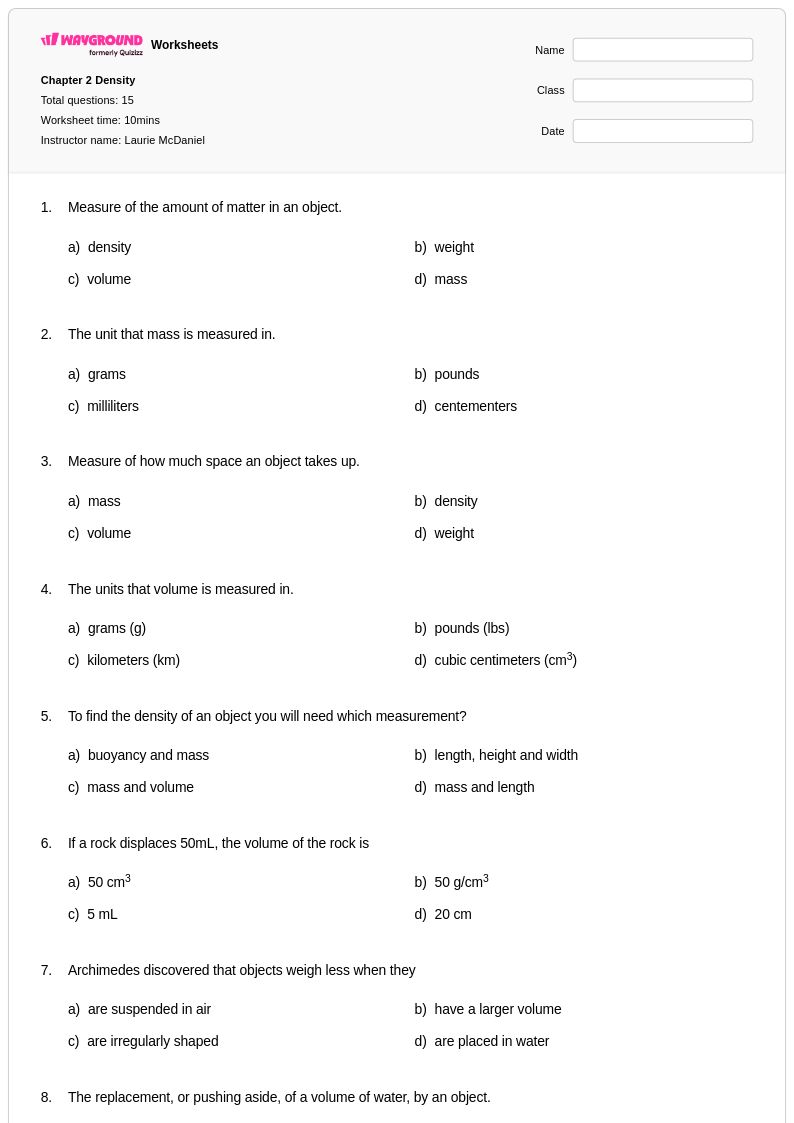
15 Q
6th - 8th
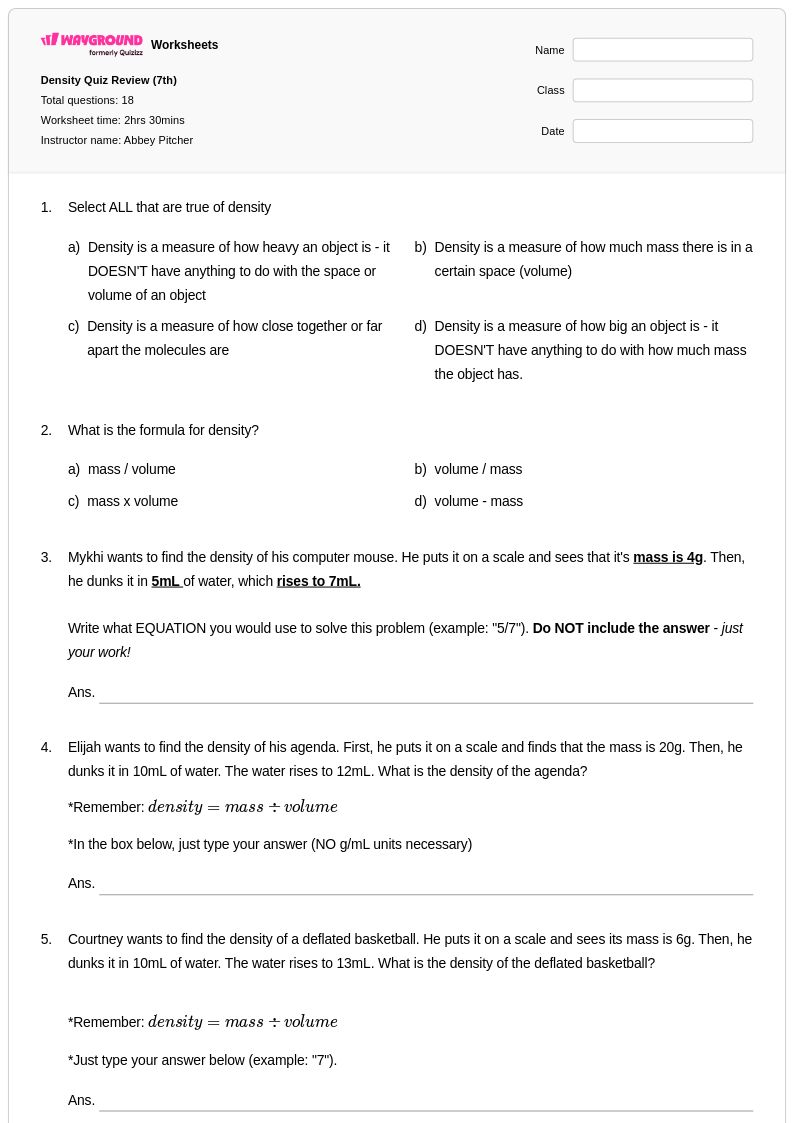
18 Q
6th - 7th
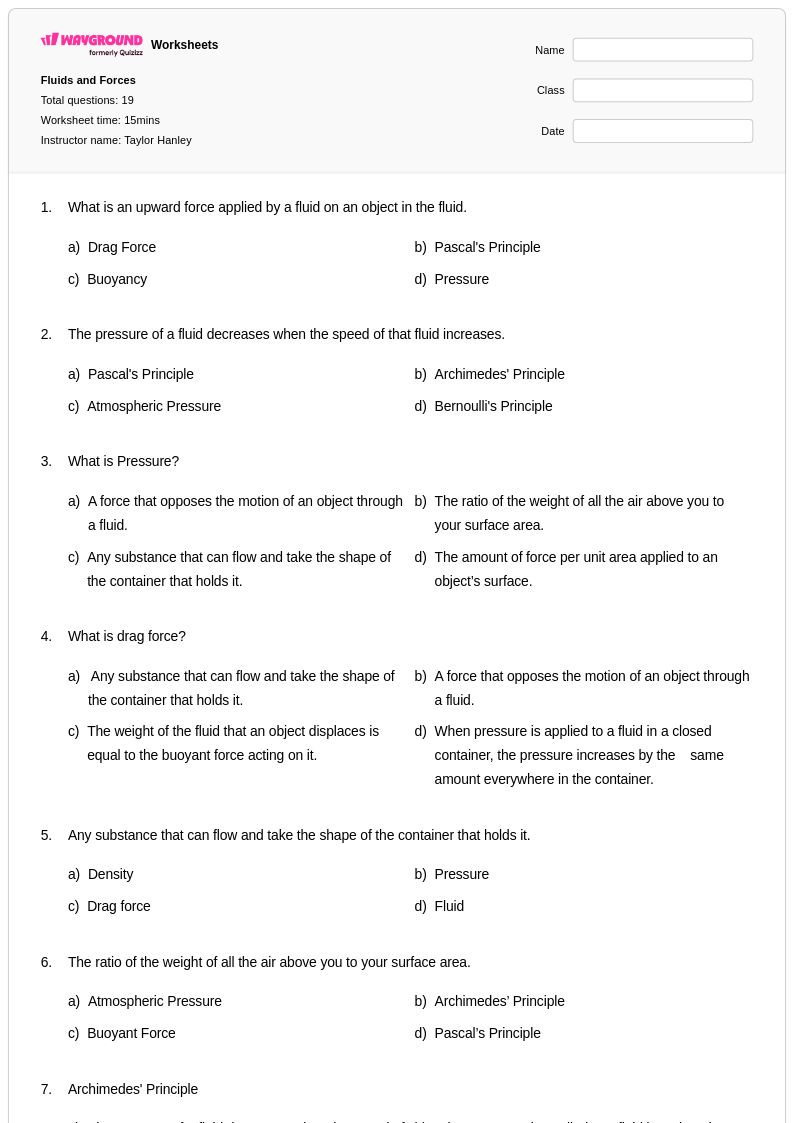
19 Q
7th - 9th
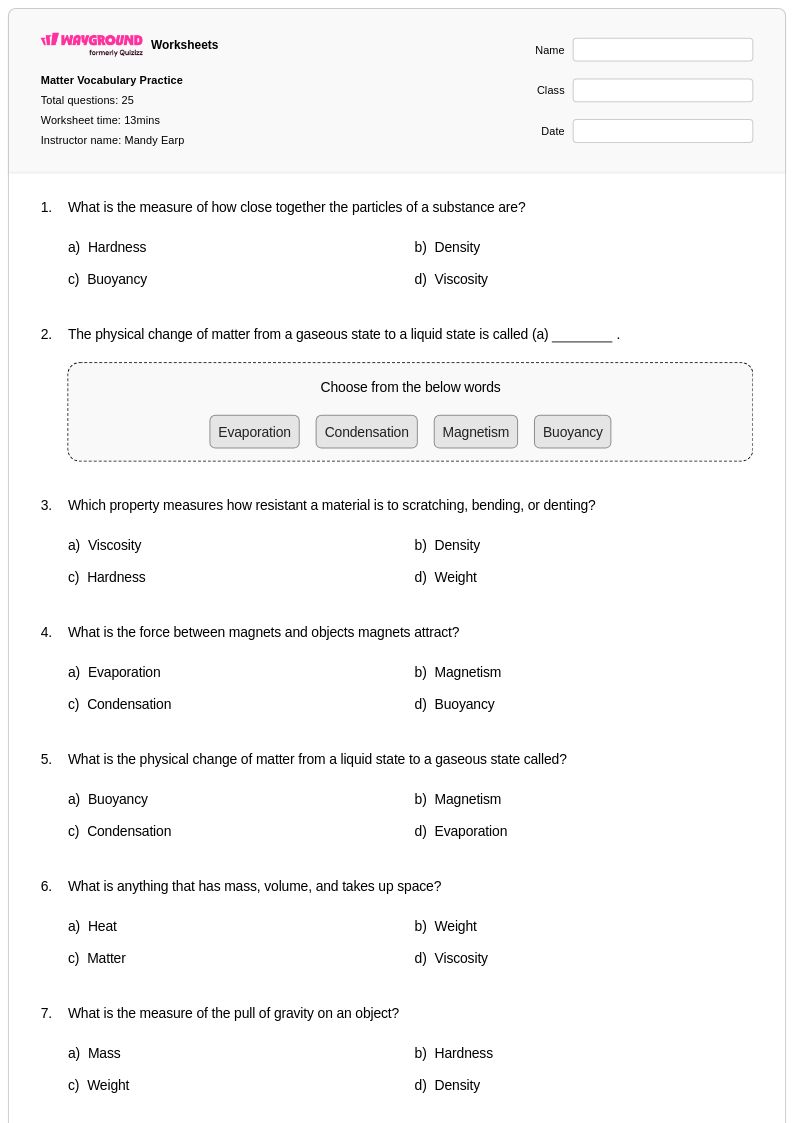
25 Q
5th - Uni
86 Q
7th
21 Q
7th
22 Q
7th
19 Q
7th
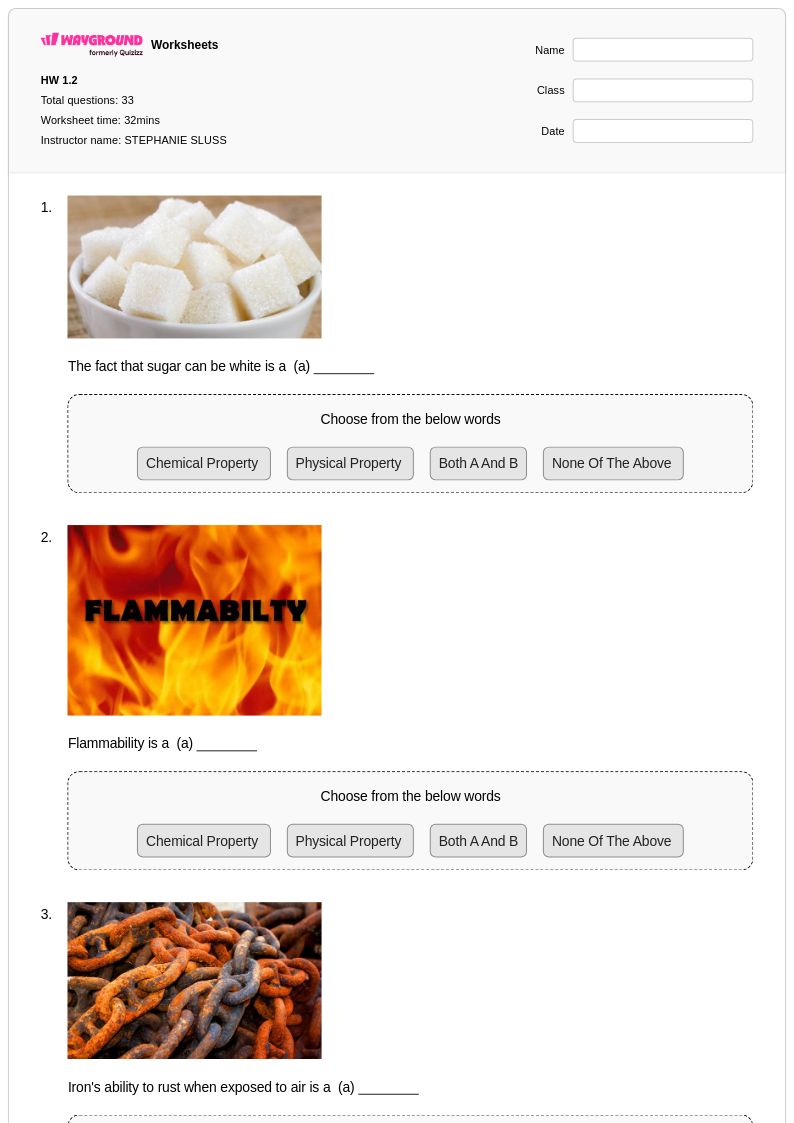
33 Q
7th
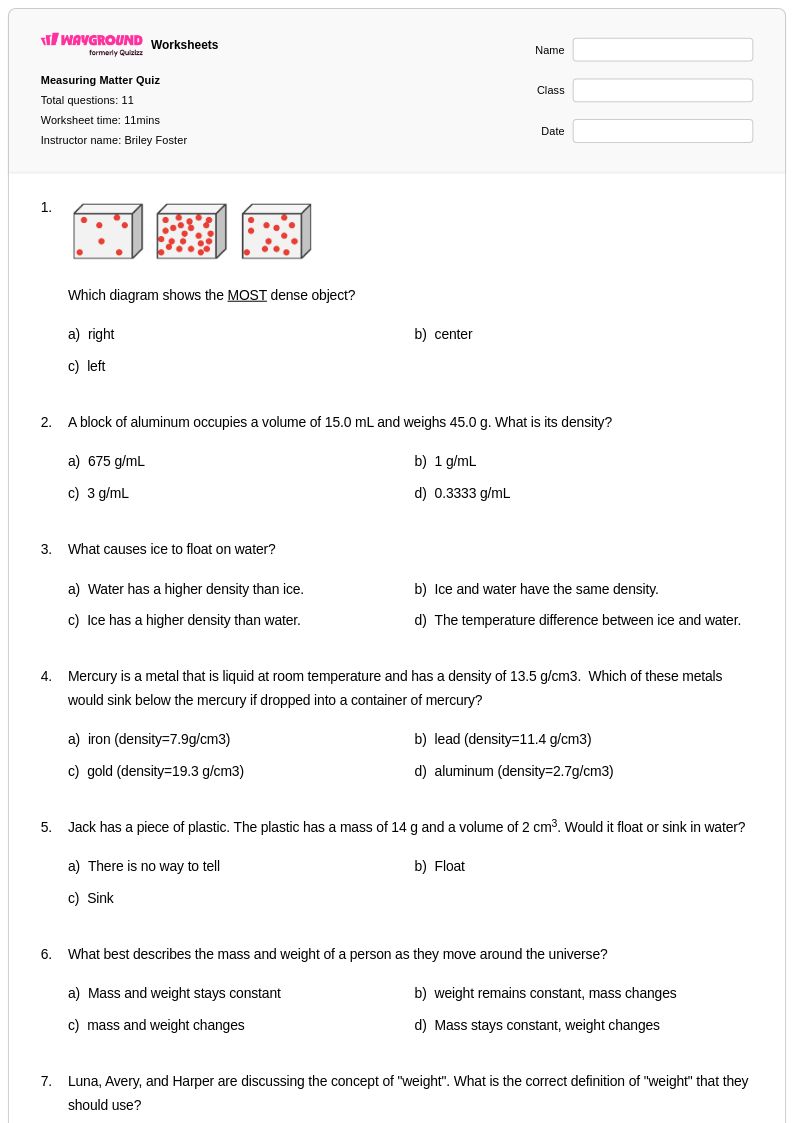
11 Q
7th
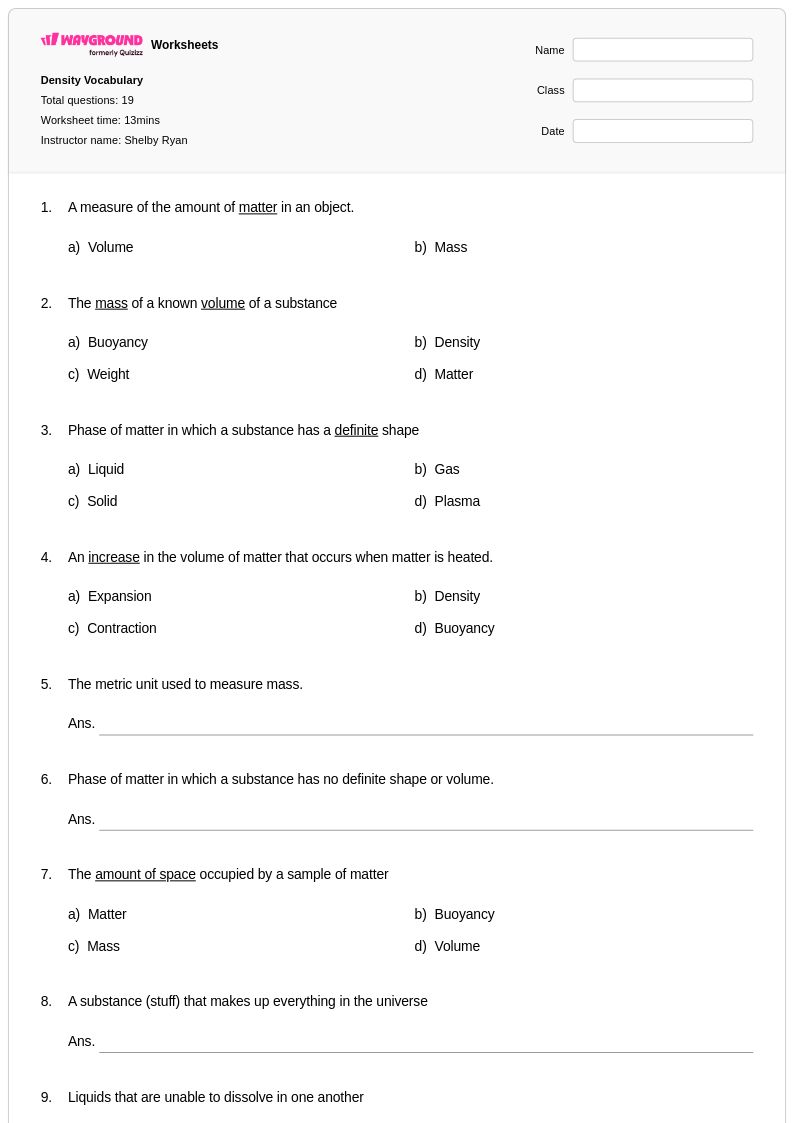
19 Q
6th - 8th
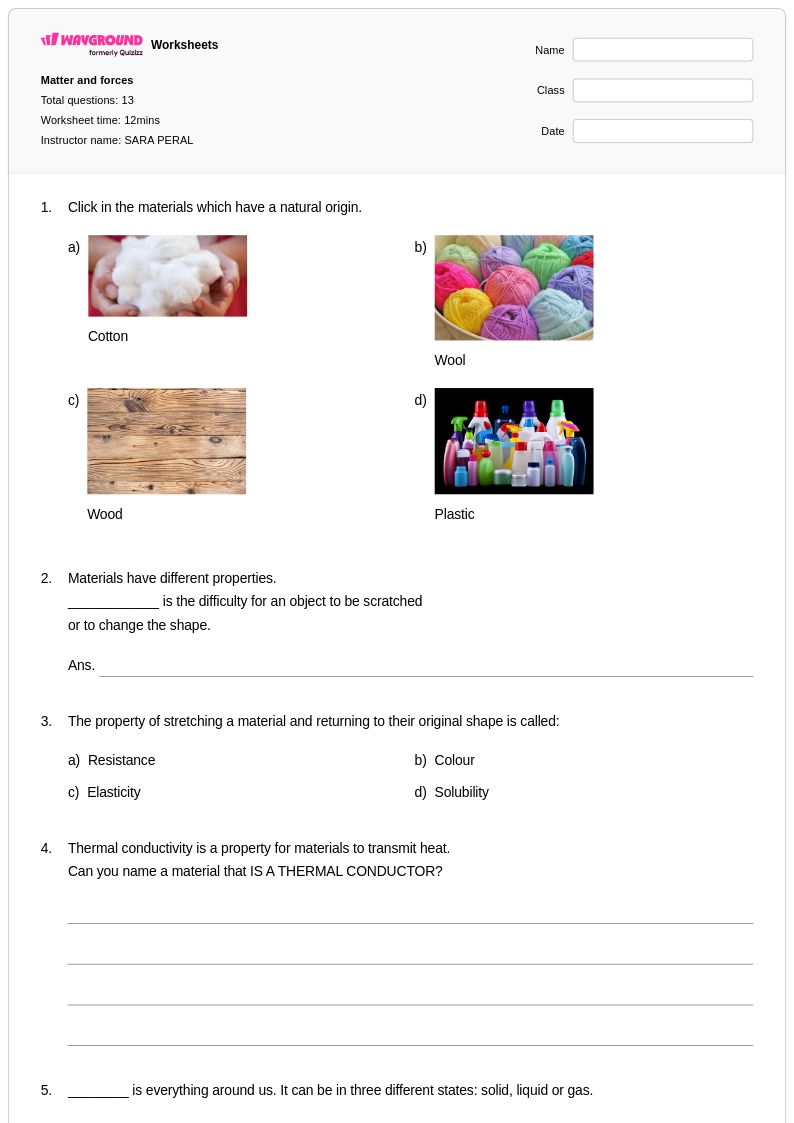
13 Q
4th - 7th
20 Q
7th
20 Q
7th
5 Q
6th - 8th
10 Q
7th - 12th
39 Q
6th - 8th
61 Q
6th - 8th
5 Q
7th
26 Q
7th
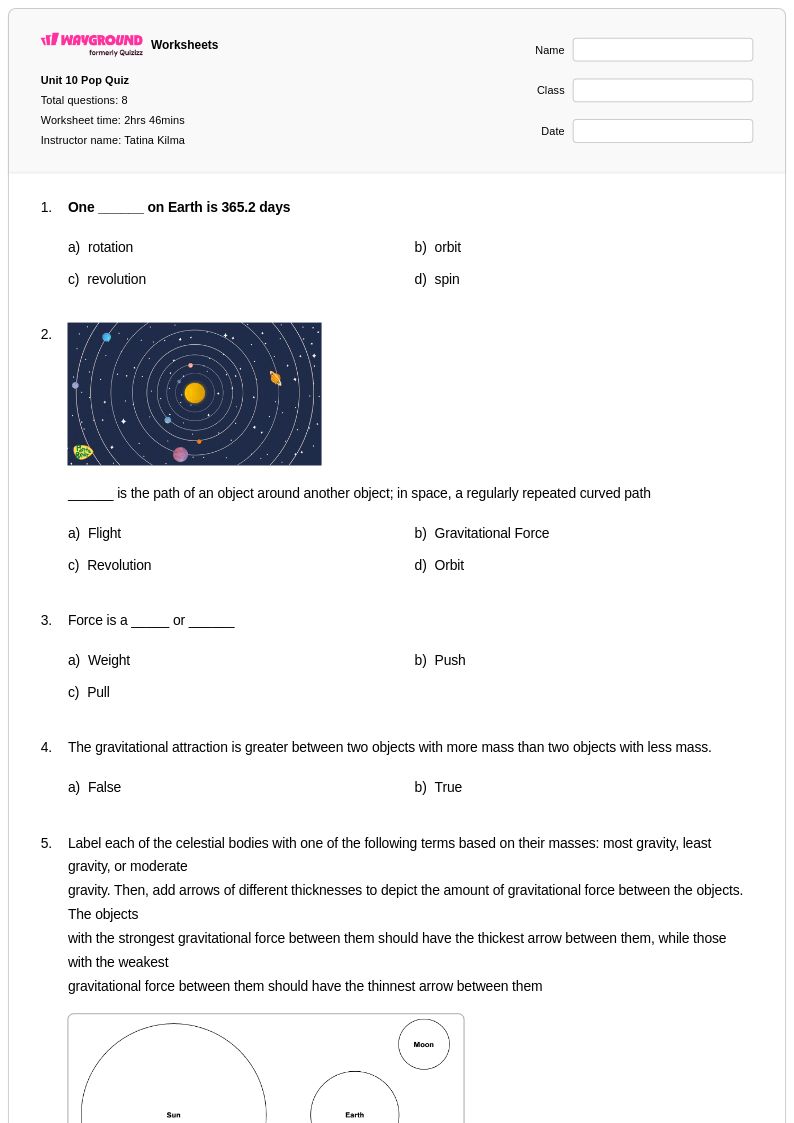
8 Q
7th
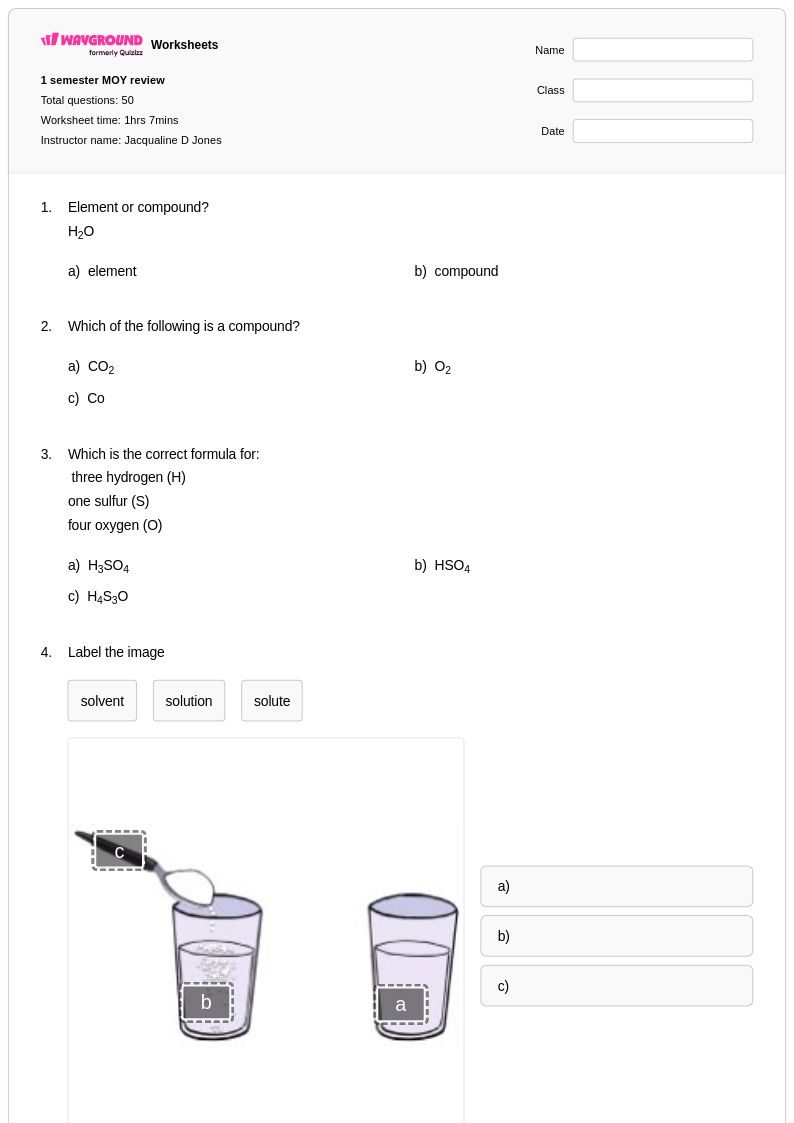
50 Q
7th
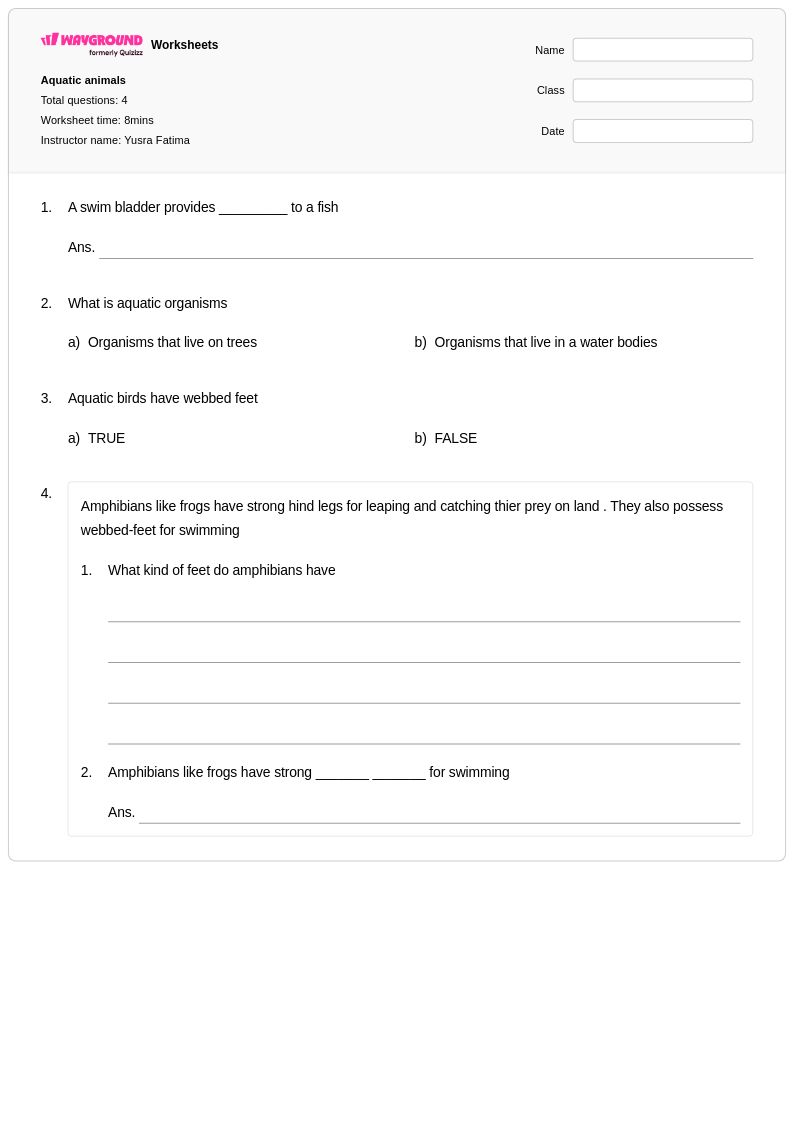
6 Q
6th - 8th
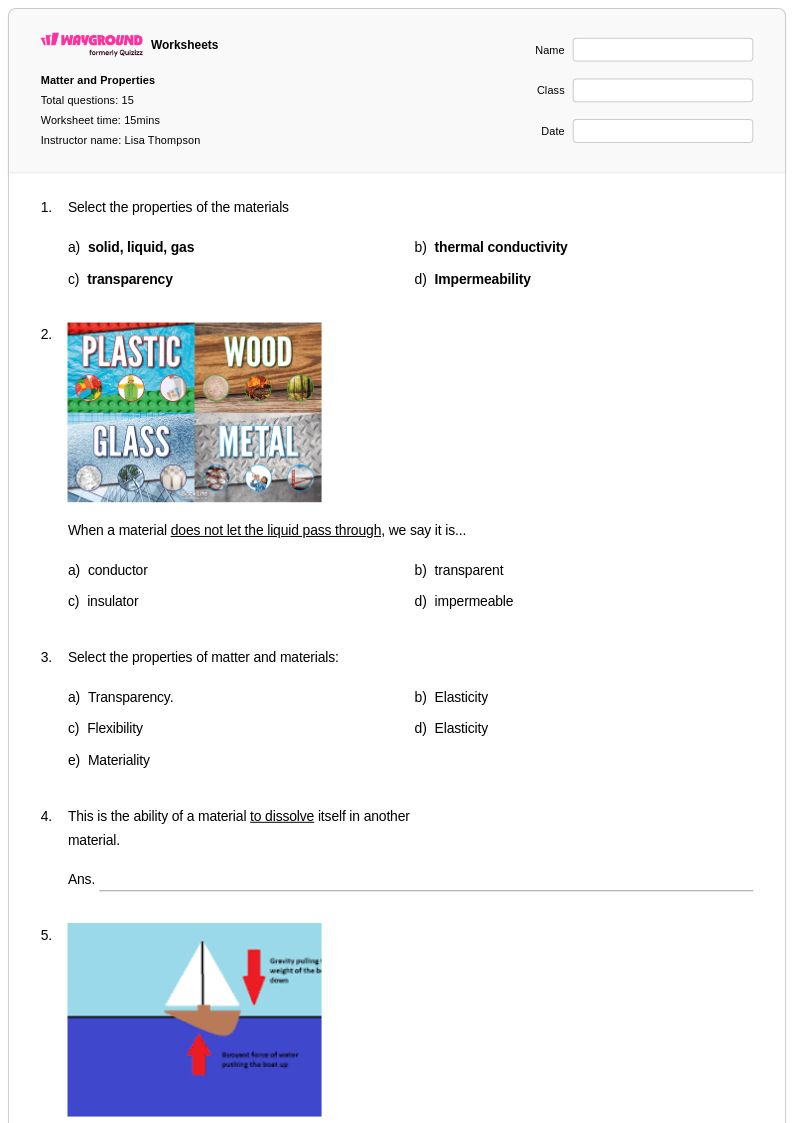
15 Q
7th - Uni
Explore Buoyancy Worksheets by Grades
Explore Other Subject Worksheets for grade 7
Explore printable Buoyancy worksheets for Grade 7
Buoyancy worksheets for Grade 7 students available through Wayground (formerly Quizizz) provide comprehensive practice in understanding the fundamental principles of why objects float or sink in fluids. These carefully crafted educational resources help students master key concepts including Archimedes' principle, fluid displacement, density relationships, and the forces acting on submerged objects. The worksheets strengthen critical thinking skills as students analyze real-world scenarios involving ships, submarines, hot air balloons, and everyday objects in water. Each printable resource includes detailed practice problems that guide students through calculating buoyant forces, determining whether objects will float or sink based on their density, and understanding how shape and material composition affect an object's ability to remain buoyant. The accompanying answer key allows students to check their work independently while building confidence in applying buoyancy principles to solve complex physics problems. These free pdf resources serve as excellent tools for both classroom instruction and independent study.
Wayground (formerly Quizizz) empowers educators with access to millions of teacher-created buoyancy worksheets specifically designed for Grade 7 physical science instruction. The platform's robust search and filtering capabilities enable teachers to quickly locate resources that align with specific curriculum standards and learning objectives, whether focusing on basic buoyancy concepts or more advanced applications involving fluid mechanics. Teachers can easily differentiate instruction by selecting worksheets with varying difficulty levels, from introductory density comparisons to complex multi-step buoyancy calculations. The flexible customization tools allow educators to modify existing worksheets or combine elements from multiple resources to create targeted practice materials for remediation or enrichment activities. Available in both printable and digital formats, these buoyancy worksheets seamlessly integrate into lesson planning, providing teachers with reliable resources for skill practice, formative assessment, and reinforcement of essential physical science concepts that prepare students for advanced physics coursework.
FAQs
How do I teach buoyancy to students?
What exercises help students practice buoyancy concepts?
What mistakes do students commonly make when learning about buoyancy?
How do I differentiate buoyancy instruction for students at different skill levels?
How can I use Wayground buoyancy worksheets in my classroom?