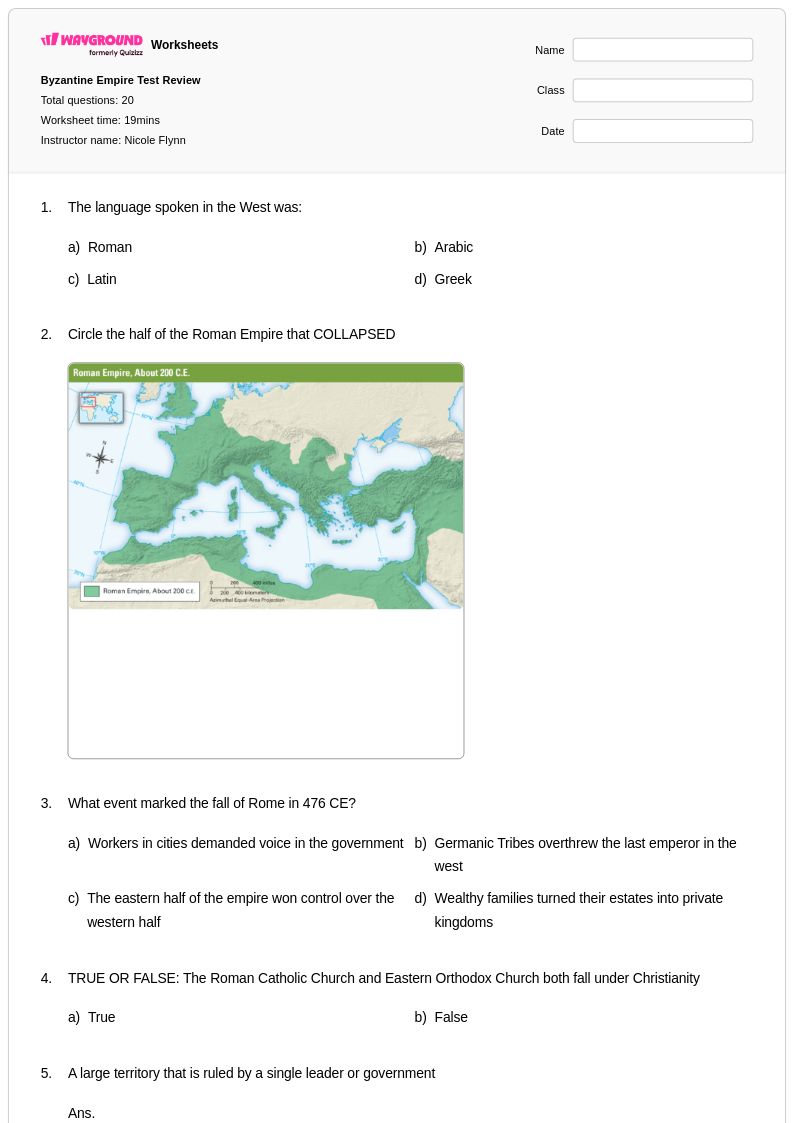
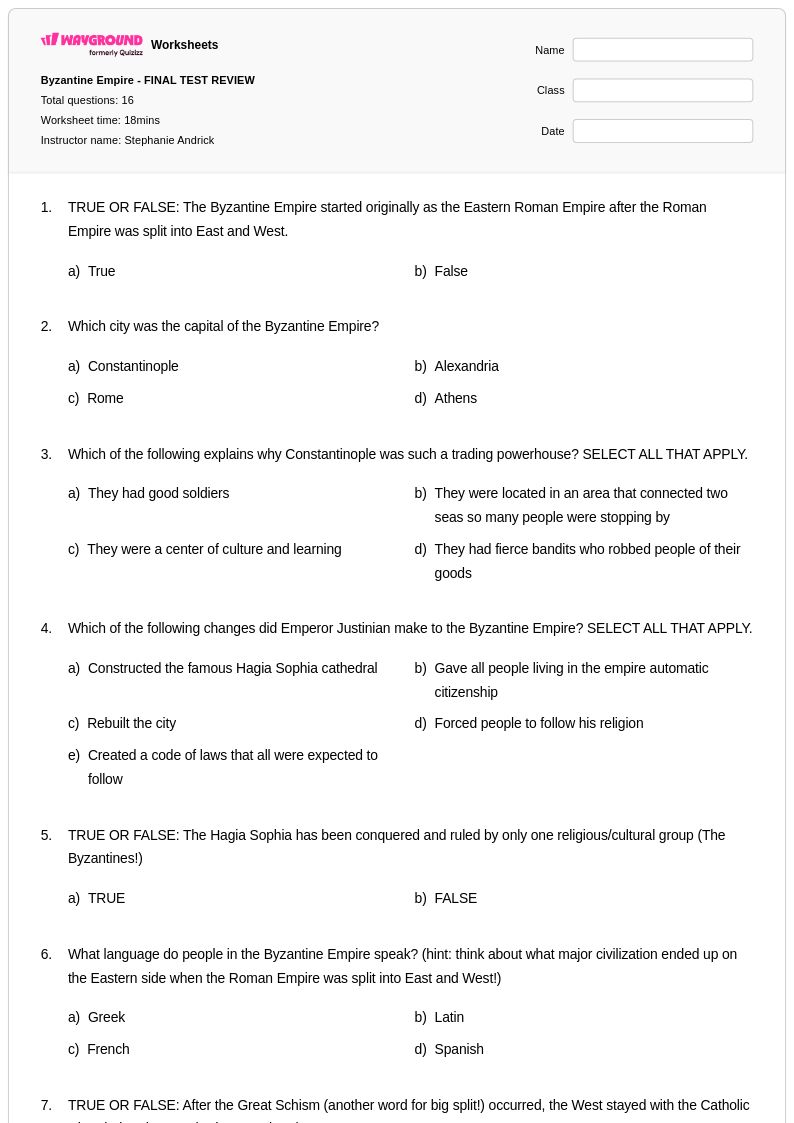
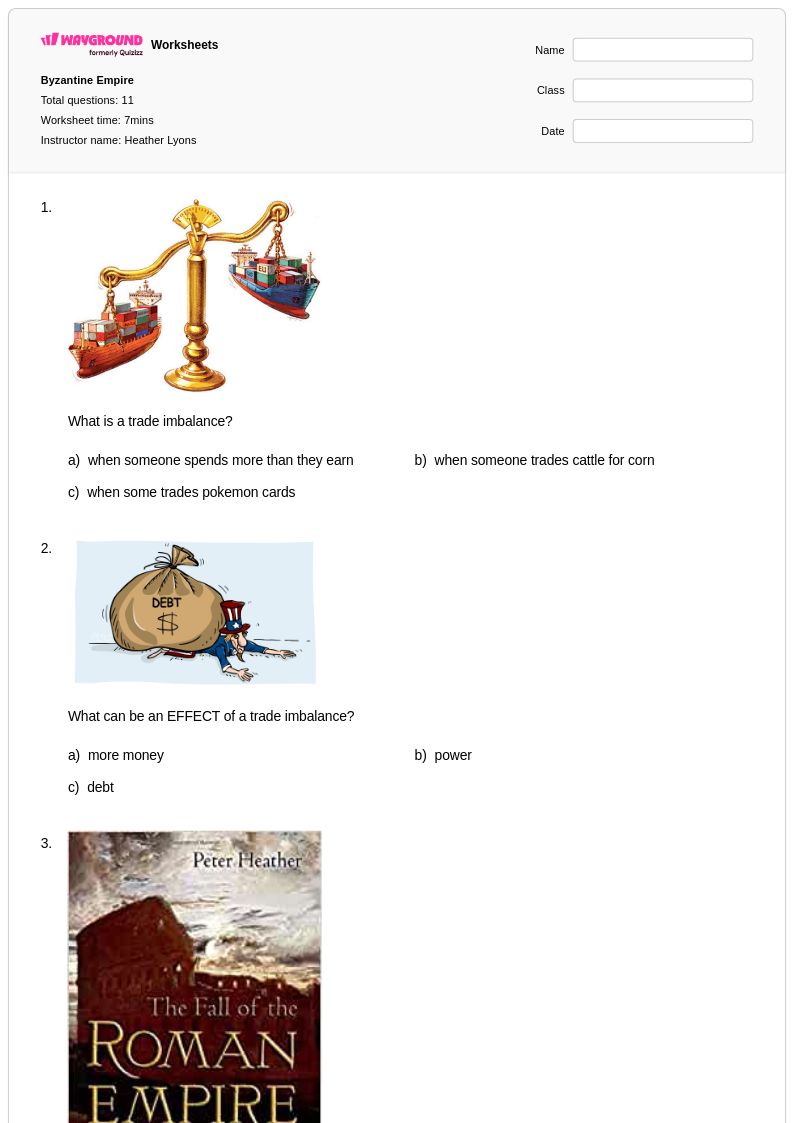
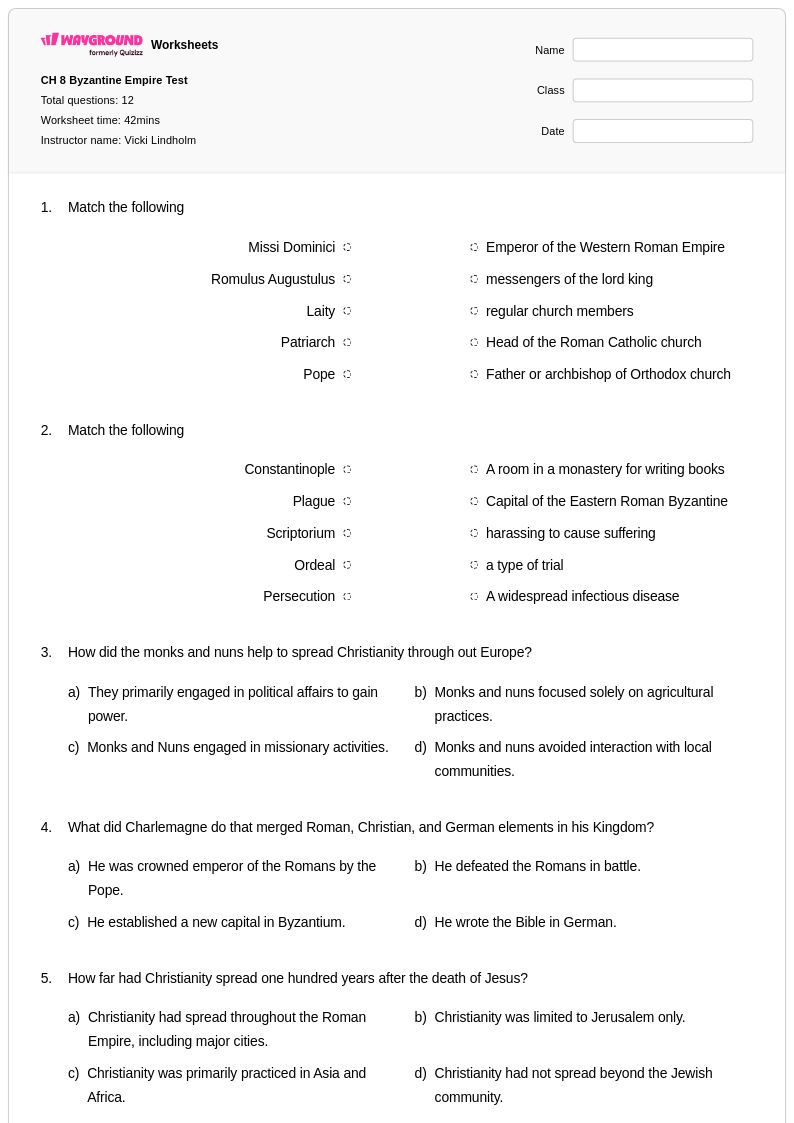
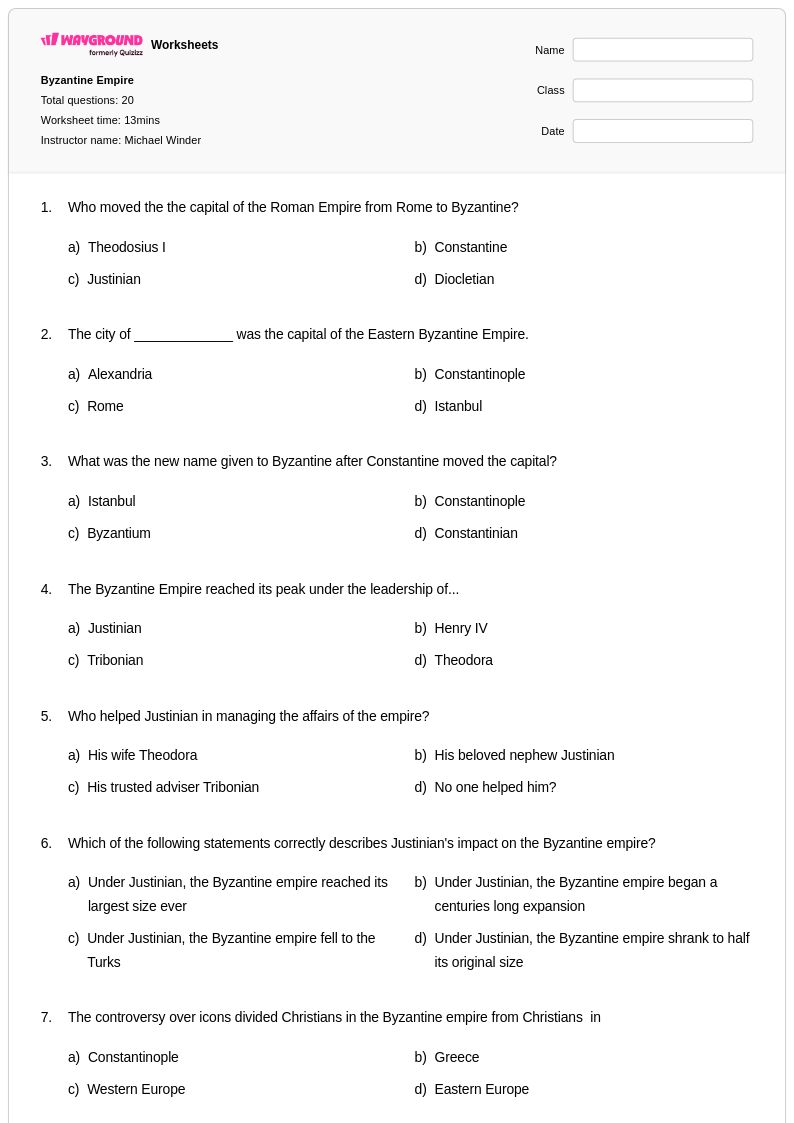
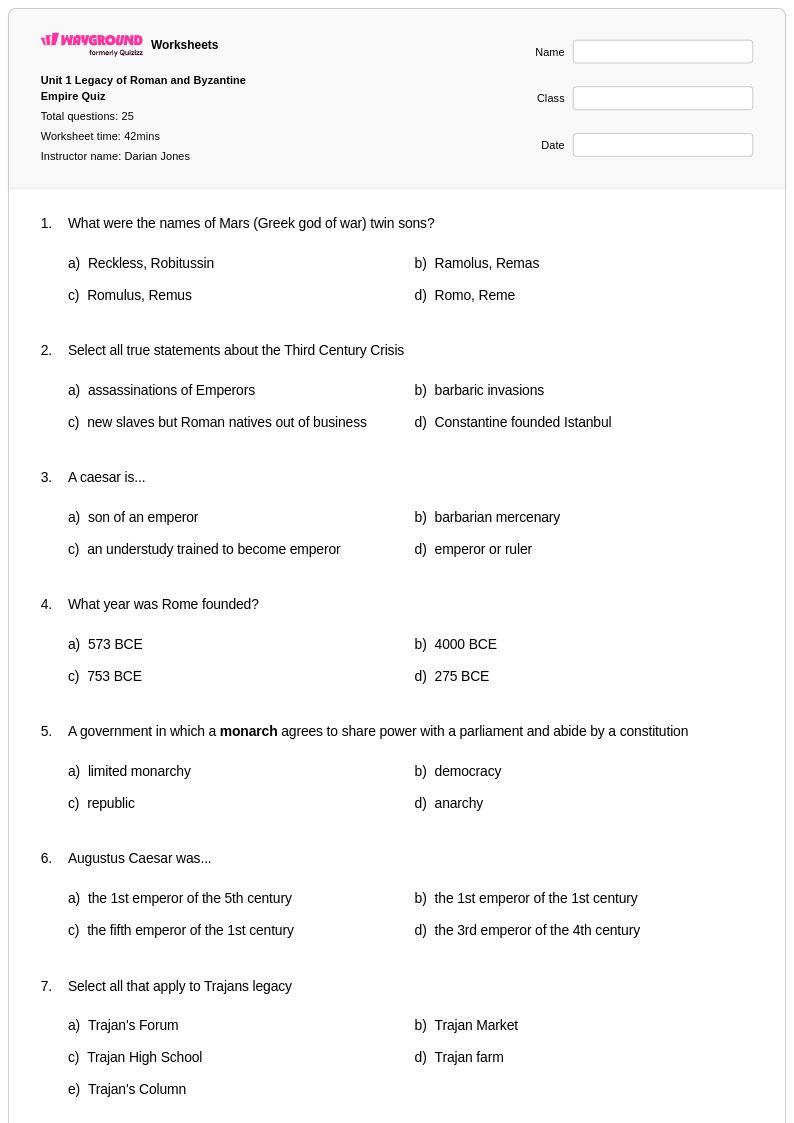
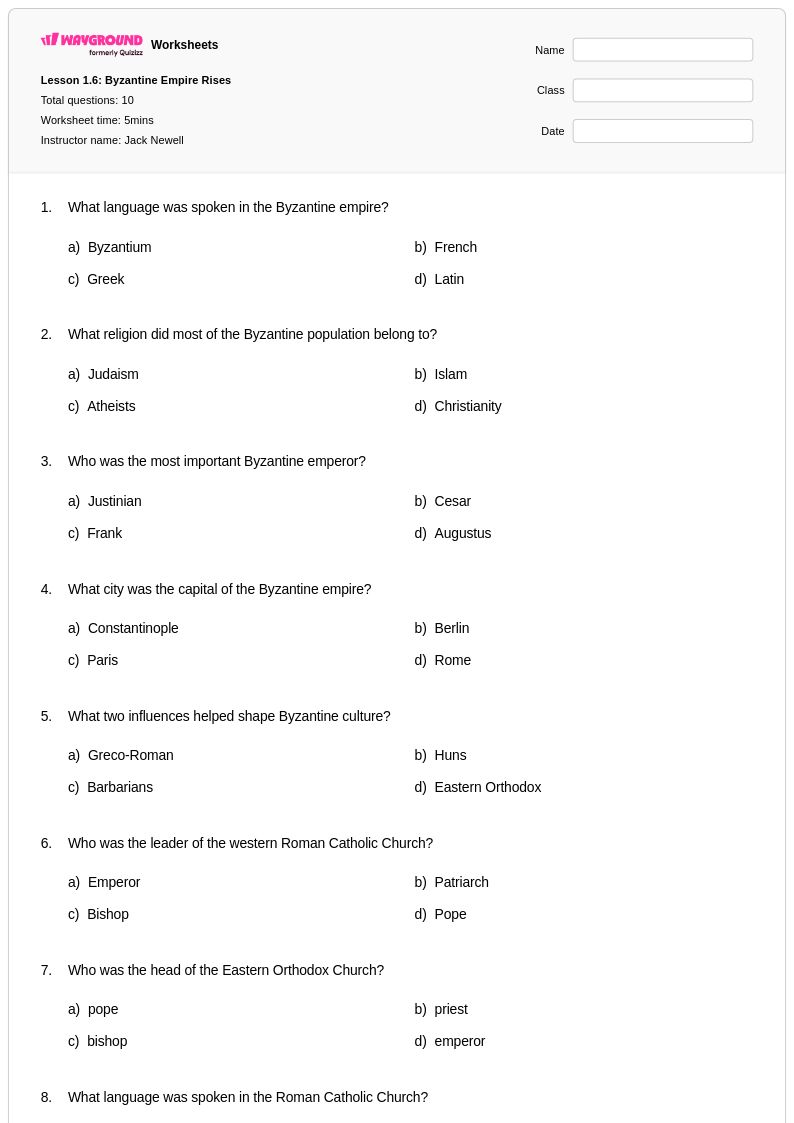
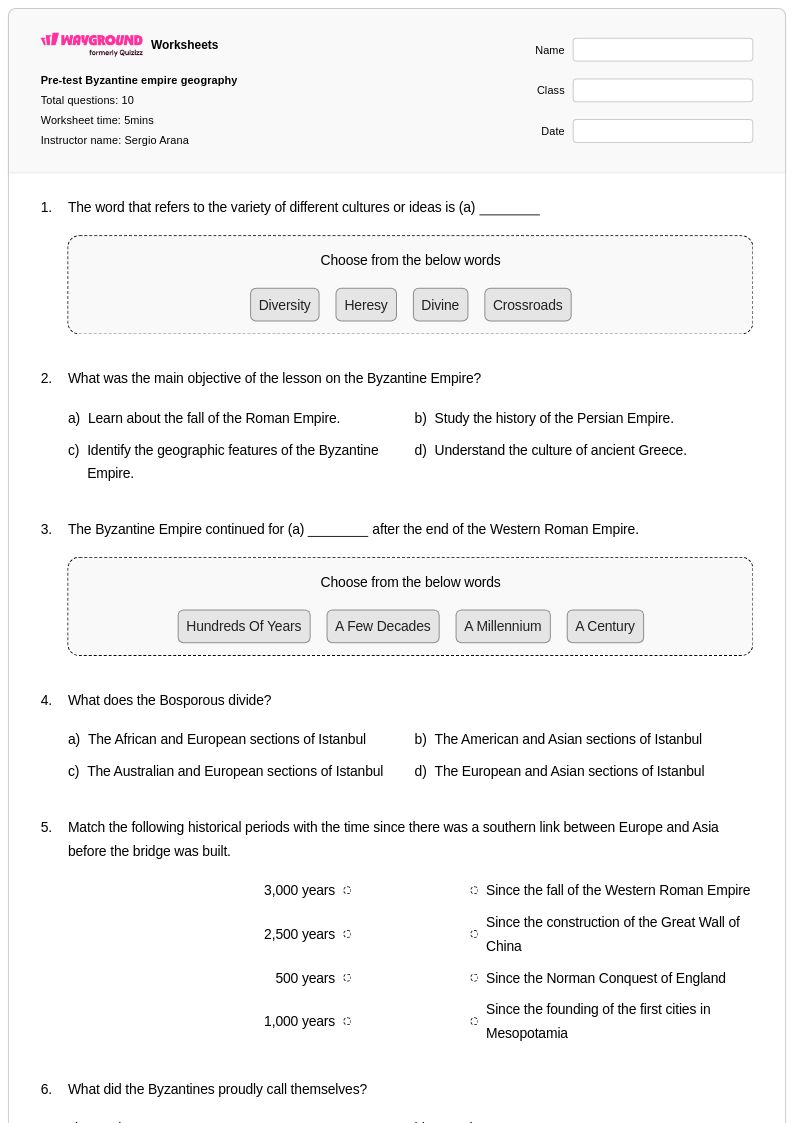
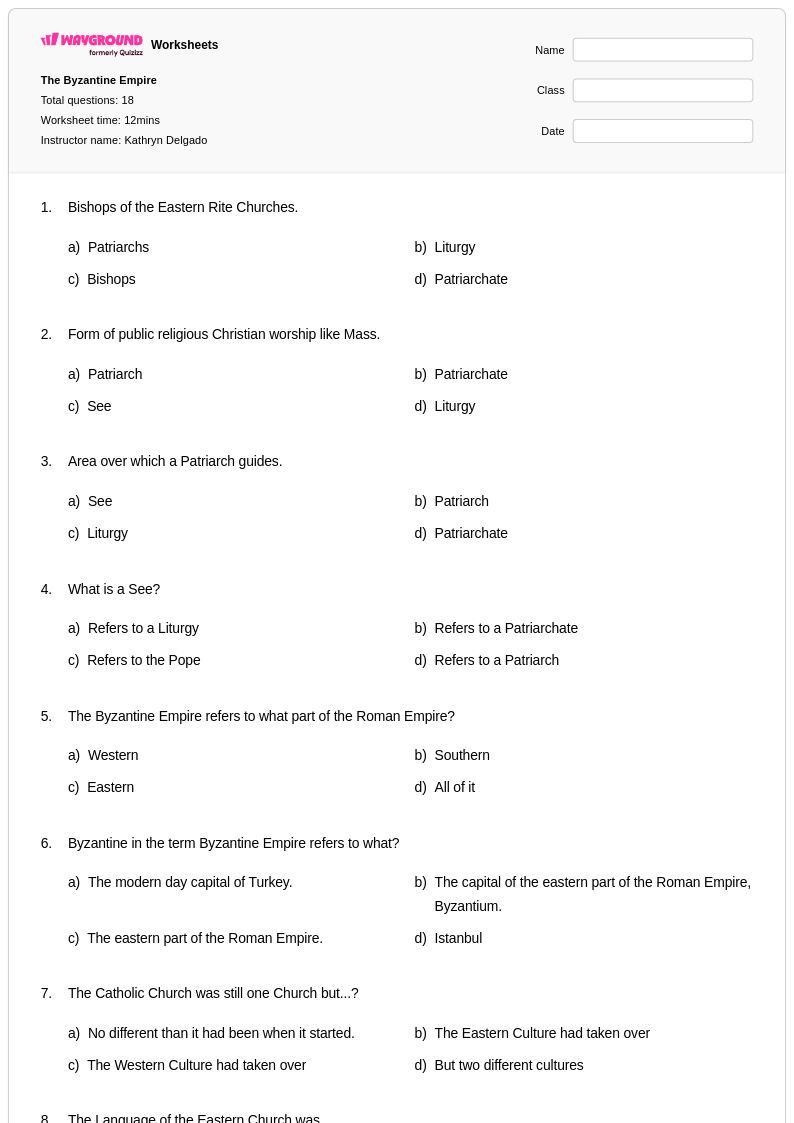
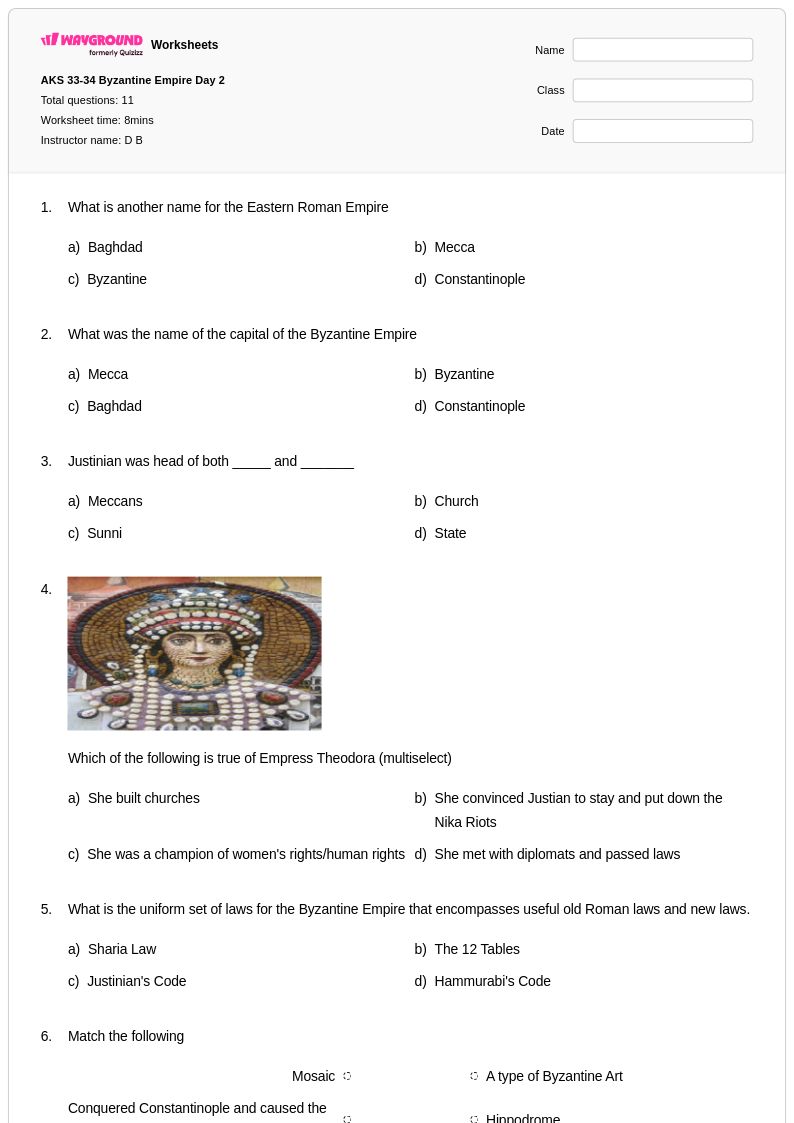
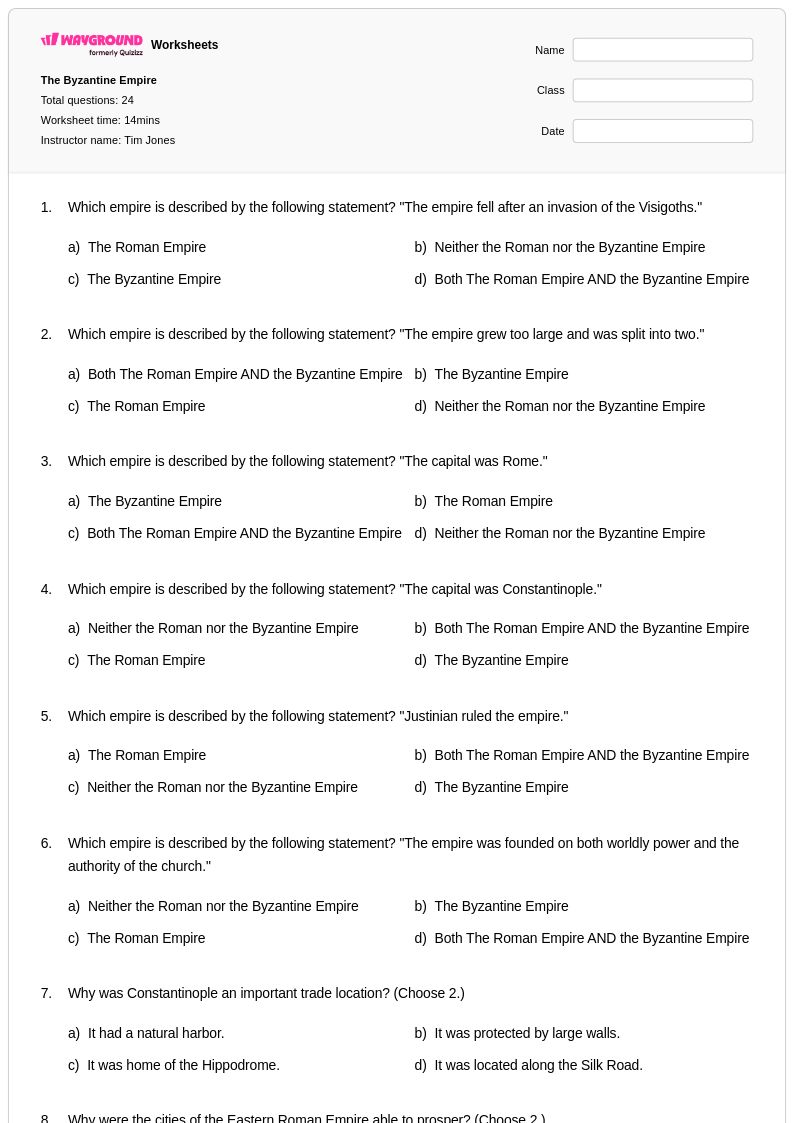
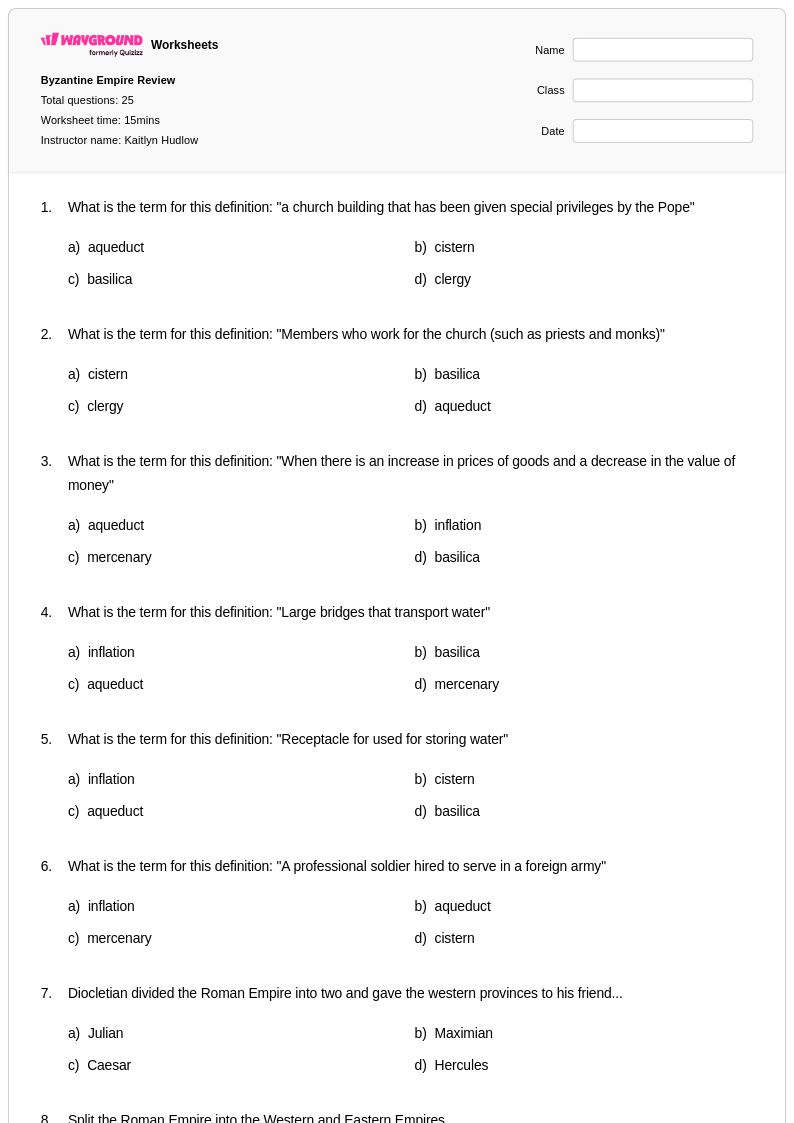
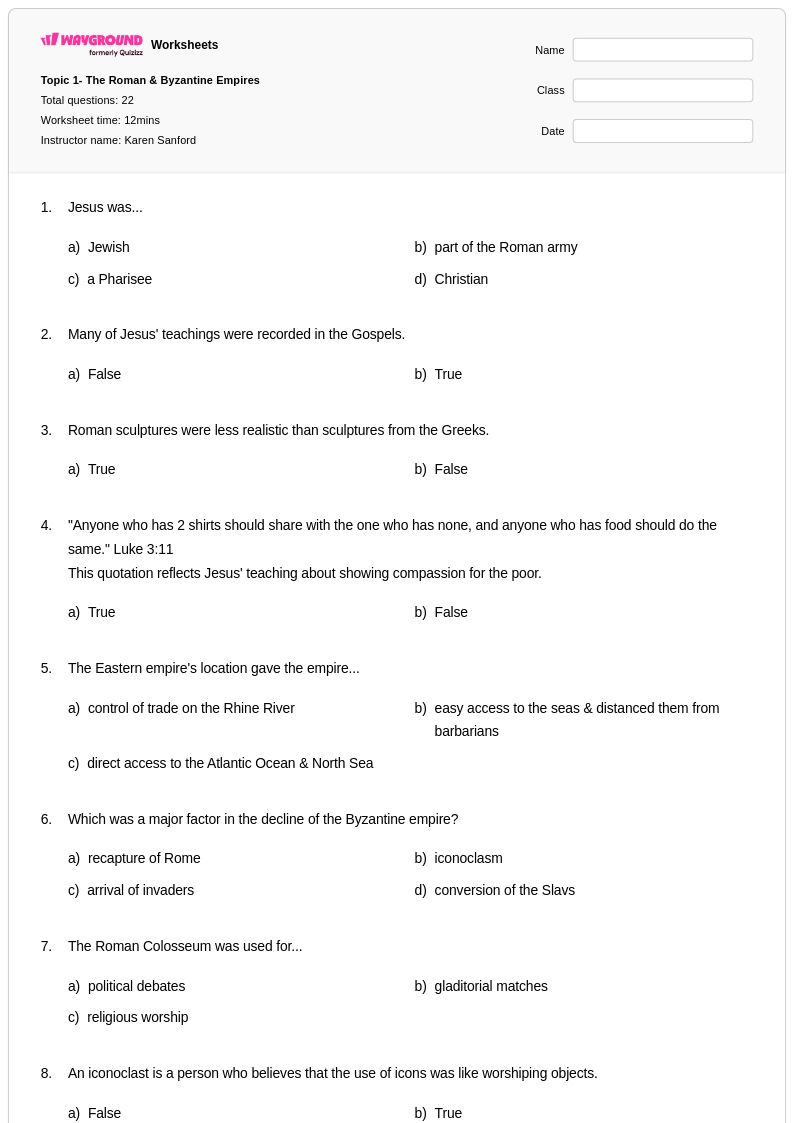
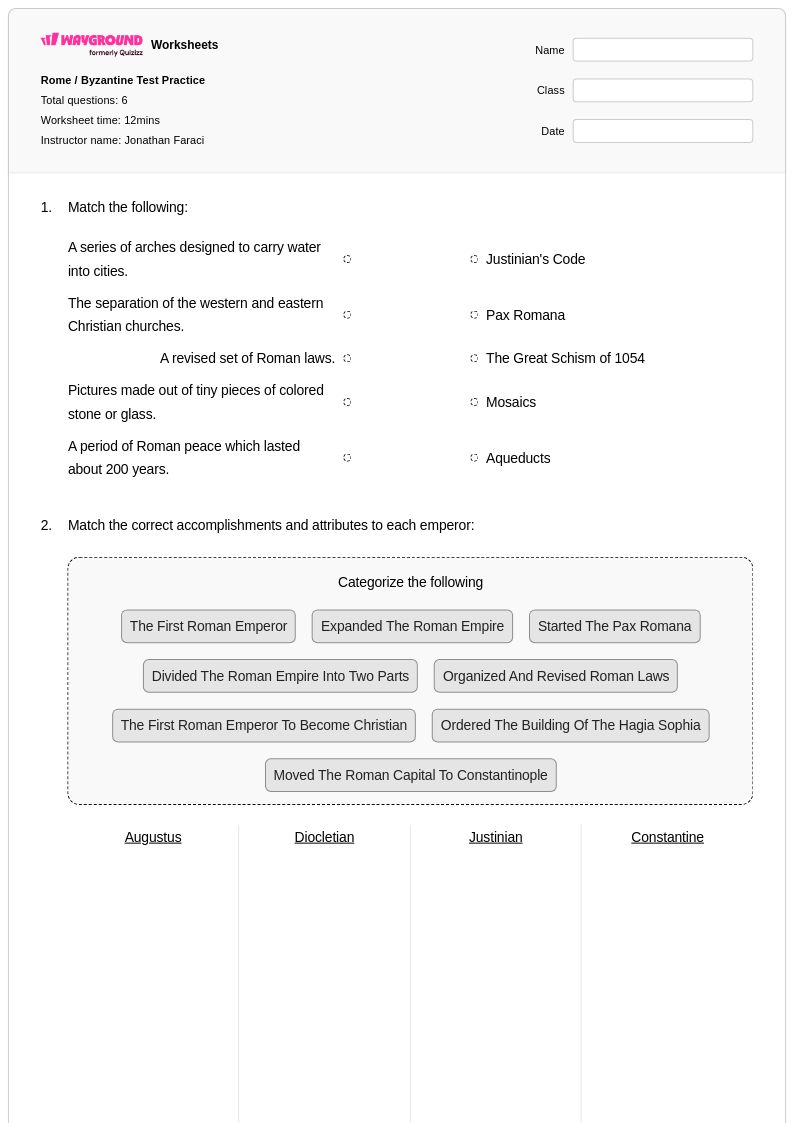
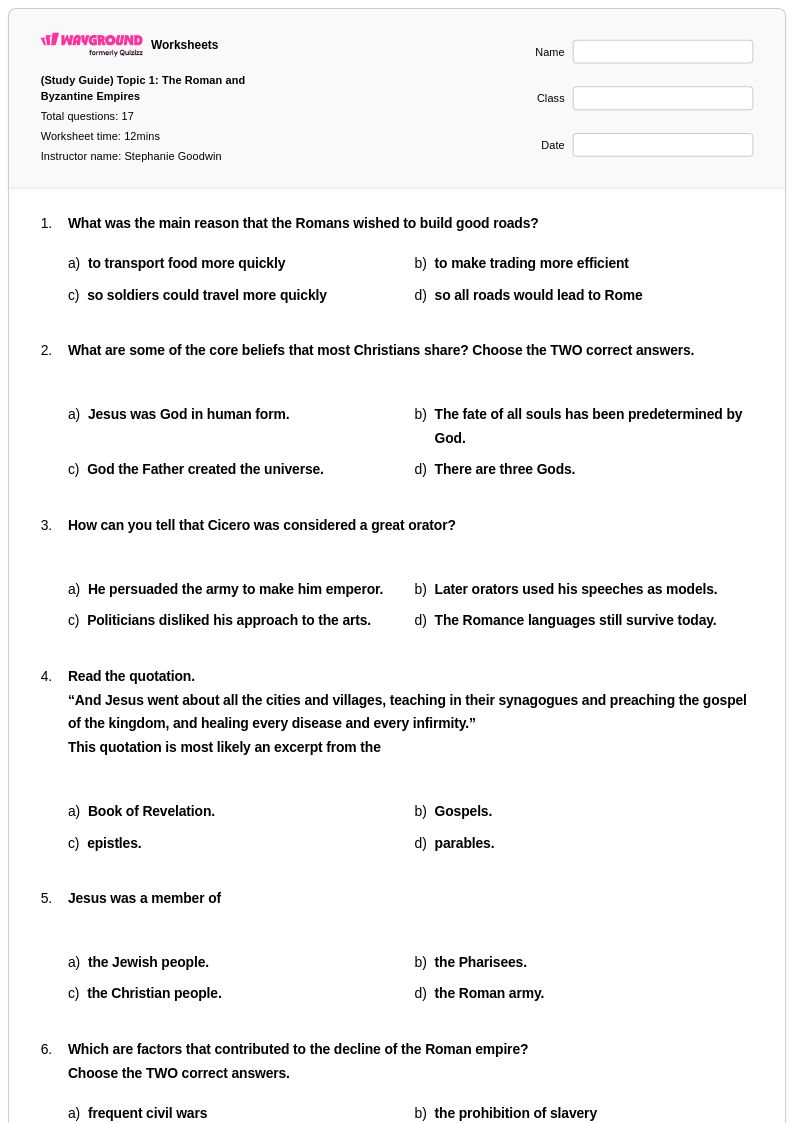
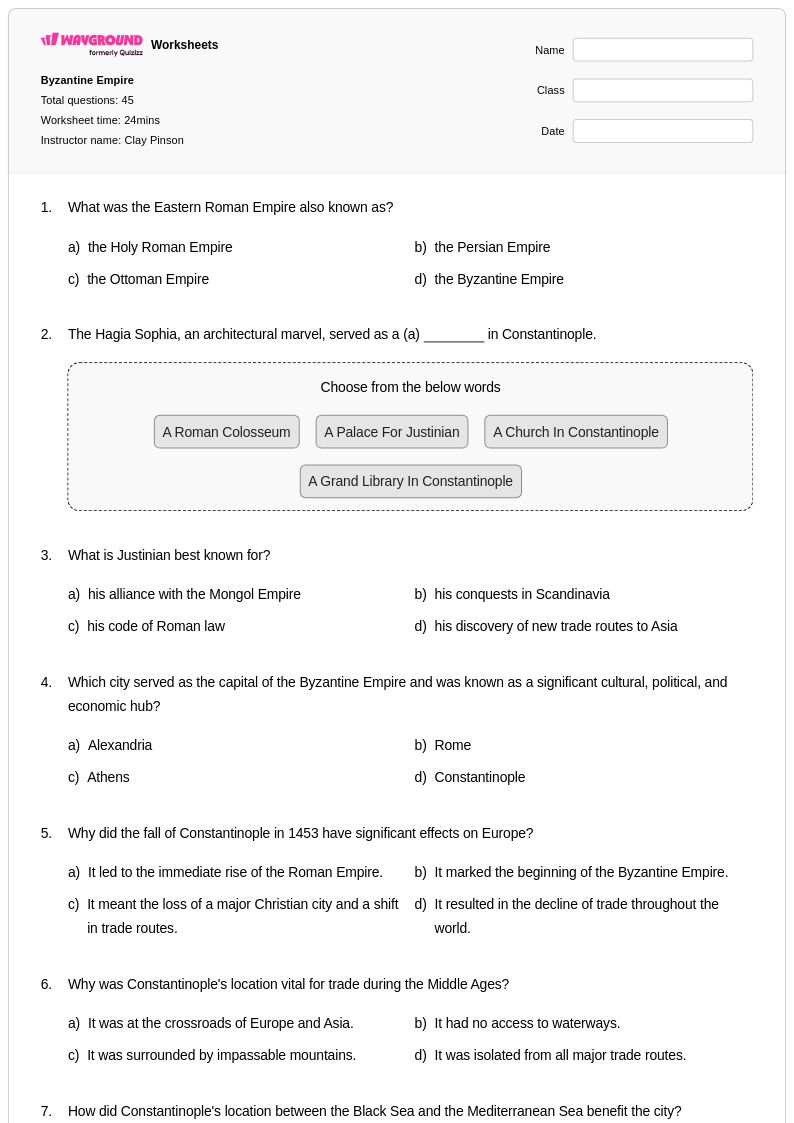
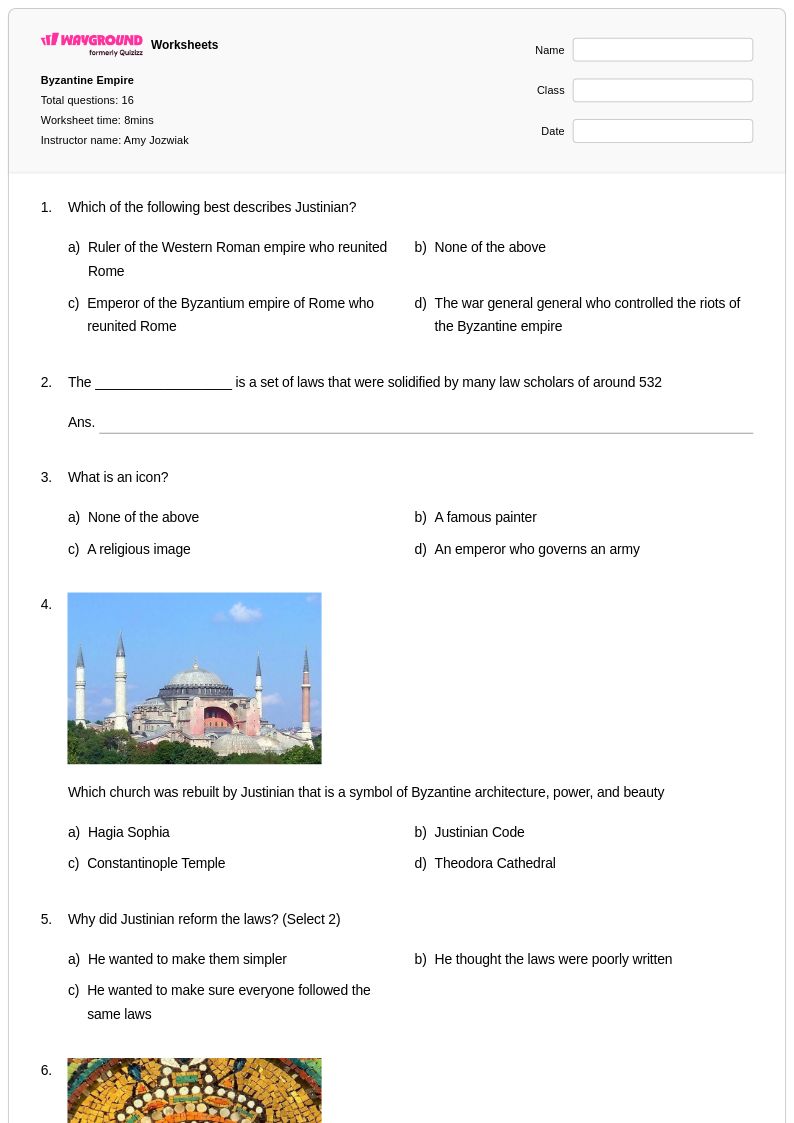
Explore Wayground's free Byzantine Empire mapping worksheets and printables that help students practice identifying key territories, trade routes, and geographical features while developing essential map-reading skills through engaging PDF activities with answer keys.
Byzantine Empire mapping worksheets available through Wayground (formerly Quizizz) provide students with comprehensive geographic and historical practice materials that strengthen critical spatial reasoning and analytical skills essential for understanding this pivotal medieval civilization. These carefully designed worksheets guide learners through the territorial evolution of the Byzantine Empire, from its origins as the Eastern Roman Empire through its final conquest in 1453, incorporating detailed map analysis activities that require students to identify key cities like Constantinople, trace trade routes, and examine the empire's changing borders over nearly a millennium. Each worksheet collection includes detailed answer keys and comprehensive practice problems that challenge students to connect geographic features with historical events, while the free printable pdf format ensures accessibility for diverse classroom environments and independent study sessions.
Wayground (formerly Quizizz) empowers educators with an extensive collection of millions of teacher-created Byzantine Empire mapping resources that support differentiated instruction and flexible lesson planning across various skill levels and learning objectives. The platform's robust search and filtering capabilities enable teachers to quickly locate worksheets aligned with specific curriculum standards, while built-in customization tools allow for seamless modification of content to meet individual student needs during remediation or enrichment activities. These professionally developed materials are available in both printable and digital formats, including downloadable pdf versions, making them ideal for traditional classroom instruction, remote learning environments, or hybrid educational models where students require consistent access to high-quality geographic and historical skill practice resources that reinforce understanding of Byzantine territorial dynamics and their broader historical significance.
FAQs
How do I teach Byzantine Empire geography to middle or high school students?
Start by grounding students in the Eastern Roman Empire's territorial foundation before tracing the empire's expansion and contraction over time. Use labeled map activities to anchor key cities like Constantinople, Antioch, and Alexandria to geographic context, then layer in trade routes and border changes across major historical periods. Connecting geographic shifts to political events, such as the loss of North Africa or the fall of Constantinople in 1453, helps students understand why territory mattered strategically and culturally.
What map skills do Byzantine Empire mapping worksheets help students practice?
Byzantine Empire mapping worksheets develop spatial reasoning by asking students to identify and label key cities, trace trade routes across the Mediterranean and Black Sea regions, and analyze how the empire's borders evolved over nearly a thousand years. These activities reinforce core map-reading skills including using legends, interpreting scale, and connecting geographic features to historical outcomes. Because the Byzantine Empire's territory changed dramatically between its height and its fall in 1453, students also practice reading maps as historical evidence rather than static references.
What misconceptions do students commonly have about the Byzantine Empire's geography?
A frequent misconception is that the Byzantine Empire was geographically stable, when in fact its territory shrank significantly from the 7th century onward due to Arab conquests, the Crusades, and Ottoman expansion. Students also often conflate the Byzantine Empire with Western Rome, misplacing its political and geographic center, which was Constantinople in modern-day Turkey rather than Rome. Mapping activities that show territorial evolution across multiple time periods directly address both errors by making the empire's changing extent visible.
How can I use Byzantine Empire mapping worksheets to assess student understanding?
Map-based assessments work well for evaluating whether students can accurately place key cities, identify trade corridors, and explain the geographic logic behind the empire's borders at specific points in history. Ask students to compare maps from different centuries and explain what changed and why, turning a visual task into an analytical writing prompt. Answer keys included with these worksheets allow teachers to quickly check for labeling accuracy while using open-ended map questions to assess deeper historical reasoning.
How do I use Wayground's Byzantine Empire mapping worksheets in my classroom?
Wayground's Byzantine Empire mapping worksheets are available as printable PDFs for traditional classroom use and in digital formats for technology-integrated or remote learning environments, giving teachers flexibility in how they deploy the materials. Teachers can also host the worksheets as an interactive quiz directly on Wayground, which is useful for formative assessment or structured review sessions. The included answer keys make it straightforward to use these materials for independent practice, small group work, or whole-class instruction without additional preparation.