Grade 7 citizenship worksheets and printables help students explore civic duties, rights, and responsibilities through engaging practice problems with comprehensive answer keys available as free PDF downloads.
Explore printable Citizenship worksheets for Grade 7
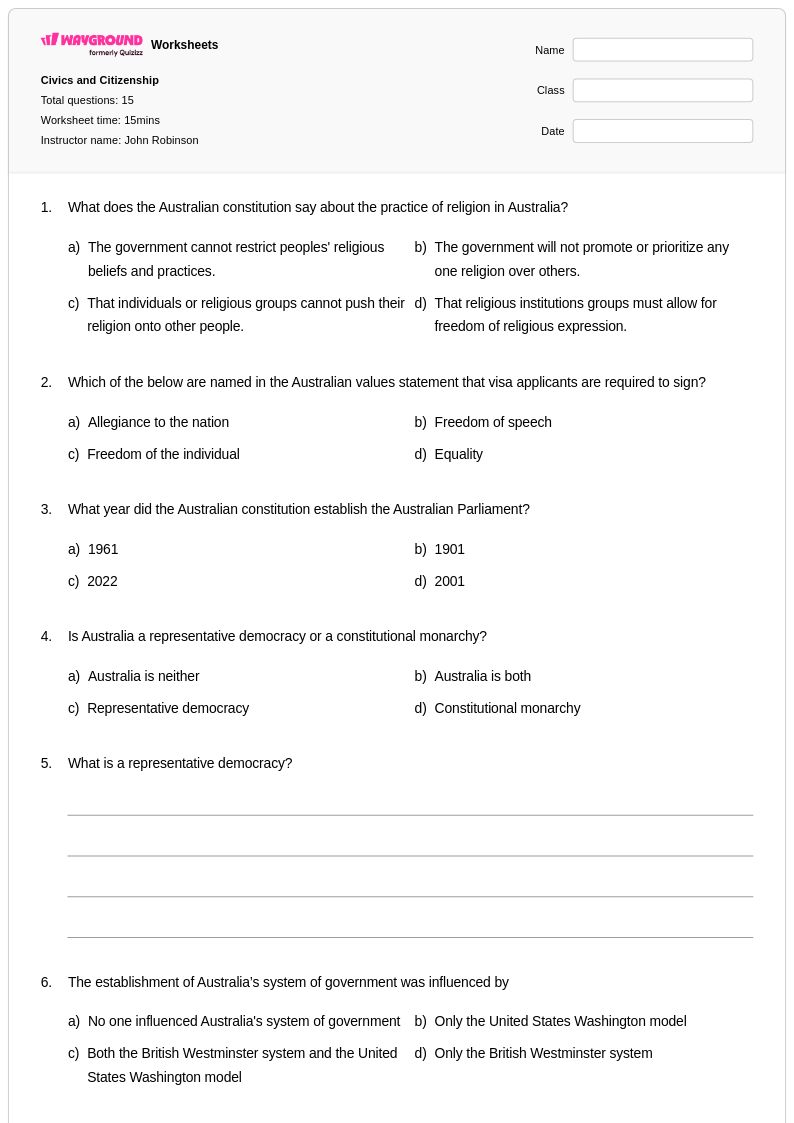
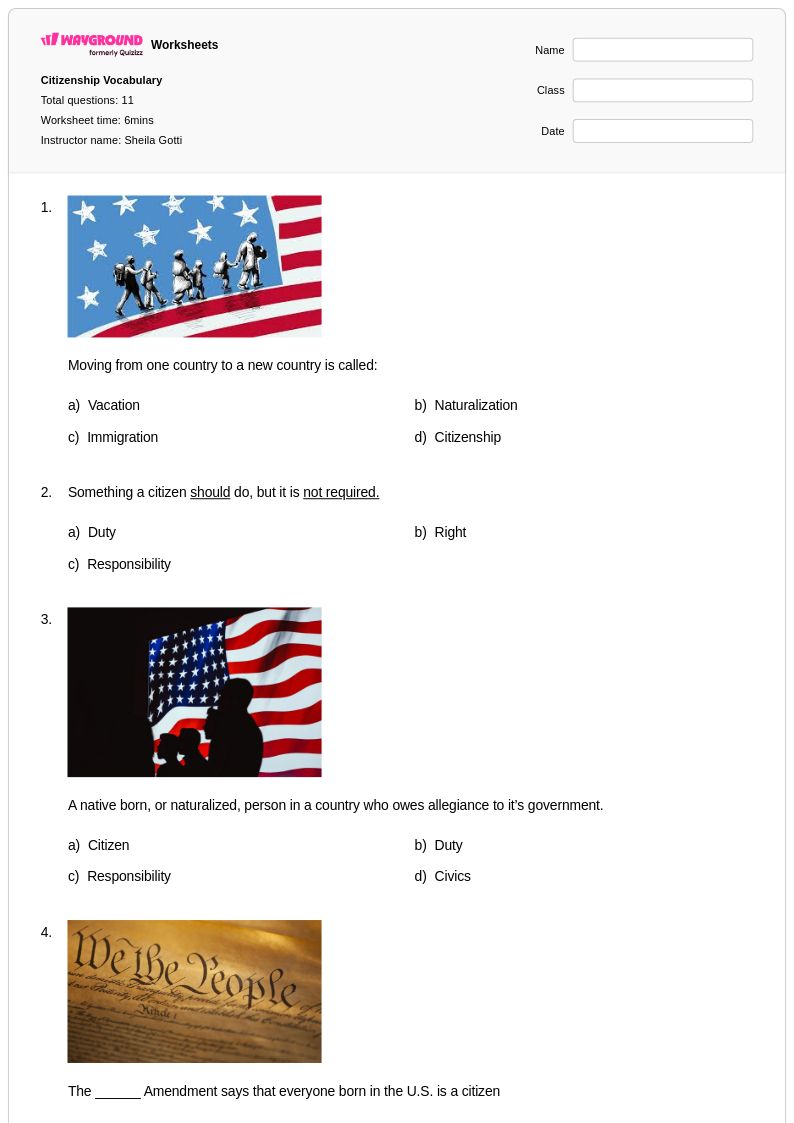
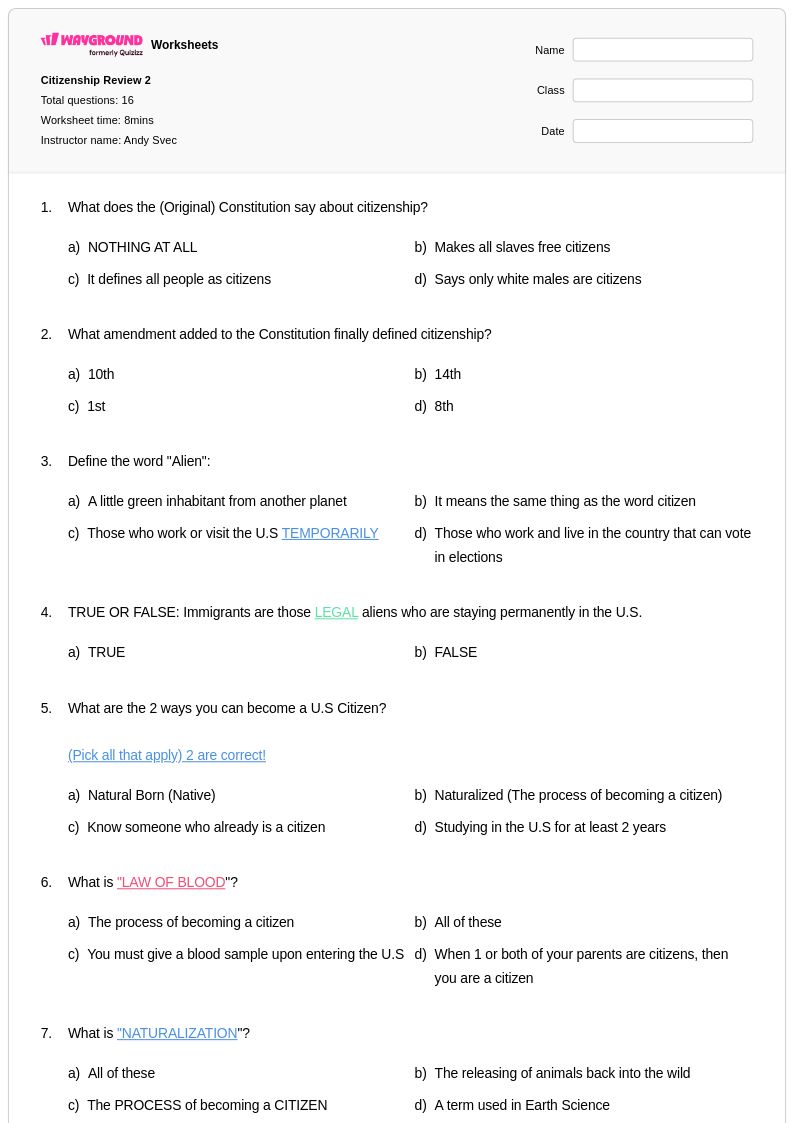
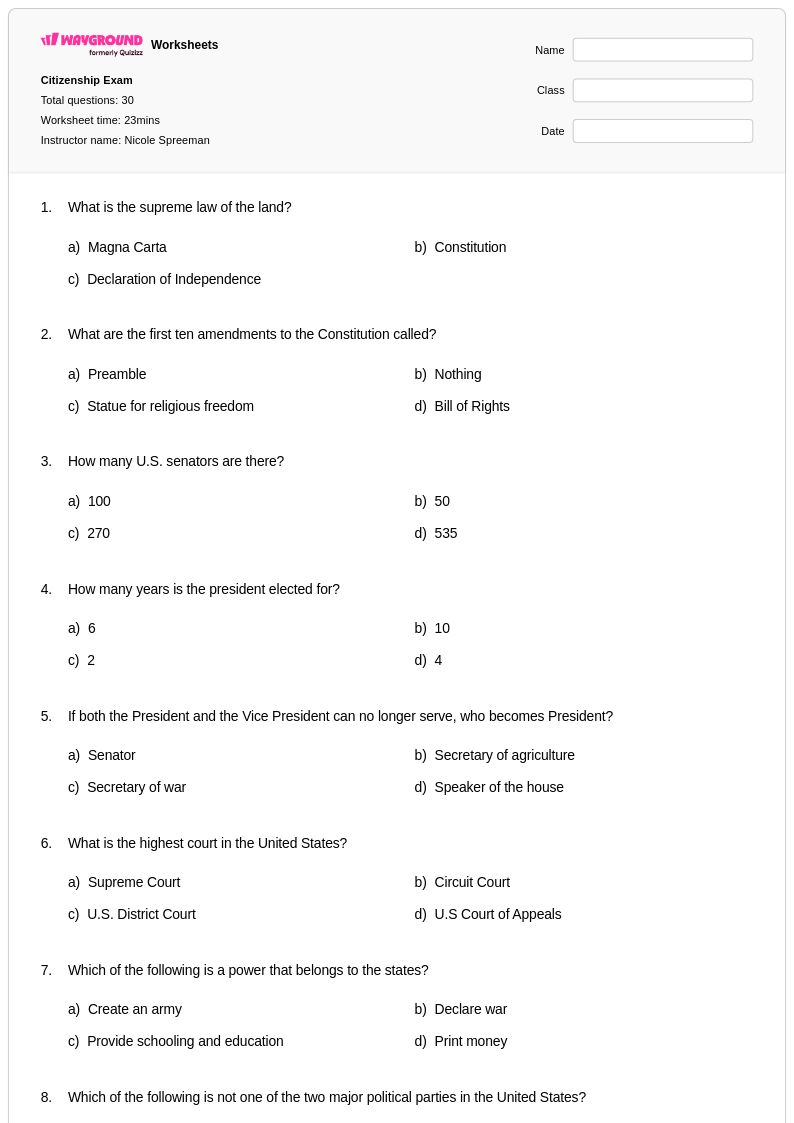
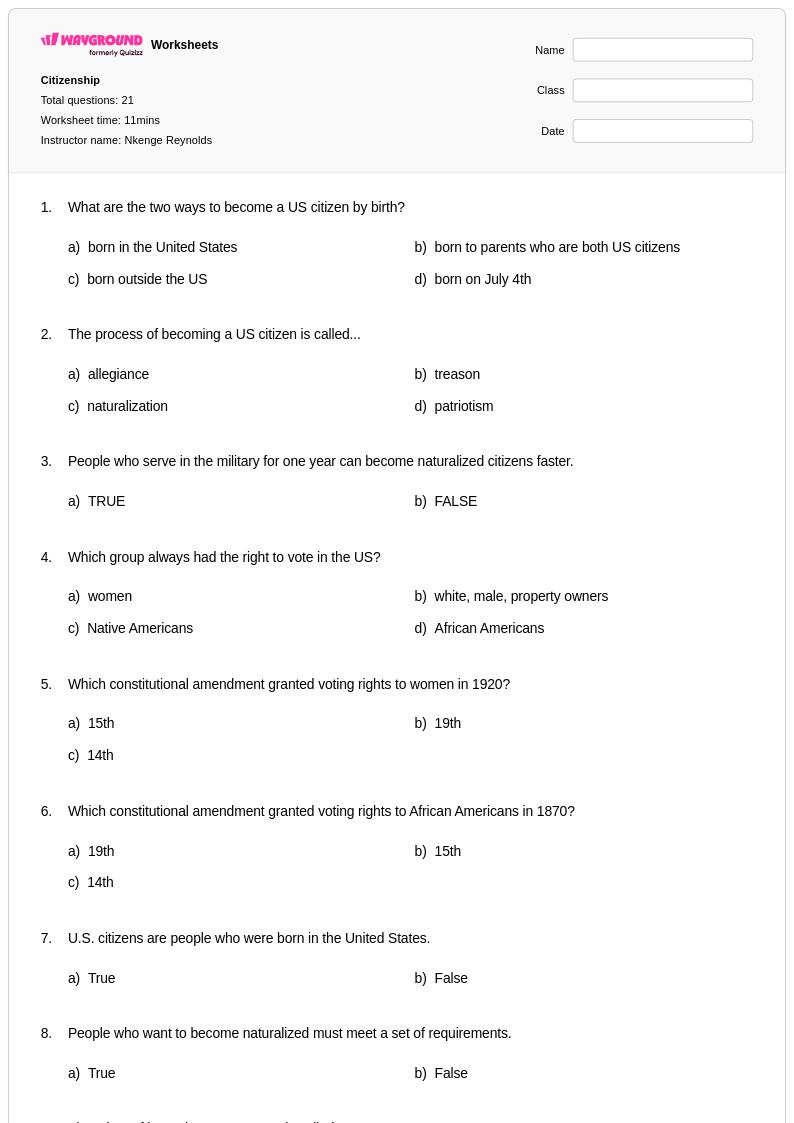
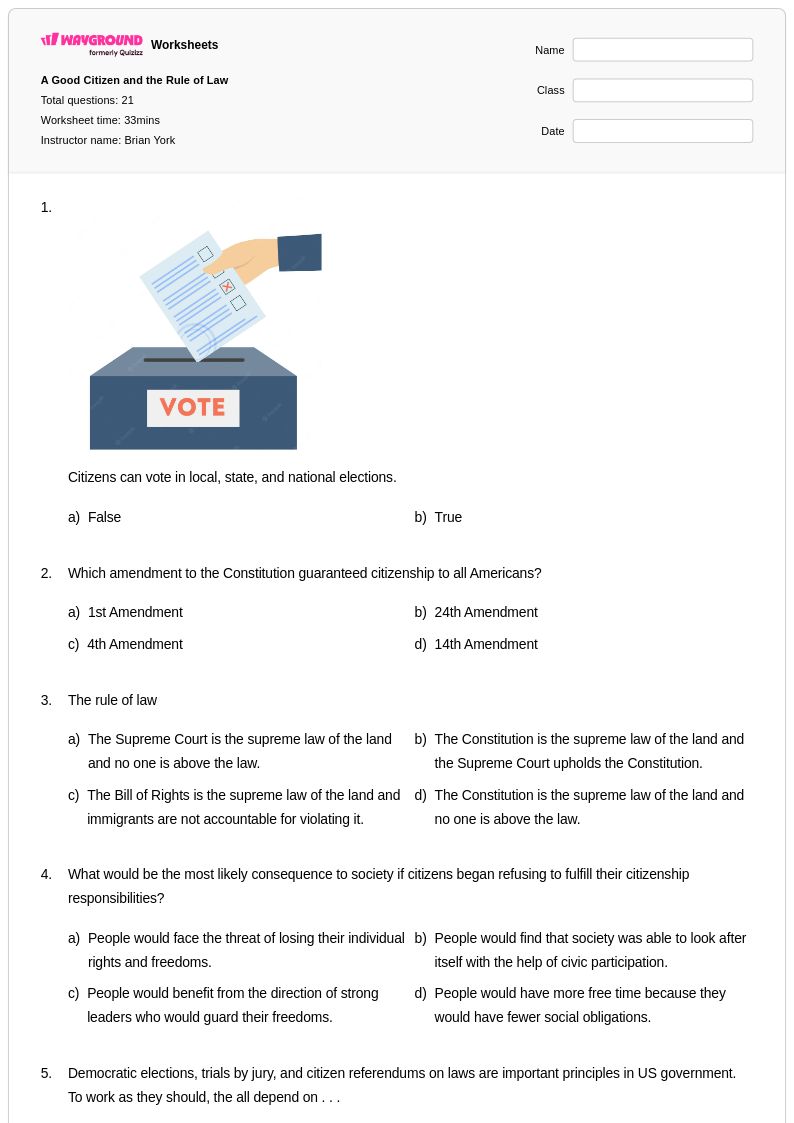
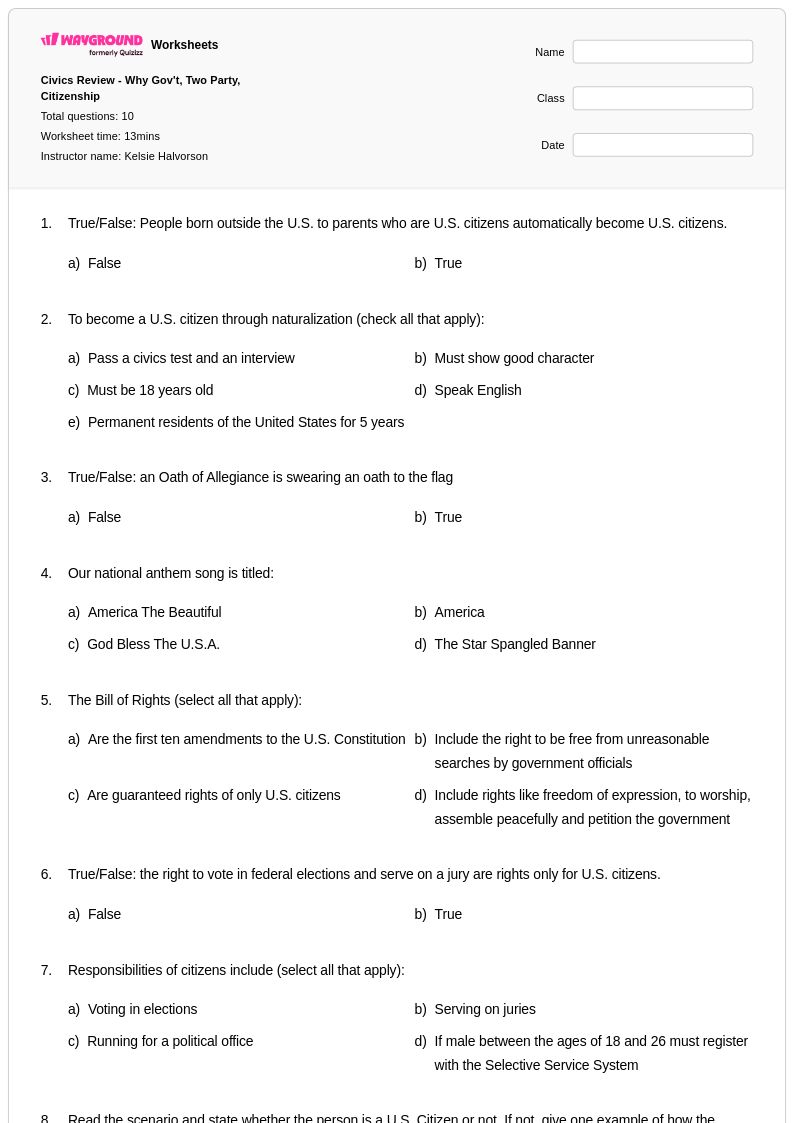
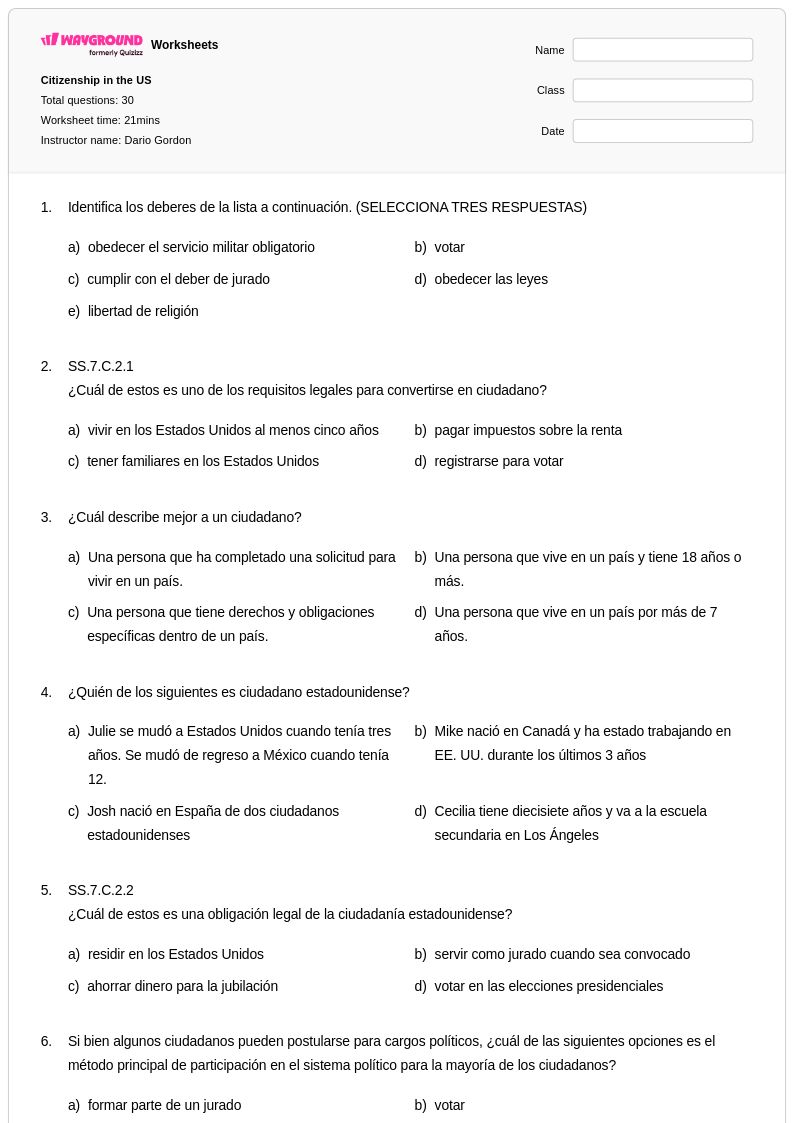
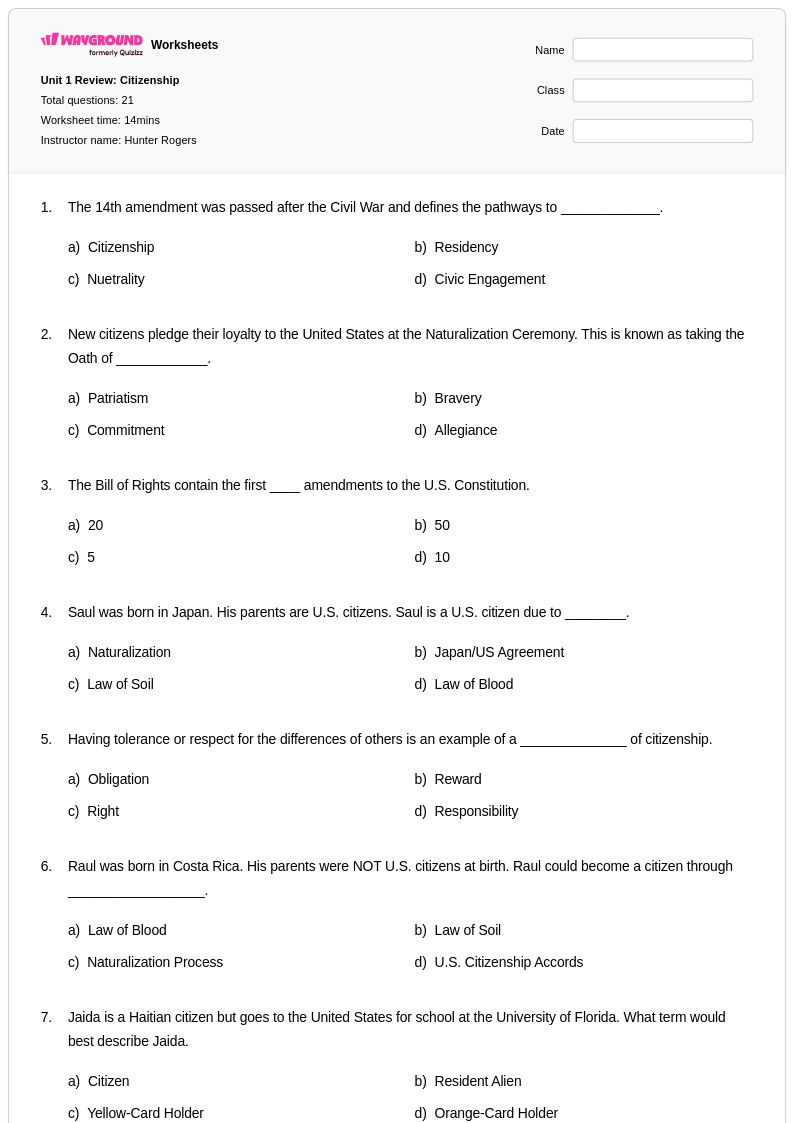
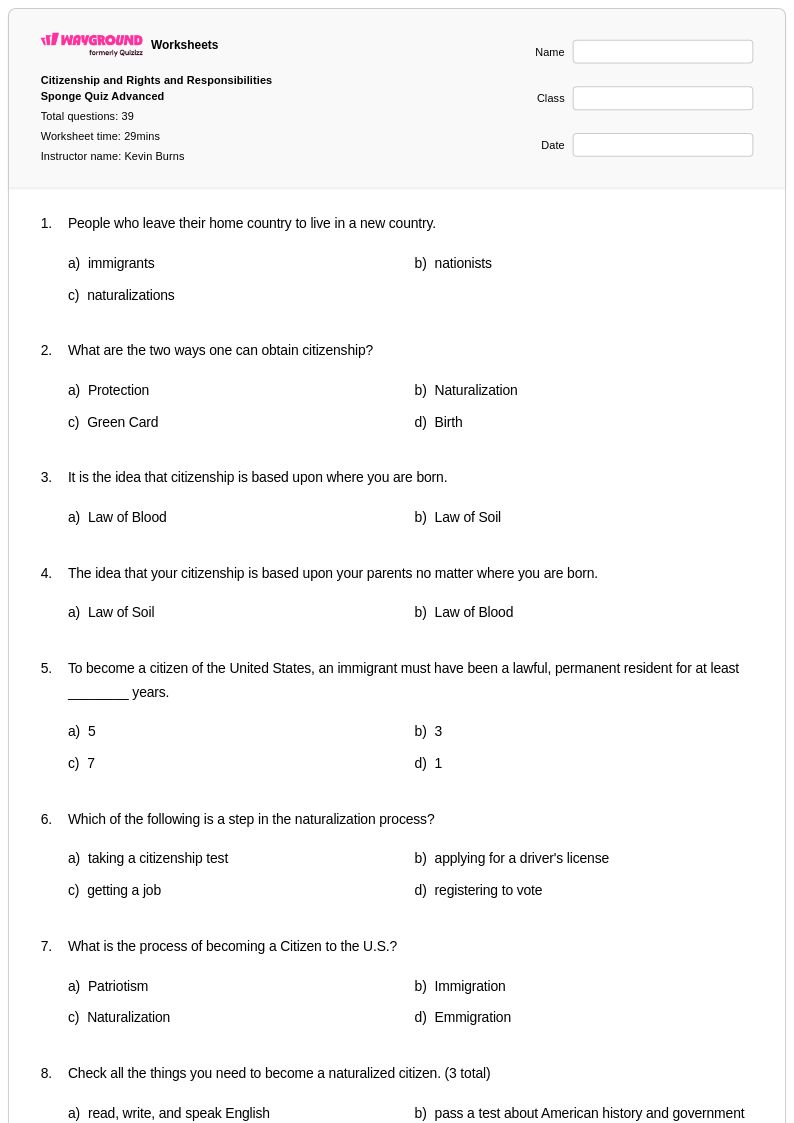
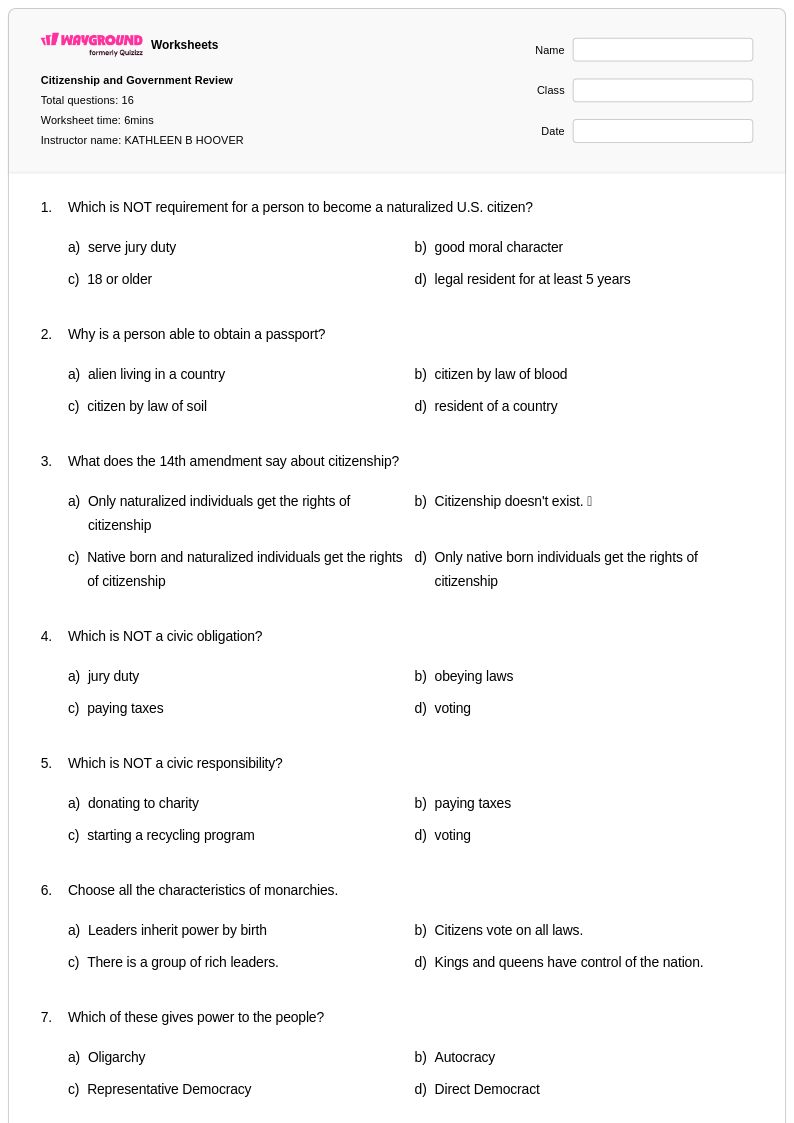
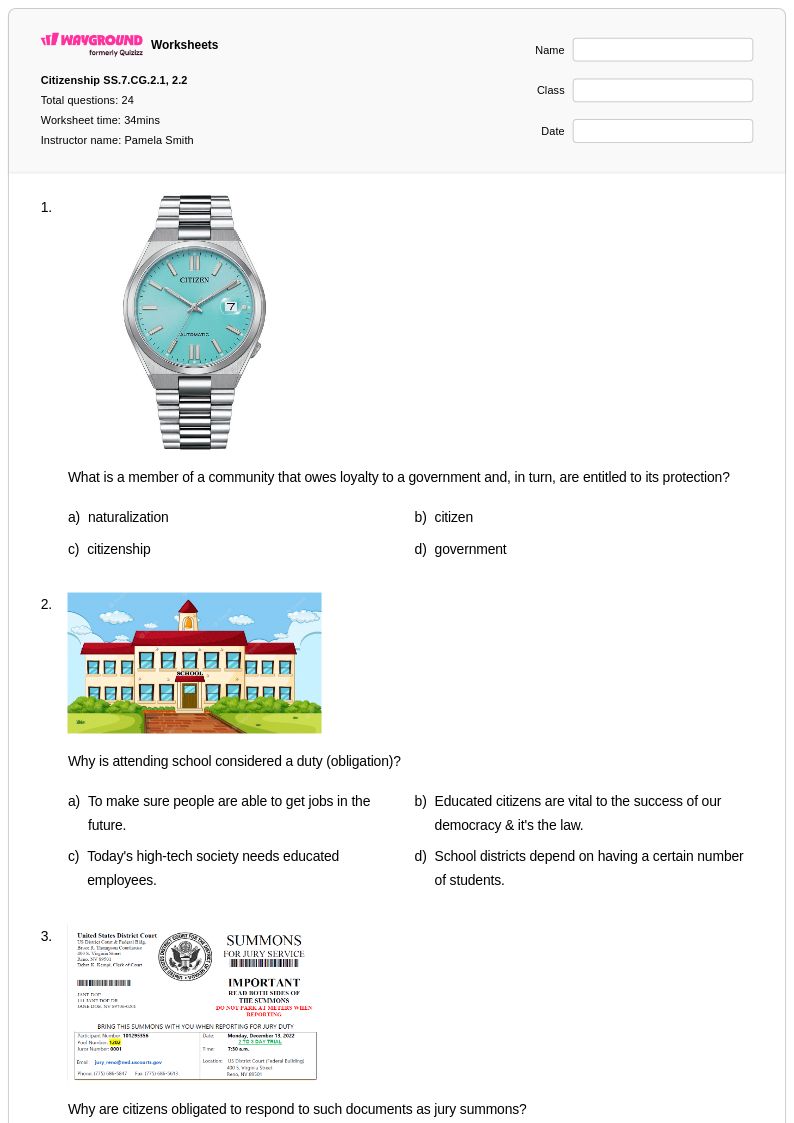
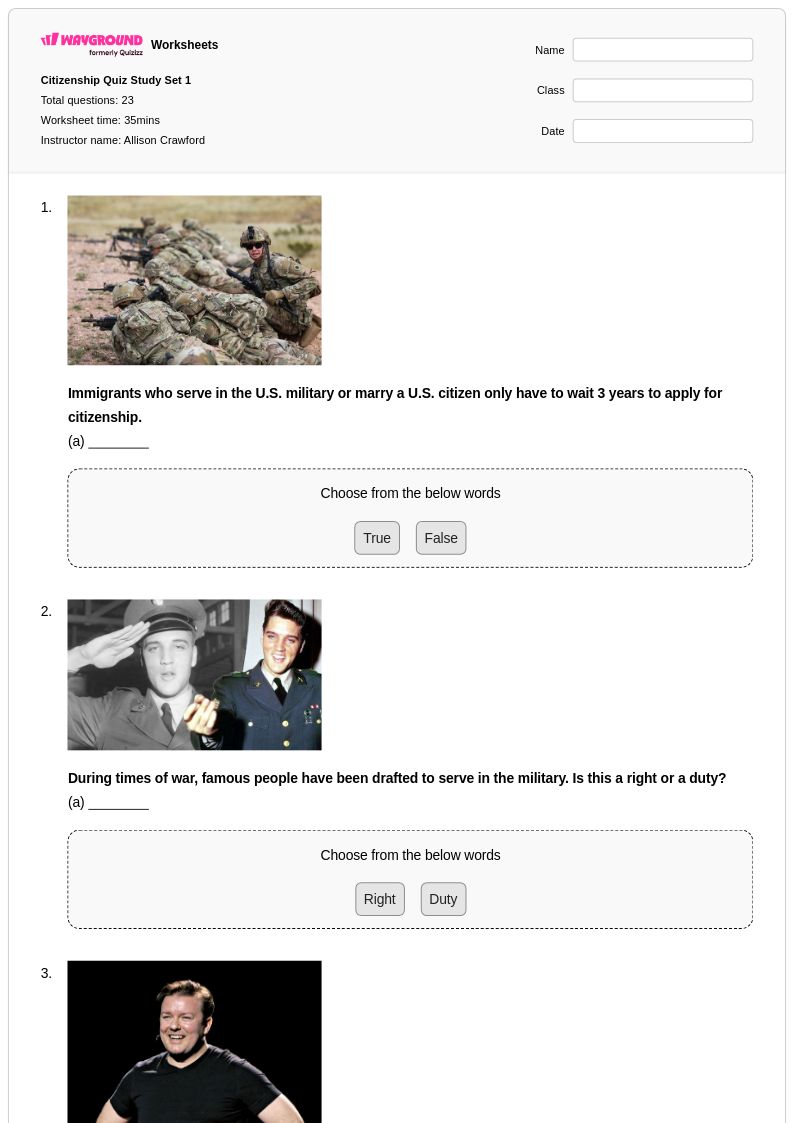
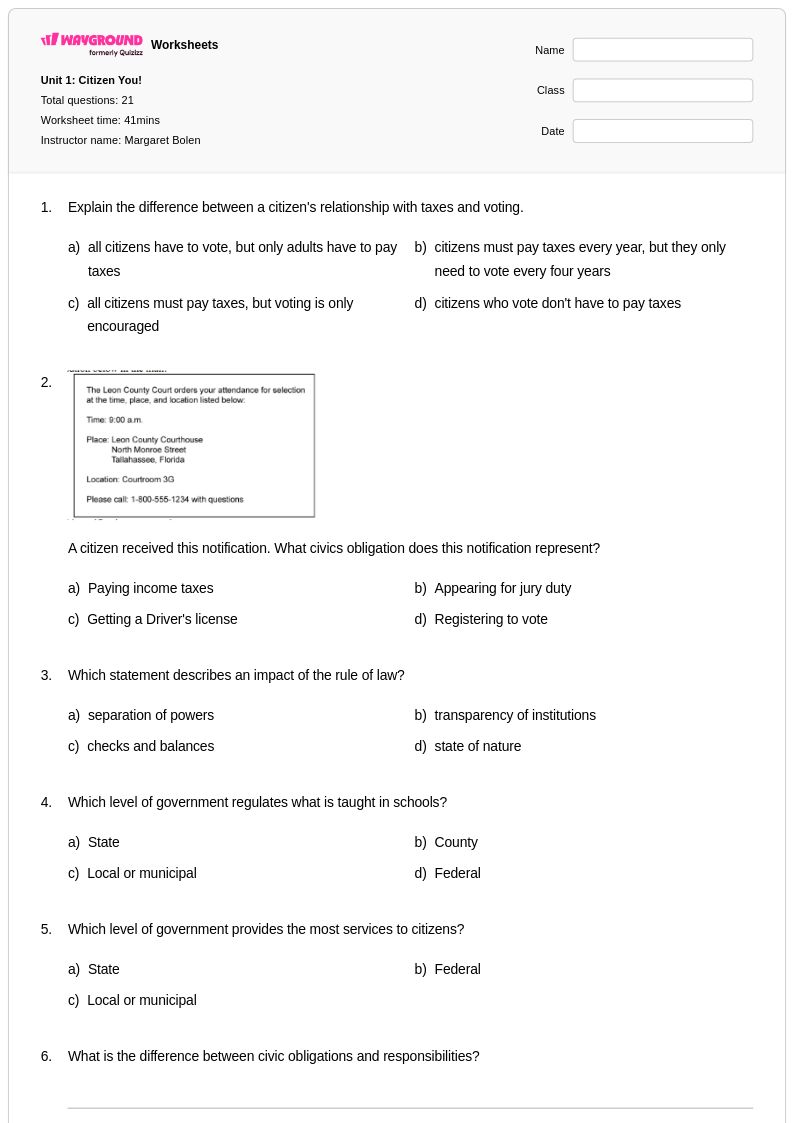
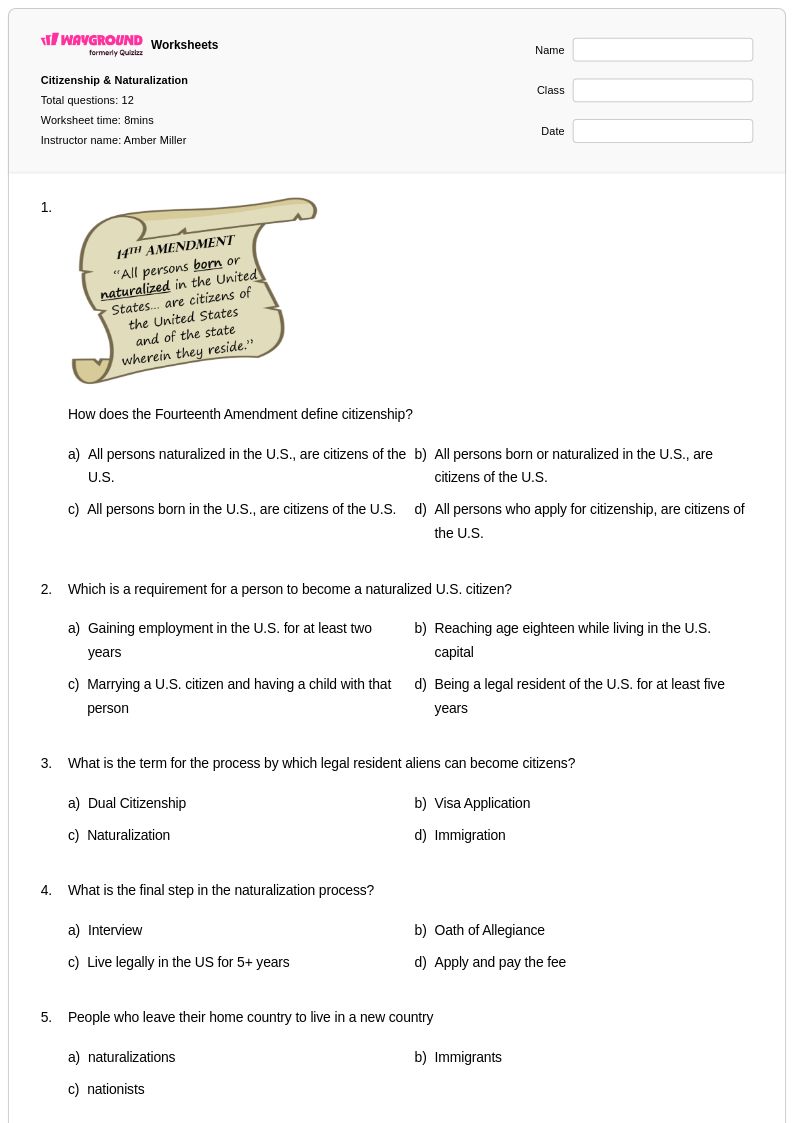
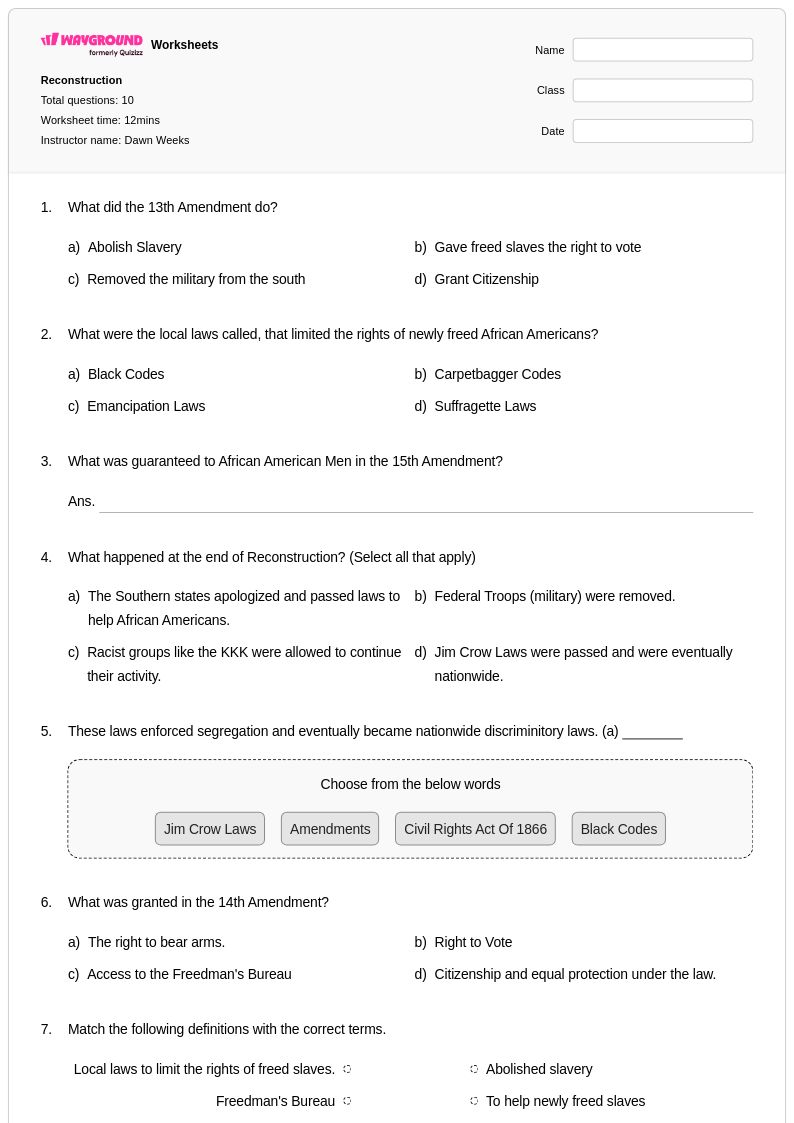
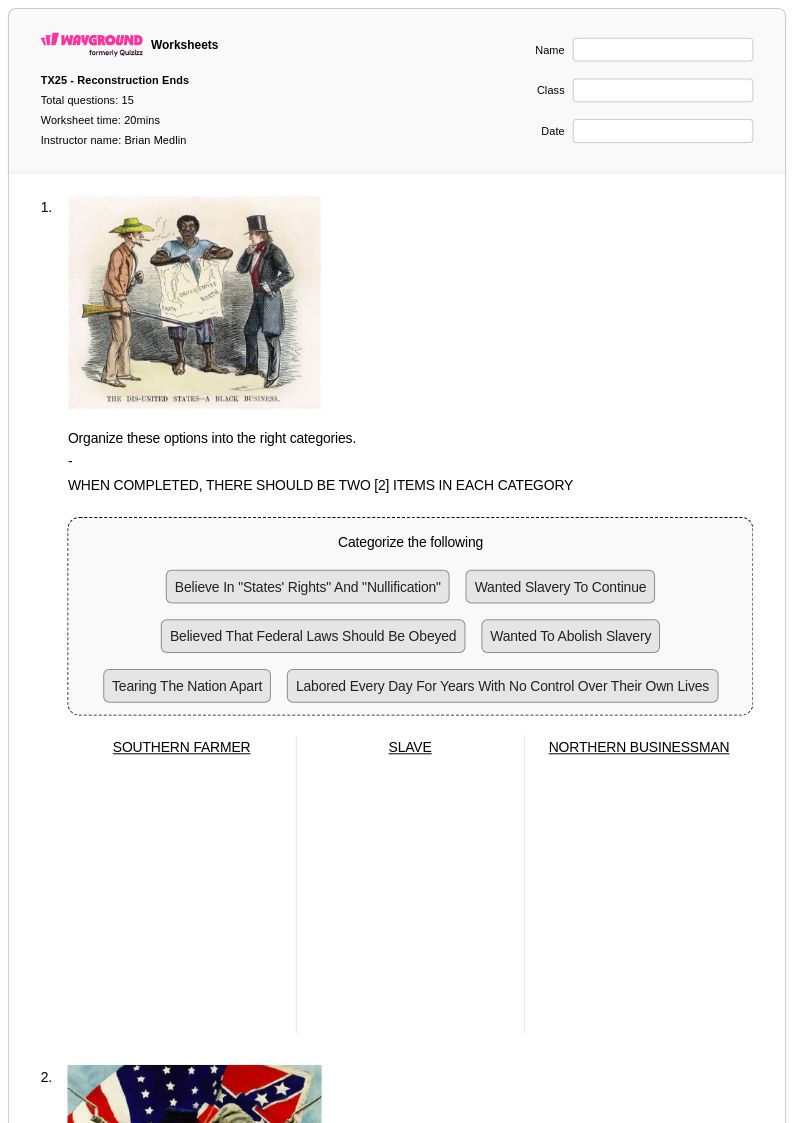
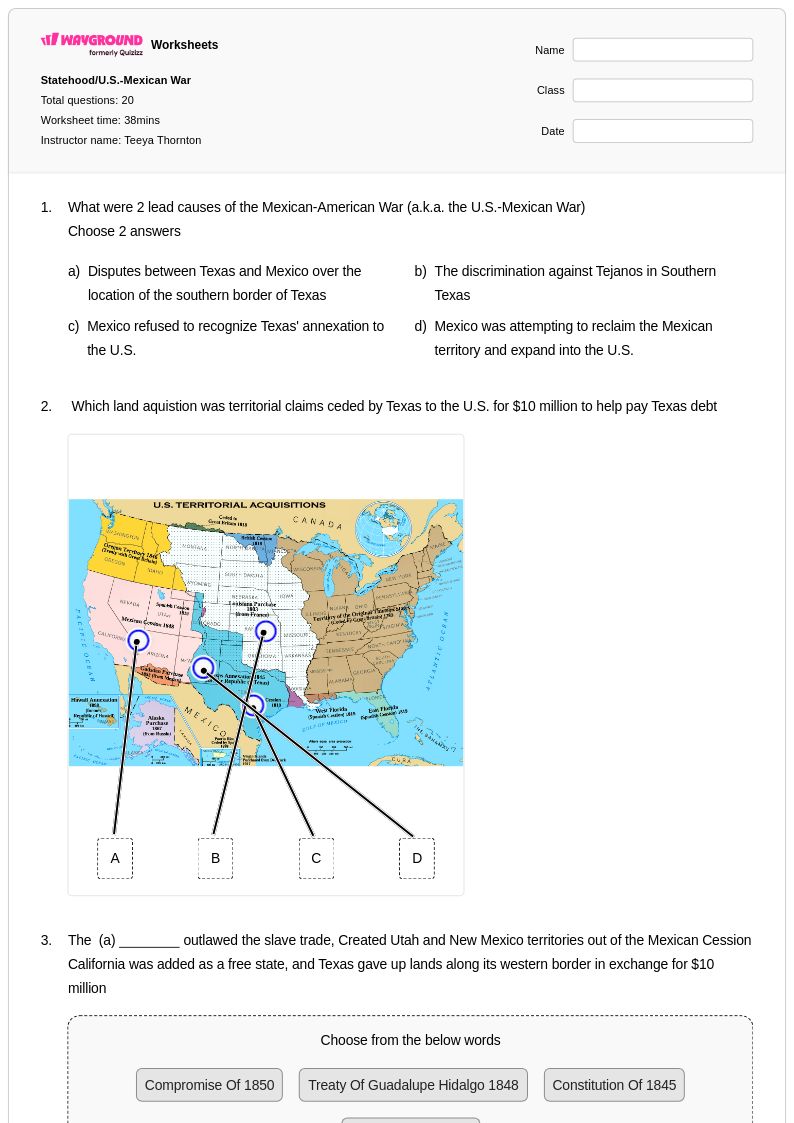
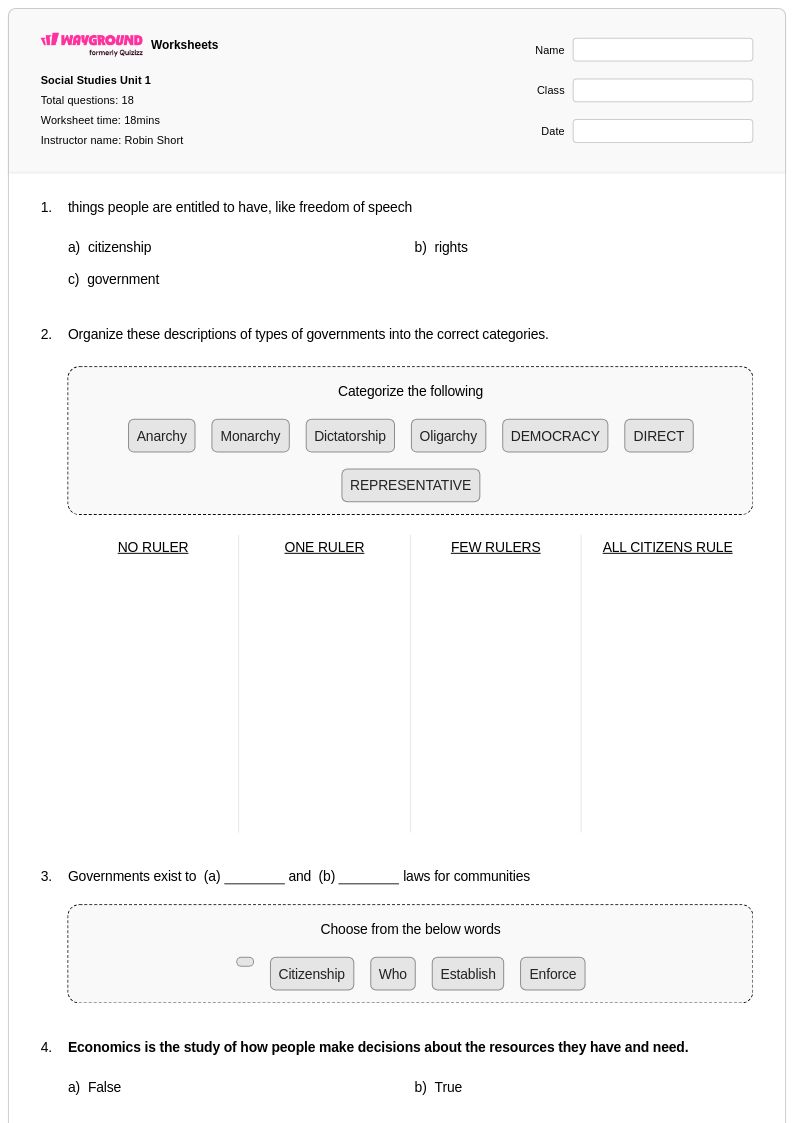
Grade 7 citizenship worksheets available through Wayground (formerly Quizizz) provide comprehensive coverage of the fundamental concepts that define civic participation and democratic responsibility. These educational resources strengthen students' understanding of citizenship rights, duties, and privileges while developing critical thinking skills about civic engagement and community involvement. Students work through practice problems that explore topics such as the naturalization process, voting responsibilities, jury duty, and the balance between individual freedoms and civic obligations. Each worksheet includes detailed answer keys to support independent learning and features content delivered in accessible pdf format as free printables, making them ideal for classroom instruction, homework assignments, and assessment preparation.
Wayground (formerly Quizizz) empowers educators with millions of teacher-created citizenship resources that streamline lesson planning and enhance instructional effectiveness. The platform's robust search and filtering capabilities allow teachers to quickly locate materials aligned with specific curriculum standards and learning objectives, while built-in differentiation tools enable customization for diverse learning needs and abilities. These worksheets are available in both printable pdf format and interactive digital versions, providing flexibility for various classroom environments and teaching approaches. Teachers utilize these comprehensive collections for targeted skill practice, remediation support for struggling learners, and enrichment opportunities for advanced students, ensuring that all seventh-grade learners develop a solid foundation in citizenship concepts essential for active democratic participation.
FAQs
How do I teach citizenship and civic responsibility in the classroom?
Teaching citizenship effectively means grounding abstract concepts like rights, duties, and democratic participation in real-world examples students can connect to. Start with foundational structures such as constitutional principles and the roles of citizens at local, state, and national levels, then build toward analysis of how individual actions affect community welfare. Incorporating case studies, civic simulations, and structured discussion helps students move from passive knowledge to active civic understanding.
What exercises help students practice civic responsibilities and democratic participation?
Practice exercises that ask students to evaluate real voting processes, analyze civic duties, and connect constitutional principles to everyday decisions are especially effective. Worksheets that present scenarios requiring students to weigh individual rights against community responsibilities build the critical thinking skills central to civic education. Structured practice with answer keys allows students to self-check their reasoning and correct misconceptions before assessments.
What mistakes do students commonly make when learning about citizenship and civic rights?
Students frequently conflate rights with unlimited freedoms, failing to recognize that rights carry corresponding responsibilities and legal limits. Another common error is treating citizenship as a passive status rather than an active civic role, which leads to shallow understanding of democratic participation. Students also tend to struggle with distinguishing between federal, state, and local civic structures and the different responsibilities attached to each level.
How can I differentiate citizenship instruction for students at different skill levels?
For students who need additional support, focus on foundational concepts such as basic rights and civic duties before introducing more complex analysis of constitutional principles. For advanced learners, enrichment activities that require evaluating policy decisions or debating competing civic values provide meaningful challenge. On Wayground, teachers can modify worksheets to meet diverse learning needs and apply individual accommodations such as read-aloud support or reduced answer choices for students who need them.
How do I use Wayground's citizenship worksheets in my classroom?
Wayground's citizenship worksheets are available as free printable PDFs for traditional classroom use and in digital formats for technology-integrated environments, including the option to host them as a quiz directly on Wayground. Teachers can search and filter resources by standard or topic to quickly find materials aligned to their current unit. Each worksheet includes a complete answer key, making them practical for independent practice, homework, or review sessions.