Free Printable Comparing and Contrasting Worksheets for Grade 4
Help Grade 4 students master comparing and contrasting skills with Wayground's collection of free reading comprehension worksheets, featuring engaging printables, practice problems, and complete answer keys in PDF format.
Explore printable Comparing and Contrasting worksheets for Grade 4
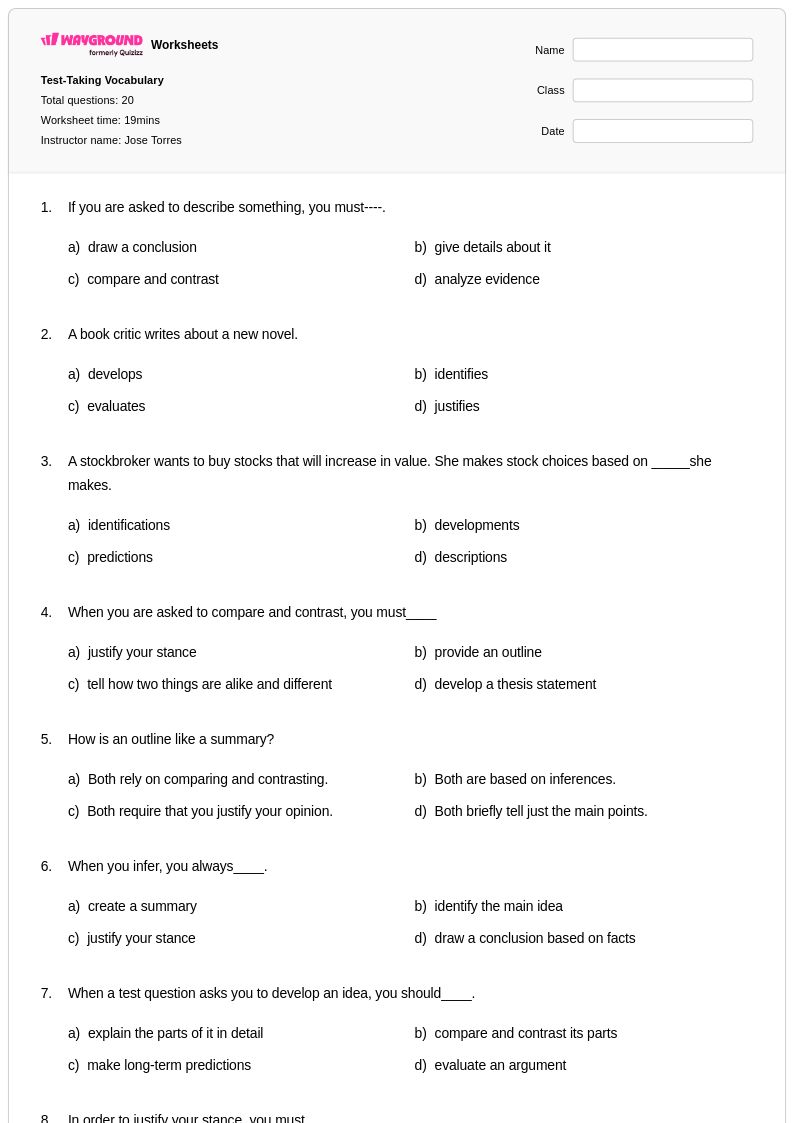
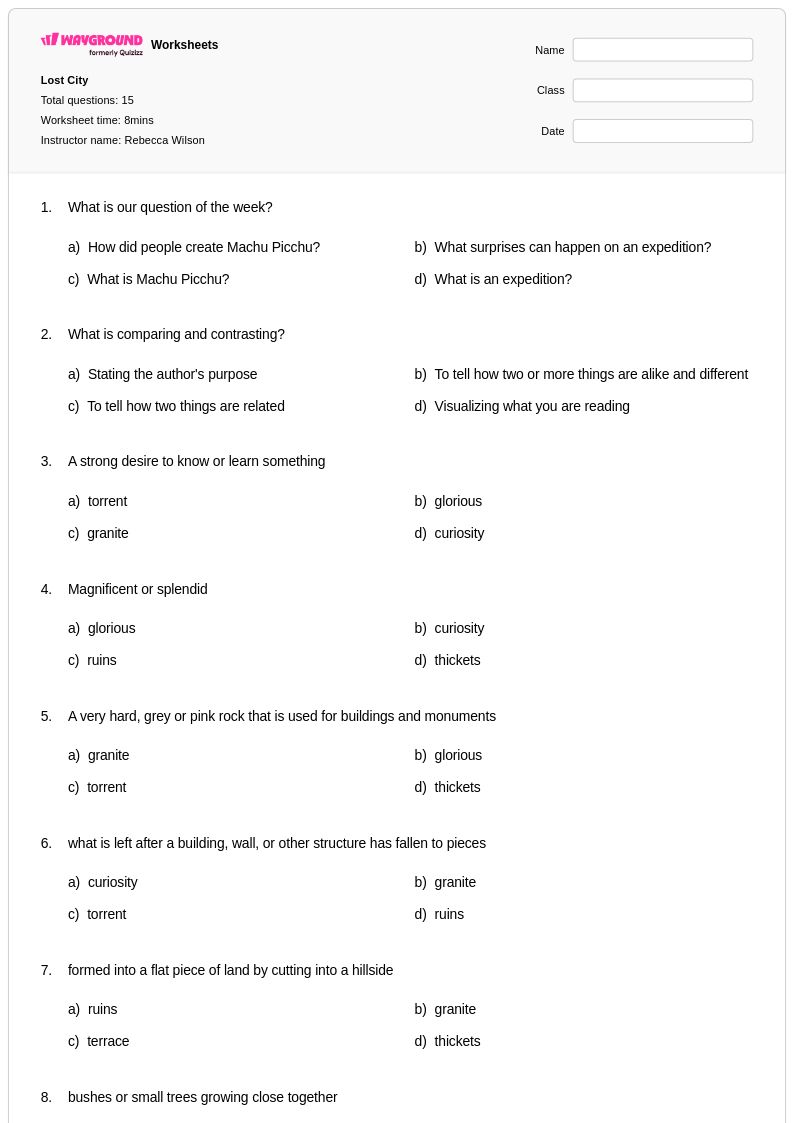
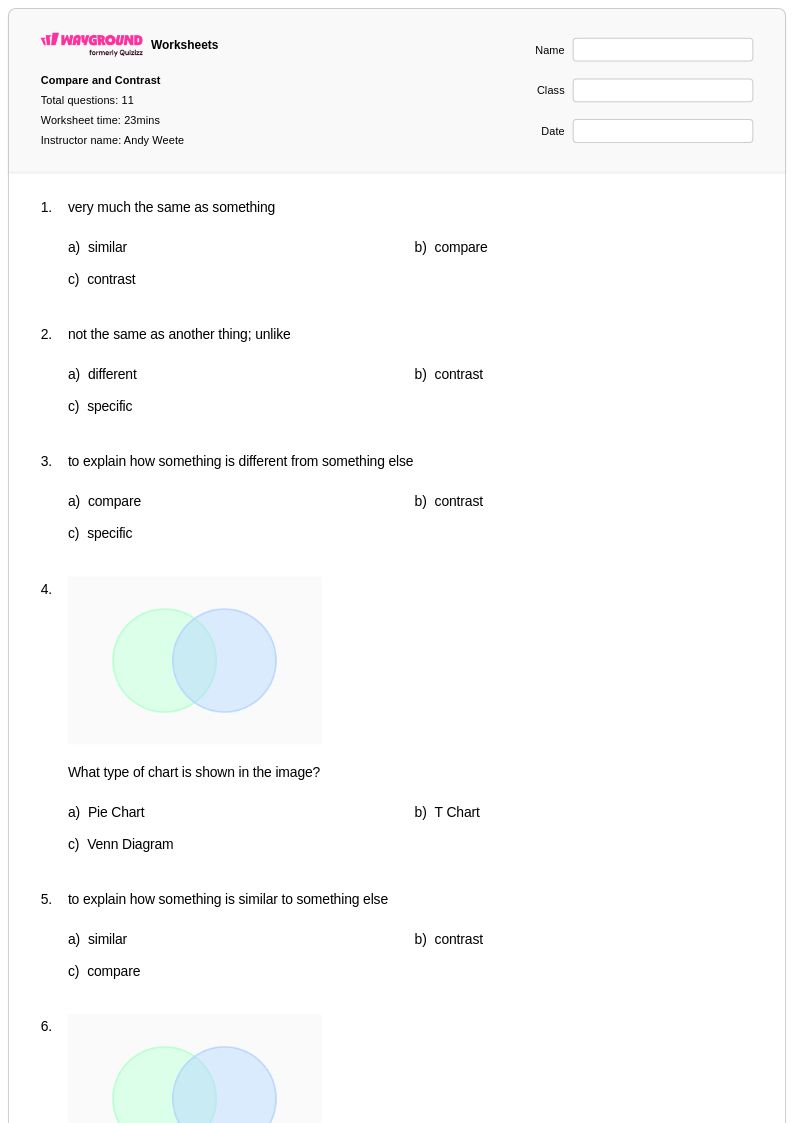
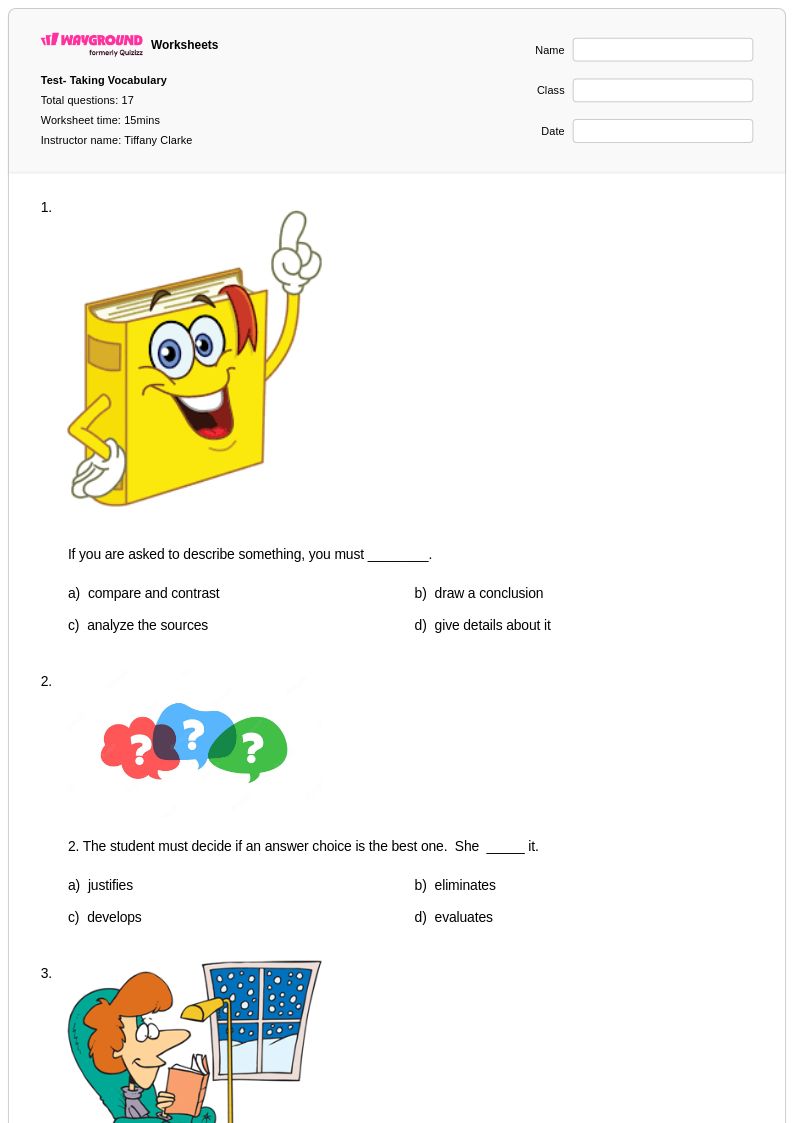
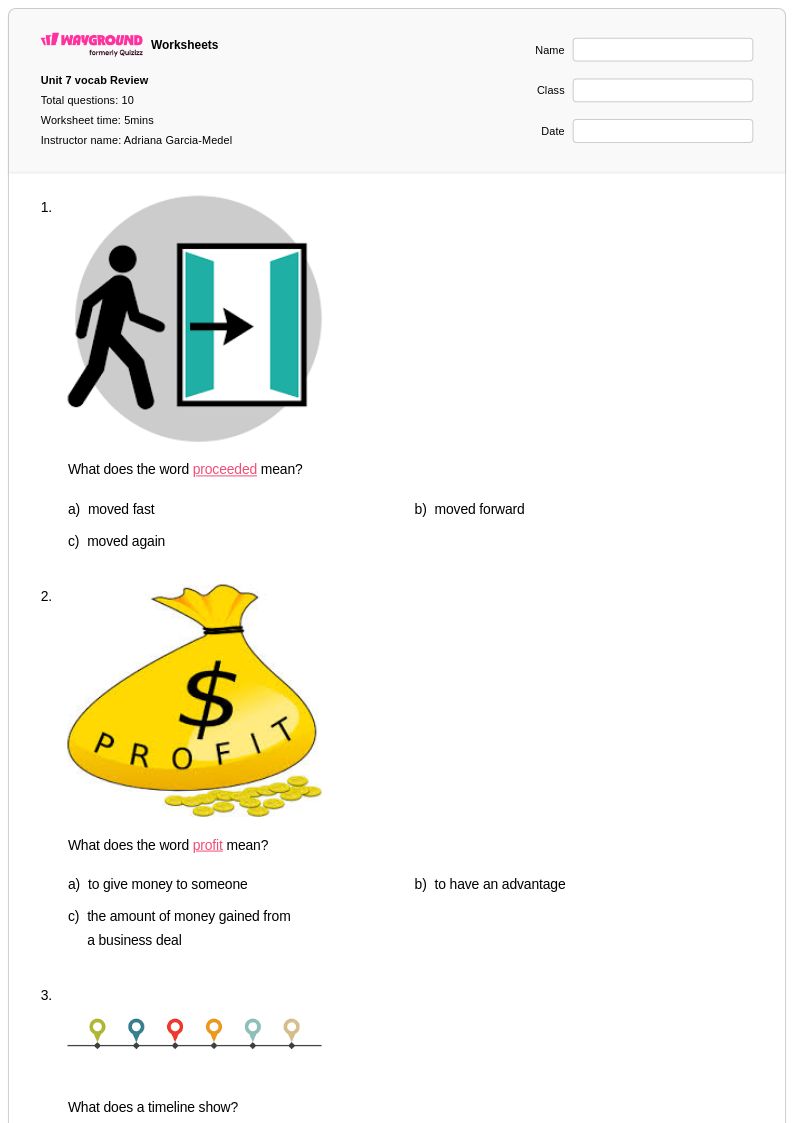
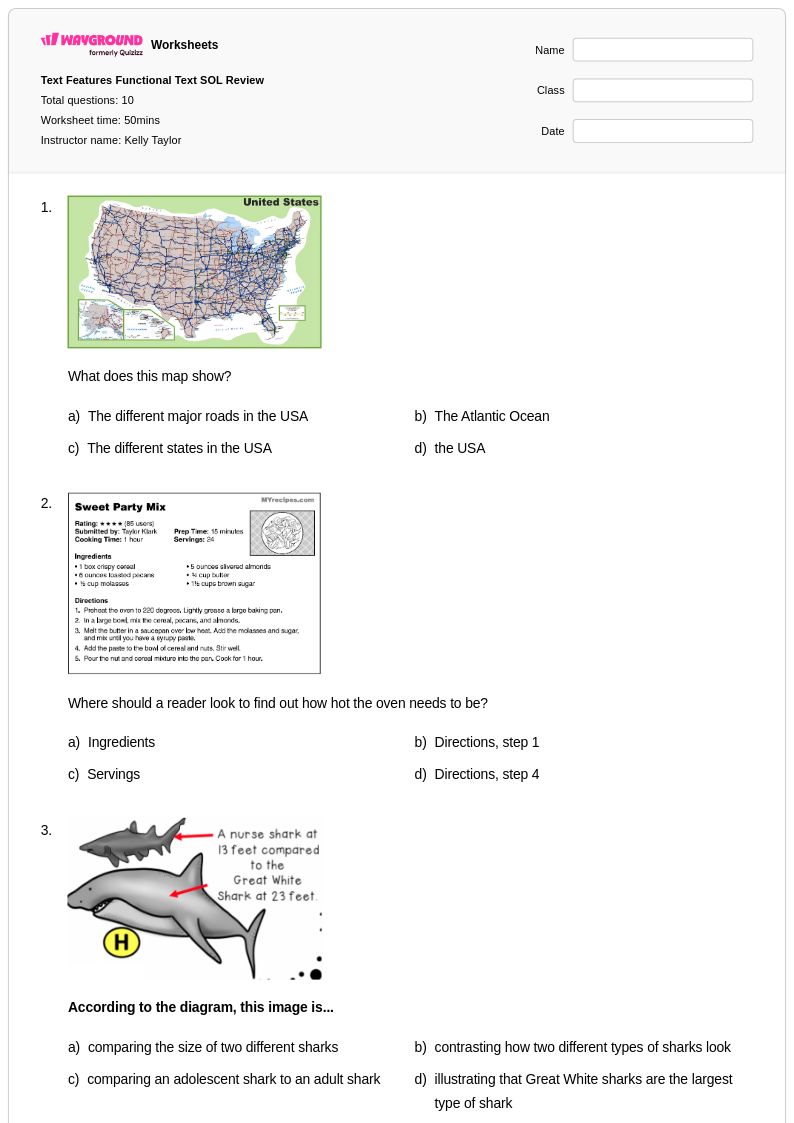
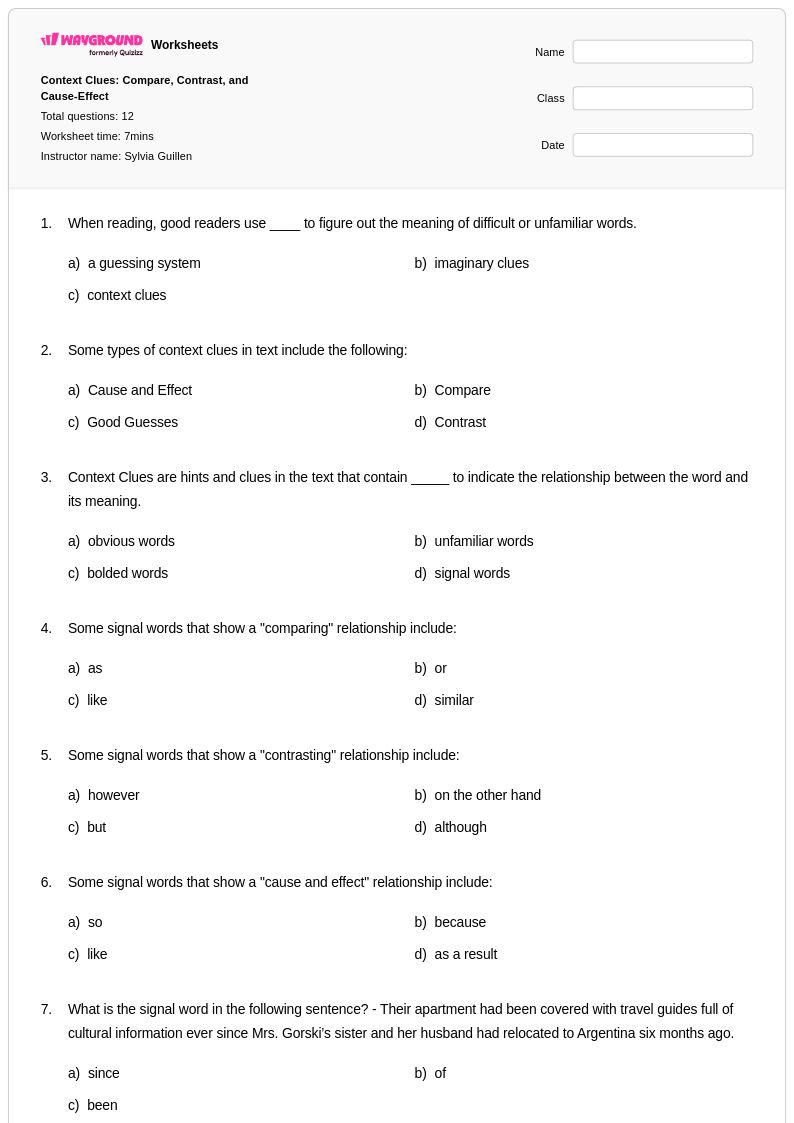
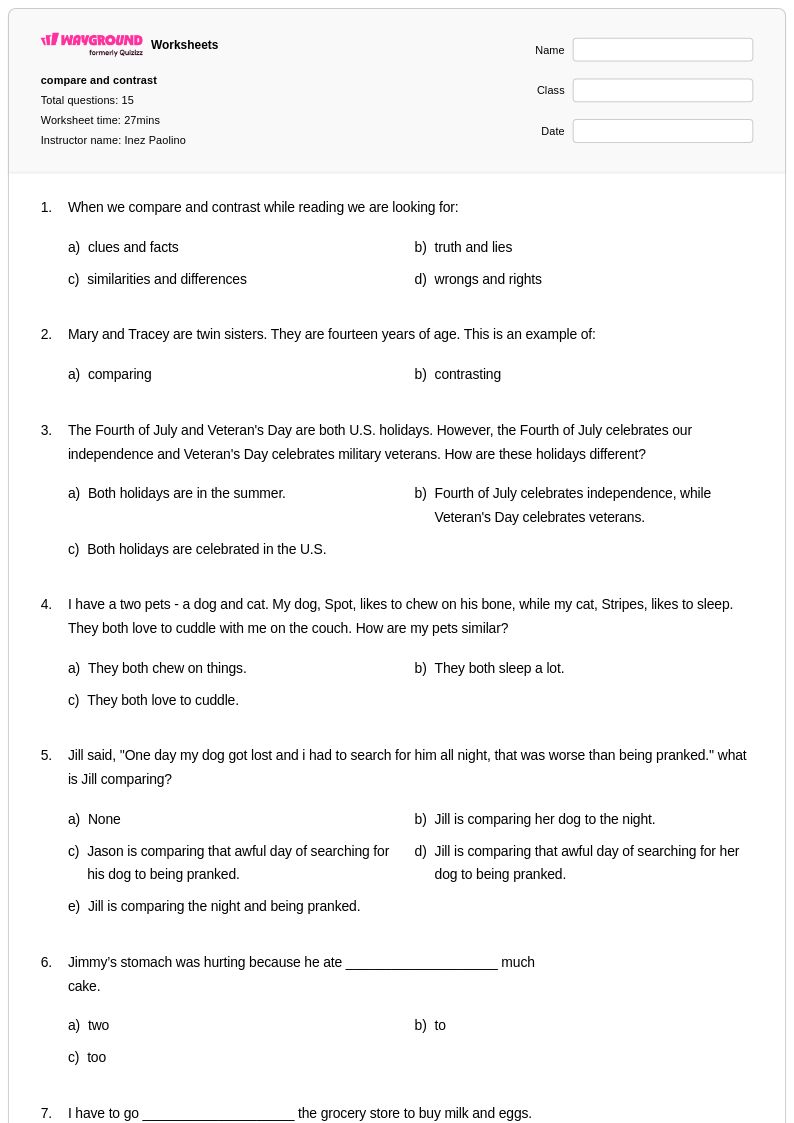
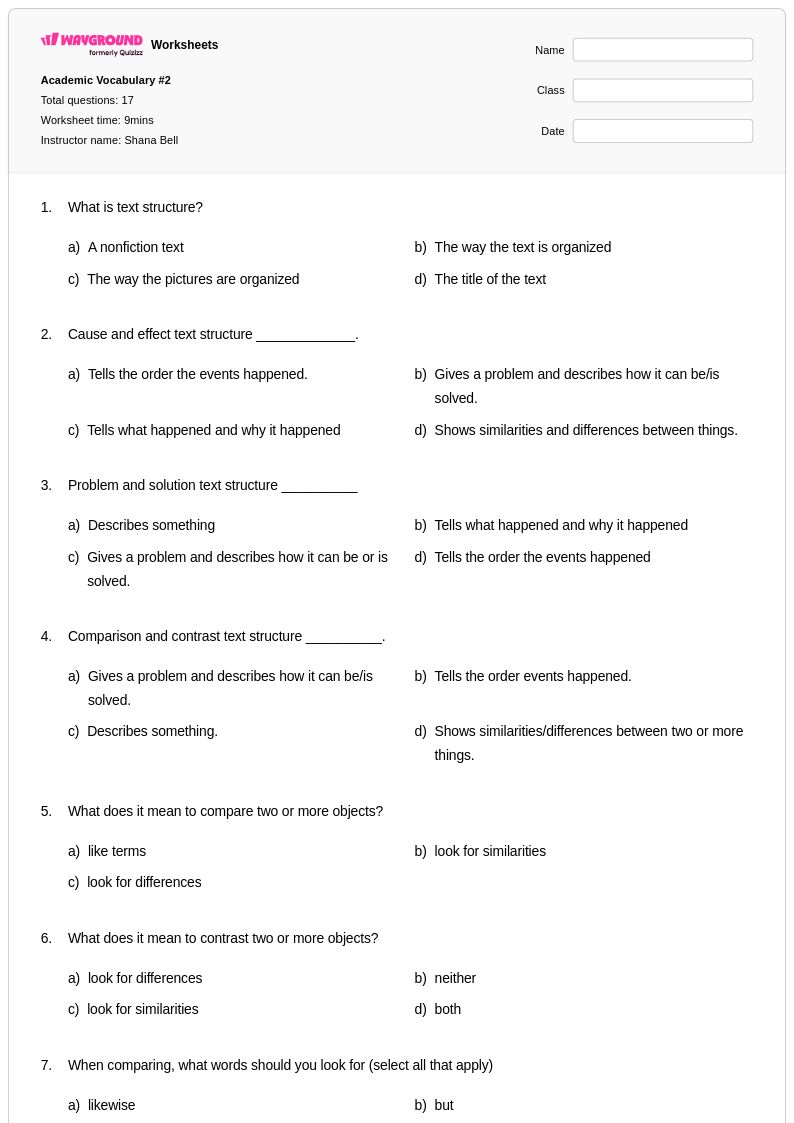
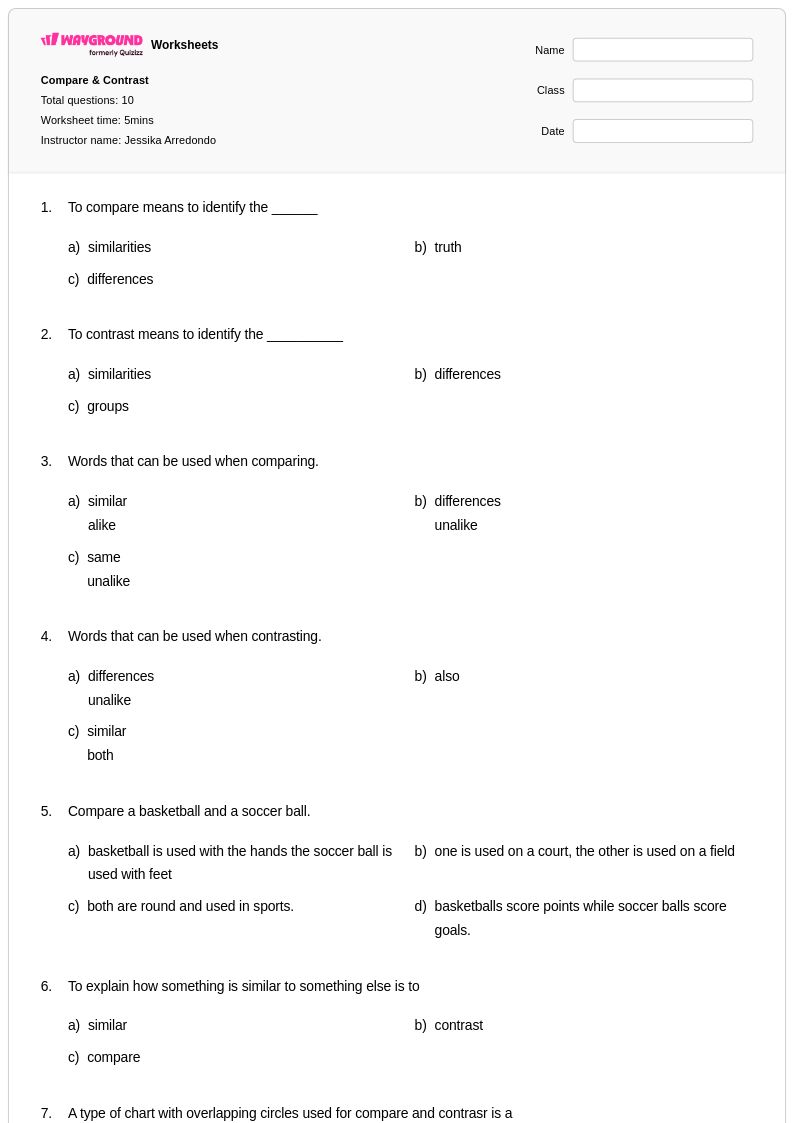
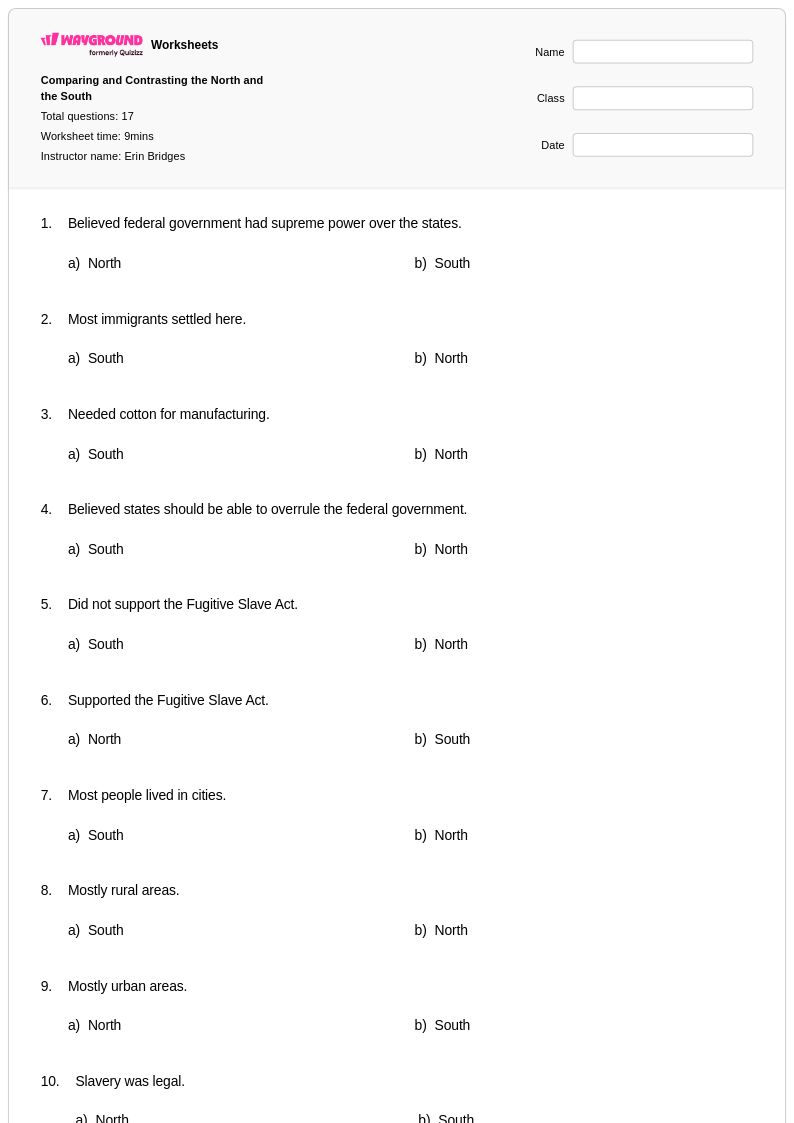
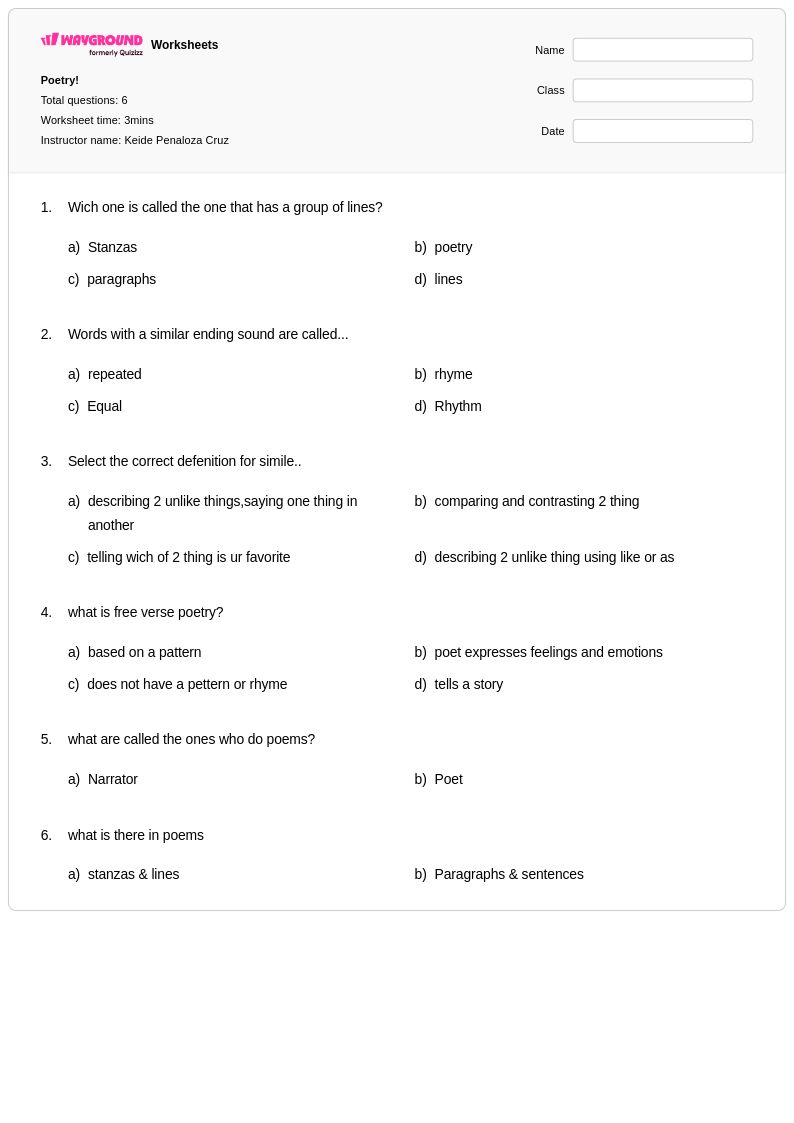
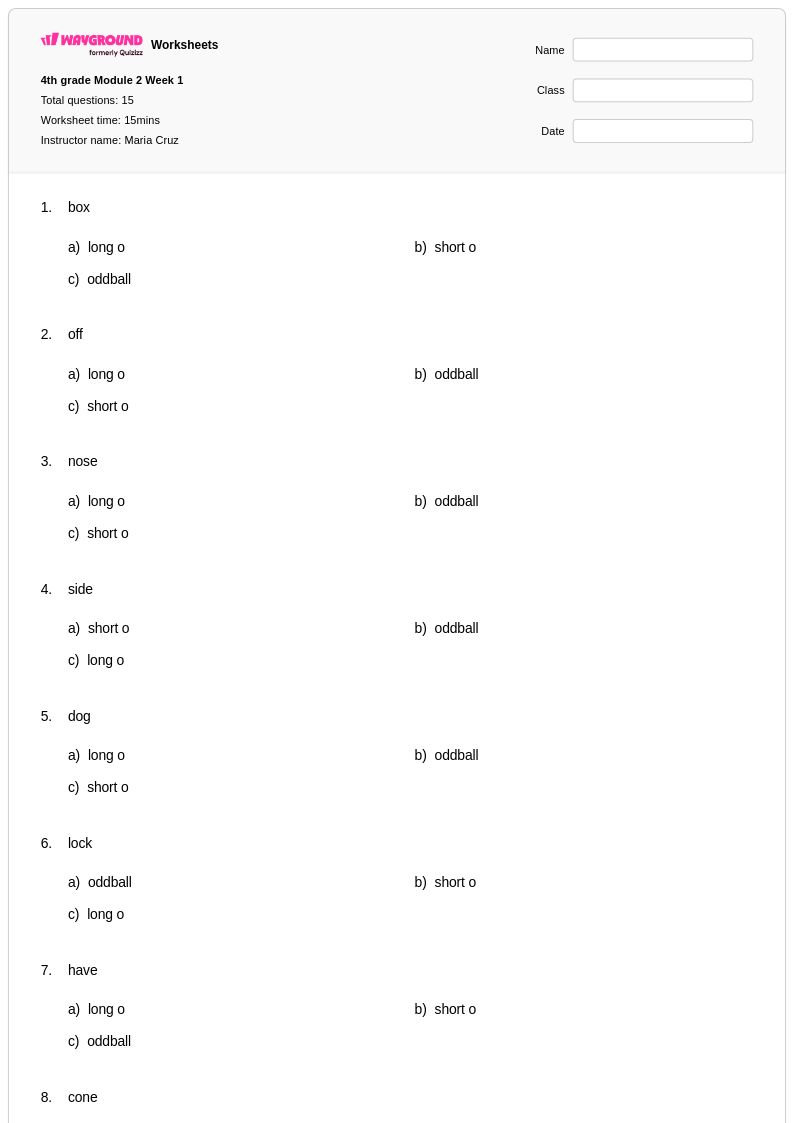
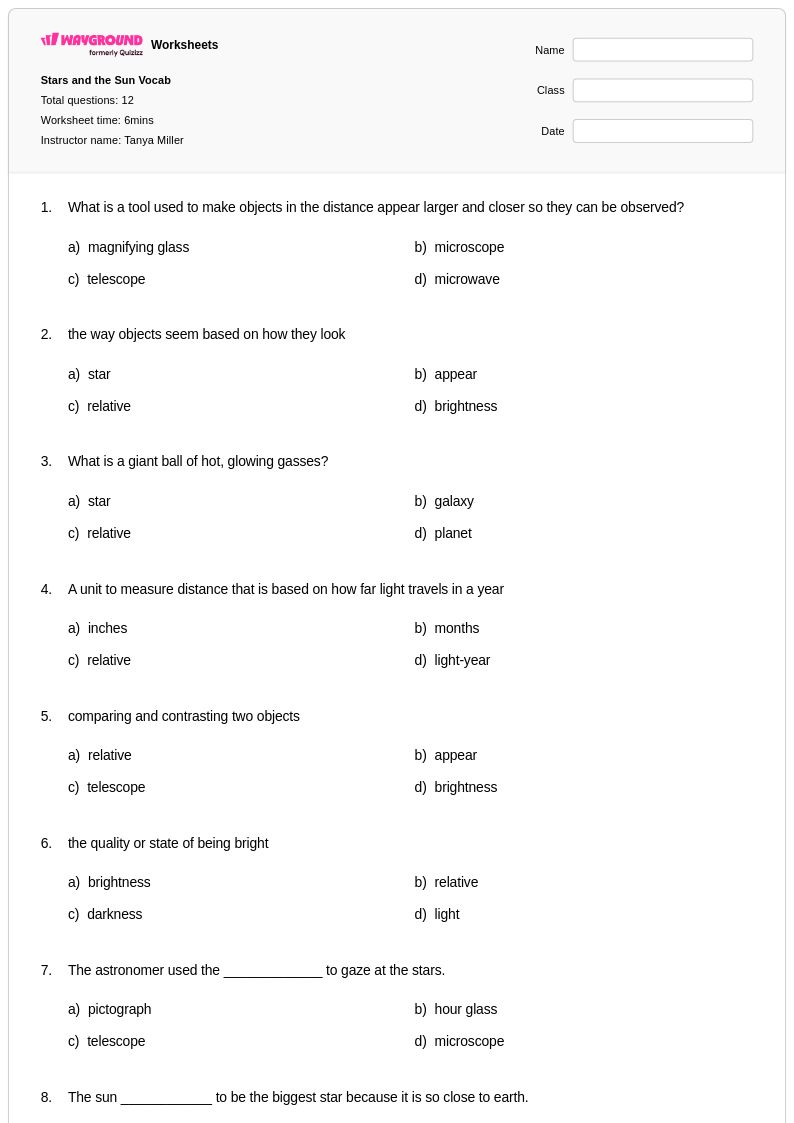
Comparing and contrasting worksheets for Grade 4 students available through Wayground (formerly Quizizz) provide essential practice in developing critical reading comprehension skills that form the foundation of analytical thinking. These carefully designed worksheets guide fourth-grade learners through systematic approaches to identifying similarities and differences between characters, settings, events, and themes across various texts. Students engage with age-appropriate passages that challenge them to use graphic organizers, Venn diagrams, and structured response formats while building their ability to support comparisons with textual evidence. Each worksheet includes comprehensive answer keys that enable both independent practice and guided instruction, with free printables offering flexible implementation options for classroom use, homework assignments, or remediation support.
Wayground (formerly Quizizz) empowers educators with an extensive collection of teacher-created comparing and contrasting resources that streamline lesson planning and enhance differentiated instruction for Grade 4 reading comprehension. The platform's robust search and filtering capabilities allow teachers to locate worksheets aligned with specific curriculum standards, reading levels, and skill progressions, while customization tools enable modification of existing materials to meet diverse learner needs. Available in both printable PDF format and interactive digital versions, these resources support various classroom configurations and learning preferences, making them invaluable for whole-group instruction, small-group interventions, and individual skill practice. Teachers can efficiently access millions of high-quality worksheets that facilitate targeted remediation for struggling readers and provide enrichment opportunities for advanced students, ensuring comprehensive support for developing sophisticated comparison and contrast abilities.
FAQs
How do I teach comparing and contrasting to students?
Start by grounding students in concrete, familiar comparisons before moving to academic texts — comparing two animals or two characters they know works well as an entry point. Introduce graphic organizers like Venn diagrams or T-charts to give students a visual structure for organizing similarities and differences. Once students are comfortable with the framework, shift to higher-order tasks like comparing themes across two texts or analyzing how two authors treat the same topic differently. Explicit modeling of the thinking process, including how to identify what is worth comparing, is essential before students work independently.
What exercises help students practice comparing and contrasting?
Effective practice exercises include side-by-side text analysis, where students read two short passages and identify key similarities and differences using a structured graphic organizer. Character comparison tasks in fiction, where students track how two characters respond to the same event, build both analytical and comprehension skills simultaneously. For nonfiction, having students compare two informational texts on the same subject helps them evaluate perspective, tone, and evidence. Structured written responses that require students to use compare-and-contrast signal words (e.g., however, similarly, in contrast) reinforce both analytical thinking and academic language.
What mistakes do students commonly make when comparing and contrasting texts or characters?
The most common error is listing traits separately rather than making a genuine analytical comparison — students describe Character A, then describe Character B, without ever directly connecting the two. Another frequent mistake is selecting surface-level or trivial similarities and differences instead of meaningful ones that reveal something about theme, purpose, or character development. In nonfiction tasks, students often struggle to distinguish between a difference in facts and a difference in author perspective or argument. Teaching students to ask 'So what does this difference reveal?' pushes them past description and into genuine analysis.
How do I use comparing and contrasting worksheets effectively in my classroom?
Wayground's comparing and contrasting worksheets are available as printable PDFs for traditional classroom use and in digital formats for technology-integrated environments, giving you flexibility regardless of your instructional setting. You can also host them as a quiz directly on Wayground, which allows for real-time student interaction and automatic scoring. Use the worksheets as guided practice after direct instruction, as independent work for reinforcing skills, or as a diagnostic tool to identify which students need additional support with identifying similarities versus differences. Having complete answer keys included means less prep time and easier review during class discussion.
How do I differentiate comparing and contrasting activities for students with different skill levels?
For struggling readers, reduce the complexity of source texts and provide sentence frames or partially completed graphic organizers to scaffold the comparison process. Advanced learners benefit from comparing texts with subtle or thematic differences rather than obvious surface-level ones, pushing them toward inferential analysis. On Wayground, teachers can apply individual student accommodations such as read aloud support, extended time, or reduced answer choices, which is particularly useful when assigning digital versions of these worksheets to a mixed-ability class. These settings can be configured per student and reused across future sessions without disrupting the experience for the rest of the class.
How do I teach comparing and contrasting in nonfiction versus fiction texts?
In fiction, comparison tasks typically focus on characters, settings, plot events, or themes — students examine how two characters respond differently to conflict or how two stories handle the same theme. In nonfiction, the focus shifts to how two authors present the same topic, including differences in evidence, structure, tone, and point of view. Students need explicit instruction in both contexts because the criteria for comparison differ: in fiction, interpretation matters more, while in nonfiction, close attention to word choice and argument structure becomes essential. Practicing both text types builds the transferable analytical skills students need across all subject areas.