Free Printable Comparing Integers Worksheets for Grade 7
Enhance Grade 7 students' understanding of comparing integers with Wayground's comprehensive collection of free worksheets, printables, and practice problems featuring detailed answer keys and engaging PDF activities.
Explore printable Comparing Integers worksheets for Grade 7
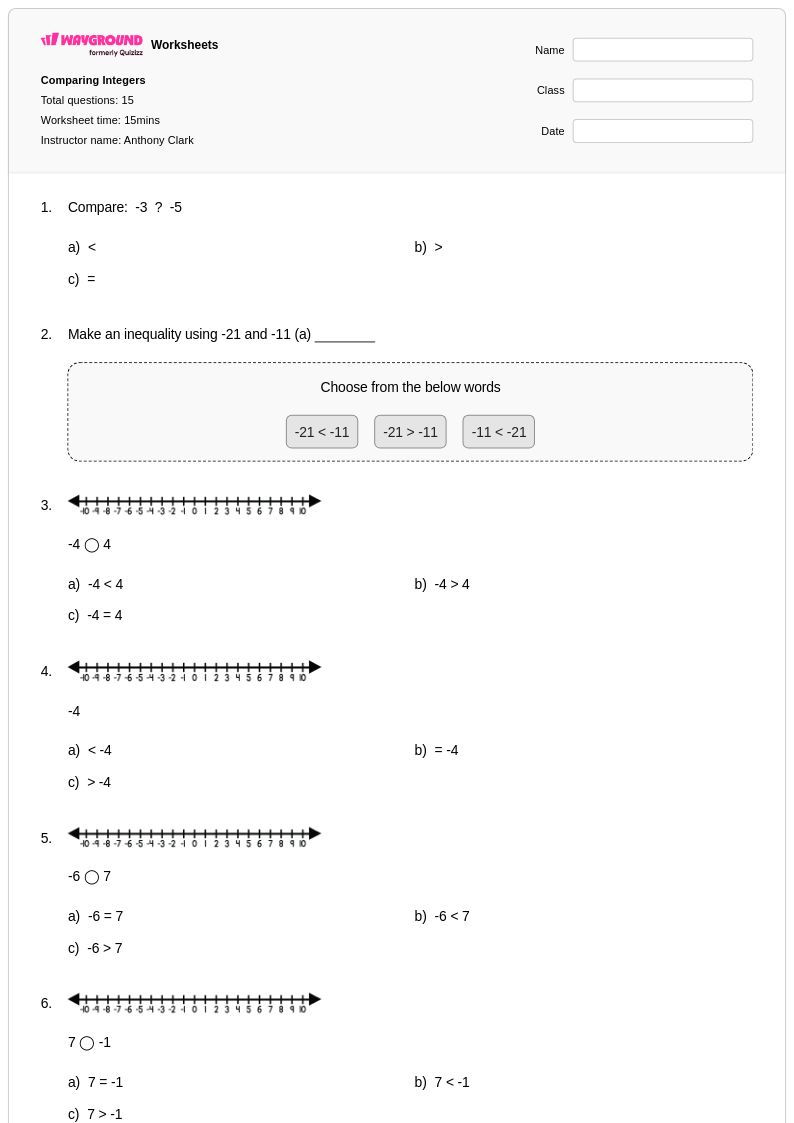
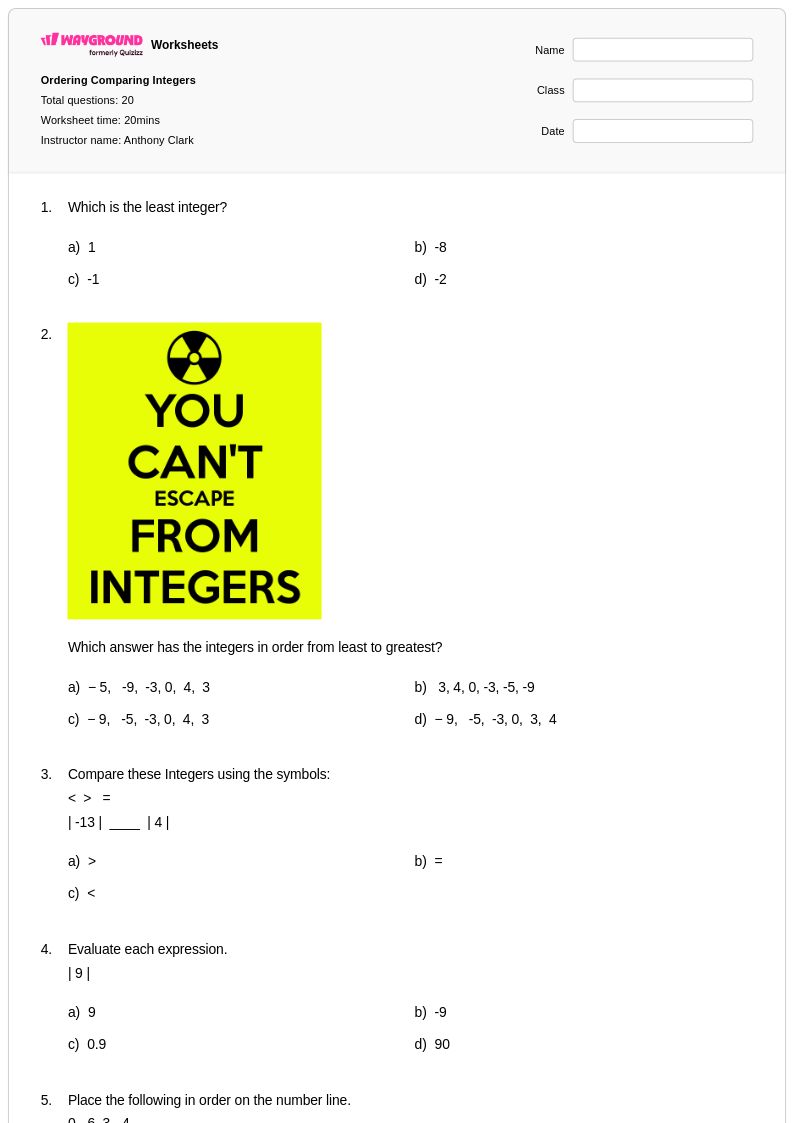
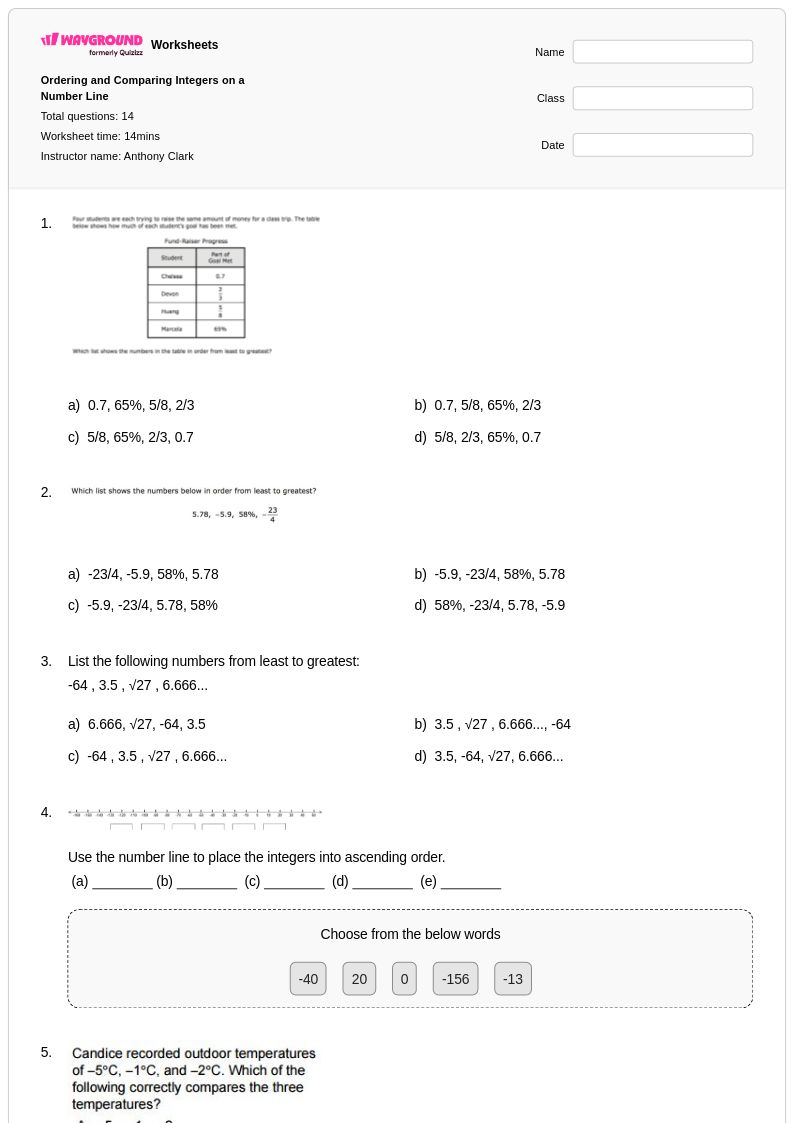
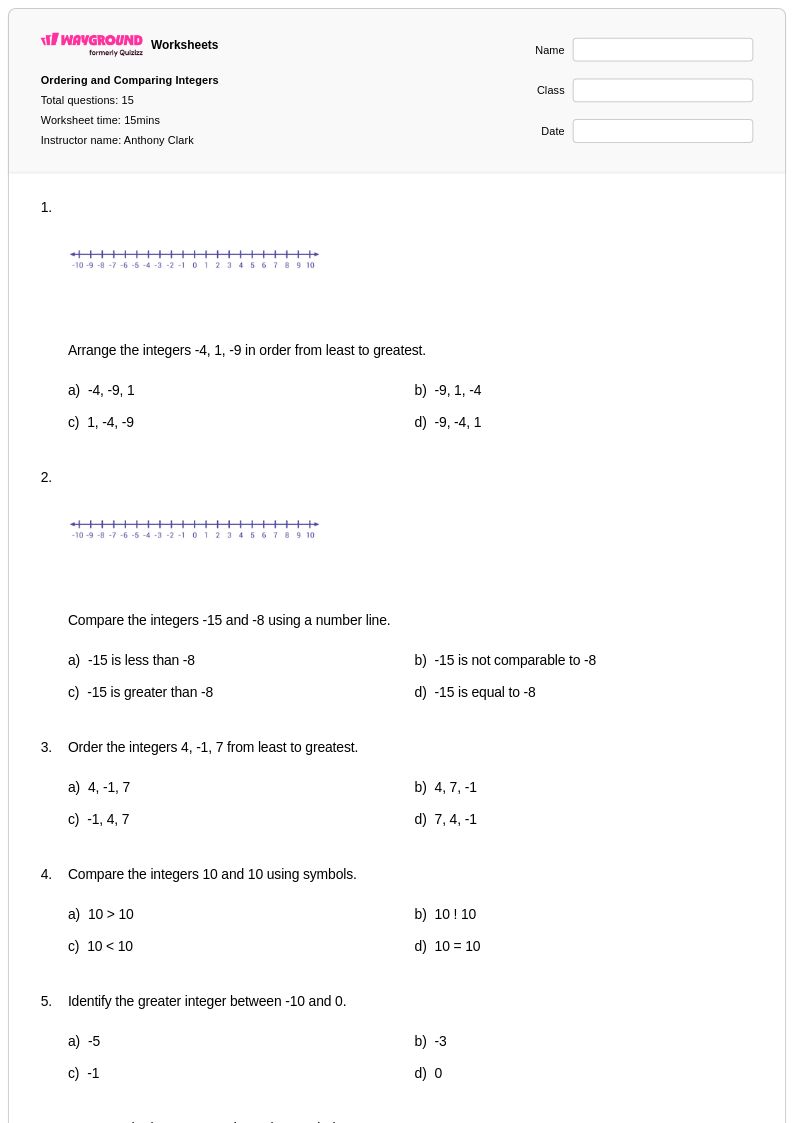
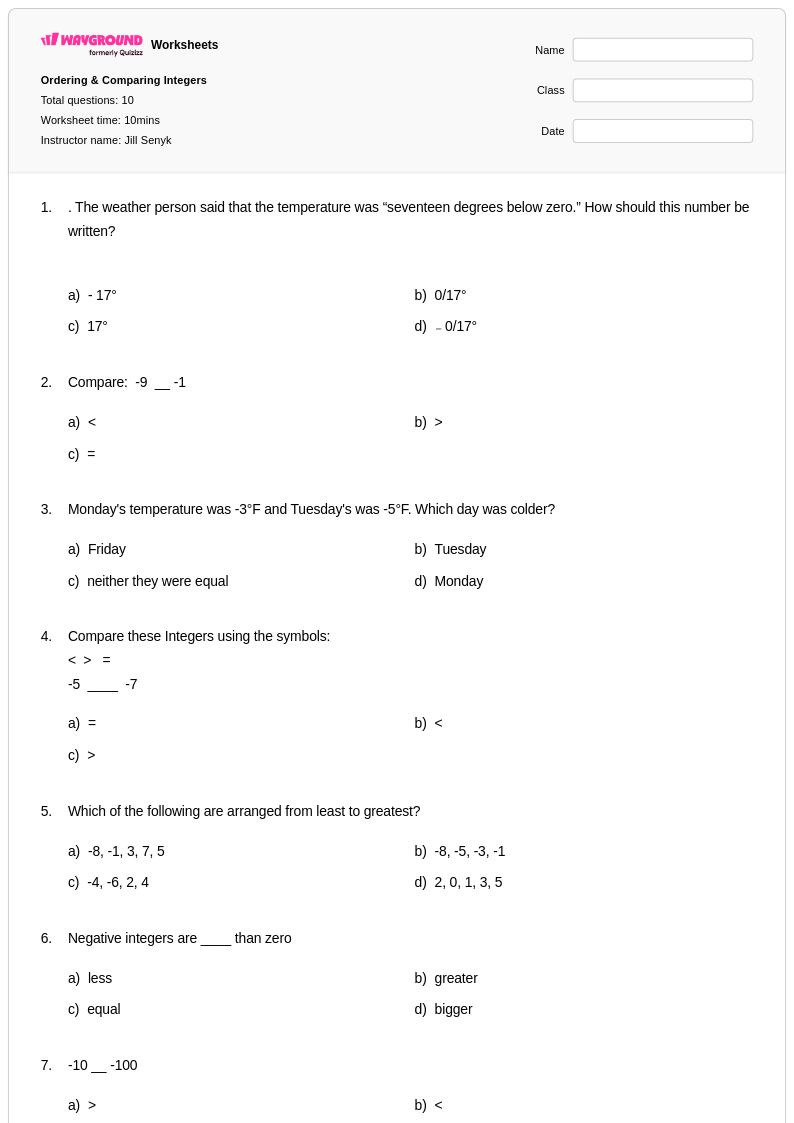
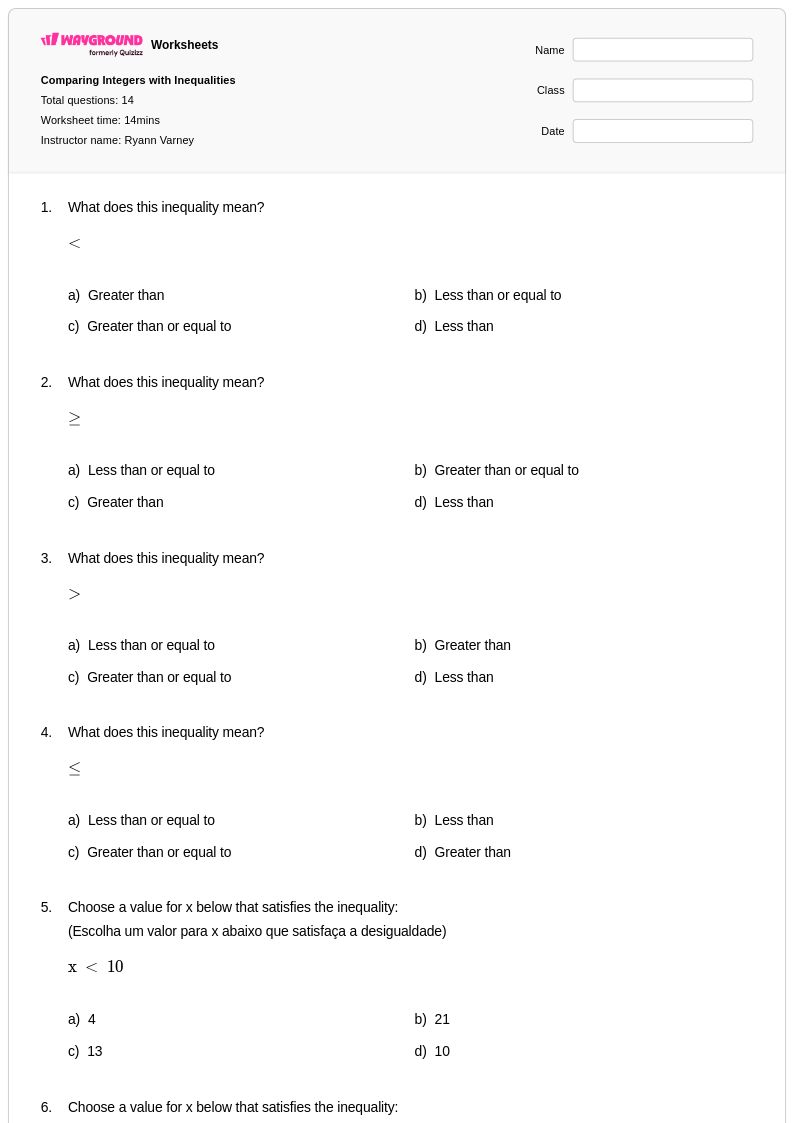
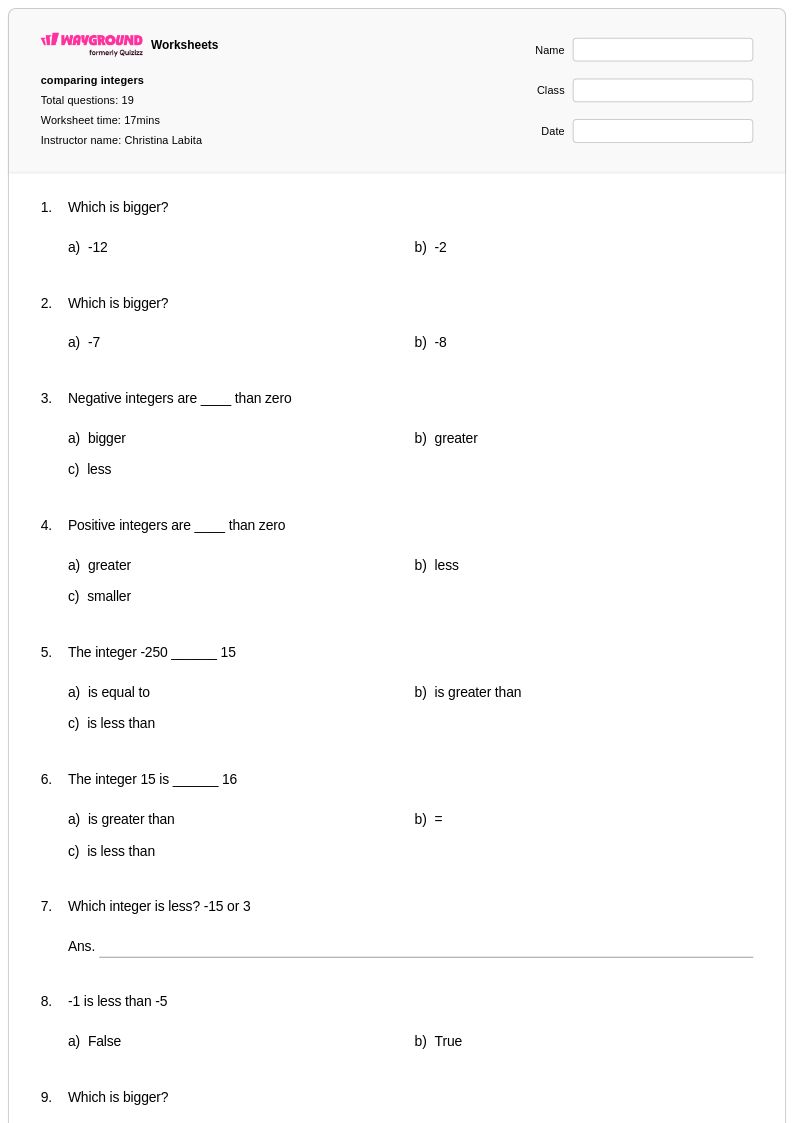
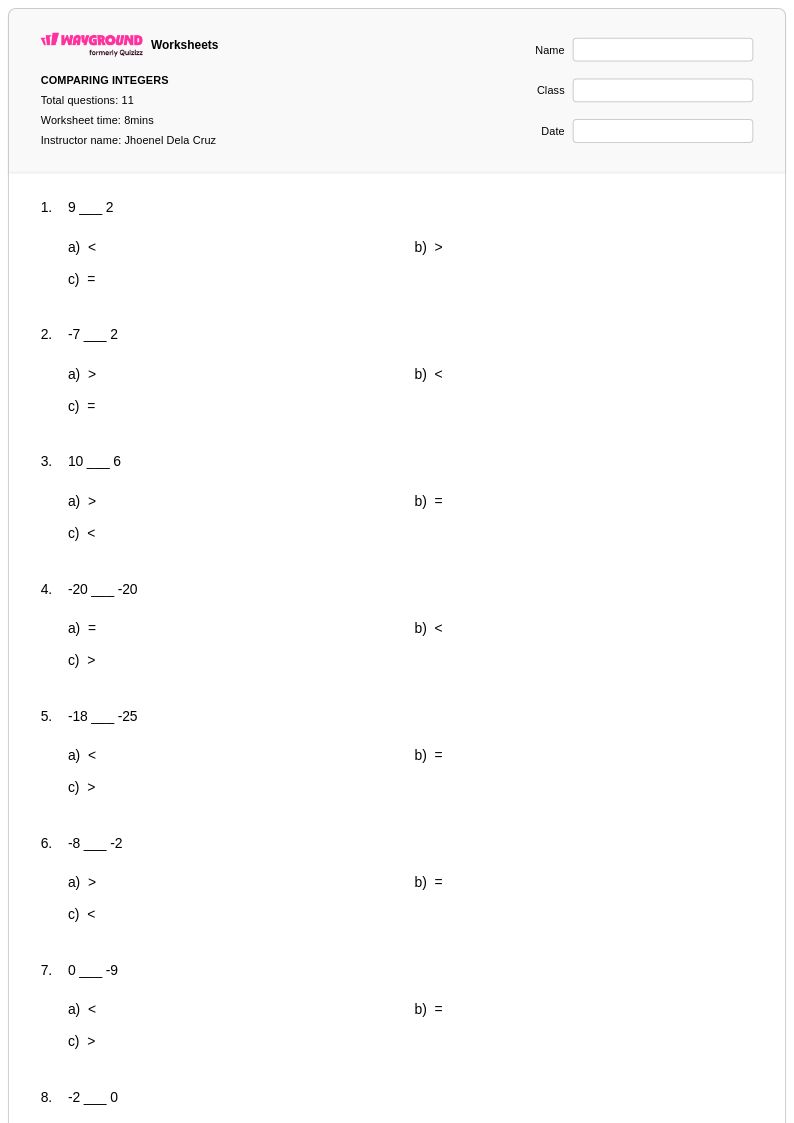
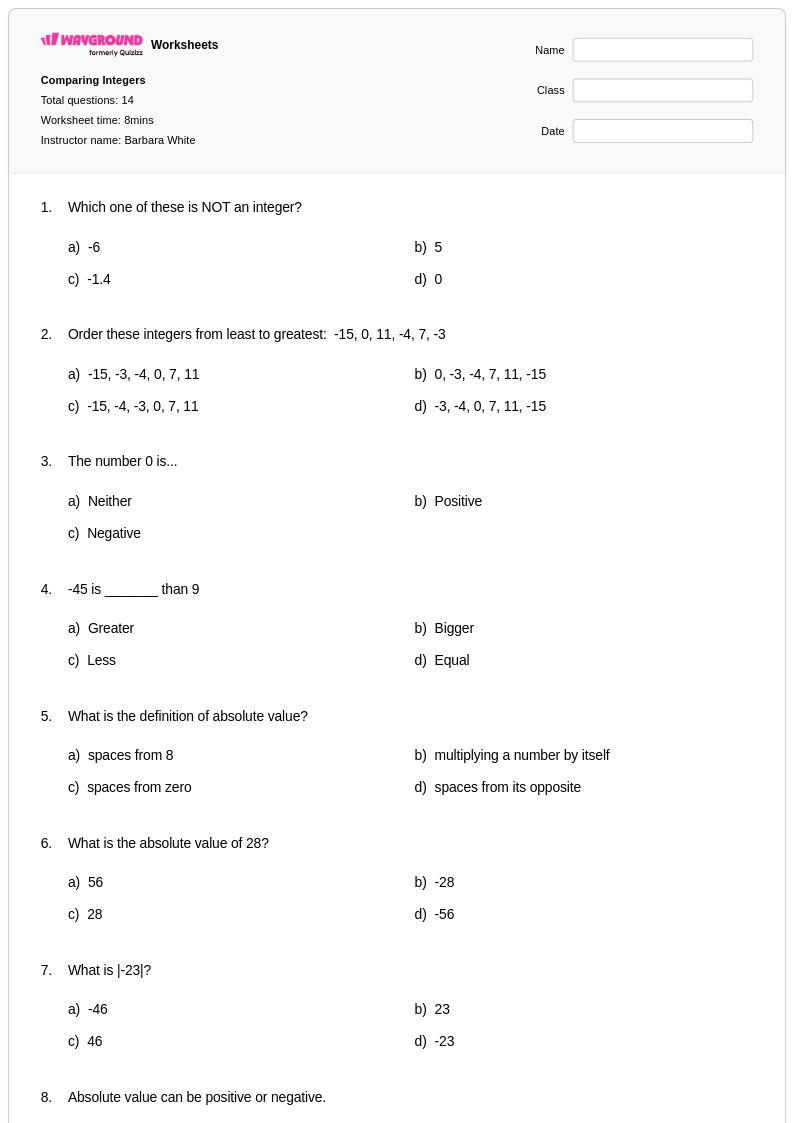
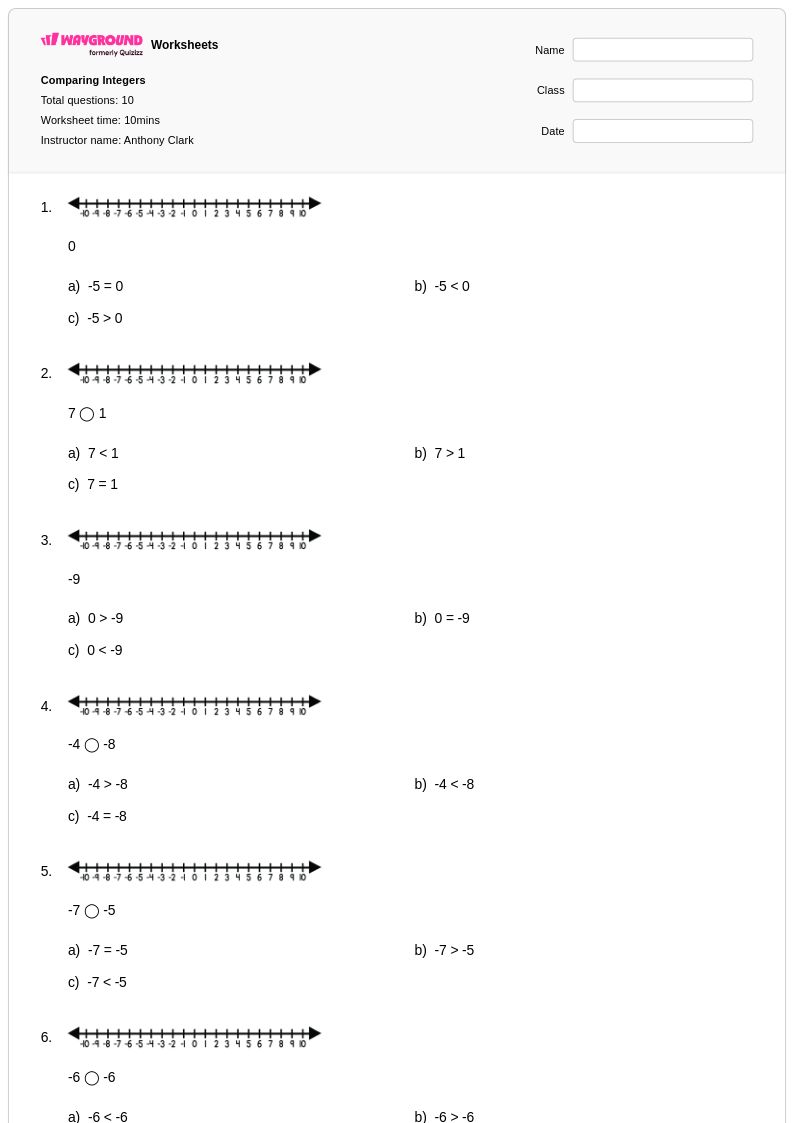
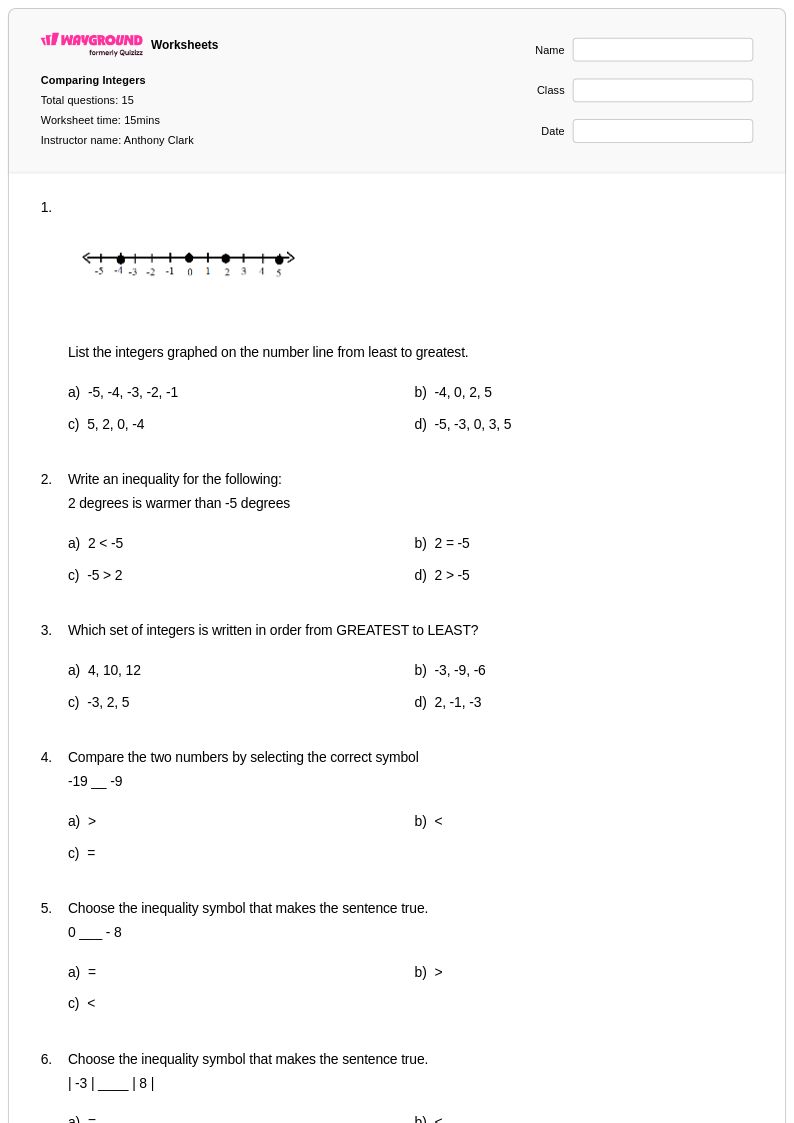
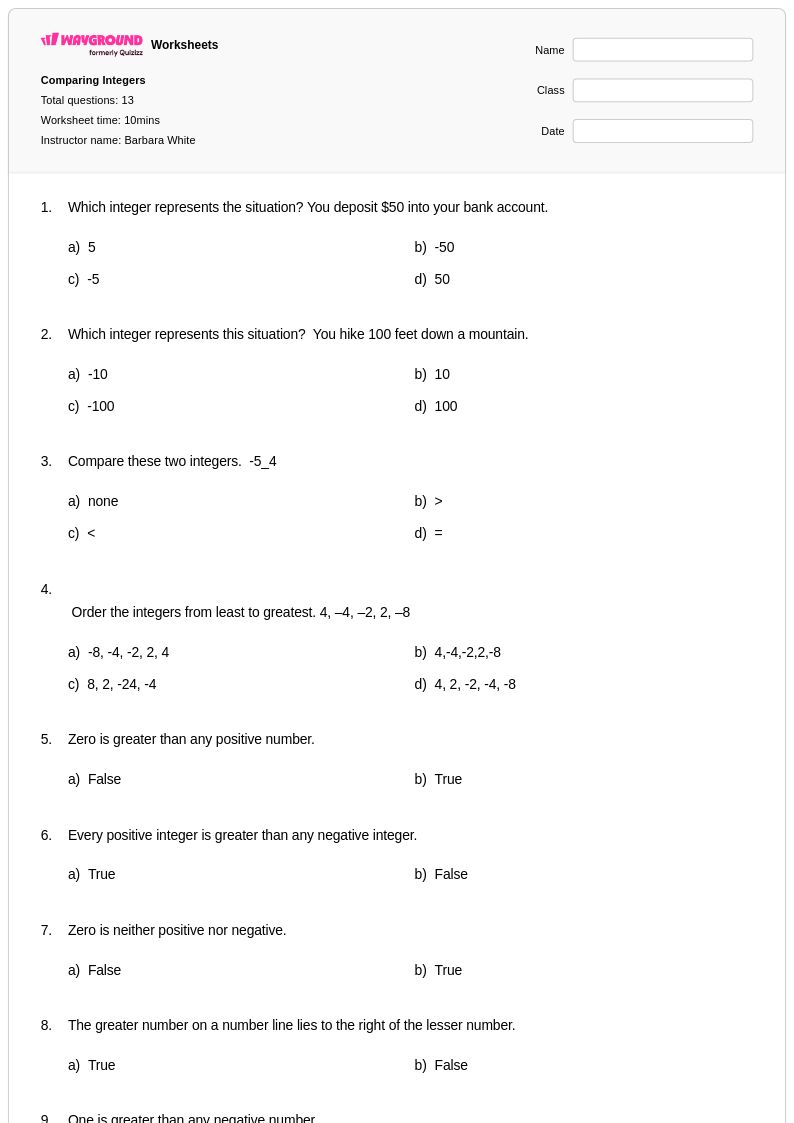
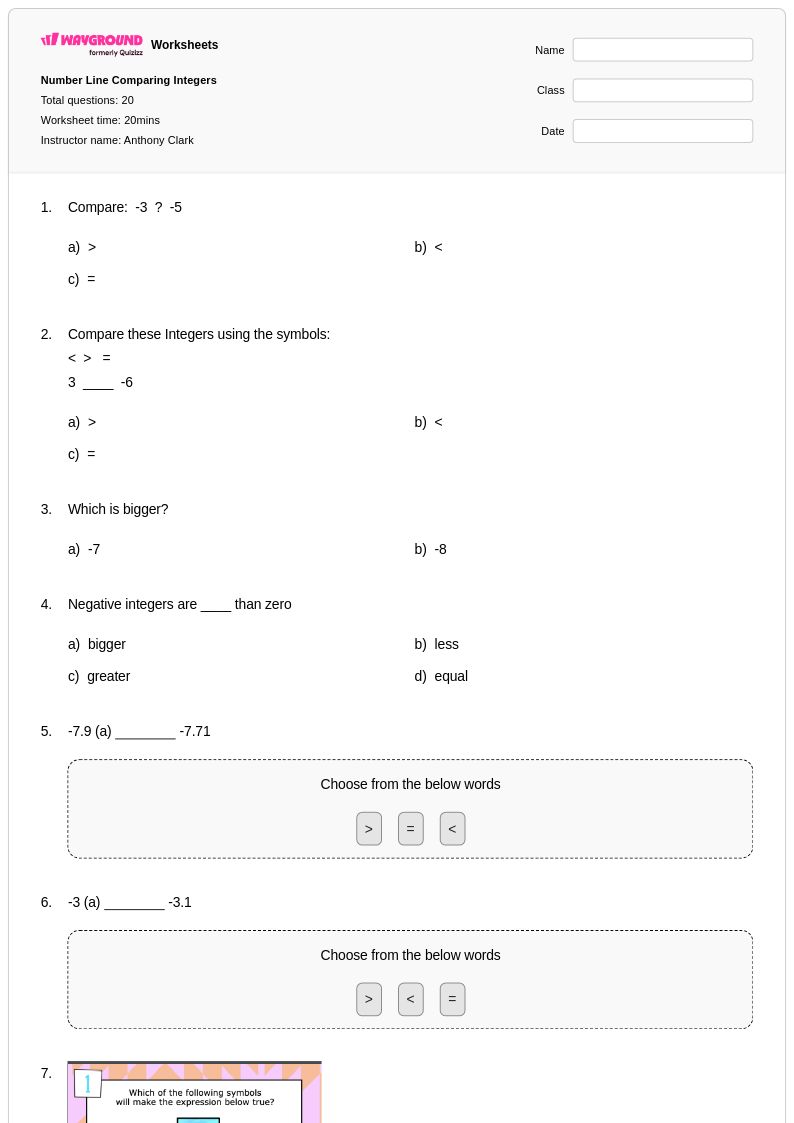
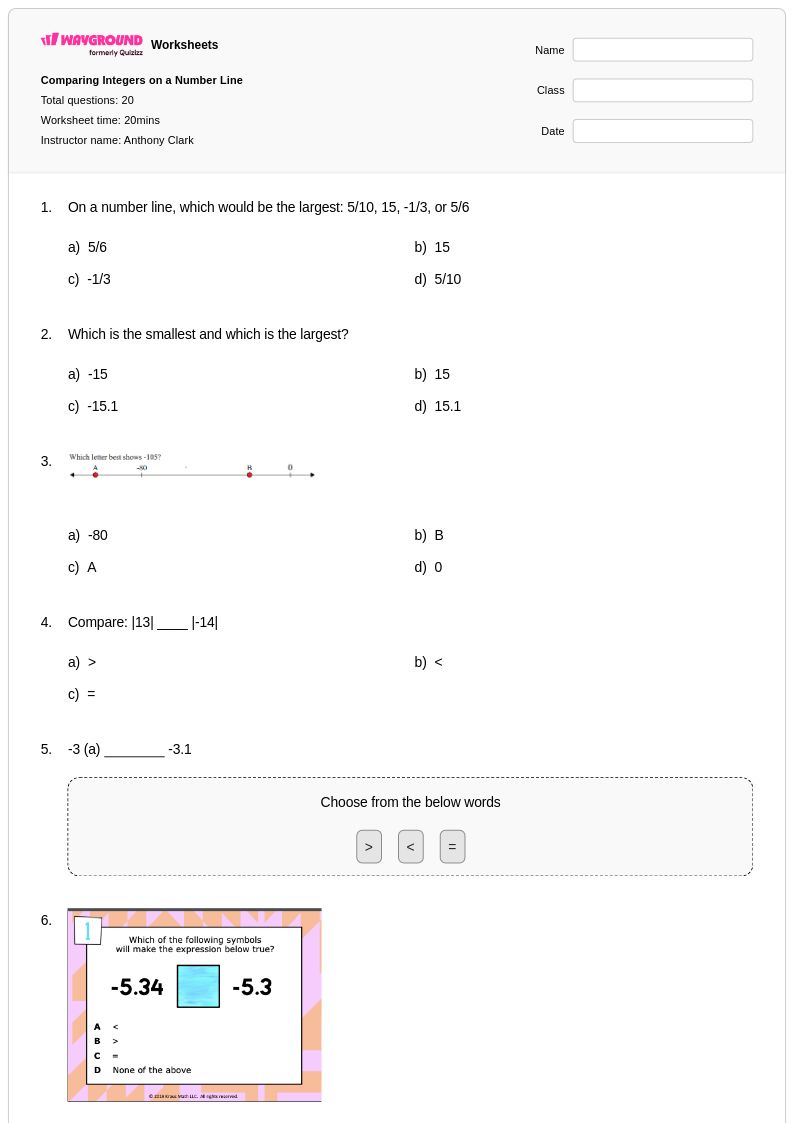
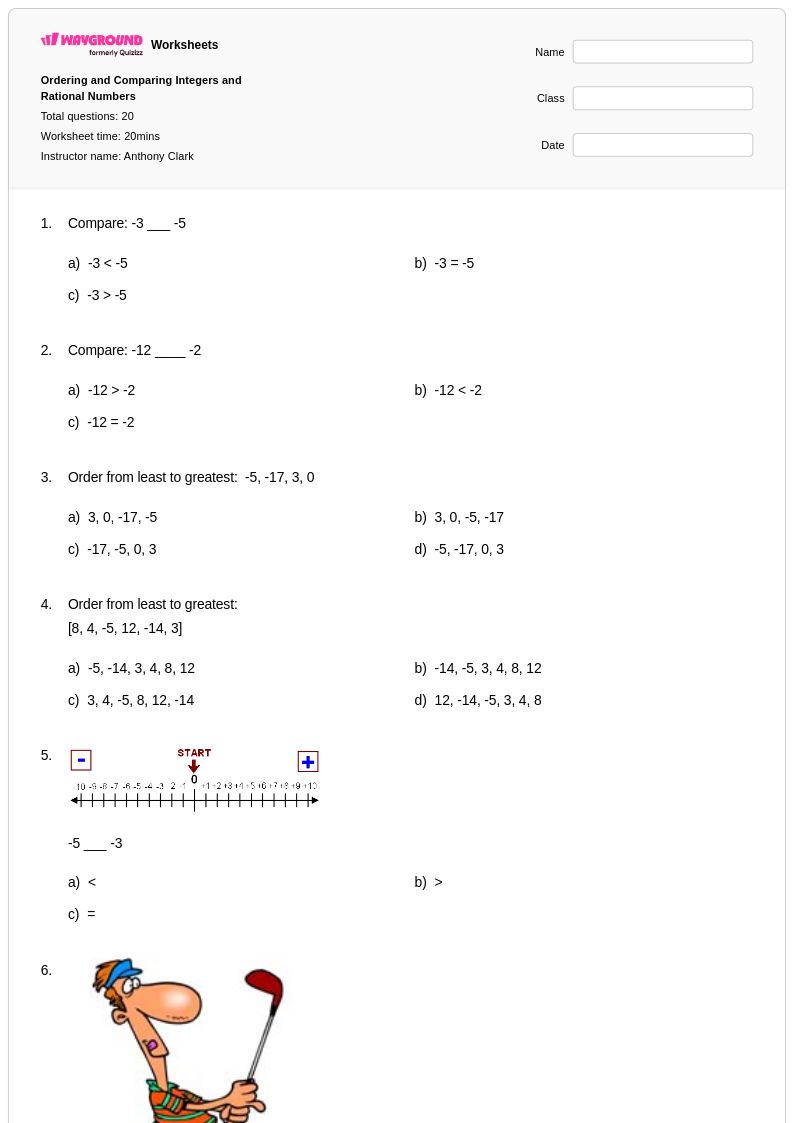
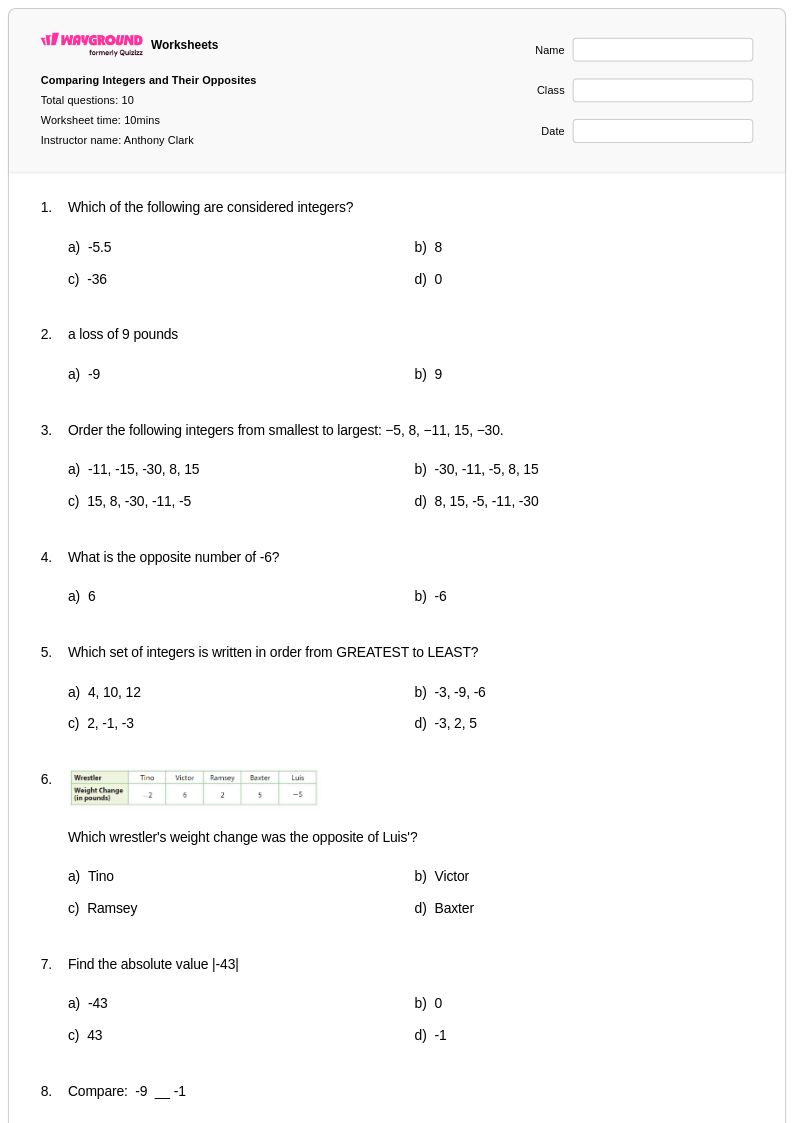
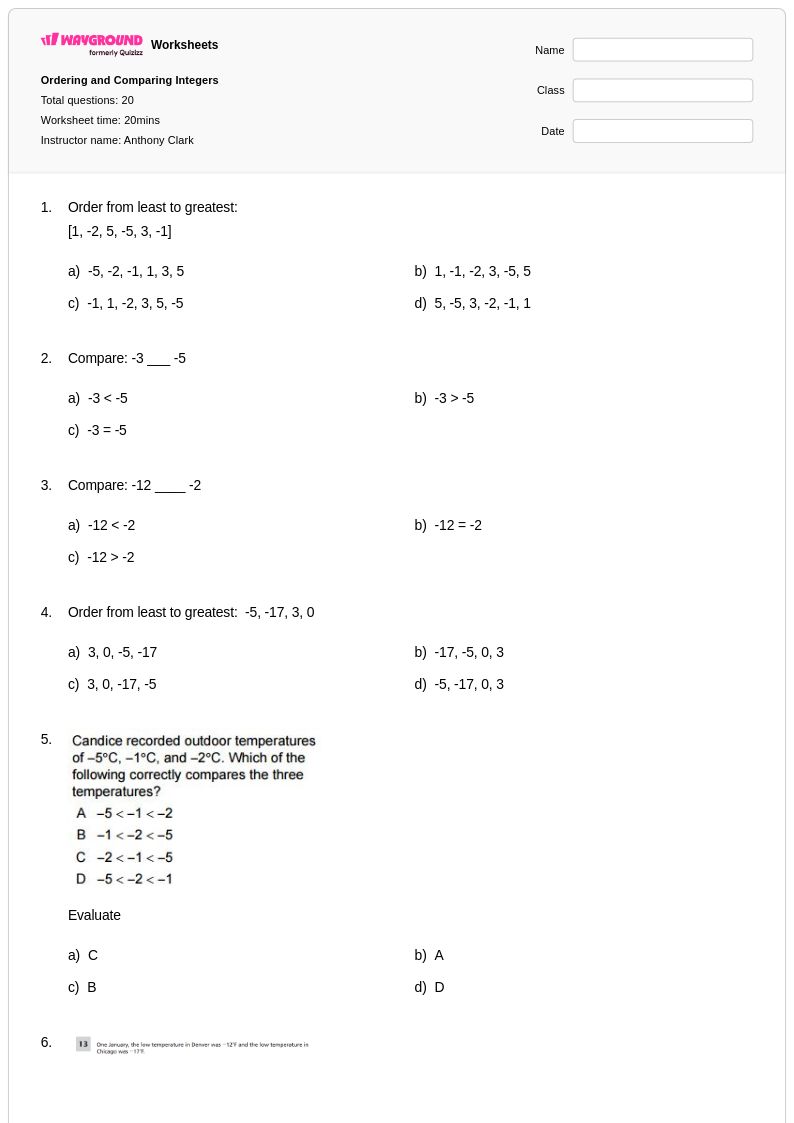
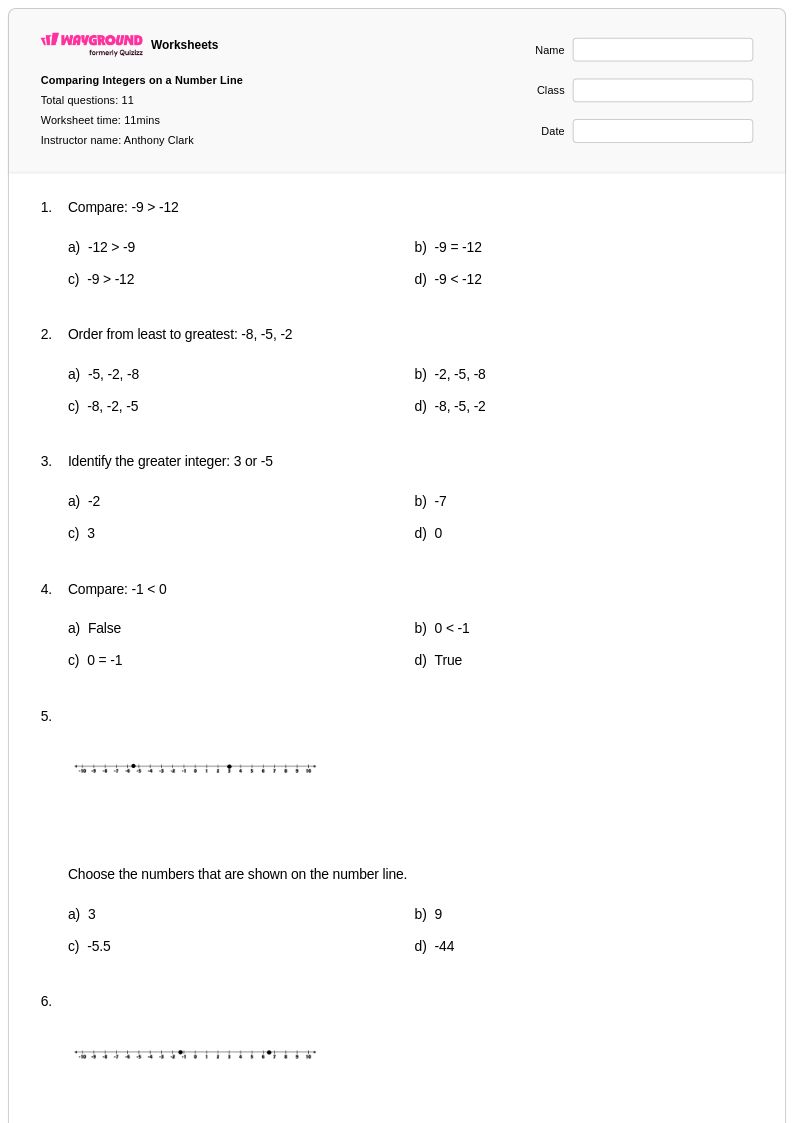
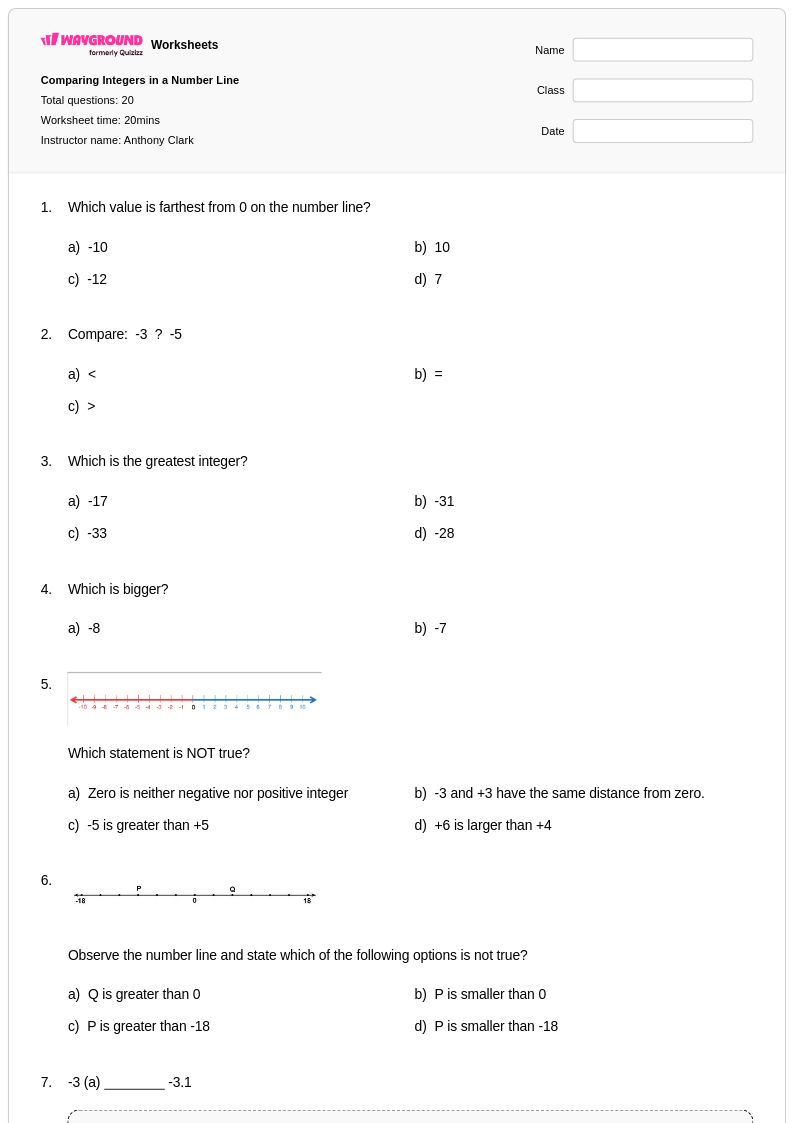
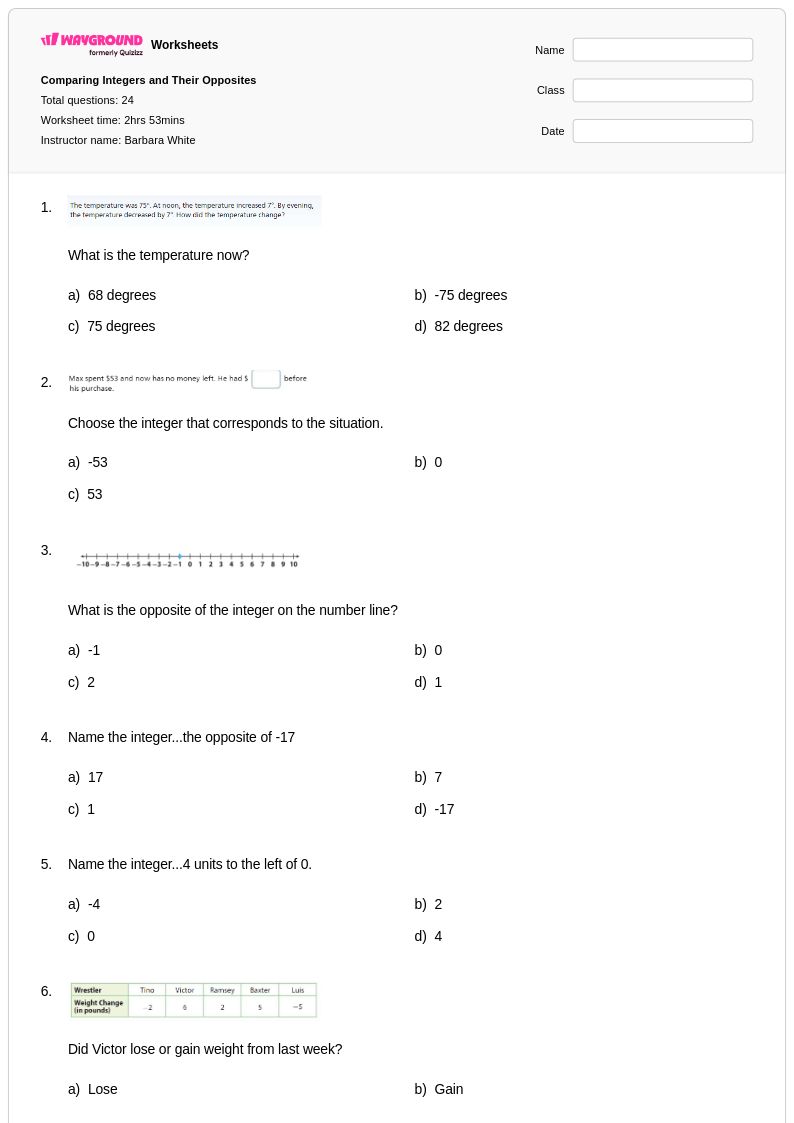
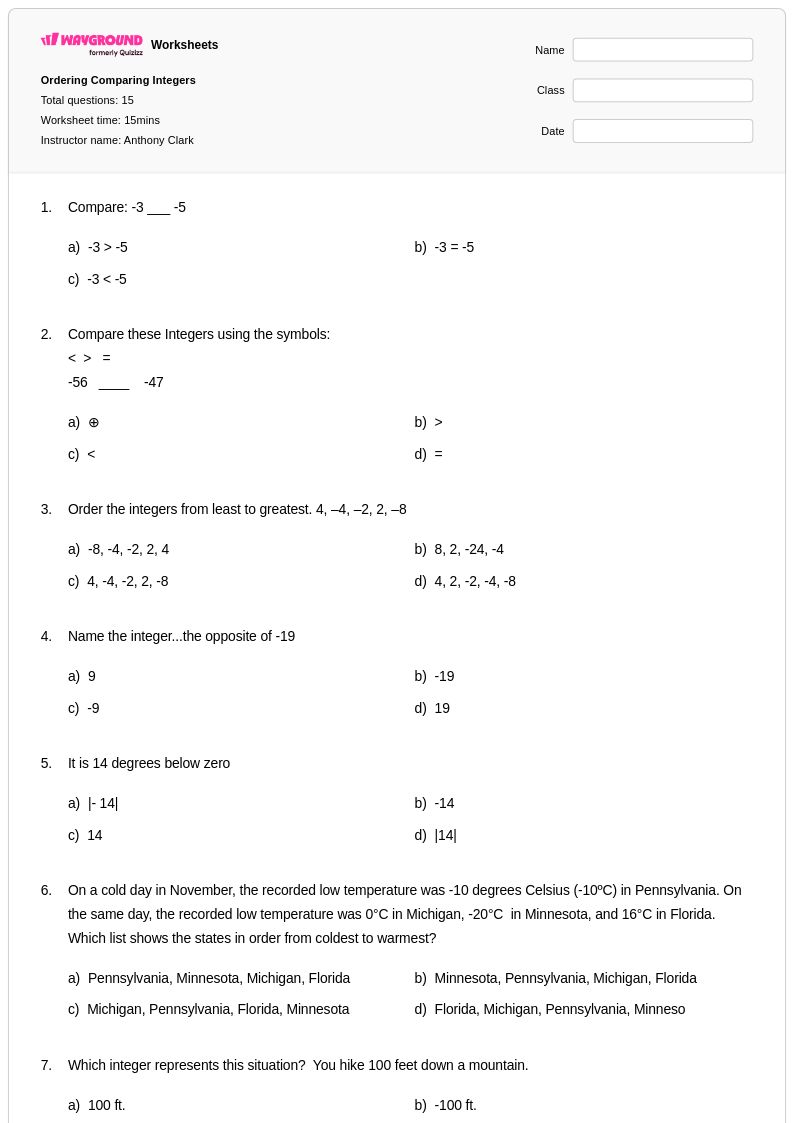
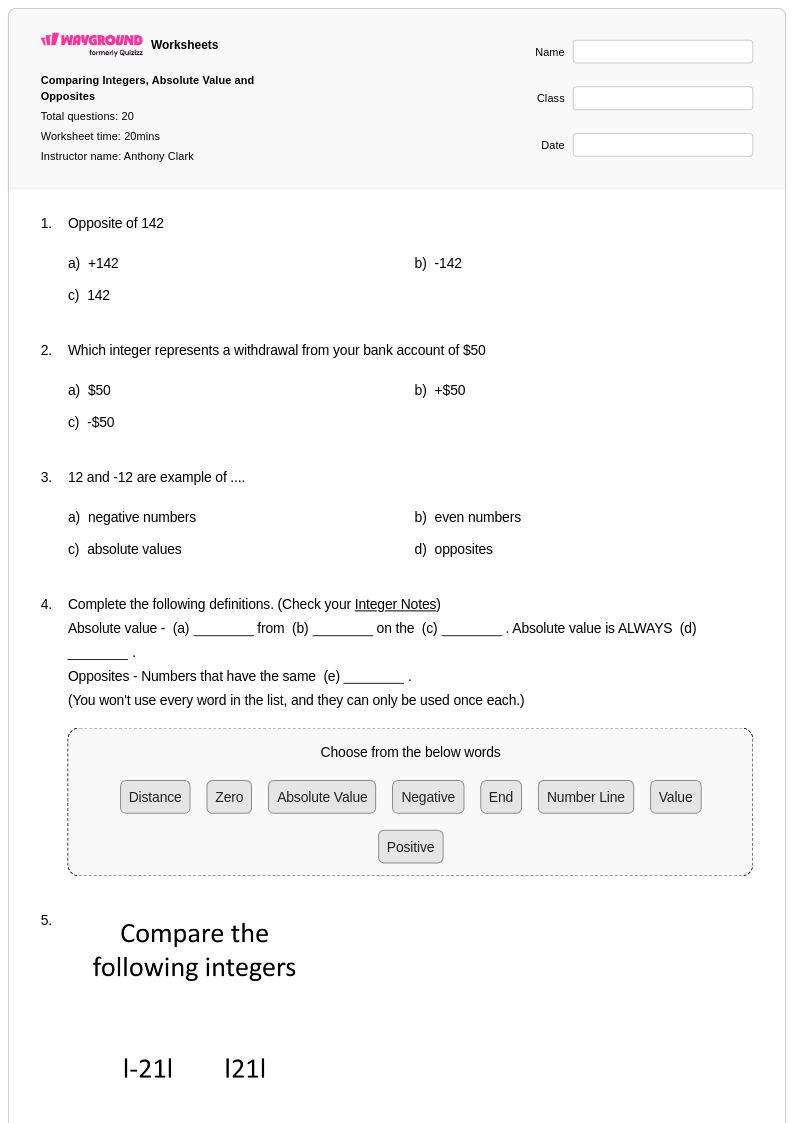
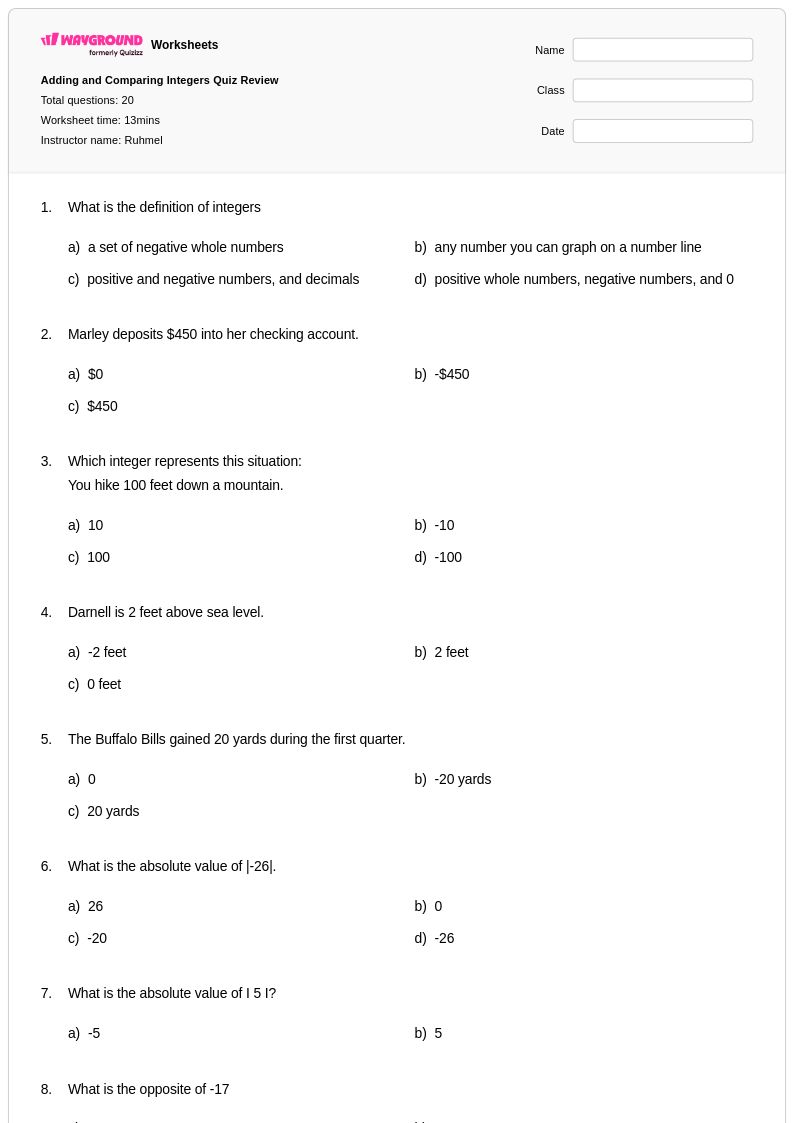
Comparing integers forms a foundational component of Grade 7 mathematics, requiring students to develop sophisticated number sense skills that extend beyond basic whole number operations. Wayground's comprehensive collection of comparing integers worksheets provides seventh-grade students with targeted practice problems that systematically build their ability to order positive and negative numbers, understand absolute value relationships, and apply comparison strategies across diverse mathematical contexts. These carefully designed printables feature progressive difficulty levels, complete answer keys for immediate feedback, and free pdf downloads that make quality mathematics instruction accessible to all classrooms. Students strengthen critical thinking skills as they work through exercises involving number lines, real-world scenarios, and abstract numerical relationships that prepare them for advanced algebraic concepts.
Wayground, formerly Quizizz, empowers educators with millions of teacher-created resources specifically designed to support comparing integers instruction at the Grade 7 level. The platform's robust search and filtering capabilities allow teachers to quickly locate worksheets that align with state standards and match their students' specific learning needs, while differentiation tools enable seamless customization for diverse ability levels within the same classroom. These comparing integers materials are available in both printable and digital formats, including downloadable pdf versions that facilitate flexible lesson planning and accommodate various instructional settings. Teachers utilize these resources for targeted skill practice, remediation sessions, enrichment activities, and formative assessments, creating comprehensive learning experiences that build mathematical confidence and prepare students for success in higher-level mathematics courses.
FAQs
How do I teach comparing integers in Grade 7?
Review number-line order briefly, then ask students to justify comparisons using position, absolute value, and contextual meaning rather than relying only on memorized rules. Grade 7 instruction should connect integer comparisons to rational-number operations and algebraic reasoning through temperatures, elevations, financial changes, and other signed quantities.
What comparing integers exercises are appropriate for seventh graders?
Useful Grade 7 practice includes ordering sets of integers, comparing expressions containing absolute values, interpreting signed quantities in real-world scenarios, and completing multi-step reasoning tasks. Ask students to represent the same comparison with a number line, an inequality, and a written explanation to deepen understanding.
What mistakes do Grade 7 students make when comparing integers?
Students may compare absolute values instead of the integers themselves, misread nested negative signs, or apply an arithmetic rule without considering number-line position. They also sometimes assume that a value farther from zero is greater, so counterexamples such as −12 and −5 are useful for diagnosing weak number sense.
How can I use Wayground’s Grade 7 comparing integers worksheets?
Wayground worksheets are available as printable PDFs and in digital formats, accommodating whole-class lessons, remediation, enrichment, and formative assessment. Teachers can host a worksheet as a digital quiz on Wayground or print and assign it on paper, then grade physical submissions by scanning or capturing student work with the Wayground for Teachers app; every worksheet includes a complete answer key.
How does comparing integers support the Grade 7 Common Core progression?
Within the Common Core progression, Grade 7 students build on earlier number-line comparisons as they reason more broadly with signed rational numbers and algebraic relationships. Accurate integer order supports work with operations, inequalities, expressions, and real-world quantities whose values may be above or below zero.
How can I differentiate Grade 7 comparing integers practice?
Provide number lines and direct pairwise comparisons for students needing reinforcement, while challenging advanced learners with absolute-value expressions, multi-step contexts, and written justifications. Wayground supports extended time, Read Aloud, reduced answer choices, and reading mode, along with printable versions using adjusted spacing, larger fonts, a dyslexia-friendly font, or translation.
What should Grade 7 students know about comparing integers?
Grade 7 students should be able to order positive and negative integers, use inequality symbols accurately, interpret absolute value as distance from zero, and justify comparisons in mathematical and real-world contexts. These skills strengthen the number sense needed for rational-number operations and introductory algebra.