Free Printable Comparing Rates Worksheets for Grade 7
Enhance Grade 7 students' understanding of comparing rates with Wayground's comprehensive collection of free worksheets, printable PDFs, and practice problems that include detailed answer keys for effective mathematical skill development.
Explore printable Comparing Rates worksheets for Grade 7
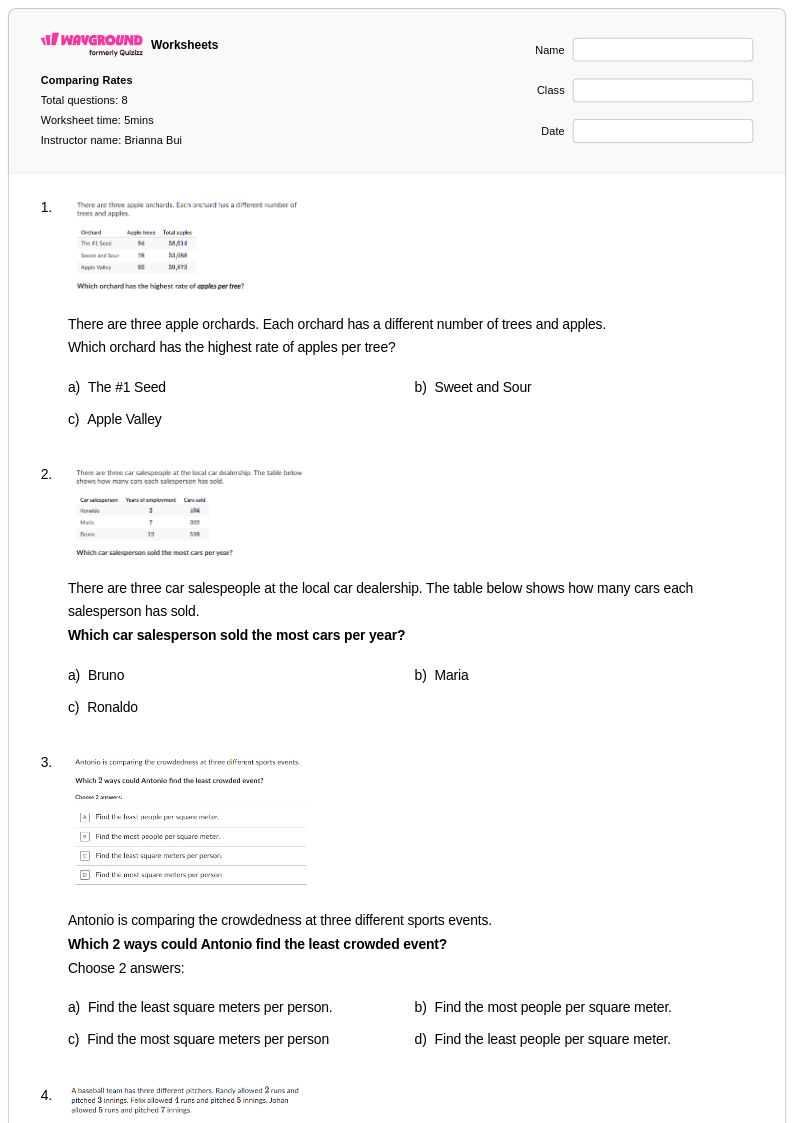
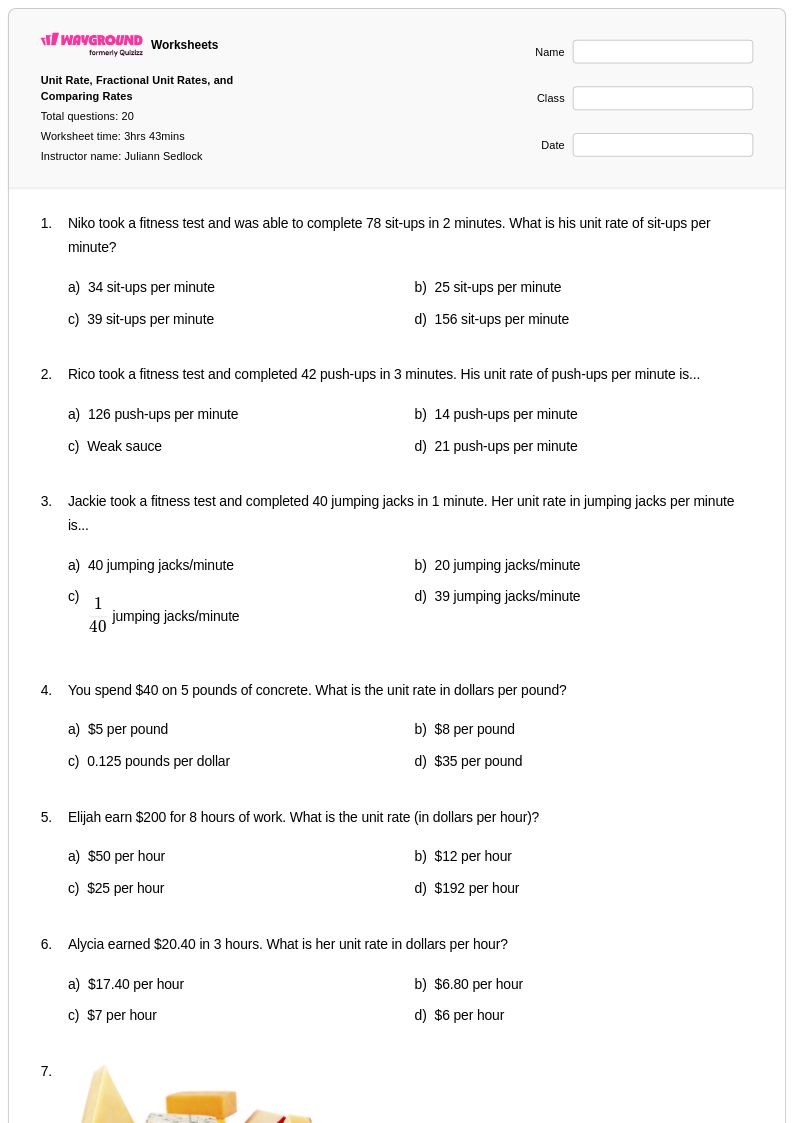
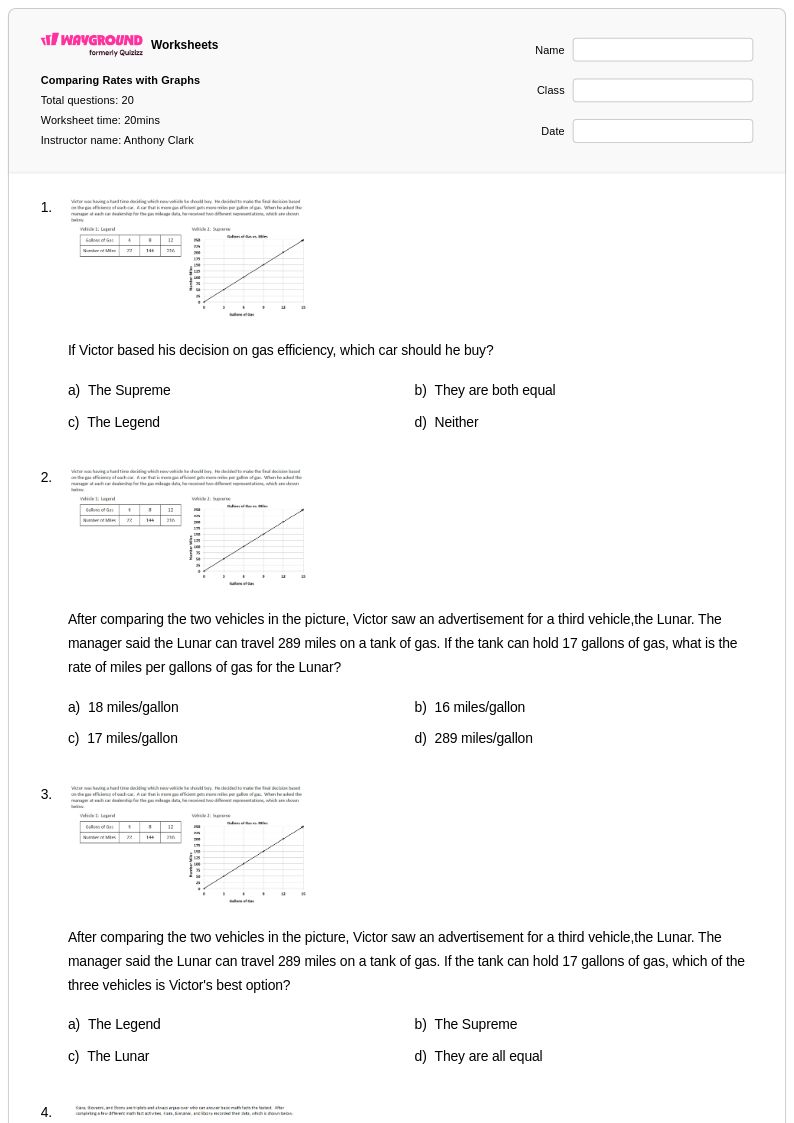
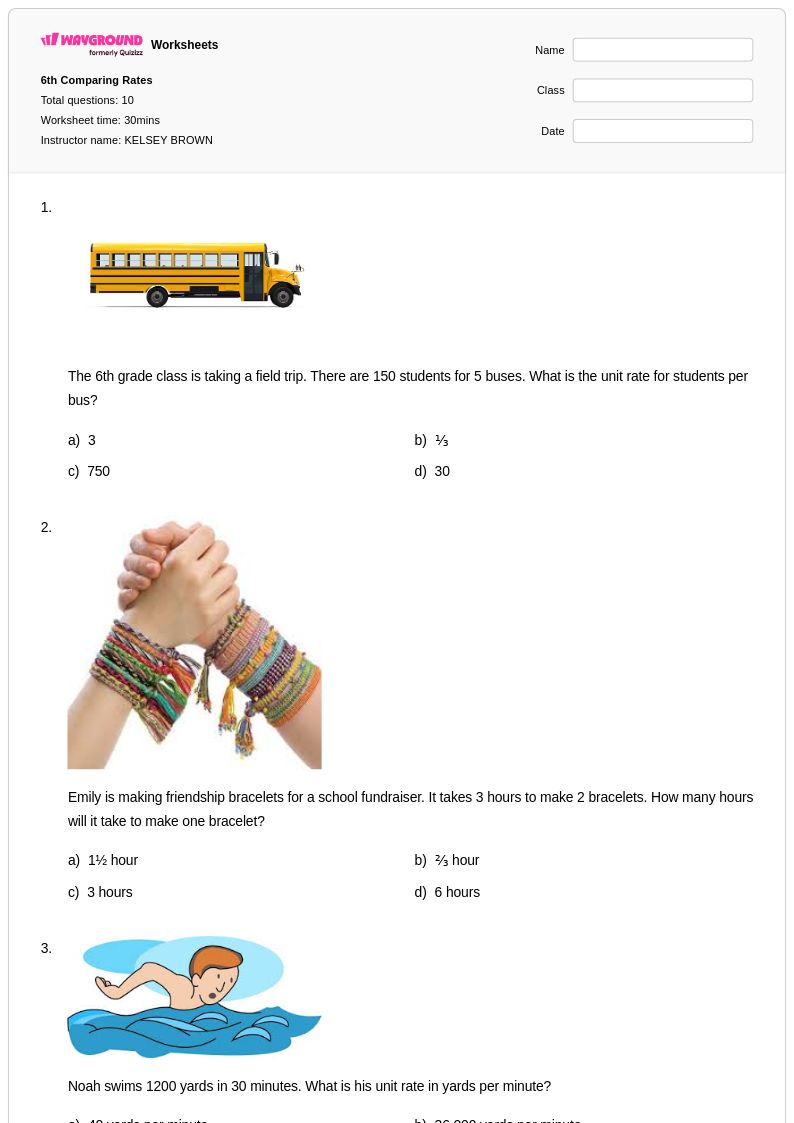
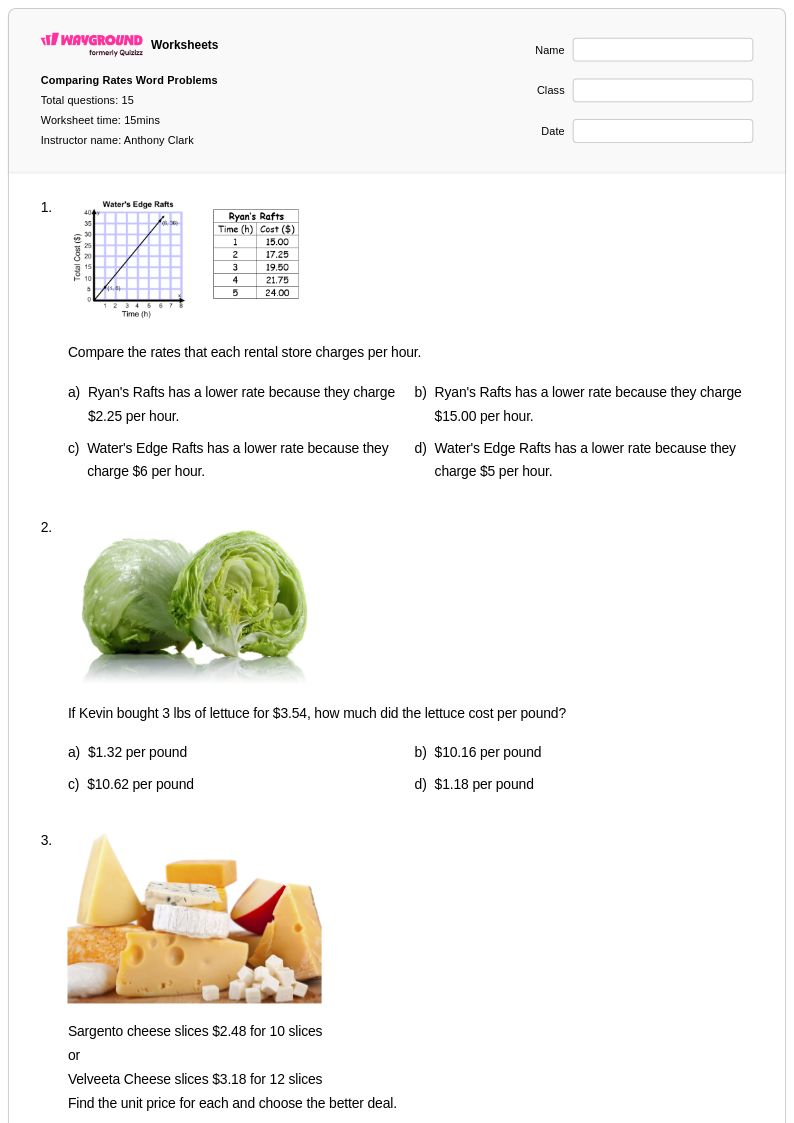
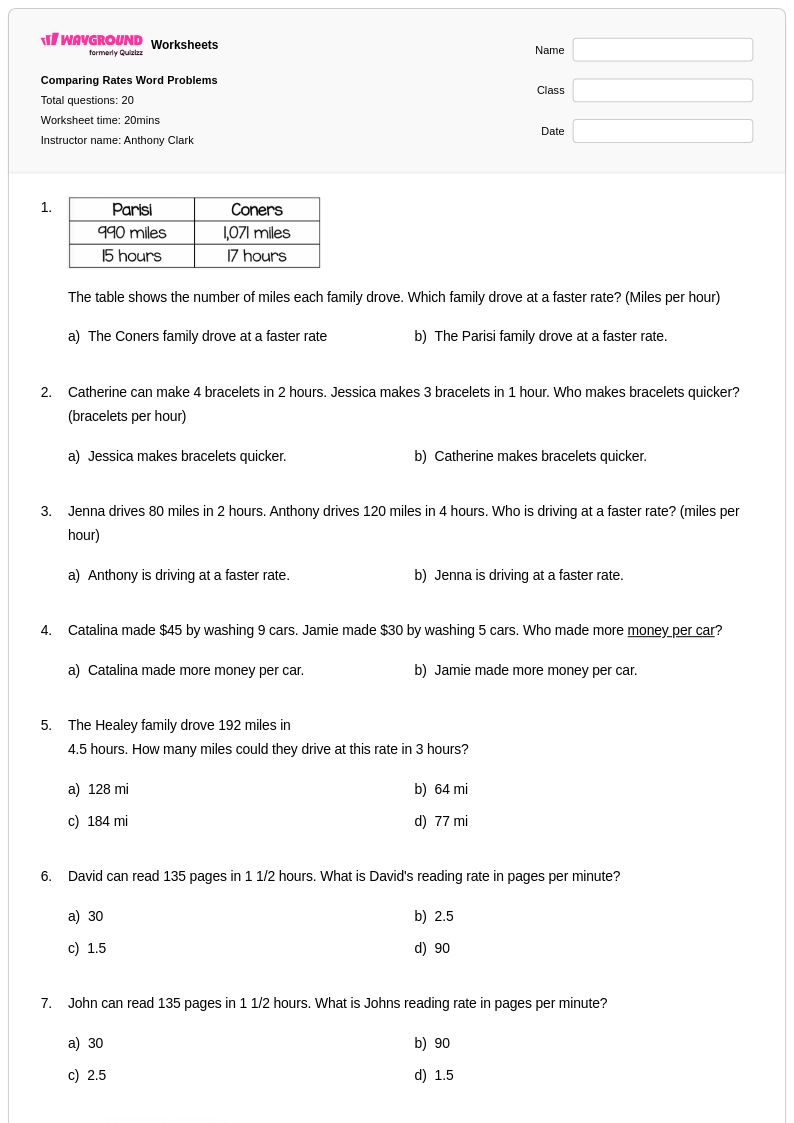
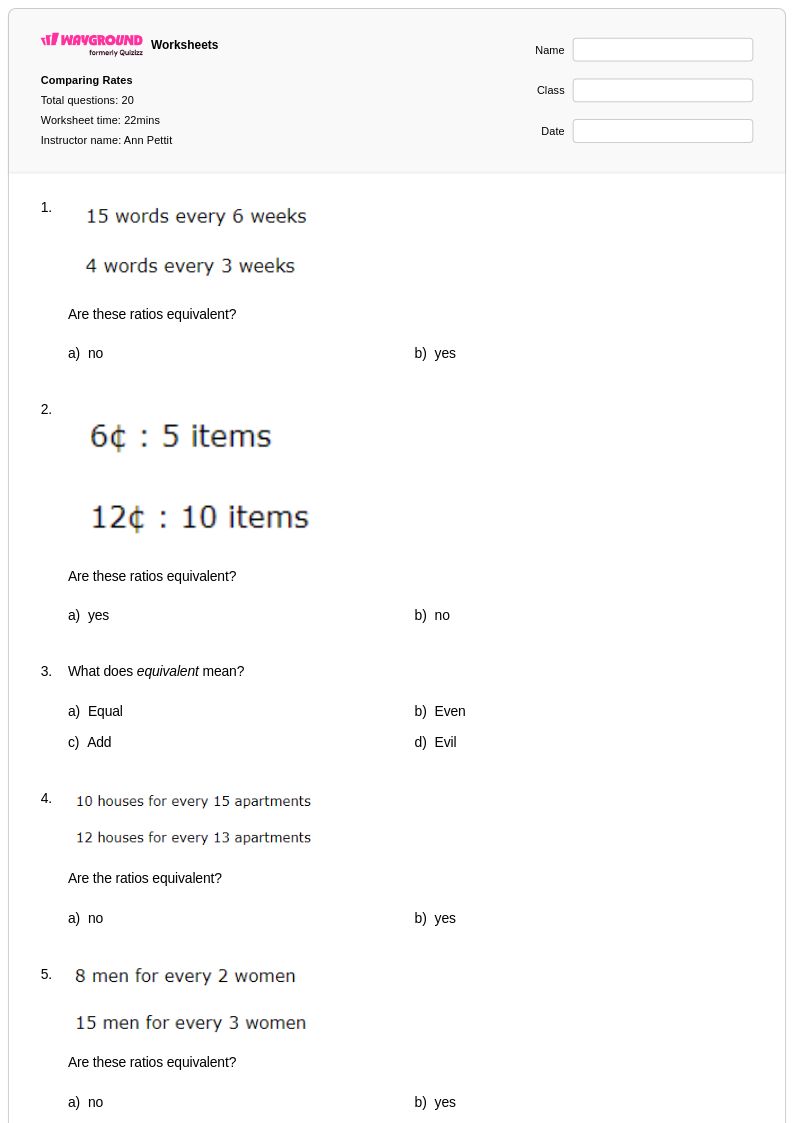
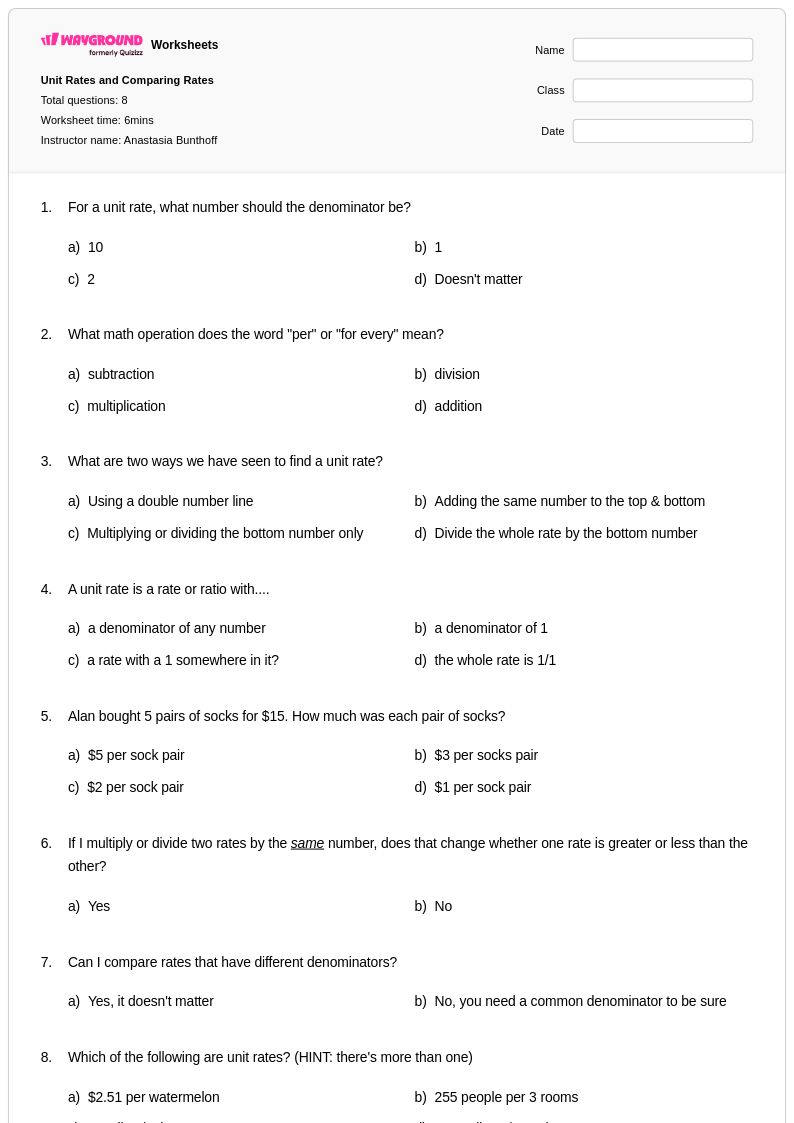
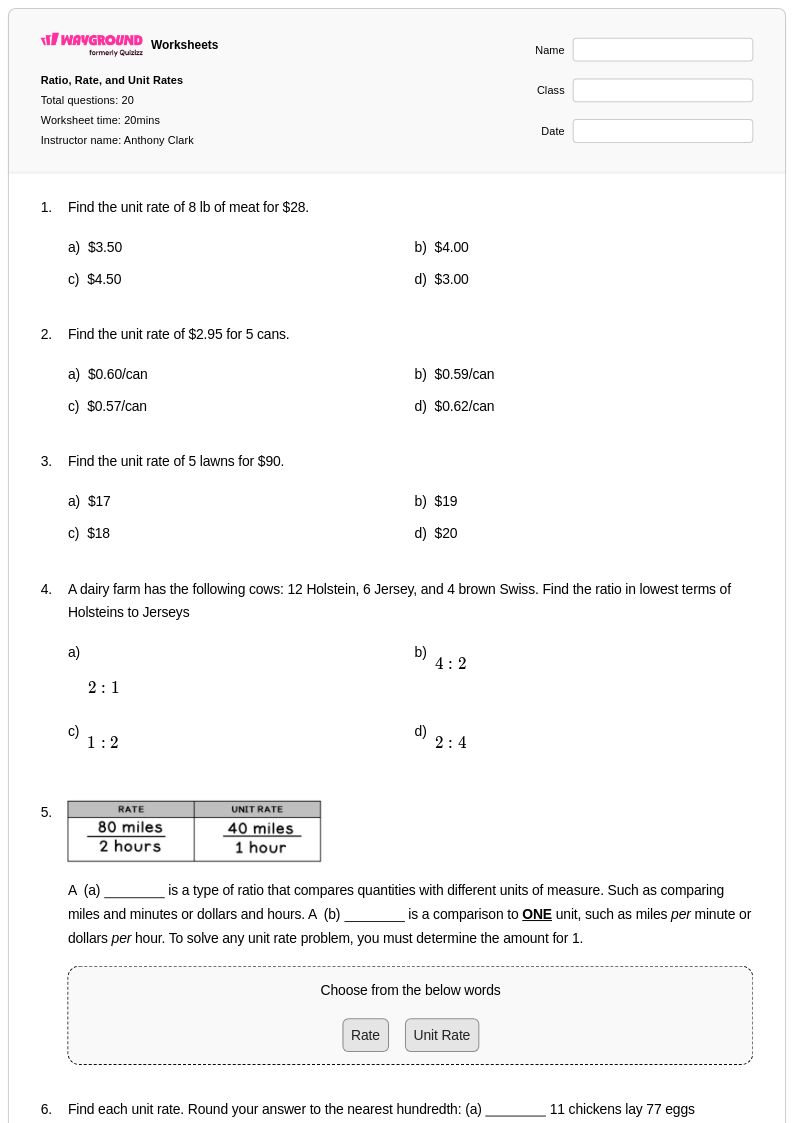
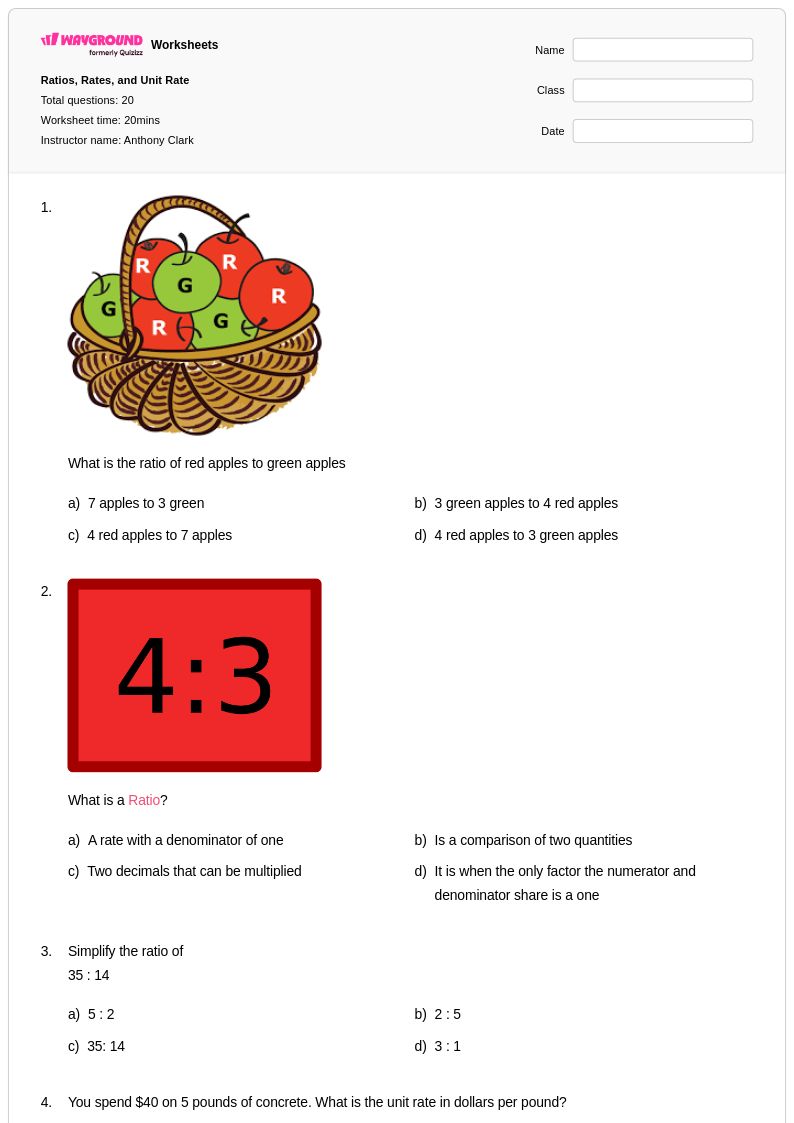
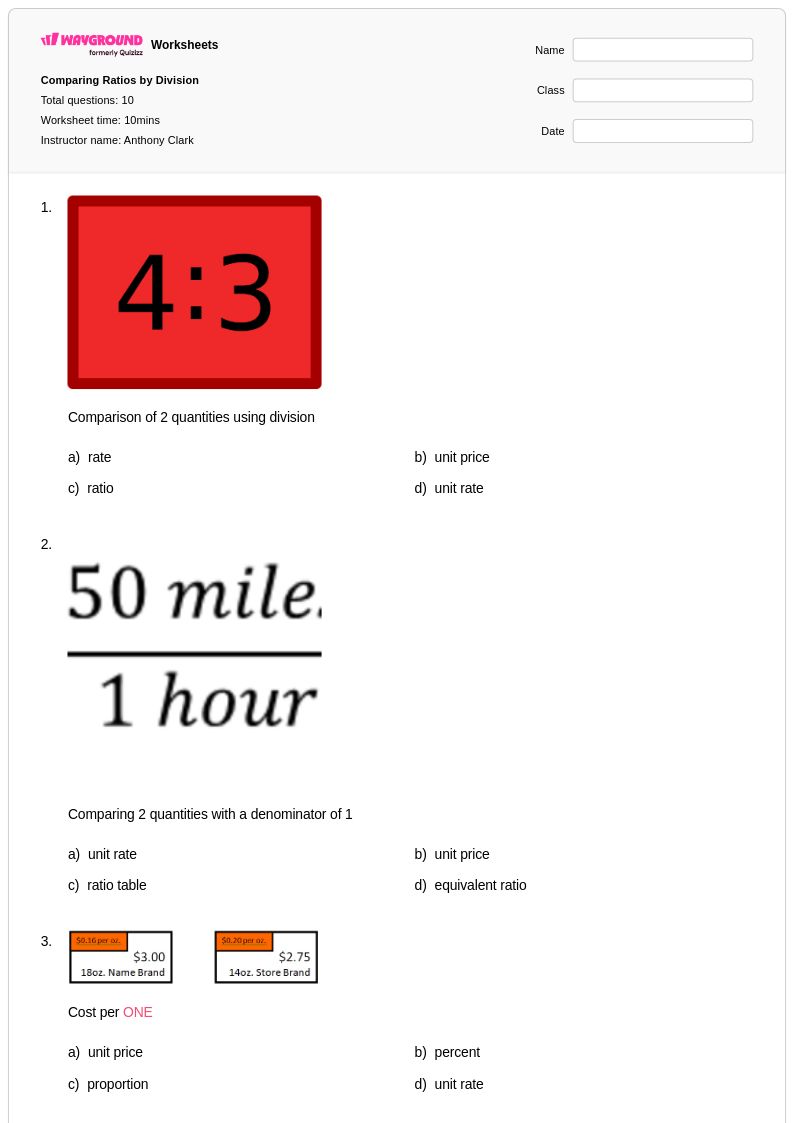
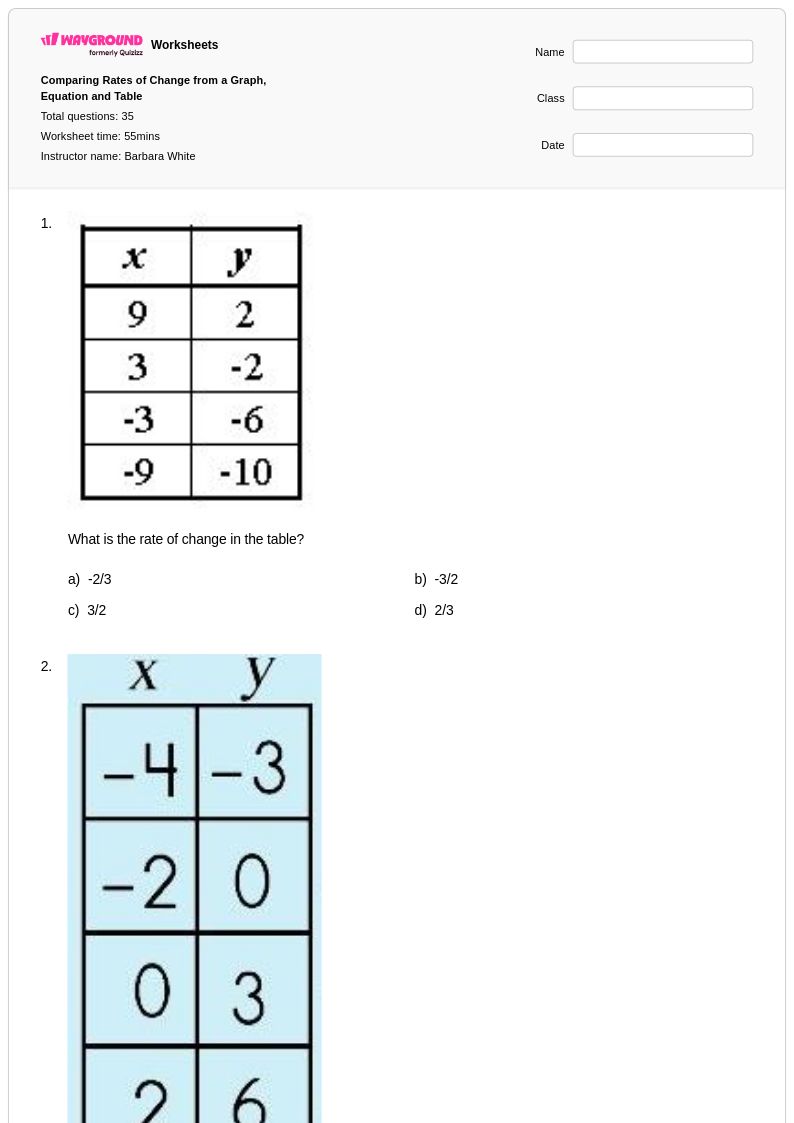
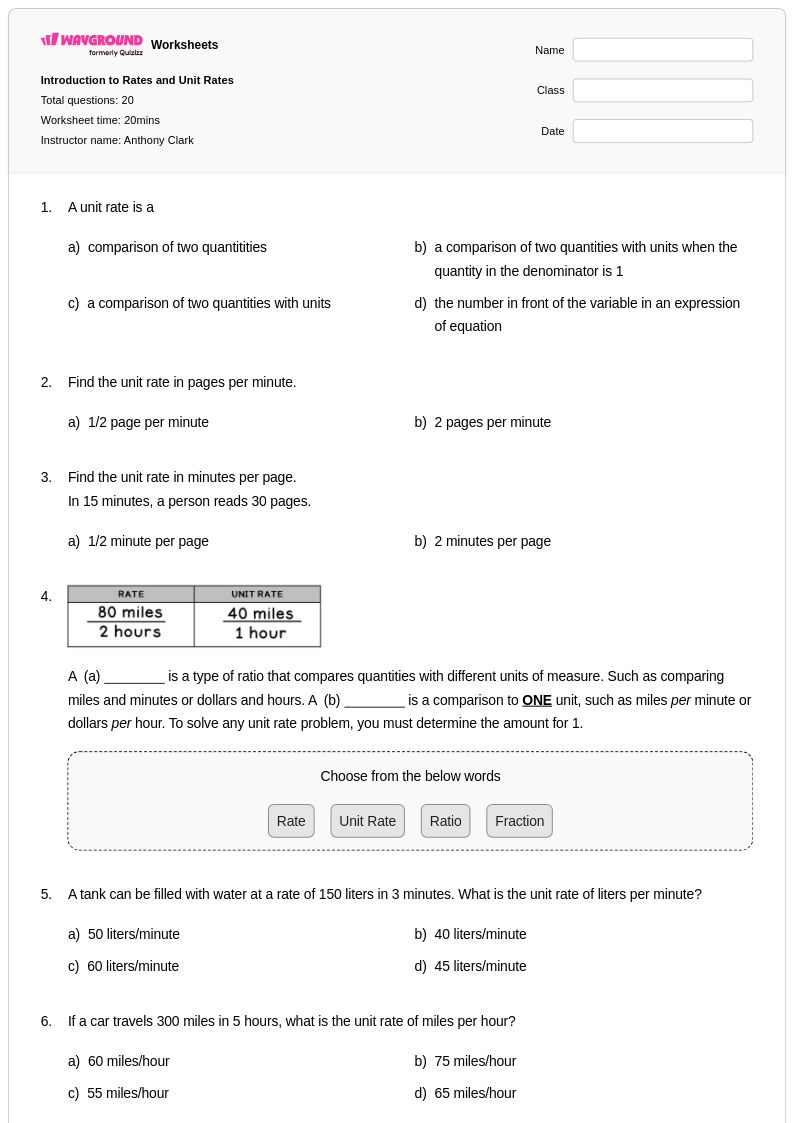
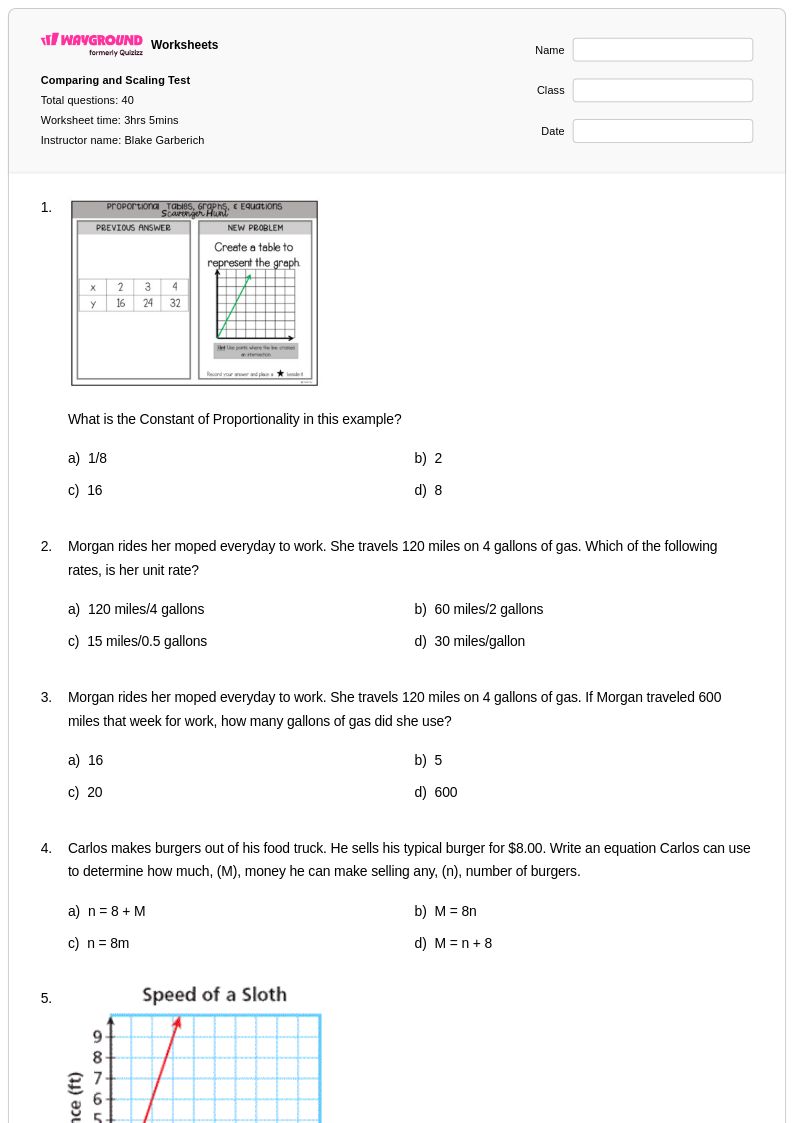
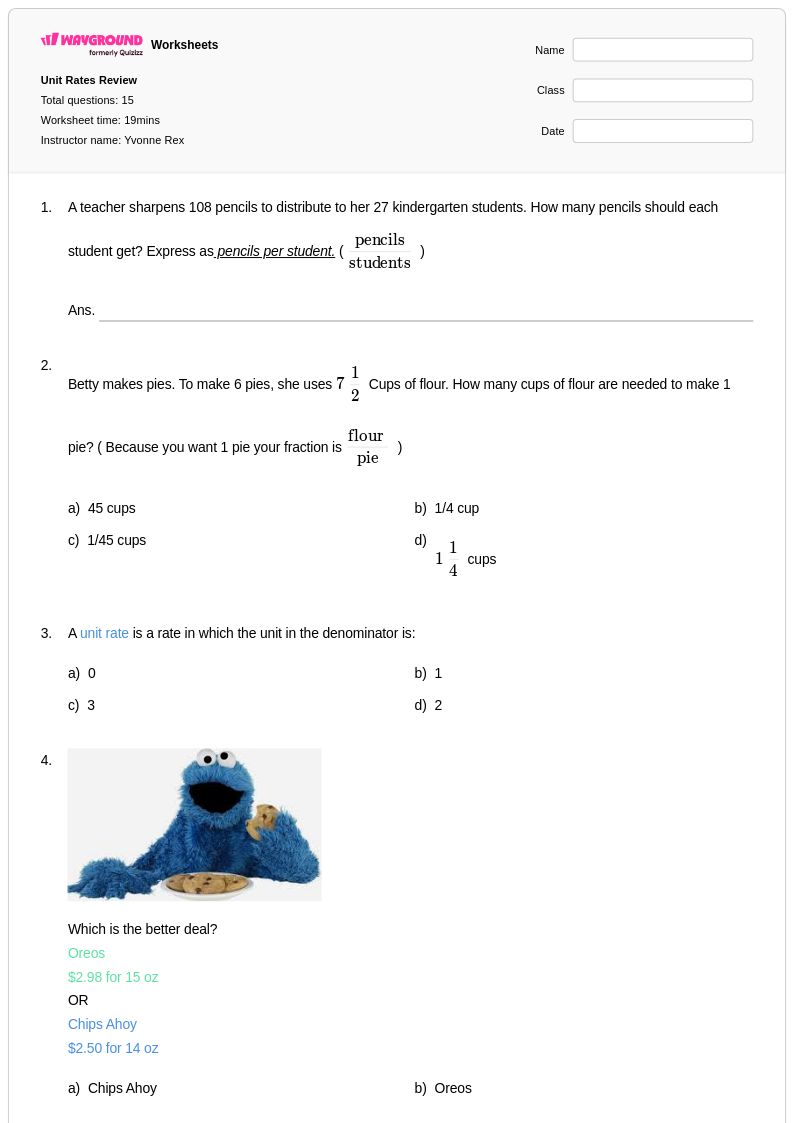
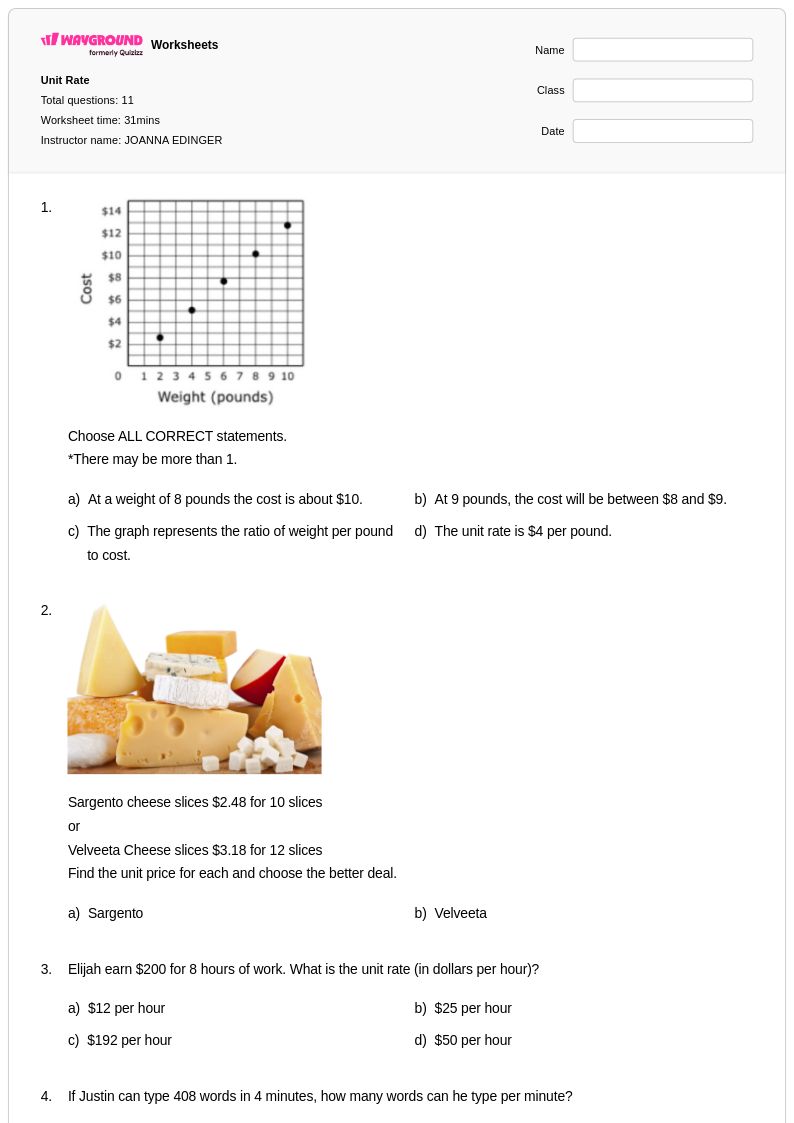
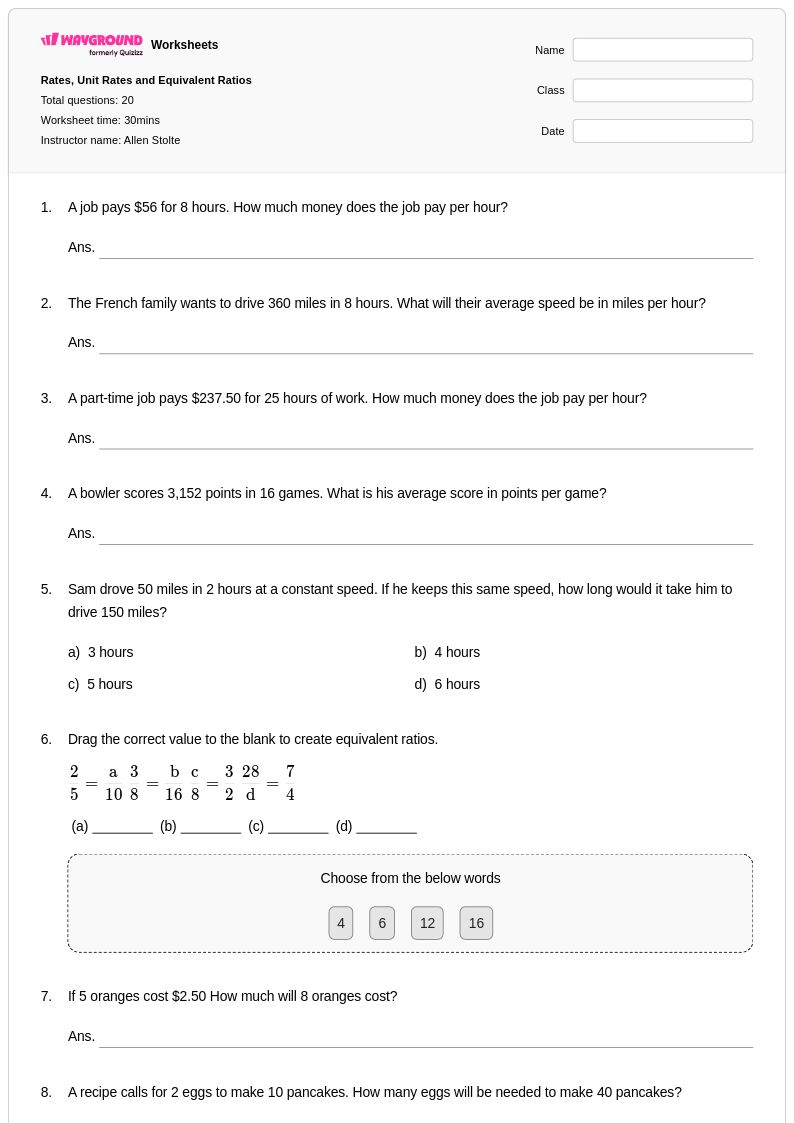
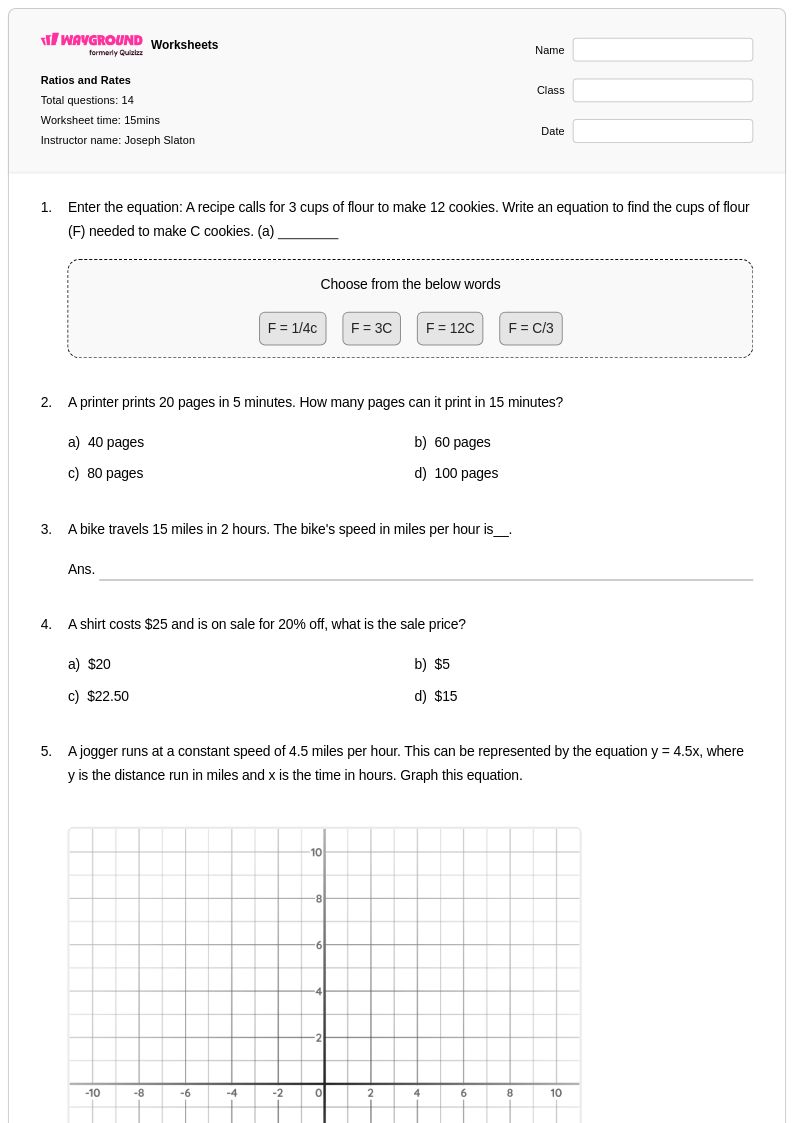
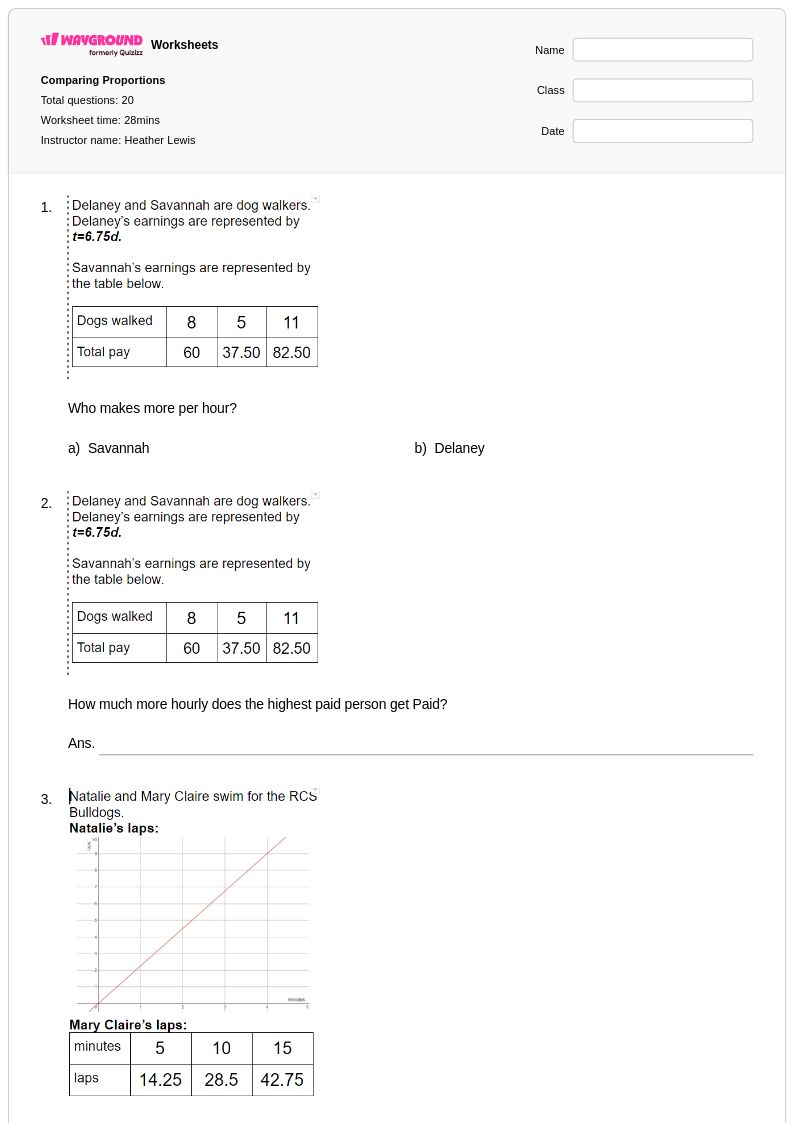
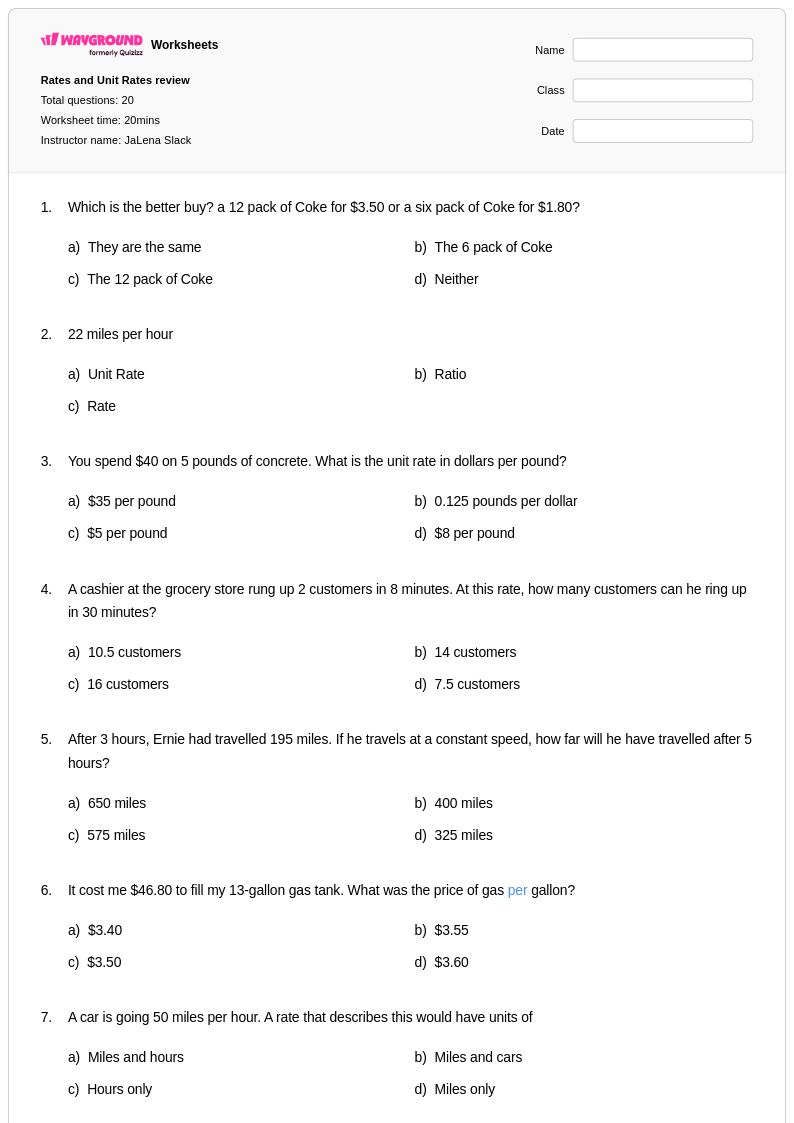
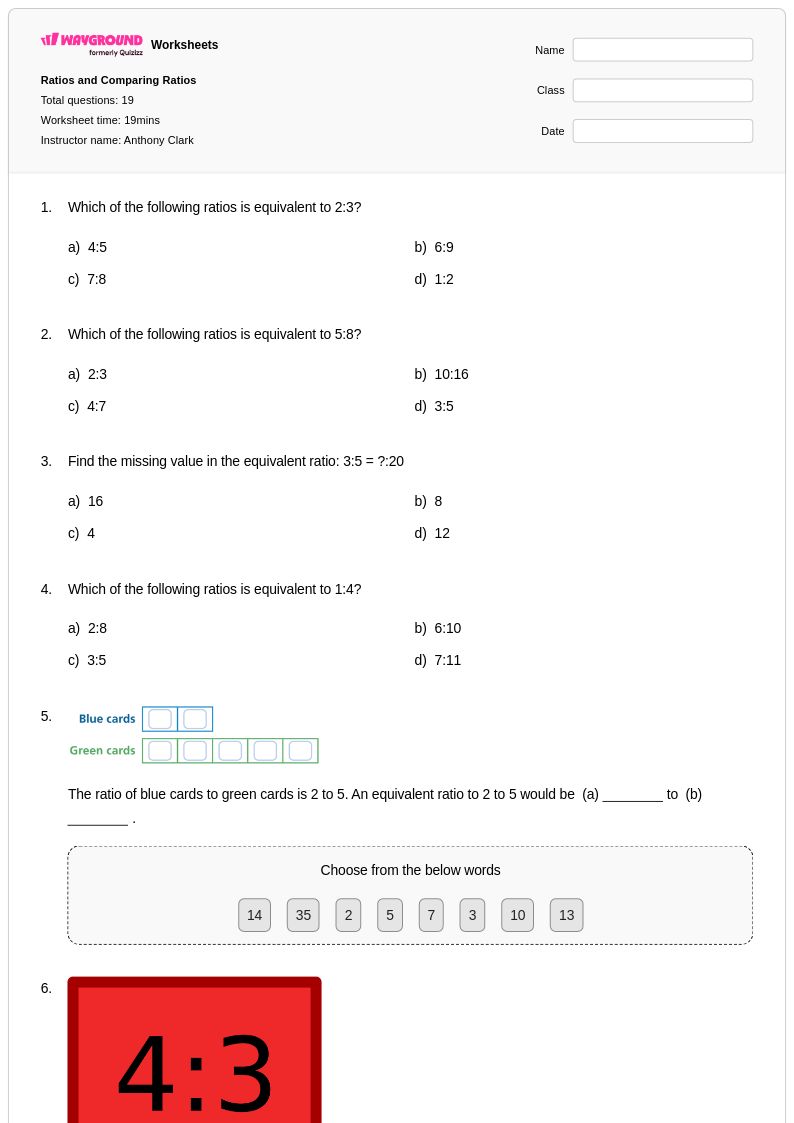
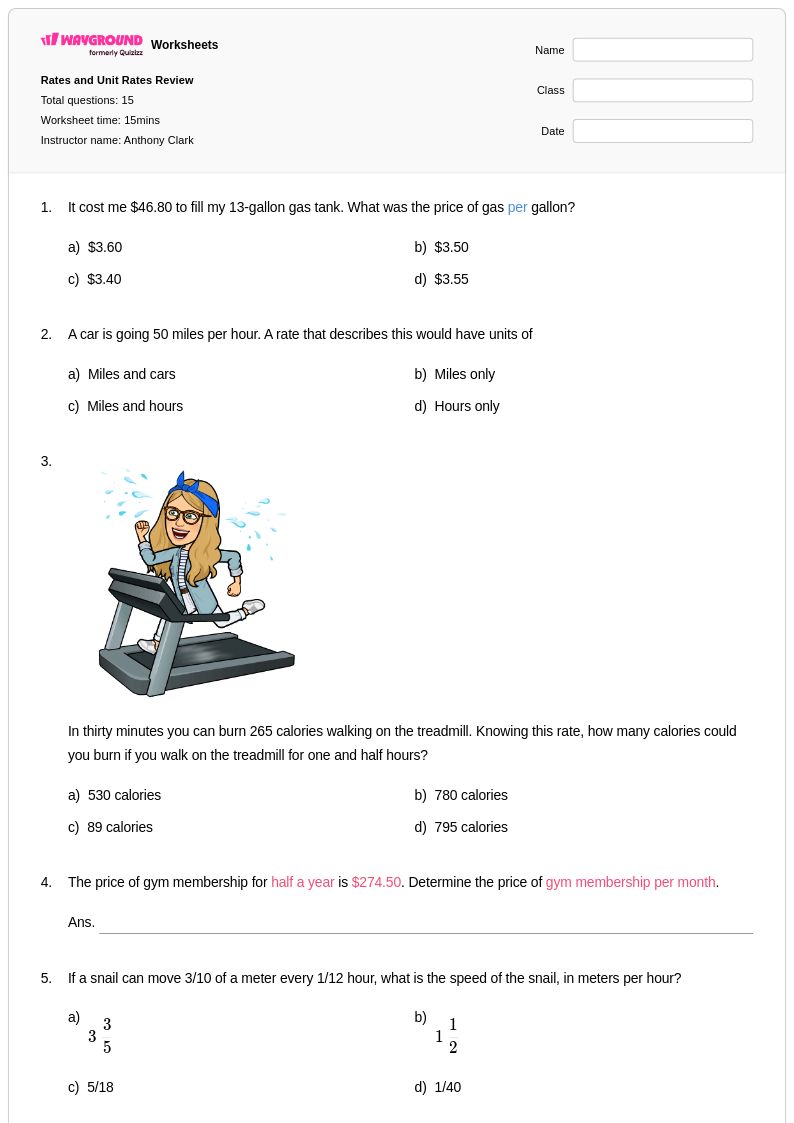
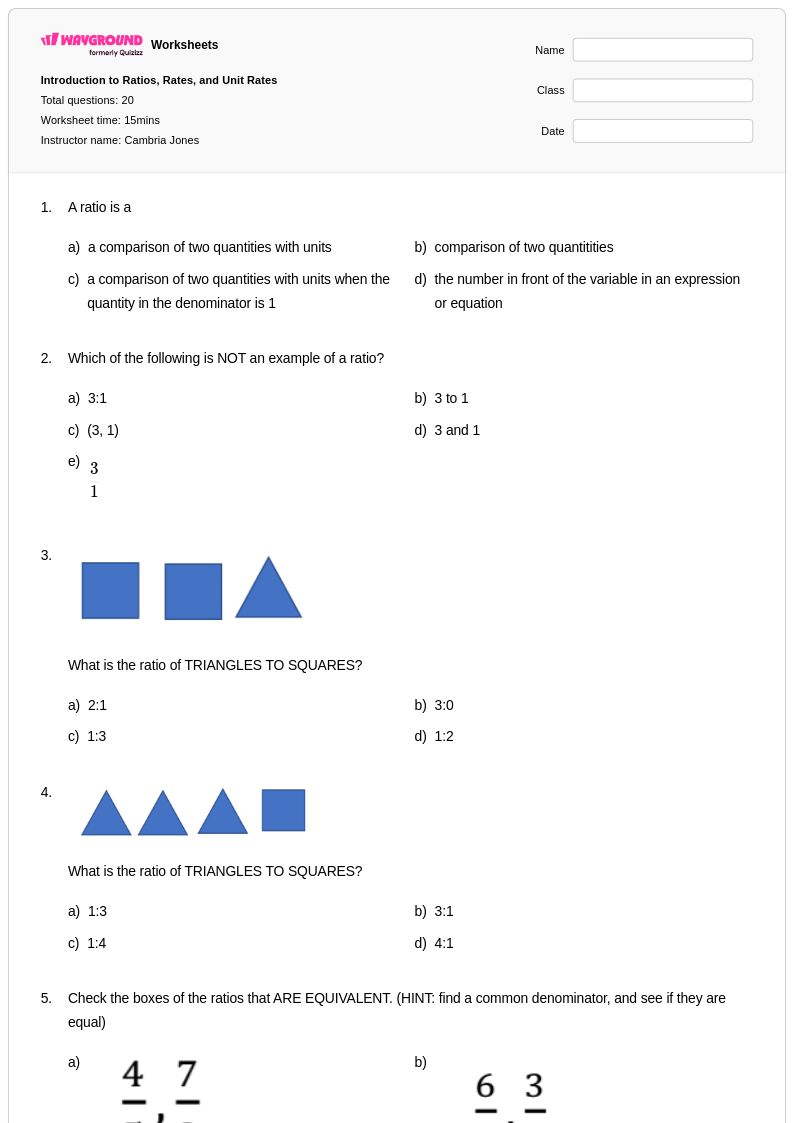
Comparing rates worksheets for Grade 7 students available through Wayground (formerly Quizizz) provide comprehensive practice opportunities for developing this essential mathematical skill. These carefully designed resources help students master the ability to analyze and compare different rates by examining unit rates, converting between different units of measurement, and determining which rate represents the better value or faster speed in real-world scenarios. The worksheets strengthen critical thinking skills as students learn to identify equivalent rates, simplify complex rate comparisons, and apply proportional reasoning to solve multi-step problems. Each practice problem set includes detailed answer keys that guide students through the solution process, and the free printable pdf formats make these resources easily accessible for both classroom instruction and independent study.
Wayground (formerly Quizizz) empowers educators with an extensive collection of millions of teacher-created resources specifically designed to support Grade 7 mathematics instruction in comparing rates and related concepts. The platform's robust search and filtering capabilities allow teachers to quickly locate worksheets that align with specific curriculum standards and match their students' individual learning needs. Advanced differentiation tools enable educators to customize difficulty levels, modify problem types, and adapt content for diverse learners, while the flexible format options include both printable pdf versions for traditional paper-based practice and digital formats for interactive online learning. These comprehensive features streamline lesson planning and provide teachers with targeted resources for remediation, enrichment, and systematic skill practice, ensuring that every student can build confidence and competency in comparing rates through structured, progressive worksheet activities.
FAQs
How do I teach comparing rates in Grade 7?
Teach Grade 7 students to normalize rates by finding unit rates or converting both quantities to matching units, then compare the resulting values. Use price, speed, and efficiency scenarios that require proportional reasoning, and ask students to justify why a larger or smaller rate is preferable in each context.
What exercises help Grade 7 students practice comparing rates?
Useful Grade 7 exercises include comparing unit prices, converting speeds between units, identifying equivalent rates, simplifying complex rate relationships, and solving multi-step proportional problems. Mix direct calculations with decision-making tasks so students must interpret the rate rather than report only a quotient.
What mistakes do Grade 7 students commonly make when comparing rates?
Students may divide the quantities in opposite orders, compare values expressed in incompatible units, or lose track of units during a multi-step conversion. They may also choose the numerically larger rate as the better option without considering whether the context rewards a higher speed or a lower unit cost.
How can I use a Grade 7 comparing rates worksheet?
Grade 7 comparing rates worksheets are available as printable PDFs and in digital formats, accommodating whole-class instruction, homework, and independent study. Teachers can host a worksheet as a digital quiz on Wayground or print and assign it on paper; every worksheet includes a complete answer key, and physical submissions can be scanned or captured for grading with the Wayground for Teachers app.
How does comparing rates align with Common Core in Grade 7?
Comparing rates supports Common Core's Grade 7 emphasis on proportional relationships and solving real-world problems with ratios, unit rates, and multiple representations. Students build beyond basic unit-rate calculation by analyzing equivalent relationships, converting units, and applying proportional reasoning to multi-step comparisons.
What grade do students learn to compare rates?
Students commonly begin formal unit-rate work in Grade 6 and extend it in Grade 7 through proportional relationships and more complex applications. At the Grade 7 level, comparing rates typically involves unit conversions, multi-step reasoning, and explaining decisions in real-world contexts.
How can I differentiate Grade 7 comparing rates practice?
Teachers can provide scaffolded versions with adjusted font size or spacing, a dyslexia-friendly font, or translated instructions, while enrichment versions can include complex rates and multi-step unit conversions. Wayground's digital settings also allow extended time, Read Aloud, reduced answer choices, and reading mode to be assigned to individual students and reused in later sessions.