
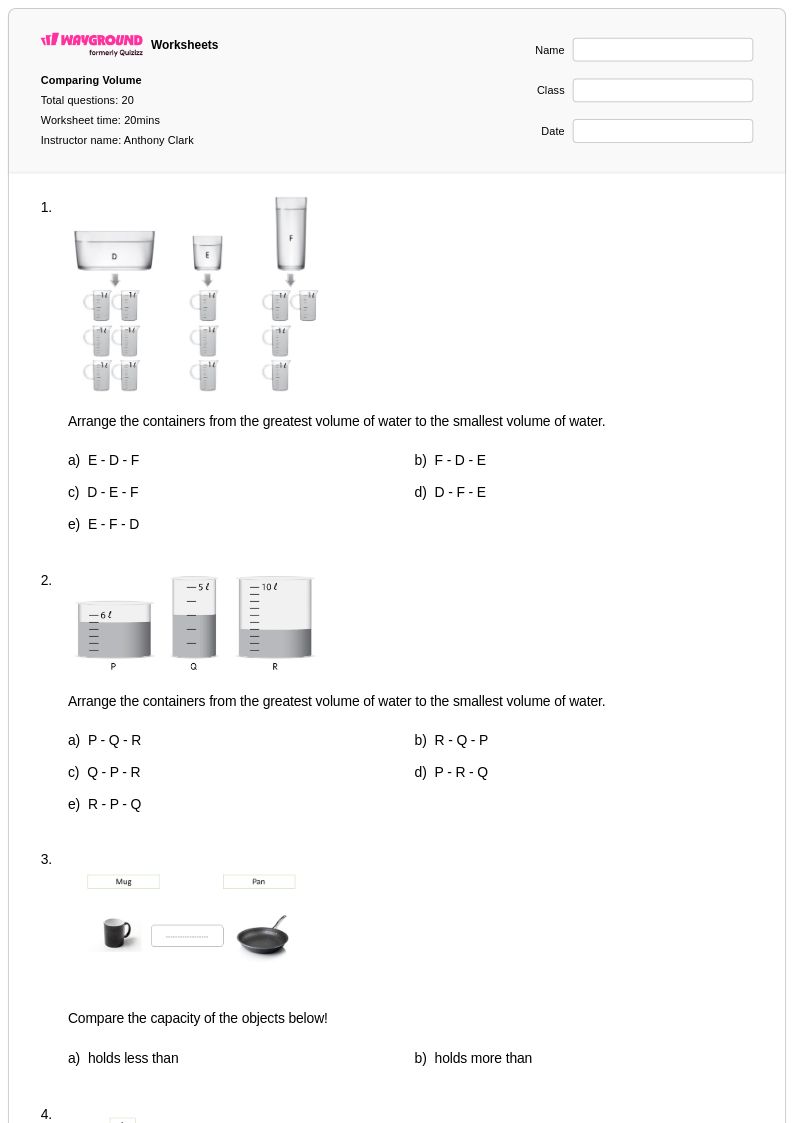
20 Q
2nd - Uni
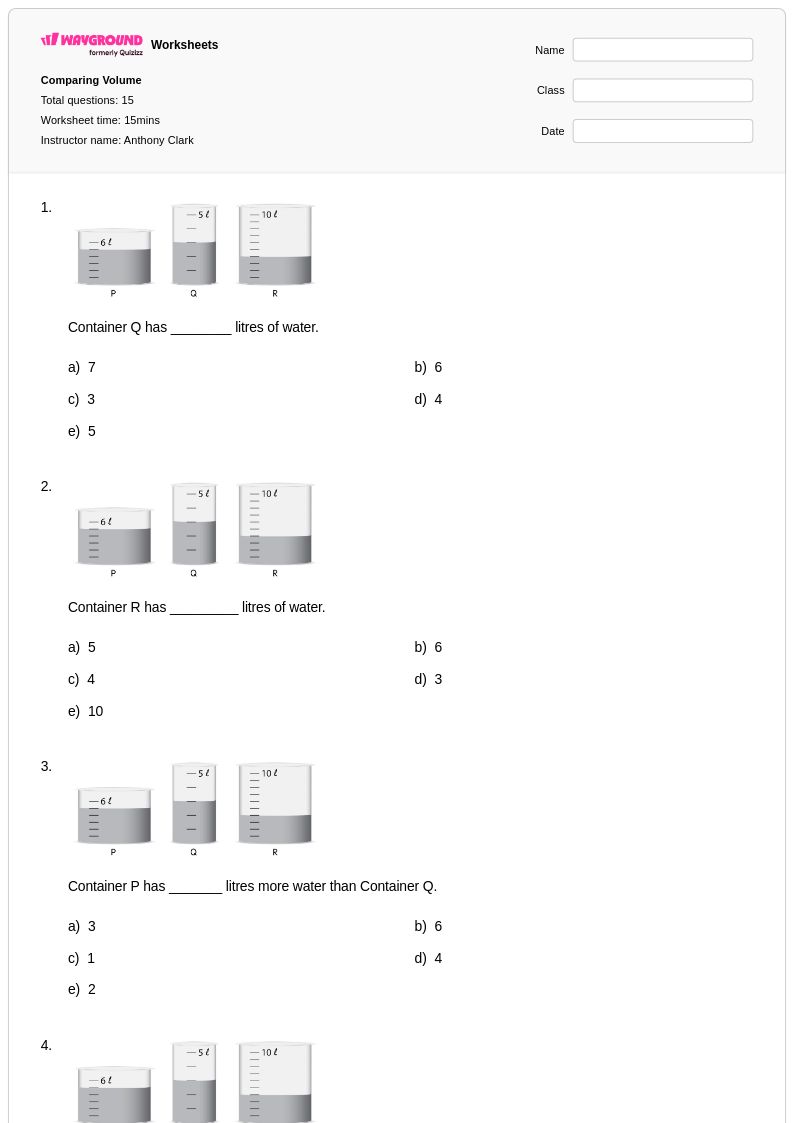
15 Q
2nd - Uni
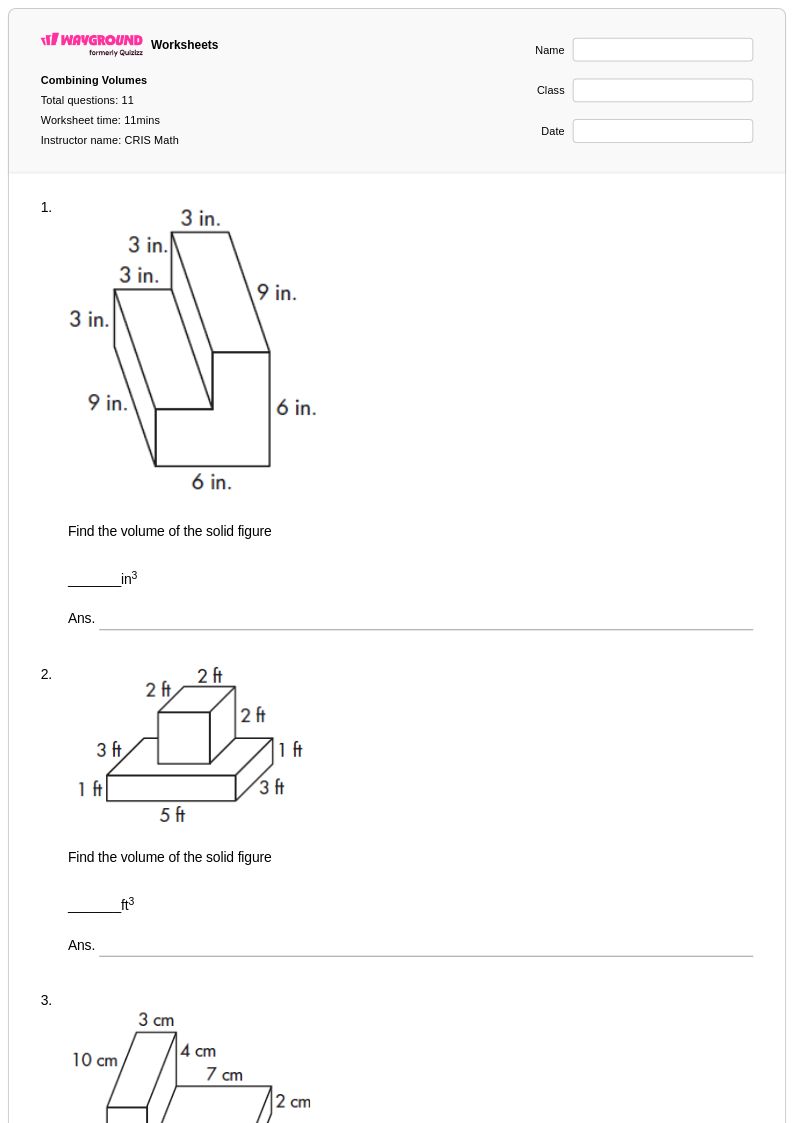
11 Q
5th
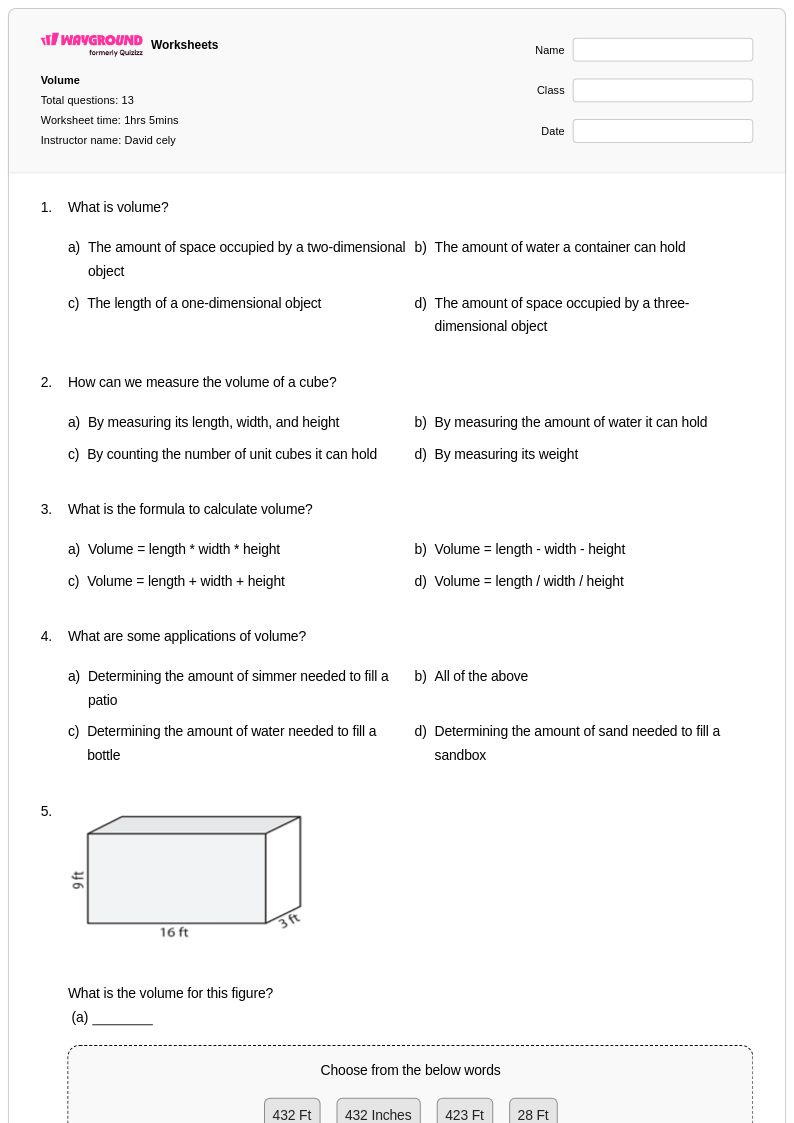
13 Q
5th
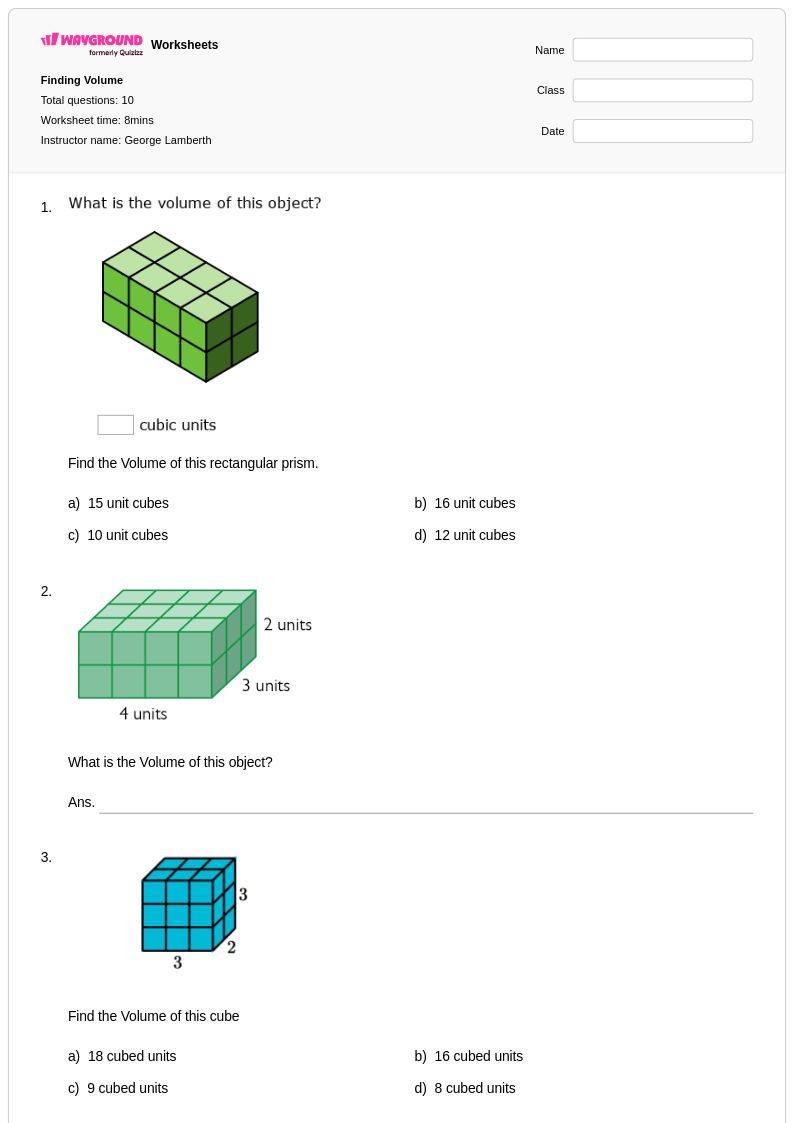
10 Q
5th
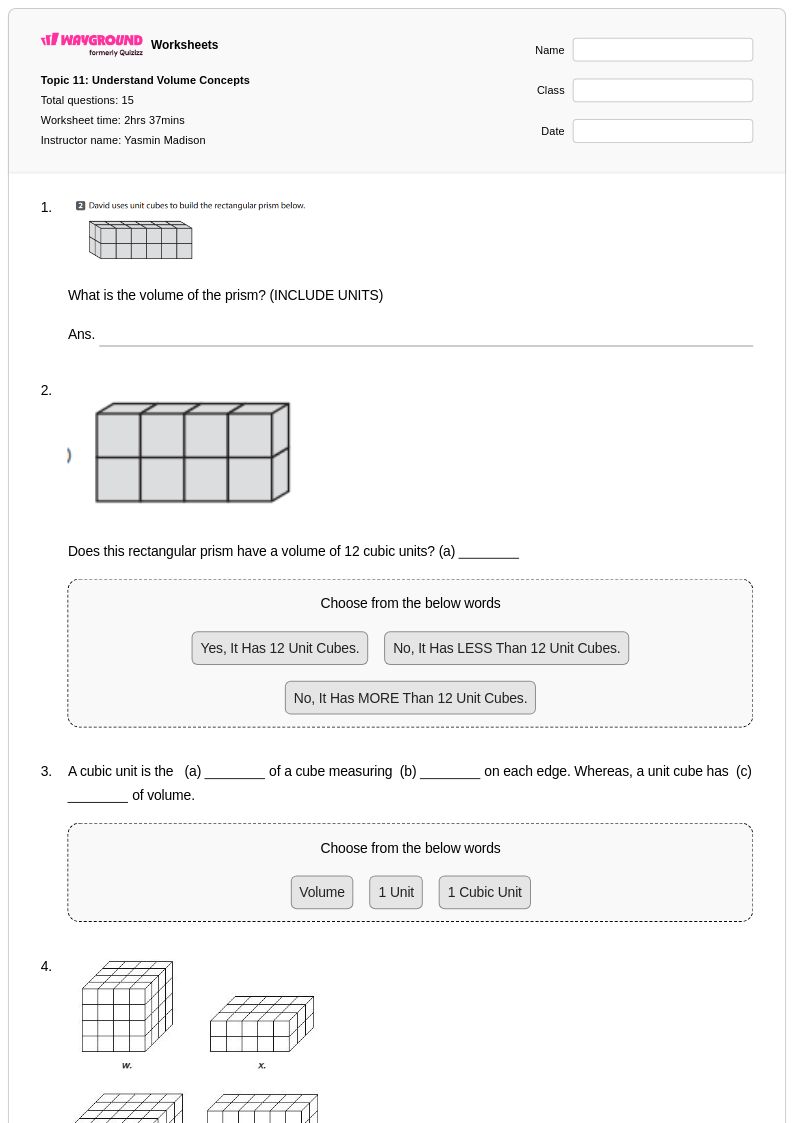
15 Q
5th
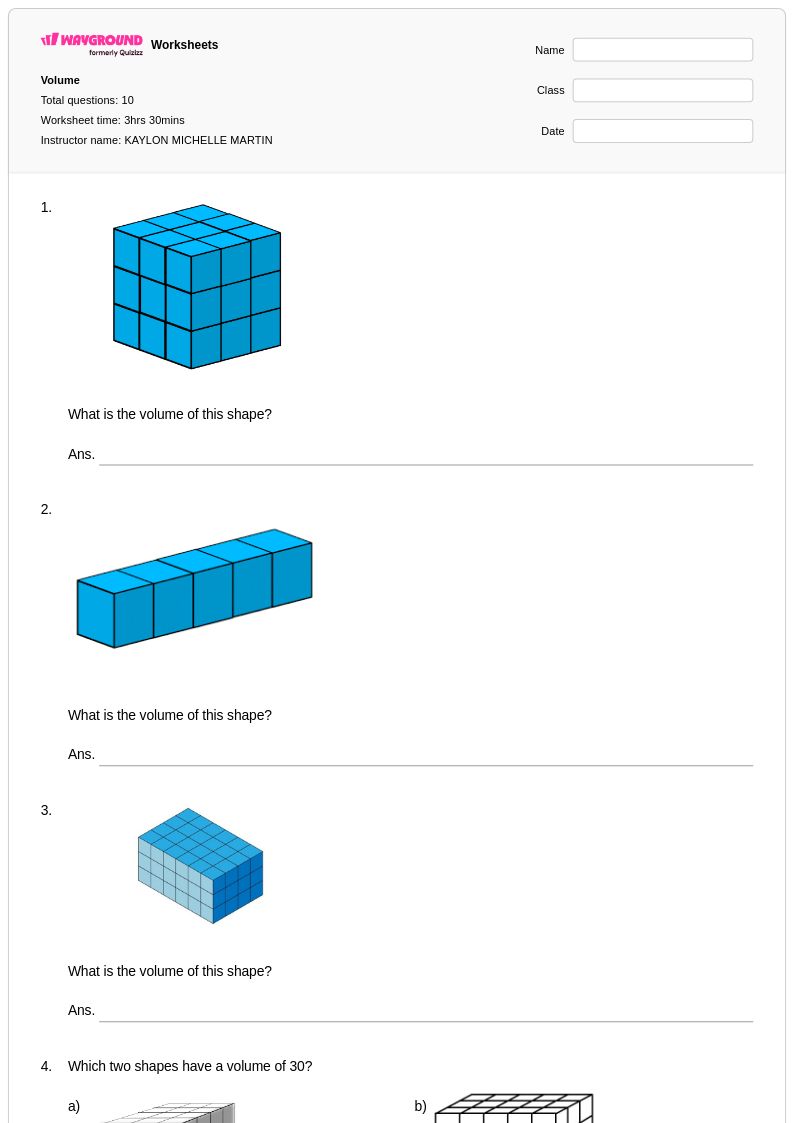
10 Q
5th
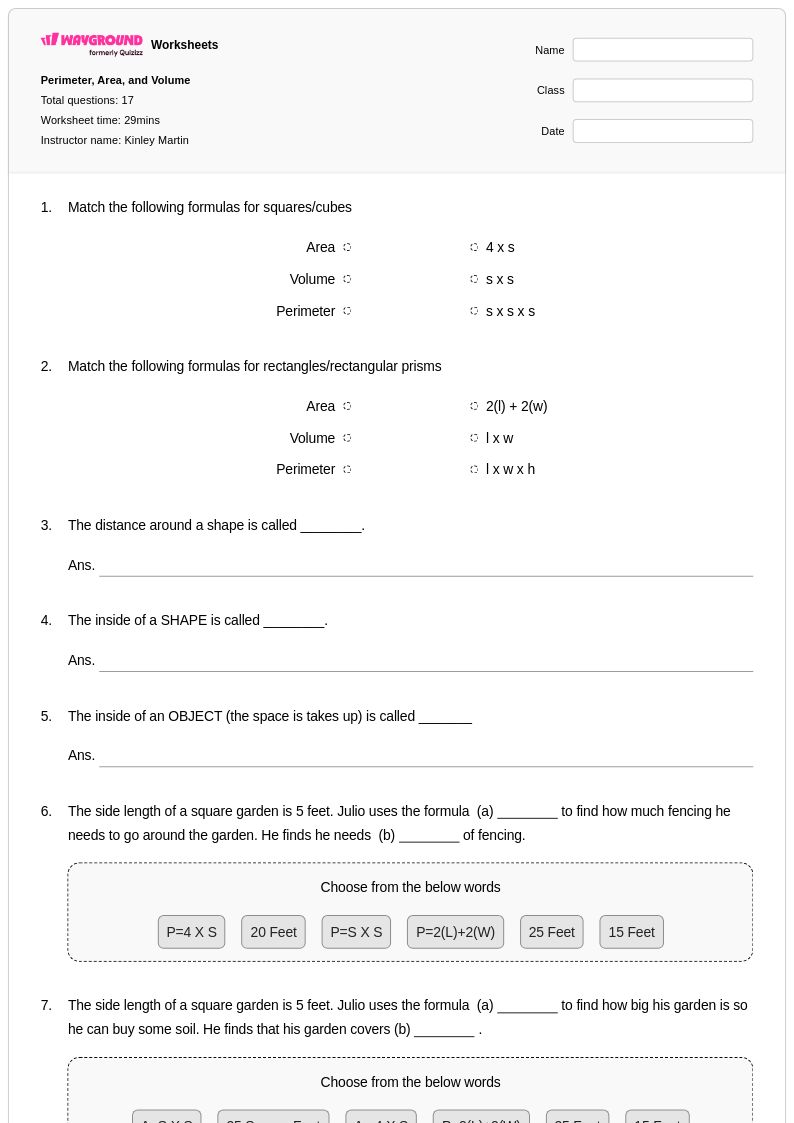
17 Q
5th
20 Q
2nd - Uni
9 Q
5th
15 Q
5th
20 Q
5th - Uni
12 Q
5th
14 Q
2nd - Uni
18 Q
5th
20 Q
3rd - Uni
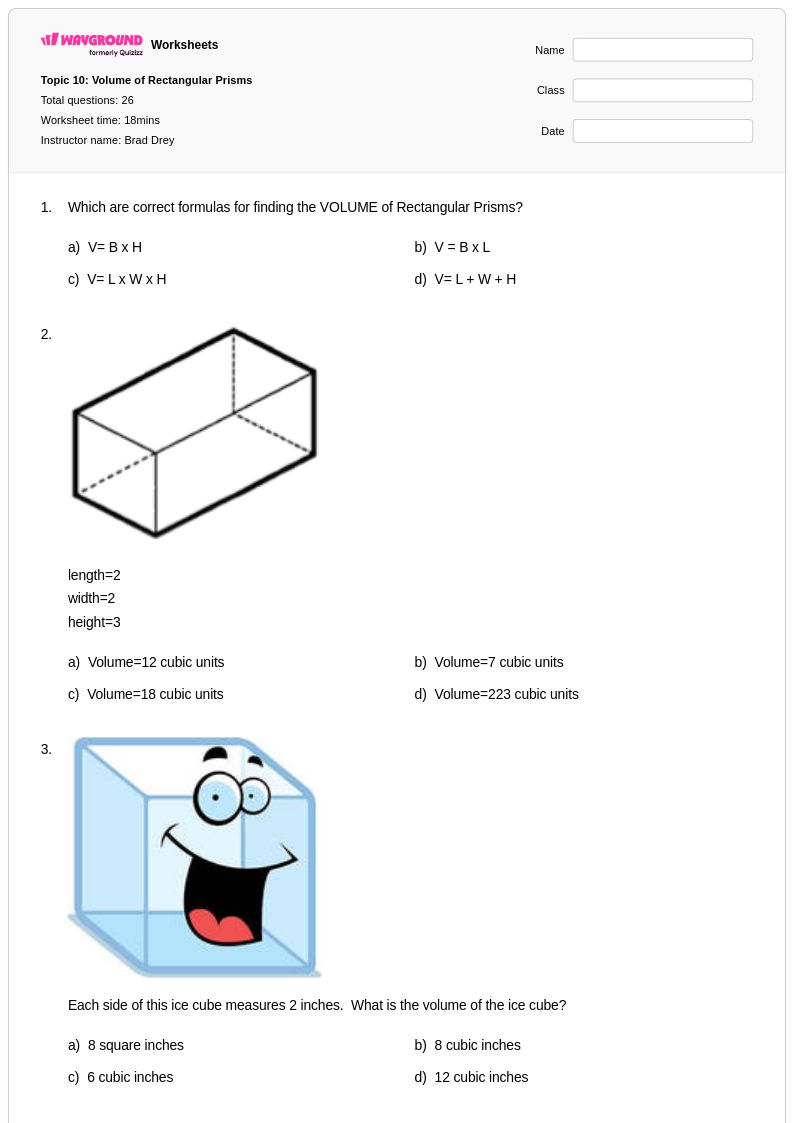
26 Q
5th
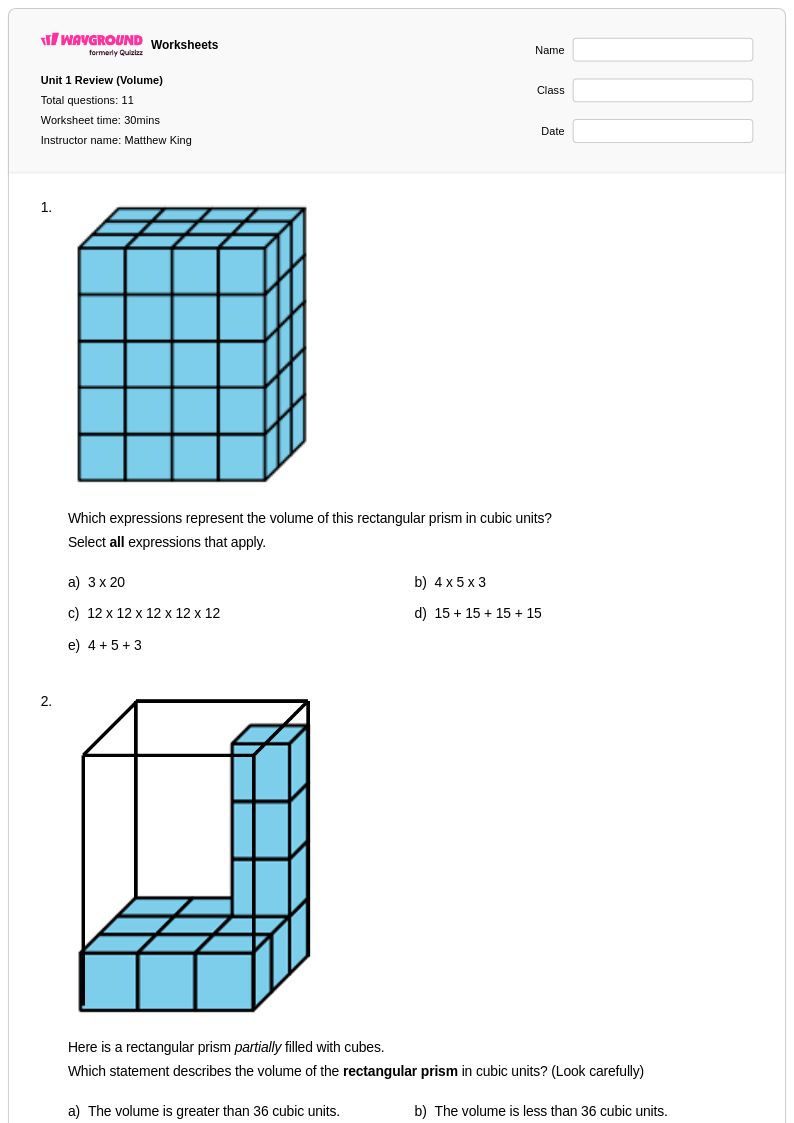
11 Q
5th
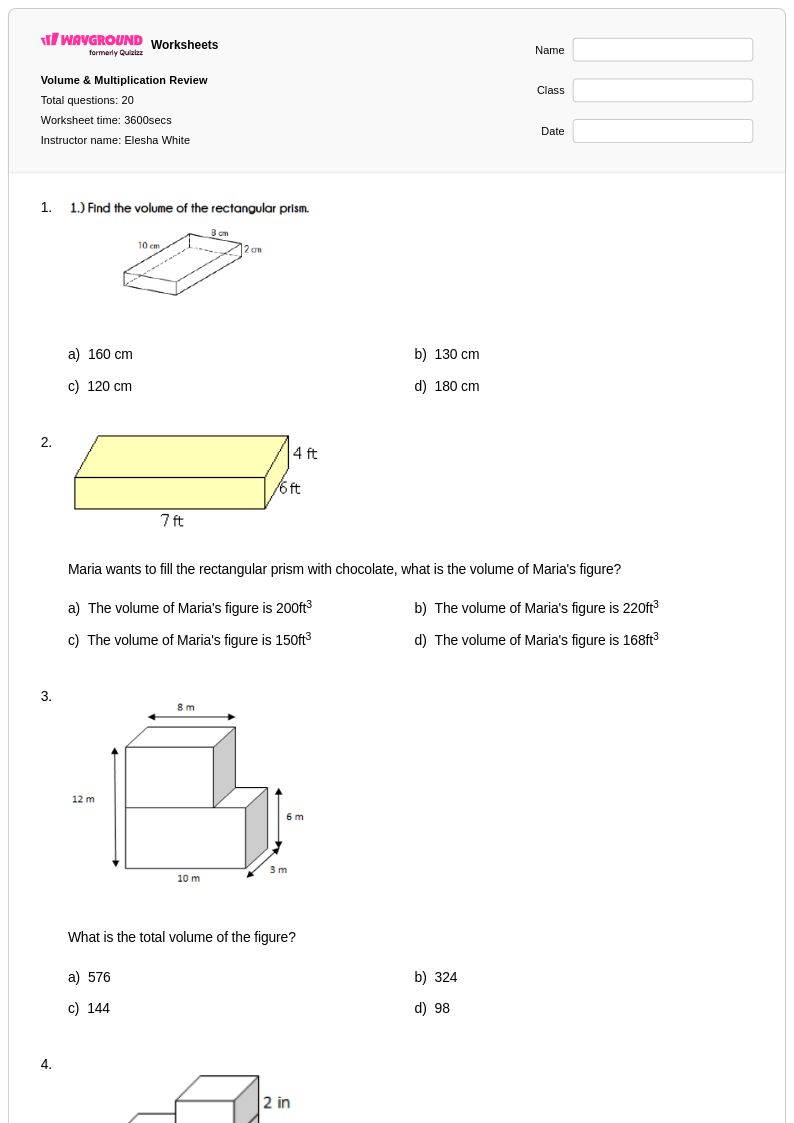
20 Q
5th
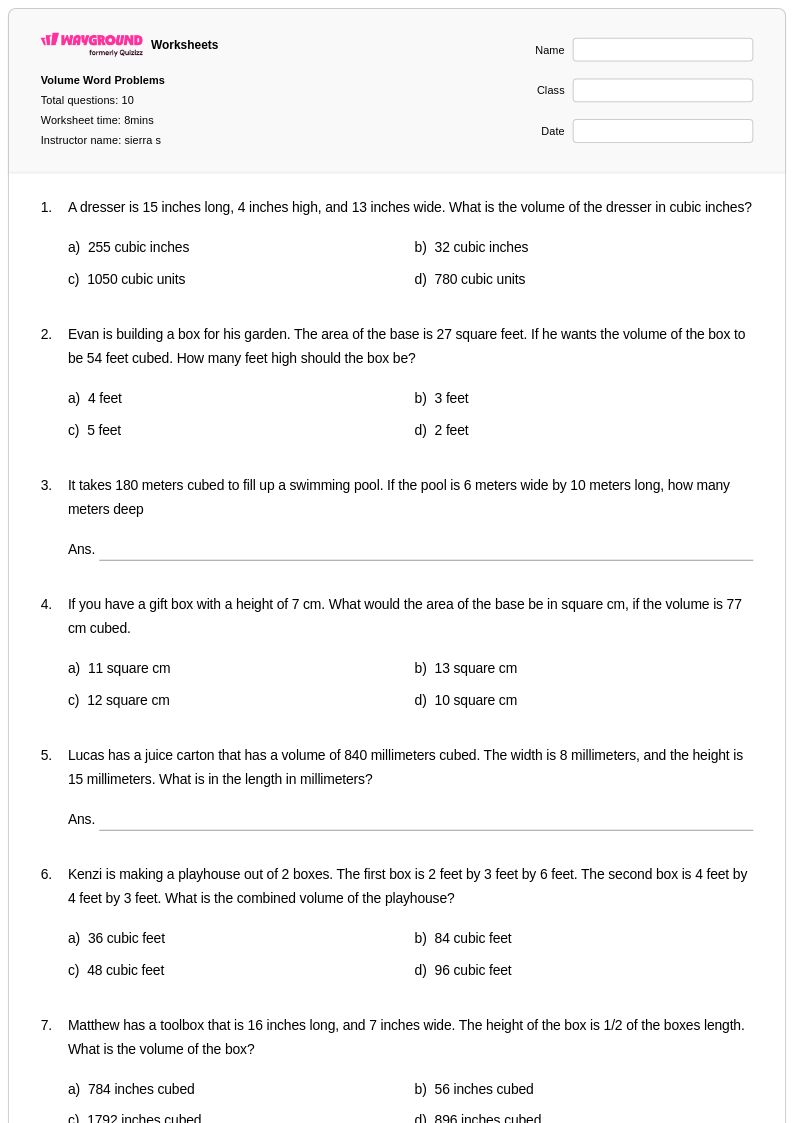
10 Q
5th
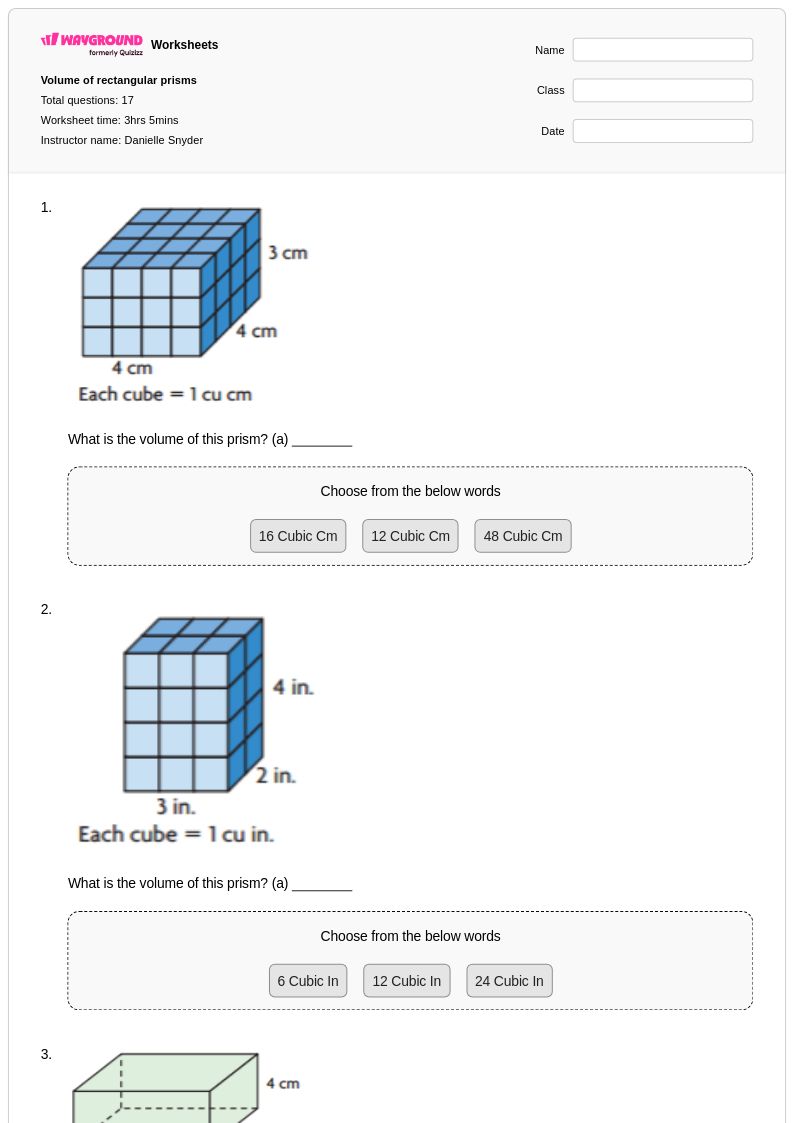
17 Q
5th
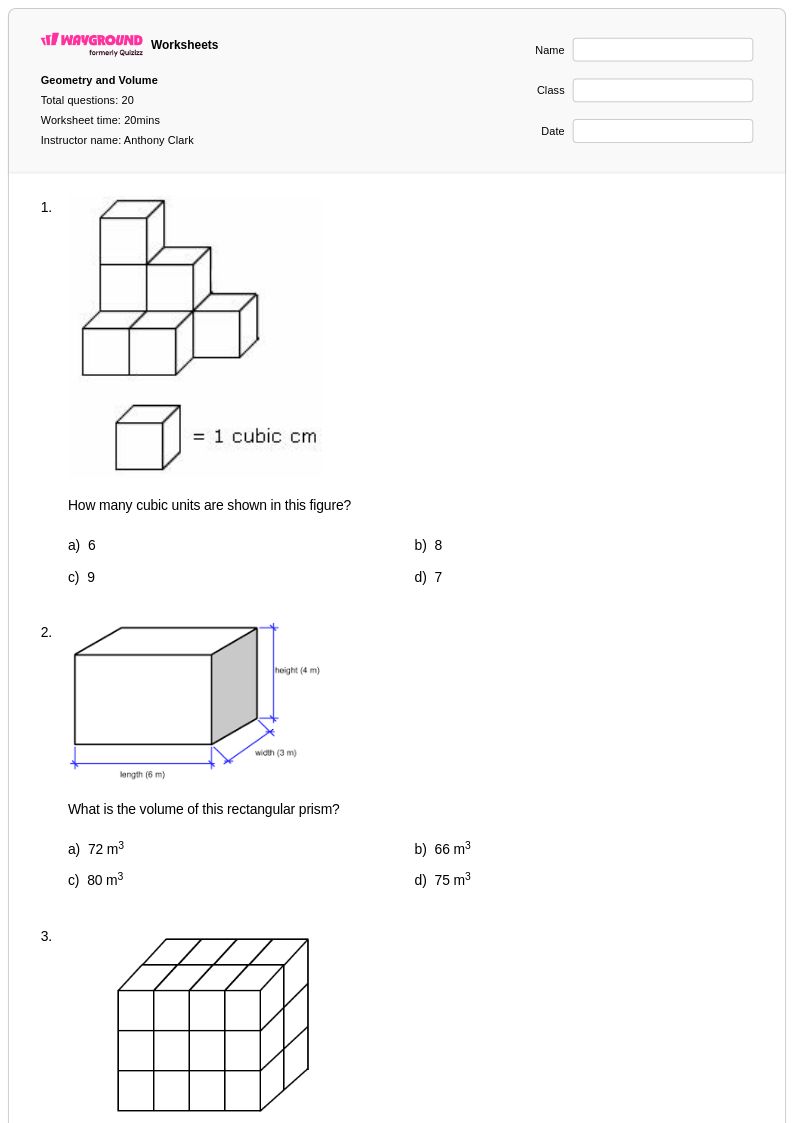
20 Q
5th - Uni
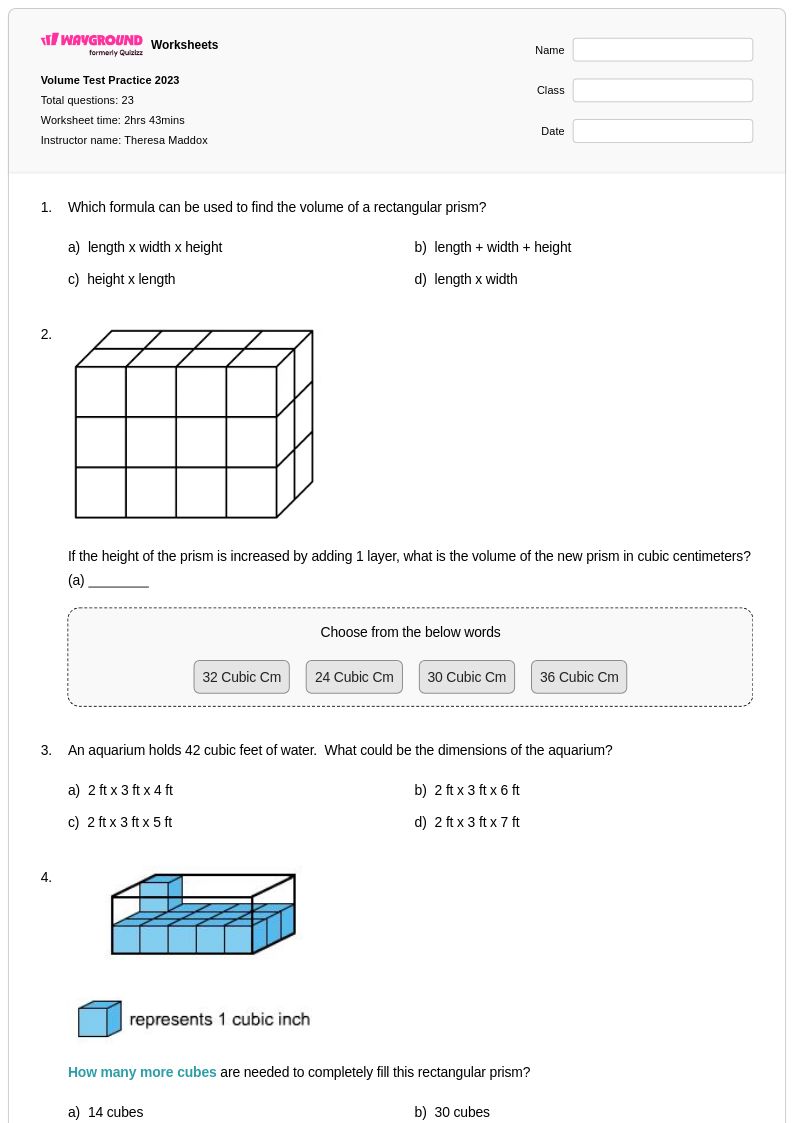
23 Q
5th
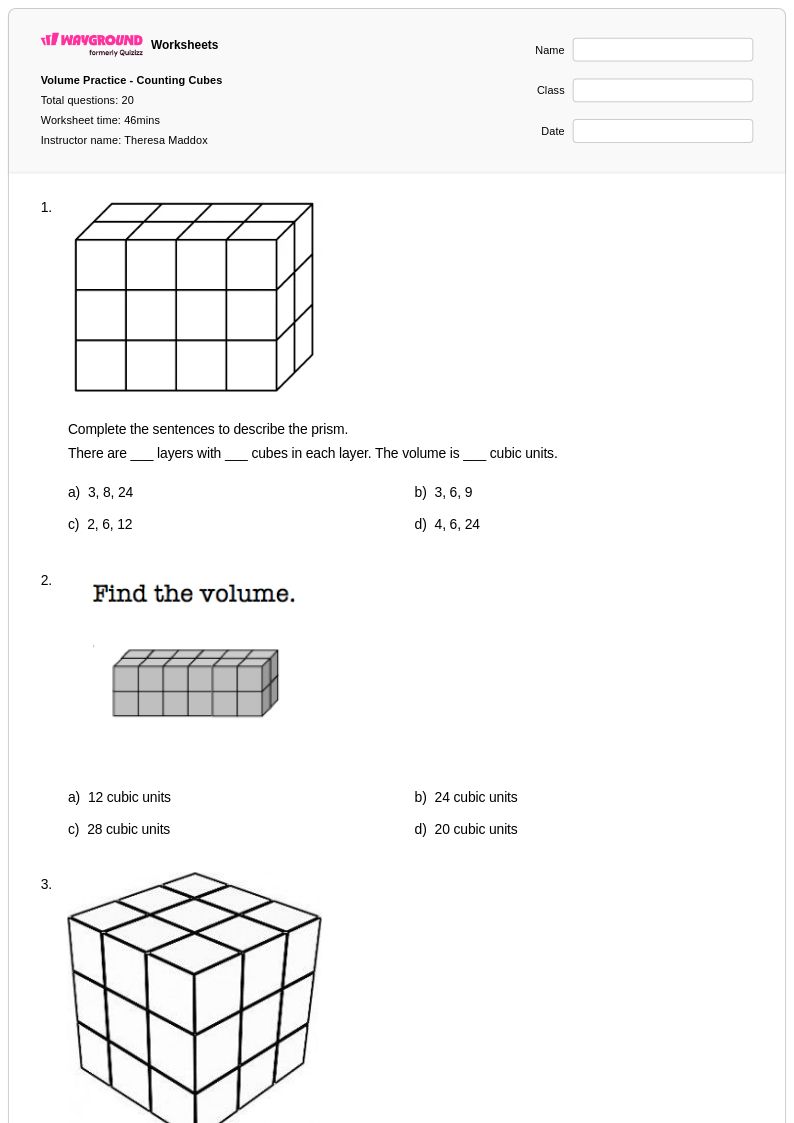
20 Q
5th
Explore Other Subject Worksheets for grade 5
Explore printable Comparing Volume worksheets for Grade 5
Grade 5 comparing volume worksheets available through Wayground (formerly Quizizz) provide comprehensive practice for students developing essential measurement comparison skills. These carefully designed educational resources focus on building proficiency in analyzing and contrasting liquid volumes using standard units such as milliliters, liters, cups, pints, quarts, and gallons. Students engage with systematic practice problems that strengthen their ability to order volumes from least to greatest, determine which containers hold more or less liquid, and make accurate volume comparisons using both visual representations and numerical data. Each worksheet includes detailed answer keys and is available as free printable pdf resources, enabling teachers to seamlessly integrate volume comparison activities into their mathematics instruction while providing students with targeted skill reinforcement.
Wayground (formerly Quizizz) supports educators with an extensive collection of millions of teacher-created comparing volume worksheets specifically aligned with Grade 5 mathematics standards and learning objectives. The platform's robust search and filtering capabilities allow teachers to quickly locate resources that match their specific instructional needs, whether focusing on metric measurements, customary units, or mixed unit comparisons. Advanced differentiation tools enable educators to customize worksheet difficulty levels, adjust problem quantities, and modify content to support diverse learners through remediation and enrichment opportunities. These versatile resources are available in both printable pdf formats for traditional classroom use and digital formats for interactive learning environments, streamlining lesson planning while ensuring students receive consistent, standards-based practice in volume comparison skills.
FAQs
How do I teach comparing volume to Grade 5 students?
What exercises help fifth graders practice comparing volume?
What mistakes do students make when comparing liquid volumes?
How can I use a Wayground Grade 5 comparing volume worksheet?
How does comparing volume fit into the Grade 5 math curriculum?
How can I differentiate Grade 5 volume-comparison worksheets?
What grade level is comparing volume taught at?