
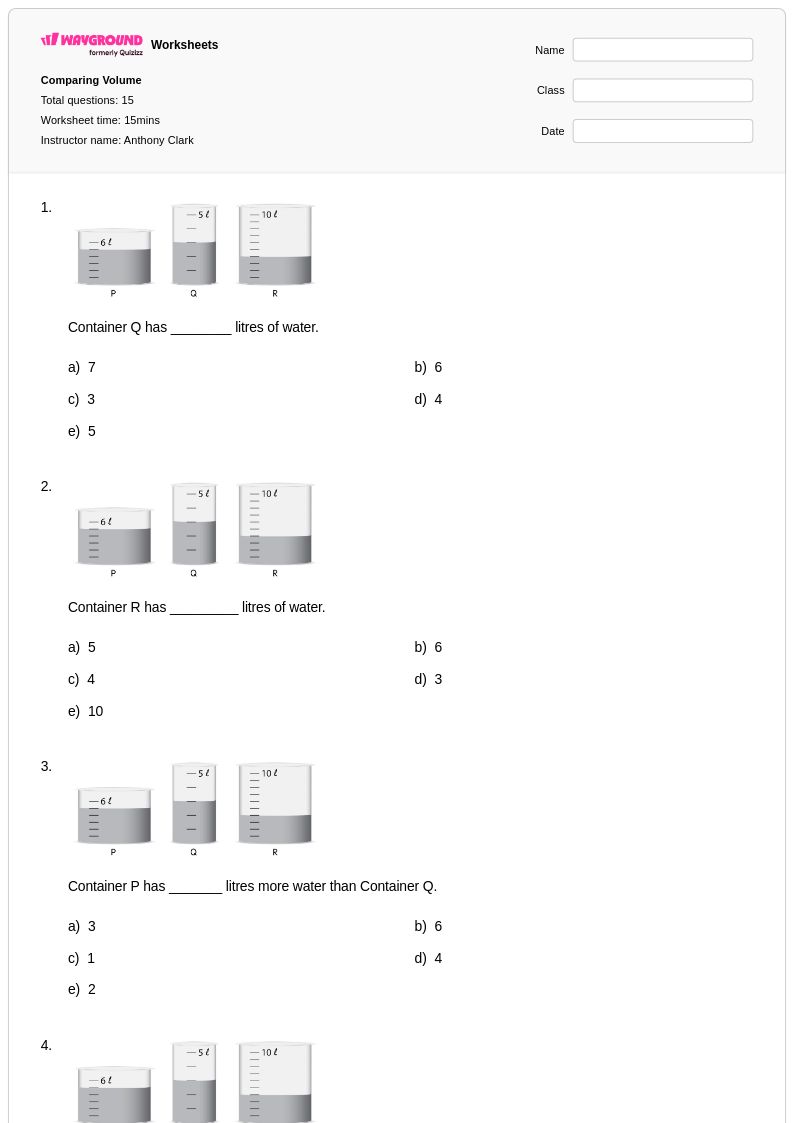
15Q
2nd - Uni
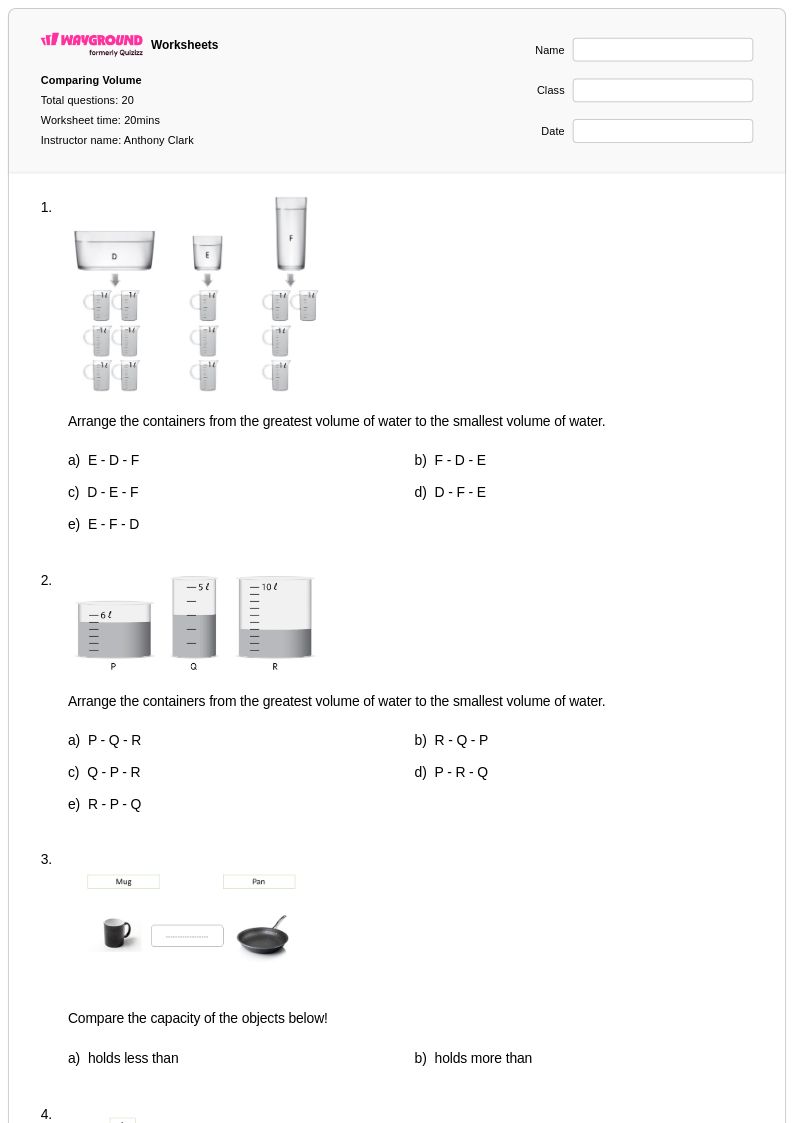
20Q
2nd - Uni
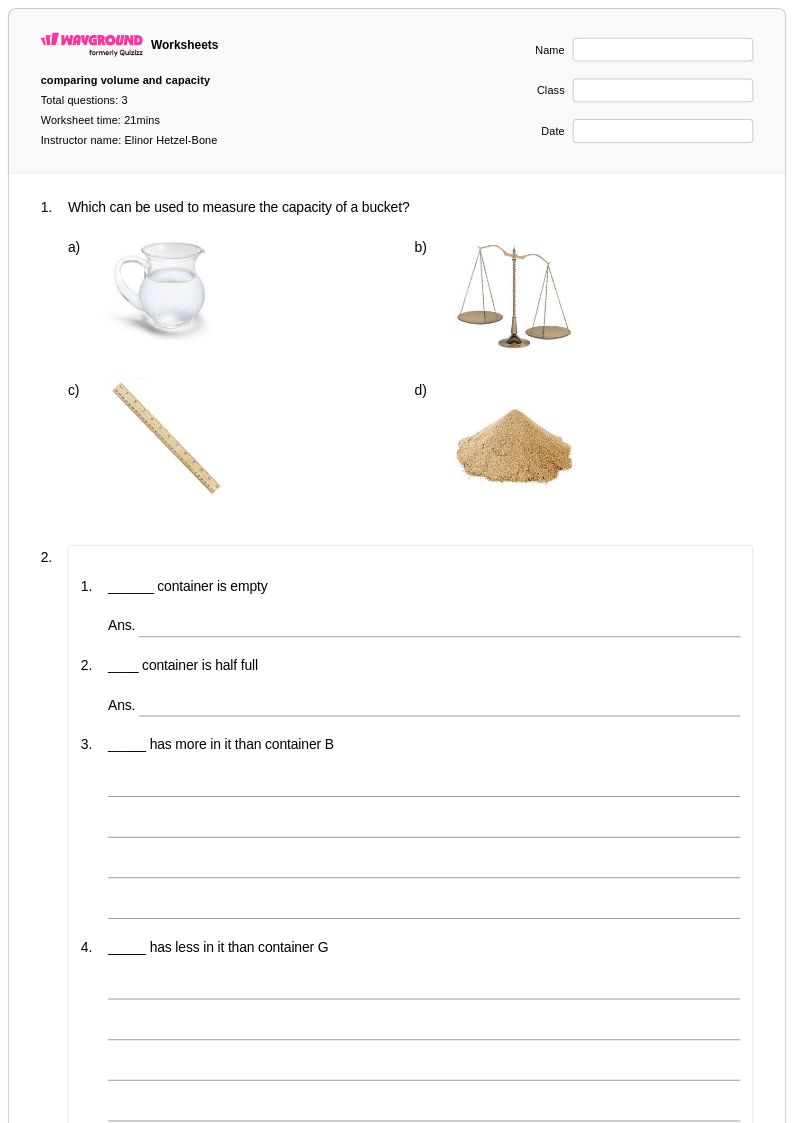
9Q
2nd
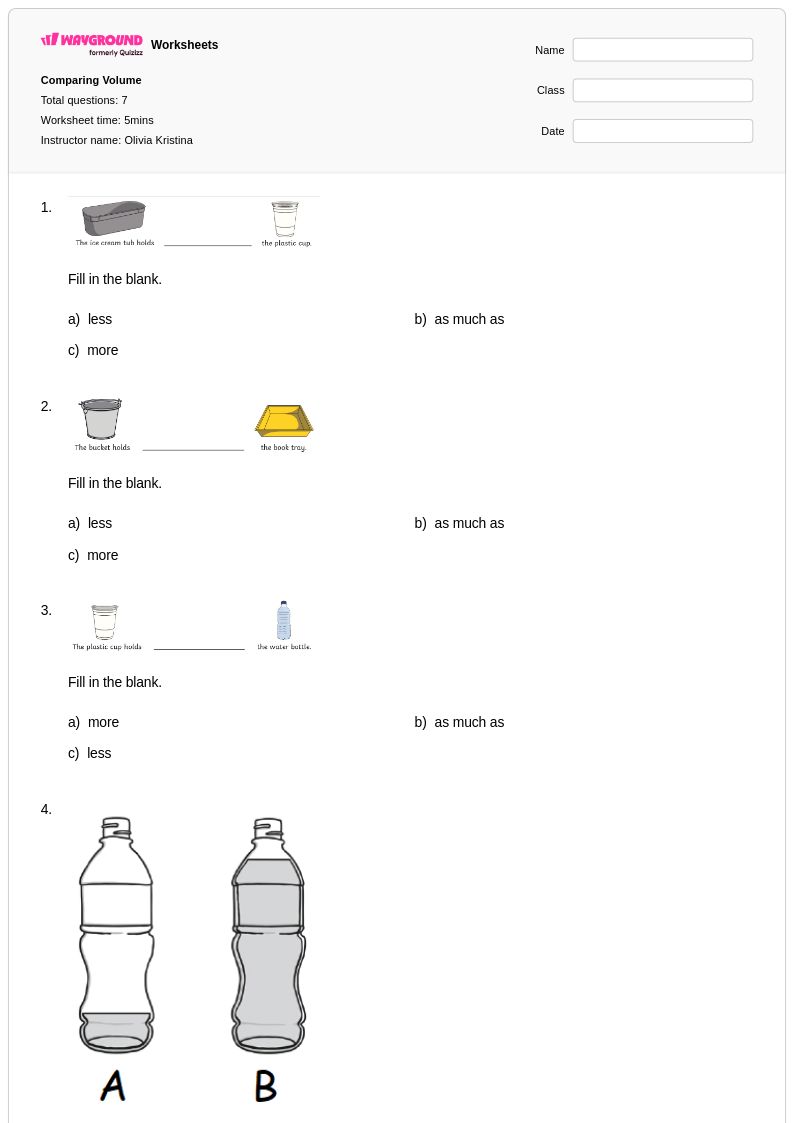
7Q
1st - 2nd
15Q
1st - 3rd
10Q
1st - 5th
10Q
2nd
9Q
2nd
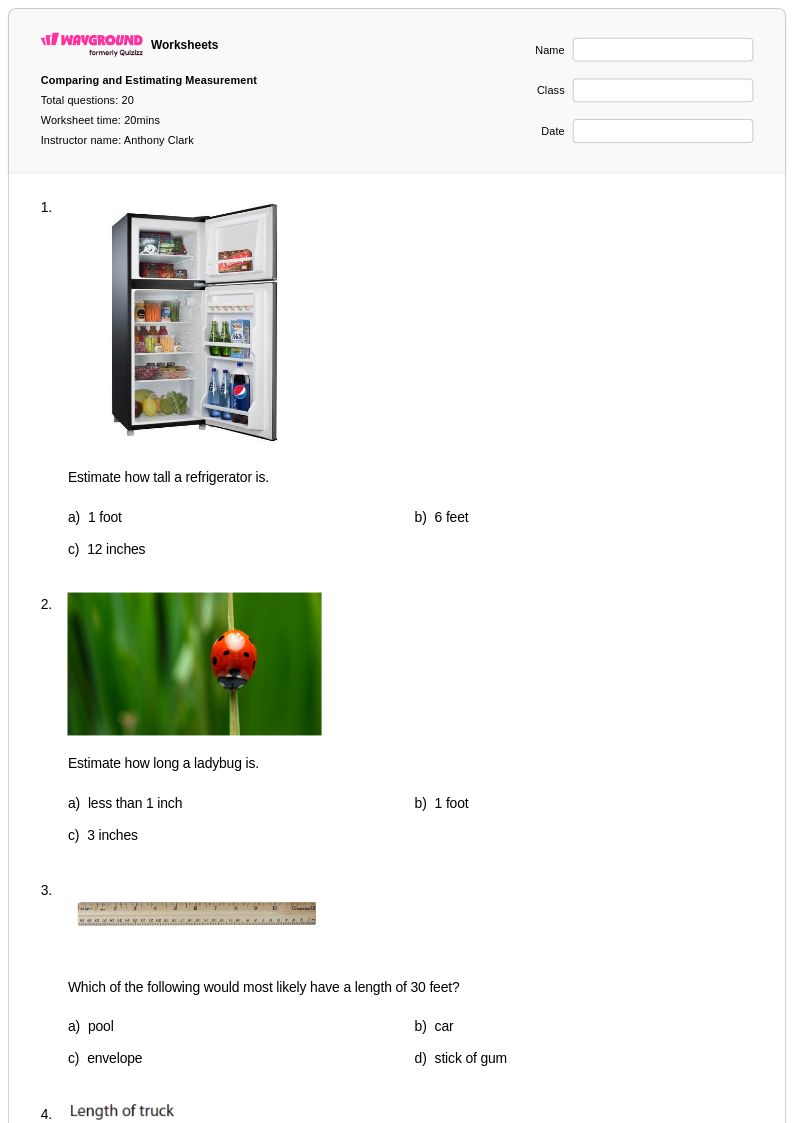
20Q
2nd - Uni
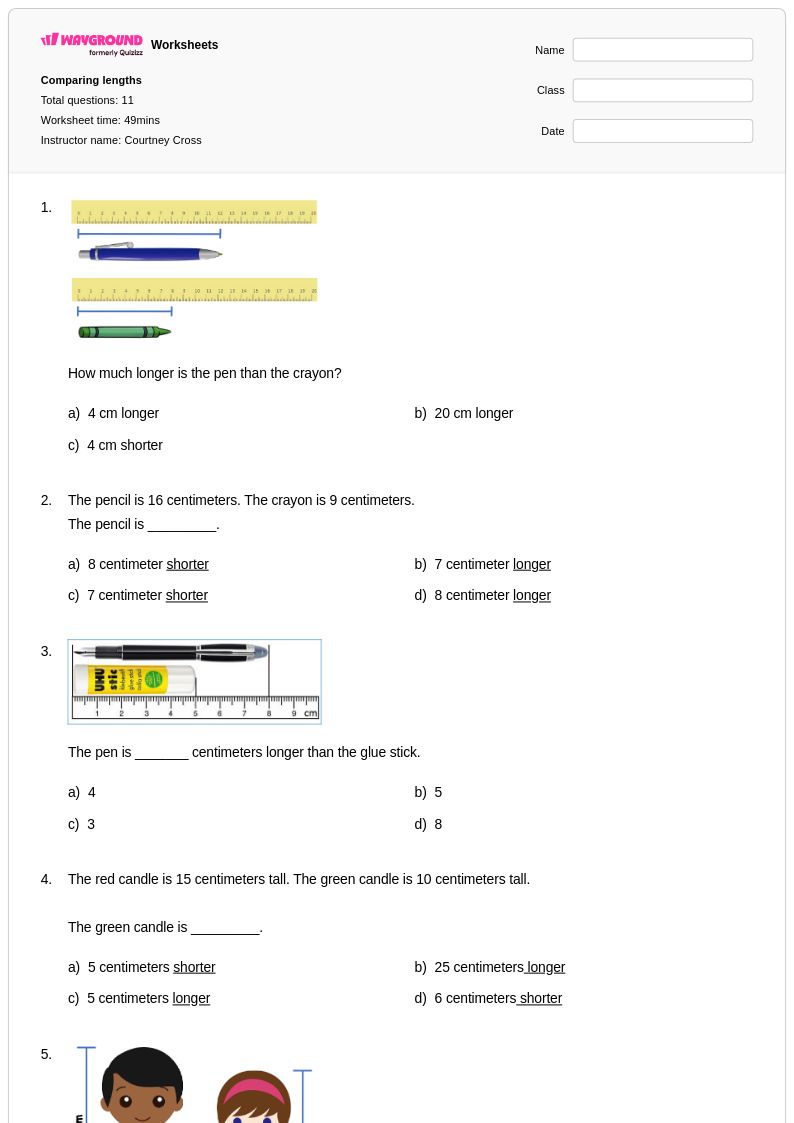
11Q
2nd
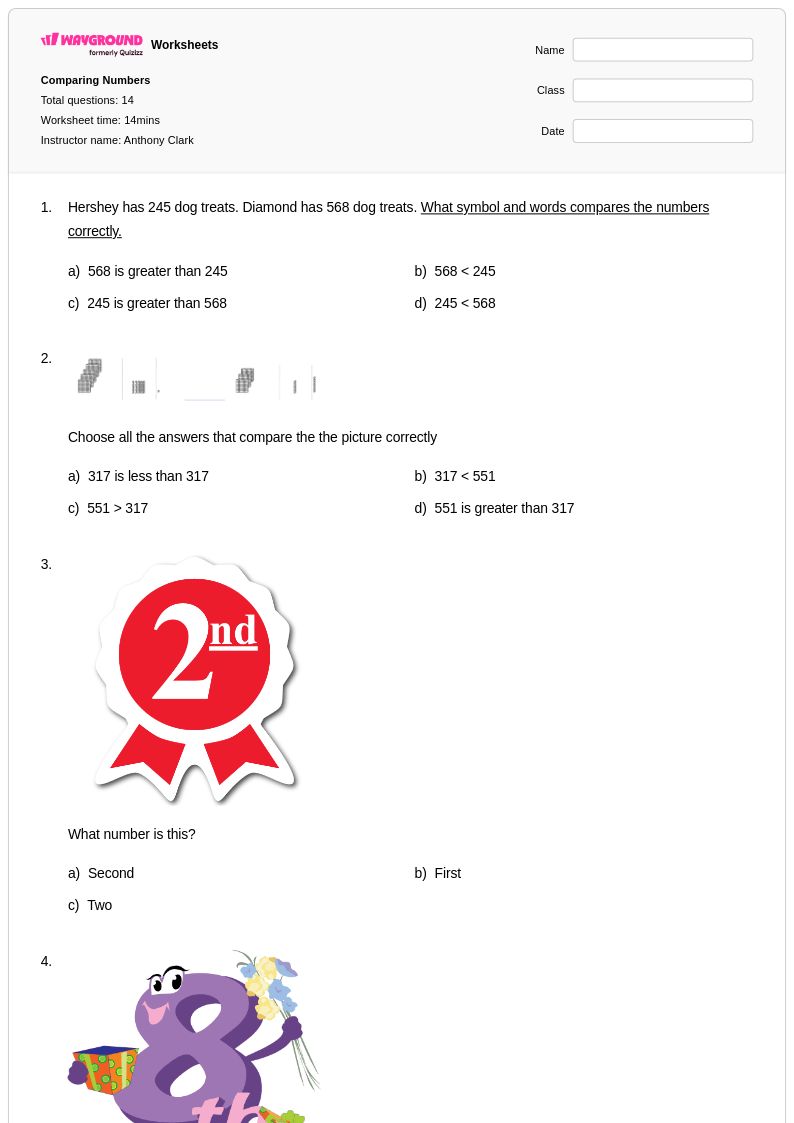
14Q
2nd - Uni
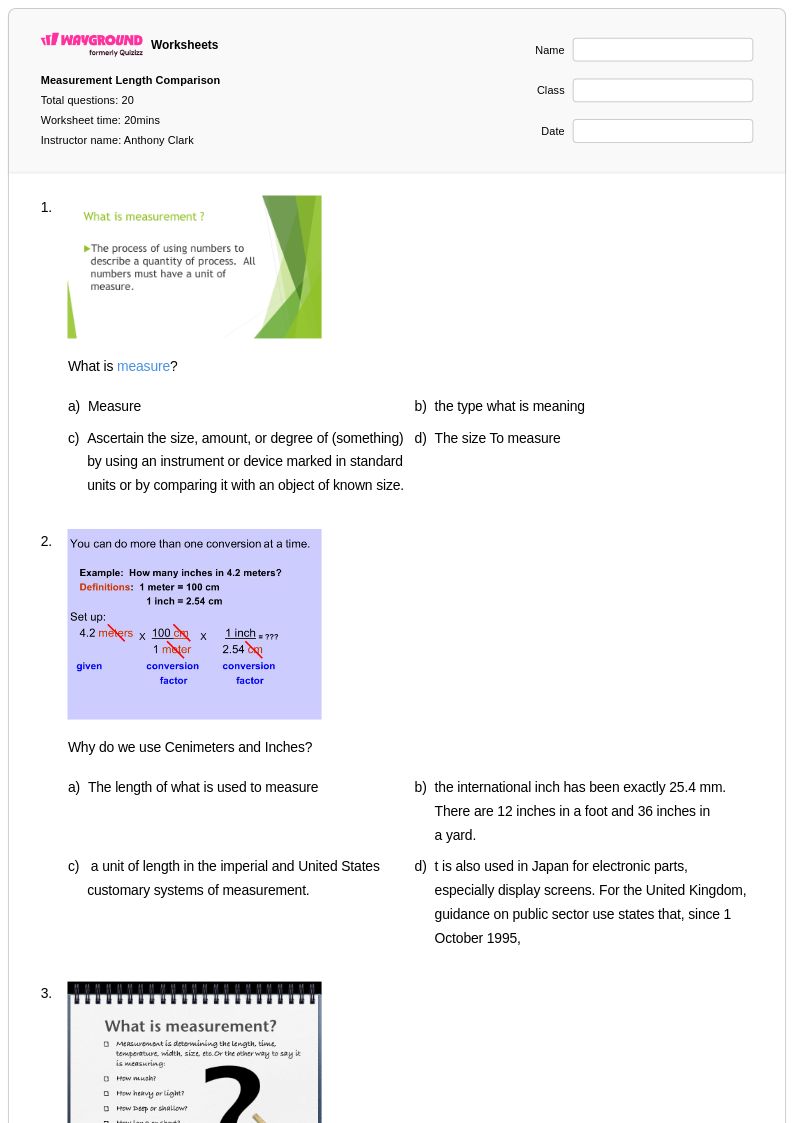
20Q
2nd - Uni
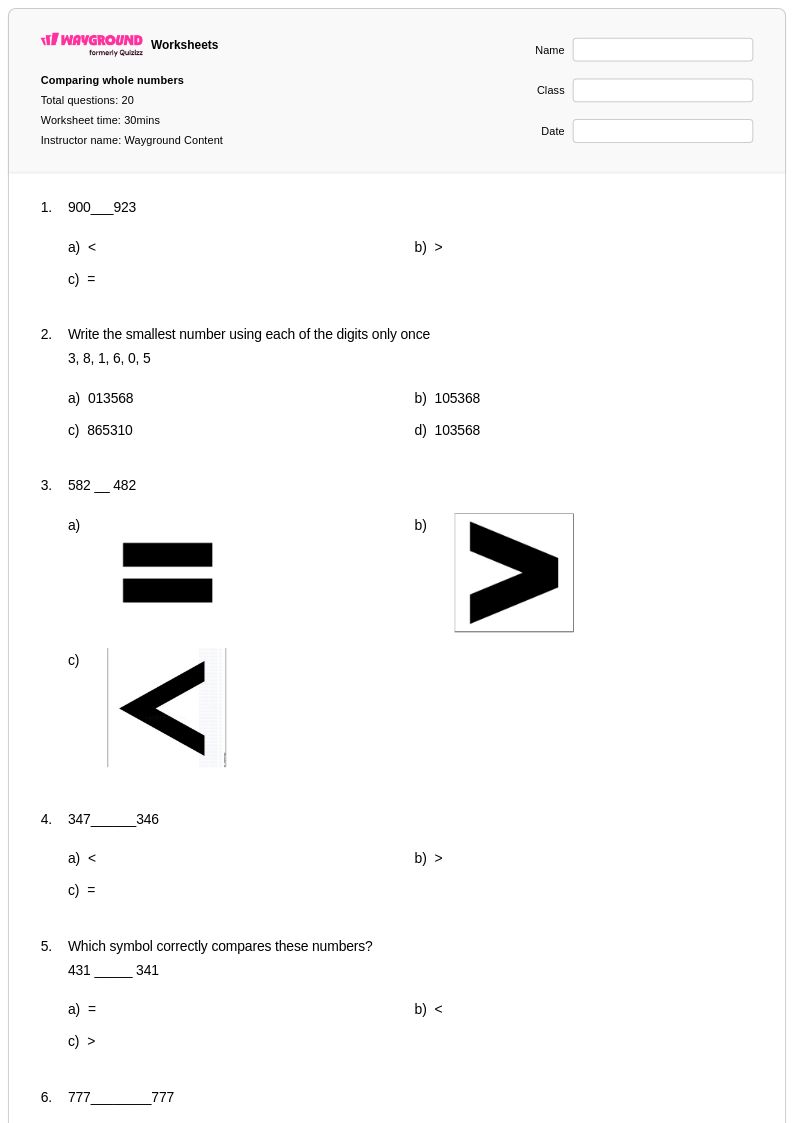
20Q
2nd
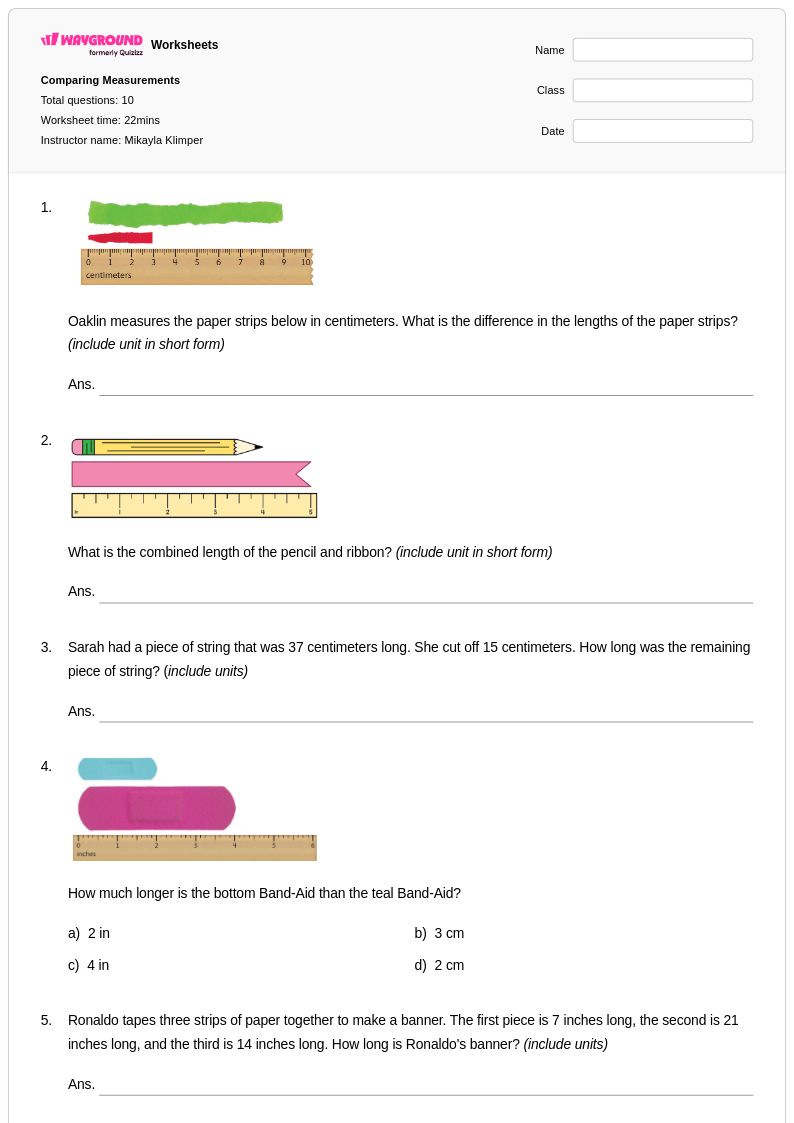
10Q
2nd
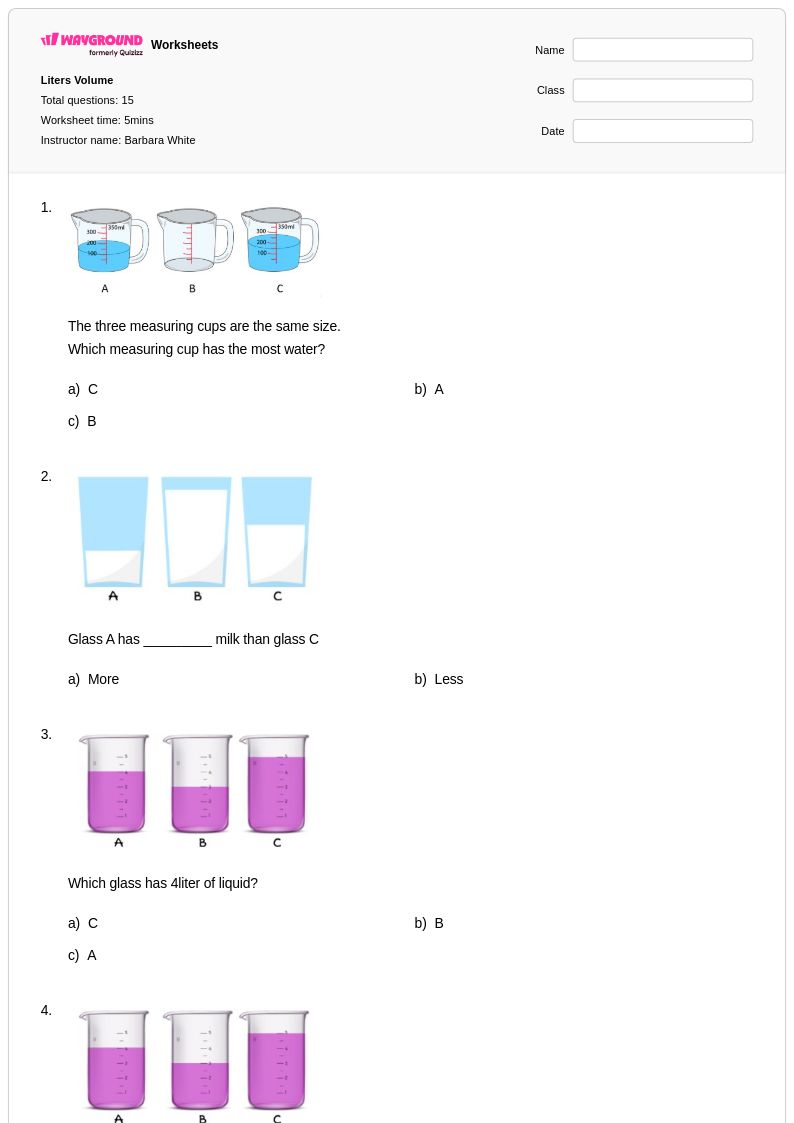
15Q
2nd
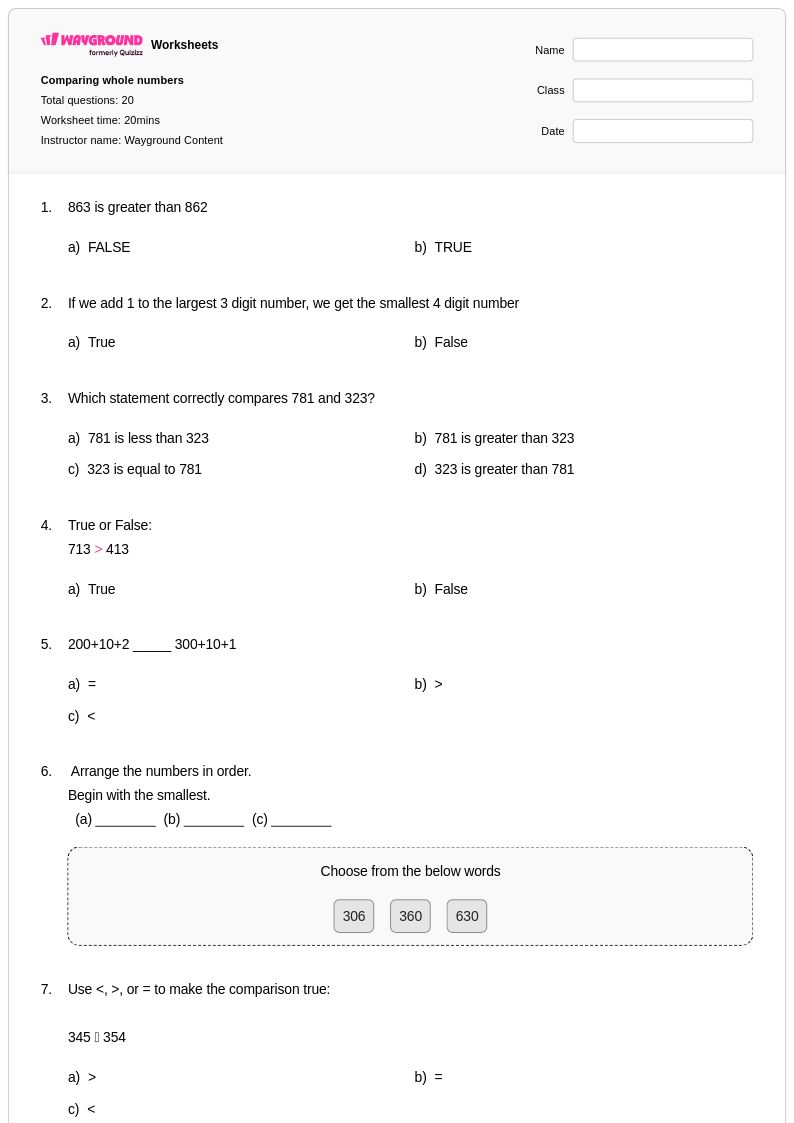
20Q
2nd
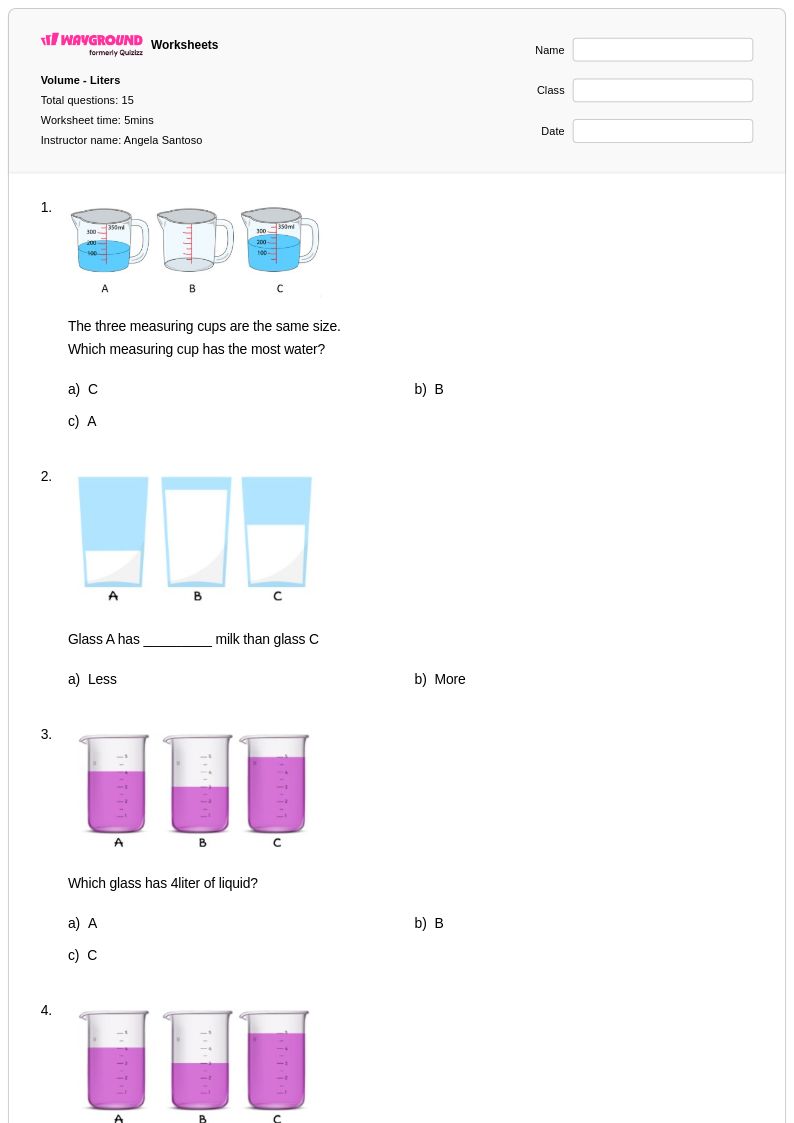
15Q
2nd
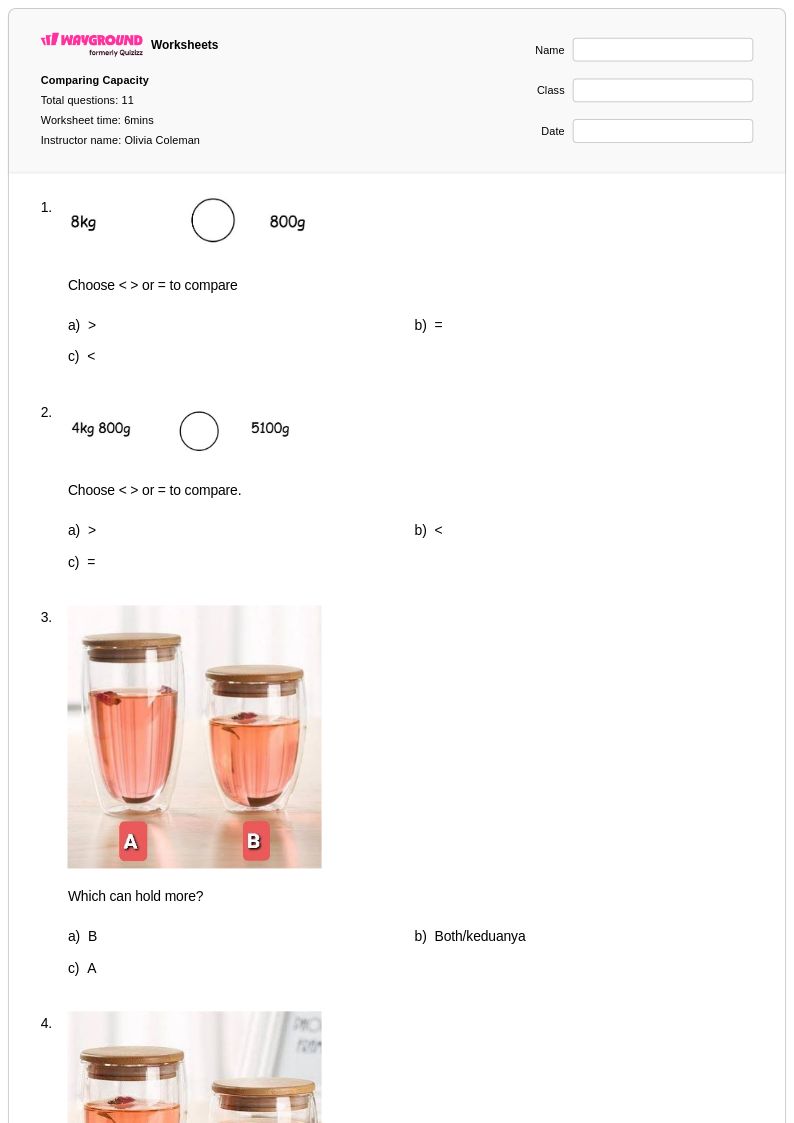
11Q
1st - 2nd
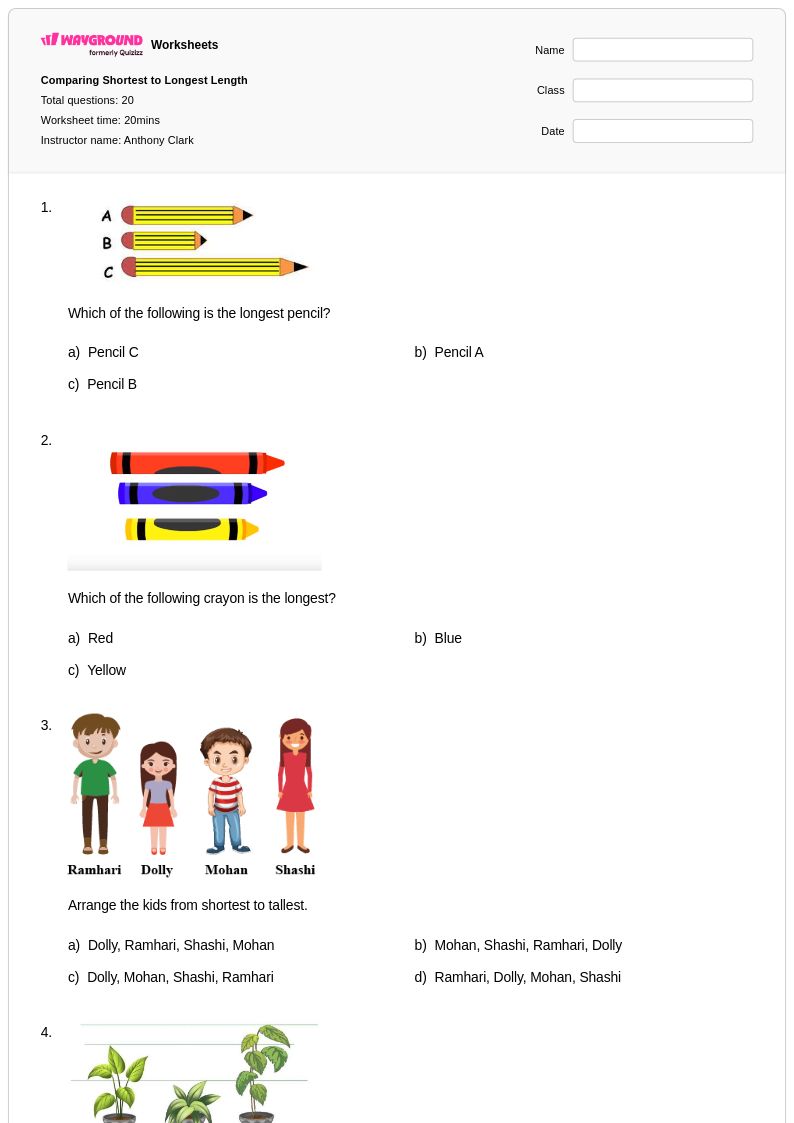
20Q
1st - Uni
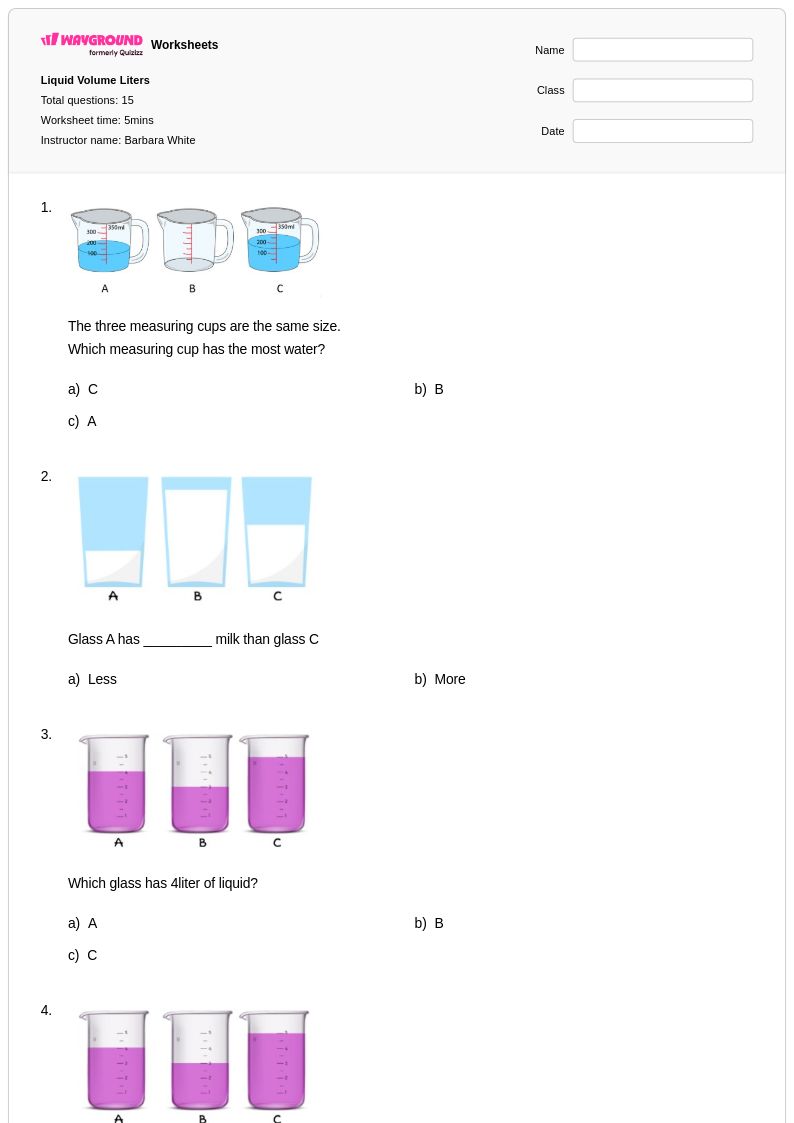
15Q
2nd
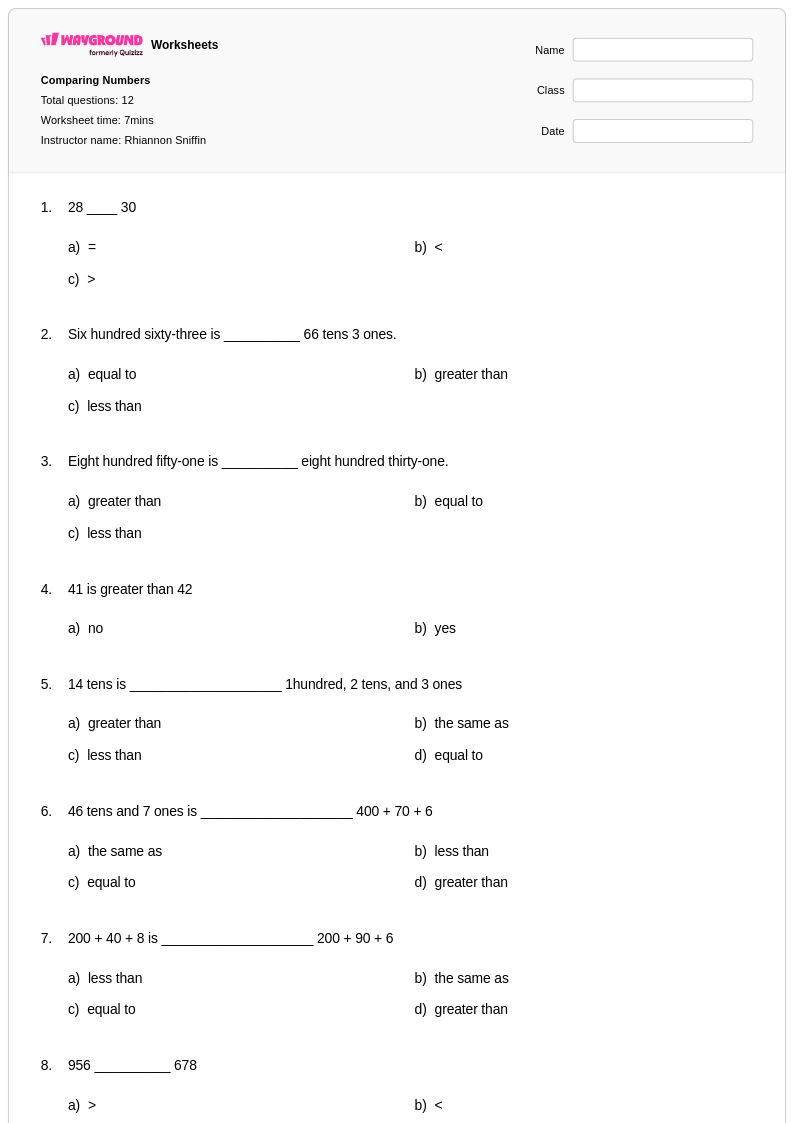
12Q
2nd
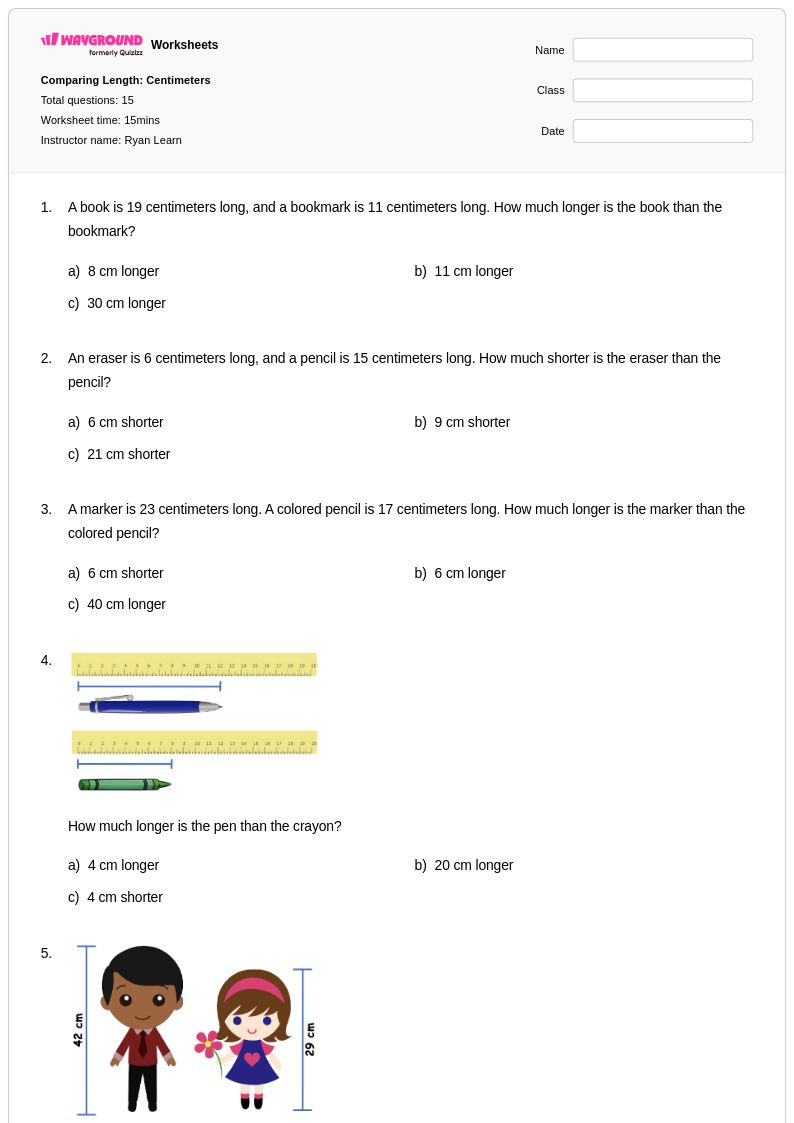
15Q
1st - 3rd
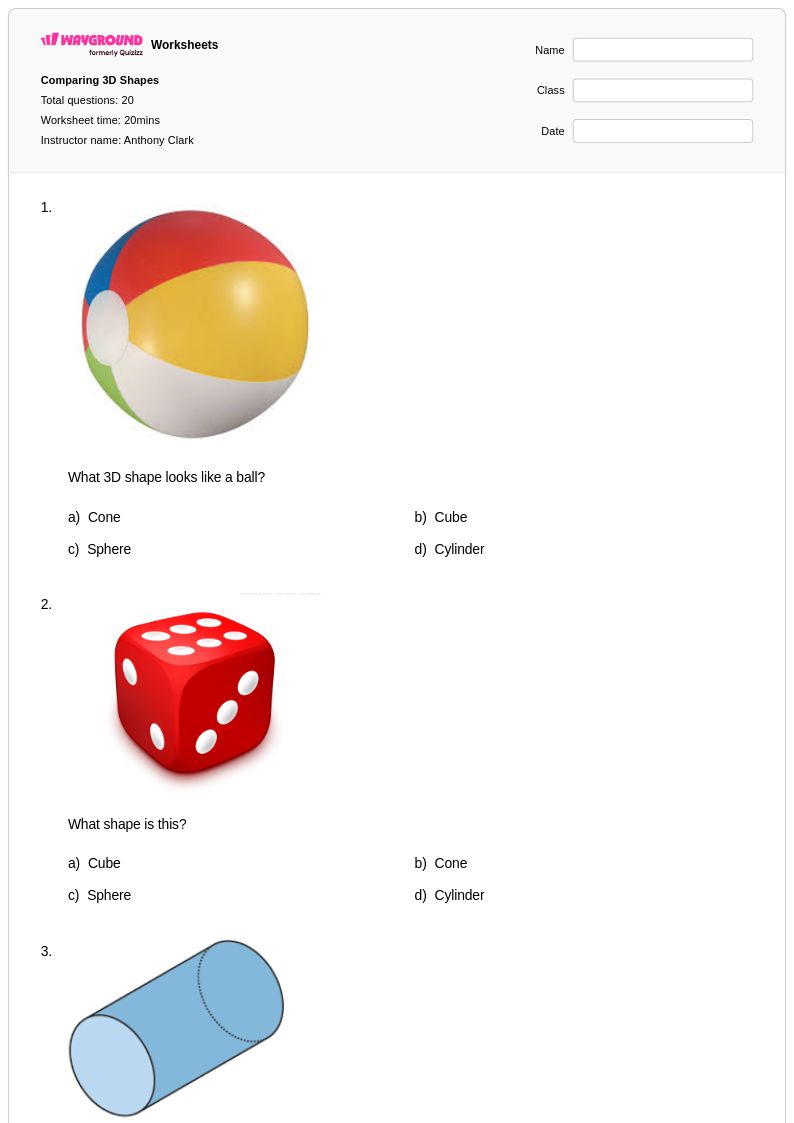
20Q
1st - Uni
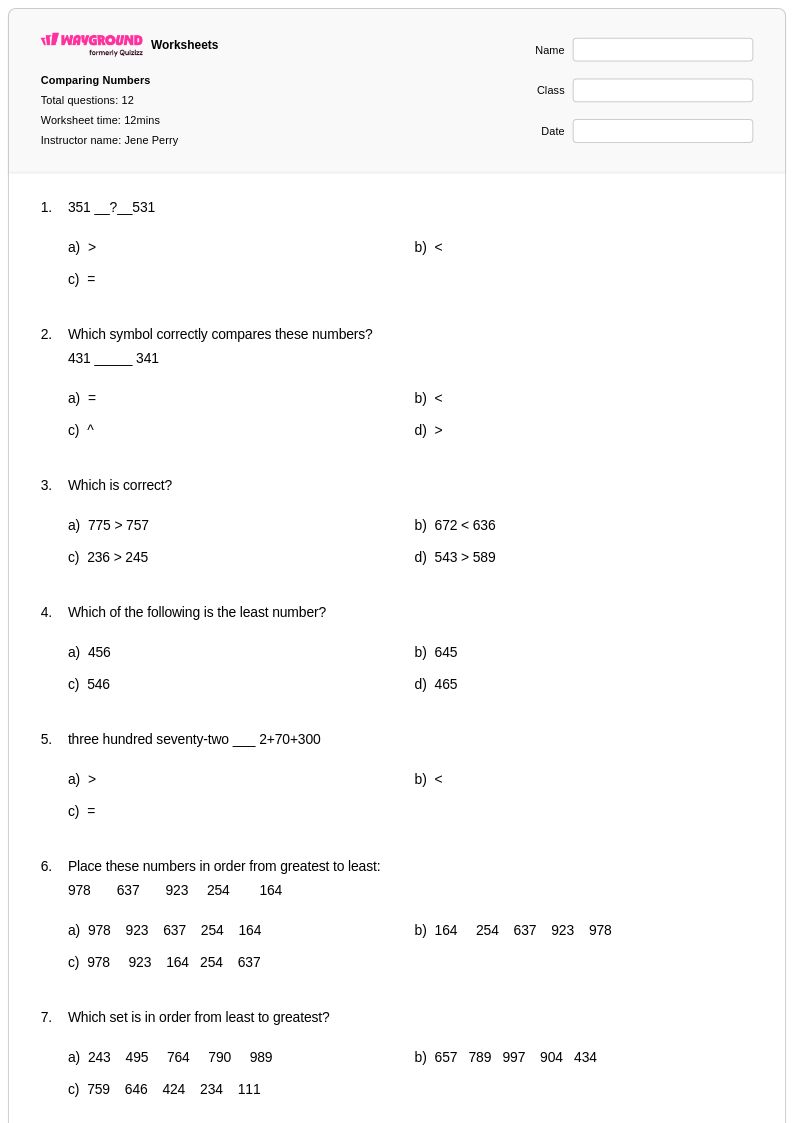
12Q
2nd
Explore outras planilhas de assuntos para grade 2
Explore printable Comparing Volume worksheets for Grade 2
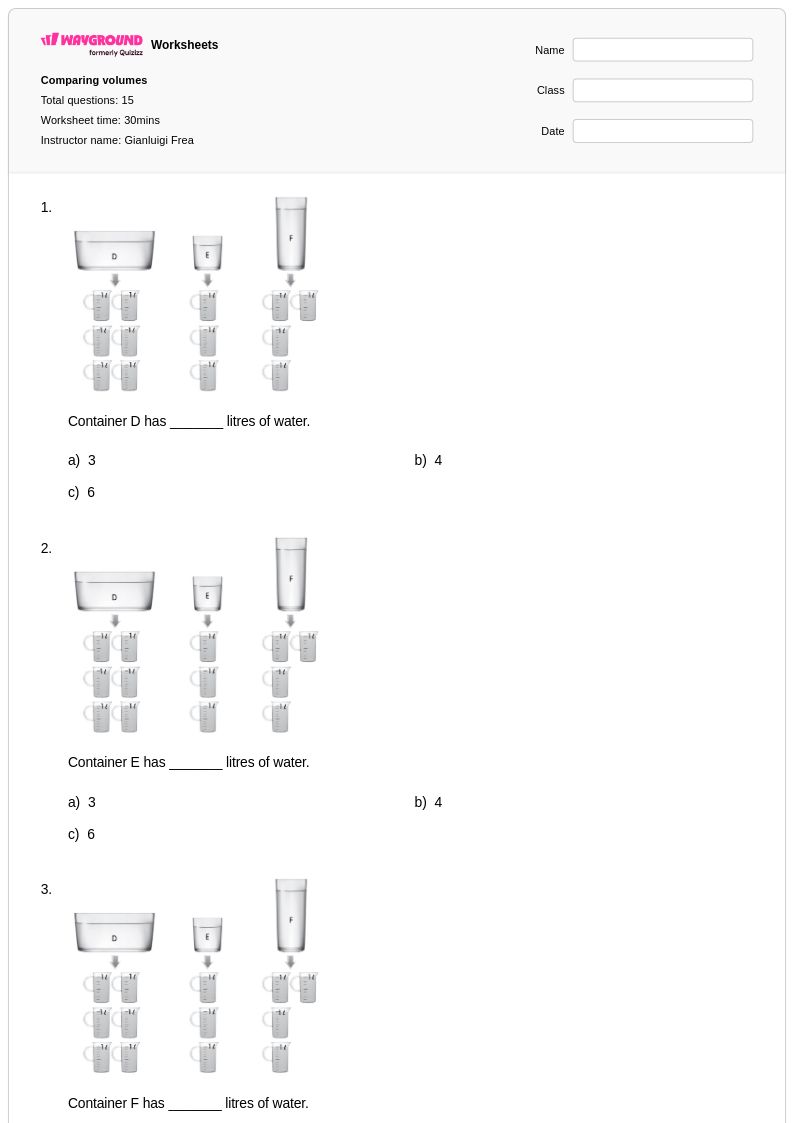
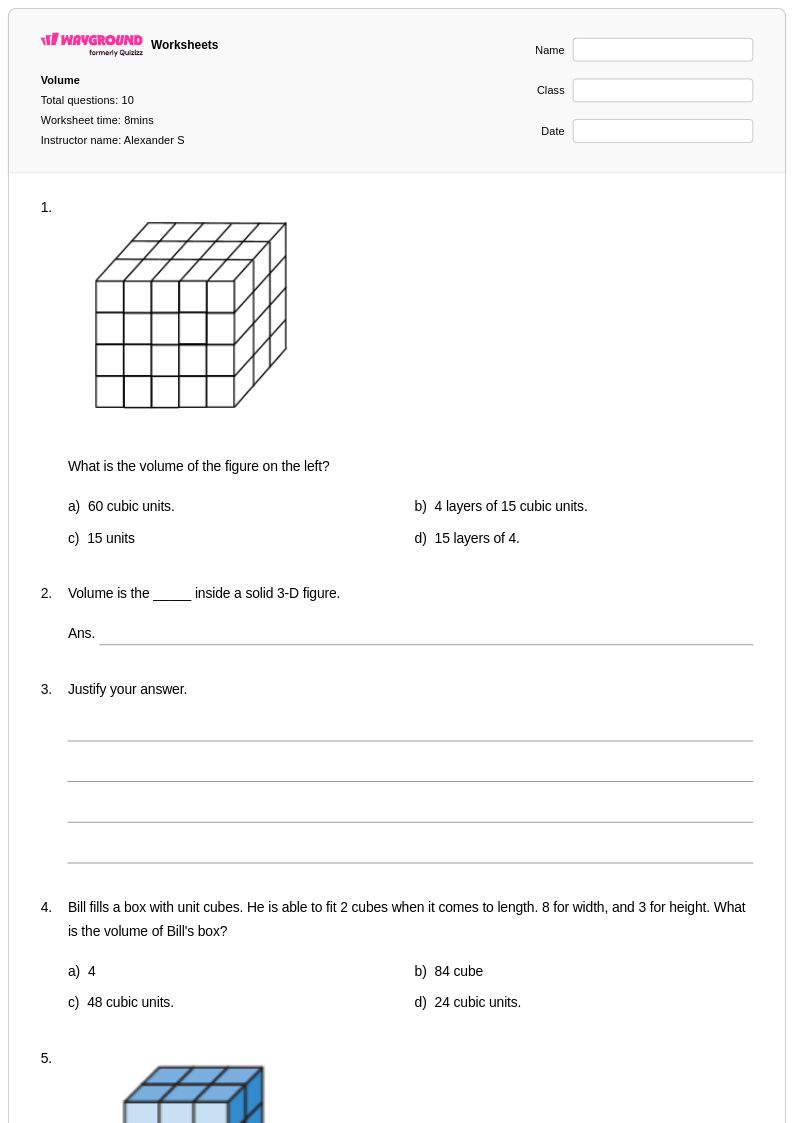
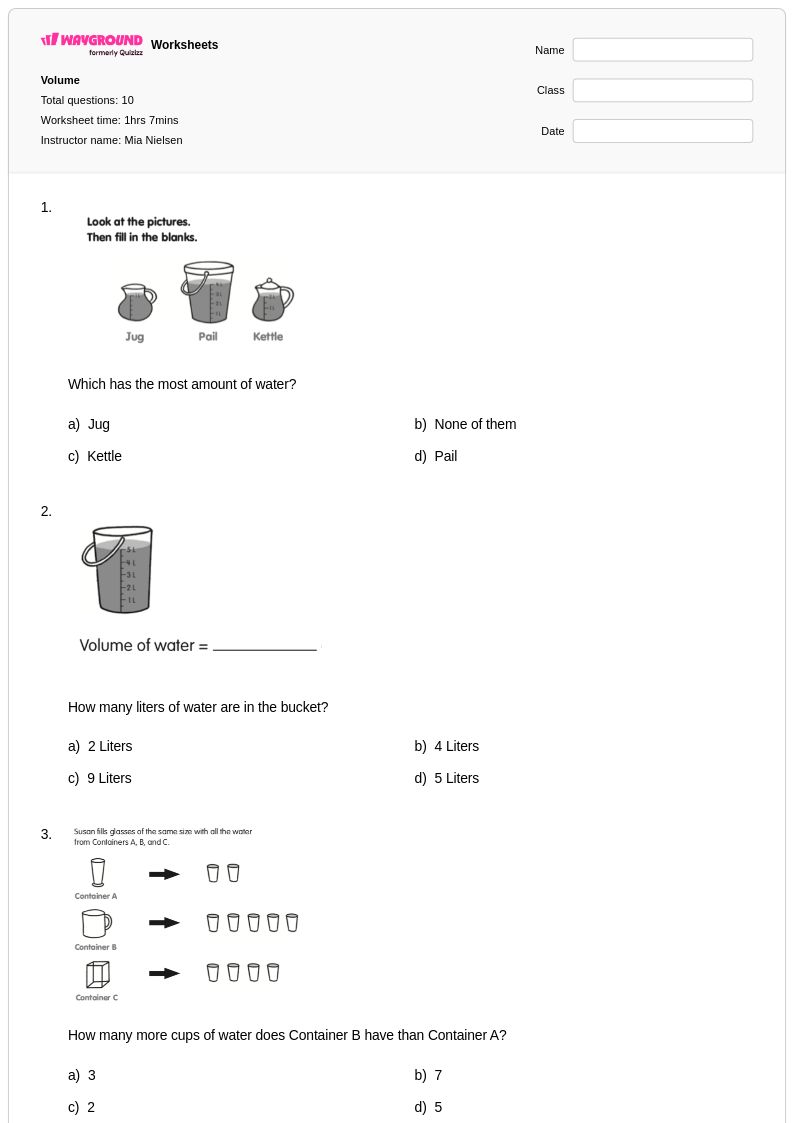
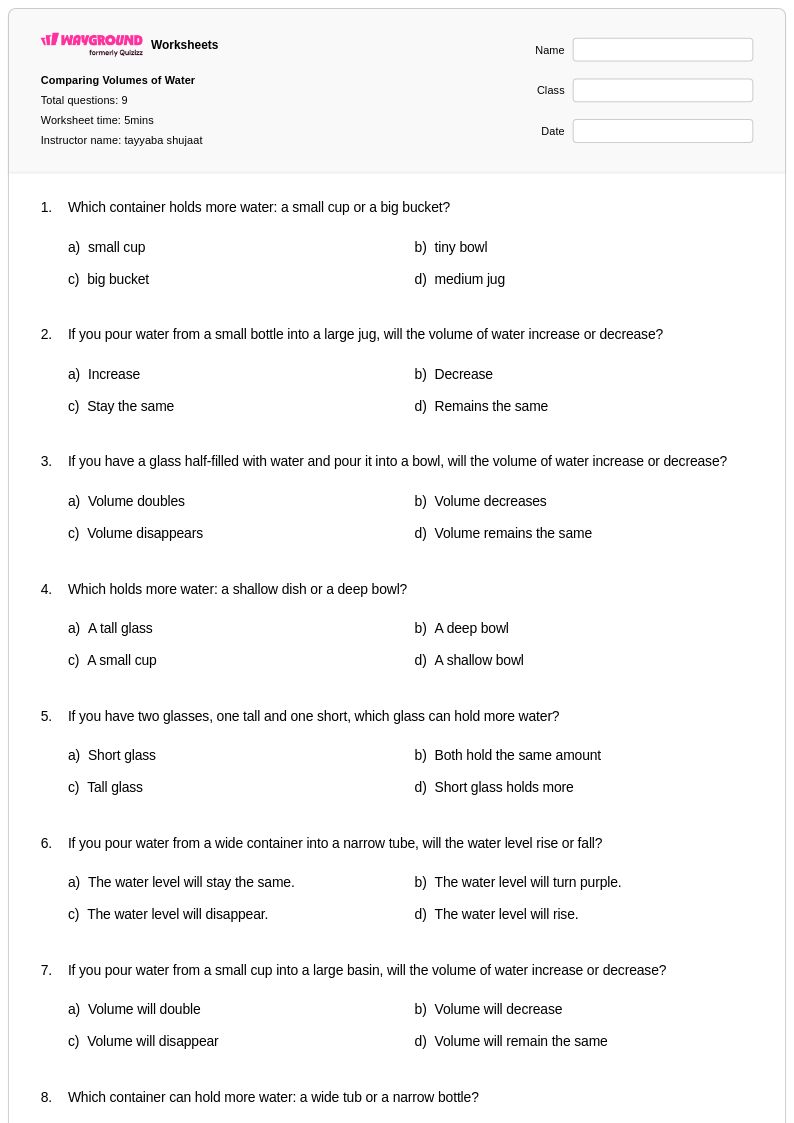
Comparing volume worksheets for Grade 2 students through Wayground (formerly Quizizz) provide essential foundational practice in measurement concepts that young learners need to master. These carefully designed printables focus on helping second-grade students develop critical thinking skills as they analyze, compare, and order different containers and objects by their capacity. Students work through engaging practice problems that require them to identify which containers hold more or less liquid, arrange items from smallest to largest volume, and make logical comparisons using visual cues and hands-on measurement experiences. Each worksheet collection includes a comprehensive answer key to support accurate assessment and immediate feedback, while the free pdf format ensures easy access for both classroom instruction and home practice.
Wayground (formerly Quizizz) empowers educators with millions of teacher-created comparing volume resources specifically designed for Grade 2 mathematics instruction. The platform's robust search and filtering capabilities allow teachers to quickly locate worksheets that align with specific learning standards and accommodate diverse student needs through built-in differentiation tools. Teachers can seamlessly customize existing materials or create entirely new practice sets, with flexible options for both printable pdf downloads and interactive digital formats that enhance student engagement. These comprehensive worksheet collections support effective lesson planning by providing ready-to-use materials for initial instruction, targeted remediation for struggling learners, and enrichment opportunities for advanced students, ensuring that all second-grade students can build confidence and proficiency in comparing volume measurements.
FAQs
How do I teach comparing volume in second grade?
What exercises help second graders practice comparing volume?
What mistakes do second graders make when comparing volume?
How can I use a Wayground Grade 2 comparing volume worksheet?
How does comparing volume fit into the Common Core Grade 2 math progression?
What grade level is comparing volume taught at?
How can I differentiate comparing volume practice in Grade 2?