
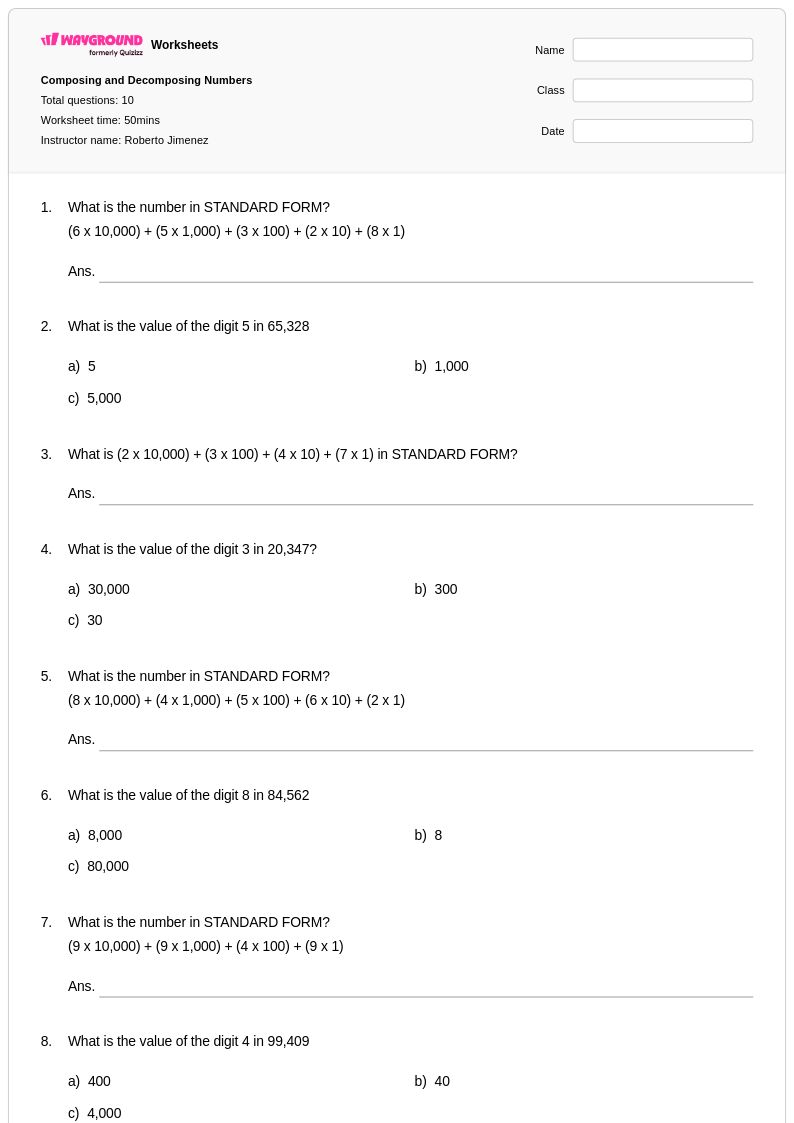
10 Q
3rd
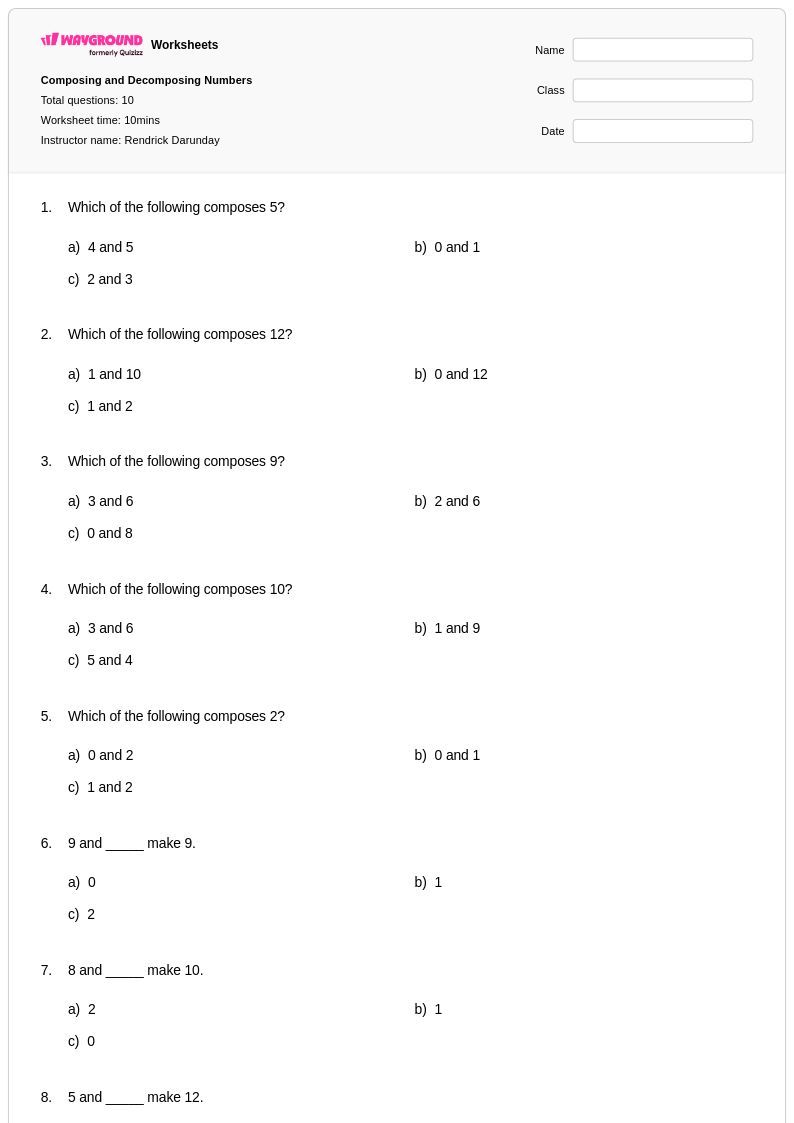
10 Q
1st
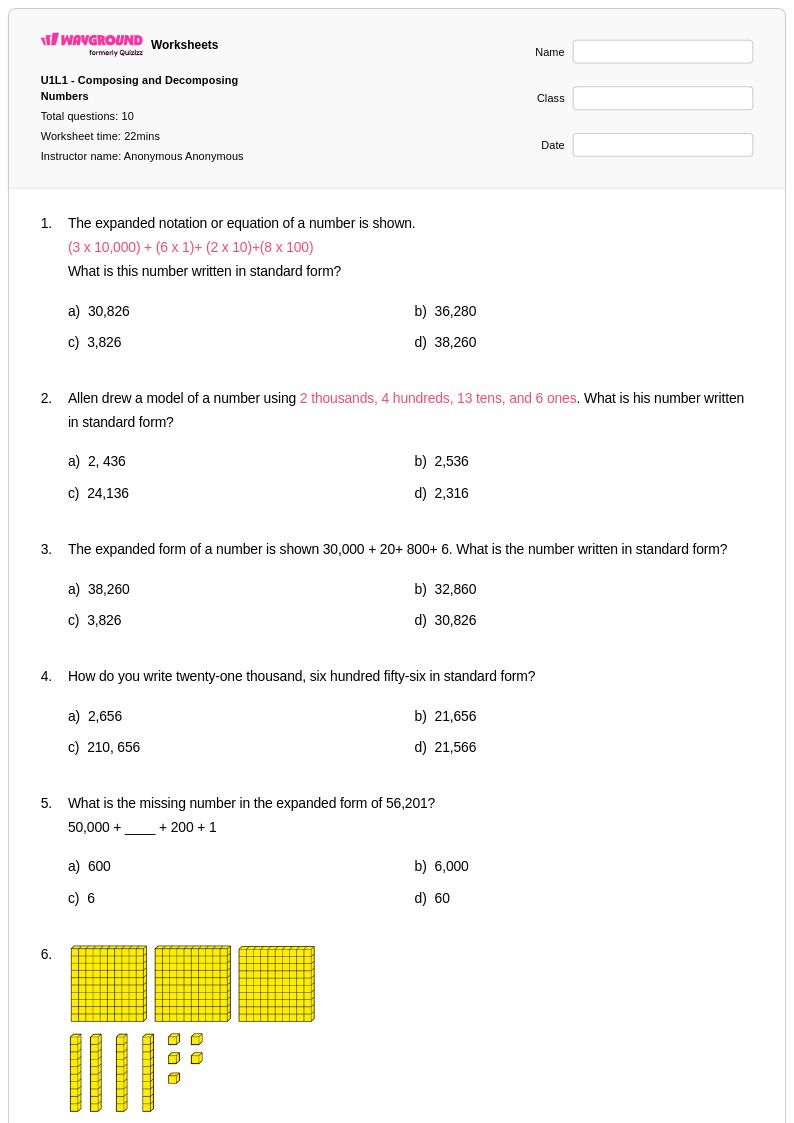
10 Q
4th
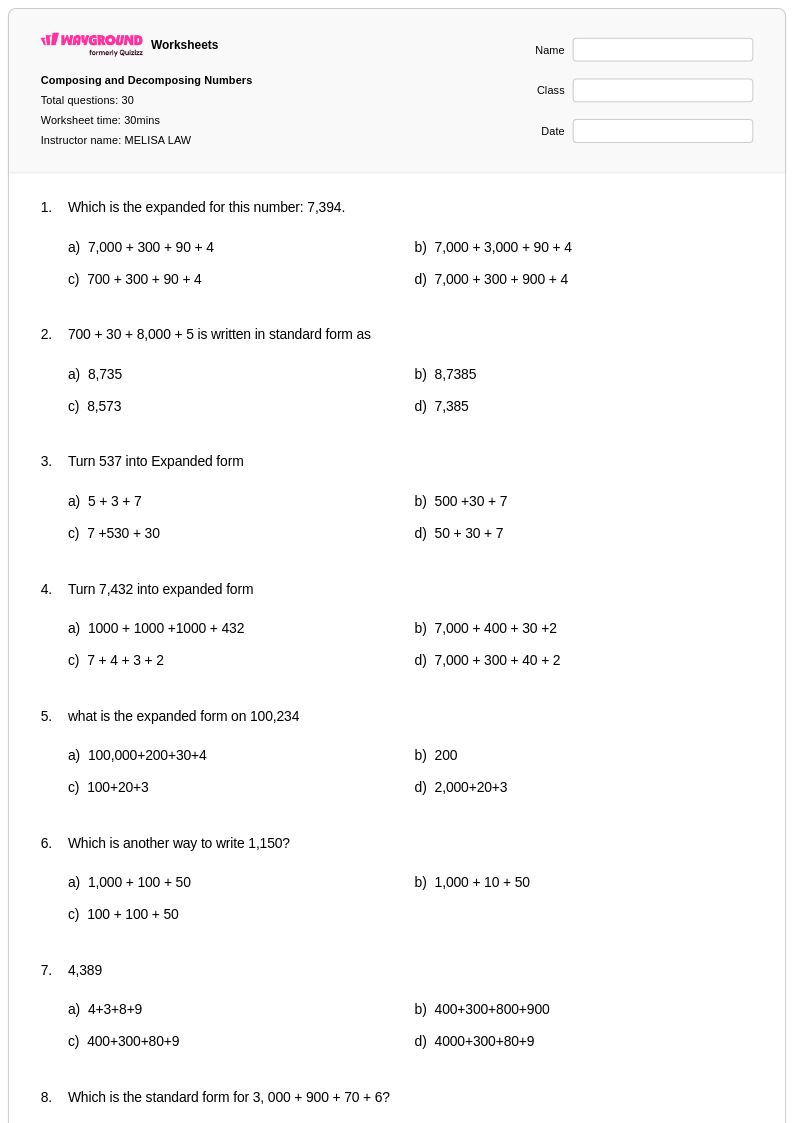
30 Q
3rd
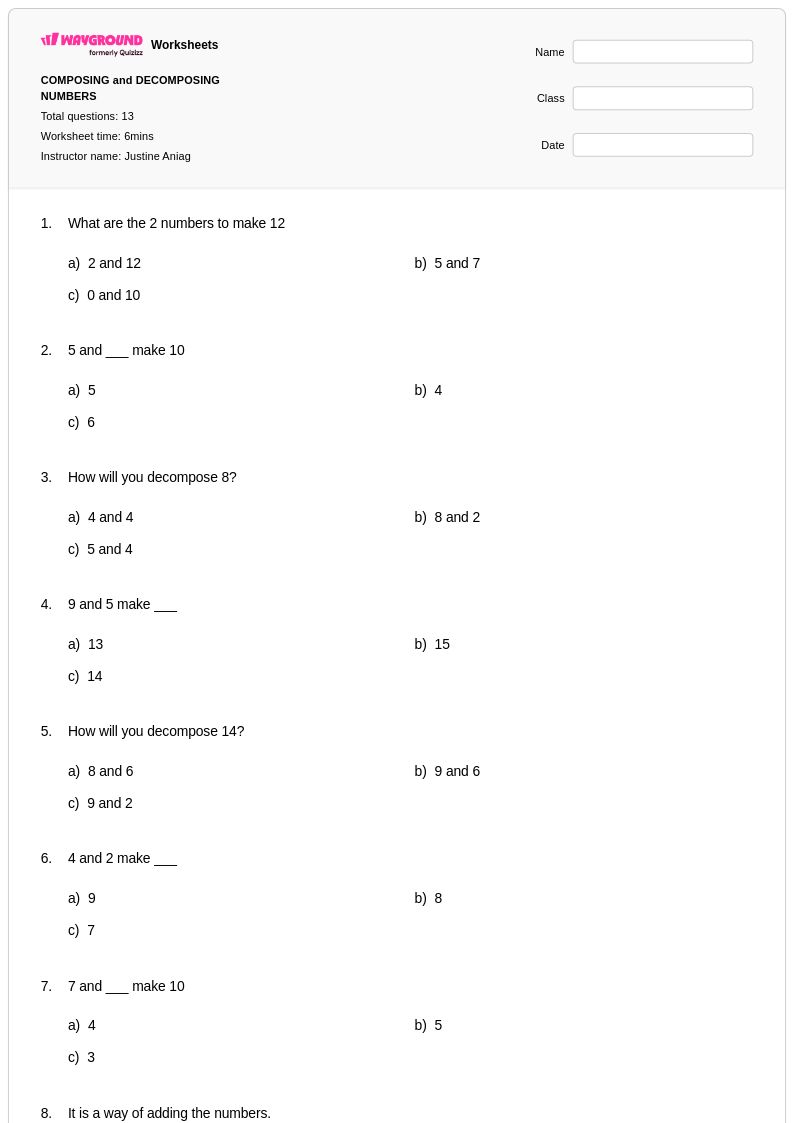
13 Q
1st - 2nd
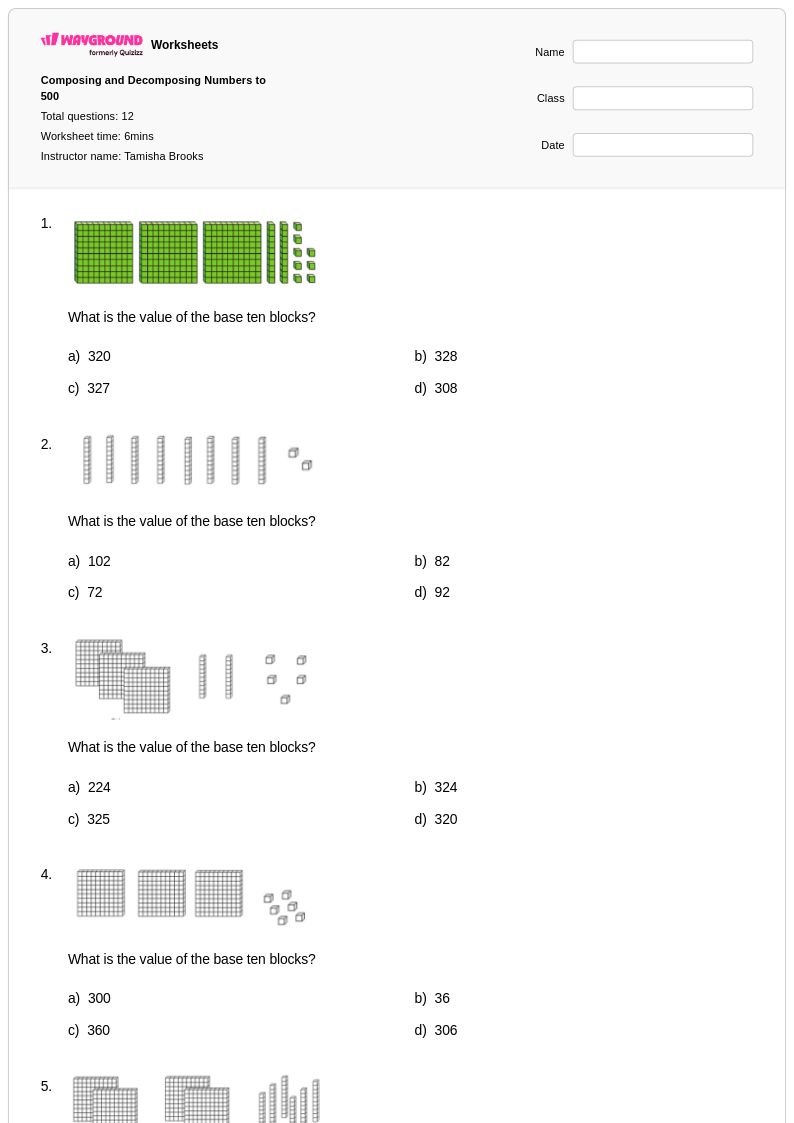
12 Q
2nd
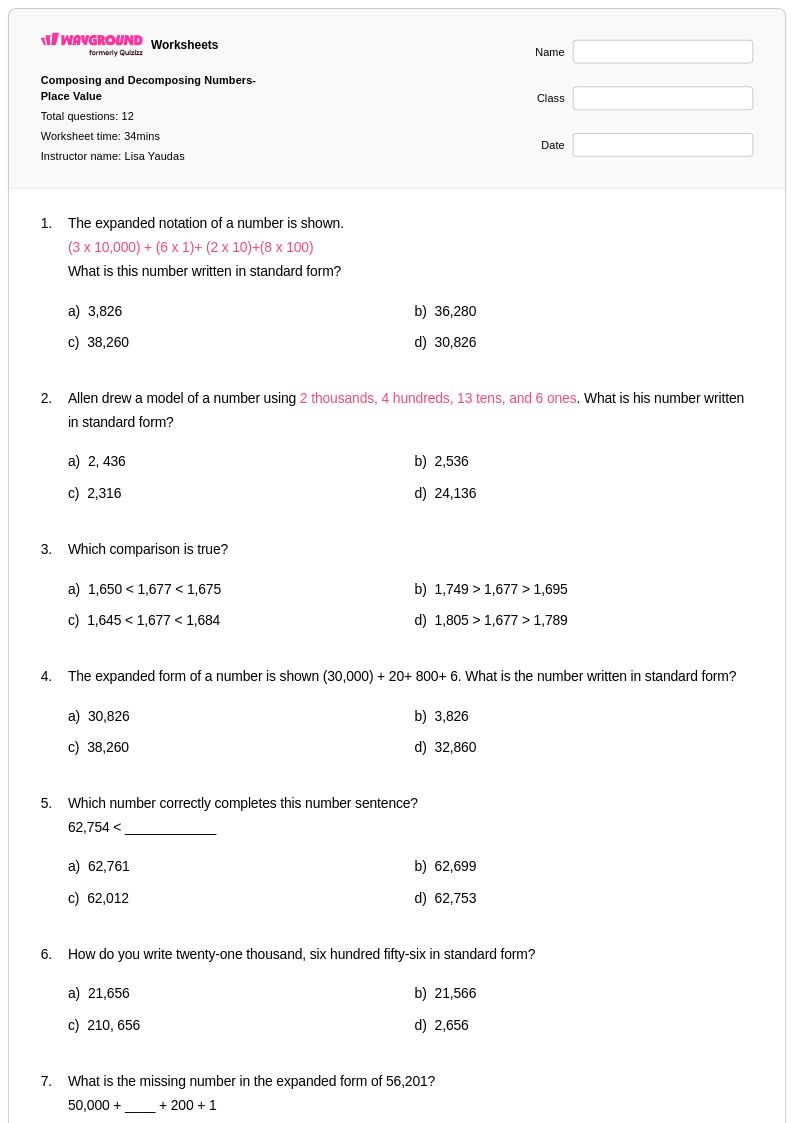
12 Q
3rd
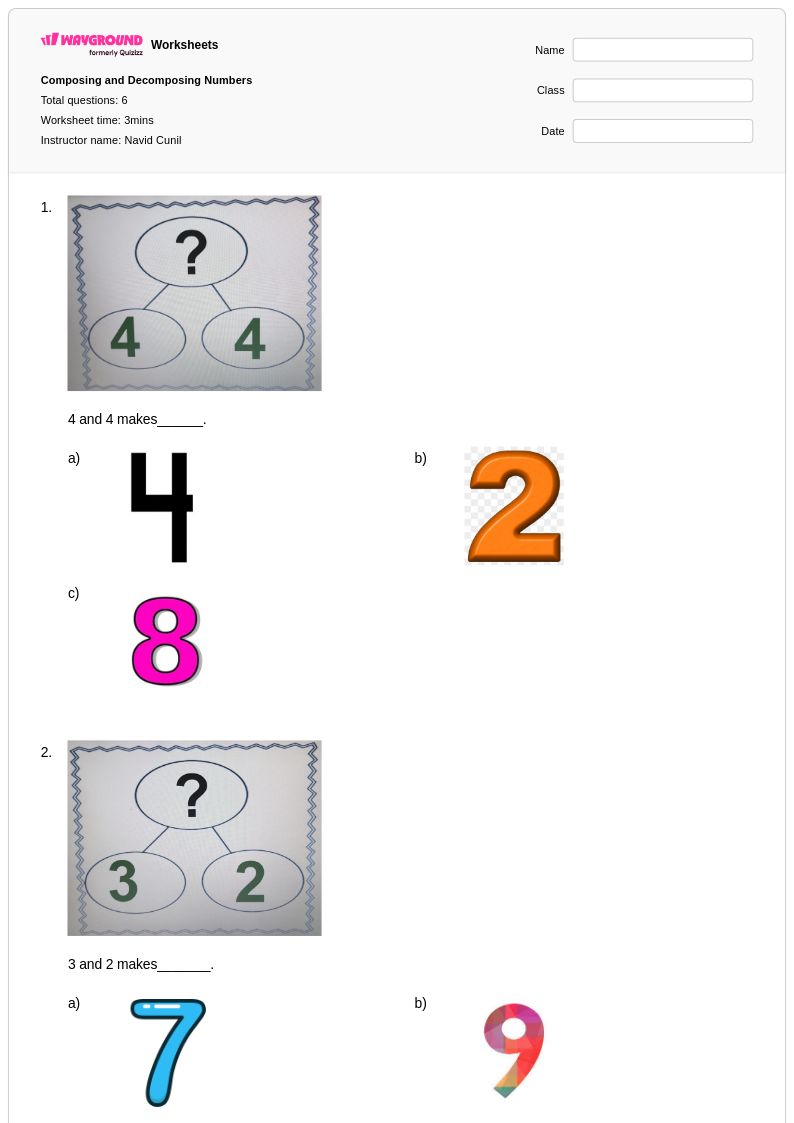
6 Q
KG
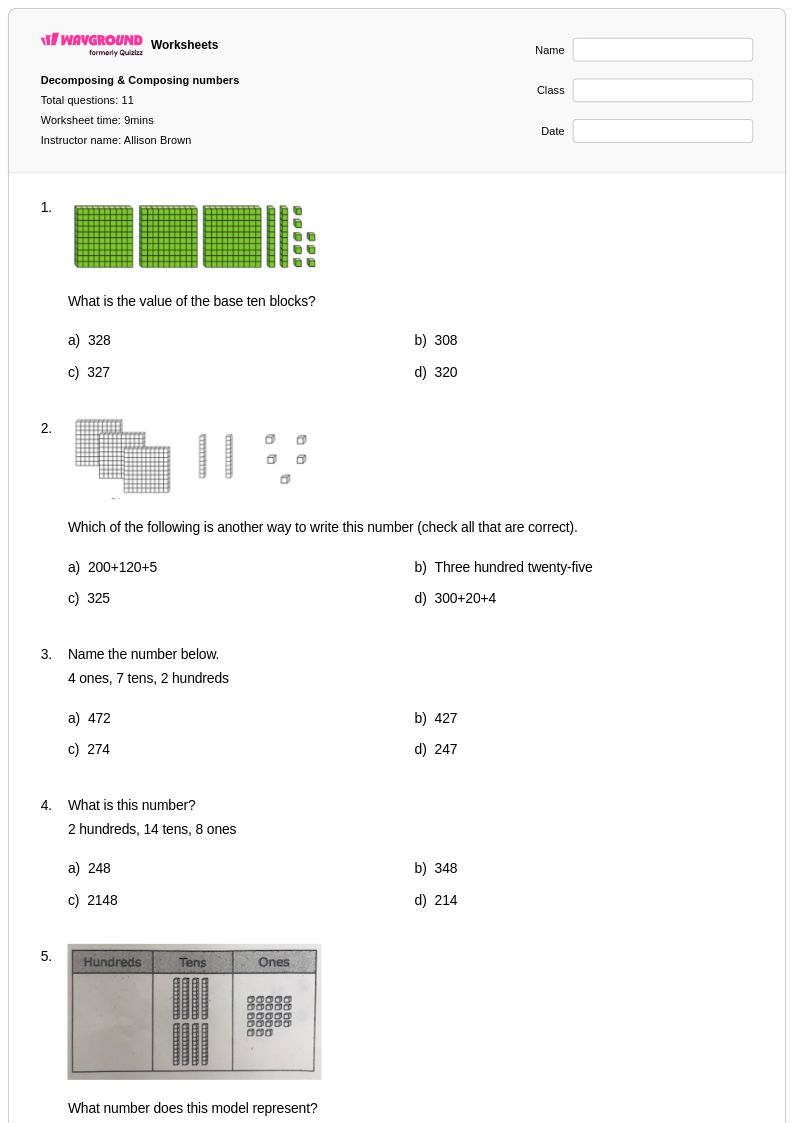
11 Q
2nd
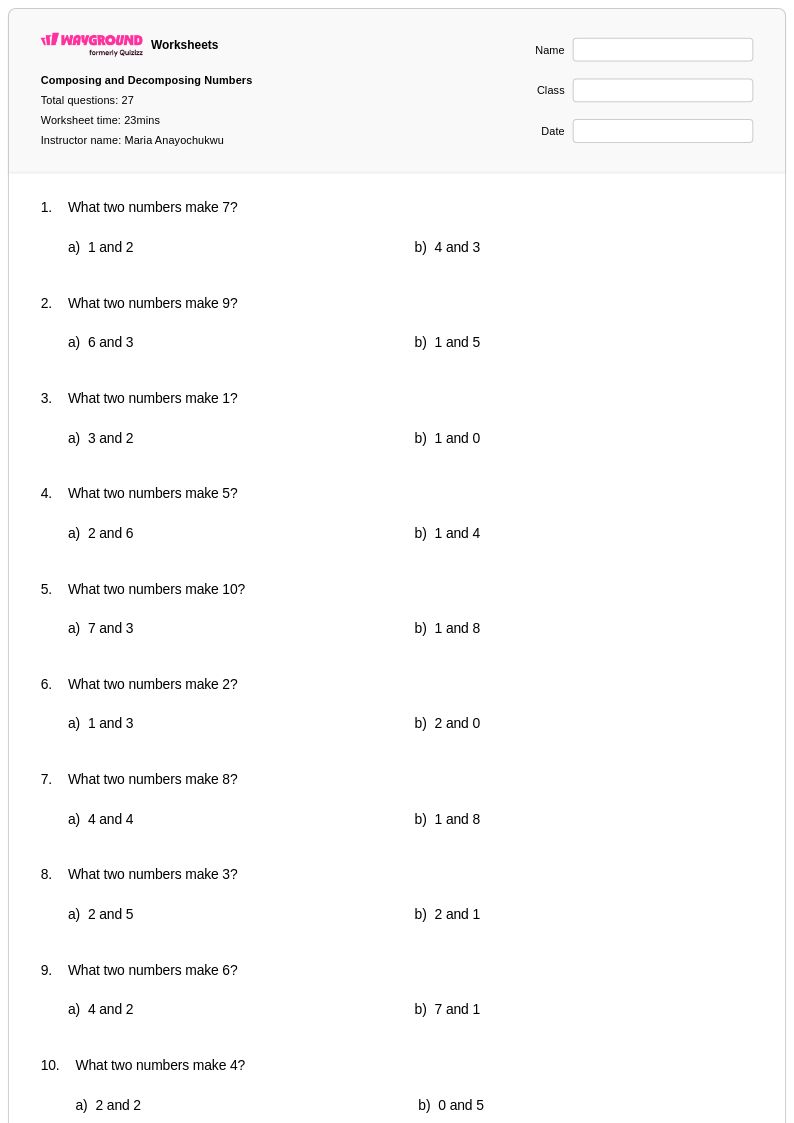
27 Q
3rd
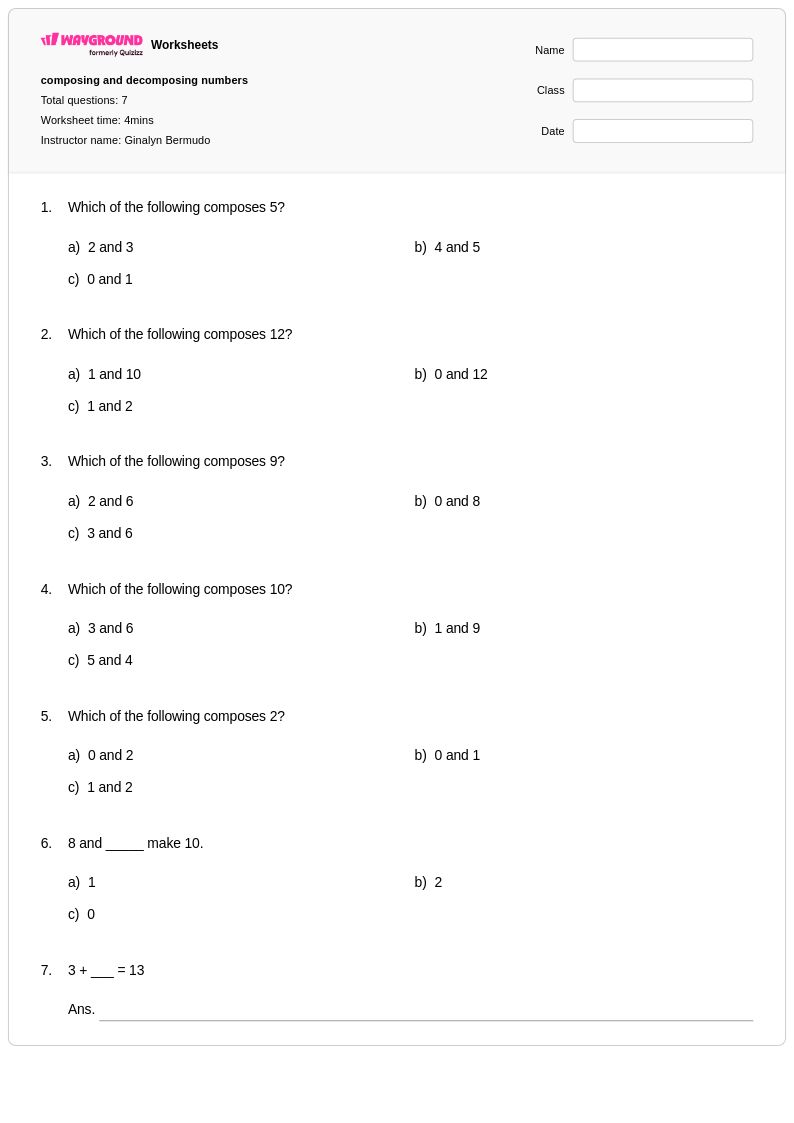
7 Q
1st - 2nd
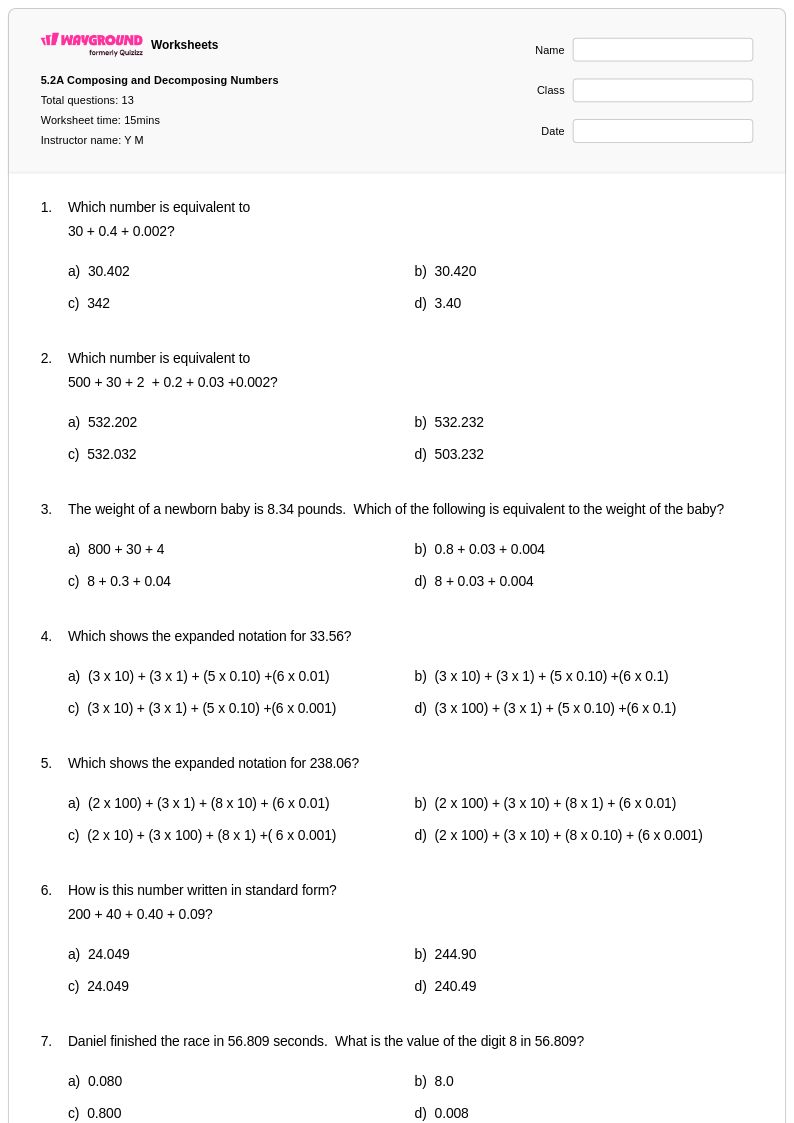
13 Q
5th
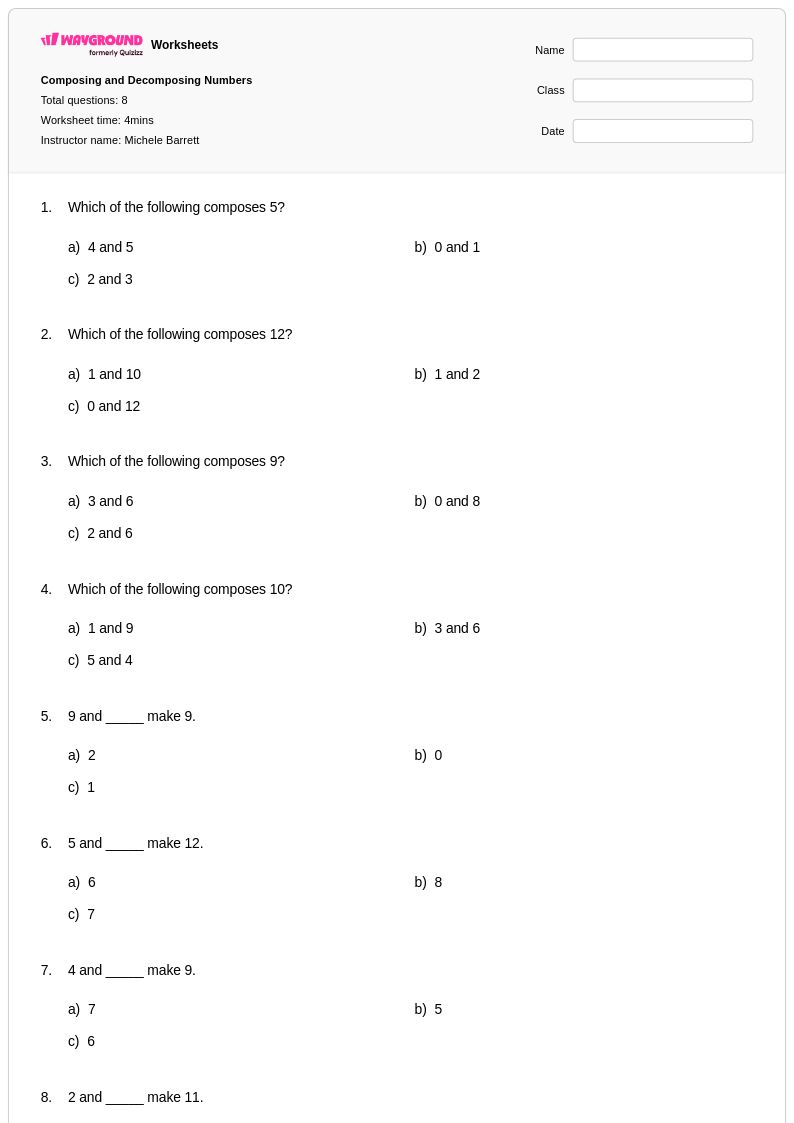
8 Q
2nd
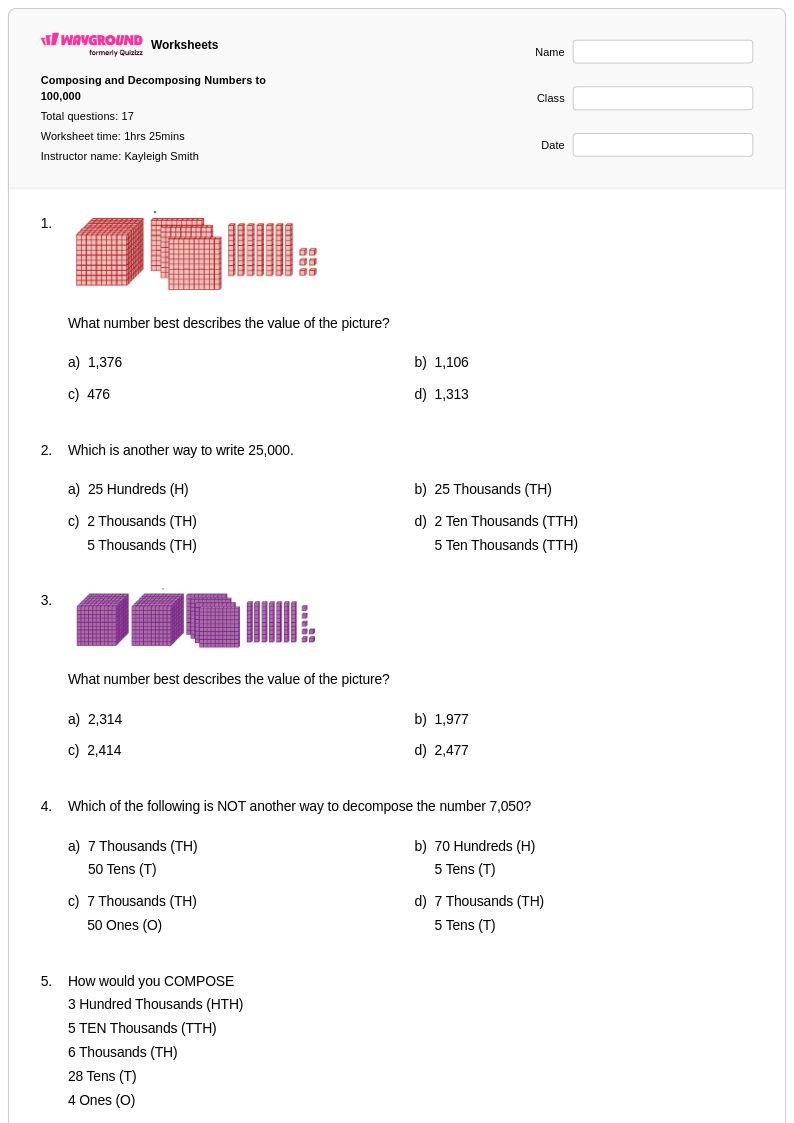
17 Q
3rd
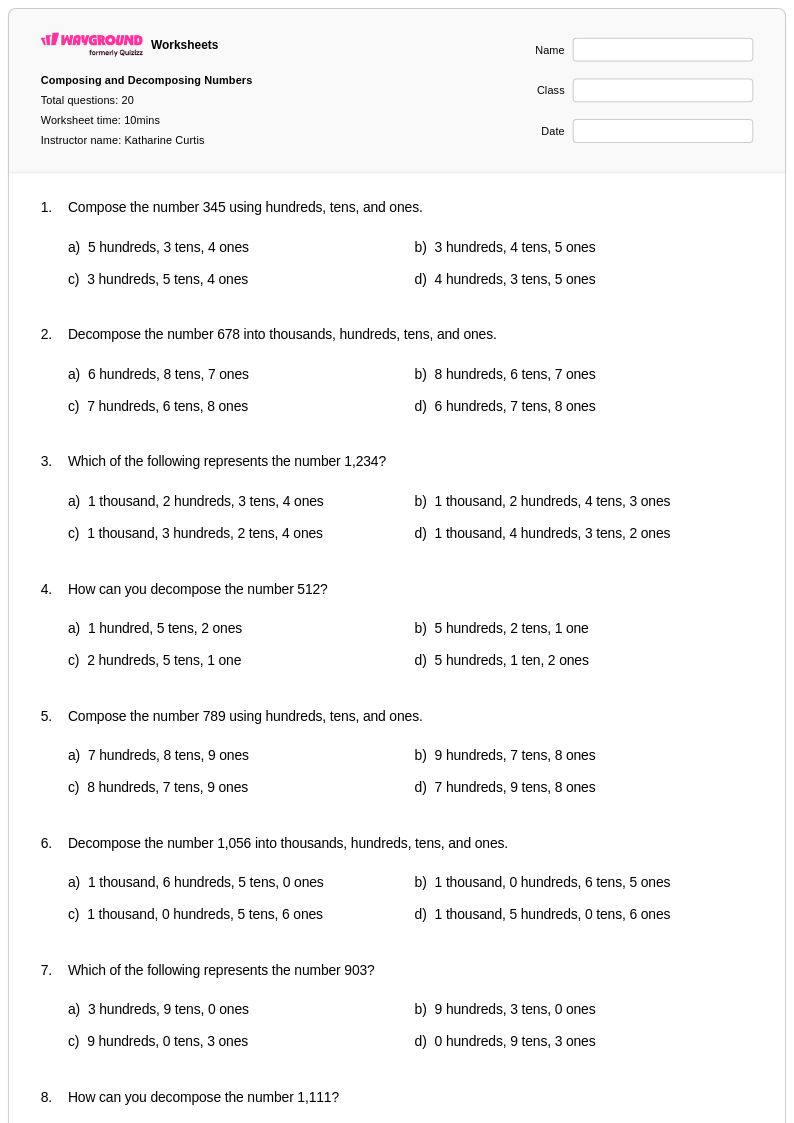
20 Q
2nd
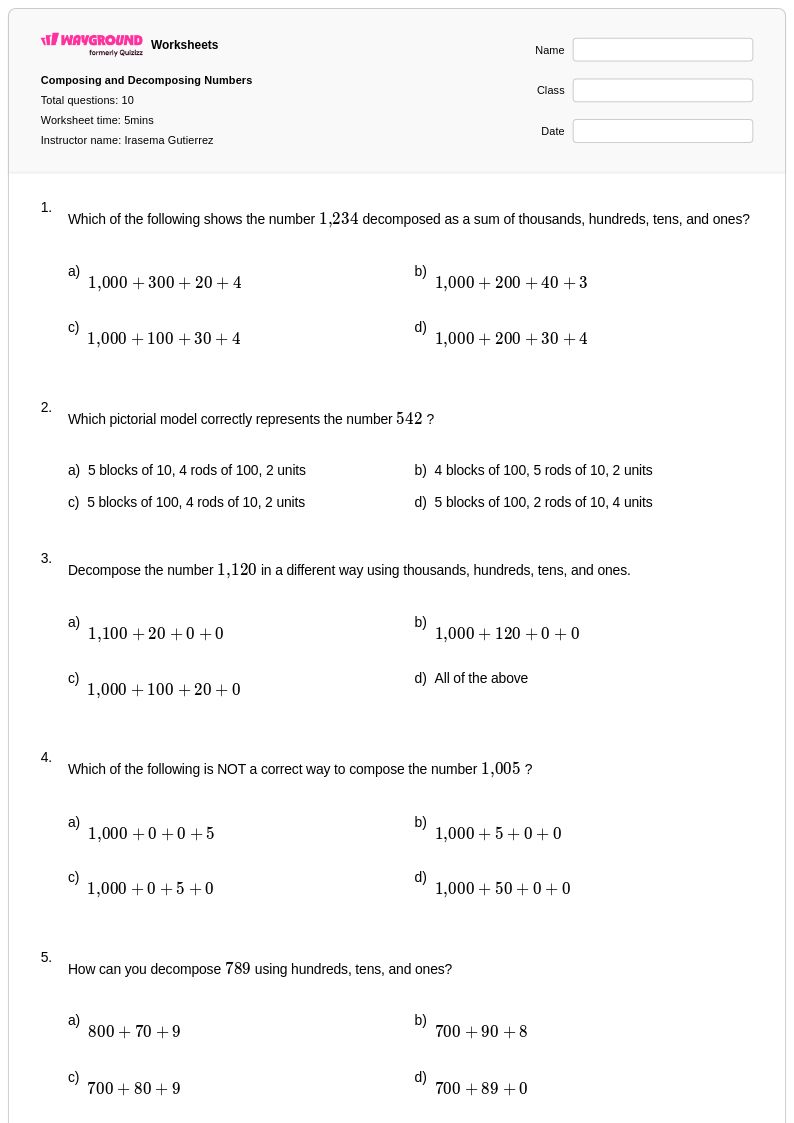
10 Q
2nd
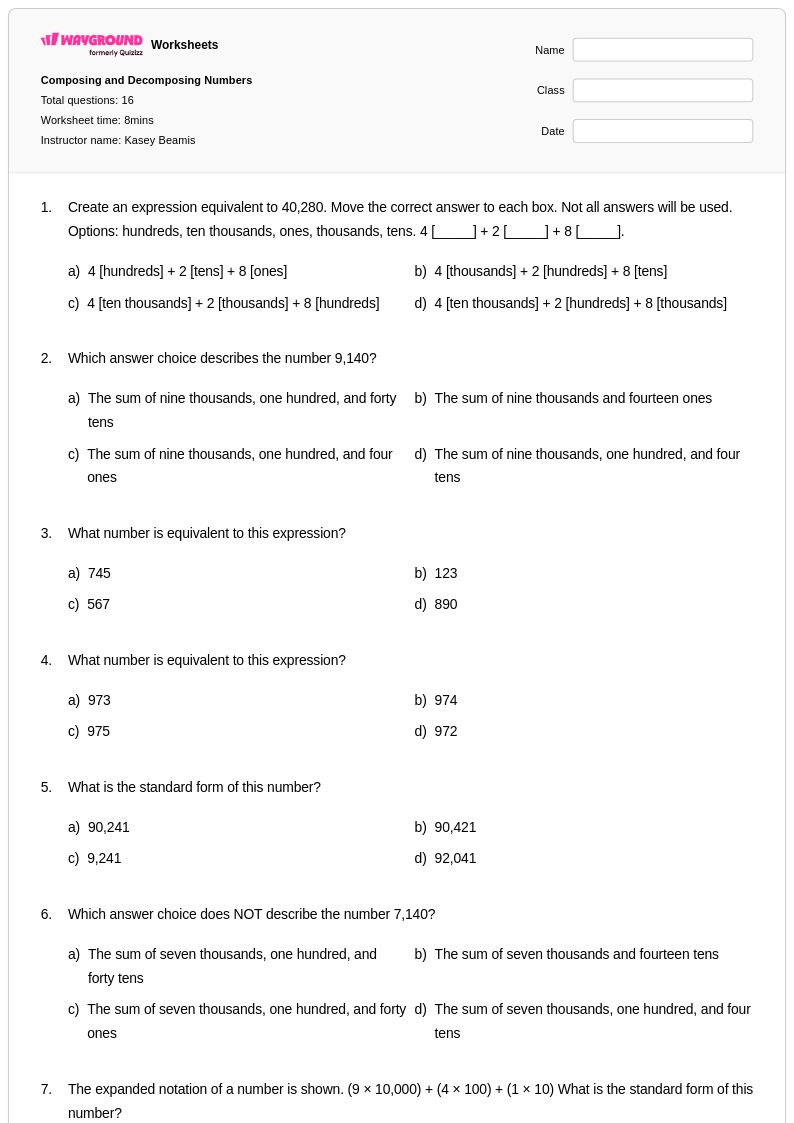
16 Q
3rd
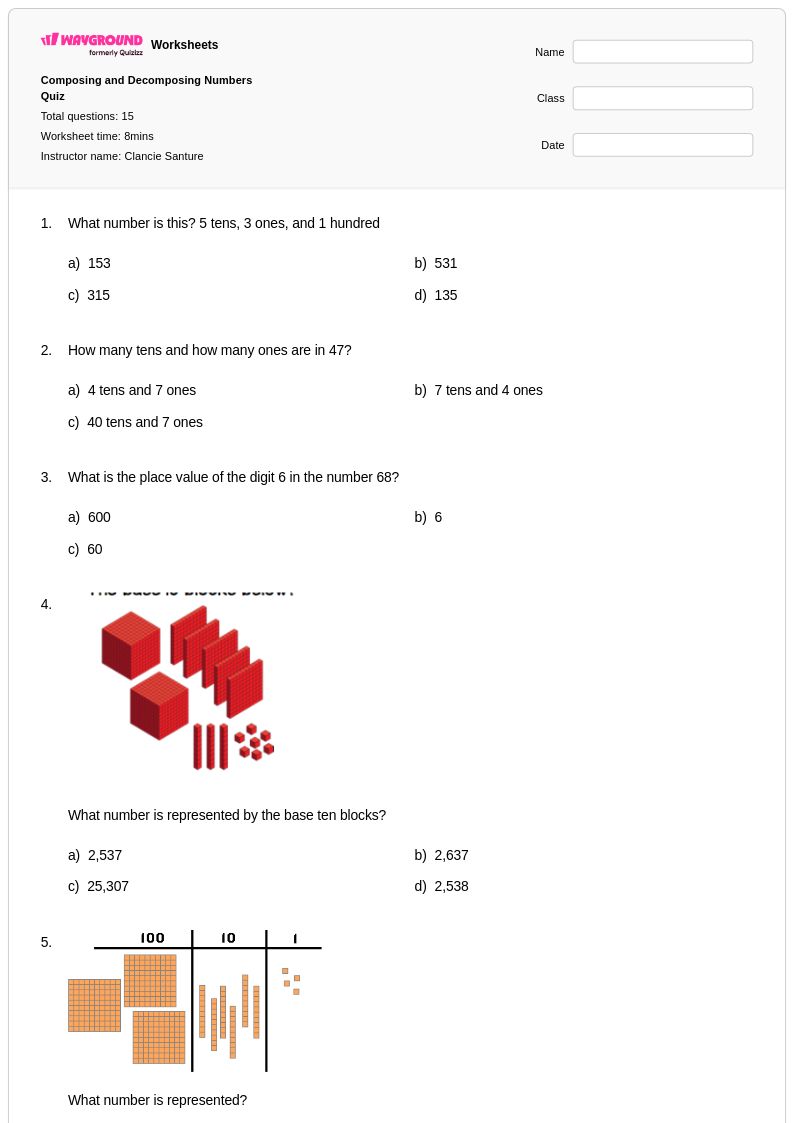
15 Q
2nd
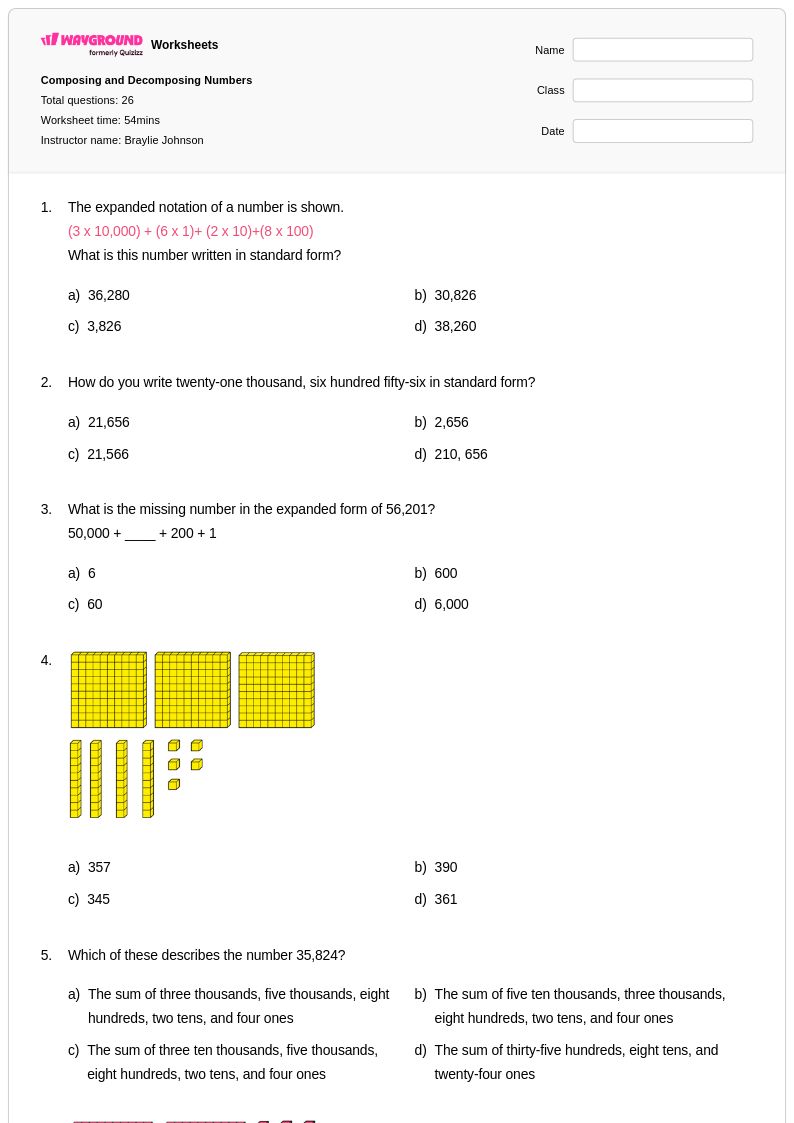
26 Q
2nd - 4th
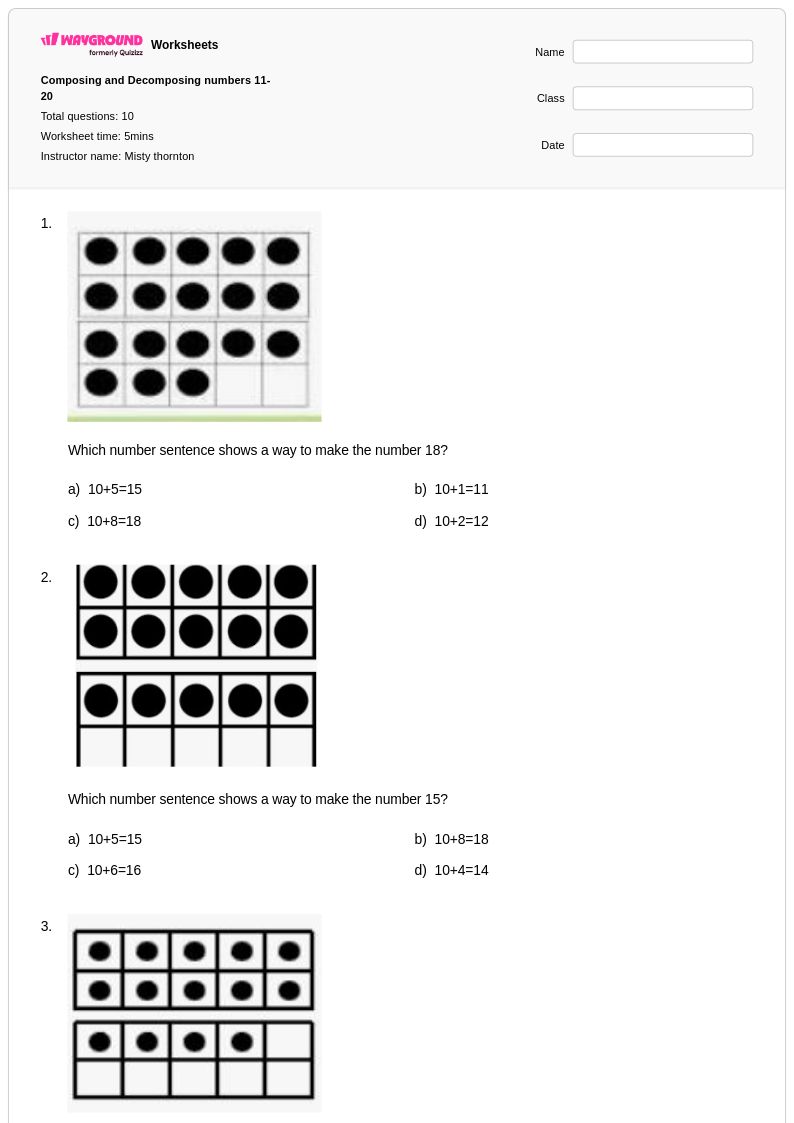
10 Q
KG
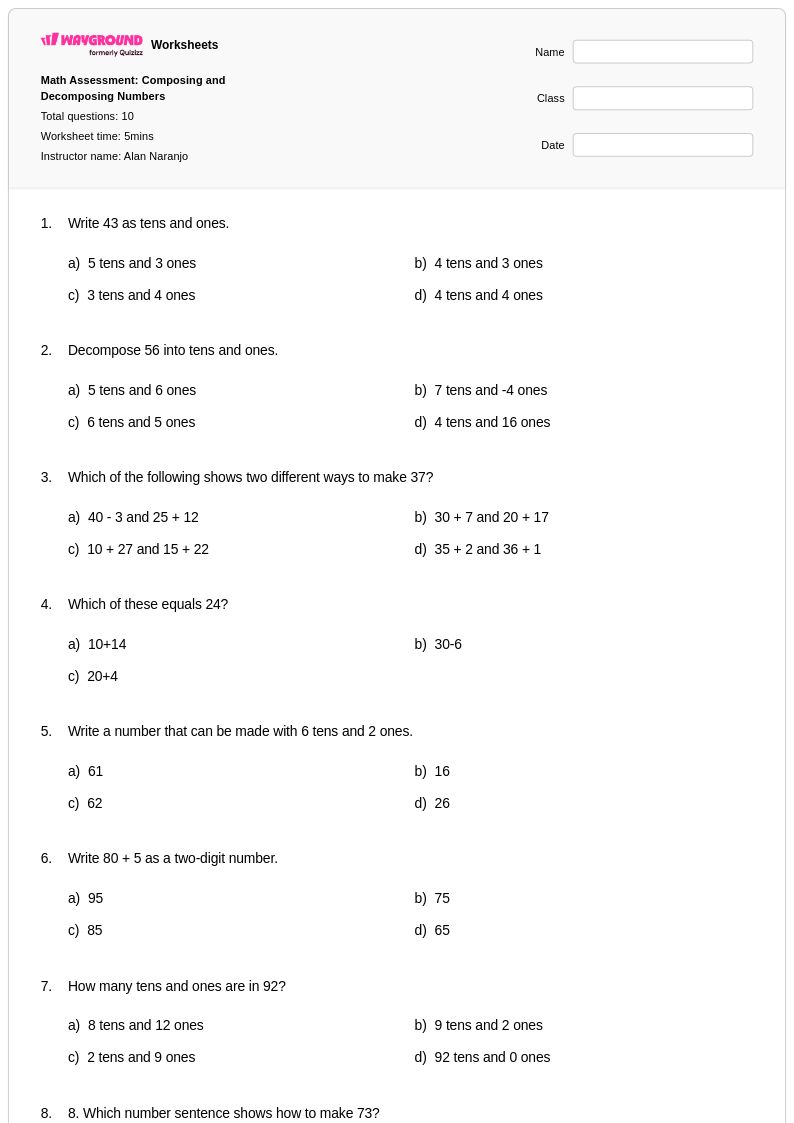
10 Q
2nd
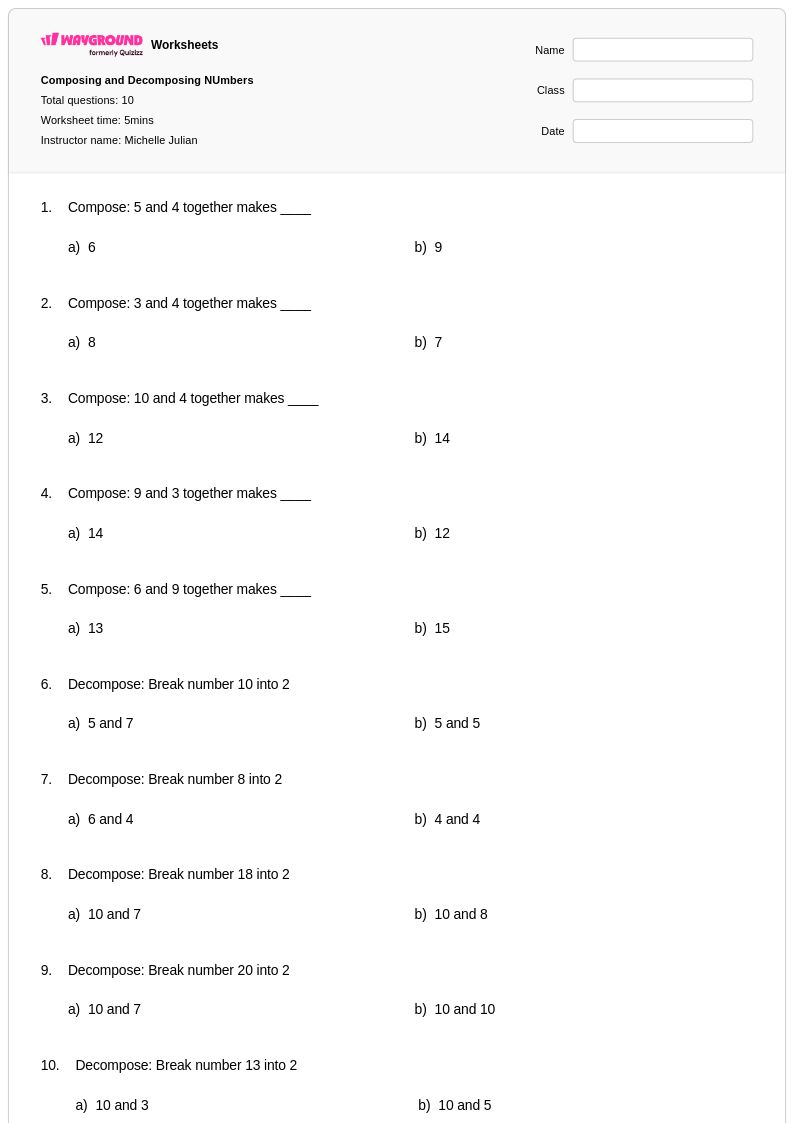
10 Q
KG
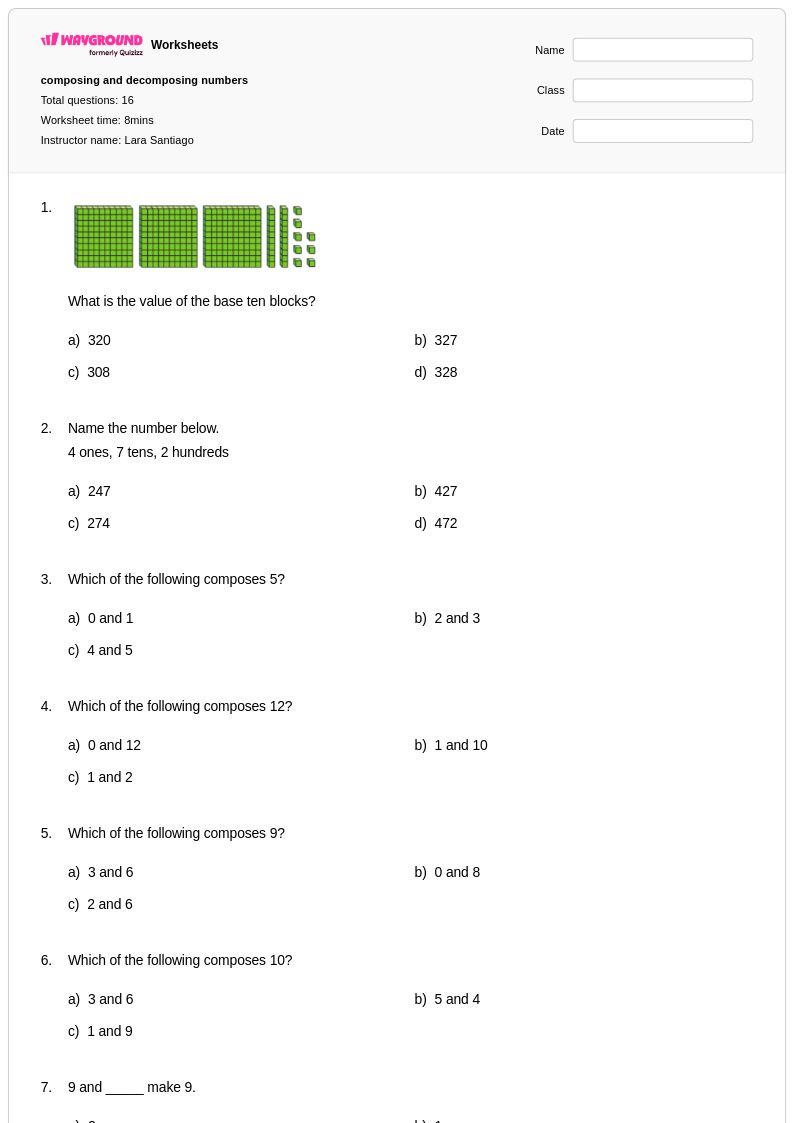
16 Q
1st
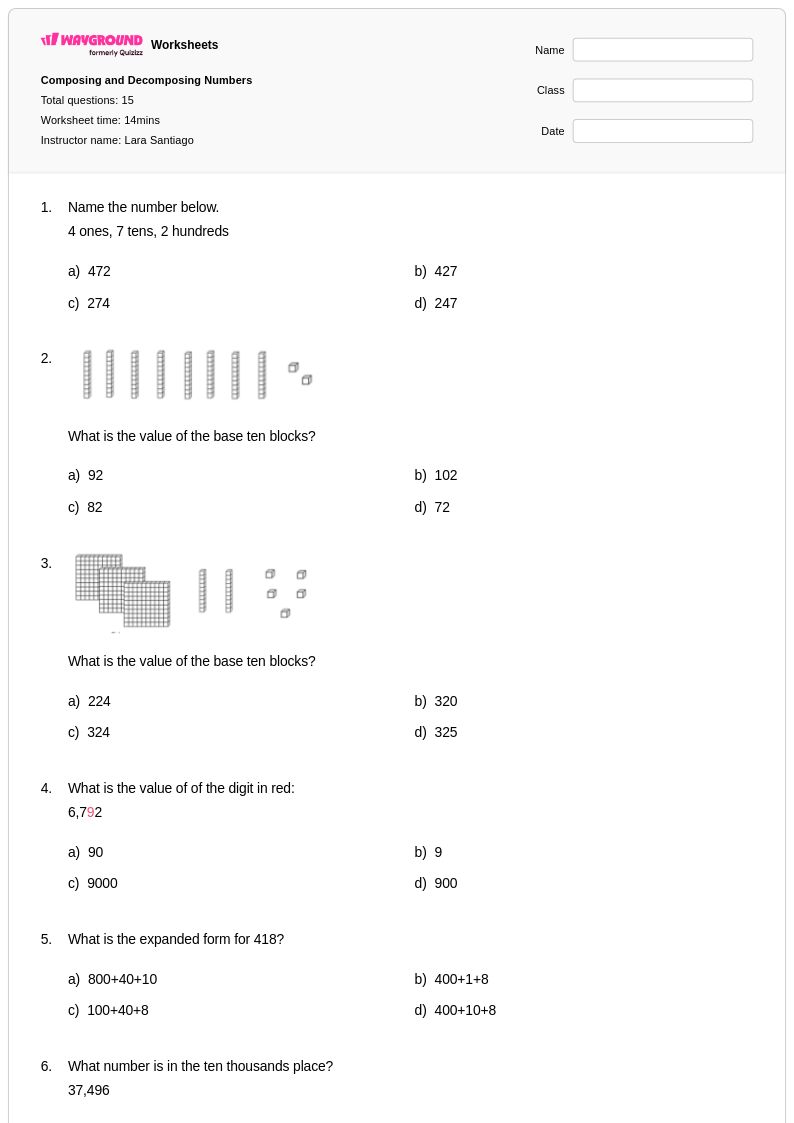
15 Q
1st
Explore Composing and Decomposing Numbers Worksheets by Grades
Explore Other Subject Worksheets for kindergarten
Explore printable Composing and Decomposing Numbers worksheets for Kindergarten
Composing and decomposing numbers worksheets for kindergarten students through Wayground (formerly Quizizz) provide essential practice in understanding how numbers can be broken apart and put back together in different ways. These carefully designed practice problems help young learners develop number sense by exploring various combinations that make up numbers within 10, such as recognizing that 5 can be composed of 3 + 2 or 4 + 1. The worksheets strengthen foundational mathematical thinking skills that serve as building blocks for future addition and subtraction concepts, with each printable resource including comprehensive answer keys to support both independent practice and guided instruction. Teachers can access these free pdf materials to reinforce classroom lessons and provide targeted skill development that aligns with kindergarten mathematics standards.
Wayground's extensive collection of teacher-created resources offers millions of worksheets specifically focused on composing and decomposing numbers, with robust search and filtering capabilities that allow educators to quickly locate materials matching their exact instructional needs. The platform's standards alignment features ensure that selected worksheets support curriculum objectives, while built-in differentiation tools enable teachers to modify content complexity for diverse learners. These flexible customization options, combined with both printable and digital pdf formats, streamline lesson planning and provide versatile options for skill practice, remediation, and enrichment activities. Teachers benefit from the platform's comprehensive approach to supporting number composition concepts, making it easier to address individual student needs and reinforce critical early mathematics understanding through varied practice opportunities.
FAQs
How do I teach composing and decomposing numbers in kindergarten?
What activities help kindergarten students practice composing and decomposing numbers?
What mistakes do kindergarten students make when composing and decomposing numbers?
How can I use these kindergarten composing and decomposing numbers worksheets?
How does composing and decomposing numbers align with Common Core kindergarten math?
How can I differentiate this kindergarten number practice?
What grade do students learn to compose and decompose numbers?