Free Printable Doubles Plus 1 Worksheets for Kindergarten
Discover free kindergarten doubles plus 1 worksheets and printables that help young learners master this essential addition strategy through engaging practice problems, complete with answer keys and downloadable PDFs from Wayground.
Explore printable Doubles Plus 1 worksheets for Kindergarten
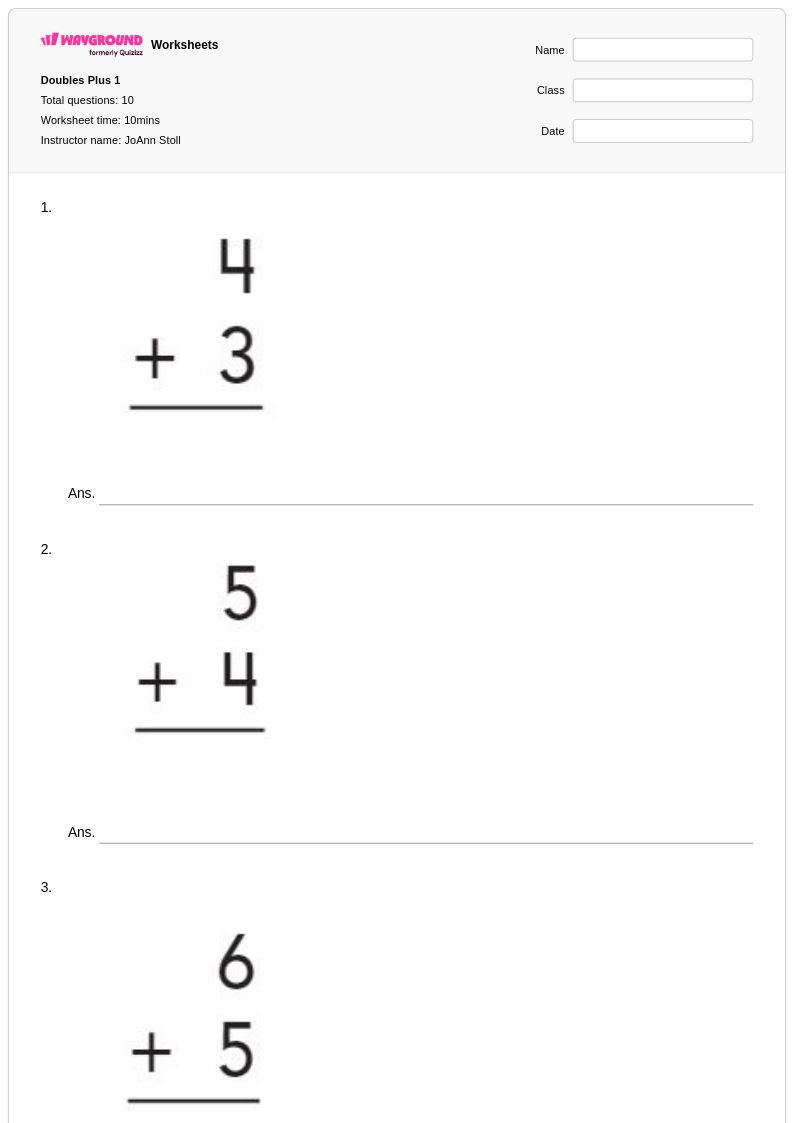
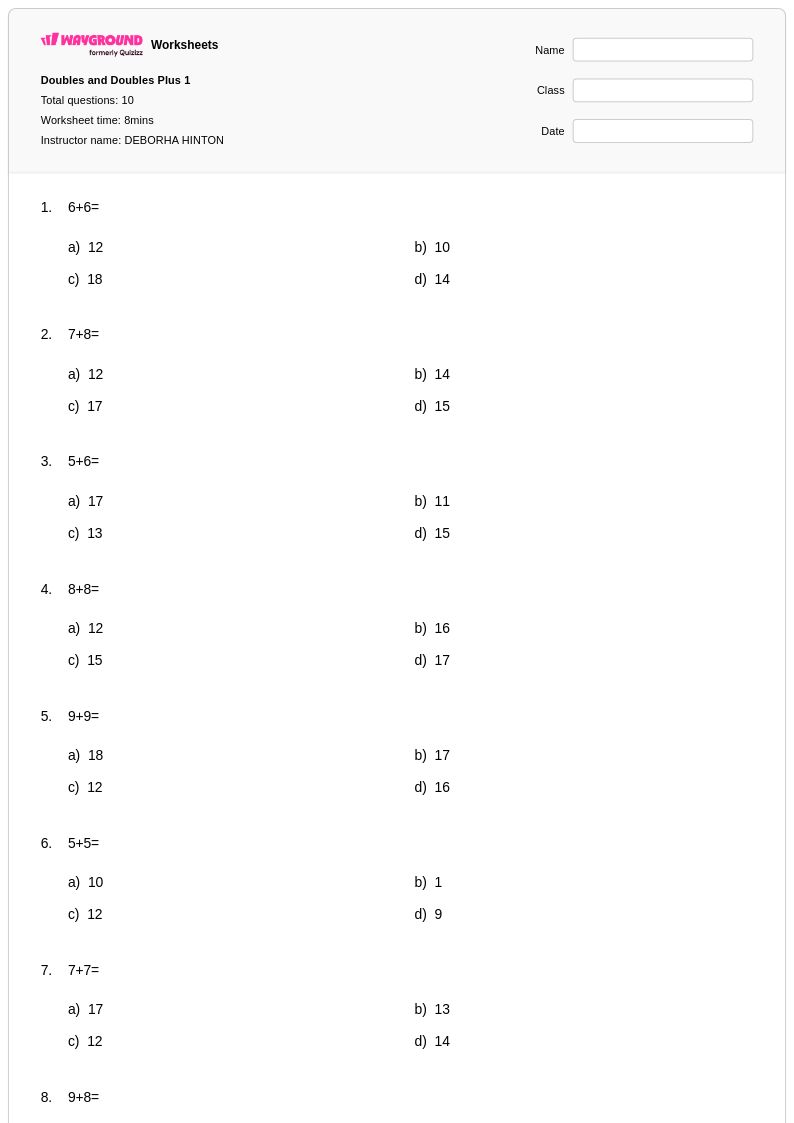
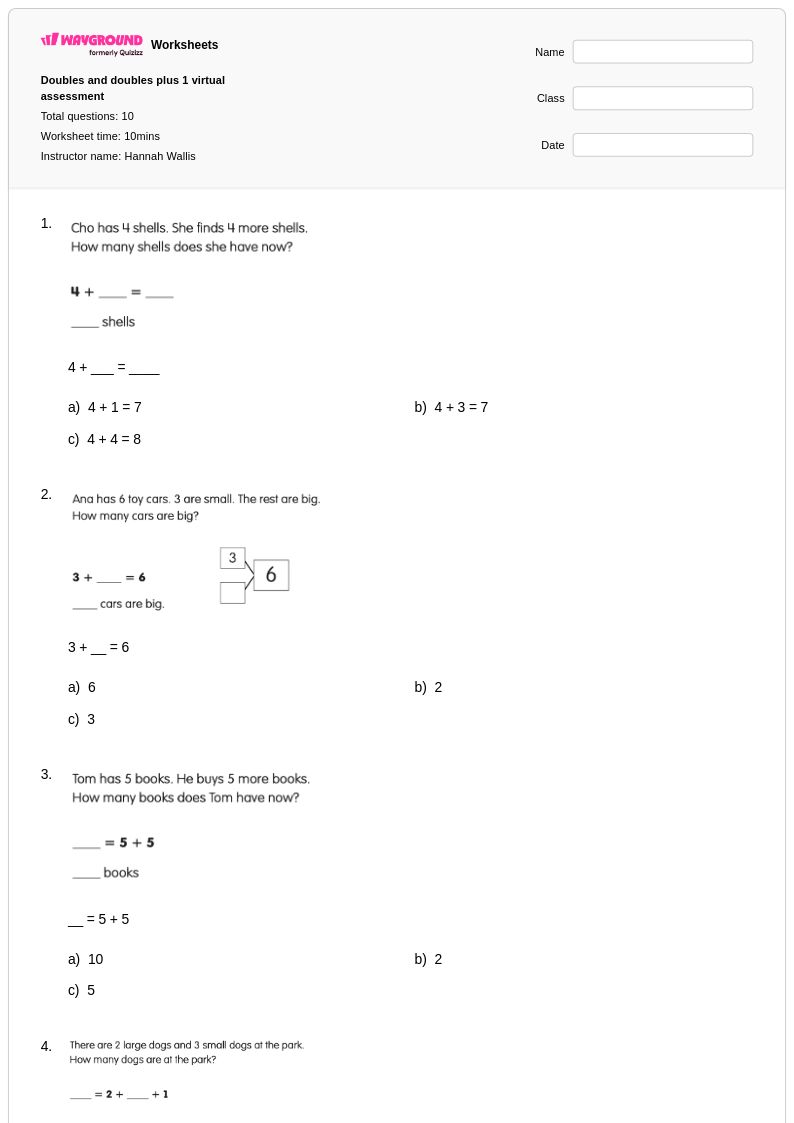
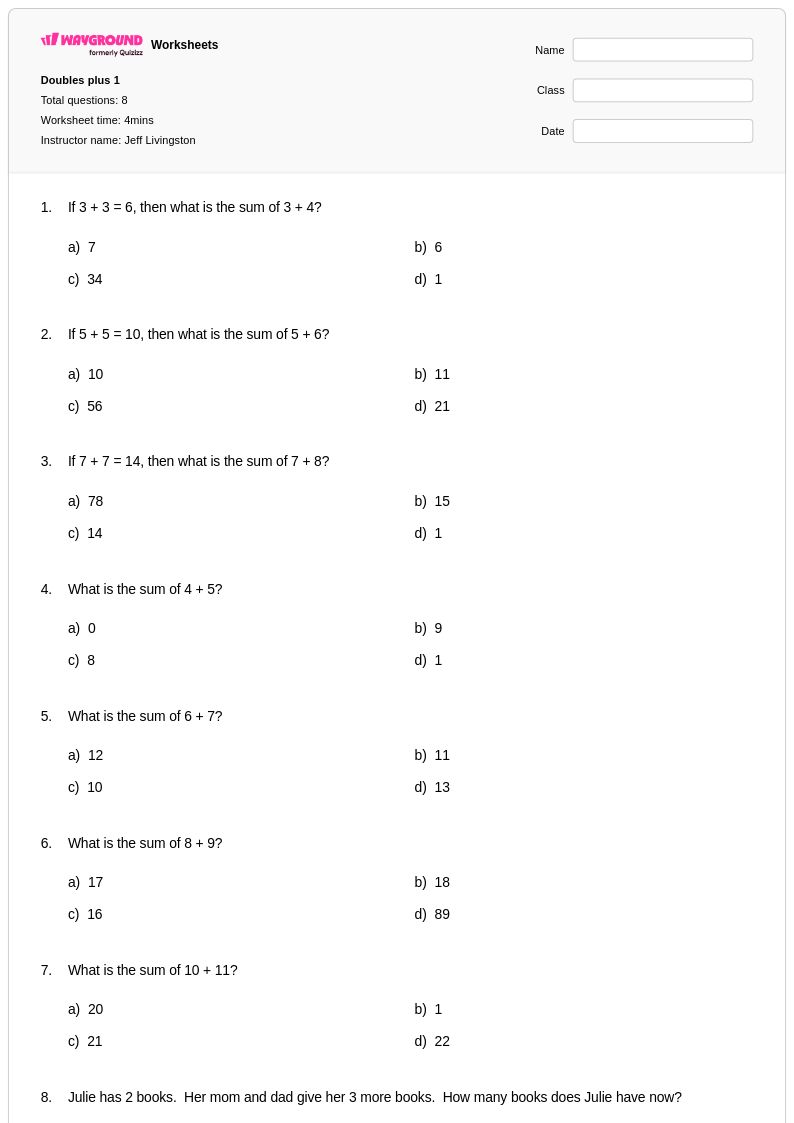
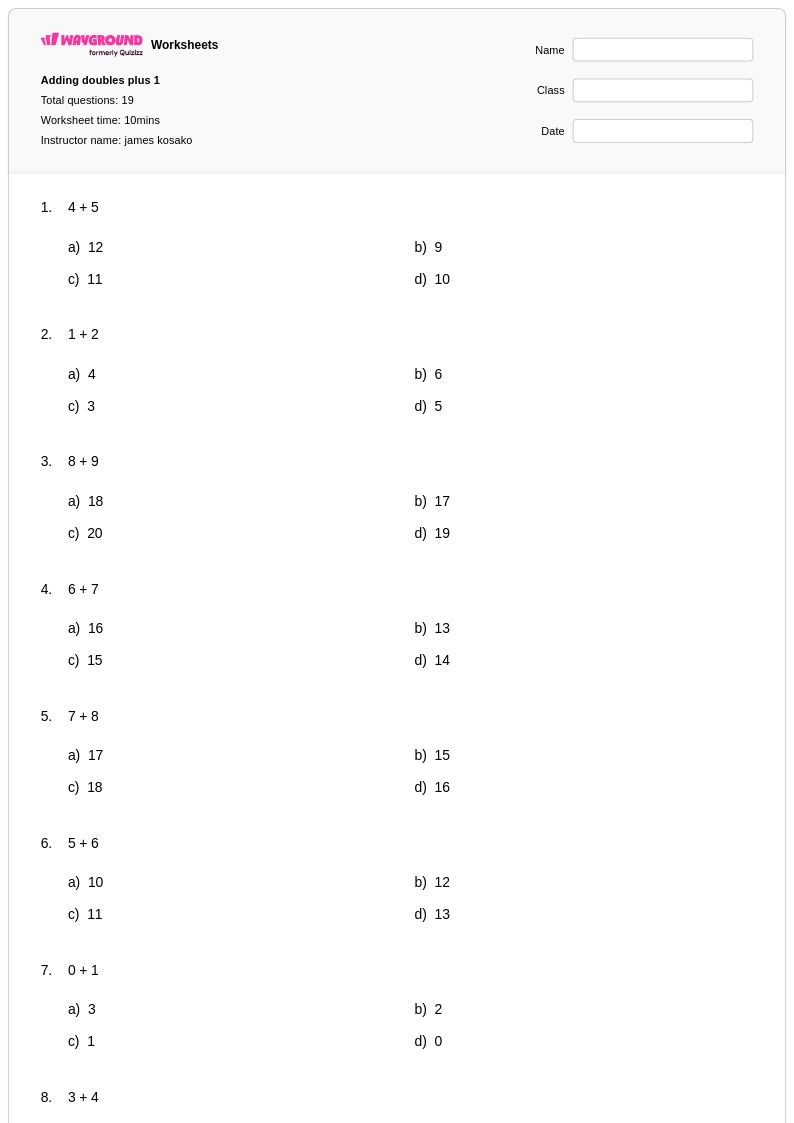
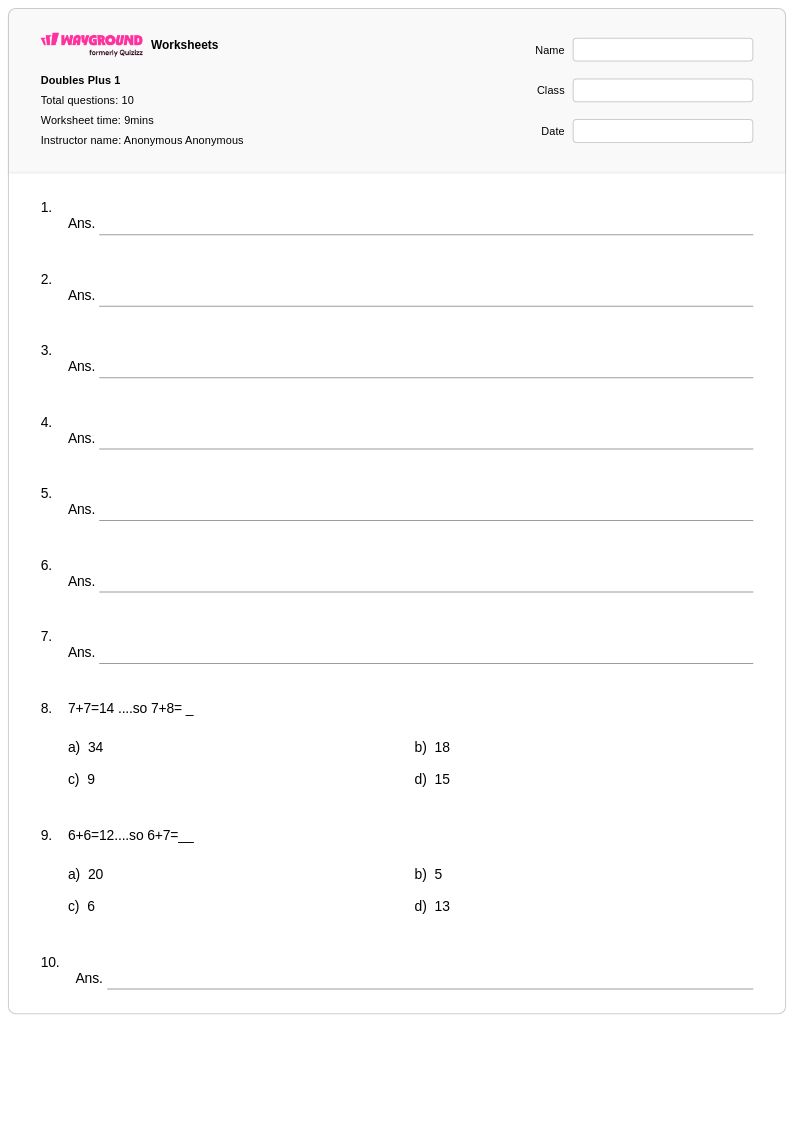
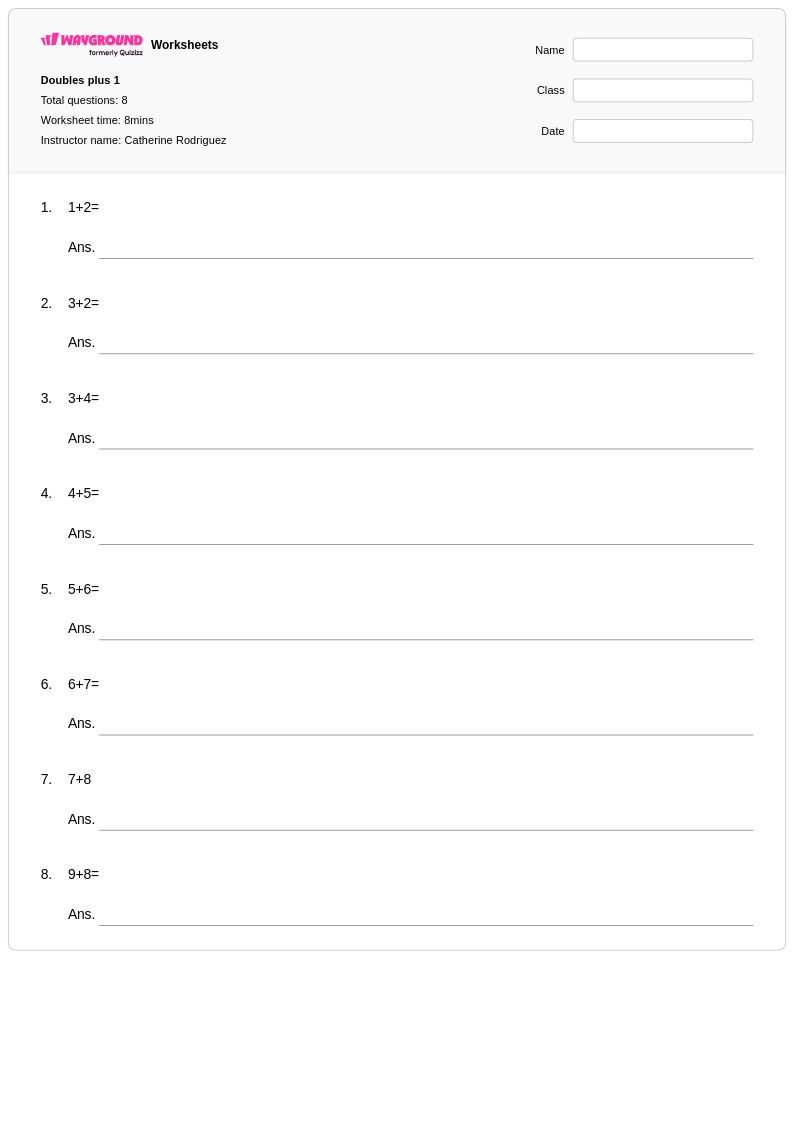
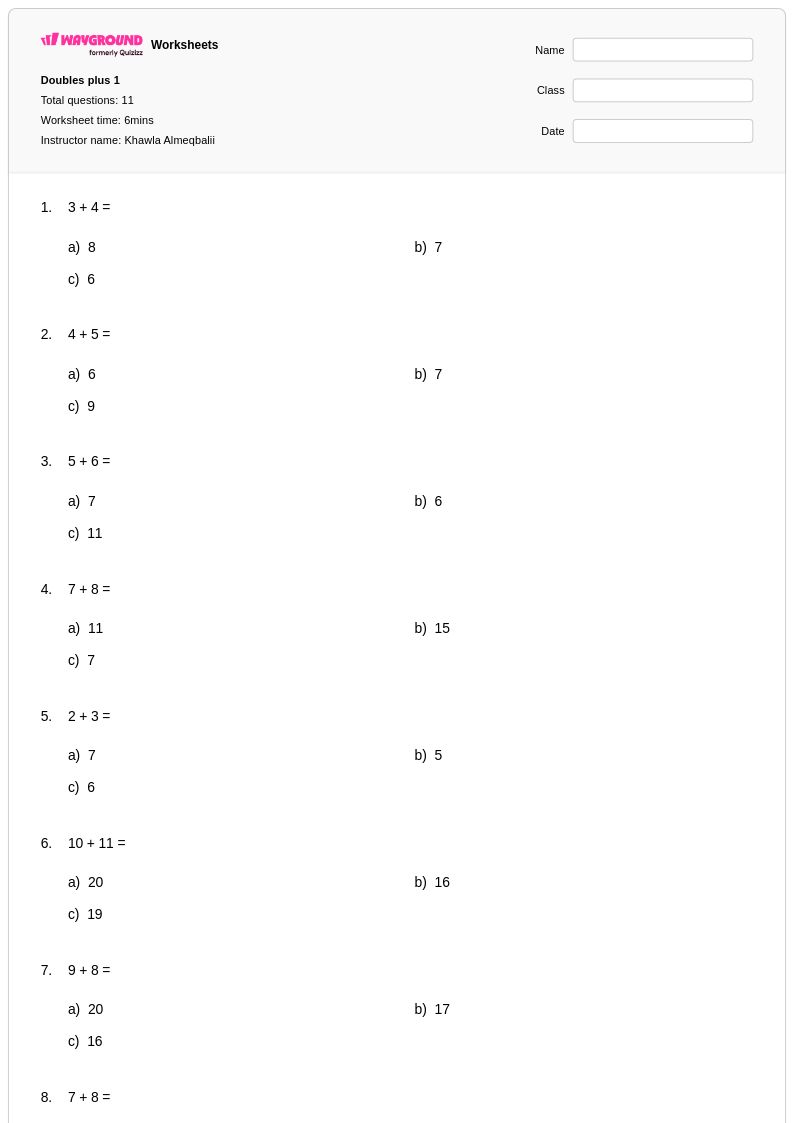
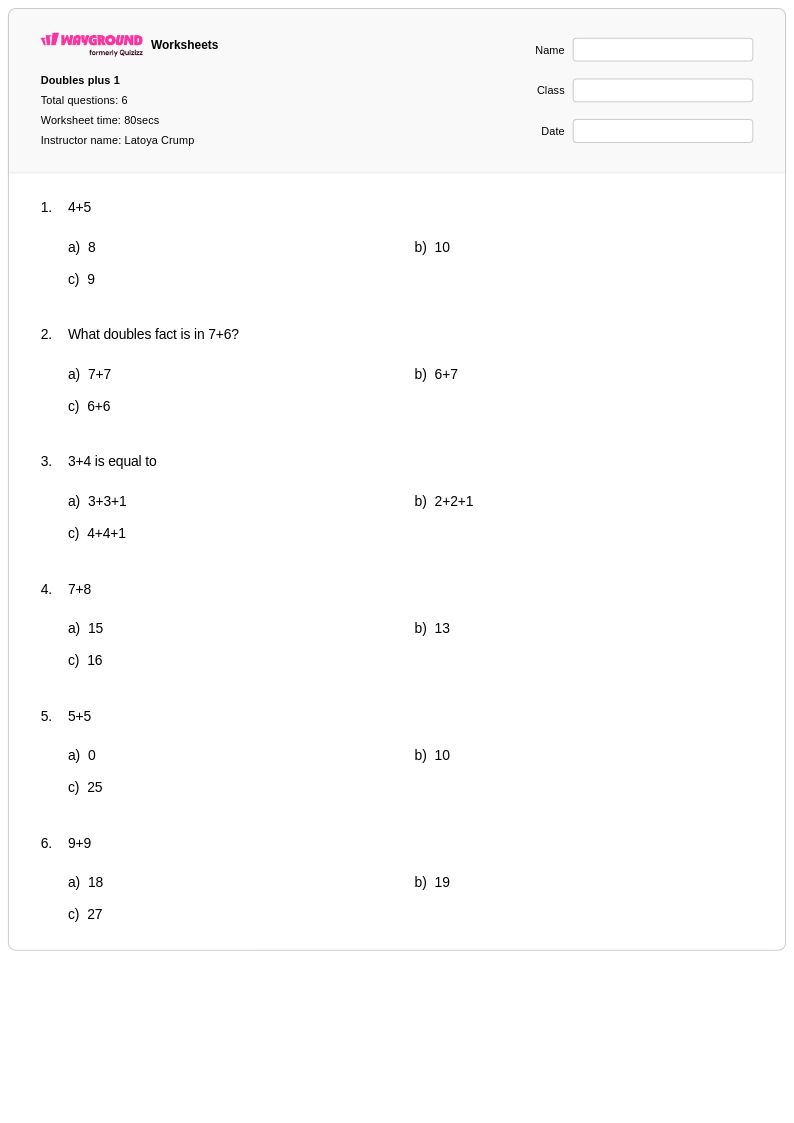
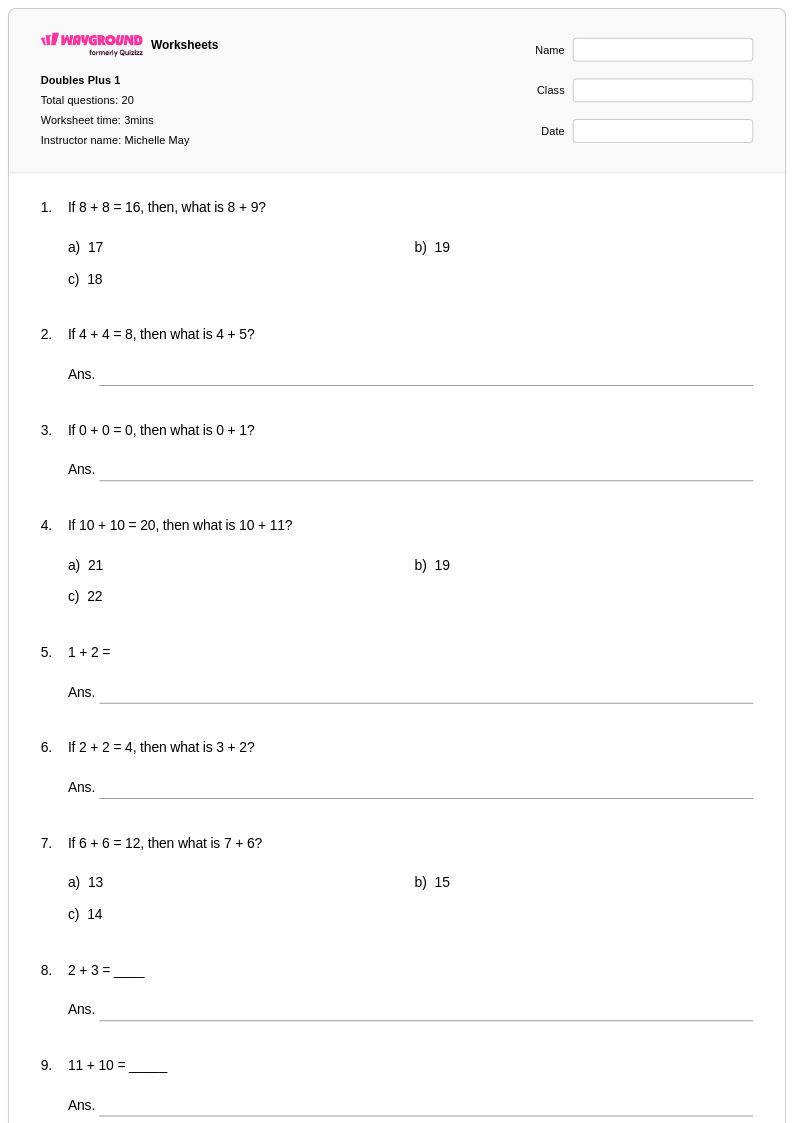
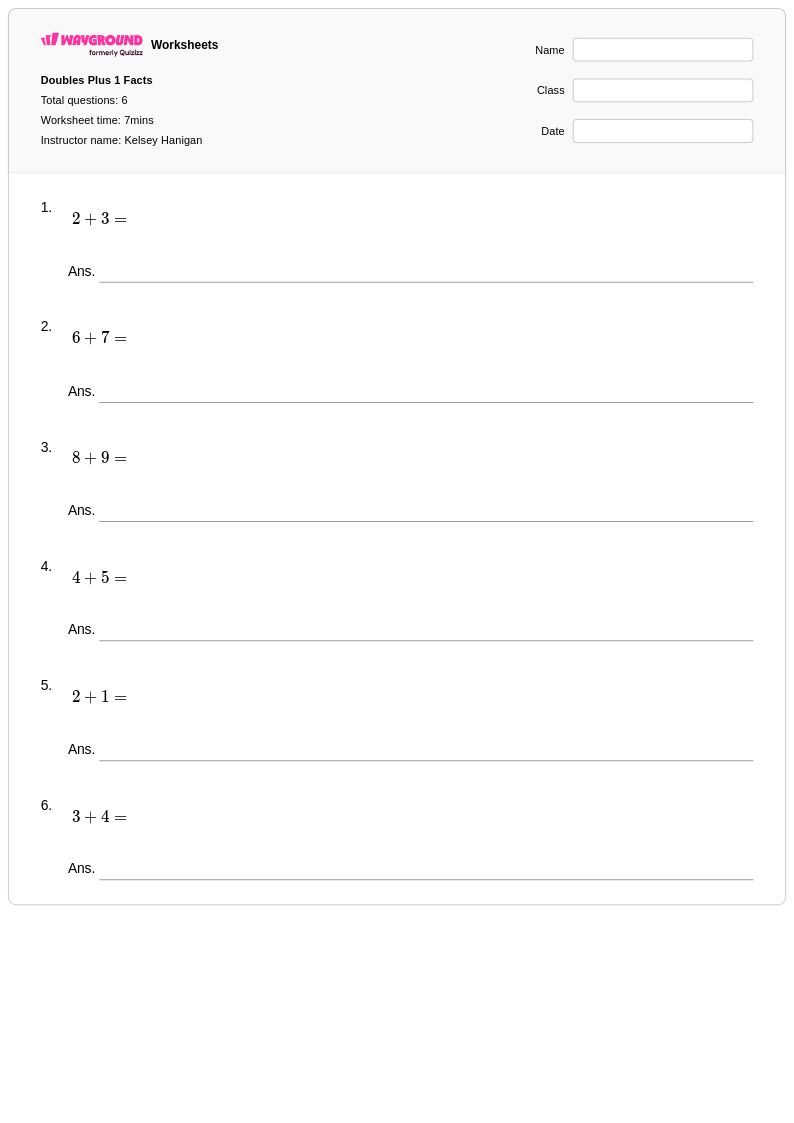
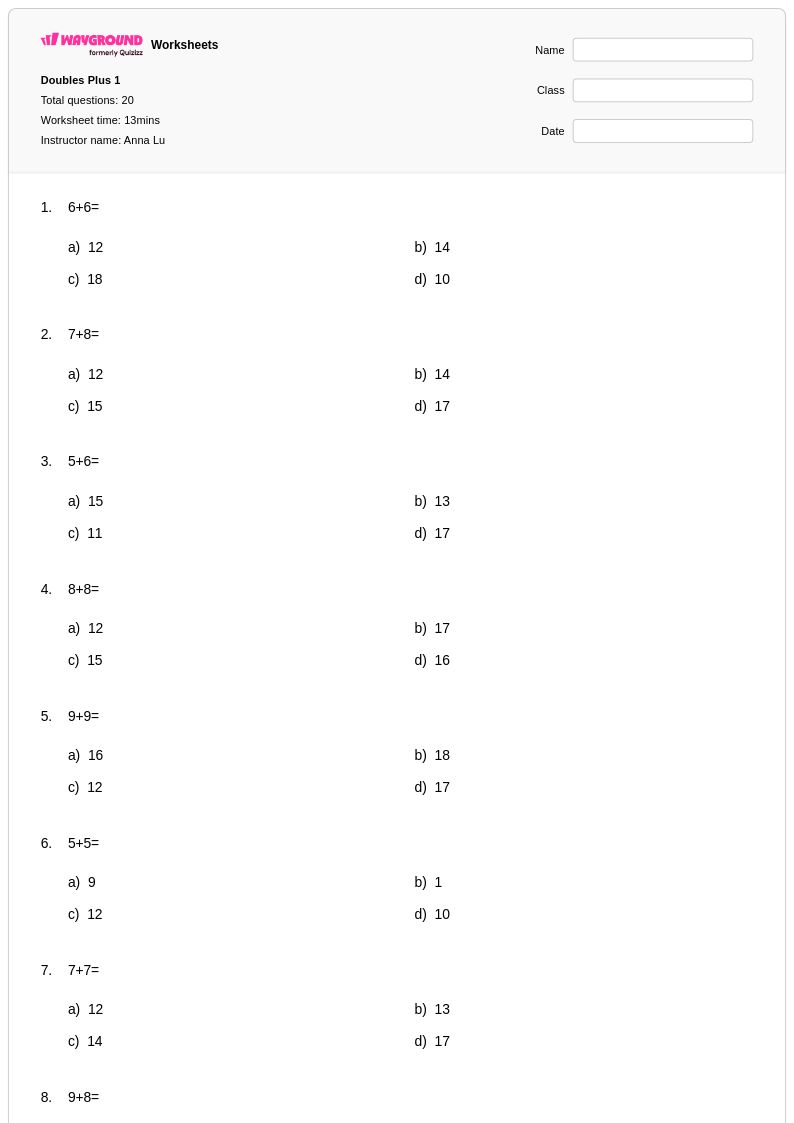
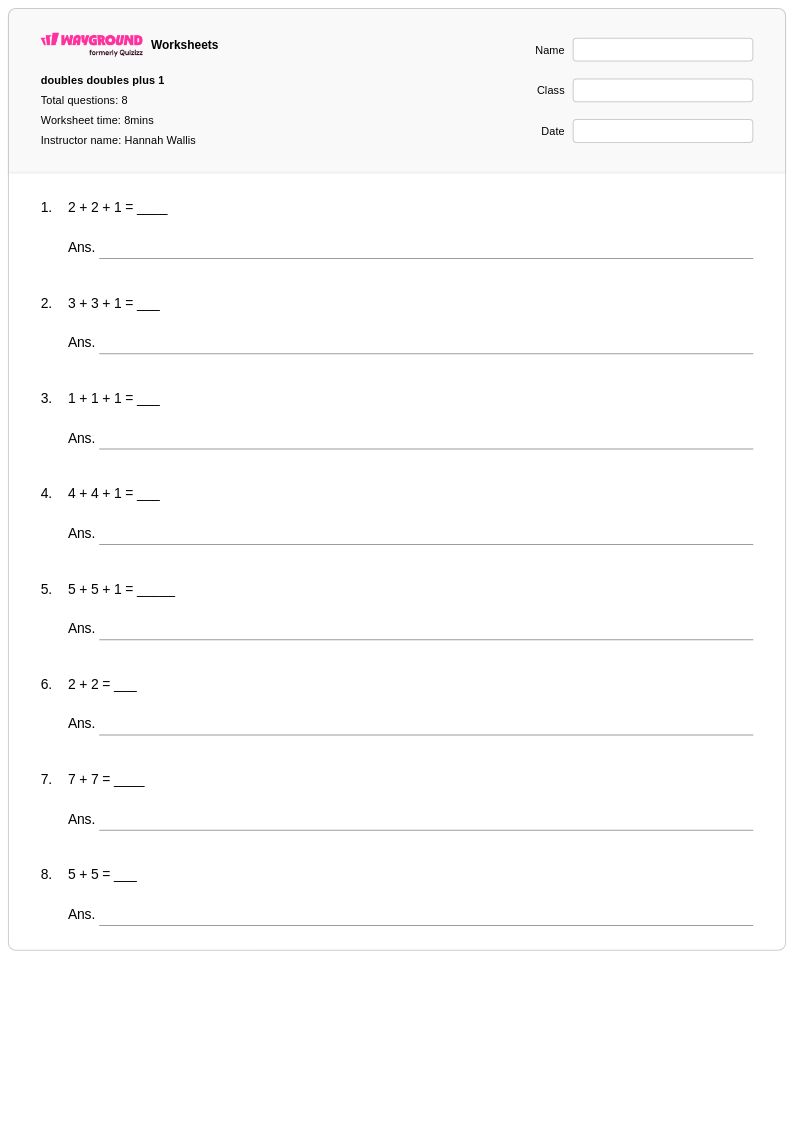
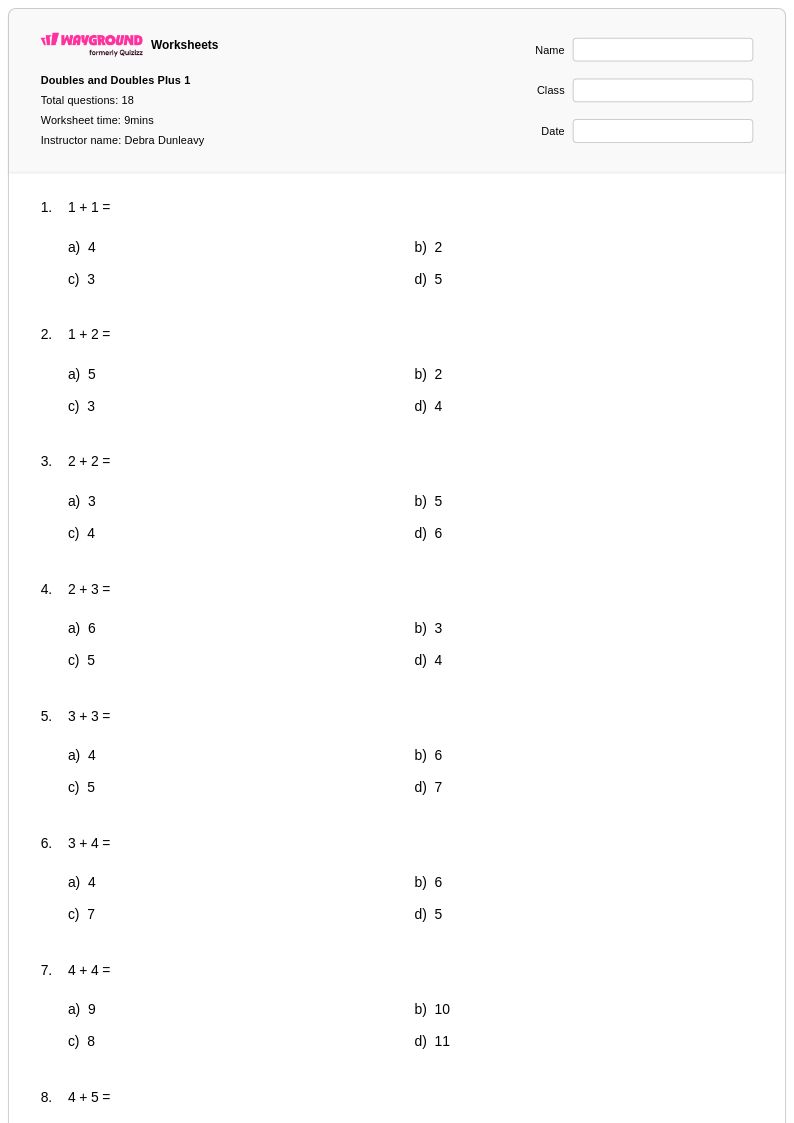
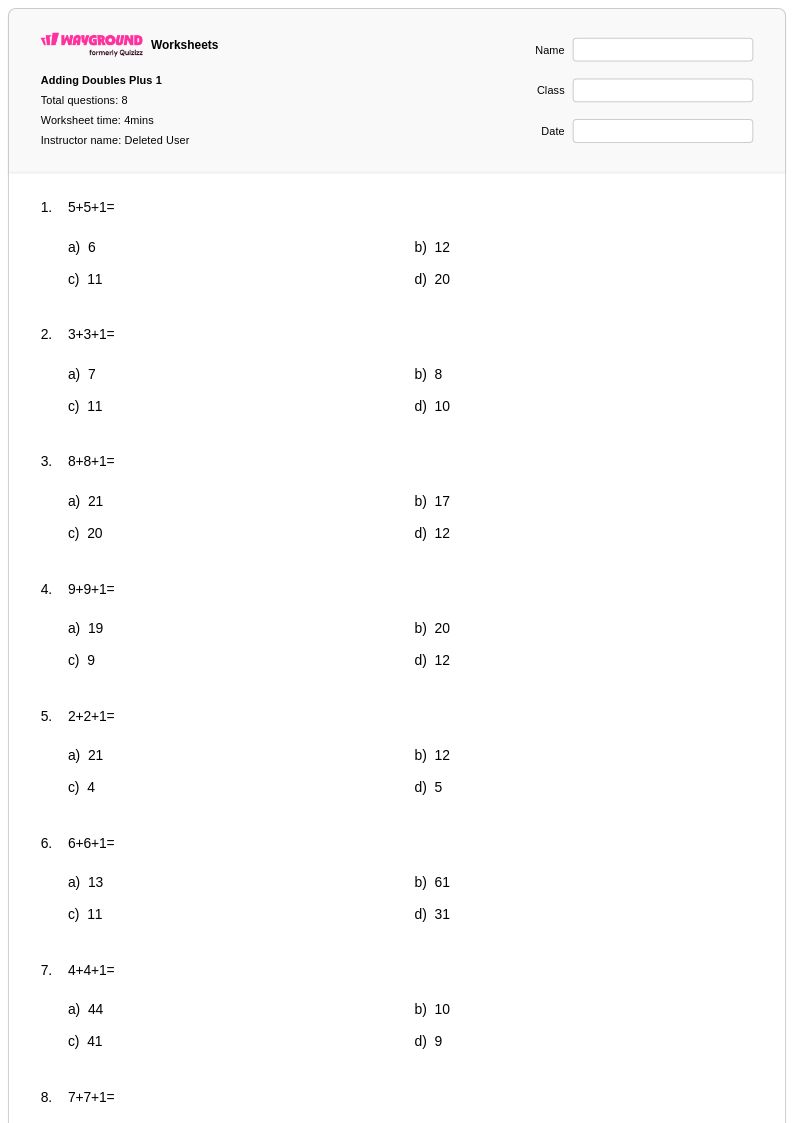
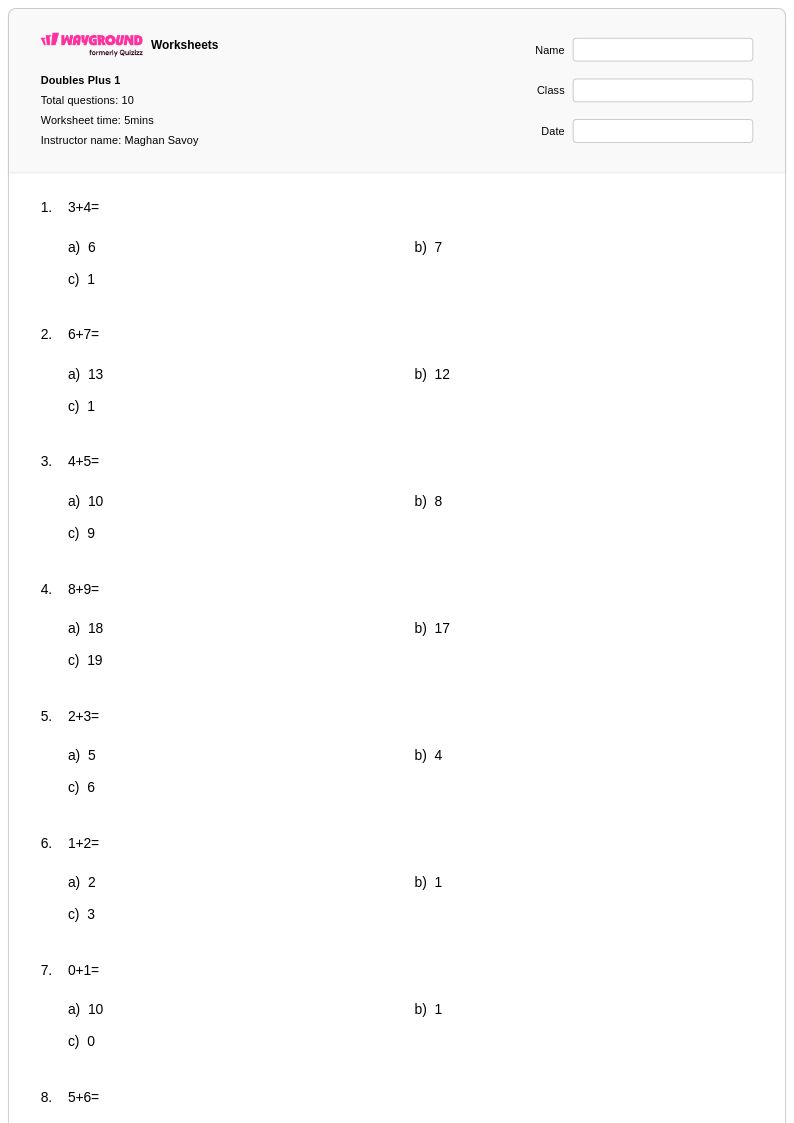
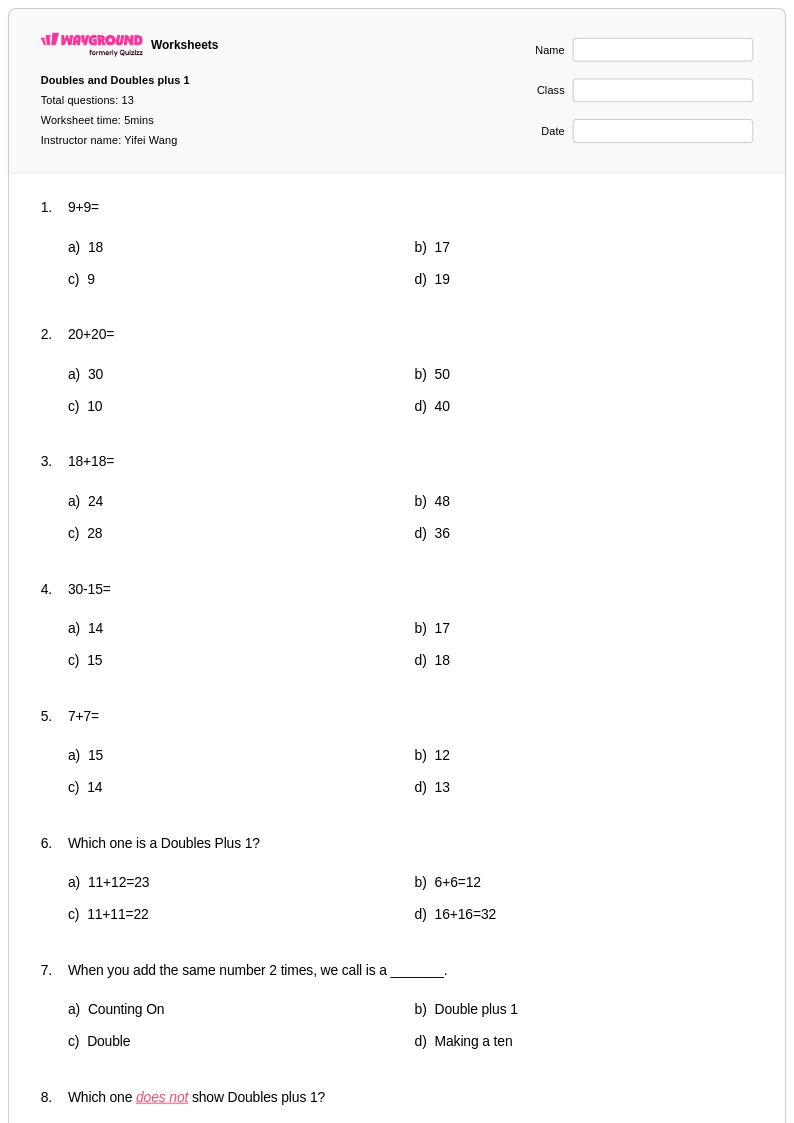
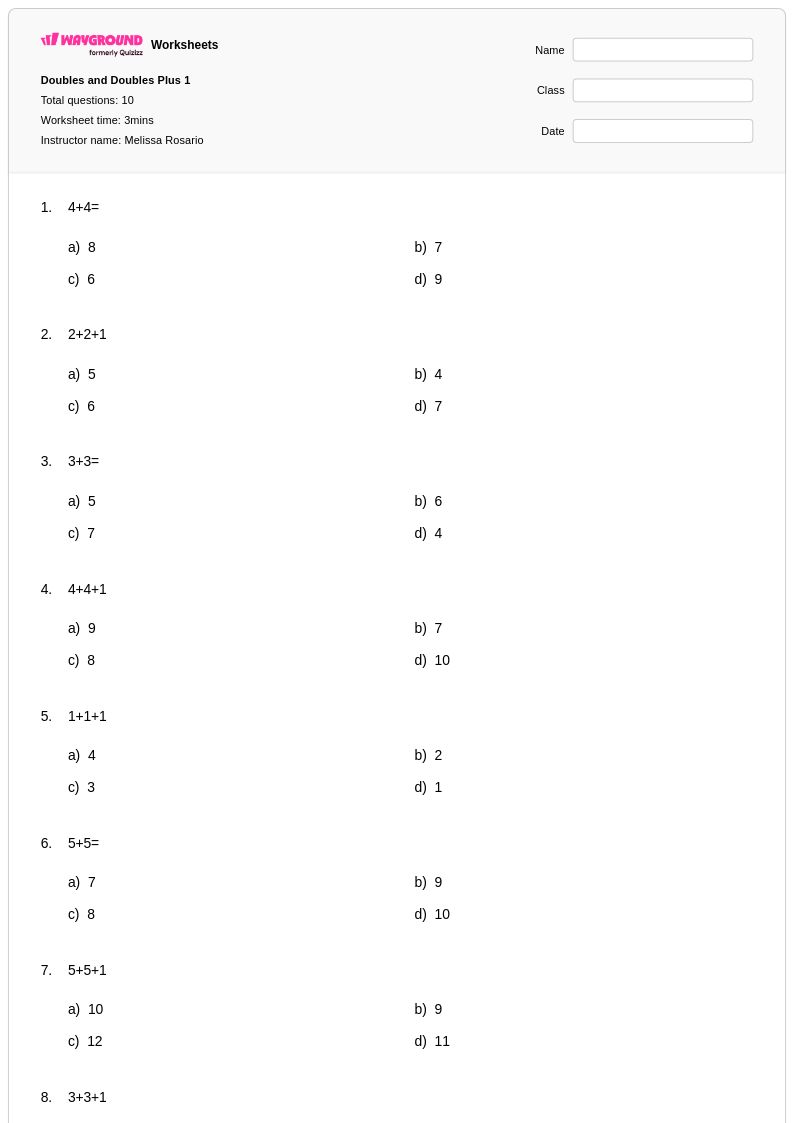
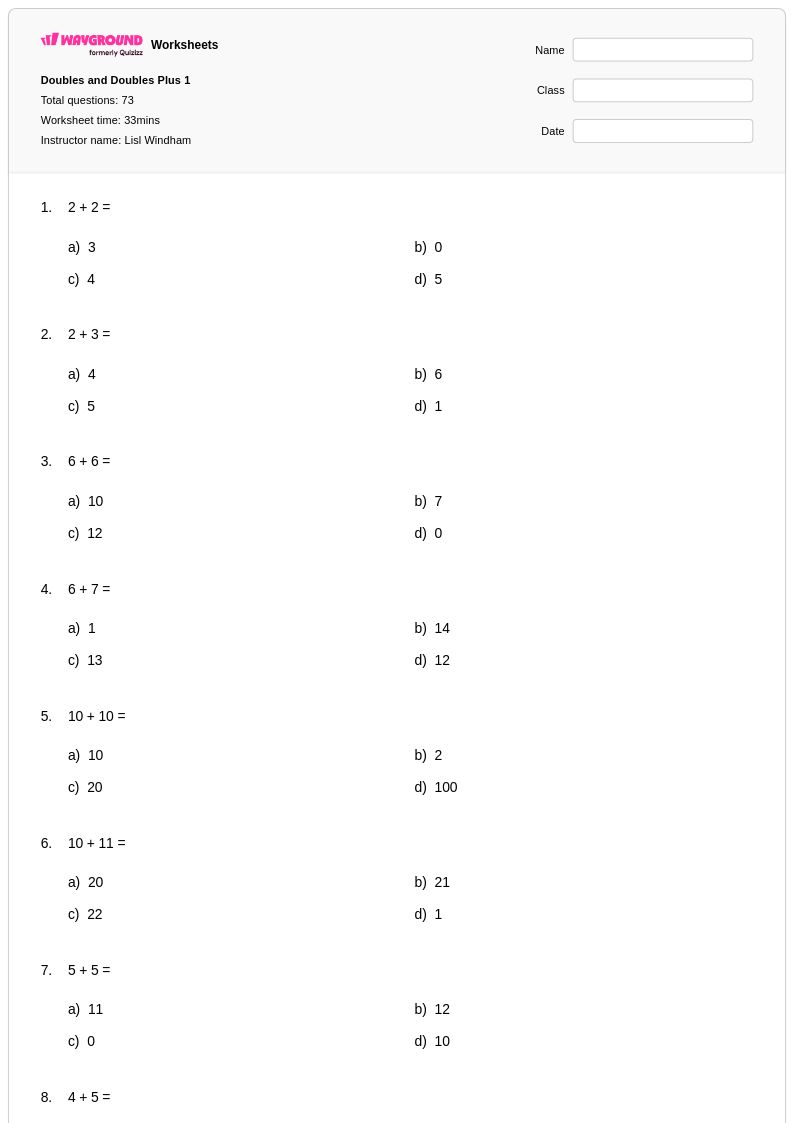
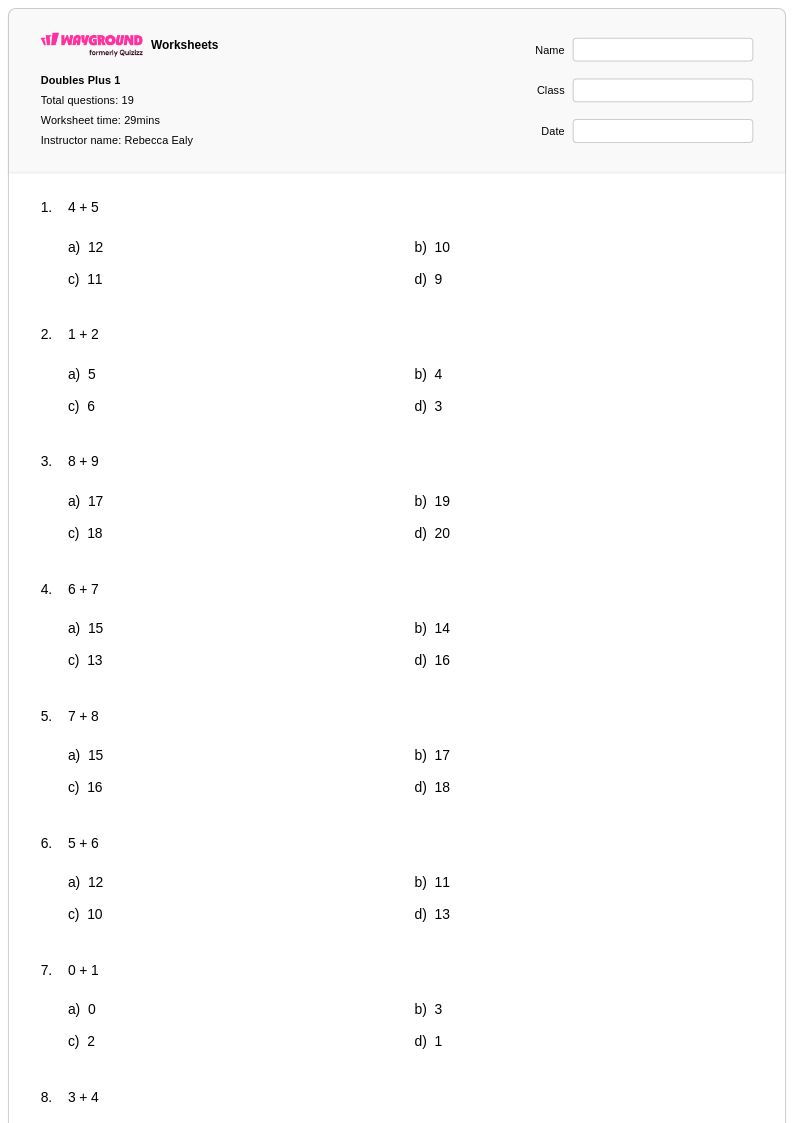
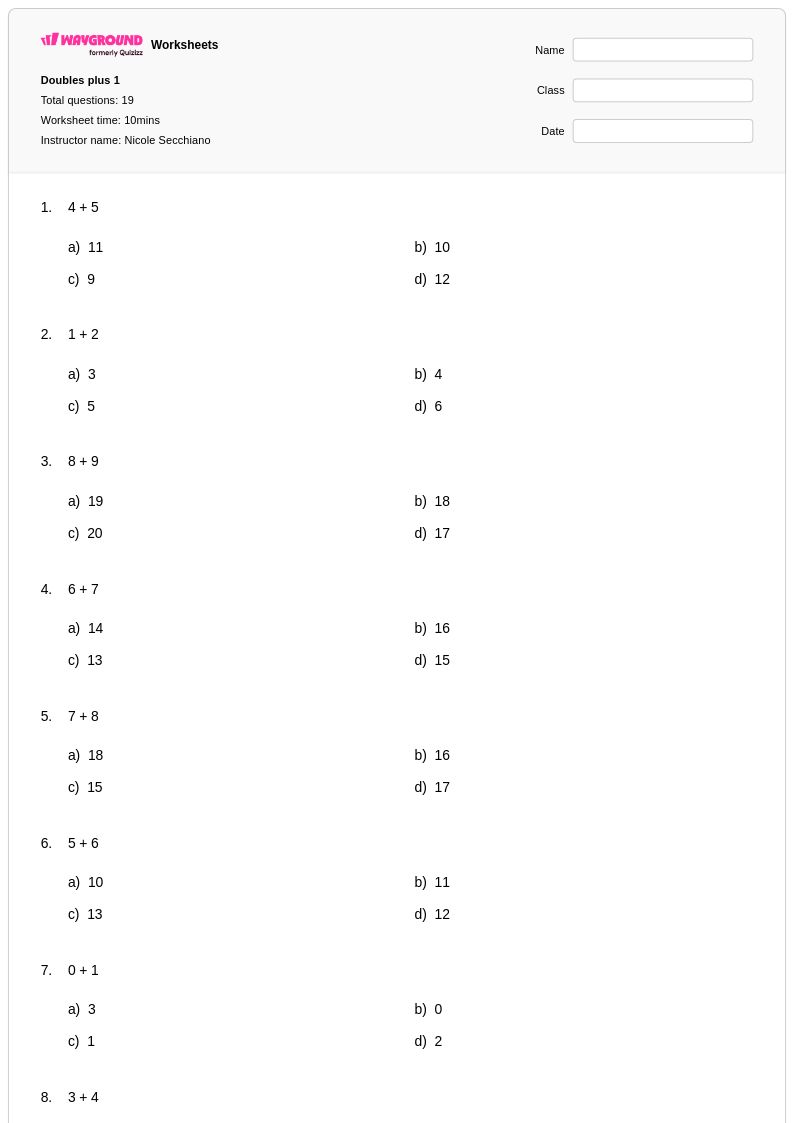
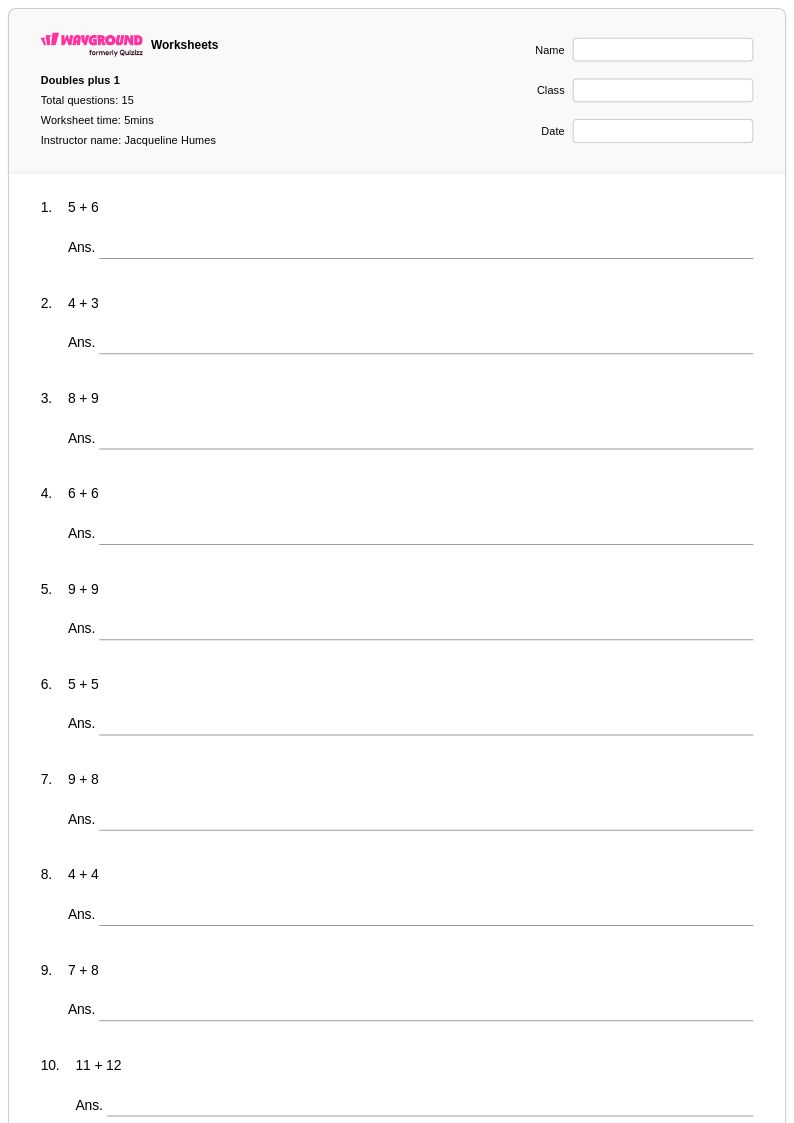
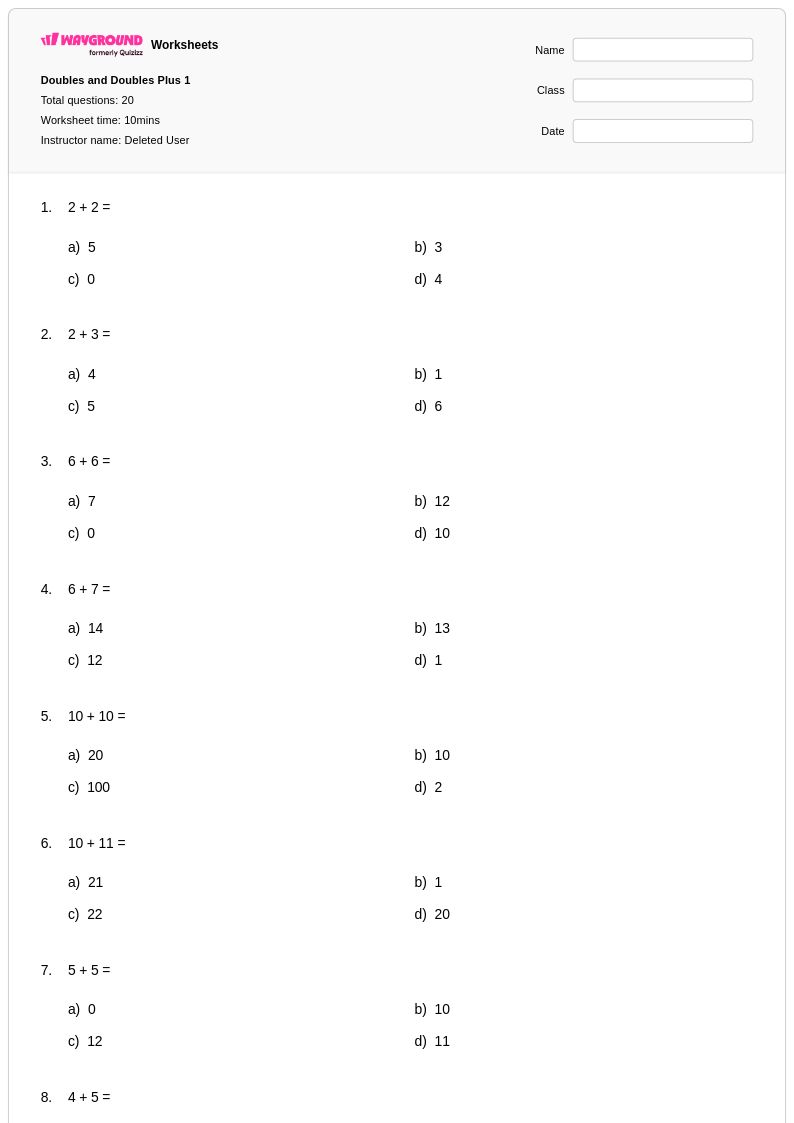
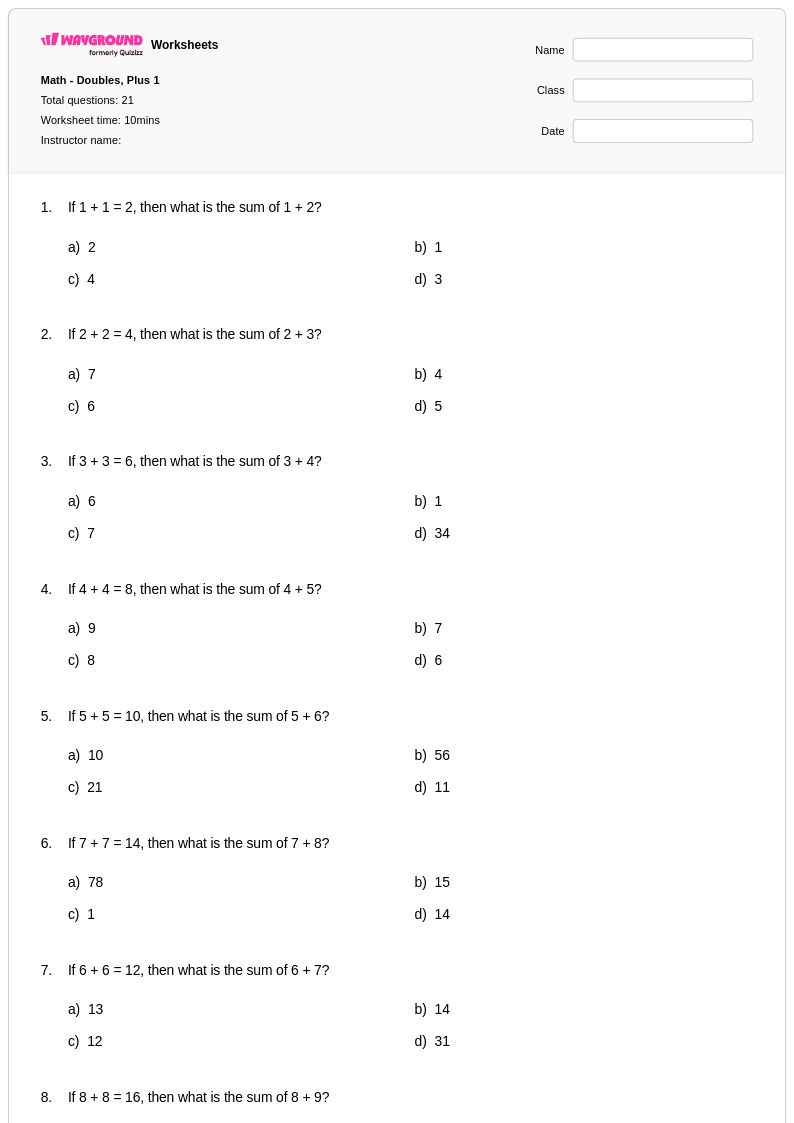
Doubles Plus 1 worksheets for kindergarten students available through Wayground (formerly Quizizz) provide essential foundation building practice for early addition strategies. These carefully designed educational resources help young learners master the concept of adding one more to doubles facts, such as recognizing that 3+4 equals one more than 3+3, or that 5+6 builds upon the doubles fact 5+5. The worksheets strengthen number sense, pattern recognition, and mental math fluency while introducing students to strategic thinking about addition problems. Each printable resource includes comprehensive practice problems that guide students through visual representations, number line exercises, and concrete manipulative activities, with accompanying answer keys that support both independent work and teacher-guided instruction. These free pdf materials systematically develop the critical skill of using known doubles facts as stepping stones to solve near-doubles problems.
Wayground (formerly Quizizz) empowers educators with access to millions of teacher-created doubles plus 1 worksheets and related kindergarten mathematics resources, all enhanced by robust search and filtering capabilities that streamline lesson planning. The platform's standards-aligned content supports differentiated instruction through customizable difficulty levels, varied problem formats, and multiple representation methods that accommodate diverse learning styles and developmental stages. Teachers can seamlessly integrate these materials into remediation sessions for struggling students, enrichment activities for advanced learners, or regular skill practice routines, with the flexibility to use resources in both printable pdf format for traditional classroom settings and digital formats for interactive learning experiences. The comprehensive collection includes manipulative-based activities, visual counting exercises, and abstract number problems that scaffold student understanding while providing educators with reliable assessment tools to monitor progress in this fundamental addition strategy.
FAQs
How do I introduce doubles plus 1 to kindergarteners?
Kindergarteners need to see it before they can think it. Use physical objects: put out 3 counters on each side, confirm 3+3=6, then add one more counter and ask what changed. Do this several times with different doubles before connecting it to written numbers. The concept — one more than a double you already know — is simple, but young learners need the concrete experience to make it stick.
Is doubles plus 1 appropriate for kindergarten, or is it too advanced?
It's appropriate for kindergarteners who already have a working grasp of doubles facts within 10. For students still developing one-to-one correspondence or basic counting, doubles plus 1 is premature — the strategy only saves effort if the anchor double is already known. Treat it as an enrichment concept for kindergarteners who are ready, not a universal expectation.
What exercises help kindergarteners practice doubles plus 1?
Three formats work well at this age: visual dot-card pairs (show a doubles card, then add one dot and ask for the new total), number line hops (jump to the double, then one more), and simple fill-in frames like "3+3=___, so 3+4=___". Keep problems within 10 and always anchor each near-doubles problem to its double explicitly — kindergarteners aren't ready to identify the anchor on their own.
What misconceptions do kindergarteners have about doubles plus 1?
The most common one: students treat 3+4 as a completely new problem rather than connecting it to 3+3. They count from 1 instead of using the double as a shortcut. This usually means the doubles facts themselves aren't automatic yet — the strategy can't do its job if the anchor fact still requires counting. Another issue is directionality: some students only recognize the pattern when the smaller number comes first (3+4) and don't see that 4+3 is the same situation.
How do I use Wayground's kindergarten doubles plus 1 worksheets?
Print the PDF for hands-on paper practice — useful for kindergarteners who benefit from writing and circling answers rather than navigating a screen. Every worksheet includes an answer key so you can check work quickly. For small-group digital sessions, you can host the same worksheet as a Wayground quiz; the Read Aloud accommodation is especially practical at this age, letting the platform read questions aloud so emerging readers aren't blocked by text.
How does Common Core sequence doubles plus 1 in kindergarten math?
Common Core introduces addition and subtraction within 10 in Kindergarten, with an emphasis on understanding the meaning of addition before applying strategies. Doubles plus 1 sits at the edge of the Kindergarten progression — it's a strategy that becomes more central in Grade 1, when students are expected to add within 20 using known facts. In Kindergarten, the groundwork is building fluency with doubles themselves so that the "plus one" extension is a small, logical step rather than a new concept.
How can I support diverse learners with doubles plus 1 in kindergarten?
For students still developing number sense, Wayground's reduced answer choices accommodation is a practical starting point — fewer options means less working memory demand while the concept is new. The worksheet-level tools let you increase font size or apply a dyslexia-friendly font for students who need clearer visual presentation. For English language learners, translating the worksheet into a student's home language removes a language barrier from what is fundamentally a math task.