Free Printable Doubles Plus 1 Worksheets for Grade 2
Wayground's free Grade 2 Doubles Plus 1 worksheets provide engaging printables and practice problems with answer keys to help students master this essential addition strategy through structured PDF exercises.
Explore printable Doubles Plus 1 worksheets for Grade 2
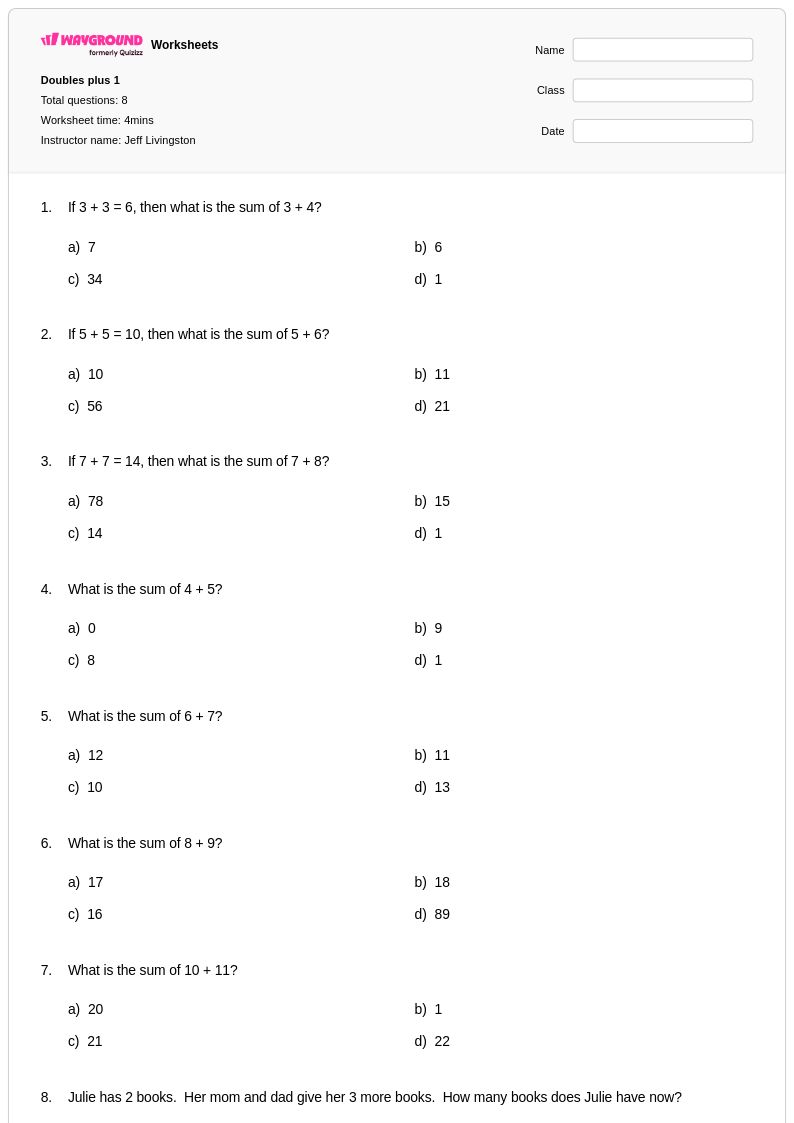
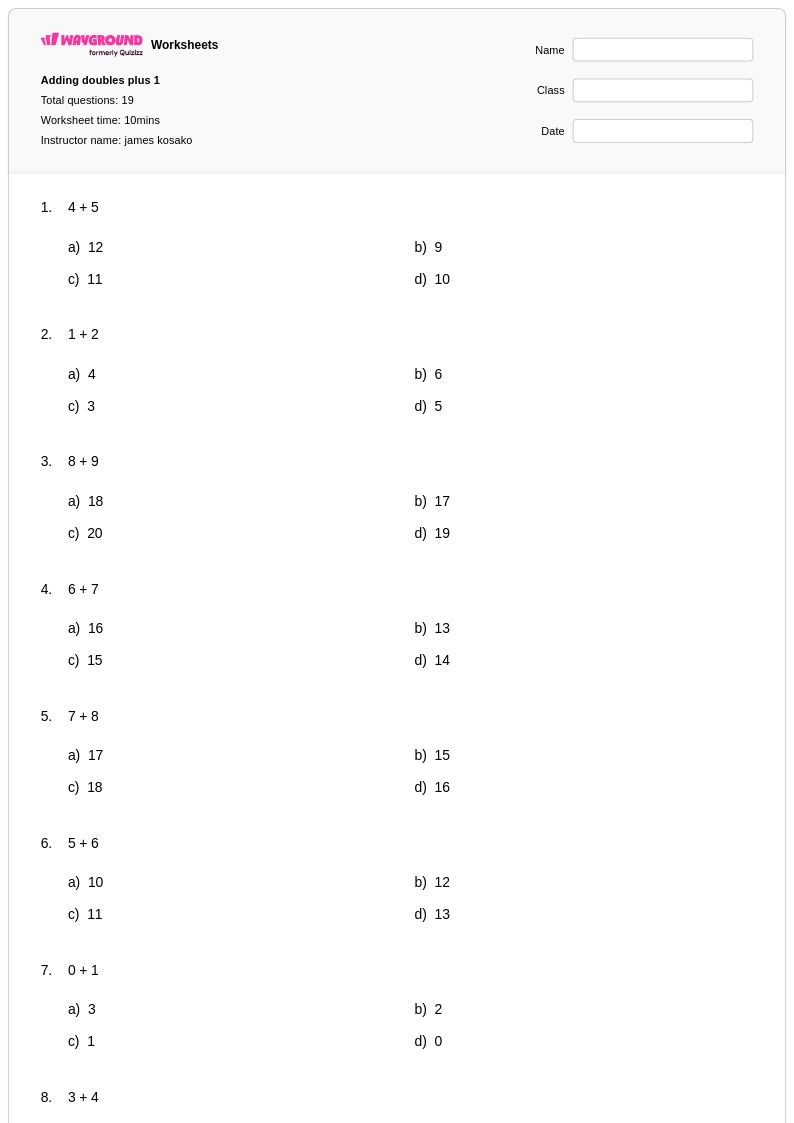
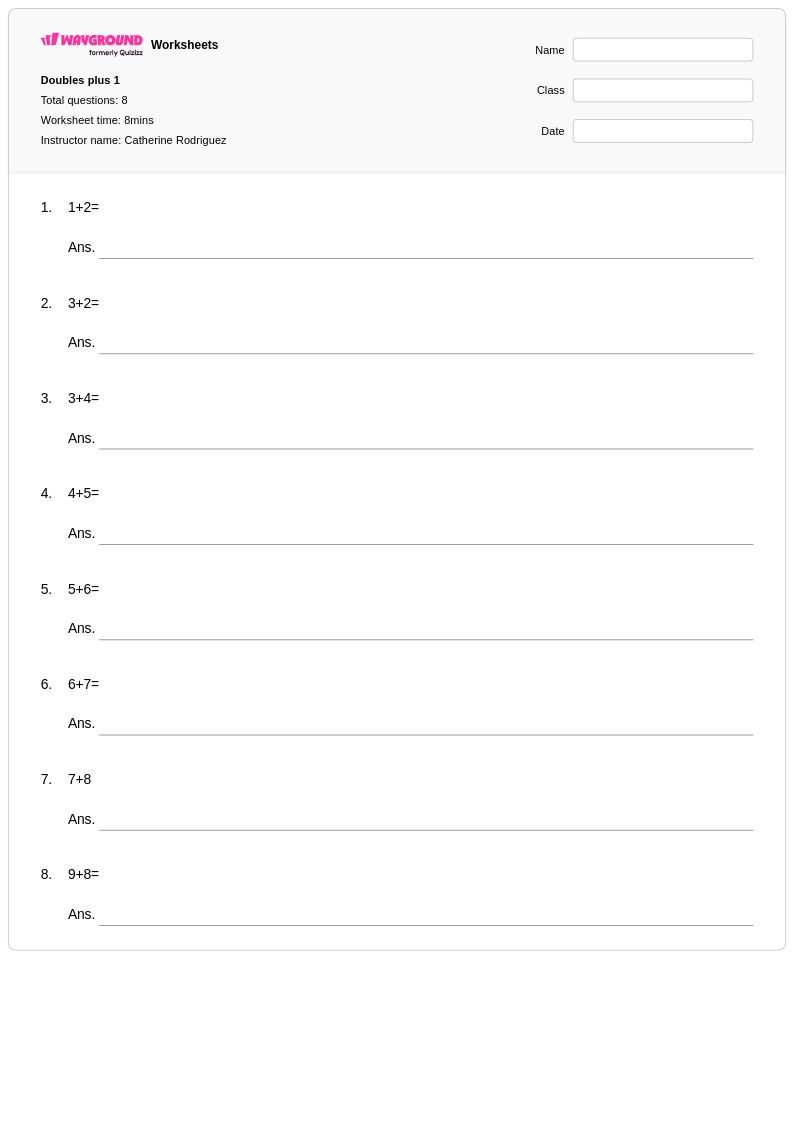
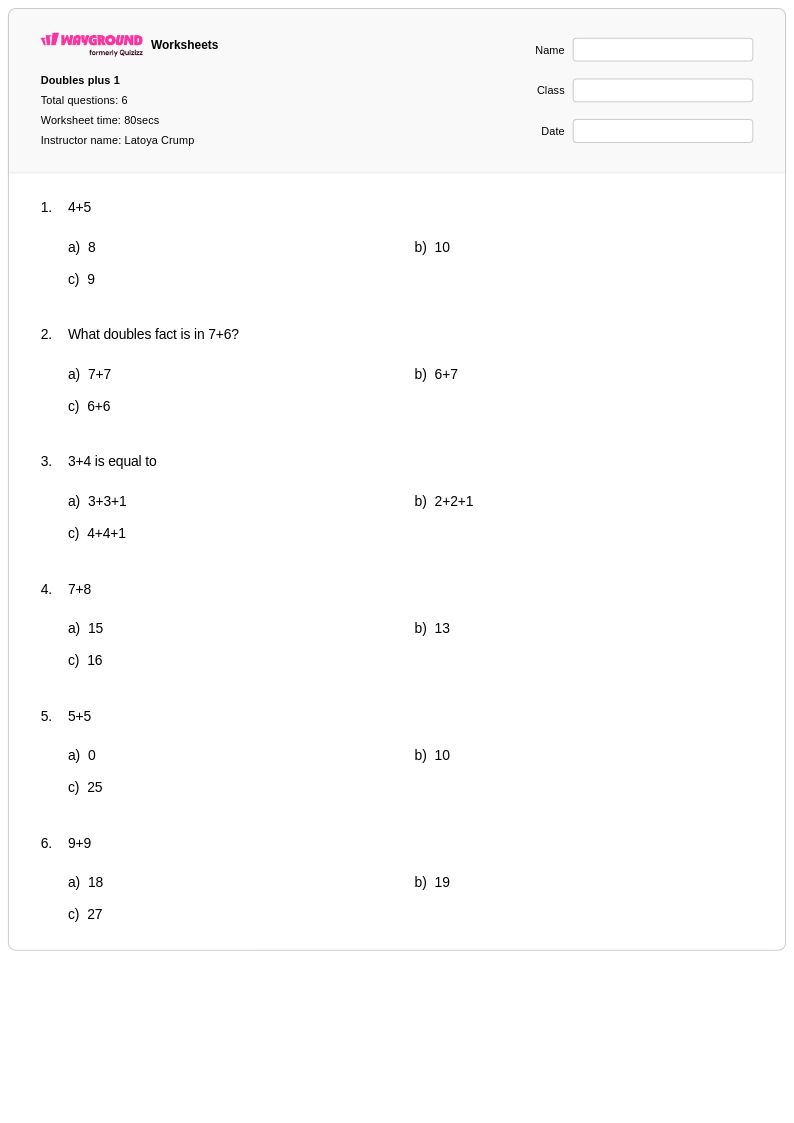
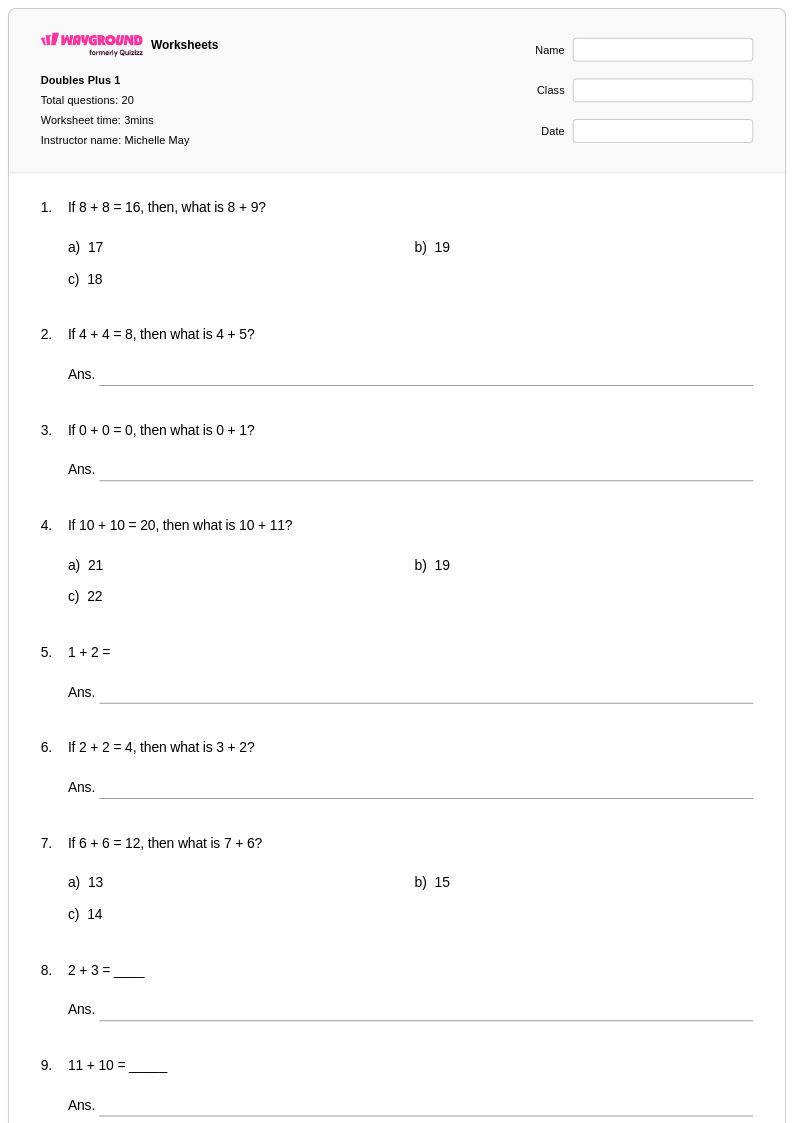
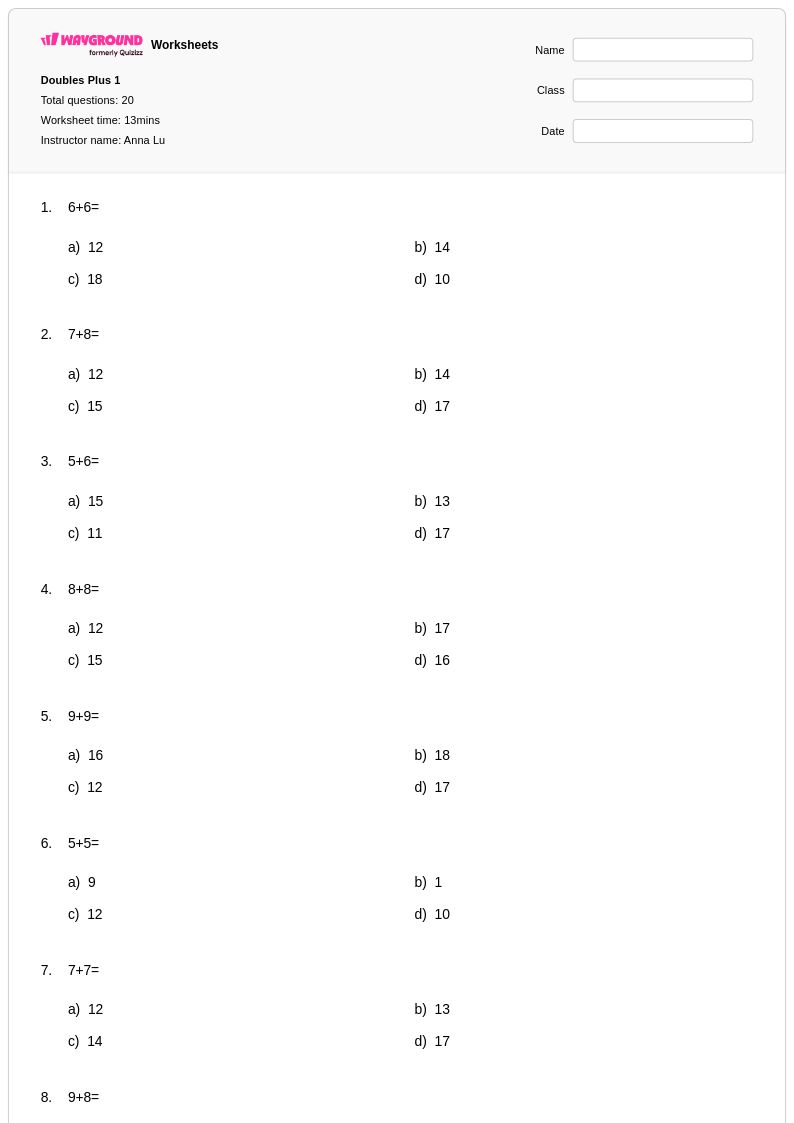
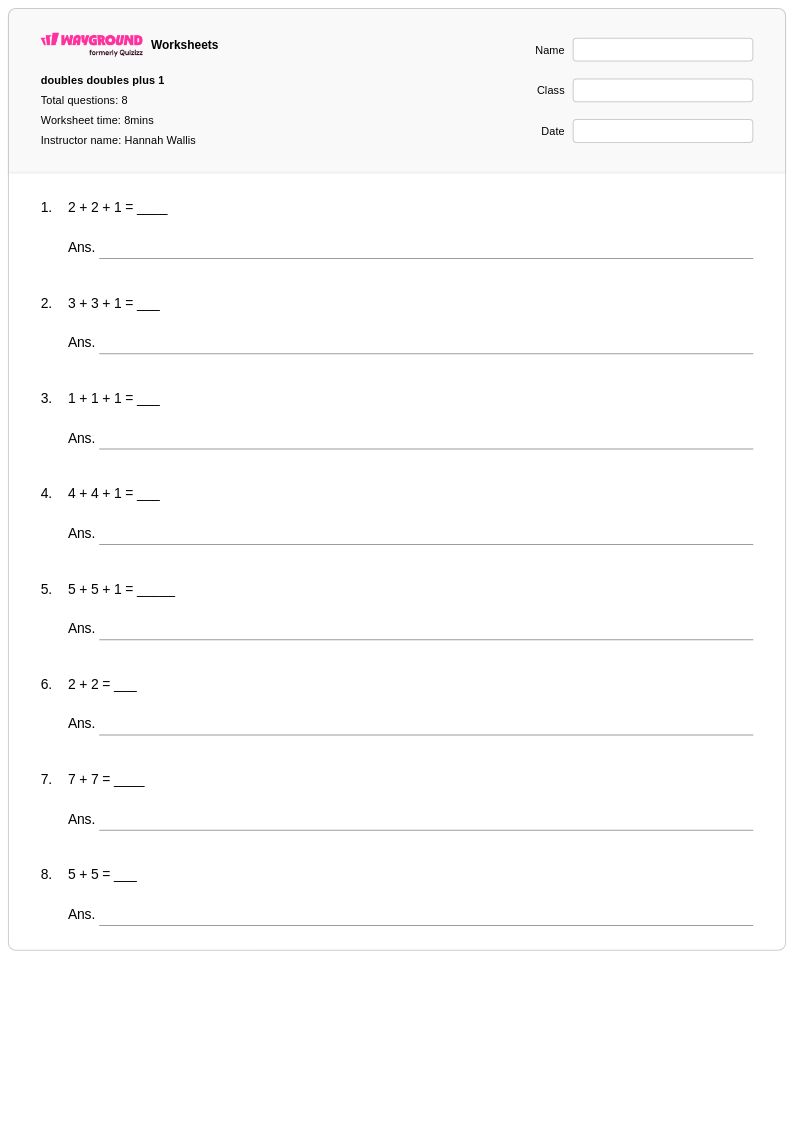
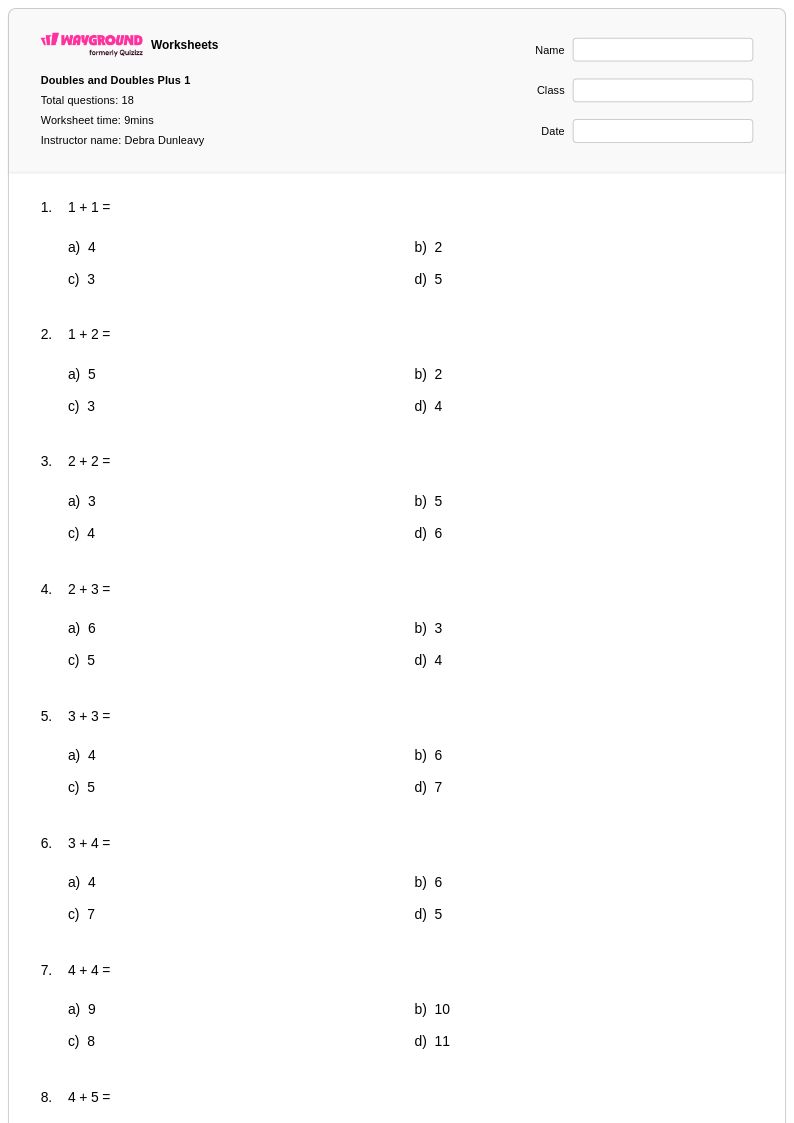
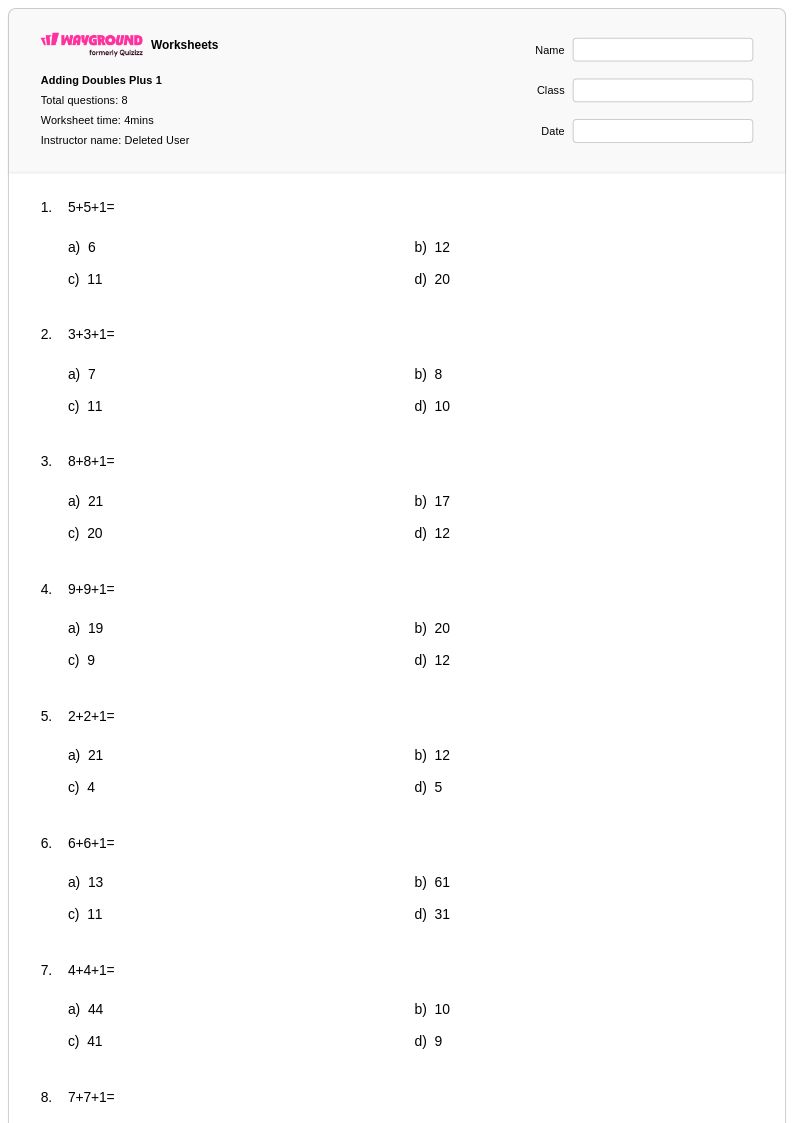
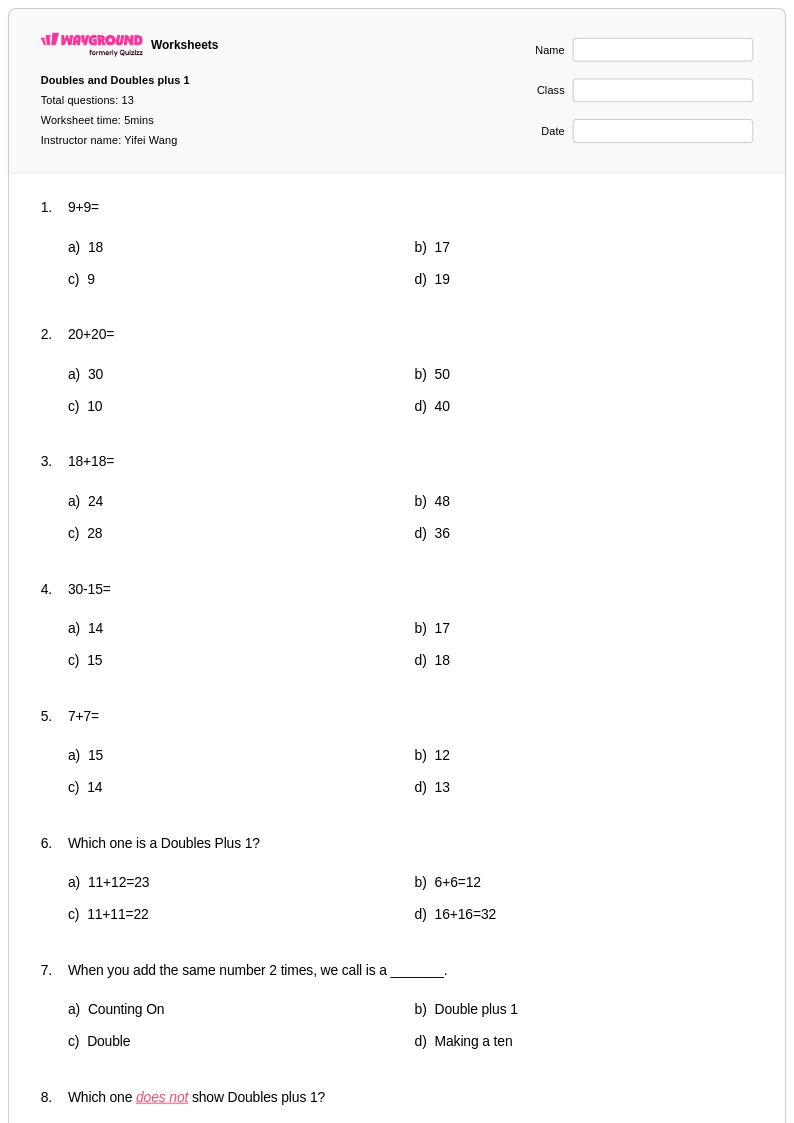
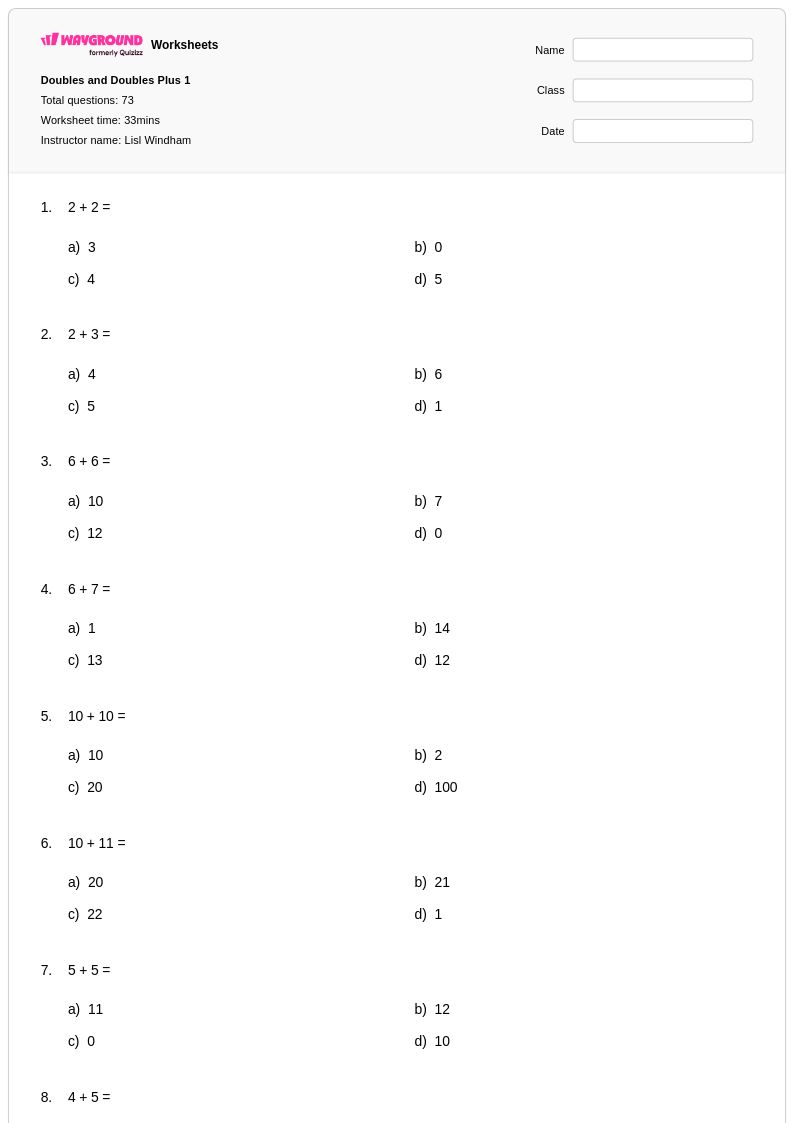
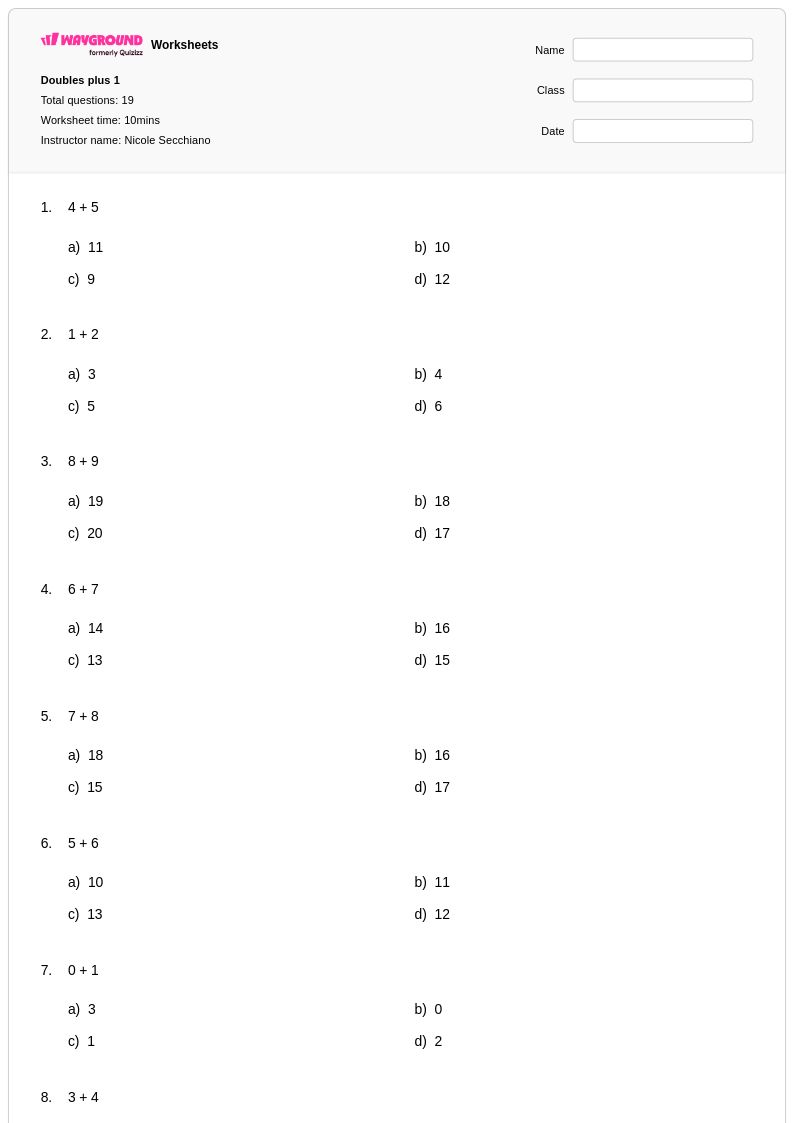
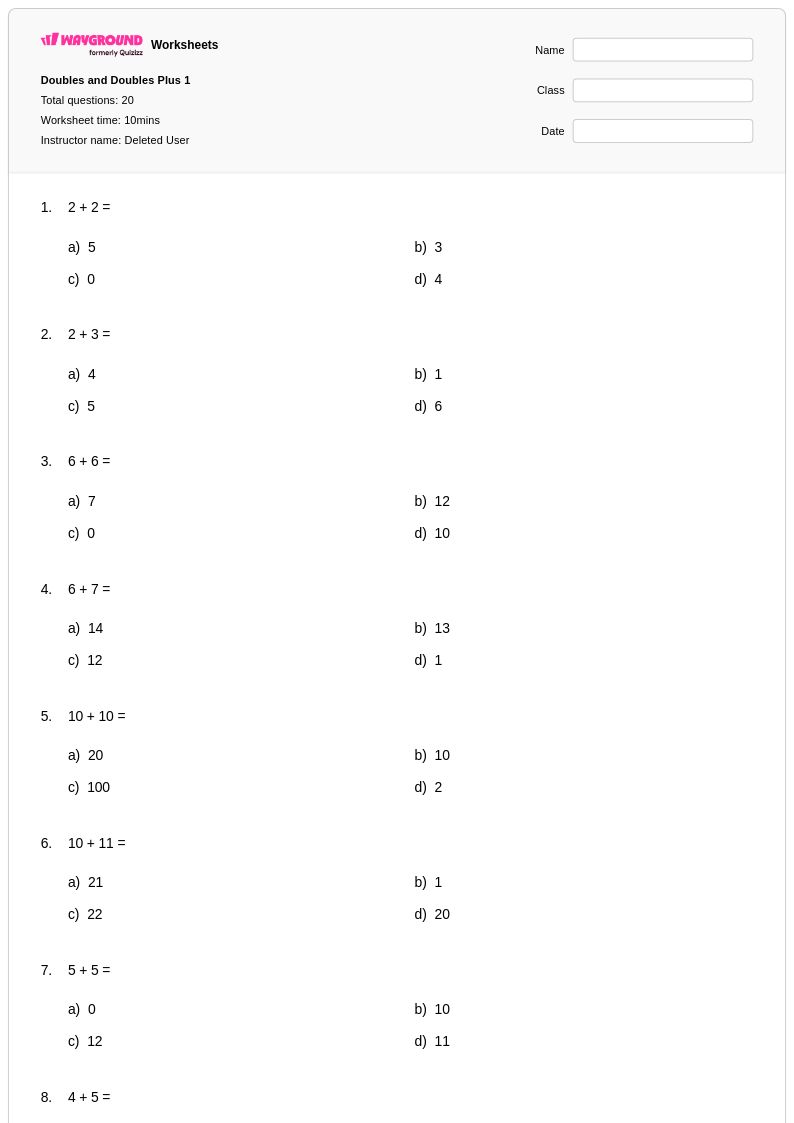
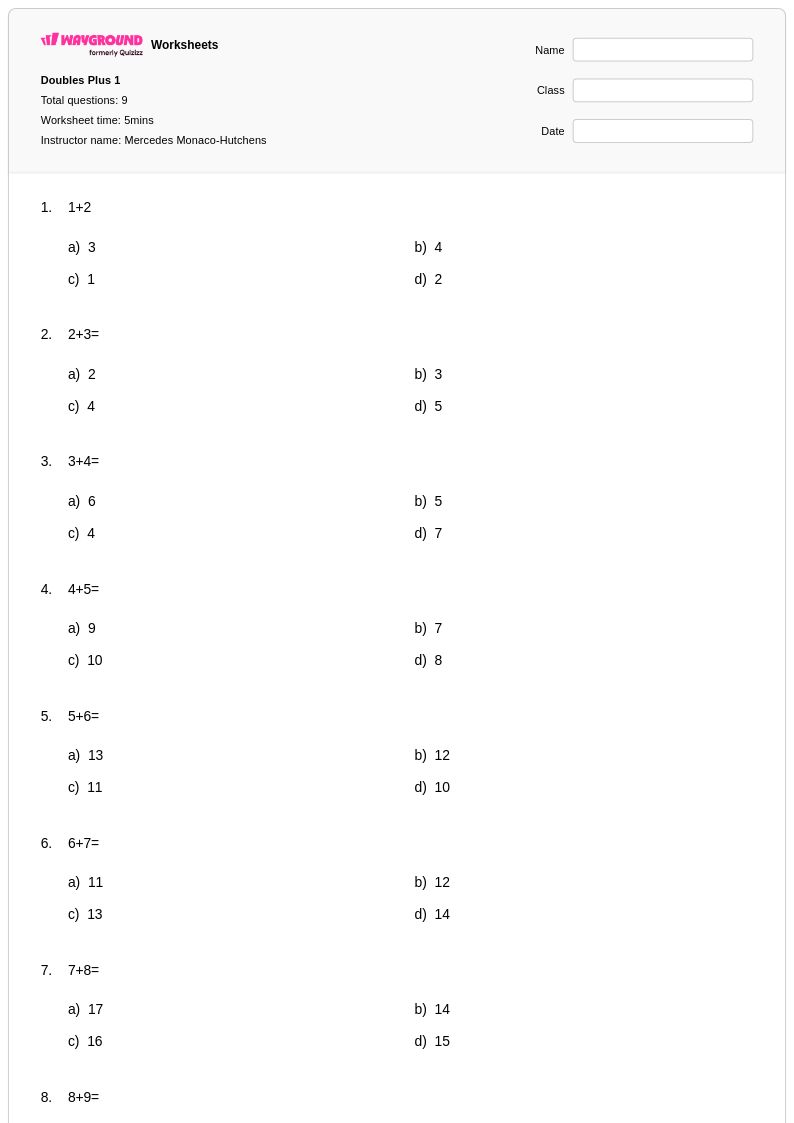
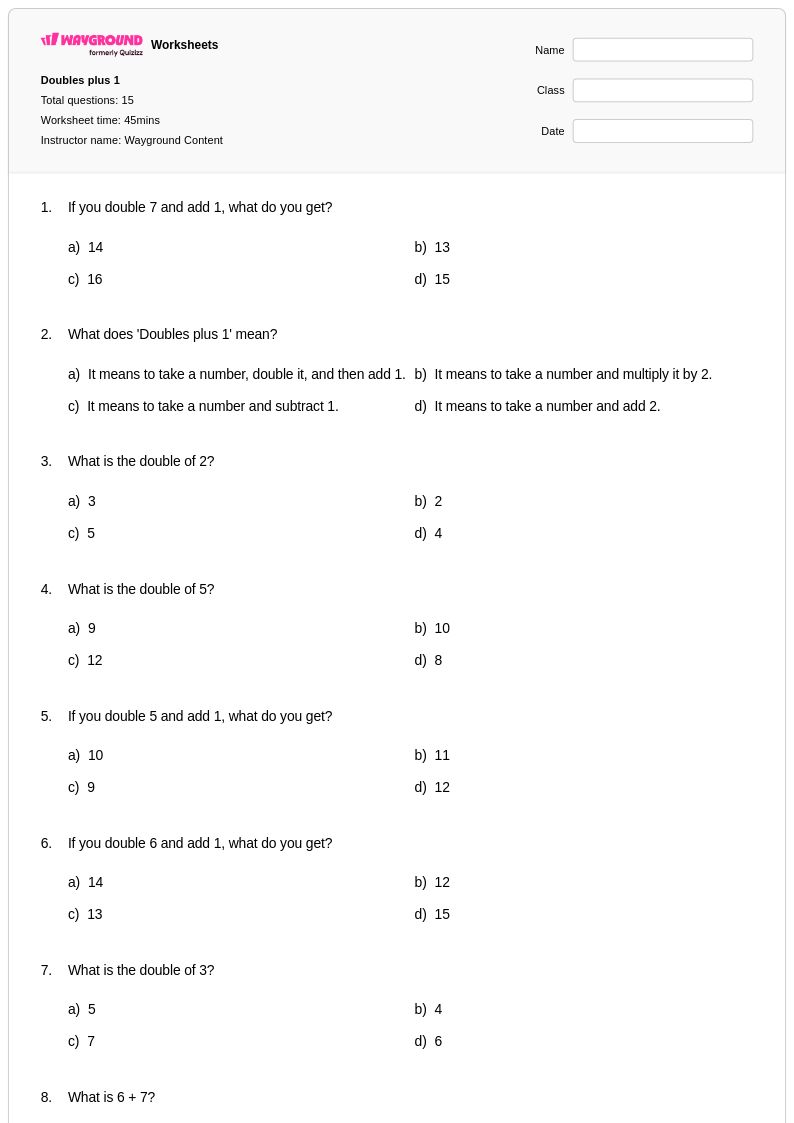
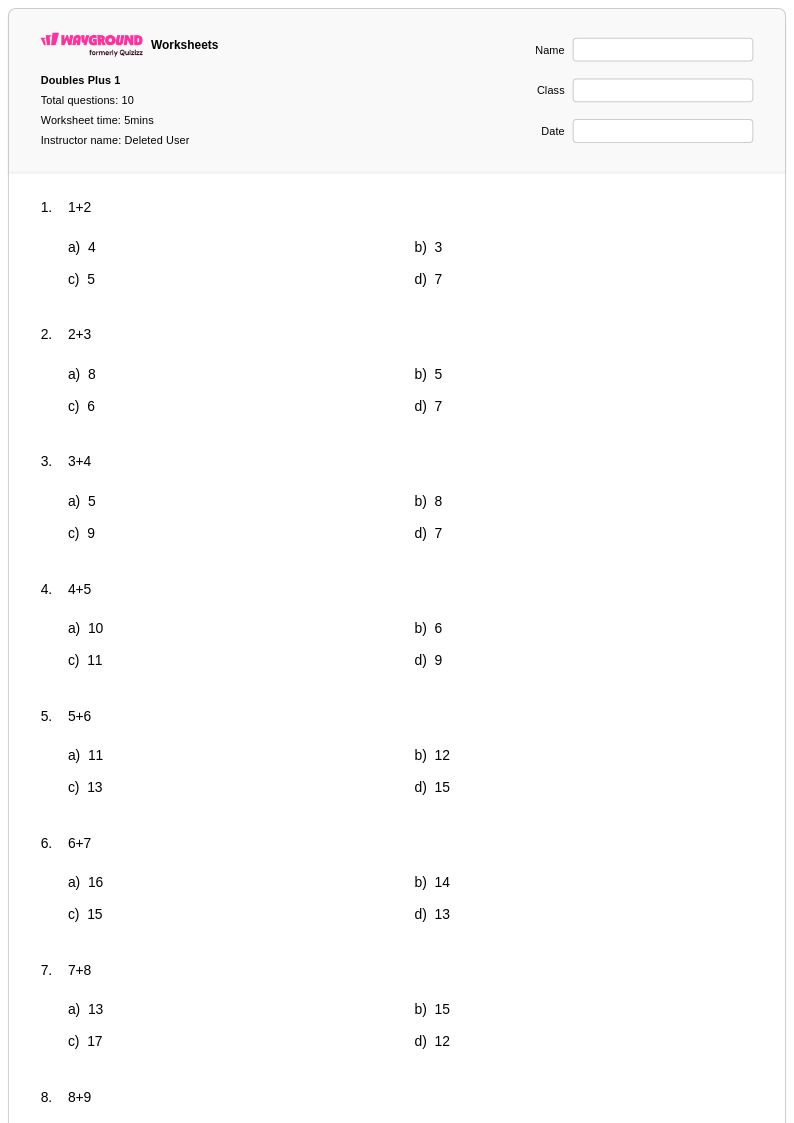
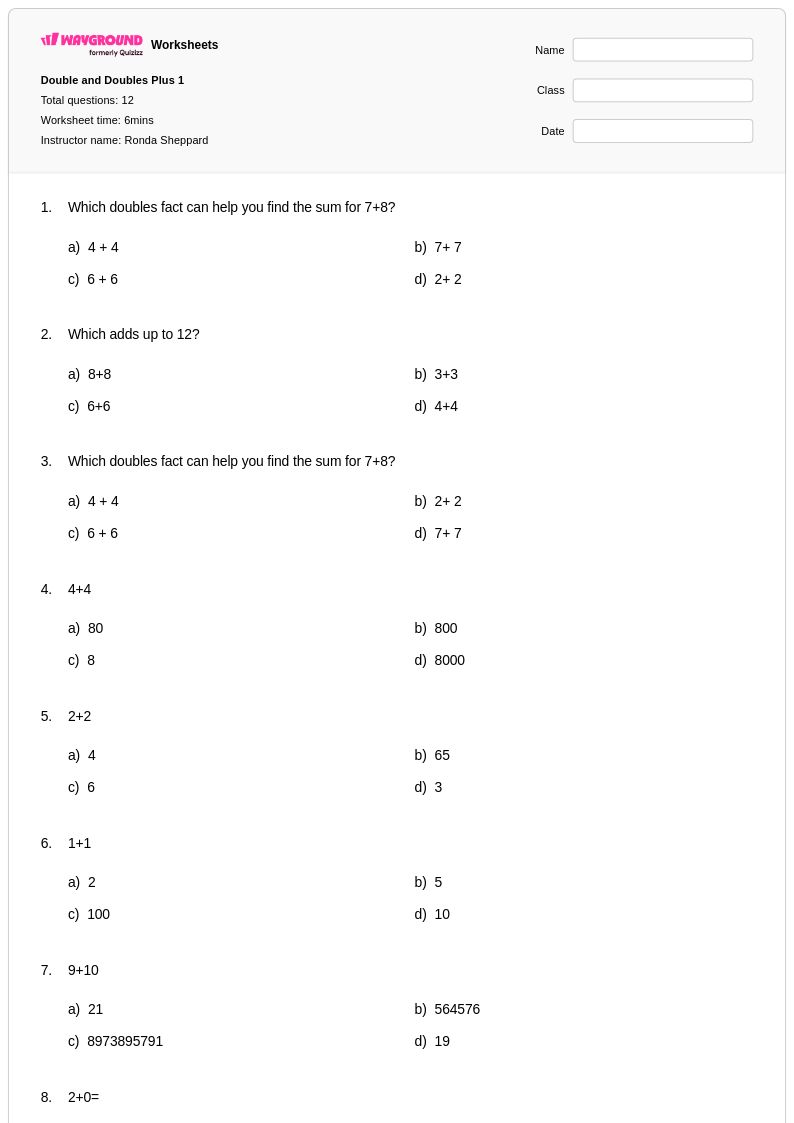
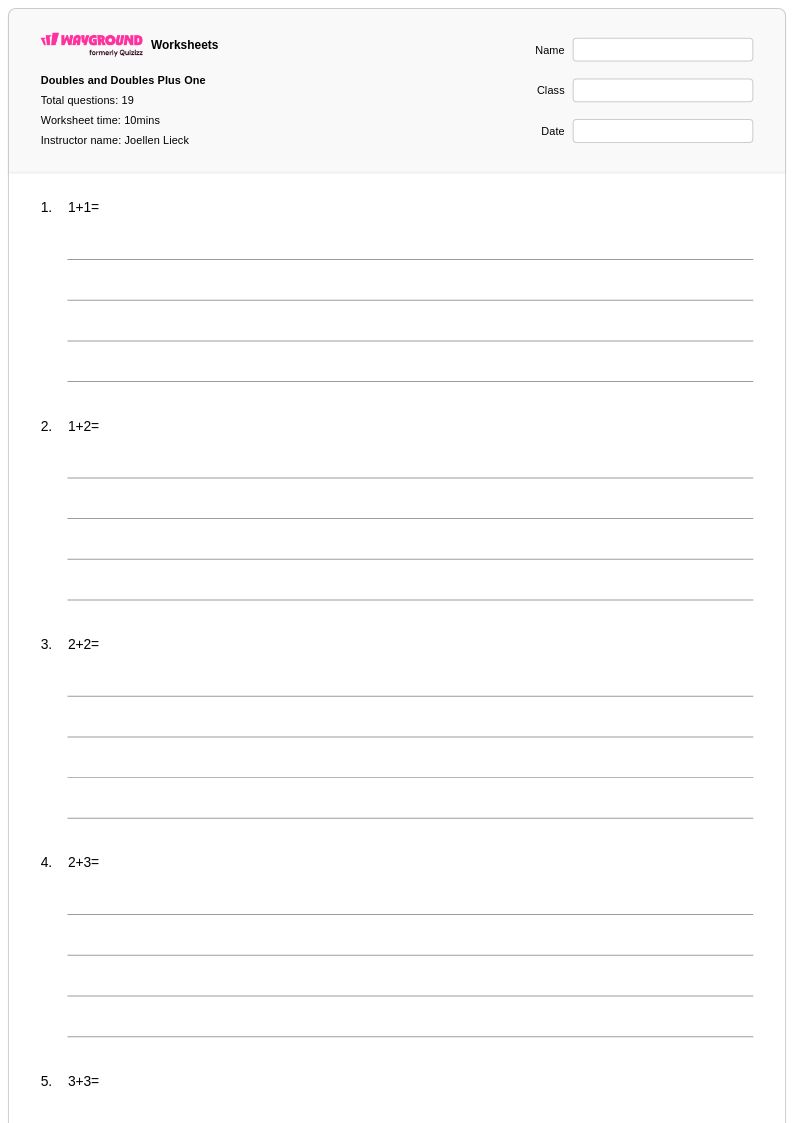
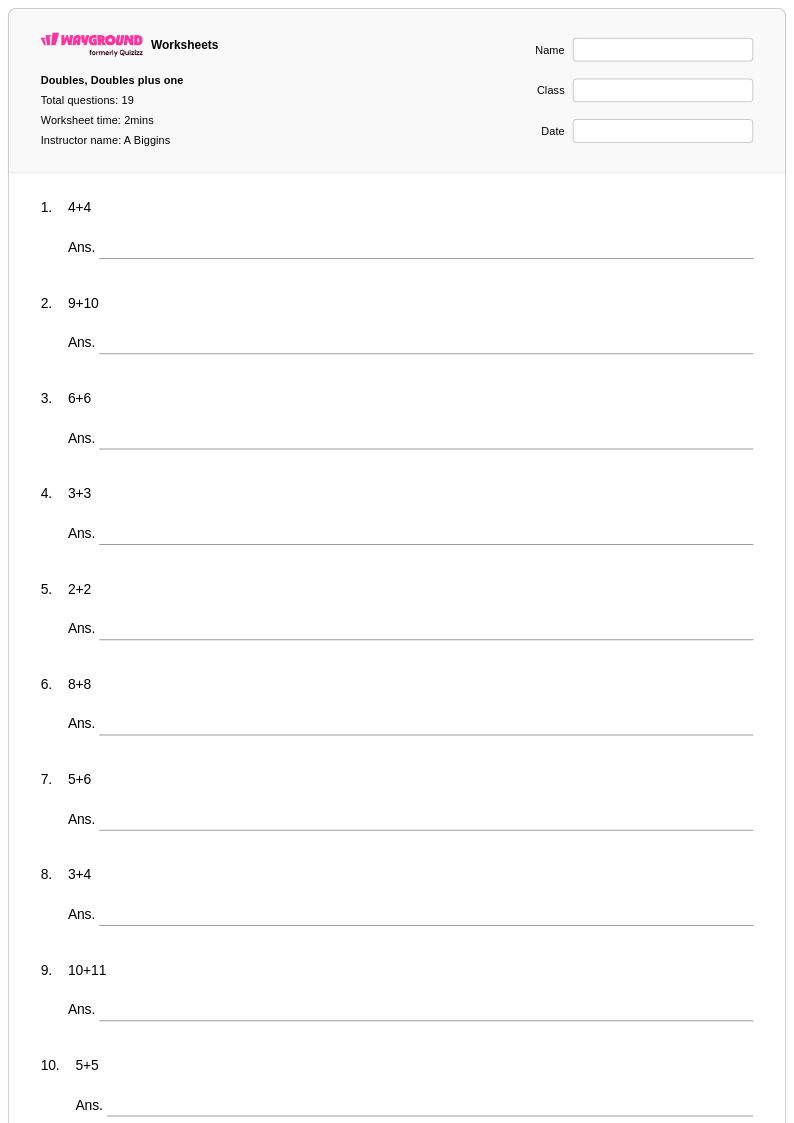
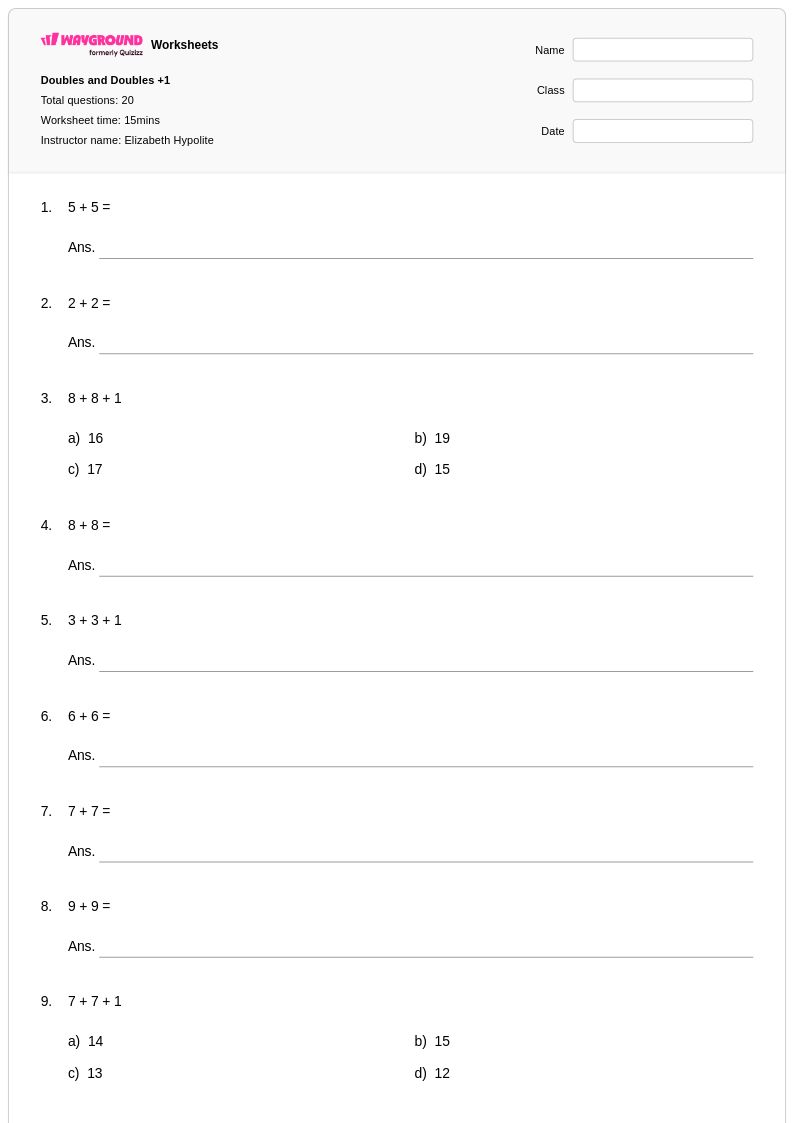
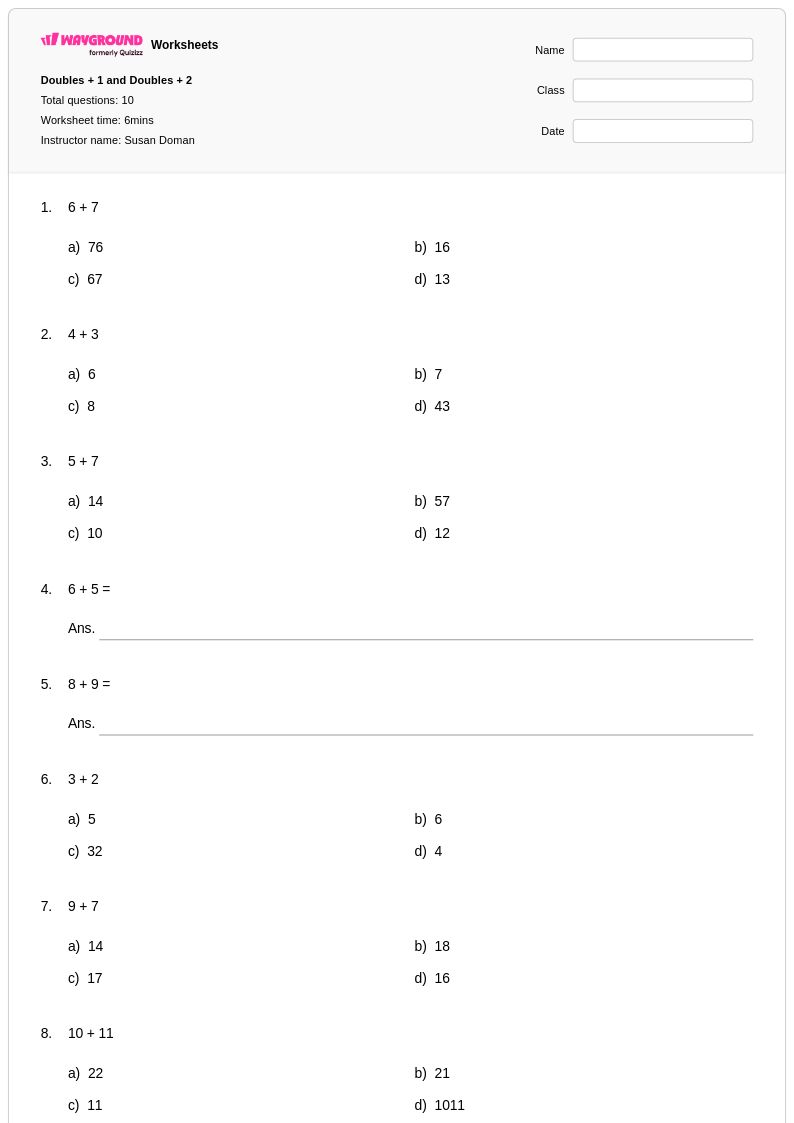
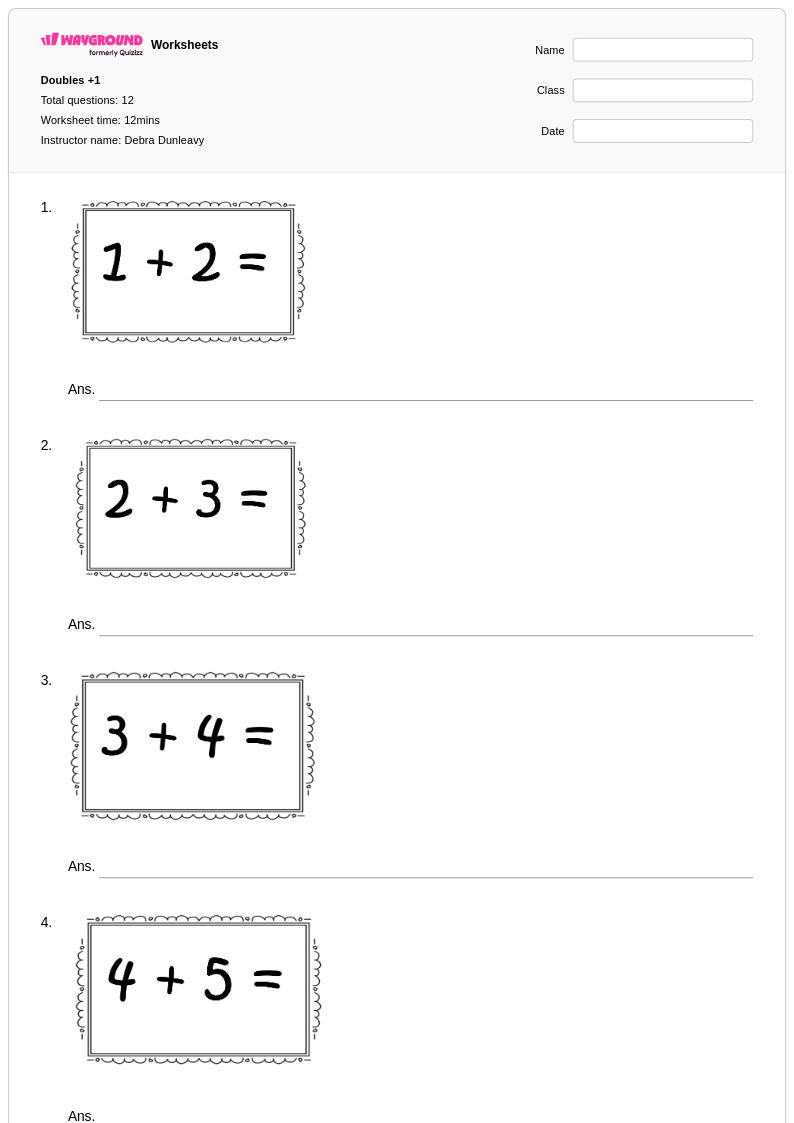
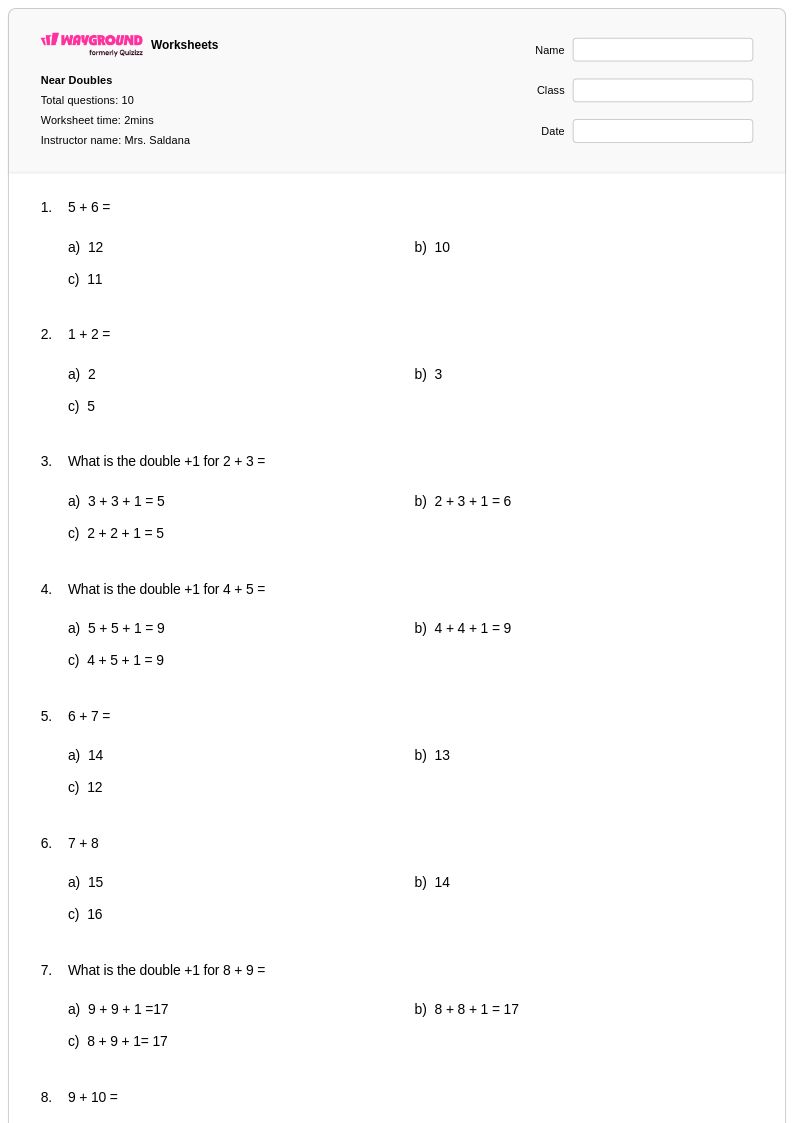
Doubles Plus 1 worksheets for Grade 2 students available through Wayground (formerly Quizizz) provide essential practice with this fundamental addition strategy that builds mathematical fluency and number sense. These comprehensive printables help young learners master the concept of taking known doubles facts like 4+4=8 and extending them to solve near-doubles problems such as 4+5=9 by adding one more to the familiar double. Students develop critical thinking skills as they recognize patterns, make connections between related math facts, and build confidence with mental math strategies. Each worksheet includes carefully structured practice problems that progress from concrete visual representations to abstract number sentences, with complete answer keys provided to support both independent work and guided instruction in pdf format.
Wayground (formerly Quizizz) empowers Grade 2 teachers with millions of educator-created Doubles Plus 1 resources that streamline lesson planning and differentiated instruction. The platform's robust search and filtering capabilities allow teachers to quickly locate worksheets aligned with state mathematics standards and customized to meet diverse student needs, whether for initial skill introduction, remediation, or enrichment activities. Teachers can easily modify existing materials or create new practice sets, then distribute them in both printable pdf format for traditional paper-and-pencil work and digital formats for interactive learning experiences. This flexibility supports various teaching approaches while ensuring students receive targeted practice with this essential addition strategy that serves as a foundation for more advanced mathematical concepts.
FAQs
Why are second graders still practicing doubles plus 1?
For most students, doubles plus 1 should be automatic by the end of Grade 1 — but many arrive in Grade 2 still reconstructing the reasoning each time rather than recalling the fact directly. Grade 2 practice shifts the goal from understanding the strategy to automating it, so students can apply it instantly when it appears inside larger problems like two-digit addition. It's also useful spiral review before introducing related strategies like doubles plus 2.
What exercises help second graders automate doubles plus 1 facts?
At this grade, the reasoning is already in place — the work is building speed. Mixed-fact fluency drills that include doubles, near-doubles, and unrelated facts are more effective than near-doubles-only practice, because students need to recognize when the strategy applies, not just execute it on cue. Timed one-minute sprints followed by a self-graph of progress give students a concrete sense of their own improvement.
What mistakes do second graders still make with doubles plus 1?
The most telling sign at this grade isn't a wrong answer — it's a slow one. Students who pause noticeably on 7+8 haven't automated the fact yet, even if they eventually get 15. A second pattern: students who apply the strategy correctly in isolation but revert to counting on when doubles plus 1 appears inside a word problem or a multi-step calculation. Context disrupts retrieval when the fact isn't truly automatic.
How do I use Wayground's Grade 2 doubles plus 1 worksheets?
The printable PDF works well for timed paper drills — print, set a one-minute timer, and use the answer key to score immediately. For digital practice, host the worksheet as a Wayground quiz; students get instant feedback on each answer, which is more effective for fluency building than waiting for a graded paper to come back. Either way, the content is identical.
How does Common Core treat doubles plus 1 by Grade 2?
Common Core expects students to have fluency with addition and subtraction within 20 by the end of Grade 2 — meaning fast, accurate recall without reconstructing strategies. Doubles plus 1 facts (like 6+7 or 8+9) are part of that fluency target. The Grade 2 expectation builds directly on Grade 1's strategy-based work: students who understood why 6+7=13 in first grade should be recalling it automatically in second. Grade 2 also introduces addition within 100, where near-doubles fluency supports mental math with larger numbers.
How can I use doubles plus 1 worksheets to support struggling second graders?
If a student is still slow on near-doubles, the gap is almost always in doubles recall, not in understanding the plus-one step. Start by confirming which doubles facts are automatic and which aren't — then target those specifically before returning to near-doubles practice. On Wayground, the Read Aloud accommodation helps students who are also managing reading demands alongside math, and extended time removes the pressure that can cause students to abandon a strategy they actually know.