
20 Q
1st - Uni
20 Q
1st - Uni
15 Q
2nd - Uni
15 Q
1st - Uni
15 Q
1st - Uni
20 Q
1st - Uni
12 Q
2nd - Uni
12 Q
2nd - Uni
10 Q
1st - 2nd
20 Q
1st - Uni
15 Q
1st - Uni
20 Q
2nd - Uni
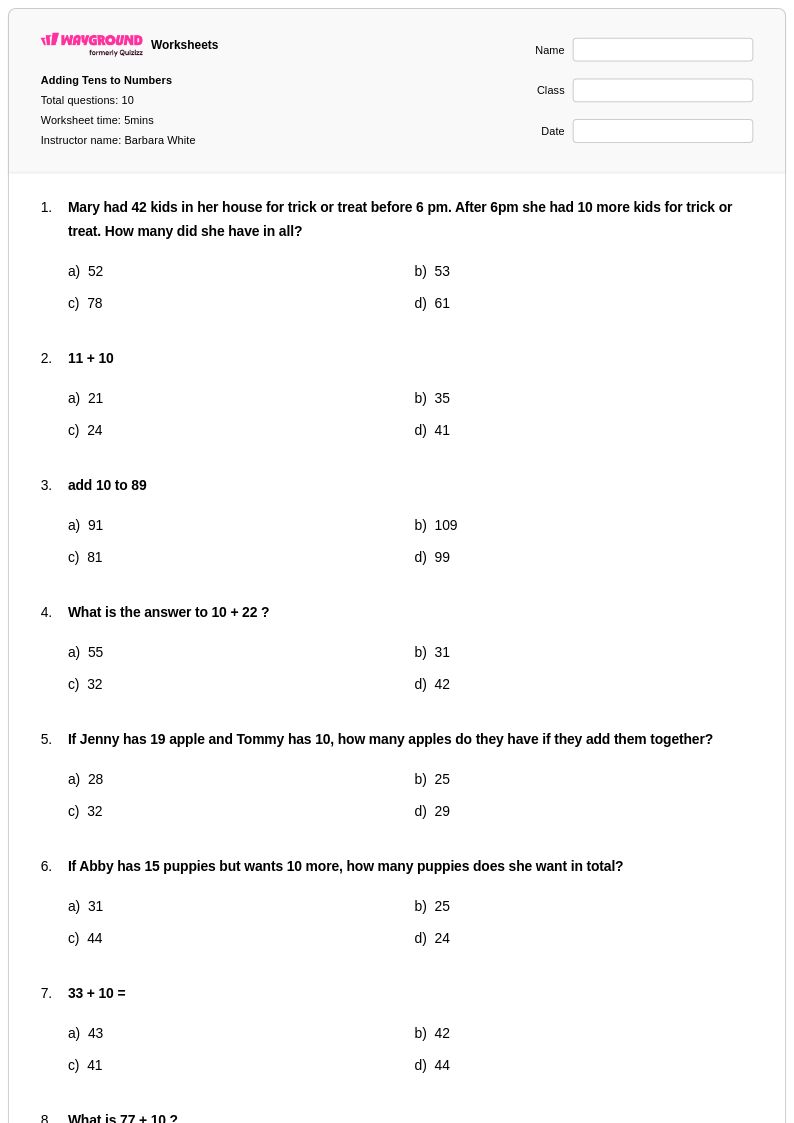
10 Q
1st - 2nd
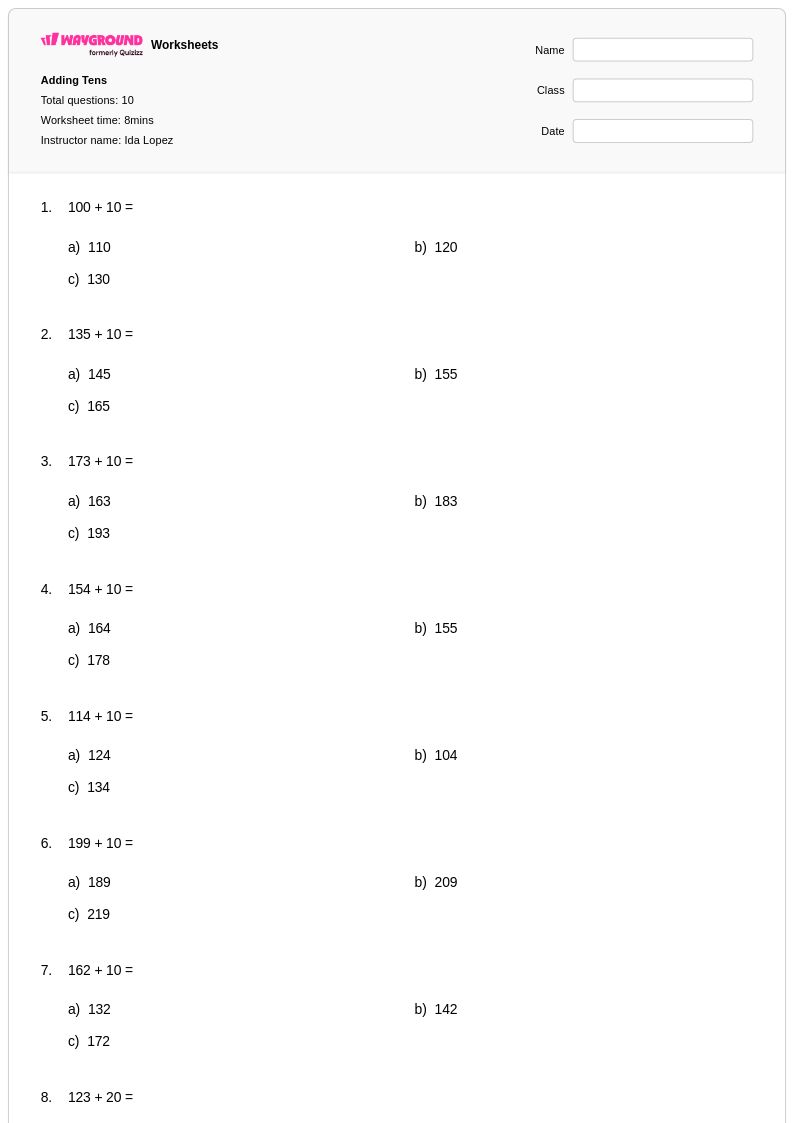
10 Q
2nd
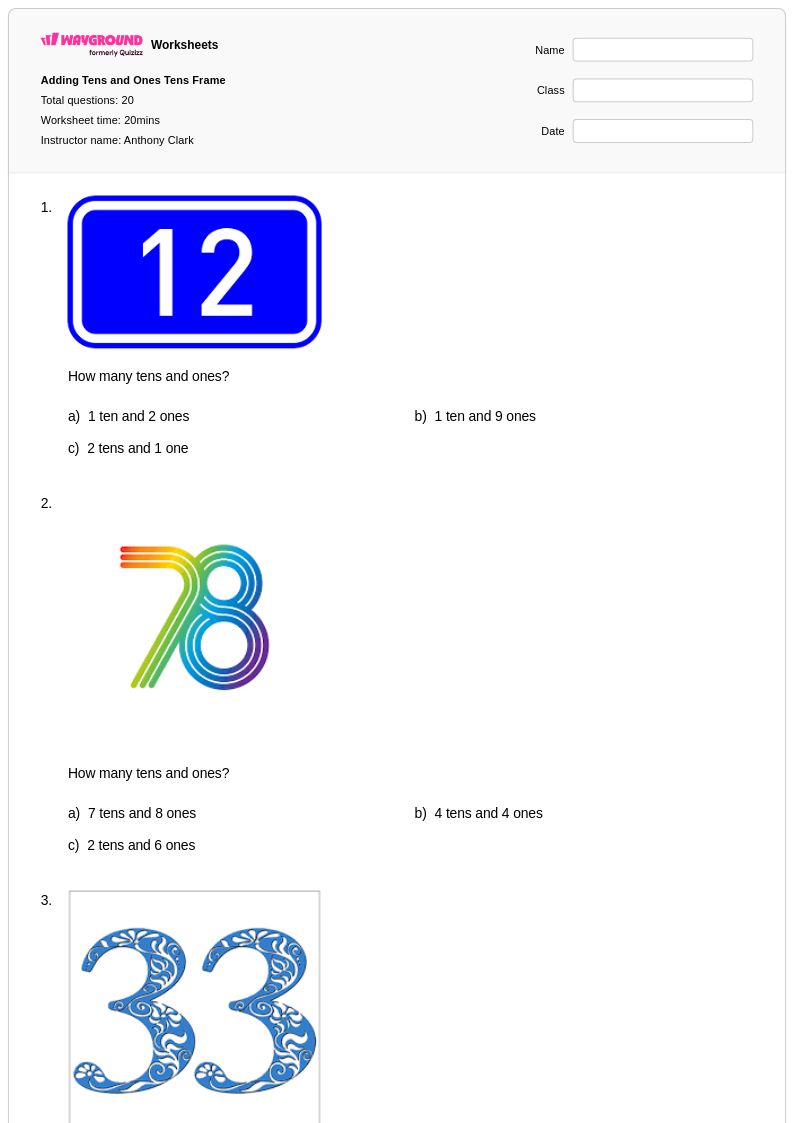
20 Q
1st - Uni
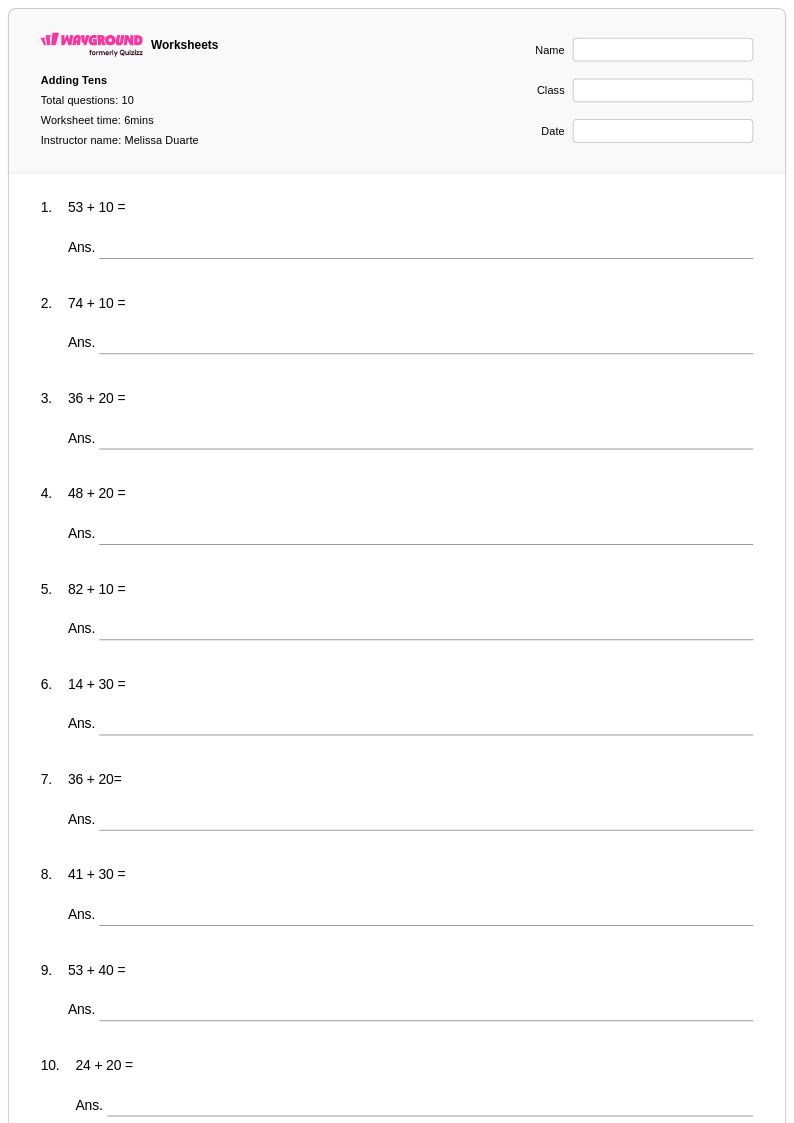
10 Q
1st - 2nd
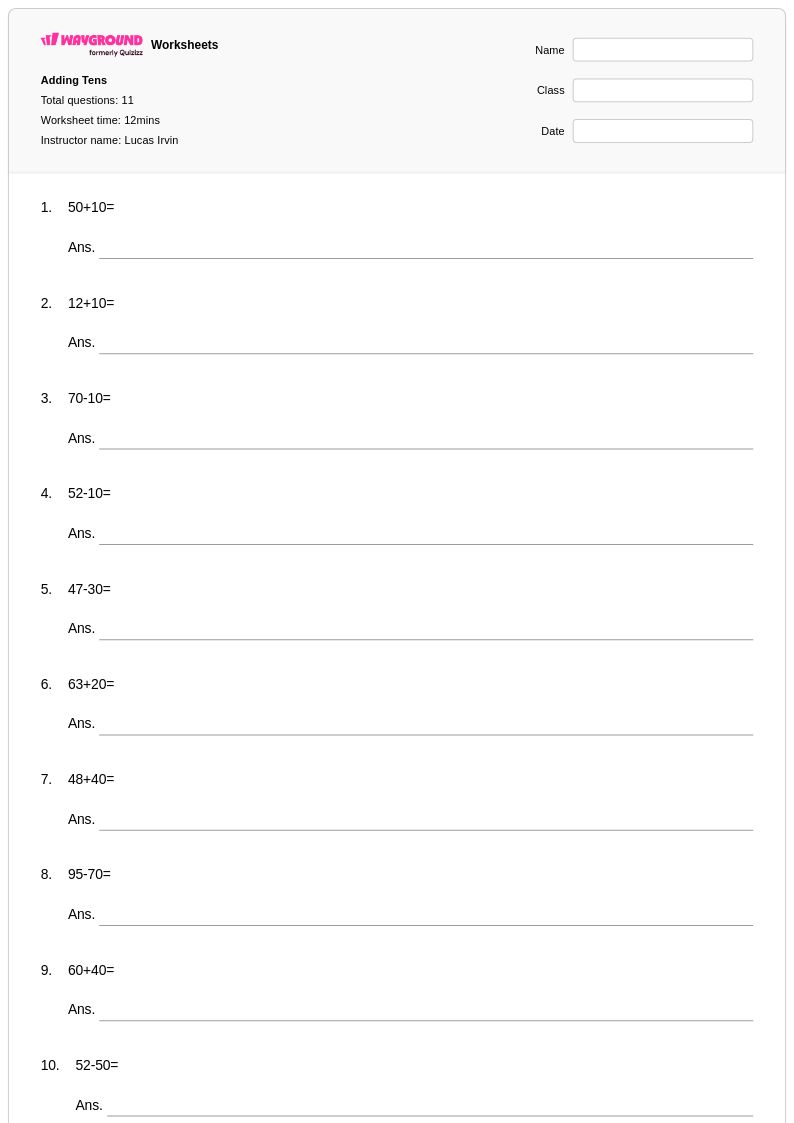
11 Q
2nd
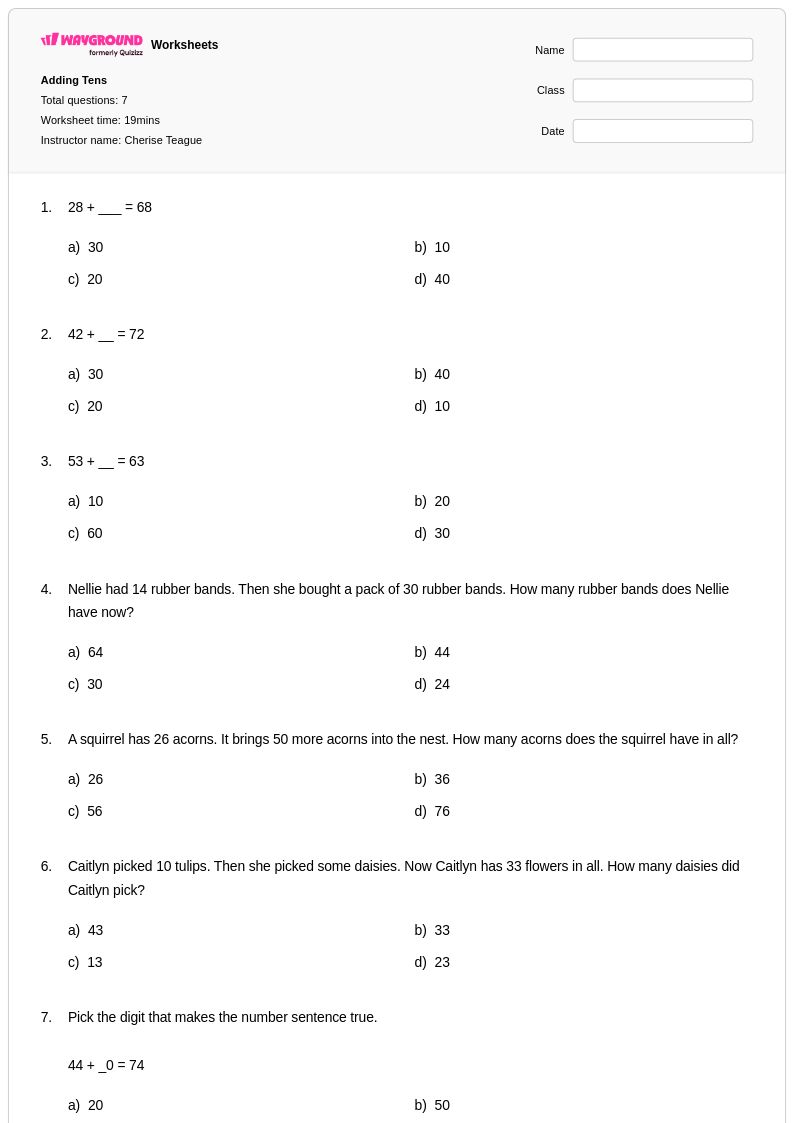
7 Q
2nd
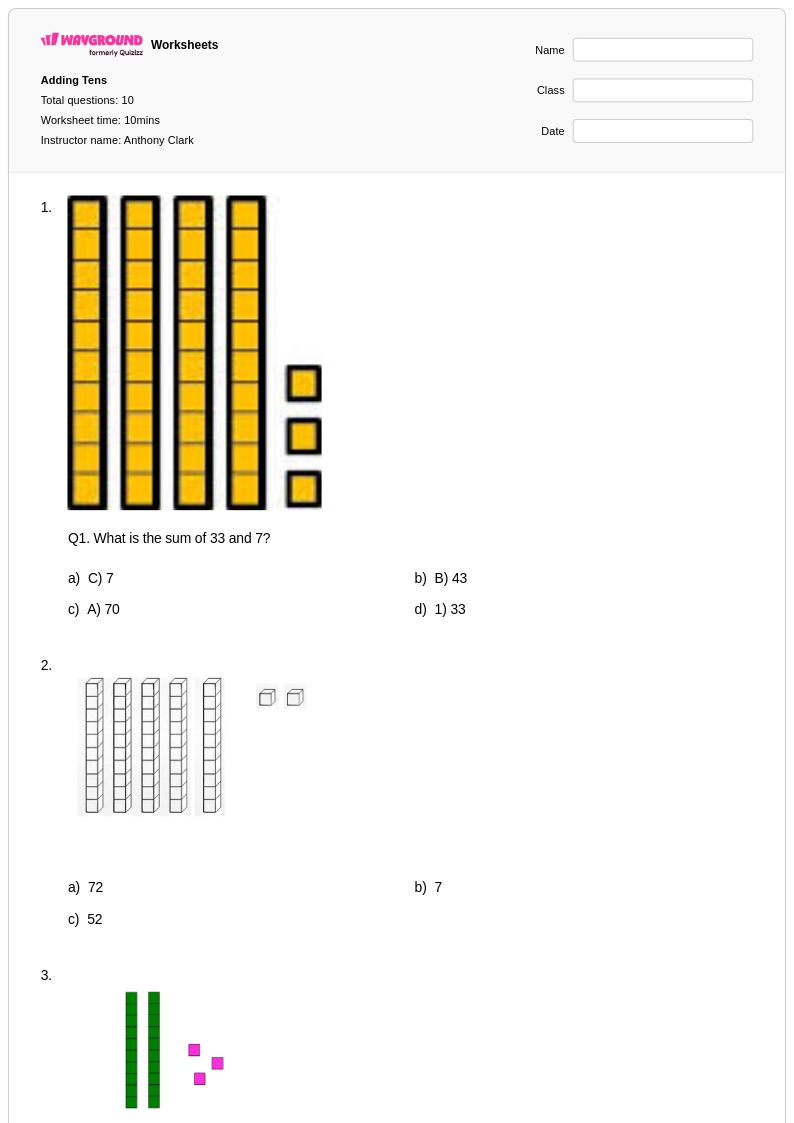
10 Q
1st - Uni
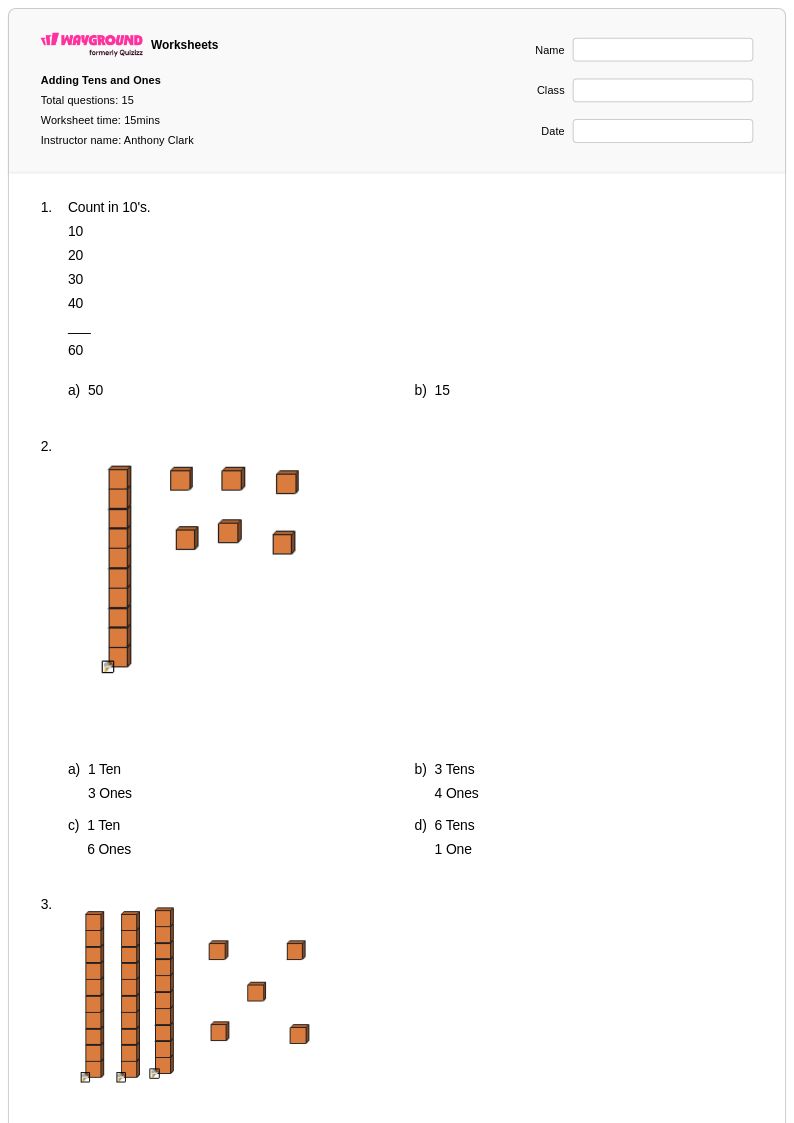
15 Q
1st - Uni
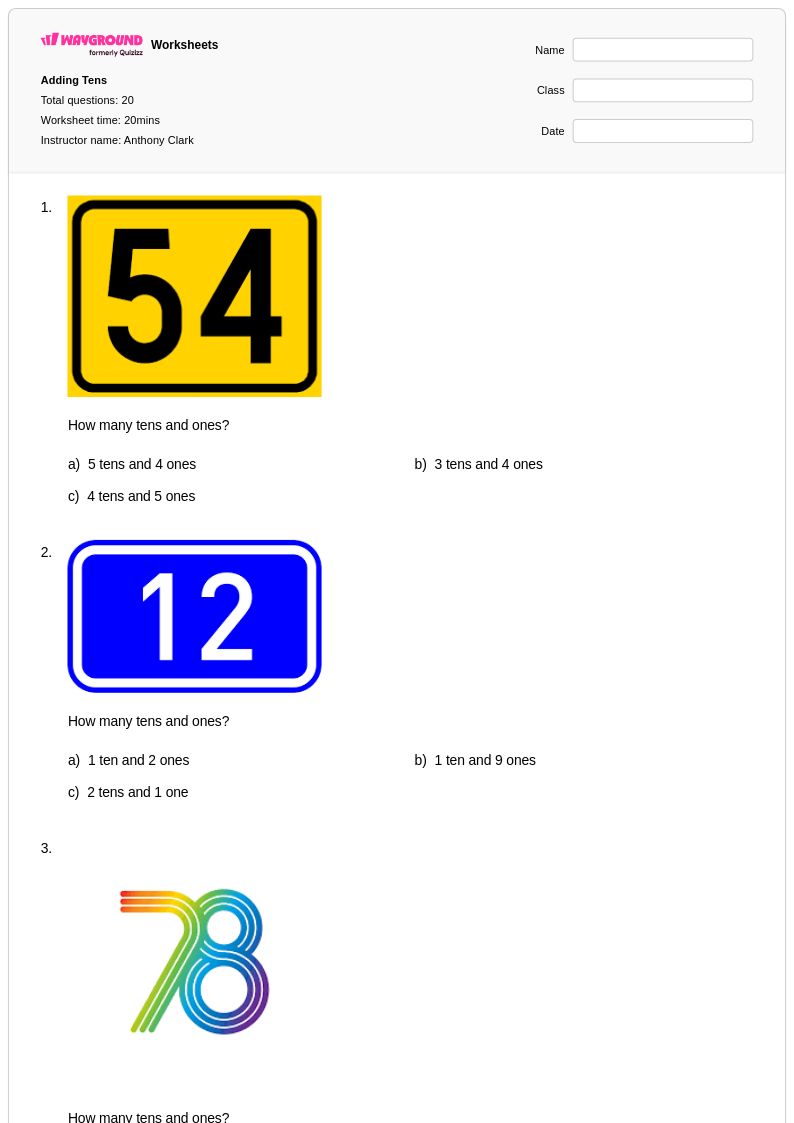
20 Q
1st - Uni
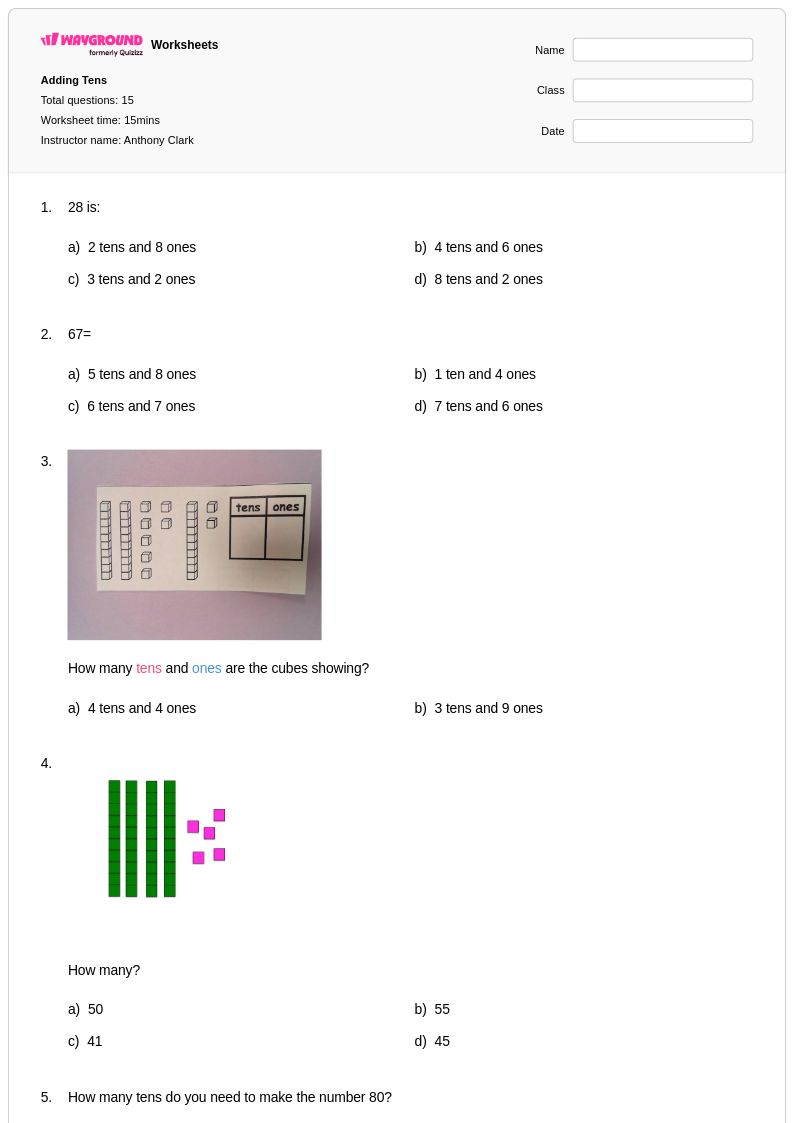
15 Q
1st - Uni
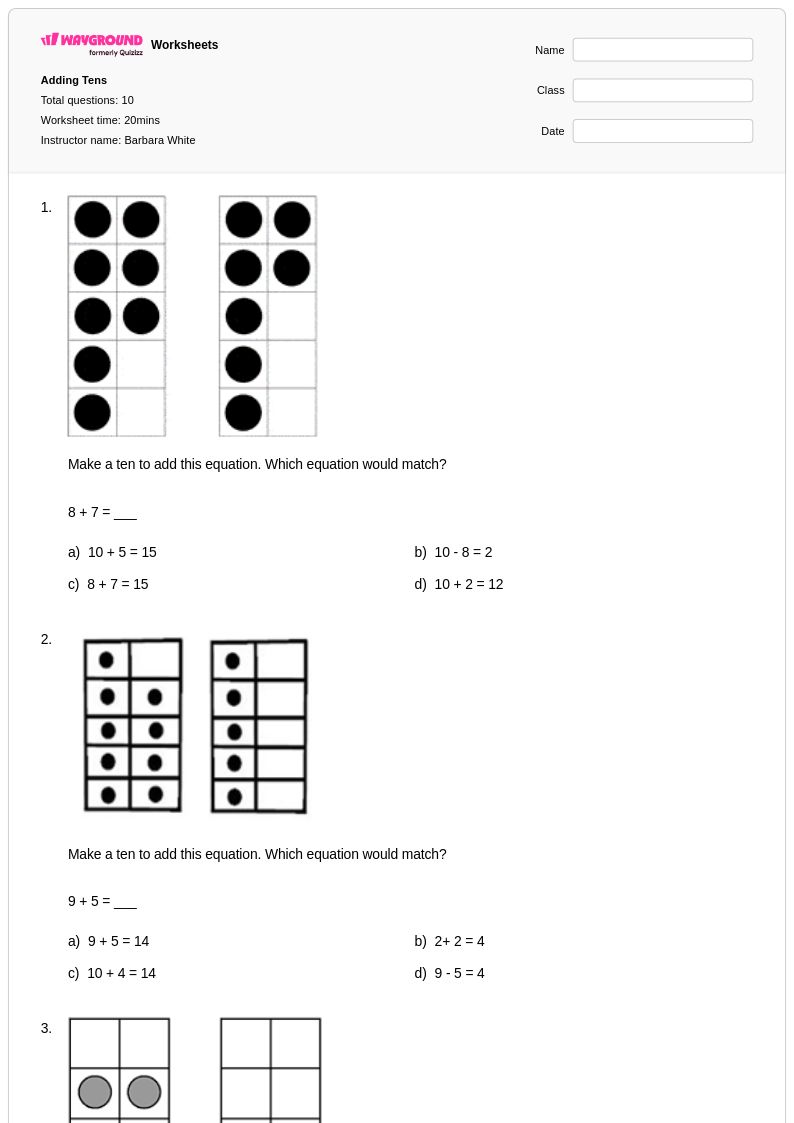
10 Q
1st - 2nd
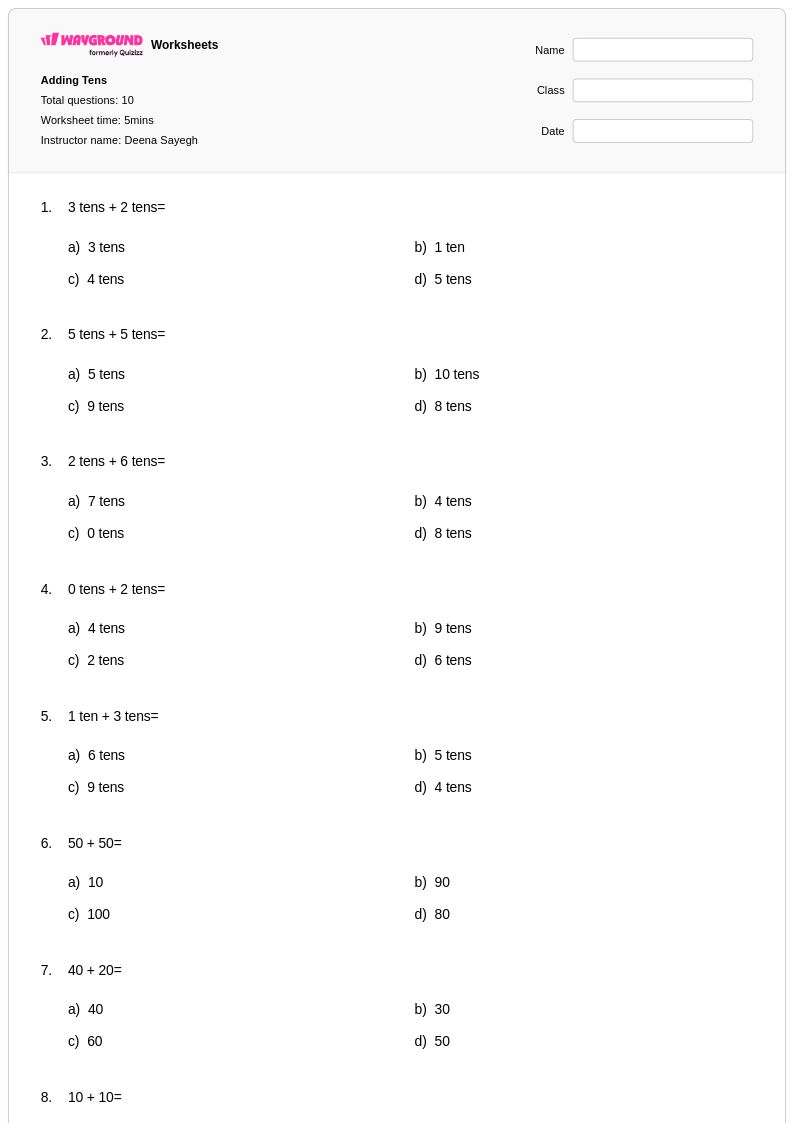
10 Q
KG - 2nd
Explore Adding Tens Worksheets by Grades
Explore Other Subject Worksheets for grade 2
Explore printable Adding Tens worksheets for Grade 2
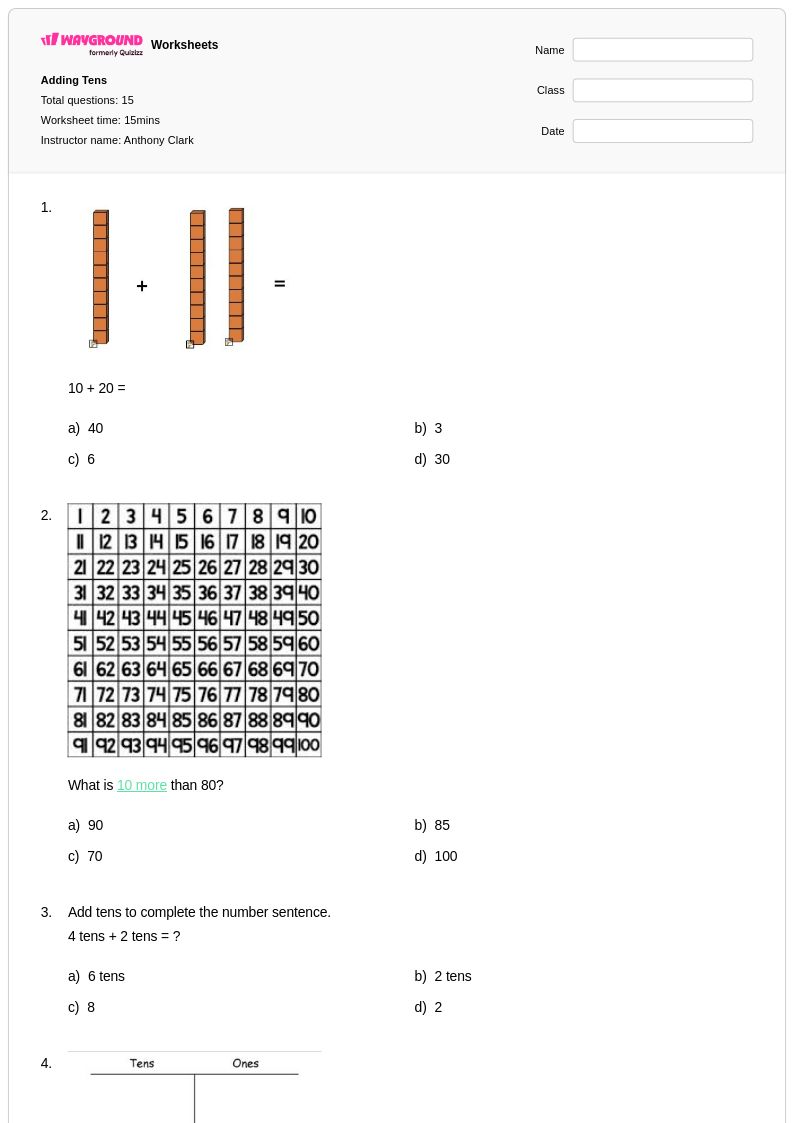
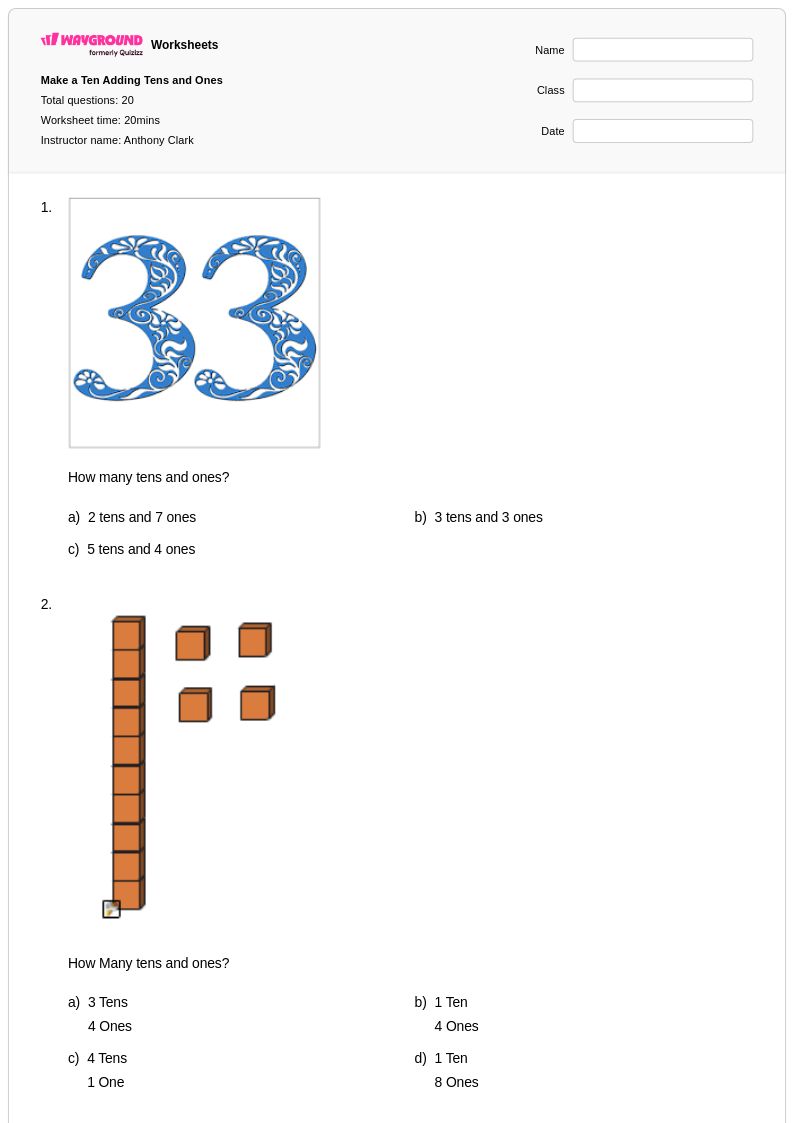
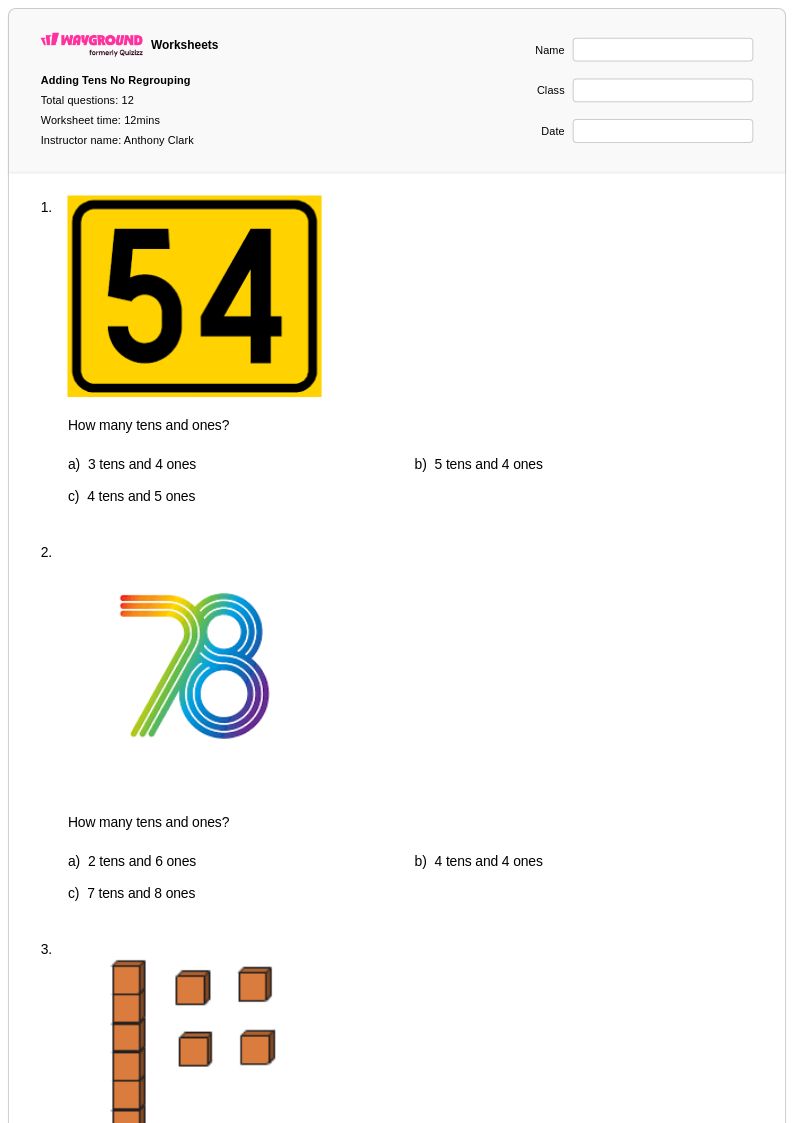
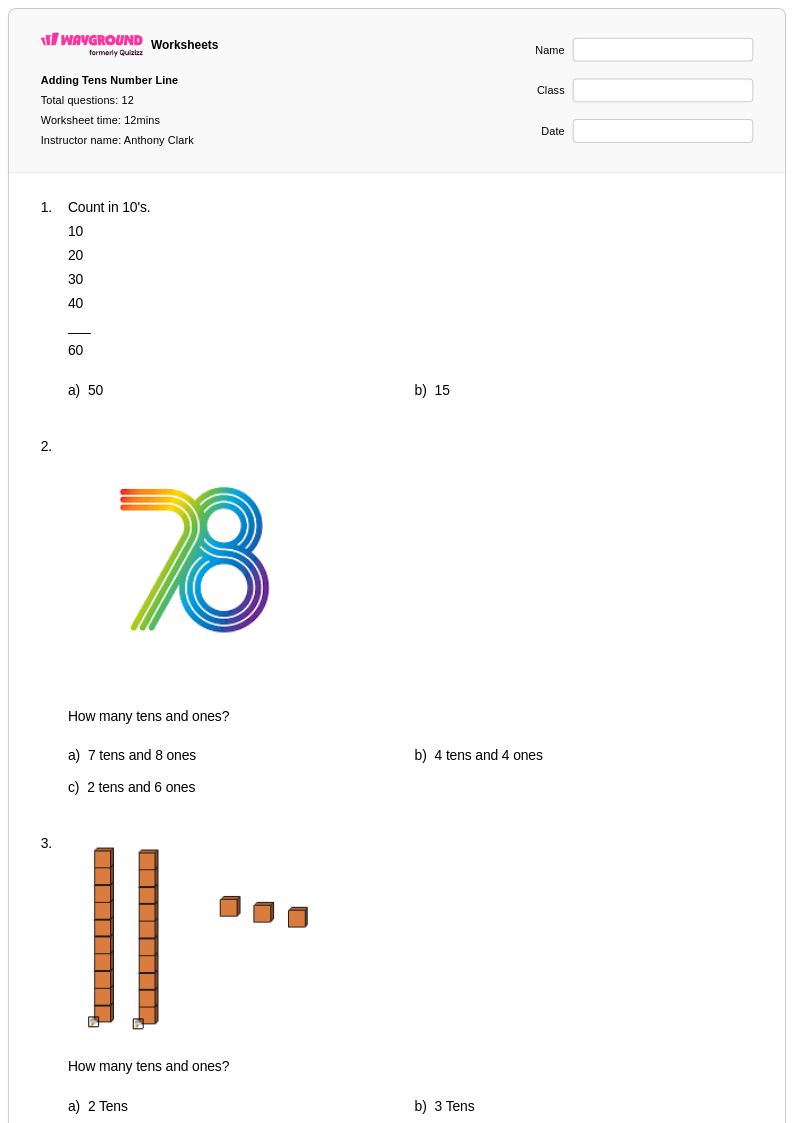
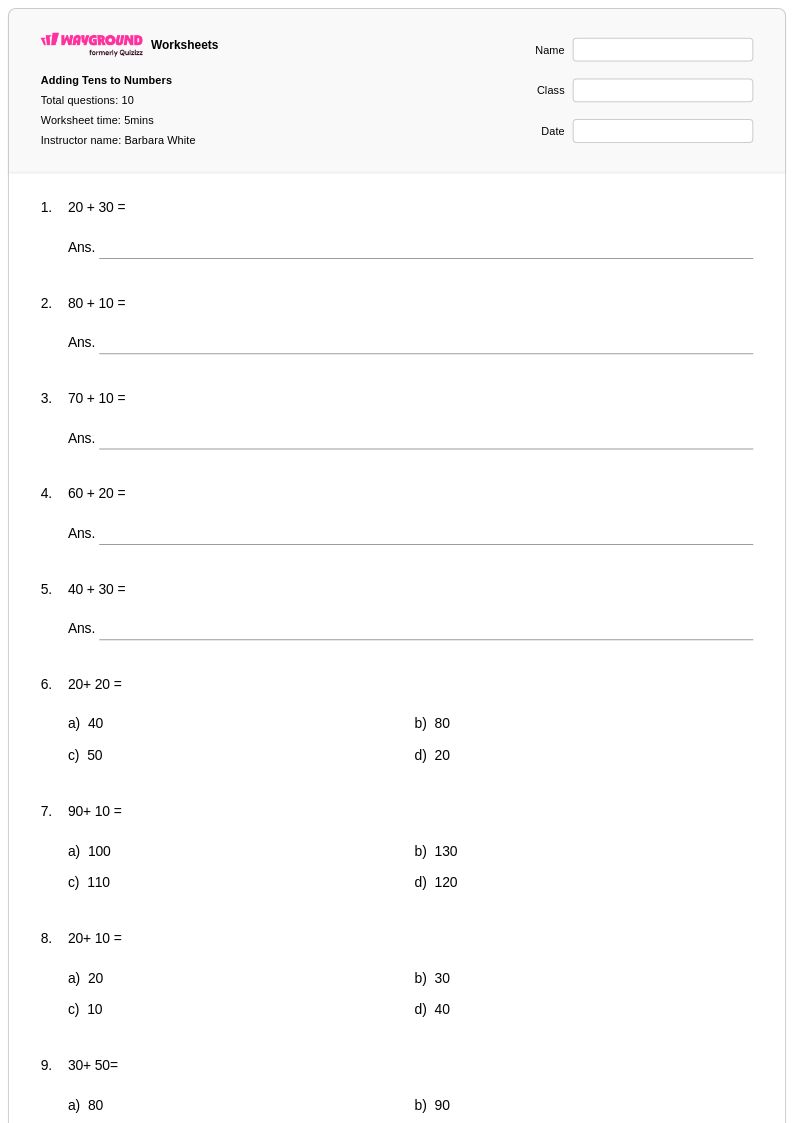
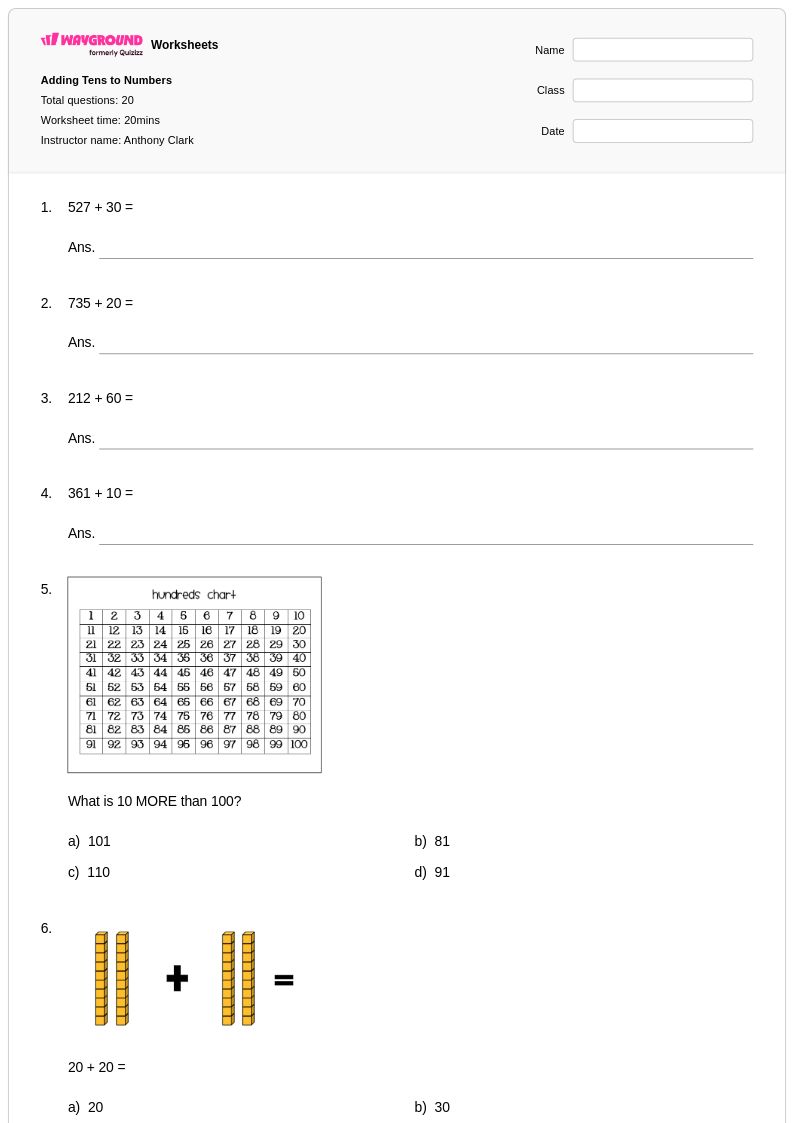
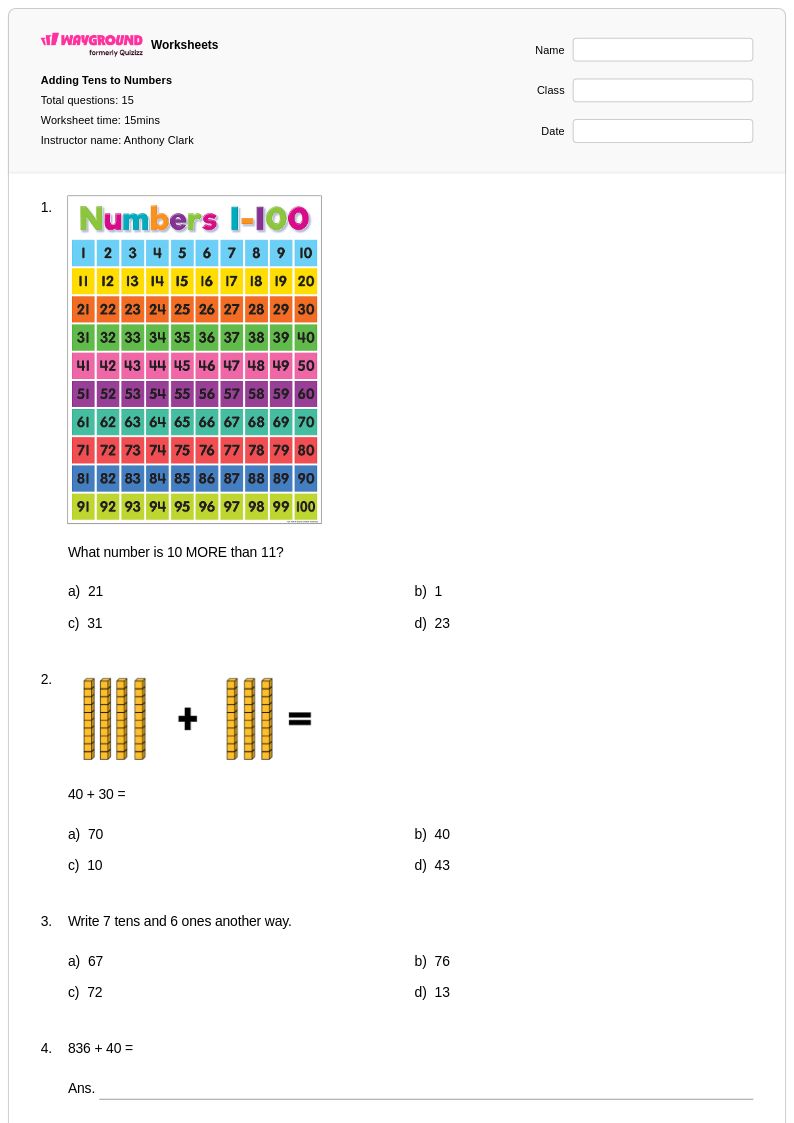
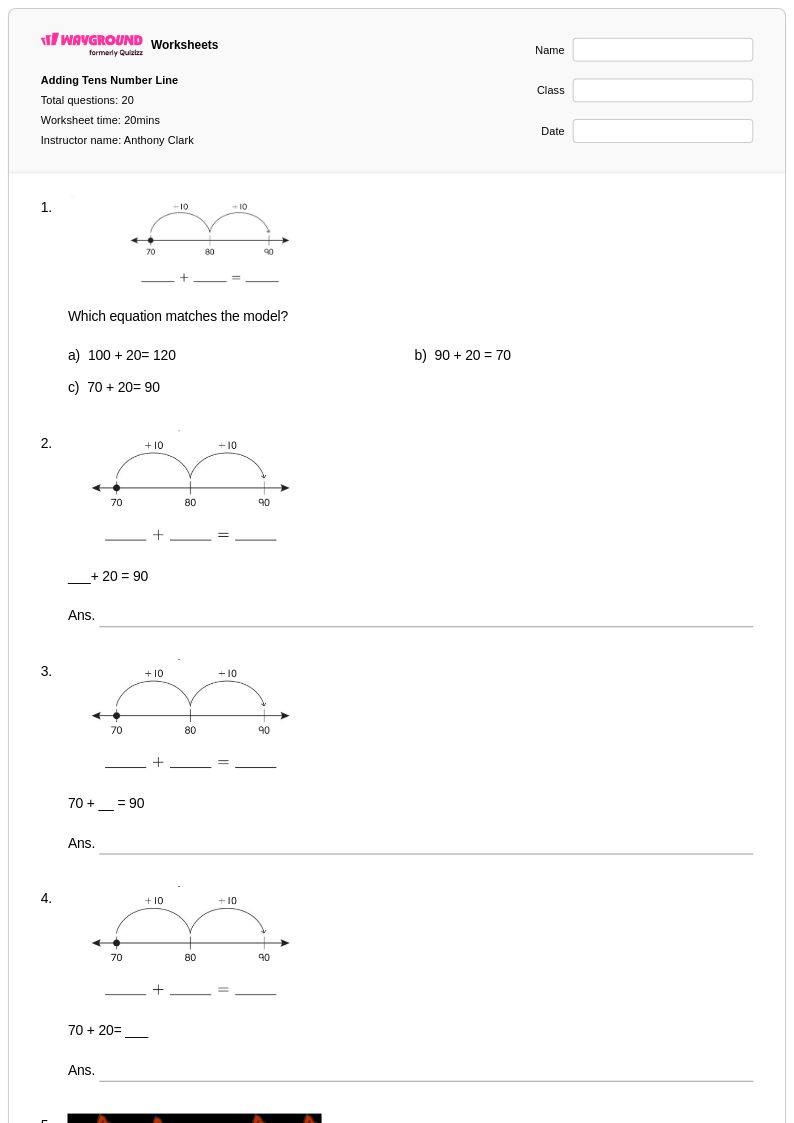
Adding tens worksheets for Grade 2 students through Wayground (formerly Quizizz) provide essential practice for developing place value understanding and mental math fluency. These carefully designed printables focus on building computational strategies that help young learners recognize patterns when adding multiples of ten to single-digit and two-digit numbers. Students work through practice problems that systematically introduce concepts like 23 + 10, 45 + 20, and 67 + 30, strengthening their ability to manipulate numbers within 100 while reinforcing the foundational understanding that adding tens only changes the tens digit. Each worksheet collection includes comprehensive answer keys and is available as free pdf downloads, making it simple for educators to implement targeted skill practice that aligns with second-grade mathematical expectations for addition strategies.
Wayground (formerly Quizizz) empowers teachers with access to millions of educator-created resources specifically designed for adding tens instruction, featuring robust search and filtering capabilities that allow quick identification of materials matching specific learning objectives and standards alignment requirements. The platform's differentiation tools enable teachers to customize worksheet difficulty levels, modify problem sets, and adapt content for diverse learners, whether providing remediation for struggling students or enrichment challenges for advanced mathematicians. Available in both printable pdf formats for traditional classroom use and digital versions for technology-integrated learning environments, these flexible resources streamline lesson planning while supporting systematic skill development through carefully scaffolded practice opportunities that build confidence in fundamental addition strategies.
FAQs
How do I teach adding tens in Grade 2?
What exercises help second graders practice adding tens?
What mistakes do Grade 2 students make when adding multiples of ten?
How can I use a Grade 2 adding tens worksheet?
How does adding tens align with the Common Core Grade 2 math progression?
How can I differentiate adding tens worksheets for second graders?
Is adding tens a Grade 2 skill?