
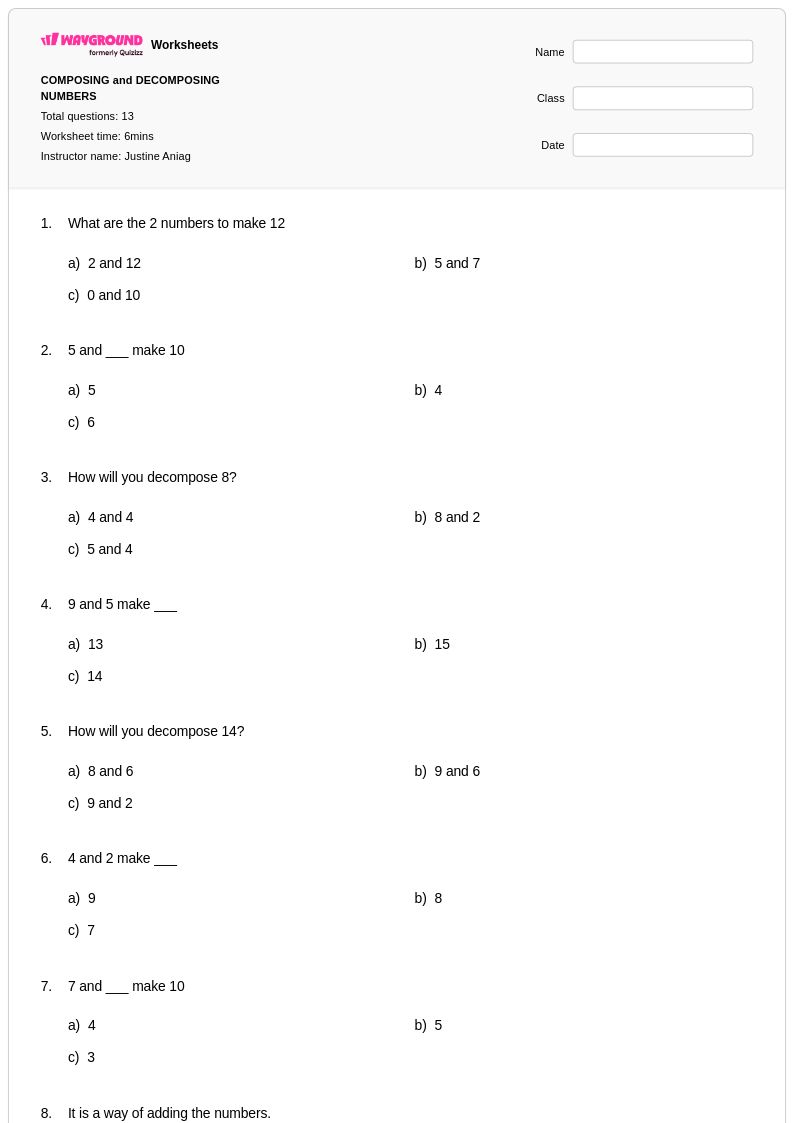
13 Q
1st - 2nd
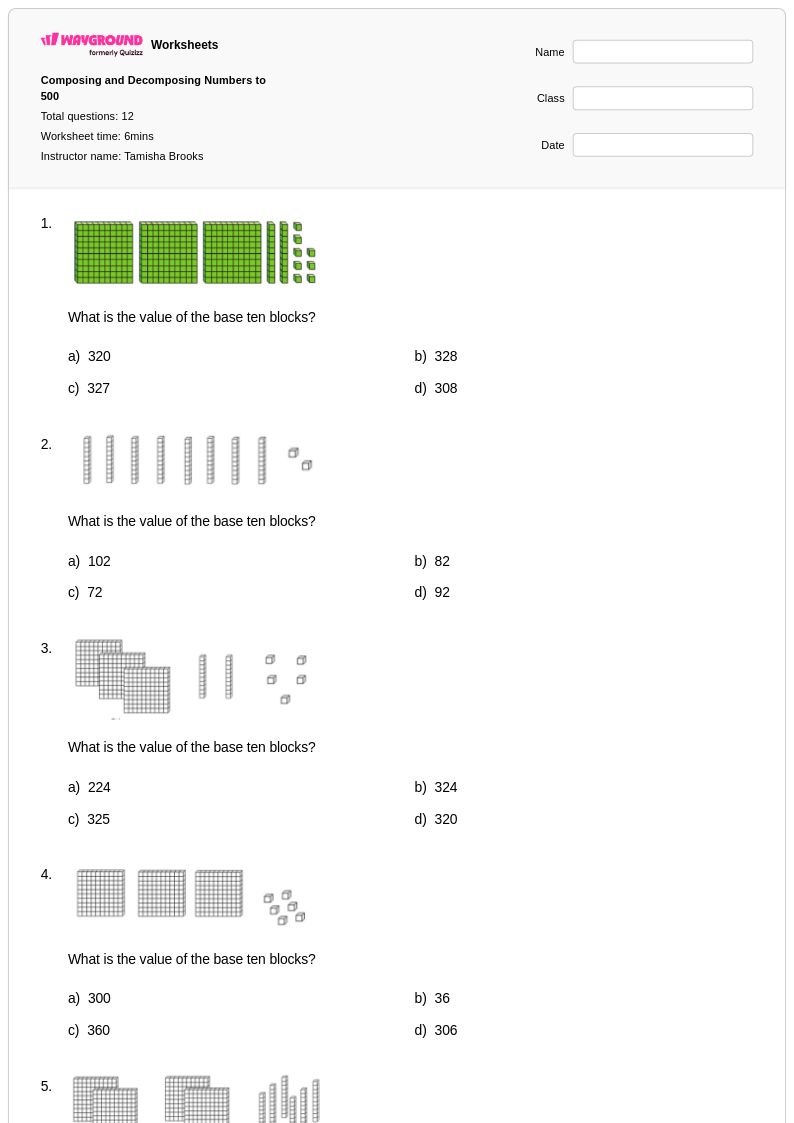
12 Q
2nd
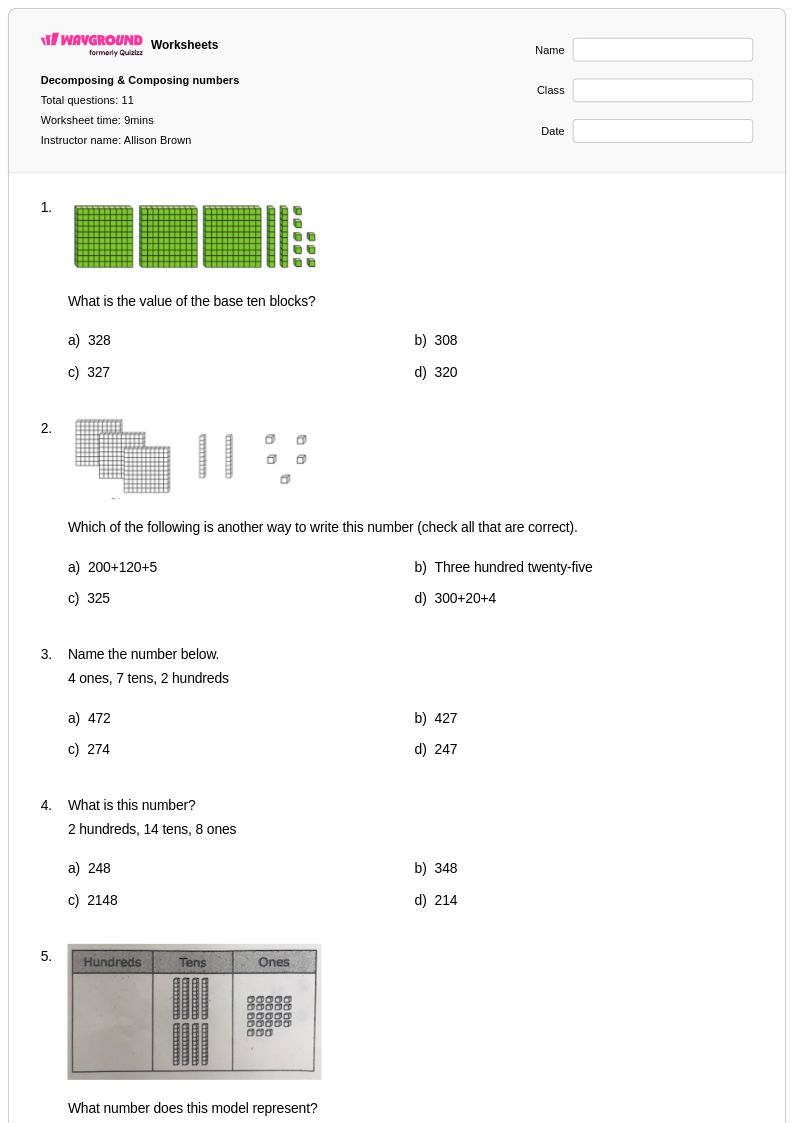
11 Q
2nd
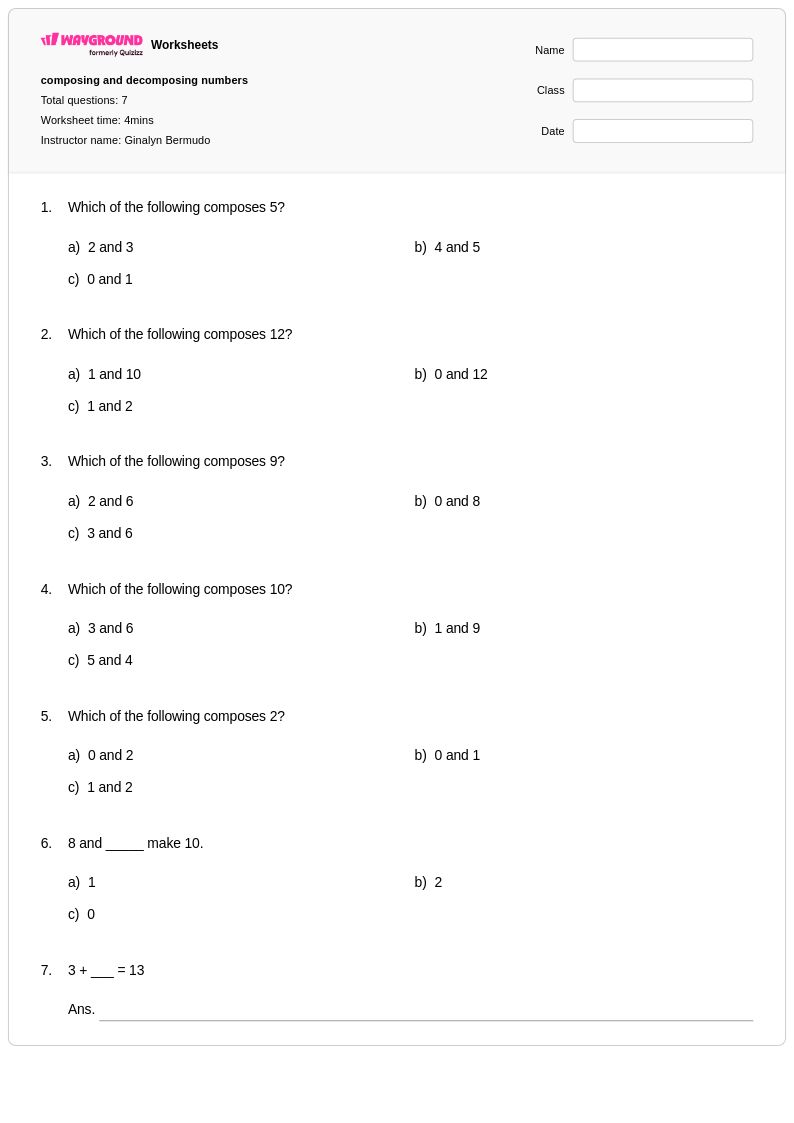
7 Q
1st - 2nd
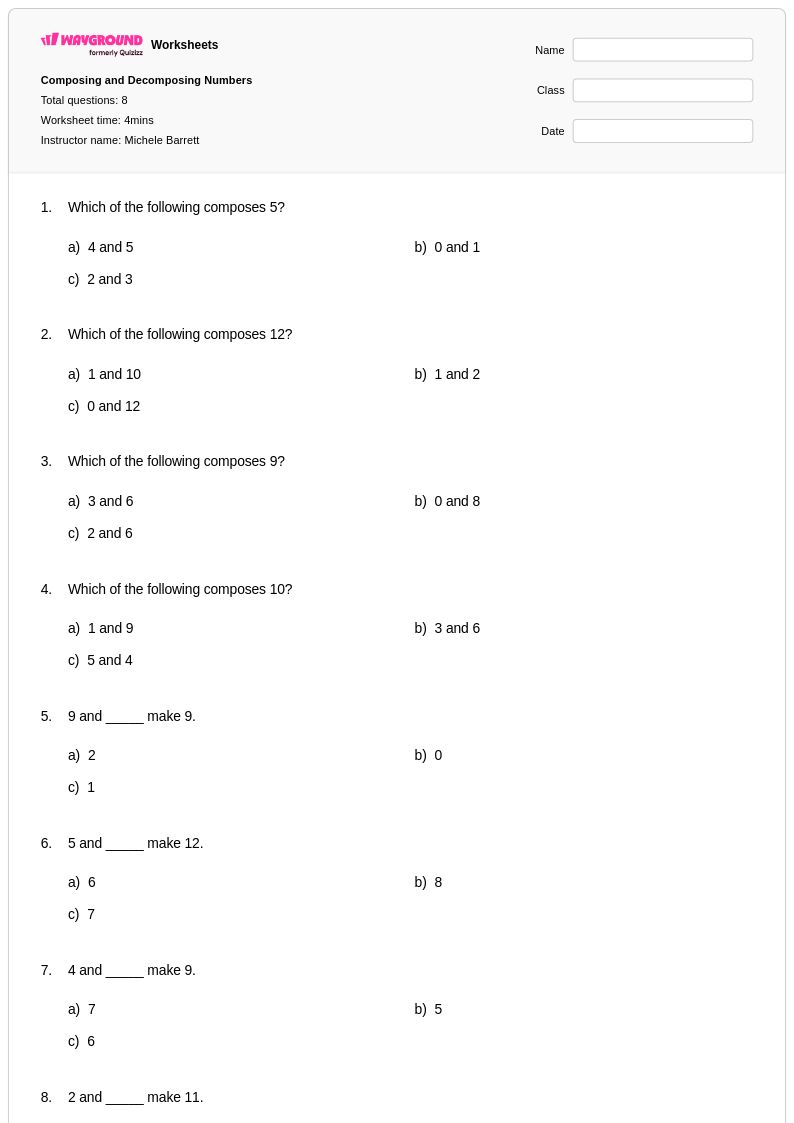
8 Q
2nd
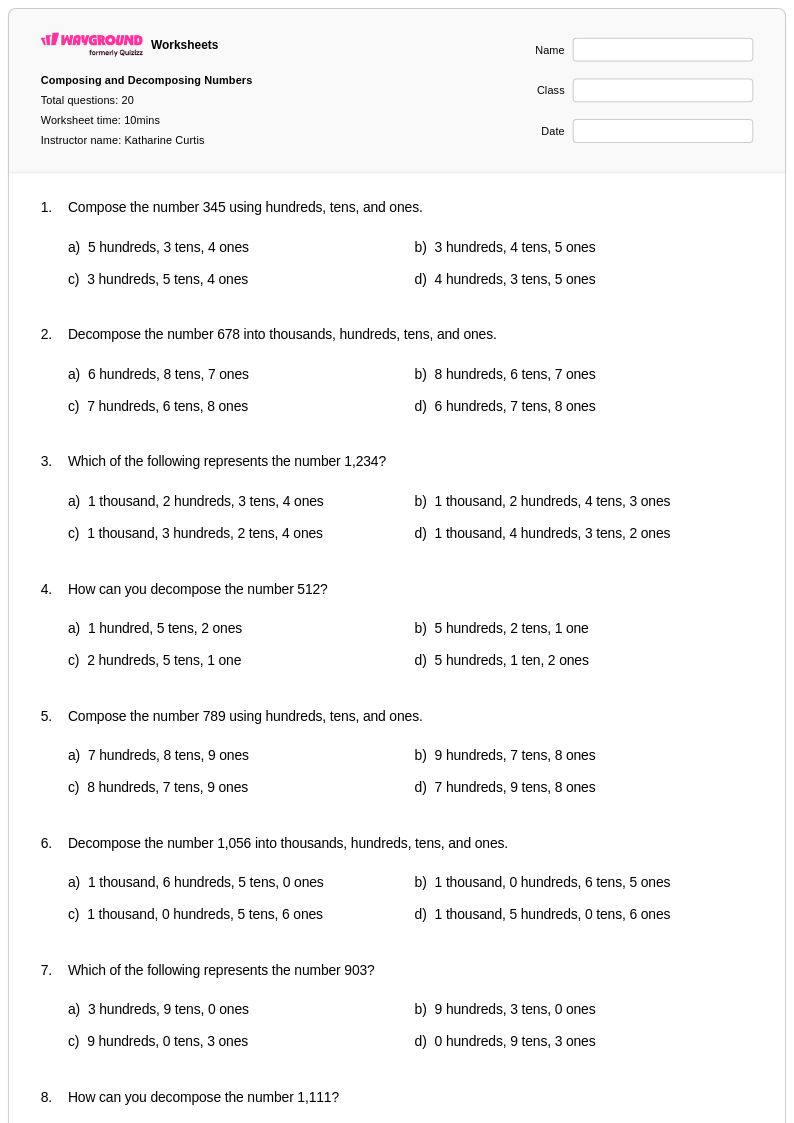
20 Q
2nd
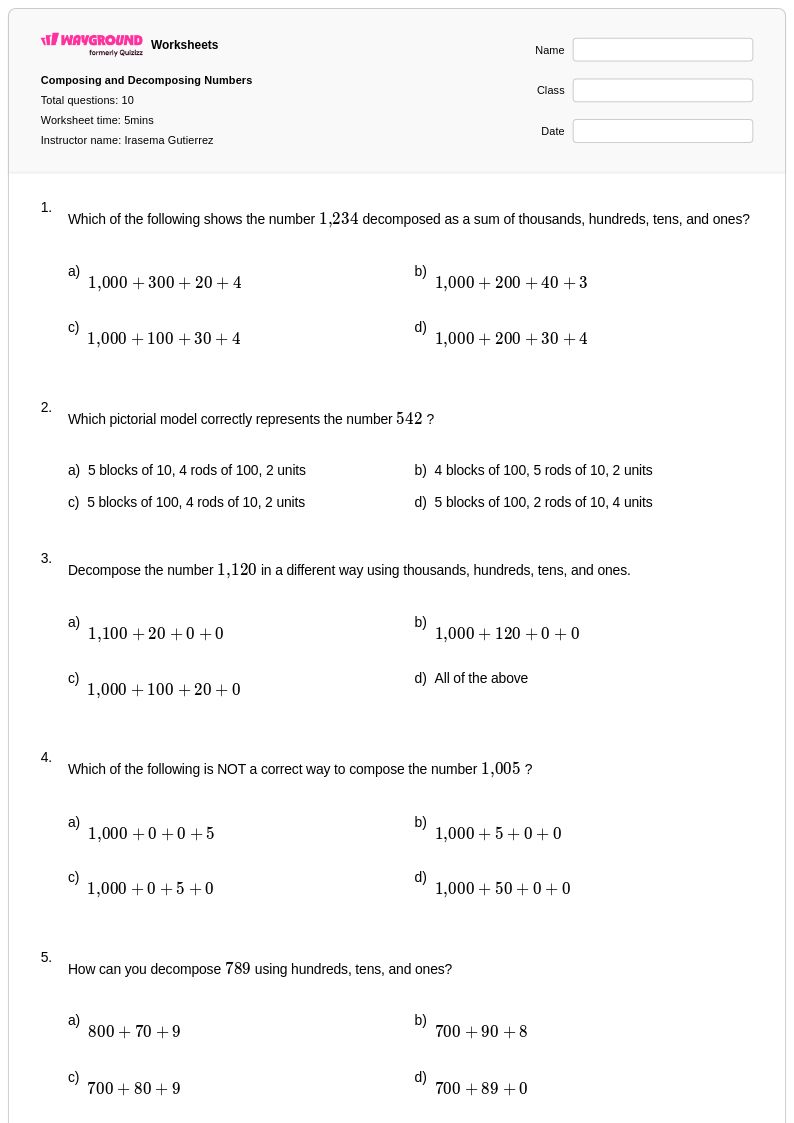
10 Q
2nd
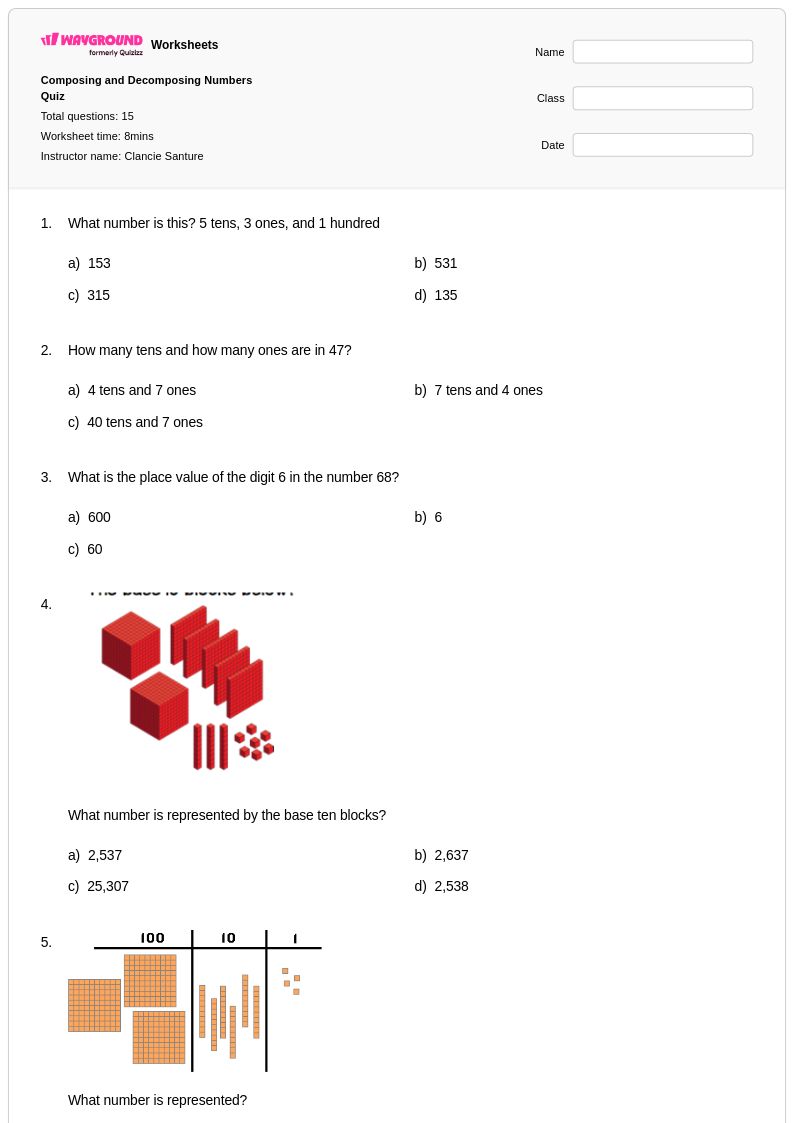
15 Q
2nd
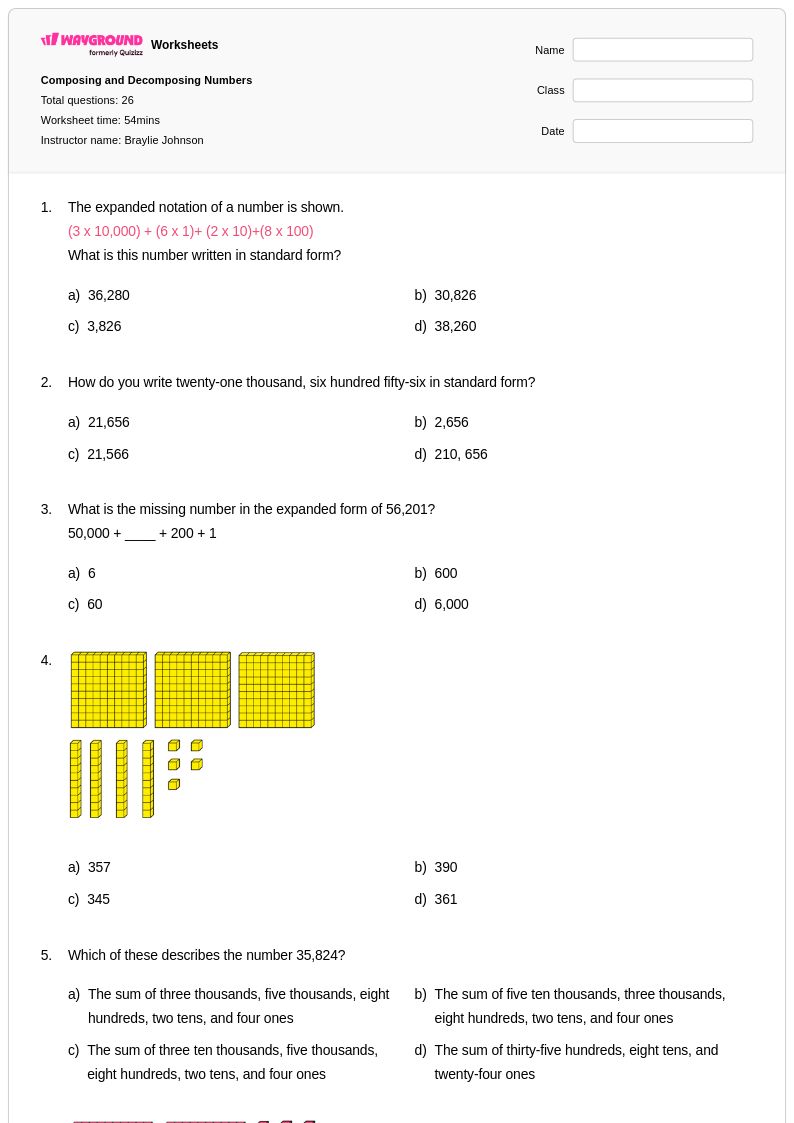
26 Q
2nd - 4th
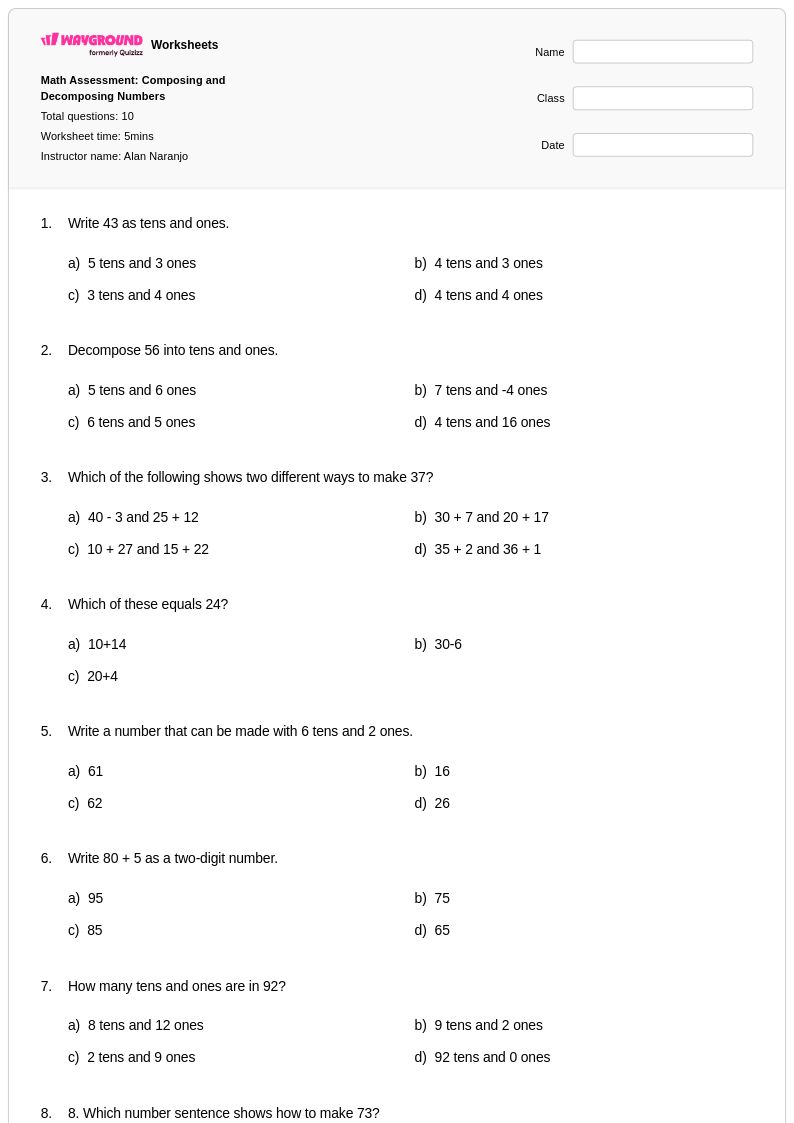
10 Q
2nd
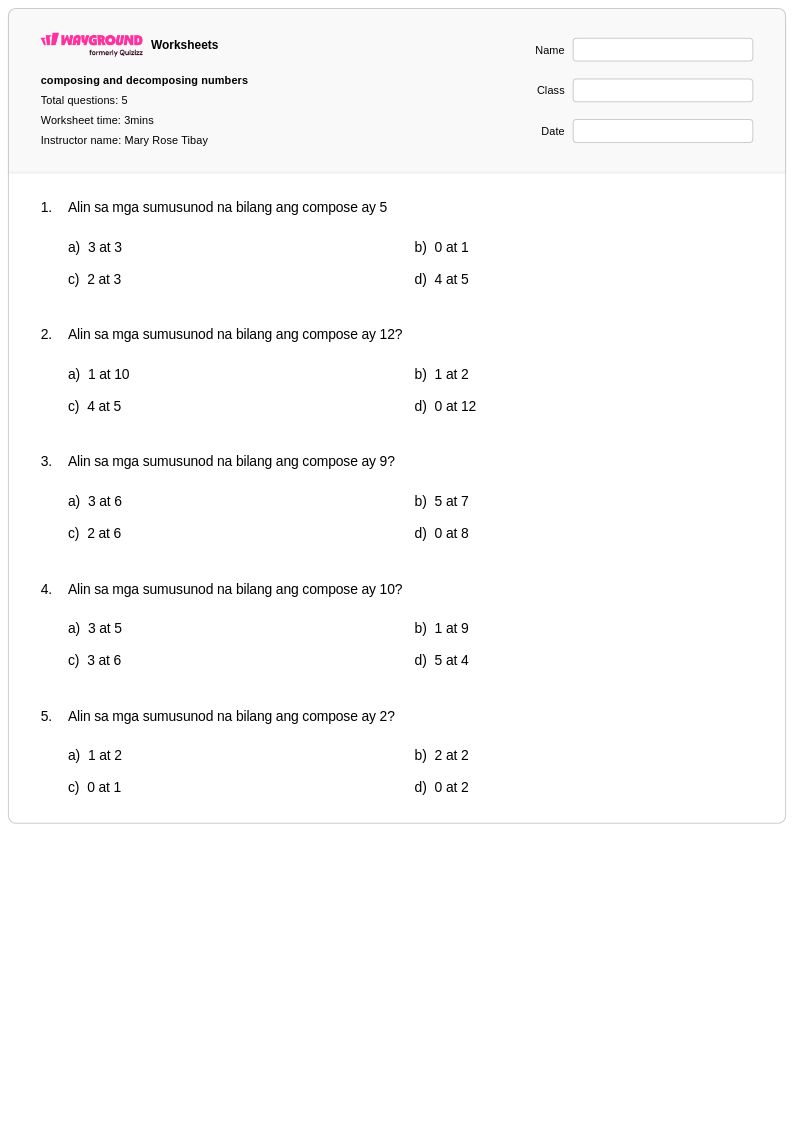
5 Q
KG - 6th
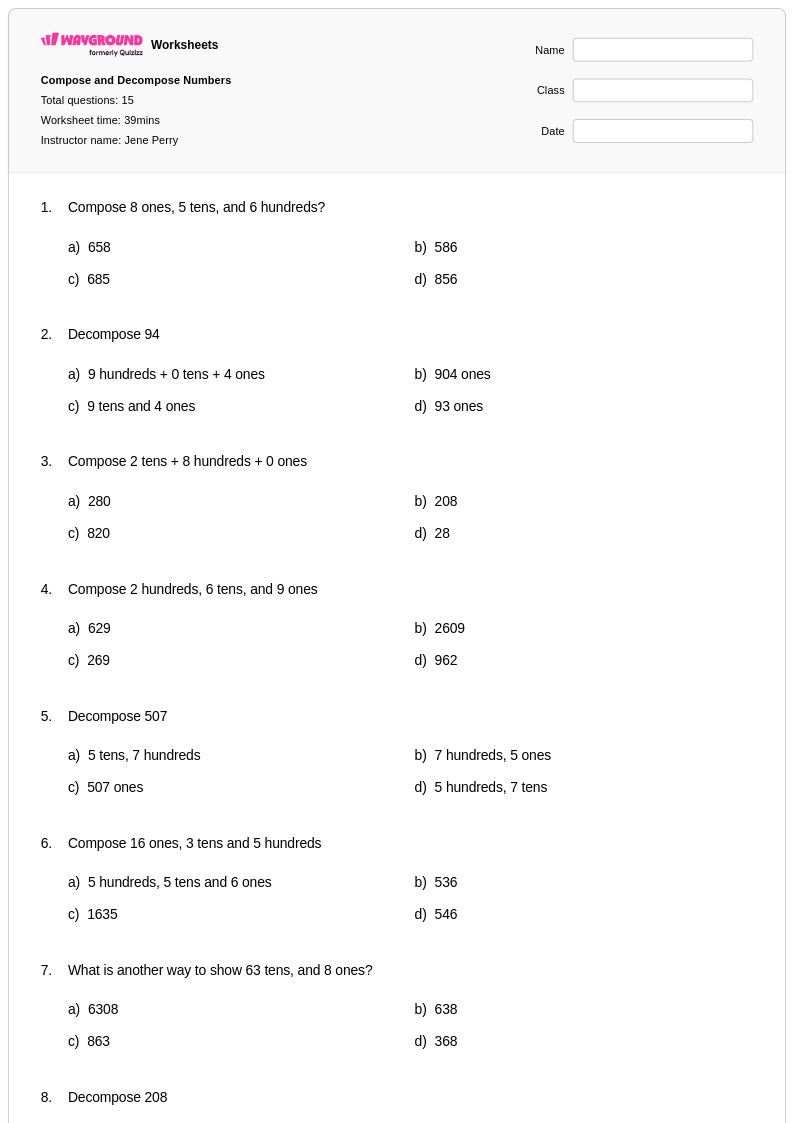
15 Q
2nd
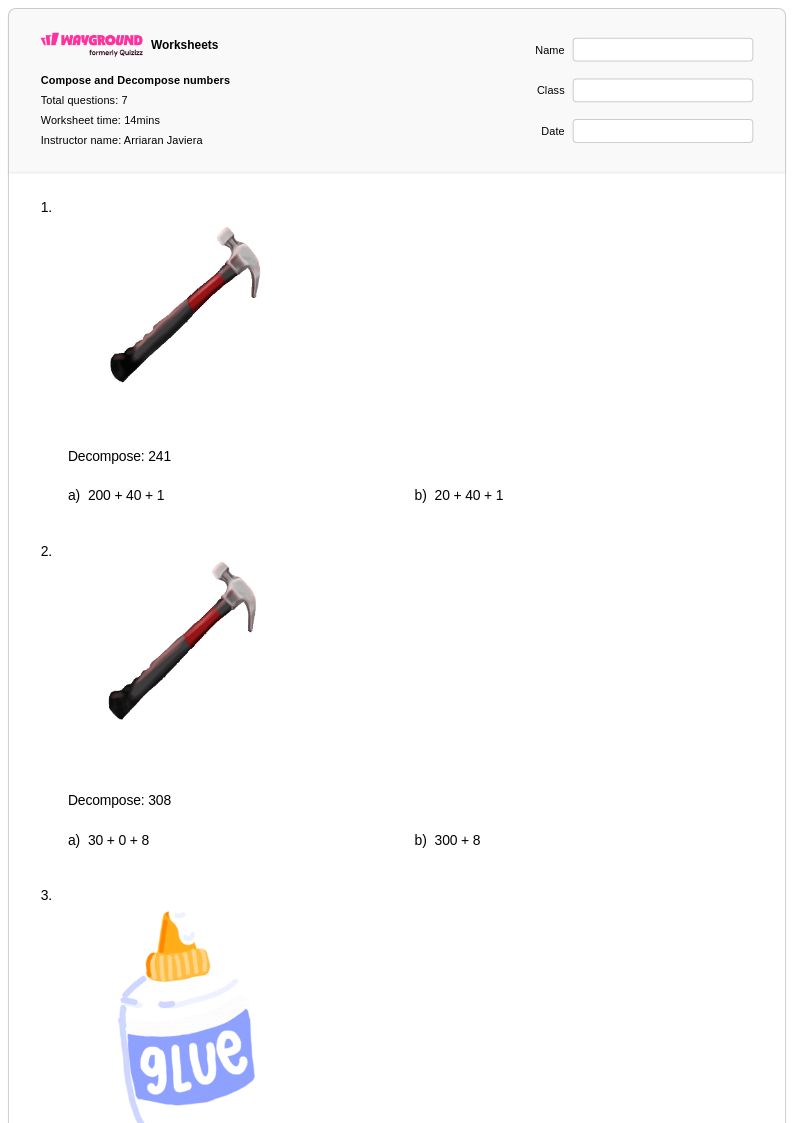
7 Q
2nd
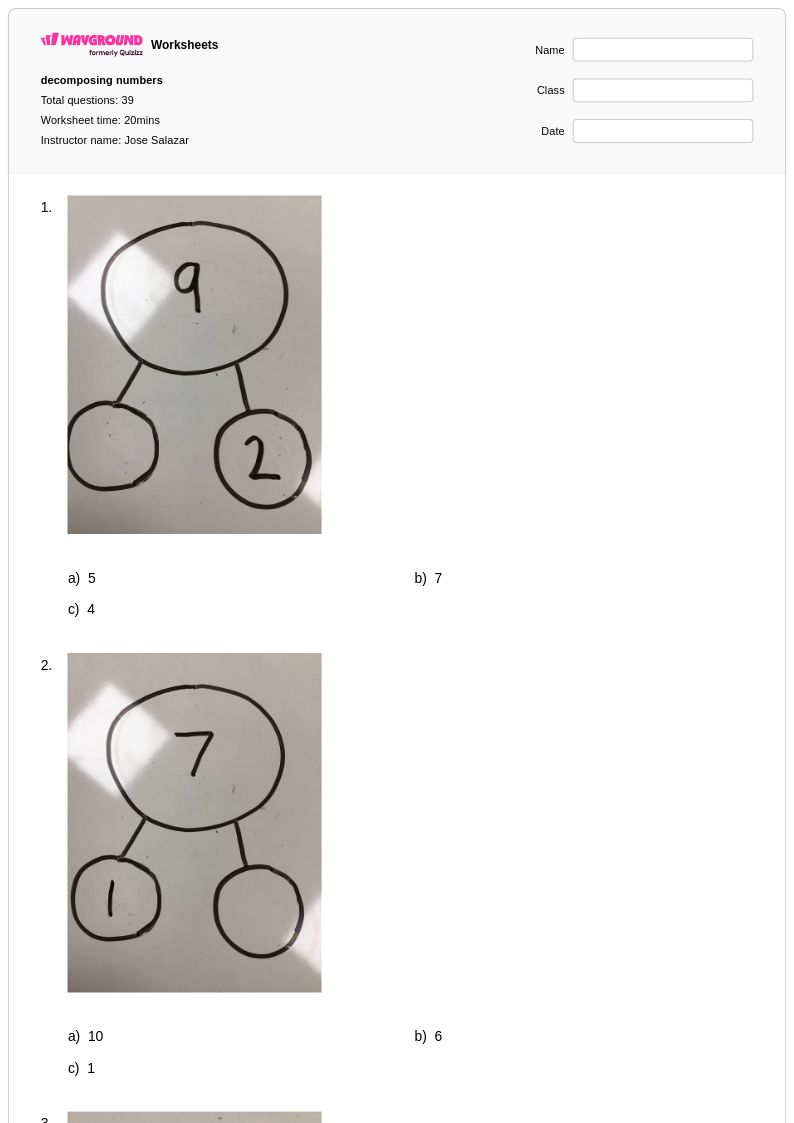
39 Q
2nd
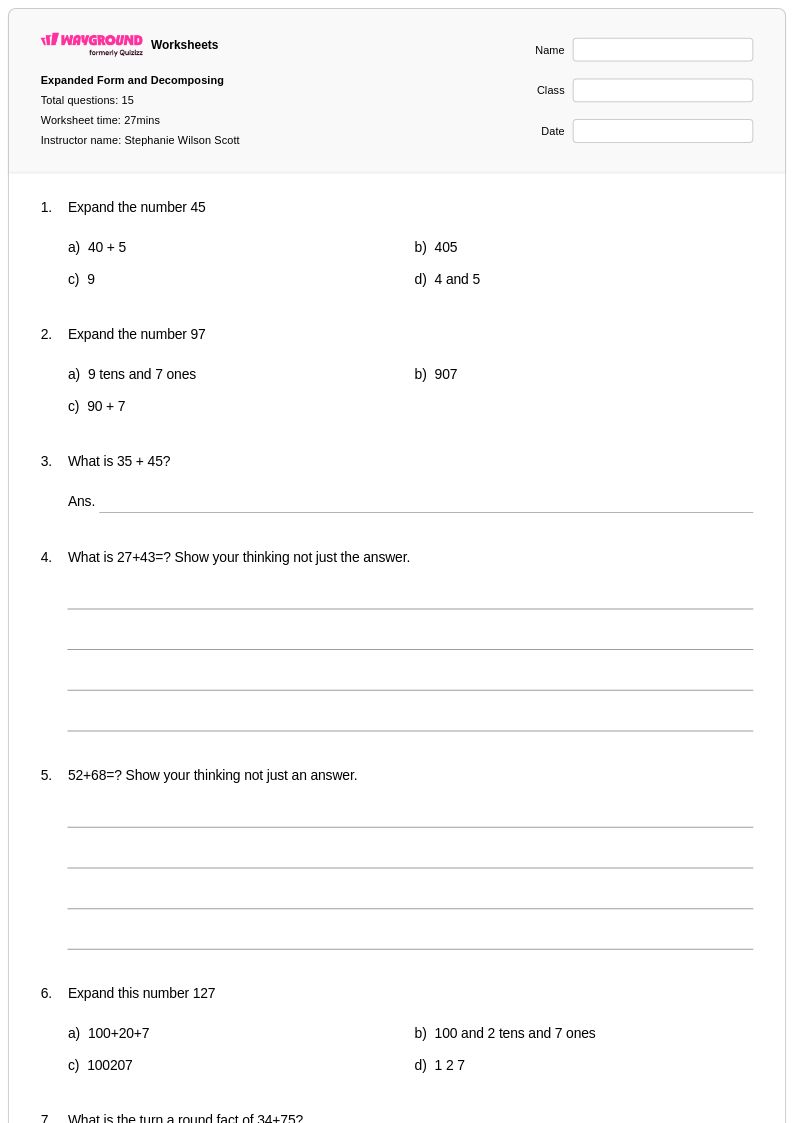
15 Q
2nd
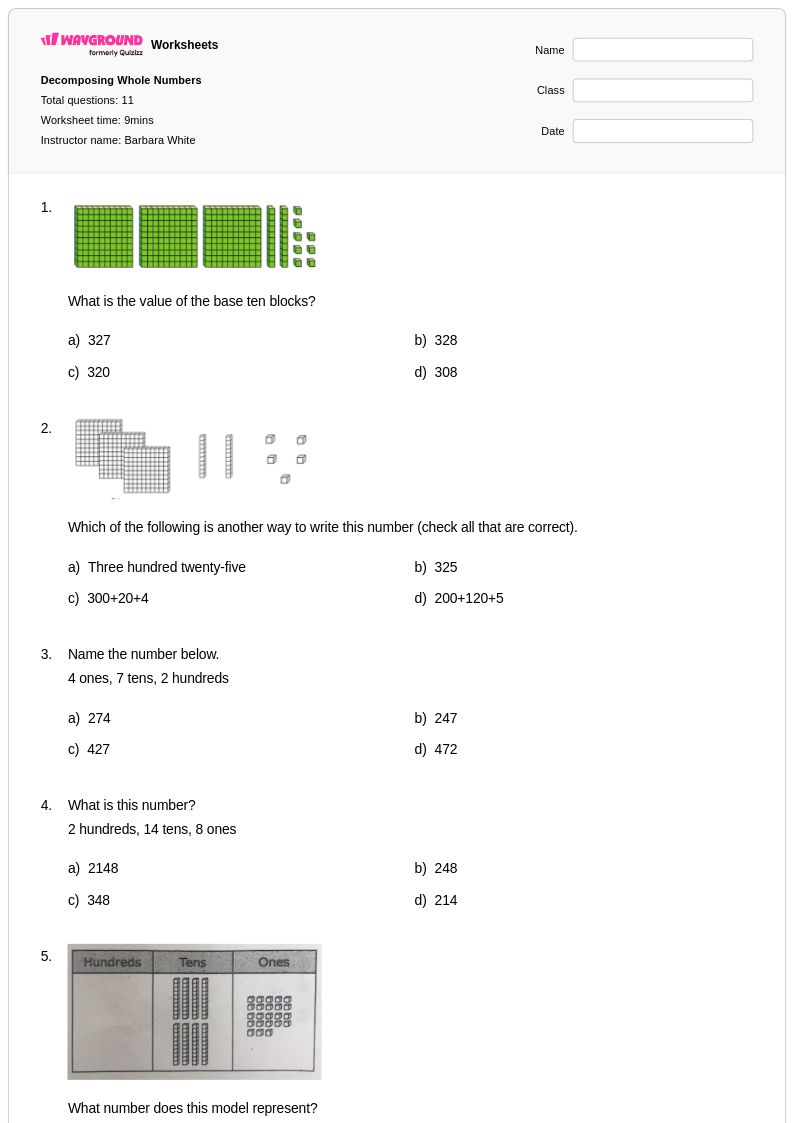
11 Q
2nd
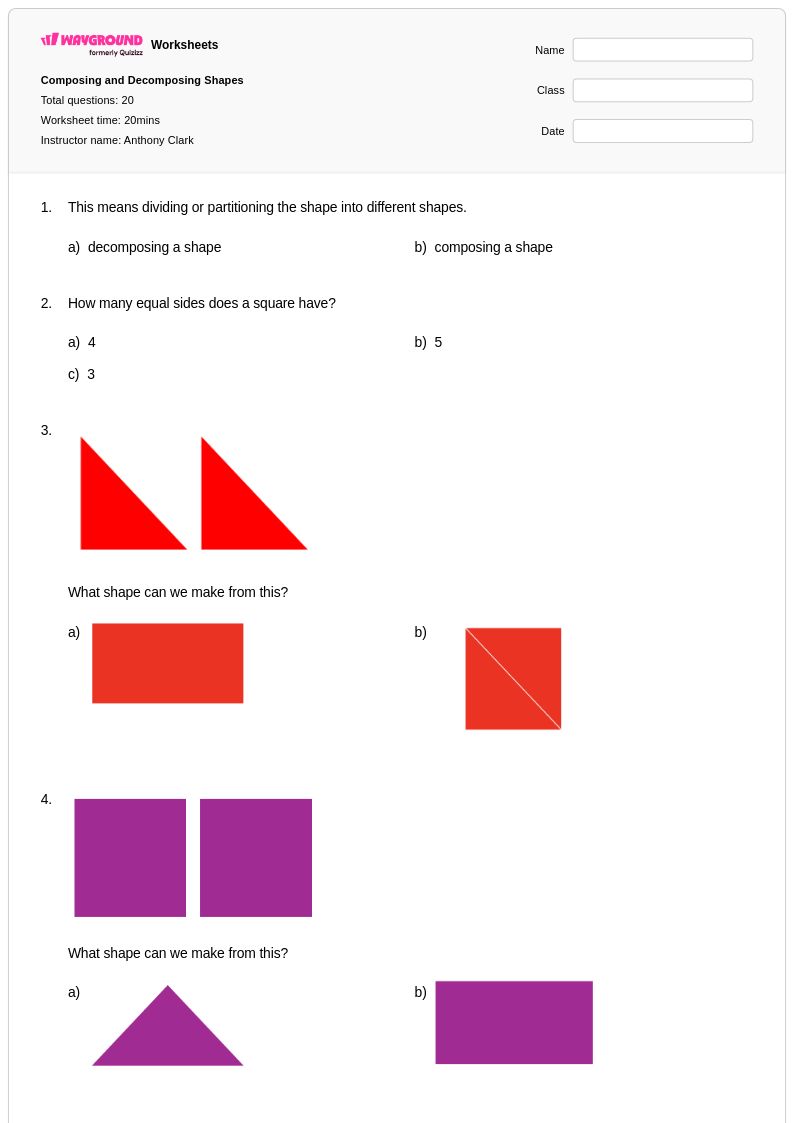
20 Q
1st - Uni
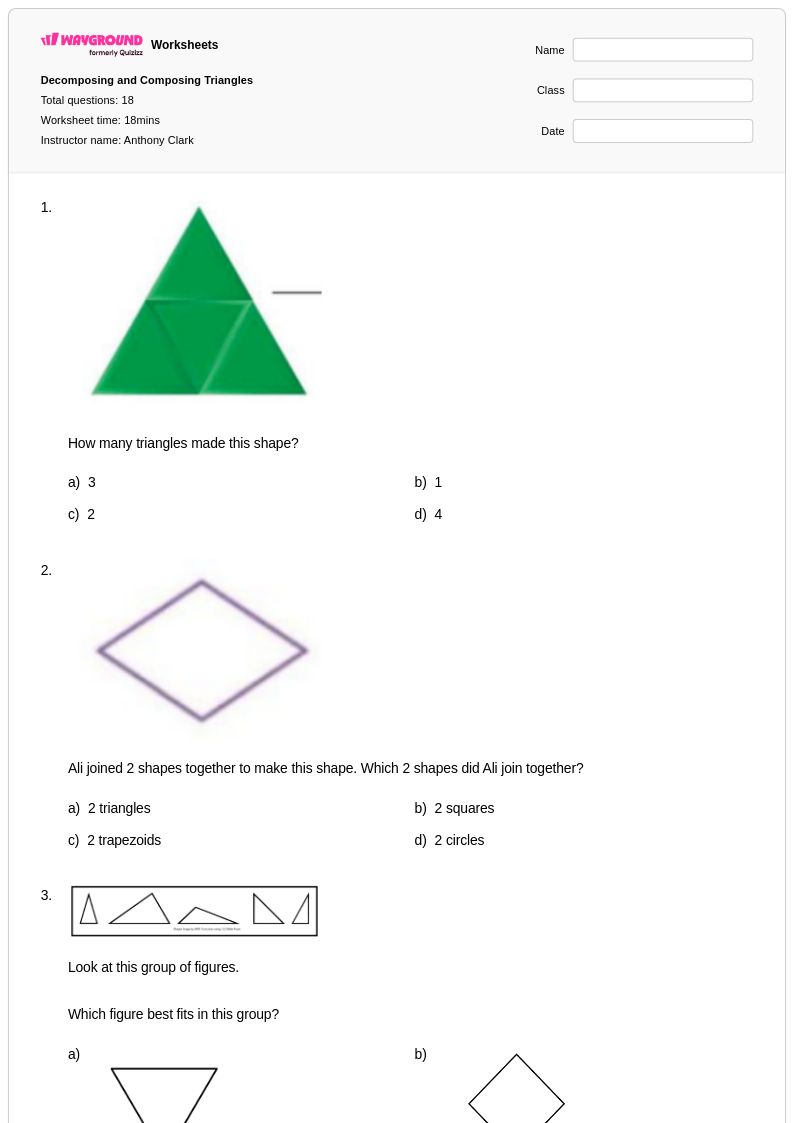
18 Q
1st - Uni
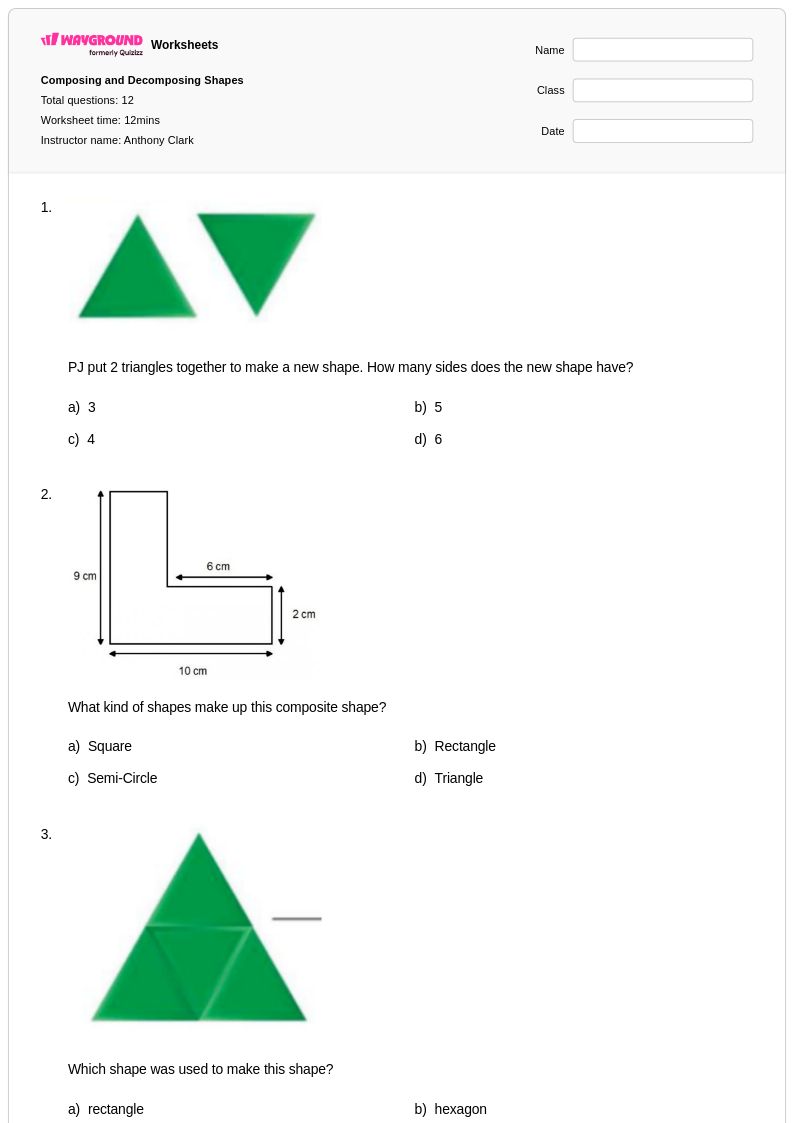
12 Q
1st - Uni
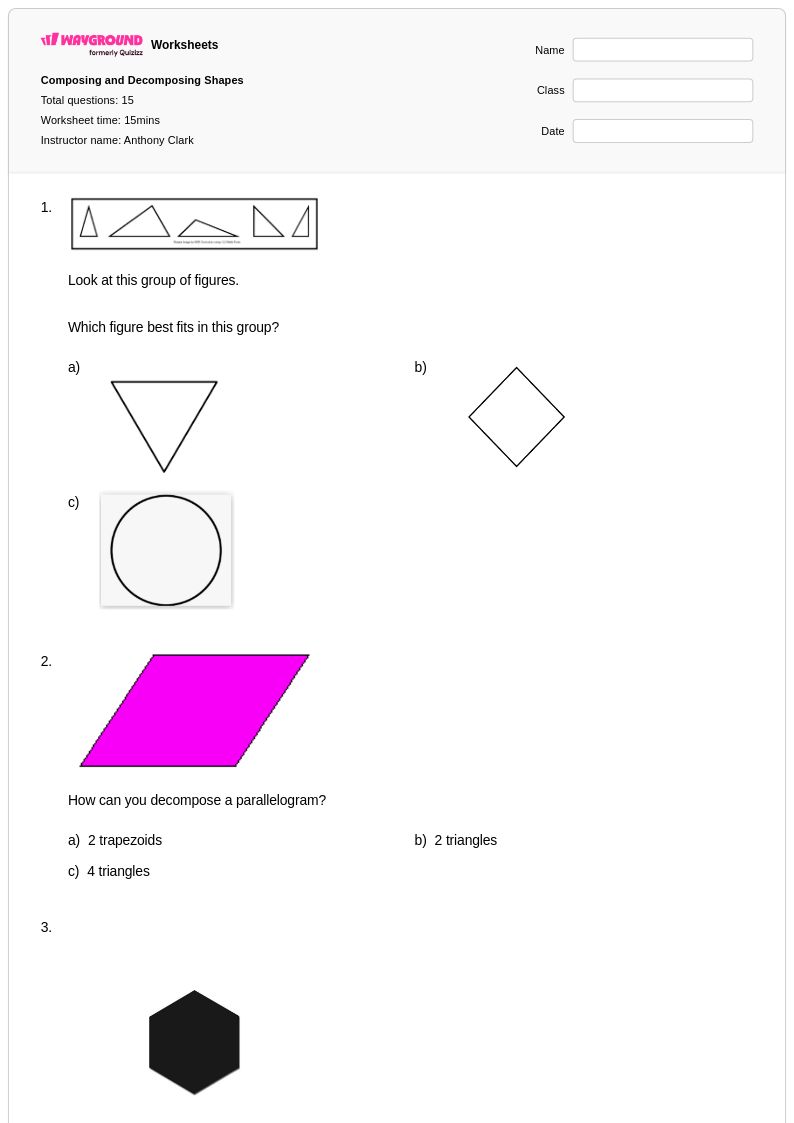
15 Q
1st - Uni
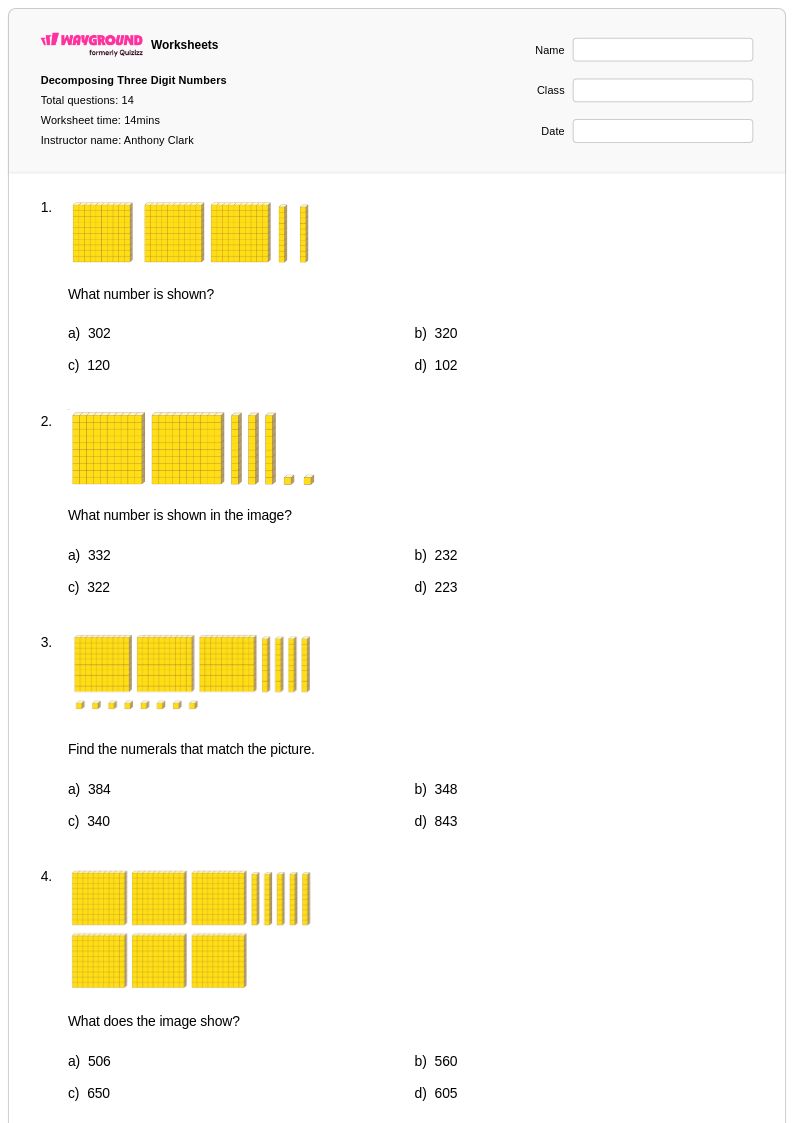
14 Q
2nd - Uni
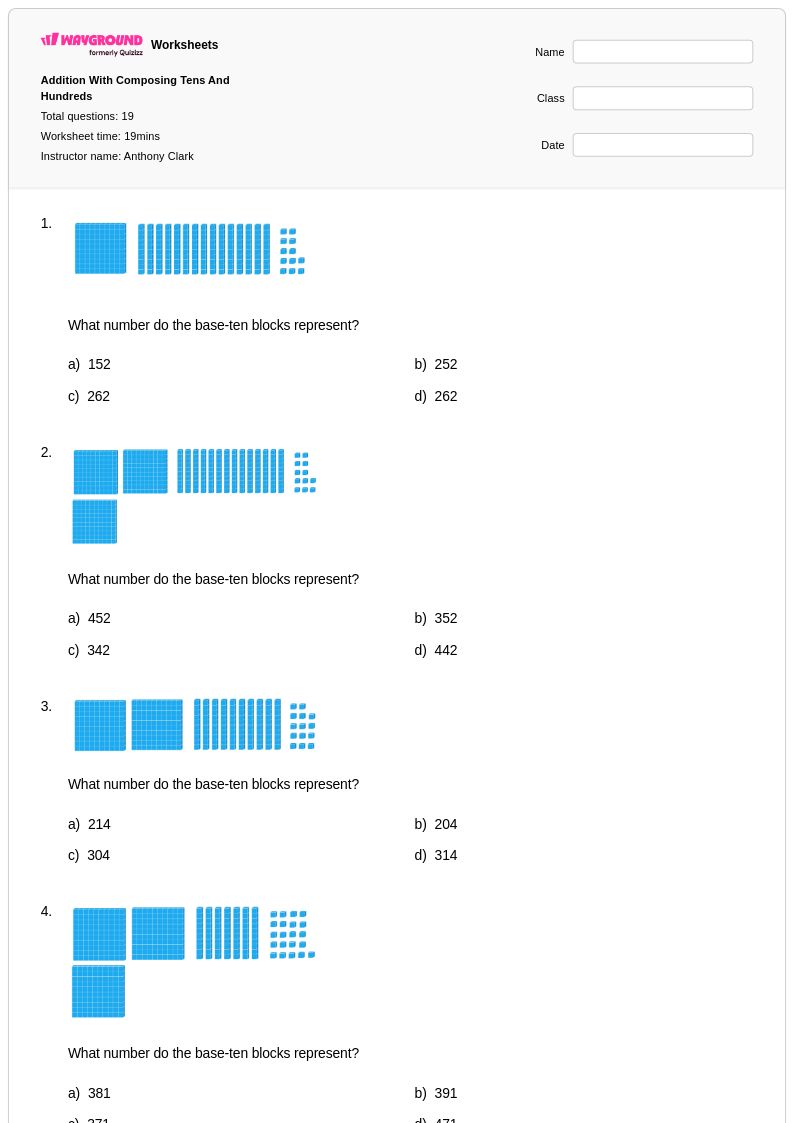
19 Q
2nd - Uni
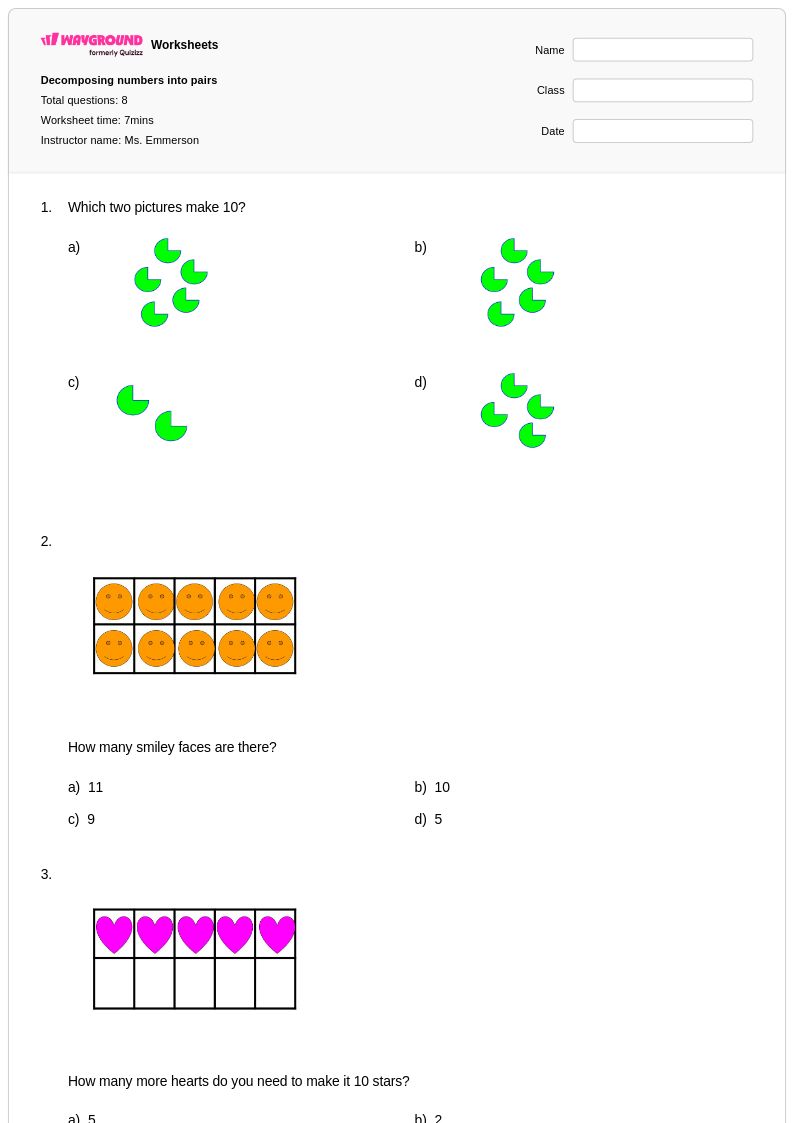
8 Q
KG - 3rd
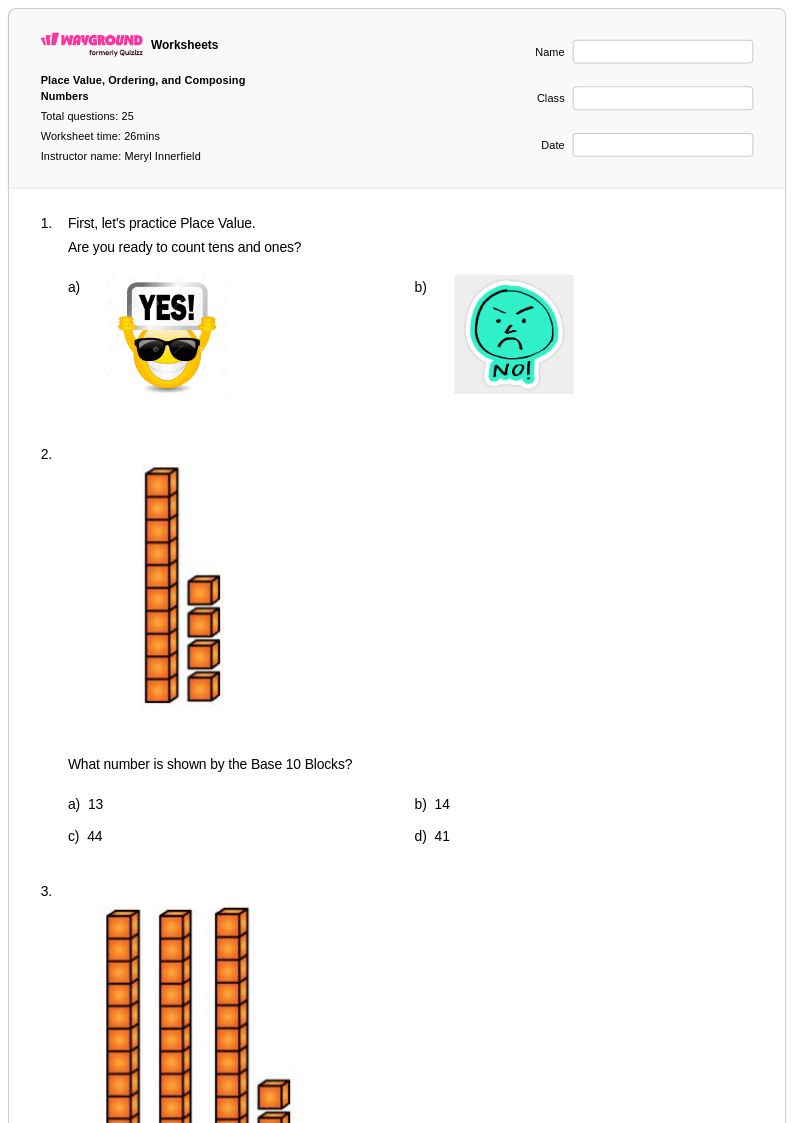
25 Q
1st - 5th
Explore Composing and Decomposing Numbers Worksheets by Grades
Explore Other Subject Worksheets for grade 2
Explore printable Composing and Decomposing Numbers worksheets for Grade 2
Composing and decomposing numbers worksheets for Grade 2 students available through Wayground (formerly Quizizz) provide essential foundational practice in understanding how numbers can be broken apart and put back together in different ways. These carefully designed resources help young mathematicians develop number sense by exploring various combinations that make the same sum, such as recognizing that 8 can be composed as 5+3, 6+2, or 4+4. The worksheets strengthen critical thinking skills as students learn to visualize numbers as flexible entities rather than fixed amounts, building the conceptual understanding necessary for more advanced addition strategies. Each printable resource includes comprehensive practice problems with detailed answer keys, ensuring teachers have complete support materials in convenient PDF format for both classroom instruction and independent practice sessions.
Wayground (formerly Quizizz) empowers educators with access to millions of teacher-created worksheet collections focused on composing and decomposing numbers, featuring robust search and filtering capabilities that allow quick identification of materials aligned with specific learning standards and student needs. The platform's differentiation tools enable teachers to customize worksheets for various skill levels within their Grade 2 classrooms, supporting both remediation for struggling learners and enrichment opportunities for advanced students. Available in both printable PDF formats and interactive digital versions, these resources streamline lesson planning while providing flexible options for diverse instructional settings. Teachers can efficiently locate age-appropriate materials that scaffold student understanding of number relationships, making it simple to incorporate targeted skill practice into daily mathematics instruction and assessment routines.
FAQs
How do I teach composing and decomposing numbers in second grade?
What exercises help second graders practice composing and decomposing numbers?
What mistakes do second graders make when composing and decomposing numbers?
How can I use these Grade 2 composing and decomposing numbers worksheets?
How does composing and decomposing numbers fit the Common Core Grade 2 math progression?
How can I differentiate Grade 2 composing and decomposing practice?
What grade do students learn to compose and decompose numbers?