Free Printable Doubles Plus 1 Worksheets for Grade 3
Grade 3 students master doubles plus 1 addition strategies with these free printable worksheets featuring engaging practice problems, step-by-step examples, and comprehensive answer keys to build mathematical fluency.
Explore printable Doubles Plus 1 worksheets for Grade 3
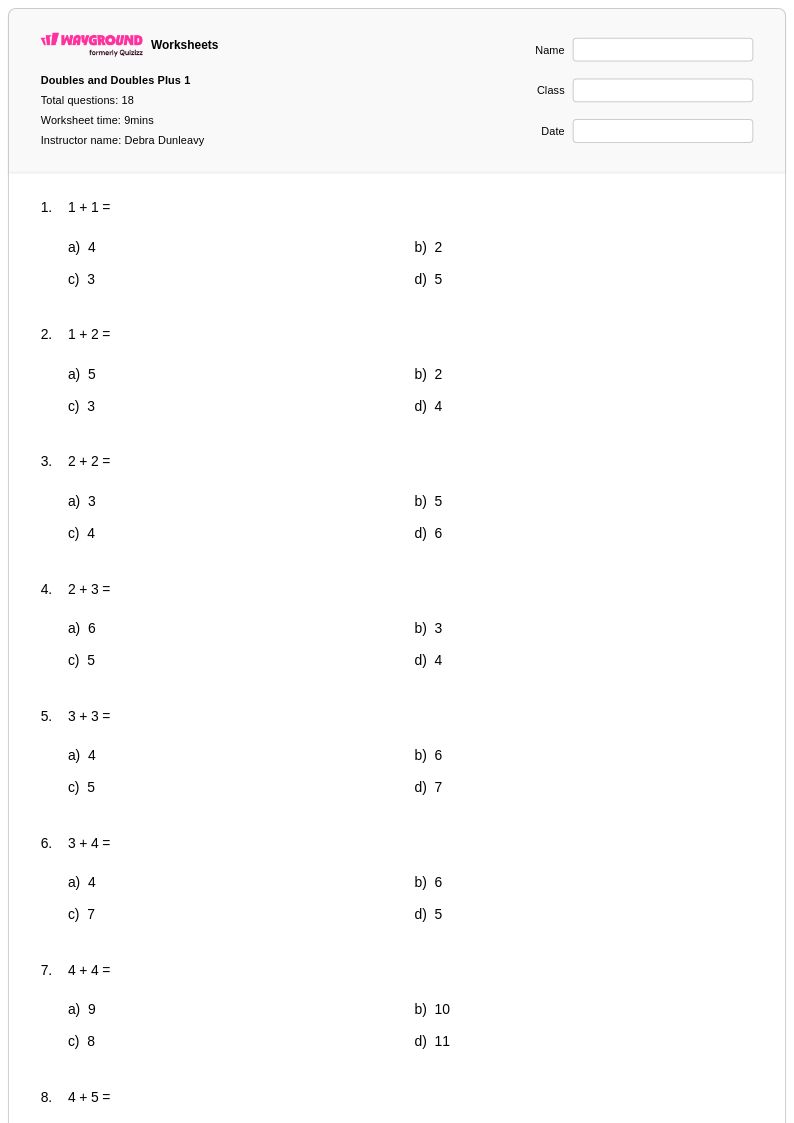
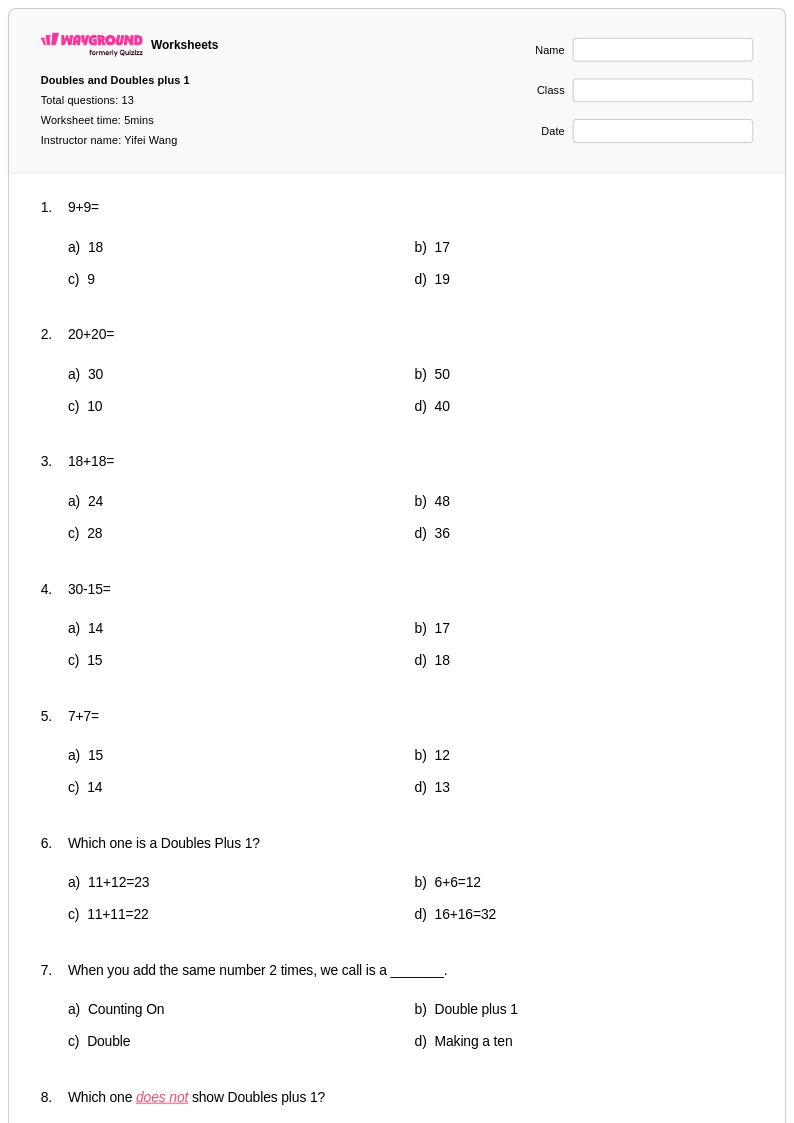
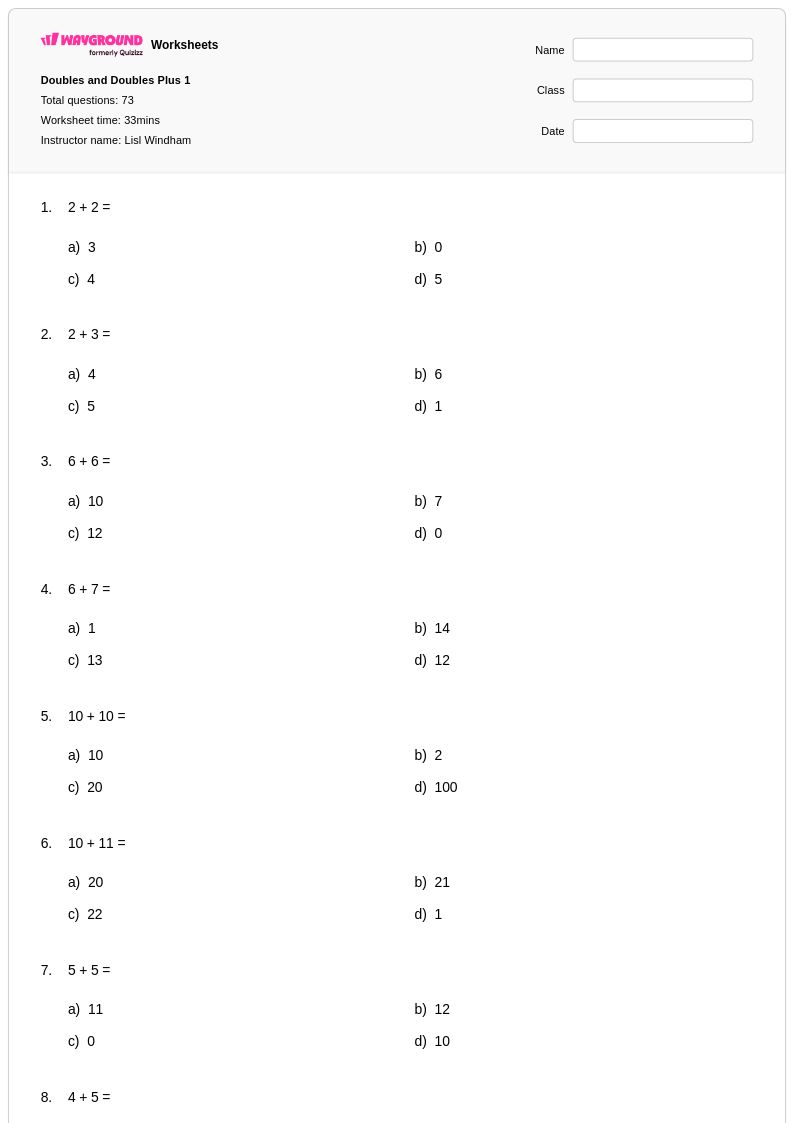
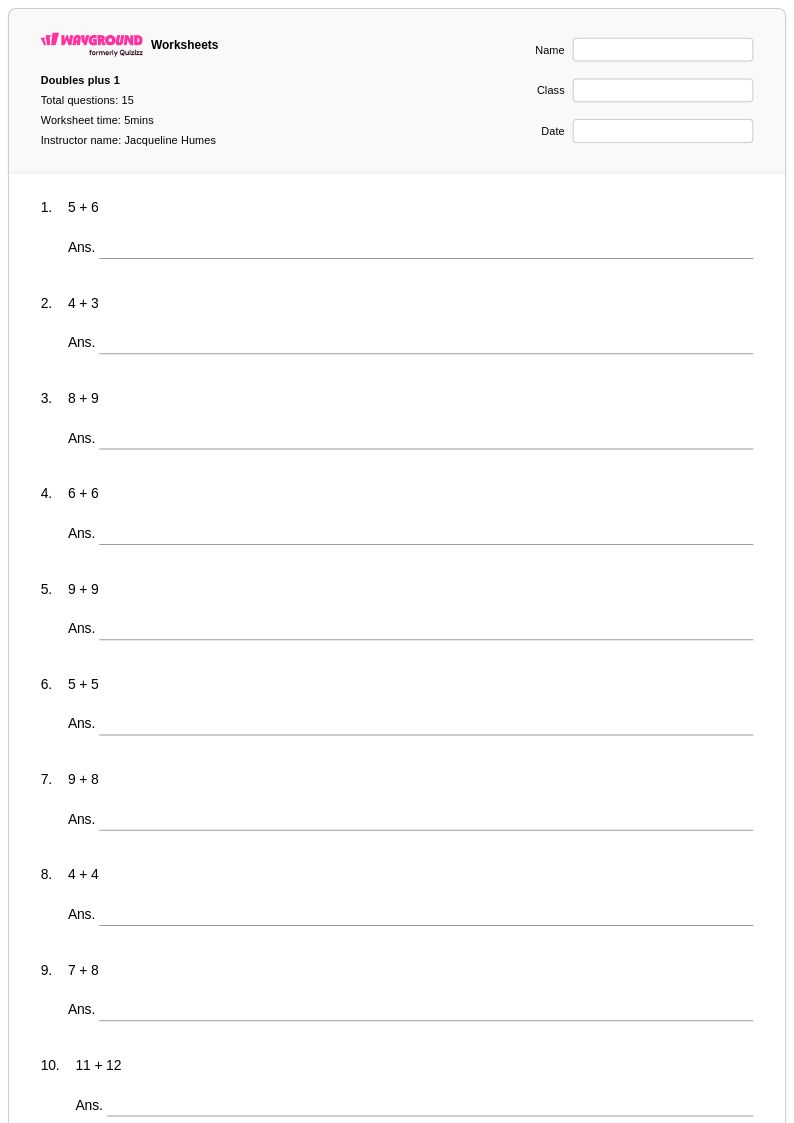
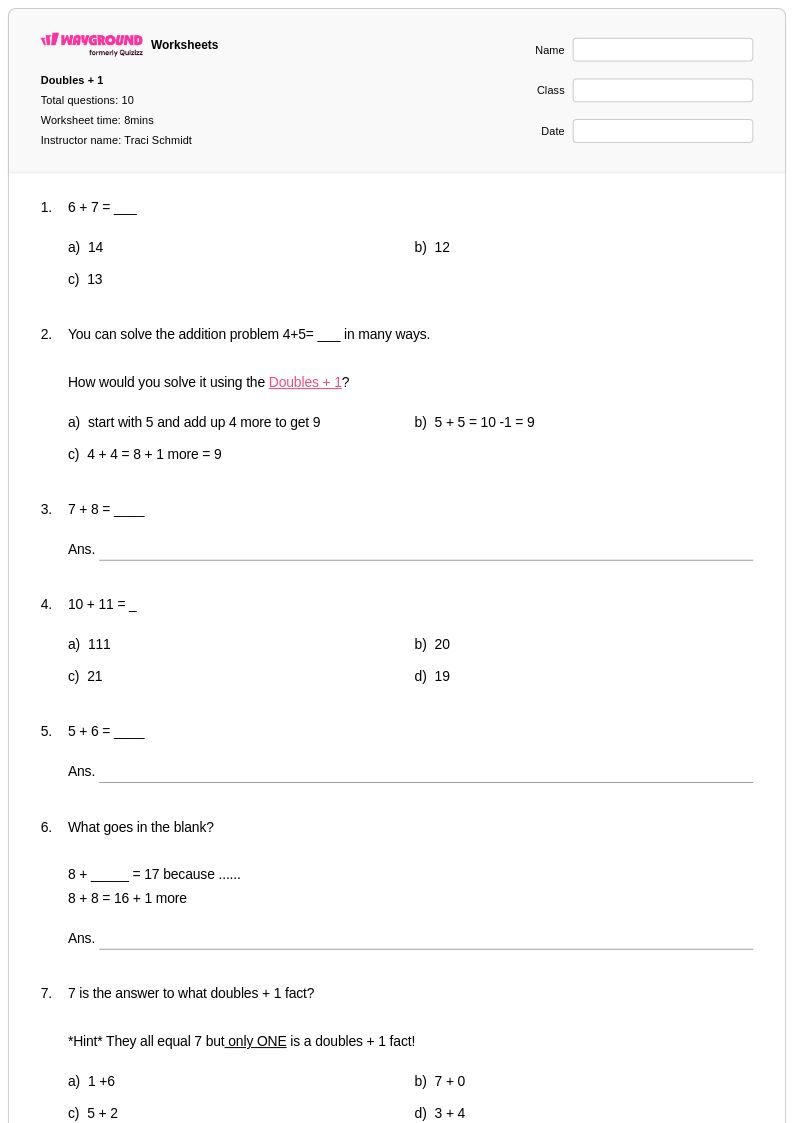
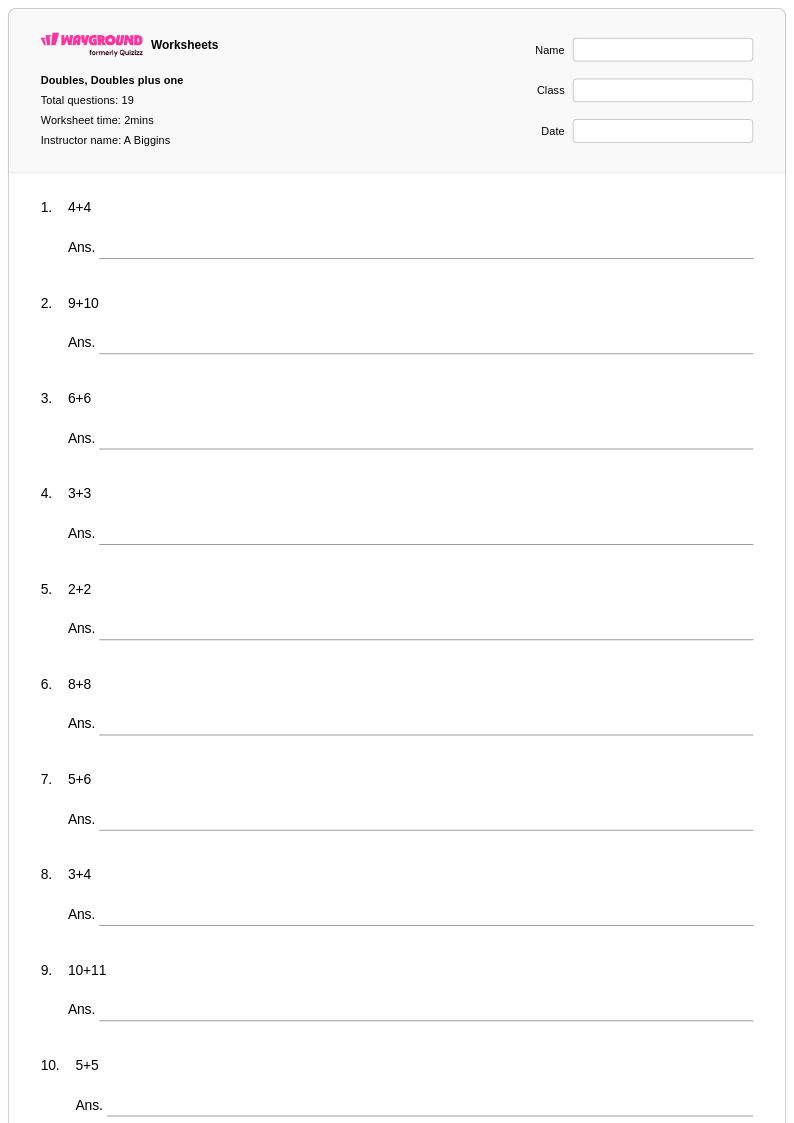
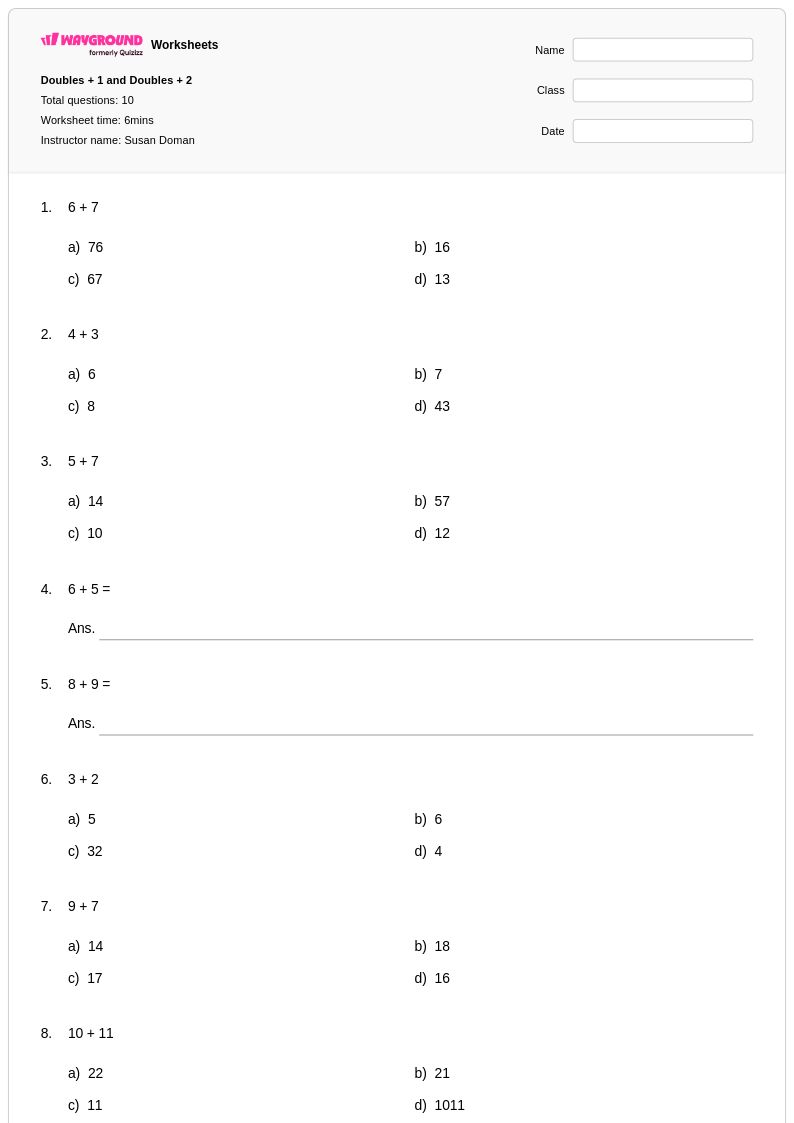
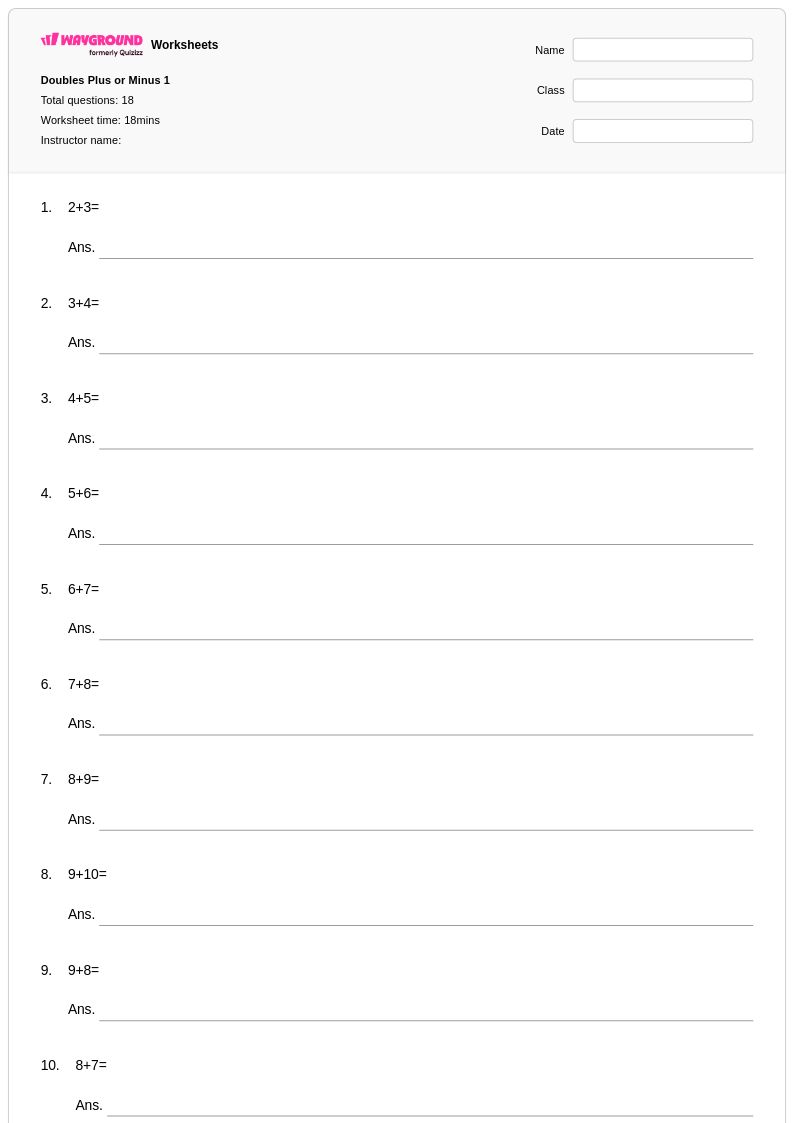
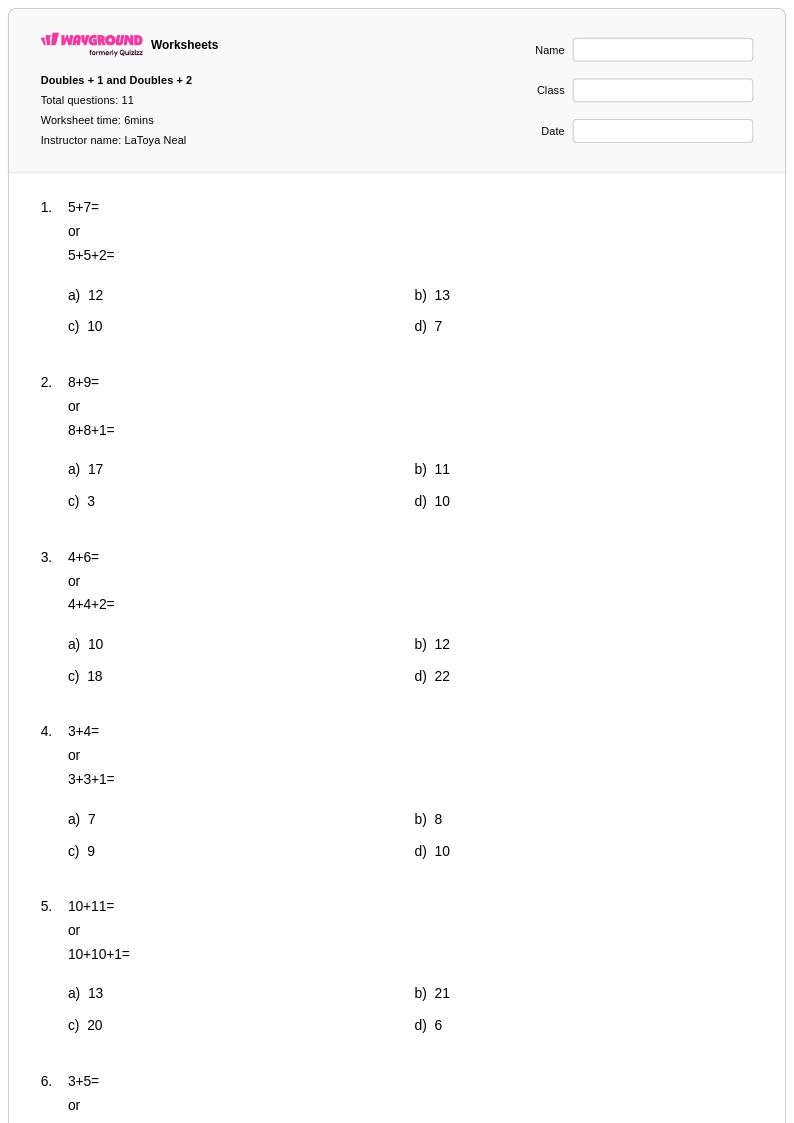
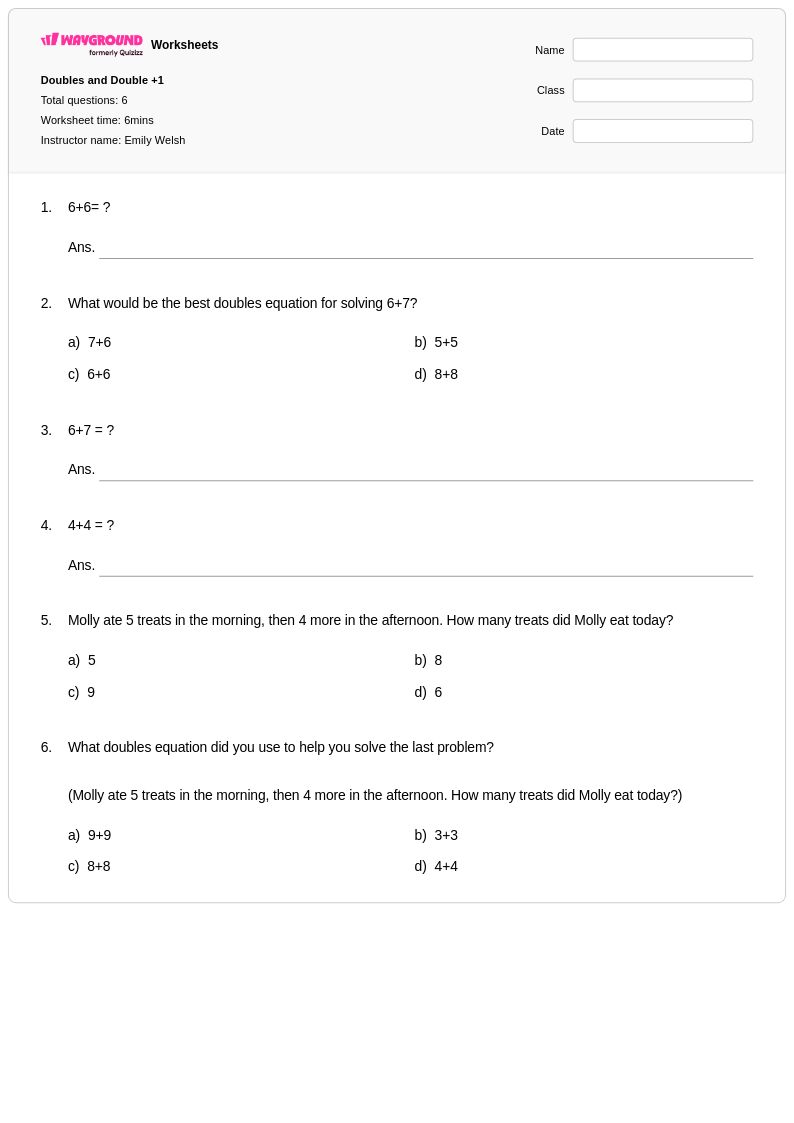
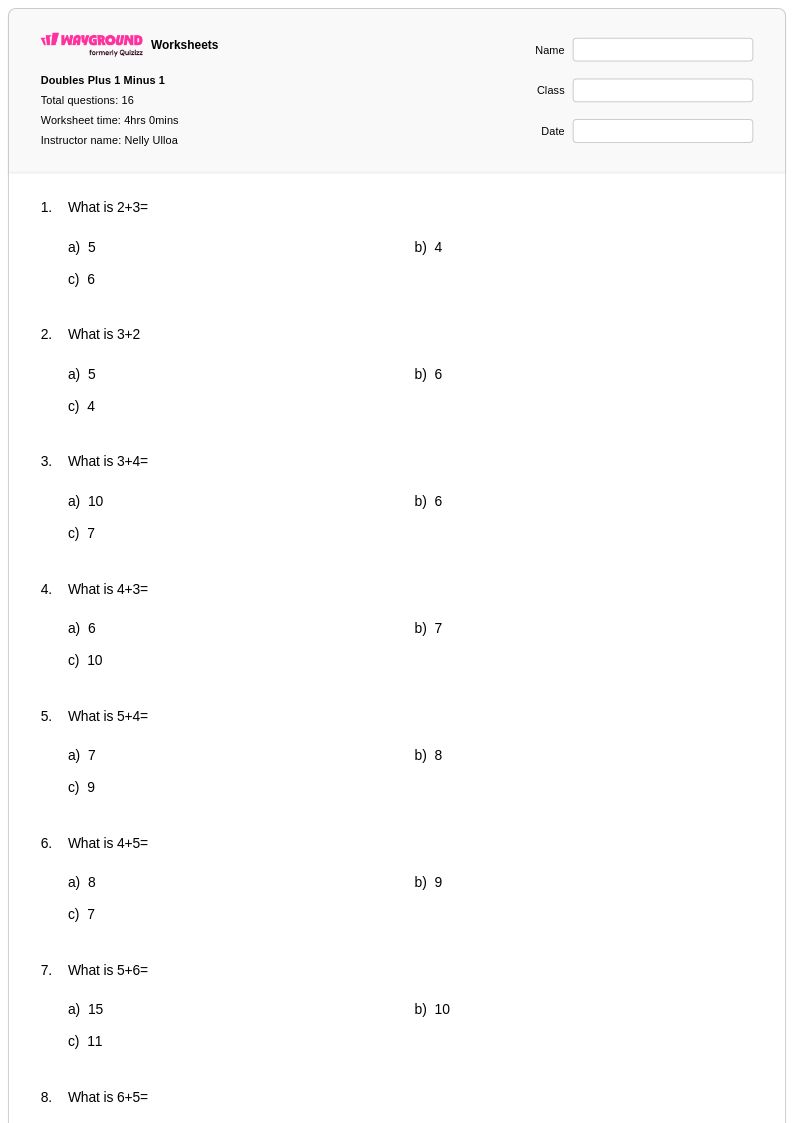
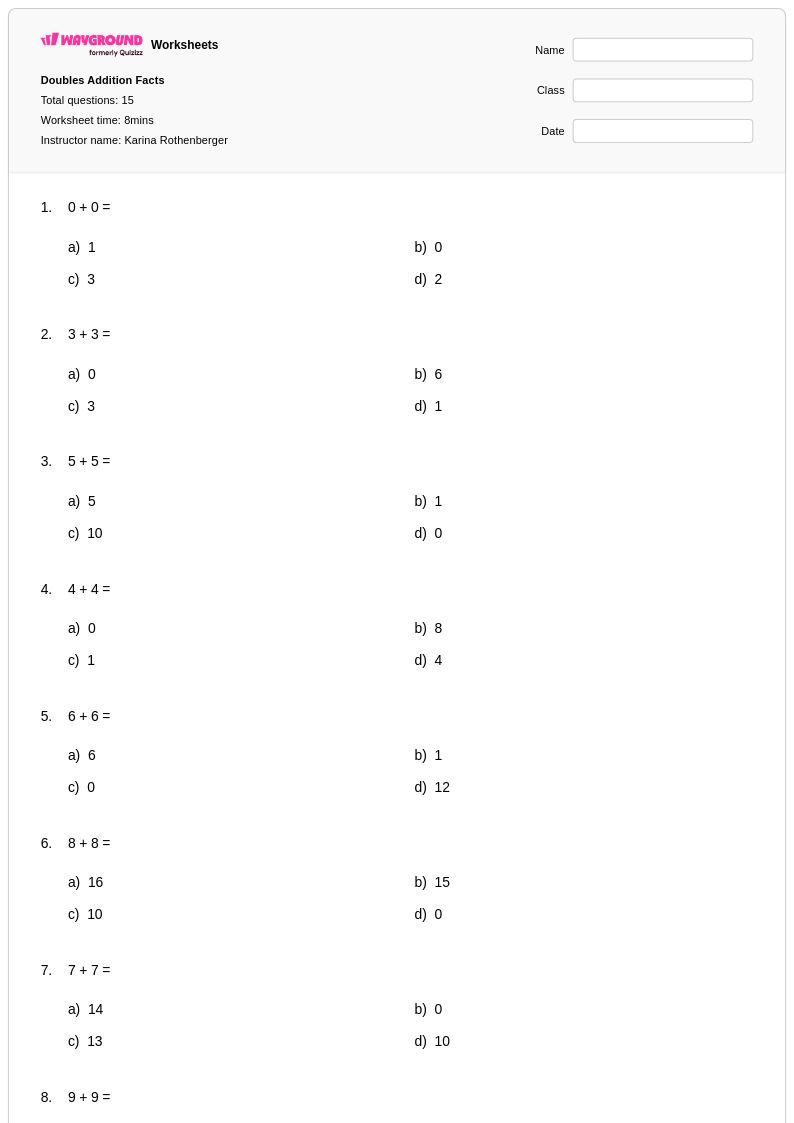
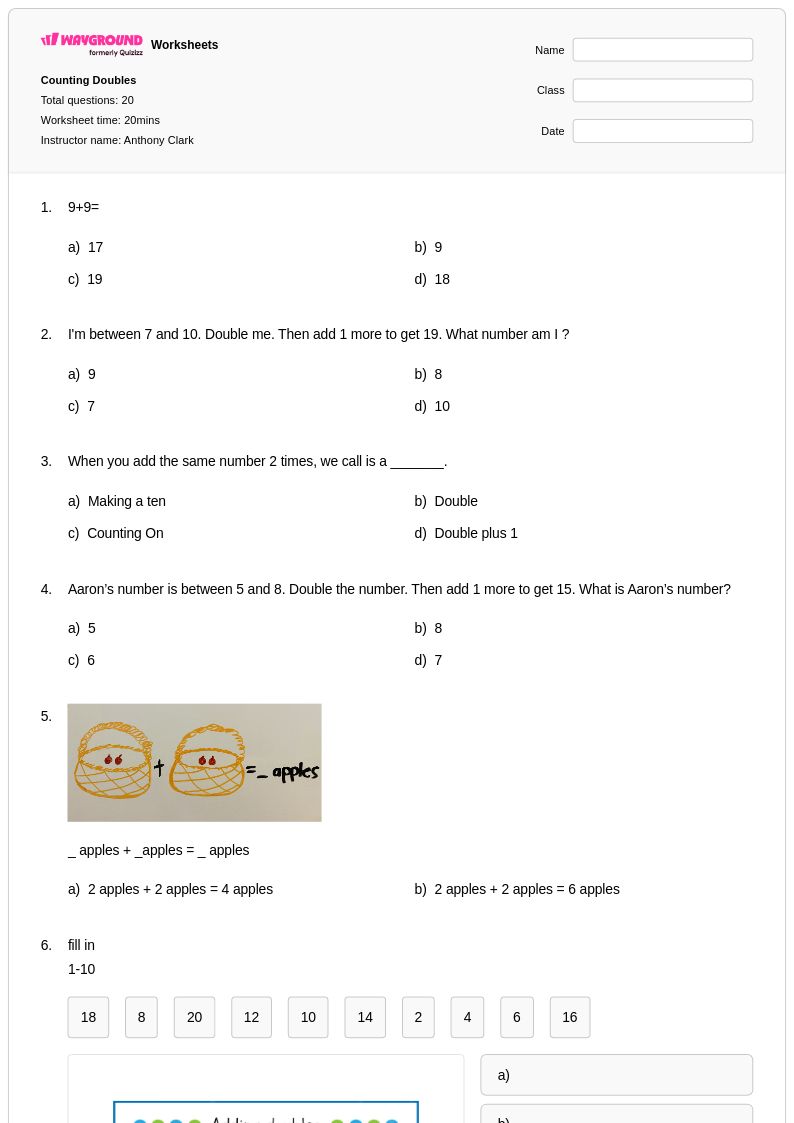
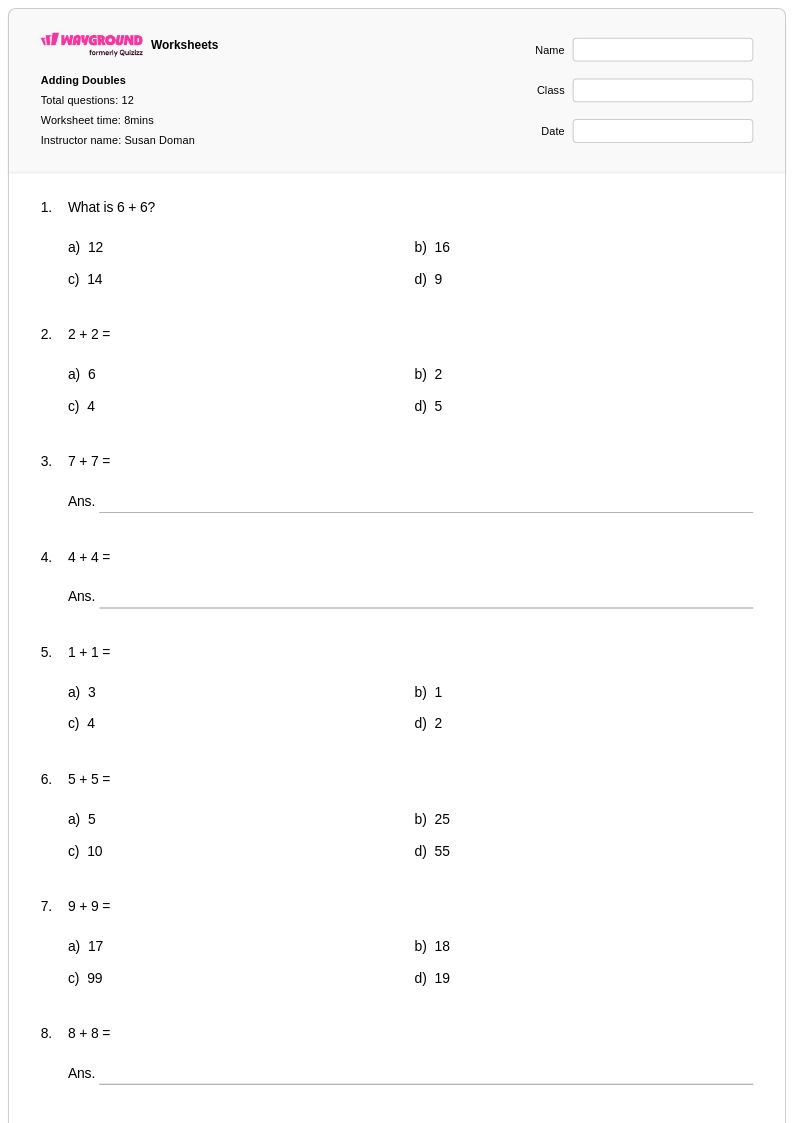
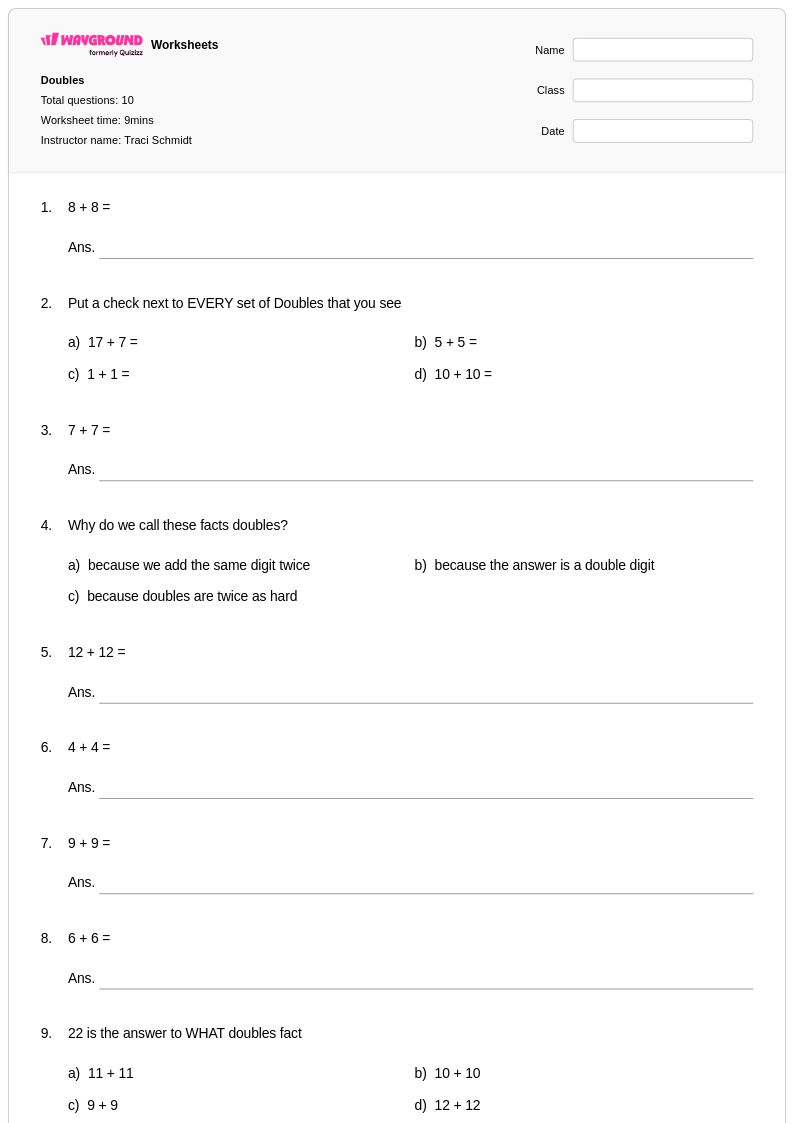
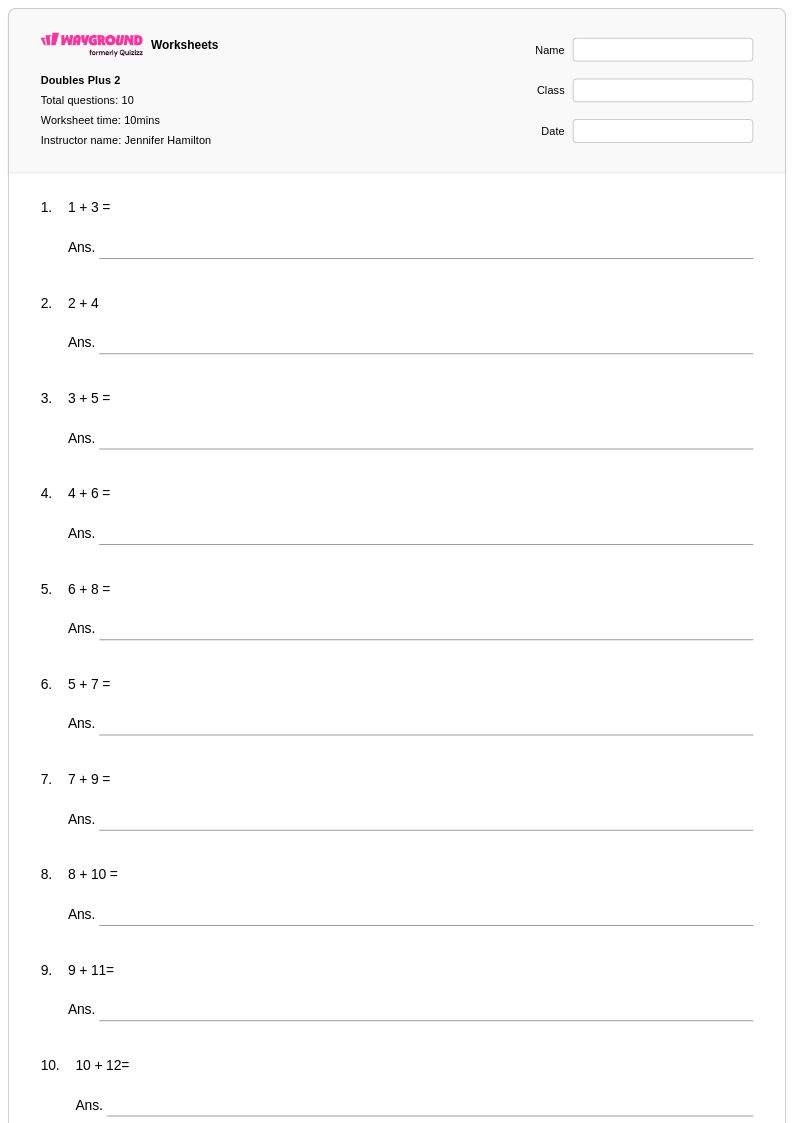
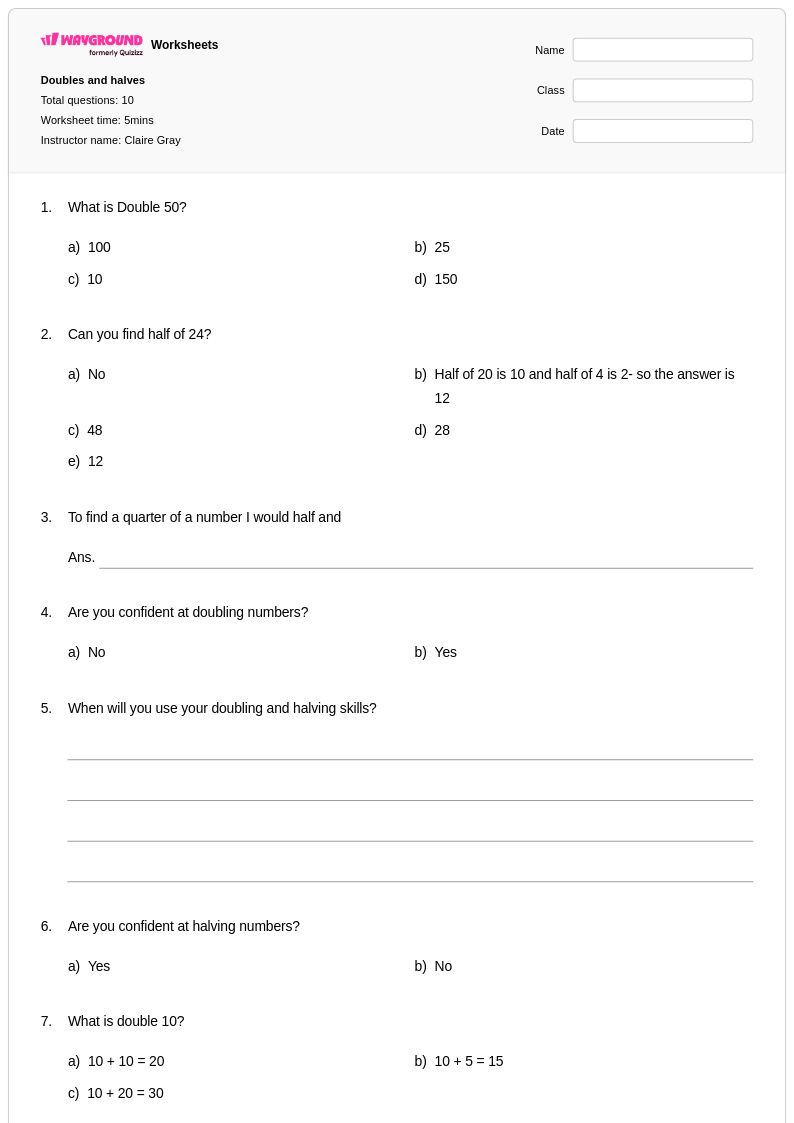
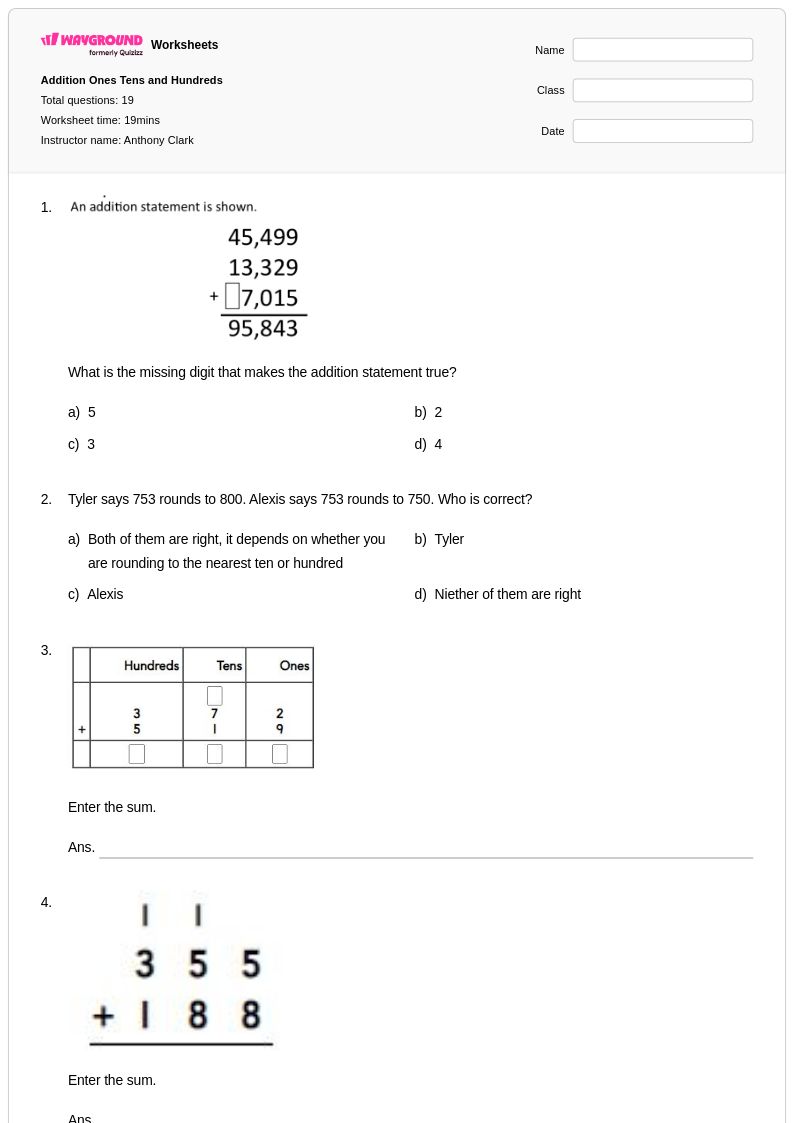
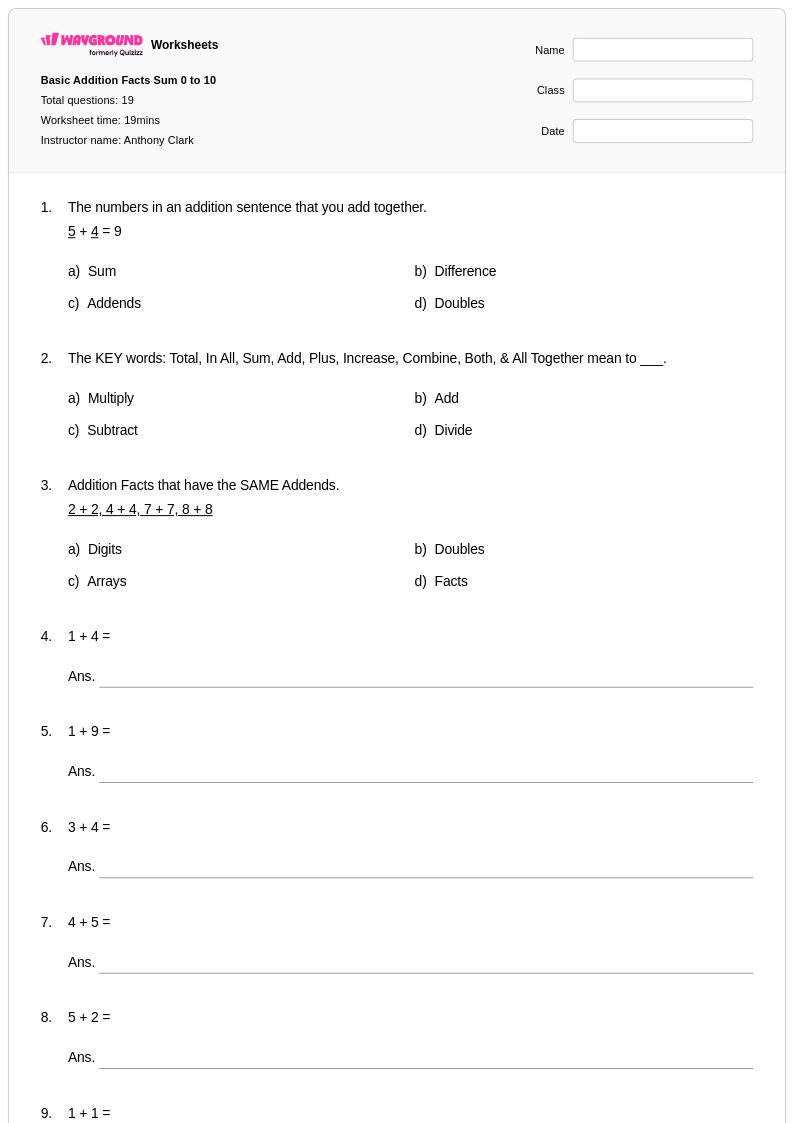
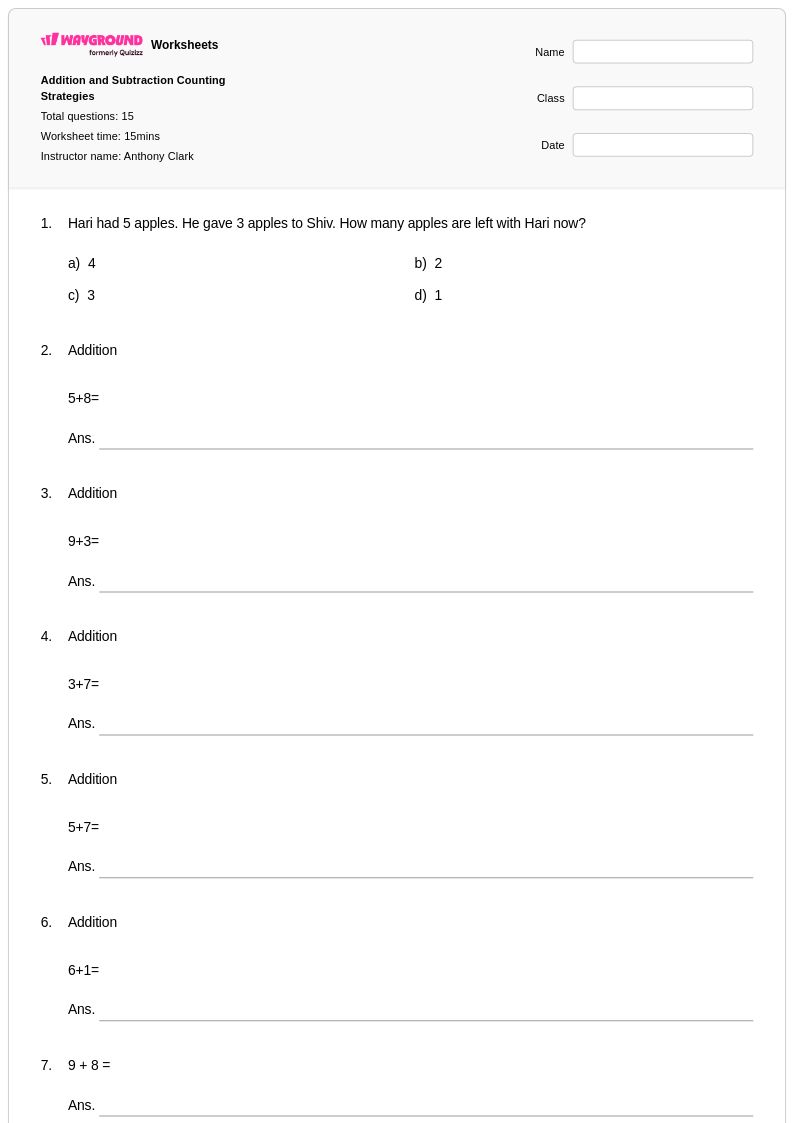
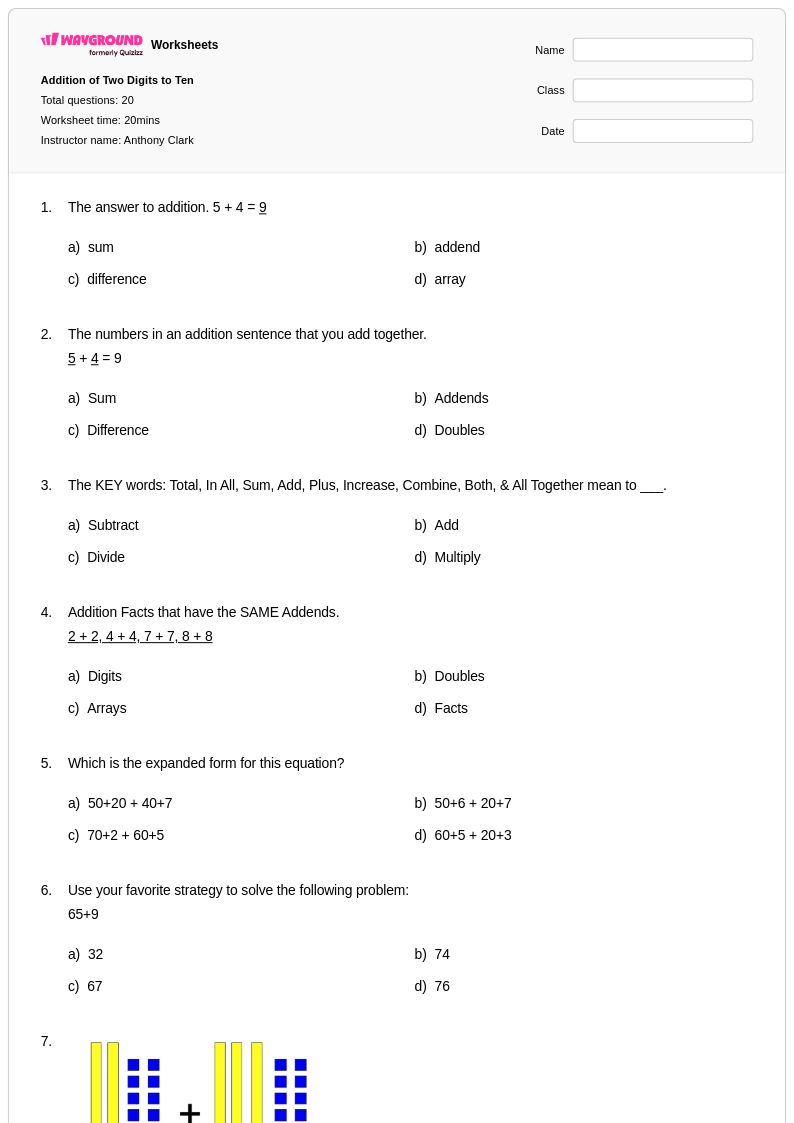
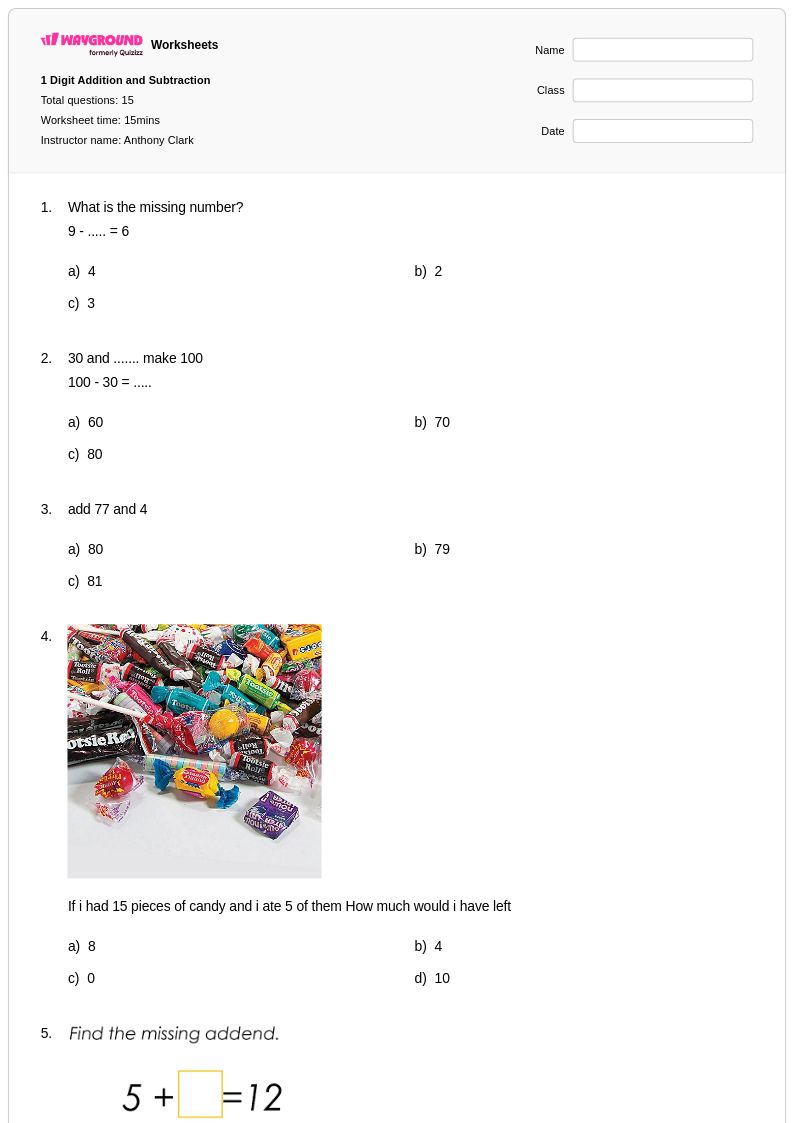
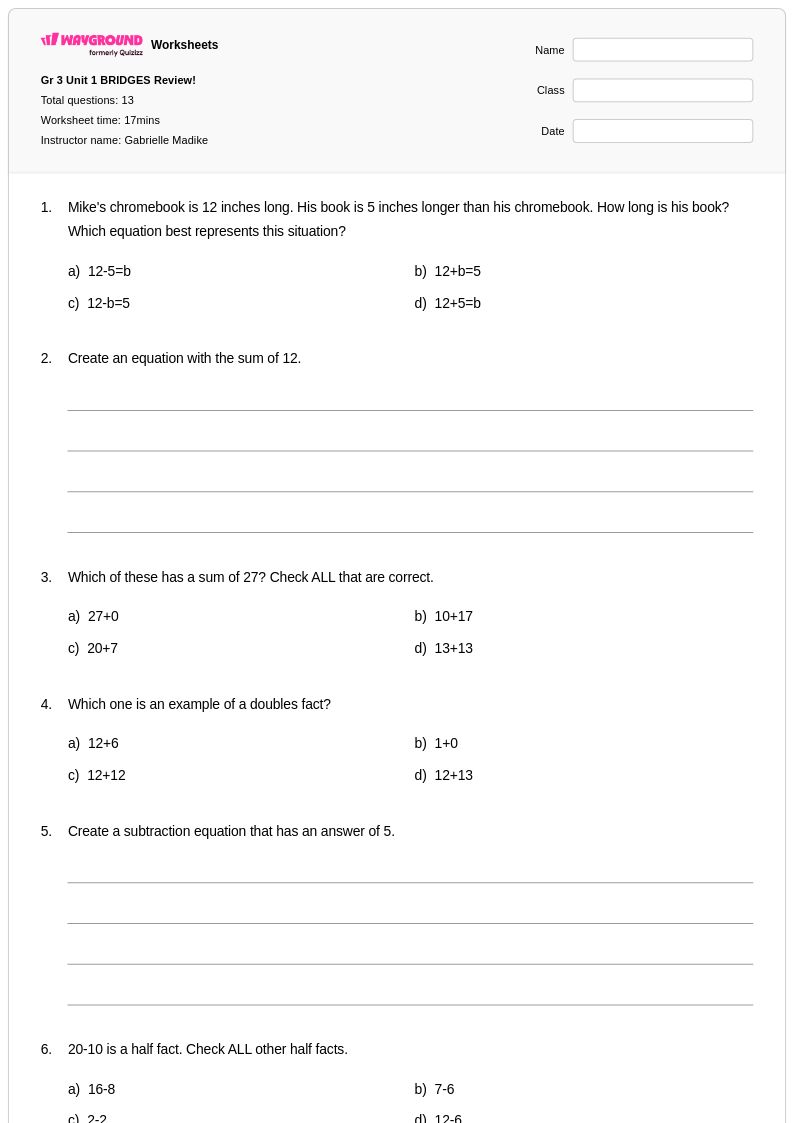
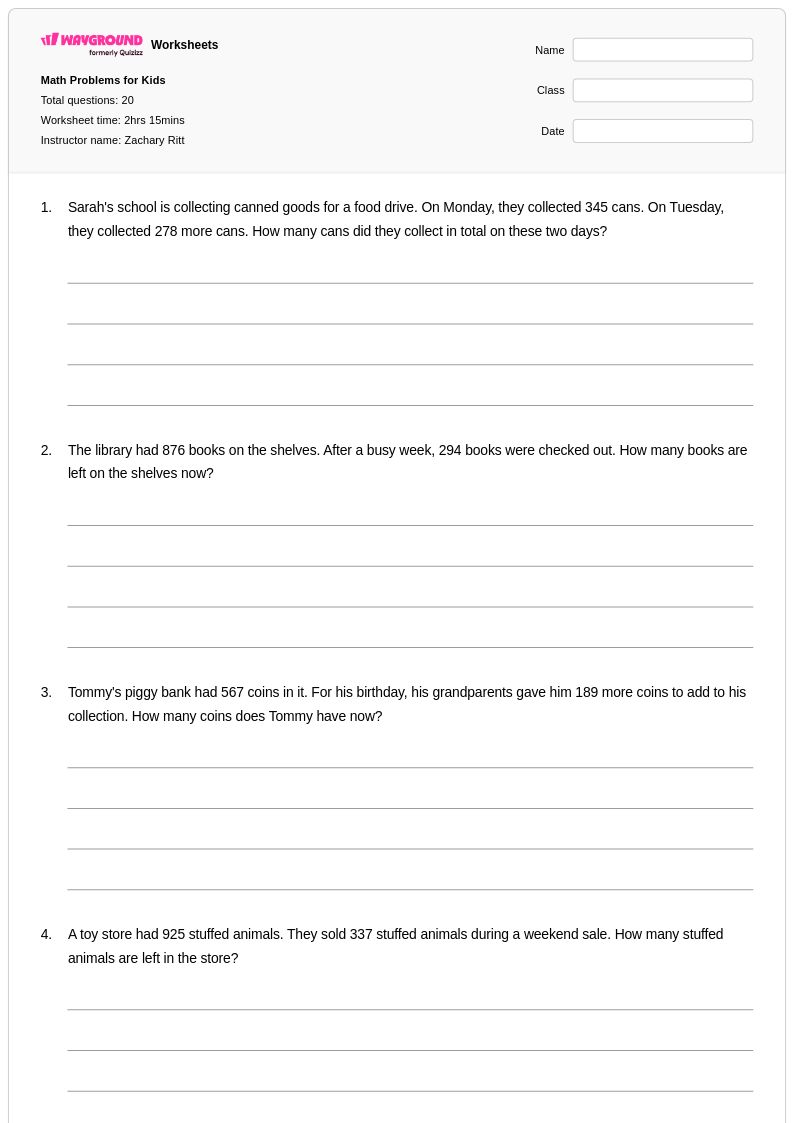
Doubles Plus 1 worksheets for Grade 3 students available through Wayground (formerly Quizizz) provide essential practice in one of the most effective mental math strategies for developing addition fluency. These carefully designed printables focus specifically on helping third graders master the concept of taking known doubles facts and adding one more to find the sum of near-doubles problems, such as recognizing that 7 + 8 equals 7 + 7 + 1, or 15. The worksheets strengthen students' number sense and computational thinking by building on their existing knowledge of doubles facts like 6 + 6 or 9 + 9, then extending this foundation to solve related addition problems efficiently. Each free pdf resource includes comprehensive practice problems that progress systematically from basic doubles plus one facts to more complex applications, complete with answer keys that enable independent practice and immediate feedback for both students and educators.
Wayground's extensive collection of Doubles Plus 1 worksheets draws from millions of teacher-created resources, offering educators powerful search and filtering capabilities to locate materials perfectly aligned with Grade 3 mathematics standards and individual classroom needs. Teachers can easily differentiate instruction by selecting from various difficulty levels and problem formats, customizing worksheets to support remediation for struggling learners or provide enrichment challenges for advanced students. The platform's flexible digital and printable pdf formats accommodate diverse teaching environments and learning preferences, while built-in assessment tools help educators track student progress in mastering this critical addition strategy. These comprehensive features streamline lesson planning and enable teachers to provide targeted skill practice that builds mathematical confidence and prepares students for more advanced arithmetic concepts.
FAQs
Why would a third grader need doubles plus 1 practice?
Third grade introduces multiplication, and students who haven't automated their addition facts — including near-doubles — carry an extra cognitive load into every new concept. Doubles plus 1 practice at this grade is almost always remediation: filling a gap that should have closed in Grade 1 or 2. It's also useful as a warm-up routine at the start of a unit, since fluency with small addition facts directly supports the mental math demands of multi-digit multiplication and division.
What exercises work for third graders who still struggle with doubles plus 1?
At Grade 3, the issue is usually automaticity, not comprehension — students understand the strategy but haven't drilled it enough to recall facts instantly. Short daily fluency sprints (20–30 problems, one minute) are more effective than longer occasional practice. Mixing near-doubles with other fact families in the same drill is important: students need to recognize when to apply the strategy, not just execute it when the worksheet signals it.
What does it look like when a third grader hasn't mastered doubles plus 1?
Watch for finger-counting on problems like 7+8 or 9+10 — that's the clearest signal. You'll also see it indirectly: students who slow down noticeably on multi-digit addition problems that contain a near-doubles step, or who make careless-looking errors that are actually retrieval failures under cognitive load. A quick oral fact check (flash 6+7, expect an answer in under two seconds) tells you more than a written worksheet will.
How do I use Wayground's Grade 3 doubles plus 1 worksheets for remediation?
For small-group remediation, the digital quiz format works well: students get immediate feedback on each answer, which is more effective for closing fluency gaps than reviewing a graded paper the next day. You can assign the worksheet to just the students who need it while the rest of the class works on something else — Wayground applies the assignment at the student level. If you prefer paper for this group, print the PDF and use the Wayground for Teachers app to scan and grade submissions without re-entering results manually.
How does Common Core treat addition fact fluency by Grade 3?
Common Core expects students to have fluency with addition and subtraction within 20 by the end of Grade 2, so by Grade 3 these facts — including near-doubles like 7+8 — should already be automatic. Grade 3 builds on that foundation by introducing multiplication and division within 100, which requires students to apply addition facts quickly inside larger calculations. A third grader still reconstructing 8+9 step by step will struggle with the cognitive demands of Grade 3 multiplication, making fact fluency remediation a genuine priority, not just review.
How can I differentiate doubles plus 1 practice for third graders at different levels?
For students still building fluency, Wayground's extended time accommodation removes the pressure that causes them to abandon strategies they actually know — useful when you want to assess understanding separately from speed. For students who need cleaner visual presentation, the worksheet-level tools let you increase font size or apply a dyslexia-friendly font without creating a separate assignment. Students who have already mastered near-doubles within 20 can be moved to a more challenging worksheet while the rest of the group continues with grade-level content.