Free Printable Doubles Plus 1 Worksheets for Grade 1
Wayground's free Grade 1 Doubles Plus 1 worksheets and printables help students master this essential addition strategy through engaging practice problems with complete answer keys available in PDF format.
Explore printable Doubles Plus 1 worksheets for Grade 1
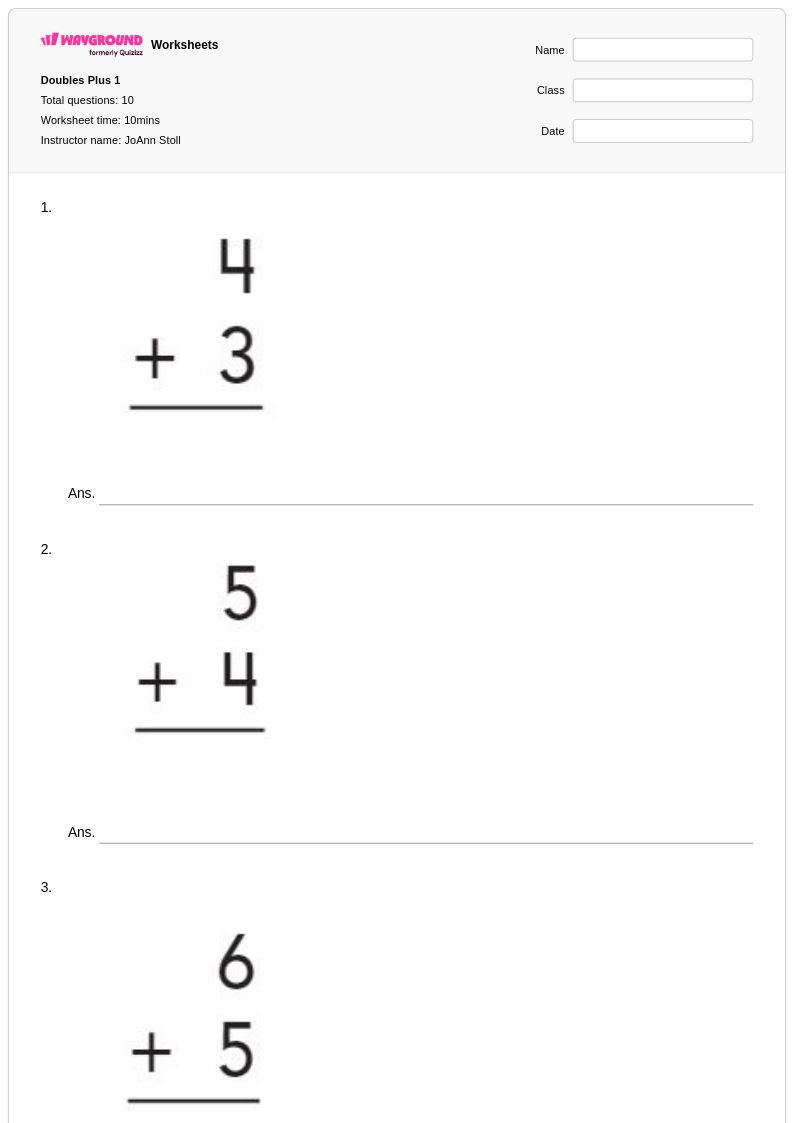
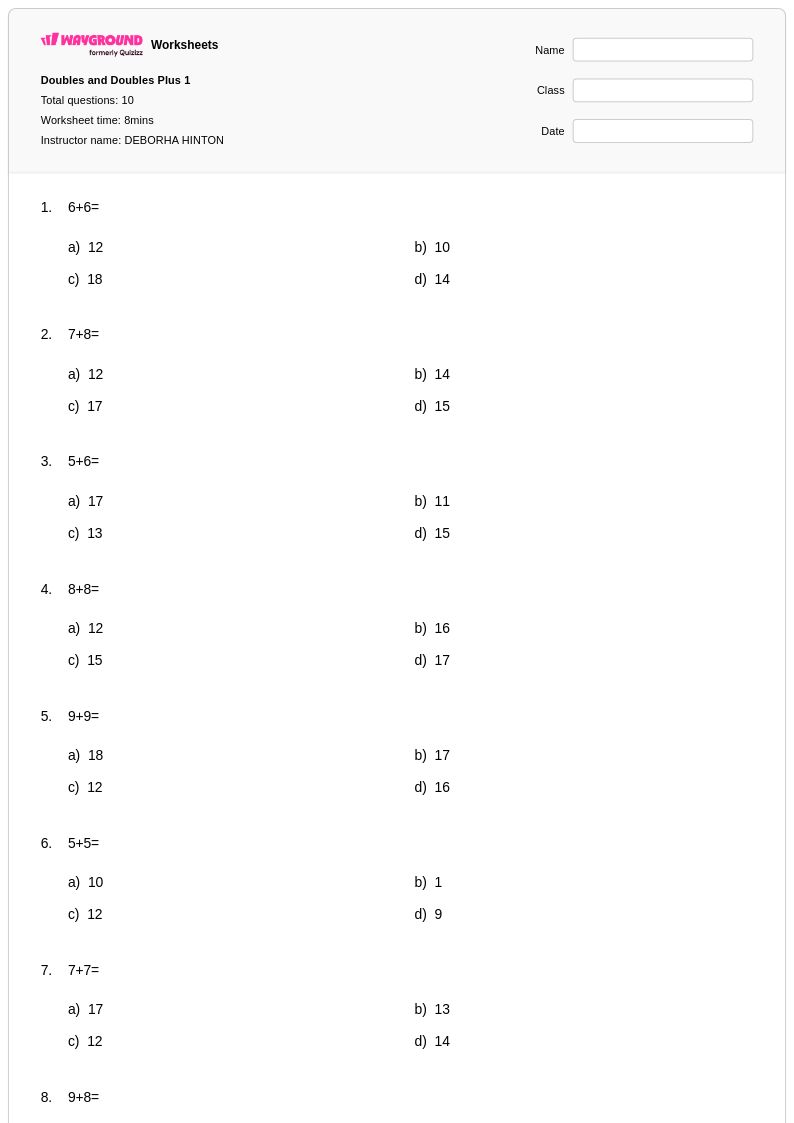
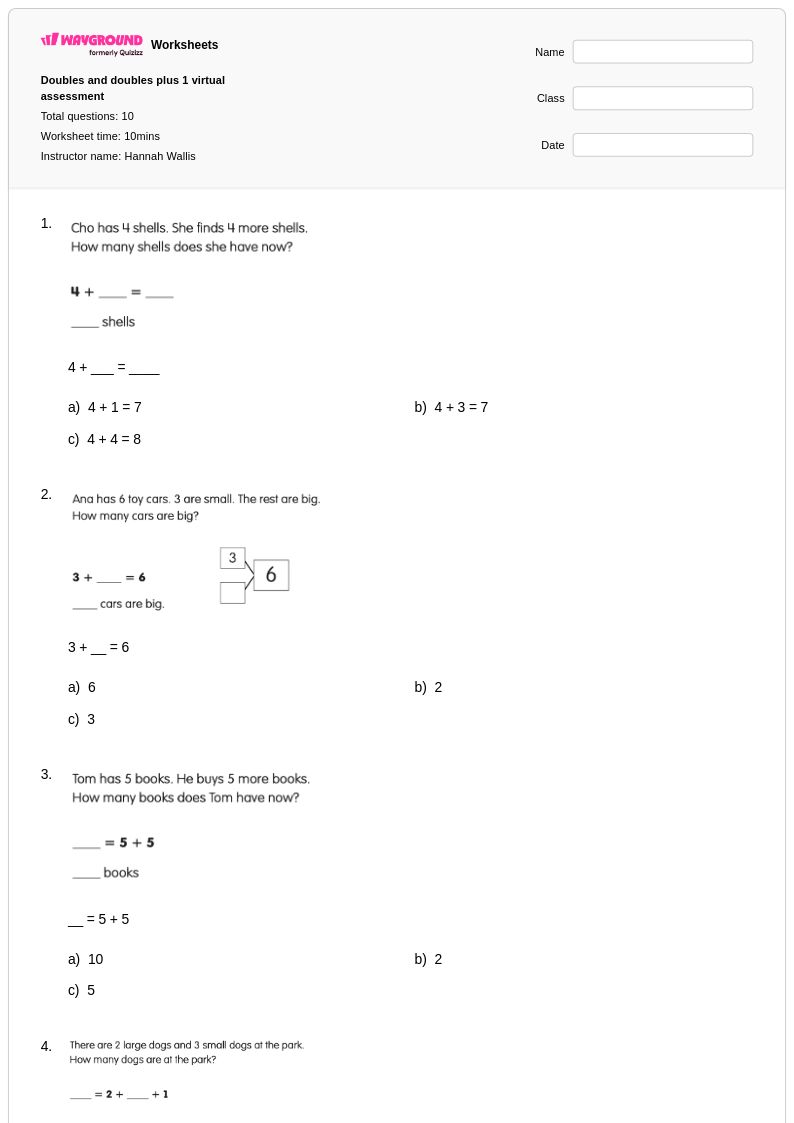
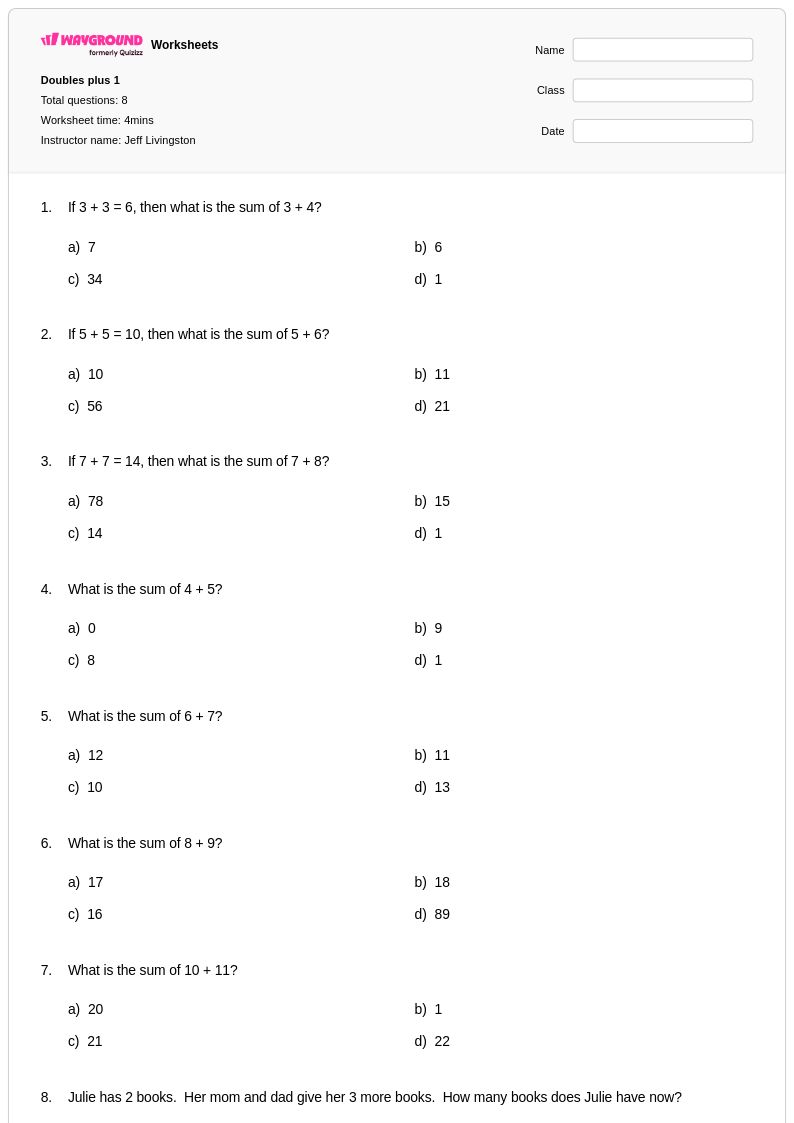
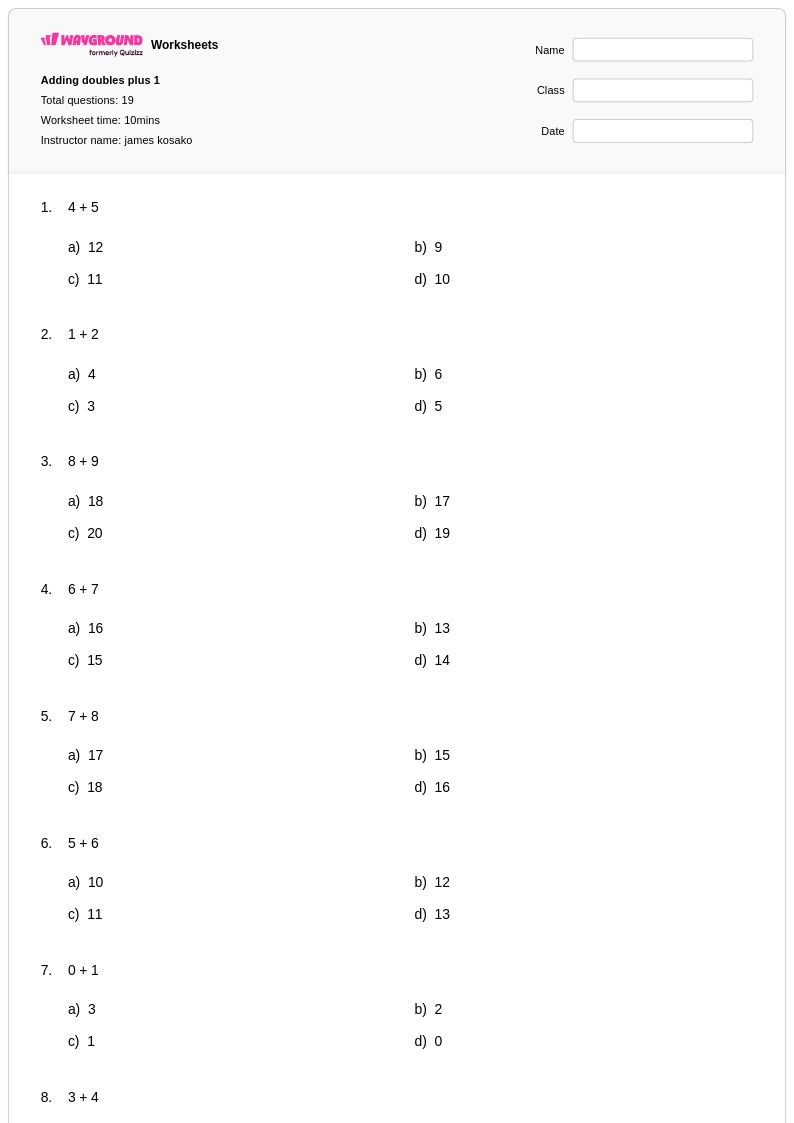
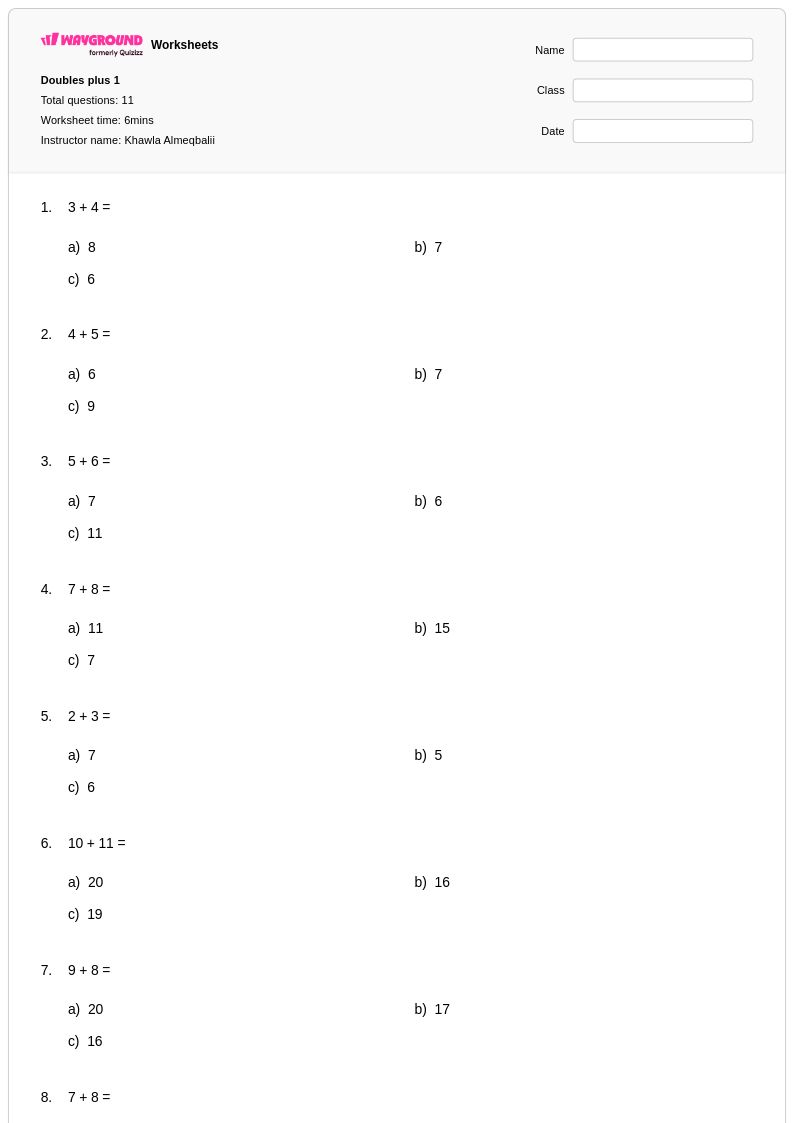
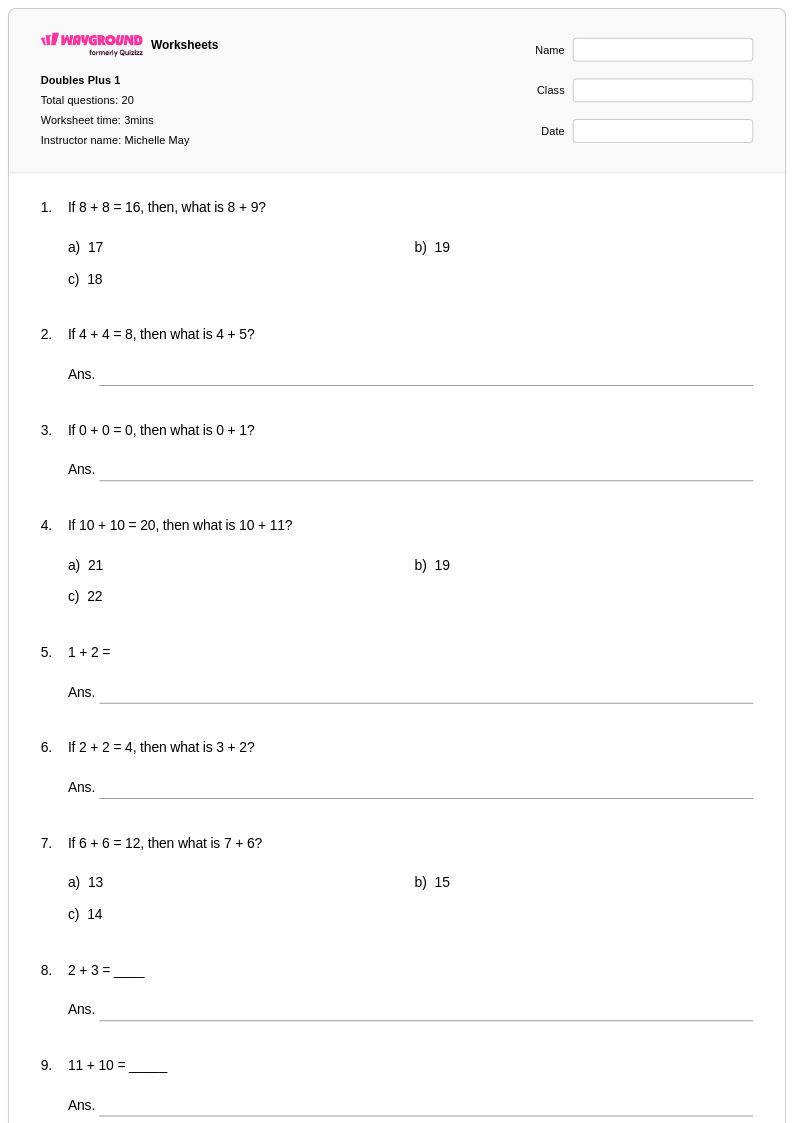
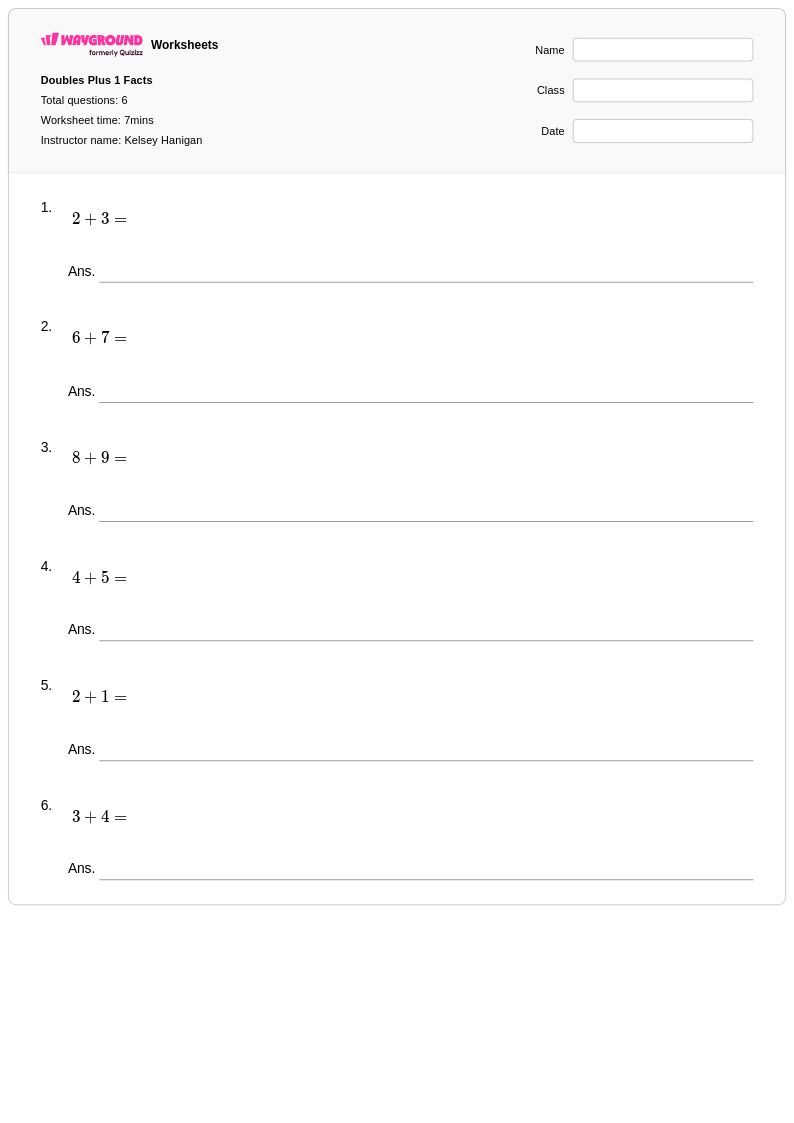
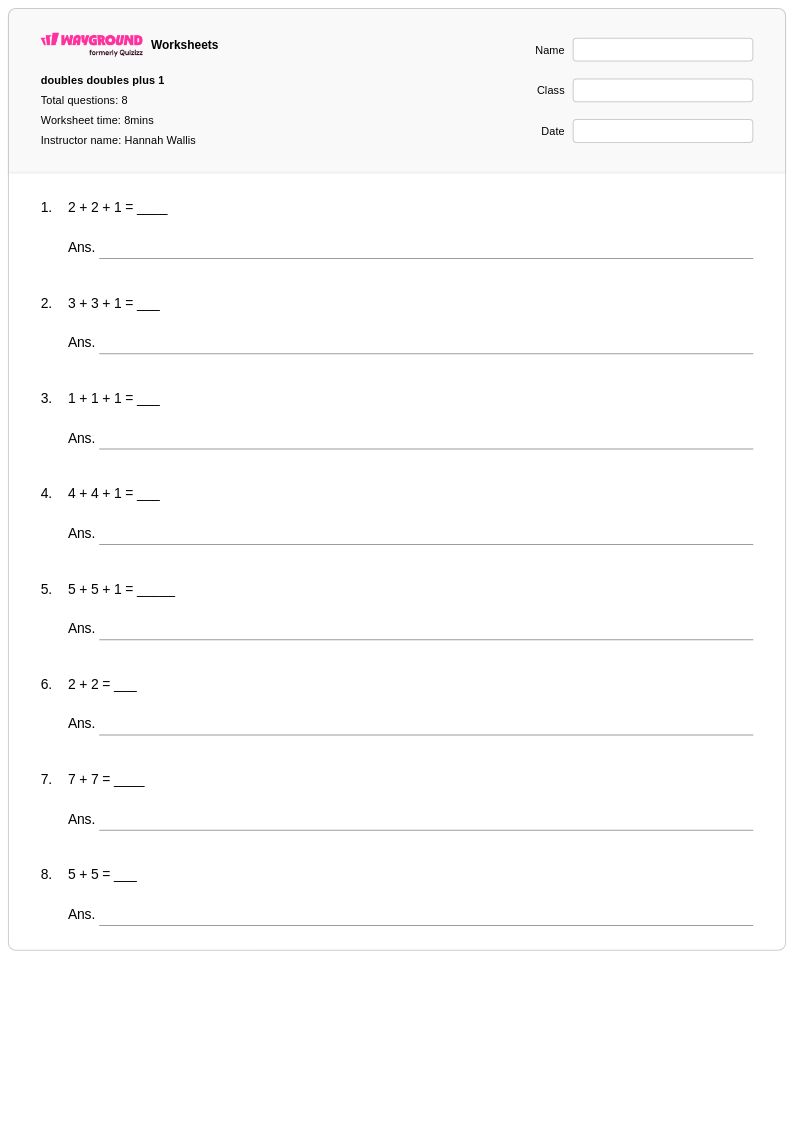
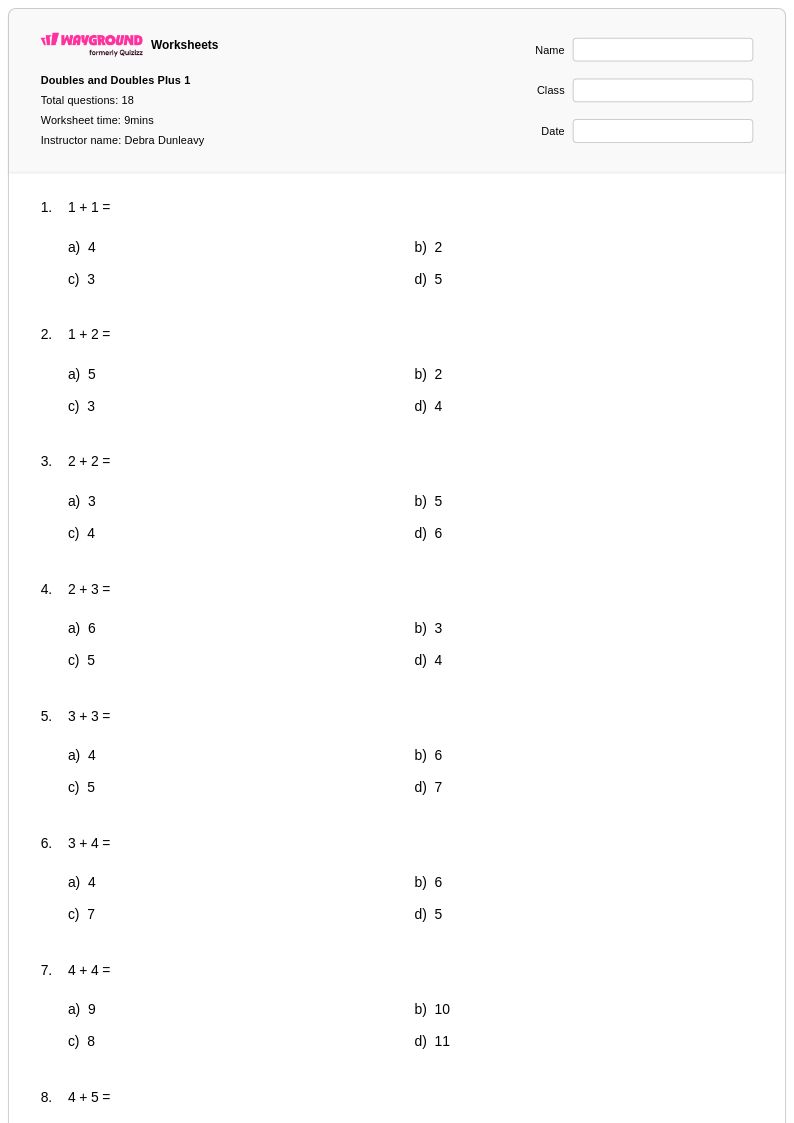
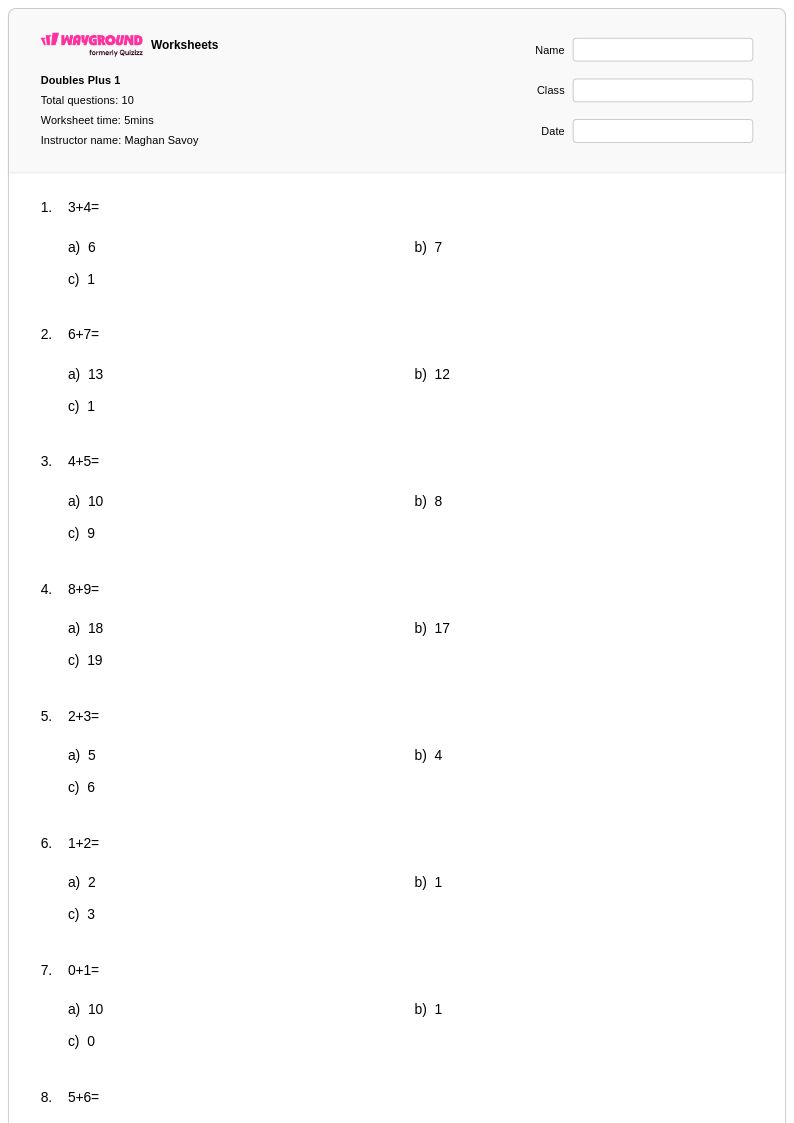
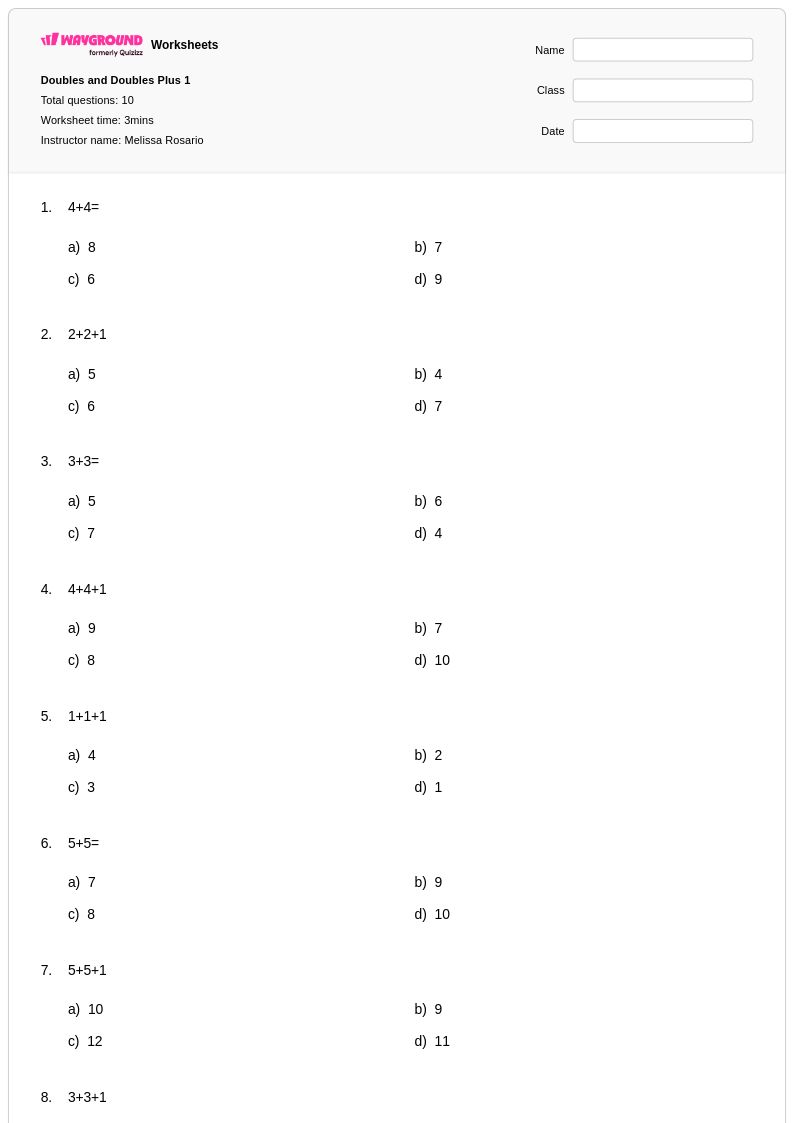
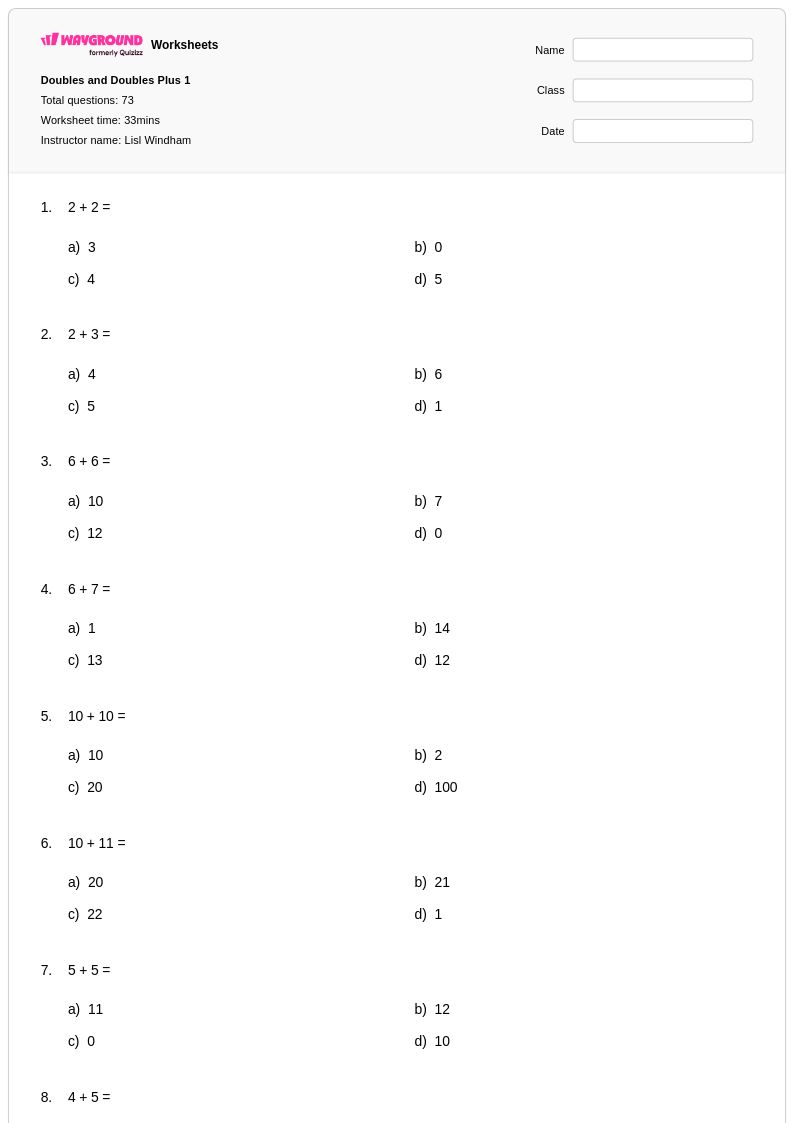
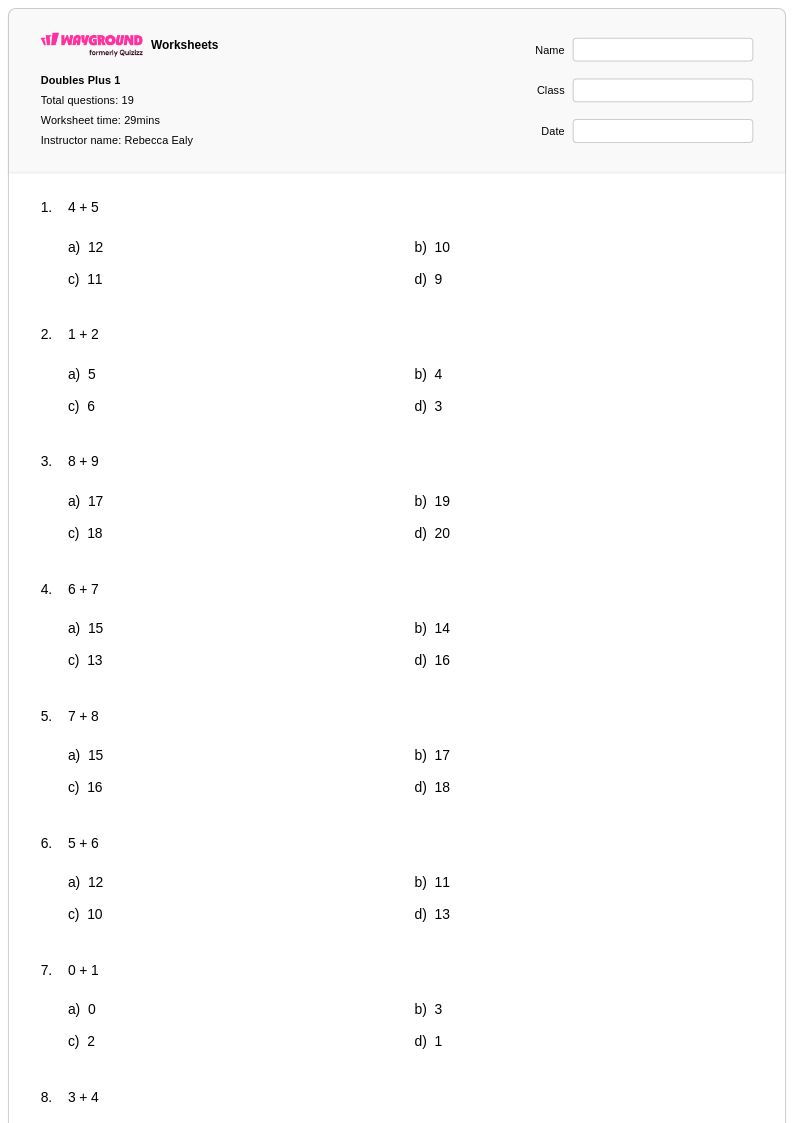
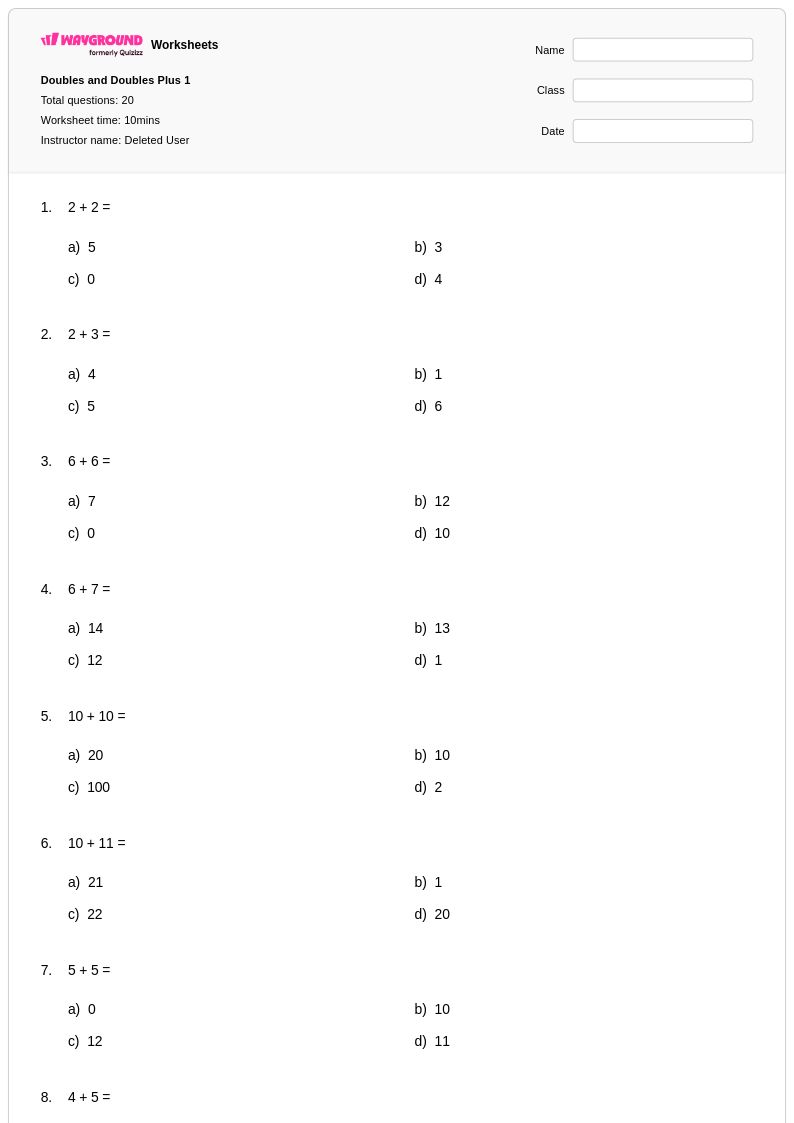
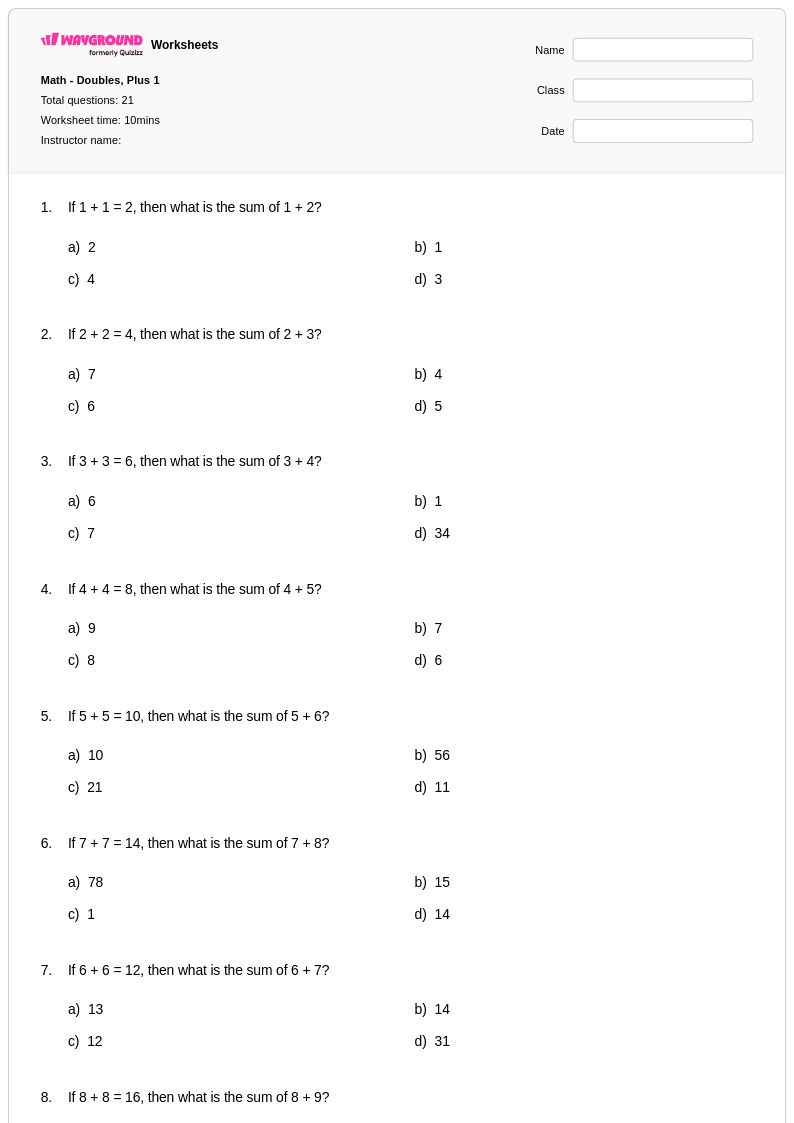
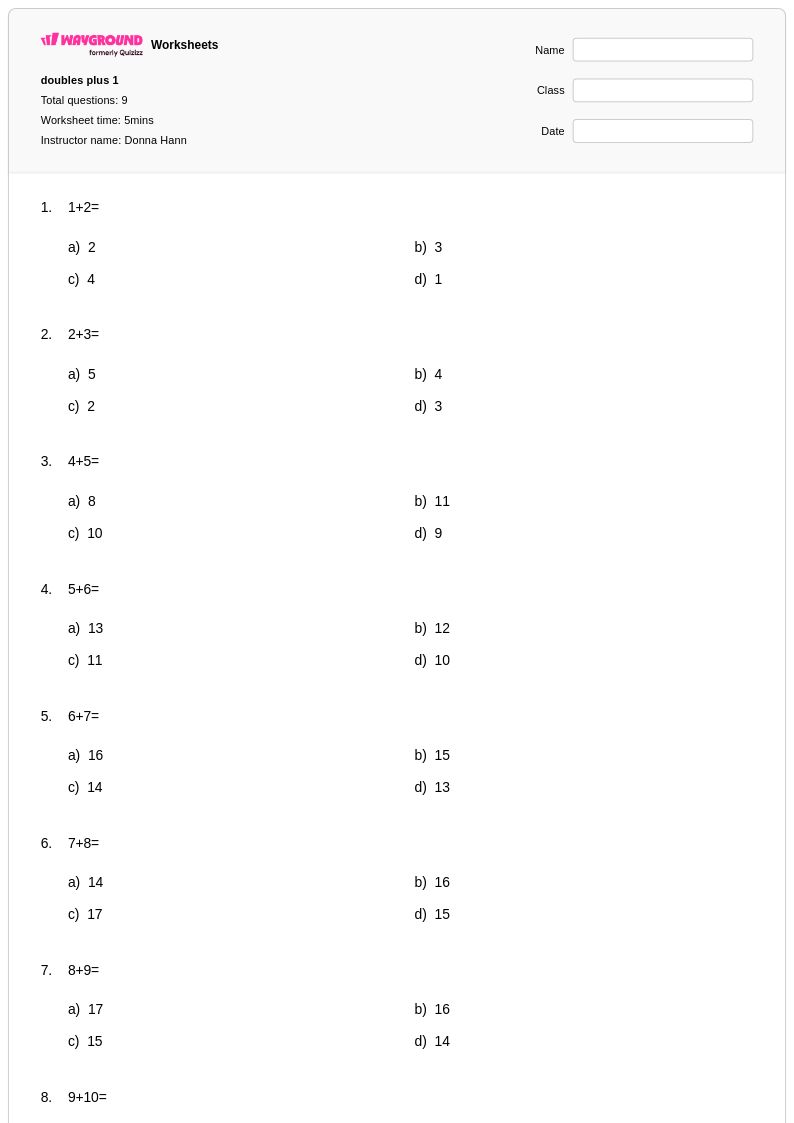
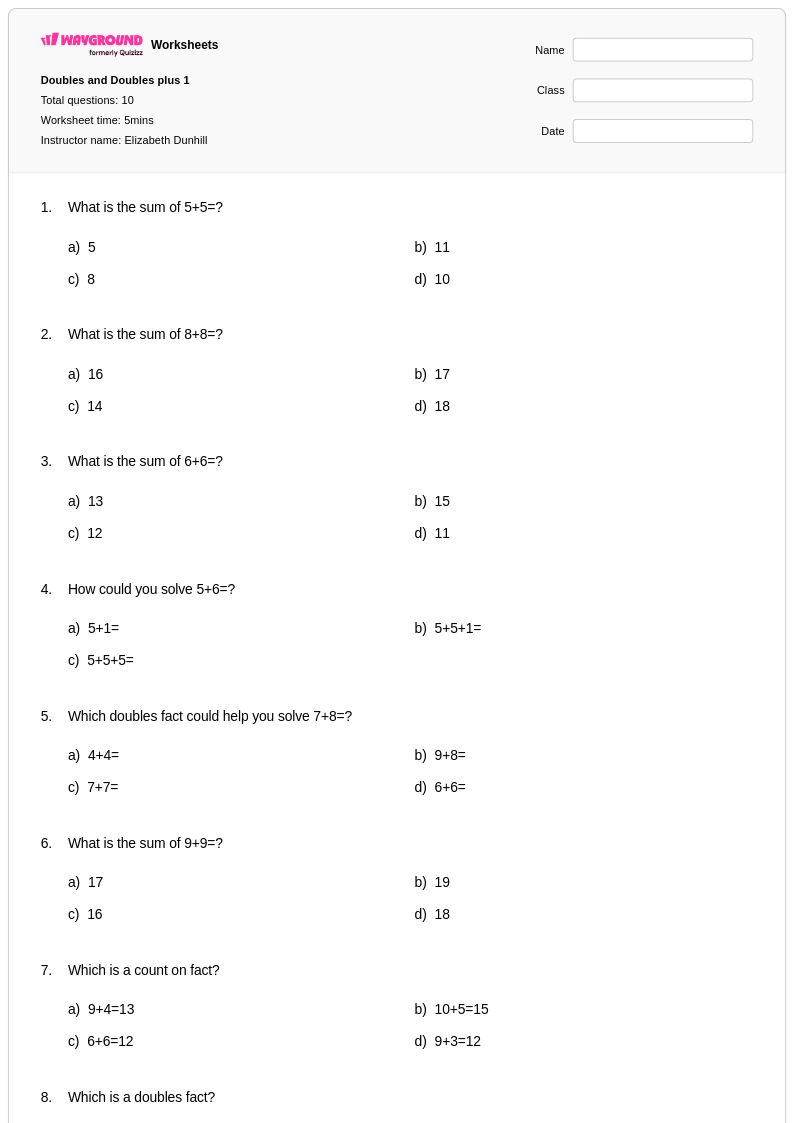
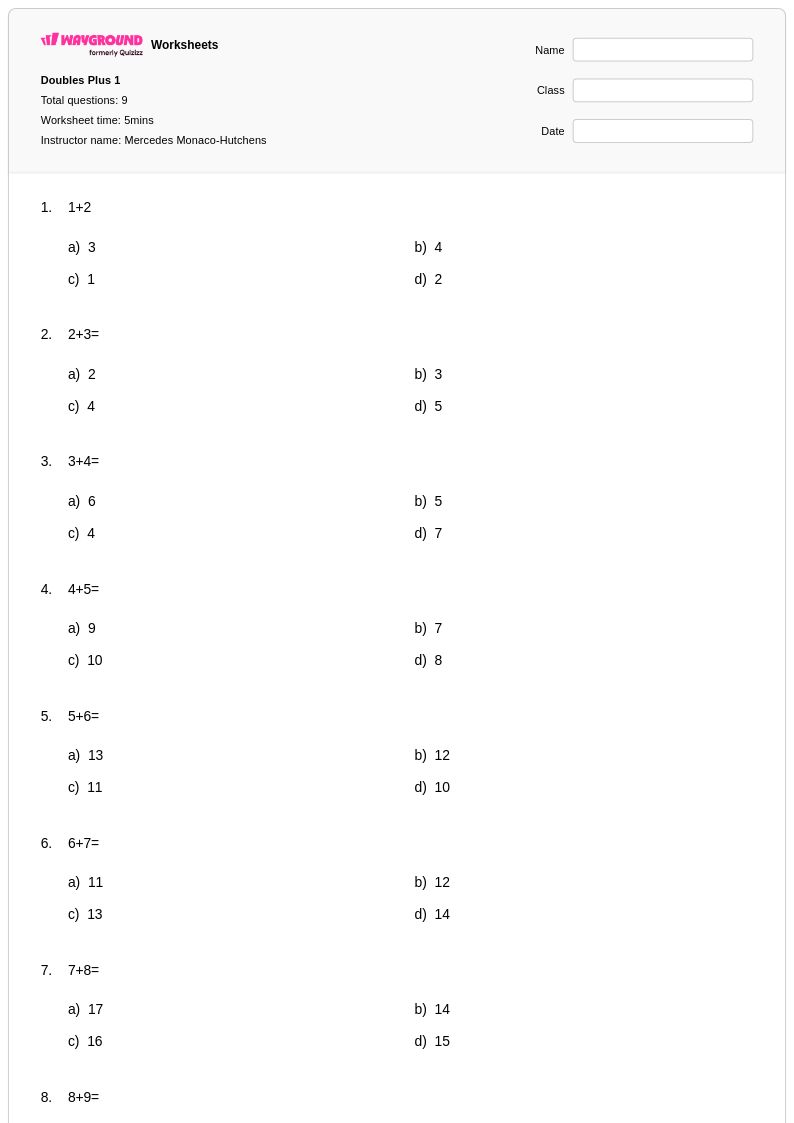
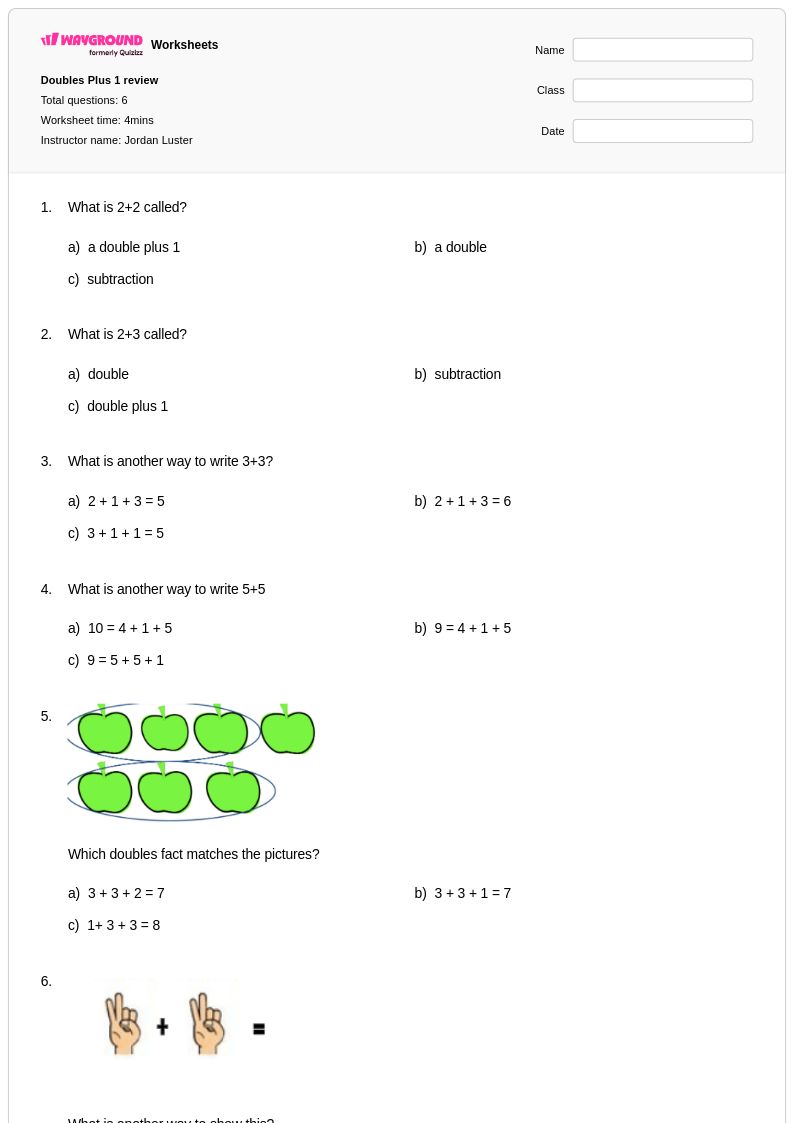
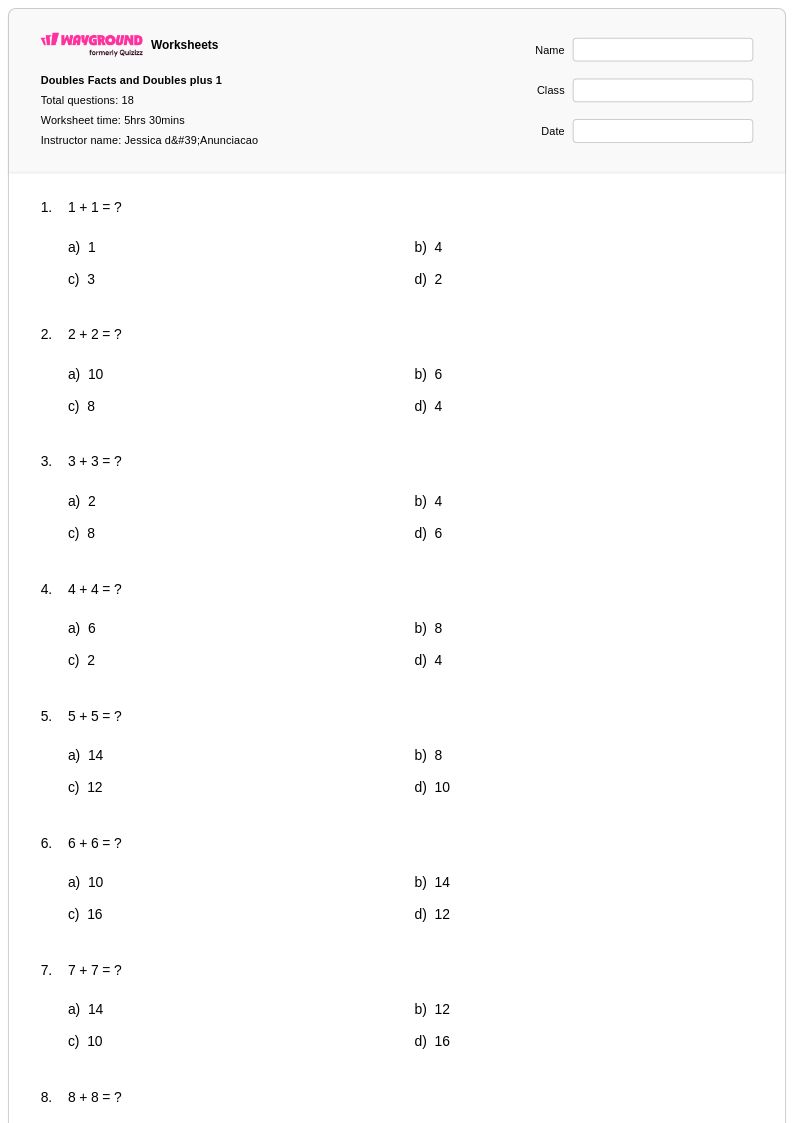
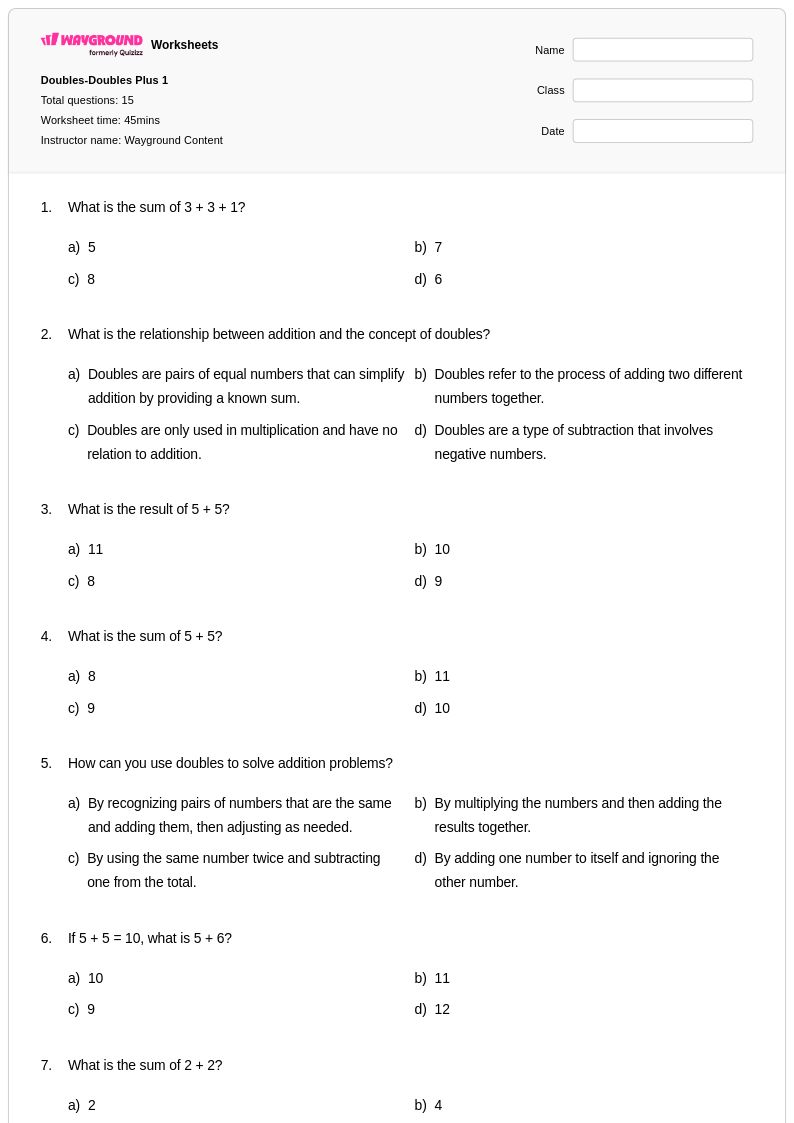
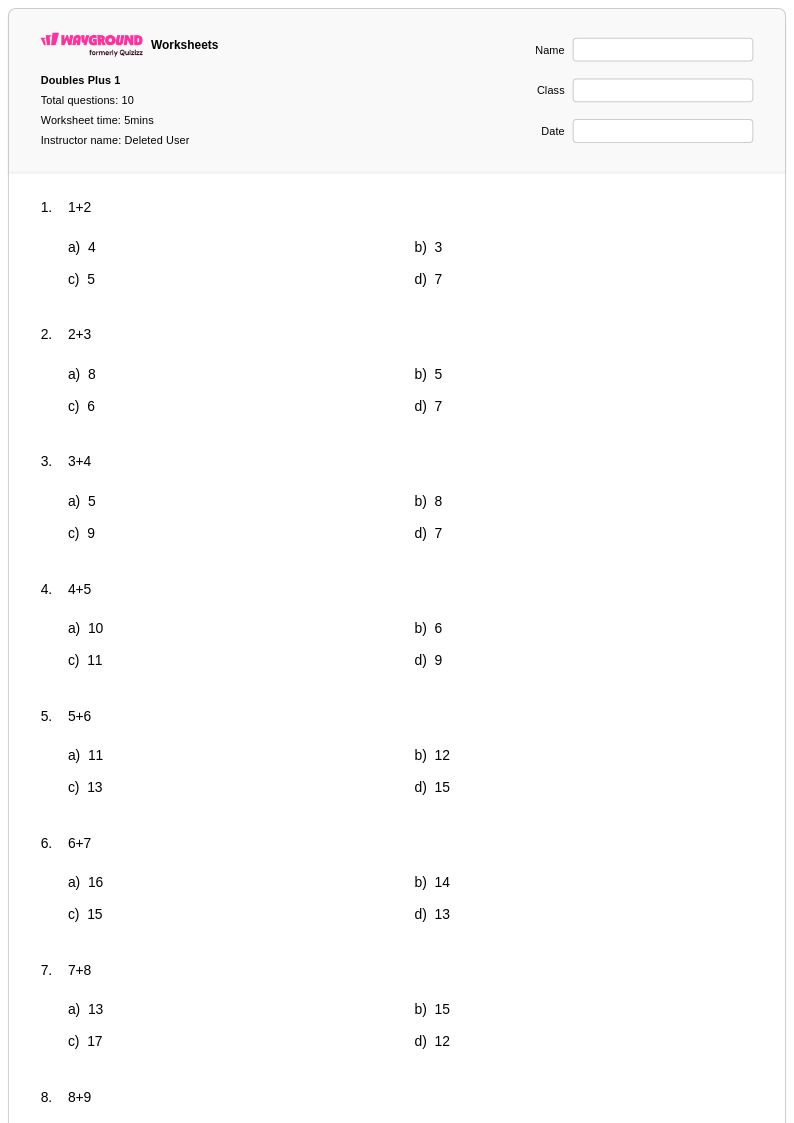
Doubles Plus 1 worksheets for Grade 1 students available through Wayground (formerly Quizizz) provide essential practice with one of the most effective mental math strategies for young learners. These carefully designed worksheets help first graders master the concept of using known doubles facts like 4+4=8 to solve near doubles such as 4+5=9, building fluency with addition while strengthening number sense and computational thinking. The collection includes comprehensive practice problems that guide students through recognizing doubles patterns, applying the plus one strategy, and developing automatic recall of these fundamental addition facts. Each worksheet comes with a complete answer key and is available as free printables in pdf format, making them accessible for both classroom instruction and home practice.
Wayground (formerly Quizizz) supports teachers with an extensive library of millions of teacher-created Doubles Plus 1 resources that can be easily located through powerful search and filtering capabilities designed specifically for Grade 1 mathematics instruction. These standards-aligned materials offer flexible customization options that allow educators to differentiate instruction based on individual student needs, whether for remediation of basic addition concepts or enrichment of advanced computational strategies. The platform provides both printable pdf worksheets for traditional paper-based learning and digital formats that can be integrated into technology-enhanced lessons, giving teachers versatile tools for lesson planning and skill practice. This comprehensive approach ensures that educators can effectively address diverse learning styles while building the foundational addition strategies that Grade 1 students need for mathematical success.
FAQs
How do I teach doubles plus 1 to first graders?
By Grade 1, most students know their doubles within 10 — build on that directly. Present a near-doubles problem like 4+5 and ask: "Which double is hiding in here?" Once students identify 4+4, the leap to 4+5 is just one more. Practice this identification step explicitly before moving to fluency drills, because students who skip it tend to revert to counting on their fingers when problems get harder.
What exercises help first graders build doubles plus 1 fluency?
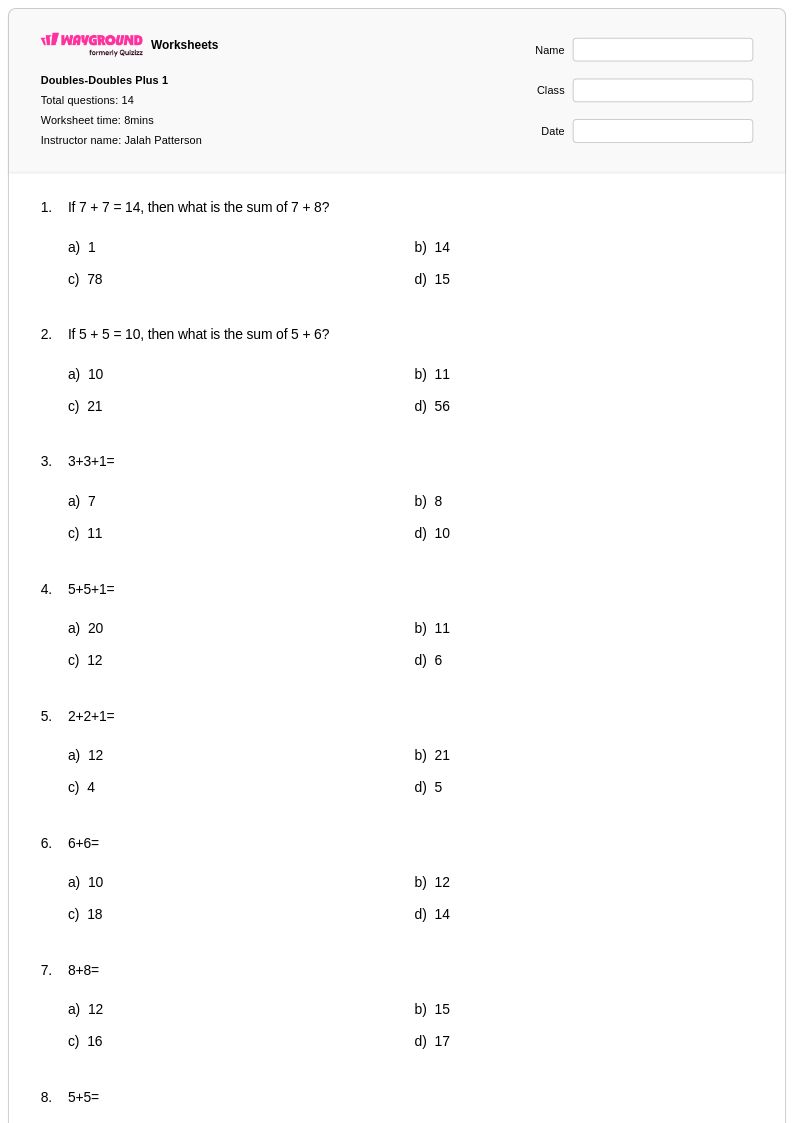
Start with anchor-and-extend problems: give students the double (7+7=14) and ask them to solve 7+8 using it. Then flip it — give the near-doubles problem and ask them to write the anchor double first. Once that reasoning is solid, timed mixed-fact practice (doubles and near-doubles together) builds the automaticity that Grade 1 standards expect.
What errors do first graders commonly make with doubles plus 1?
Two errors come up most often. First, students add 1 to the sum instead of recognizing it's already included: they compute 5+5=10, then write 5+6=11 correctly, but on the next problem do 6+7 as 6+6=12+1=13+1=14. Second, students who haven't fully automated their doubles will stall on the anchor fact, which defeats the purpose of the strategy. If you see either pattern, the fix is more doubles practice before more near-doubles practice.
How do I use Wayground's Grade 1 doubles plus 1 worksheets?
Assign the worksheet as a digital Wayground quiz for immediate, self-paced practice — results come back to you without any grading on your end. If you're doing a paper station or sending work home, download the printable PDF; the included answer key makes it easy for students to self-check or for you to review quickly. For students who need it, the Wayground for Teachers app lets you scan paper submissions and grade them without re-entering anything manually.
Is doubles plus 1 aligned to Common Core for Grade 1?
Yes. Common Core expects first graders to add within 20 using strategies such as making ten and using the relationship between known and unknown facts — doubles plus 1 is a direct application of that second strategy. The standard specifically calls for students to demonstrate understanding of why the strategy works, not just produce correct answers. By the end of Grade 1, students are expected to have these facts internalized well enough to use them without stopping to reconstruct the reasoning each time.
How can I differentiate doubles plus 1 practice for my Grade 1 class?
For students still shaky on their anchor doubles, use Wayground's reduced answer choices so they're choosing between two or three options rather than recalling from scratch — that scaffolding keeps them practicing the strategy without getting stuck on retrieval. For students who are ready to move faster, the same worksheet can be assigned without accommodations, and you can layer in a time challenge. Wayground applies these settings per student, so the rest of the class sees the default version without any indication that accommodations are in place.