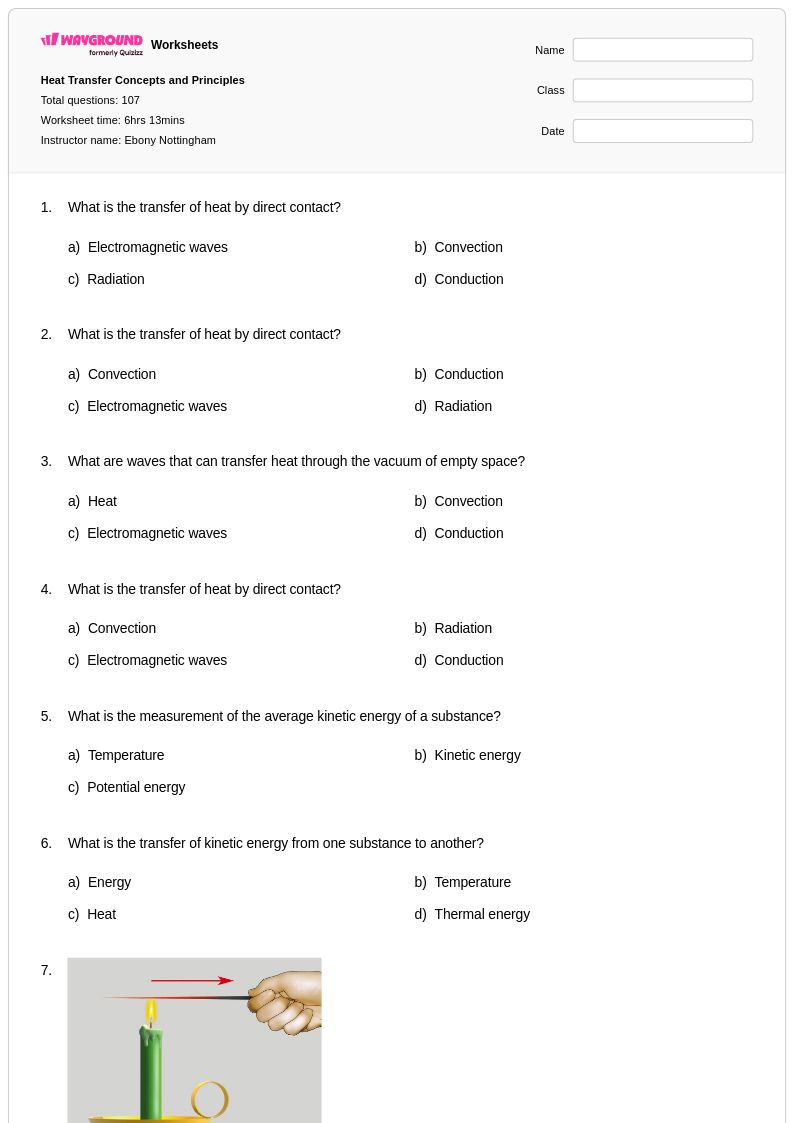
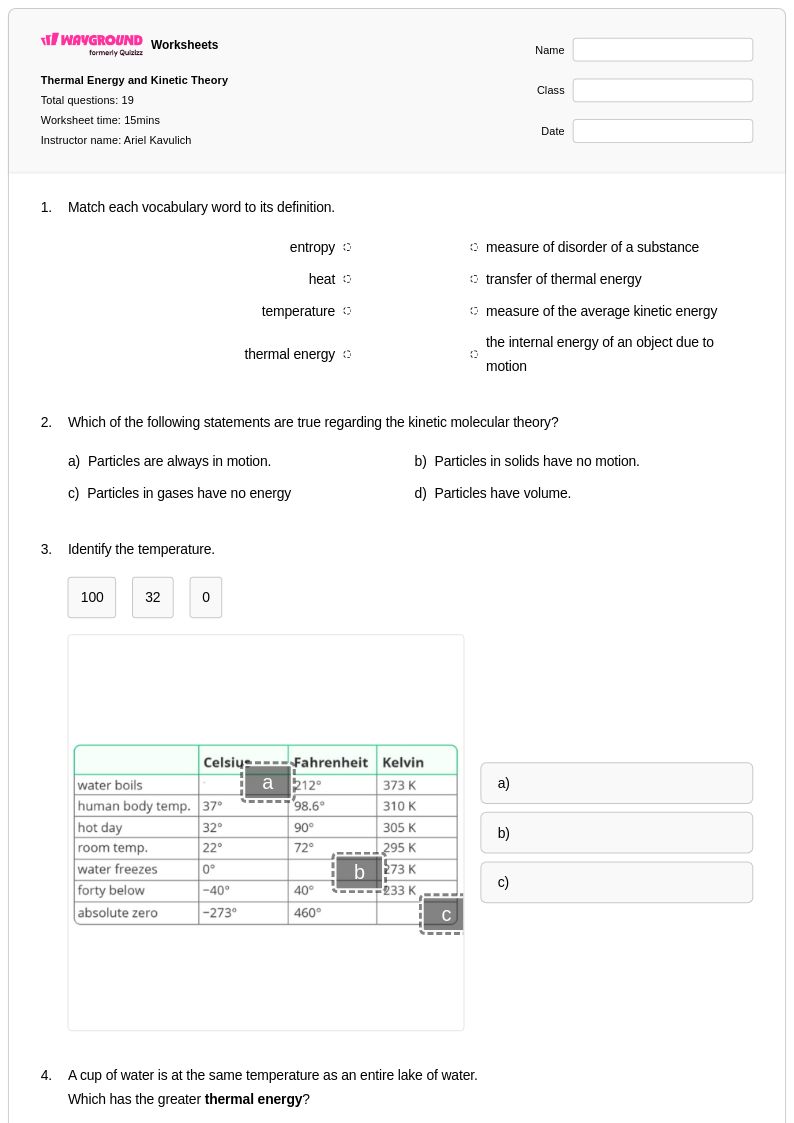
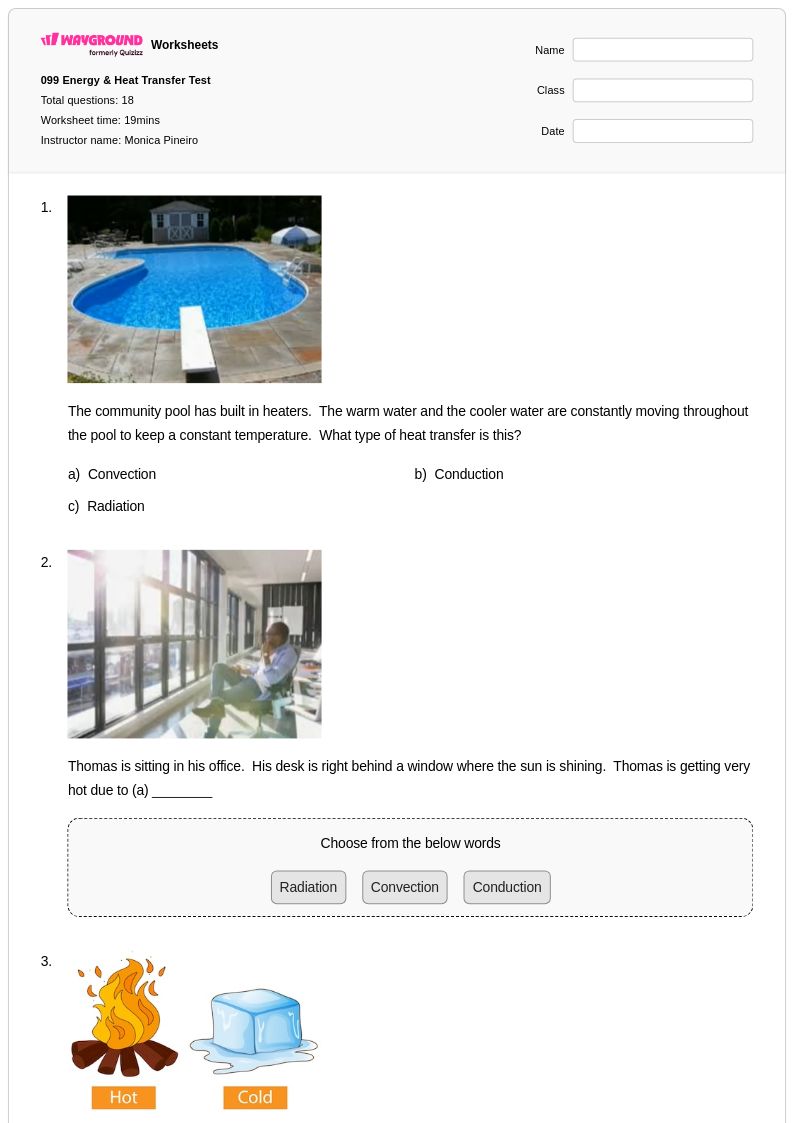
Enhance Grade 12 students' understanding of thermal conduction with Wayground's comprehensive collection of free physics worksheets, featuring detailed practice problems, printable PDFs, and complete answer keys for mastering heat transfer concepts.
Explore printable Conduction worksheets for Grade 12
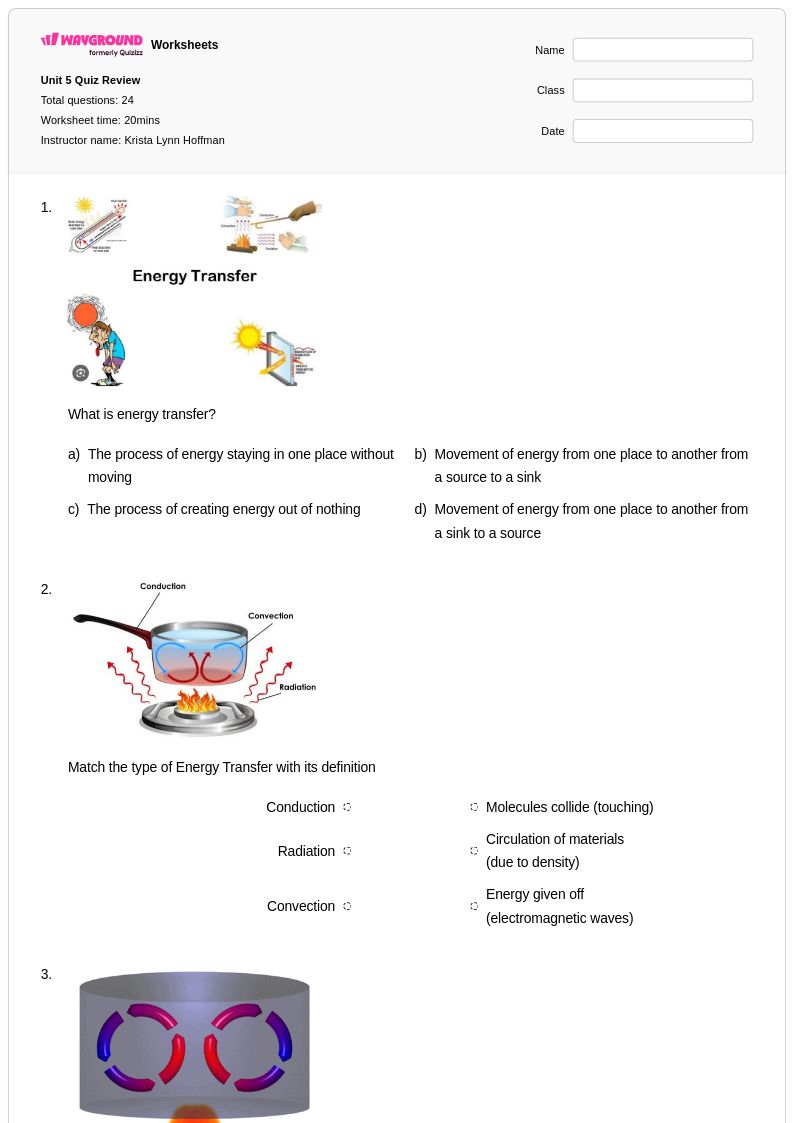
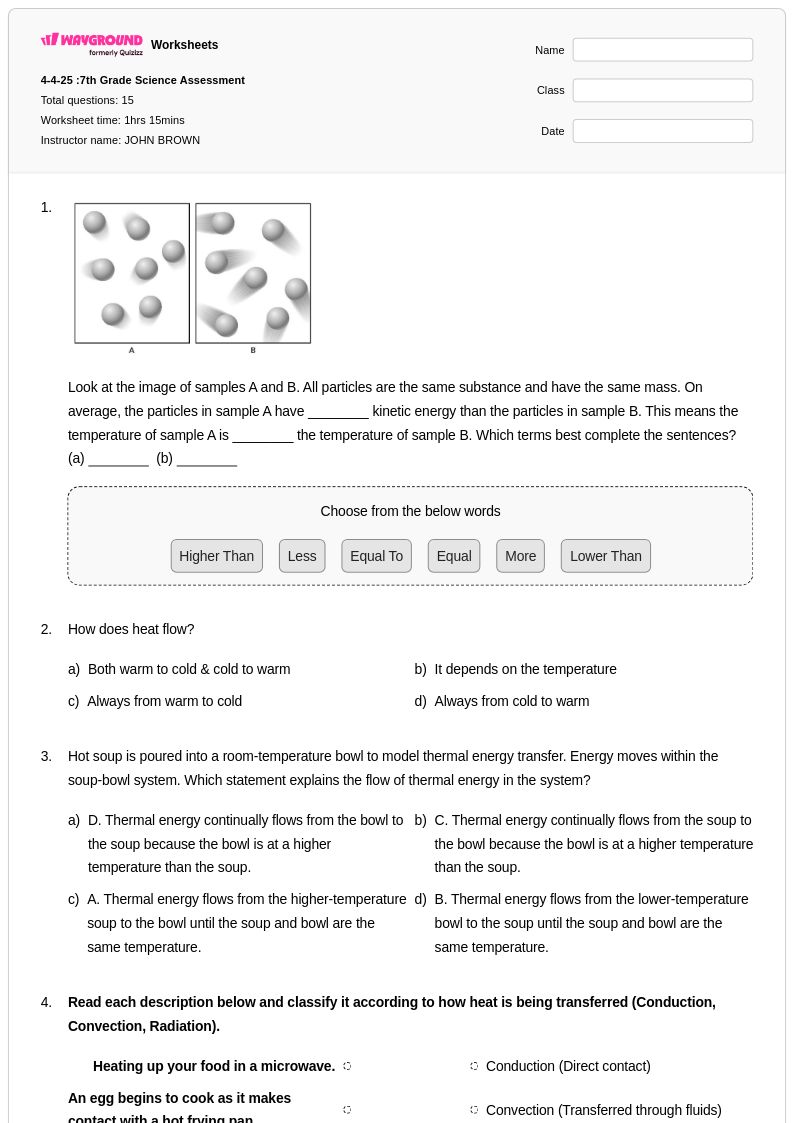
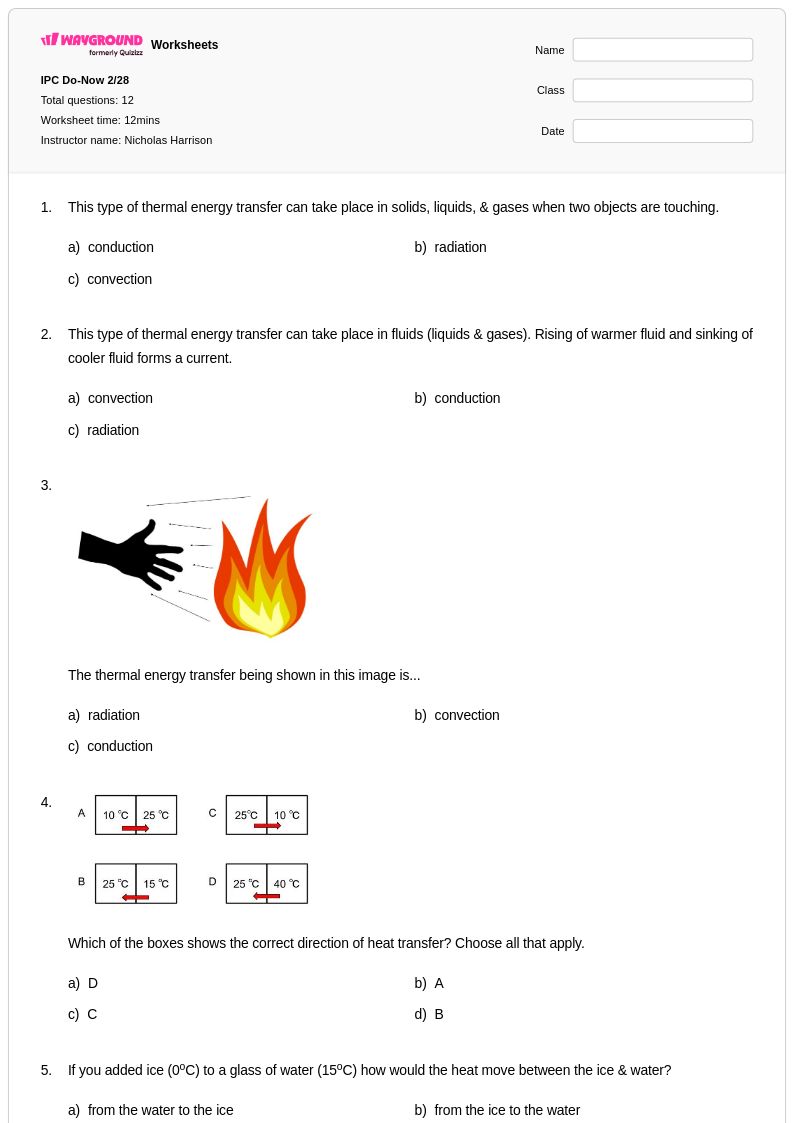
Conduction worksheets for Grade 12 students available through Wayground (formerly Quizizz) provide comprehensive coverage of heat transfer mechanisms that are fundamental to advanced physics understanding. These expertly crafted resources help students master the mathematical relationships governing thermal conduction, including Fourier's law, thermal conductivity calculations, and steady-state heat flow analysis. Students develop critical problem-solving skills through practice problems that explore conduction in various materials, composite systems, and real-world applications such as building insulation and electronic cooling systems. Each worksheet comes with detailed answer keys that support independent learning and self-assessment, while the free printable pdf format ensures accessibility for both classroom instruction and homework assignments.
Wayground (formerly Quizizz) empowers educators with millions of teacher-created conduction worksheet resources that streamline lesson planning and enhance student engagement with thermal physics concepts. The platform's robust search and filtering capabilities allow teachers to quickly locate materials aligned with specific curriculum standards and learning objectives, while differentiation tools enable customization for diverse student needs and ability levels. Teachers can seamlessly adapt worksheets for remediation of struggling students or enrichment of advanced learners, with flexible options to modify problem complexity and content focus. The availability of both printable and digital formats, including downloadable pdfs, supports various teaching environments and learning preferences, making it simple to integrate high-quality conduction practice materials into any Grade 12 physics curriculum.
FAQs
How do I teach conduction to physics students?
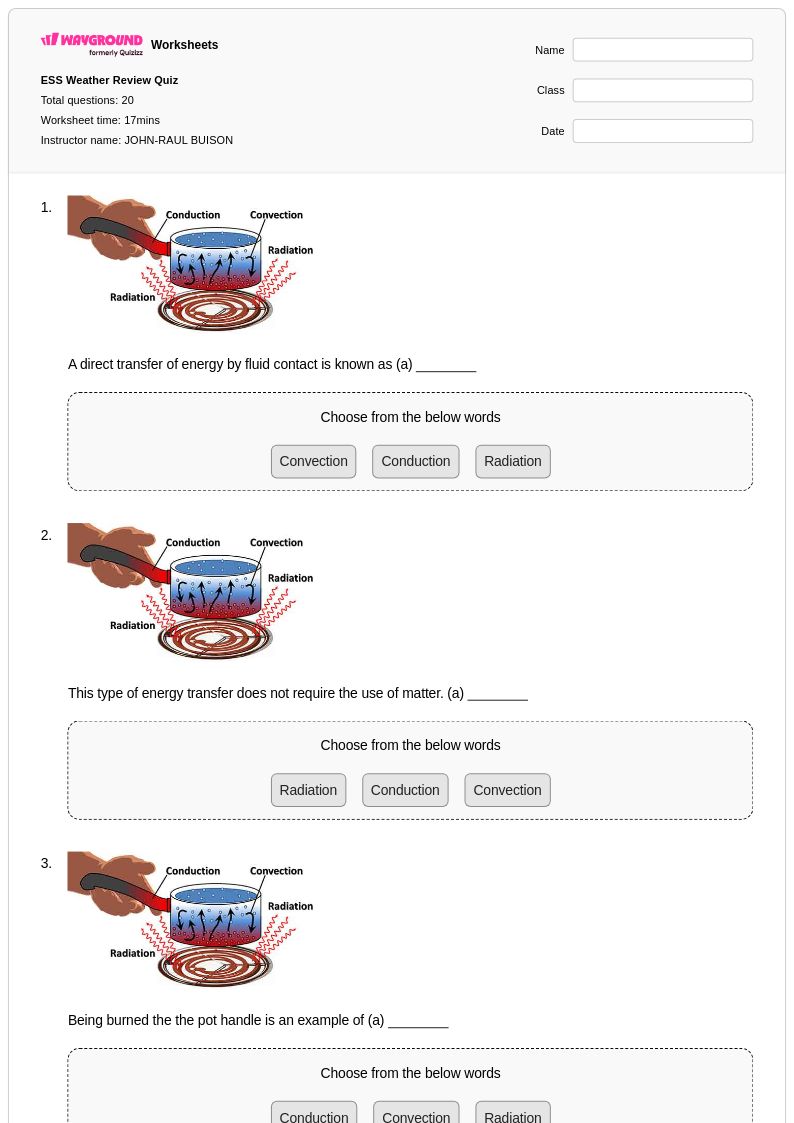
Start by grounding students in particle-level thinking: conduction occurs when faster-moving particles transfer kinetic energy to slower-moving neighboring particles through direct contact, without any bulk movement of matter. Use concrete examples like a metal spoon heating up in a hot bowl of soup or a copper wire conducting heat along its length to make the mechanism tangible. From there, introduce thermal conductivity as a material property and have students compare conductors like metals to insulators like wood or plastic. Building from particle behavior to material properties to real-world applications creates a conceptual ladder students can climb progressively.
What practice problems help students understand conduction?
Effective conduction practice problems should move students from conceptual identification to quantitative reasoning. Start with problems that ask students to explain why a metal bench feels colder than a wooden one at the same temperature, reinforcing that conduction rate depends on material properties, not temperature alone. Then progress to problems involving thermal conductivity calculations, comparing heat transfer rates across different materials and thicknesses. Real-world application problems involving cooking utensils, building insulation, and electronic cooling systems help students connect abstract physics principles to everyday engineering contexts.
What mistakes do students commonly make when learning about conduction?
The most persistent misconception is that cold is transferred rather than heat, leading students to say a metal spoon 'absorbs cold' rather than transferring thermal energy away from the hand. Students also frequently confuse conduction with convection, especially in contexts involving liquids or gases where both can occur simultaneously. Another common error is assuming that temperature and heat are the same quantity, which causes confusion when students try to explain why two objects at thermal equilibrium stop transferring energy despite both having the same temperature. Targeted practice problems that force students to articulate the direction and mechanism of energy transfer help address these errors directly.
How do conduction worksheets connect to real-world applications?
Conduction is the underlying mechanism in a wide range of everyday and industrial contexts, making it one of the most accessible physics topics to contextualize. Worksheets that incorporate examples like why metal cookware heats faster than ceramic, how building insulation reduces heat loss, or why heat sinks are used in electronic devices give students a reason to care about thermal conductivity values and material properties. Connecting physics principles to these applications also helps students retain the underlying concepts more durably than formula-only practice.
How can I differentiate conduction worksheets for students at different ability levels?
For students who need additional support, begin with particle-diagram activities that ask them to trace energy transfer step by step before introducing any quantitative problems. On Wayground, teachers can apply accommodations such as Read Aloud for students who need questions read to them, reduced answer choices to lower cognitive load on multiple-choice items, and extended time for students who need it, all configurable at the individual student level. For advanced students, move into multi-step problems that require them to compare conduction rates across composite materials or explain thermal equilibrium mathematically. Varying the complexity of real-world scenarios, from simple cooking examples to electronic heat dissipation, also provides a natural differentiation scaffold.
How do I use Wayground's conduction worksheets in my classroom?
Wayground's conduction worksheets are available as printable PDFs for traditional classroom use and in digital formats for technology-integrated environments, giving teachers flexibility depending on their setup. Teachers can also host worksheets directly as a quiz on Wayground, enabling real-time progress monitoring and instant feedback for students. The included answer keys support independent practice and self-assessment, making the materials well-suited for homework assignments, in-class review, or station rotations. Using the platform's search and filtering tools, teachers can quickly locate worksheets aligned to specific physics standards or difficulty levels.