Free Printable Constitutional Convention Worksheets for Grade 8
Explore Wayground's free Grade 8 Constitutional Convention worksheets and printables that help students master the founding principles, key debates, and compromises that shaped America's Constitution through engaging practice problems and comprehensive answer keys.
Explore printable Constitutional Convention worksheets for Grade 8
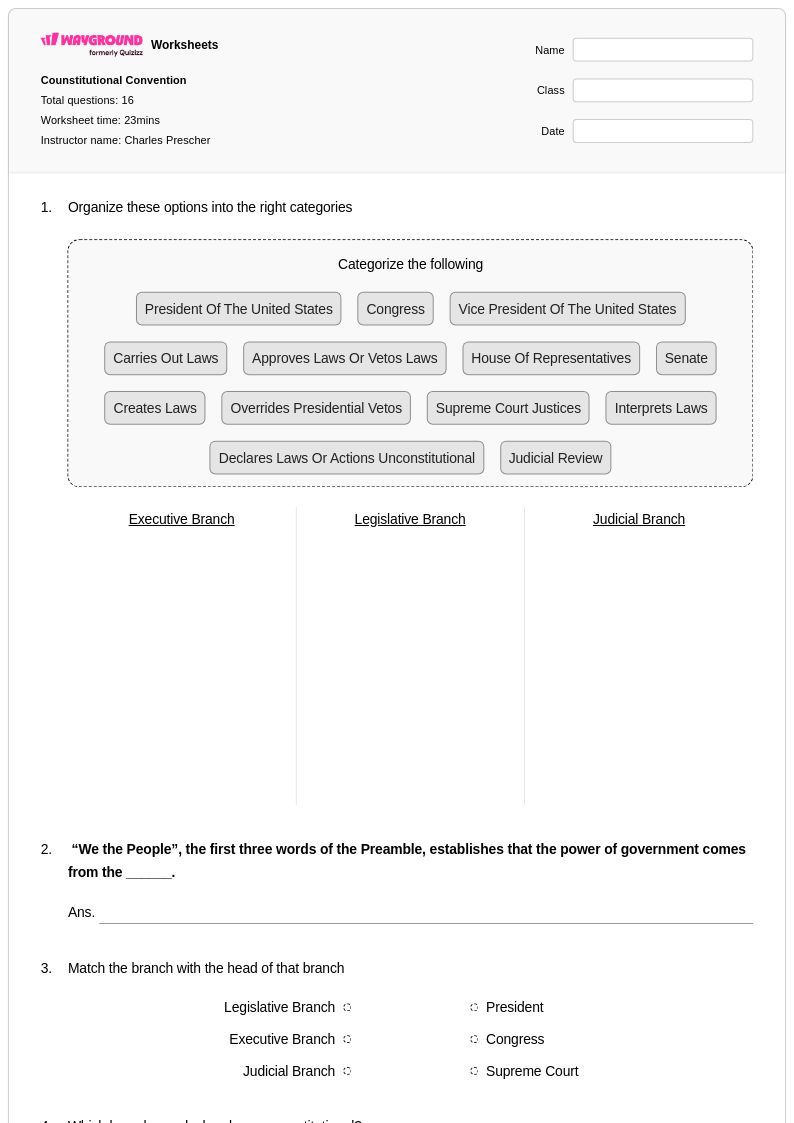
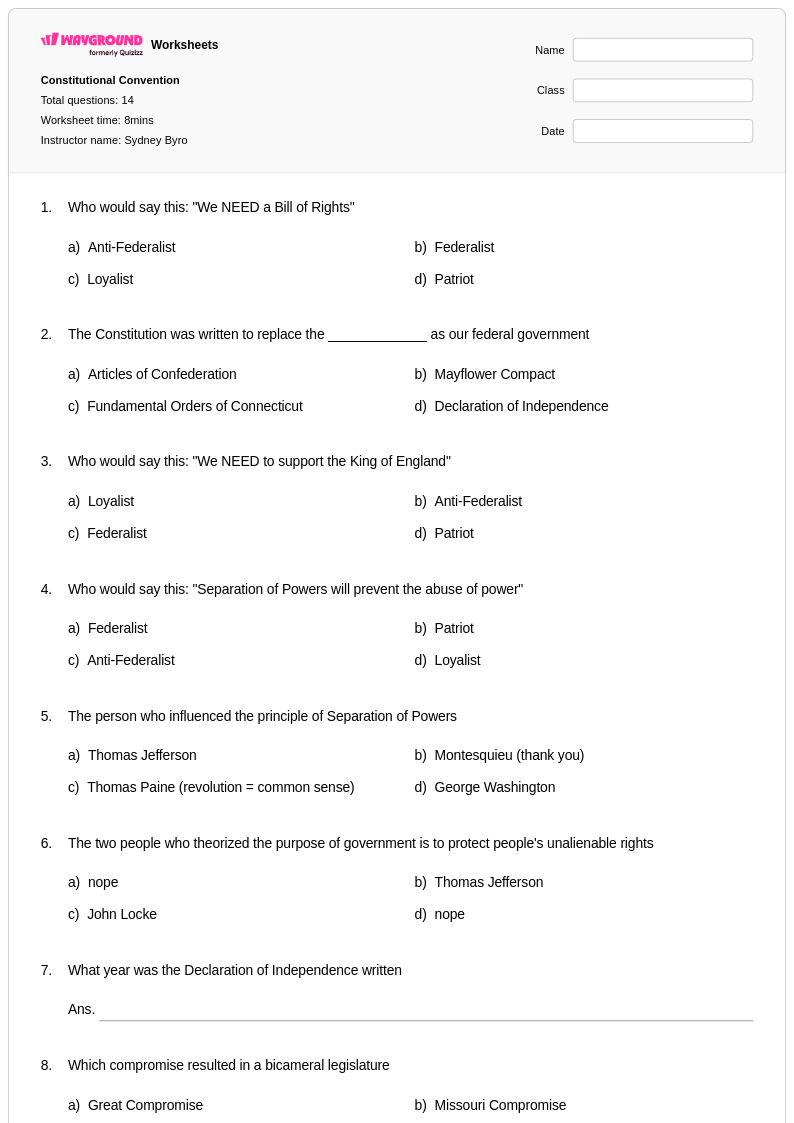
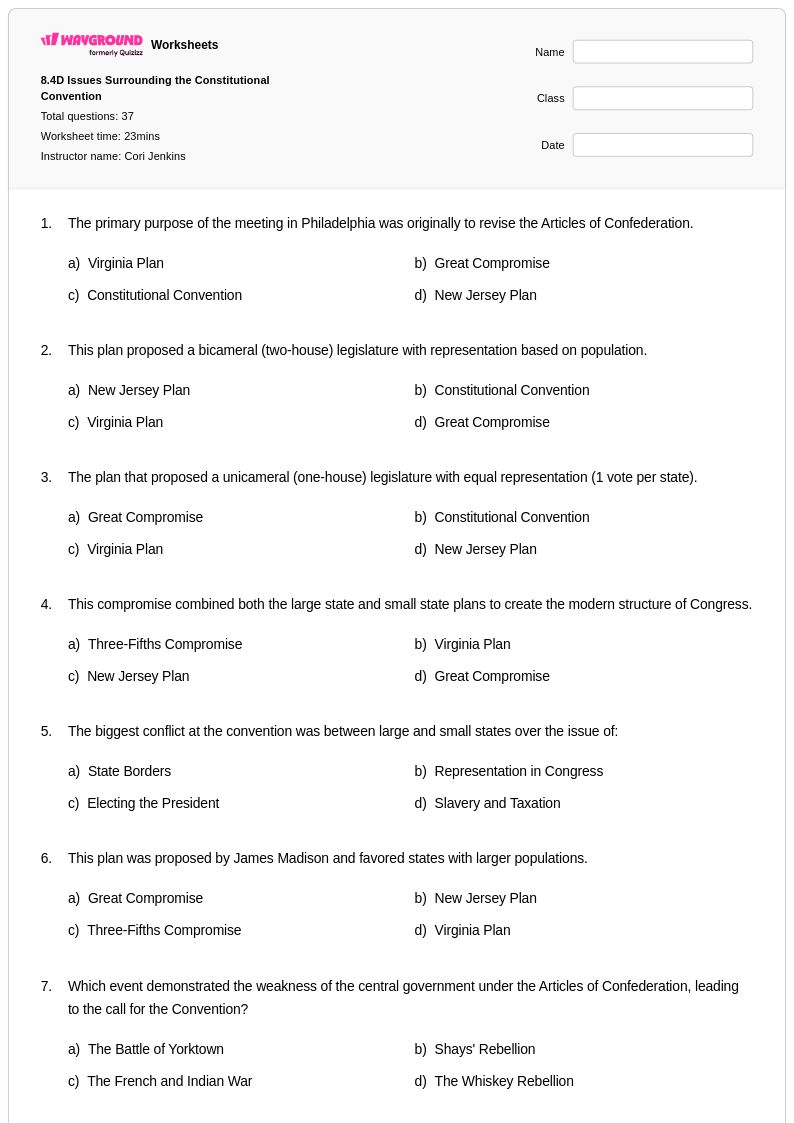
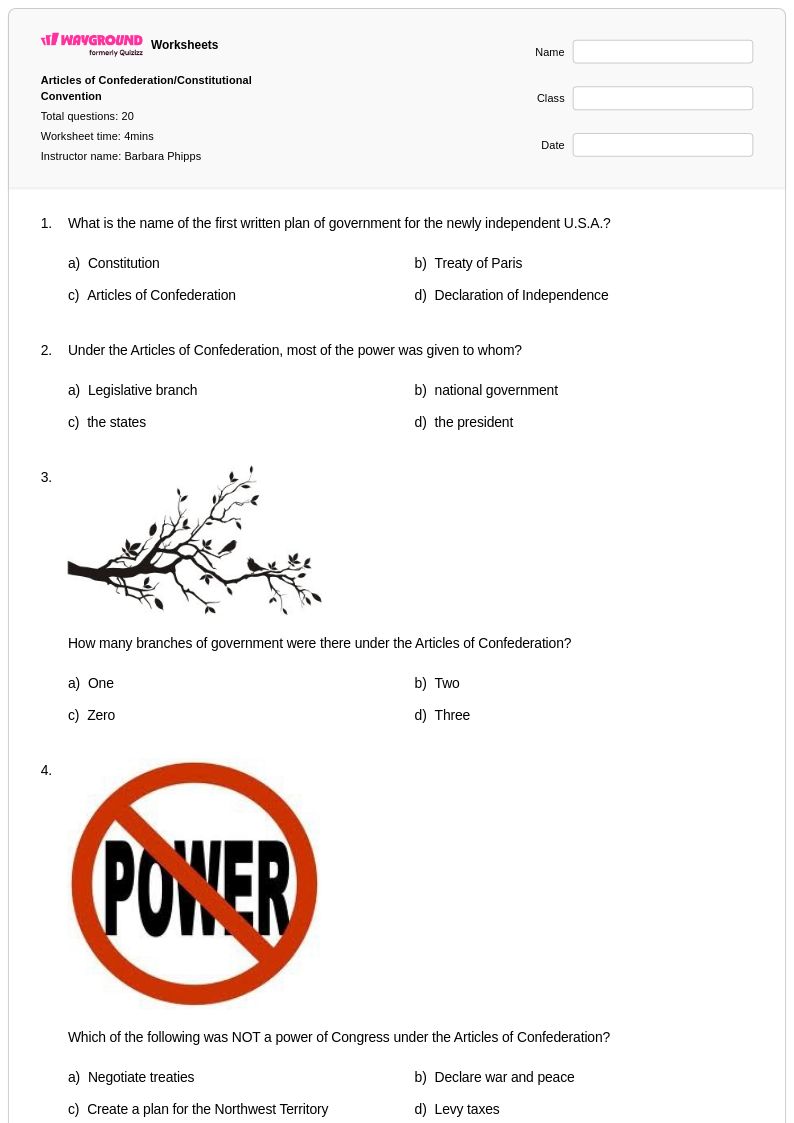
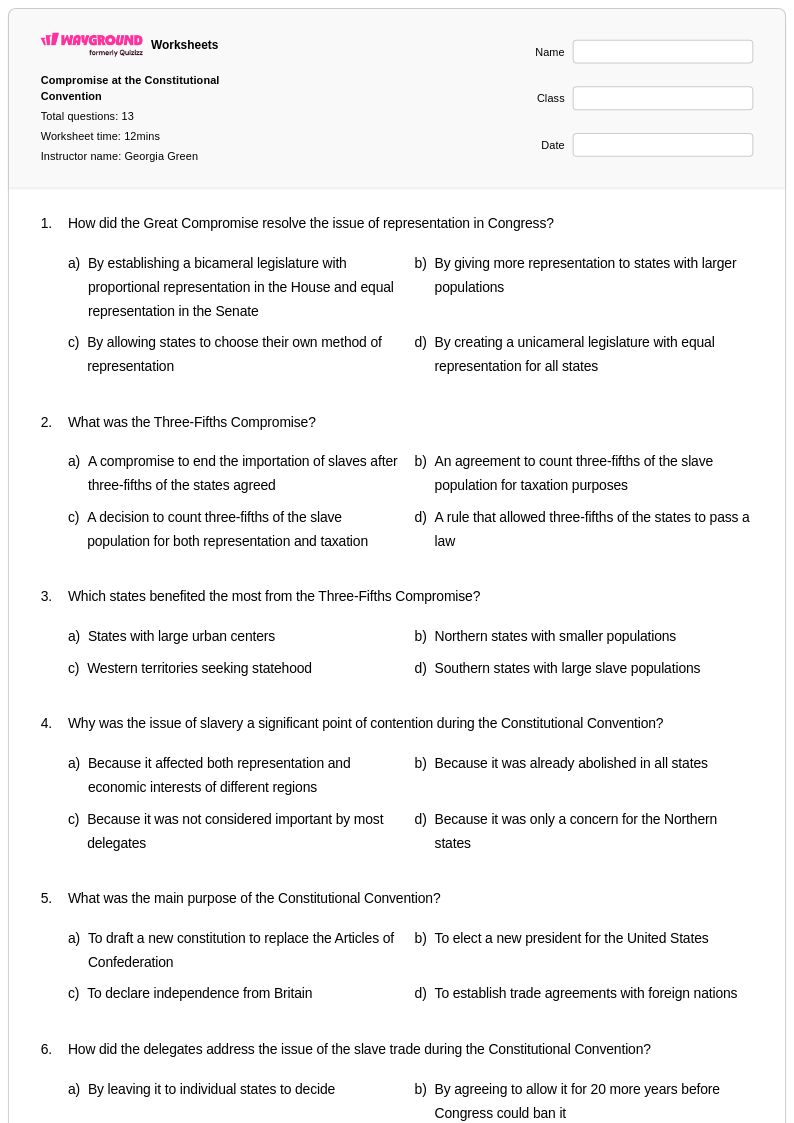
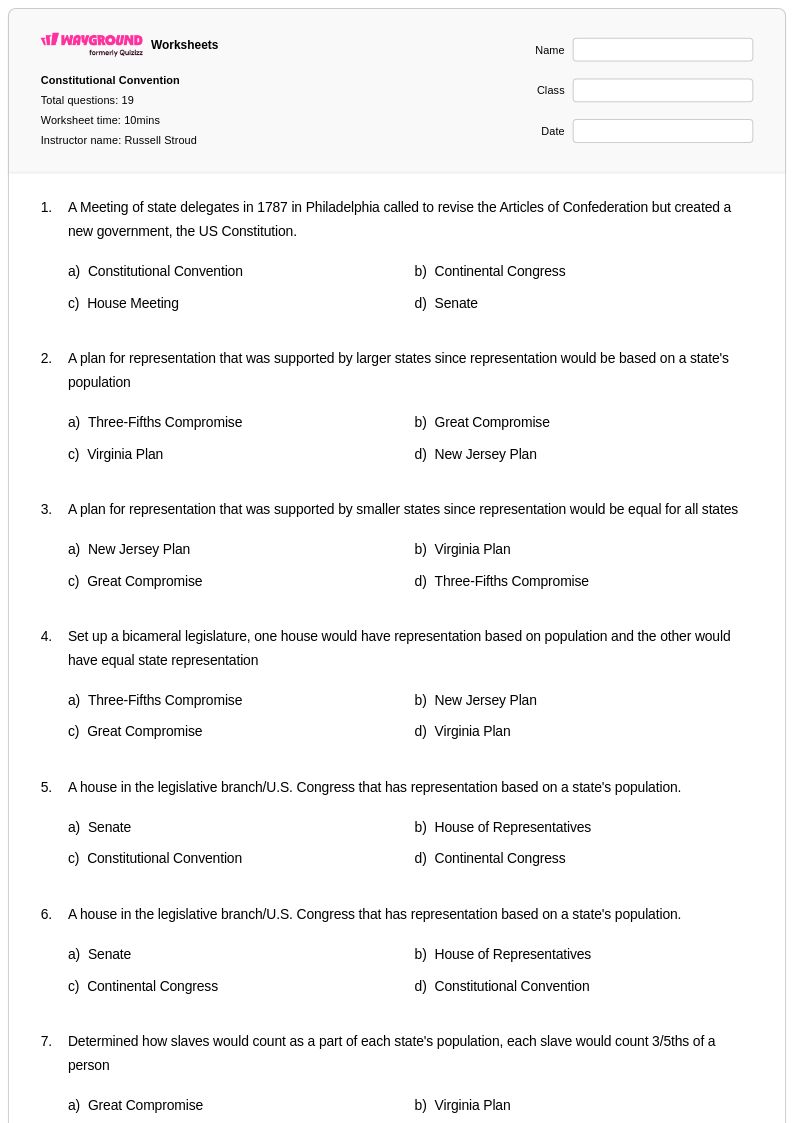
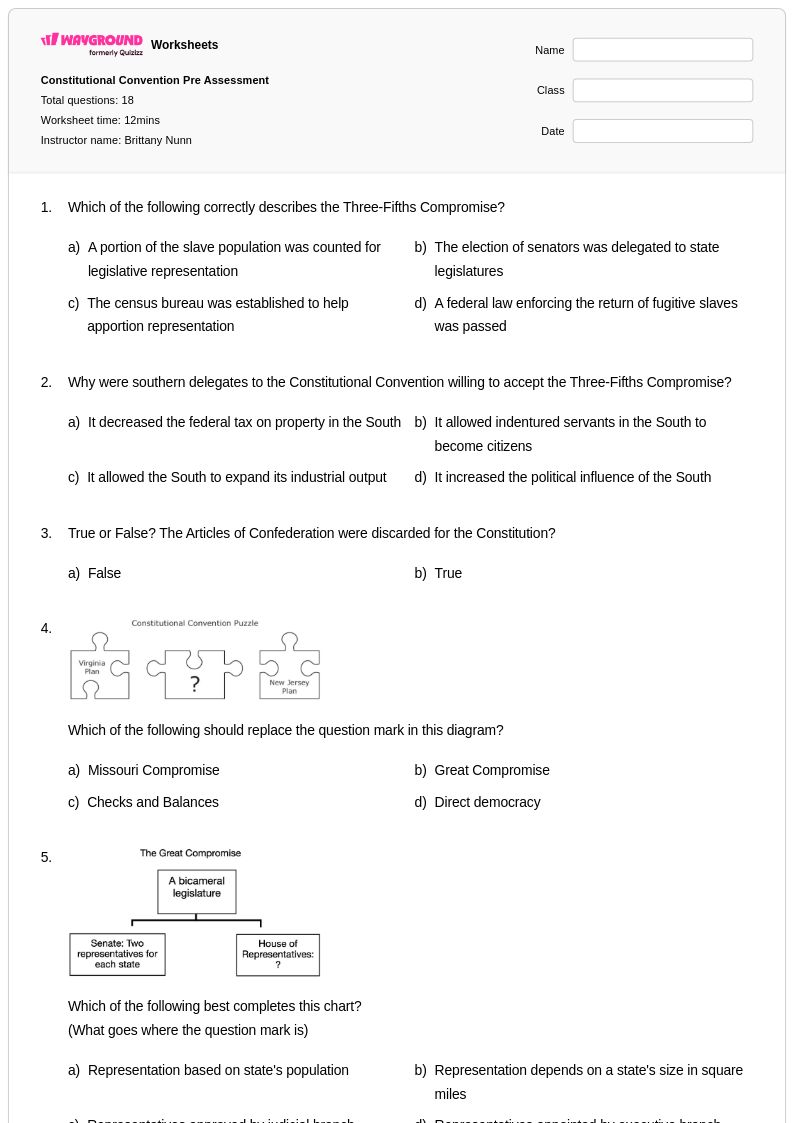
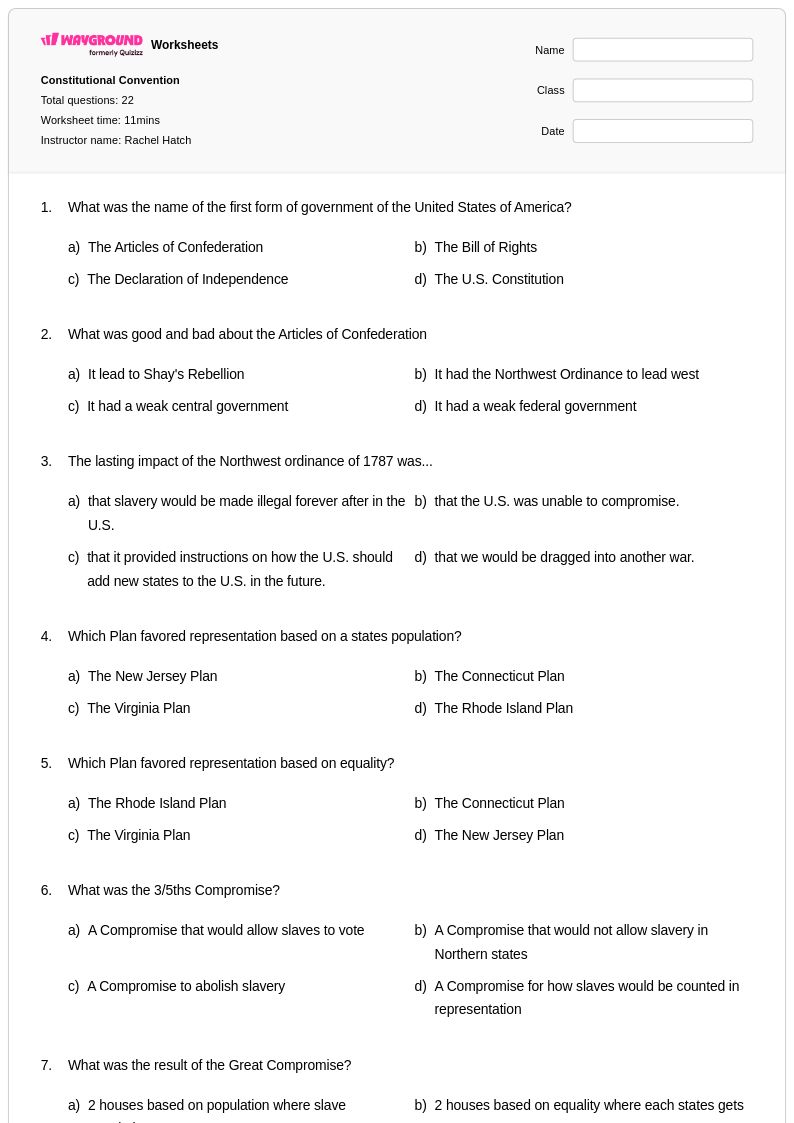
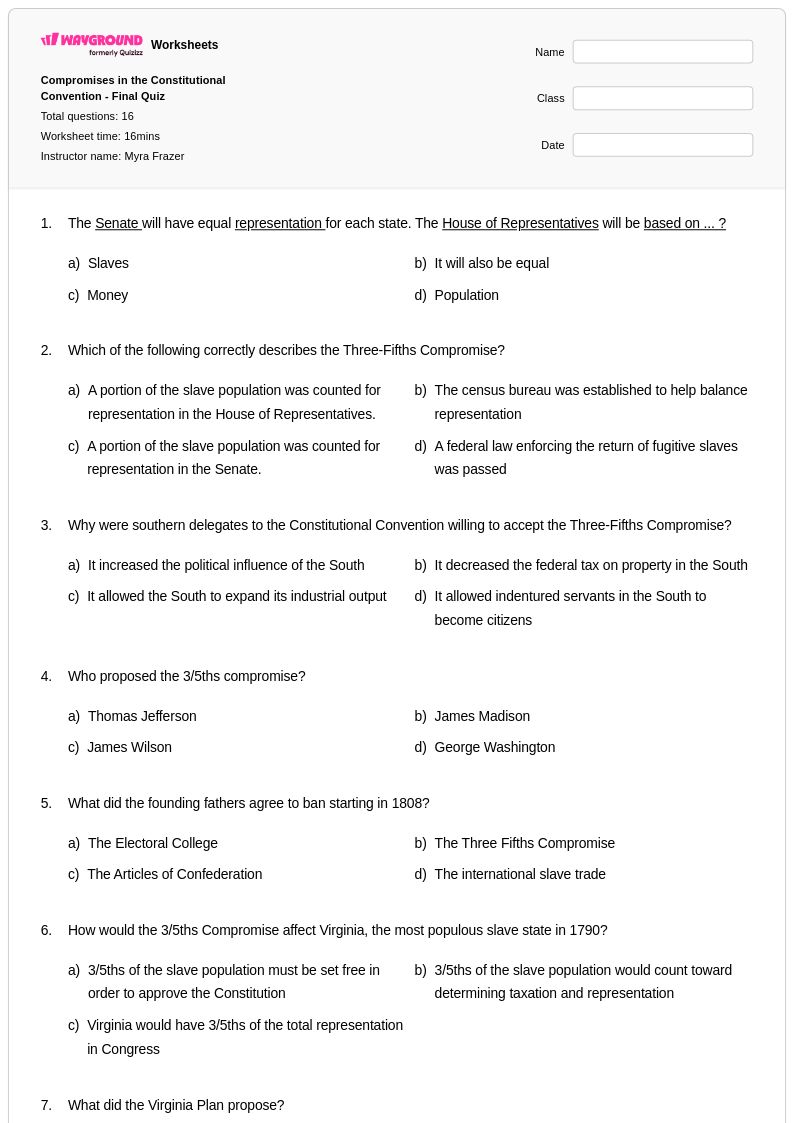
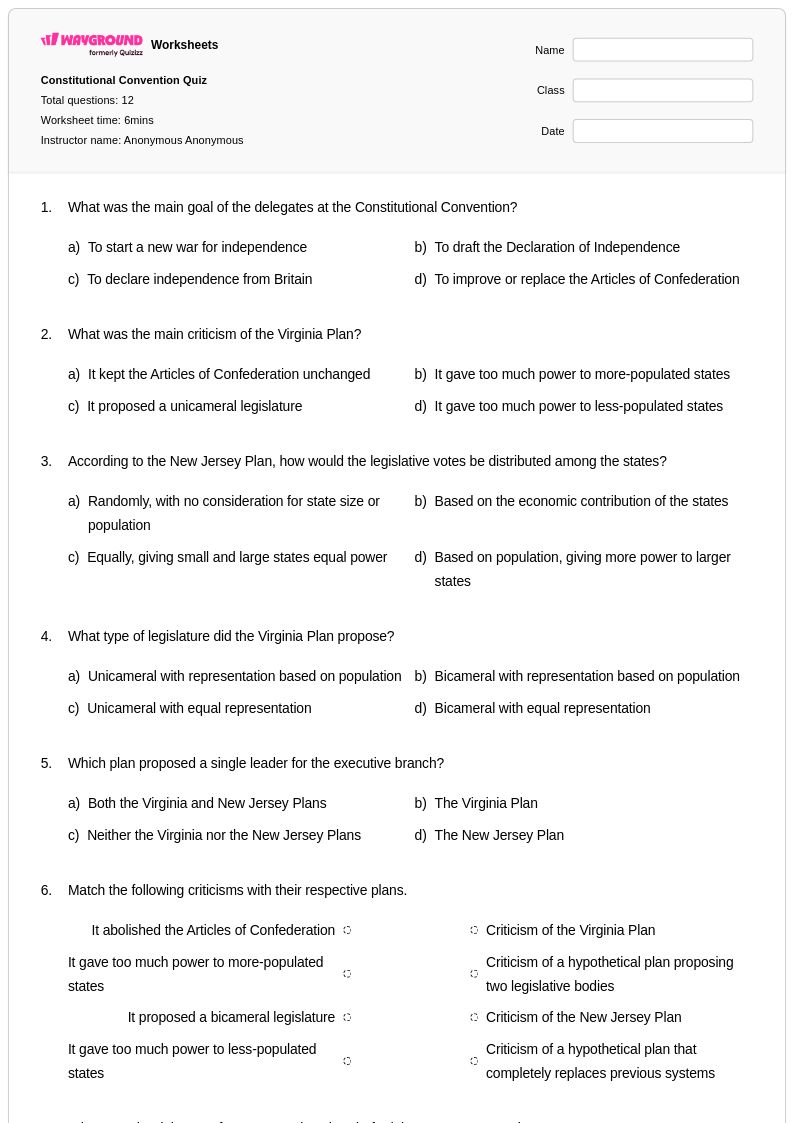
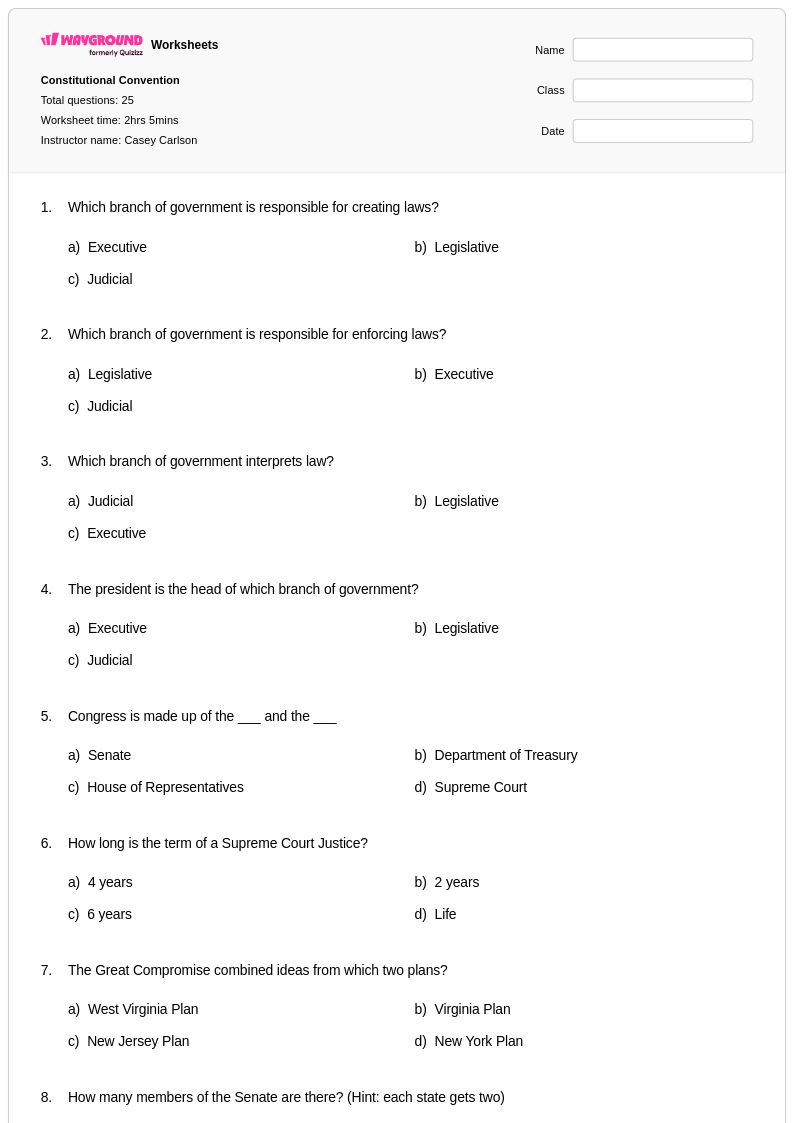
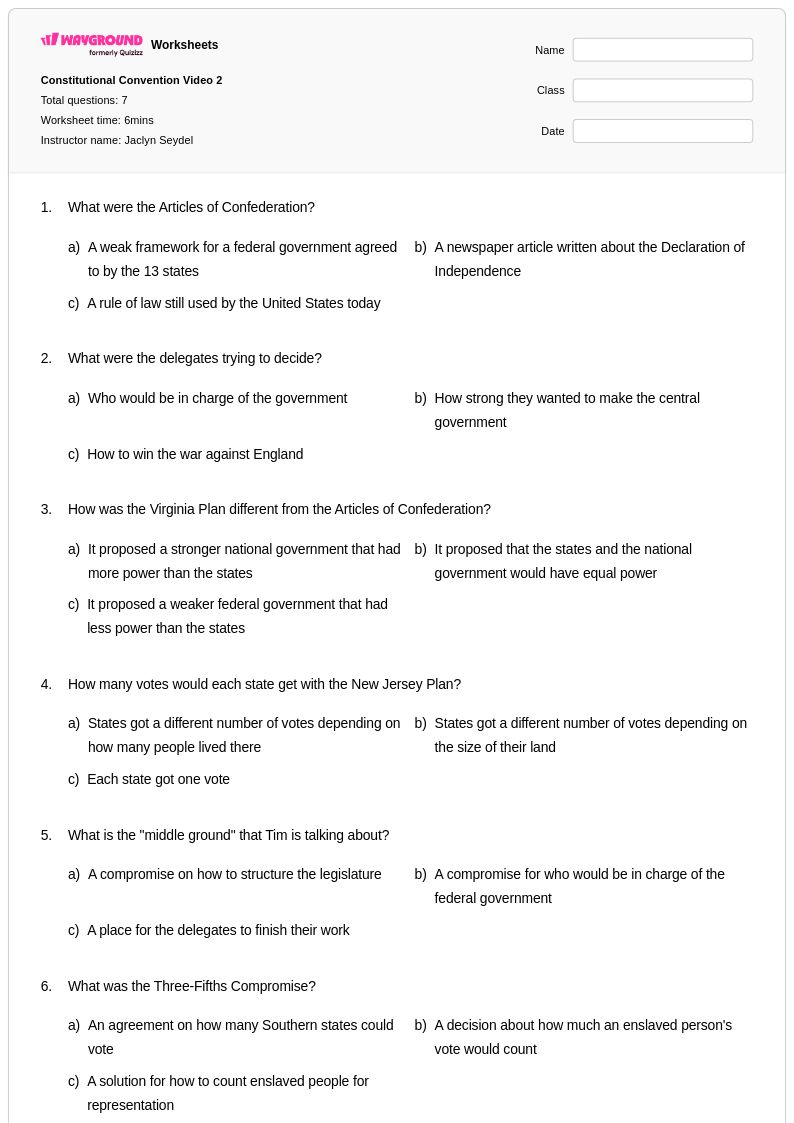
Constitutional Convention worksheets for Grade 8 students available through Wayground (formerly Quizizz) provide comprehensive coverage of this pivotal moment in American history when delegates gathered in Philadelphia during the summer of 1787 to address the weaknesses of the Articles of Confederation. These educational resources strengthen students' understanding of the debates, compromises, and key figures that shaped the foundation of our constitutional government, including the Virginia Plan, New Jersey Plan, Great Compromise, and Three-Fifths Compromise. The worksheets feature practice problems that challenge students to analyze primary source documents, evaluate different perspectives on federalism versus state sovereignty, and assess the roles of influential delegates like James Madison, Alexander Hamilton, and Benjamin Franklin. Each worksheet collection includes detailed answer keys to support accurate assessment and comes in convenient pdf format as free printables that teachers can easily distribute for both classroom instruction and independent study.
Wayground (formerly Quizizz) empowers educators with access to millions of teacher-created Constitutional Convention resources that are meticulously organized through advanced search and filtering capabilities, allowing instructors to quickly locate materials that align with specific learning standards and curriculum requirements. The platform's differentiation tools enable teachers to customize worksheets for diverse learning needs, providing enrichment activities for advanced students while offering remediation support for those requiring additional practice with foundational concepts about the constitutional framework. These flexible resources are available in both printable and digital formats, including downloadable pdf versions that facilitate seamless integration into lesson planning whether for in-person instruction, remote learning, or hybrid educational environments. Teachers can efficiently select from grade-appropriate materials that support skill practice in critical thinking, document analysis, and historical reasoning while ensuring students develop a thorough comprehension of how the Constitutional Convention established the governmental structure that continues to guide American democracy today.
FAQs
How do I teach the Constitutional Convention to middle or high school students?
Teaching the Constitutional Convention effectively means grounding students in the context of why the Articles of Confederation failed before moving into the debates themselves. Start with the key tensions — large vs. small states, slave vs. free states, and federal vs. state power — so students understand why compromise was necessary. From there, work through landmark agreements like the Great Compromise and the Three-Fifths Compromise as concrete examples of how conflicting interests were resolved. Pairing primary source excerpts from Madison's notes or The Federalist Papers with structured analysis tasks helps students move beyond memorization toward genuine historical thinking.
What exercises help students practice their understanding of the Constitutional Convention?
Effective practice tasks for the Constitutional Convention push students to analyze, not just recall. Document analysis activities using primary sources like Madison's convention notes, the Virginia Plan, and the New Jersey Plan help students evaluate competing proposals. Perspective-taking exercises — asking students to argue from the position of a large-state delegate, a small-state delegate, or an Anti-Federalist — build critical thinking around the debates. Structured comparison charts contrasting the Articles of Confederation with the Constitution are also strong tools for reinforcing why the Convention was necessary in the first place.
What mistakes do students commonly make when learning about the Constitutional Convention?
One of the most common errors is treating the Constitution as an inevitable outcome rather than a hard-fought series of compromises that could easily have failed. Students often conflate the Constitutional Convention with the ratification debate, losing track of the fact that drafting and ratifying were two separate and contentious processes. Another frequent misconception is reducing the Federalist vs. Anti-Federalist divide to a simple pro-Constitution vs. anti-Constitution binary, when in reality Anti-Federalists had specific, principled objections — particularly around the absence of a Bill of Rights. Addressing these misconceptions explicitly during instruction prevents them from calcifying on assessments.
How do I use Constitutional Convention worksheets in my classroom?
Constitutional Convention worksheets on Wayground are available as printable PDFs for traditional classroom use and in digital formats for technology-integrated environments, so they work equally well for in-person instruction, homework, or remote learning. Teachers can also host them as a quiz directly on Wayground, which enables interactive delivery and automatic grading. Each worksheet includes a comprehensive answer key, reducing prep time and making them practical for both new and experienced teachers. Using them as guided note-taking tools during a lesson or as independent review tasks before an assessment are both effective approaches.
How do I differentiate Constitutional Convention instruction for students at different skill levels?
For students who need additional support, reducing the complexity of primary source excerpts and providing sentence starters for analysis tasks lowers the barrier to engagement without removing the rigor. More advanced students can be pushed toward evaluative tasks — assessing whether the compromises made at the Convention were justifiable given the political pressures delegates faced. On Wayground, teachers can apply individual accommodations such as read aloud, extended time, and reduced answer choices to specific students, so differentiation can be managed at the student level without disrupting the rest of the class.
How do I help students understand the Great Compromise and the Three-Fifths Compromise?
The Great Compromise is best taught by first establishing the genuine conflict between large and small states over congressional representation, so students understand what was actually at stake. A simple visual showing the Virginia Plan vs. the New Jersey Plan side by side, followed by the bicameral solution, makes the logic of the compromise concrete. The Three-Fifths Compromise requires more careful handling — students need to understand both the political calculus behind it and its moral implications, which makes it an ideal entry point for discussing how founding ideals and the reality of slavery existed in direct tension from the very beginning of the republic.