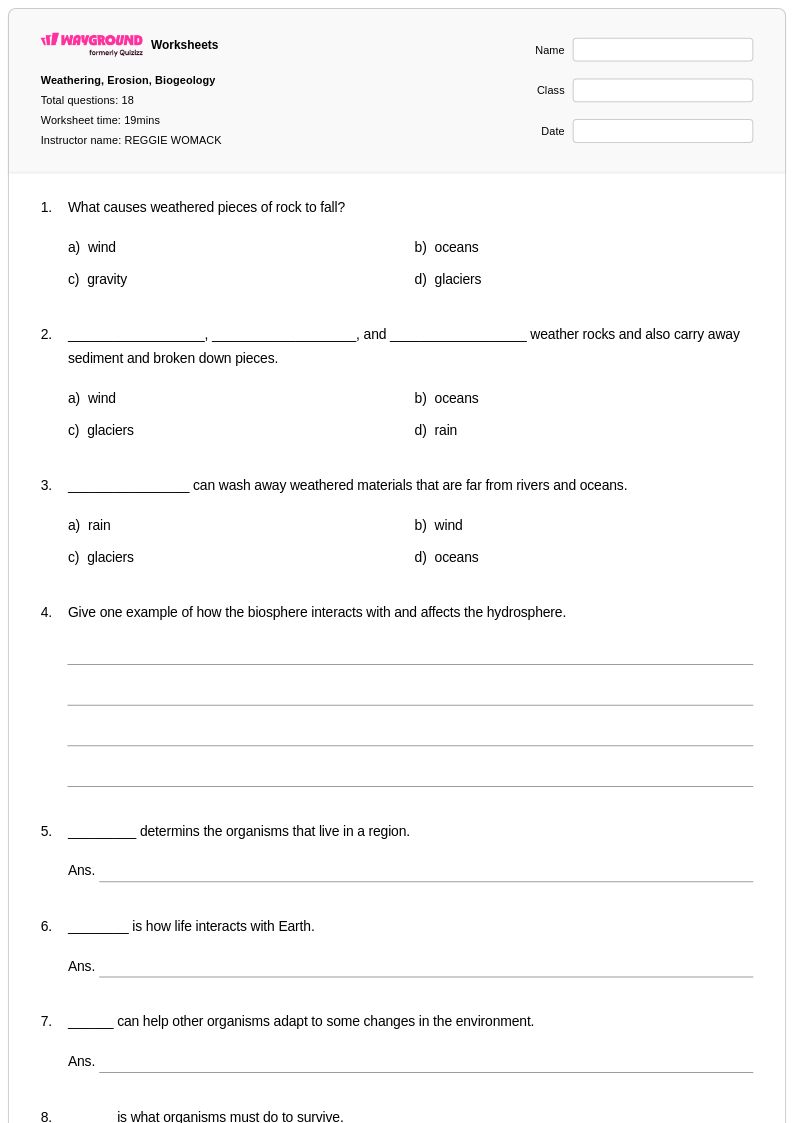
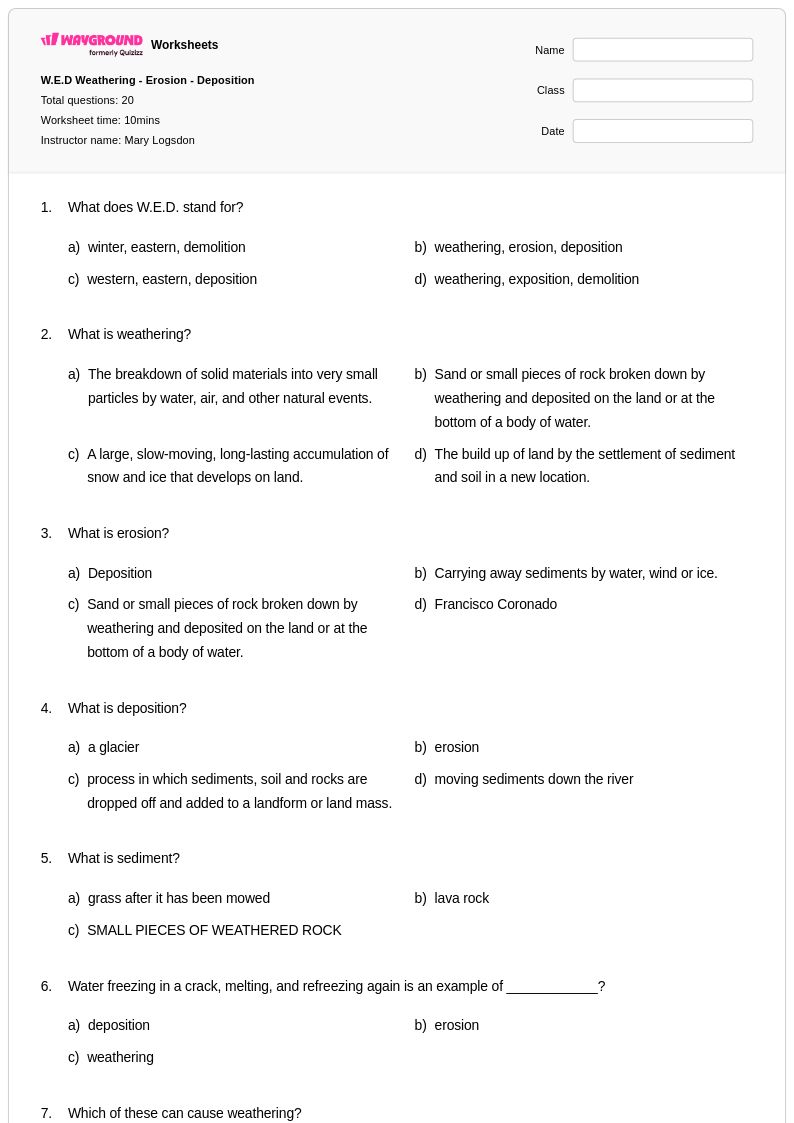
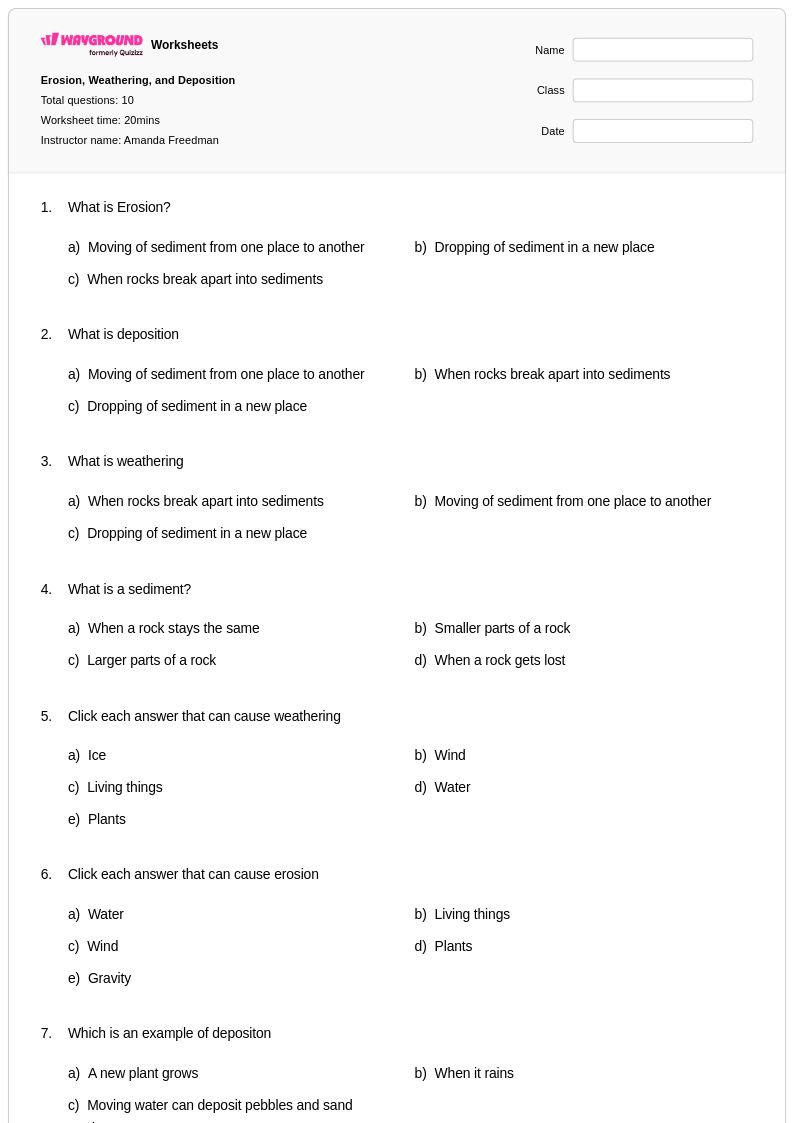
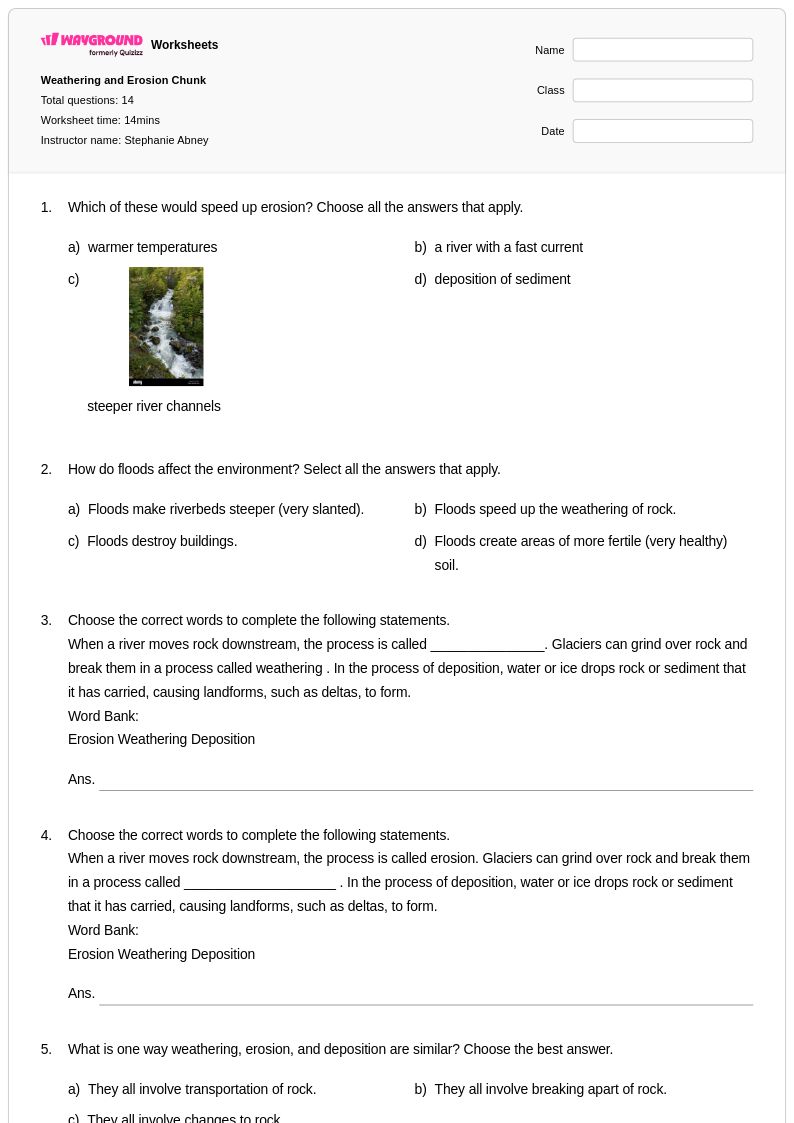
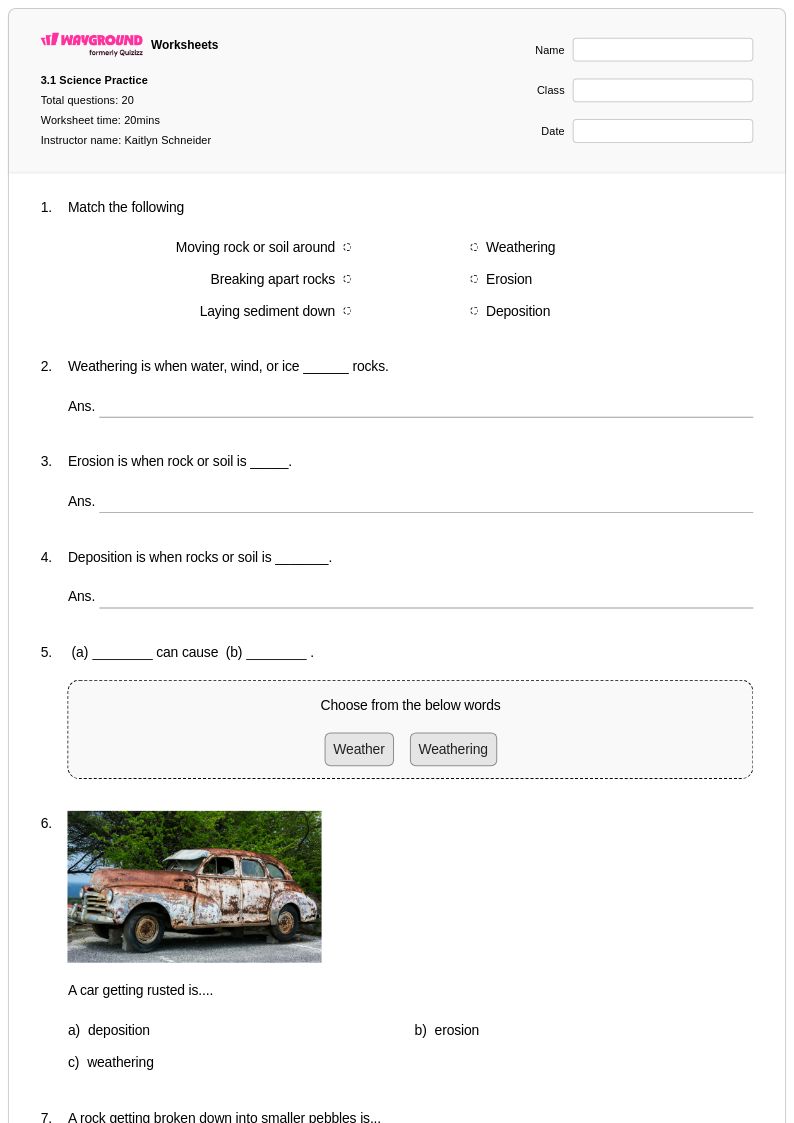
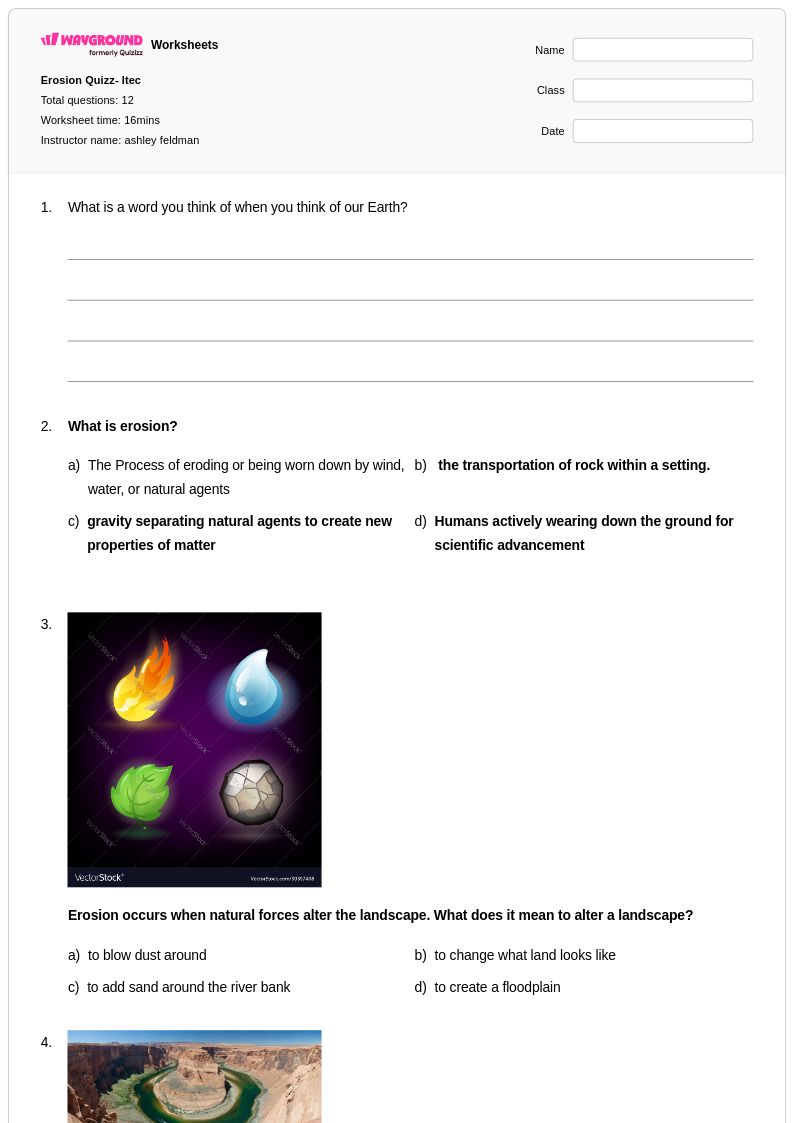
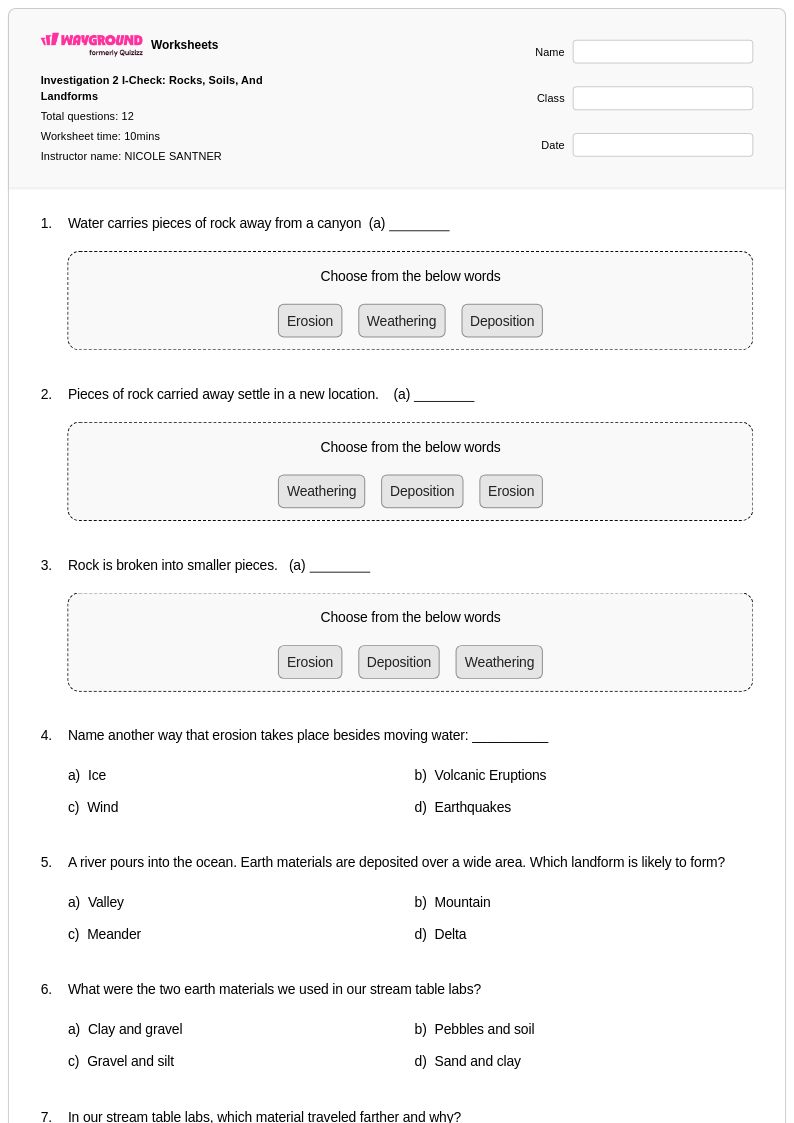
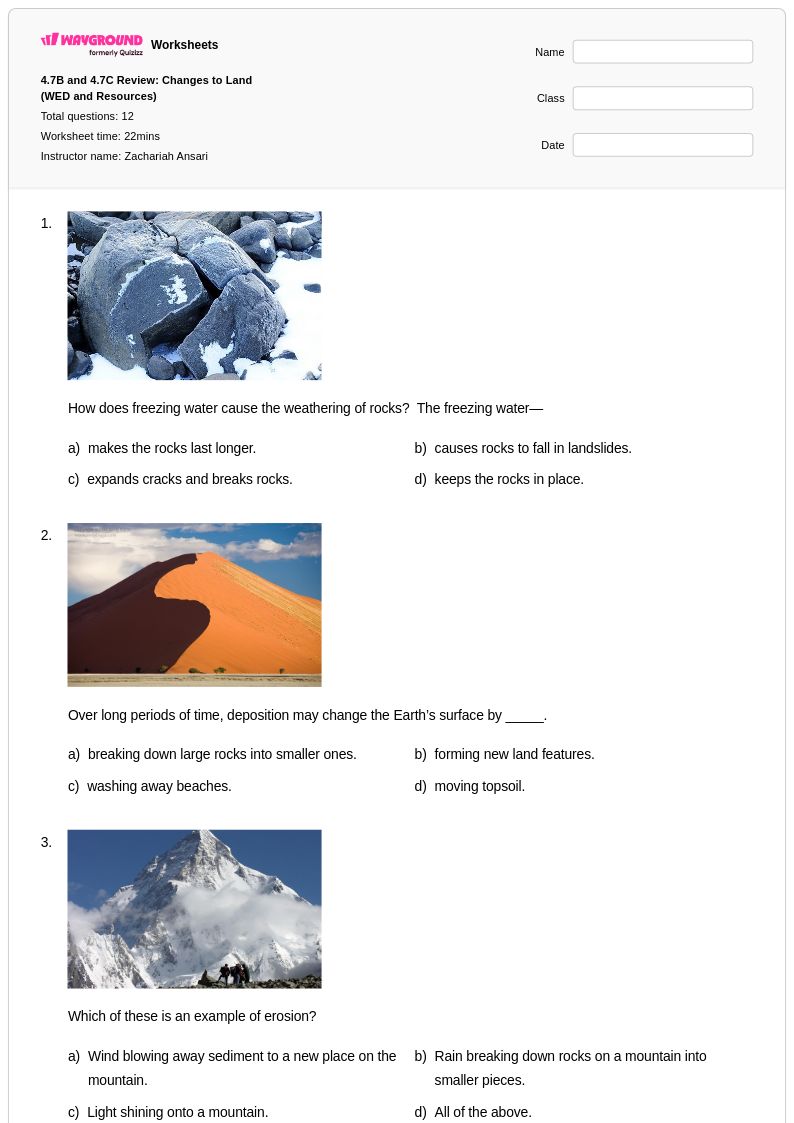
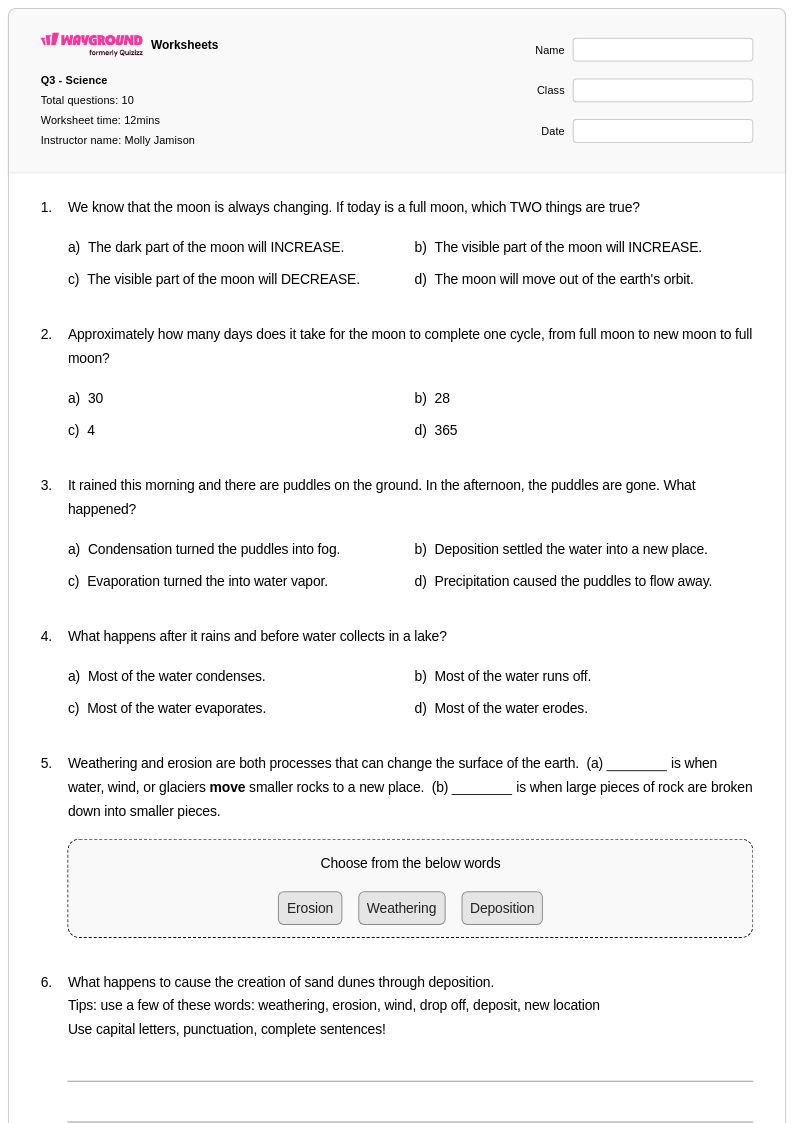
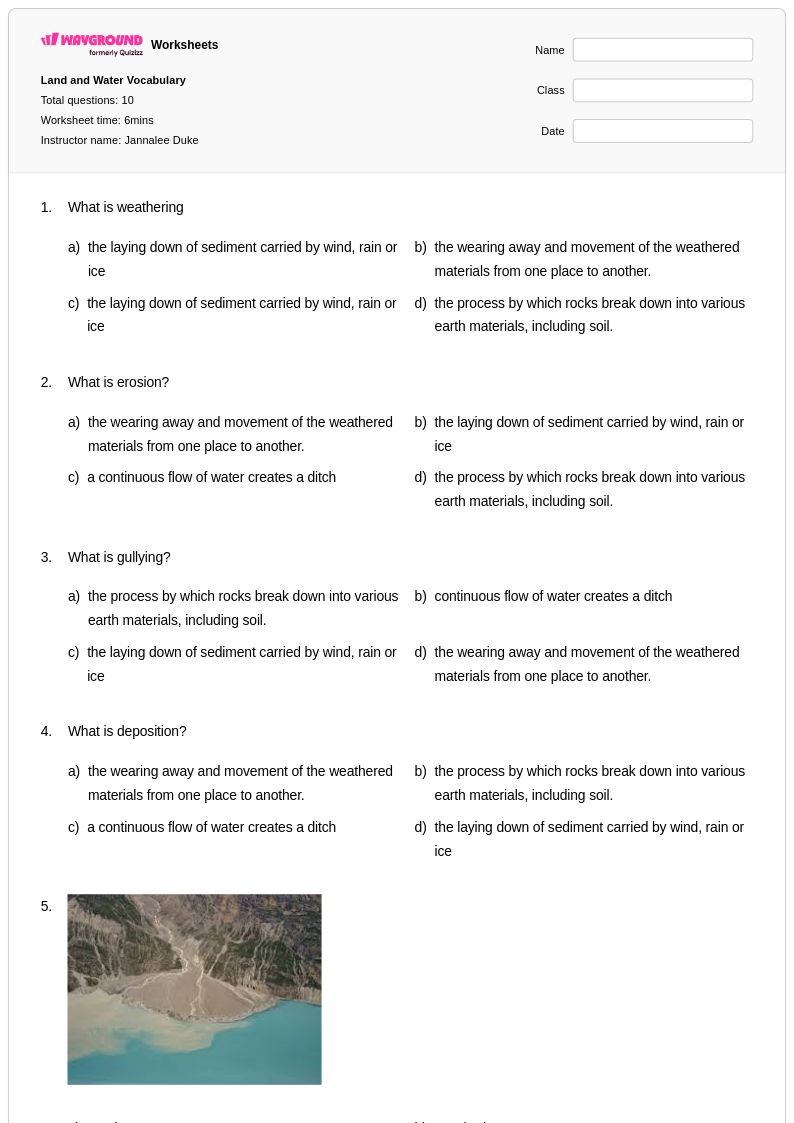
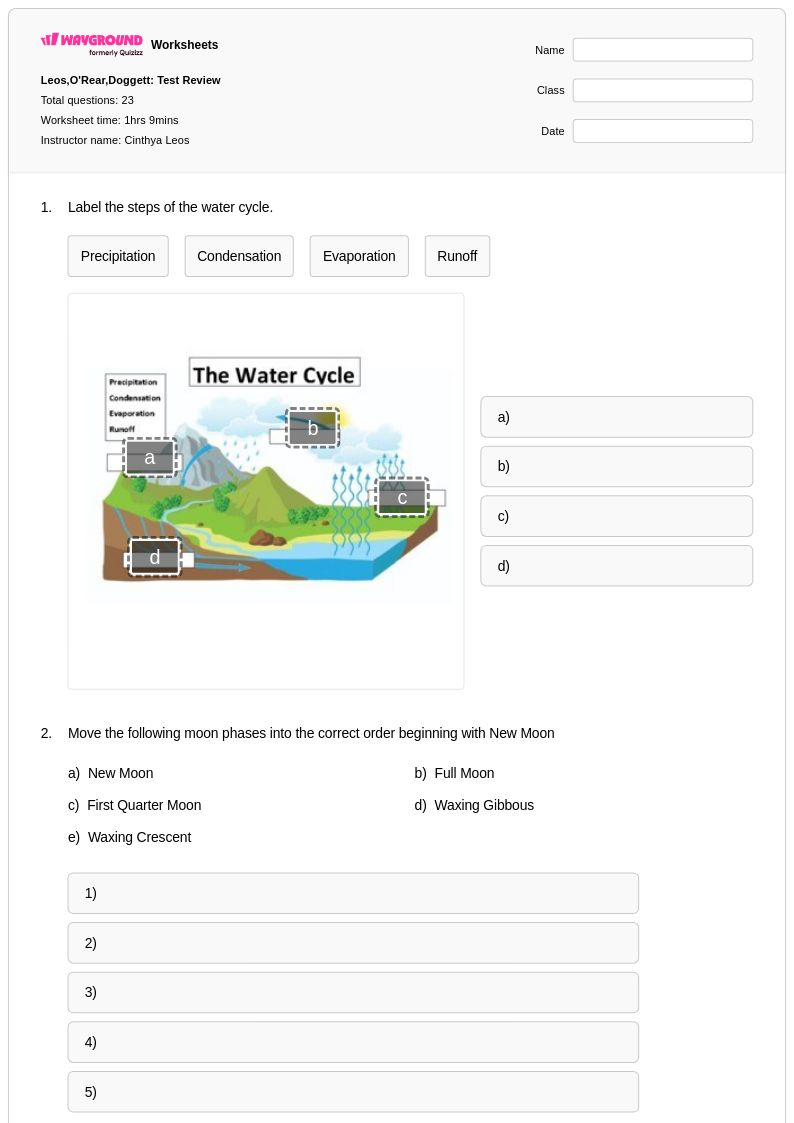
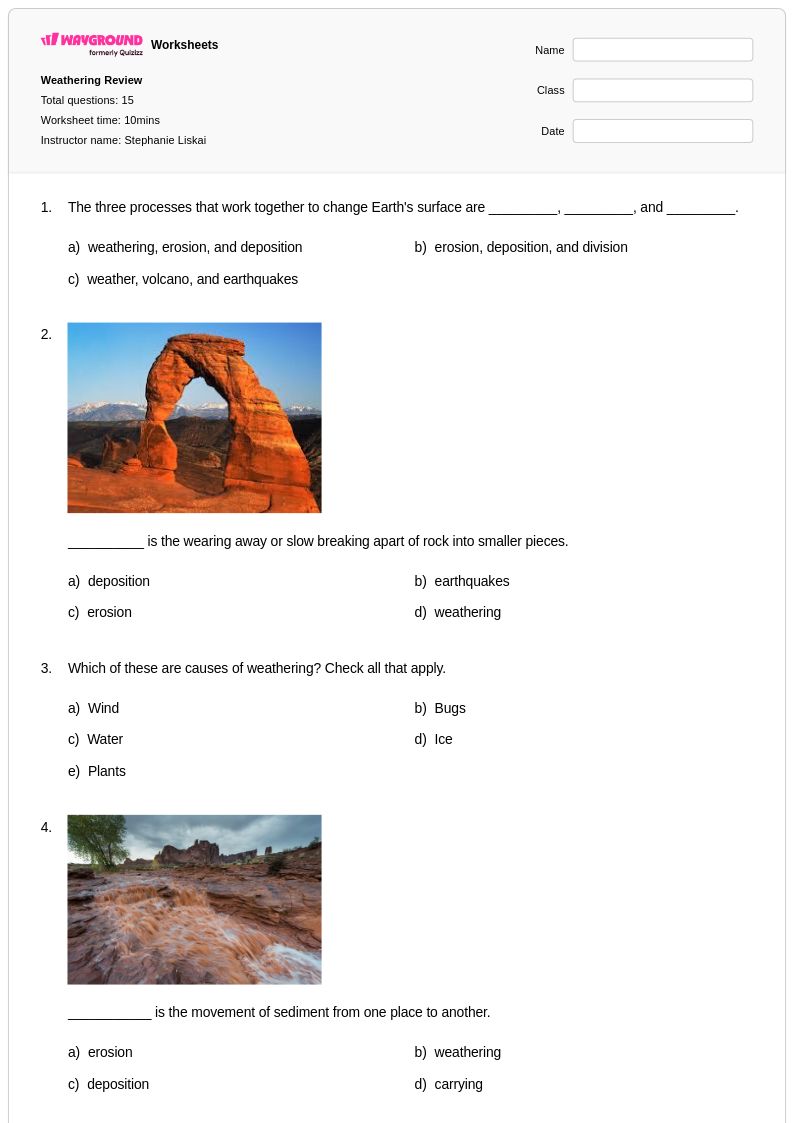
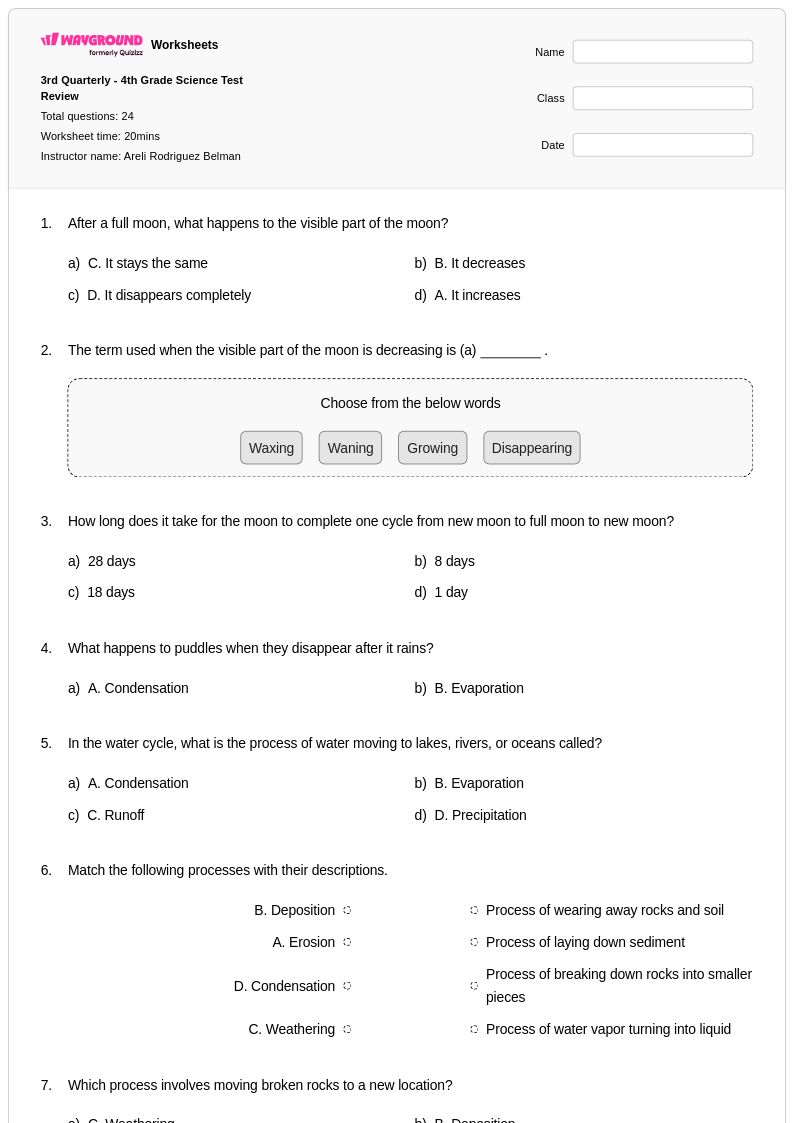
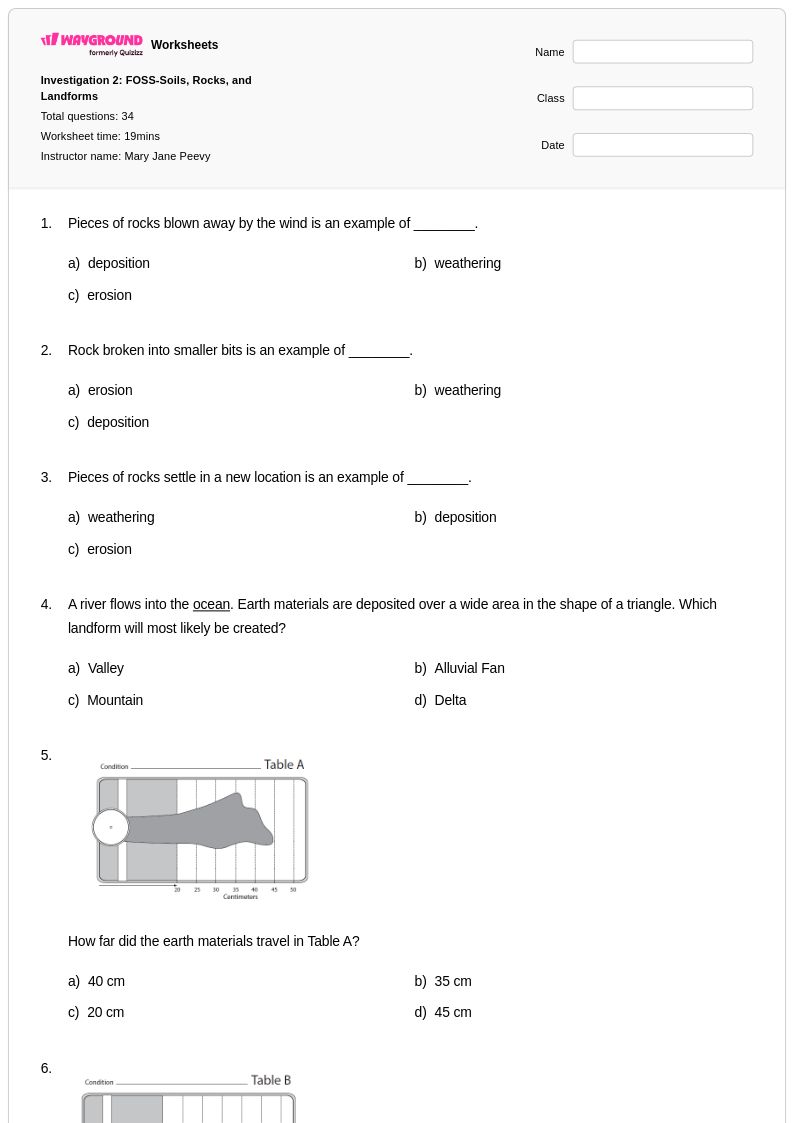
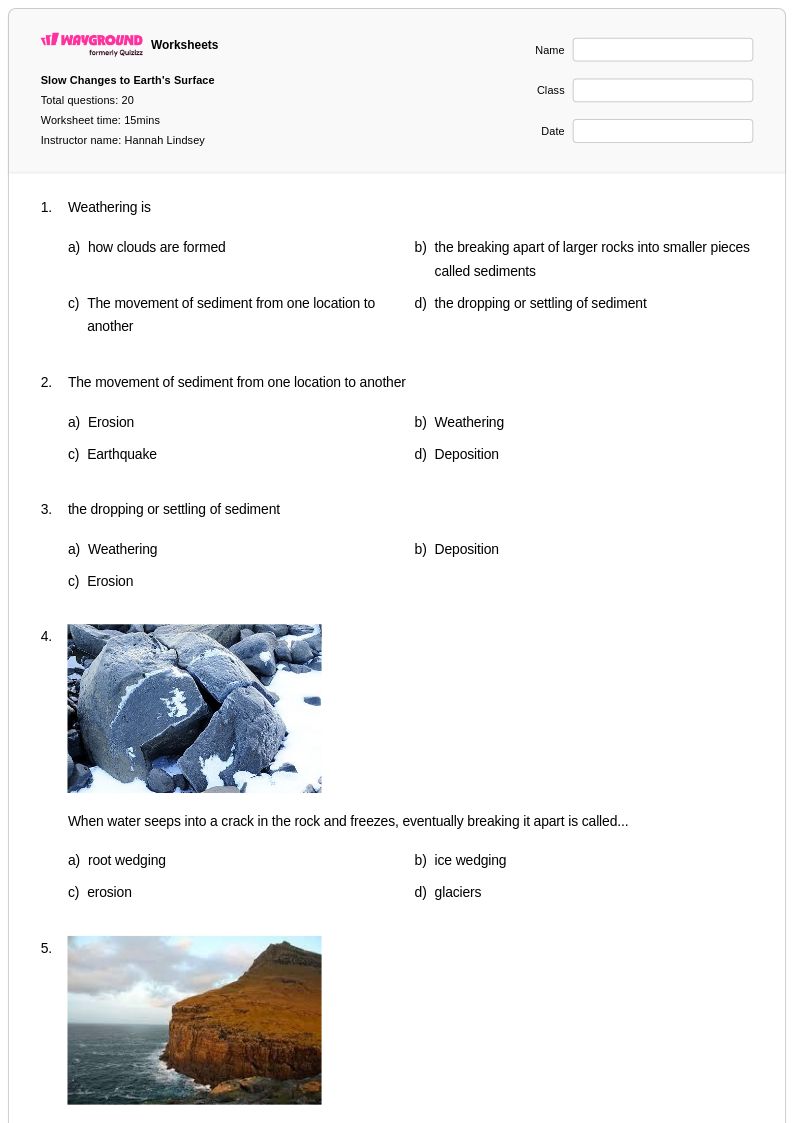
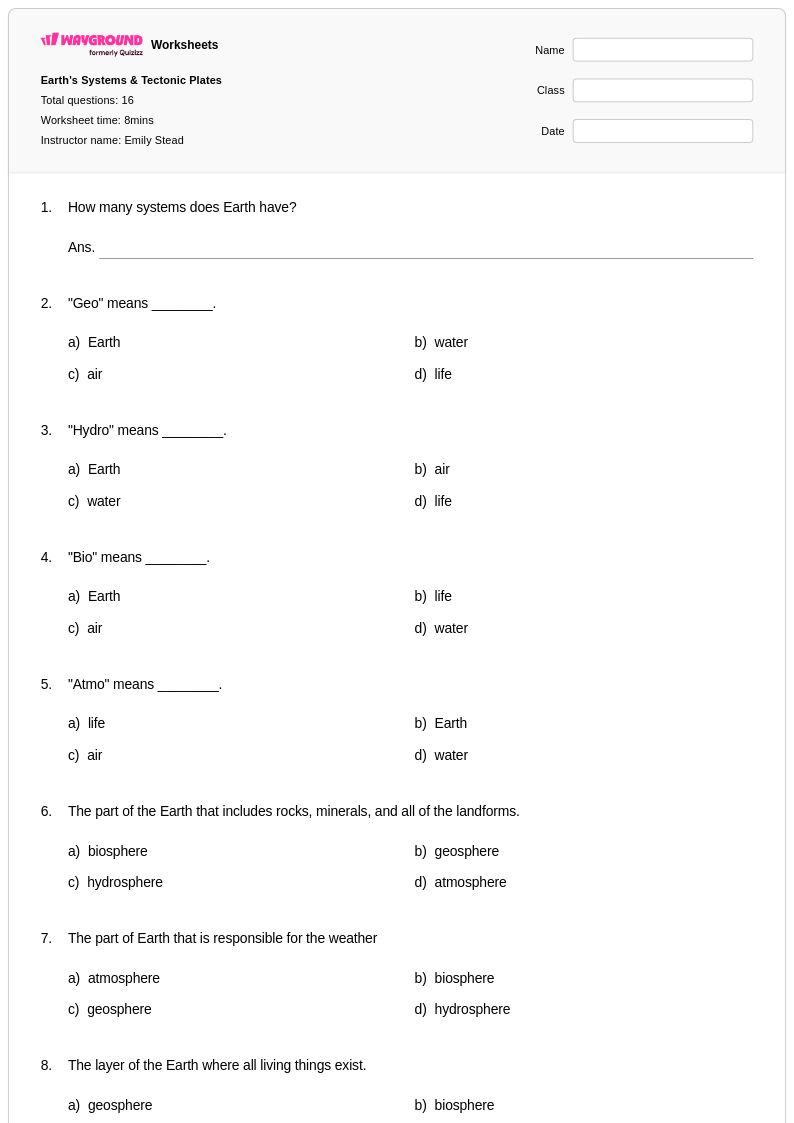
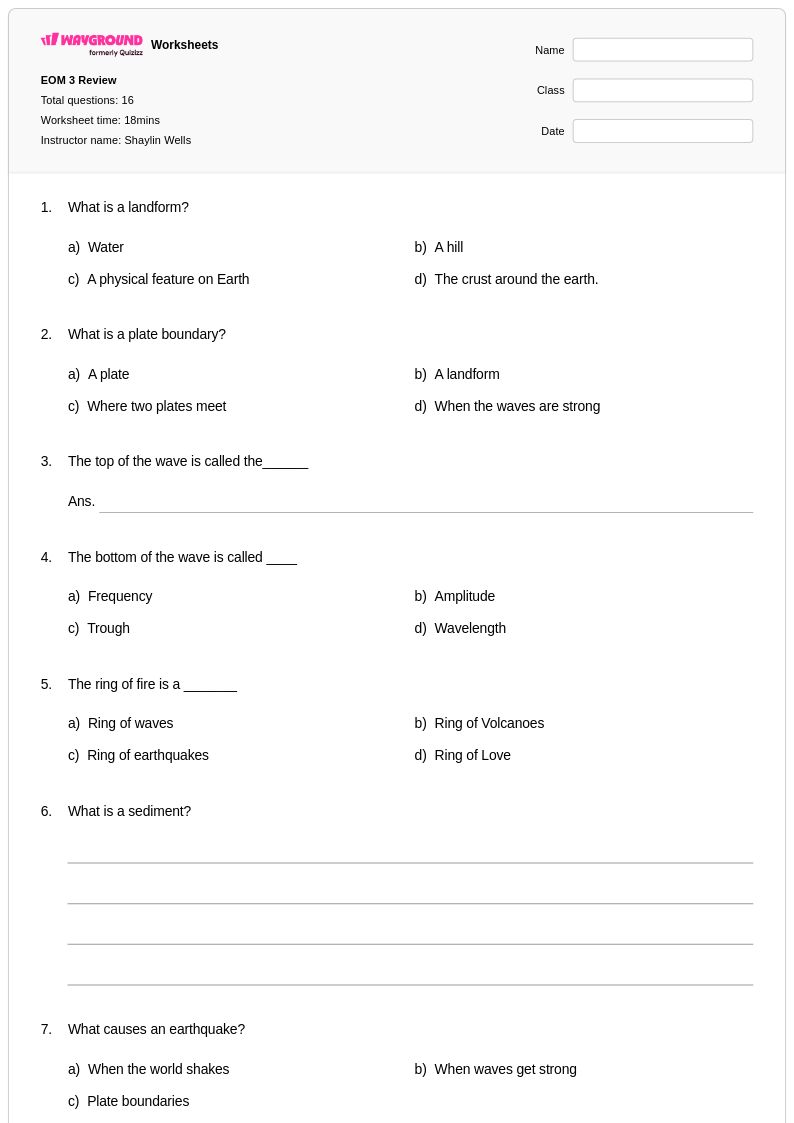
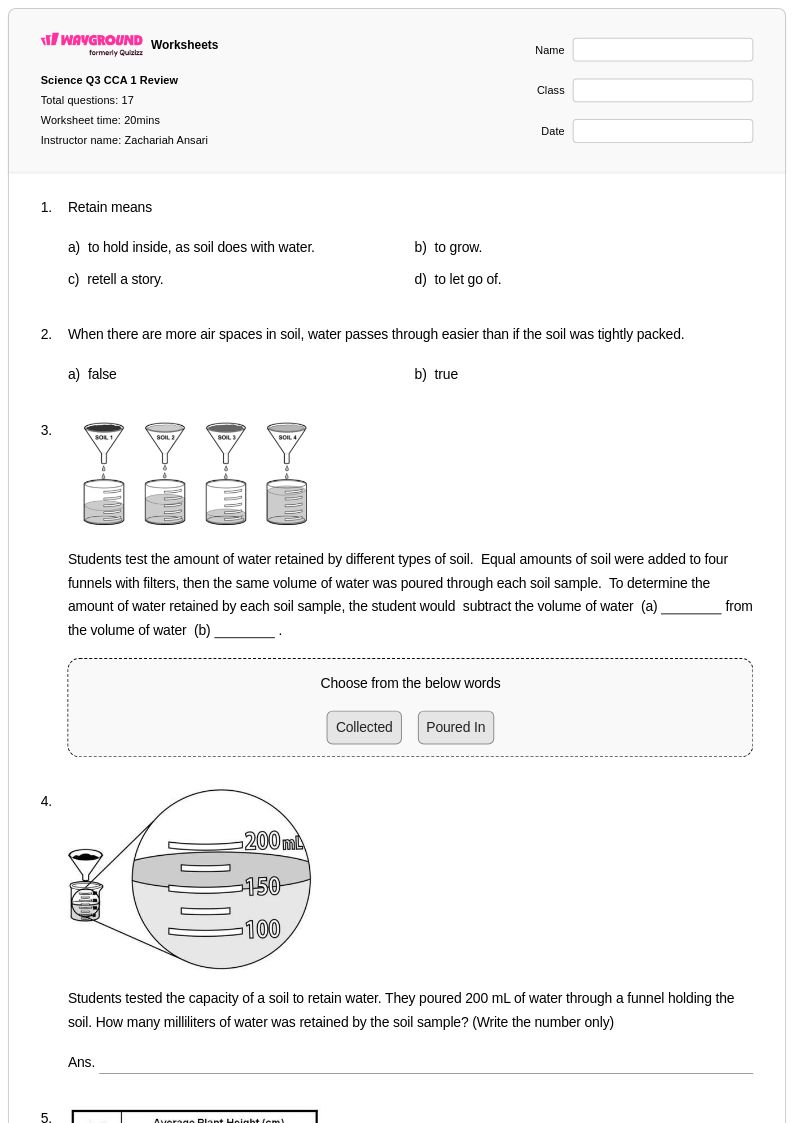
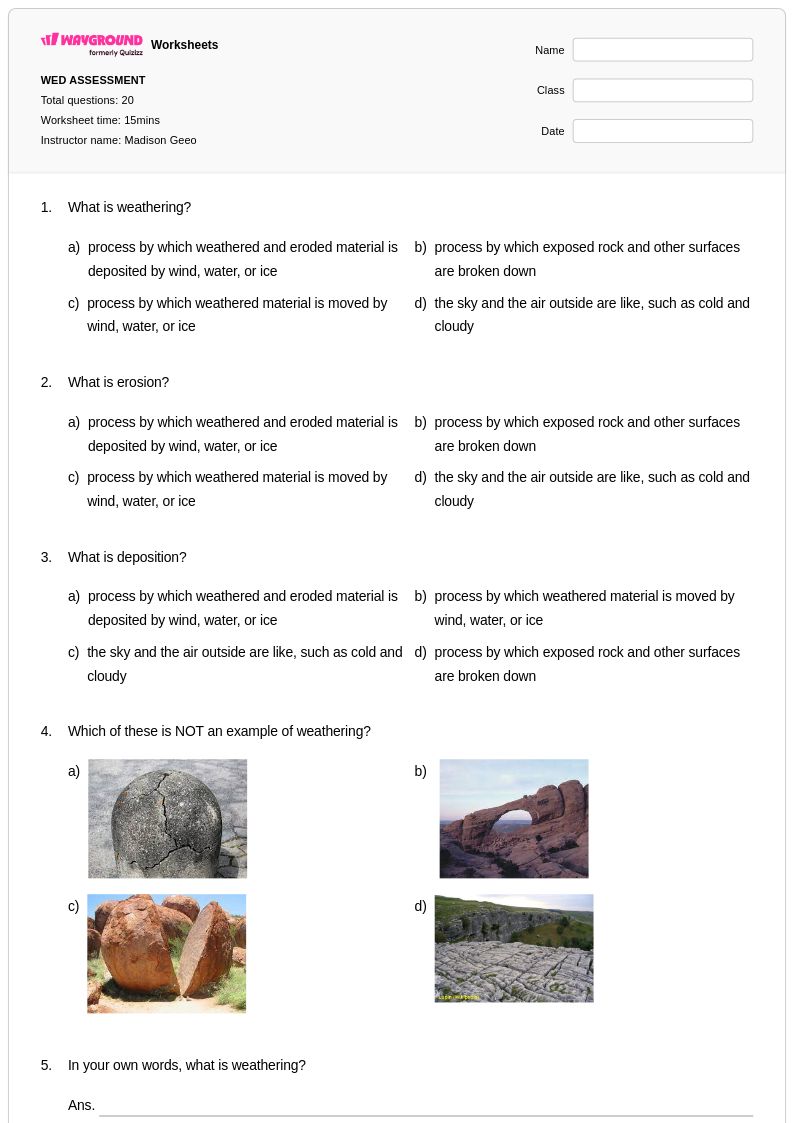
Grade 4 deposition worksheets from Wayground offer free printables and practice problems with answer keys to help students understand how weathered materials settle and accumulate in new locations.
Explore printable Deposition worksheets for Grade 4
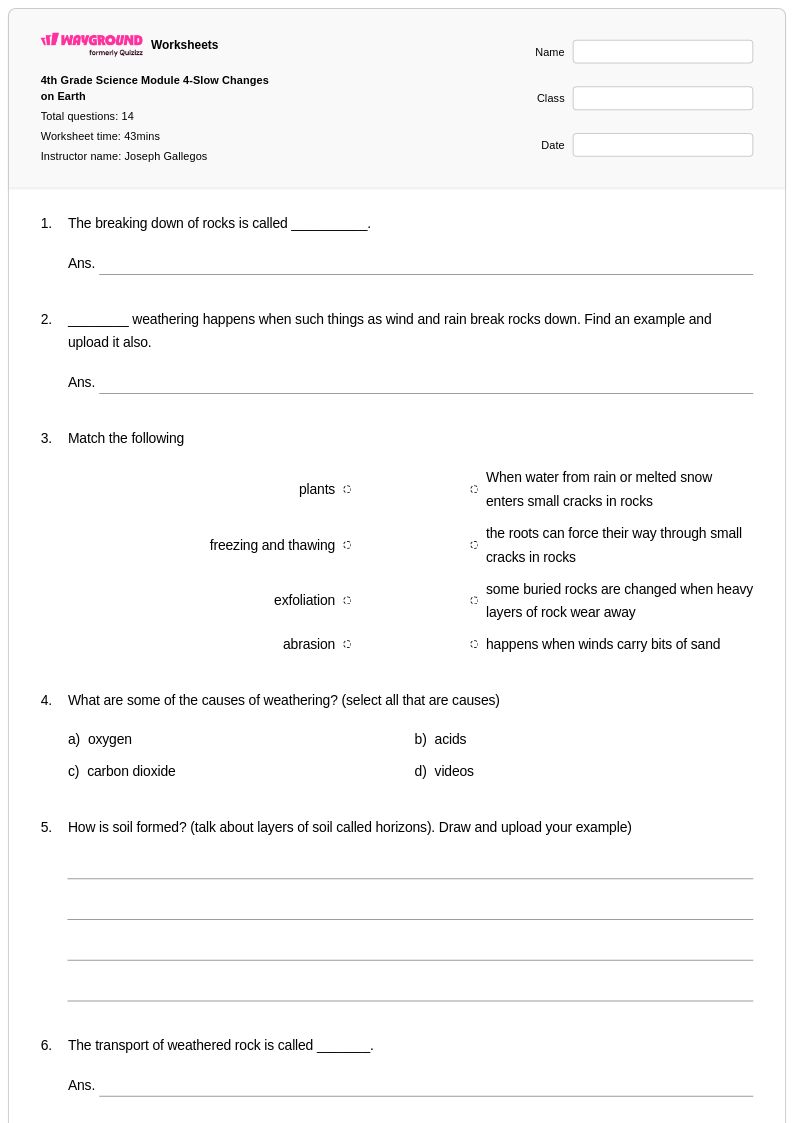
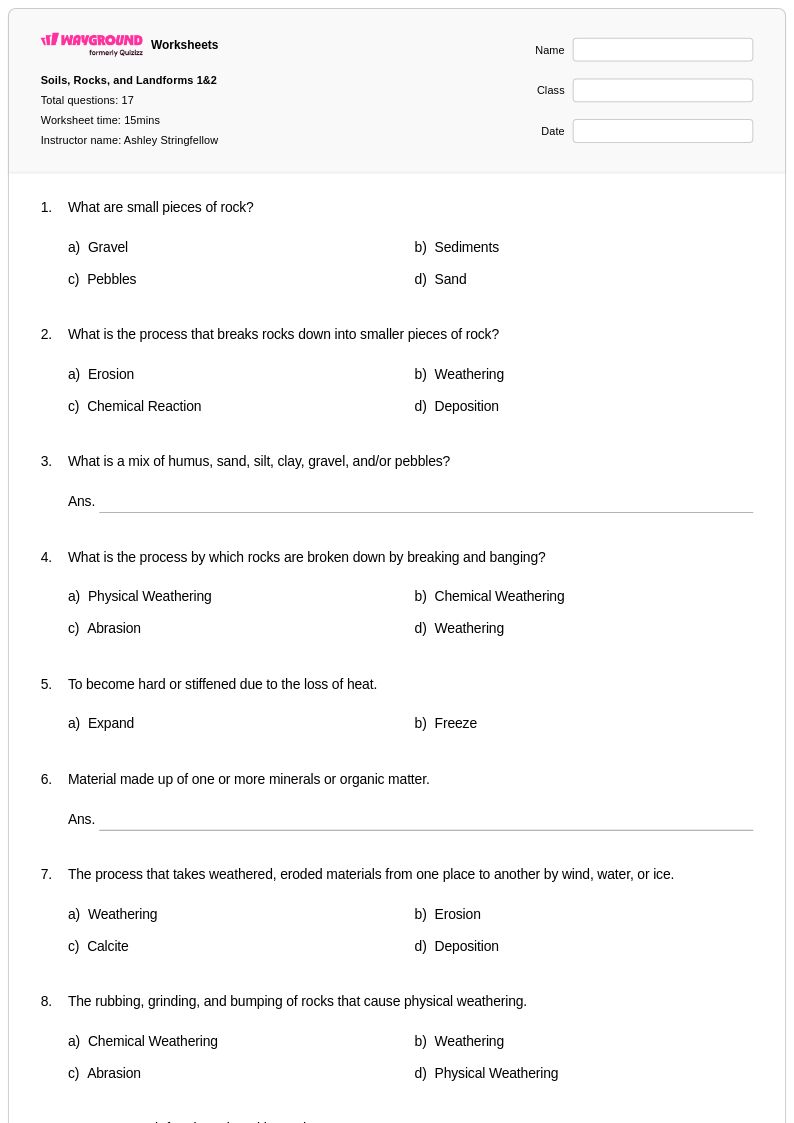
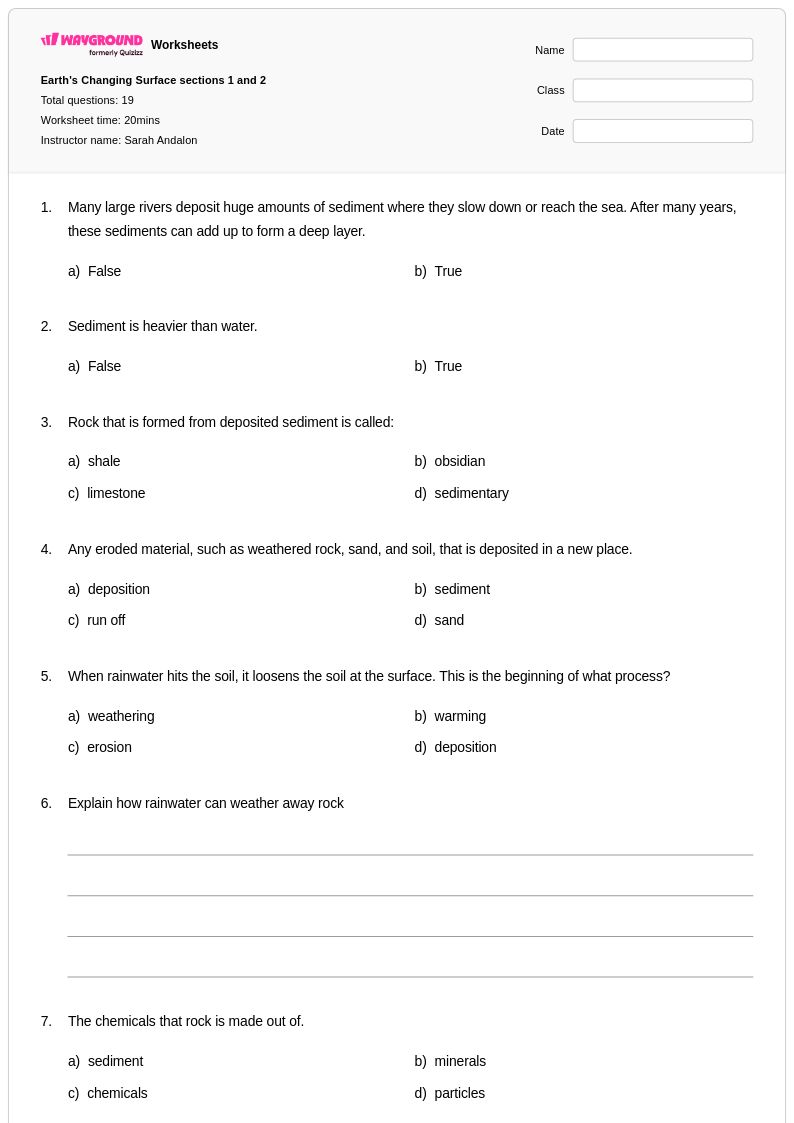
Deposition worksheets for Grade 4 students available through Wayground (formerly Quizizz) provide essential practice in understanding how sediments, rocks, and other earth materials settle and accumulate in new locations after being transported by wind, water, or ice. These comprehensive worksheet collections strengthen students' ability to identify deposition processes in various environments, from river deltas and beaches to desert dunes and glacial moraines. Each worksheet includes detailed answer keys and practice problems that guide fourth-grade learners through real-world examples of deposition, helping them connect this fundamental earth science concept to observable phenomena in their local environments. The free printable resources systematically build understanding of how deposition shapes landscapes over time, making this complex geological process accessible through age-appropriate activities and clear pdf formats.
Wayground's extensive collection draws from millions of teacher-created resources specifically designed to support Grade 4 earth and space science instruction focused on deposition concepts. Teachers benefit from robust search and filtering capabilities that allow them to quickly locate worksheets aligned with specific learning standards and differentiated for various skill levels within their classrooms. The platform's customization tools enable educators to modify existing deposition worksheets or combine multiple resources to create targeted practice sessions for remediation or enrichment purposes. Whether accessed as printable pdf materials for hands-on learning or digital formats for interactive classroom experiences, these deposition worksheet collections streamline lesson planning while providing the flexibility teachers need to address diverse learning styles and support comprehensive skill development in earth science concepts.
FAQs
How do I teach deposition in Earth science?
Teach deposition by first establishing the connection between erosion and deposition — students need to understand that deposition is the endpoint of a sediment transport cycle driven by wind, water, ice, and gravity. Use real-world landforms like river deltas, sand dunes, and glacial moraines as anchor examples, then build toward the concept that depositional environments differ based on the energy of the transporting agent. Hands-on activities such as stream table simulations or sediment sorting experiments help make abstract processes visible and memorable.
What exercises help students practice understanding deposition?
Effective practice exercises for deposition include particle size sorting problems, depositional environment matching tasks, and diagram labeling activities that ask students to identify where and why sediments accumulate. Practice problems that require students to connect transportation energy to sediment grain size — for example, explaining why a slow-moving river deposits fine silt while a fast-moving one carries coarser material — build conceptual depth alongside procedural knowledge. Deposition worksheets on Wayground include these types of targeted problems along with detailed answer keys to support both independent and guided practice.
What common mistakes do students make when learning about deposition?
The most frequent misconception is that students conflate deposition with erosion, treating them as interchangeable rather than as sequential stages in the sediment transport process. Students also commonly assume that deposition always occurs at the same rate or in the same location, without recognizing that changes in water velocity, wind strength, or slope affect where and how quickly sediments settle. Another error is failing to connect particle size to energy level — students often do not initially grasp that larger, heavier particles require more energy to remain in suspension and therefore deposit first.
How can I differentiate deposition instruction for students at different levels?
For students who need additional support, simplify tasks by focusing on one depositional environment at a time and providing visual aids such as labeled diagrams of river deltas or sand dunes before introducing analysis questions. More advanced students can be challenged with multi-variable problems that ask them to predict depositional patterns based on changing energy conditions or compare sediment profiles across different environments. On Wayground, teachers can apply accommodations such as reduced answer choices to lower cognitive load for individual students, or enable Read Aloud so that questions are read to students who benefit from audio support — all without alerting the rest of the class.
How do I use Wayground's deposition worksheets in my classroom?
Wayground's deposition worksheets are available as printable PDFs for traditional classroom use and in digital formats for technology-integrated lessons, giving teachers flexibility regardless of their classroom setup. The digital format allows teachers to host worksheets as a quiz directly on Wayground, making it straightforward to assign practice, collect responses, and review results in one place. Each worksheet includes a complete answer key, so they work equally well for whole-class instruction, small group remediation, or independent student review.
How does deposition relate to the formation of landforms?
Deposition is directly responsible for building a wide range of landforms, including river deltas, alluvial fans, beaches, sand dunes, and glacial moraines. Each landform reflects the specific depositional environment in which it formed — the energy level, the type of transporting agent, and the particle size of the sediment involved. Teaching students to connect landform characteristics back to depositional processes strengthens their understanding of how Earth's surface is continuously shaped and reshaped over time.