Free Printable Derivative Graphs Worksheets for Grade 10
Grade 10 derivative graphs worksheets from Wayground offer comprehensive printables and practice problems with answer keys to help students master interpreting and analyzing the graphical representation of derivatives in calculus.
Explore printable Derivative Graphs worksheets for Grade 10
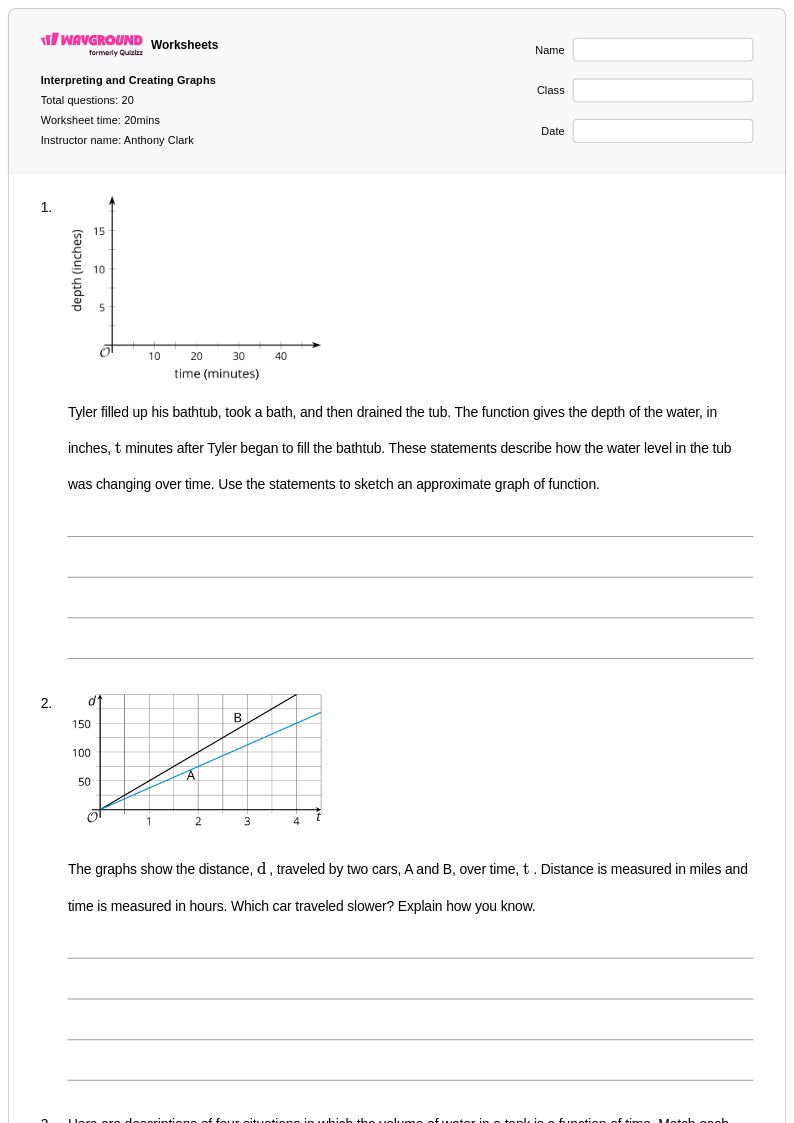
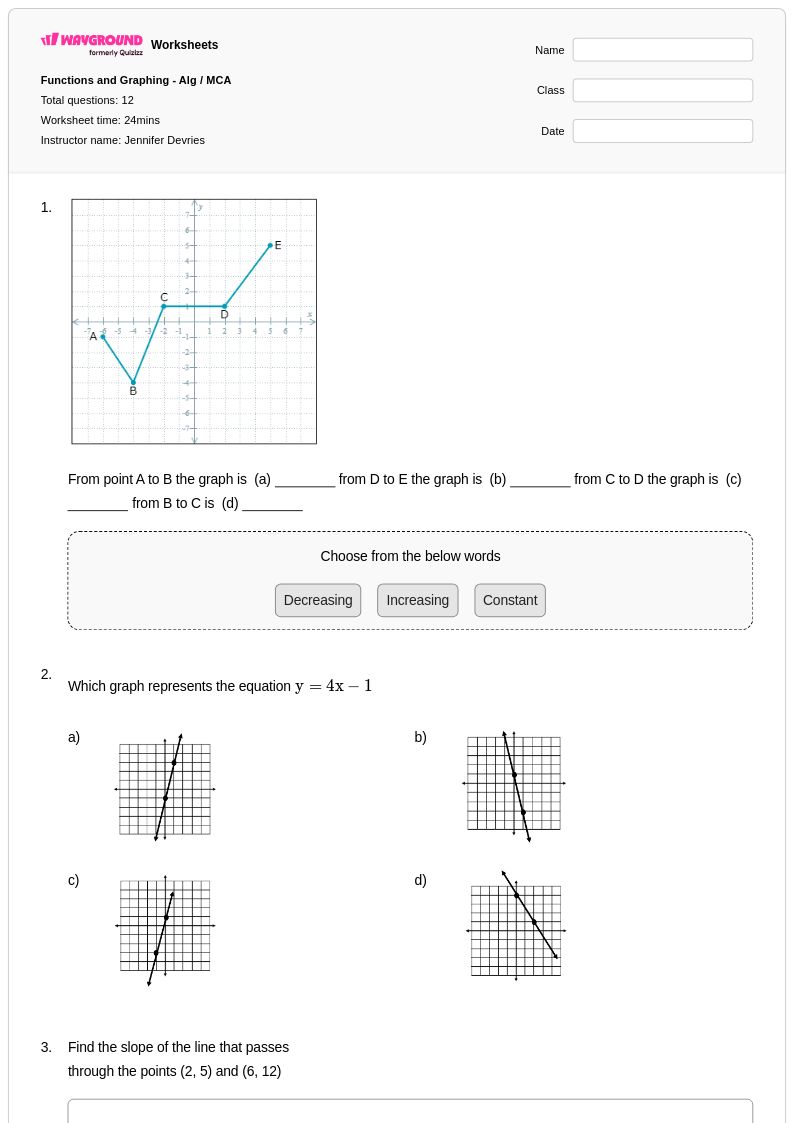
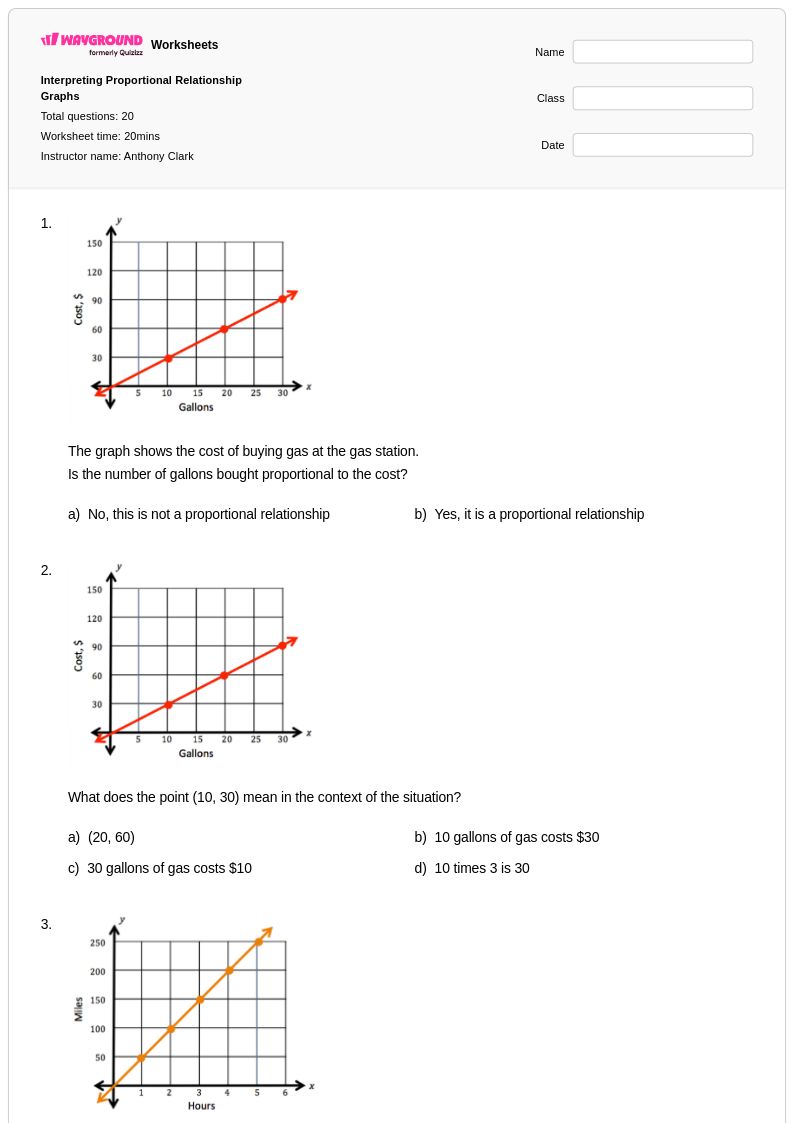
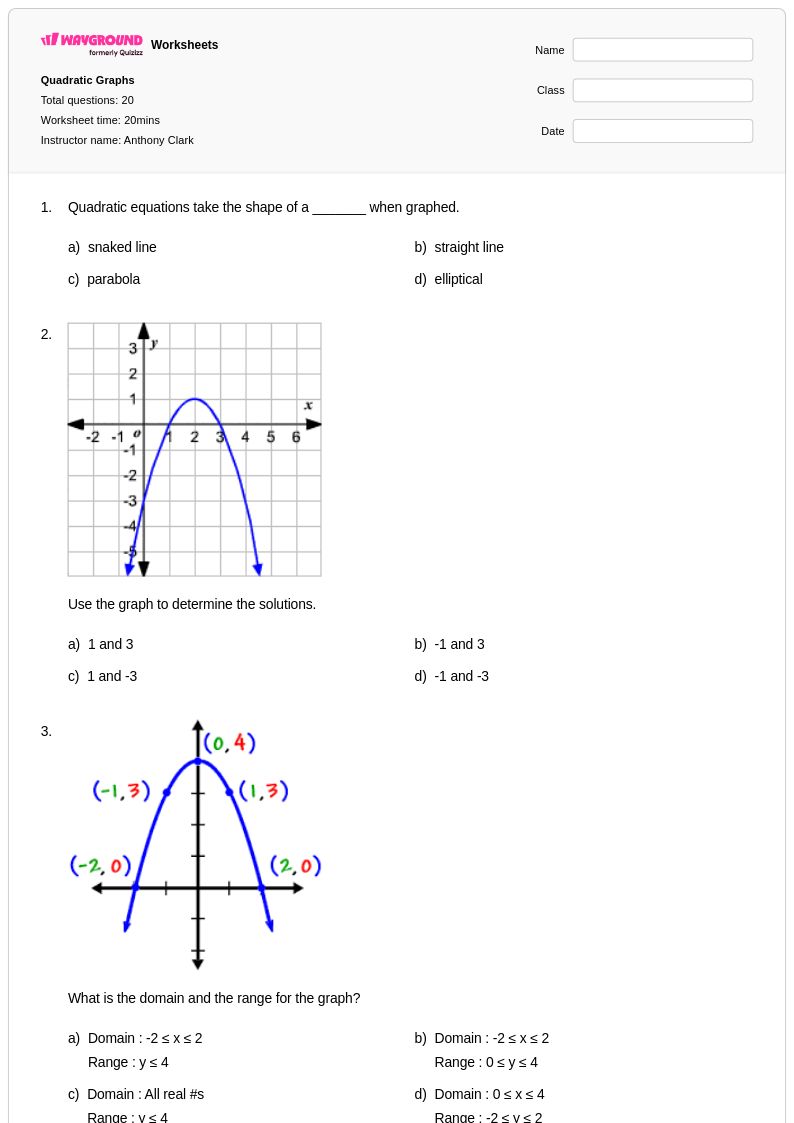
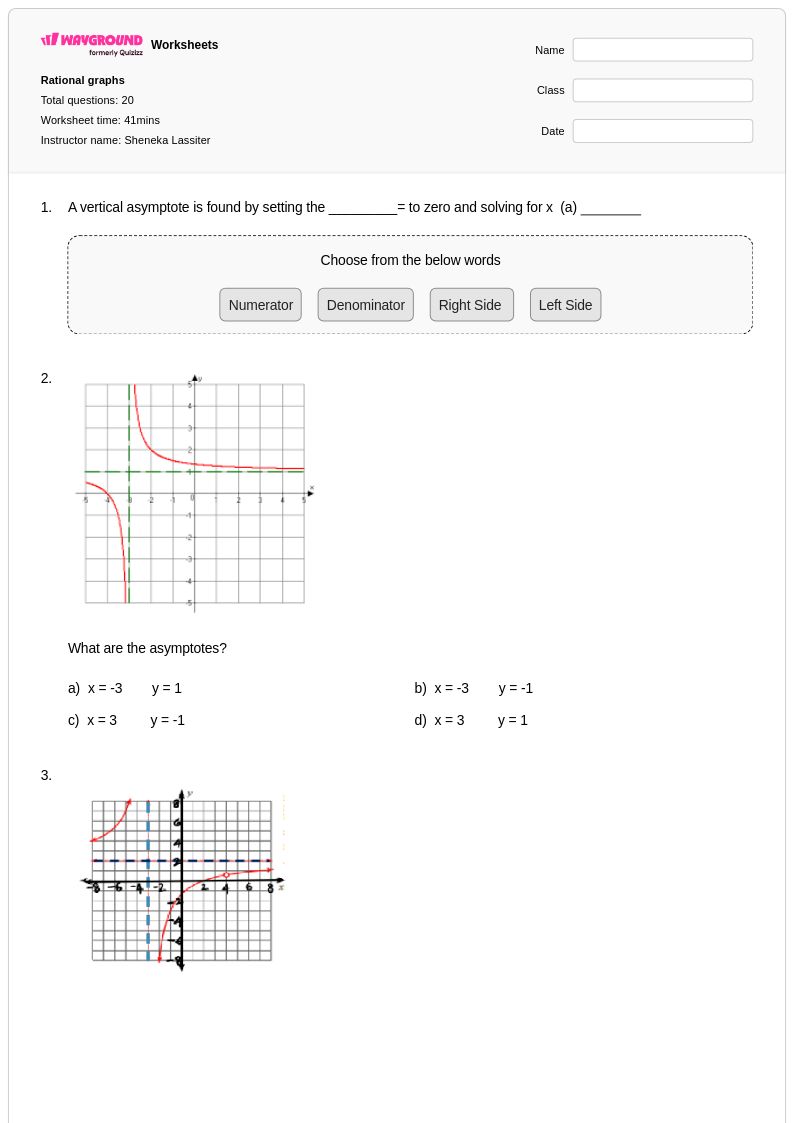
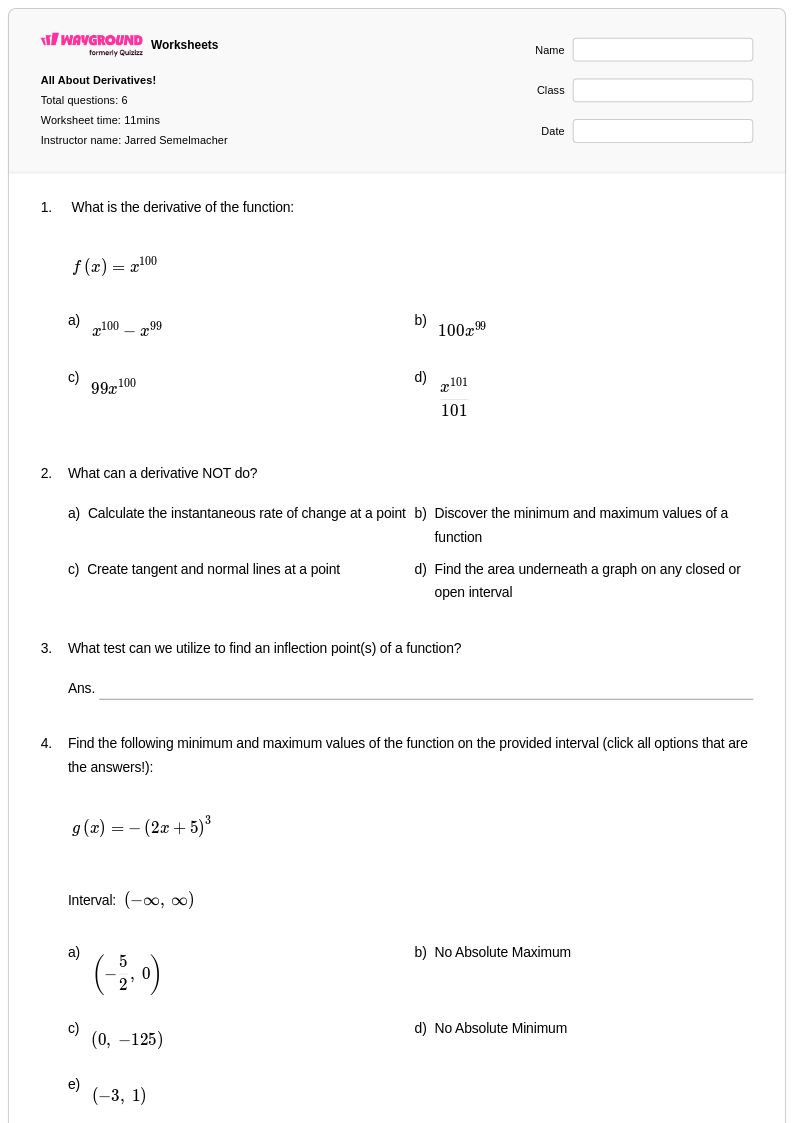
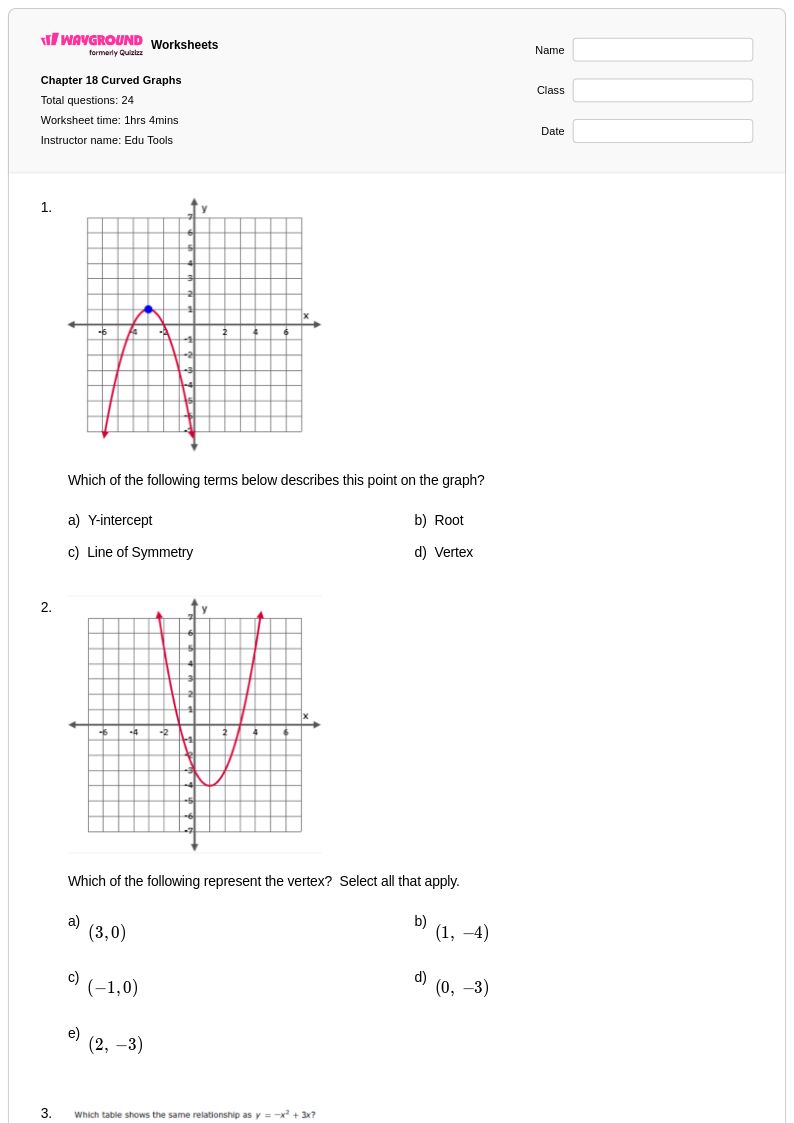
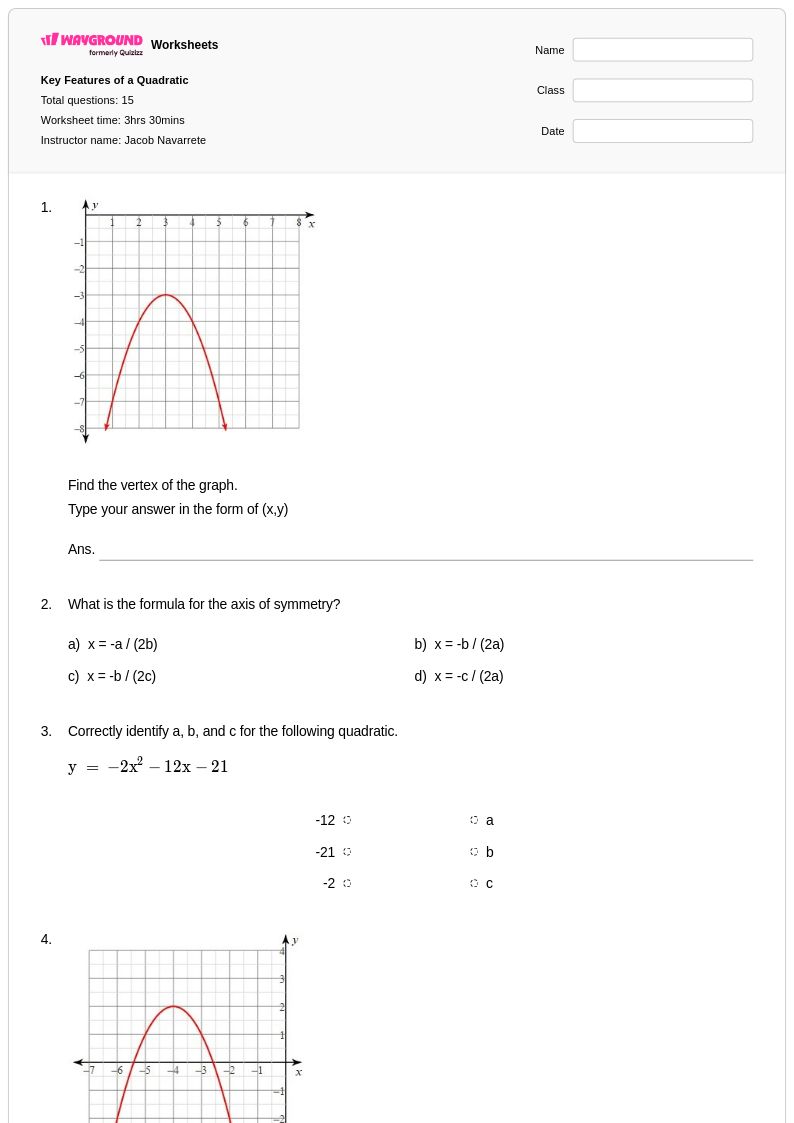
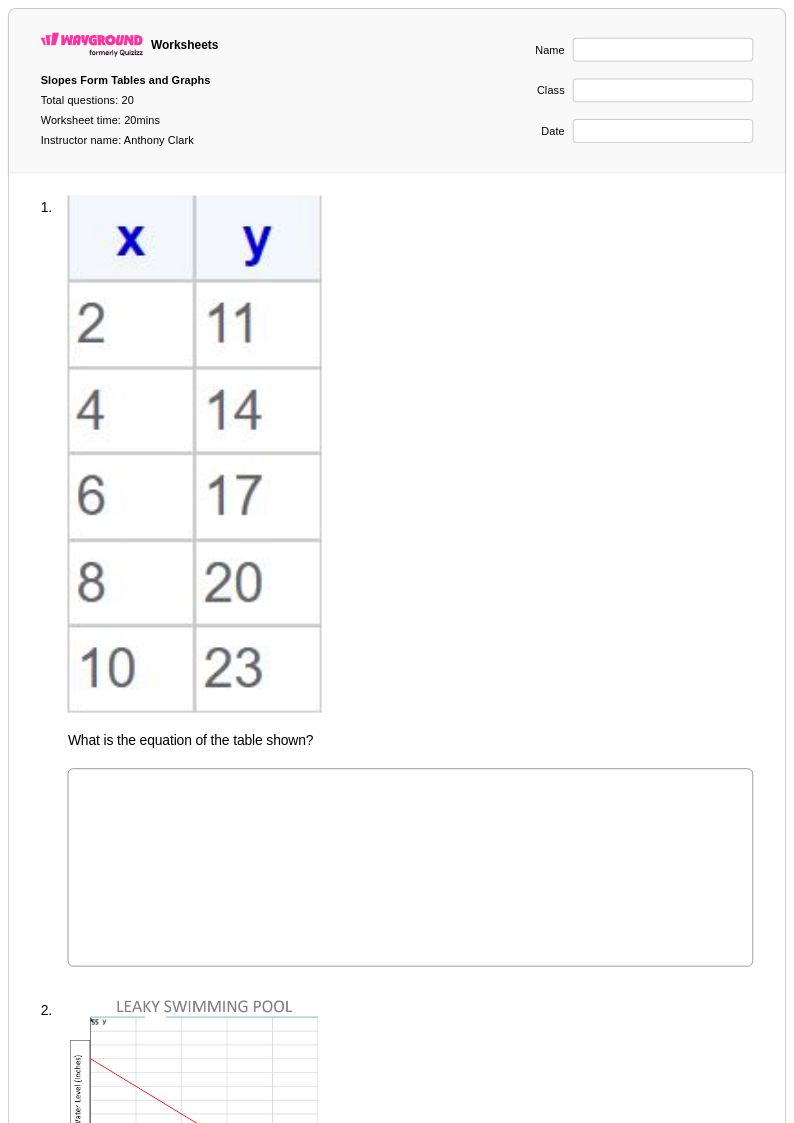
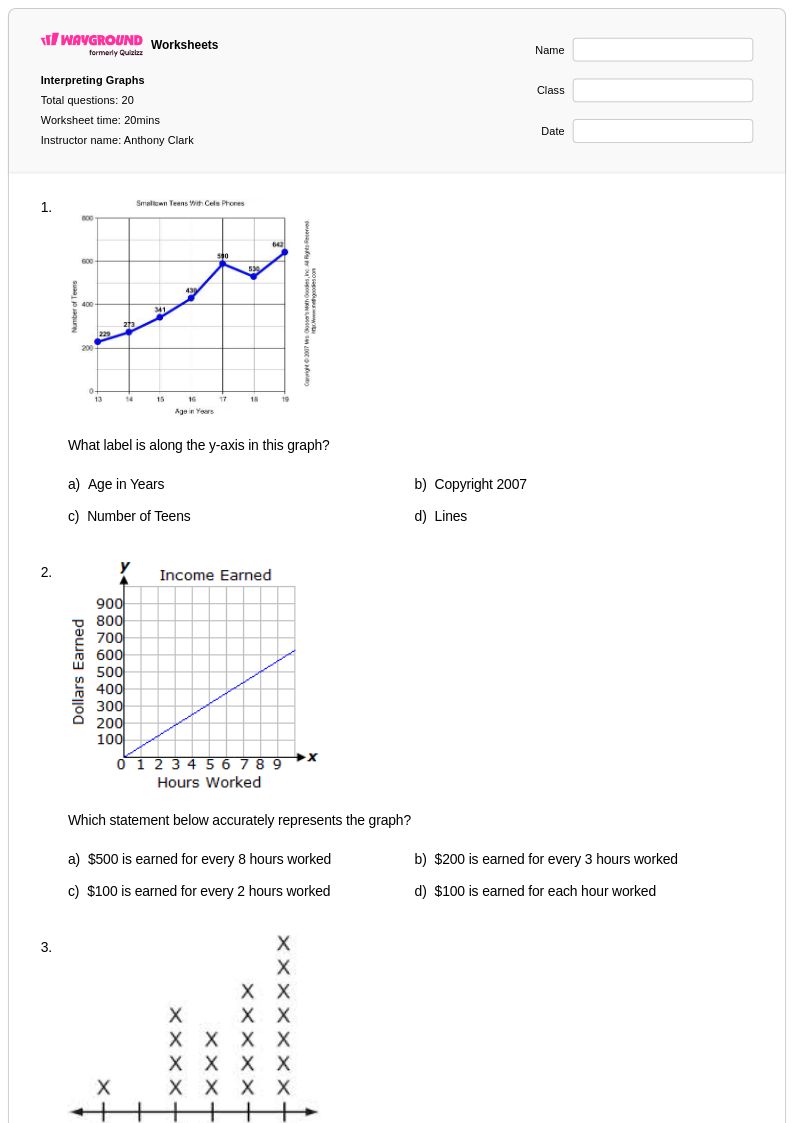
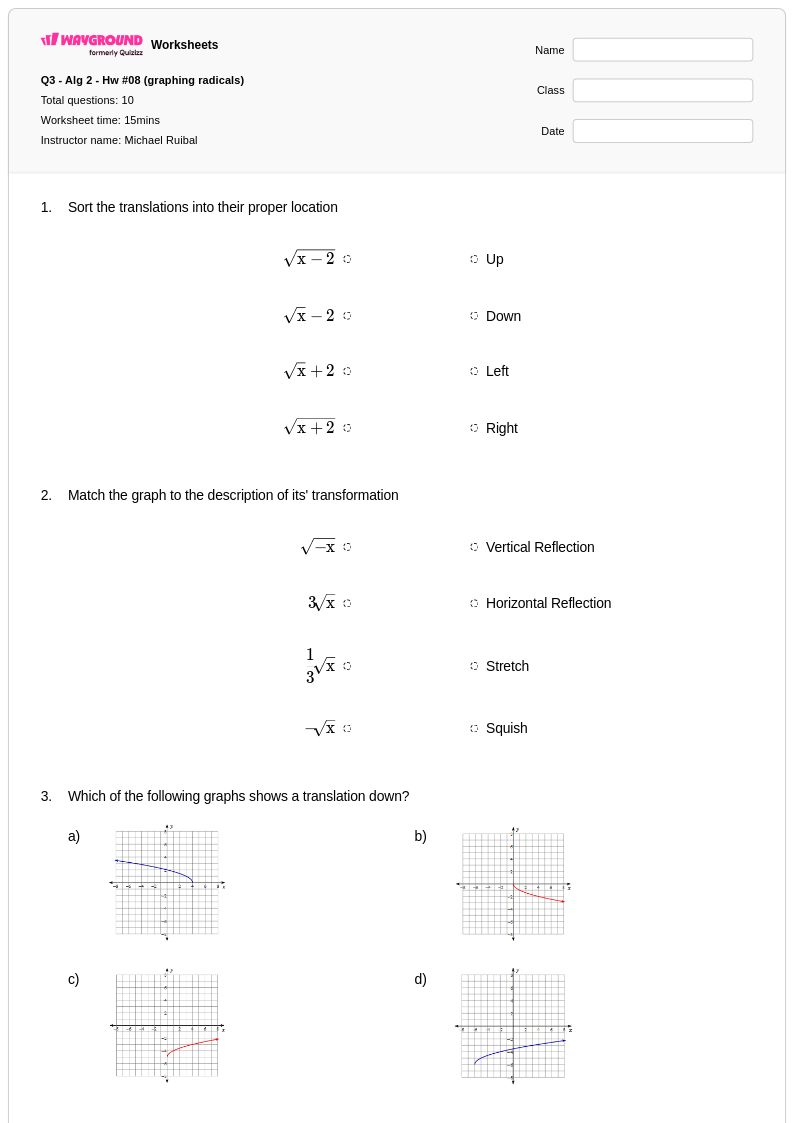
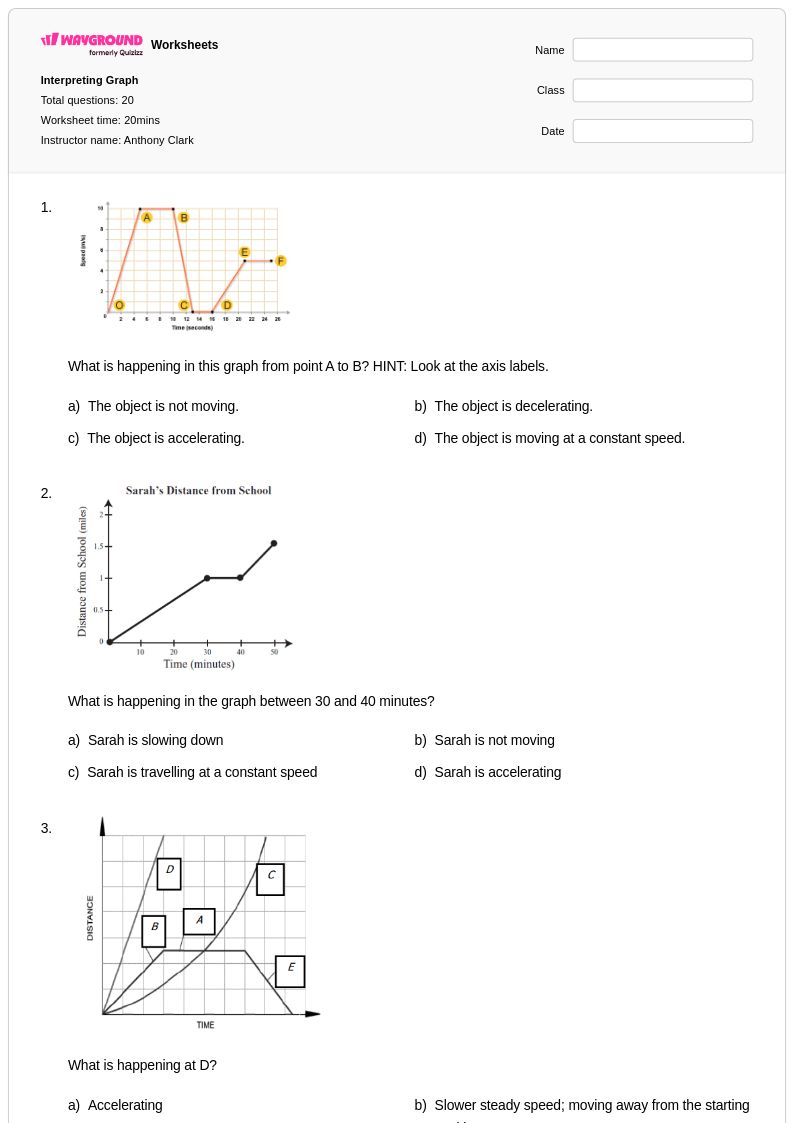
Derivative graphs worksheets for Grade 10 students through Wayground (formerly Quizizz) provide comprehensive practice in understanding the visual representation of derivatives and their relationship to original functions. These carefully crafted resources help students master the critical skill of interpreting derivative graphs, analyzing points of inflection, identifying maximum and minimum values, and connecting the behavior of a function to its derivative's characteristics. The worksheets include diverse practice problems that challenge students to sketch derivative graphs from given functions, determine function behavior from derivative graphs, and solve real-world applications involving rates of change. Each worksheet comes with a complete answer key and is available as a free printable pdf, making it easy for educators to incorporate these essential calculus concepts into their Grade 10 mathematics curriculum.
Wayground (formerly Quizizz) empowers teachers with access to millions of educator-created derivative graphs worksheets that can be easily searched, filtered, and customized to meet specific classroom needs. The platform's robust collection includes resources aligned to various mathematical standards, allowing instructors to quickly locate materials that match their curriculum requirements and student ability levels. Teachers can differentiate instruction by selecting worksheets with varying complexity levels, modify existing content to address specific learning gaps, or combine multiple resources for comprehensive skill practice. Whether used for initial concept introduction, targeted remediation, or advanced enrichment activities, these derivative graphs worksheets are available in both digital and printable pdf formats, giving educators the flexibility to seamlessly integrate calculus practice into their lesson planning and assessment strategies.
FAQs
Is derivative graphs a Grade 10 math topic?
In most US curricula, derivative graphs are introduced in pre-calculus or AP Calculus, which typically fall in Grades 11 or 12. A Grade 10 student working on this material is in an accelerated course. That's worth knowing for lesson planning: these students are likely comfortable with function notation and polynomial behavior, but may not yet have the formal limit definition of the derivative — so instruction should lean on graphical and rate-of-change reasoning rather than algebraic derivation.
How do I teach derivative graphs to Grade 10 students?
Anchor the concept in slope. Grade 10 students know slope from linear functions — the key move is extending that idea to curves, where slope changes continuously. A useful classroom activity: give students a smooth curve and ask them to estimate the slope at five or six specific points, then plot those slope values. What they've drawn is the derivative graph, and arriving at it through estimation makes the connection concrete before any formal notation is introduced. From there, inflection points and concavity follow naturally as 'where is the slope itself changing direction?'
What practice problems work best for Grade 10 derivative graph skills?
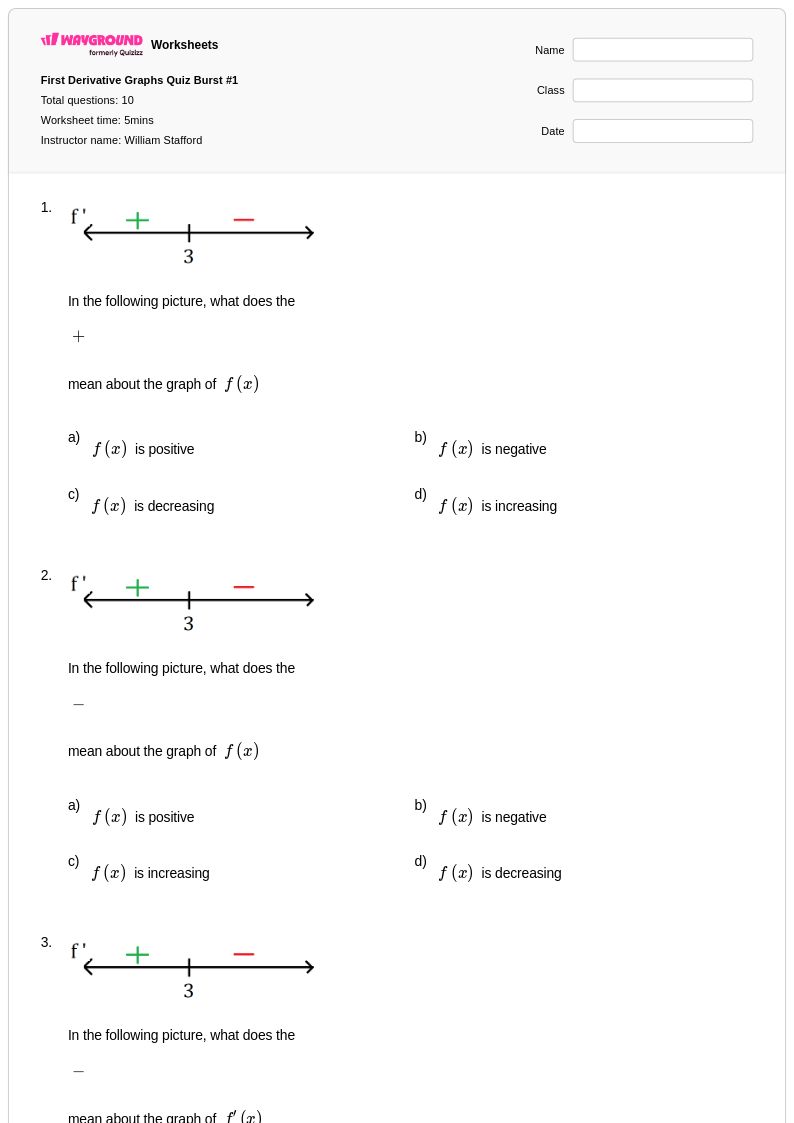
Problems that require students to work in both directions are the most valuable: sketch f′ given f, and describe f's behavior given f′. Wayground's Grade 10 derivative graphs worksheets include practice on identifying critical points, intervals of increase and decrease, inflection points, and local maxima and minima — the core skills at this level. Real-world rate-of-change problems (position/velocity, for example) are also worth including because they give the abstract graph a concrete interpretation.
What errors do Grade 10 students commonly make on derivative graph problems?
Two errors dominate at this level. First, students place the zeros of f′ at the wrong x-values — often at the peaks of f′ itself rather than at the peaks of f. Second, they struggle to connect concavity to the derivative: they can identify concave up and concave down visually, but can't reliably explain why a sign change in f′ produces an inflection point in f. Both errors point to the same root cause: students are reading graphs locally rather than thinking about what the derivative value means at each point.
How do I use Wayground's Grade 10 derivative graphs worksheets in my classroom?
Each worksheet includes a complete answer key, so it's ready to use for practice, homework, or review. For in-class work, hosting it as a digital quiz on Wayground gives students immediate feedback as they work through graph analysis problems. For paper-based practice, useful when you want students sketching graphs by hand, download the printable PDF and use the Wayground for Teachers app to scan and grade submissions without leaving the platform.
How does derivative graph analysis fit into the math curriculum sequence for Grade 10?
Common Core builds toward calculus by developing students' understanding of function behavior across the high school years — domain and range, transformations, and rates of change in linear and exponential contexts. Derivative graph analysis extends that progression by asking students to treat slope itself as a function. At Grade 10, the critical bridge is from average rate of change (a ratio students have calculated) to instantaneous rate of change (a value they can read from or sketch onto a graph). The next step in the sequence is formalizing this with the first and second derivative tests to classify critical points algebraically.
How can I differentiate derivative graph worksheets for mixed-ability Grade 10 classes?
For students who find the visual complexity of derivative graphs overwhelming, Wayground's adjustable font size and wider spacing options make the graphs and labels easier to parse. The read-aloud accommodation helps students who process written instructions better when heard. For your strongest students, look for problems that move beyond sketching into interpreting f from f′ — reconstructing function behavior from derivative information is a meaningfully harder task that doesn't require a separate worksheet.