
20 Q
5th
10 Q
5th - 6th
12 Q
5th
13 Q
4th - Uni
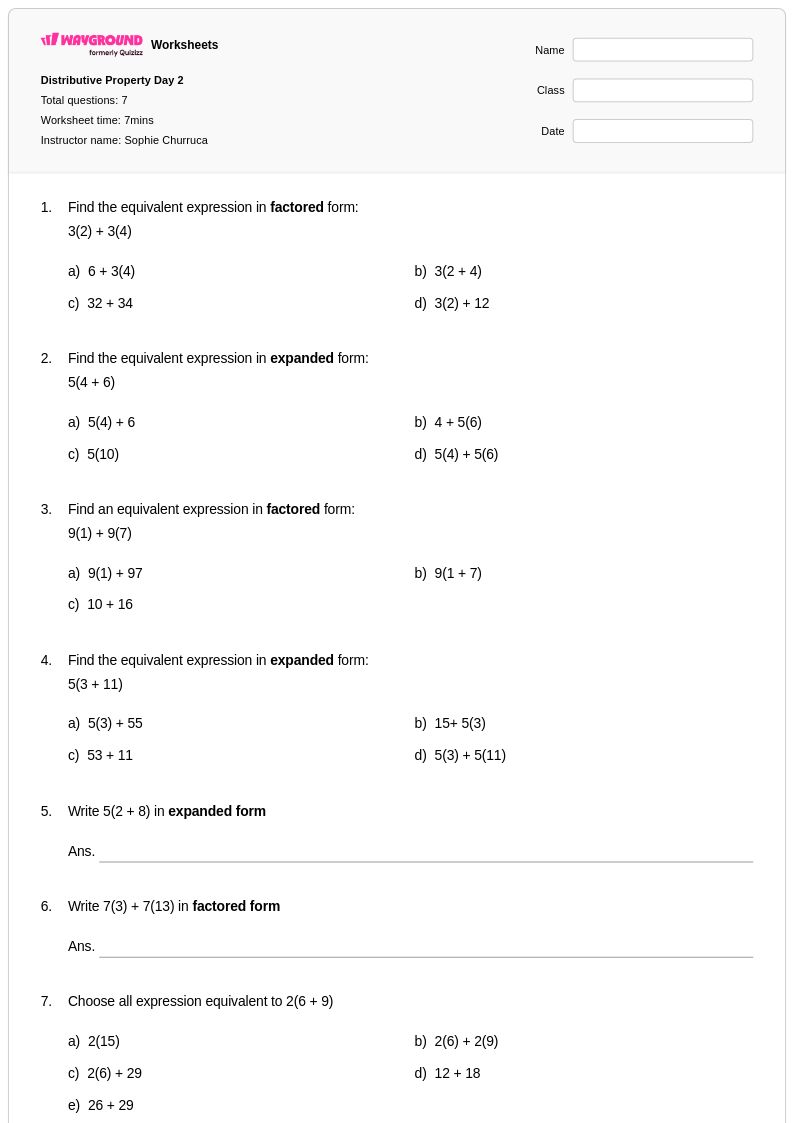
7 Q
5th - 6th
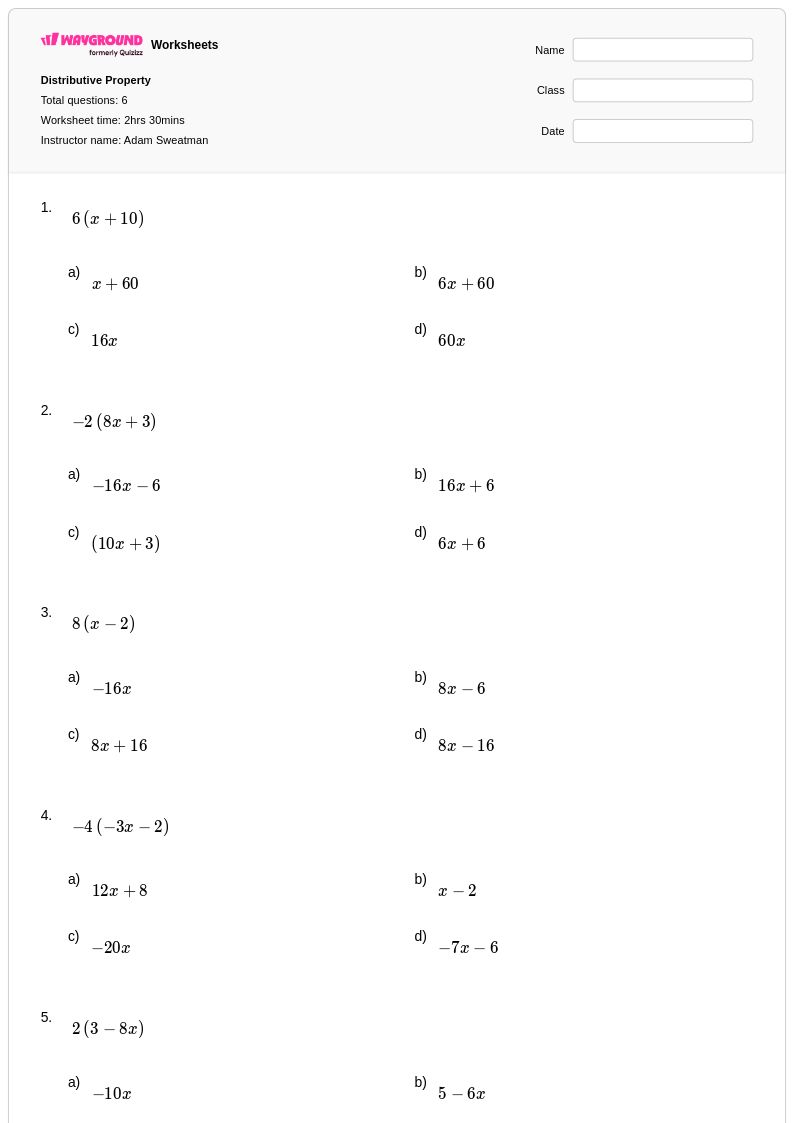
6 Q
4th - 8th
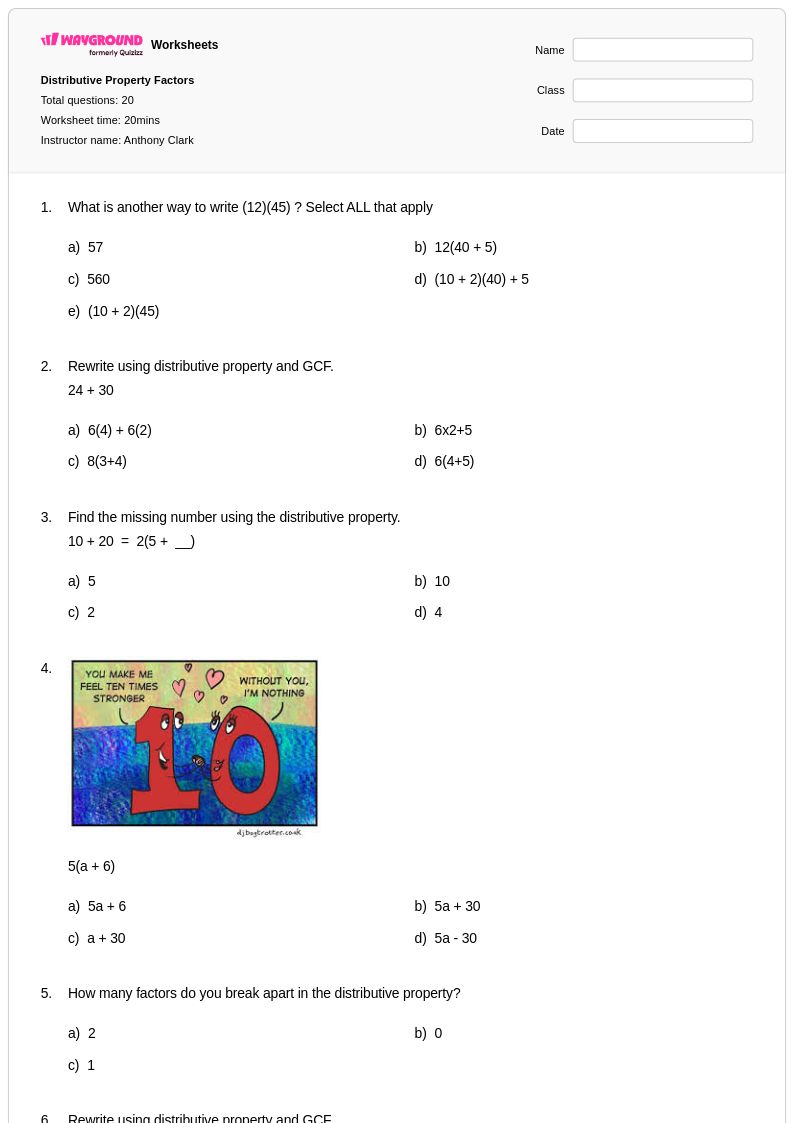
20 Q
4th - Uni
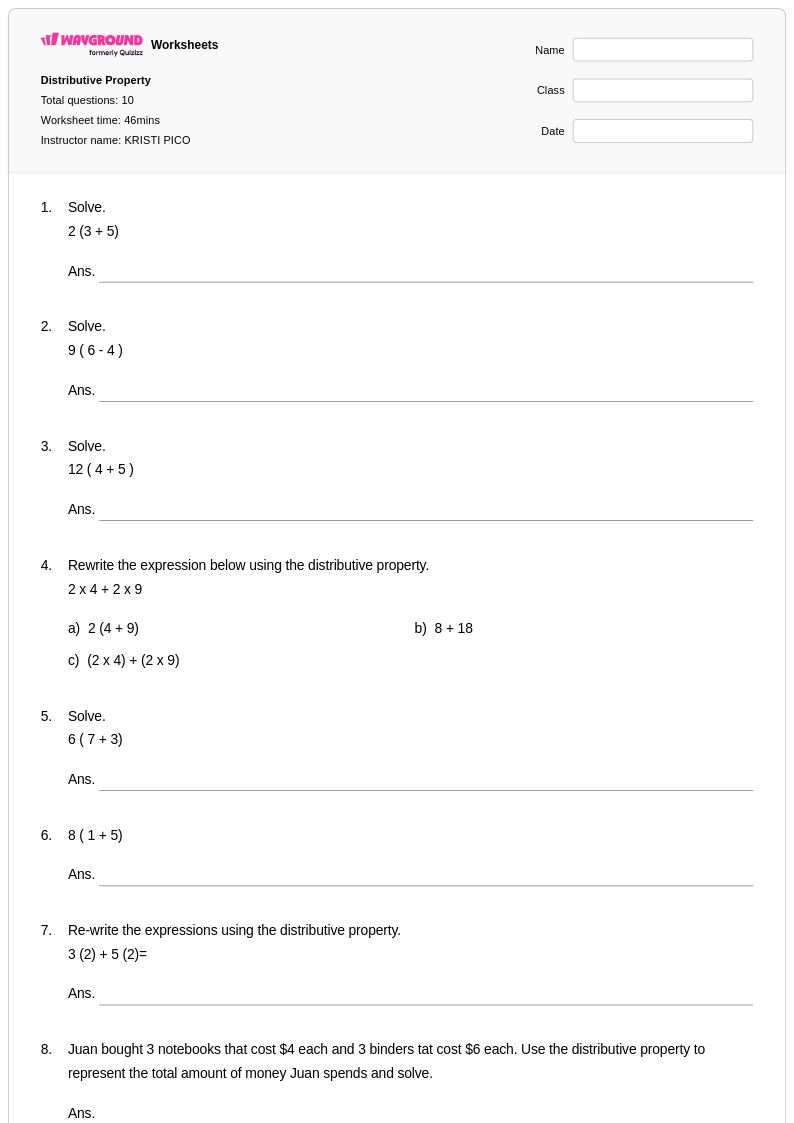
10 Q
5th
11 Q
1st - 5th
15 Q
5th - 8th
8 Q
3rd - Uni
13 Q
3rd - Uni
20 Q
3rd - Uni
20 Q
3rd - Uni
19 Q
4th - Uni
6 Q
5th - 7th
11 Q
2nd - 5th
10 Q
5th - 6th
10 Q
5th - 6th
20 Q
3rd - Uni
19 Q
3rd - Uni
13 Q
3rd - Uni
Explore Distributive Property Worksheets by Grades
Explore Other Subject Worksheets for grade 5
Explore printable Distributive Property worksheets for Grade 5
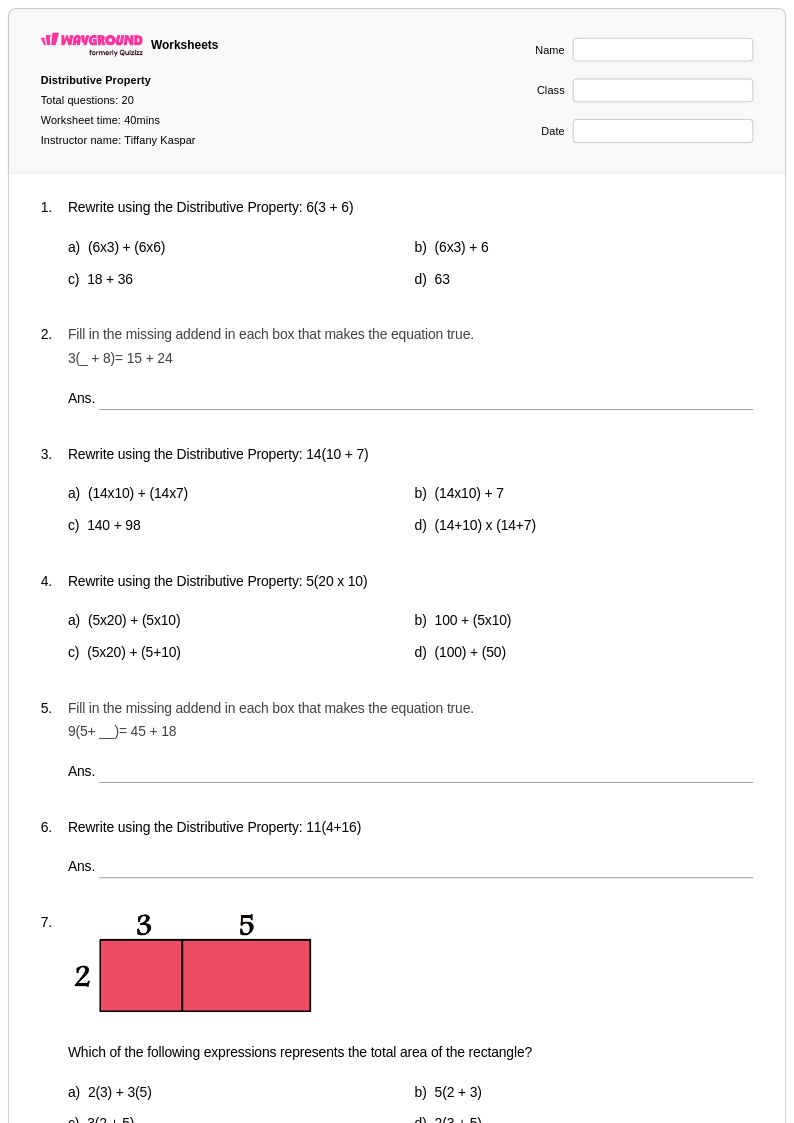
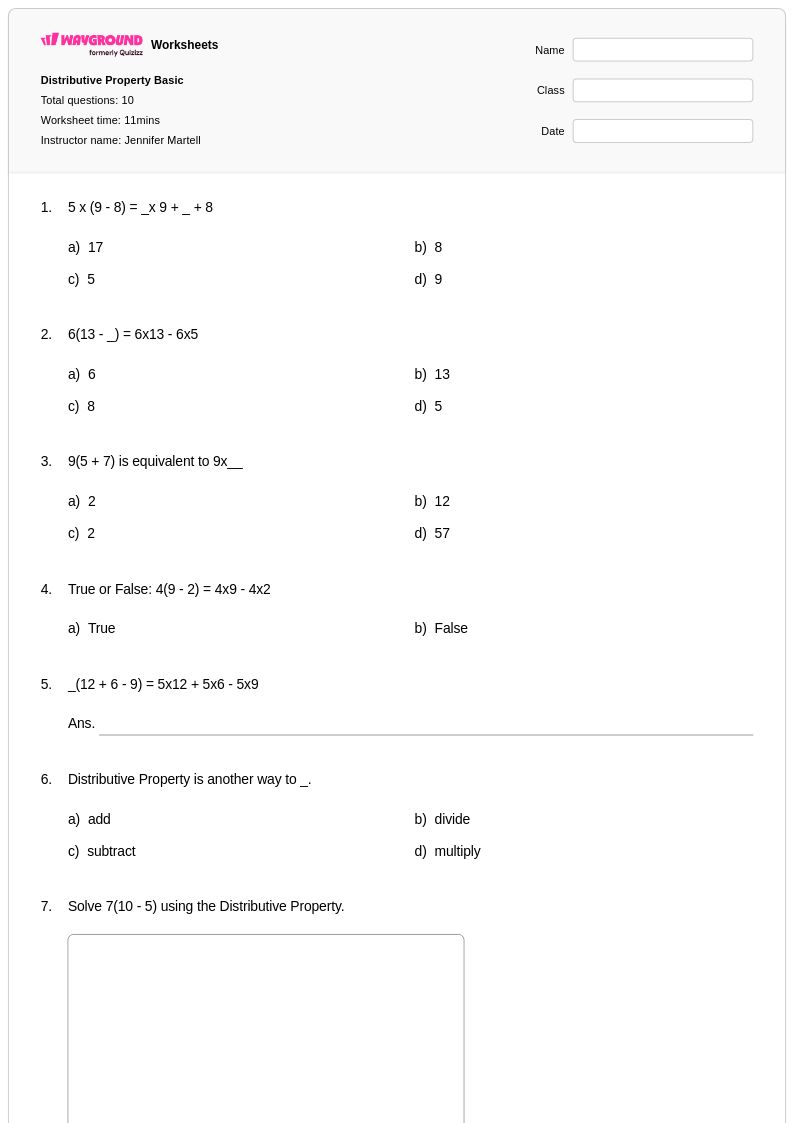
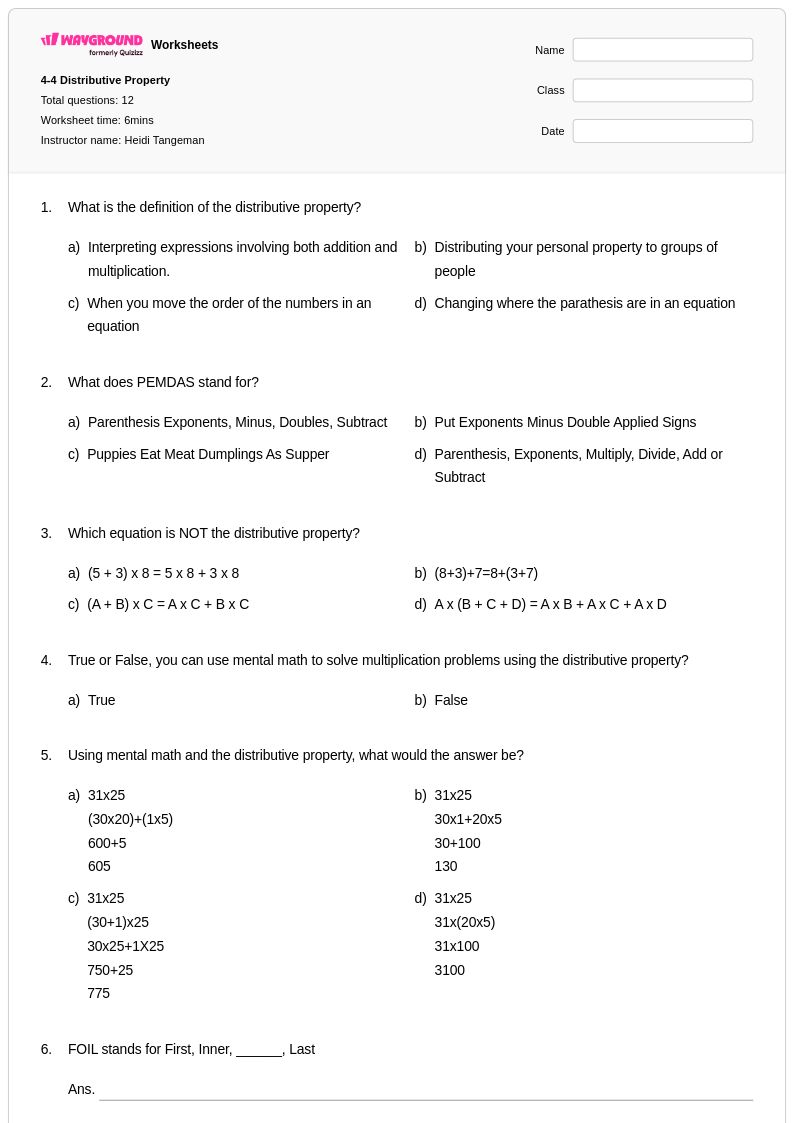
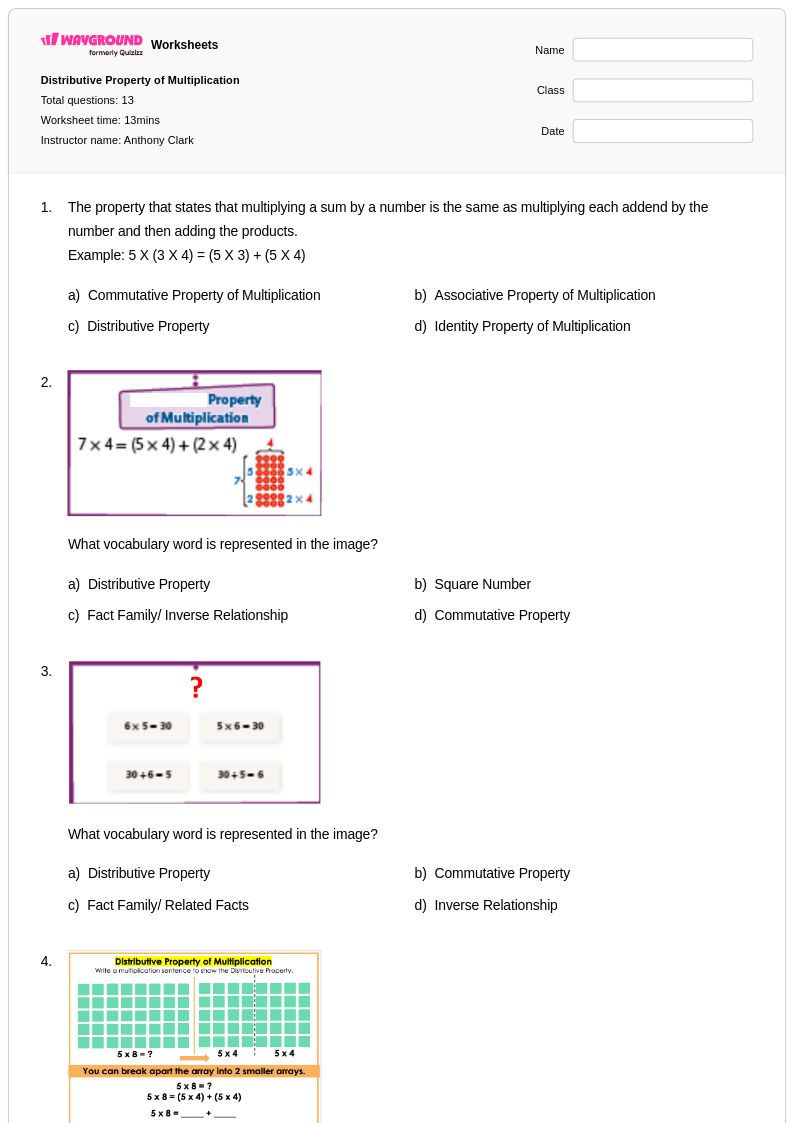
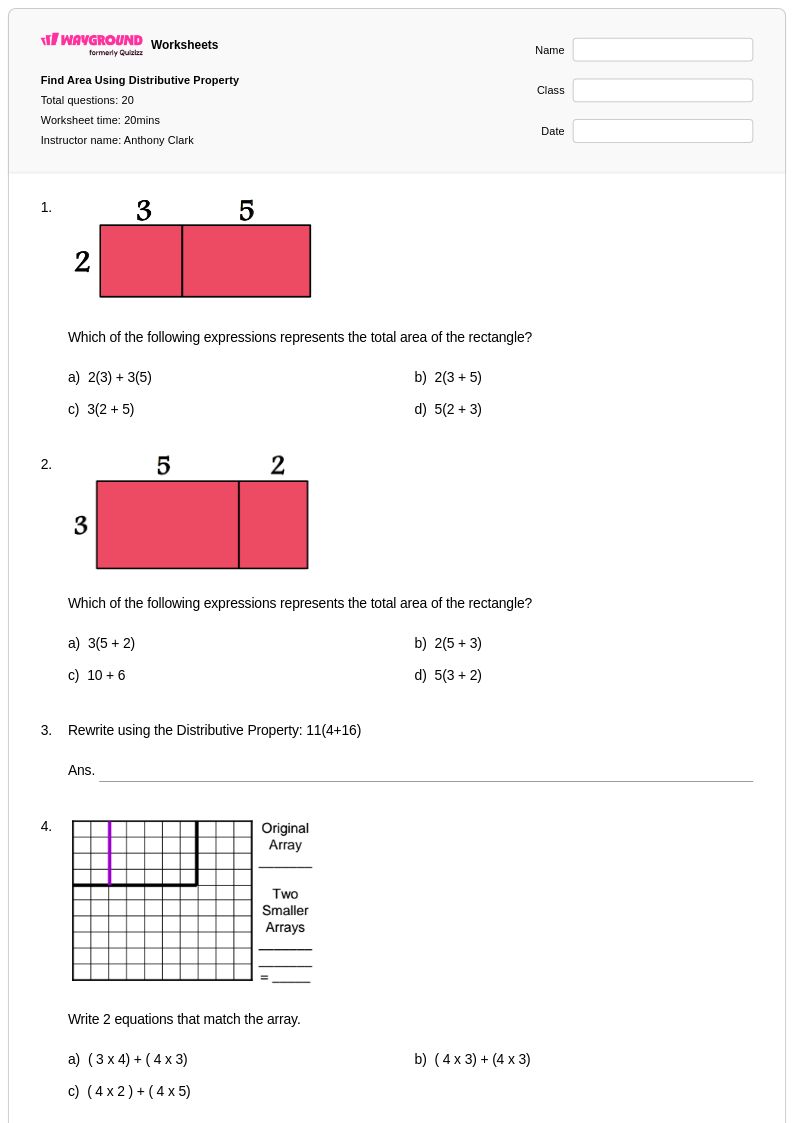
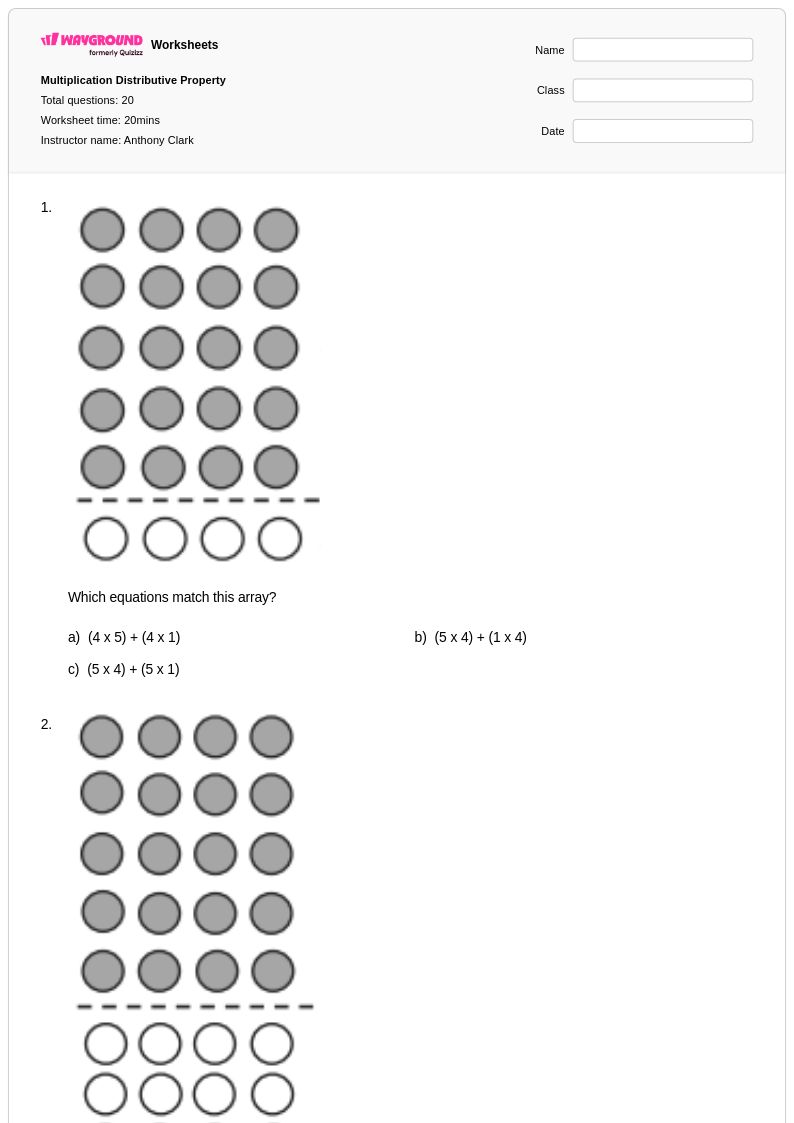
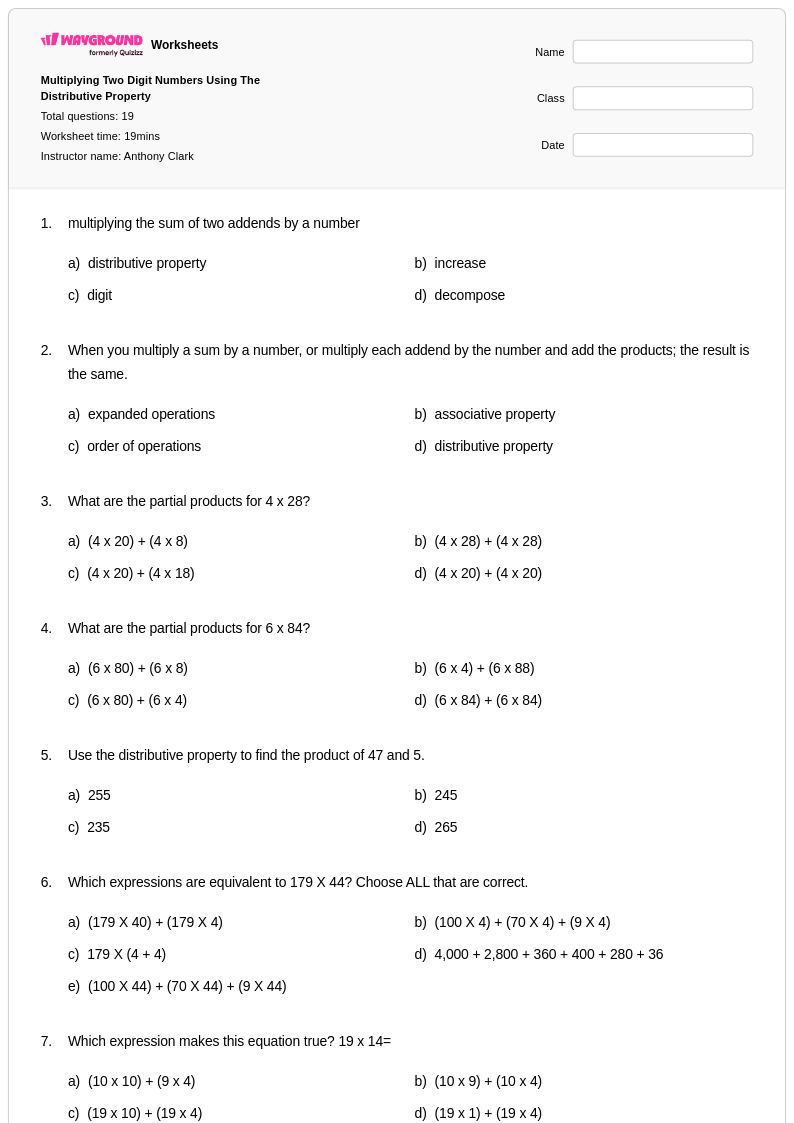
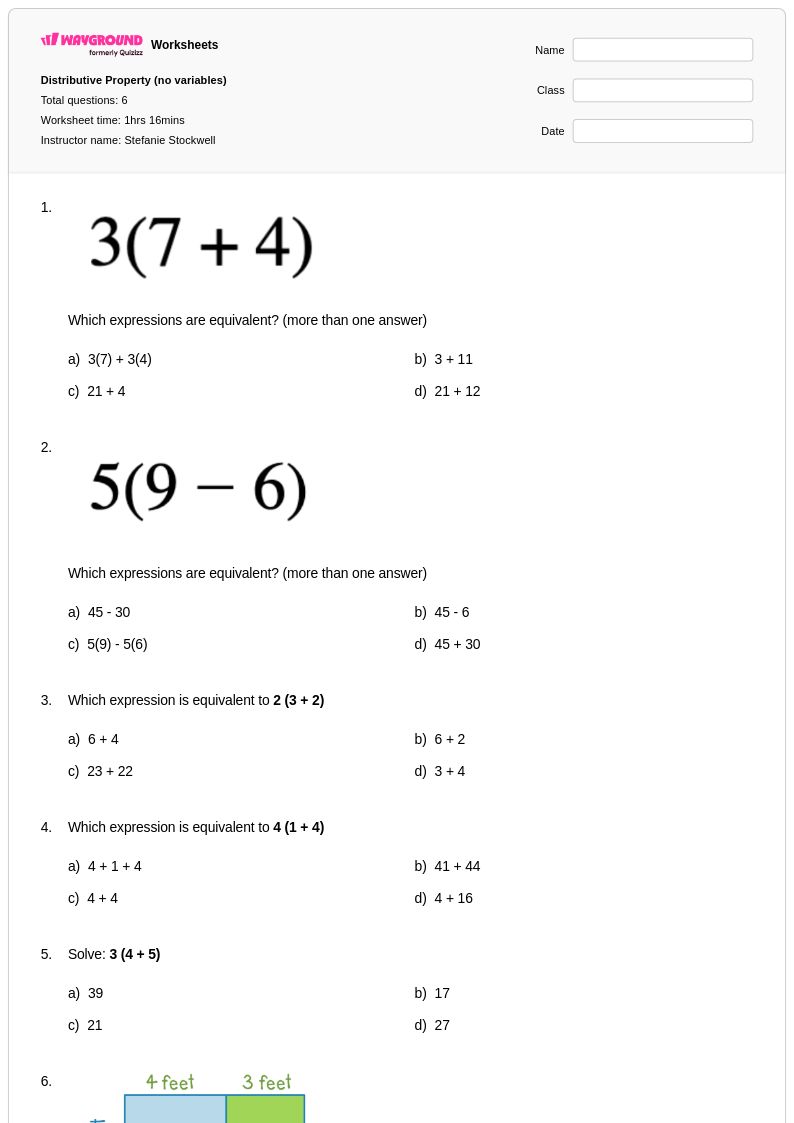
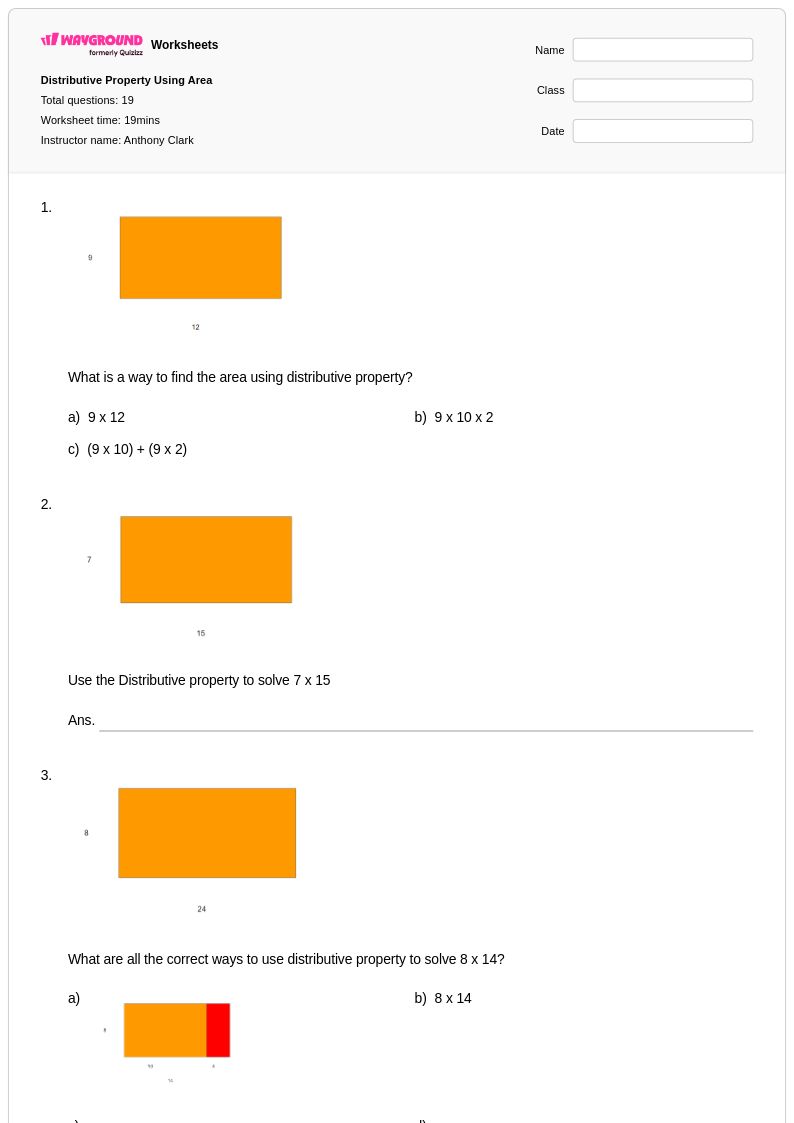
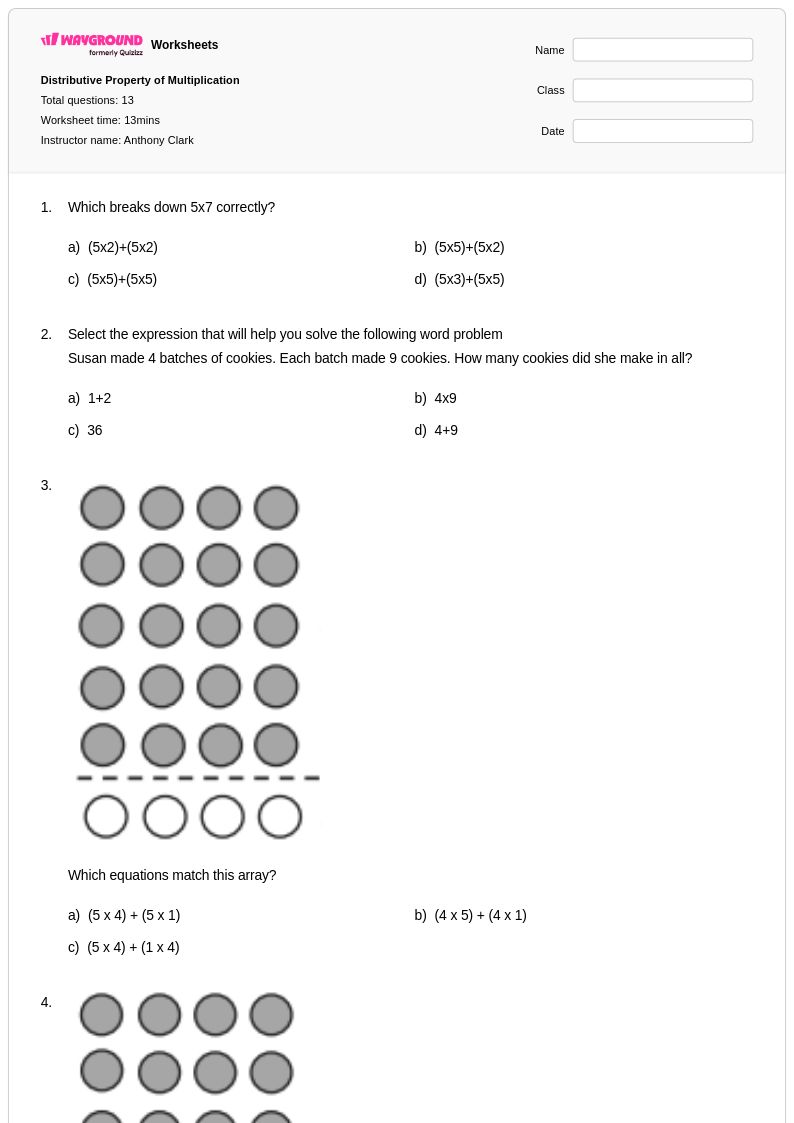
Distributive property worksheets for Grade 5 students through Wayground (formerly Quizizz) provide comprehensive practice with this fundamental algebraic concept that bridges arithmetic and early algebra. These carefully designed resources help students master the distributive property by breaking down multiplication problems into smaller, more manageable parts, such as understanding that 6 × (4 + 3) equals (6 × 4) + (6 × 3). The worksheets strengthen critical mathematical reasoning skills by presenting varied practice problems that require students to apply the distributive property in both directions—expanding expressions and factoring out common factors. Each worksheet collection includes detailed answer keys and is available as free printables in PDF format, making it easy for educators to incorporate systematic practice into their mathematics instruction while building students' confidence with this essential mathematical property.
Wayground (formerly Quizizz) empowers teachers with millions of teacher-created distributive property resources that streamline lesson planning and provide targeted skill practice for Grade 5 mathematics instruction. The platform's robust search and filtering capabilities allow educators to quickly locate worksheets that align with specific learning standards and match their students' current skill levels. Teachers can customize these printable and digital PDF resources to support differentiation, whether providing additional scaffolding for students who need remediation or offering enriched problem sets for advanced learners. The extensive collection enables educators to create comprehensive practice sequences that gradually build complexity, helping students progress from basic distributive property applications with single-digit numbers to more challenging multi-step problems that prepare them for advanced mathematical concepts in higher grades.
FAQs
How do I teach the distributive property in Grade 5?
What distributive property exercises are useful for fifth graders?
What mistakes do Grade 5 students make with the distributive property?
How should I use a Grade 5 distributive property worksheet?
Is Grade 5 distributive property practice aligned with Common Core?
How can I differentiate distributive property worksheets for fifth graders?
Why do fifth graders need to practice expanding and factoring?