
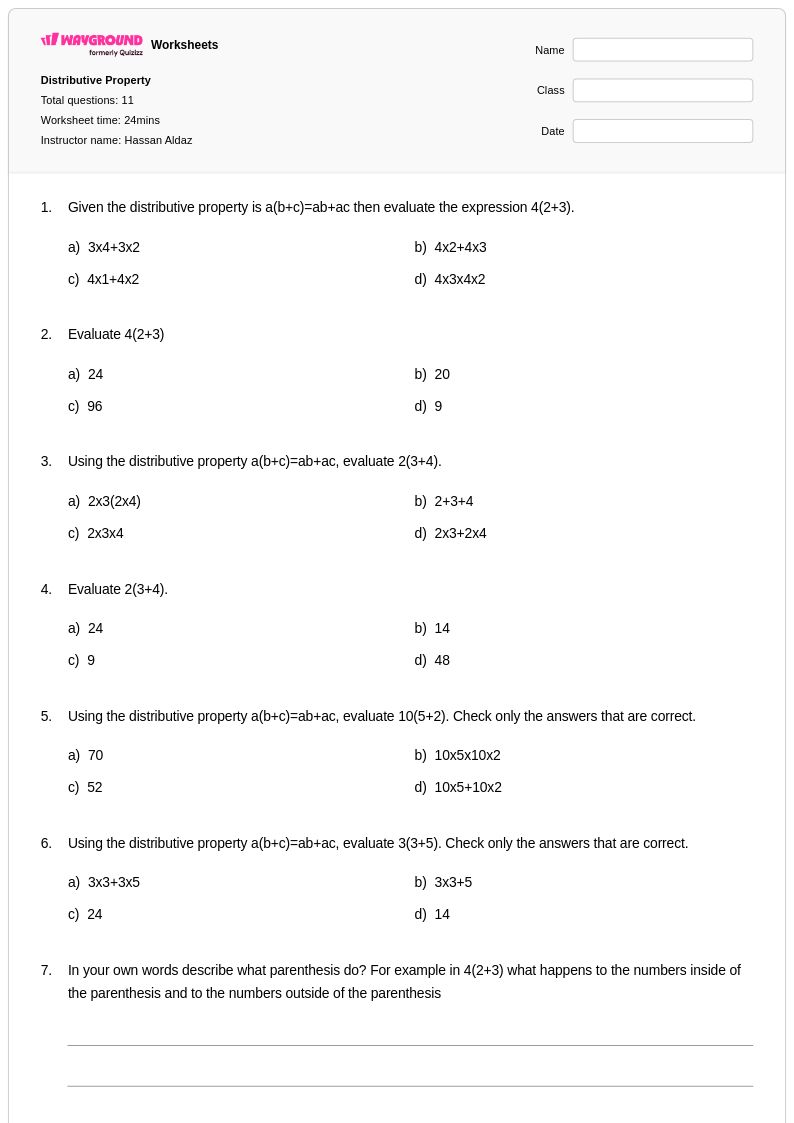
11 Q
6th
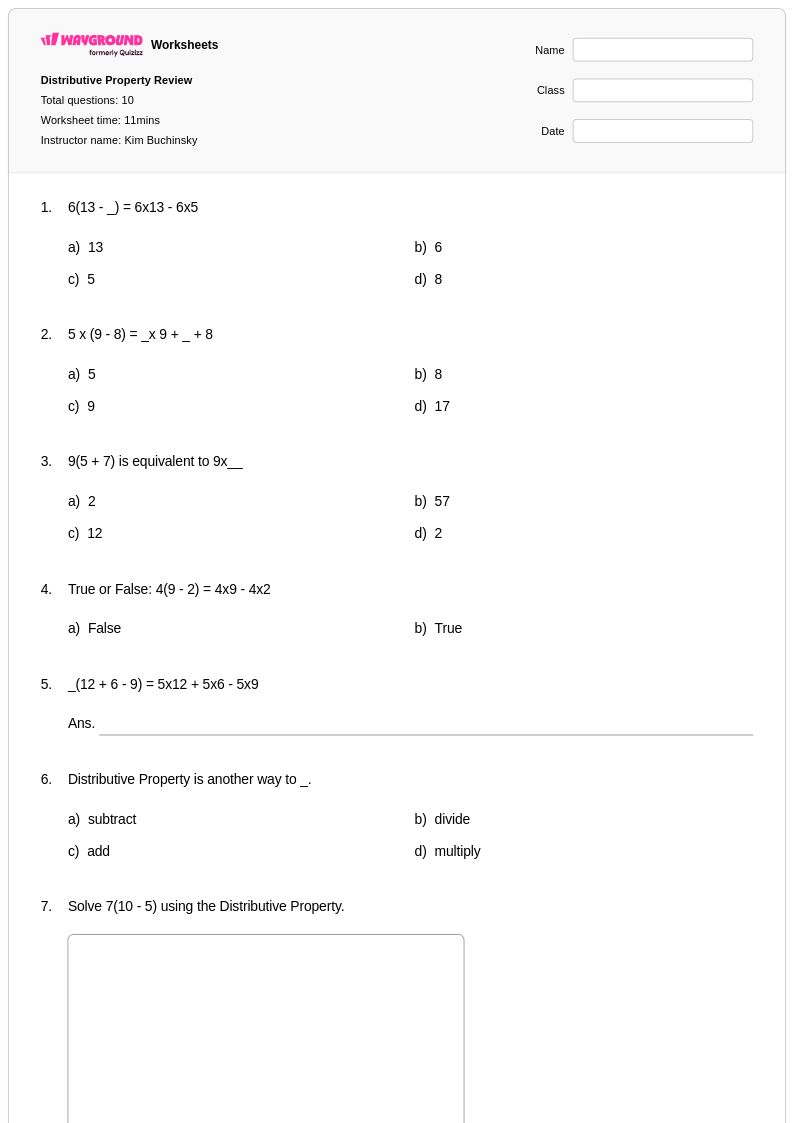
10 Q
6th
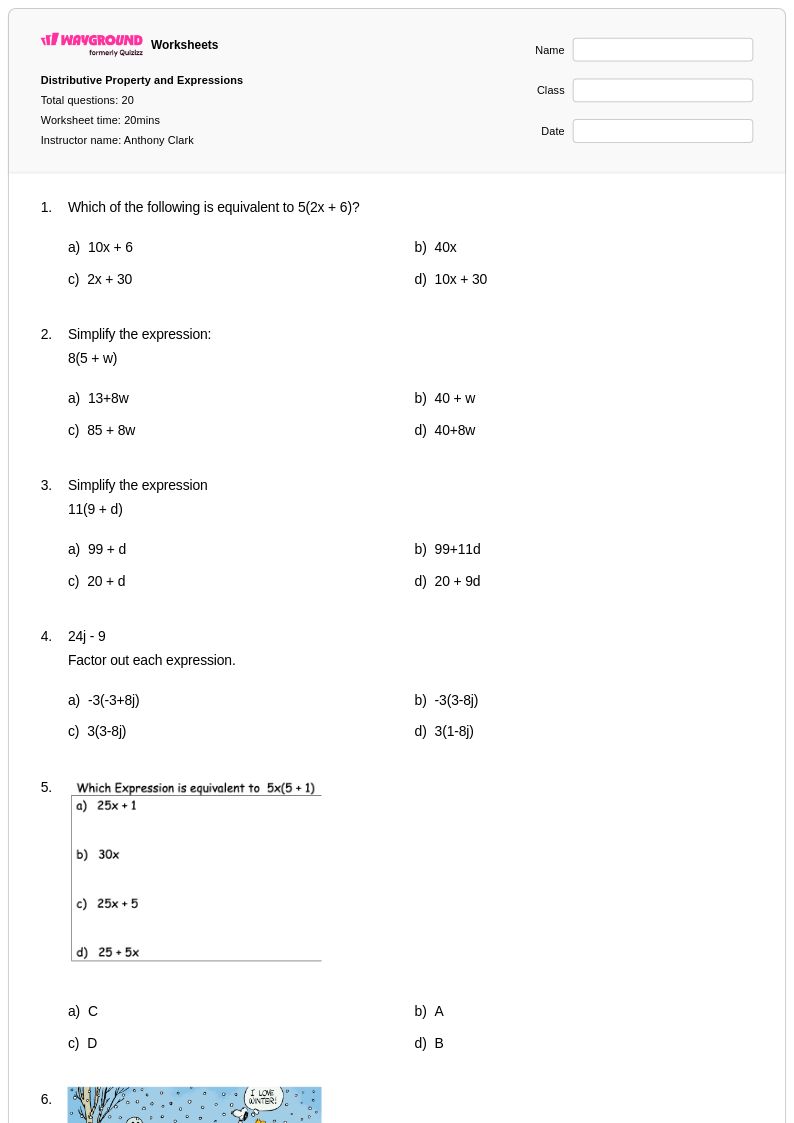
20 Q
6th - Uni
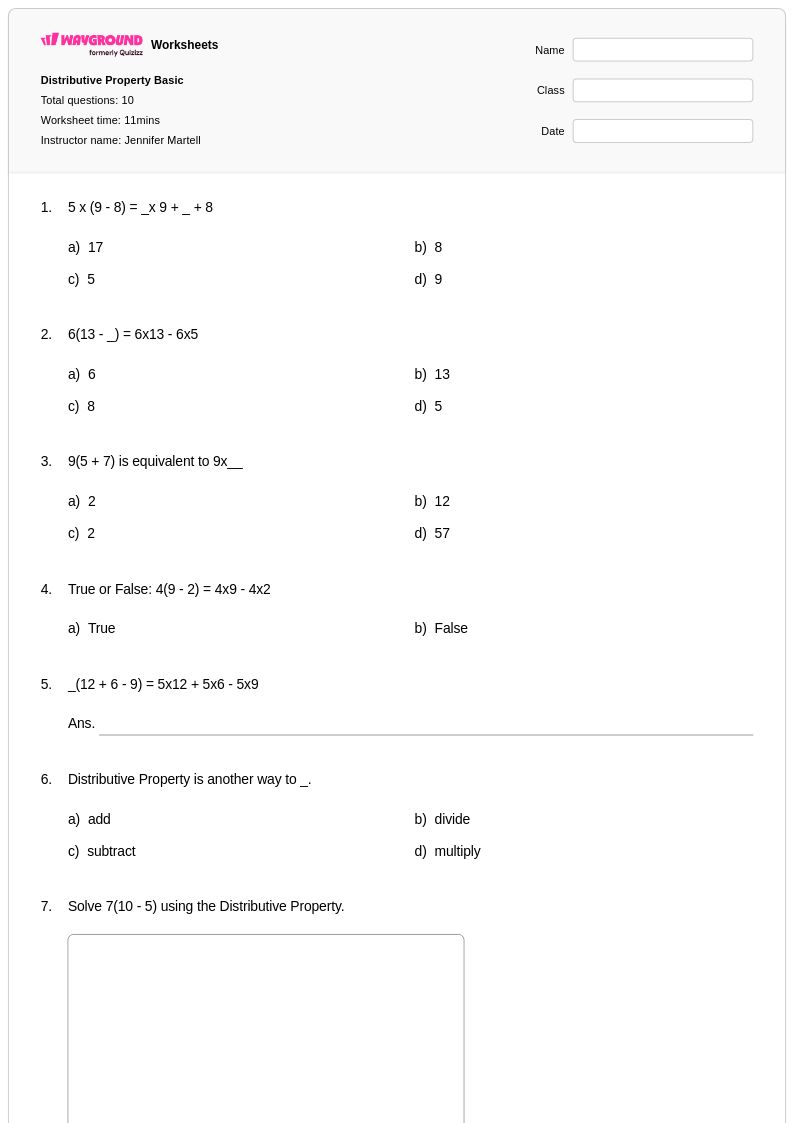
10 Q
5th - 6th
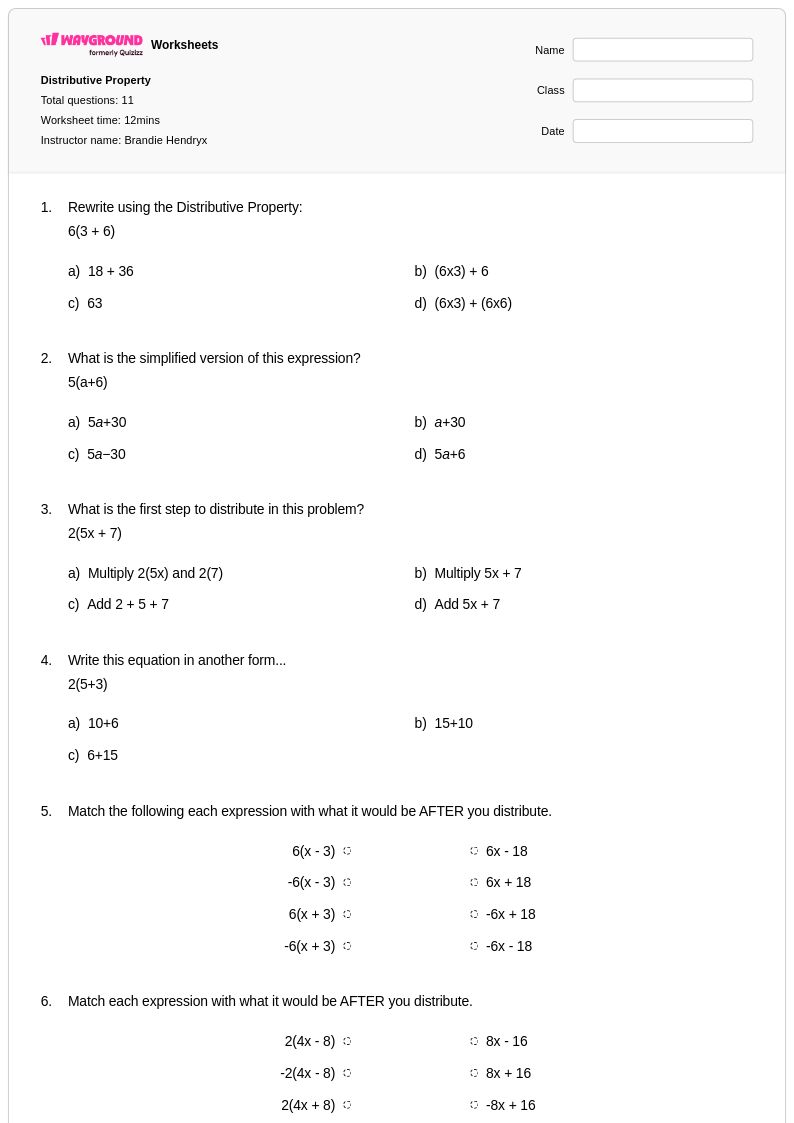
11 Q
6th
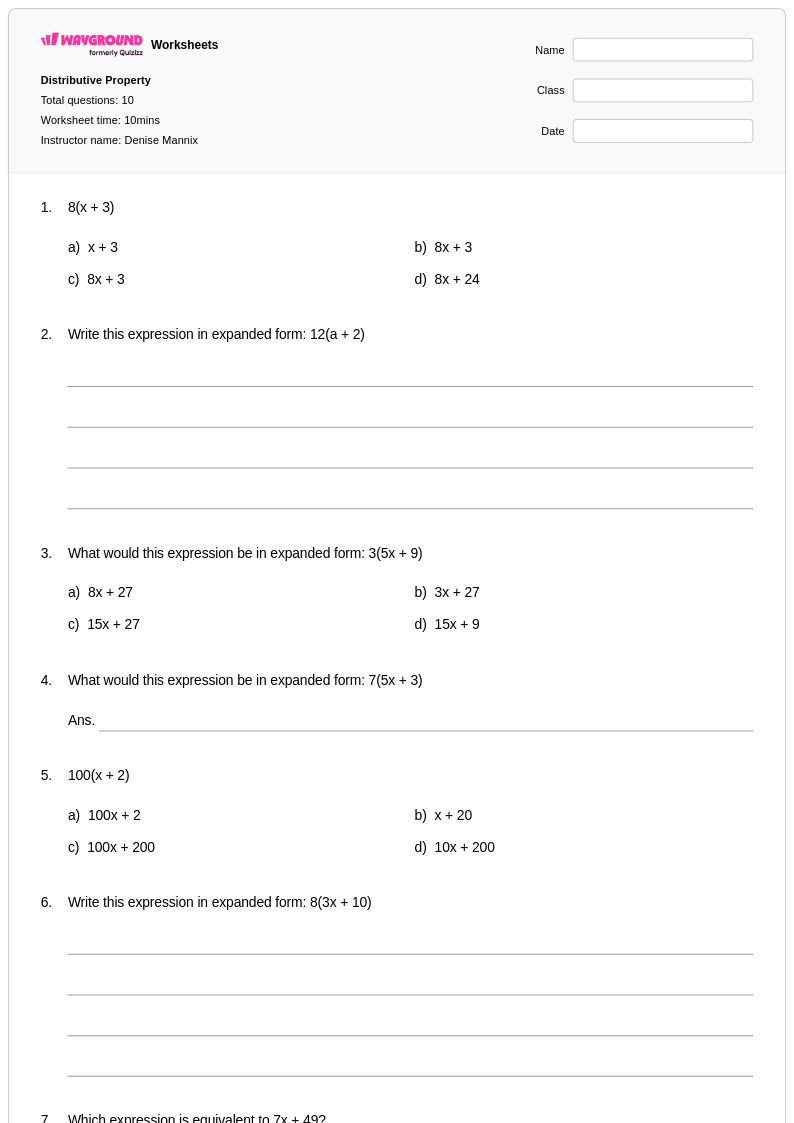
10 Q
6th
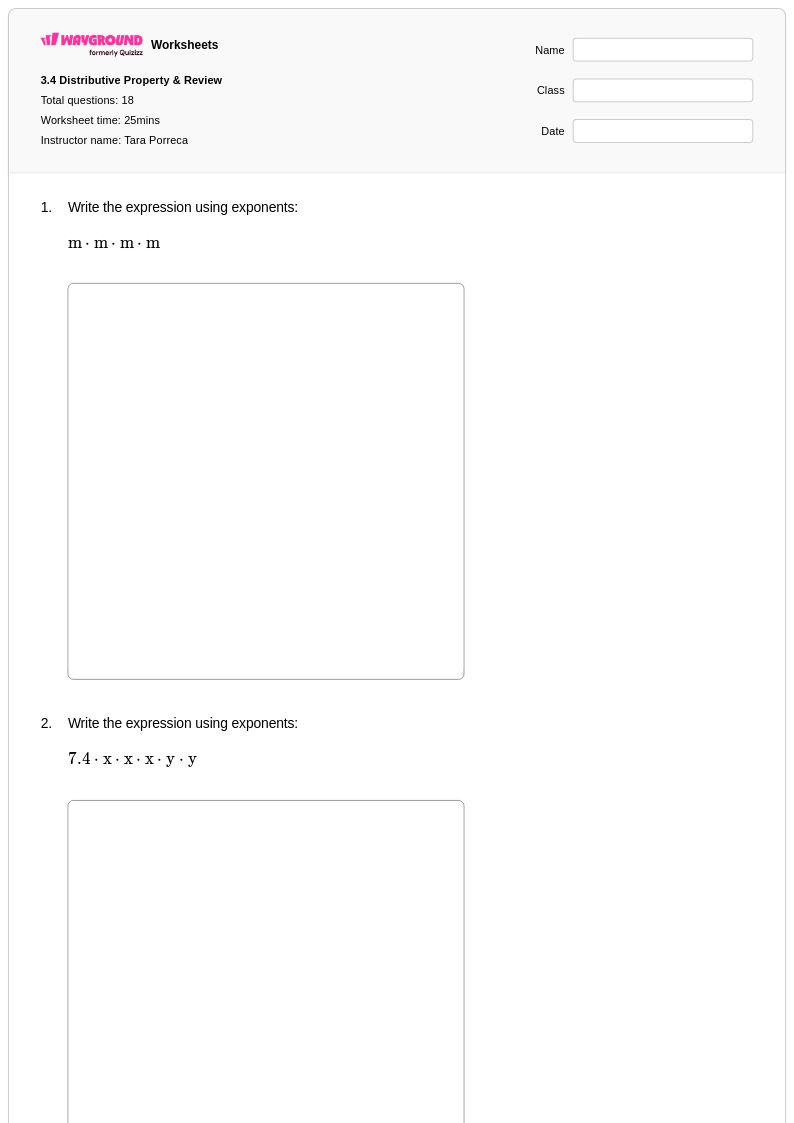
18 Q
6th
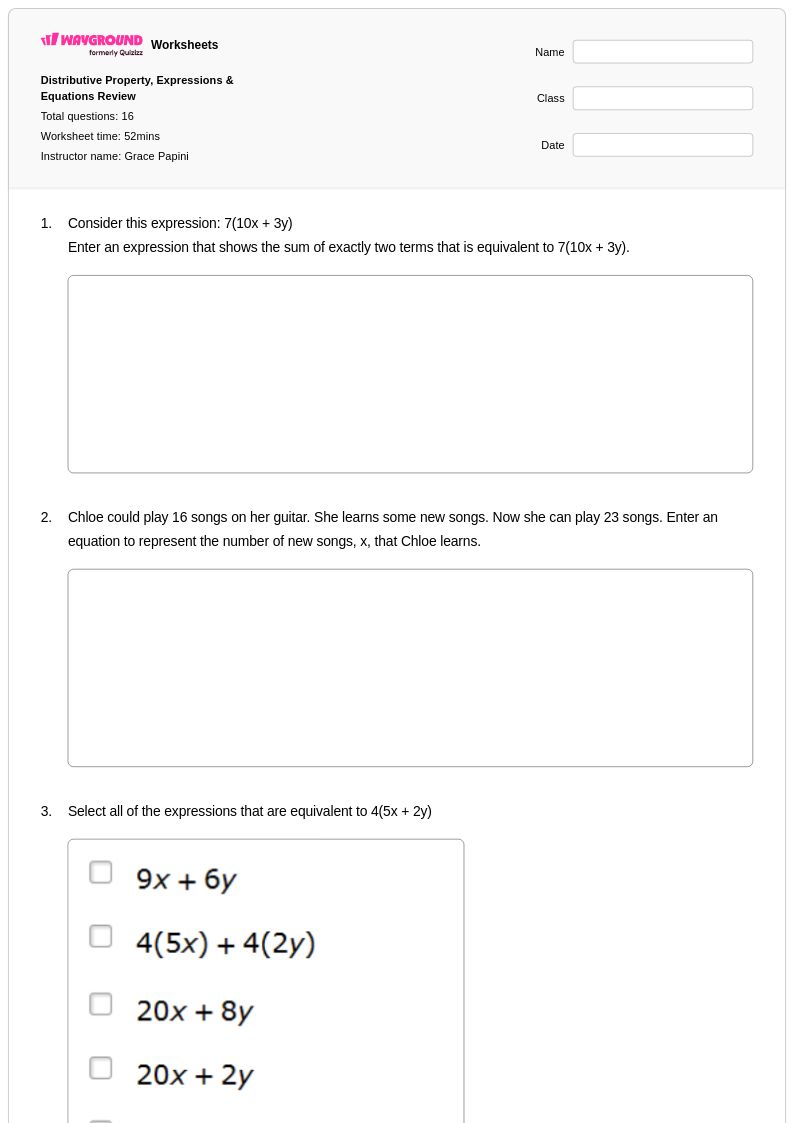
16 Q
6th
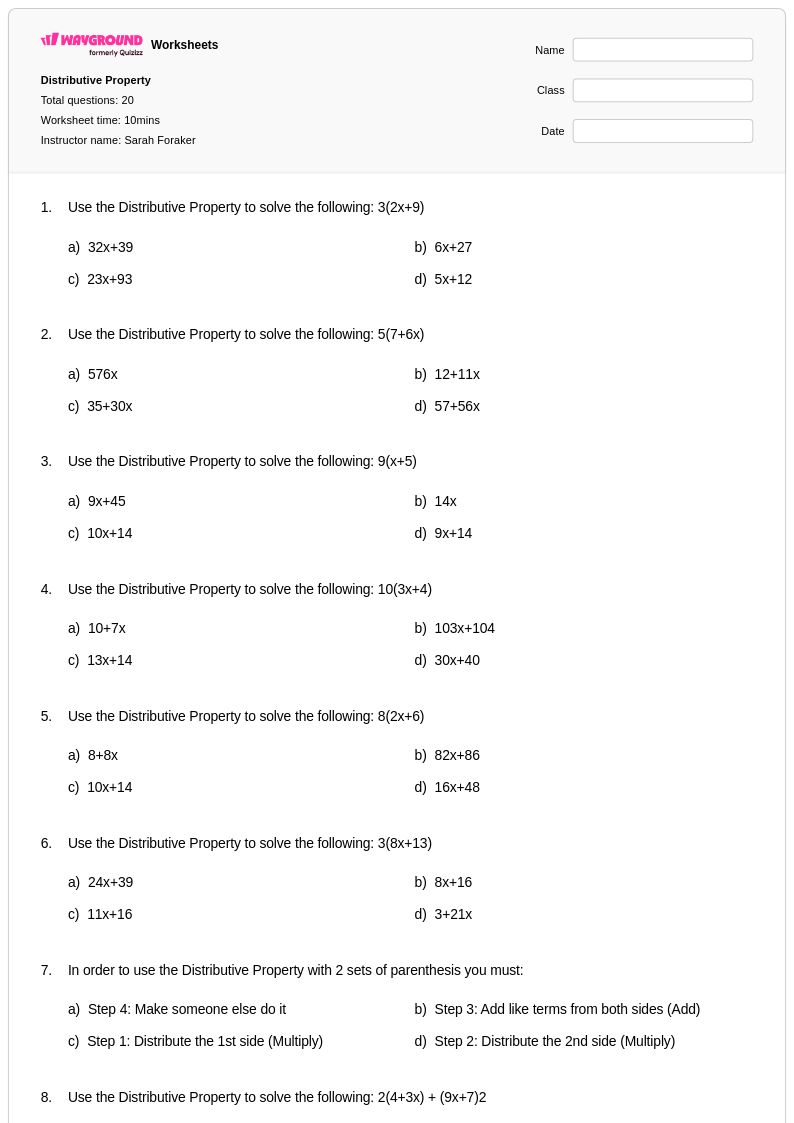
20 Q
6th
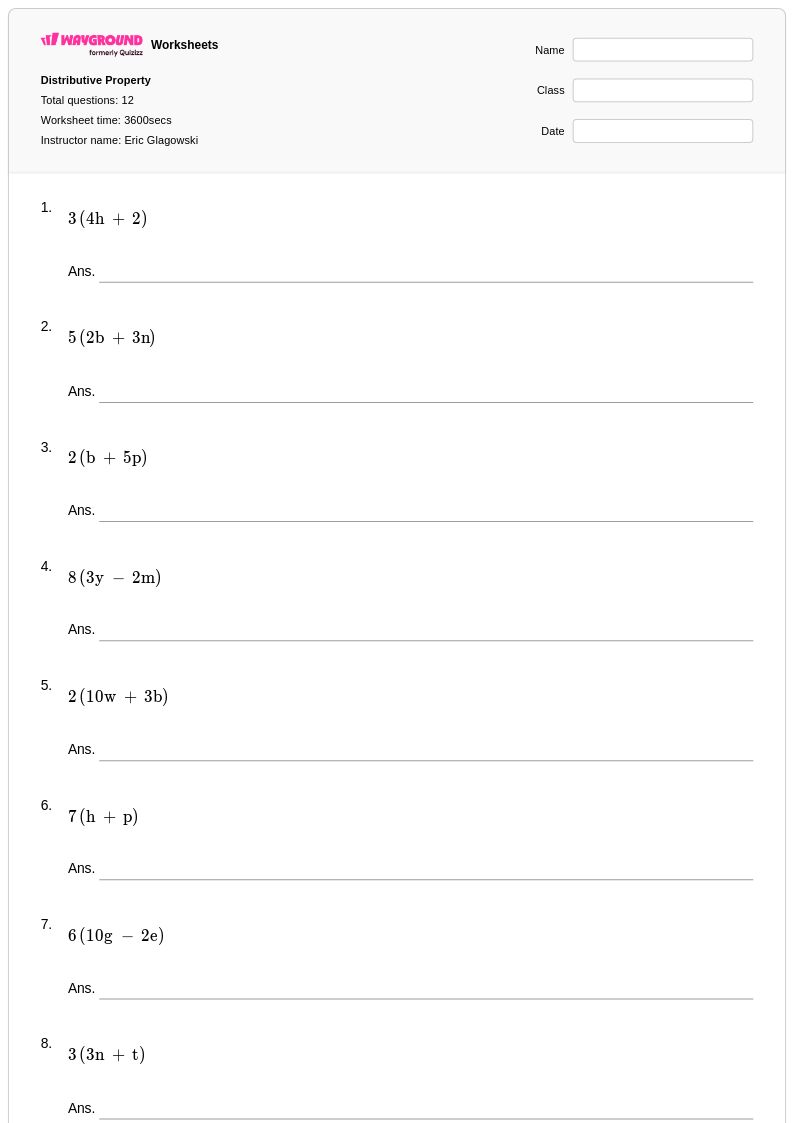
12 Q
6th
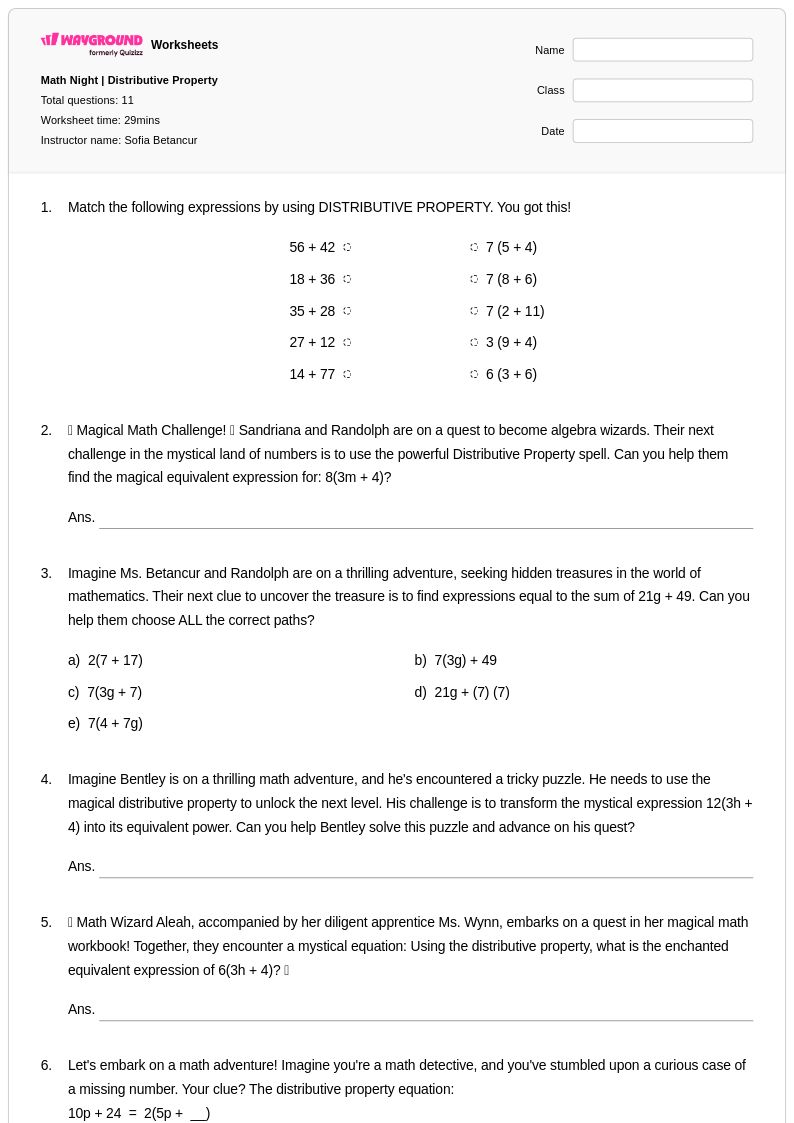
11 Q
6th
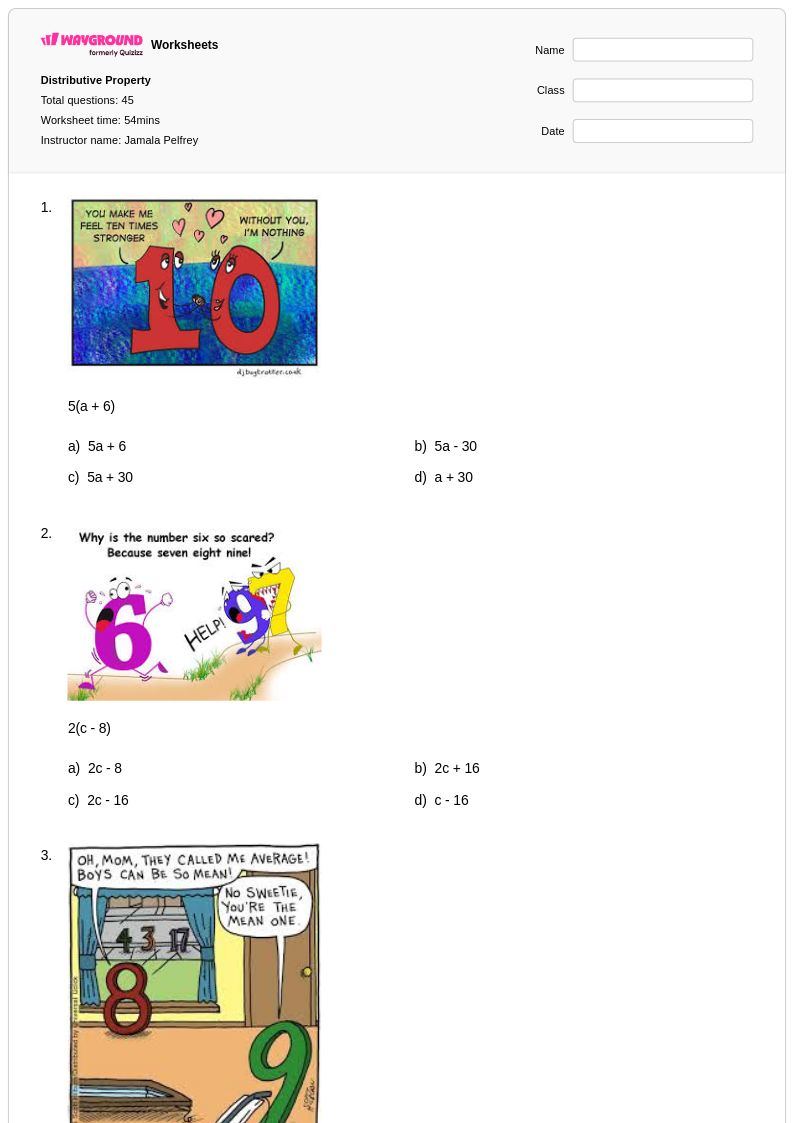
45 Q
6th - 7th
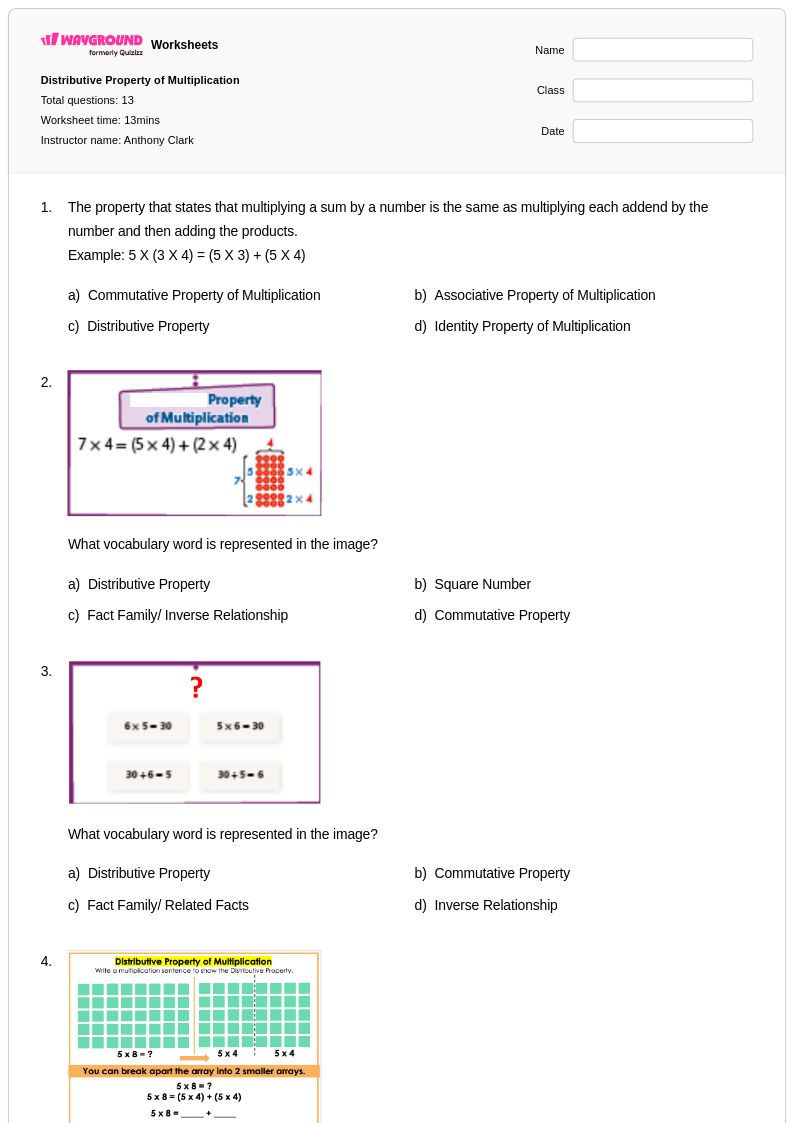
13 Q
4th - Uni
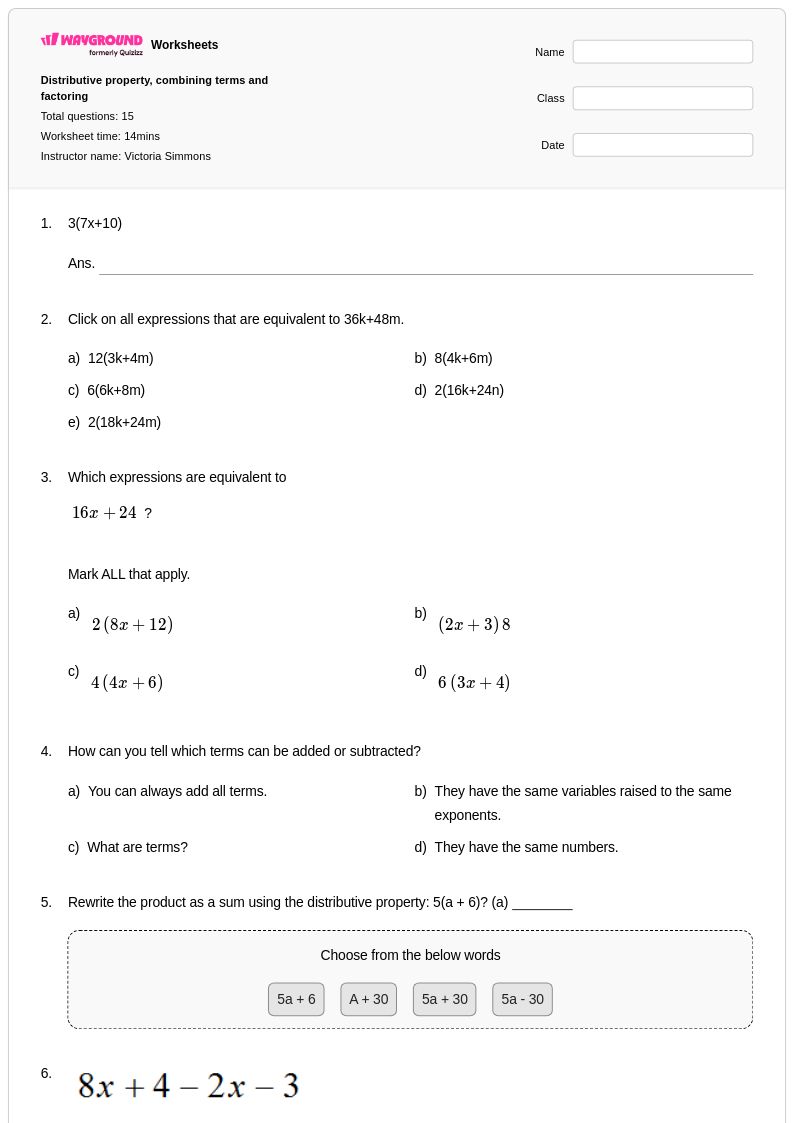
15 Q
6th
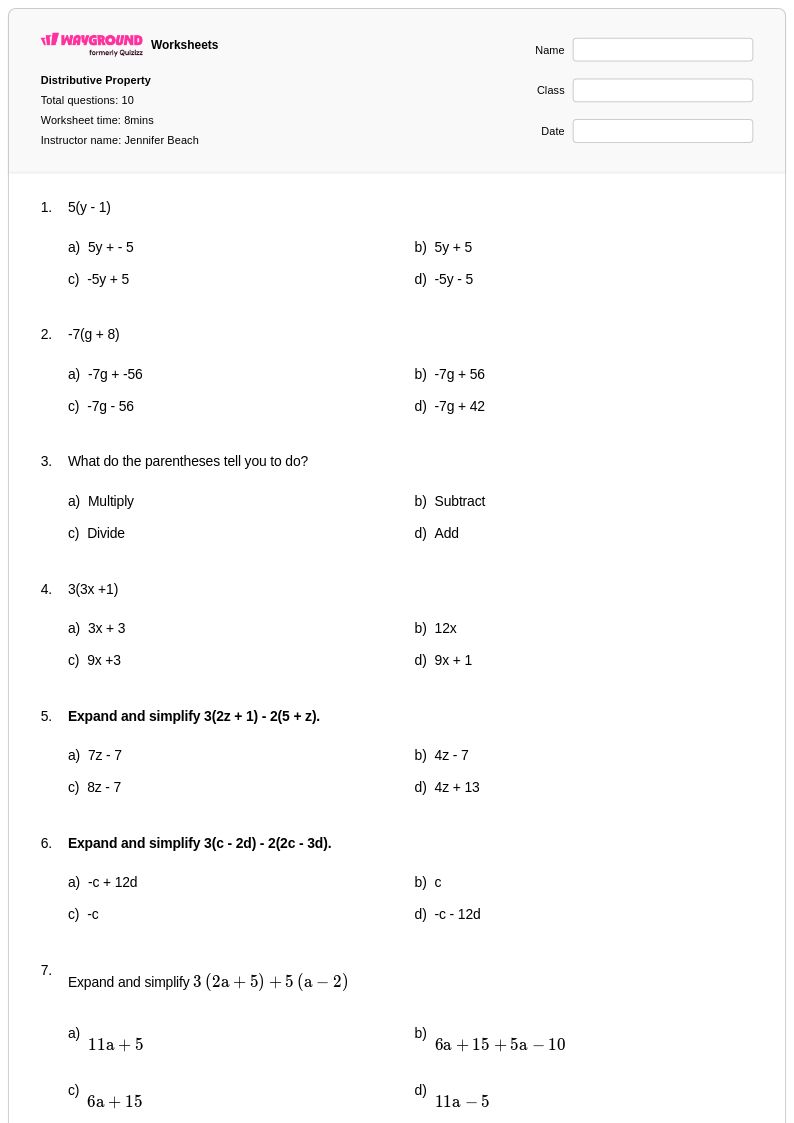
10 Q
6th - 8th
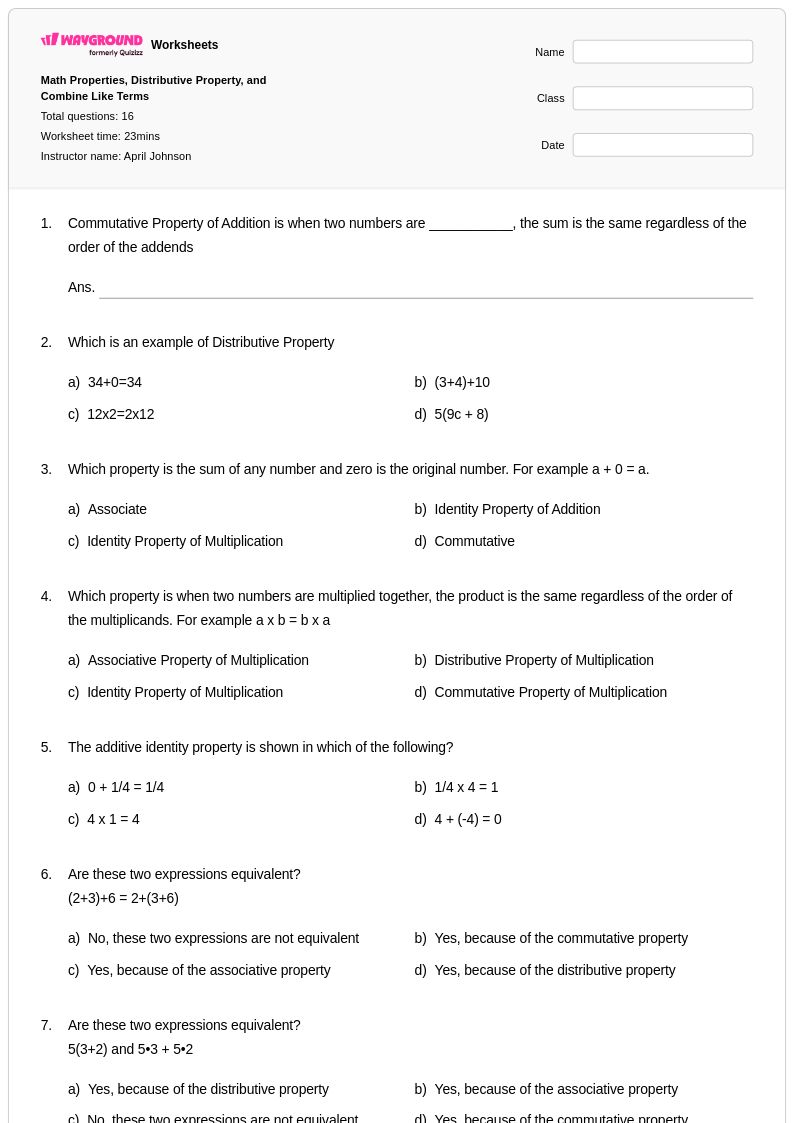
16 Q
6th
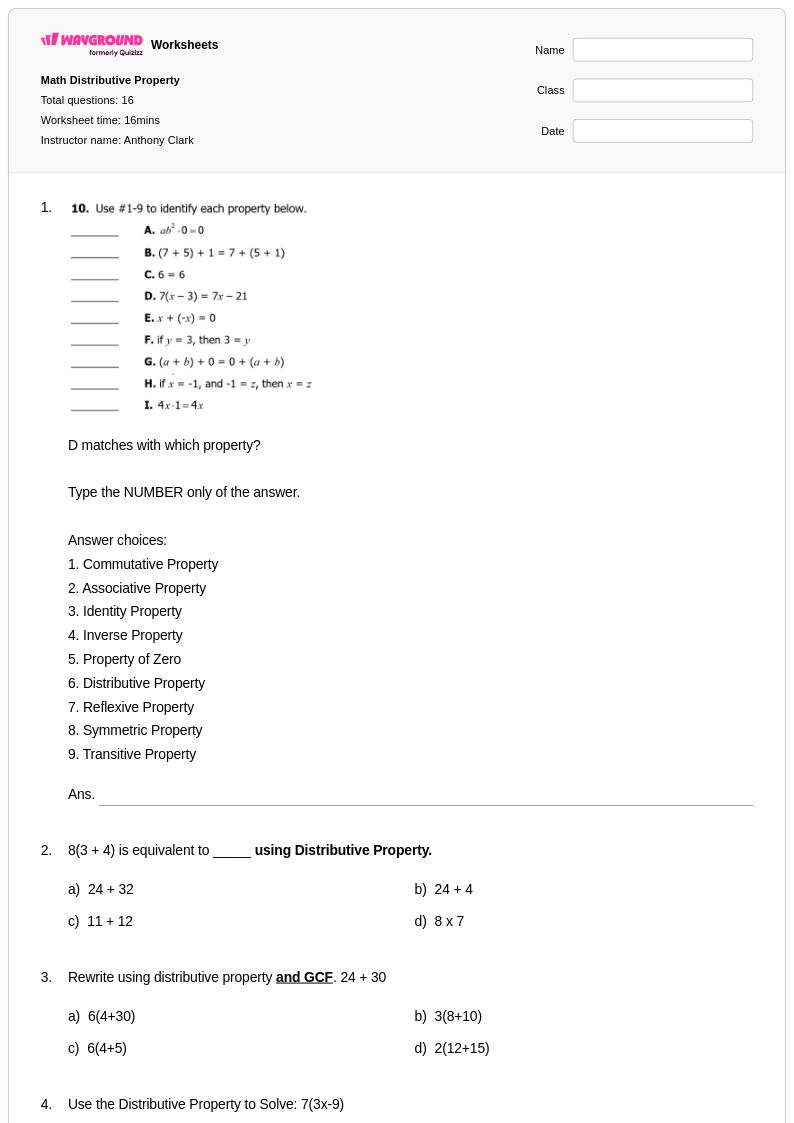
16 Q
6th - Uni
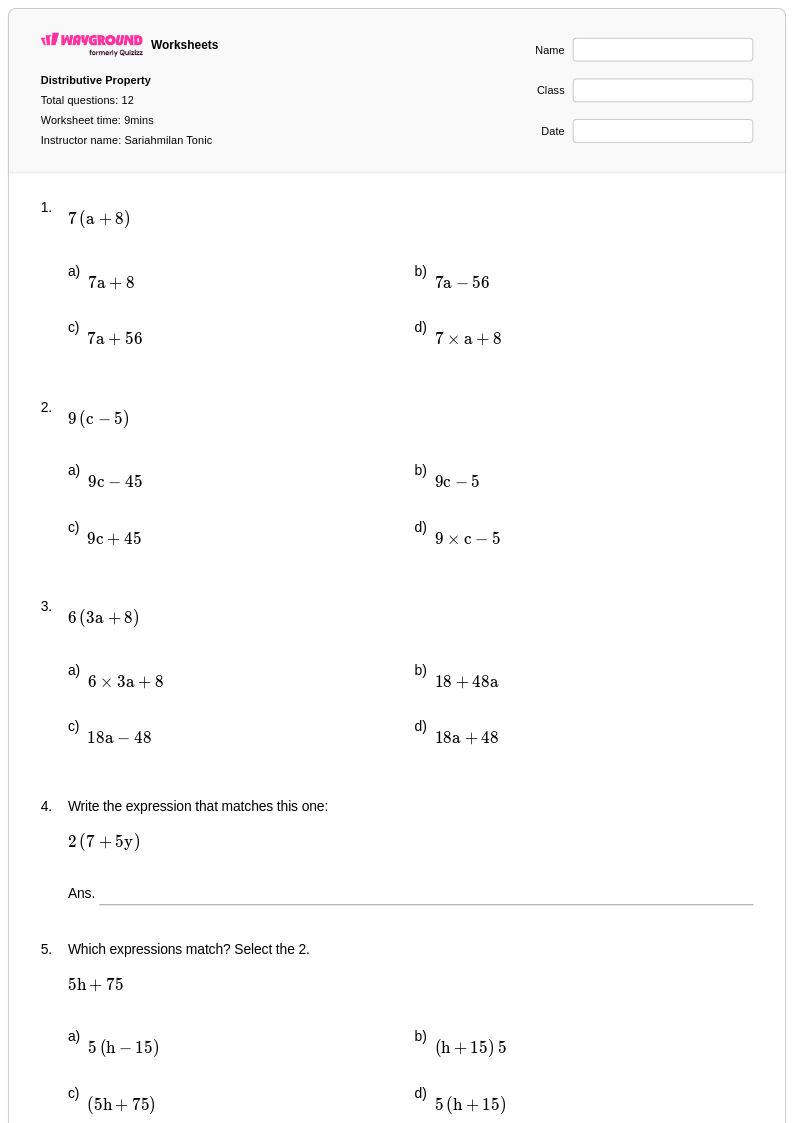
12 Q
6th - 11th
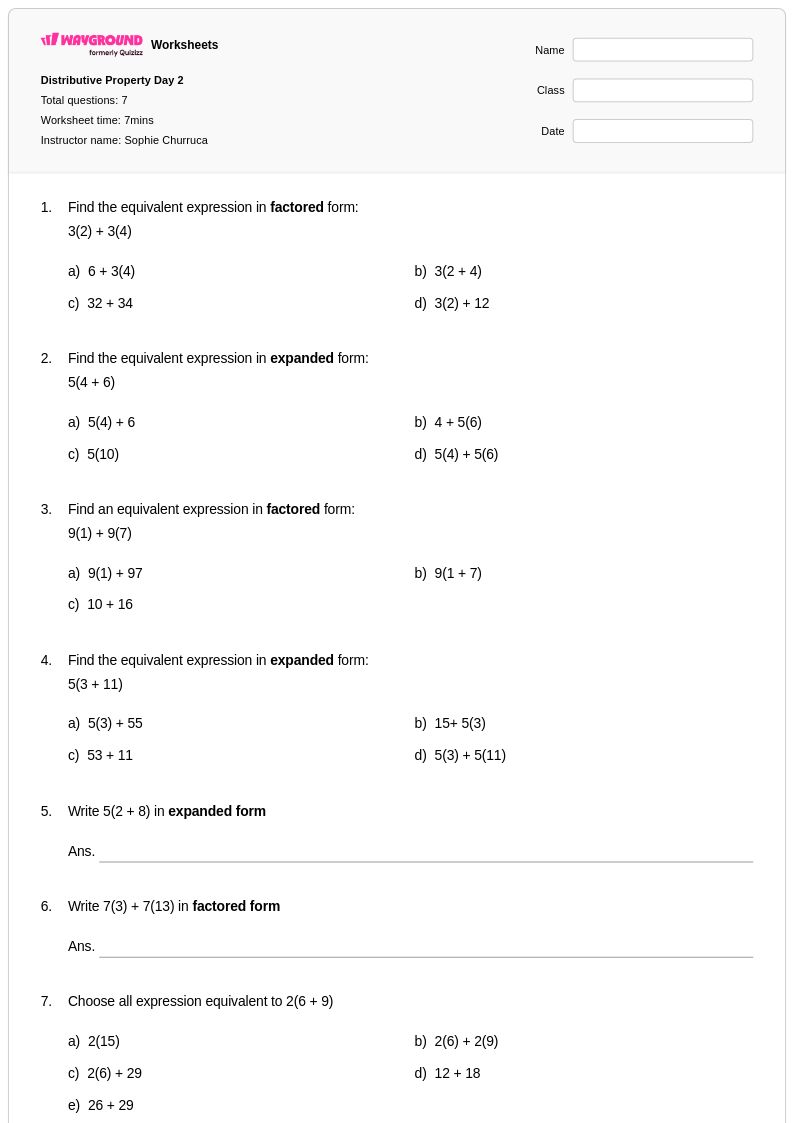
7 Q
5th - 6th
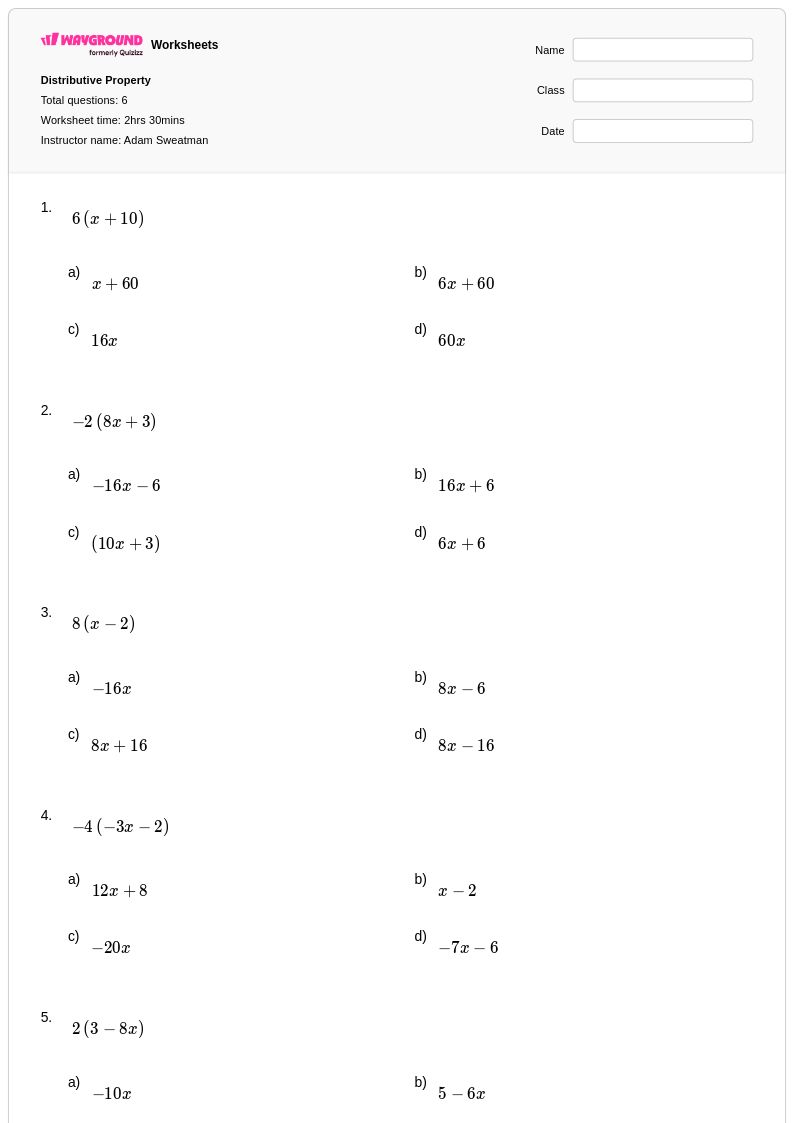
6 Q
4th - 8th
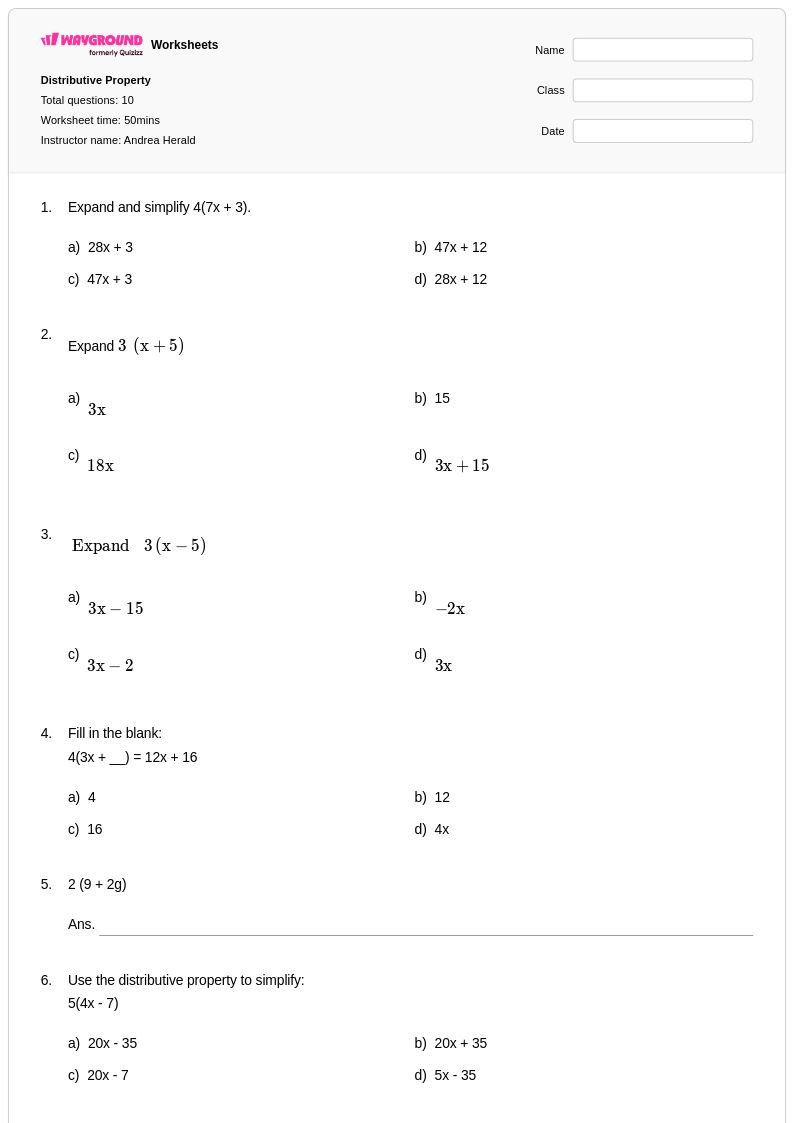
10 Q
6th - 8th
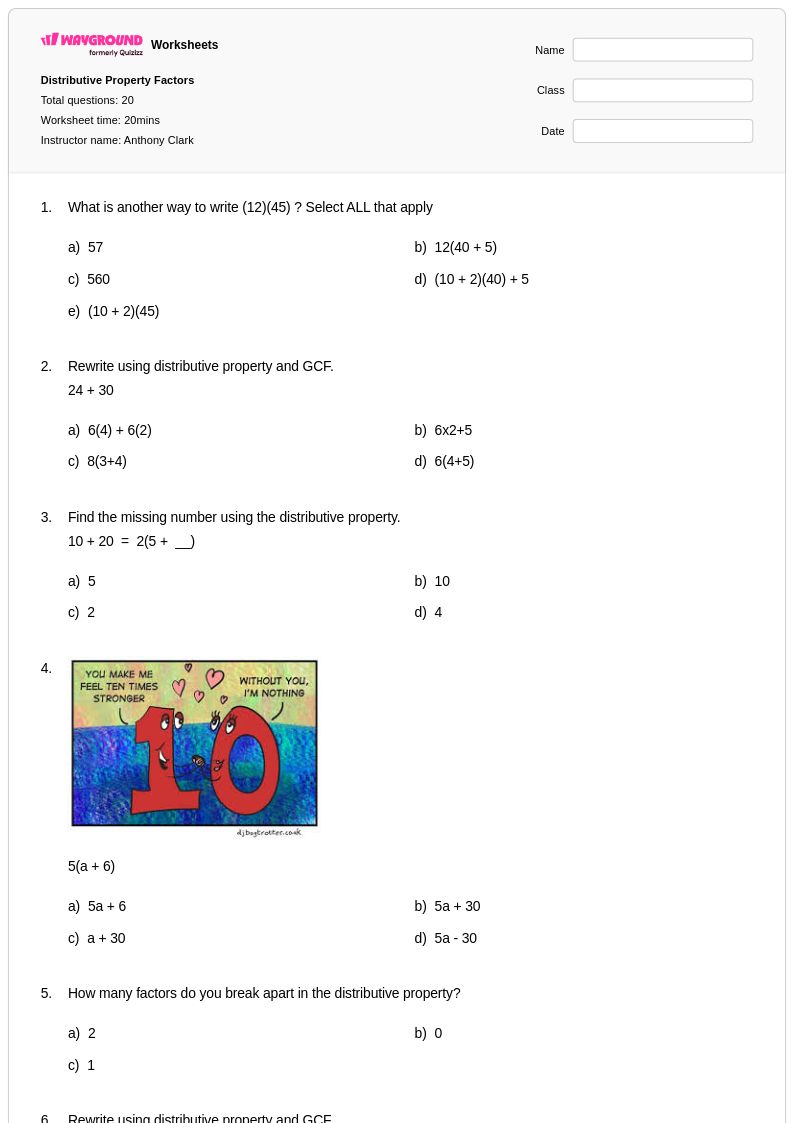
20 Q
4th - Uni
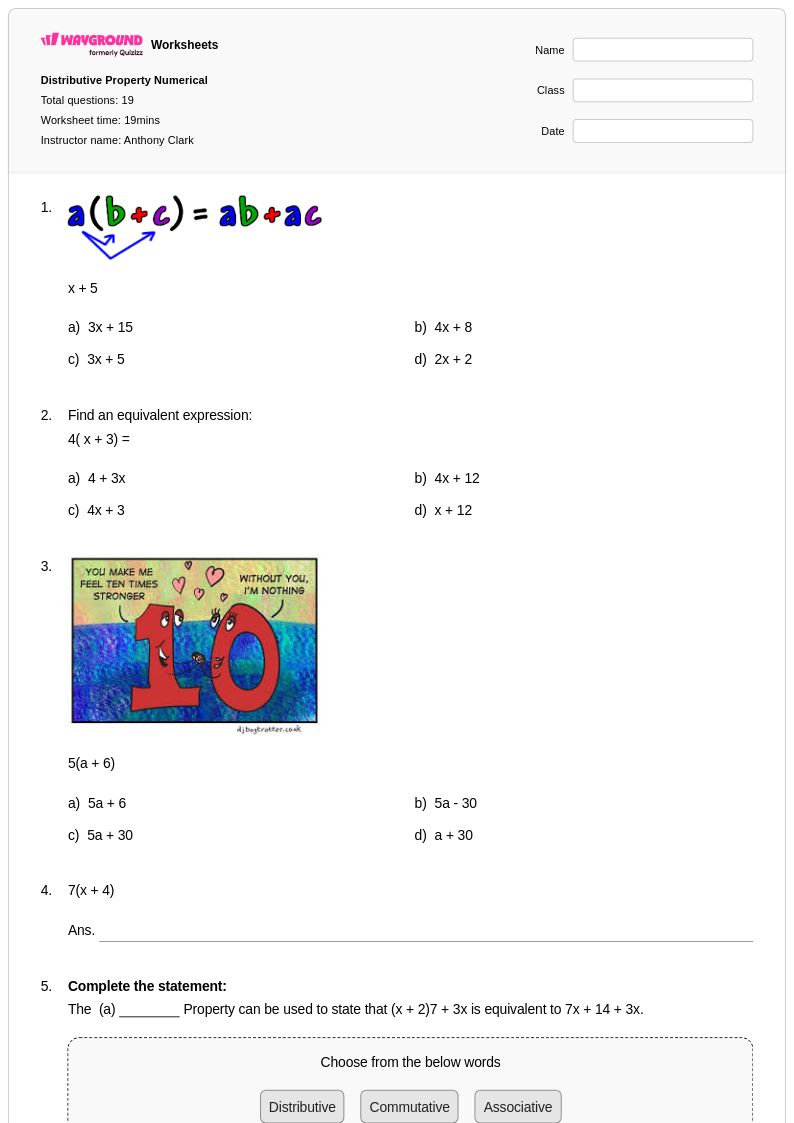
19 Q
6th - Uni
Explore Distributive Property Worksheets by Grades
Explore Other Subject Worksheets for grade 6
Explore printable Distributive Property worksheets for Grade 6
Distributive Property worksheets for Grade 6 students available through Wayground (formerly Quizizz) provide comprehensive practice with this fundamental algebraic concept that bridges arithmetic and early algebra. These carefully designed resources help sixth-grade learners master the distributive property by breaking down expressions like 3(x + 4) into equivalent forms such as 3x + 12, strengthening their understanding of how multiplication distributes over addition and subtraction. The collection includes varied practice problems that progress from simple numerical examples to more complex algebraic expressions, ensuring students develop fluency with both the conceptual understanding and computational skills necessary for success in higher-level mathematics. Each worksheet comes with a complete answer key and is available as free printable pdf resources, making them accessible for classroom instruction, homework assignments, and independent practice.
Wayground (formerly Quizizz) empowers educators with an extensive library of millions of teacher-created distributive property resources specifically aligned to Grade 6 mathematics standards, offering unprecedented flexibility for differentiated instruction. The platform's robust search and filtering capabilities allow teachers to quickly locate worksheets that match their students' specific learning needs, whether for initial concept introduction, skill reinforcement, or advanced enrichment activities. These customizable materials are available in both printable and digital formats, enabling seamless integration into any classroom environment while supporting diverse learning preferences. Teachers can efficiently plan lessons, target remediation for struggling learners, and provide challenging extensions for advanced students, all while accessing high-quality resources that have been classroom-tested by educators worldwide.
FAQs
How do I teach the distributive property with variables in Grade 6?
What exercises help sixth graders practice the distributive property?
What distributive property errors are common in Grade 6?
How can I use a Grade 6 distributive property worksheet for practice or assessment?
How does the distributive property fit into the Grade 6 Common Core curriculum?
How can I support mixed-ability students with a Grade 6 distributive property worksheet?
What grade do students begin using the distributive property with variables?