Free Printable Distributive Property Worksheets for Grade 1
Grade 1 distributive property worksheets from Wayground help young learners understand this fundamental math concept through engaging printables, practice problems, and comprehensive answer keys for effective mathematical foundation building.
Explore printable Distributive Property worksheets for Grade 1
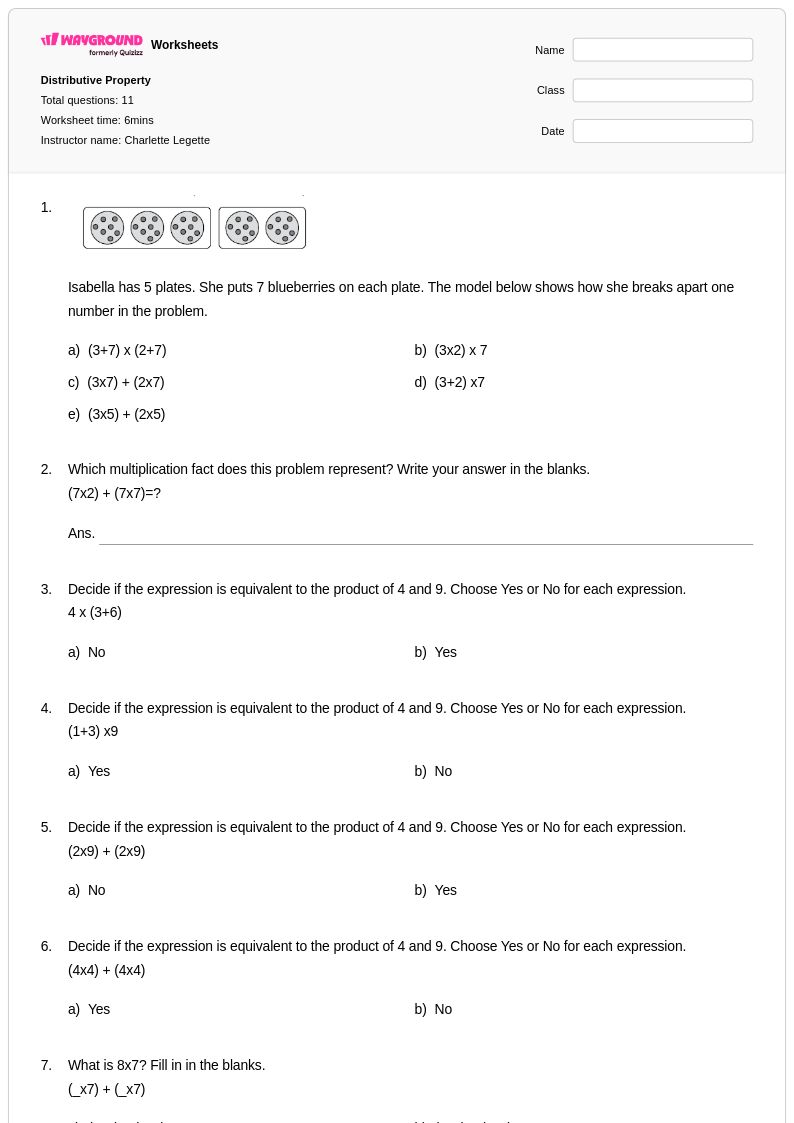
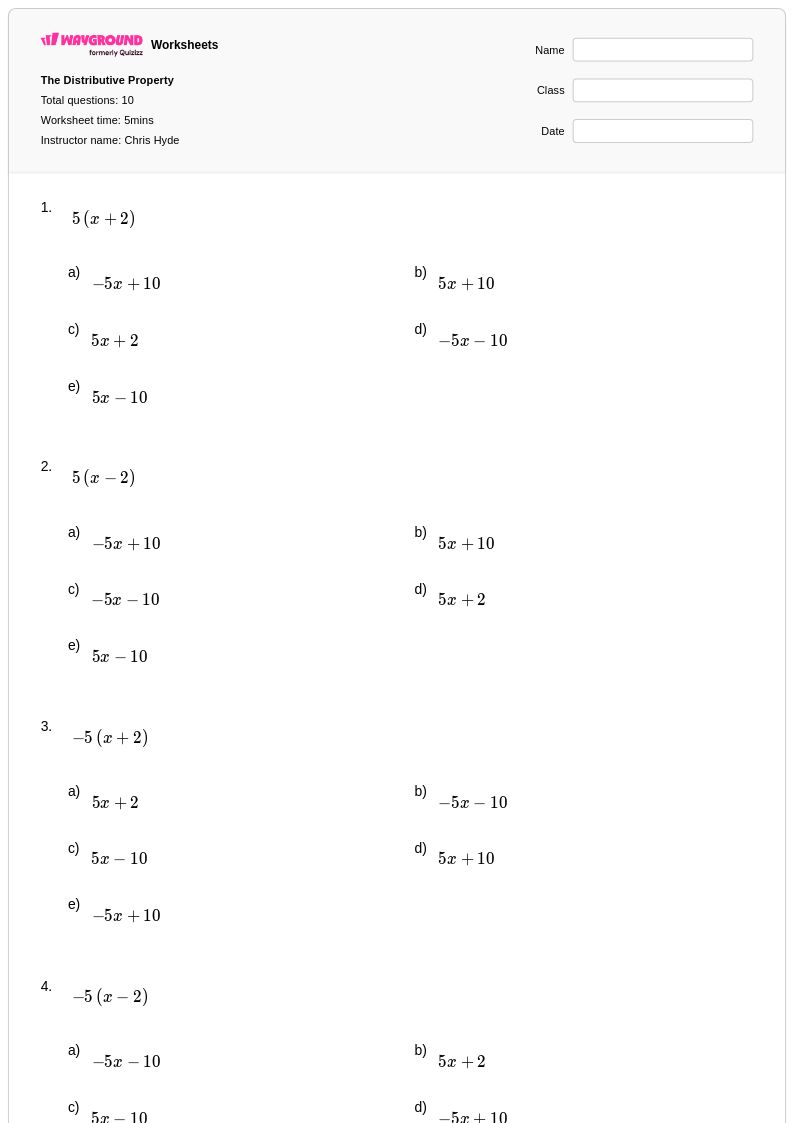
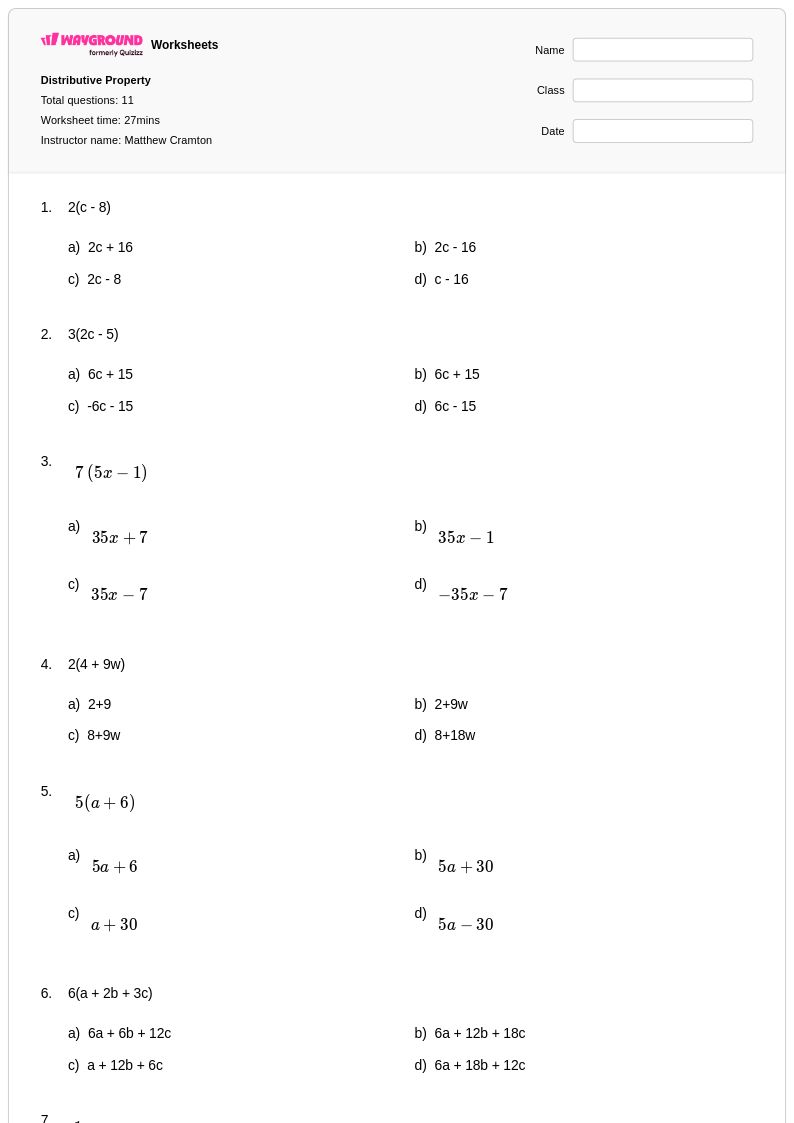
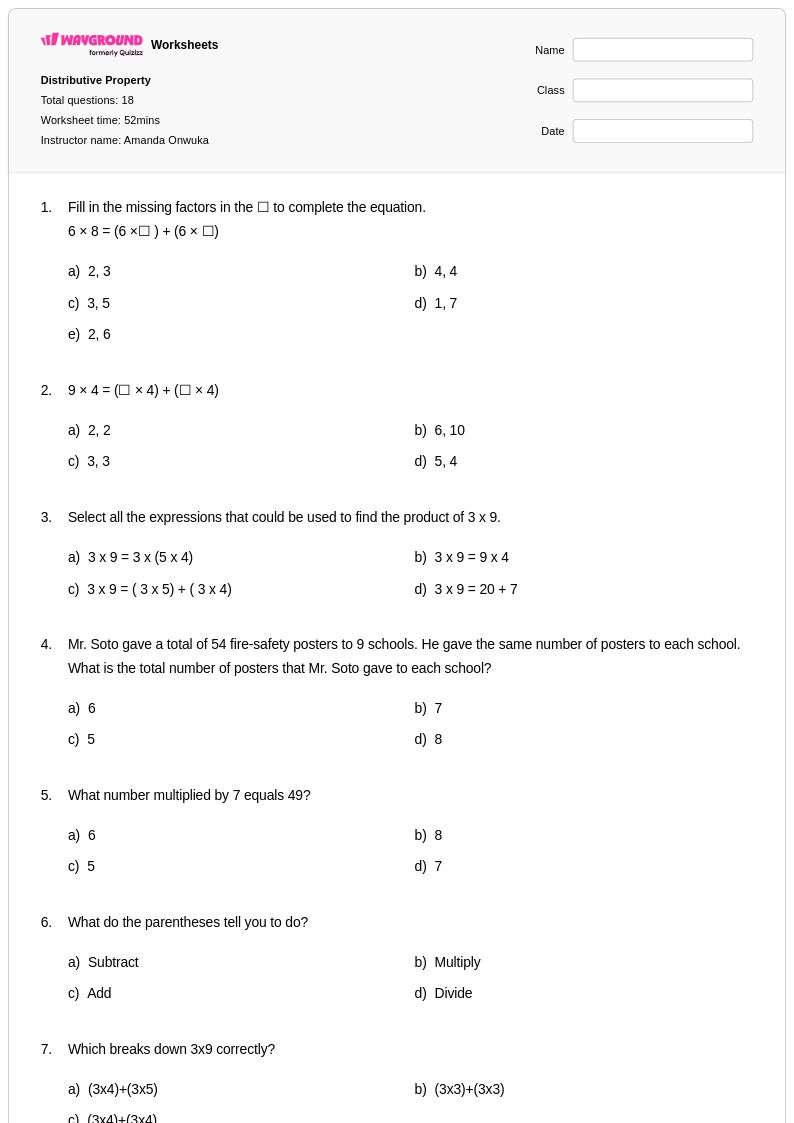
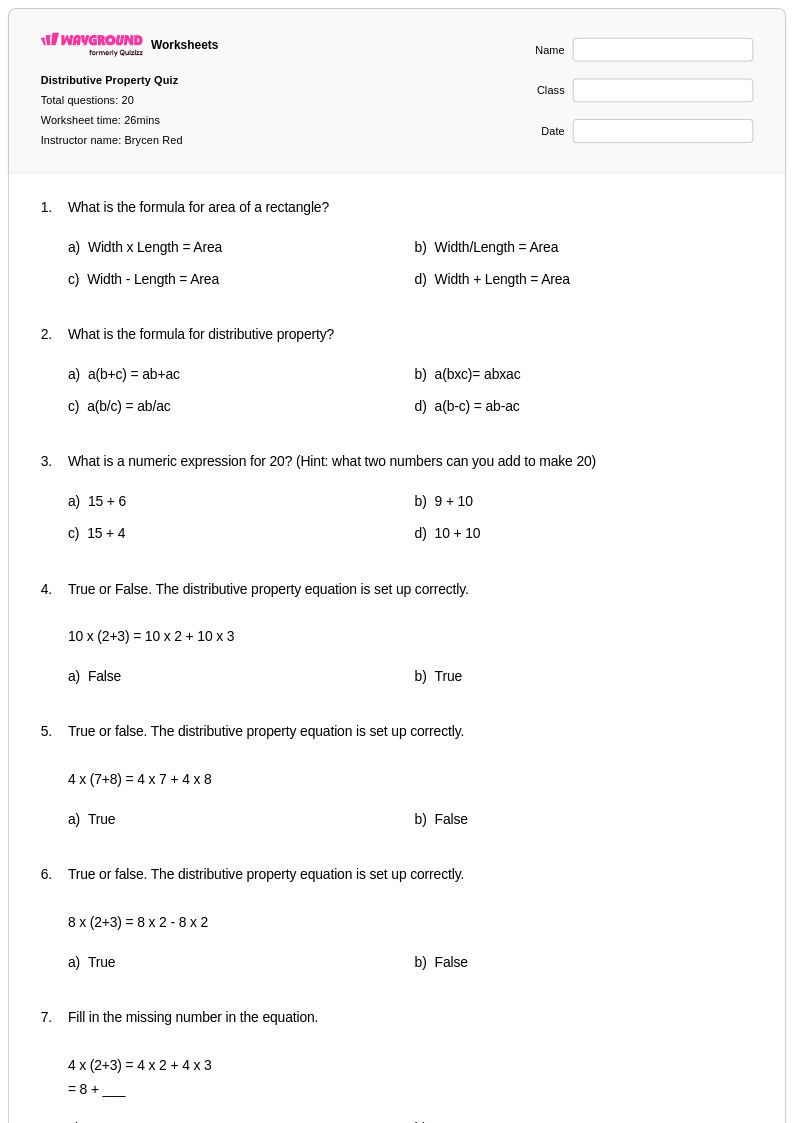
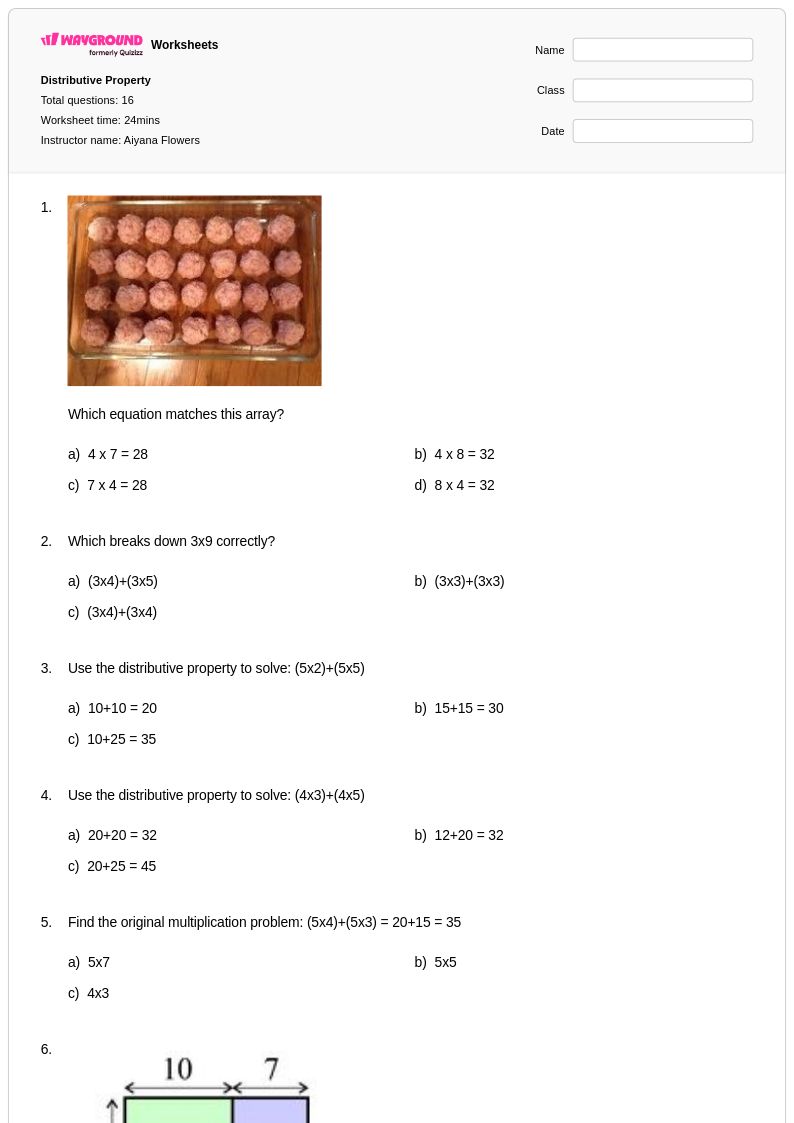
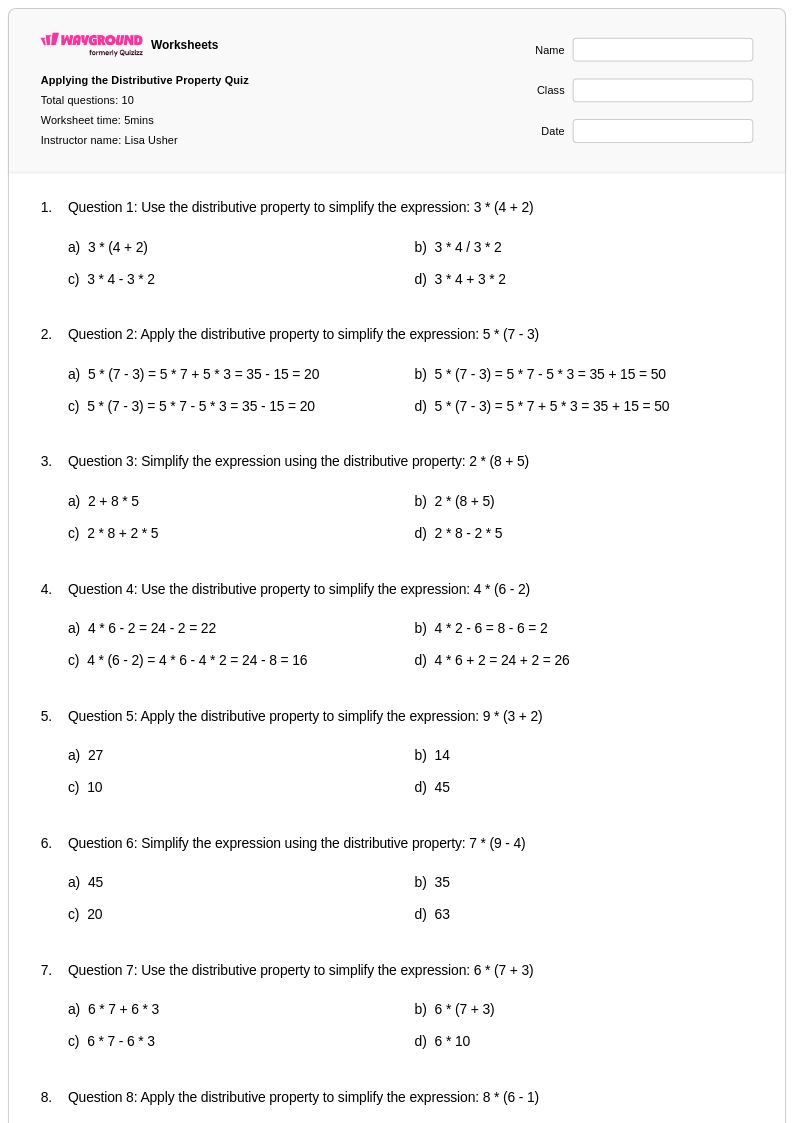
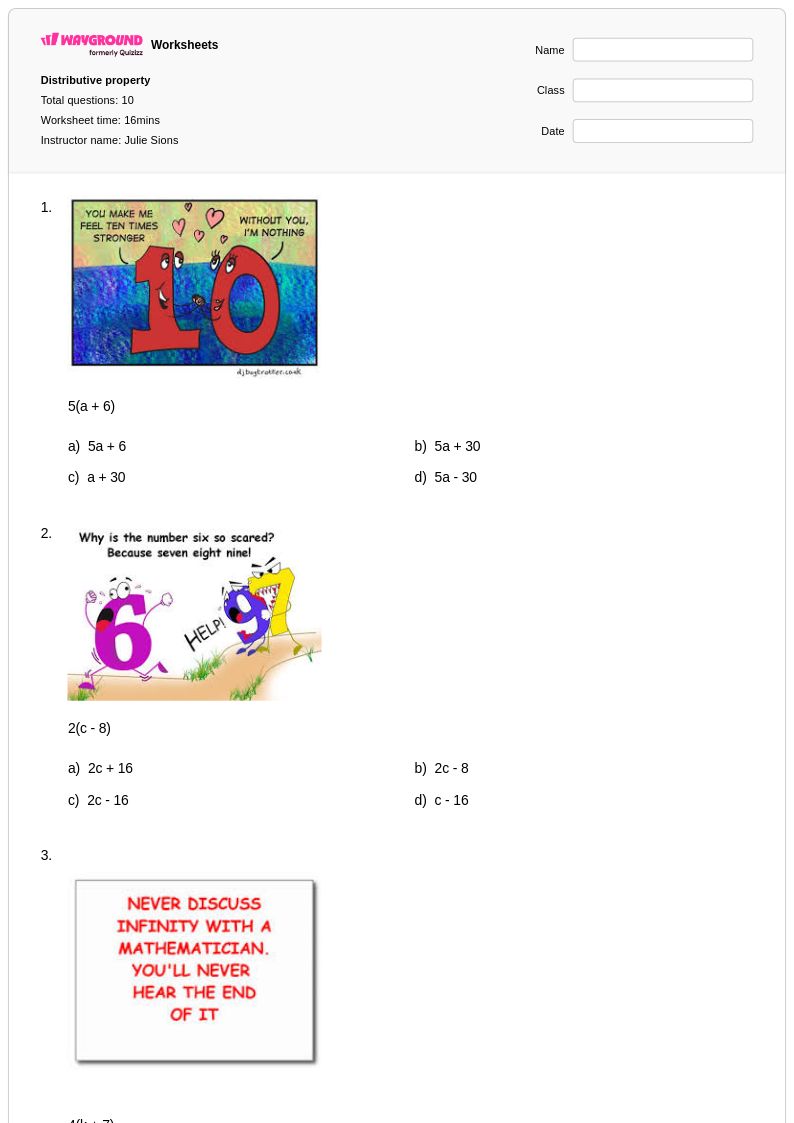
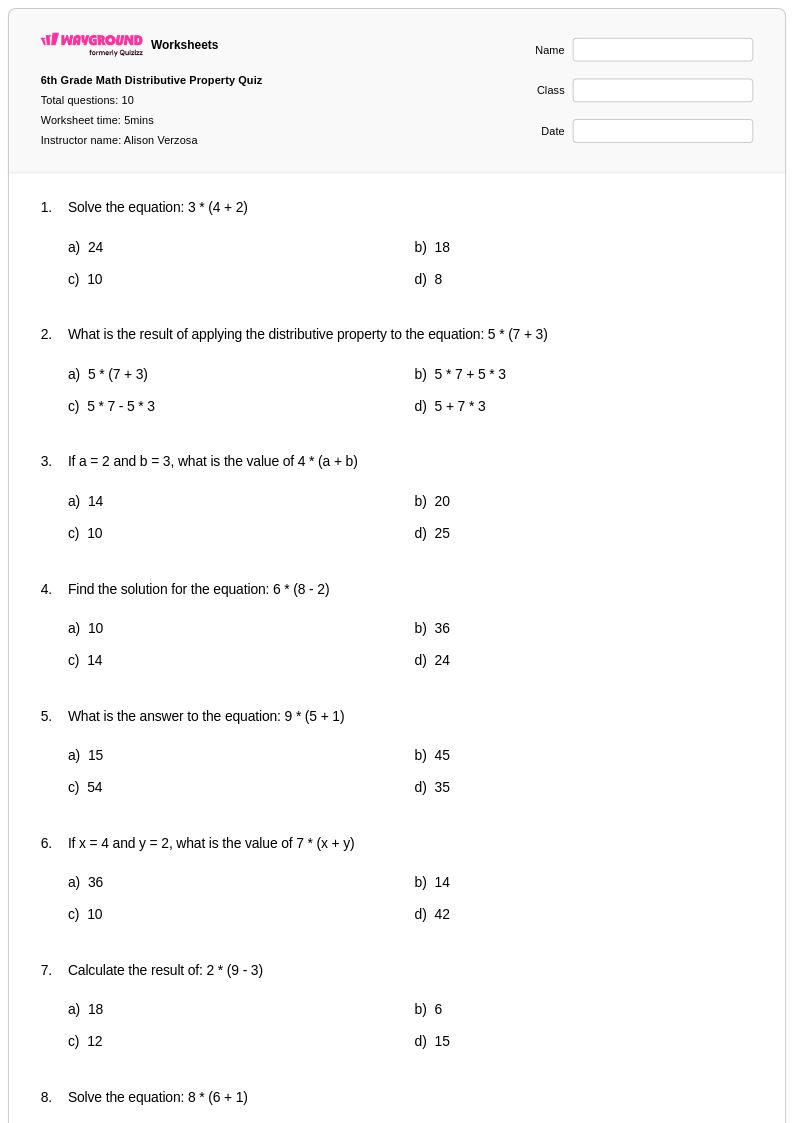
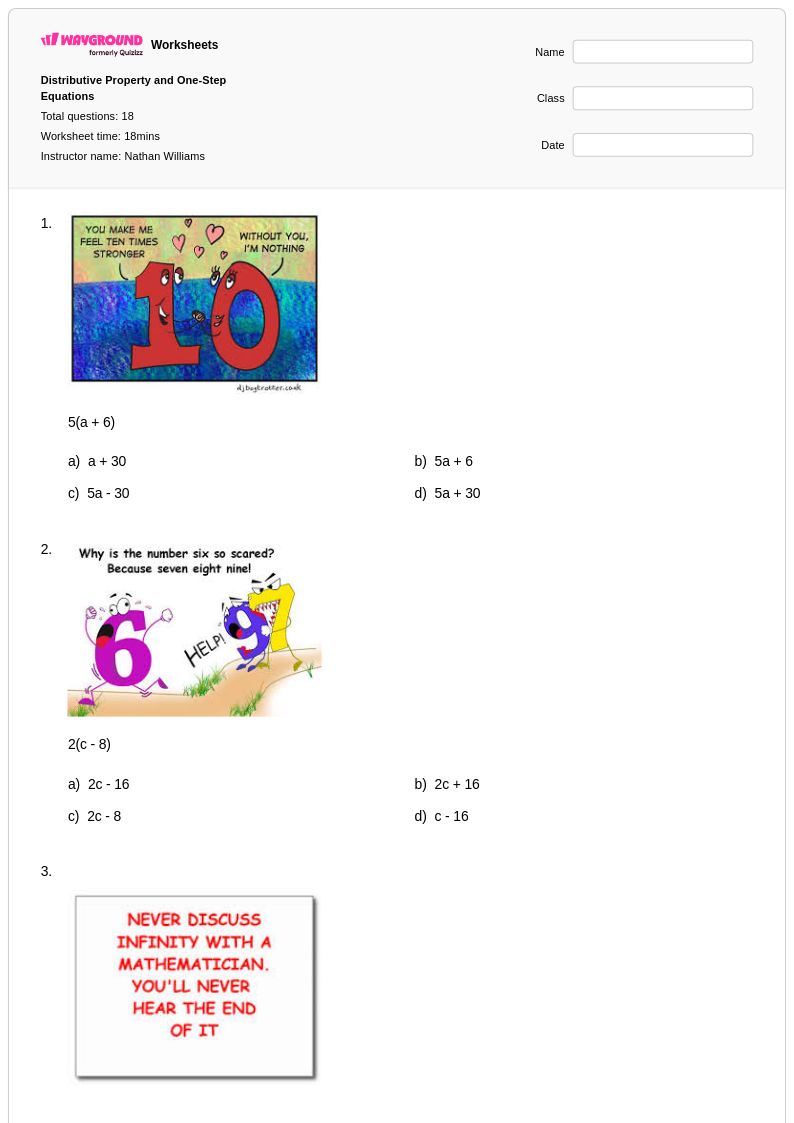
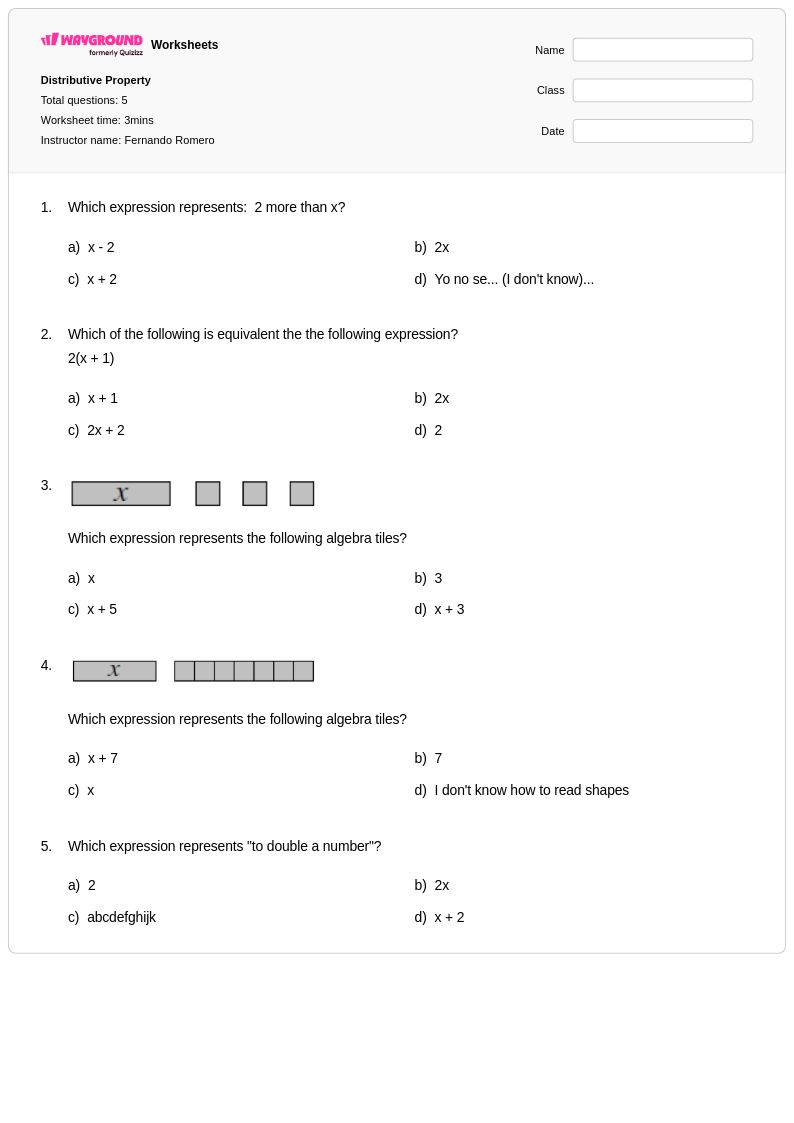
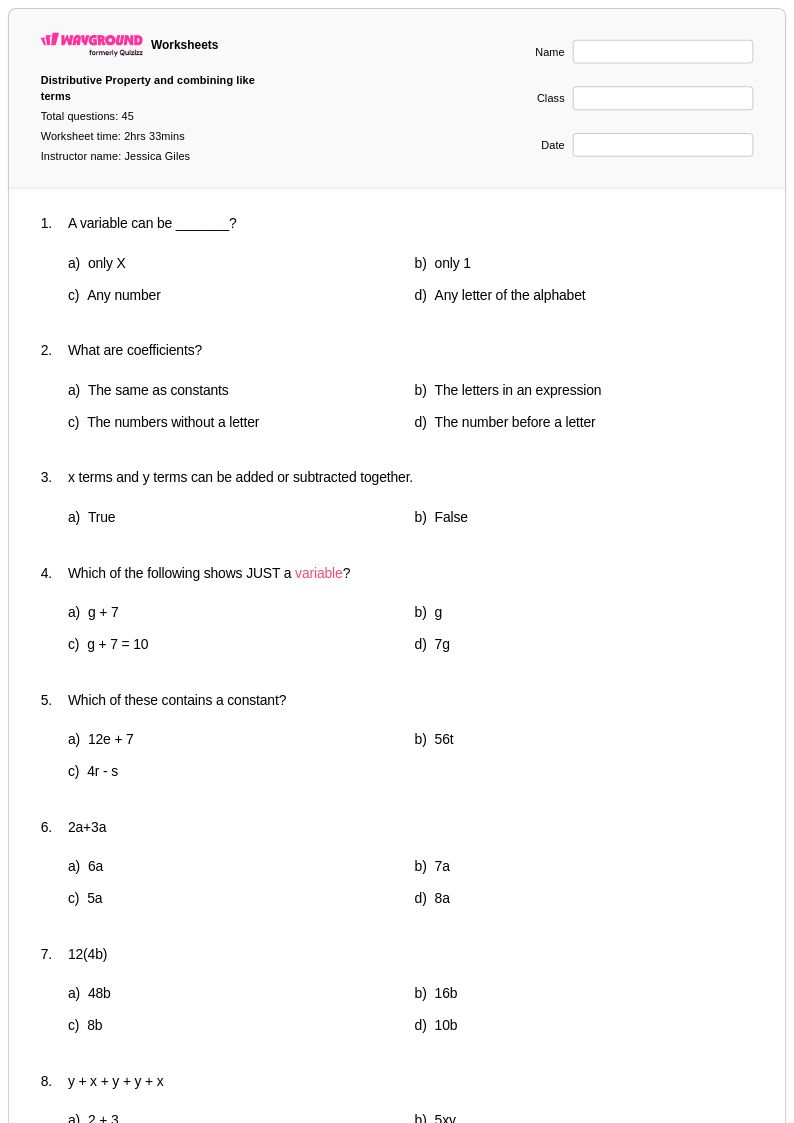
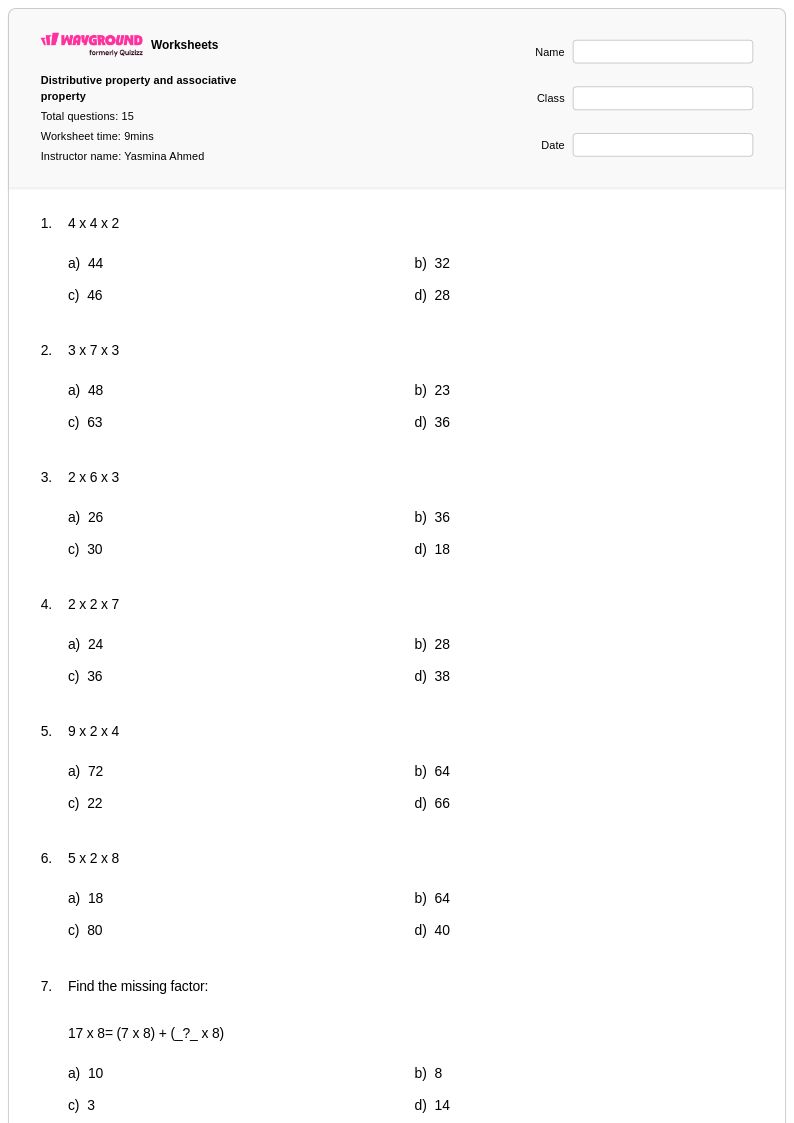
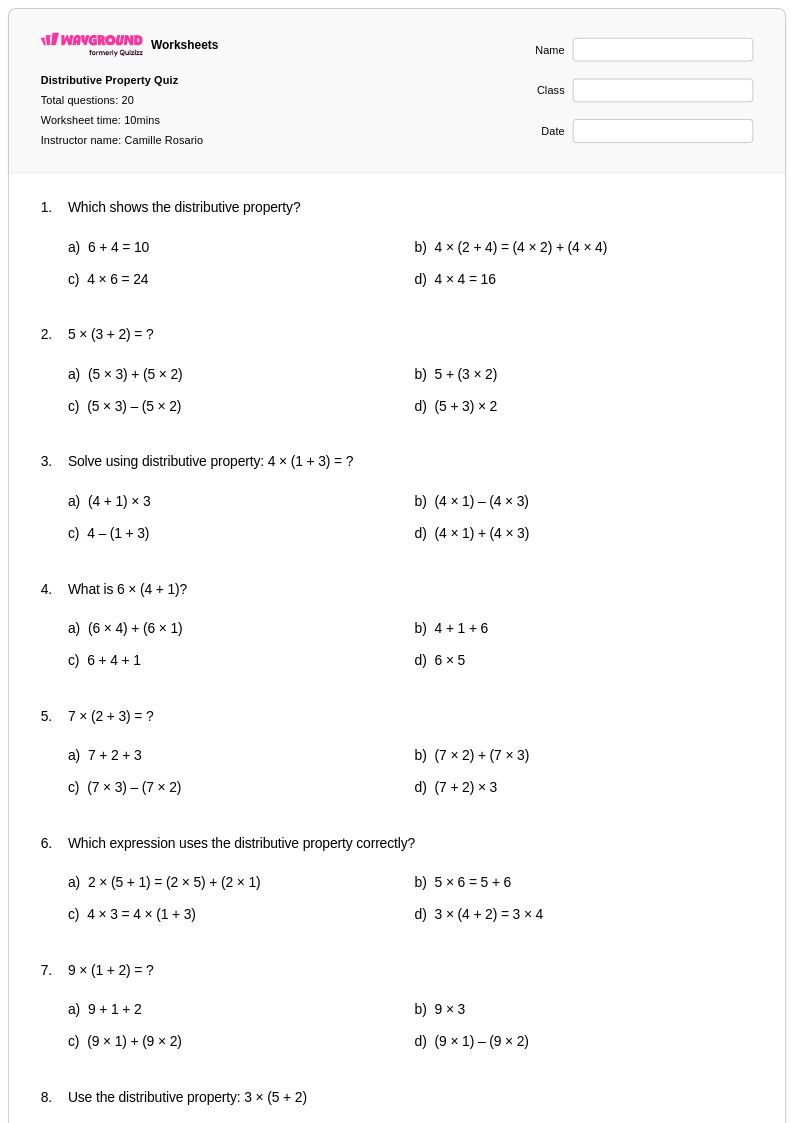
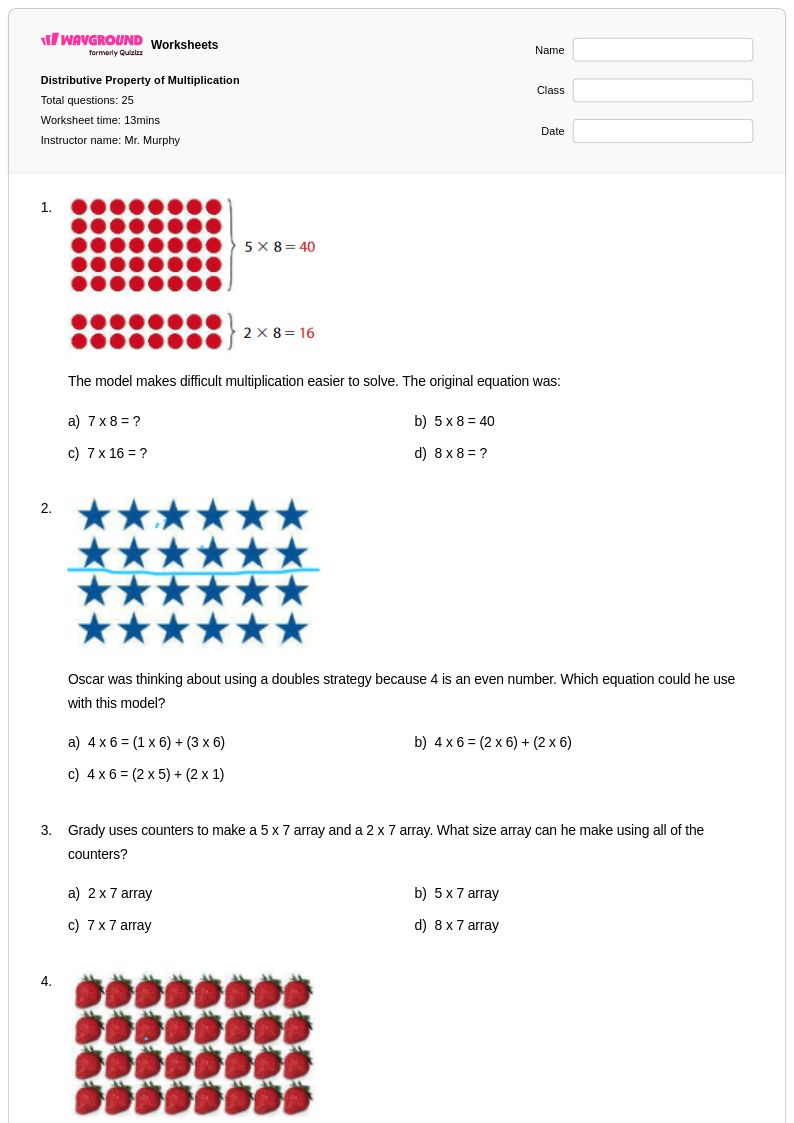
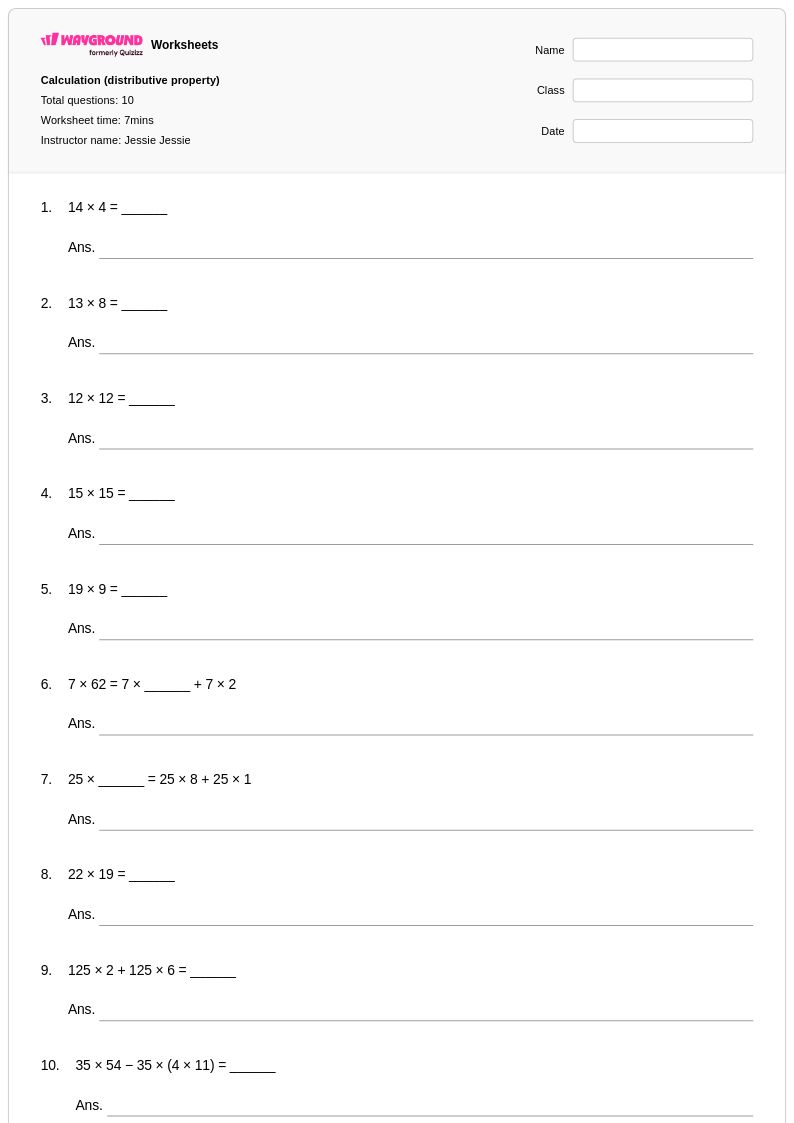
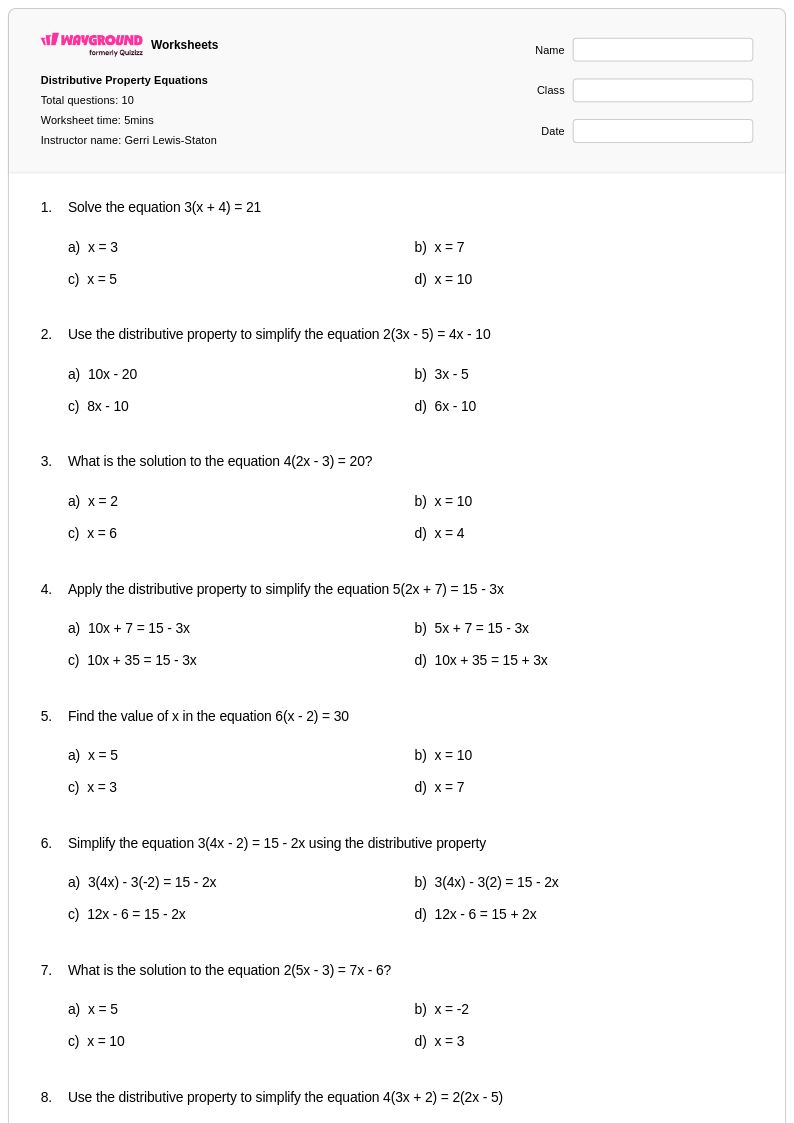
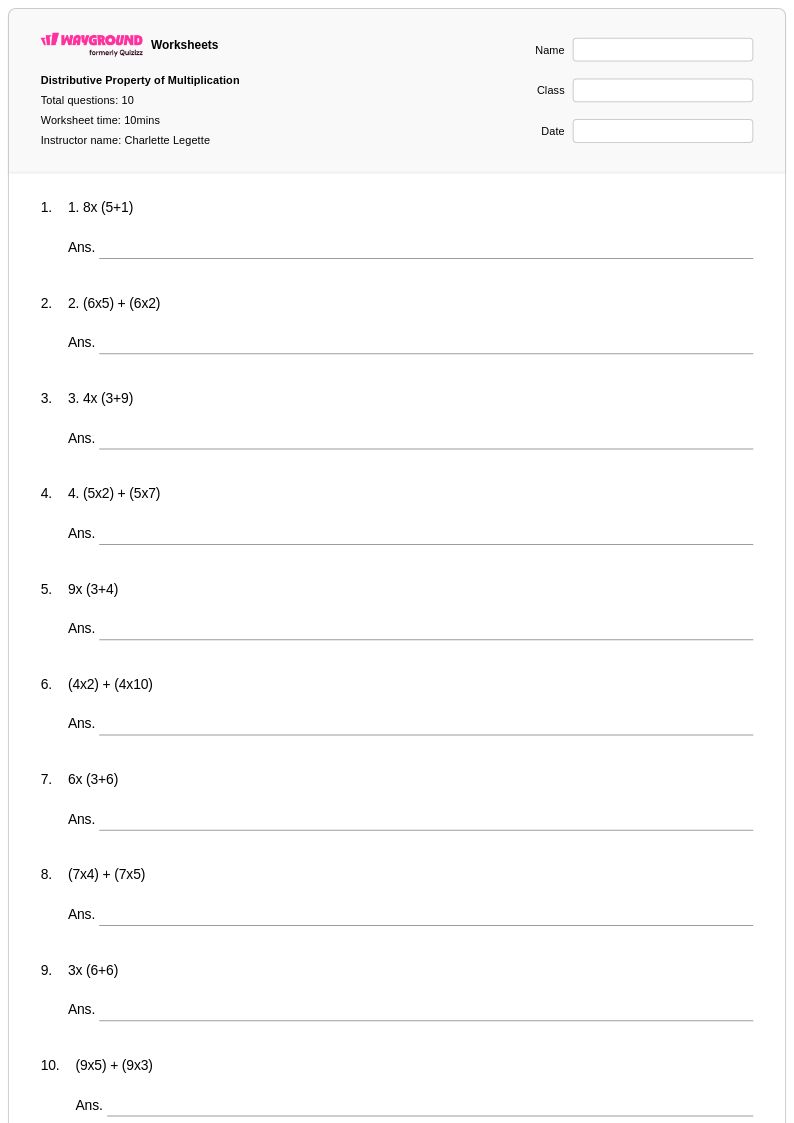
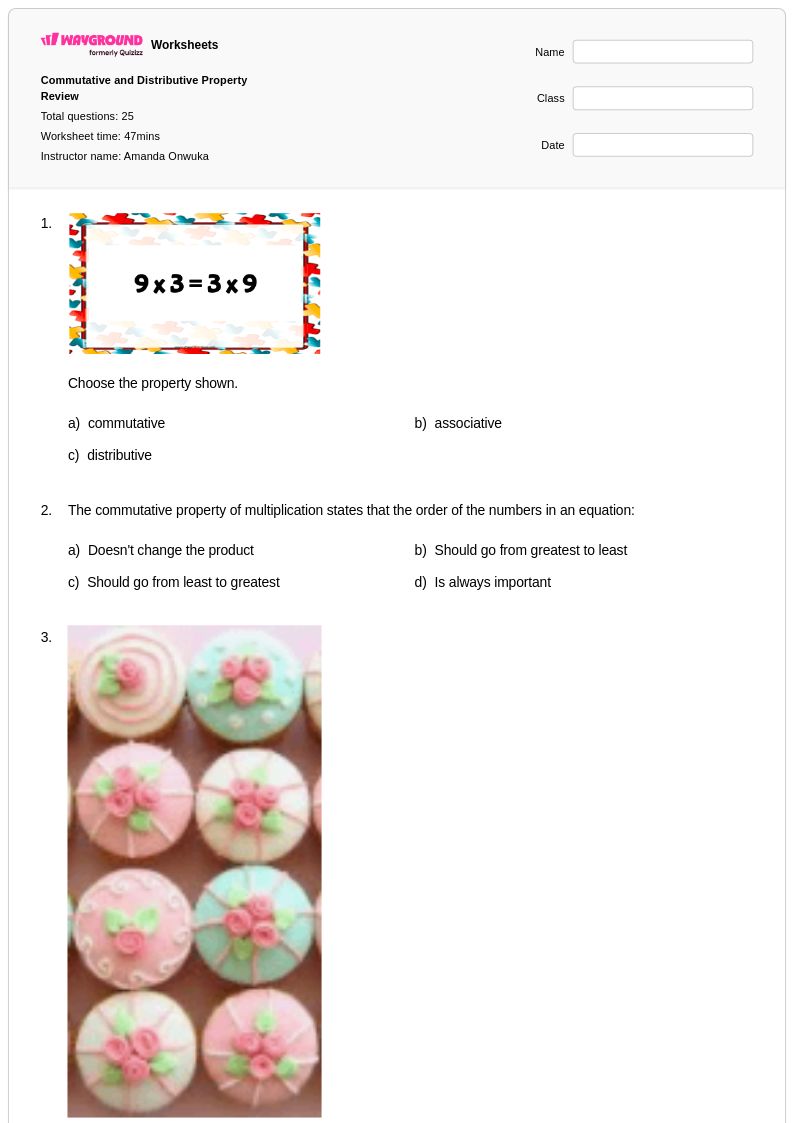
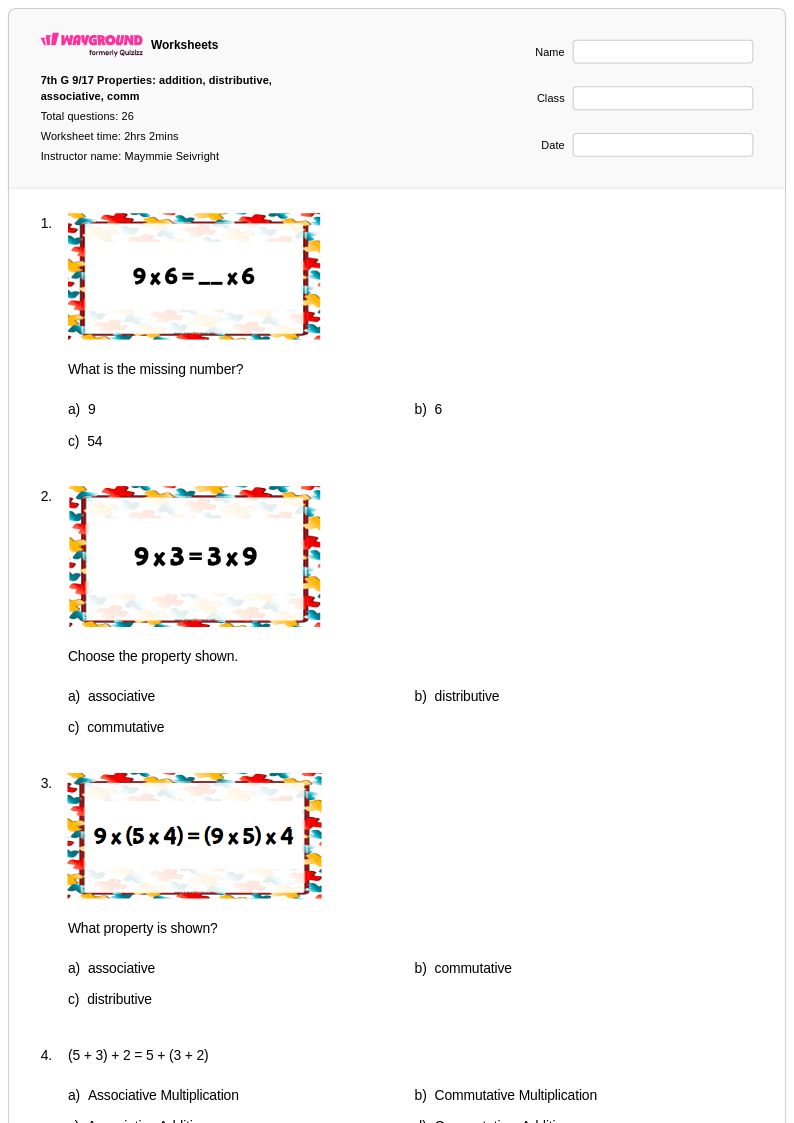
Distributive property worksheets for Grade 1 students available through Wayground (formerly Quizizz) introduce young learners to this fundamental mathematical concept through age-appropriate visual representations and hands-on activities. These carefully designed practice problems help first-grade students understand how to break apart numbers and group objects in different ways while maintaining the same total, laying the groundwork for more advanced arithmetic operations. The worksheets strengthen essential number sense skills by using concrete examples like distributing toys into groups or sharing items equally, making abstract mathematical concepts tangible and accessible. Each printable resource includes comprehensive answer keys and free pdf formats that support both classroom instruction and independent practice, ensuring students can master this critical foundation of arithmetic and number theory.
Wayground (formerly Quizizz) empowers educators with an extensive collection of millions of teacher-created distributive property resources specifically tailored for Grade 1 mathematics instruction. The platform's robust search and filtering capabilities allow teachers to quickly locate worksheets that align with specific learning objectives and curriculum standards, while differentiation tools enable customization for diverse learning needs within the classroom. These versatile materials are available in both printable and digital formats, including downloadable pdf versions that facilitate seamless integration into lesson planning, targeted remediation sessions, and enrichment activities. The flexible customization options support educators in adapting content for individual student progress, making it easier to provide focused skill practice that builds confidence and mathematical understanding in young learners exploring fundamental number theory concepts.
FAQs
How do I teach the distributive property to first graders?
First grade is still firmly in the concrete stage. Use stories and objects: "We have 7 crayons. I put 4 in one box and 3 in another. How many total?" Then show that you can also think of it as 4 + 3. The key move is helping students see that breaking a number apart doesn't change its value — that's the distributive intuition they'll formalize years later. Drawings and ten-frames work well once students are comfortable with the physical version.
What does distributive property practice look like for Grade 1?
At this level, practice centers on number decomposition rather than multiplication. Students work with part-part-whole models, number bonds, and simple addition sentences that show the same total expressed different ways — for example, 7 = 5 + 2 and 7 = 4 + 3. Wayground's Grade 1 worksheets use visual representations and concrete scenarios to build this grouping intuition before any symbolic notation is introduced.
What misconceptions do first graders have about breaking apart numbers?
The main one is thinking that splitting a group changes the total. A student who counts 8 objects, splits them into 5 and 3, and then says "now there are 5" hasn't yet internalized that the whole is preserved. This is a conservation issue, not a math-fact issue — more time with physical objects usually resolves it faster than more worksheet practice.
How do I use these Grade 1 worksheets in my classroom?
Download the PDF and print for paper practice — at this age, physically writing, circling, and drawing on paper tends to reinforce the concrete thinking first graders need. The included answer key makes it easy to check work during a center rotation or send home as practice. You can also assign the worksheet digitally through Wayground if you're working in a one-to-one device environment.
How does Grade 1 number decomposition connect to later math?
Common Core builds toward the distributive property by first establishing that numbers can be broken apart and recombined — what the standards call "decomposing" numbers. In Grade 1, students decompose numbers up to 10 and 20 using place value and addition. That same logic — splitting a quantity into parts, operating on each part, then recombining — is exactly what students apply when they expand 4(3 + 2) in later grades. Grade 1 is where the reasoning starts.
How can I differentiate these worksheets for first graders at different levels?
For students who need more support, increase the font size or apply wider spacing through Wayground's worksheet settings — easier to navigate for students still developing fine motor skills. The Read Aloud accommodation is especially useful here, since many first graders understand the math concept but struggle to read the problem text independently. For students ready for more challenge, look for problems that ask them to find multiple ways to decompose the same number rather than just one.