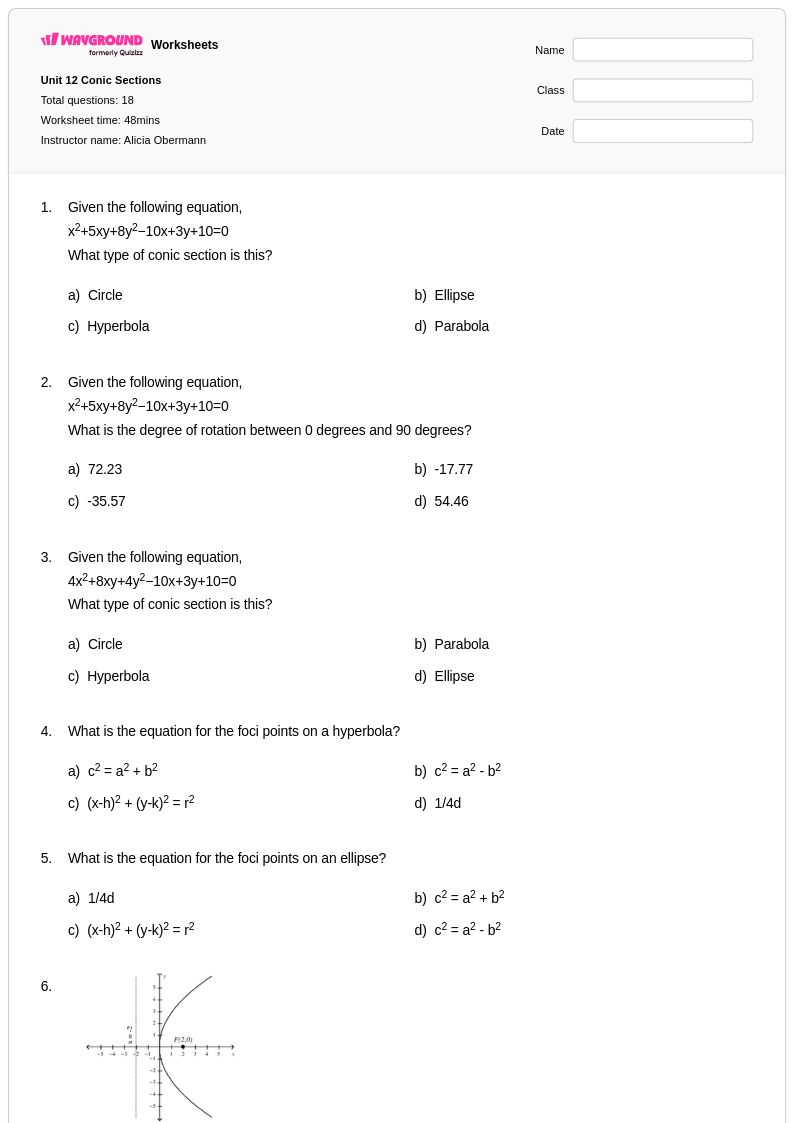
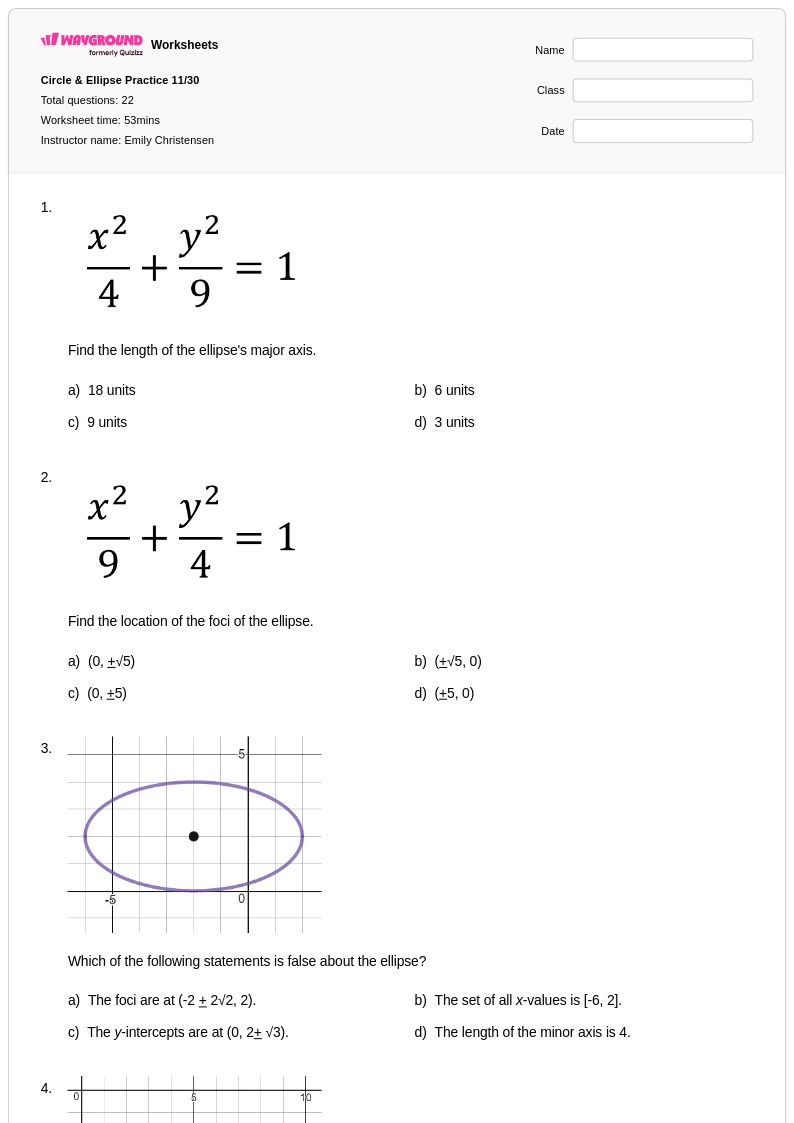
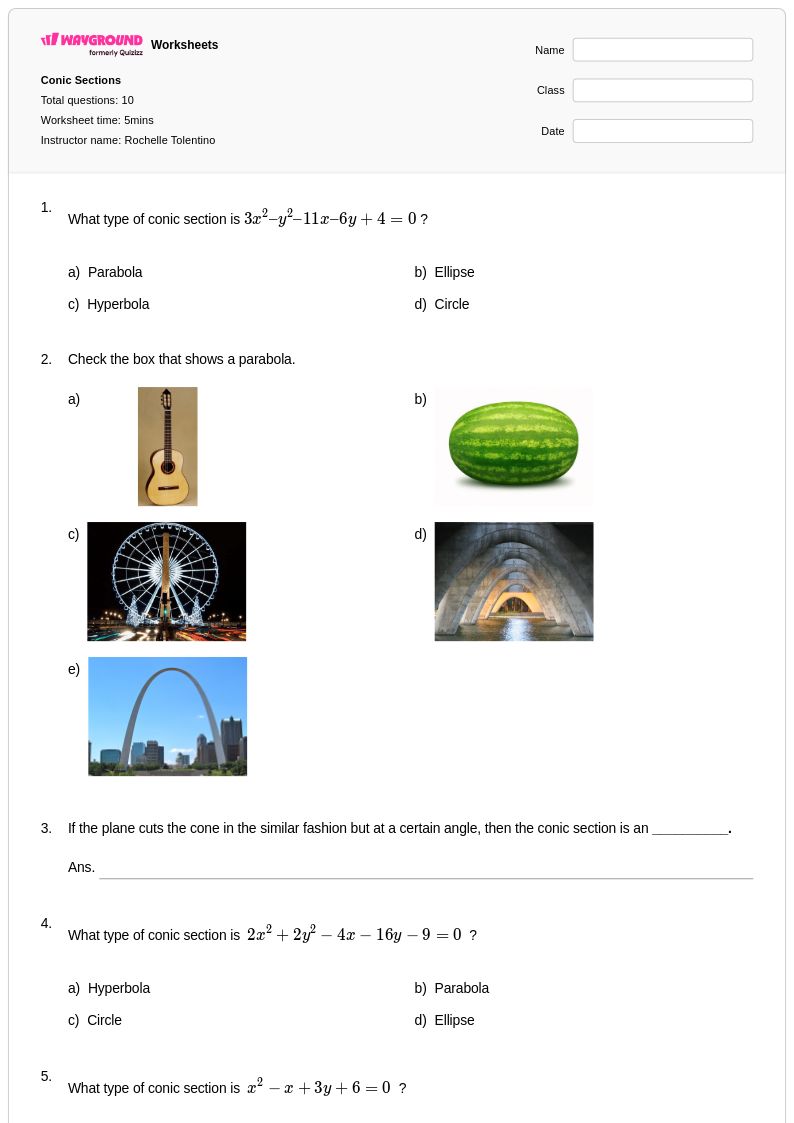
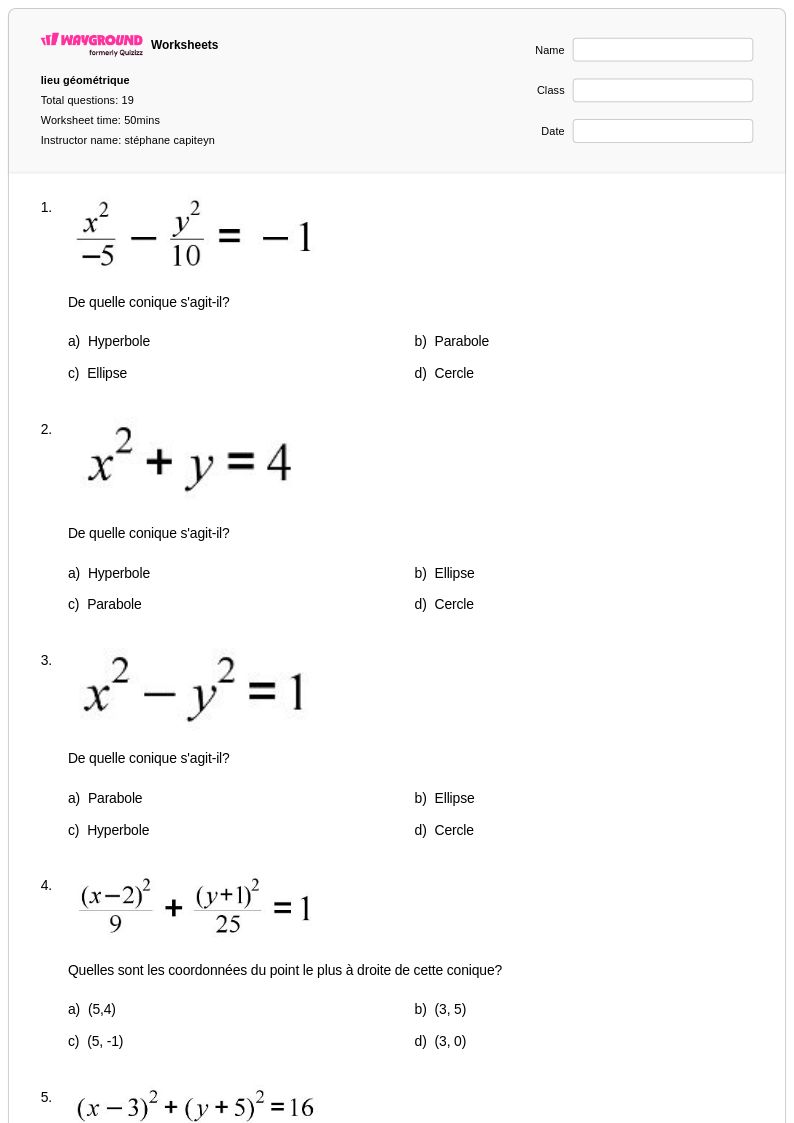
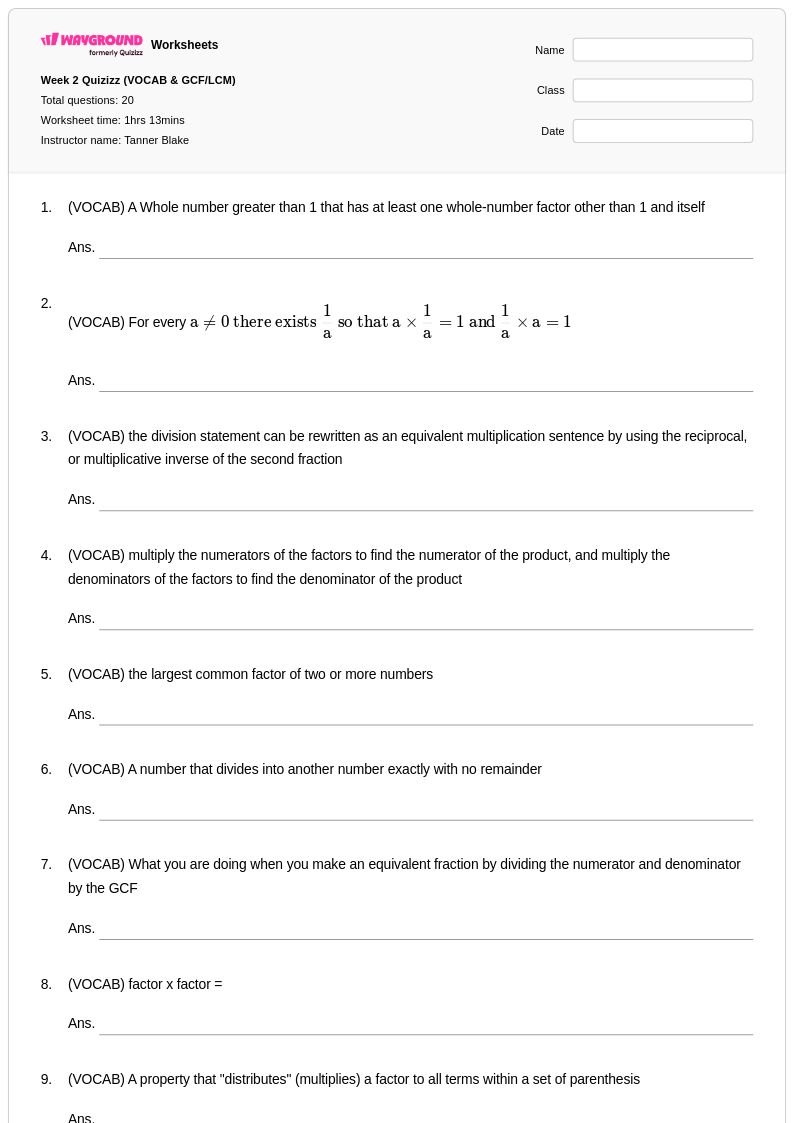
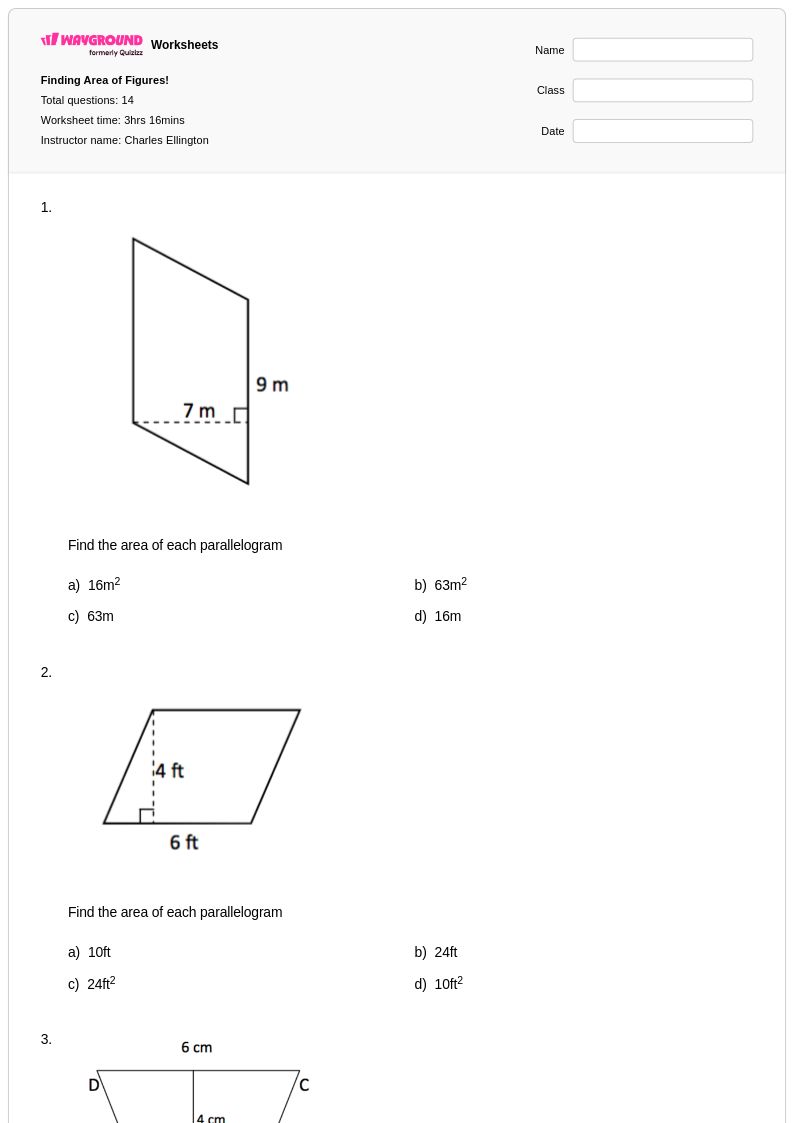
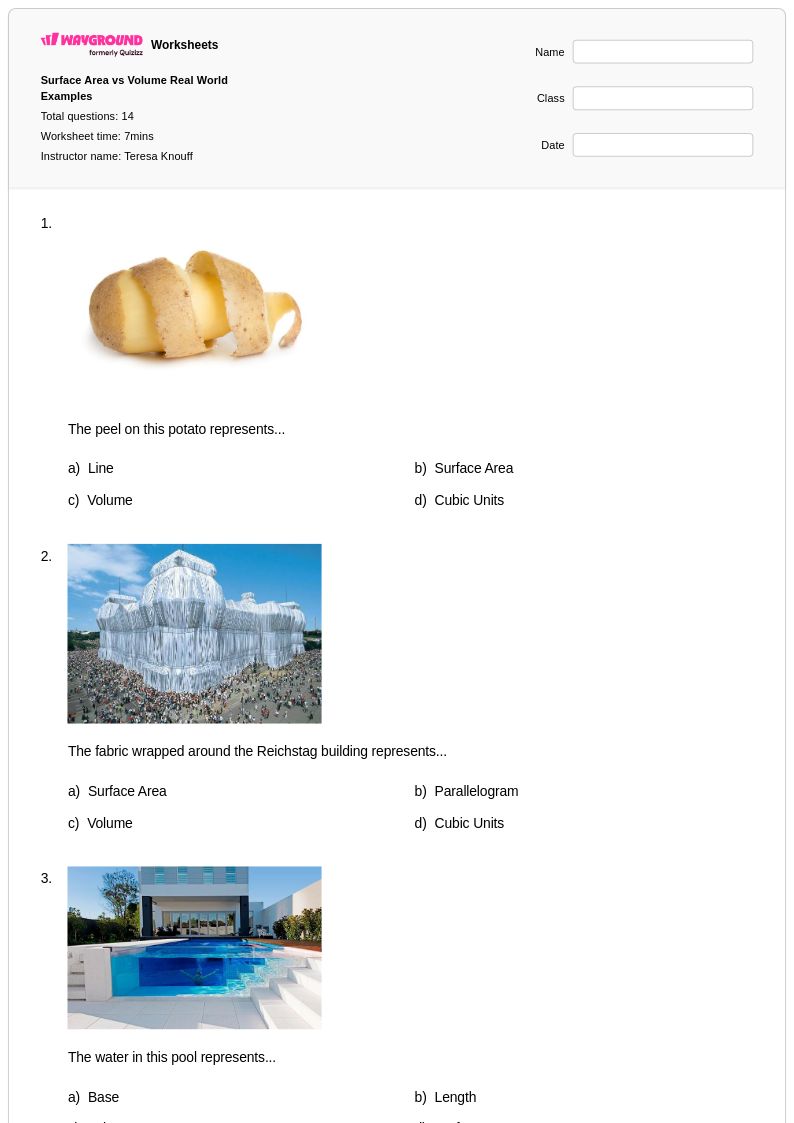
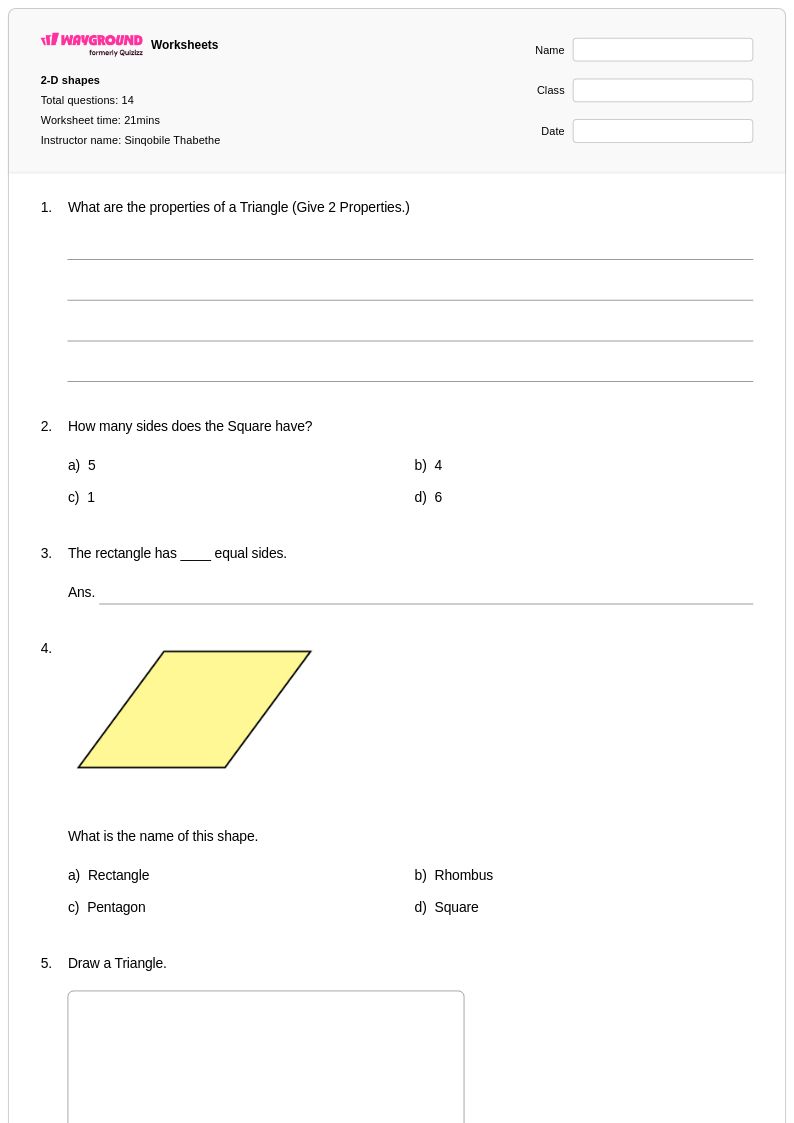
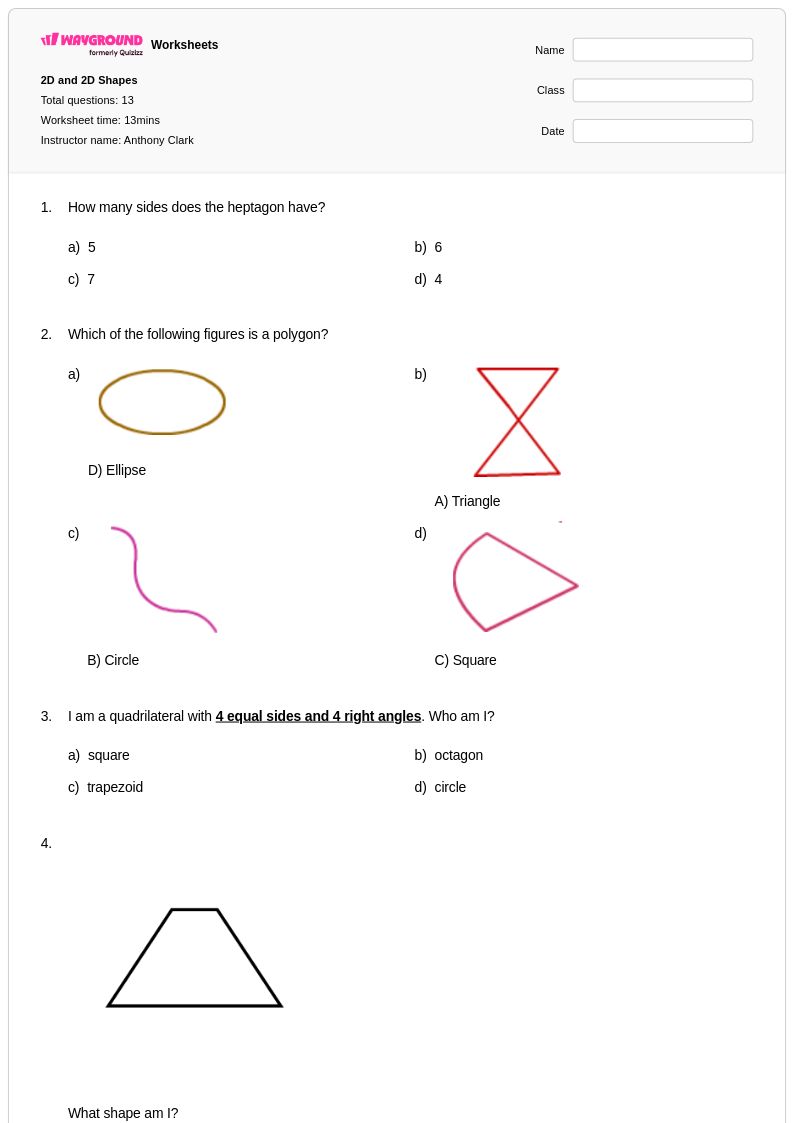
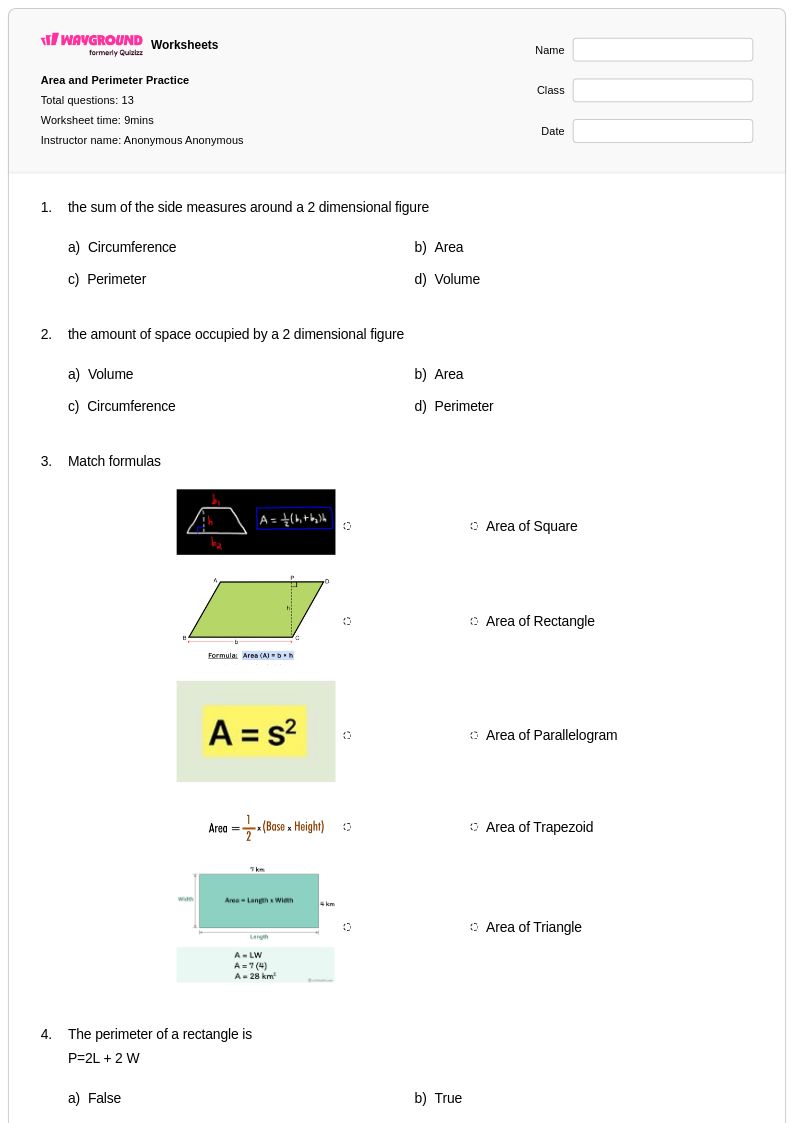
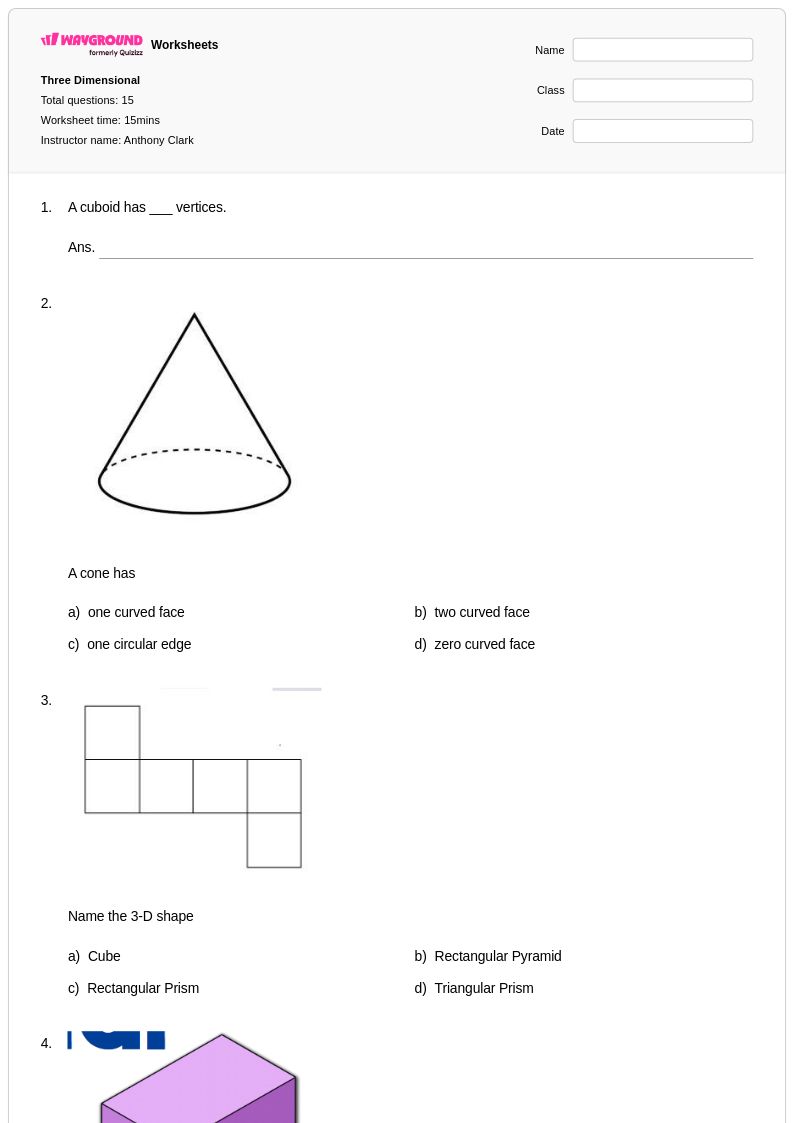
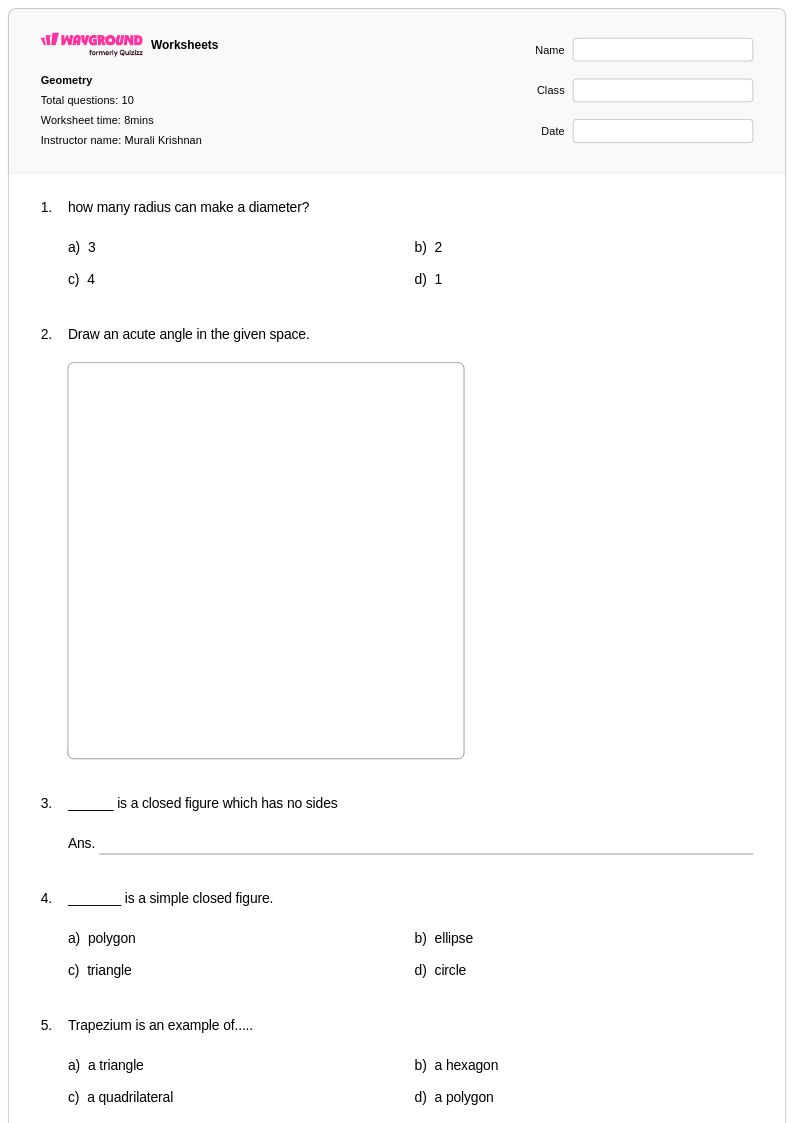
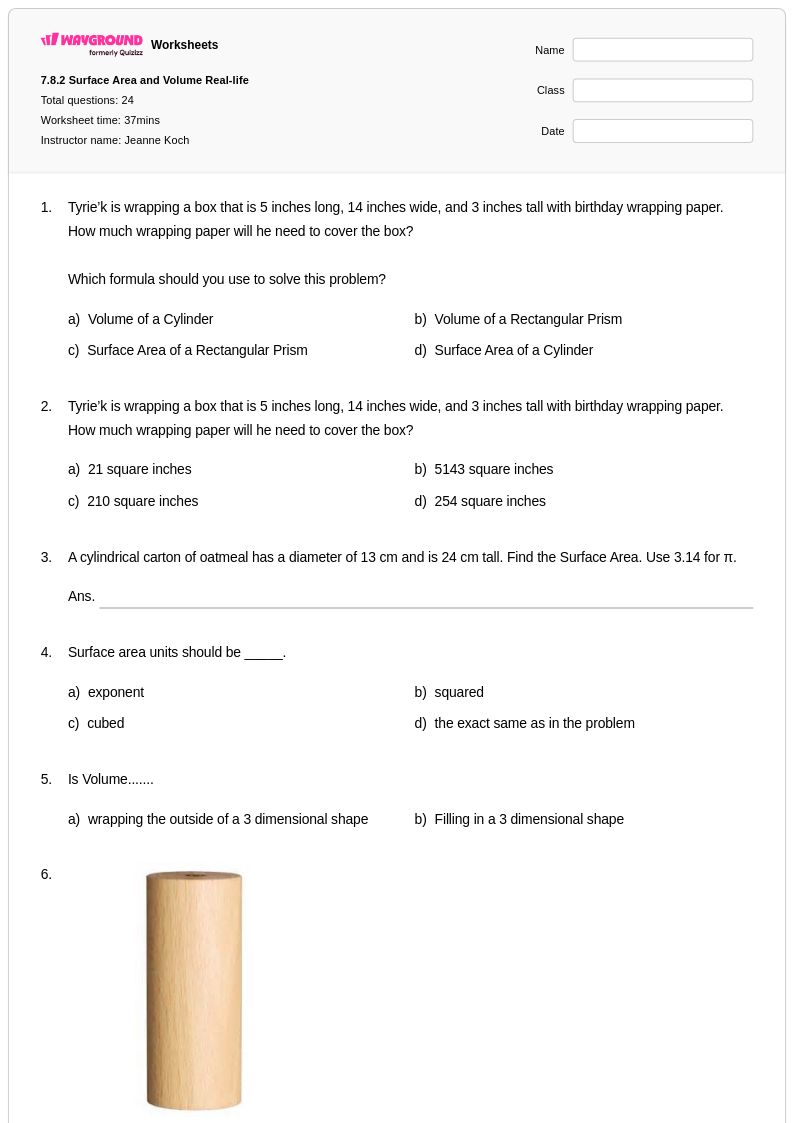
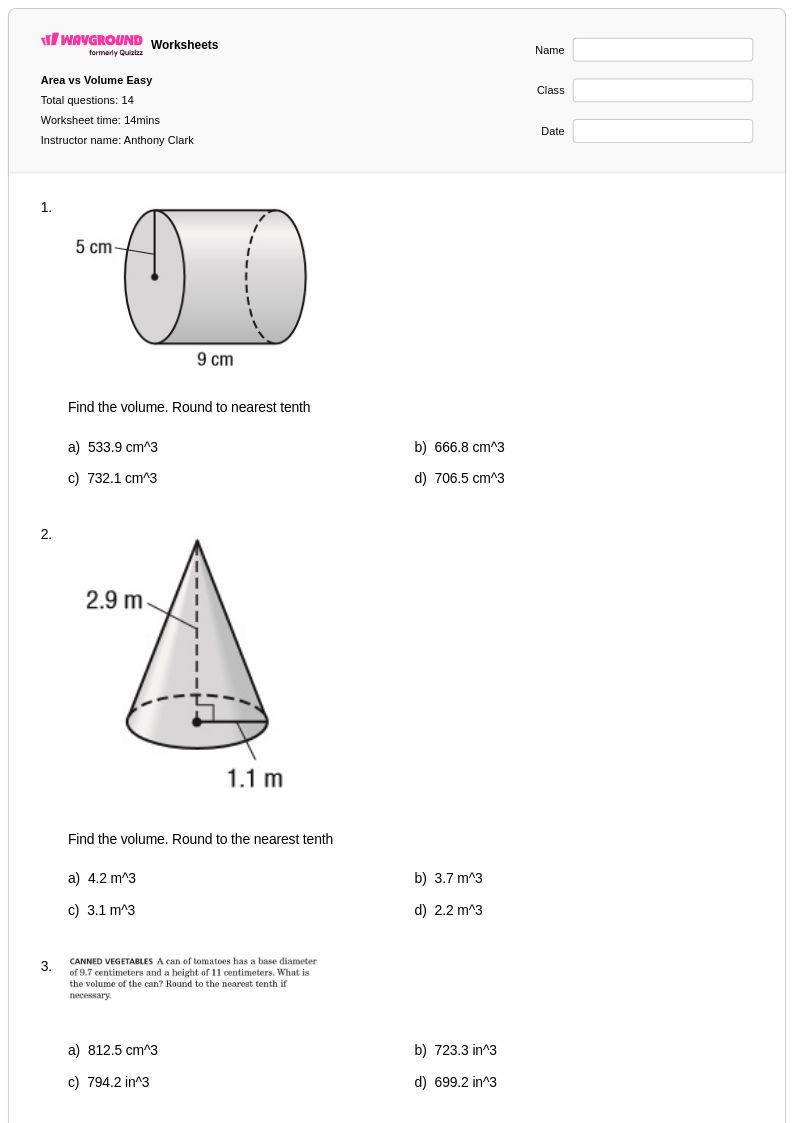
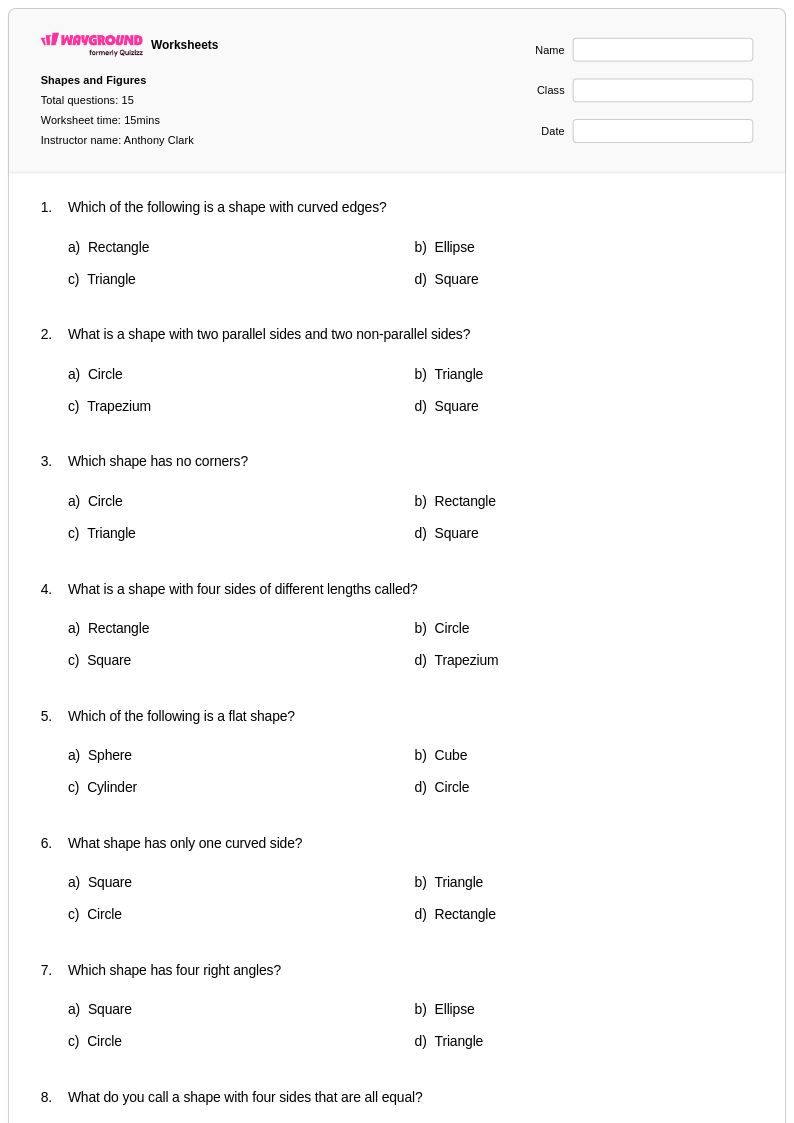
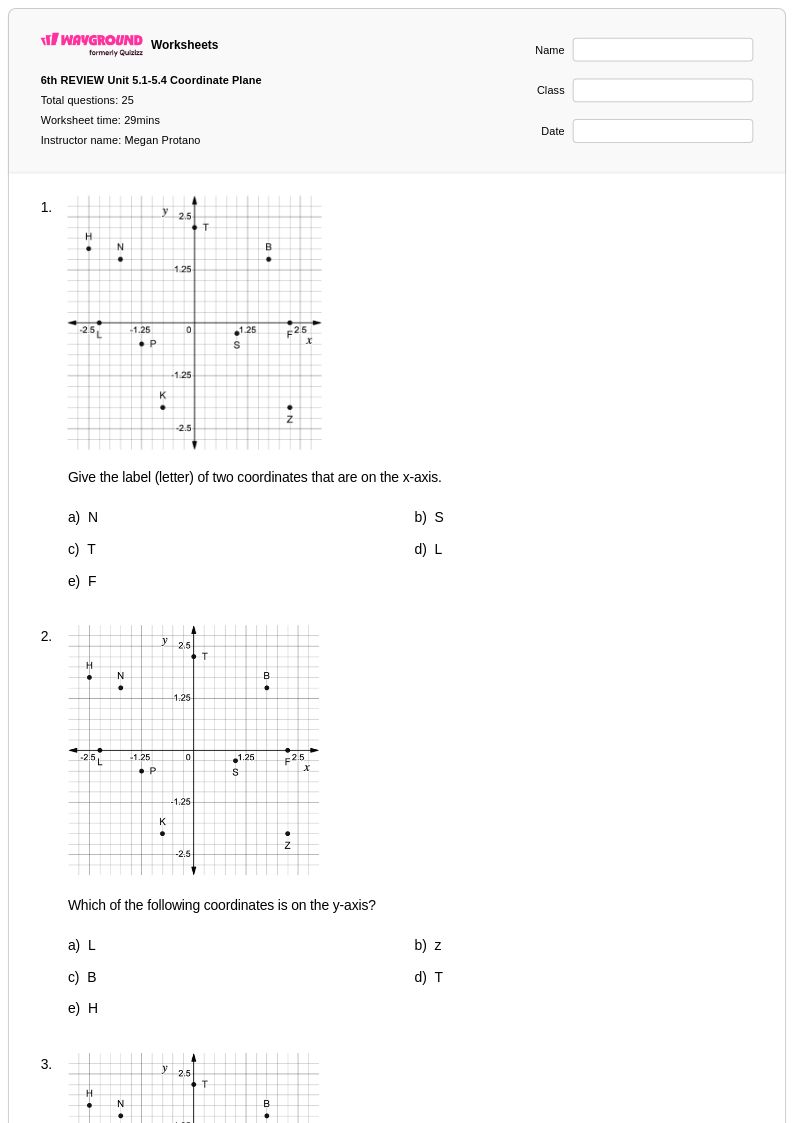
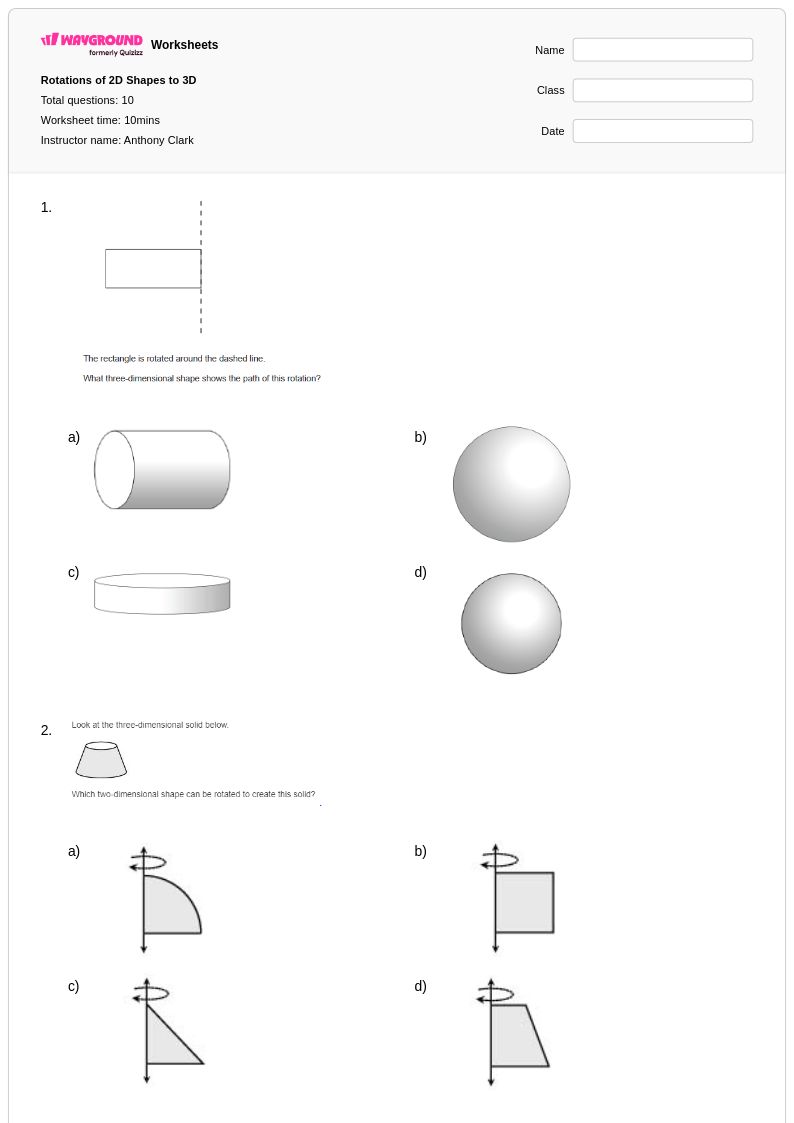
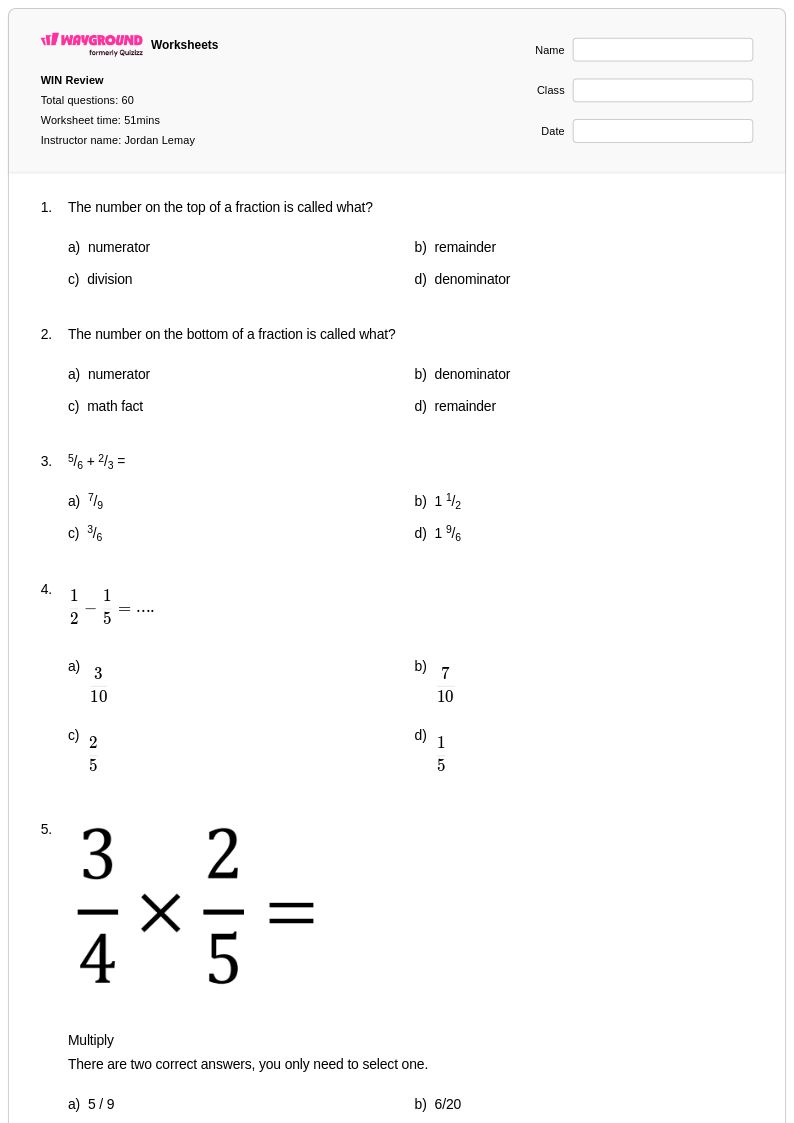
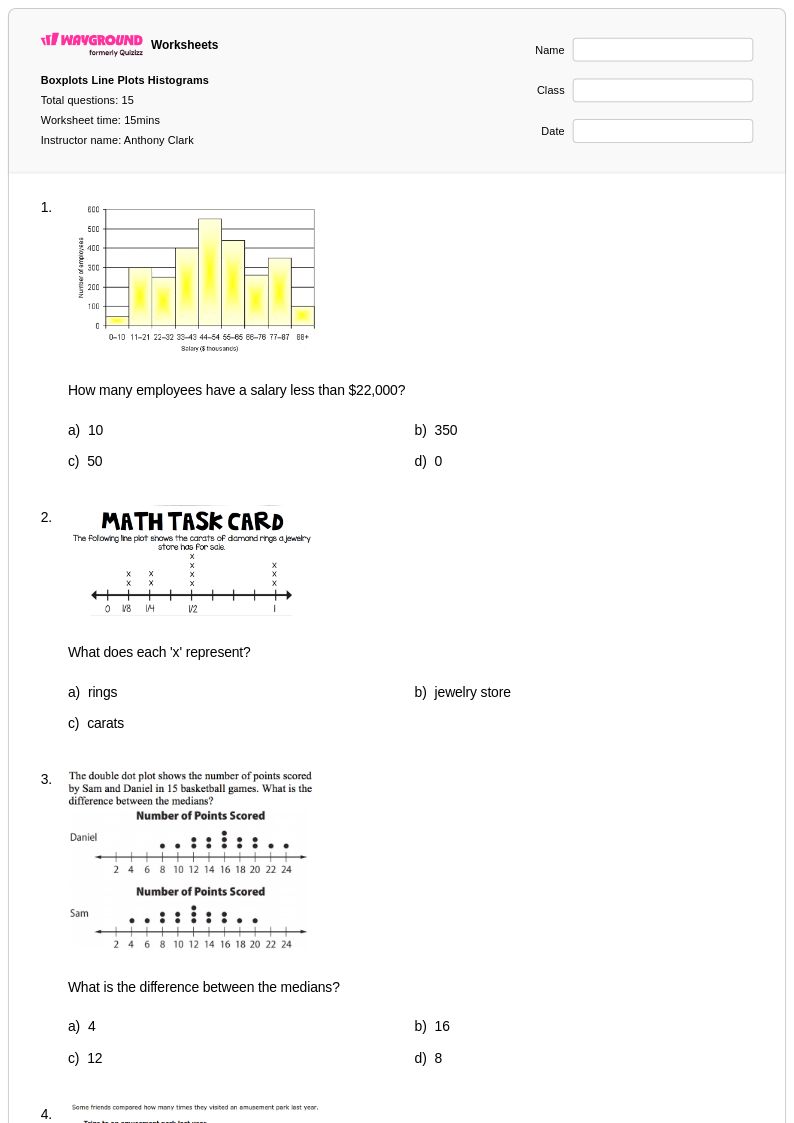
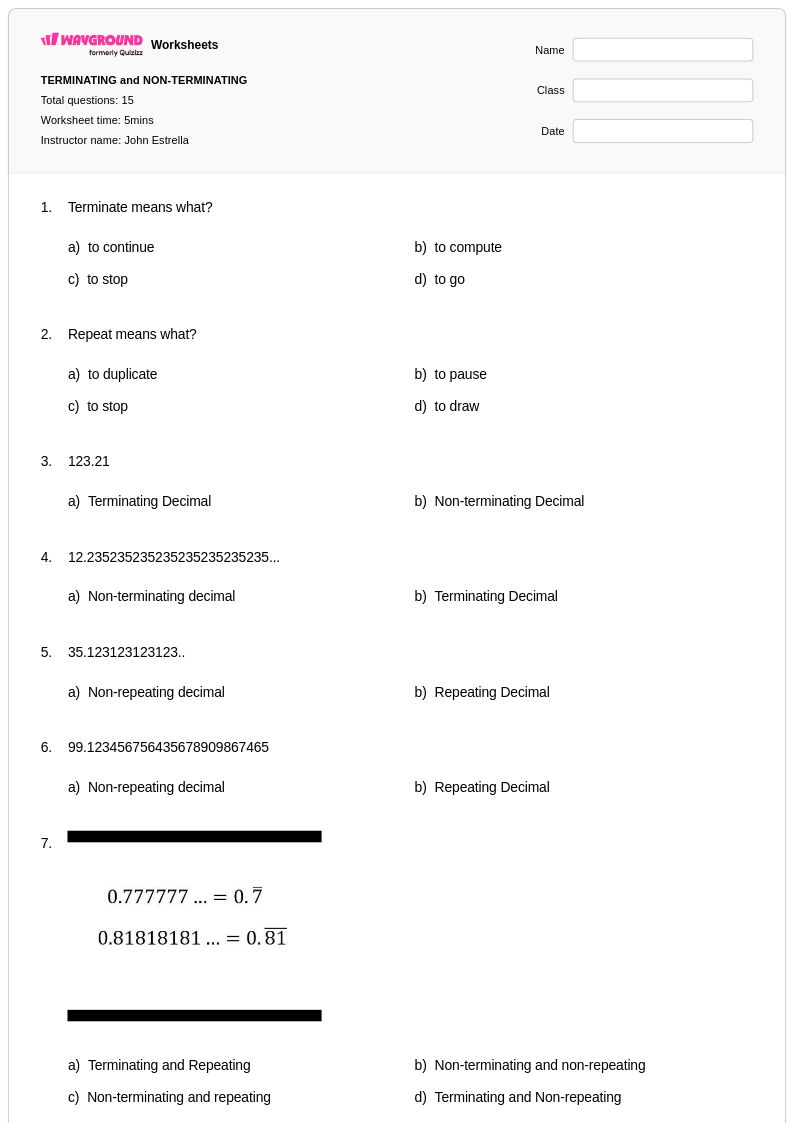
Wayground's free Grade 6 ellipses worksheets and printable PDFs help students master geometric properties through engaging practice problems with complete answer keys.
Grade 6 ellipse worksheets available through Wayground (formerly Quizizz) provide students with essential foundational practice in understanding this fundamental geometric shape. These comprehensive worksheets strengthen critical mathematical skills including identifying ellipse properties, recognizing major and minor axes, understanding focal points, and calculating basic measurements. Students work through carefully structured practice problems that build conceptual understanding while developing geometric reasoning abilities. Each worksheet collection includes detailed answer keys that support independent learning and self-assessment, with free printable pdf formats ensuring accessibility for all learning environments.
Wayground (formerly Quizizz) empowers educators with millions of teacher-created ellipse worksheet resources that streamline lesson planning and differentiated instruction. The platform's robust search and filtering capabilities allow teachers to quickly locate materials aligned with specific learning standards and student ability levels. Flexible customization tools enable educators to modify existing worksheets or create targeted practice sets for remediation and enrichment purposes. Available in both printable pdf and interactive digital formats, these ellipse worksheet collections support diverse classroom needs while providing comprehensive skill practice opportunities that help students master geometric concepts at their own pace.
FAQs
What do 6th graders need to know about ellipses?
At Grade 6, the focus is recognition and basic properties rather than equations. Students should be able to identify an ellipse as a closed, oval-shaped curve, distinguish it from a circle, and understand that it has a longer axis (major) and a shorter axis (minor). Foci are typically introduced conceptually — as the two special interior points — without requiring students to calculate their positions algebraically. The goal is building geometric intuition that later grades will formalize with coordinates and equations.
How do I teach ellipses at the 6th grade level?
A hands-on approach works well here. Have students draw ellipses using the two-pins-and-string method: pin two points on paper, loop a string around both pins, and trace the curve while keeping the string taut. This physically demonstrates the defining property — that the sum of distances to the two foci stays constant — without any algebra. Follow it with sorting activities where students classify shapes as circles, ellipses, or neither, reinforcing what makes an ellipse distinct.
What mistakes do 6th graders commonly make when learning about ellipses?
The most common confusion is treating an ellipse as simply a "squished circle" without understanding that it has a specific geometric definition. Students also frequently mix up the major and minor axes, especially when the ellipse is oriented vertically. A quick fix: always ask students to label both axes before answering any measurement question.
How do I use Wayground's Grade 6 ellipses worksheets in my classroom?
The worksheets include a complete answer key, making them easy to assign for independent practice or as a homework follow-up to a hands-on lesson. Print the PDF for paper-based work — good for keeping younger students off screens during focused practice time — or host it as a digital activity on Wayground if you want to review results quickly. Either way, the same content, same answer key.
How does learning about ellipses in 6th grade connect to later math?
Grade 6 ellipse work is primarily geometric — shape recognition, axis identification, and basic measurement. That foundation matters because high school geometry and algebra build directly on it: students will eventually write and graph ellipse equations in standard form, calculate foci algebraically, and connect ellipses to the broader family of conic sections. Students who enter those courses already comfortable with the vocabulary and visual properties of ellipses have a meaningful head start.
How can I support diverse learners with ellipses practice at Grade 6?
For students who struggle with reading directions on geometry worksheets, Wayground's read-aloud feature can reduce the language barrier so they can focus on the spatial reasoning. If you have students who need a more accessible format, you can generate a version of the worksheet with a larger font or a dyslexia-friendly font — same problems, easier to read. For students who need more processing time on timed digital activities, extended time can be set per student without other students being aware of the adjustment.