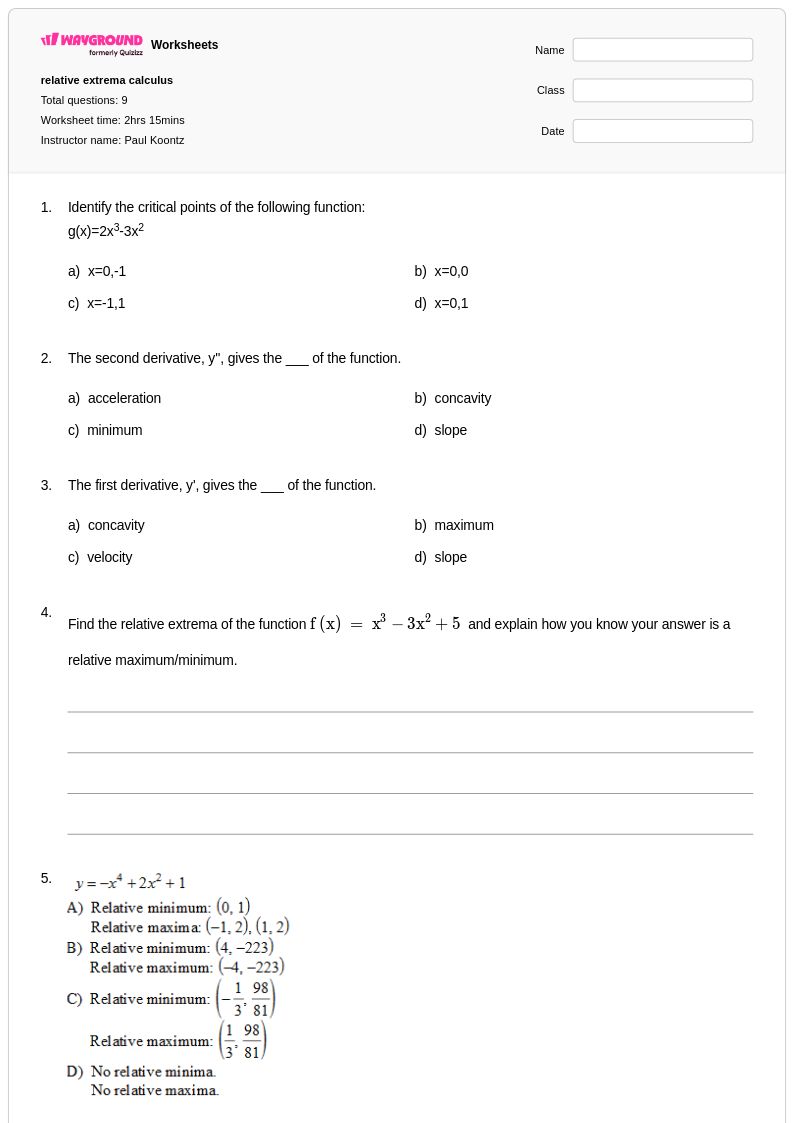
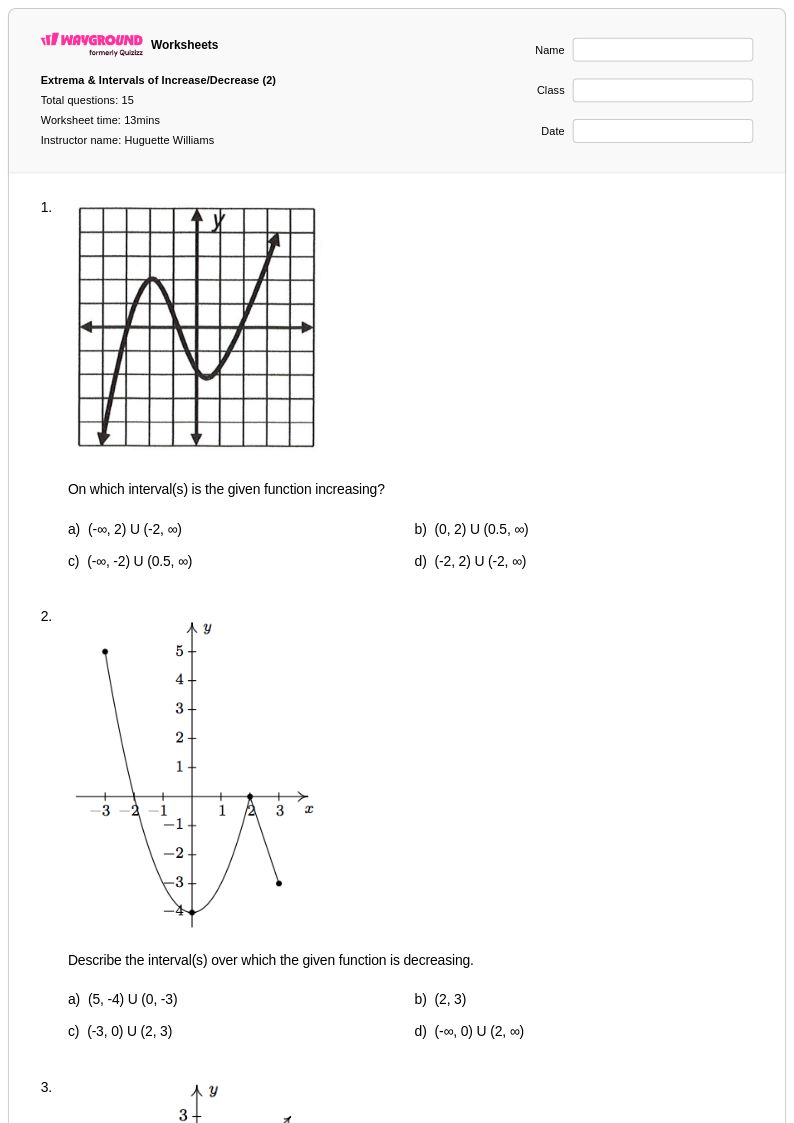
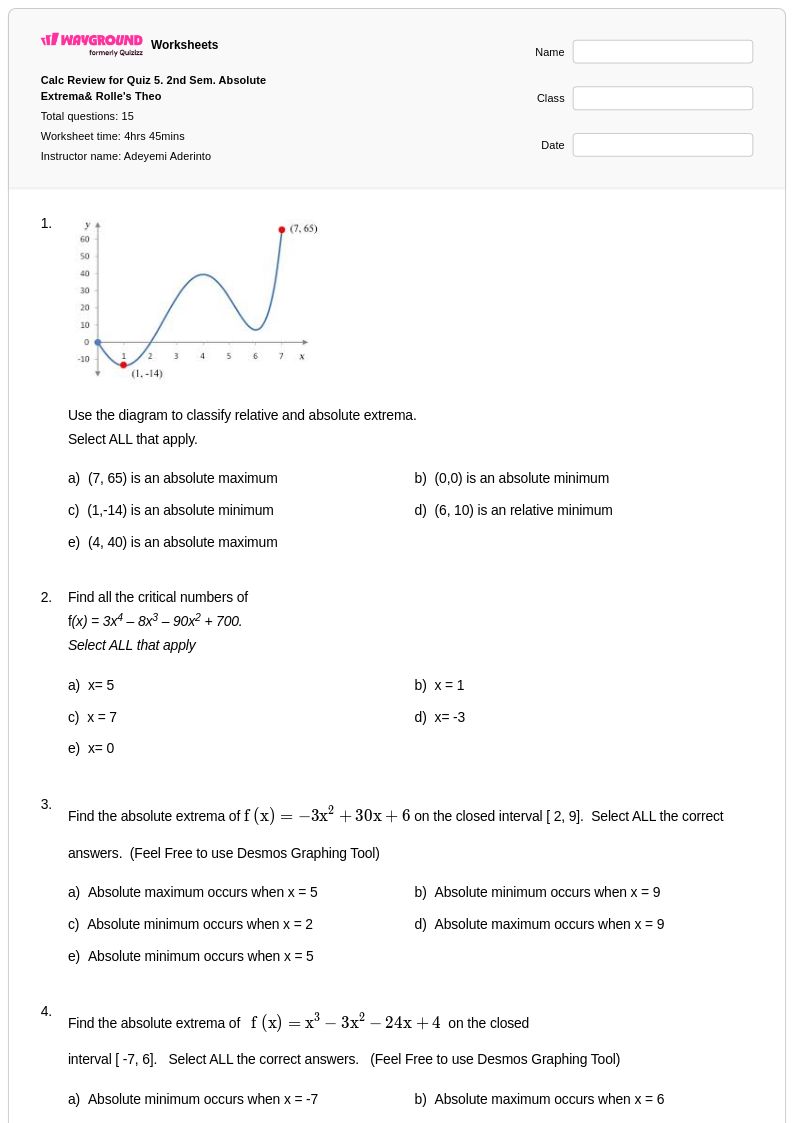
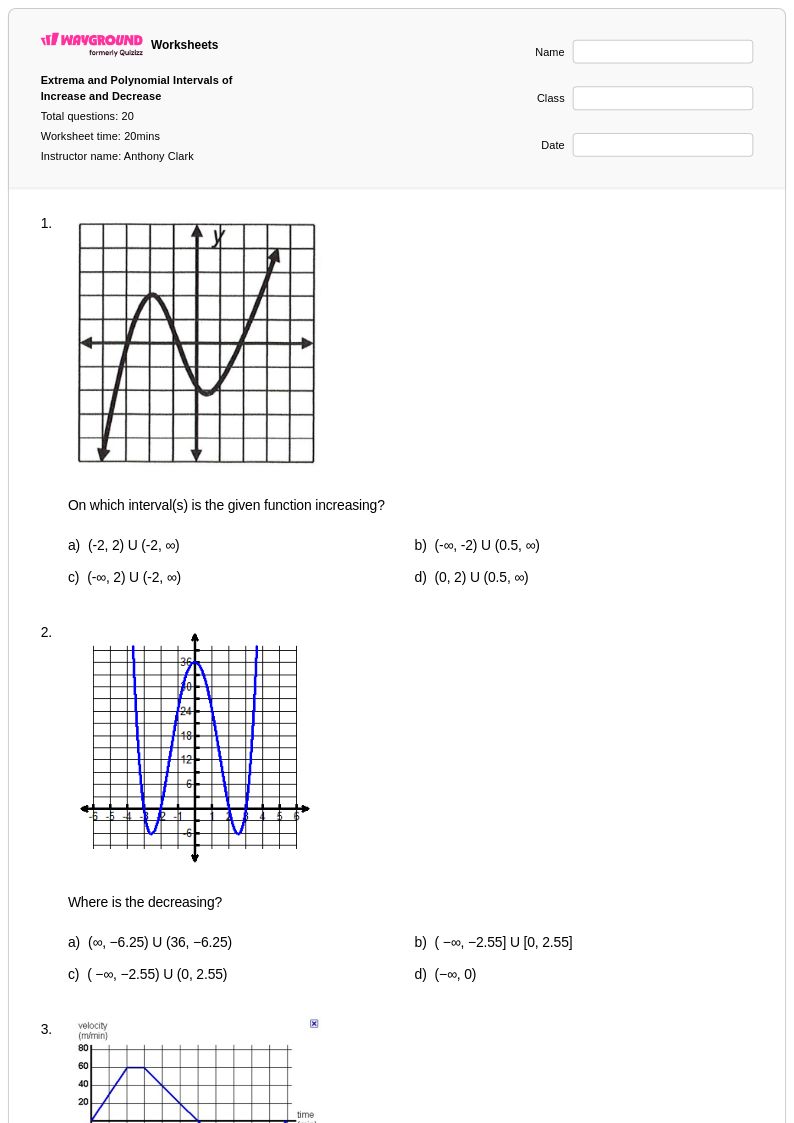
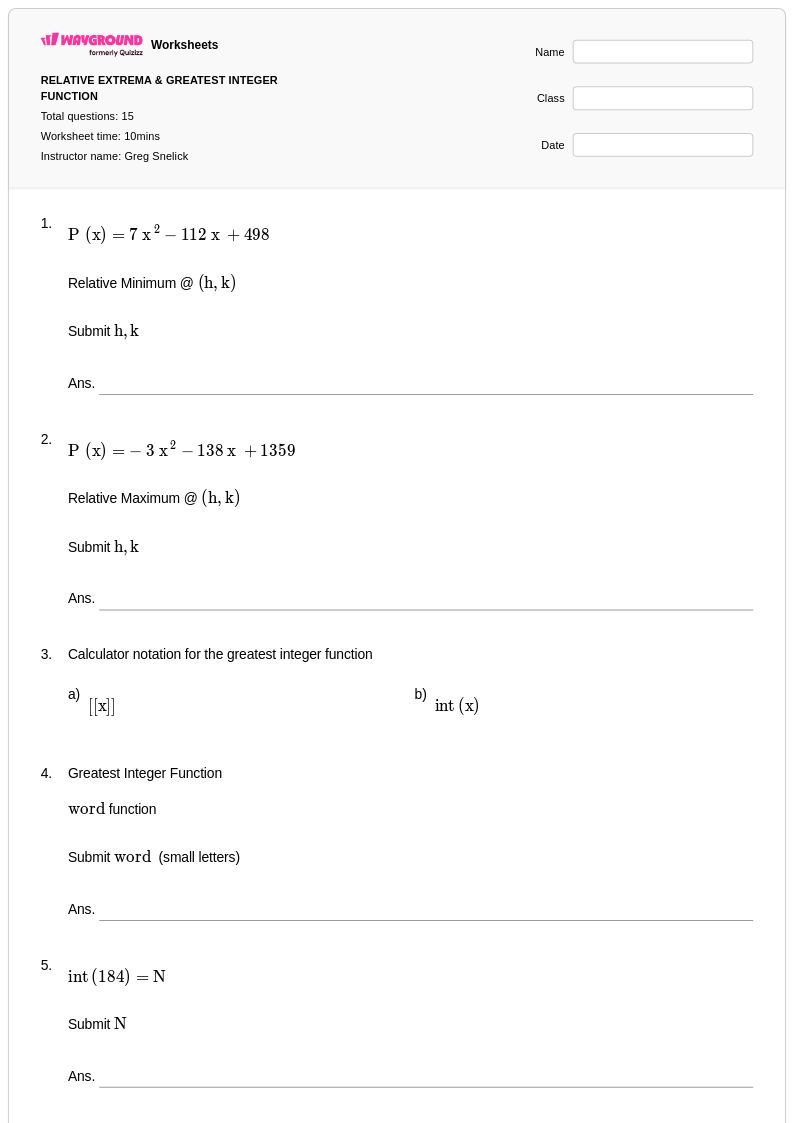
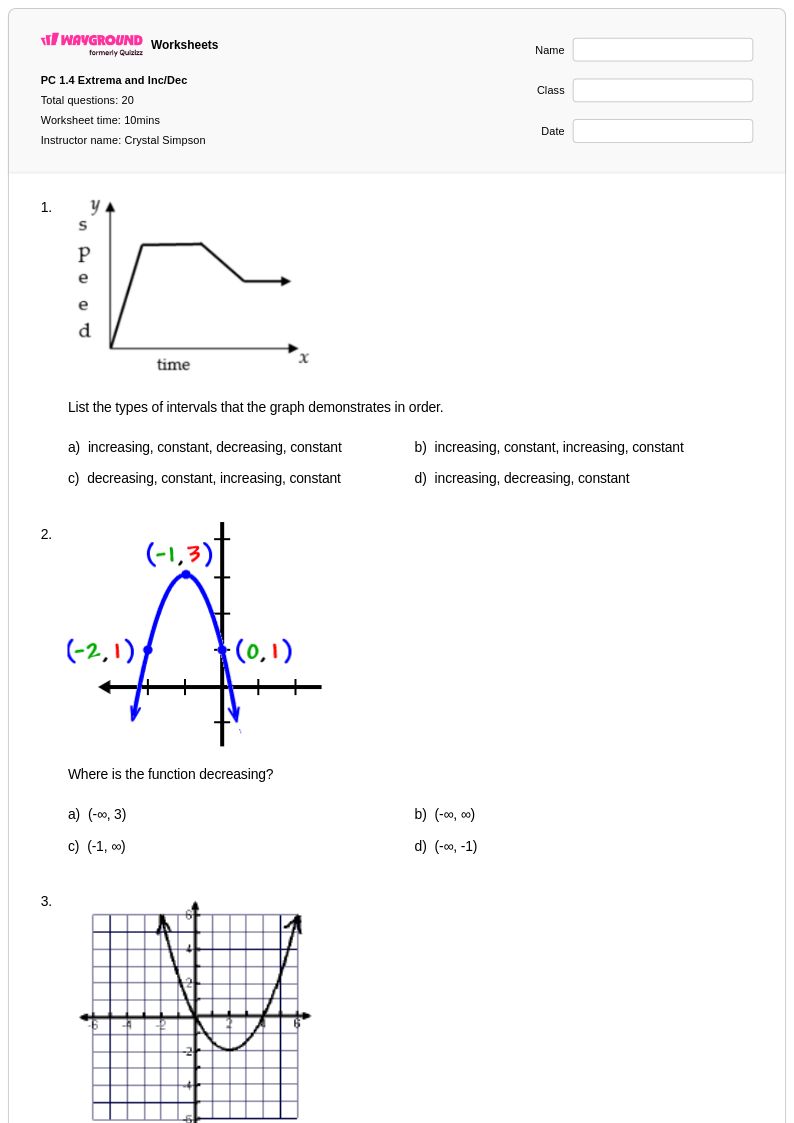
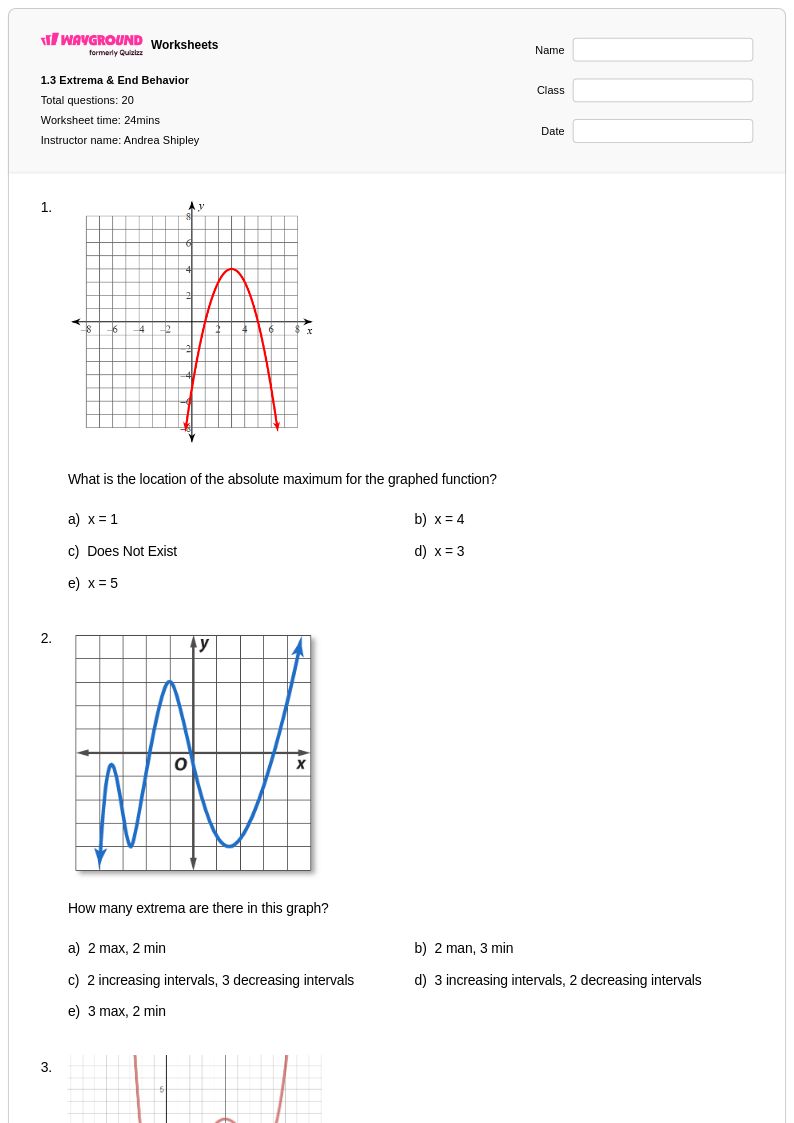
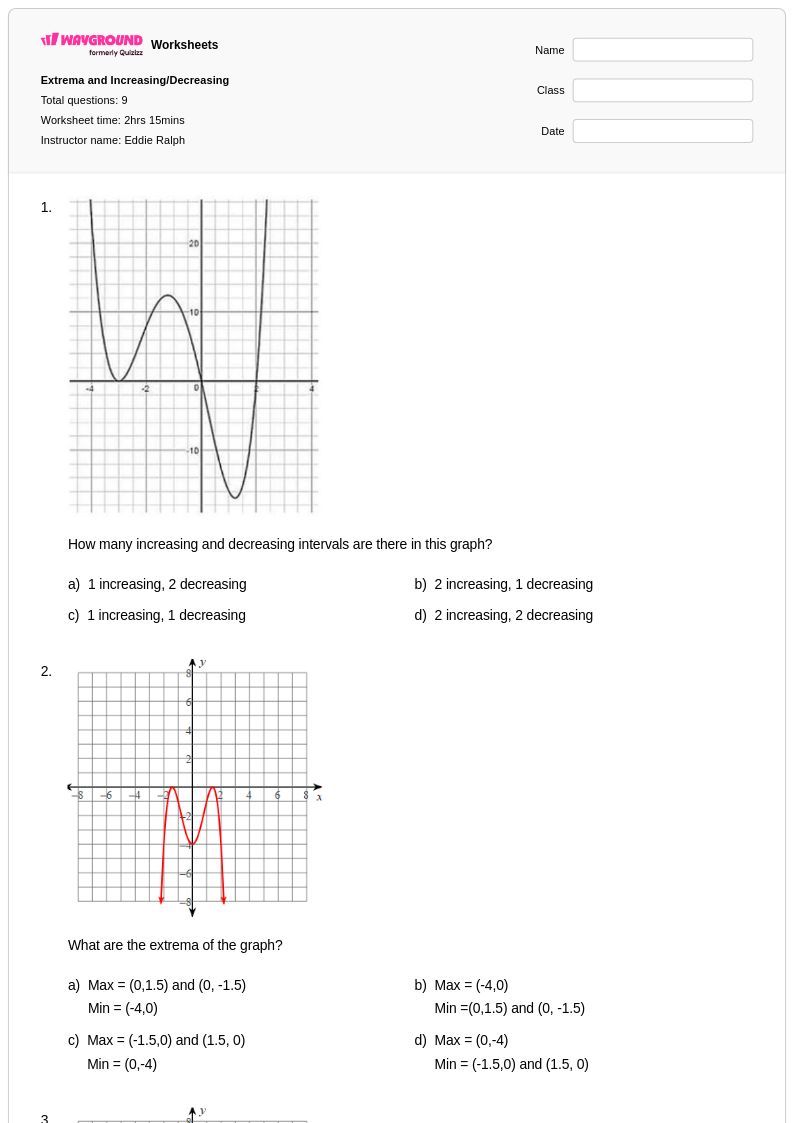
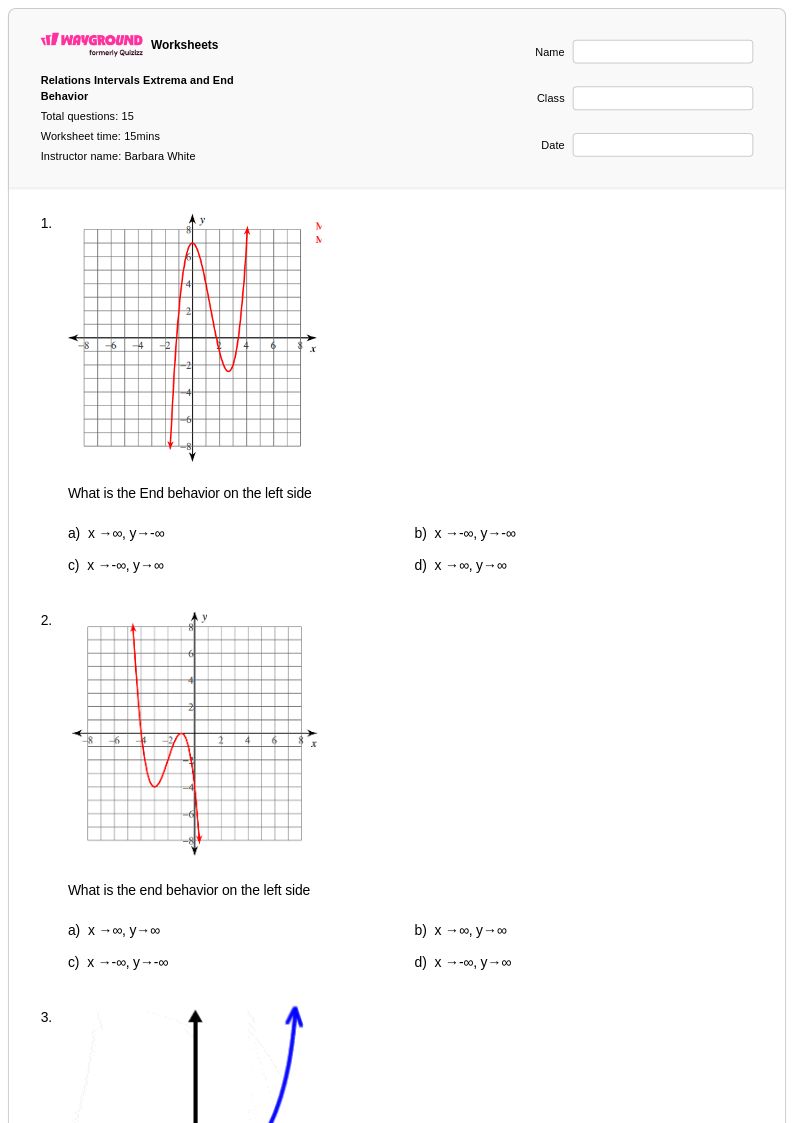
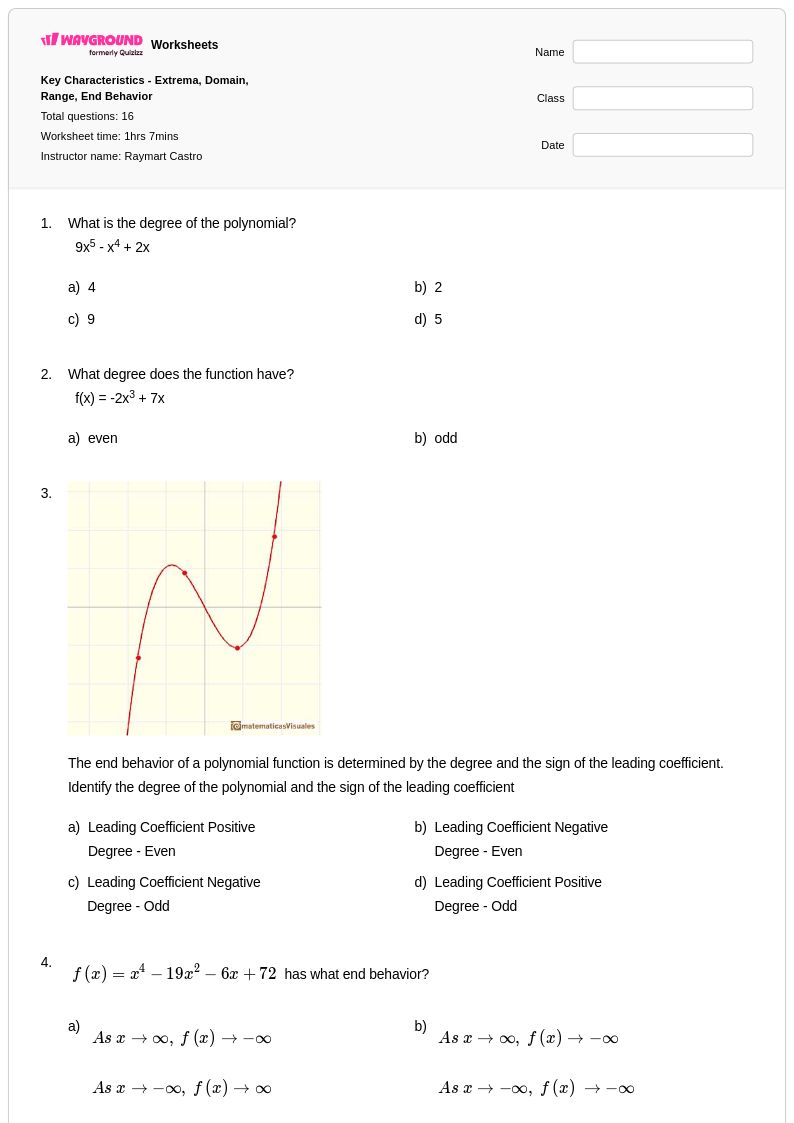
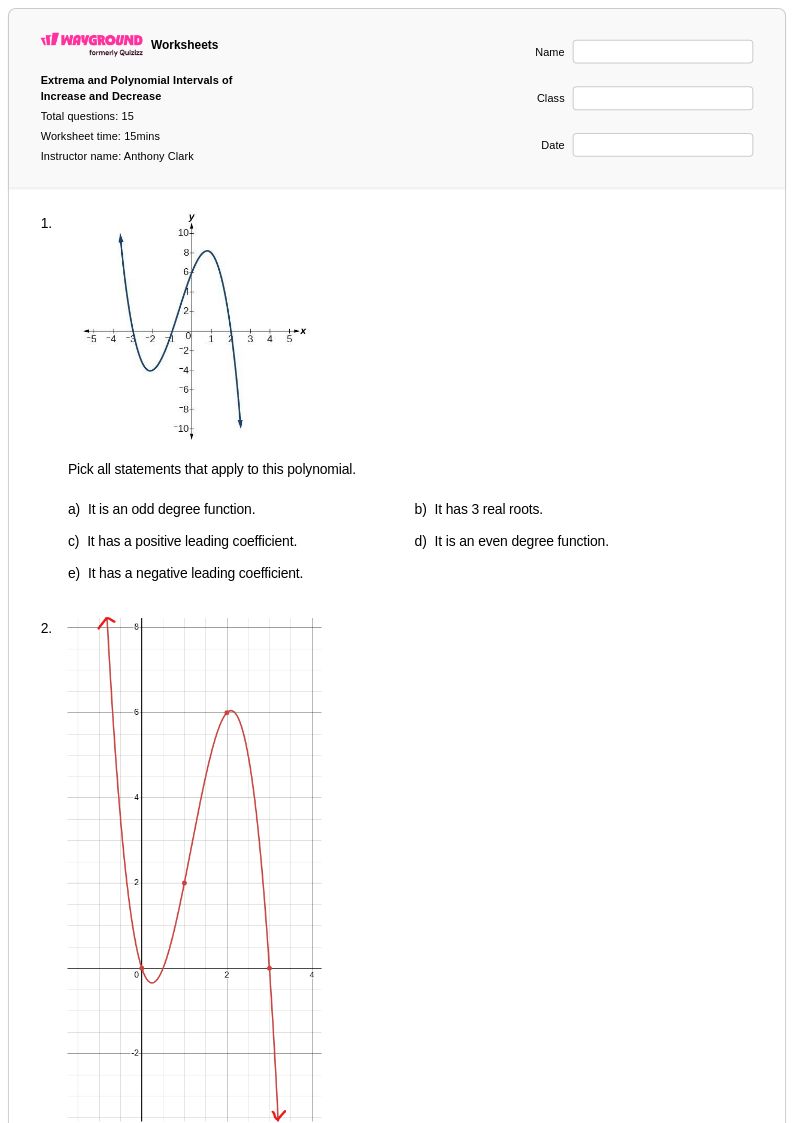
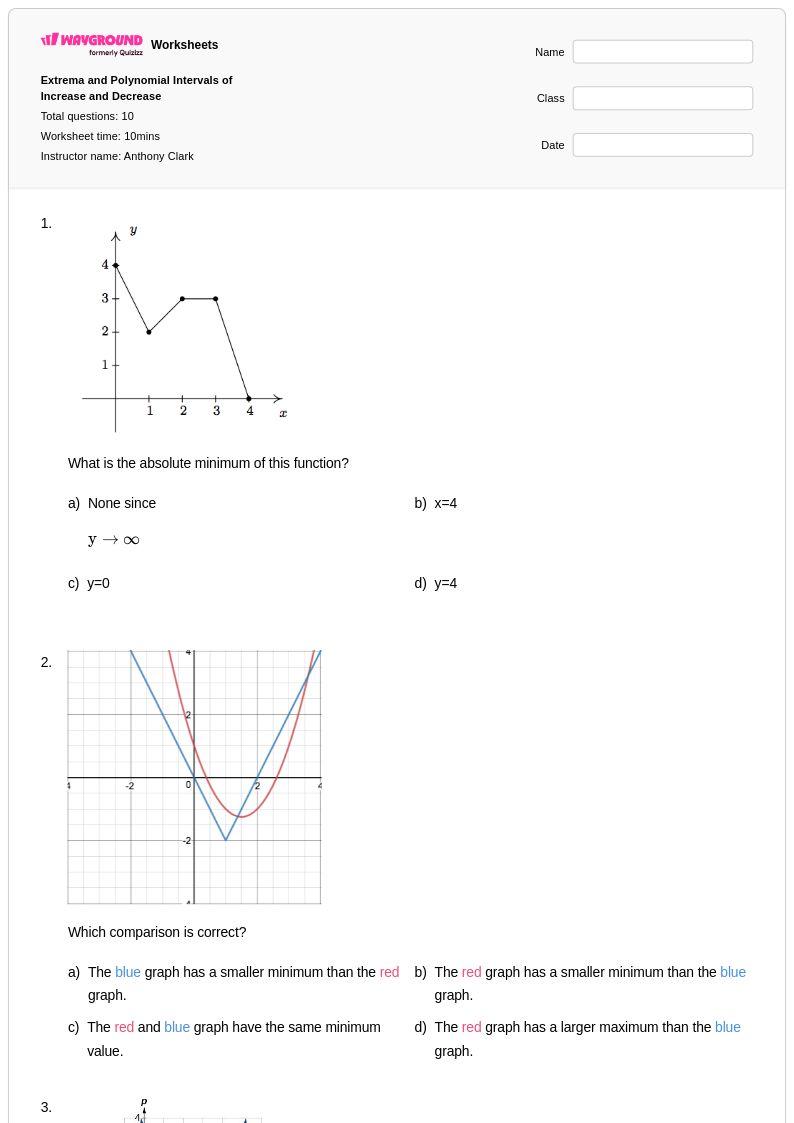
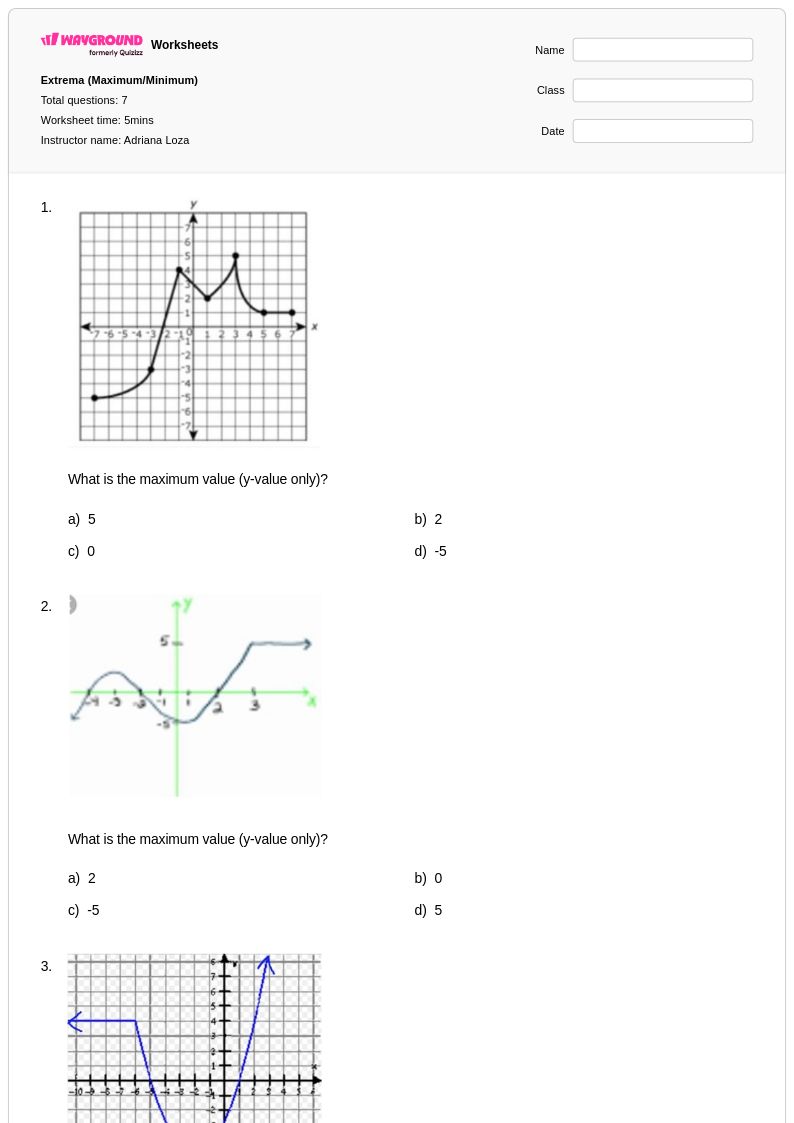
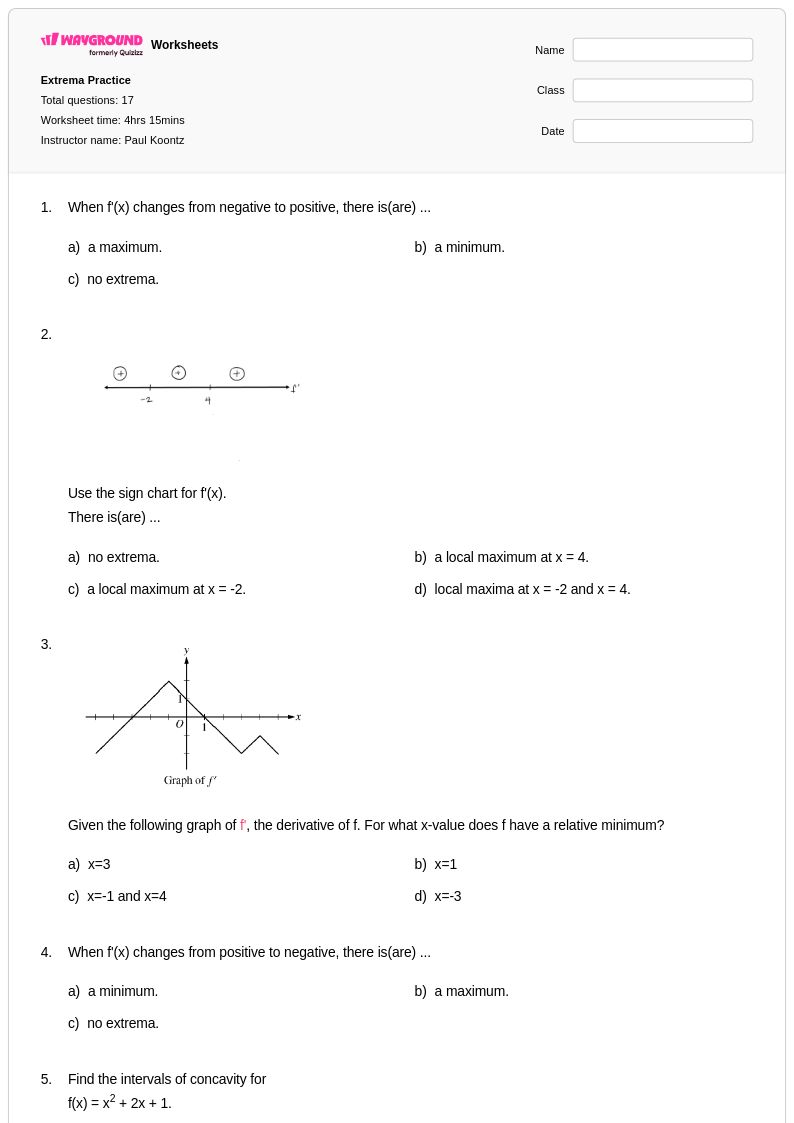
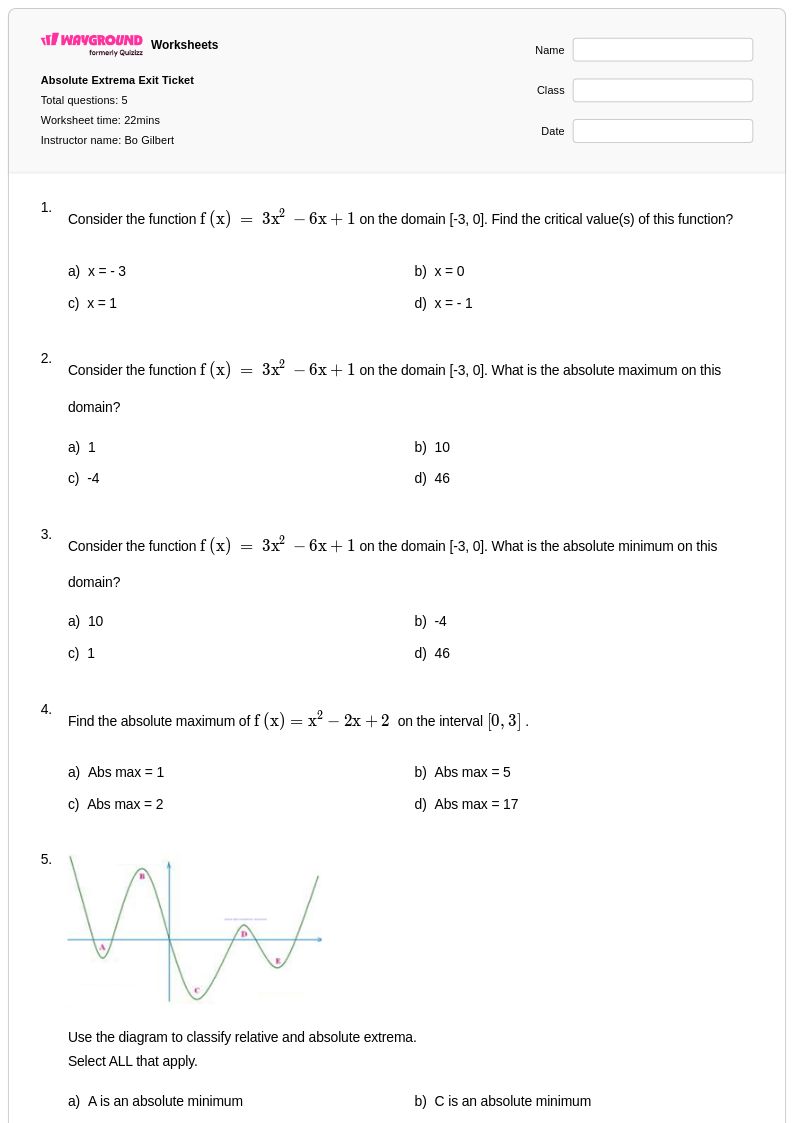
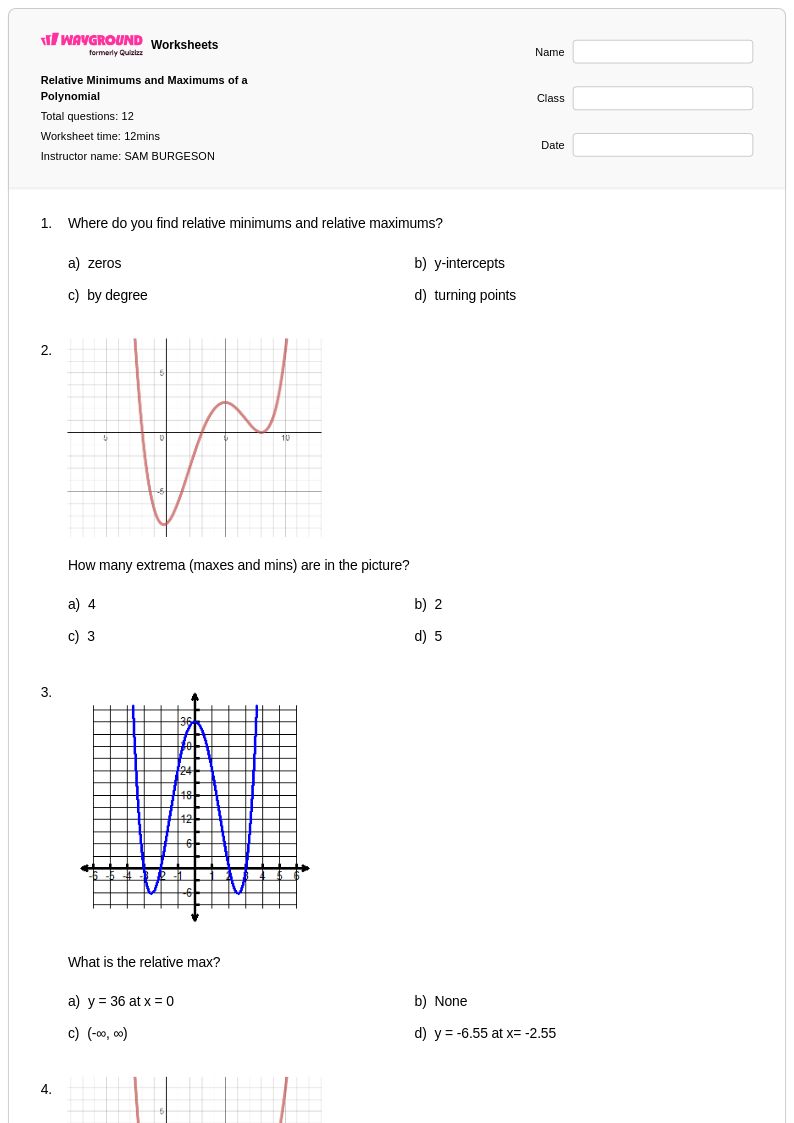
Free Grade 9 extrema worksheets and printables help students master finding maximum and minimum values in calculus through comprehensive practice problems with detailed answer keys and downloadable PDFs.
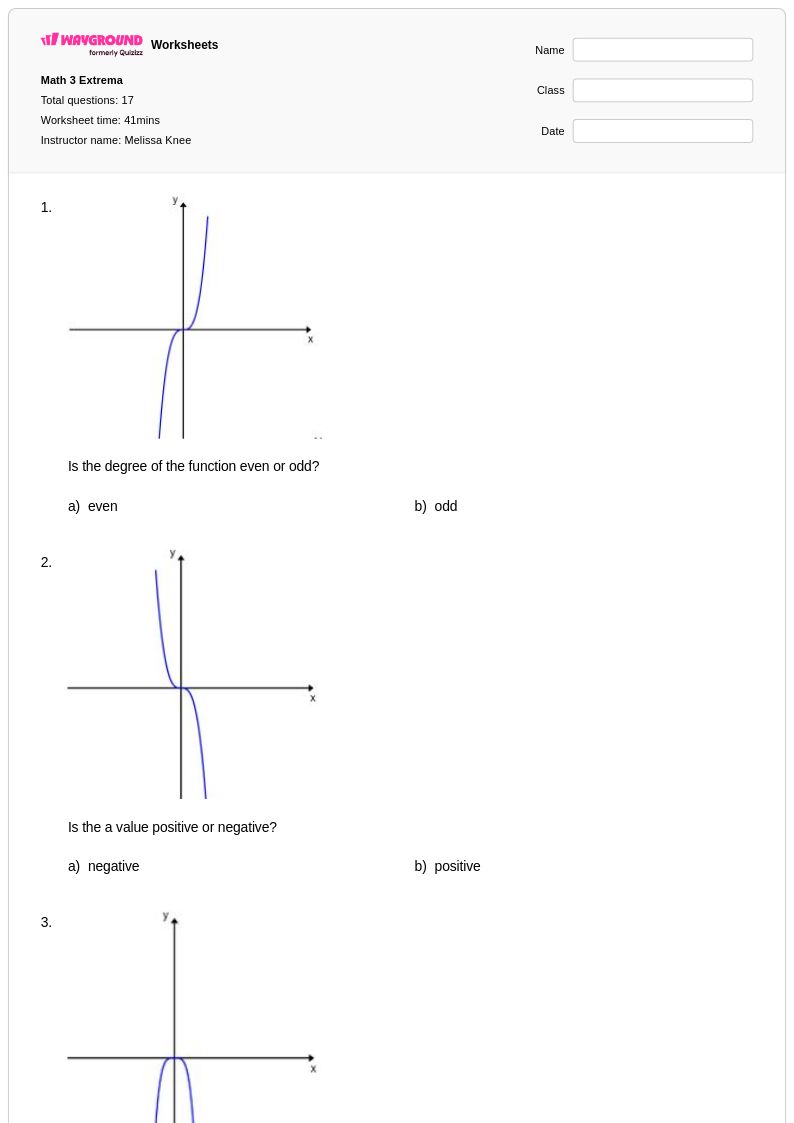
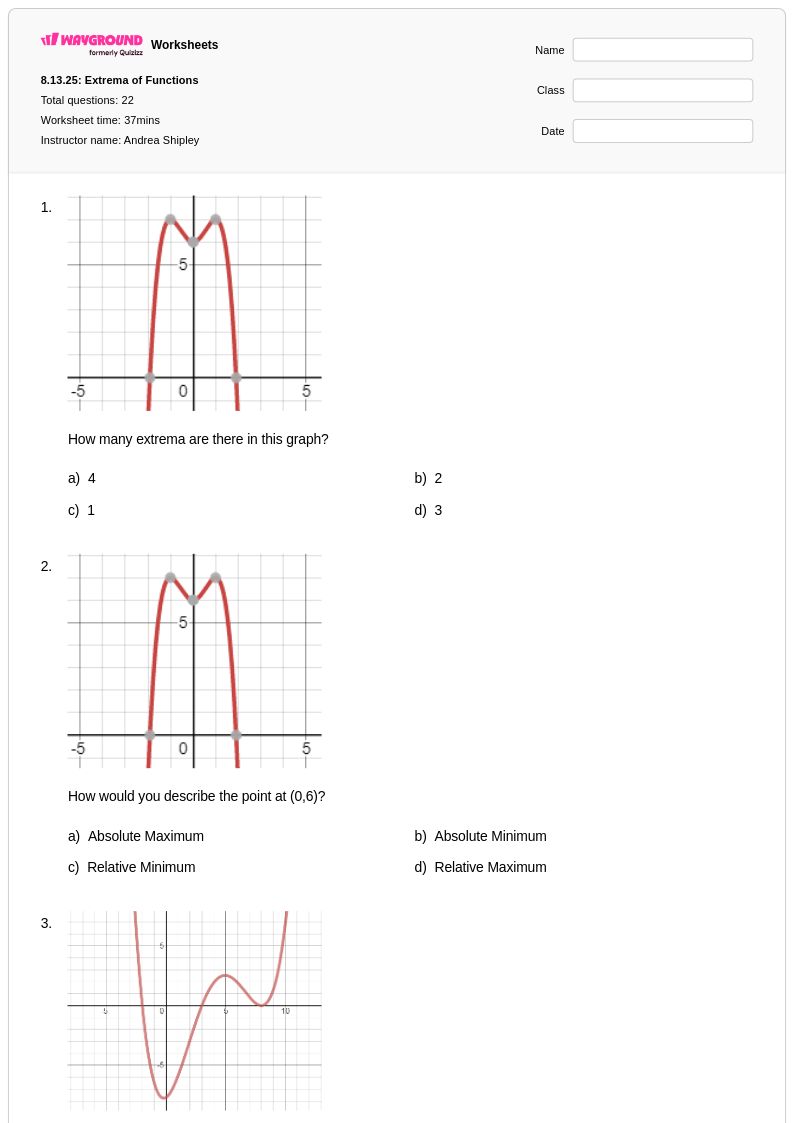
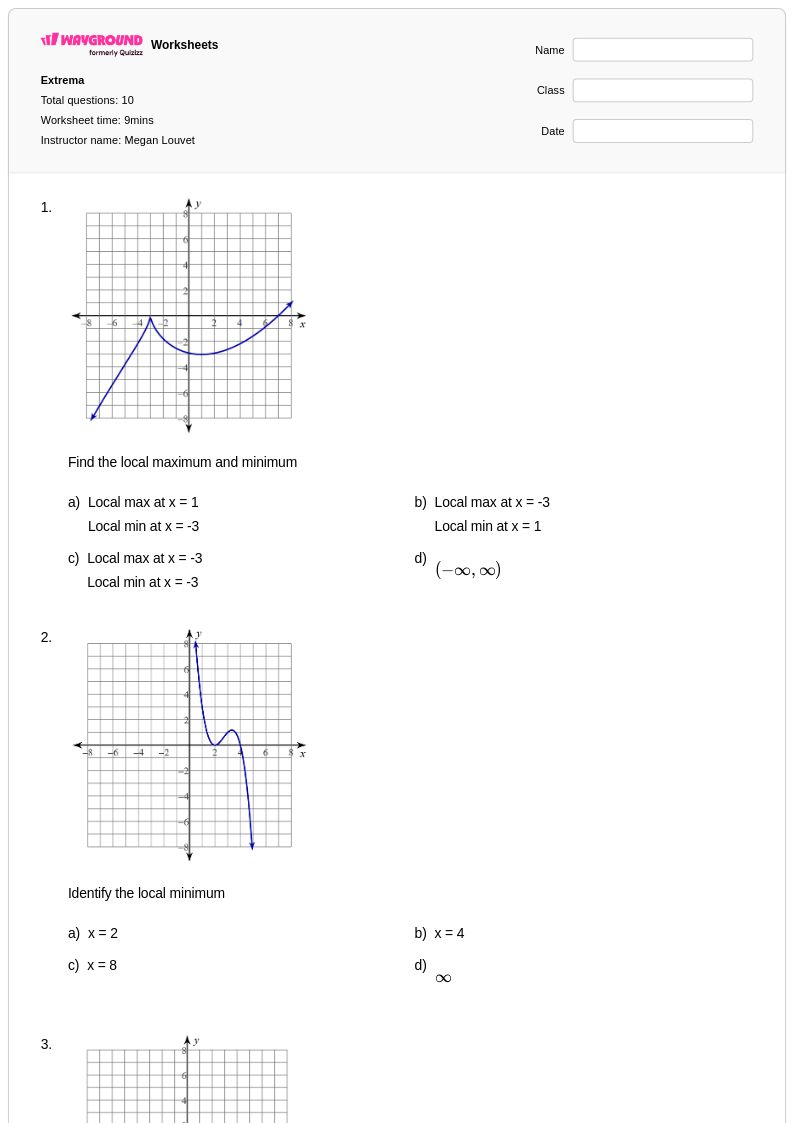
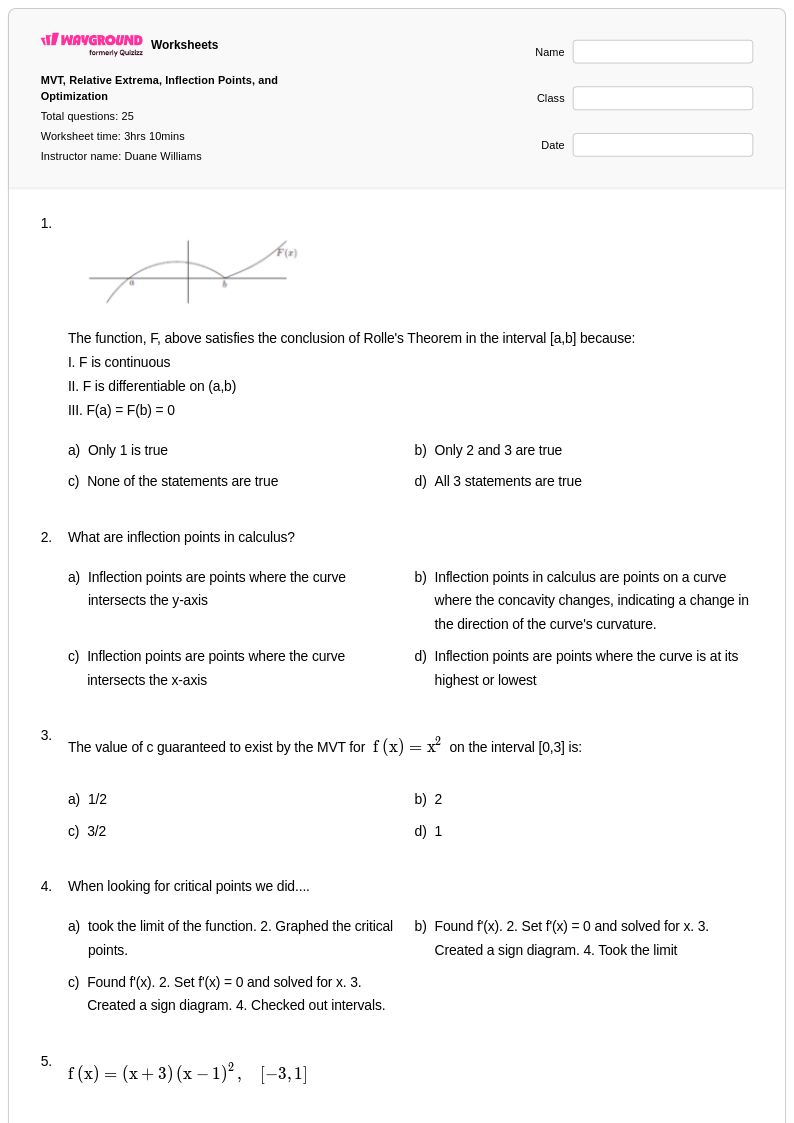
Extrema worksheets for Grade 9 students through Wayground (formerly Quizizz) provide comprehensive practice in identifying and analyzing maximum and minimum values of functions, a fundamental concept in introductory calculus. These carefully designed worksheets strengthen students' abilities to locate critical points, determine absolute and relative extrema, and apply the first and second derivative tests to classify these points. Students work through practice problems that build conceptual understanding while developing the analytical skills necessary for advanced mathematical reasoning. Each worksheet collection includes detailed answer keys and is available as free printables in convenient pdf format, ensuring teachers have immediate access to both instructional materials and assessment tools for this essential calculus topic.
Wayground (formerly Quizizz) supports mathematics educators with millions of teacher-created extrema resources that streamline lesson planning and enhance student learning outcomes. The platform's robust search and filtering capabilities allow teachers to quickly locate worksheets aligned with specific curriculum standards while accessing differentiation tools that accommodate diverse learning needs within Grade 9 classrooms. These customizable resources are available in both printable pdf and interactive digital formats, providing flexibility for traditional classroom instruction, remote learning, and hybrid educational environments. Teachers utilize these comprehensive worksheet collections for targeted skill practice, remediation support for struggling students, and enrichment opportunities for advanced learners, ensuring all students develop mastery of extrema concepts essential for calculus success.
FAQs
How do I introduce extrema to Grade 9 students?
At Grade 9, most students are encountering the idea of maximum and minimum values before formal calculus, so lead with context they already know: the vertex of a parabola is a classic extremum. From there, you can build toward the idea that something special happens to the rate of change at a peak or valley — the function stops increasing and starts decreasing, or vice versa. Keep the early problems on polynomial functions where the behavior is predictable, and hold off on derivative tests until students have solid graphical intuition.
What exercises help Grade 9 students practice identifying extrema?
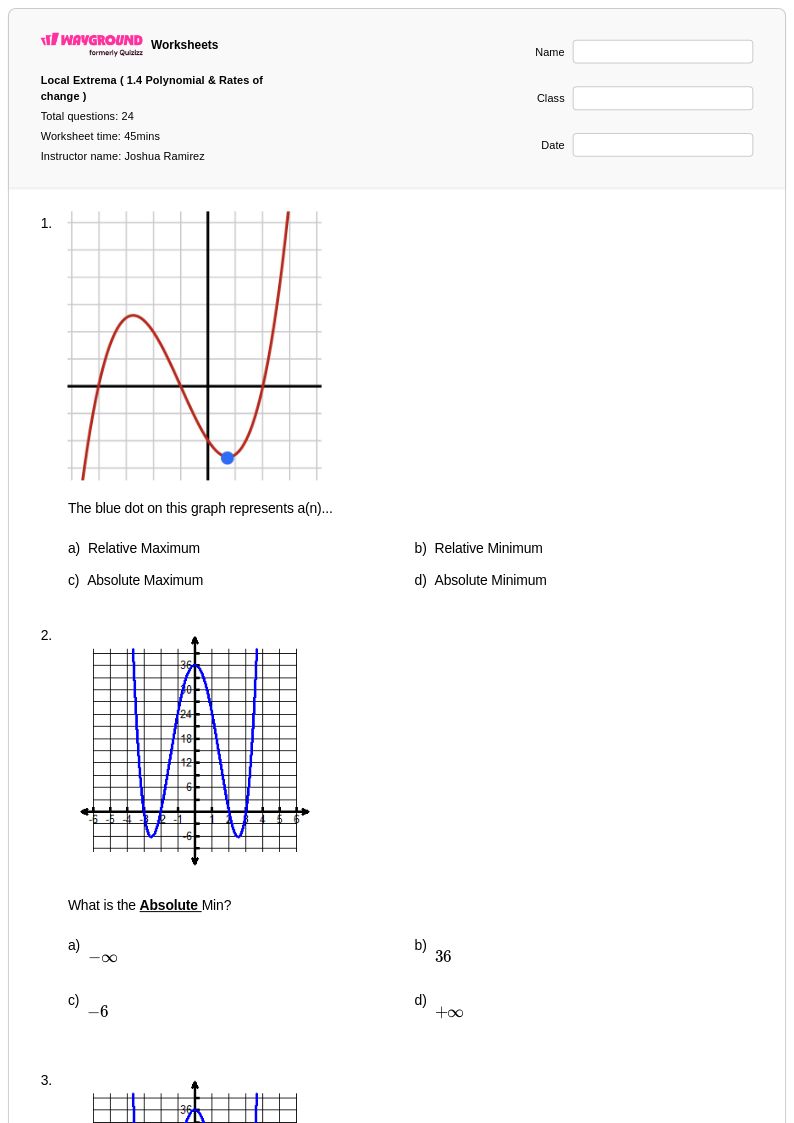
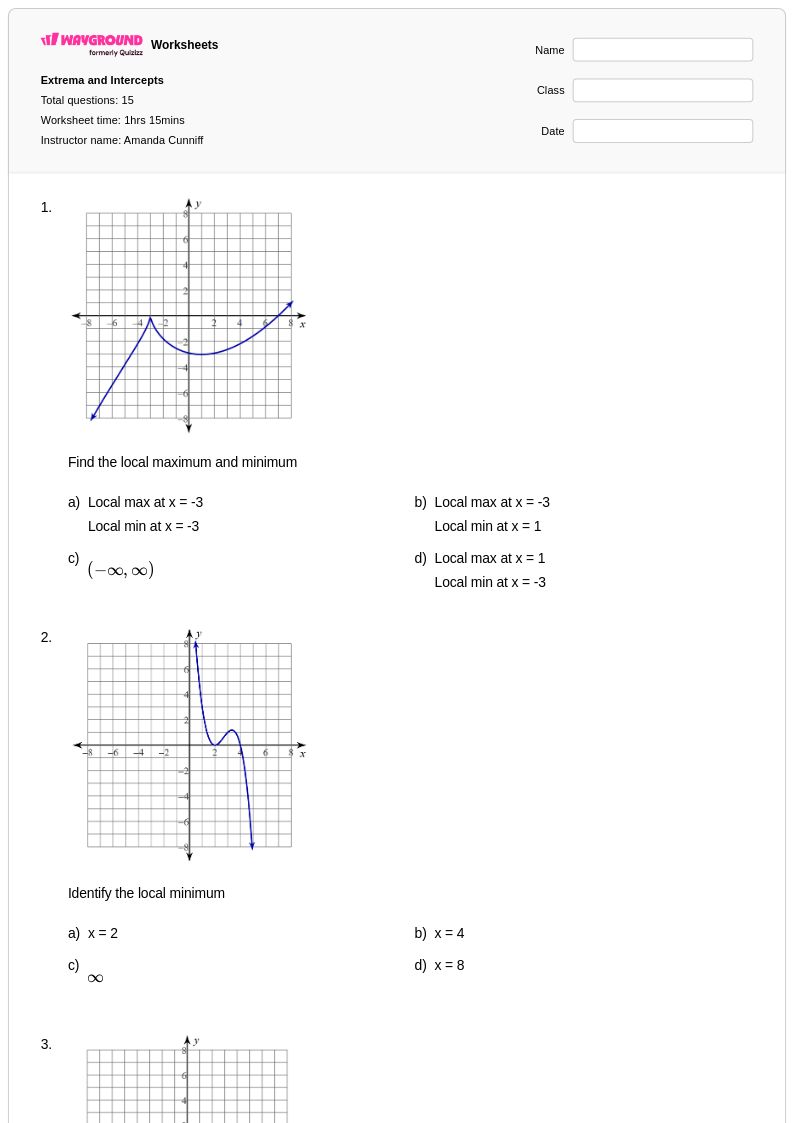
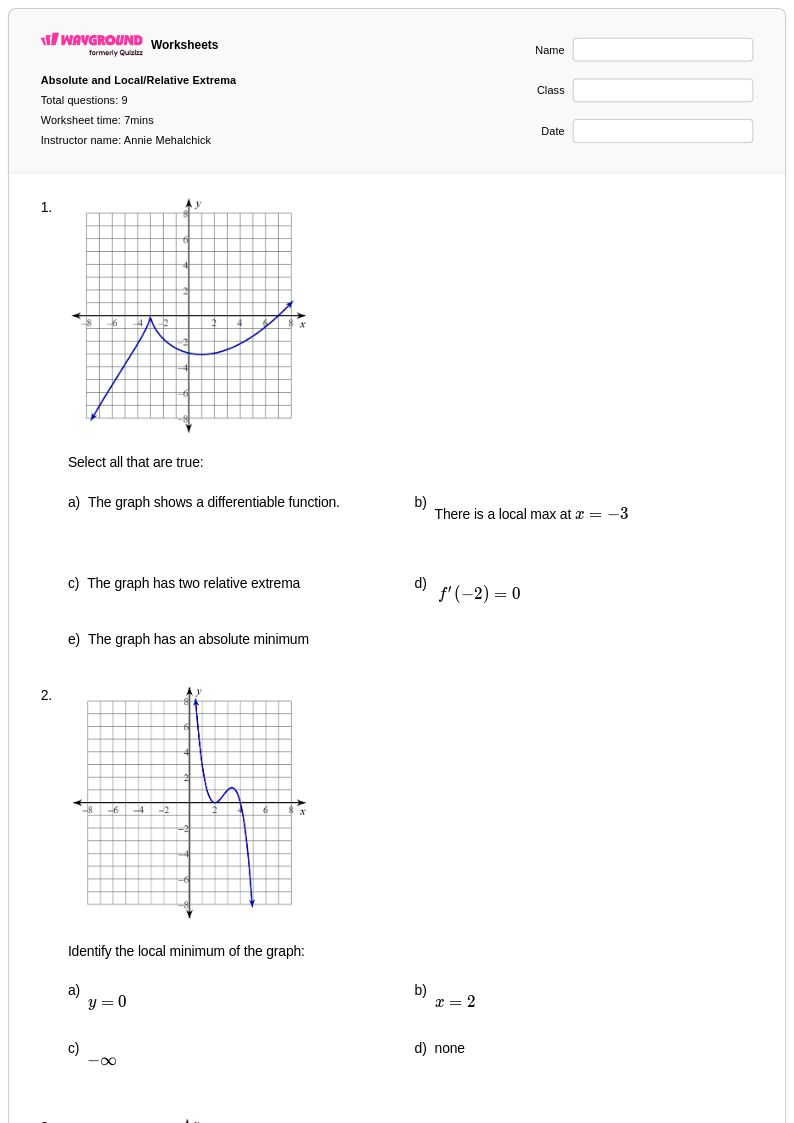
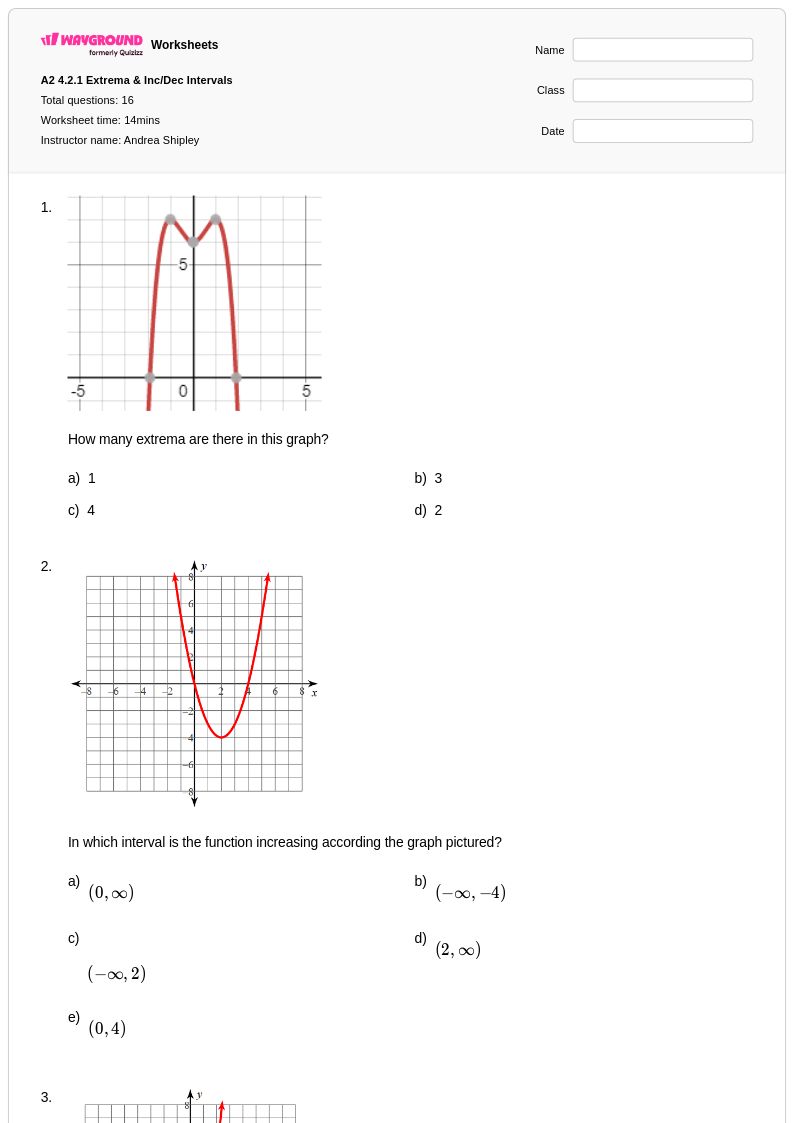
Graph-based problems are the right starting point — give students a curve and ask them to identify and label local maxima, local minima, and whether any of those are absolute. Once that's solid, move to tables of values where students infer extrema from patterns in the data. Wayground's Grade 9 extrema worksheets build from these foundational identification tasks toward more analytical work with critical points, so students aren't thrown into derivative tests before they're ready.
What misconceptions do Grade 9 students have about maximum and minimum values?
The most common one: students conflate "the highest point on the graph" with "the absolute maximum," even when the graph is only showing a restricted window. They also frequently assume a function must have both a maximum and a minimum, which breaks down for linear functions or unbounded curves. A quick counterexample — asking whether y = x has a maximum — tends to surface and fix that assumption efficiently.
How do I use Wayground's Grade 9 extrema worksheets in my class?
The worksheets include a complete answer key, so formative use is straightforward. For in-class paper practice — useful if you're managing screen time — download the printable PDF and distribute it; you can grade submissions later using the Wayground for Teachers app by scanning student work. If you want immediate feedback for students, host the same worksheet as a digital quiz on Wayground instead.
What grade level is extrema typically taught?
Extrema as a formal calculus topic — using derivative tests to classify critical points — is typically taught in Grades 11–12 in a pre-calculus or AP Calculus course. However, the foundational concept of maximum and minimum values of functions appears earlier: Grade 9 students commonly work with extrema graphically and in the context of quadratic functions, building the intuition that supports the formal treatment later.
How can I support diverse learners with extrema practice at Grade 9?
Extrema problems at this level often involve reading graphs and interpreting function behavior, which can be a barrier for students with visual processing or reading challenges. Wayground's Read Aloud accommodation helps with written problem text, and adjustable font size and spacing on the worksheet itself make graph-heavy pages easier to navigate. For students who need more scaffolding, reducing answer choices on digital assignments keeps the focus on identifying the extremum rather than getting lost in the options.