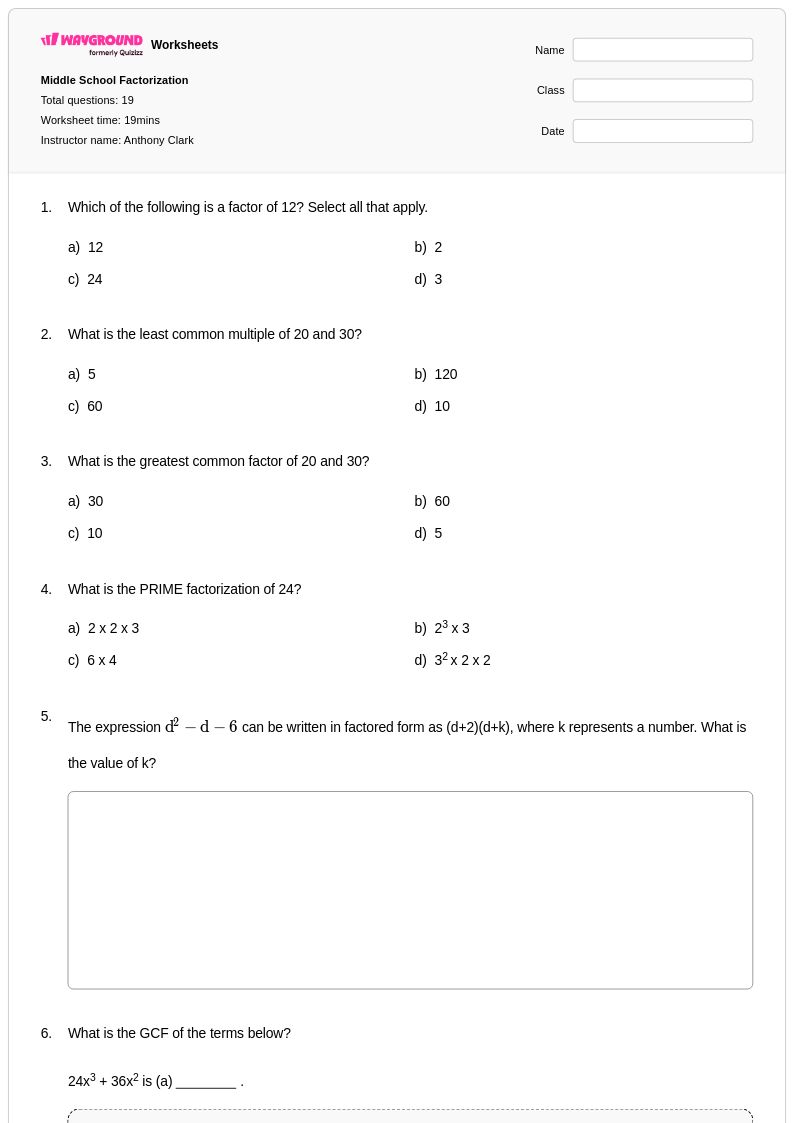
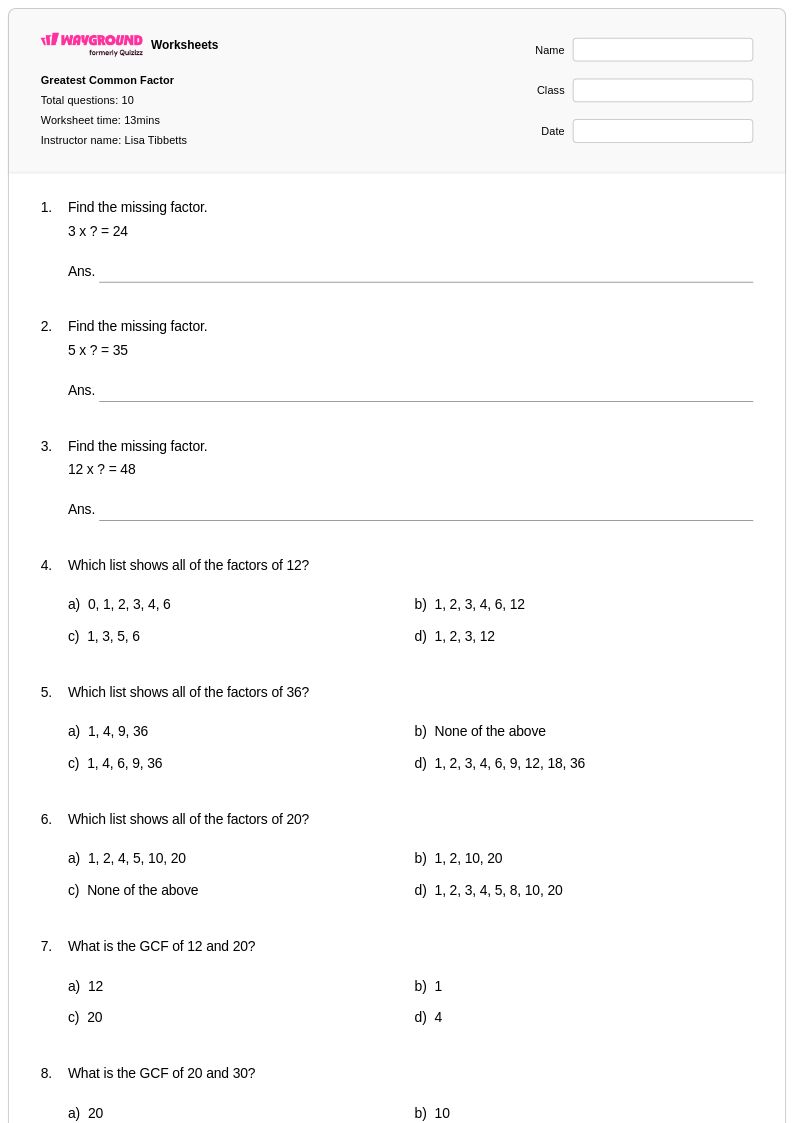
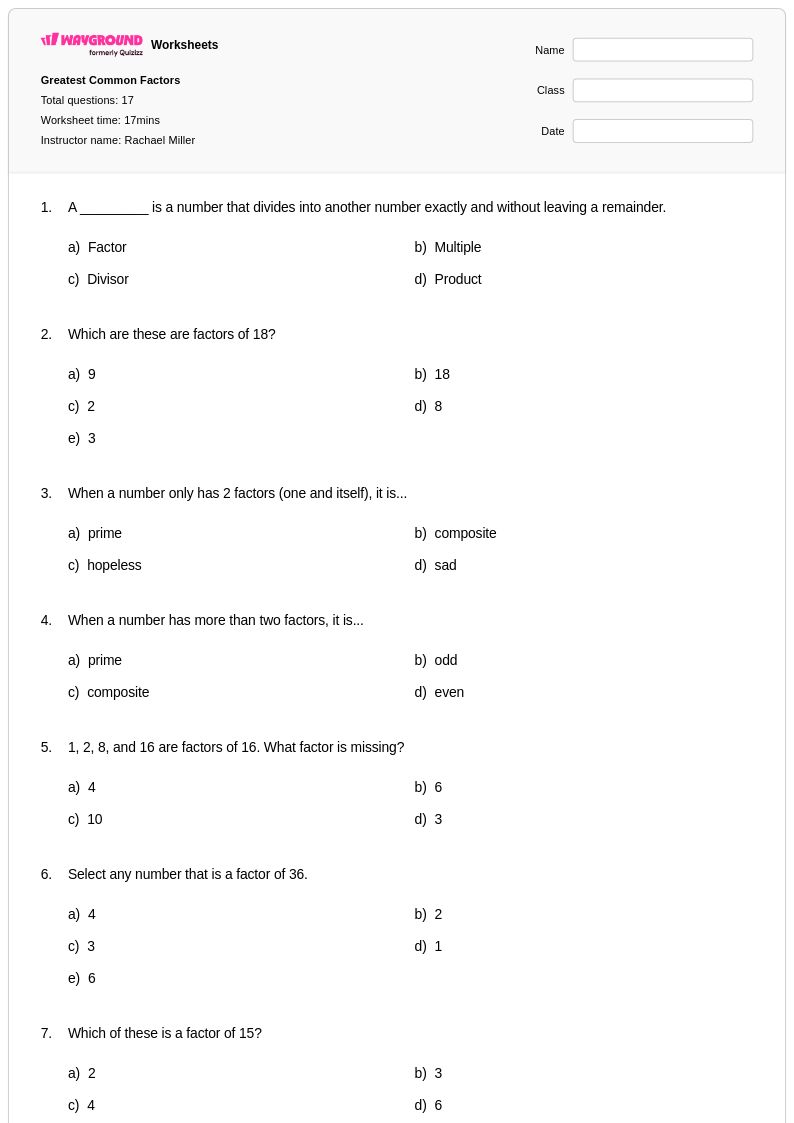
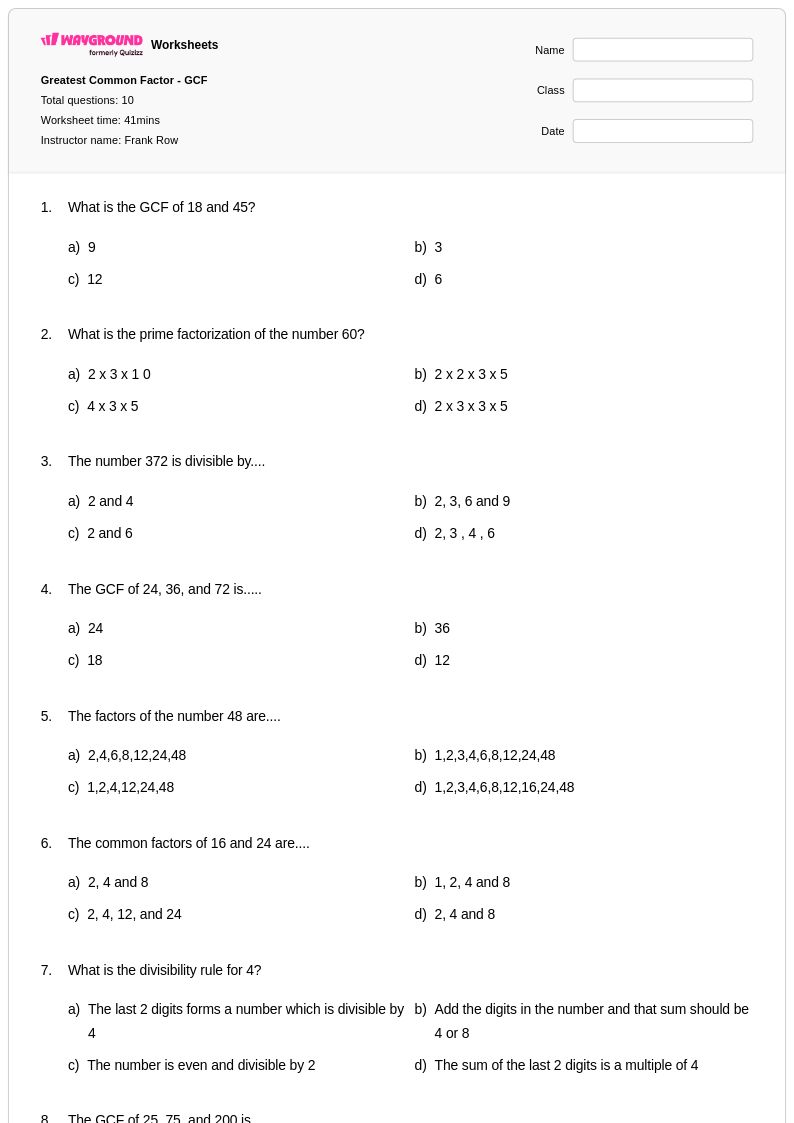
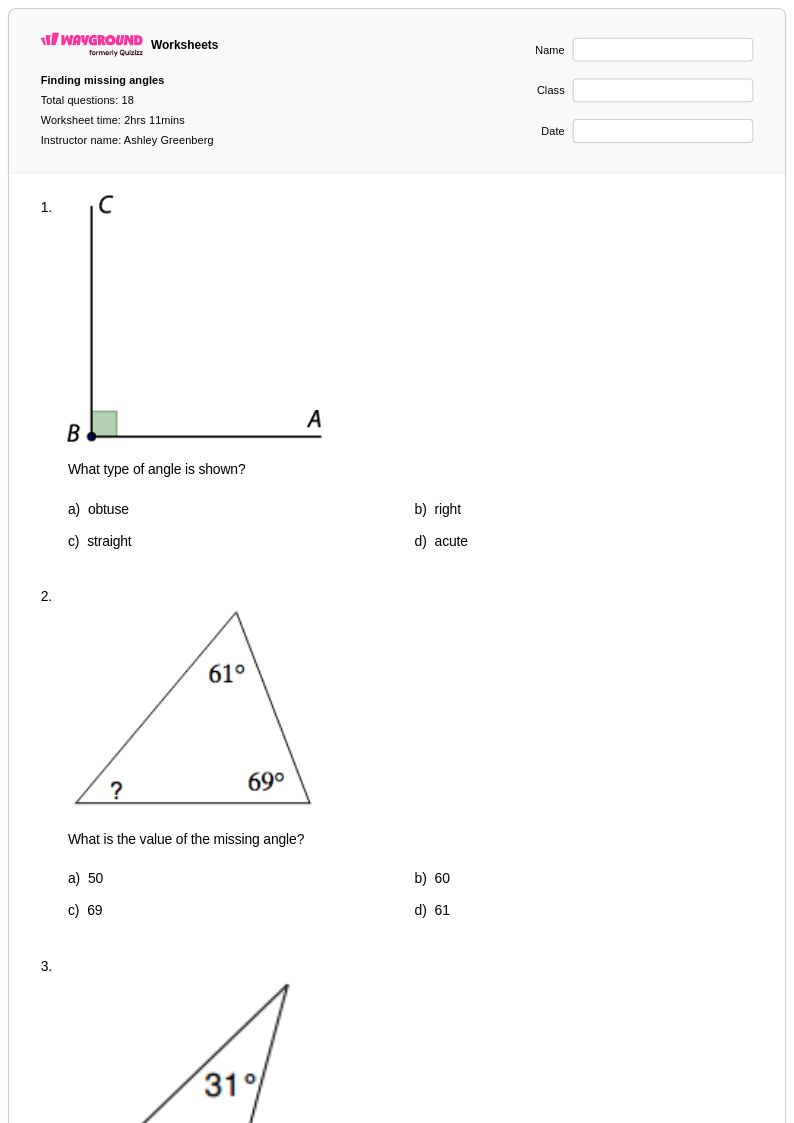
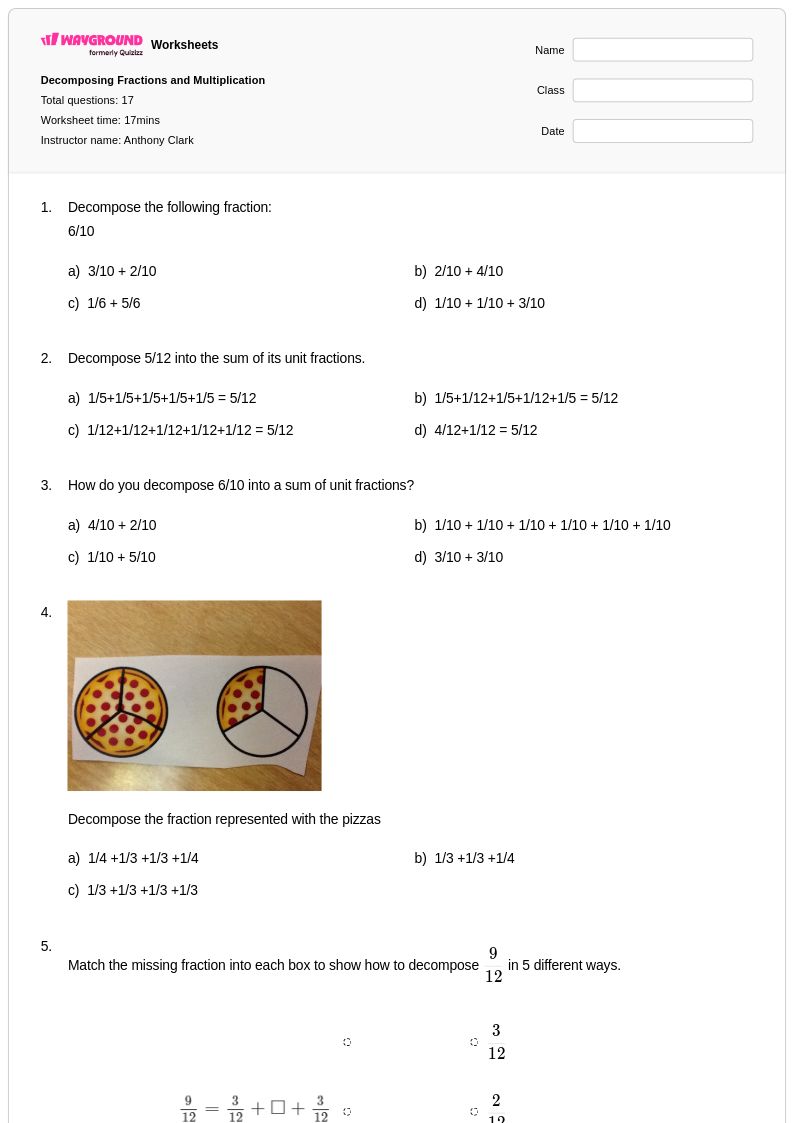
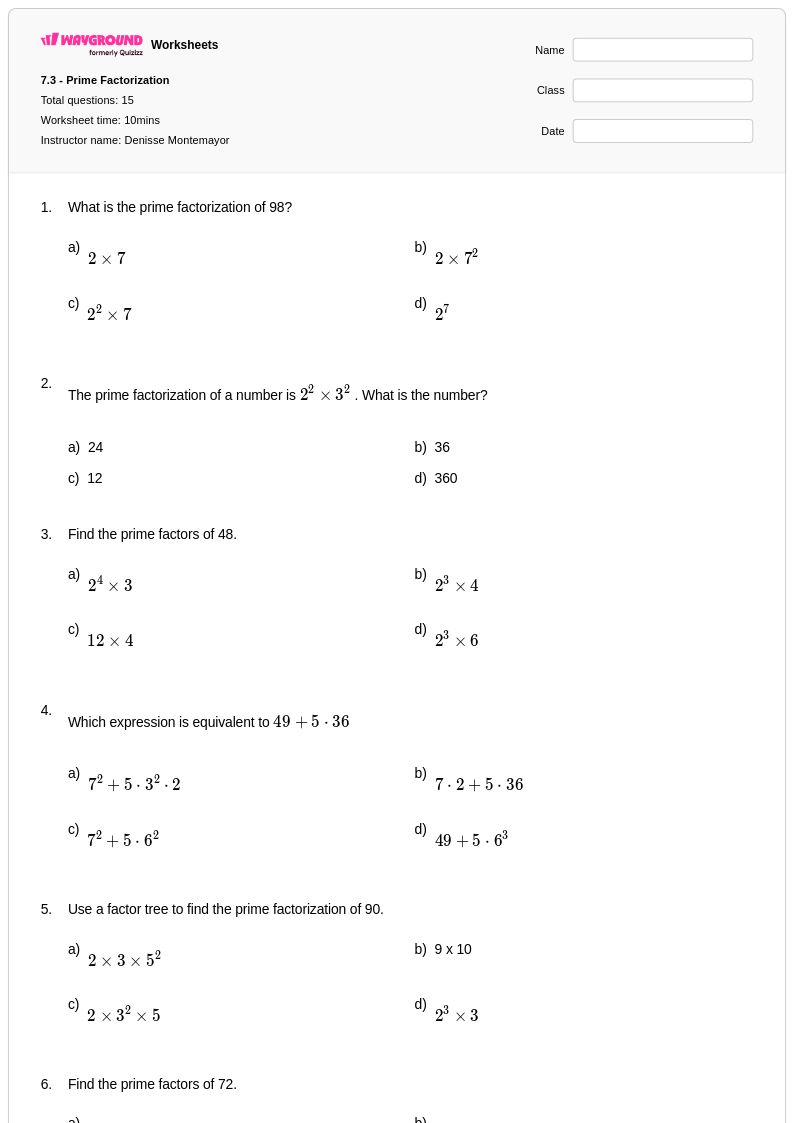
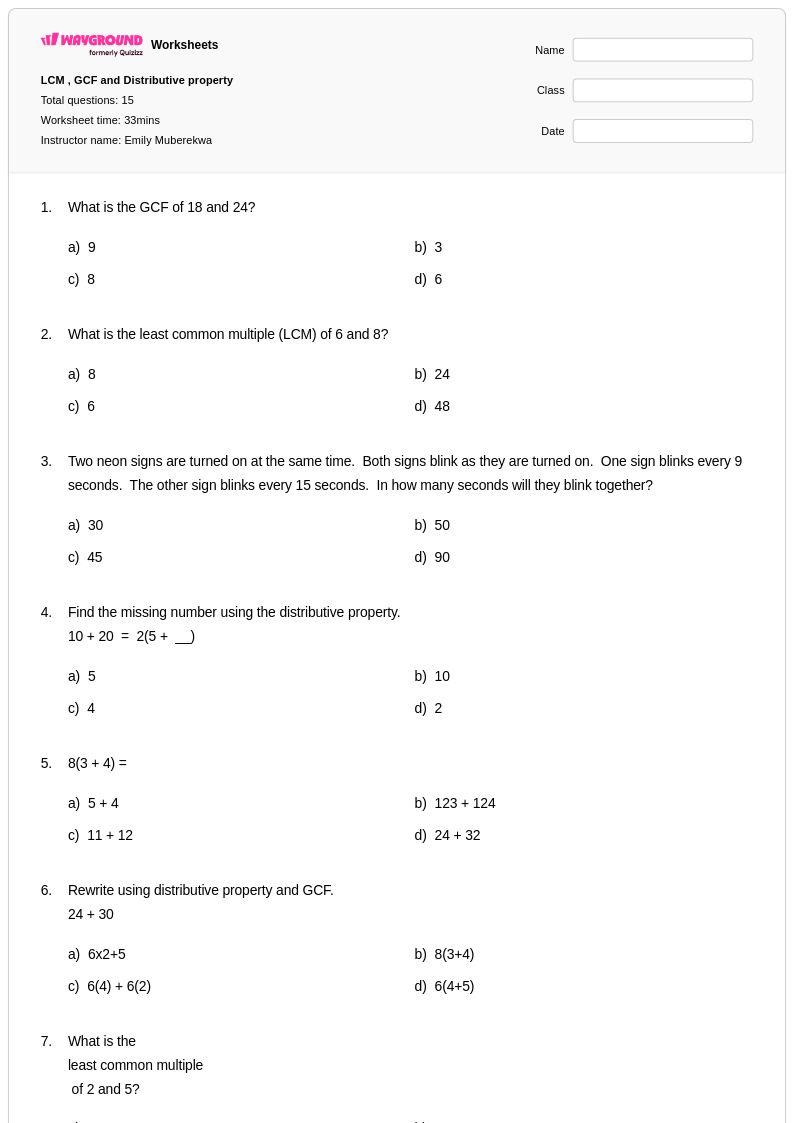
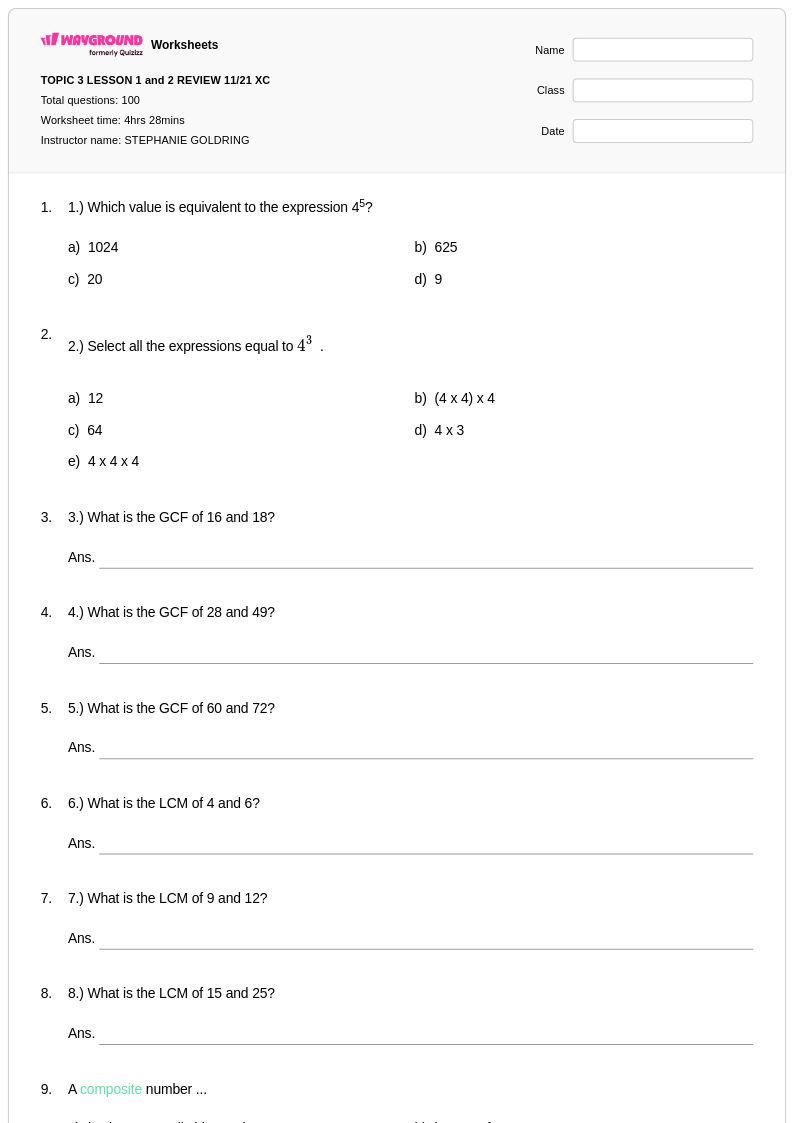
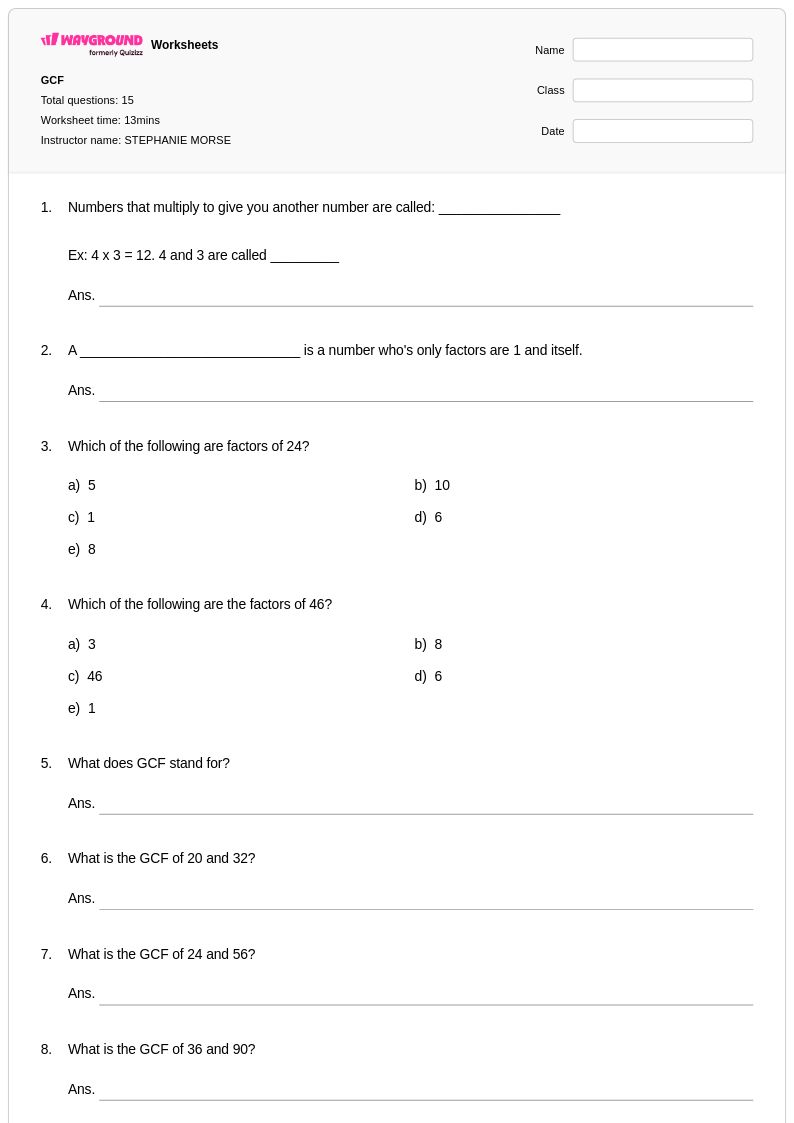
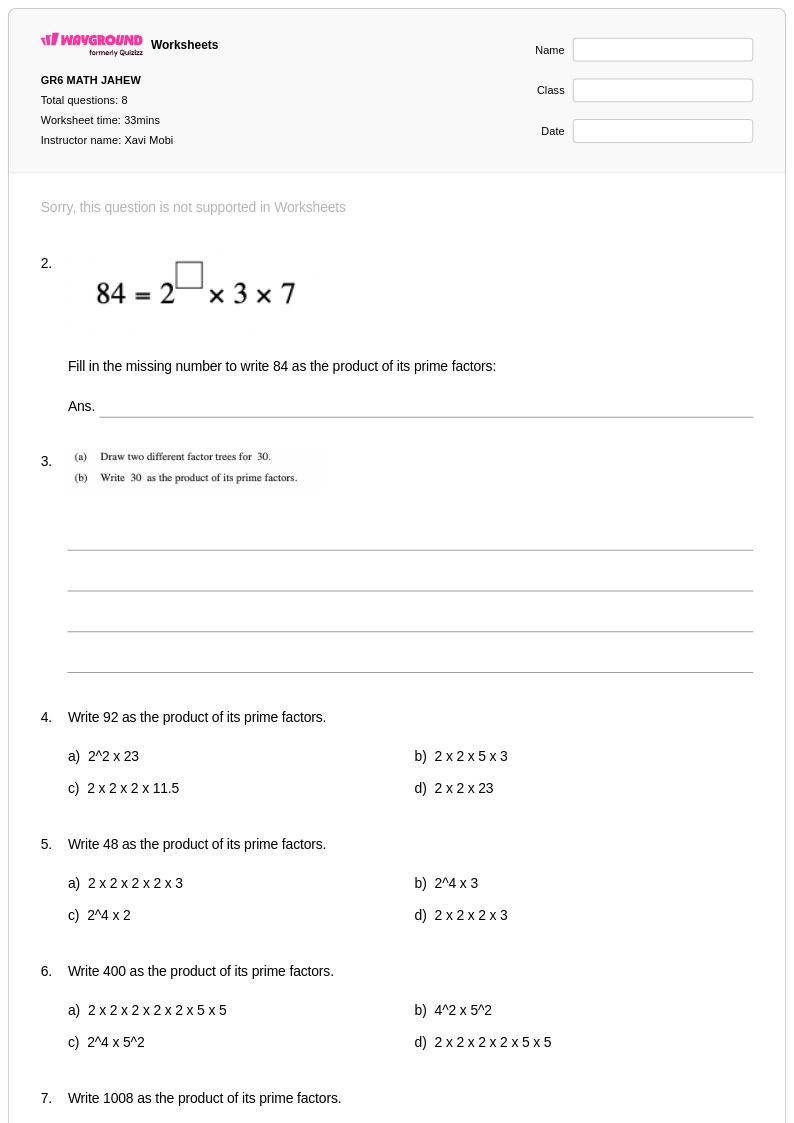
Explore printable Finding Missing Factors worksheets for Grade 6
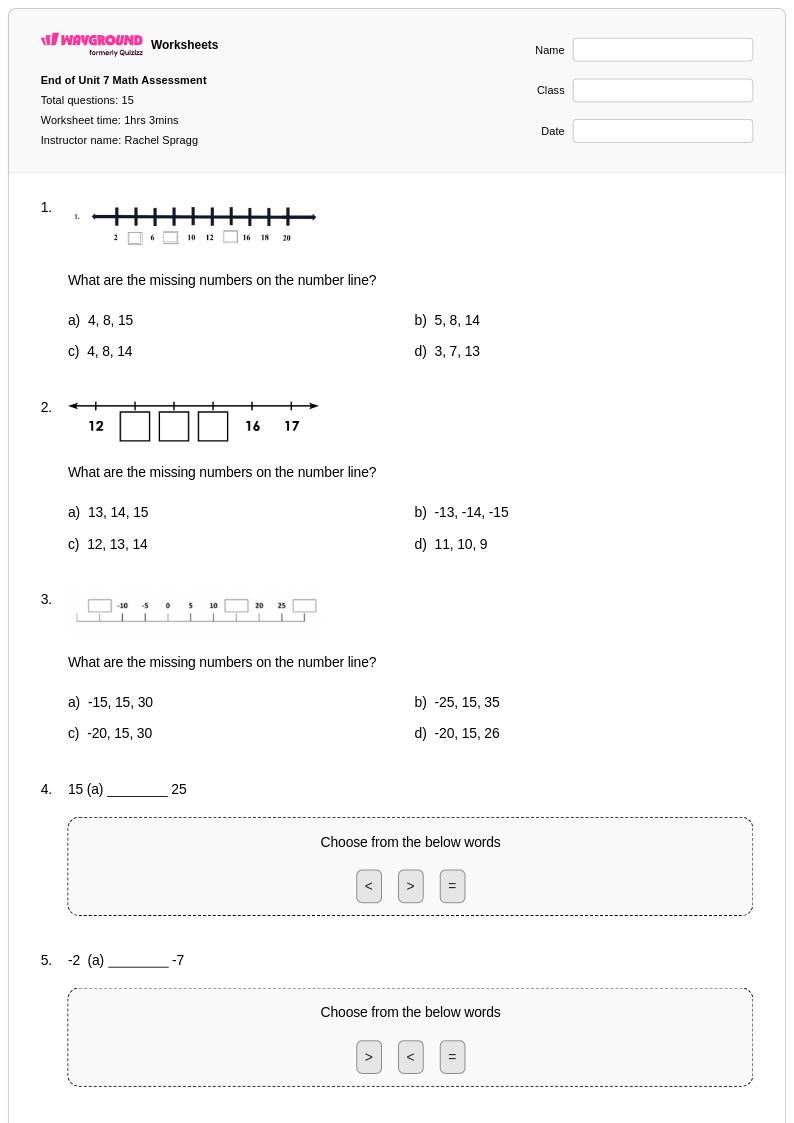
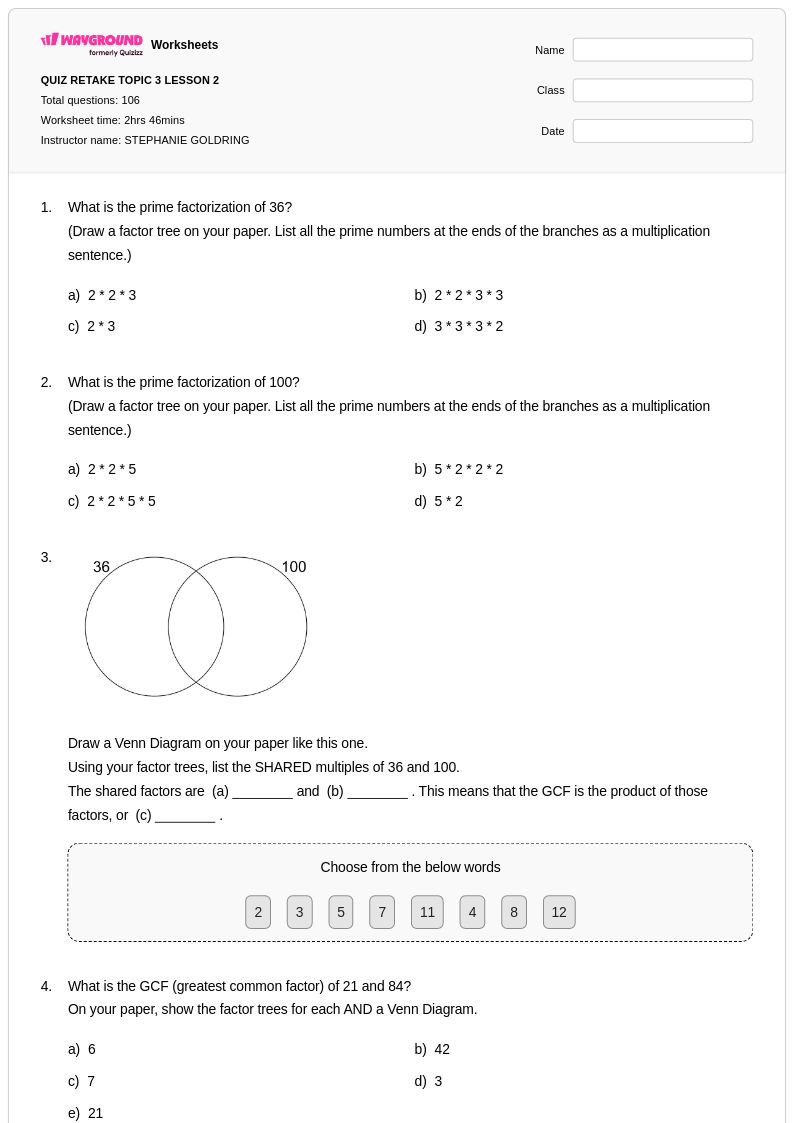
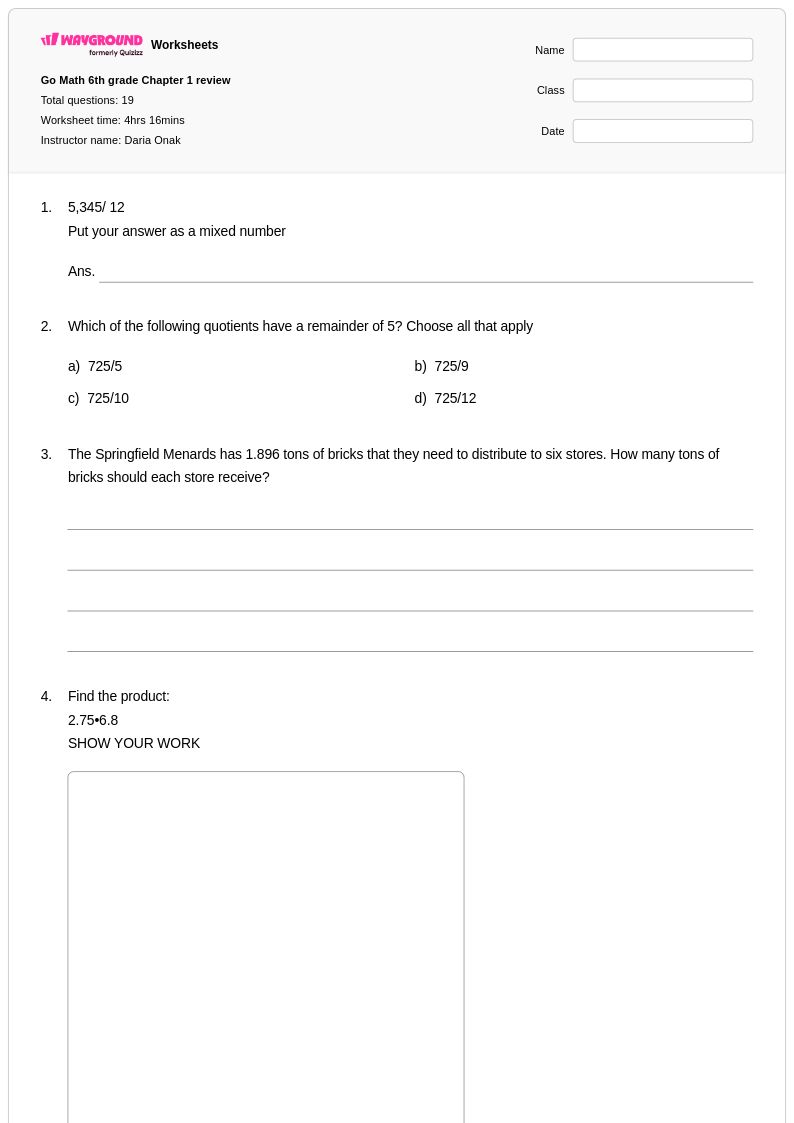
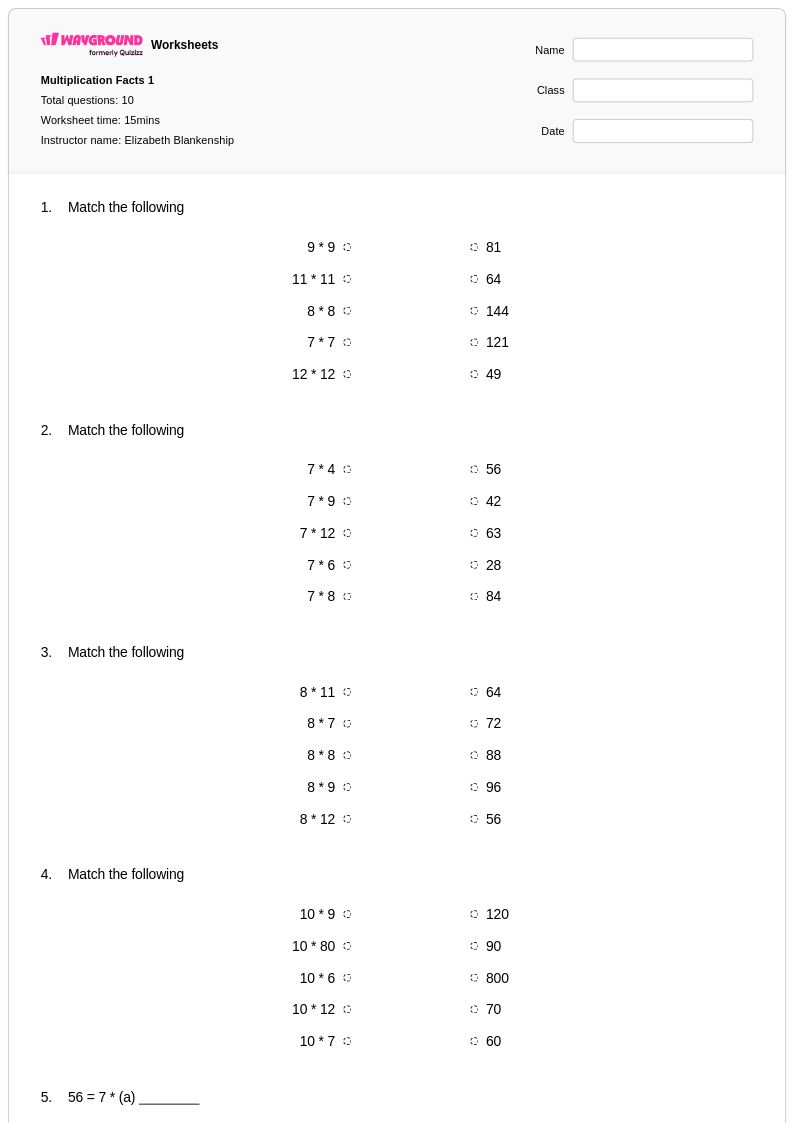
Finding missing factors represents a critical mathematical skill that Grade 6 students must master to build algebraic thinking and deepen their understanding of multiplication relationships. Wayground's comprehensive collection of finding missing factors worksheets provides students with systematic practice in determining unknown values in multiplication equations, such as solving for x in problems like 7 × x = 42 or x × 9 = 72. These carefully designed practice problems strengthen students' number sense, mental math capabilities, and inverse operation understanding while reinforcing the fundamental connection between multiplication and division. Each worksheet includes a complete answer key and is available as a free printable pdf, allowing educators to seamlessly integrate these resources into classroom instruction, homework assignments, or targeted intervention sessions.
Wayground, formerly Quizizz, empowers teachers with access to millions of educator-created resources specifically focused on Grade 6 multiplication concepts, including extensive collections of finding missing factors materials. The platform's robust search and filtering capabilities enable teachers to quickly locate worksheets that align with specific learning standards and match their students' diverse ability levels. These differentiation tools support effective instructional planning by offering customizable options that accommodate both remediation needs for struggling learners and enrichment opportunities for advanced students. Whether educators prefer traditional printable worksheets or interactive digital formats, Wayground's flexible pdf delivery system ensures that finding missing factors practice can be adapted to any classroom environment or learning preference, making skill development both accessible and engaging for all Grade 6 mathematics students.
FAQs
How do I teach finding missing factors to Grade 6 students?
At Grade 6, finding missing factors is the on-ramp to solving equations. The move is to make the connection explicit: 7 × x = 42 is the same problem students have been solving since third grade — they're just using a variable instead of a box. Teach students to isolate the unknown by dividing both sides by the known factor, and name that as an algebraic move. Students who see the continuity from arithmetic to algebra are far less intimidated by equation-solving later in the year.
What exercises help Grade 6 students practice finding missing factors?
Mix equation formats: some with whole-number factors, some with larger products that require multi-digit division, and some written with variable notation (7 × x = 42) alongside the blank-box format. Word problems that require students to set up the equation themselves — rather than just solve a pre-written one — are especially valuable at this grade. Wayground's Grade 6 worksheets include both equation-solving and applied problem types.
What mistakes do Grade 6 students commonly make with missing factors?
The most common error is procedural: students divide the two visible numbers by each other rather than dividing the product by the known factor. In 7 × x = 42, they'll compute 7 ÷ 42 or 42 ÷ 7 without thinking about which operation makes sense. A second issue is sign errors when problems involve larger numbers — students get the structure right but the arithmetic wrong. Having students estimate the answer before solving catches the second error quickly.
How do I use Wayground's Grade 6 missing factors worksheets?
Host the worksheet as a digital quiz on Wayground for immediate feedback — useful when you want students to self-correct during practice rather than wait for graded papers. If you prefer paper, the printable PDF version includes a complete answer key. Either way, the content is the same; the format is your call based on what the lesson needs.
How does finding missing factors connect to Grade 6 Common Core algebra standards?
Common Core expects sixth graders to write and solve equations of the form px = q using reasoning about multiplication and division. Finding missing factors is exactly that skill — students are solving px = q every time they work out what goes in the blank. The shift at Grade 6 is formalizing the notation and the method: instead of 'think what times 7 equals 42,' students learn to write x = 42 ÷ 7 as a documented algebraic step. That formalization is what the sixth-grade standards are building toward.
How can I support diverse learners with Grade 6 missing factors practice?
For English language learners, Wayground lets you translate the worksheet so students aren't decoding a second language while also reasoning algebraically. For students with processing or attention challenges, the Read Aloud feature and adjustable font sizes reduce the visual and cognitive load without changing the rigor of the problems. Both accommodations are set per student, so the rest of the class works with default settings.