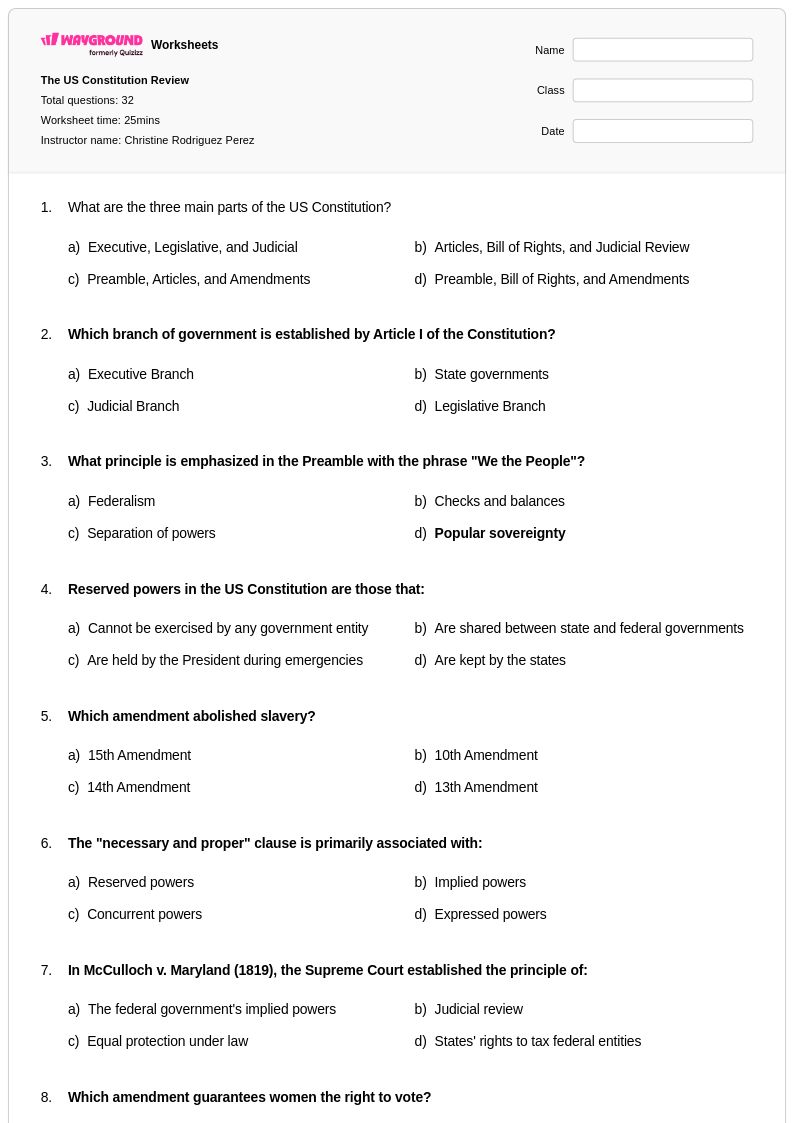
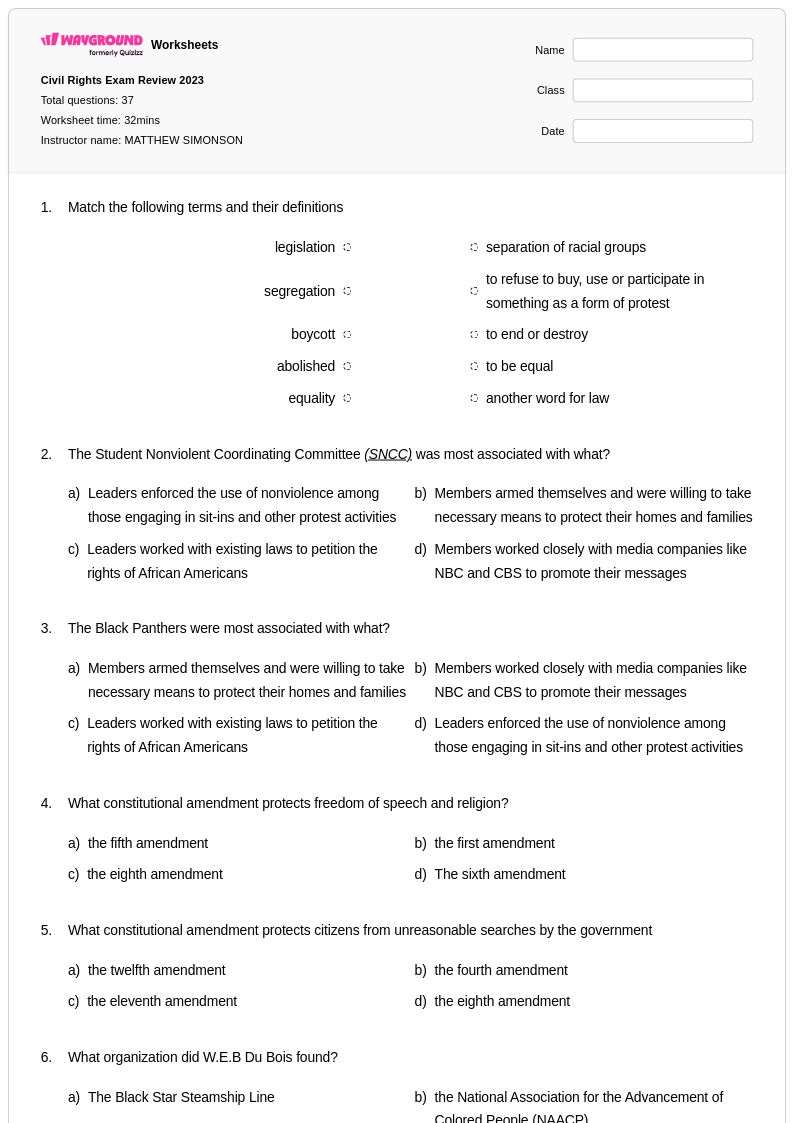
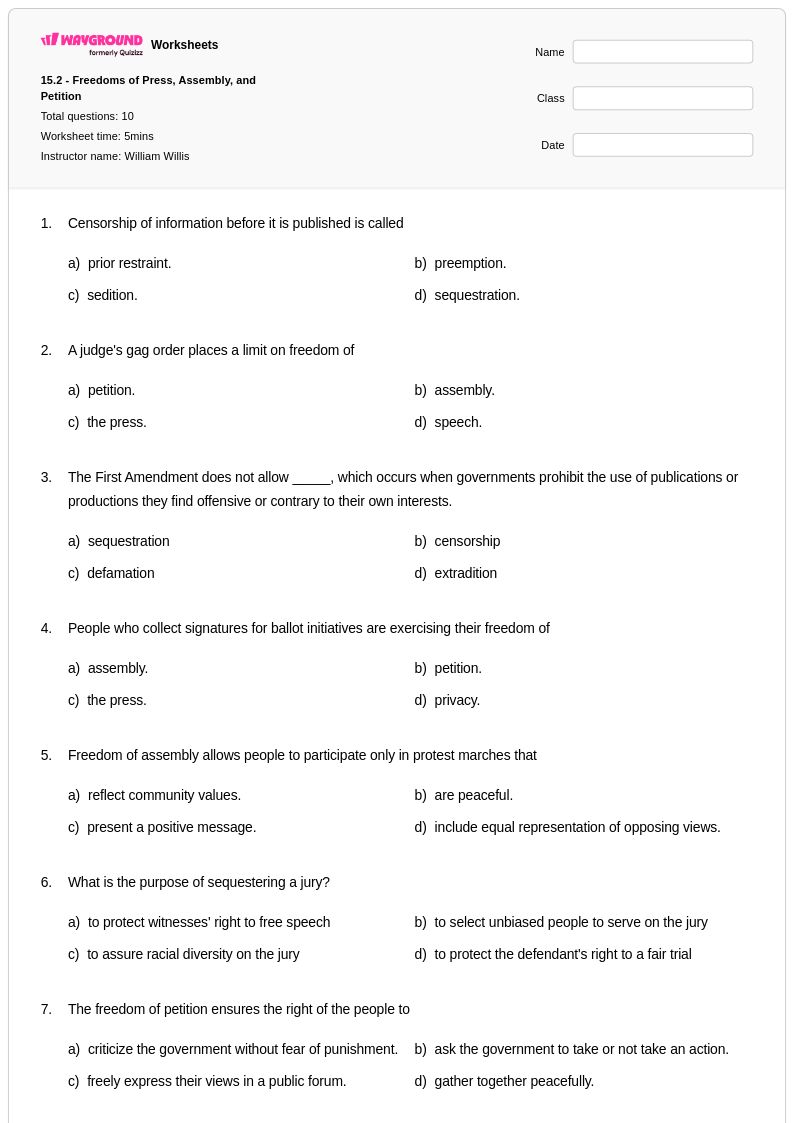
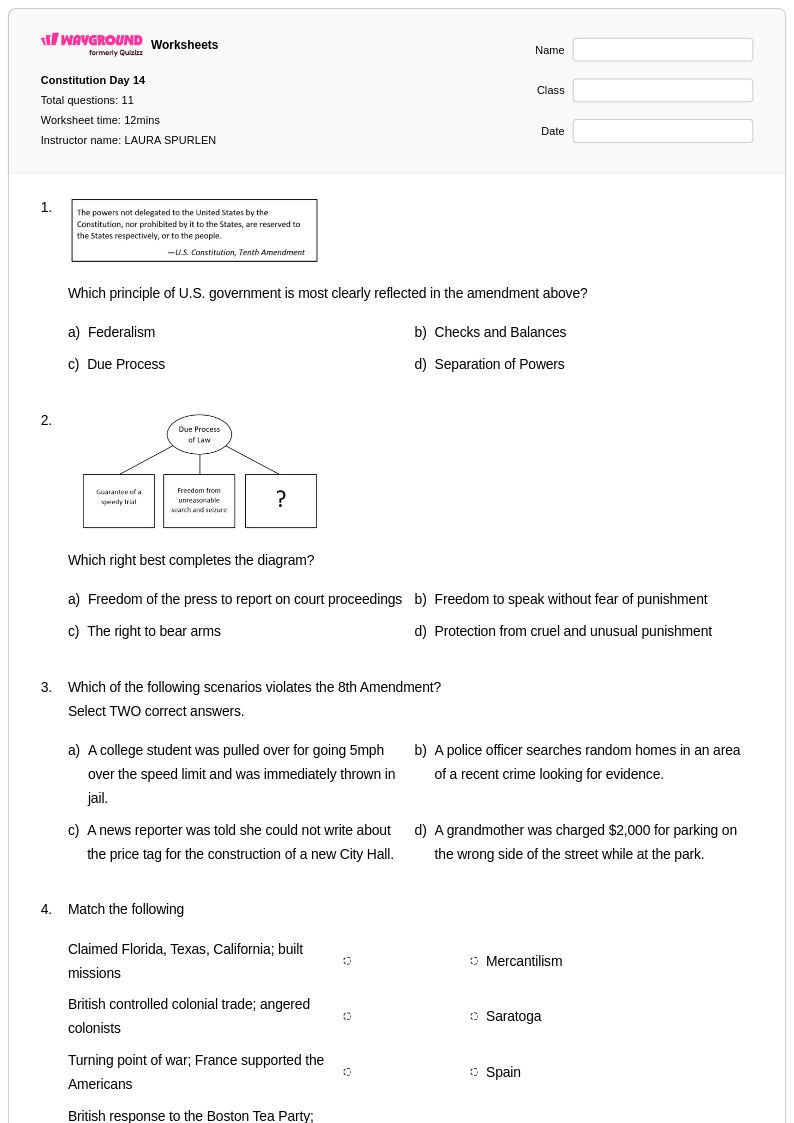
Free Printable First Amendment Worksheets for Grade 11
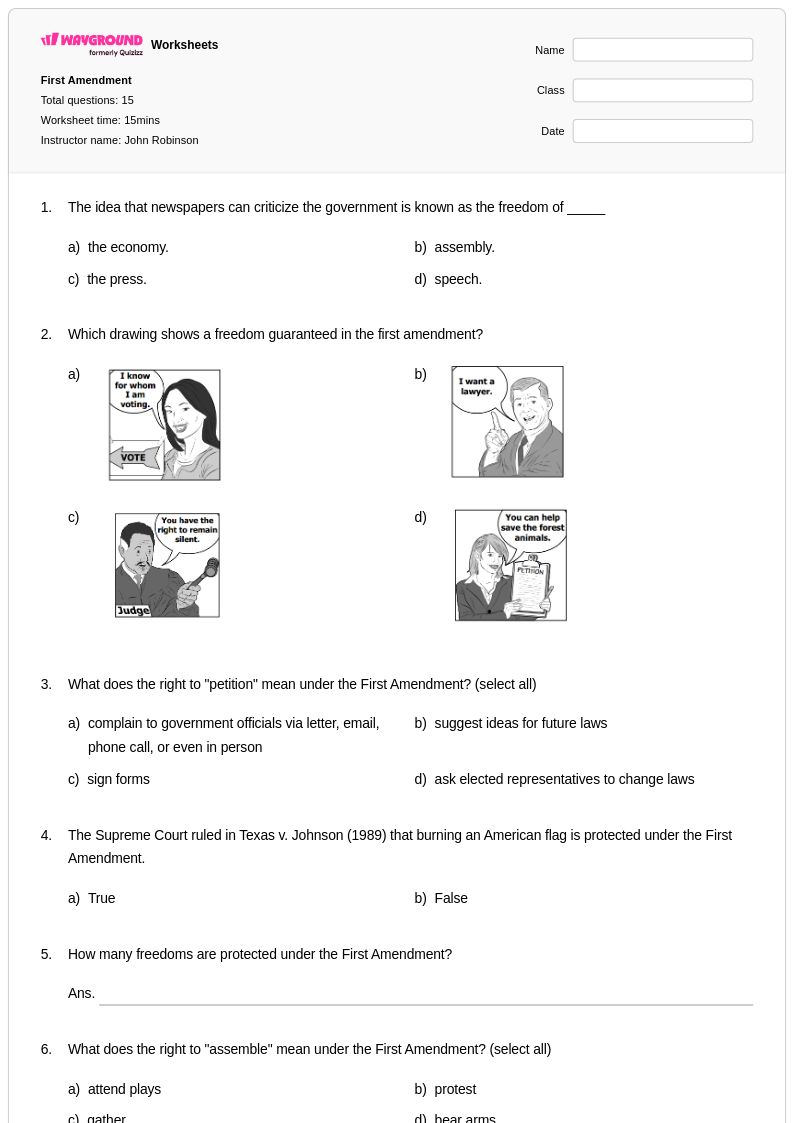
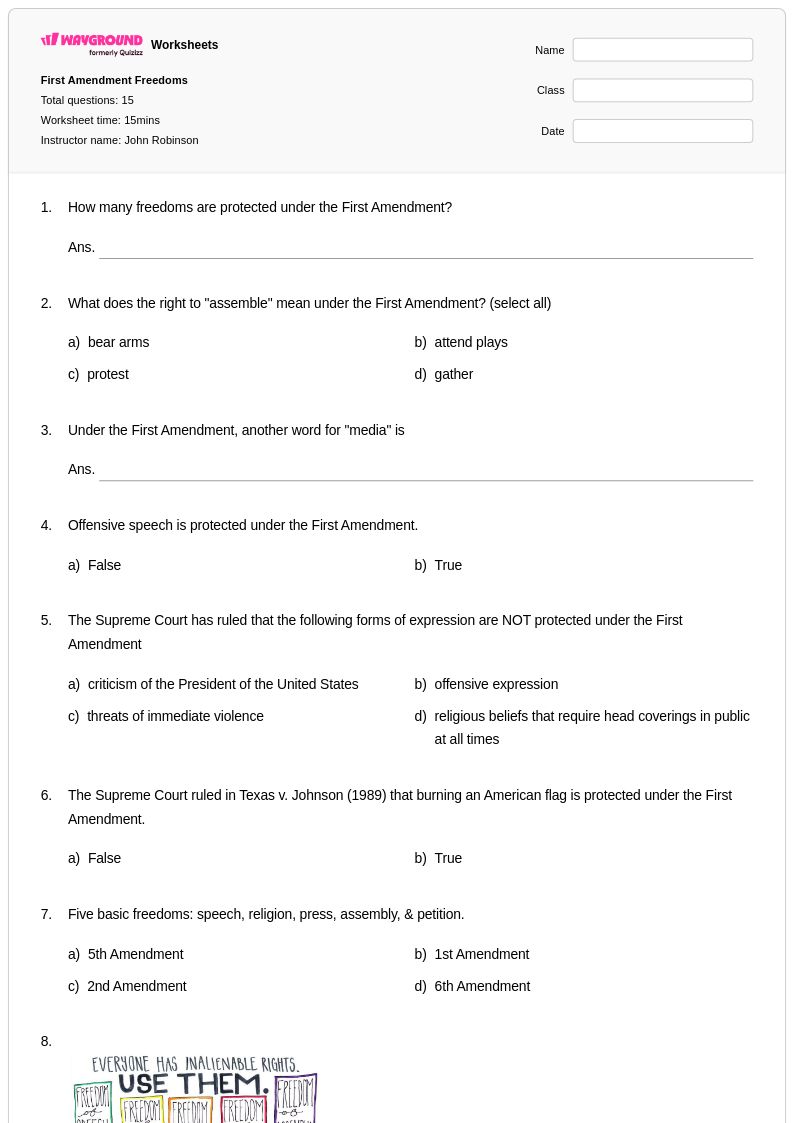
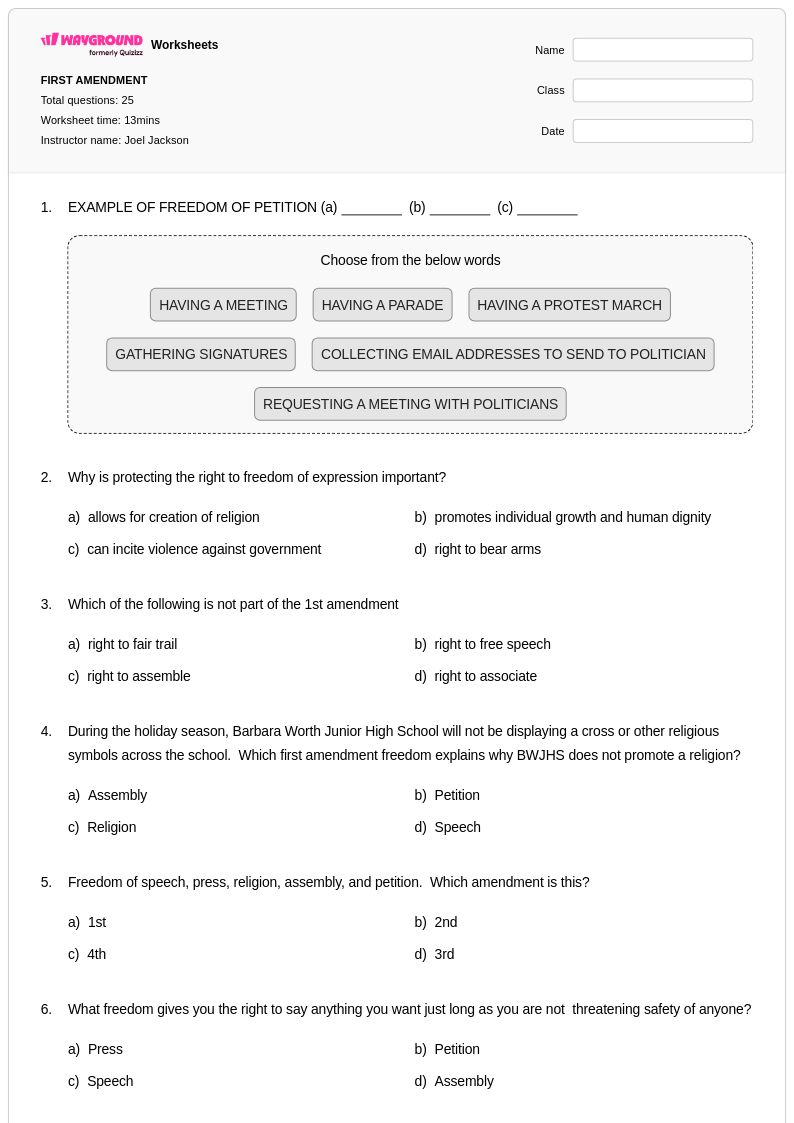
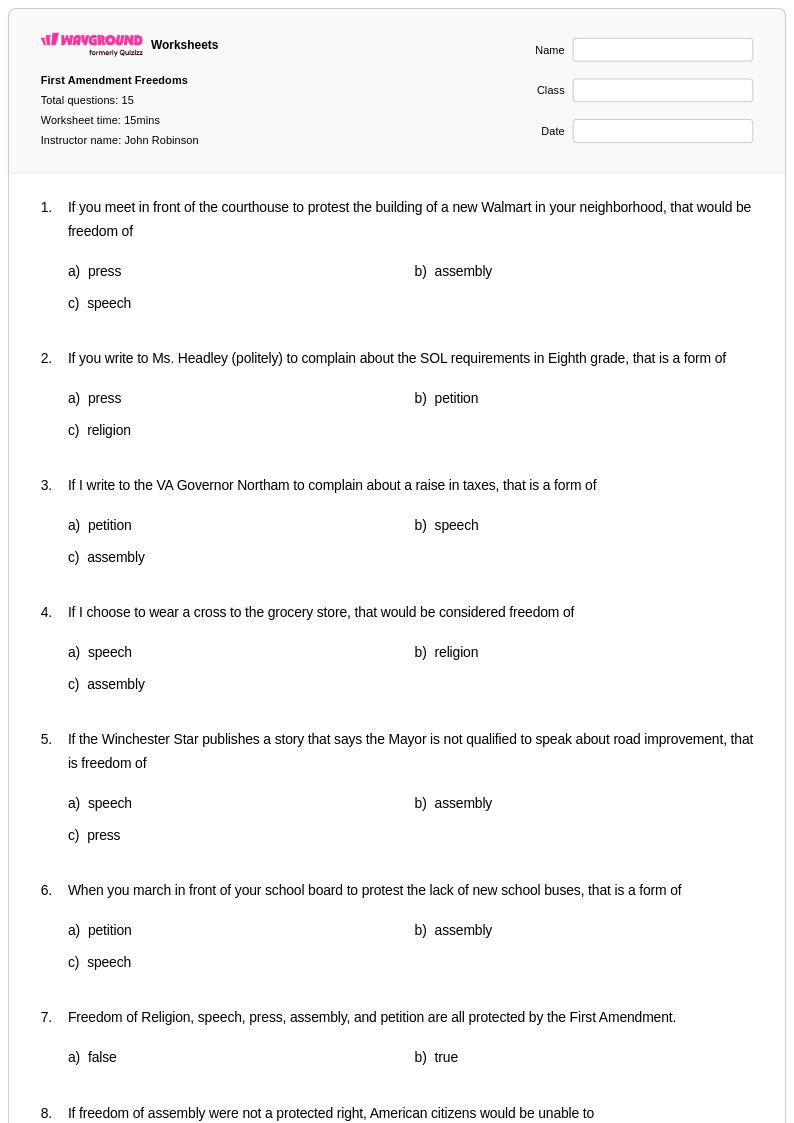
Grade 11 First Amendment free worksheets and printables help students explore constitutional rights including freedom of speech, religion, and press through engaging practice problems and comprehensive answer keys available as downloadable PDFs.
Explore printable First Amendment worksheets for Grade 11
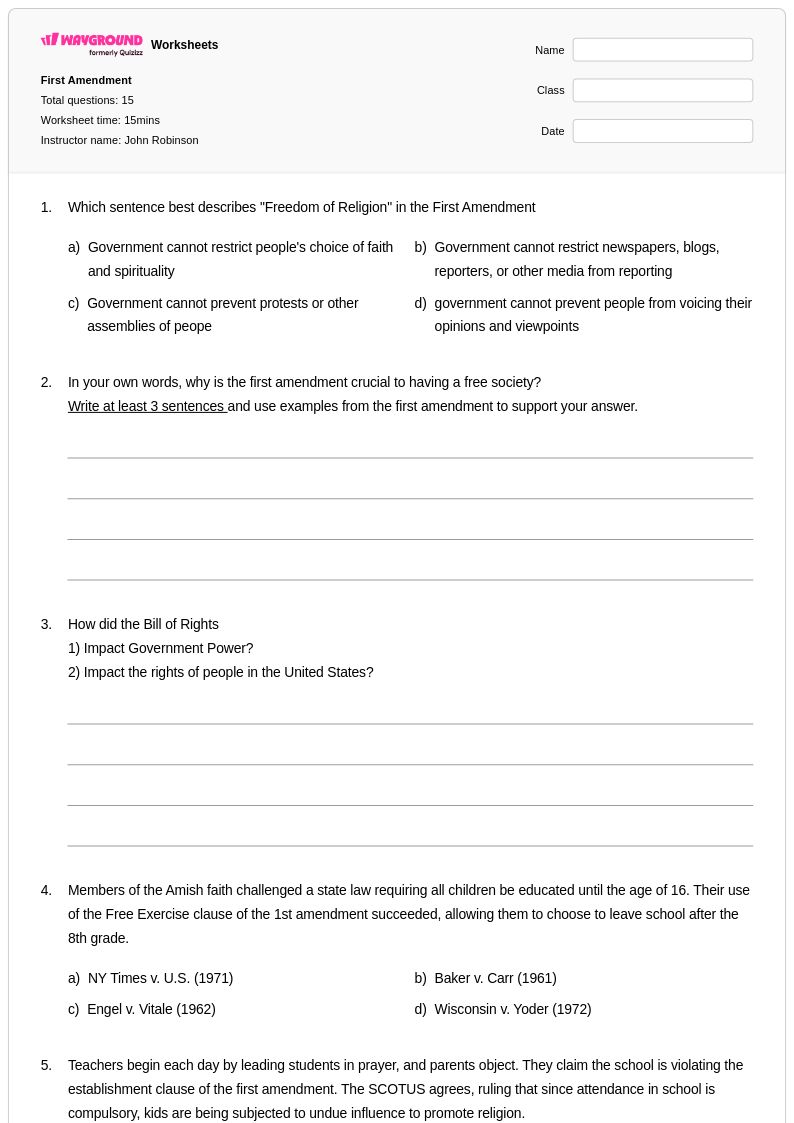
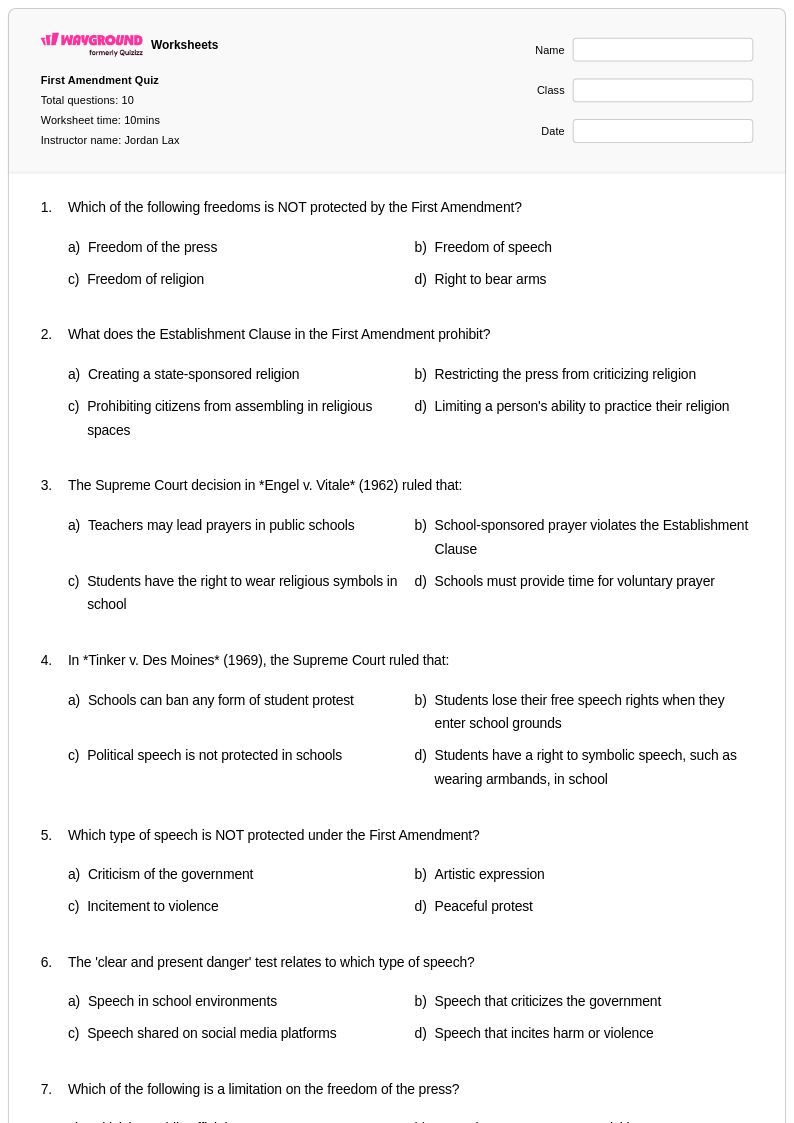
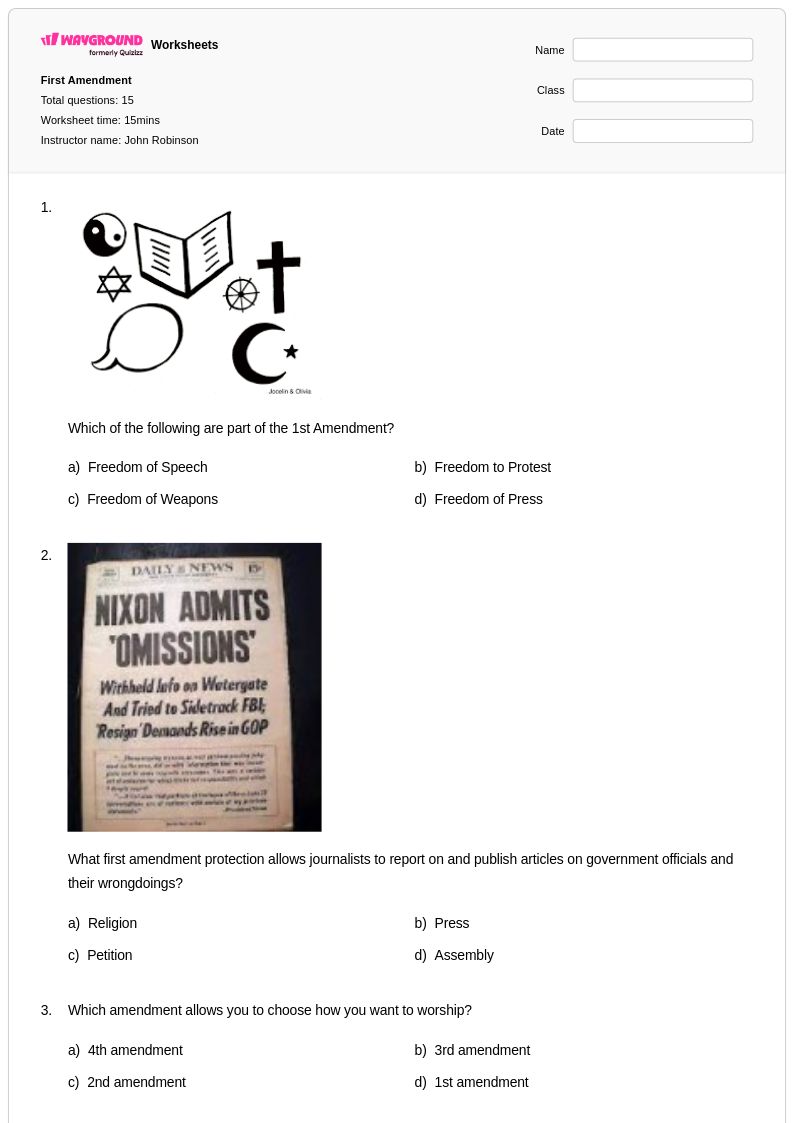
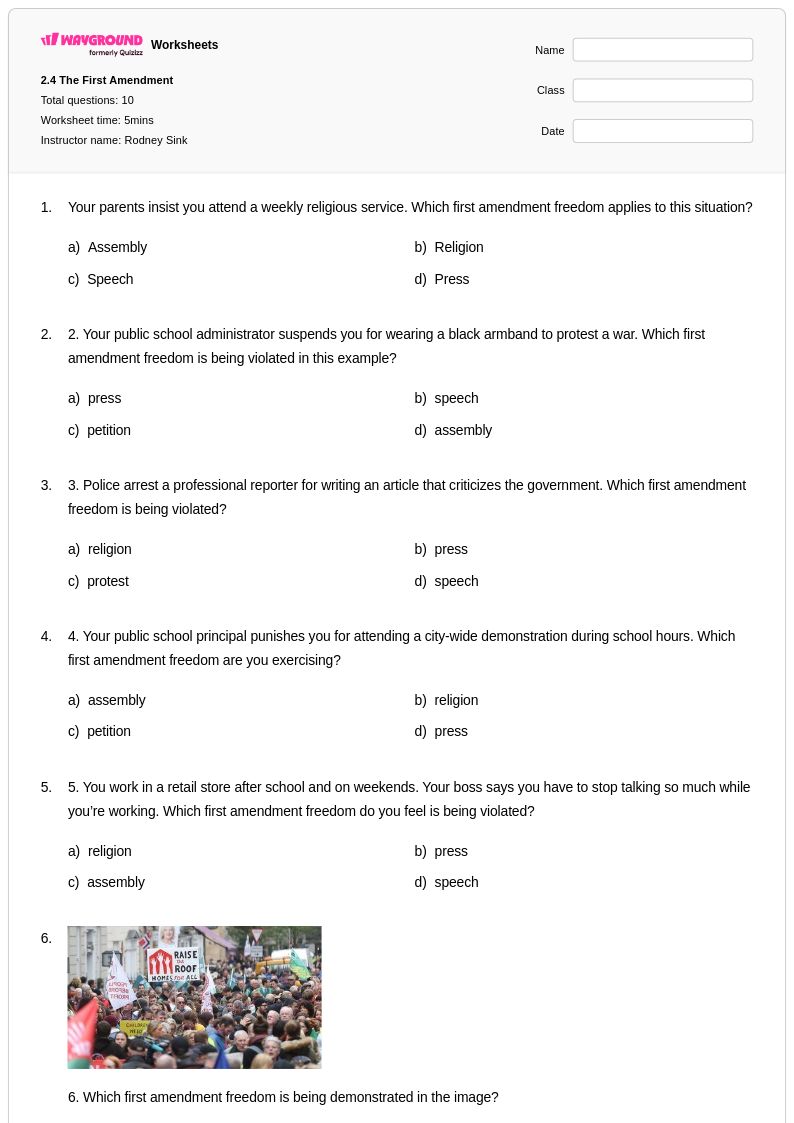
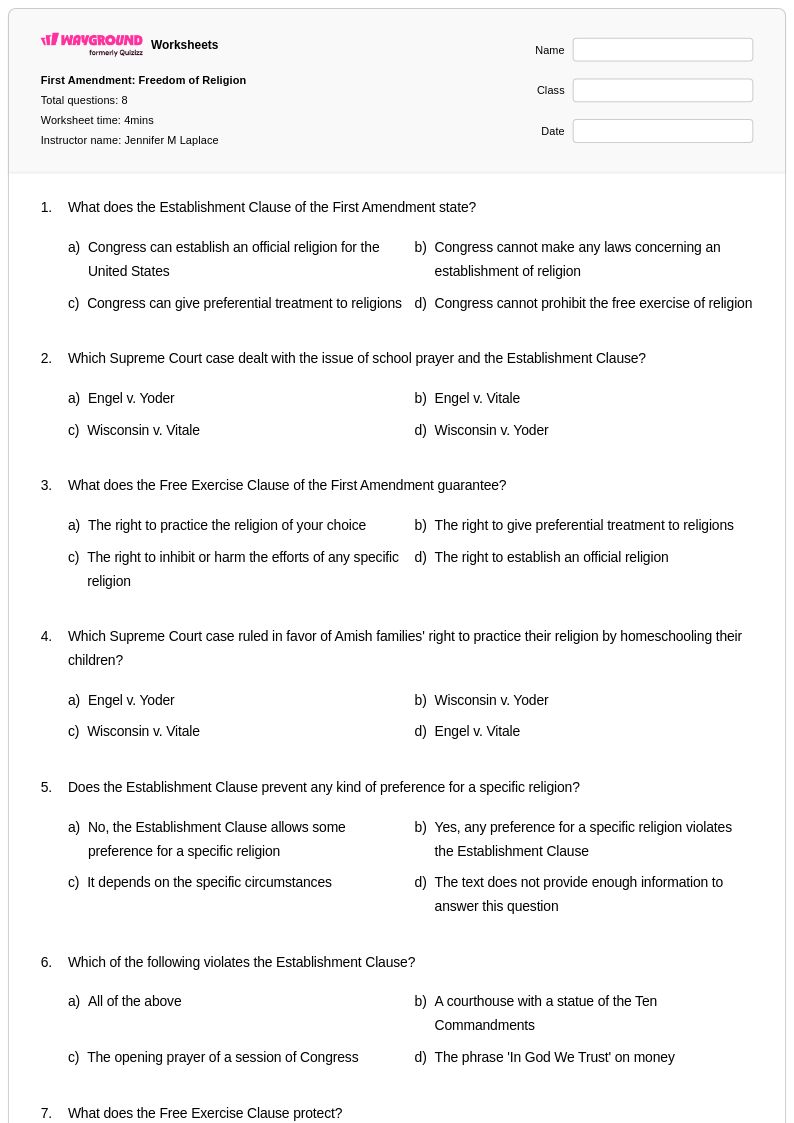
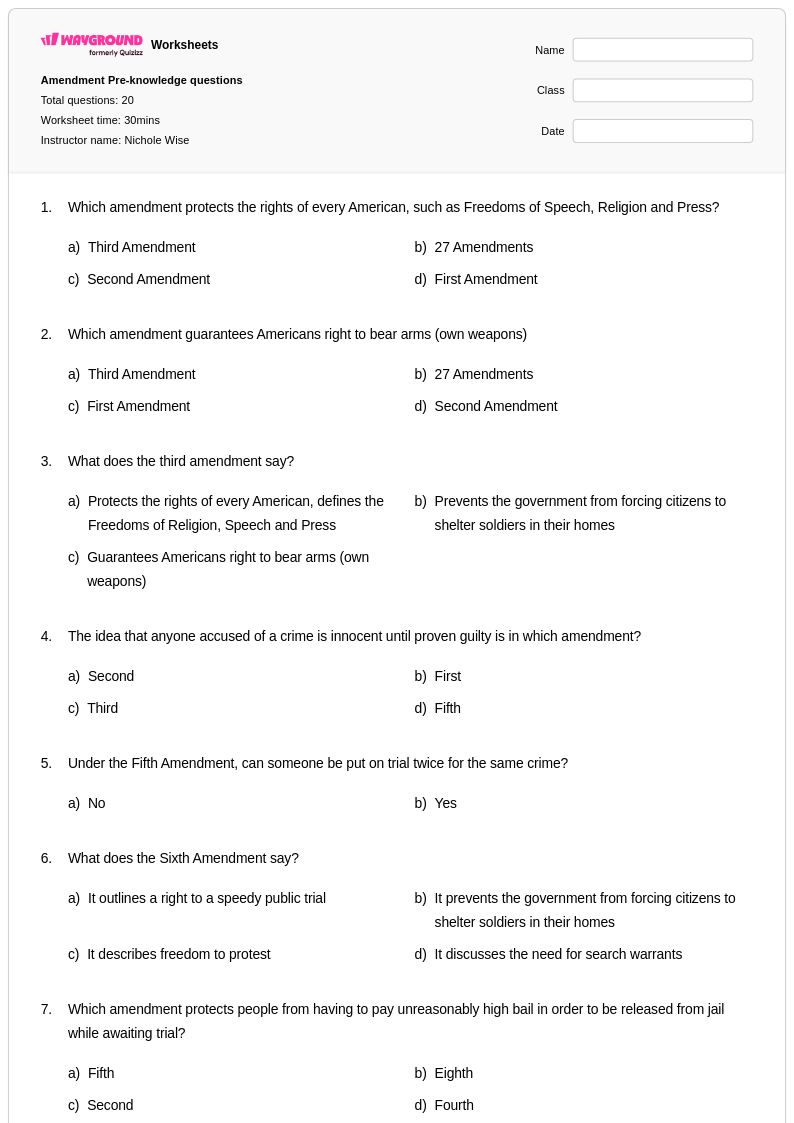
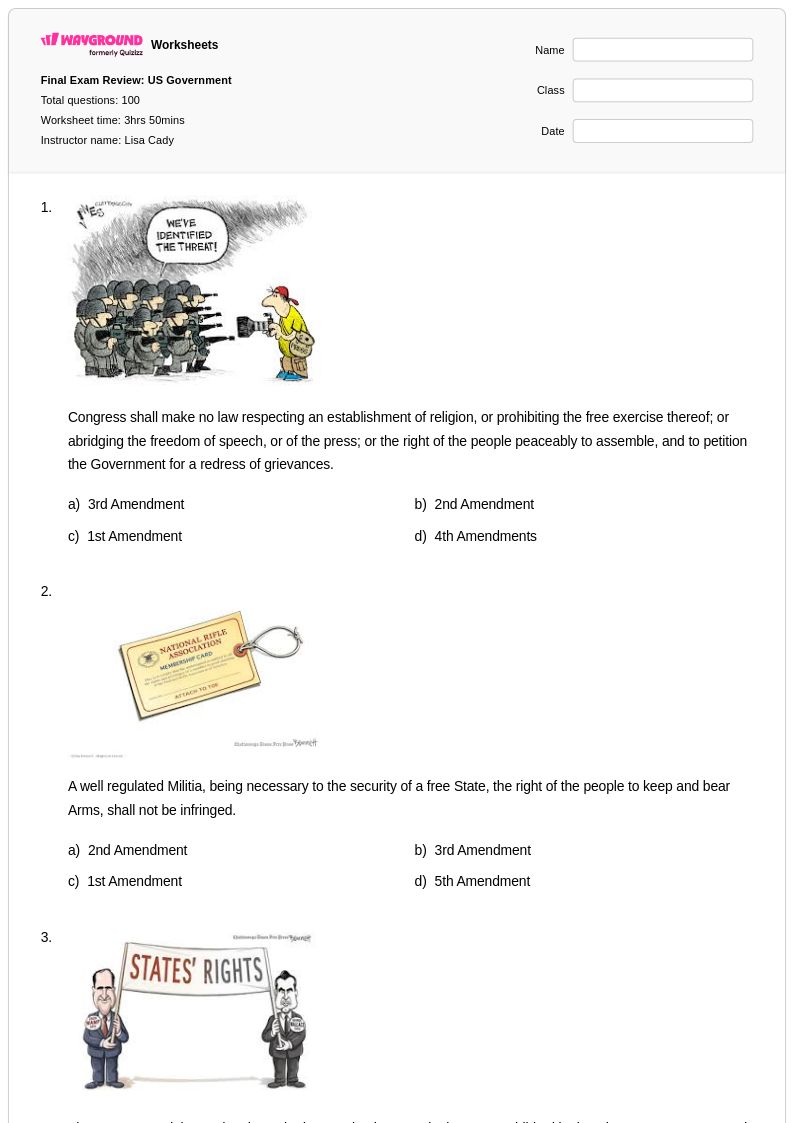
First Amendment worksheets for Grade 11 students available through Wayground (formerly Quizizz) provide comprehensive exploration of the fundamental freedoms guaranteed by this cornerstone of American constitutional law. These educational resources strengthen students' understanding of freedom of speech, religion, press, assembly, and petition through analytical practice problems that examine landmark Supreme Court cases, constitutional interpretation, and real-world applications of First Amendment protections. The worksheets feature detailed scenarios requiring critical thinking about the balance between individual liberties and government interests, with accompanying answer keys that guide students through complex legal reasoning. Available as free printables in pdf format, these materials help Grade 11 students develop essential civic literacy skills by analyzing how First Amendment rights have evolved through judicial interpretation and continue to shape contemporary American society.
Wayground's extensive collection of millions of teacher-created resources provides educators with powerful tools to support Grade 11 First Amendment instruction through robust search and filtering capabilities that align with state civics standards. Teachers can easily differentiate instruction by selecting from worksheets that range from foundational constitutional concepts to advanced analysis of controversial speech cases, religious liberty disputes, and press freedom challenges. The platform's flexible customization options allow educators to modify existing materials or create targeted practice sets for remediation and enrichment, while the availability of both printable and digital formats including pdf downloads ensures seamless integration into diverse classroom environments. These comprehensive resources support effective lesson planning by providing standards-aligned materials that develop students' analytical skills in constitutional law, prepare them for advanced civic participation, and strengthen their understanding of how First Amendment protections function in democratic society.
FAQs
How do I teach the First Amendment to students?
Teaching the First Amendment is most effective when students move from abstract rights to concrete application. Start by grounding students in the five freedoms — speech, religion, press, assembly, and petition — then use landmark Supreme Court cases such as Tinker v. Des Moines or New York Times Co. v. United States to show how these rights have been tested and defined. Scenario-based analysis helps students evaluate when and how First Amendment protections apply in real-world contexts, including schools, social media, and public protest.
What exercises help students practice First Amendment concepts?
Effective practice exercises ask students to classify scenarios as protected or unprotected expression, interpret constitutional text, and apply the five freedoms to real-life situations. Case-study analysis using Supreme Court decisions builds interpretive skills, while compare-and-contrast tasks help students distinguish between types of First Amendment protections. Structured practice that returns repeatedly to the same five freedoms across different contexts accelerates retention and deepens constitutional literacy.
What common mistakes do students make when learning the First Amendment?
A frequent misconception is that First Amendment rights are absolute — students often assume any speech or expression is constitutionally protected without understanding that courts have defined categories of unprotected speech, such as incitement, defamation, and obscenity. Students also commonly conflate the five freedoms or assume the Amendment limits private actors rather than specifically restraining government action. Explicit instruction on the scope and limitations of each freedom, reinforced with scenario analysis, directly addresses these errors.
How do I use First Amendment worksheets in my classroom?
First Amendment worksheets on Wayground are available as printable PDFs for traditional classroom use and in digital formats for technology-integrated learning environments, including the option to host them as a quiz directly on Wayground. Printable versions work well for guided instruction, close reading activities, or assessments, while digital formats support independent practice, remote learning, and real-time progress monitoring. Each worksheet includes a detailed answer key, making them suitable for both teacher-led lessons and independent student study.
How do I differentiate First Amendment instruction for students at different levels?
For struggling learners, simplify by focusing on one freedom at a time before introducing comparative or evaluative tasks, and use visual organizers to map each right to a concrete example. Advanced students benefit from analyzing the legal reasoning in Supreme Court majority and dissenting opinions to evaluate how justices weigh competing interests. On Wayground, teachers can apply individual accommodations such as read aloud, reduced answer choices, and extended time to specific students, ensuring each learner accesses the material at an appropriate challenge level.
How do I connect First Amendment topics to current events in the classroom?
Connecting the First Amendment to current events makes abstract constitutional principles immediately relevant for students. Teachers can anchor lessons in contemporary debates around social media regulation, student press freedom, religious expression in public schools, or protest rights to show how these rights are actively contested and interpreted. Pairing current event analysis with constitutional text and case precedent helps students understand that the First Amendment is a living framework applied to new situations, not a fixed historical document.