Free Printable Interest Groups Worksheets for Grade 11
Explore Wayground's comprehensive collection of Grade 11 interest groups worksheets and printables that help students understand how advocacy organizations influence government policy through engaging practice problems and detailed answer keys.
Explore printable Interest Groups worksheets for Grade 11
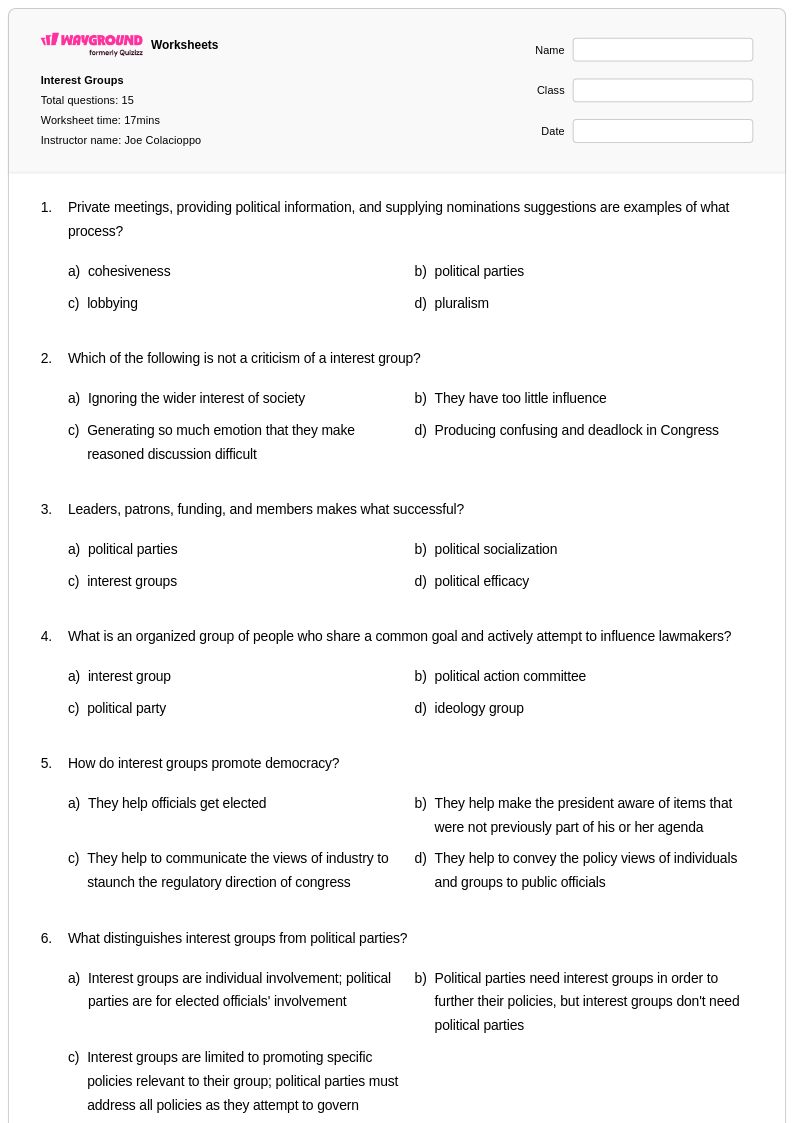
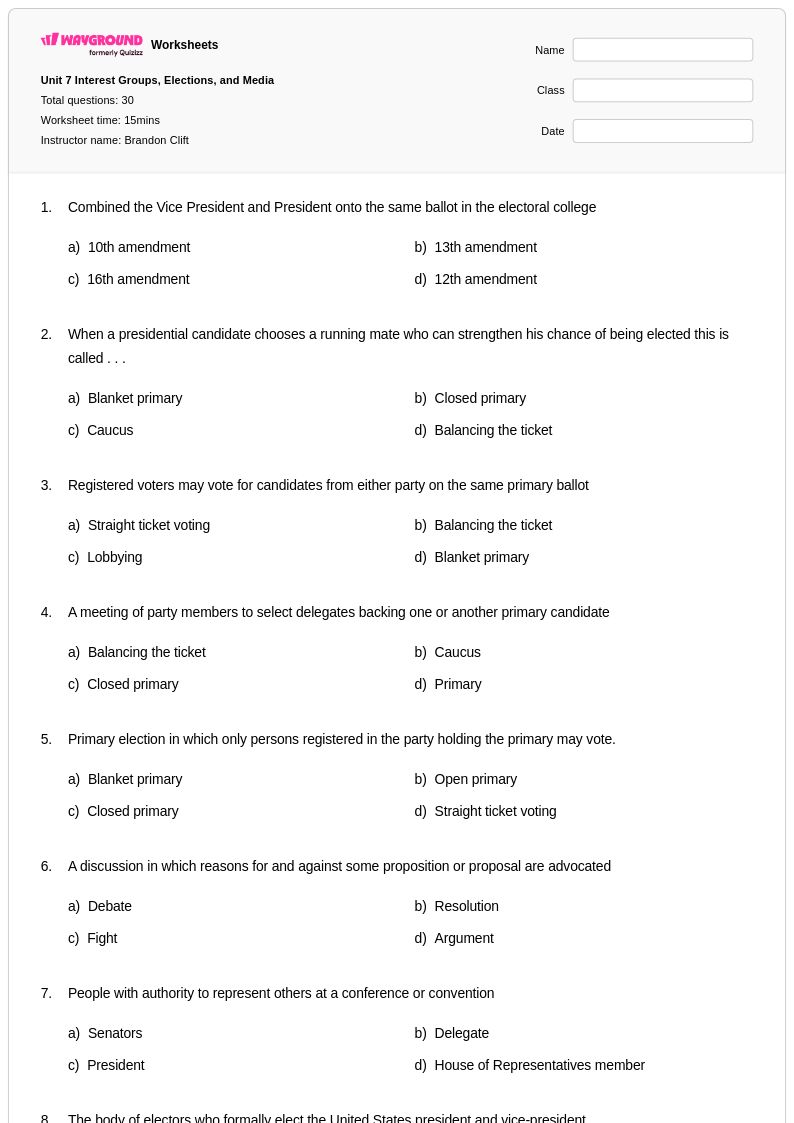
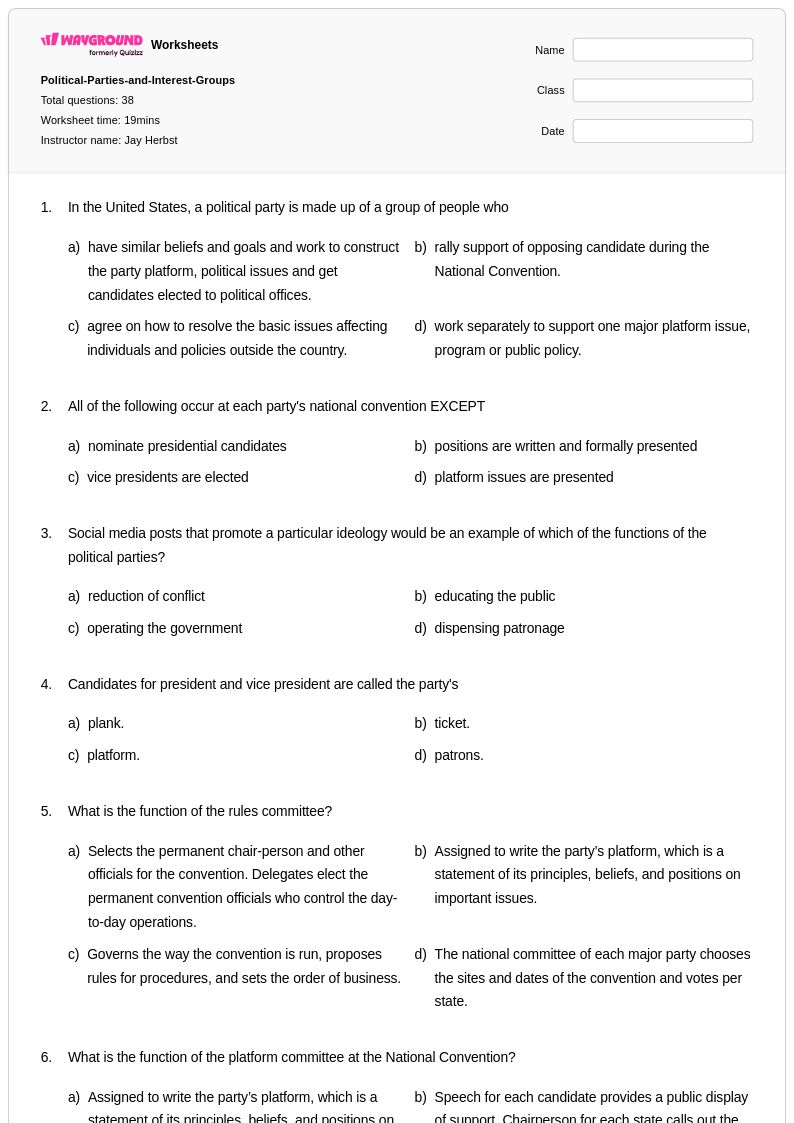
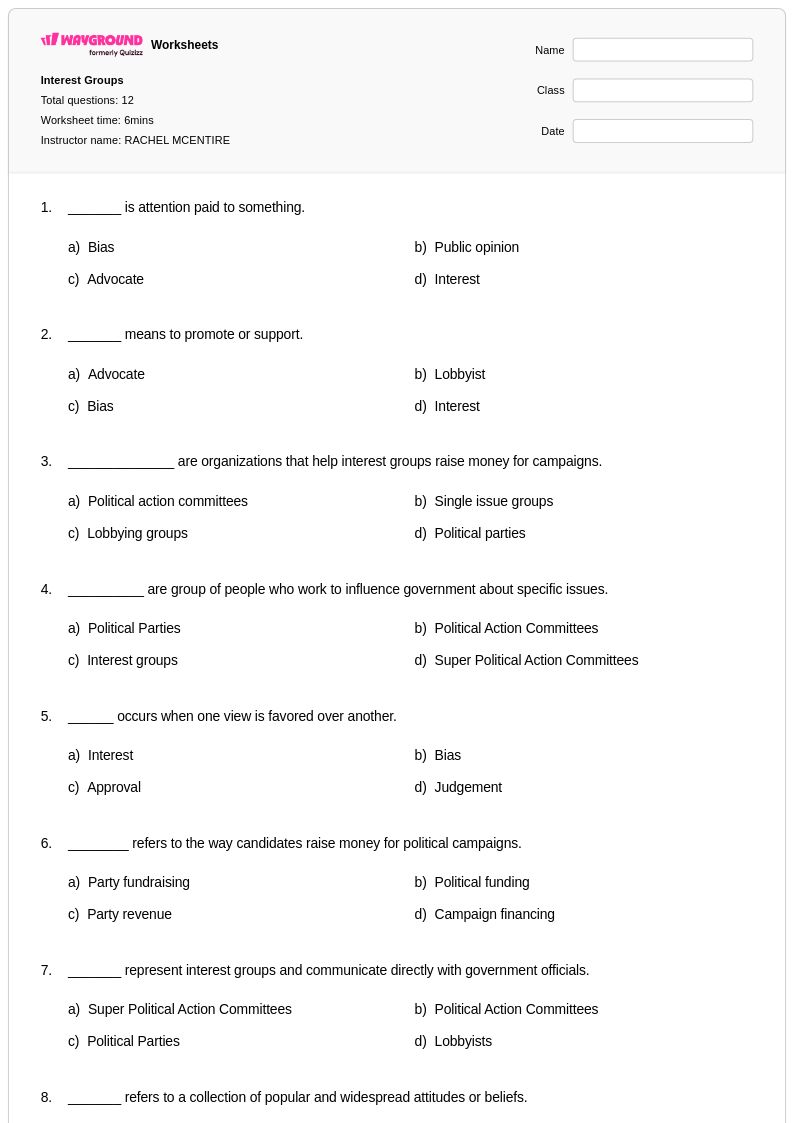
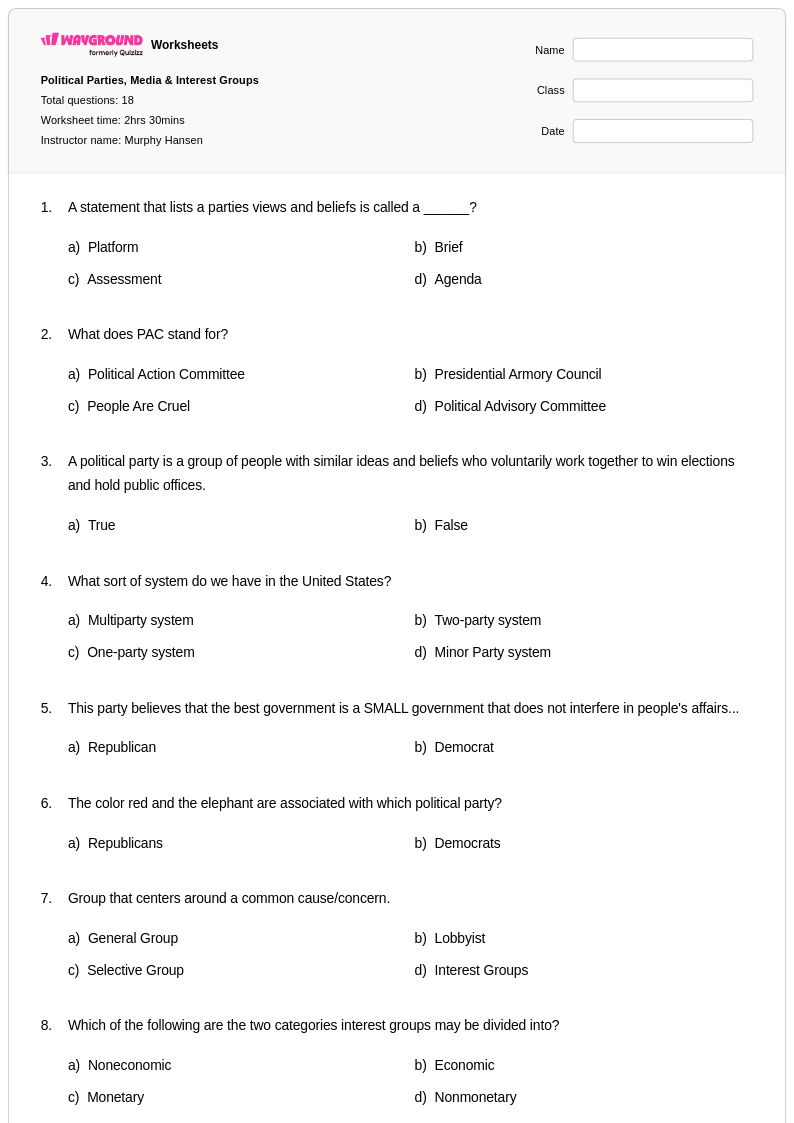
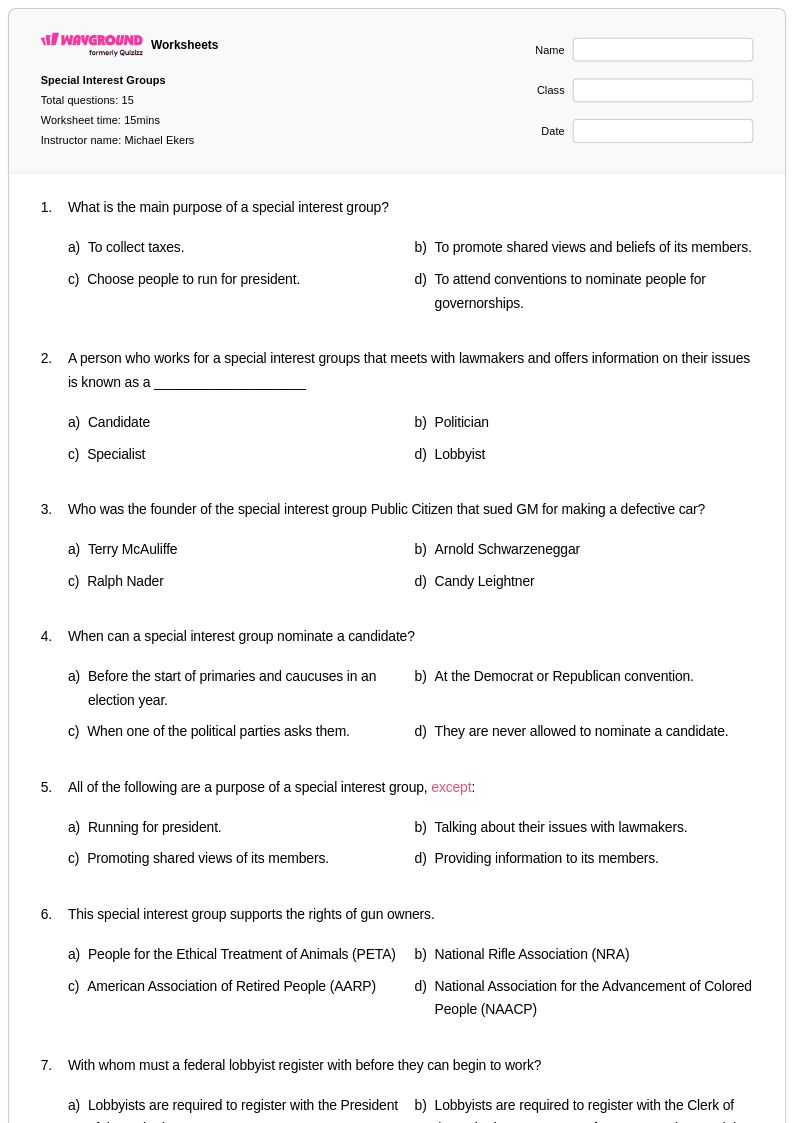
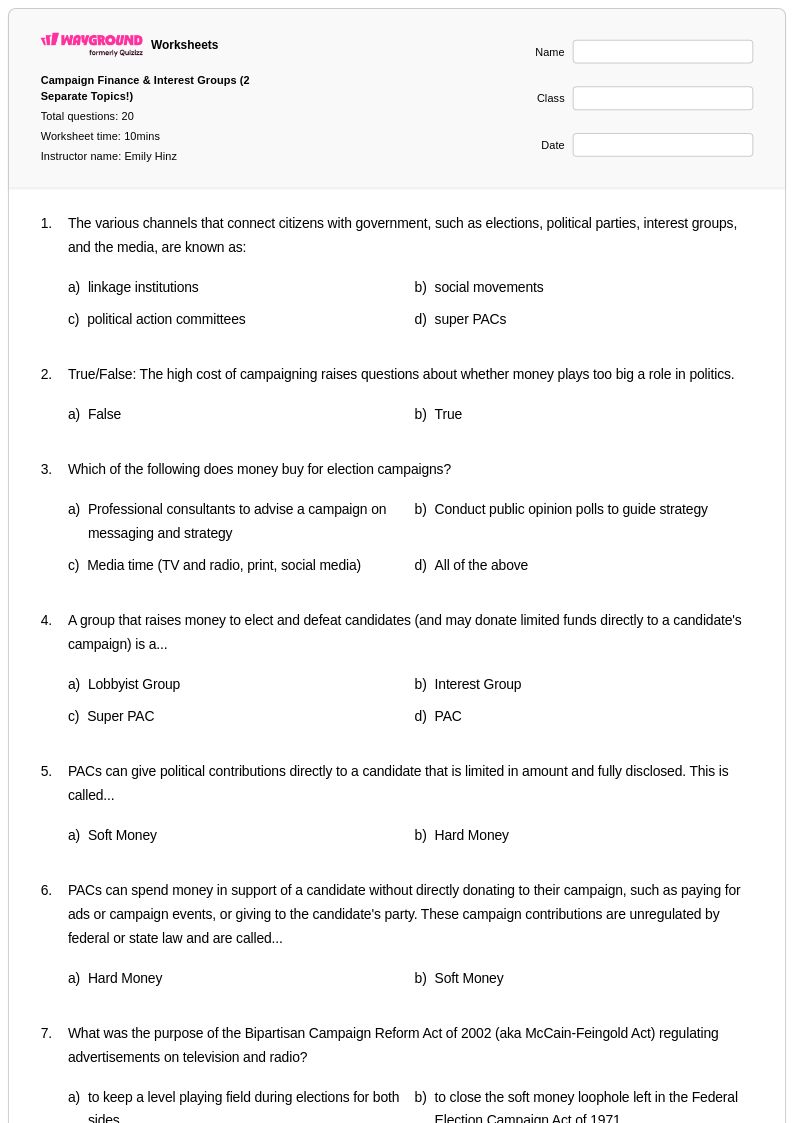
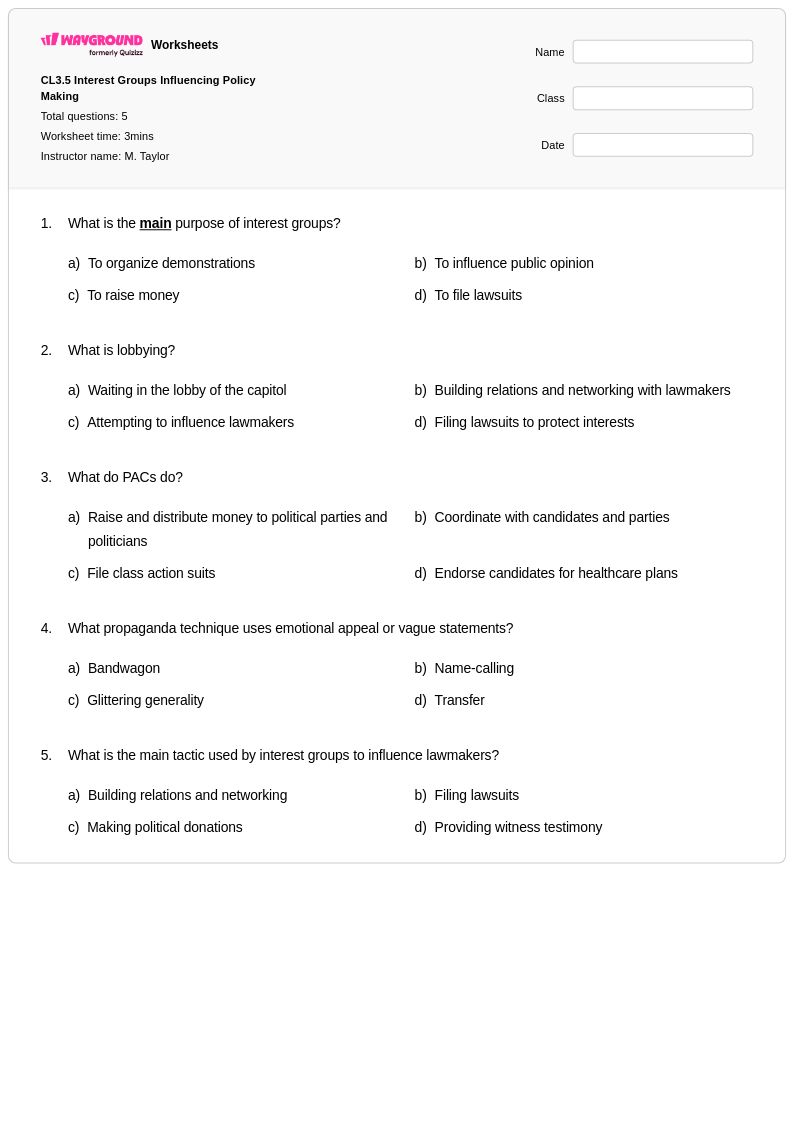
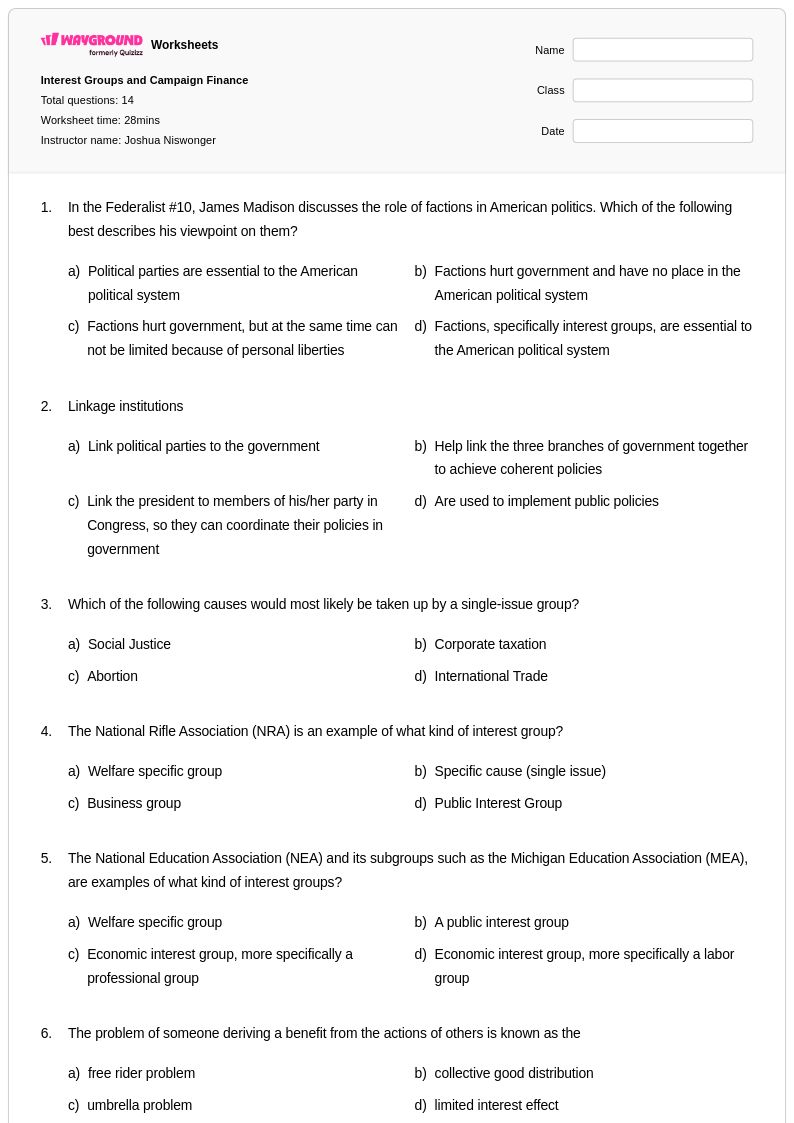
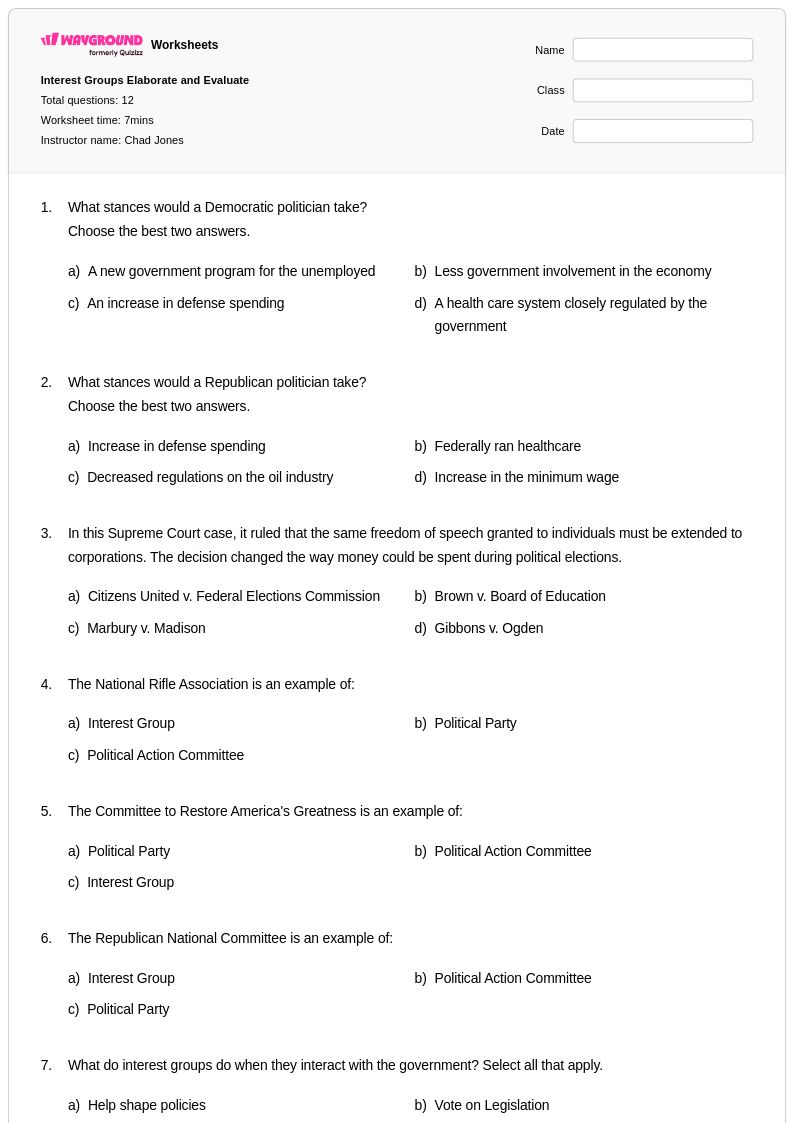
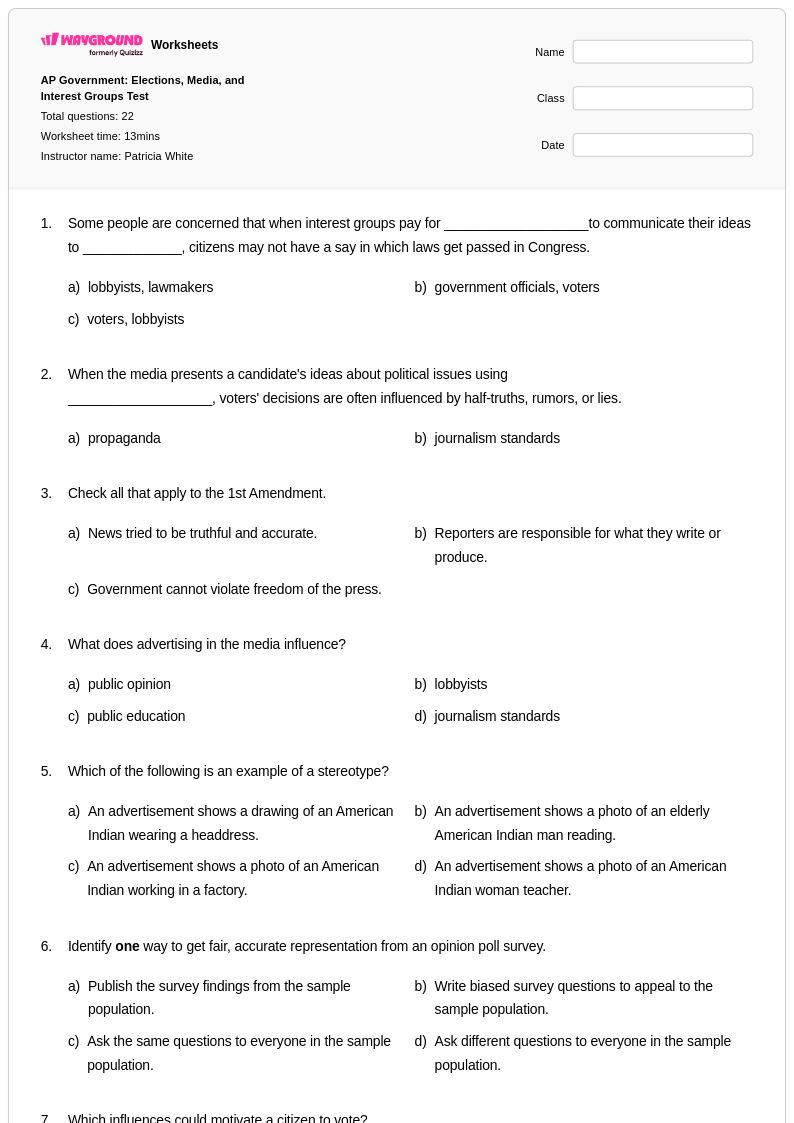
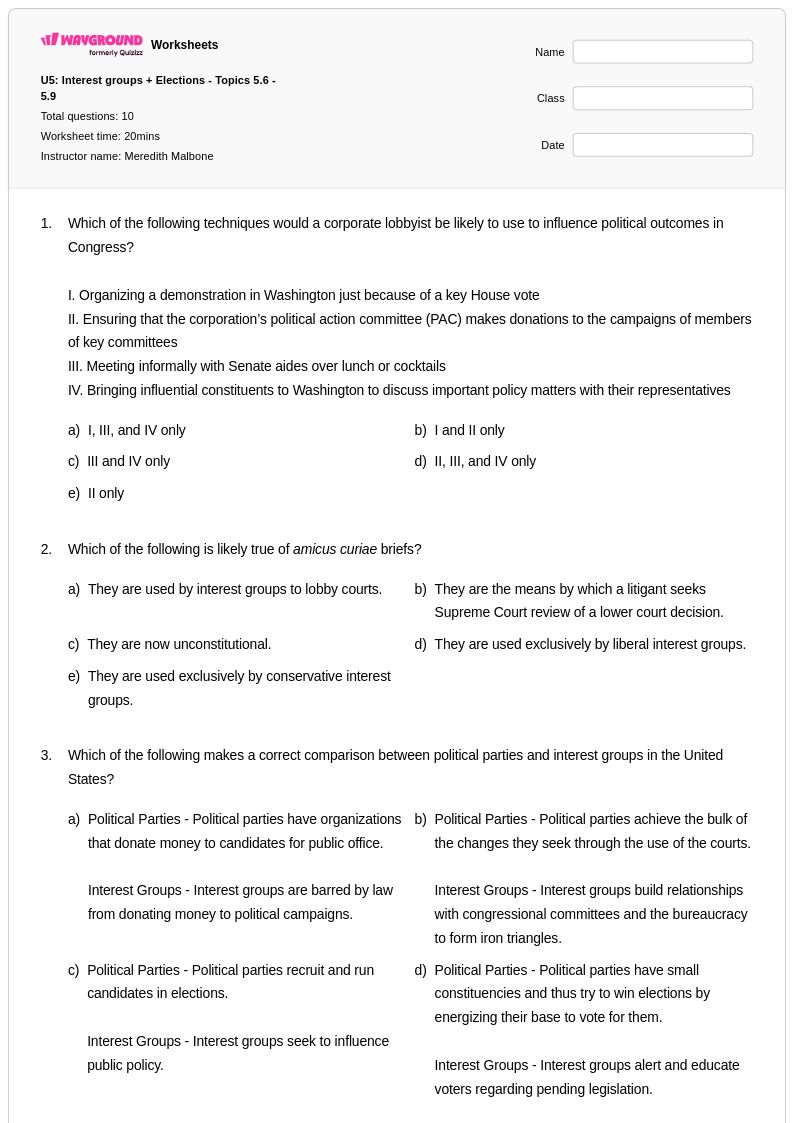
Grade 11 interest groups worksheets available through Wayground (formerly Quizizz) provide comprehensive coverage of how organized political advocacy shapes American democracy and policy-making processes. These educational resources strengthen students' analytical skills by examining the formation, structure, and influence tactics of various interest groups, from professional associations and labor unions to environmental organizations and business lobbies. The worksheets feature practice problems that challenge students to evaluate the role of political action committees, assess lobbying strategies, and analyze case studies of successful and unsuccessful advocacy campaigns. Each printable resource includes detailed answer keys that support independent learning and allow educators to efficiently assess student comprehension of complex concepts such as pluralism, iron triangles, and the revolving door phenomenon in government relations.
Wayground (formerly Quizizz) empowers educators with millions of teacher-created resources specifically designed for Grade 11 civics instruction, offering robust search and filtering capabilities that align with state and national social studies standards. The platform's differentiation tools enable teachers to customize interest group worksheets based on individual student needs, supporting both remediation for struggling learners and enrichment activities for advanced students. These flexible resources are available in both printable pdf formats for traditional classroom use and digital formats for online learning environments, facilitating seamless lesson planning regardless of instructional delivery method. Teachers can efficiently locate materials that target specific skills such as analyzing primary source documents from interest groups, comparing competing advocacy positions on policy issues, and evaluating the democratic implications of organized political influence, making it easier to provide targeted skill practice that enhances student understanding of American political processes.
FAQs
How do I teach interest groups in a civics or government class?
Start by distinguishing interest groups from political parties, emphasizing that interest groups do not run candidates but instead influence policy through lobbying, campaign contributions, and grassroots mobilization. Use real-world examples such as the NRA, AARP, and the Sierra Club to illustrate how different types of groups, including labor unions, business associations, and environmental organizations, pursue their legislative goals. Connecting these examples to current events helps students see interest groups as active participants in democratic processes rather than abstract concepts.
What exercises help students practice identifying and analyzing interest groups?
Effective practice exercises include scenario analysis tasks where students read a policy case study and identify which interest groups would likely be involved, what strategies they might use, and whose interests they represent. Matching activities that pair lobbying tactics with real organizations, and graphic organizers that categorize groups by type and method, reinforce classification skills. These structured activities build the analytical vocabulary students need to evaluate interest group influence on legislation.
What mistakes do students commonly make when learning about interest groups?
The most common misconception is that interest groups and political parties are interchangeable, when in fact interest groups do not nominate candidates or seek direct control of government. Students also tend to view all interest groups as corrupt or purely self-serving, missing the legitimate role advocacy organizations play in representing underrepresented constituencies. A third frequent error is conflating lobbying with bribery, so it is worth explicitly teaching the legal frameworks that govern lobbying activity.
How do interest groups differ from political parties in the U.S. political system?
Political parties aim to win elections and control government by running candidates for office, while interest groups focus narrowly on influencing specific policies without seeking elected power. Interest groups work within and across party lines, using tools like lobbying, PAC contributions, litigation, and public campaigns to shape legislation. Teaching this distinction clearly is foundational before students can analyze how interest groups interact with Congress, regulatory agencies, and the courts.
How can I use Wayground's interest groups worksheets in my classroom?
Wayground's interest groups worksheets are available as printable PDFs for traditional classroom distribution and in digital formats for technology-integrated or hybrid learning environments, giving teachers flexibility regardless of their setup. Teachers can also host the worksheets as a live quiz on Wayground, turning individual practice into an interactive whole-class activity. All worksheets include complete answer keys, which support both independent student work and efficient teacher-led review sessions.
How can I differentiate interest groups instruction for students at different skill levels?
For students who need foundational support, begin with simplified scenarios involving familiar organizations before introducing complex concepts like PACs or iron triangles. Advanced learners benefit from comparative analysis tasks that ask them to evaluate the relative power of competing interest groups in a specific policy debate. On Wayground, teachers can apply individual accommodations such as reduced answer choices or read-aloud support to specific students, ensuring every learner accesses the same content at an appropriate level of challenge.