Free Printable Geographical Boundaries Worksheets for Grade 12
Grade 12 geographical boundaries worksheets from Wayground help students master political and physical border concepts through comprehensive printables, practice problems, and answer keys for advanced geography studies.
Explore printable Geographical Boundaries worksheets for Grade 12
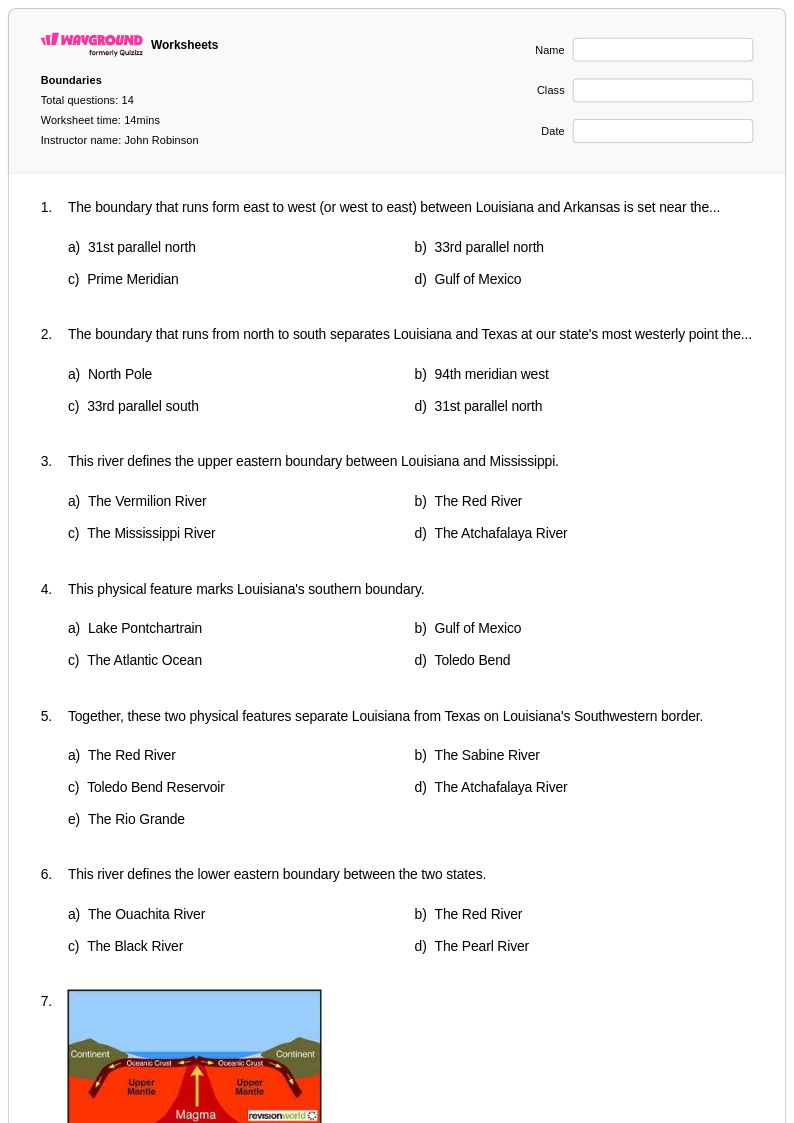
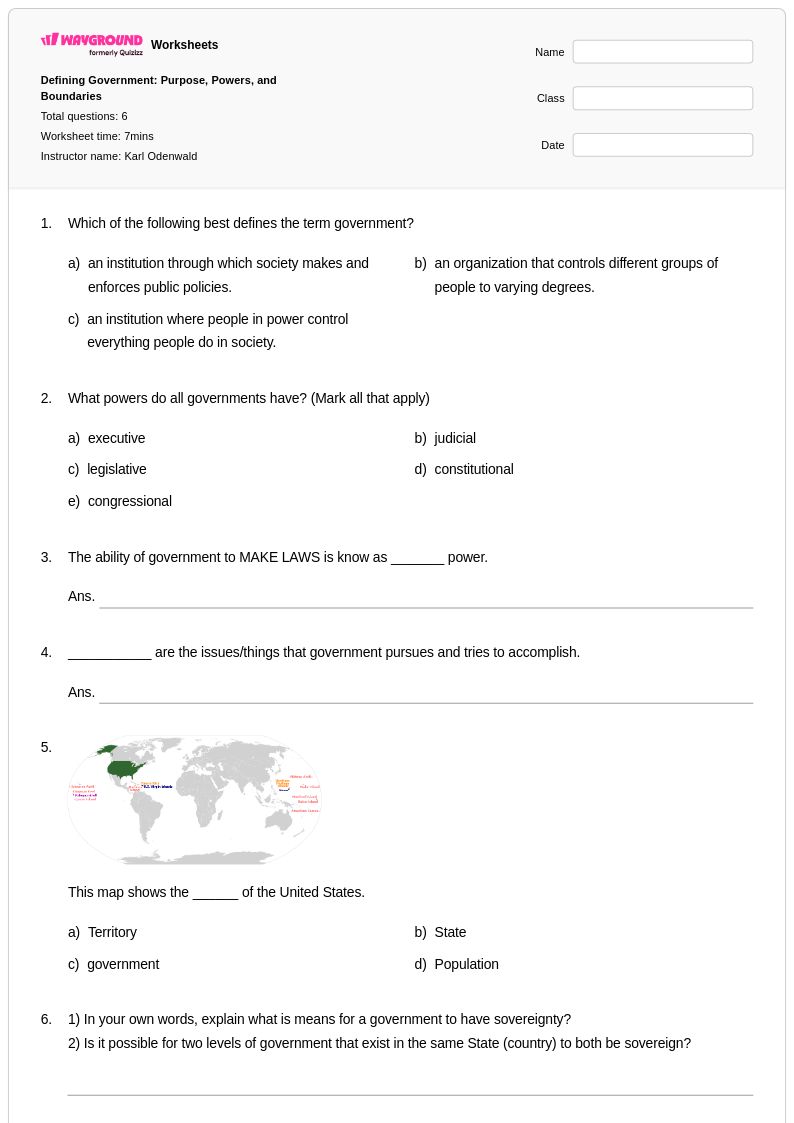
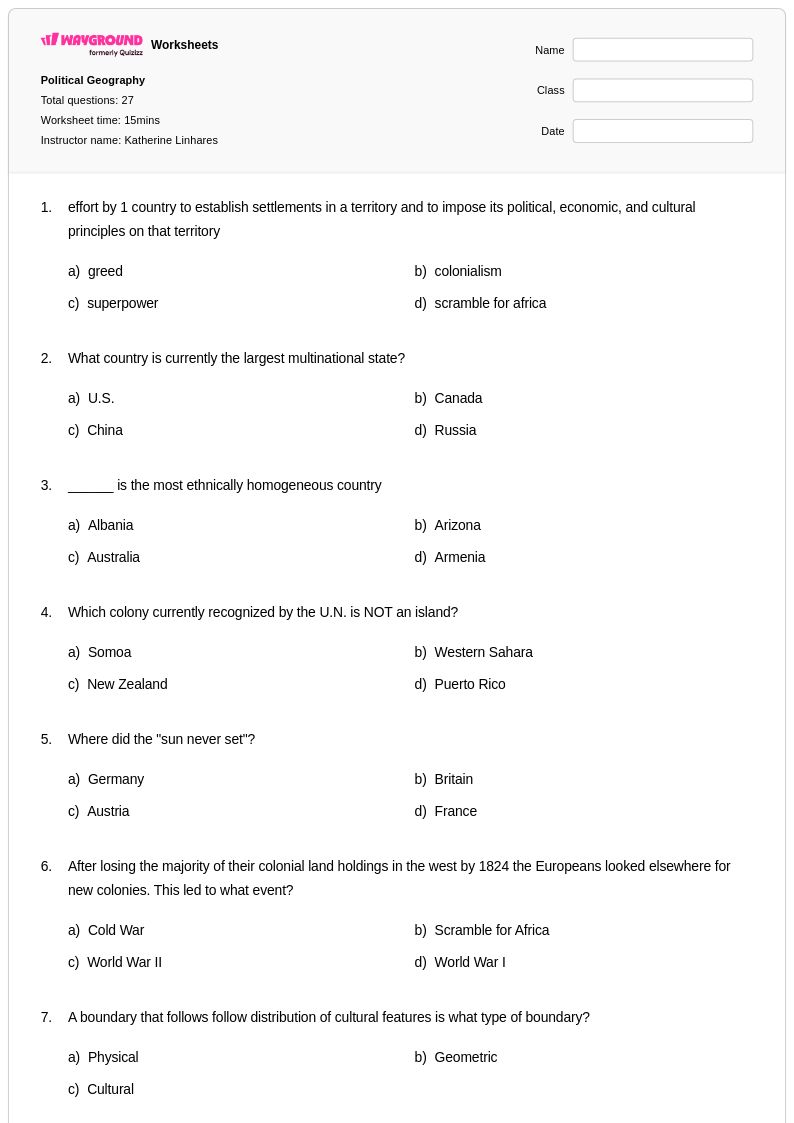
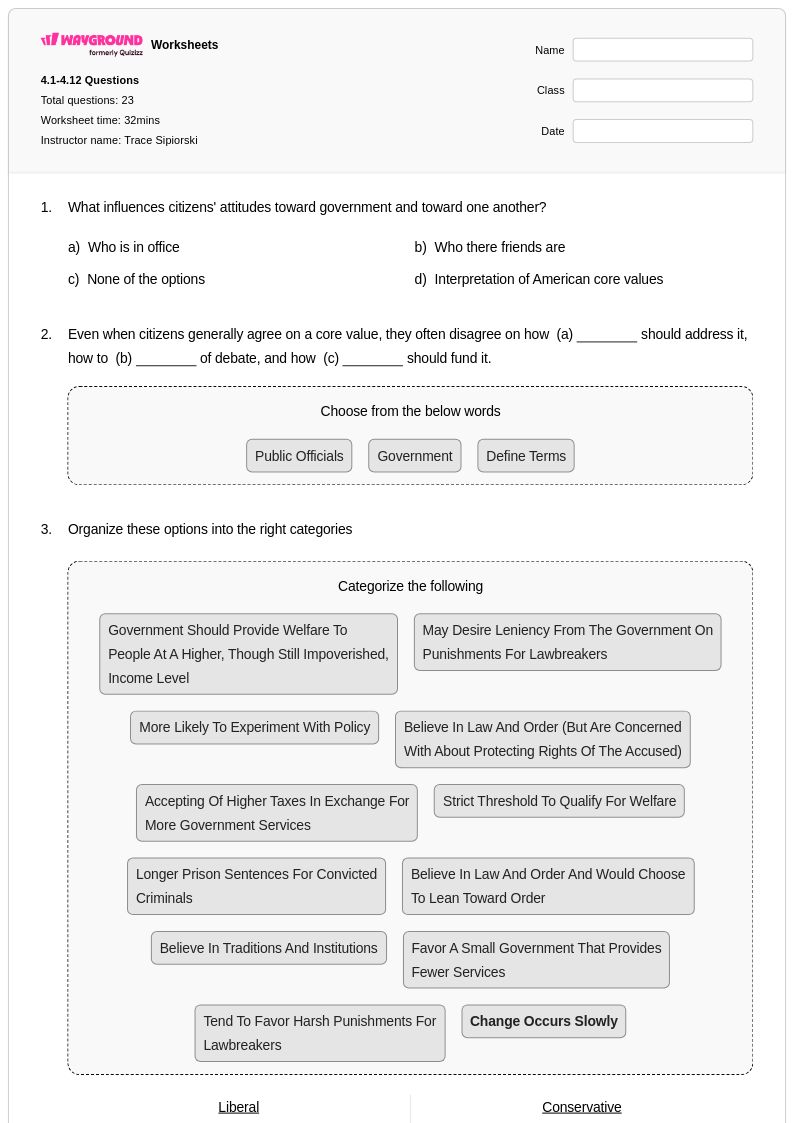
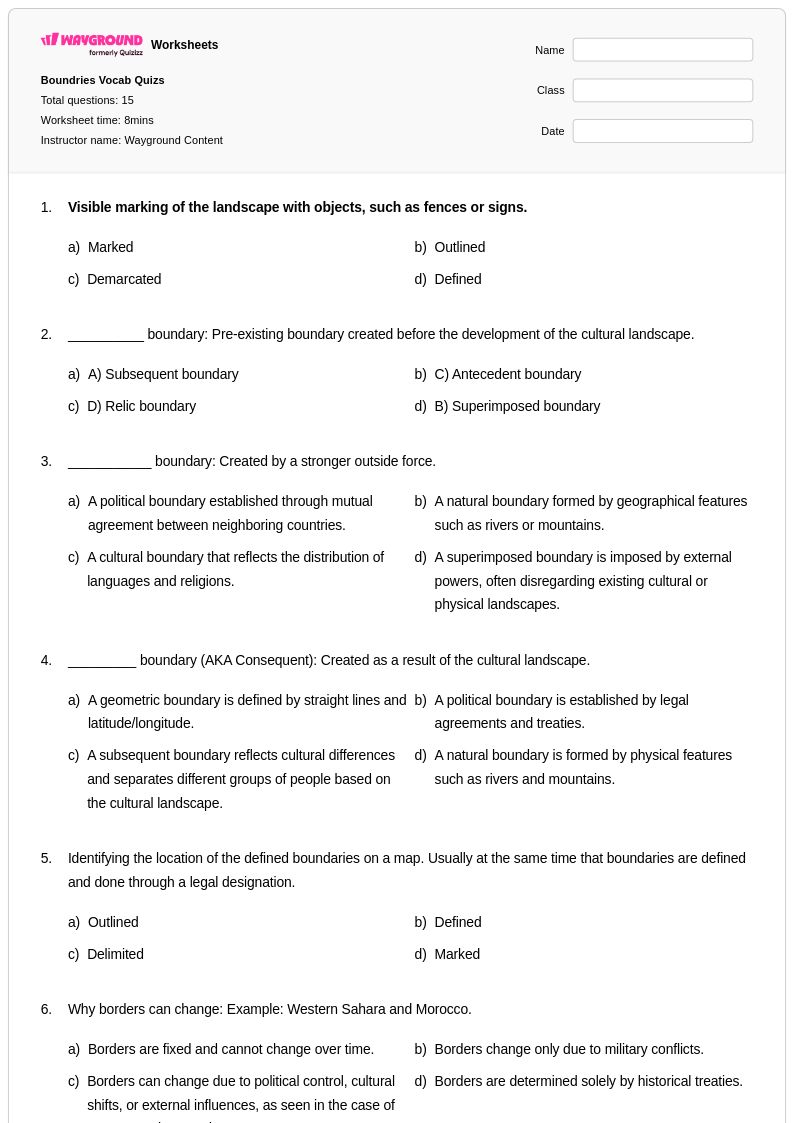
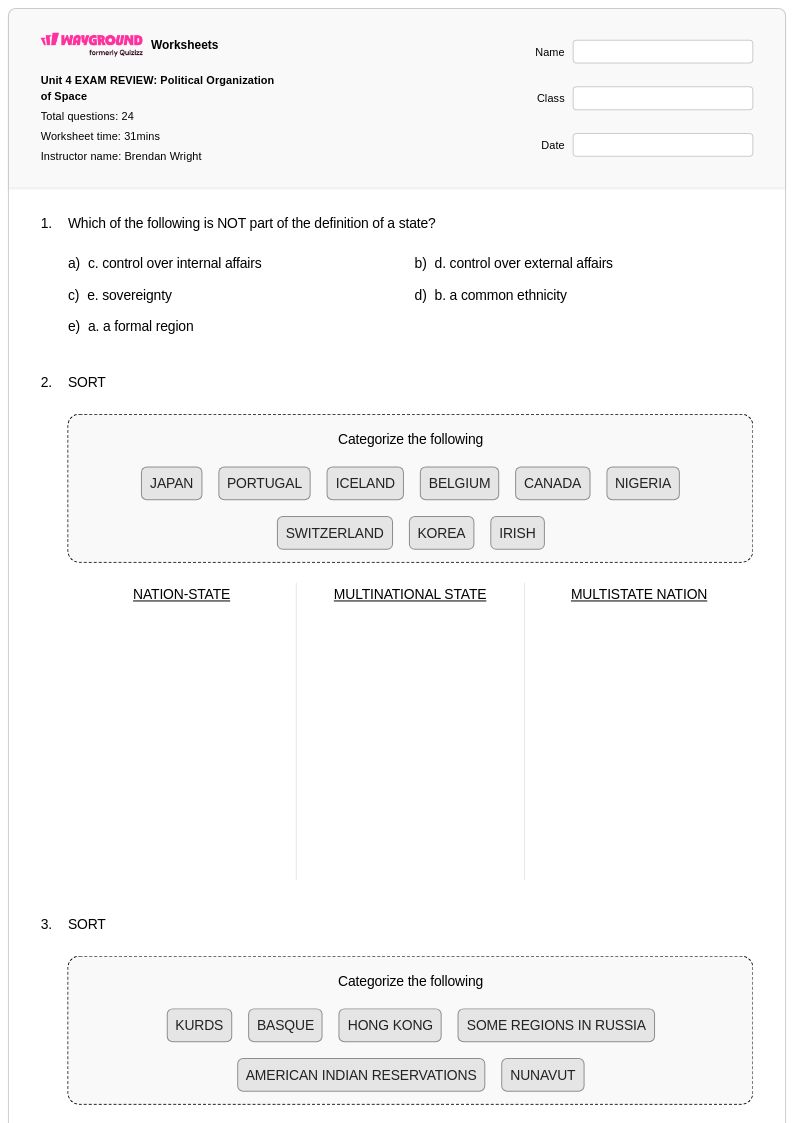
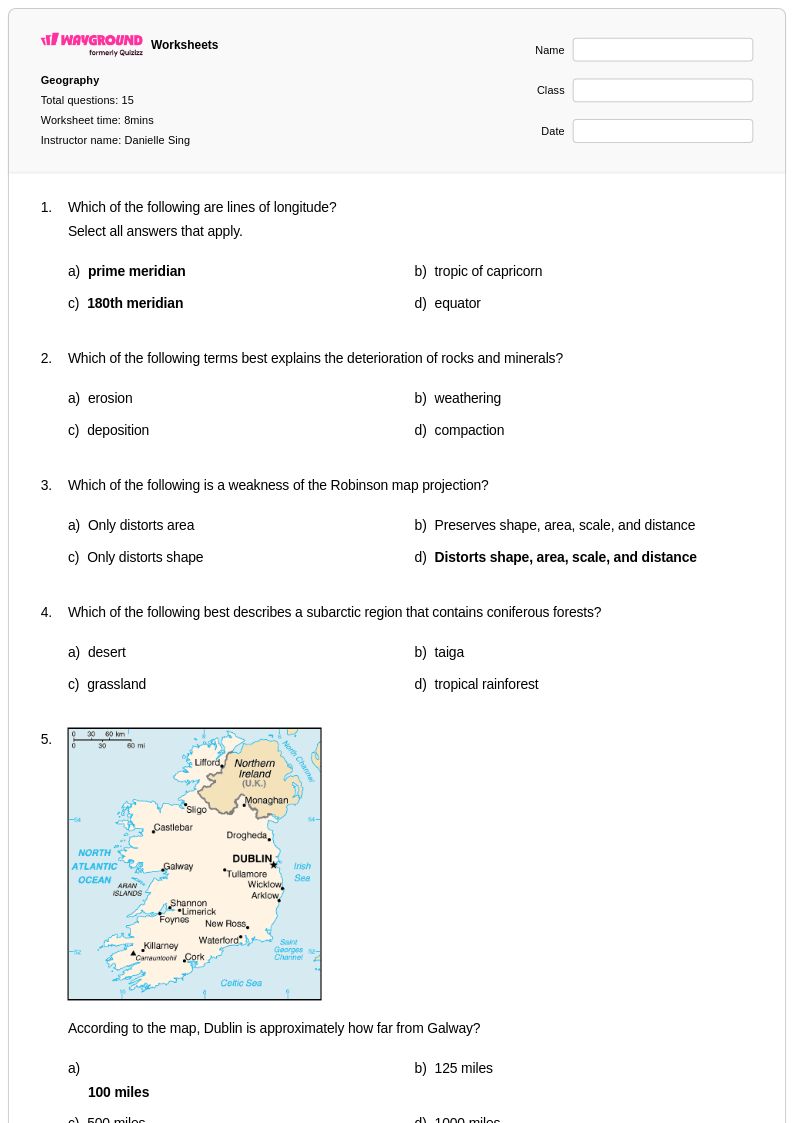
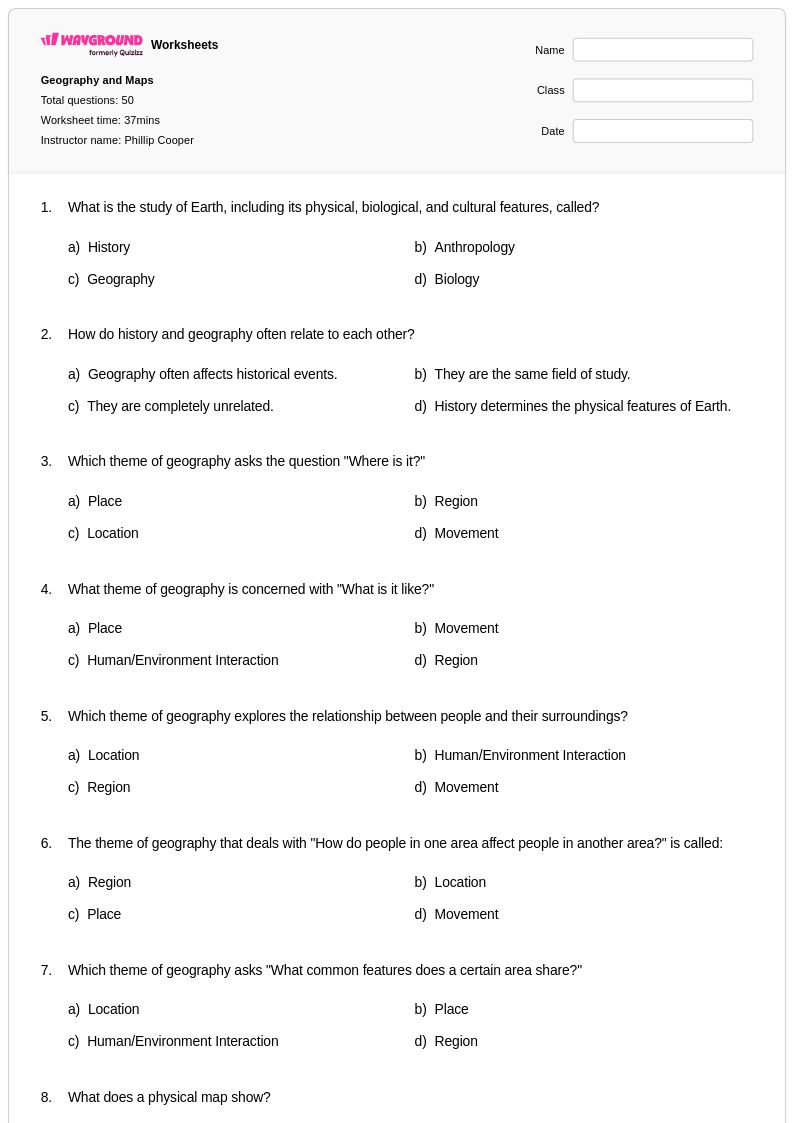
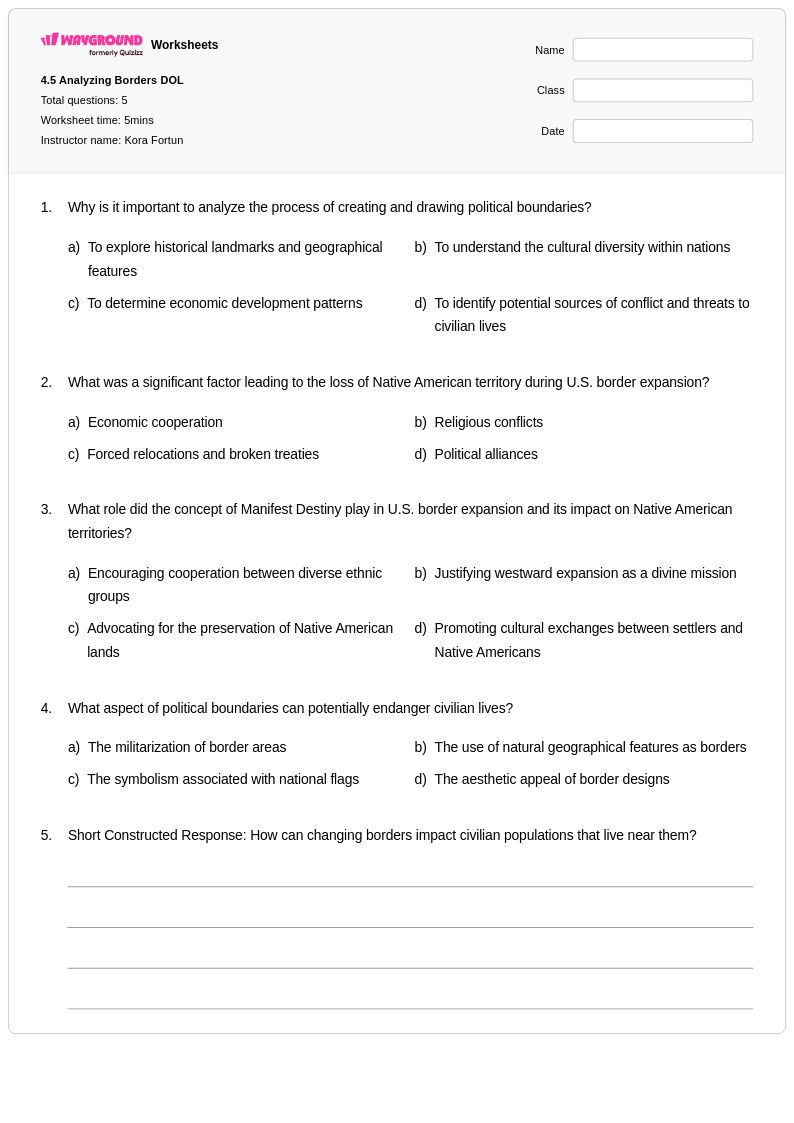
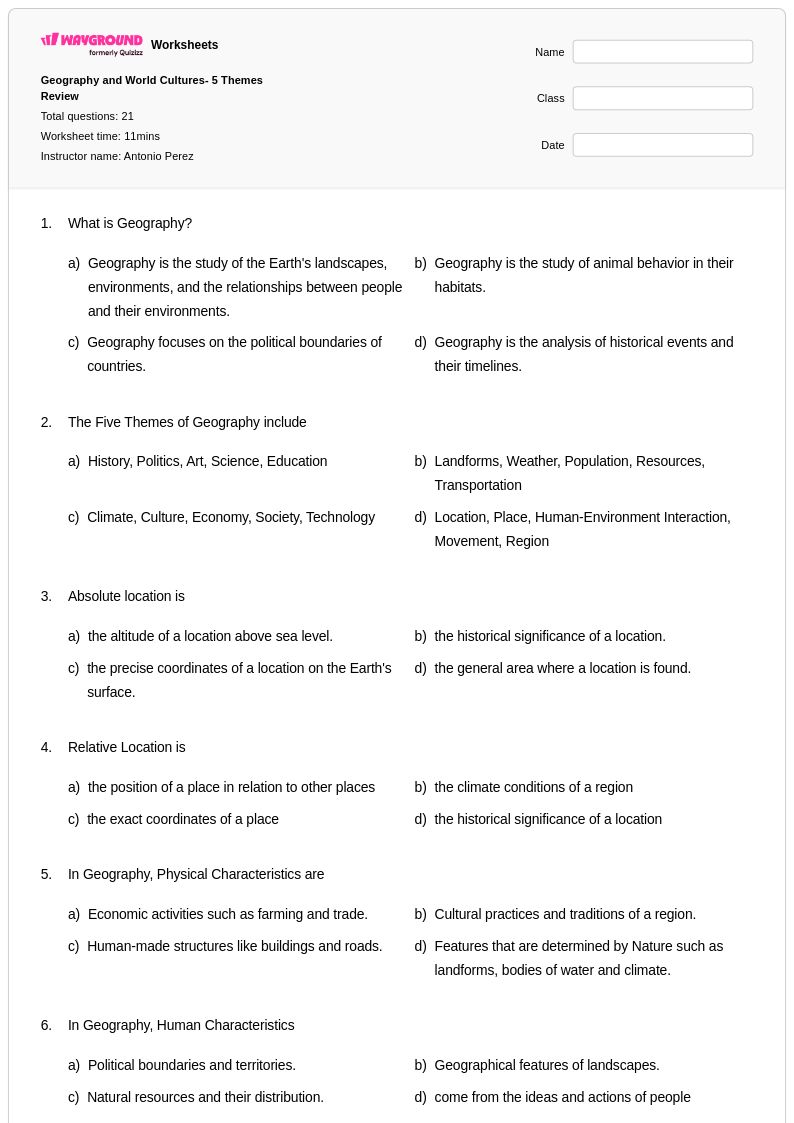
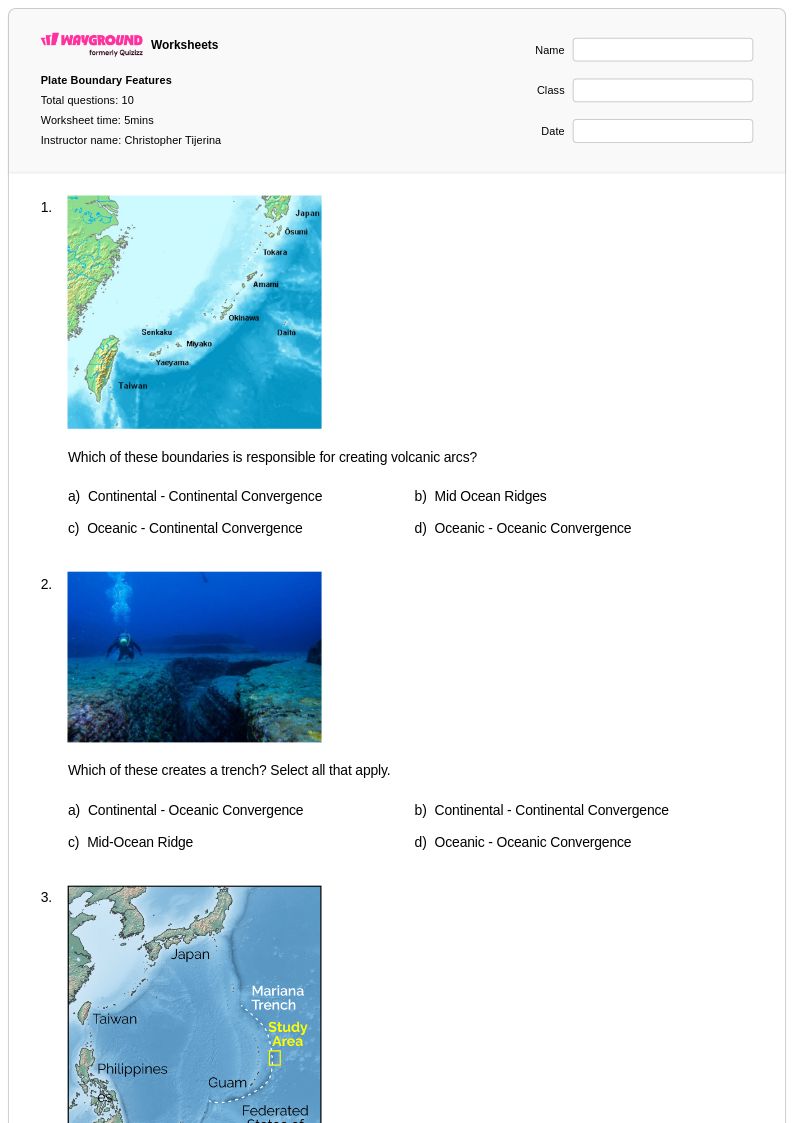
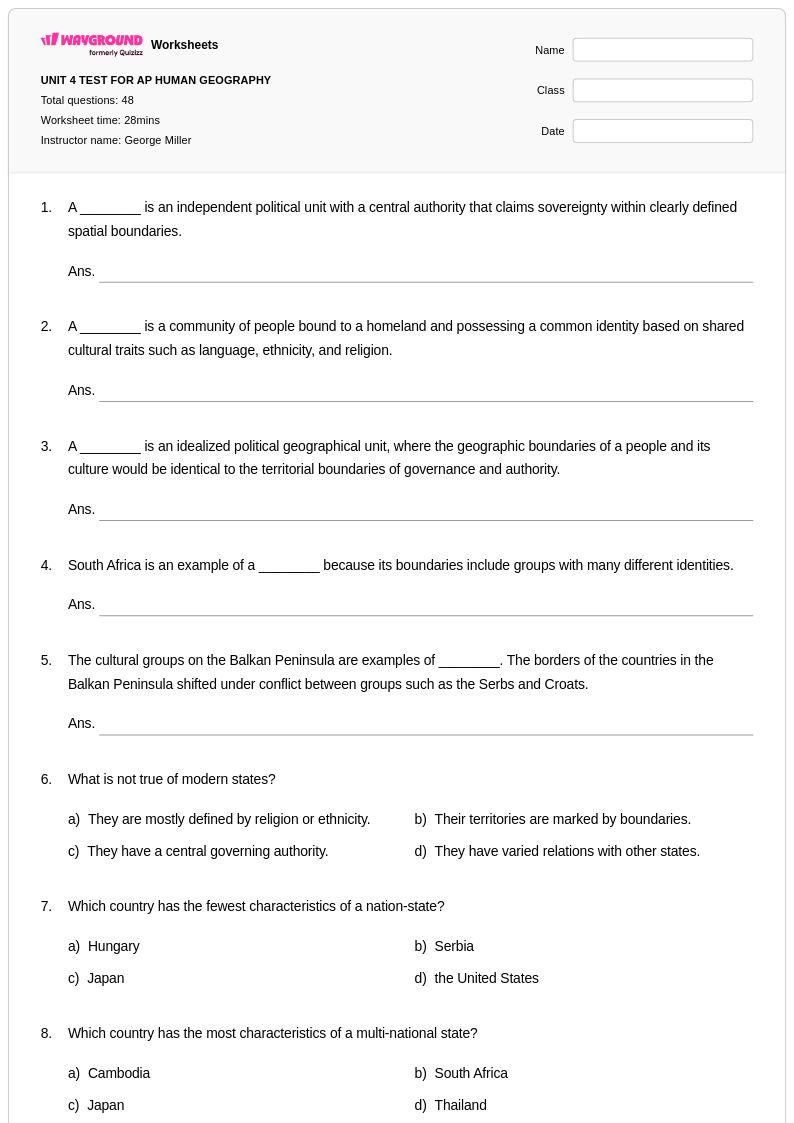
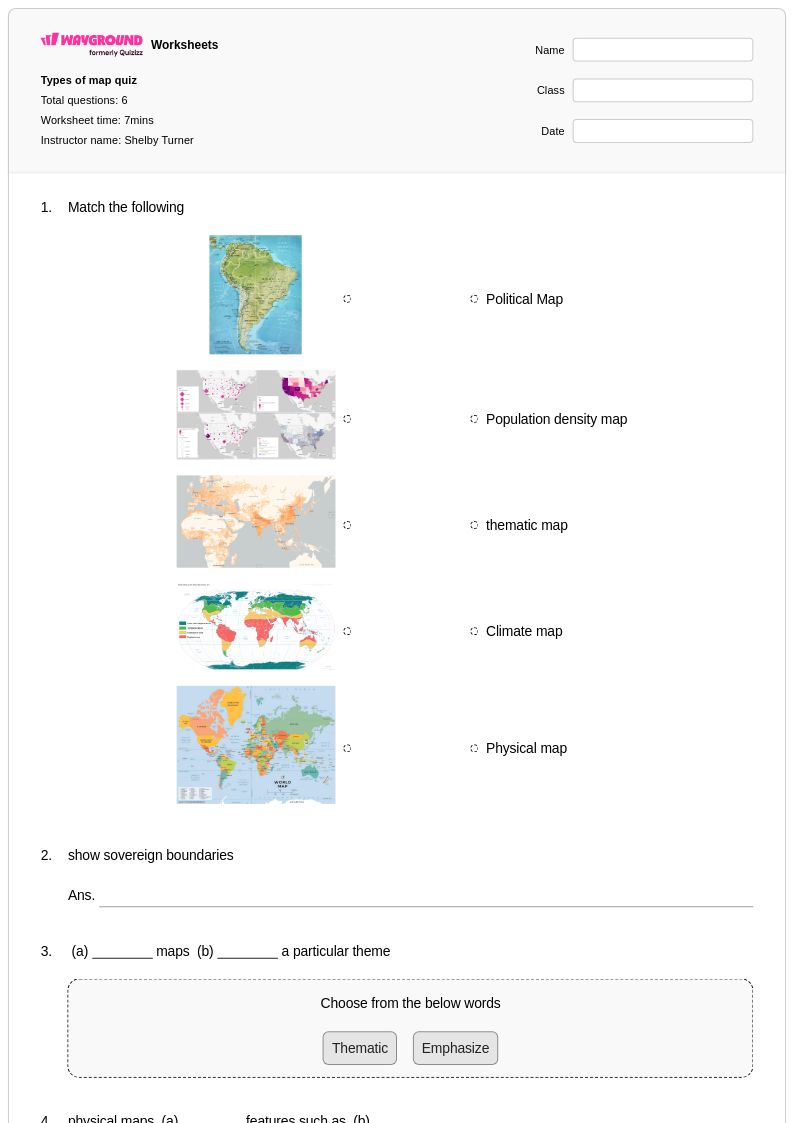
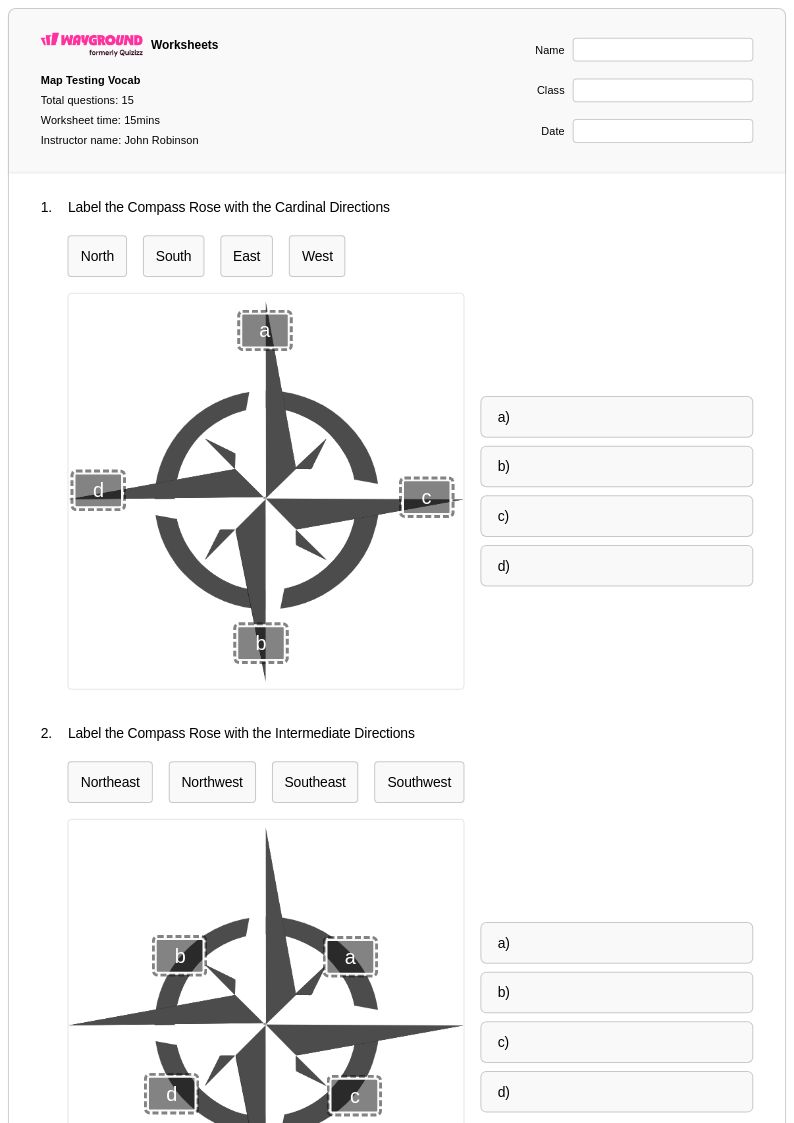
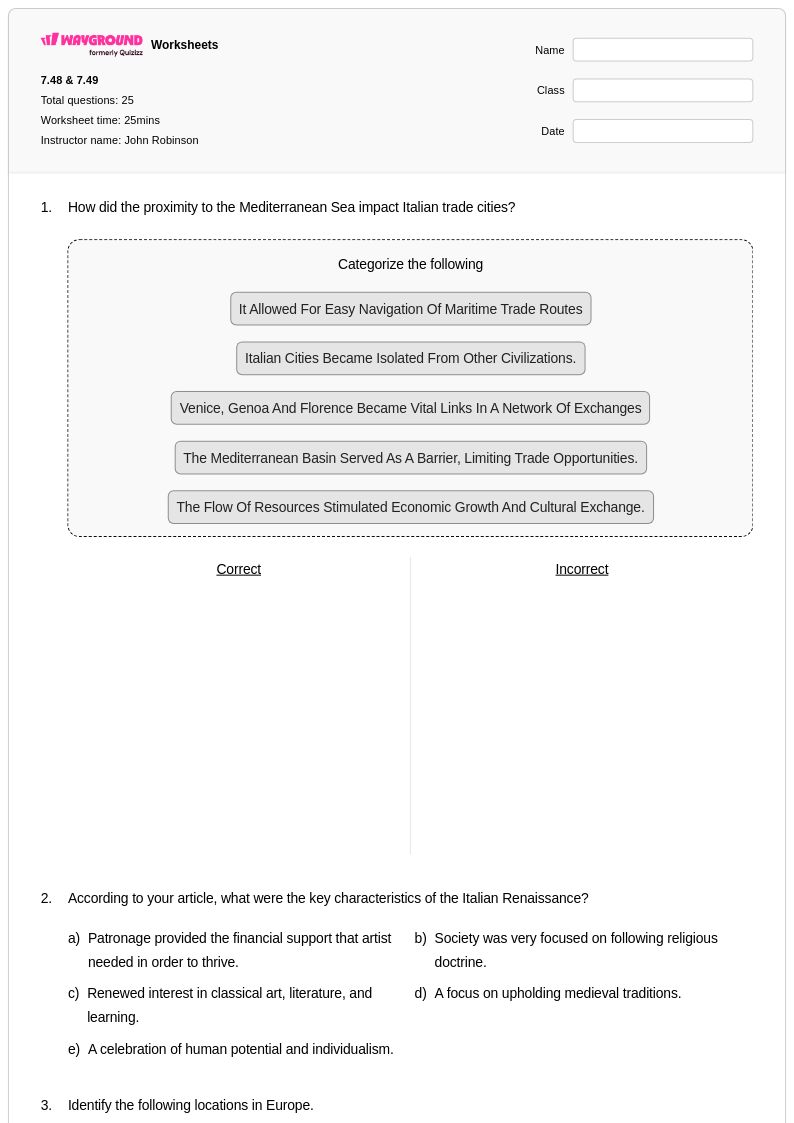
Geographical boundaries worksheets for Grade 12 students through Wayground (formerly Quizizz) provide comprehensive coverage of complex territorial concepts that shape our modern world. These expertly crafted resources help students analyze the formation, evolution, and significance of political borders, natural boundaries, and disputed territories while developing critical thinking skills essential for advanced geographic study. Students engage with practice problems that explore how physical features like rivers and mountain ranges influence boundary creation, examine the impact of historical events on territorial divisions, and investigate contemporary boundary disputes through detailed case studies. Each worksheet includes a complete answer key and is available as a free printable pdf, making it easy for educators to distribute materials that strengthen students' understanding of sovereignty, territoriality, and geopolitical relationships.
Wayground (formerly Quizizz) empowers teachers with millions of teacher-created geographical boundaries resources that can be seamlessly integrated into Grade 12 social studies curricula. The platform's robust search and filtering capabilities allow educators to quickly locate materials aligned with specific learning standards while offering differentiation tools that accommodate diverse learning needs within the classroom. Teachers can customize worksheets to focus on particular regions, historical periods, or boundary types, then distribute them in both printable and digital pdf formats to support various instructional approaches. These flexible resources prove invaluable for lesson planning, targeted remediation for students struggling with complex geopolitical concepts, enrichment activities for advanced learners, and ongoing skill practice that reinforces understanding of how geographical boundaries influence international relations, economic development, and cultural identity.
FAQs
How do I teach geographical boundaries to students?
Start by distinguishing between natural boundaries, such as rivers, mountain ranges, and coastlines, and artificial boundaries created through political agreements and historical treaties. Use real-world map analysis to show students how these boundary types look in practice, then connect them to consequences like cultural divisions, trade routes, and international disputes. Grounding the lesson in current events or familiar regions helps students see why boundaries matter beyond the map.
What exercises help students practice identifying types of geographical boundaries?
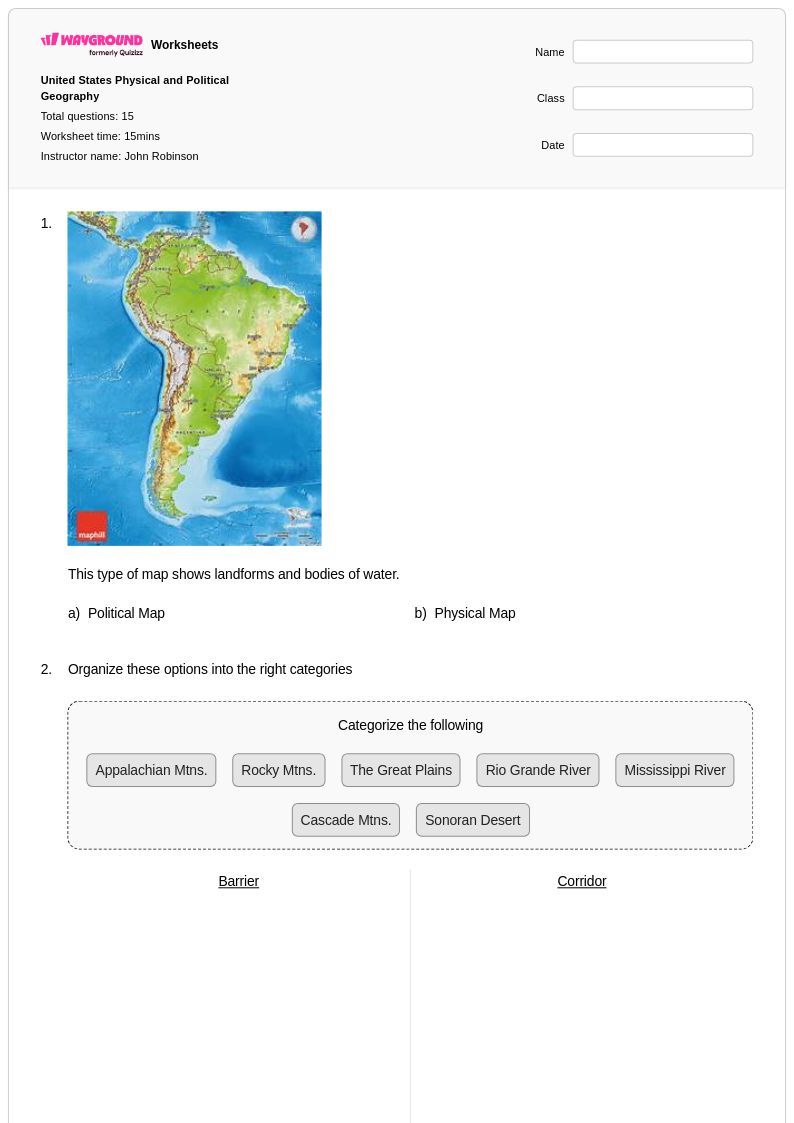
Map interpretation exercises are among the most effective, asking students to classify boundaries as natural or artificial and explain the reasoning behind each. Practice problems that pair a boundary with its historical context, such as the Rio Grande as a political border or the Himalayas as a natural divide, reinforce both identification and analytical thinking. Worksheets that include questions about how boundaries affect cultural identity and economic development push students to apply the concept rather than just recall it.
What common mistakes do students make when learning about geographical boundaries?
A frequent misconception is treating all political borders as permanent or neutral, when in reality many reflect contested histories, colonial decisions, or negotiated compromises. Students also commonly confuse physical features with boundaries, assuming that every mountain range or river automatically serves as a formal border. Worksheets that include counterexamples, such as boundaries that cut across rivers or divide mountain regions, help students unlearn these oversimplifications.
How do geographical boundaries connect to broader social studies concepts?
Geographical boundaries are foundational to understanding political geography, international relations, and cultural identity, making them a natural bridge between map skills and higher-order social studies thinking. When students examine how boundaries have shifted over time, they engage with history, economics, and civics simultaneously. This cross-disciplinary relevance makes boundary topics especially useful for integrated units or project-based learning.
How can I use geographical boundaries worksheets in my classroom?
Geographical boundaries worksheets on Wayground are available as printable PDFs for traditional classroom use and in digital formats for technology-integrated environments, so they fit both in-person and remote instruction. Teachers can also host them as a quiz directly on Wayground, enabling real-time student responses and immediate feedback. Each worksheet includes a complete answer key, which makes them practical for independent practice, homework, or formative assessment without additional prep.
How can I support students with different learning needs when teaching geographical boundaries?
Wayground allows teachers to apply individual accommodations directly to students, including read-aloud support for students who struggle with text-heavy map descriptions, reduced answer choices to lower cognitive load on complex identification tasks, and extended time for assessments. These settings can be assigned per student without notifying the rest of the class, so differentiation stays discreet. Because accommodations are saved and reusable, teachers don't need to reconfigure them for each new worksheet or session.