
Recommended Topics for you
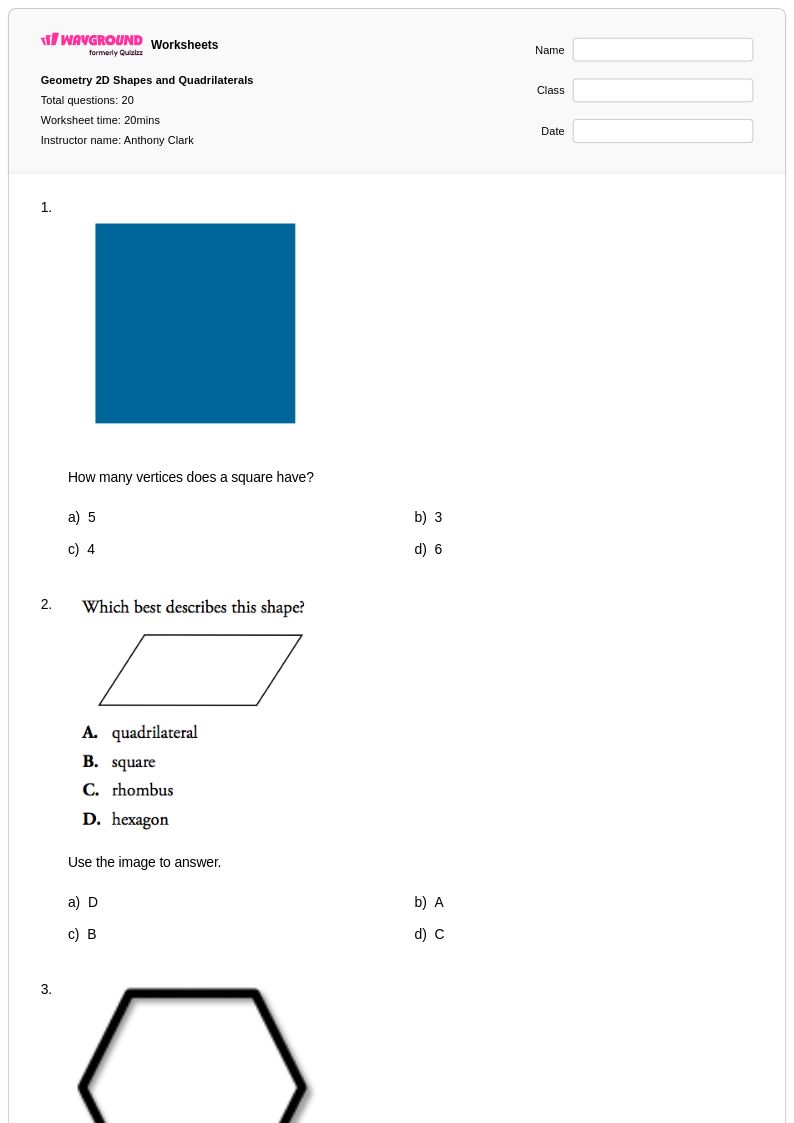
20 Q
3rd - Uni
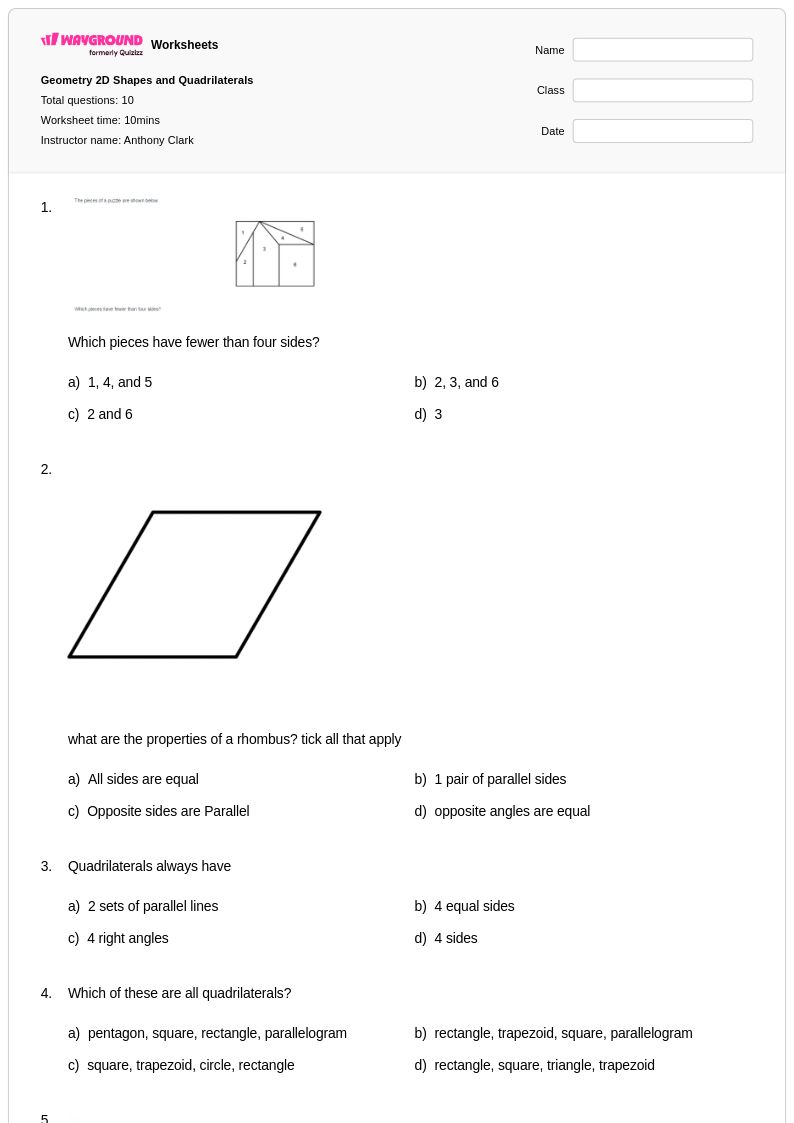
10 Q
3rd - Uni
13 Q
3rd - Uni
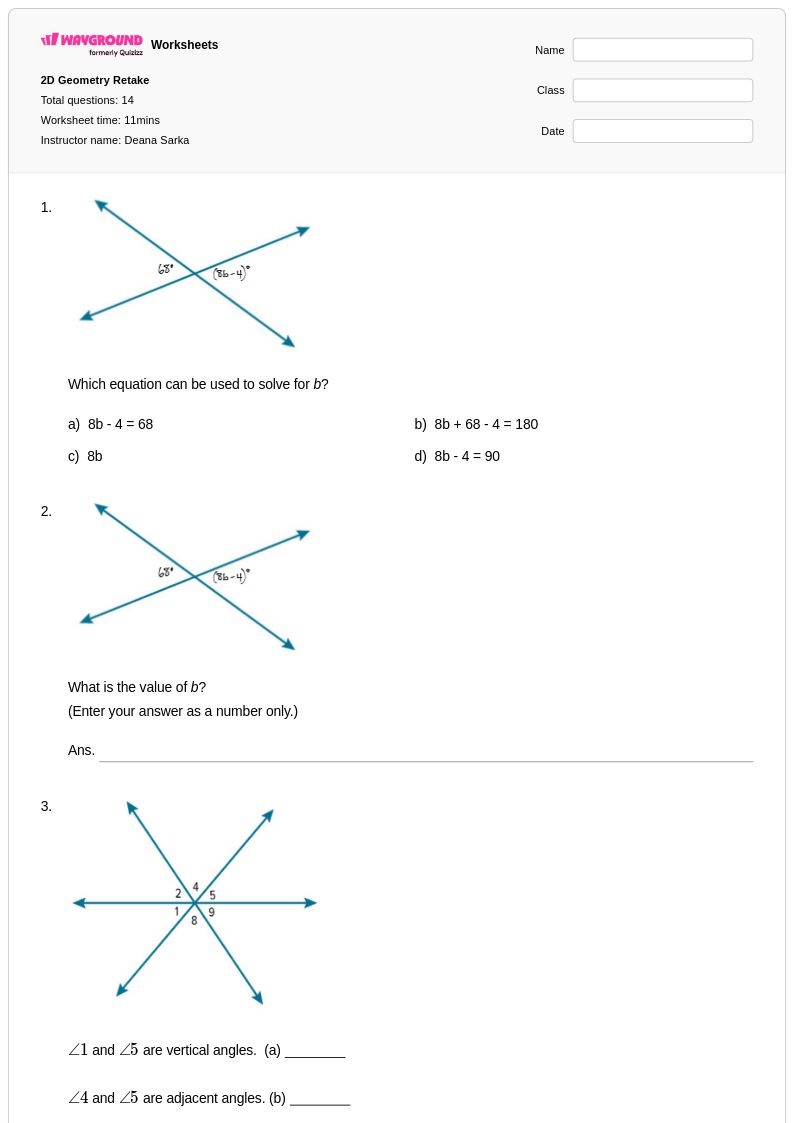
14 Q
6th - 8th
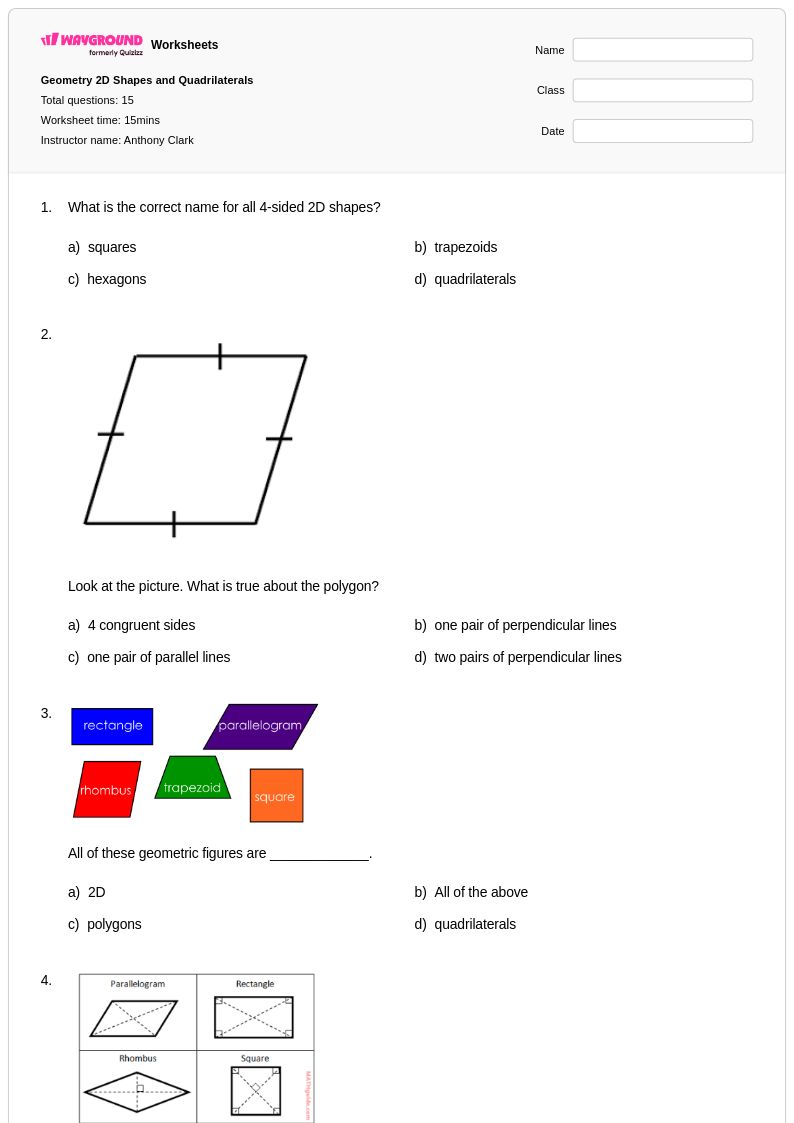
15 Q
3rd - Uni
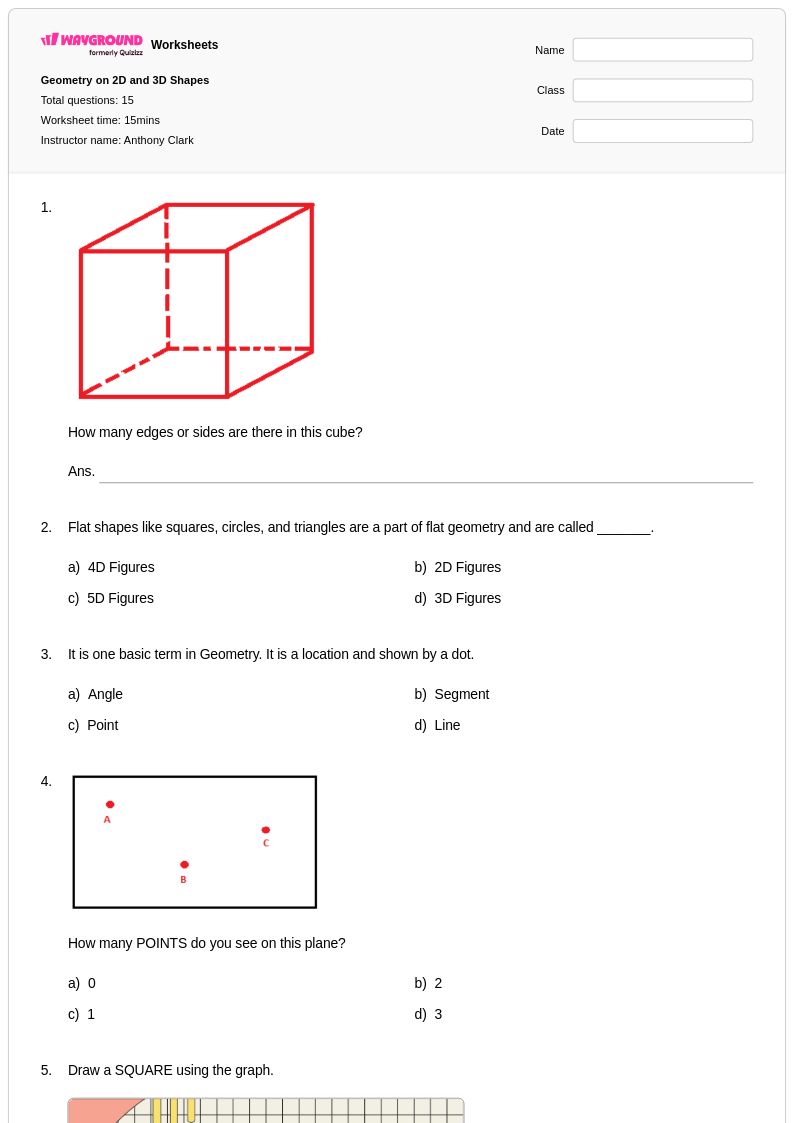
15 Q
3rd - Uni
17 Q
3rd - Uni
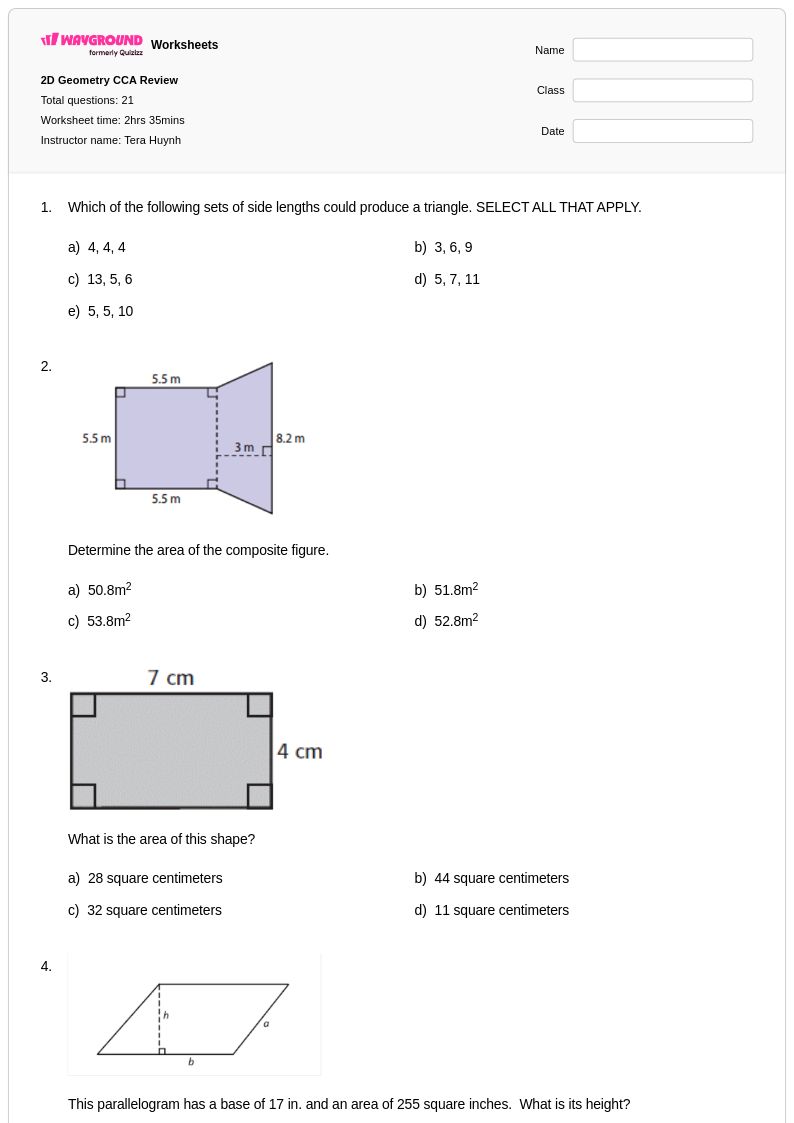
21 Q
8th
24 Q
6th - 8th
20 Q
1st - Uni
20 Q
2nd - Uni
9 Q
5th - Uni
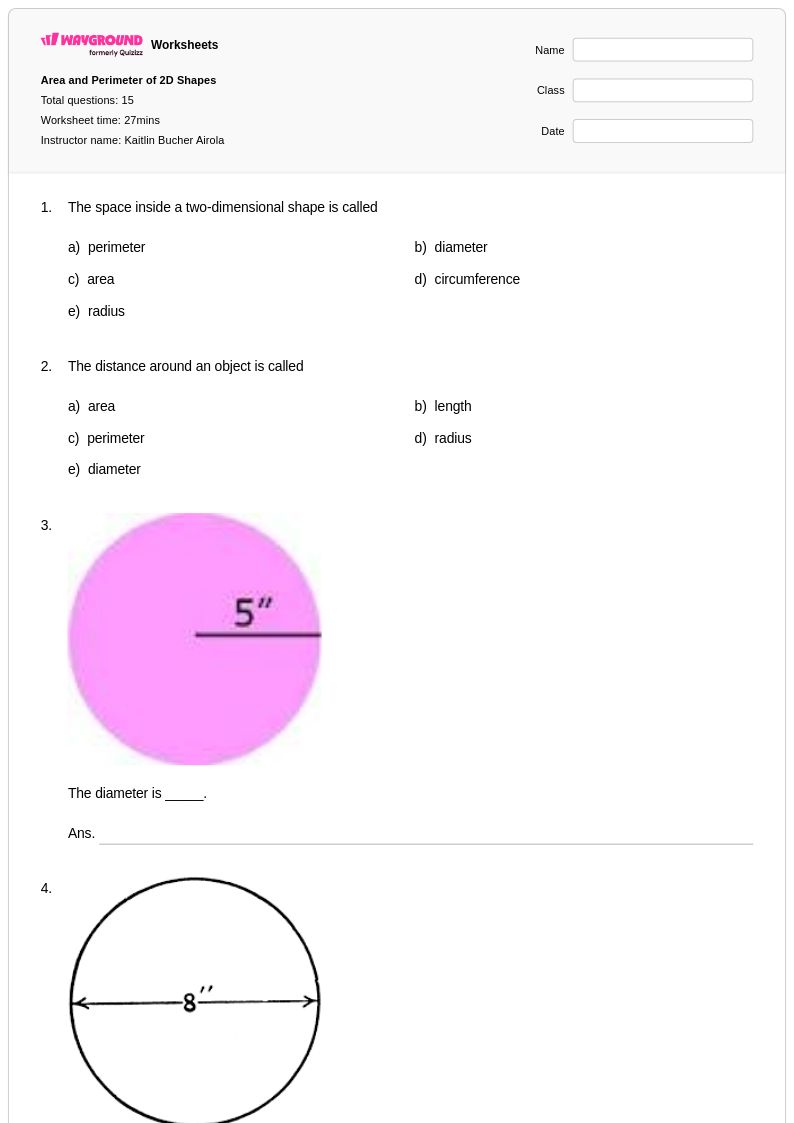
15 Q
8th
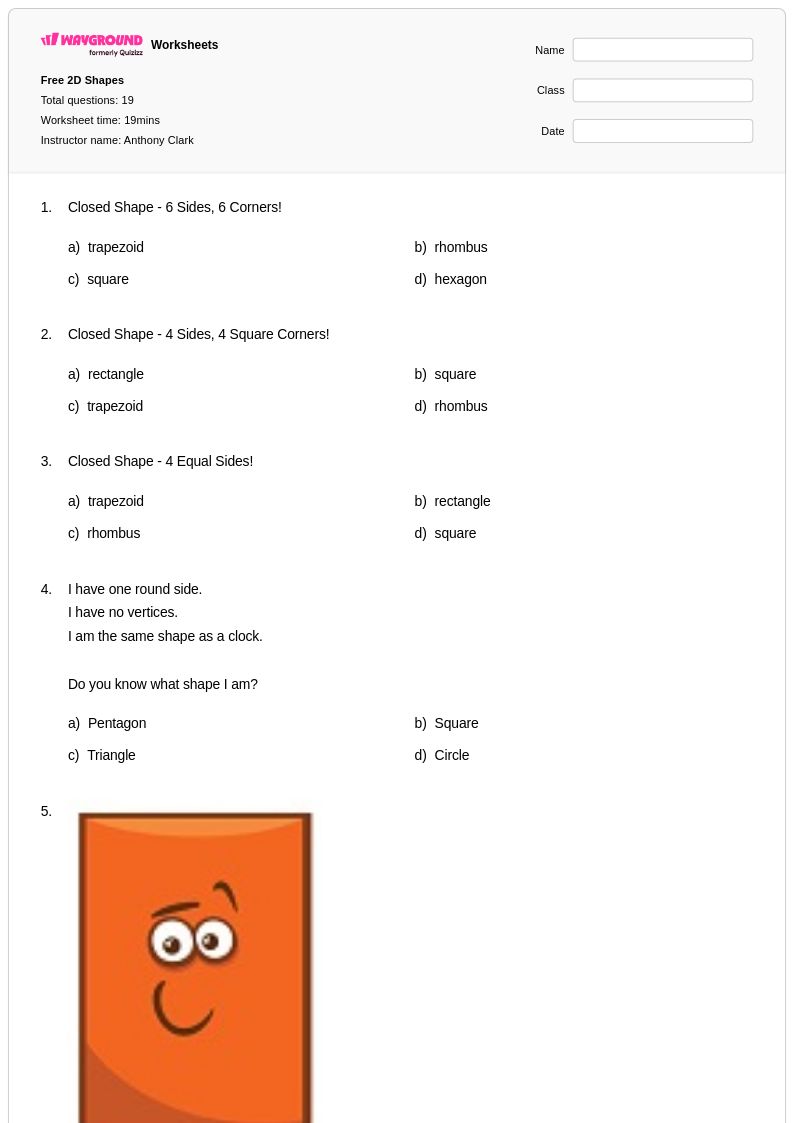
19 Q
1st - Uni
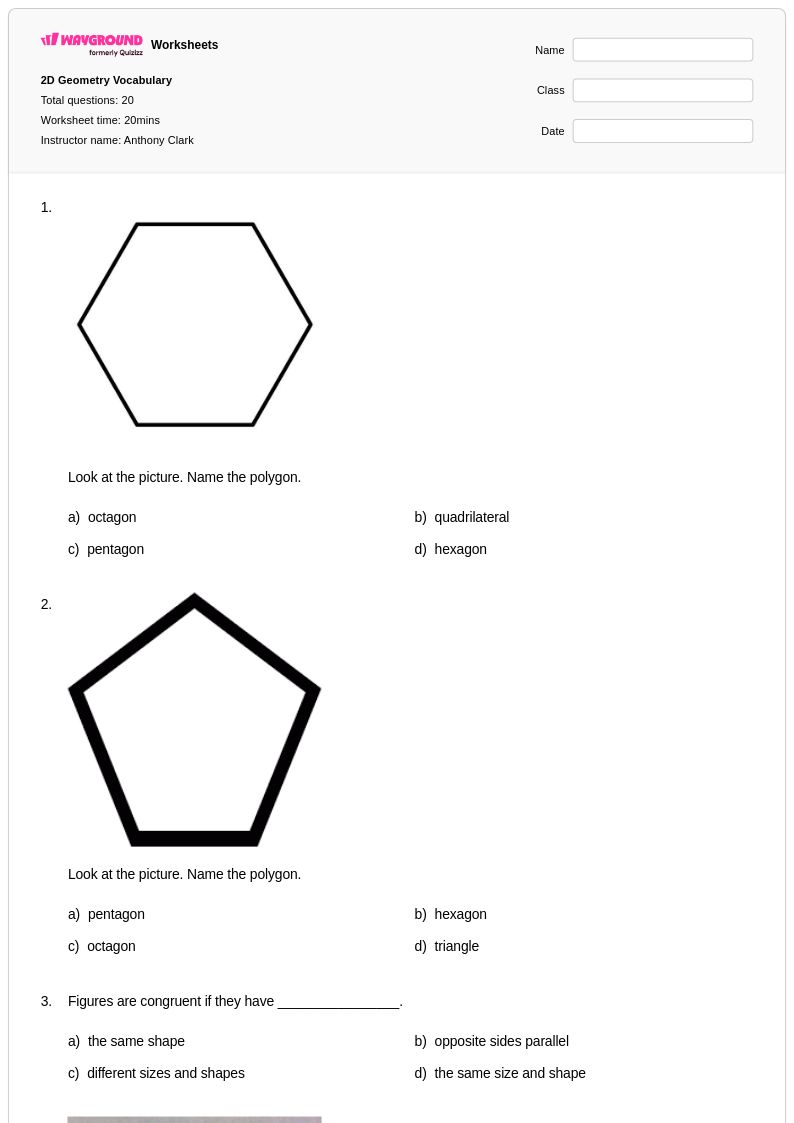
20 Q
5th - Uni
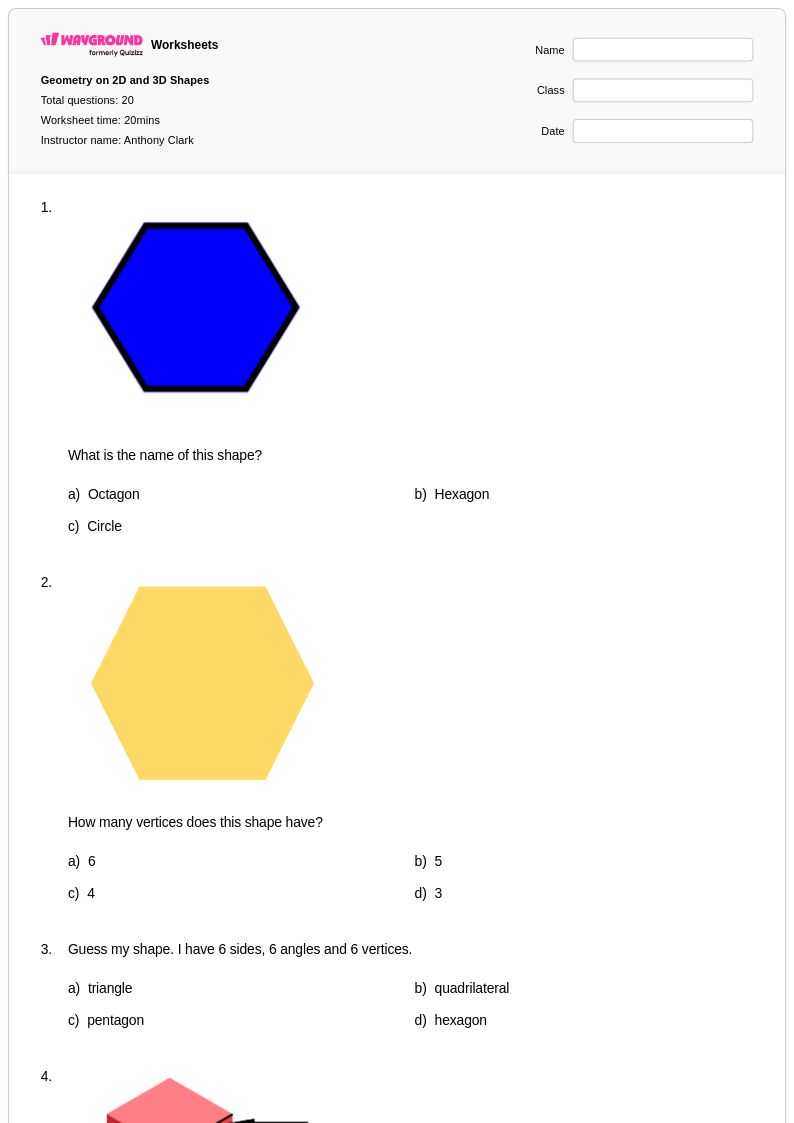
20 Q
3rd - Uni
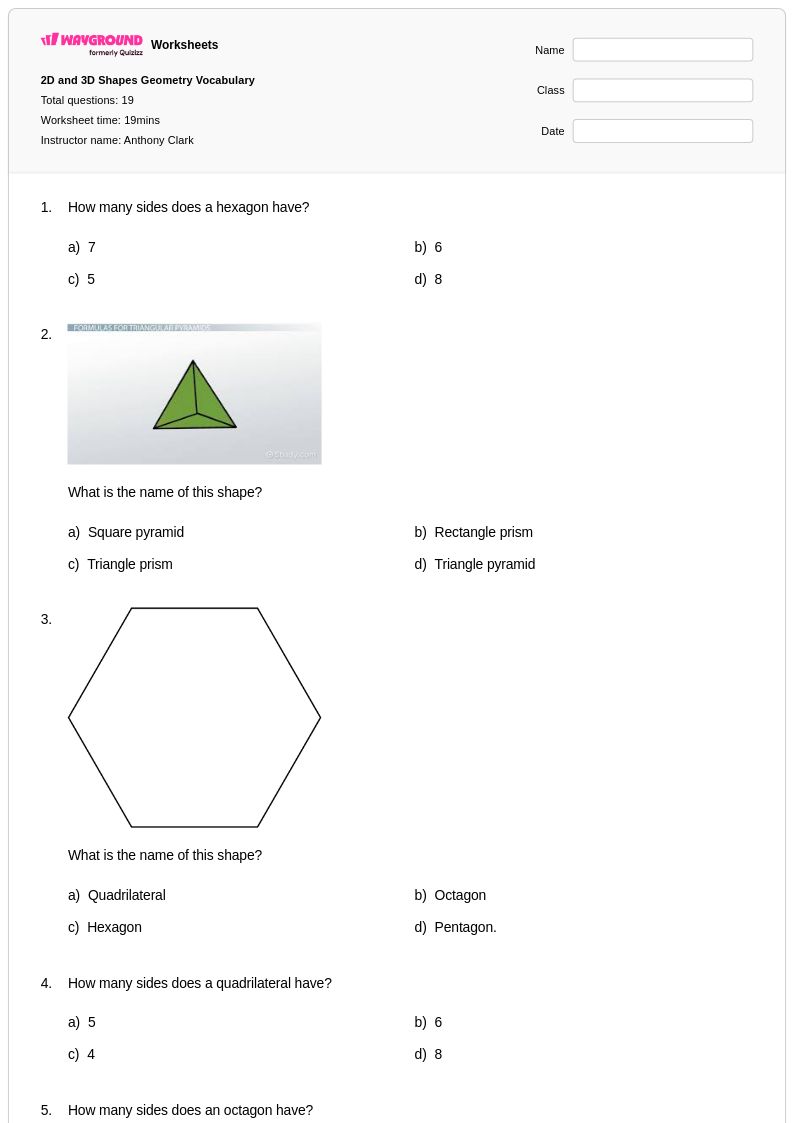
19 Q
3rd - Uni
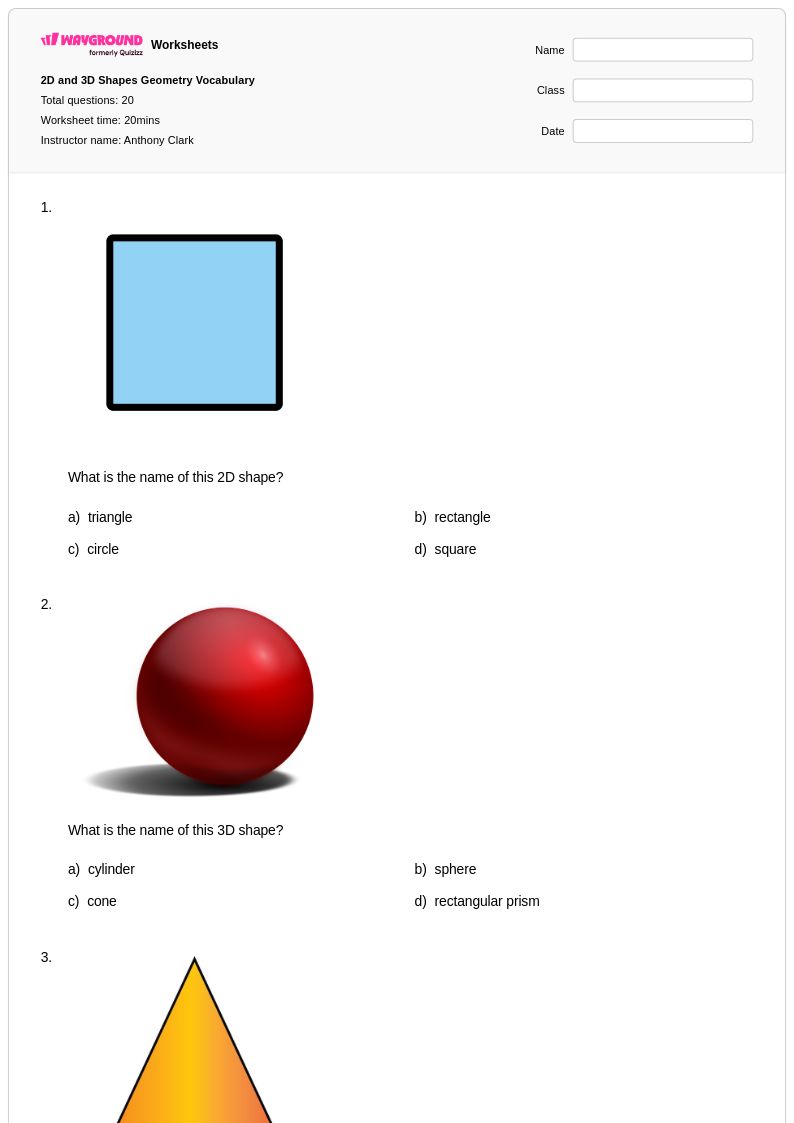
20 Q
3rd - Uni
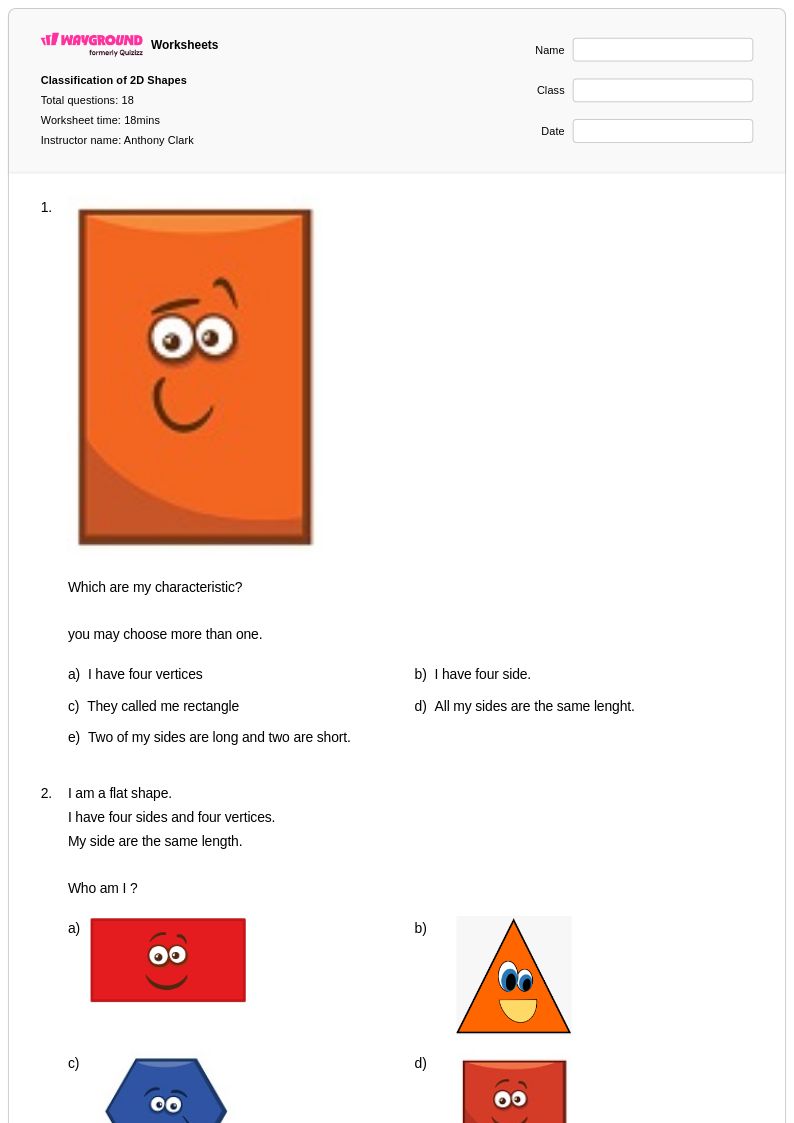
18 Q
1st - Uni
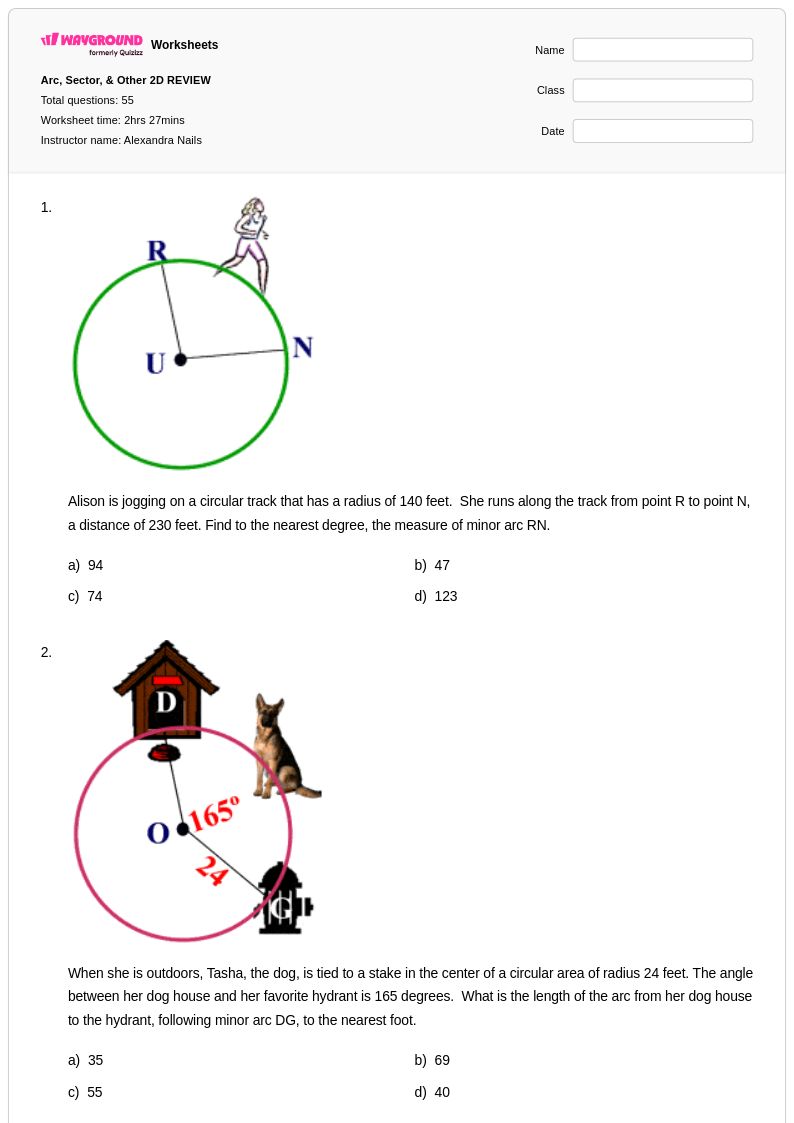
55 Q
8th - Uni
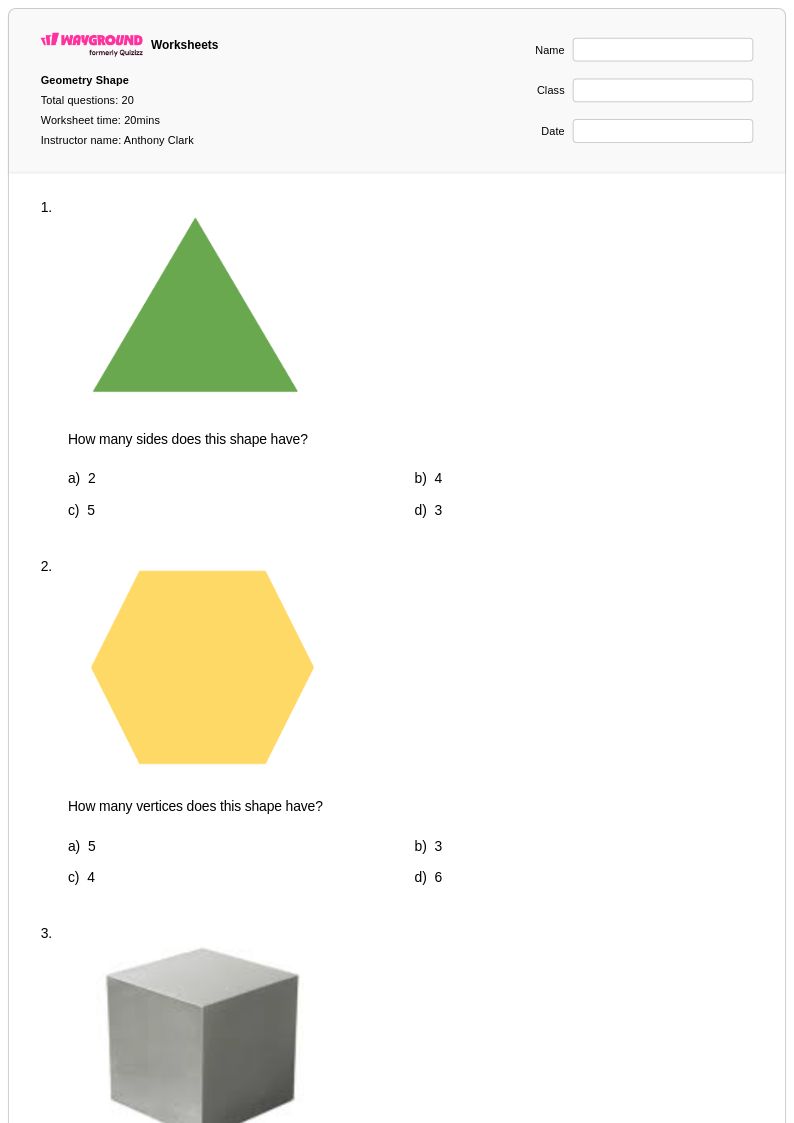
20 Q
5th - Uni
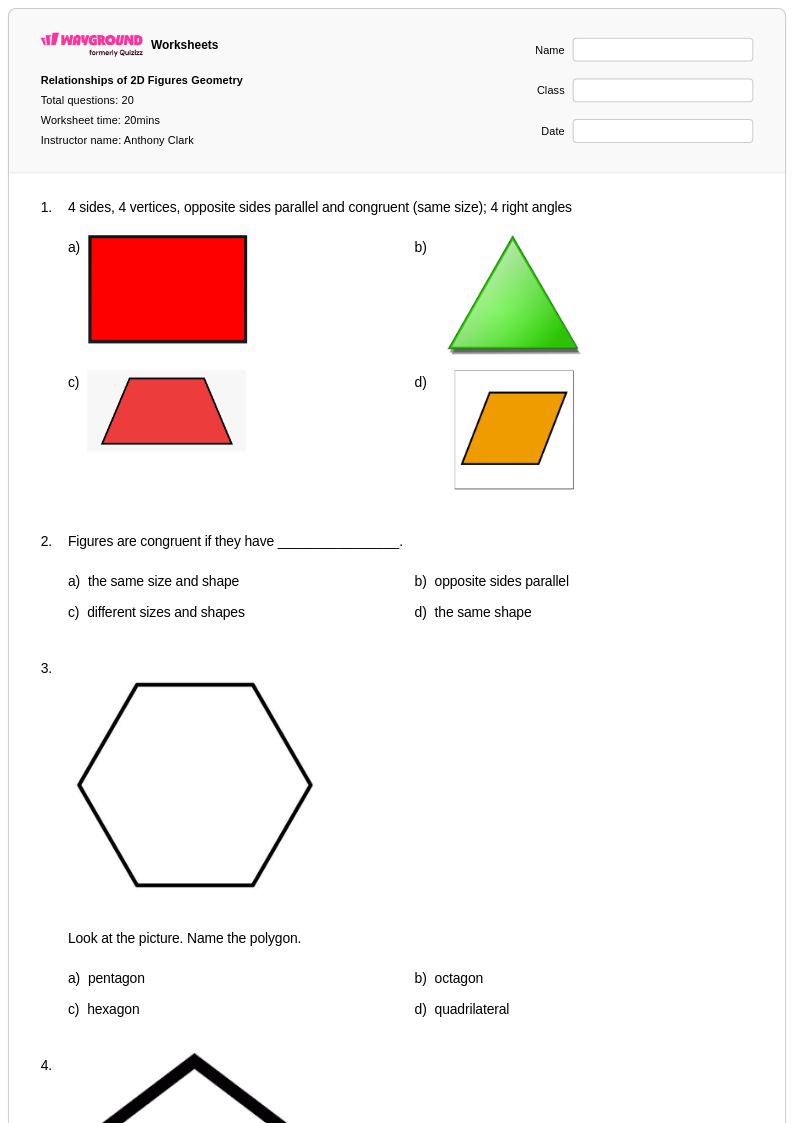
20 Q
5th - Uni
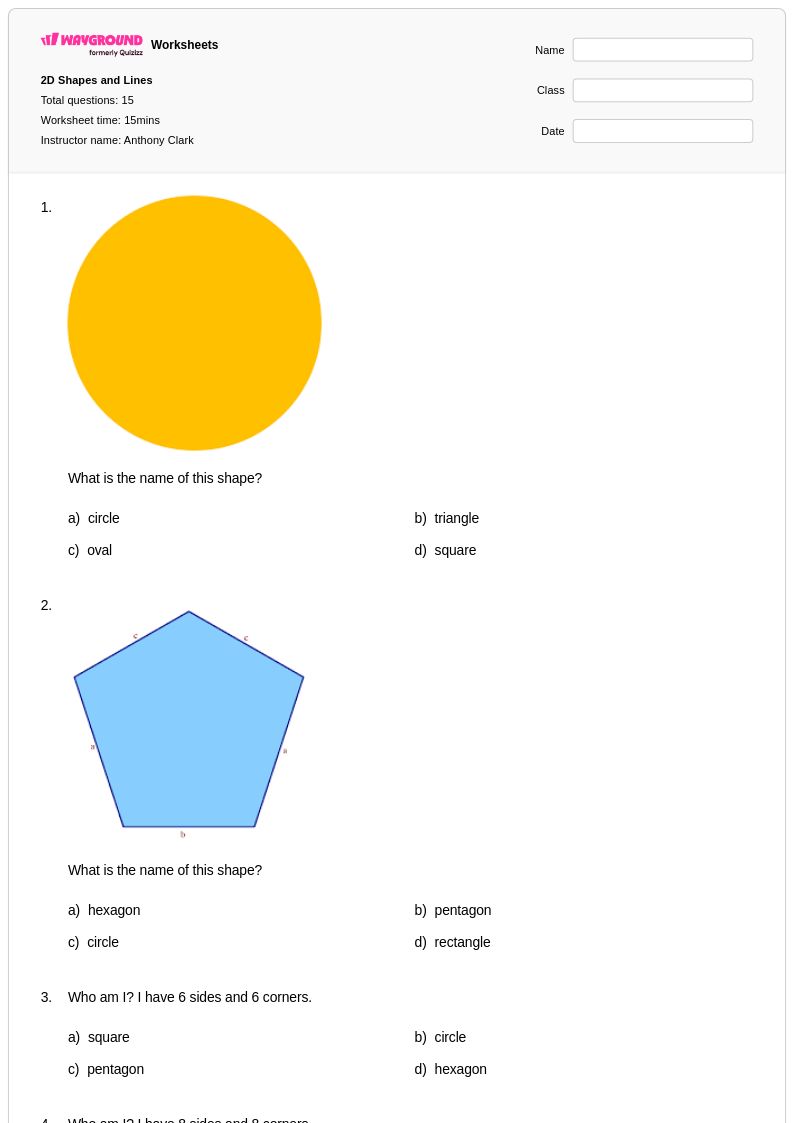
15 Q
3rd - Uni
Explore Geometry 2D Shapes Worksheets by Grades
Explore Other Subject Worksheets for grade 8
Explore printable Geometry 2D Shapes worksheets for Grade 8
Grade 8 geometry 2D shapes worksheets available through Wayground (formerly Quizizz) provide comprehensive coverage of essential geometric concepts that form the foundation for advanced mathematical reasoning. These expertly crafted resources strengthen students' ability to identify, classify, and analyze two-dimensional figures including triangles, quadrilaterals, circles, and polygons, while developing critical skills in calculating perimeter, area, and understanding geometric properties. The worksheet collection emphasizes hands-on practice problems that challenge eighth graders to apply geometric formulas, recognize shape relationships, and solve real-world applications involving 2D figures. Each printable resource includes detailed answer keys that support independent learning and enable students to verify their understanding of geometric principles, making these free materials invaluable for both classroom instruction and home study.
Wayground (formerly Quizizz) empowers mathematics educators with an extensive library of millions of teacher-created geometry worksheets specifically designed to meet the diverse needs of Grade 8 classrooms. The platform's robust search and filtering capabilities allow teachers to quickly locate resources aligned with specific learning standards, while built-in differentiation tools enable seamless customization for students at varying skill levels. These geometry 2D shapes materials are available in both printable pdf format and interactive digital versions, providing flexibility for traditional classroom settings, remote learning environments, and hybrid instruction models. Teachers can efficiently plan targeted skill practice sessions, design remediation activities for struggling learners, and create enrichment opportunities for advanced students, all while accessing comprehensive collections that support systematic geometry instruction throughout the academic year.
FAQs
How do I teach 2D shapes in Grade 8?
What exercises help eighth graders practice 2D geometry?
What mistakes do Grade 8 students commonly make with 2D figures?
How can I use a Grade 8 Geometry 2D Shapes worksheet from Wayground?
How does Grade 8 2D geometry align with Common Core math?
How can I differentiate a Grade 8 2D shapes worksheet?
What 2D geometry skills are typically taught in Grade 8?