
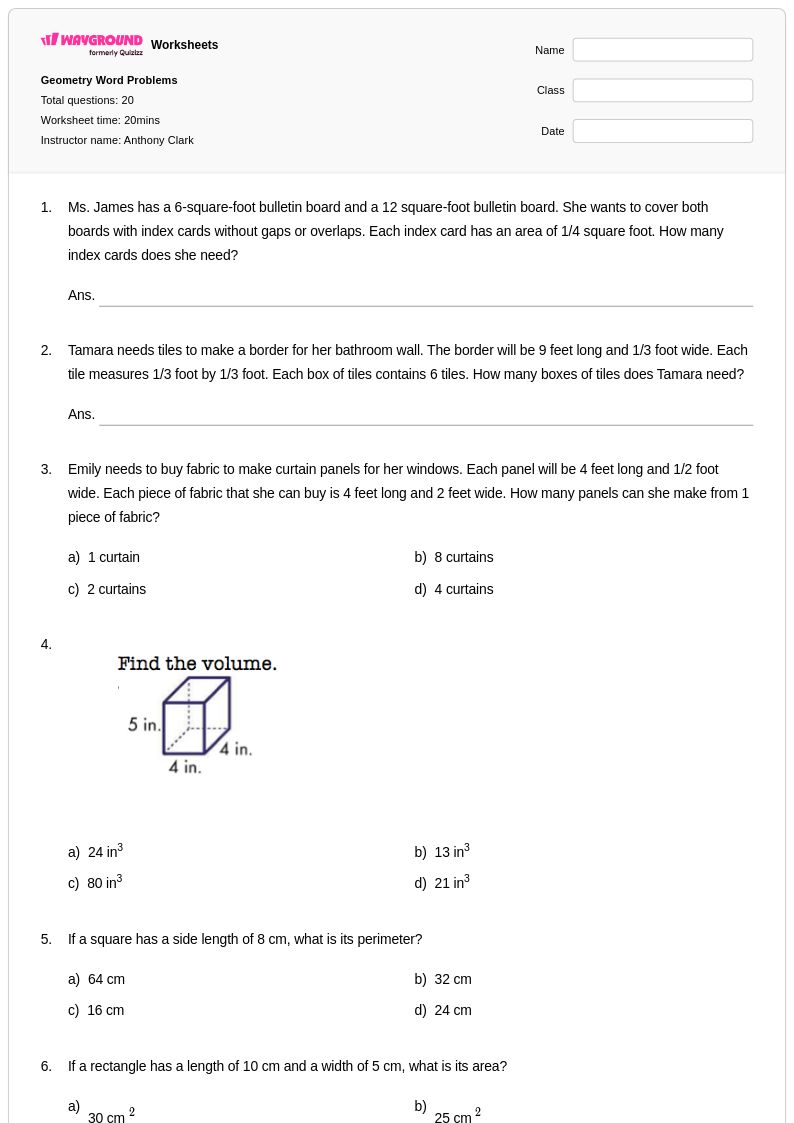
20 Q
5th - Uni
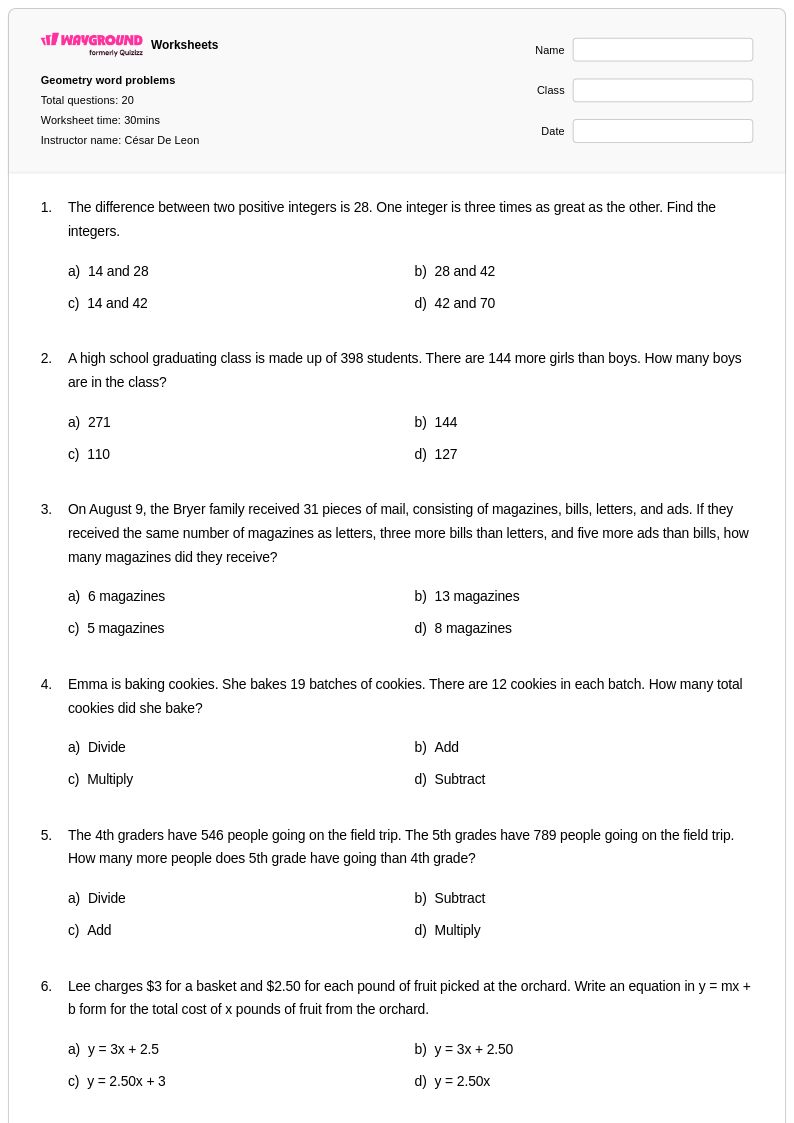
20 Q
8th
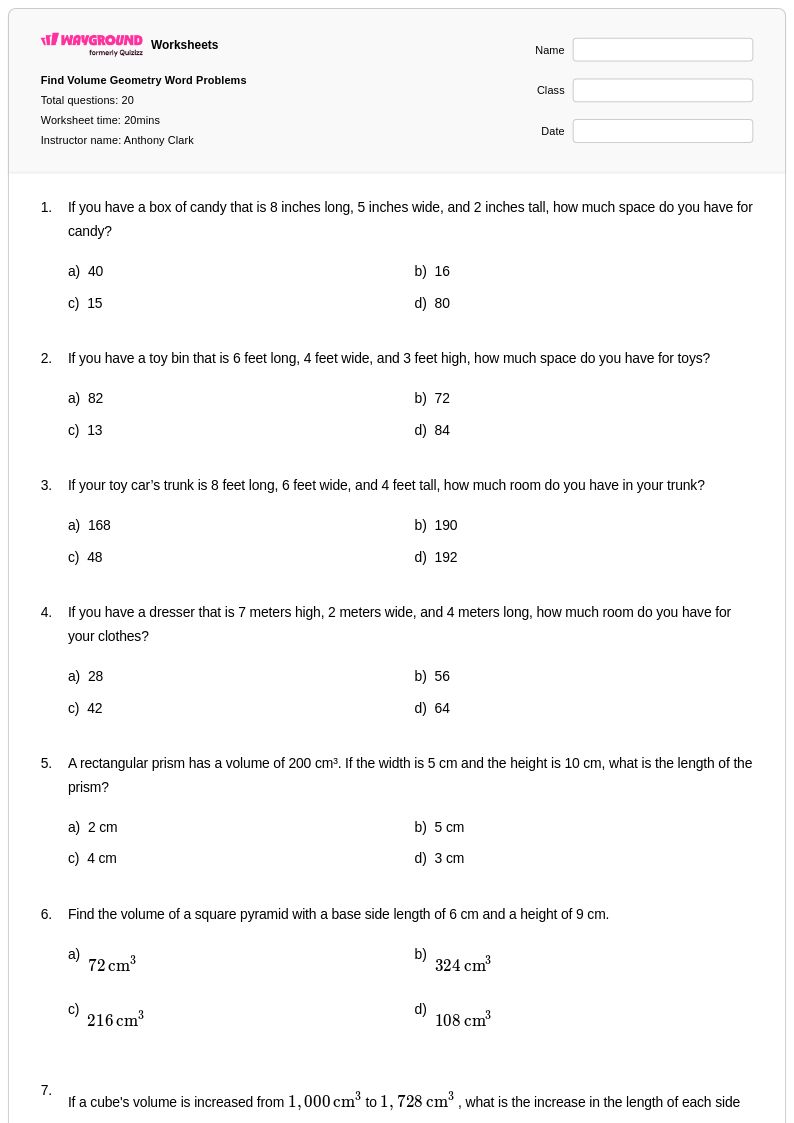
20 Q
5th - Uni
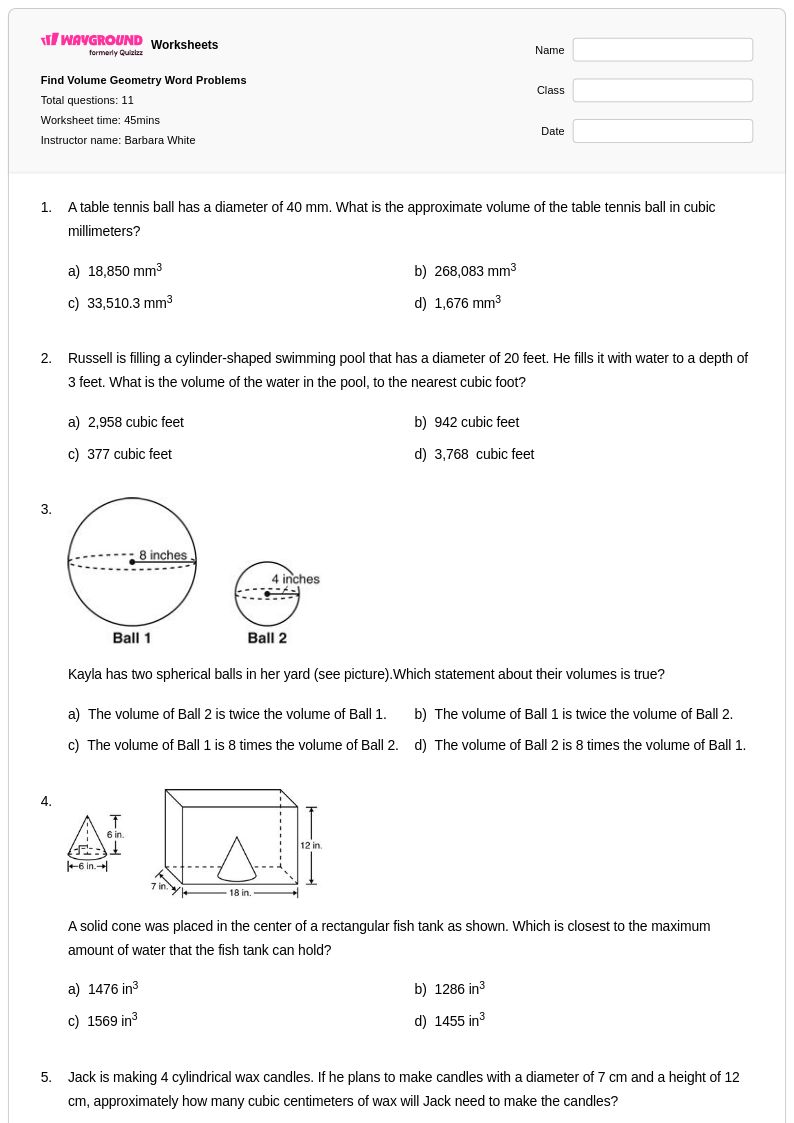
11 Q
8th
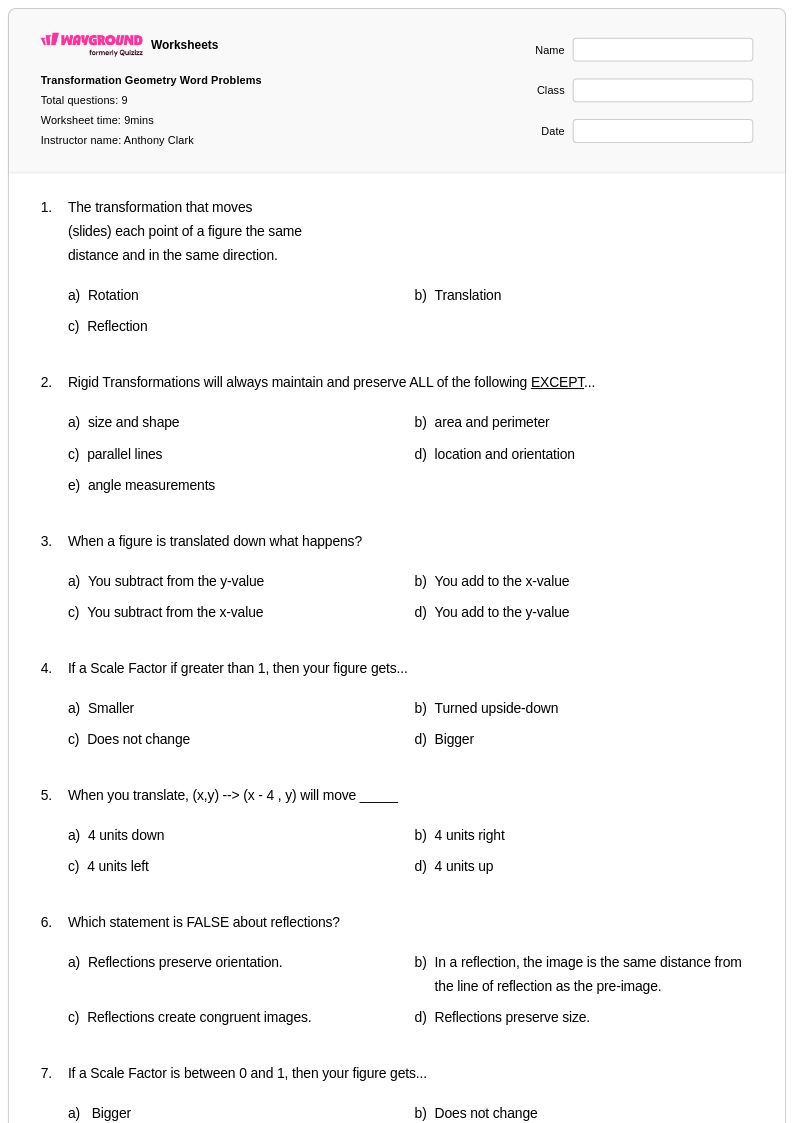
9 Q
8th - Uni
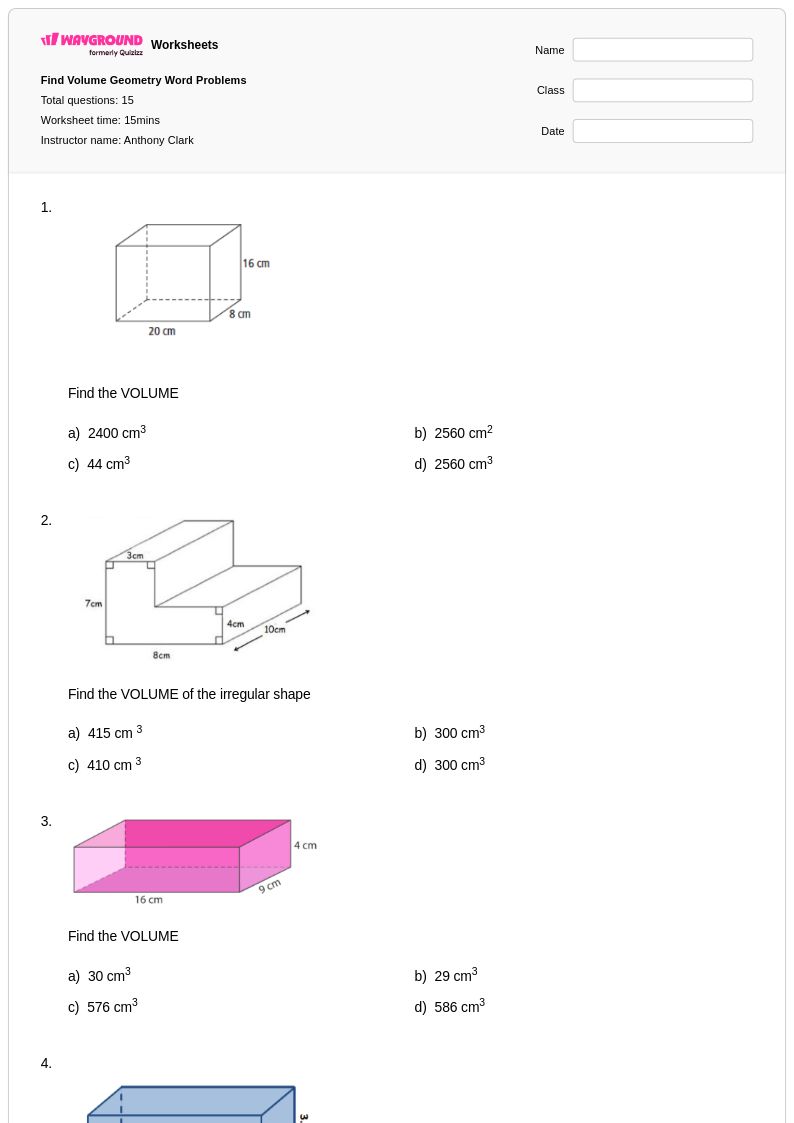
15 Q
5th - Uni
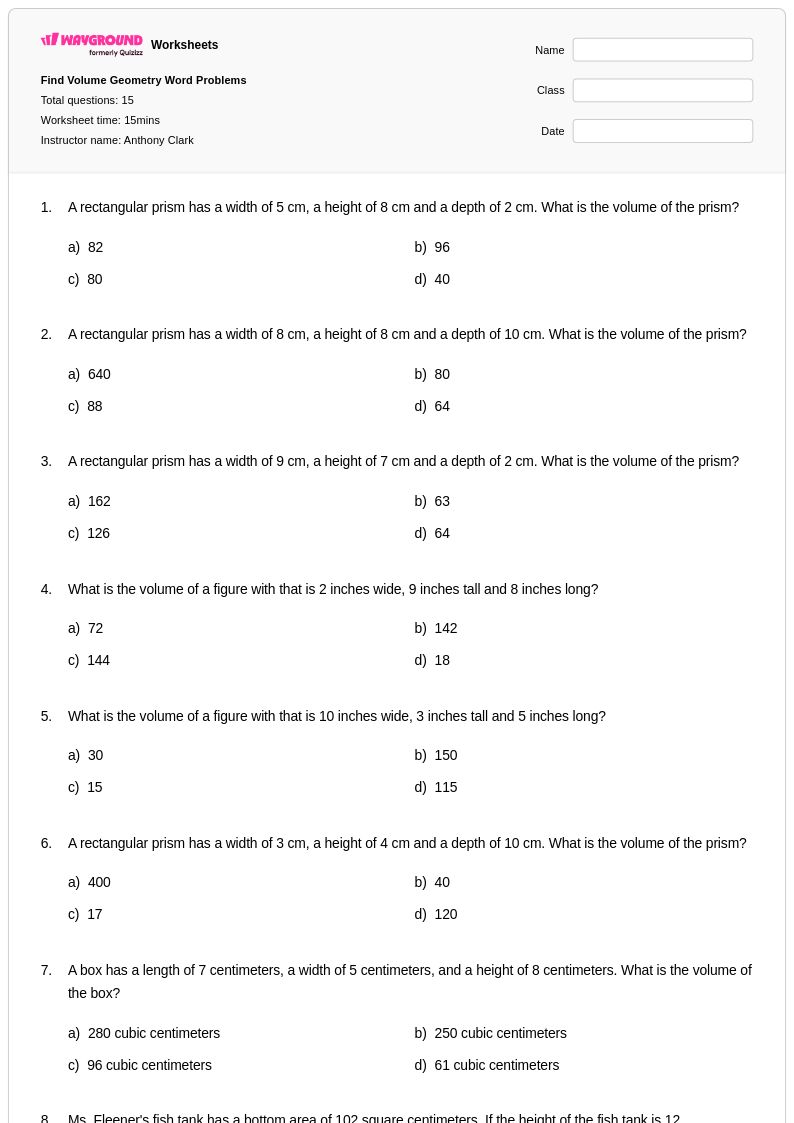
15 Q
5th - Uni
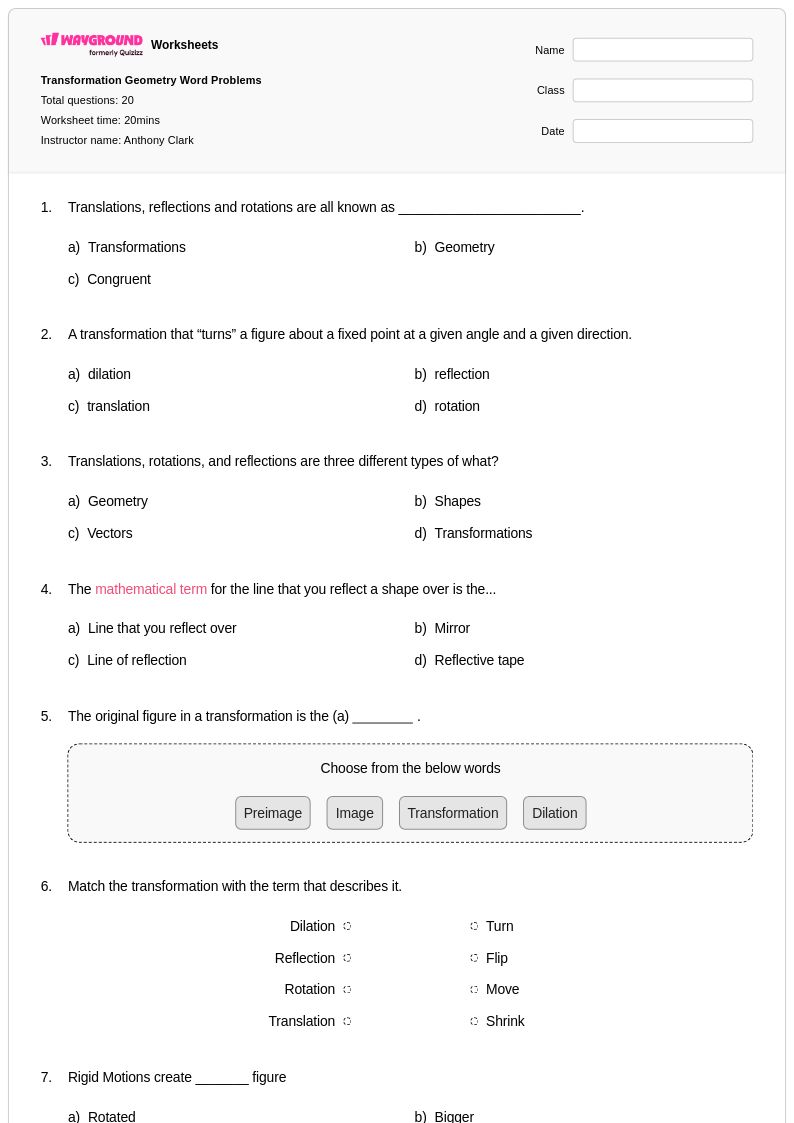
20 Q
8th - Uni
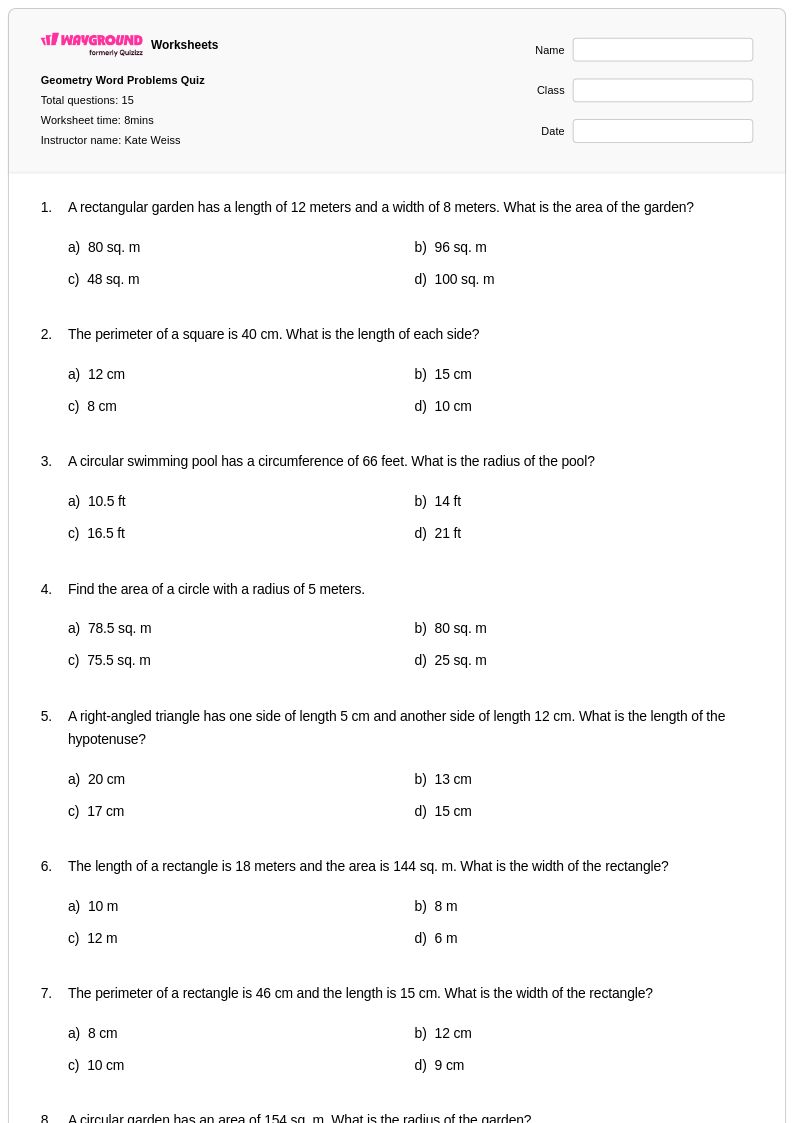
15 Q
8th
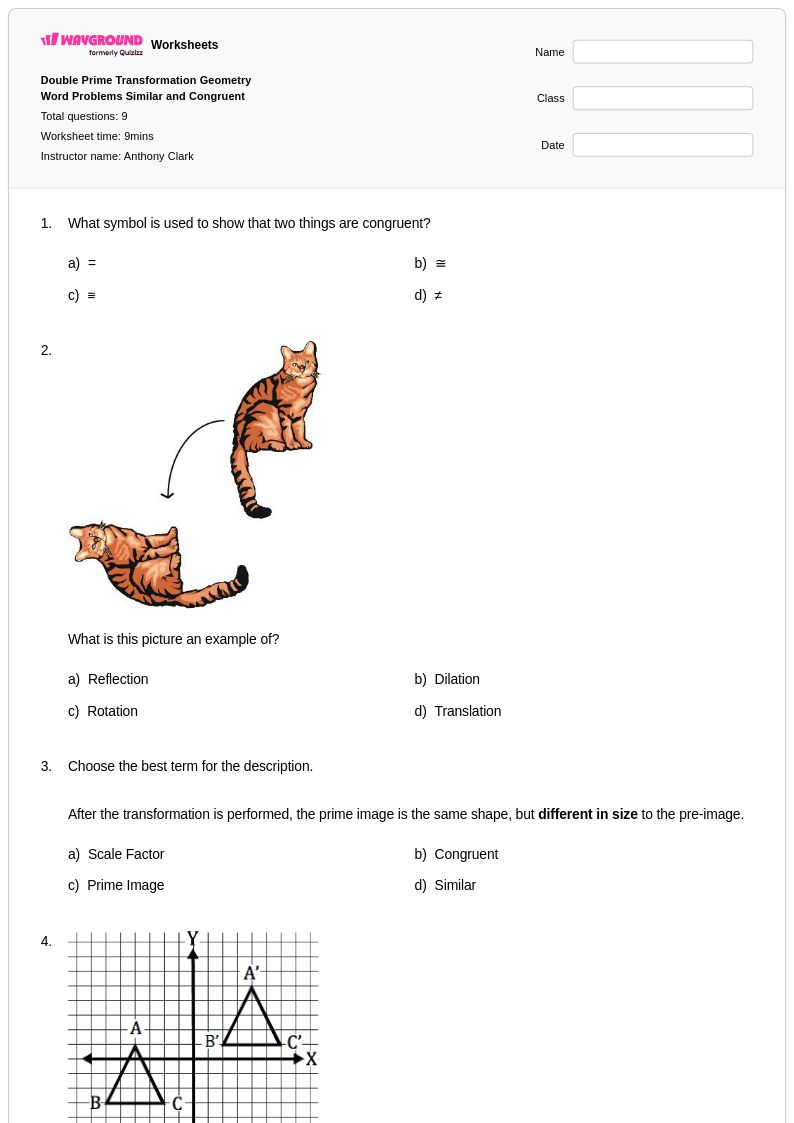
9 Q
8th - Uni
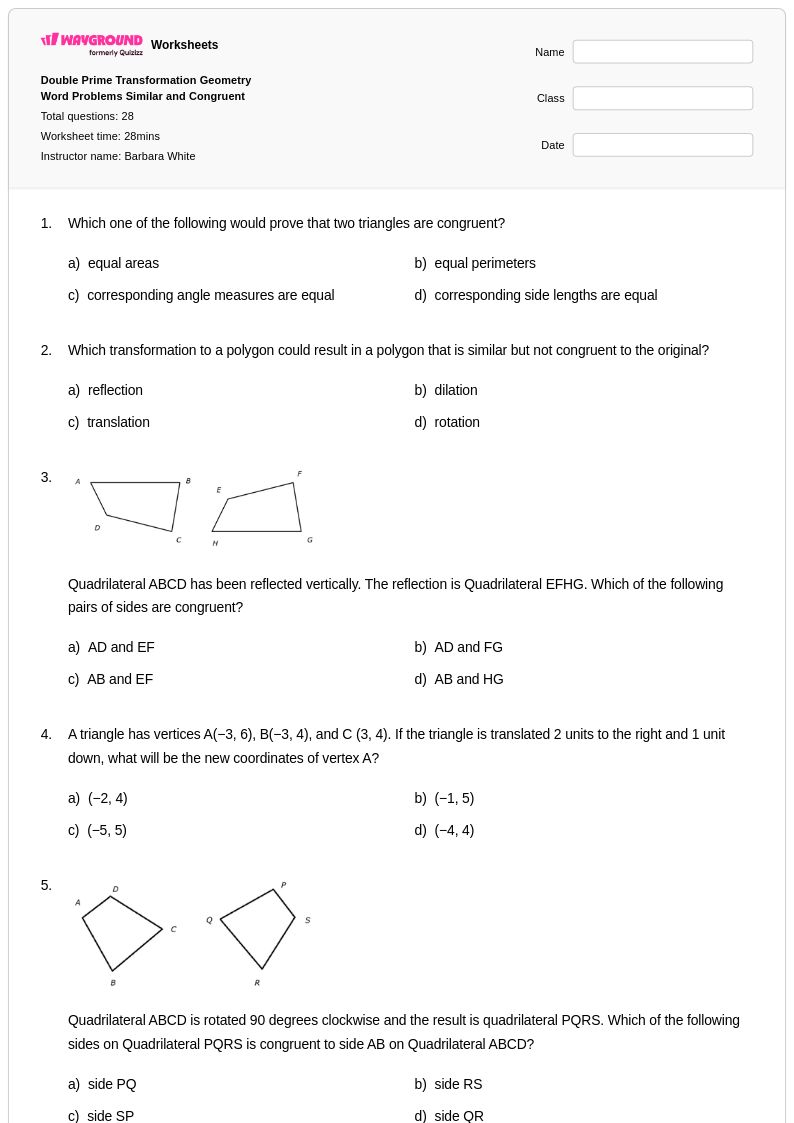
28 Q
8th
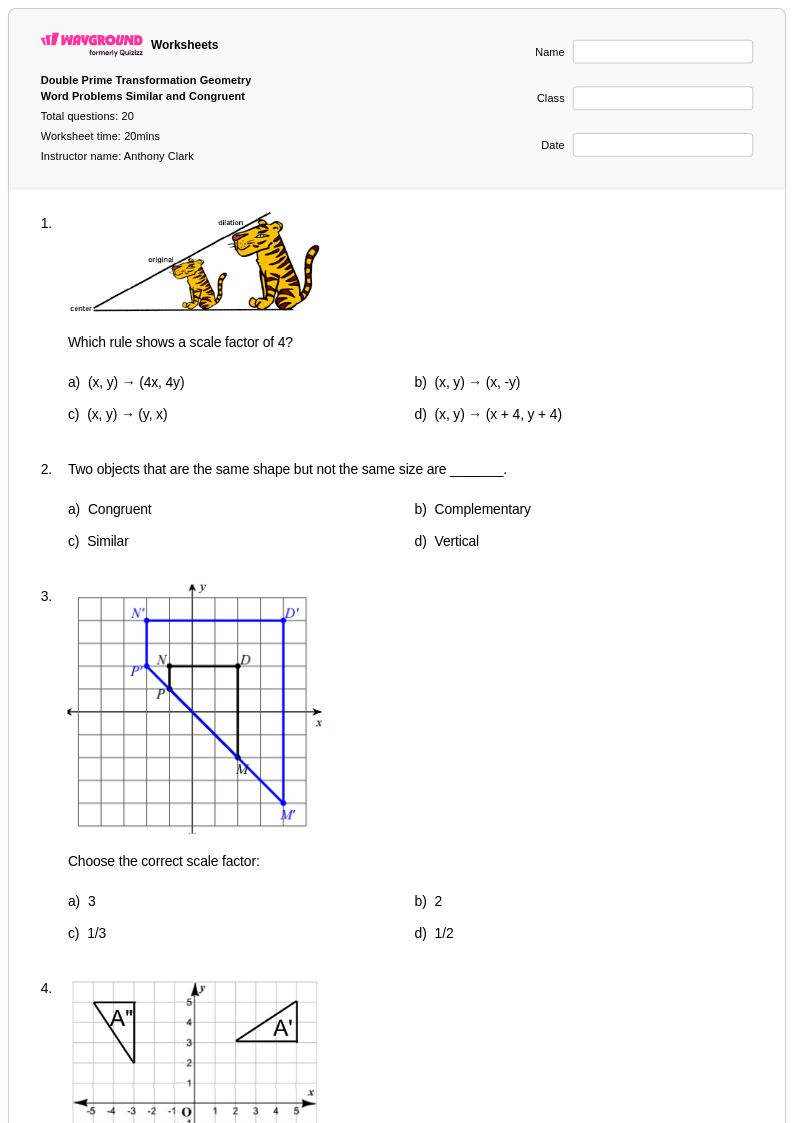
20 Q
8th - Uni
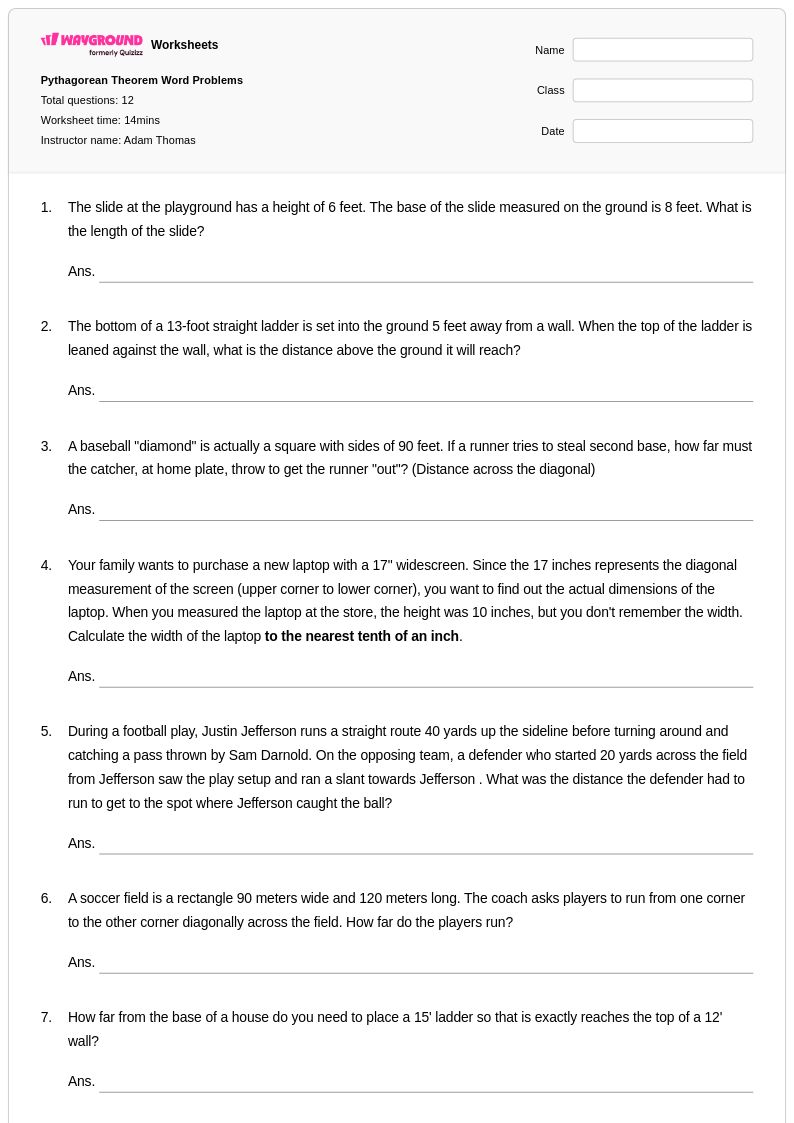
12 Q
8th
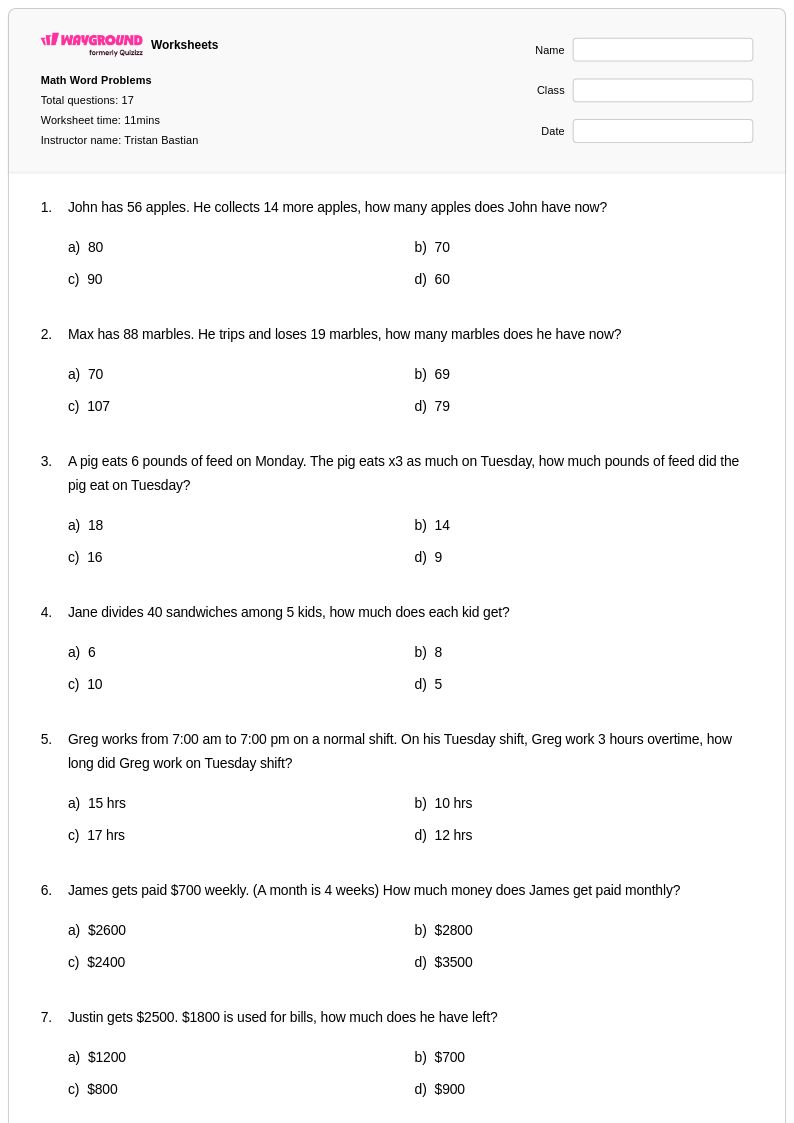
17 Q
1st - PD
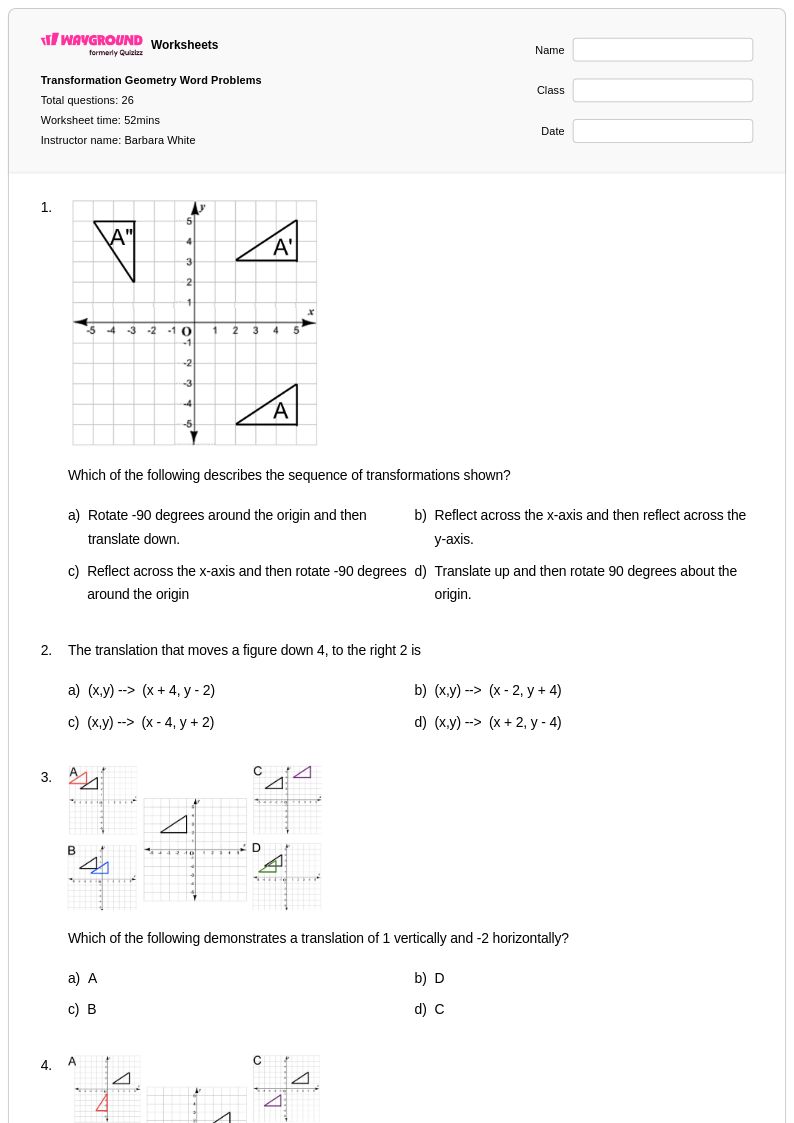
26 Q
8th - 10th
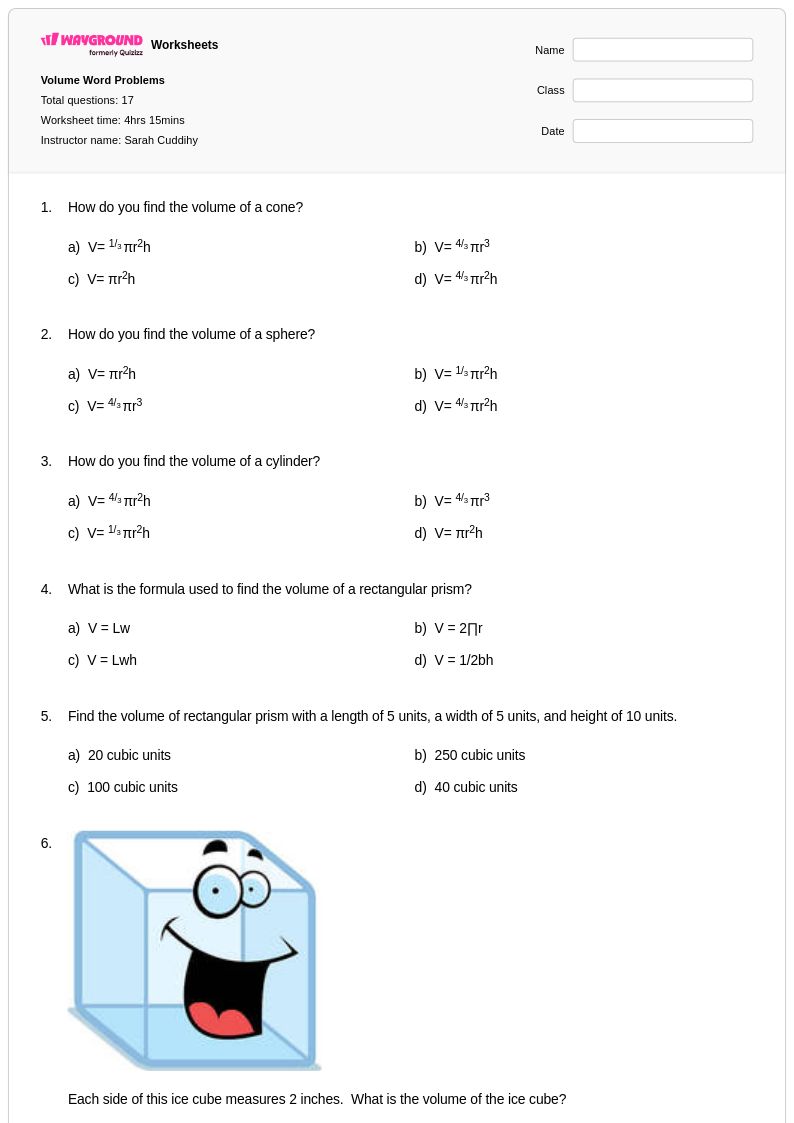
17 Q
8th
20 Q
7th - Uni
10 Q
7th - 10th
10 Q
8th
20 Q
5th - Uni
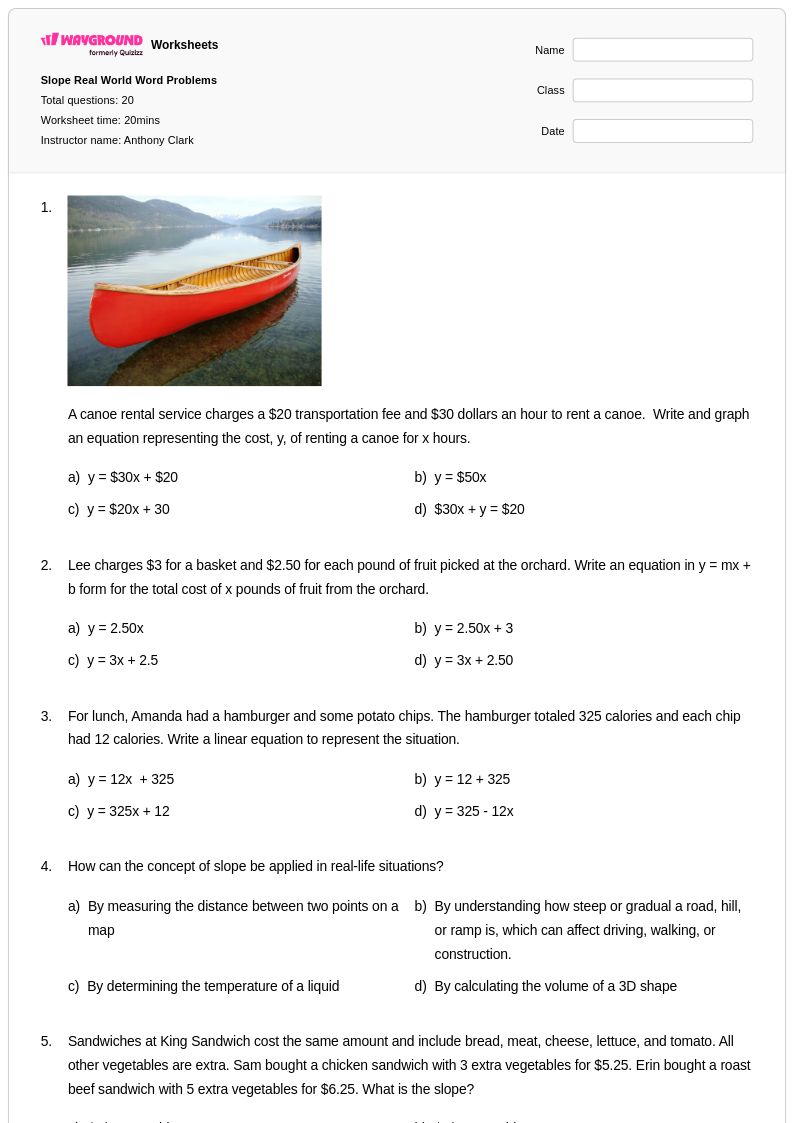
20 Q
7th - Uni
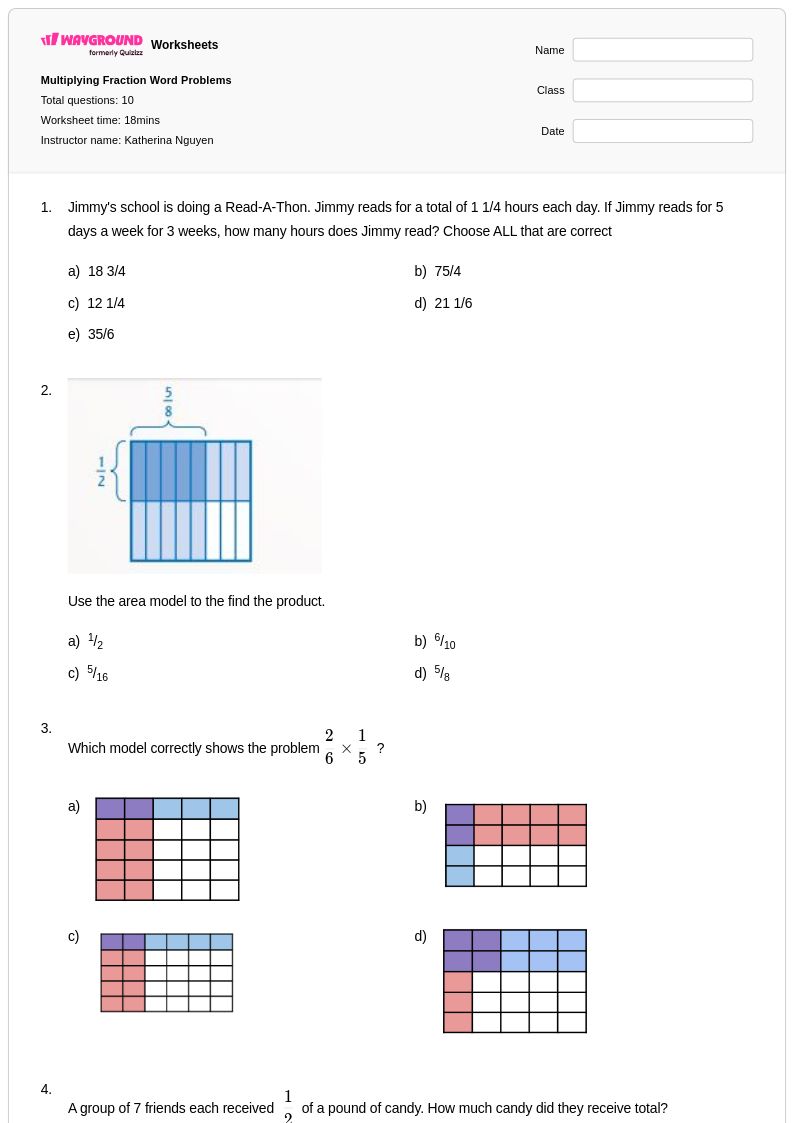
10 Q
5th - Uni

20 Q
8th
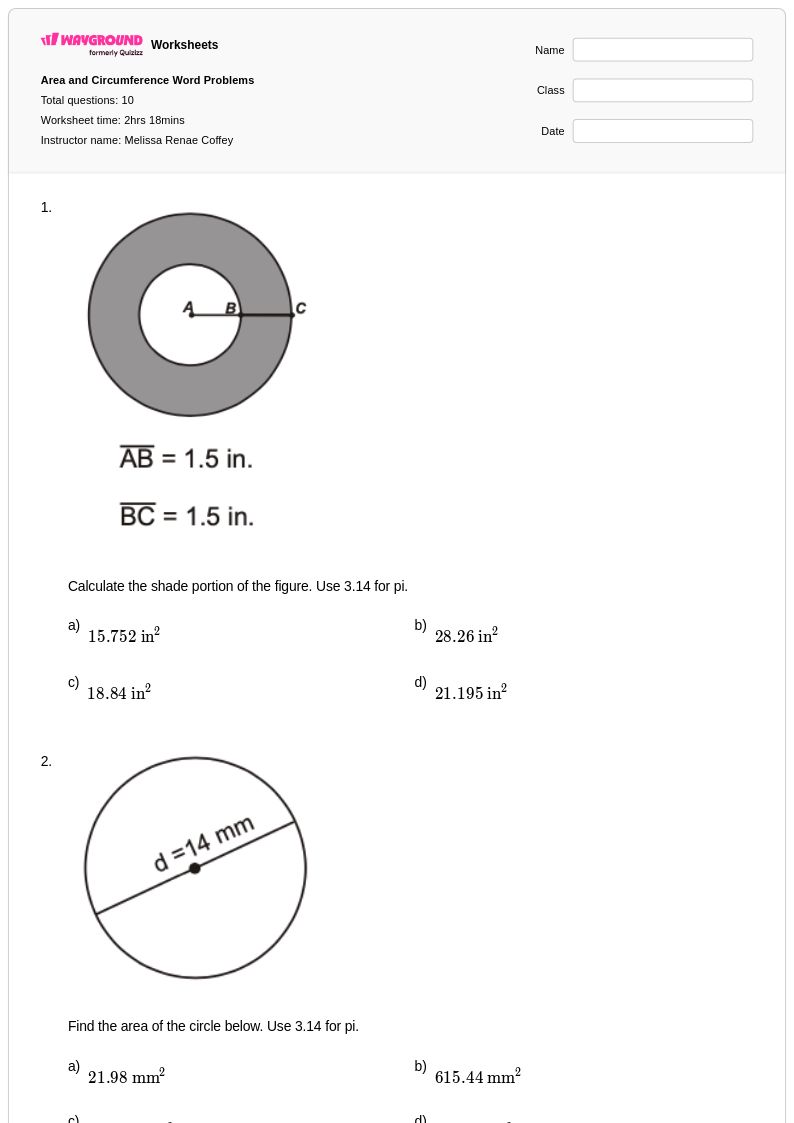
10 Q
7th - 8th
Explore Other Subject Worksheets for grade 8
Explore printable Geometry Word Problems worksheets for Grade 8
Grade 8 geometry word problems available through Wayground (formerly Quizizz) provide students with comprehensive practice applying geometric concepts to real-world scenarios and mathematical situations. These worksheets strengthen critical thinking skills by requiring students to interpret complex problem statements, identify relevant geometric relationships, and apply formulas for area, volume, perimeter, and angle measurements within practical contexts. Students work through multi-step problems involving triangles, quadrilaterals, circles, and three-dimensional figures while developing their ability to visualize geometric relationships and translate written descriptions into mathematical calculations. Each worksheet includes detailed answer keys and step-by-step solutions, making these free printables valuable resources for both independent practice and guided instruction in eighth-grade mathematics classrooms.
Wayground (formerly Quizizz) supports mathematics educators with an extensive collection of teacher-created geometry word problem worksheets that can be easily searched, filtered, and customized to meet diverse classroom needs. The platform's millions of resources include standards-aligned materials that correspond to Grade 8 mathematics curriculum requirements, enabling teachers to quickly locate appropriate content for lesson planning, skill remediation, and academic enrichment activities. Teachers can access these materials in both printable PDF formats and interactive digital versions, allowing for flexible implementation across different learning environments and instructional approaches. The robust differentiation tools enable educators to modify problem complexity, adjust content focus, and create targeted practice sets that address individual student learning gaps while building confidence in geometric problem-solving strategies.
FAQs
How do I teach geometry word problems in Grade 8?
What exercises are useful for practicing eighth-grade geometry word problems?
What are common mistakes in Grade 8 geometry word problems?
How can teachers use these Grade 8 geometry word problem worksheets?
Are Grade 8 geometry word problems aligned with Common Core?
How can I support struggling students with Grade 8 geometry word problems?
What grade level is appropriate for these geometry word problems?