
13 Q
4th - Uni
17 Q
5th - Uni
20 Q
4th - 8th
15 Q
2nd - Uni
13 Q
5th - 7th
20 Q
5th
18 Q
4th - 6th
20 Q
5th
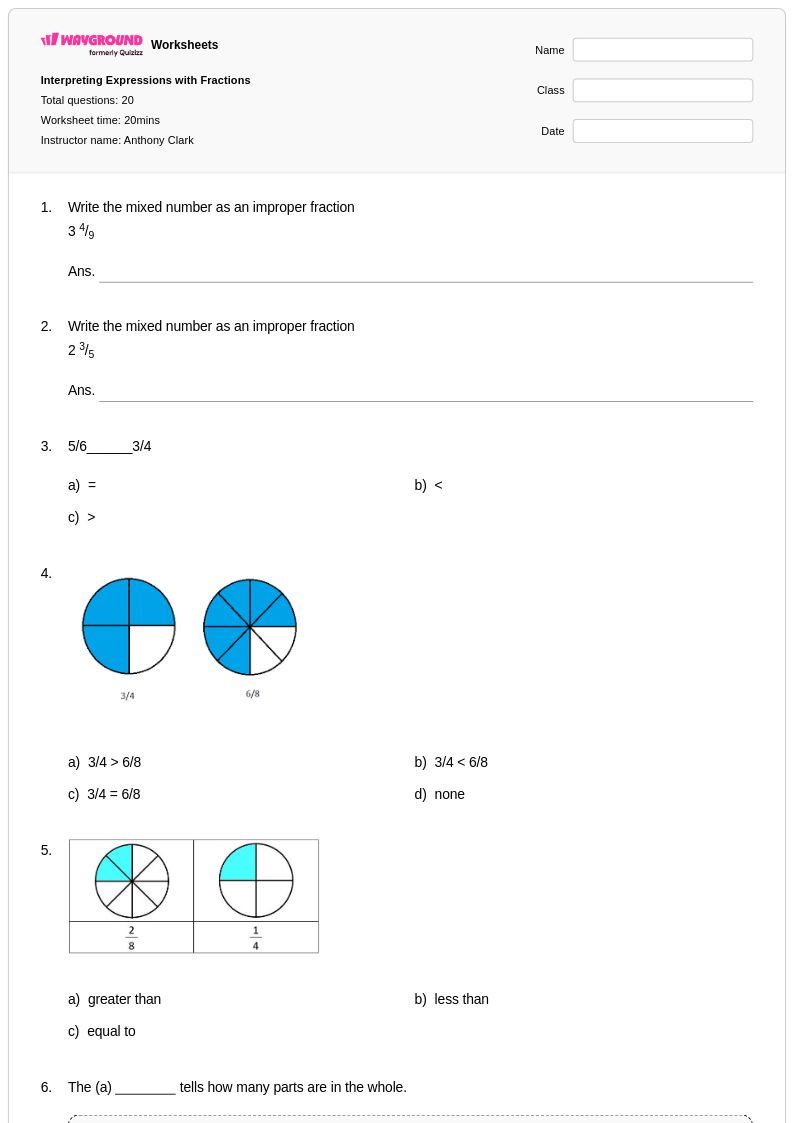
20 Q
4th - Uni

15 Q
5th
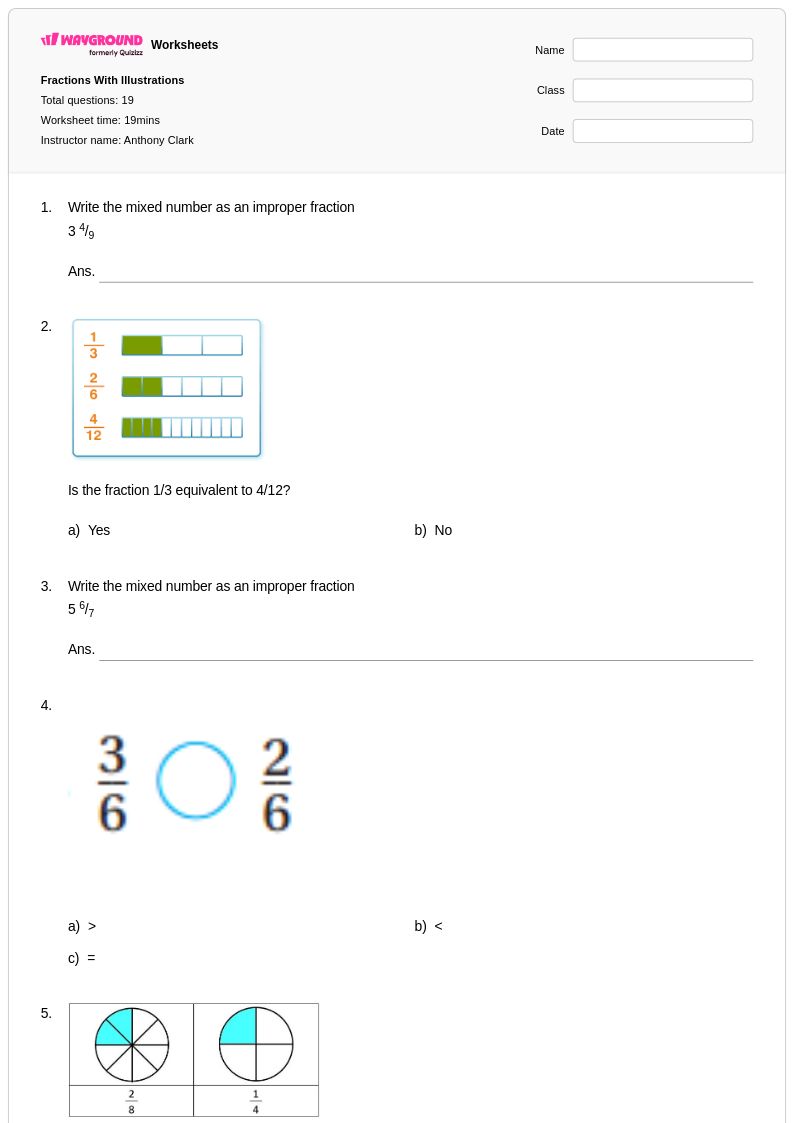
19 Q
4th - Uni
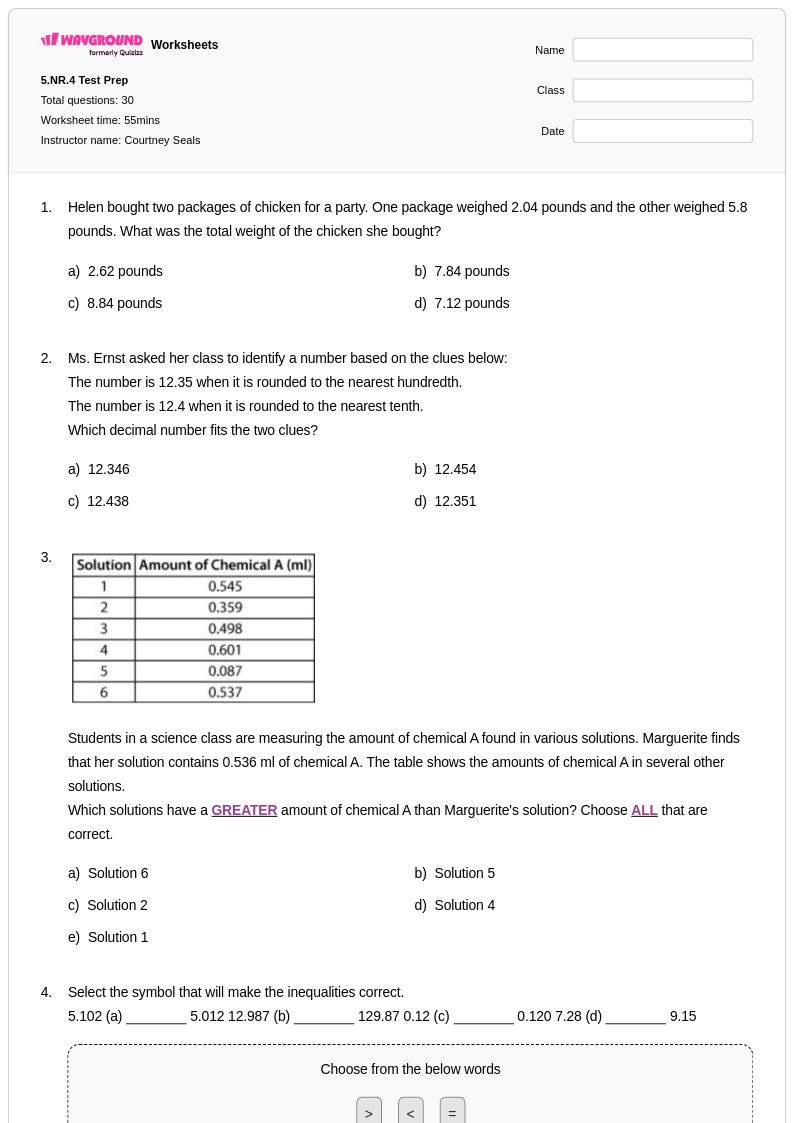
30 Q
5th
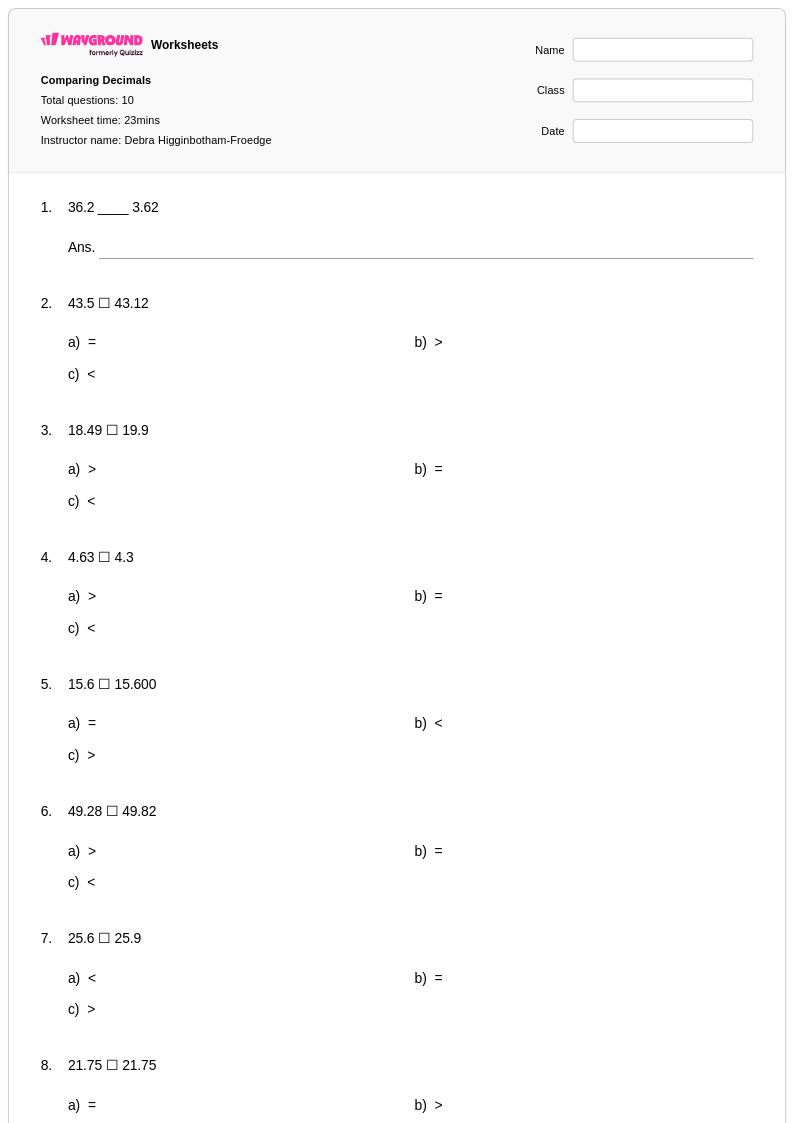
10 Q
5th
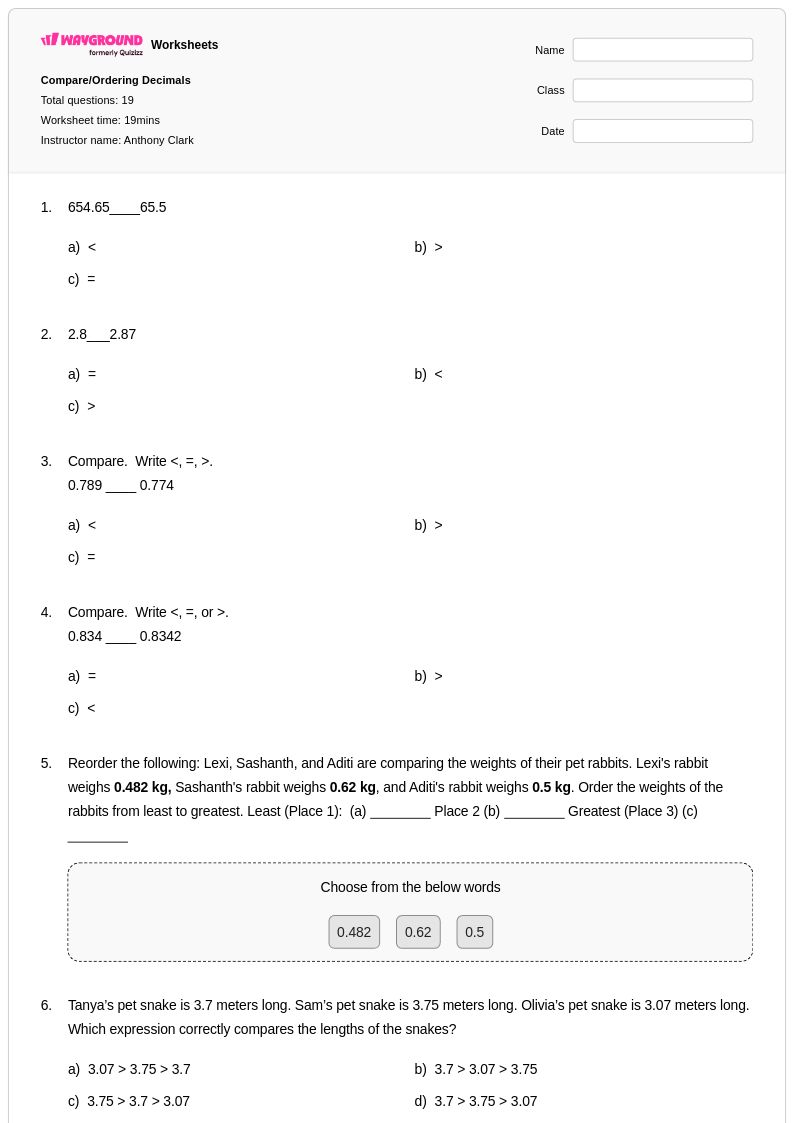
19 Q
5th - Uni
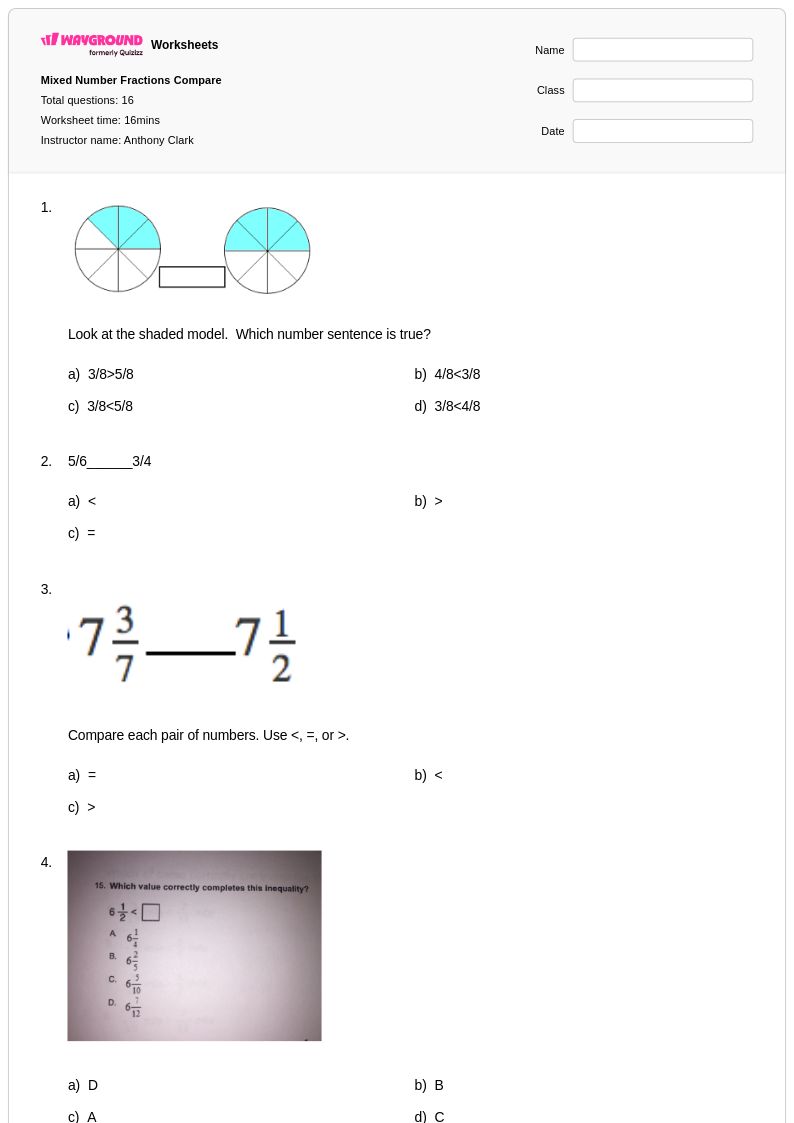
16 Q
5th - Uni
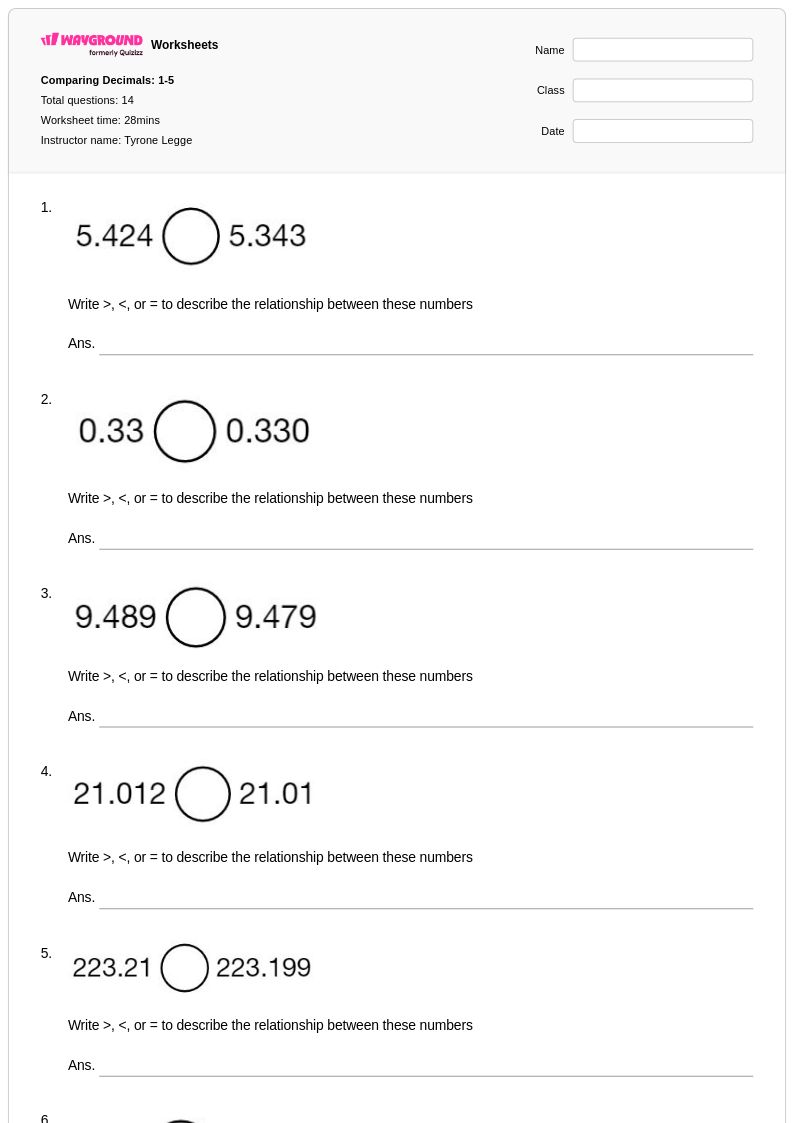
14 Q
4th - 6th
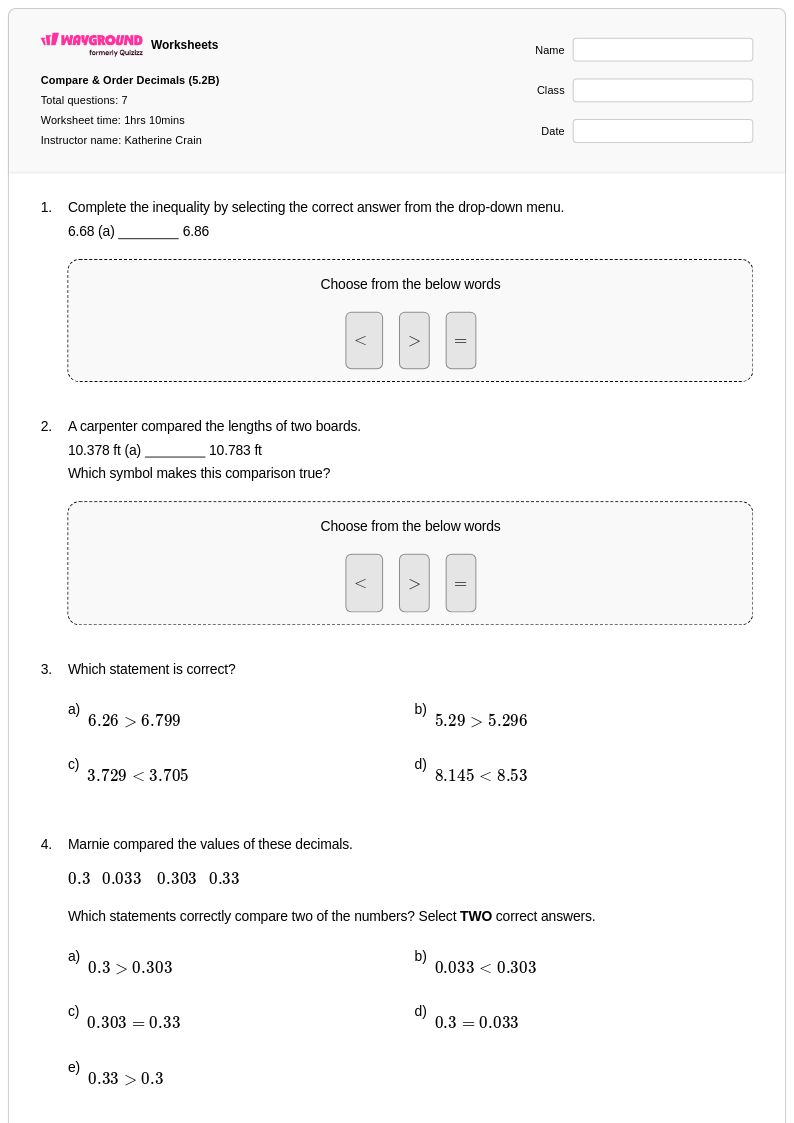
7 Q
5th
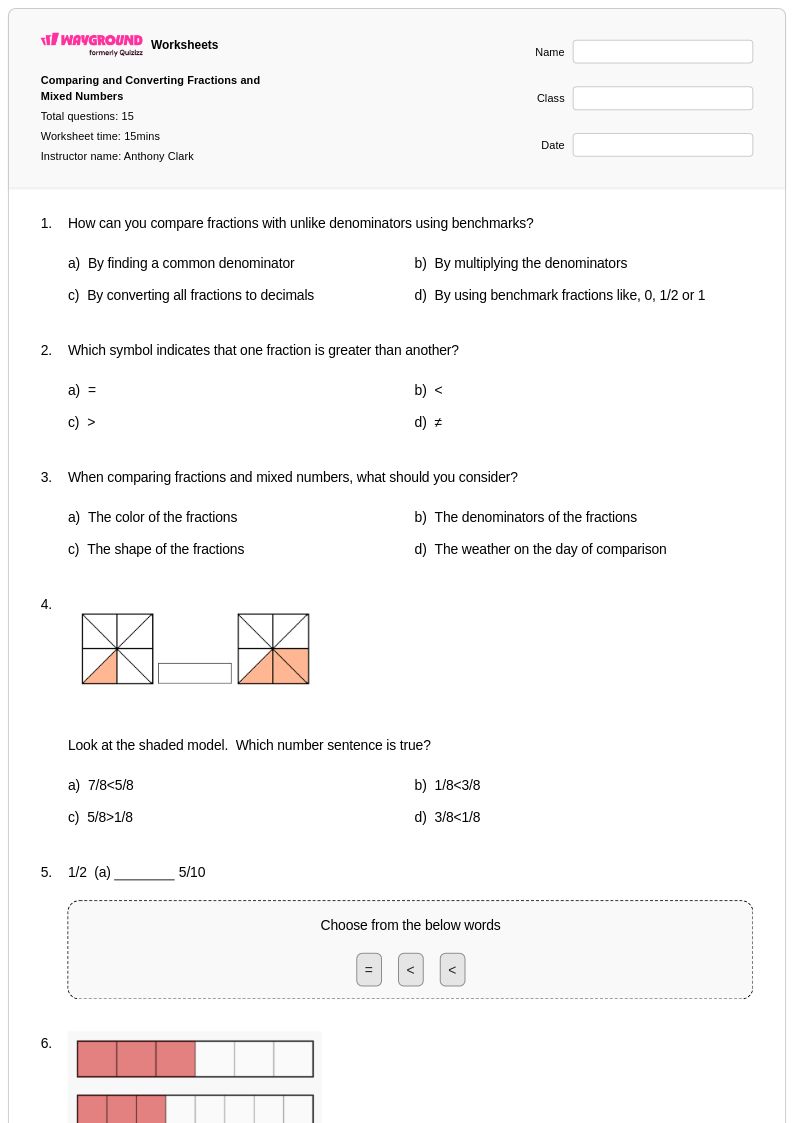
15 Q
5th - Uni
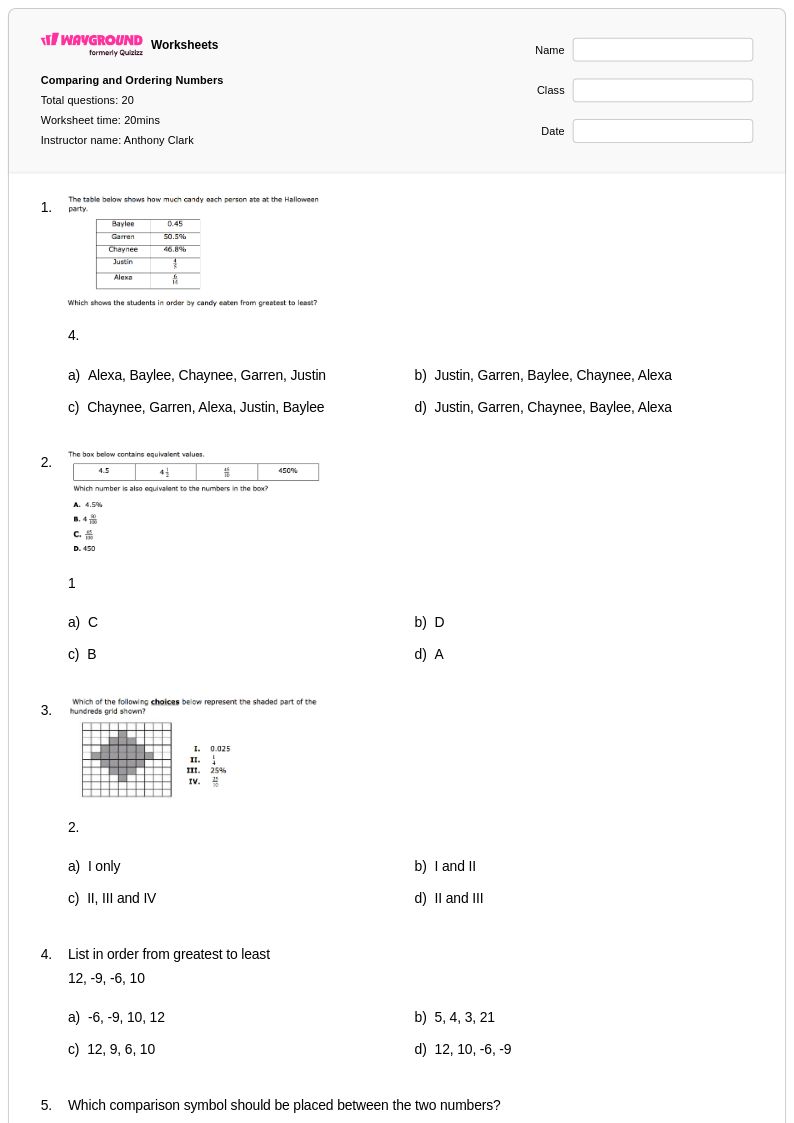
20 Q
4th - Uni
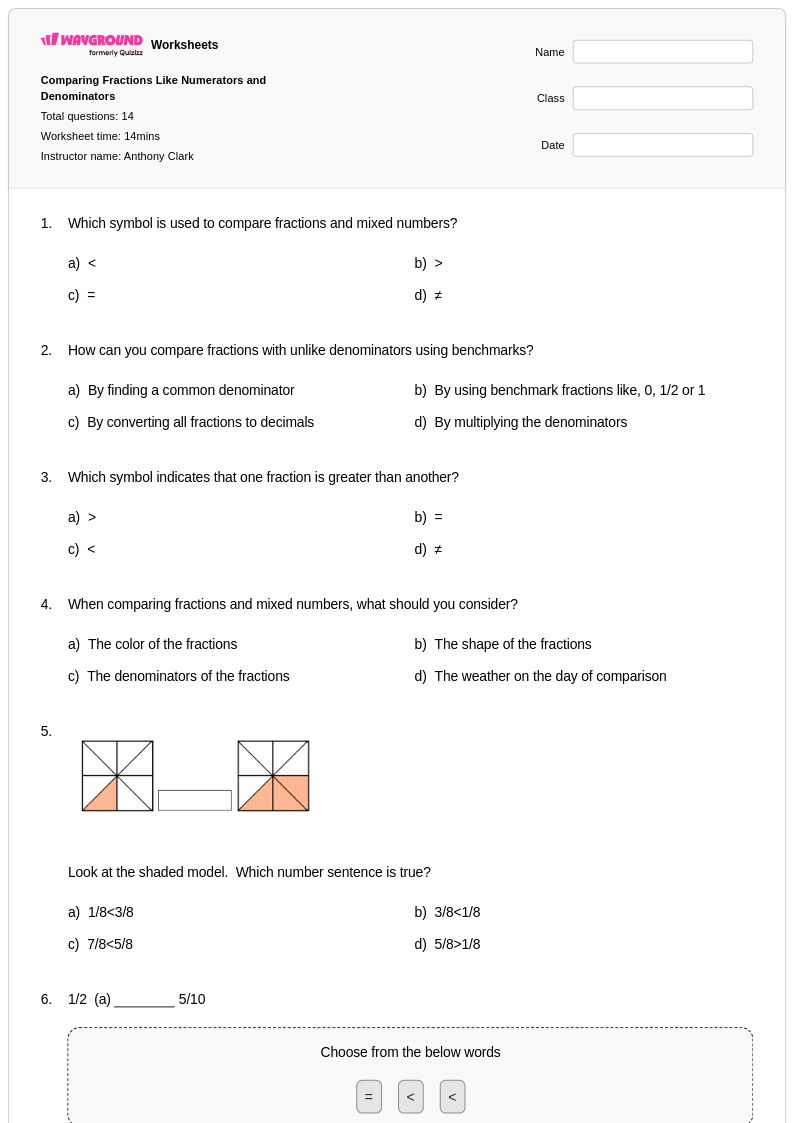
14 Q
4th - Uni
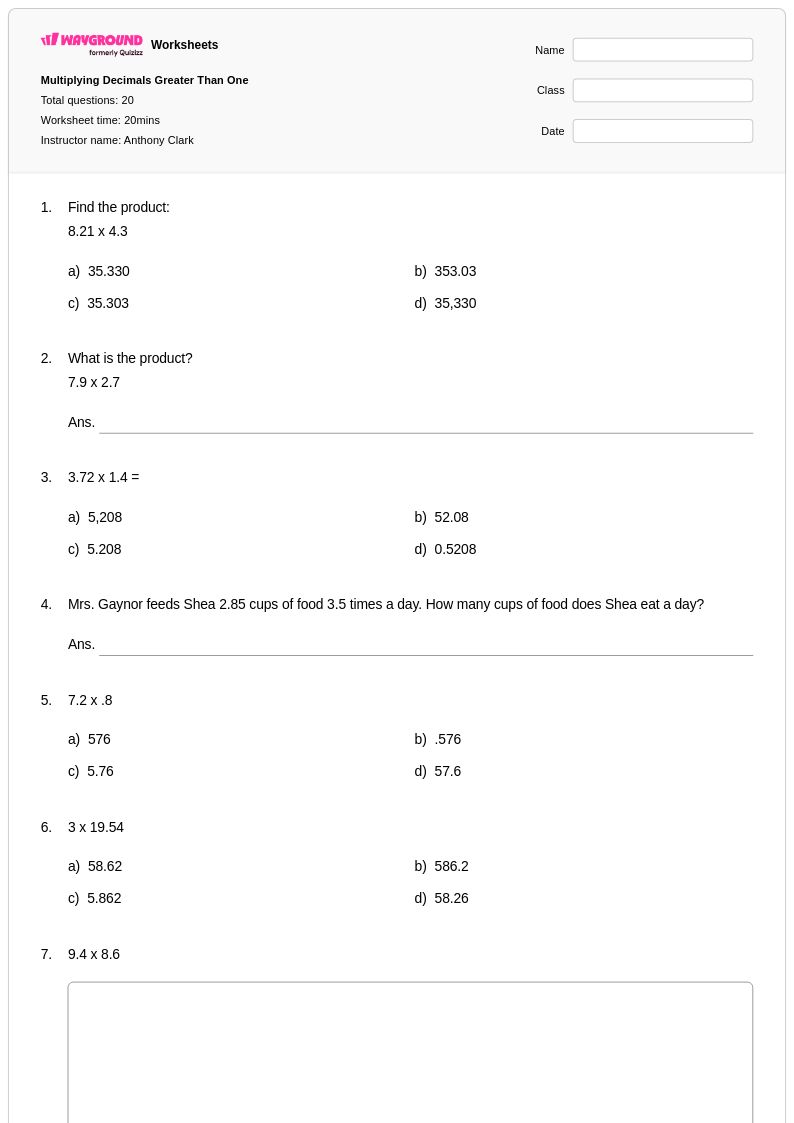
20 Q
5th - Uni
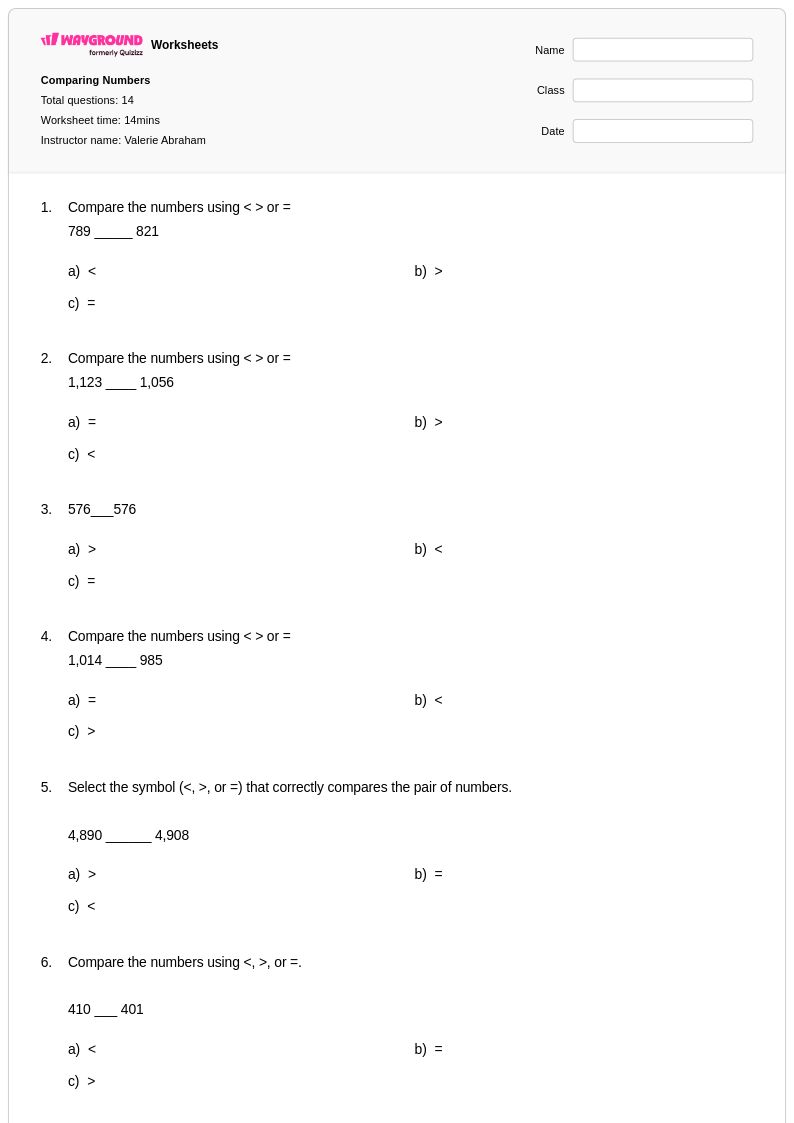
14 Q
4th - 5th
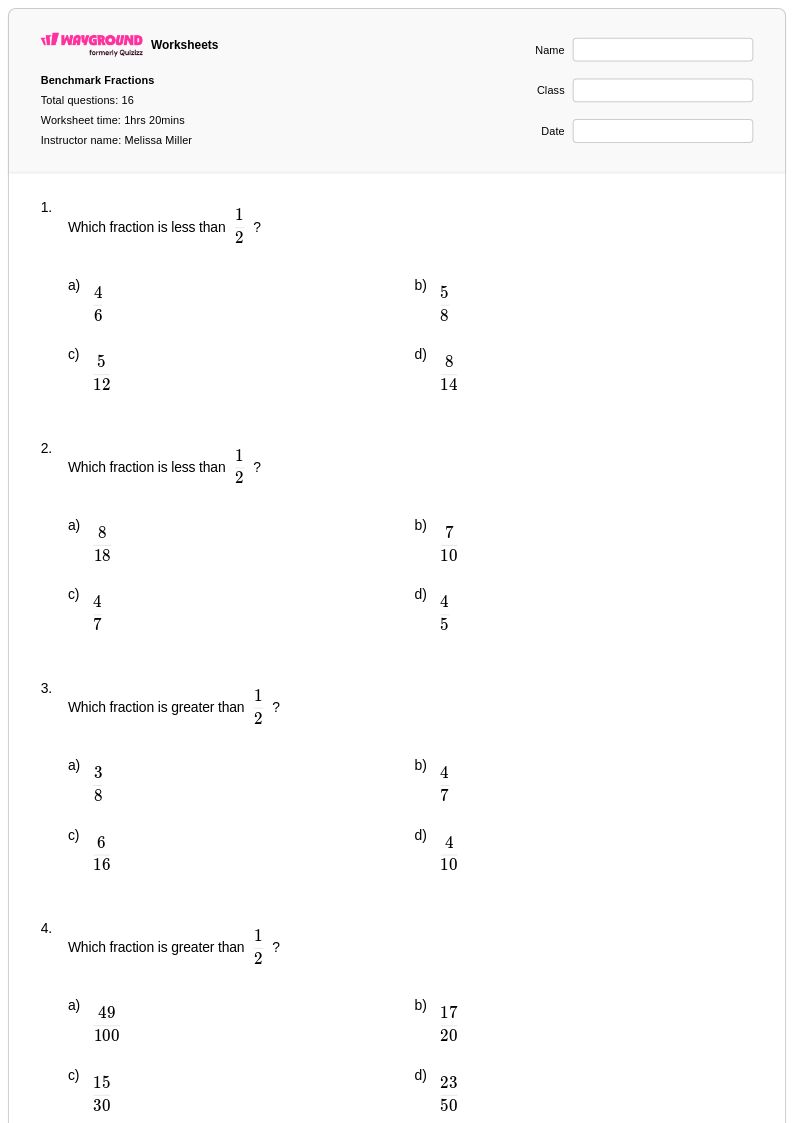
16 Q
5th
Explore Other Subject Worksheets for grade 5
Explore printable Greater Than Symbol worksheets for Grade 5
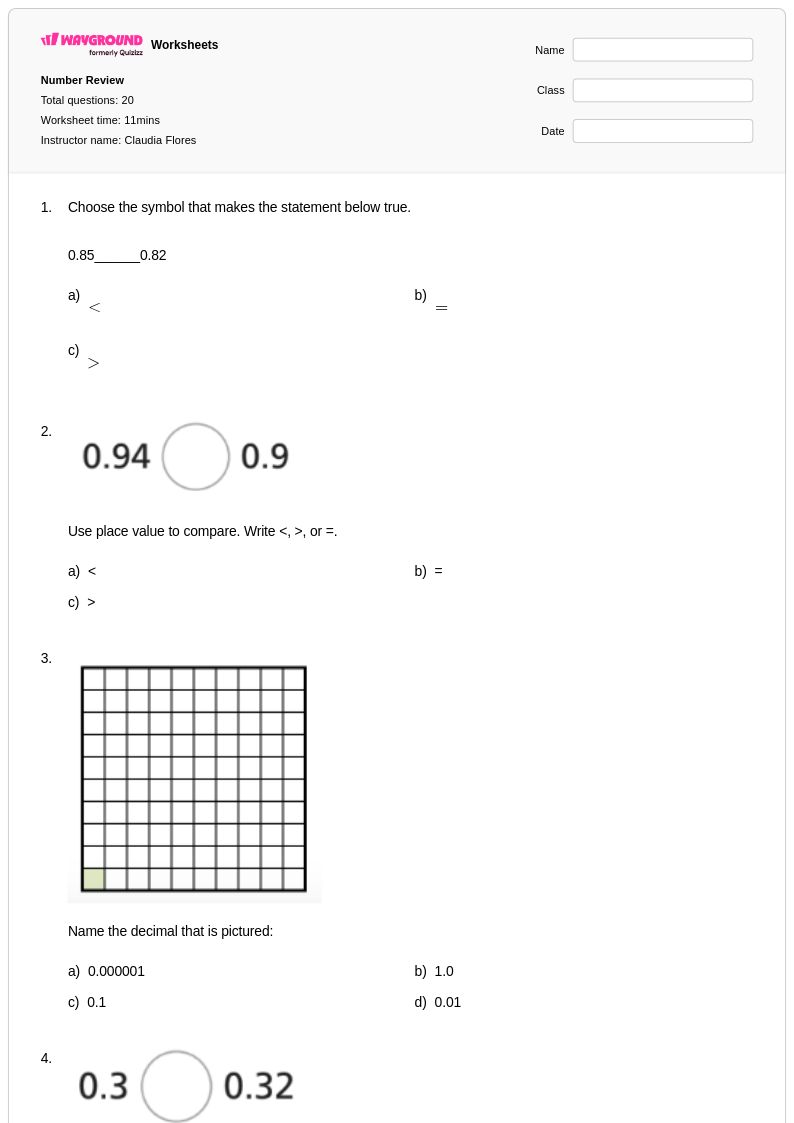
Grade 5 greater than symbol worksheets available through Wayground (formerly Quizizz) provide comprehensive practice opportunities for students developing critical mathematical comparison skills. These carefully designed resources help fifth graders master the foundational concept of using the greater than symbol (>) to compare numbers, quantities, and mathematical expressions with confidence and accuracy. The worksheets strengthen essential number sense abilities including place value understanding, numerical reasoning, and logical comparison techniques through engaging practice problems that progress from basic whole number comparisons to more complex scenarios involving decimals and fractions. Each printable resource includes detailed answer keys to support both independent learning and guided instruction, with free pdf formats ensuring easy classroom distribution and home practice accessibility.
Wayground (formerly Quizizz) empowers educators with millions of teacher-created greater than symbol worksheet resources that feature robust search and filtering capabilities aligned to mathematical standards and learning objectives. Teachers can efficiently locate age-appropriate materials through intuitive browsing tools that support effective lesson planning, targeted skill remediation, and enrichment activities for advanced learners. The platform's differentiation features allow instructors to customize worksheet difficulty levels and problem types to meet diverse student needs, while flexible formatting options provide both printable pdf versions for traditional paper-and-pencil practice and digital formats for technology-integrated learning environments. These comprehensive tools enable educators to deliver systematic number sense instruction that builds mathematical confidence and prepares students for increasingly sophisticated comparison and ordering tasks throughout their academic progression.
FAQs
How do I teach the greater-than symbol in fifth grade?
What exercises help fifth graders practice greater-than comparisons?
What mistakes do grade 5 students make with the greater-than sign?
How do I assign a Wayground greater-than-symbol worksheet?
How does grade 5 comparison work align with Common Core?
How can I differentiate greater-than-symbol worksheets for fifth graders?
What grade level is greater-than-symbol practice for?