
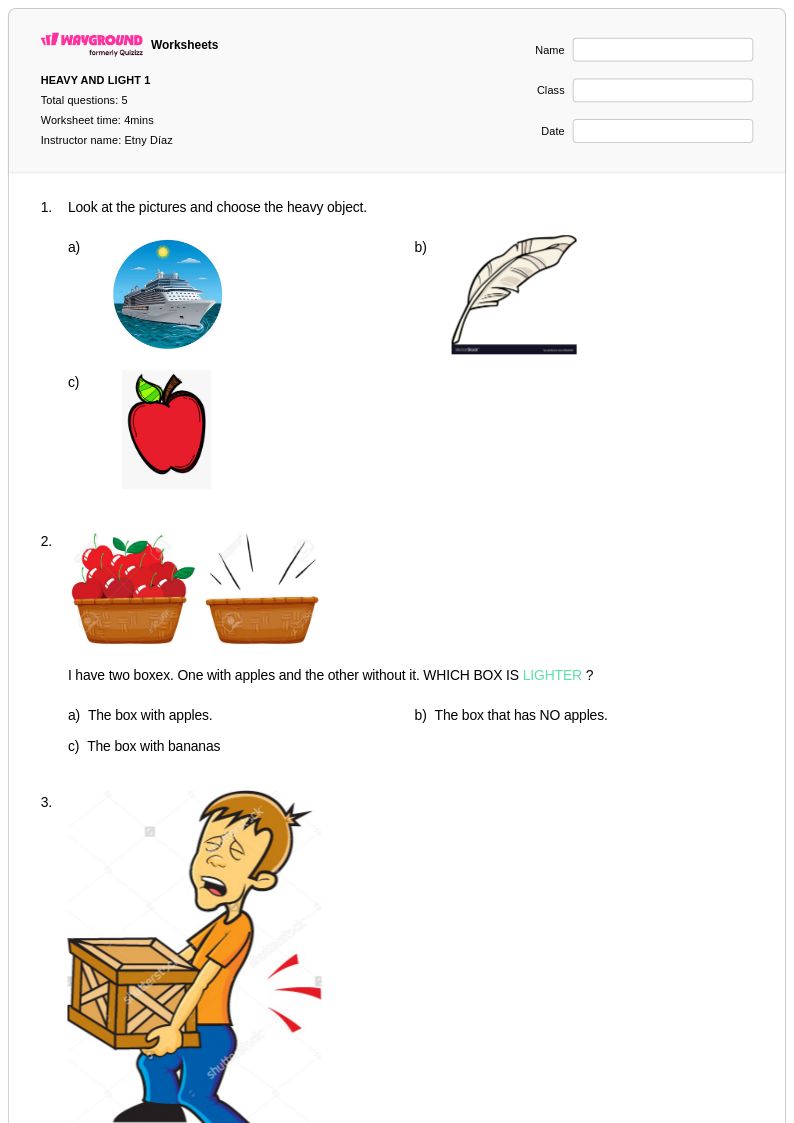
5 Q
1st
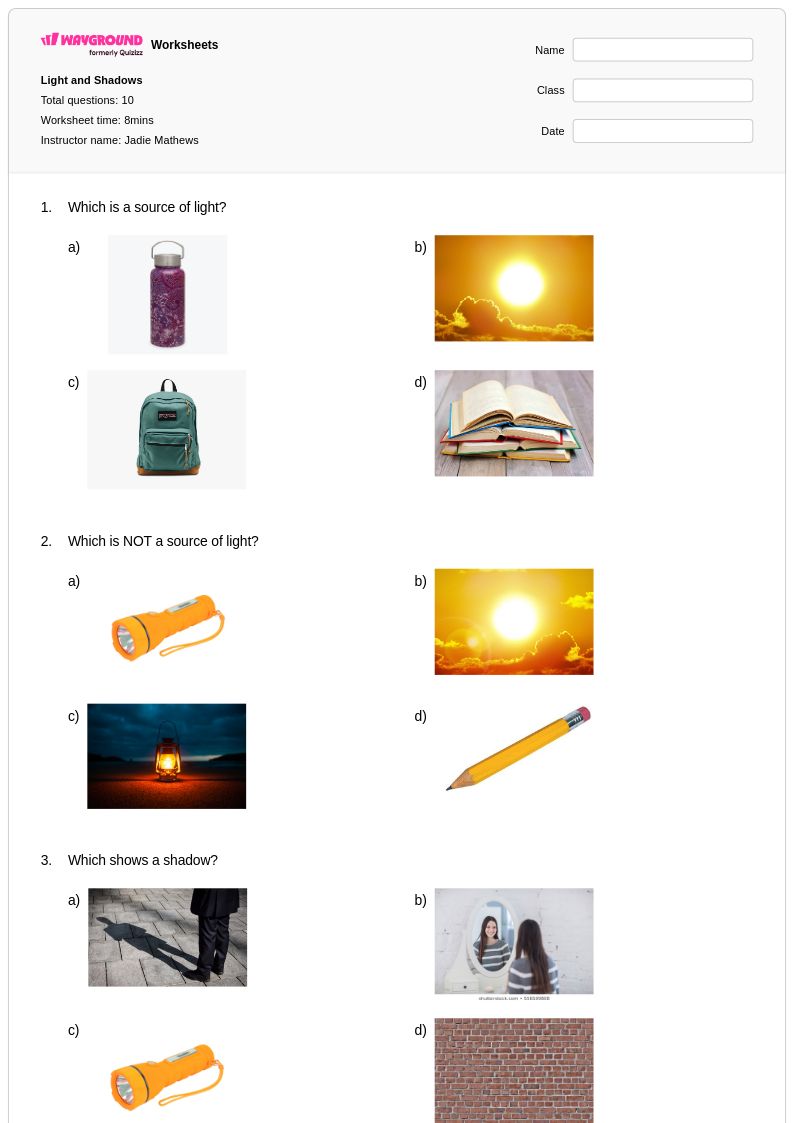
10 Q
1st
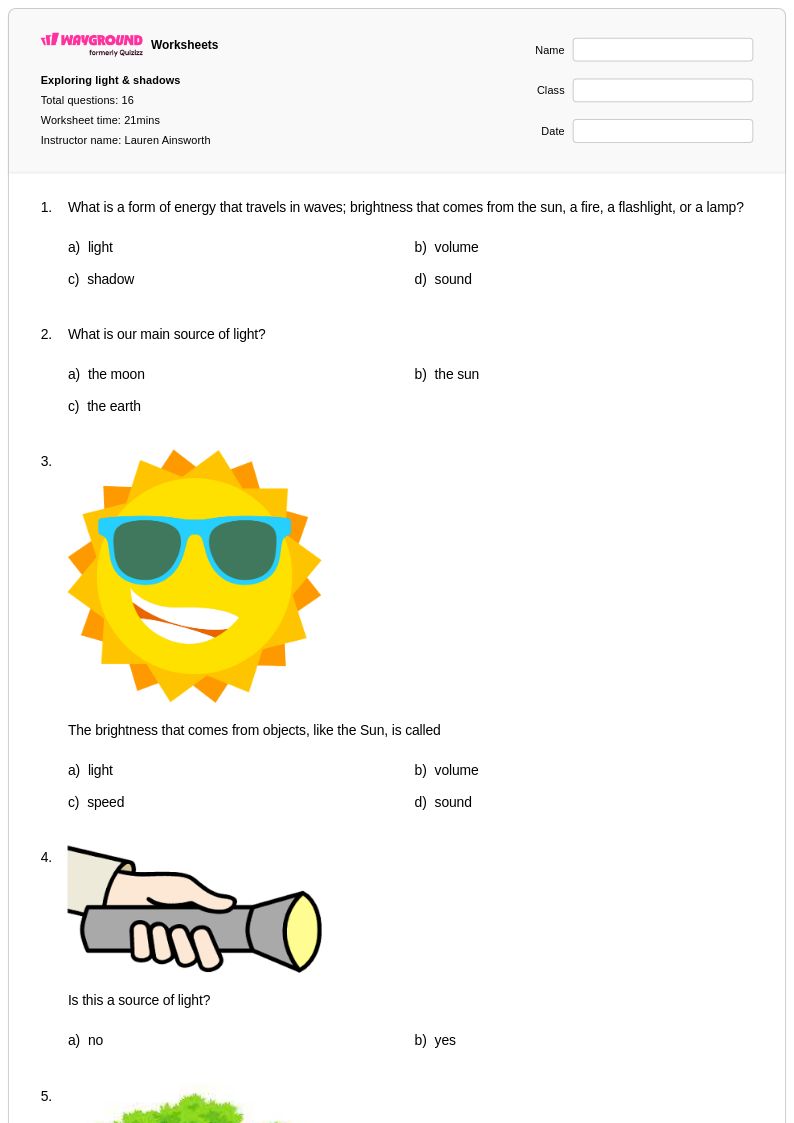
16 Q
1st
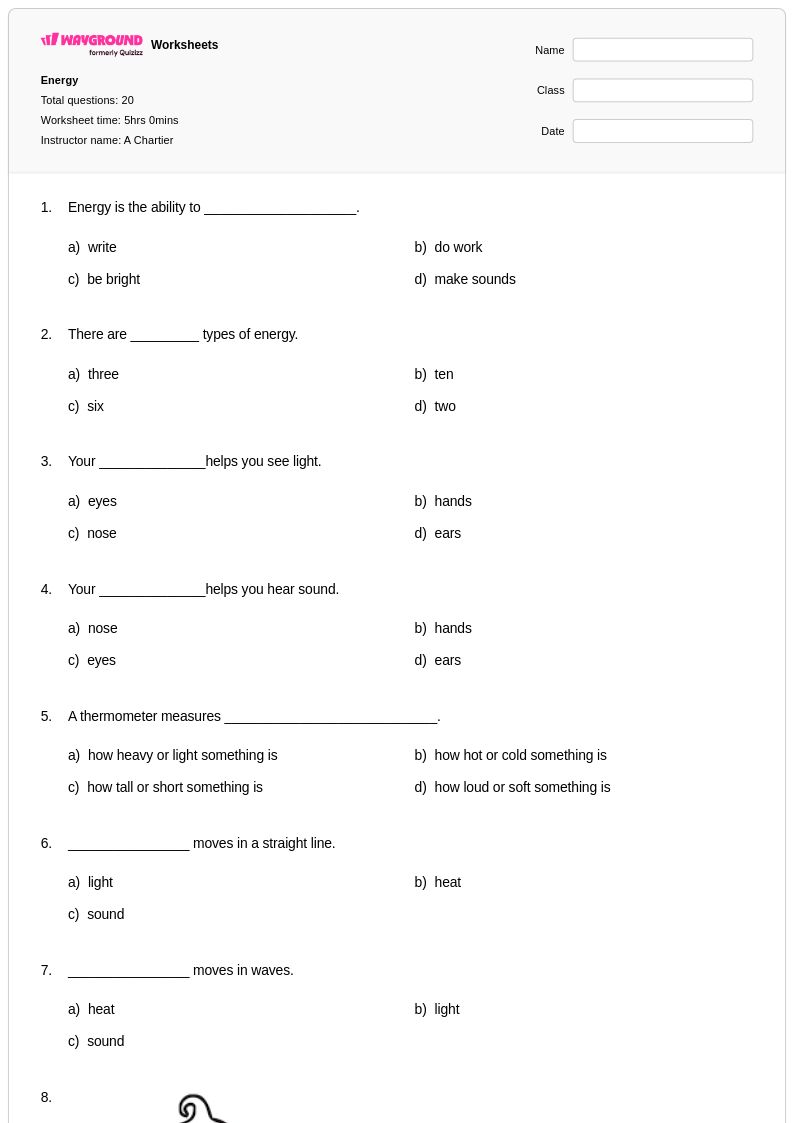
20 Q
1st
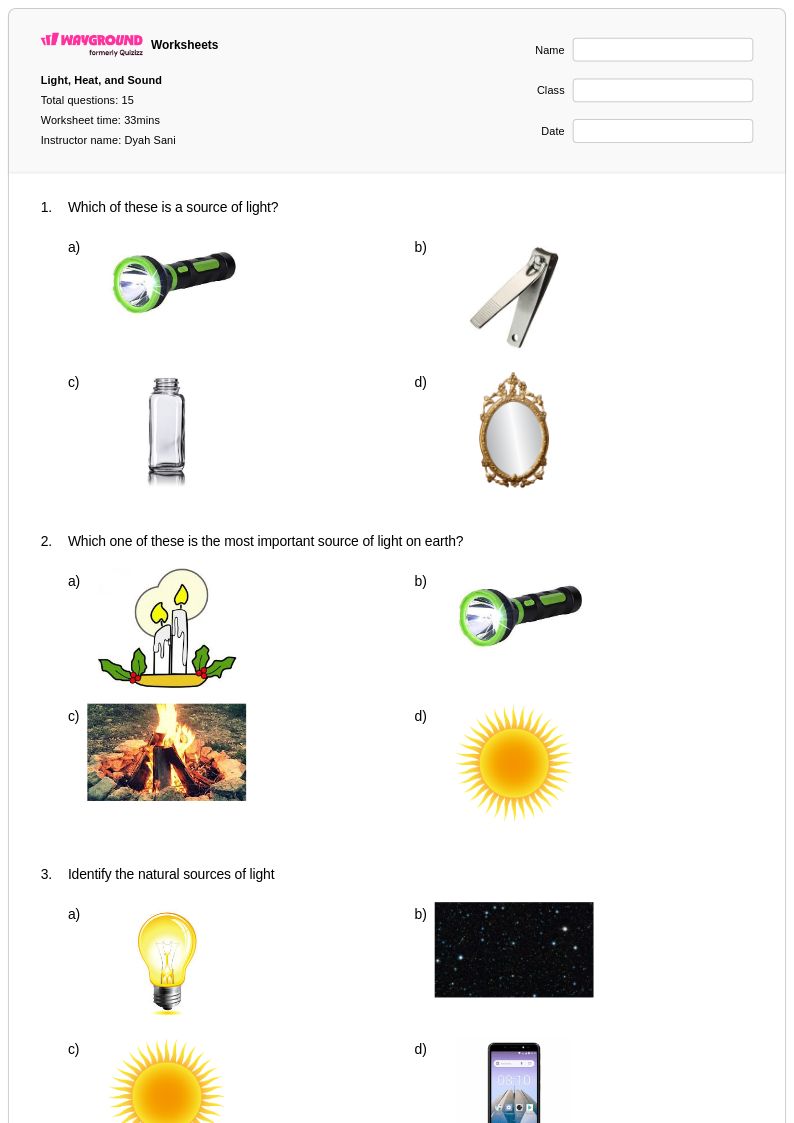
15 Q
1st
10 Q
1st
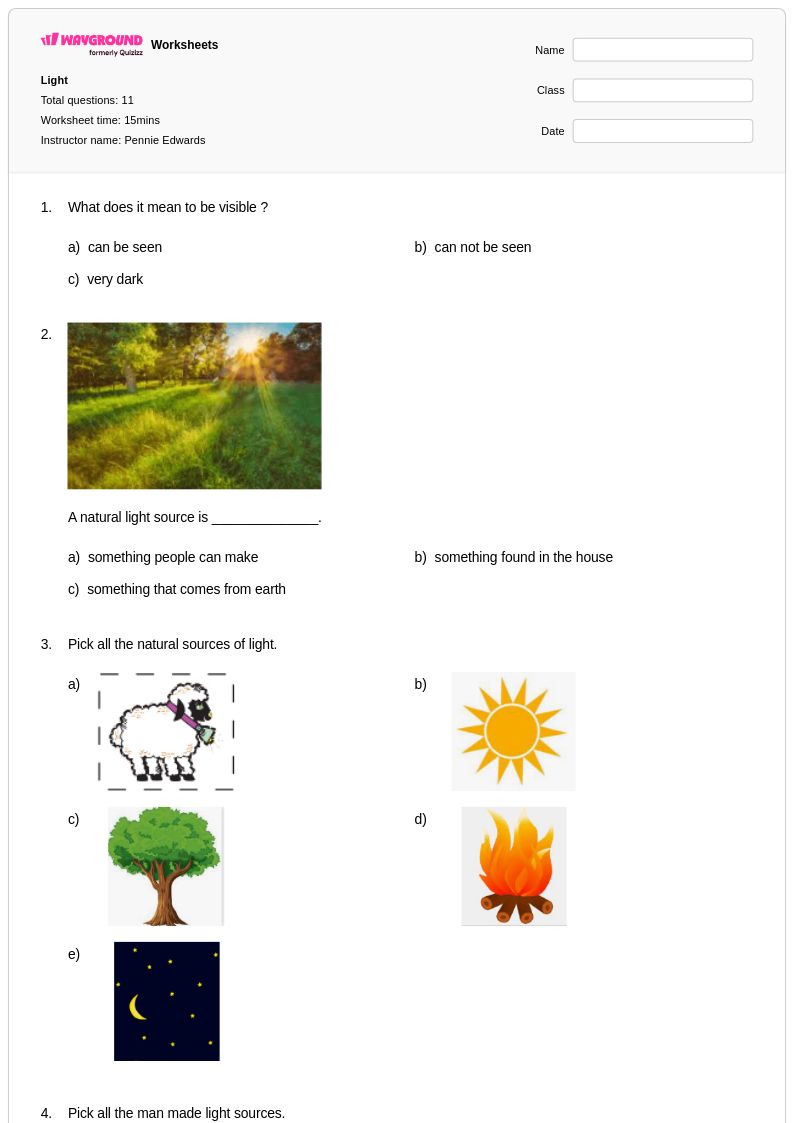
11 Q
1st
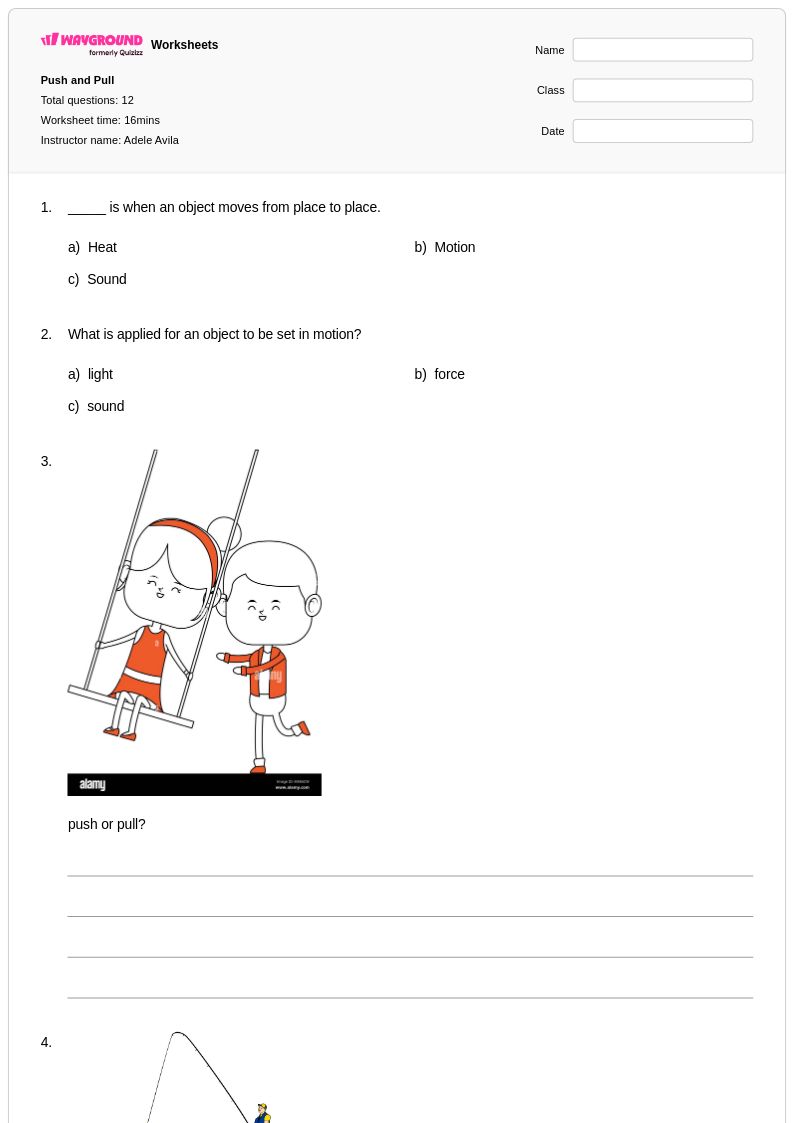
12 Q
1st
16 Q
1st
10 Q
1st - 3rd
11 Q
1st
10 Q
1st
12 Q
1st
16 Q
1st - 5th
10 Q
1st
11 Q
1st
20 Q
KG - 2nd
13 Q
1st
10 Q
1st
7 Q
1st
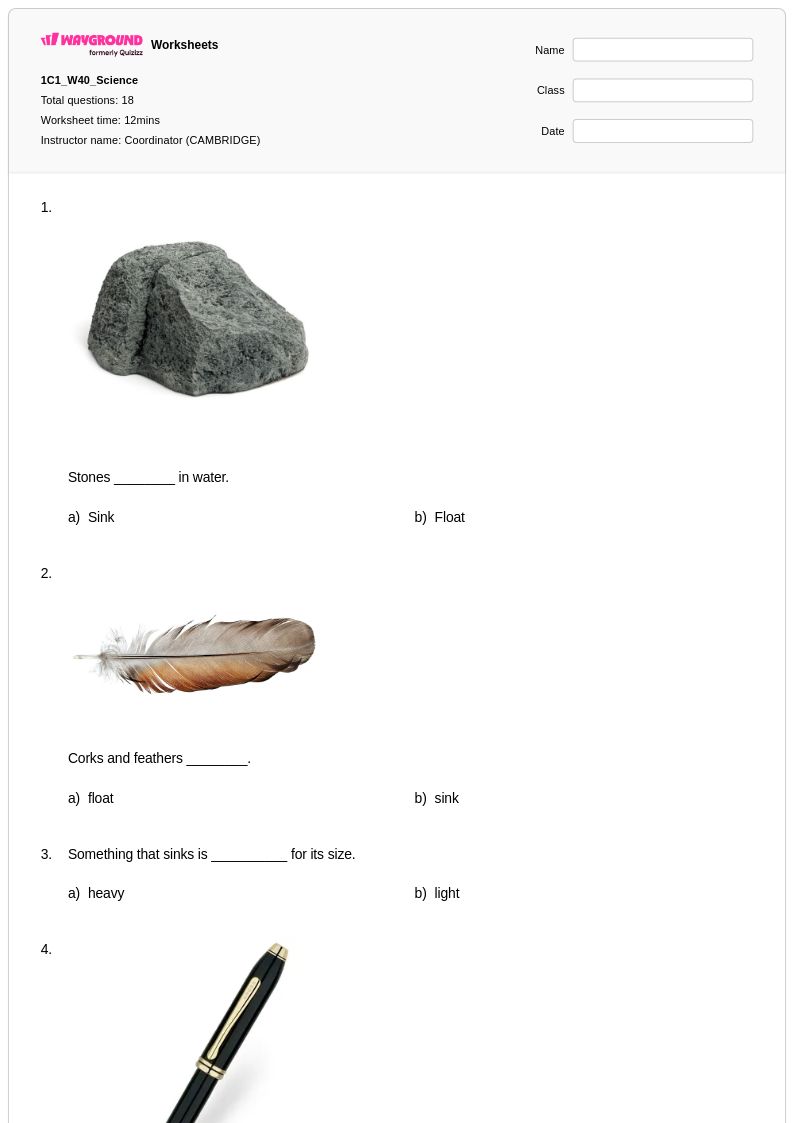
18 Q
1st
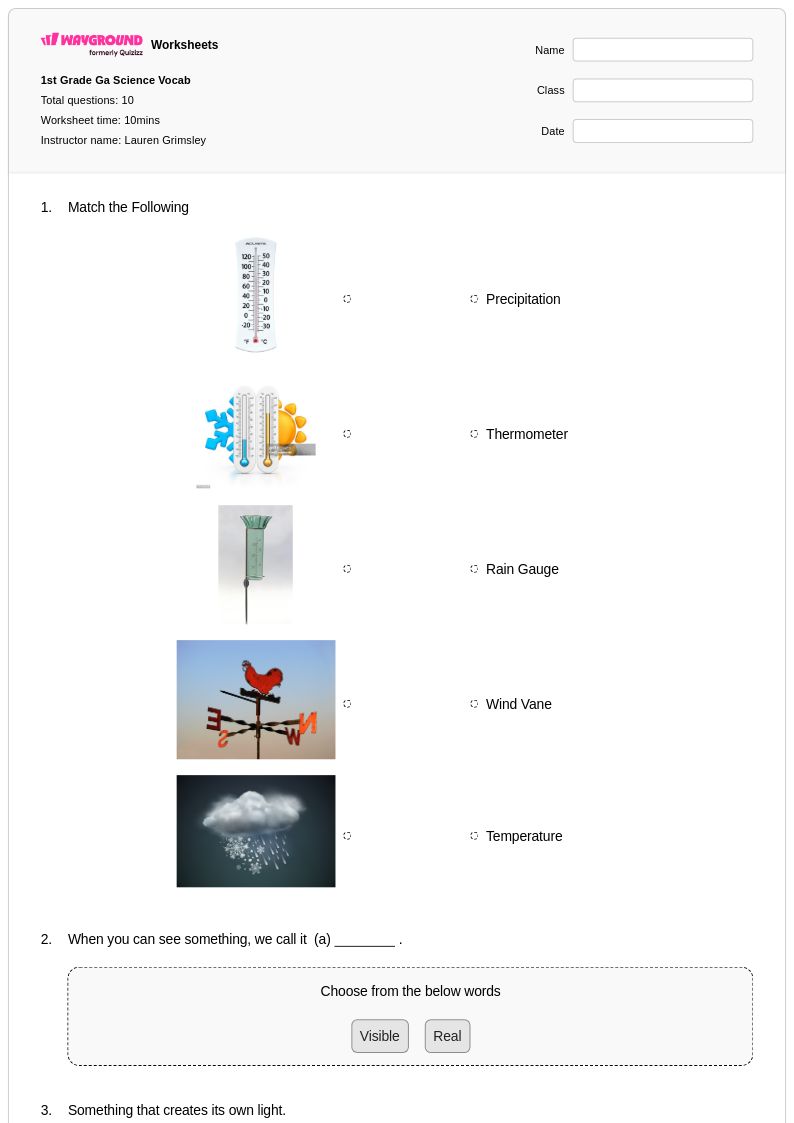
10 Q
1st
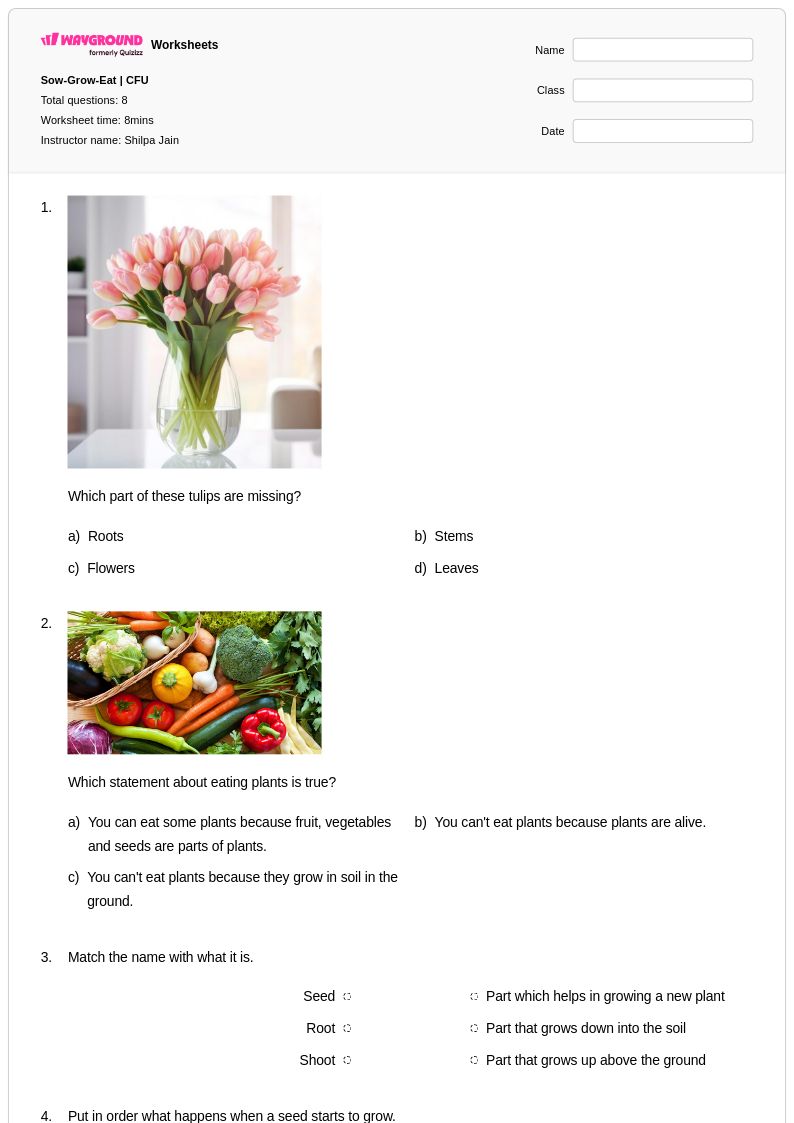
8 Q
1st
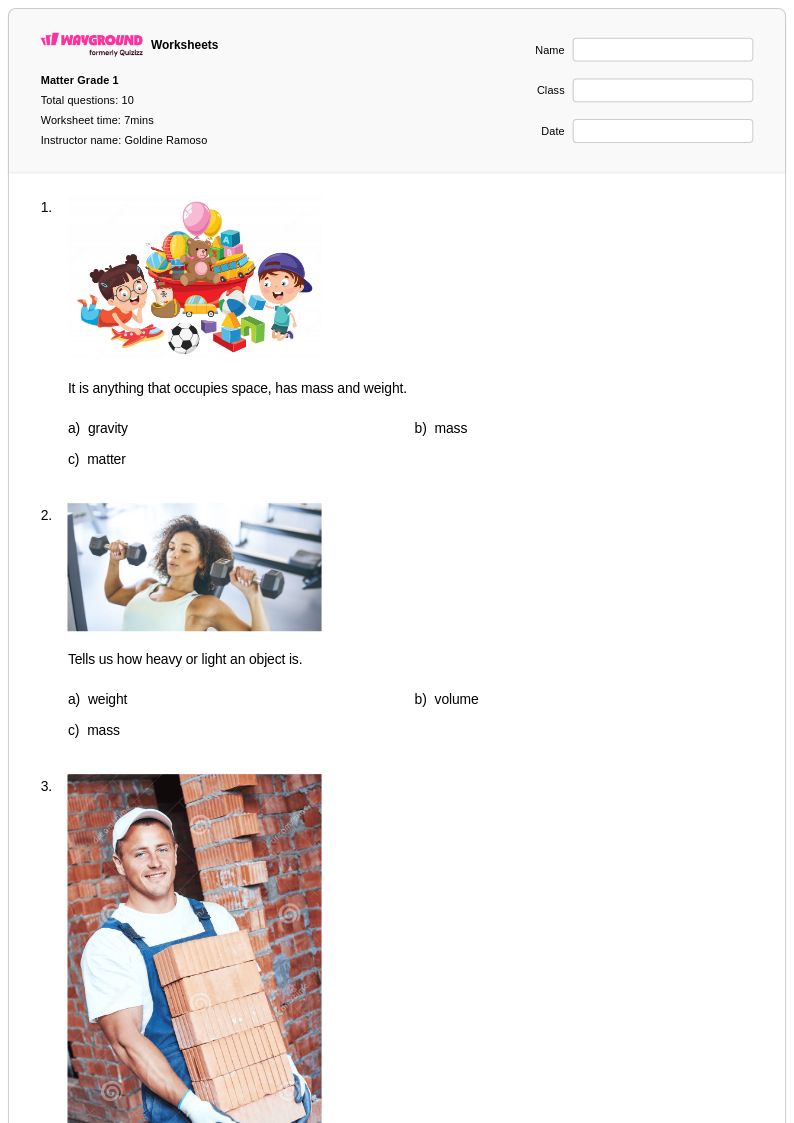
10 Q
1st
Explore Other Subject Worksheets for grade 1
Explore printable Heavy and Light worksheets for Grade 1
Heavy and light concepts form a fundamental component of Grade 1 physical science education, and Wayground's comprehensive worksheet collection provides young learners with engaging opportunities to explore these essential properties of matter. These carefully designed worksheets help first-grade students develop critical observation and comparison skills as they examine objects of varying masses, learning to categorize items based on their weight characteristics. Students strengthen their analytical thinking through hands-on practice problems that require them to identify, sort, and predict which objects will be heavy or light in different contexts. The collection includes printable activities with clear answer keys that guide both independent learning and teacher-led instruction, offering free access to professionally crafted materials that support systematic skill development in early physical science concepts.
Wayground's extensive library, featuring millions of teacher-created resources, empowers educators with robust tools for delivering effective heavy and light instruction to Grade 1 students. The platform's advanced search and filtering capabilities allow teachers to quickly locate age-appropriate worksheets that align with curriculum standards and accommodate diverse learning needs through built-in differentiation options. These versatile resources are available in both digital and printable PDF formats, enabling seamless integration into various classroom environments and teaching styles. Teachers can customize worksheet content to match their specific instructional goals, utilizing these materials for initial concept introduction, targeted skill practice, remediation for struggling learners, and enrichment activities for advanced students, ensuring that every first-grader develops a solid foundation in understanding the physical properties of heavy and light objects.
FAQs
How do I teach heavy and light concepts to young students?
What activities help students practice comparing heavy and light objects?
What mistakes do students commonly make when learning about heavy and light?
How can I differentiate heavy and light worksheets for students at different levels?
How do I use Wayground's heavy and light worksheets in my classroom?